Kirjojen hintavertailu – 12 903 725 kirjaa ja 27 kauppaa

Kirjailija

Charles River

Kirjat ja teokset yhdessä paikassa: 4 673 kirjaa, julkaisuja vuosilta 2013–2022, suosituimpiin kuuluu William Powell and Myrna Loy: The Lives and Careers of One of Classical Hollywood's Most Iconic Duos. Vertaile teosten hintoja ja tarkista saatavuus suomalaisista kirjakaupoista.

4 673 kirjaa

Kirjojen julkaisuvuodet: 2013–2022.

American Legends: The Life of Judy Garland

American Legends: The Life of Judy Garland

Charles River

Createspace Independent Publishing Platform
2013
nidottu
*Includes pictures of Garland and important people, places, and scenes. *Includes Garland's own quotes about her upbringing, films and relationships. *Includes a Bibliography for further reading. "I was born at the age of twelve on a Metro-Goldwyn-Mayer lot." - Judy Garland A lot of ink has been spilled covering the lives of history's most influential figures, but how much of the forest is lost for the trees? In Charles River Editors' American Legends series, readers can get caught up to speed on the lives of America's most important men and women in the time it takes to finish a commute, while learning interesting facts long forgotten or never known. In many ways, Judy Garland's rise to fame seems almost predestined. Not only was she a national sensation at a young age, but her parents and sisters were all vaudeville entertainers. On top of that, Garland's parents owned and operated a movie theater, making it all the easier to draw the conclusion that singing and acting were simply professions which she was born into by virtue of her pedigree. Judy's early childhood quickly demonstrated that she had a gifted voice that developed well beyond its years and seemingly did not require any formal training in order to achieve success; her first performance before a public audience came when she was still a toddler, and she would continue to act up until her death, never pausing for more than a few months at a time. That Garland was able to secure starring roles almost immediately after signing a contract with MGM in 1935 only corroborates the belief that Garland was practically born with the ability to succeed in show business and the motion picture industry. Of course, Garland might be known today based more on her demise than anything else, and there's no denying that one of the most fascinating (and tragic) aspects of her life story is the manner in which her downward spiral occurred with the same rapid progression as her meteoric ascent. Garland died in 1969 at the age of 47, but she had lost control over her life years earlier and was actually fortunate to live as long as she did. As early as 1950, when she was still yet to turn 30 years old and remained a box office attraction, Garland's contract was terminated by MGM and she would never again find consistent employment as a movie star. At an age in which most actresses were in the prime of their careers, Garland's career was nearly finished. The contrast between Garland's innocent, universally adored performances in films such as The Wizard of Oz (1939) and The Pirate (1948) could not be more dissimilar to the image of the wasted, drug-addled Garland who passed away as a result of a drug overdose before the age of 50. The question therefore remains: how did Garland go from a position of immense wealth and acclaim to the poverty-ridden individual who was too mentally unstable to act in movies and ultimately died prematurely? American Legends: The Life of Judy Garland profiles the life and career of one of America's most famous actresses. Along with pictures of important people, places, and events, you will learn about Judy Garland like you never have before, in no time at all.
American Legends: The Life of J. Edgar Hoover

American Legends: The Life of J. Edgar Hoover

Charles River

Createspace Independent Publishing Platform
2013
nidottu
*Discusses the rumors surrounding Hoover's secret files and sexuality. *Includes pictures of Hoover and important people, places, and events in his life. "We are a fact-gathering organization only. We don't clear anybody. We don't condemn anybody." - J. Edgar Hoover A lot of ink has been spilled covering the lives of history's most influential figures, but how much of the forest is lost for the trees? In Charles River Editors' American Legends series, readers can get caught up to speed on the lives of America's most important men and women in the time it takes to finish a commute, while learning interesting facts long forgotten or never known. No single figure in 20th century American history inspires such opposing opinions as J. Edgar Hoover, the iconic first director of the Federal Bureau of Investigation. In his time, he was arguably the most powerful non-elected figure in the U. S. government. Serving under 8 presidents (and outliving 2 of them), he remains the longest-serving head of a major government office. But in essence, Hoover died as he began-a civil servant, having been appointed by the Attorney General and serving at the pleasure of the president. But no civil servant had ever accrued to themselves the power and public attention that Hoover did. To many Americans in the 30s, 40s, and 50s J. Edgar Hoover was a real American hero. In a country suffering from the Great Depression and the crime wave of the early 1930s, Hoover was the symbol law and order as his "G-Men" used the newest in scientific crime solving methods to bring gangsters like John Dillinger, Pretty Boy Floyd, and Baby Face Nelson to justice. In the 1940s he protected a country at war from German and Japanese spies and saboteurs. In the 1950s he let the charge against Soviet spies and domestic Communists who he saw as undermining the institutions of the country. Every boy in the country wanted to be a G-Man, helping Mr. Hoover ferret out anyone who would harm the United States. But by the 1960s and 1970s Hoover the hero had become Hoover the villain. Various exposes and investigations revealed a darker side to the legend, one that included serious violations of the civil liberties of individuals. Hoover's G-Men, it was discovered, engaged in illegal break-ins and wiretaps of suspected subversives; they wrote fake letters that undermined the reputations of public individuals; they paid informants for information and push the groups they belonged to into committing illegal acts. It was alleged that Hoover led a personal vendetta against Martin Luther King, Jr., and the entire civil rights movement. Hoover, it was said, had stayed in office so long by gathering secret files of damaging information about politicians (including presidents). Shortly after his death in 1972, the Hoover legend was in tatters, replaced by a caricature of a vain, vindictive, power-mad petty dictator who was a closet homosexual and cross-dresser. As with most larger than life figures, the truth lies somewhere between two myths. Views of Hoover as hero and Hoover as villain contain elements of truth. The same man who took a small insignificant office of the Justice Department and transformed it into the premier national law enforcement agency in the world was the same man who approved (or at least had knowledge of) actions that violated the Constitution he was sworn to uphold. J. Edgar Hoover was in many ways a walking contradiction, but his apparent contradictions embodied the contradictions at the heart of 20th century America. American Legends: The Life of J. Edgar Hoover looks at the amazing life and career of the FBI Director, including the unprecedented successes, notorious lows, and all the myths and controversies inbetween. Along with pictures of Hoover and important people, places, and events in his life, you will learn about J. Edgar like you never have before, in no time at all.

American Legends: The Life of Woodrow Wilson

American Legends: The Life of Woodrow Wilson

Charles River

Createspace Independent Publishing Platform
2013
nidottu
*Includes Wilson's Fourteen Points, Inaugural Addresses, and his War Message to Congress for World War I. *Discusses controversies surrounding Wilson's life and presidency, including the rumors surrounding his wife's role in 1920 after his strokes in office. *Includes pictures of Wilson and important people and places in his life. *Includes some of Wilson's most famous quotes. "Sometimes people call me an idealist. Well, that is the way I know I am an American." - Woodrow Wilson A lot of ink has been spilled covering the lives of history's most influential figures, but how much of the forest is lost for the trees? In Charles River Editors' American Legends series, readers can get caught up to speed on the lives of America's most important men and women in the time it takes to finish a commute, while learning interesting facts long forgotten or never known. As one of the most influential men of the 20th century, there is no shortage of adjectives to use when describing Woodrow Wilson's two terms as president of the United States. Wilson was a pioneer of the Progressive movement both before and during his presidency, becoming a populist champion a generation before Franklin Roosevelt's New Deal. He ran for reelection by touting his neutrality during World War I, only to lead his nation into the war and become the architect of a world body that would lead to greater inter-connection among nations. Today Wilson is best remembered for his Fourteen Points, one of the most forceful arguments for an idealistic foreign policy in American history, and his fight for the League of Nations, which set the model for today's United Nations. Wilson's presidency was monumentally consequential, but it is not without its critics, nor is the man himself. Even as Wilson has come to be viewed as one of America's greatest presidents, perception of Wilson and his administration as racist have also taken hold. Despite being one of the early 20th century's most forceful proponents of a globalized foreign policy, Wilson's personal views and comments were ardently anti-immigration, and Wilson's administration entrenched and expanded segregation in the federal government. Perhaps the greatest controversy over Wilson's presidency is the way in which it finished. Wilson suffered a debilitating stroke in 1919 that left him severely incapacitated, and he stayed out of both the public eye and even private eye for the remainder of his term. With his wife Edith keeping him isolated from the Vice President, the Cabinet, and Congressmen, she served as a kind of chief of staff, determining what issues were sent to him and which issues were sent to Cabinet officials. Given questions over his competence after the stroke, it has long been speculated that Edith essentially served as president in her husband's stead until he left office in 1921. American Legends: The Life of Woodrow Wilson chronicles the life of the idealistic president, examines his groundbreaking presidency, and analyzes his legacy. Along with pictures of important people, places, and events, you will learn about Woodrow Wilson like you never have before, in no time at all.

Experience Thailand

Experience Thailand

Charles River

Createspace Independent Publishing Platform
2013
nidottu
*Includes over 25 pictures *Includes directions for certain parts of some of Thailand's cities. Imagine a place where you can see Buddhist temples, ride elephants, and observe monks during the day, then visit markets, Western style bars, or take cooking classes at your hotel in the afternoon or at night. Welcome to Thailand, one of the most unique vacation spots on Earth. Thailand has become increasingly popular for tourists, offering exotic surroundings in Southeast Asia, distinctly different cultures, wonderful food, and friendly people and businesses that recognize the country's allure as a tourist destination. Along with an industrialized economy and millions of expatriates, Thailand has become one of the most popular places for all kinds of different visitors, from historians to honeymooners. With each passing year, millions of expatriates relocate to the country. Experience Thailand takes readers to Thailand's main cities and beyond, exposing them to local architecture, art, nature, cuisine, dance, and more in a way that will make a trip to Thailand an unforgettable experience. Whether you're planning a trip to Thailand, or looking to learn more about the city, this guide is for you With over 25 photographs of places and things Thailand has to offer, you'll learn about the different parts of the city, including: Bangkok The Grand Palace and Royal Palace The White Temple Chiang Mai The Elephant Conservation Center And more Experience Thailand today
American Legends: The Life of Lyndon B. Johnson

American Legends: The Life of Lyndon B. Johnson

Charles River

Createspace Independent Publishing Platform
2013
nidottu
*Includes a list of LBJ's most colorful quotes, his inaugural address, and his statement announcing he would not seek reelection in 1968. *Includes pictures of Johnson and important people, places, and events in his life. *Discusses LBJ's personality and relationships with his most important contemporaries, including John and Bobby Kennedy. "The presidency has made every man who occupied it, no matter how small, bigger than he was; and no matter how big, not big enough for its demands." - Lyndon B. Johnson A lot of ink has been spilled covering the lives of history's most influential figures, but how much of the forest is lost for the trees? In Charles River Editors' American Legends series, readers can get caught up to speed on the lives of America's most important men and women in the time it takes to finish a commute, while learning interesting facts long forgotten or never known. Of all the politicians who have left their mark on American history, few have had a political career or list of accomplishments and accolades that can even come close to rivaling Lyndon B. Johnson. Johnson is one of only 4 Americans to serve as a House Rep, U. S. Senator, Vice President and President, and he made the most out of each experience. The hard-nosed Texas Democrat became one of the legendary strongmen in the Senate, mastering that political body from 1949-1961 and spending six years as Senate Majority Leader, two as Senate Minority Leader, and two as Senate Majority Whip. A fateful chain of events propelled then propelled Johnson from Capitol Hill to the White House. After Johnson's failed run for the Democratic nomination in 1960, winner John F. Kennedy chose Johnson as his running mate over his brother Bobby's objections. Kennedy figured Johnson's Texas roots would help balance Kennedy's decidedly Northeastern appeal, as well as adding a sense of age, experience and gravitas to the younger Kennedy's campaign. While this was all true and did indeed help Kennedy win the election in 1960, his assassination ultimately brought Johnson to the presidency. Kennedy has been nostalgically and fondly remembered for his youth, vigor and sense of unfinished potential, but it would be President Johnson who would bring much of the agenda to fruition. To the surprise of many, the Southern Democrat relied on his wealth of Senate experience and dogged determination to help push through an ambitious and progressive social agenda that formed the backbone of modern American society. Known as the Great Society, President Johnson's legislation included the landmark Civil Rights Act of 1964, as well as the establishment of Medicare, Medicaid, environmental protection, and the "War on Poverty." Everything from the National Endowment for the Arts to the Environmental Protection Agency has its roots in Johnson's presidency. Had Johnson's presidency included just his domestic agenda, he would have unquestionably been one of America's greatest presidents. Unfortunately, as he was engineering a new social contract at home, he was ramping up American military participation in a tiny country thousands of miles away in Southeast Asia. For a man who accomplished so much at home, it's ironic and tragic that his presidency and legacy were permanently marred by his escalation in the costly and contentious Vietnam War, a military quagmire and public relations disaster that compelled Johnson not to run for reelection in 1968. American Legends: The Life of Lyndon B. Johnson chronicles the amazing life of the president, examines his unprecedented legislative accomplishments, and analyzes the controversial Vietnam War and Johnson's mixed legacy. Along with pictures of important people, places, and events, you will learn about LBJ like you never have before, in no time at all.

American Legends: The Life of John Wayne

American Legends: The Life of John Wayne

Charles River

Createspace Independent Publishing Platform
2013
nidottu
*Includes Wayne's entire filmography *Includes pictures of Wayne and important people and places in his life. *Analyzes Wayne's legacy on the screen and off of it. *Includes some of Wayne's most colorful and controversial quotes. "Every country in the world loved the folklore of the West -- the music, the dress, the excitement, everything that was associated with the opening of a new territory. It took everybody out of their own little world. The cowboy lasted a hundred years, created more songs and prose and poetry than any other folk figure. The closest thing was the Japanese samurai. Now, I wonder who'll continue it." - John Wayne A lot of ink has been spilled covering the lives of history's most influential figures, but how much of the forest is lost for the trees? In Charles River Editors' American Legends series, readers can get caught up to speed on the lives of America's most important men and women in the time it takes to finish a commute, while learning interesting facts long forgotten or never known. Hollywood has produced no shortage of famous movie stars, but none have been as culturally significant as John Wayne. Marion Morrison was born in a quintessentially quaint Midwestern town, but he eventually grew up to become John Wayne, the legend of the silver screen who embodied the Western frontier. Wayne starred in so many movies (nearly 150 in all) that when asked to name his worst, he joked that 50 of them were tied, but the excessive number allowed Wayne to portray heroes of all stripes, from cowboys to soldiers, and he was invariably charming, courageous, and full of rugged, masculine swagger. Even as Westerns have certainly waned in popularity, Wayne himself has remained immensely popular, in part because he set the prototype for the heroic character, regardless of genre. Wayne will always be associated with Westerns, John Wayne transcended the Western genre. Through the portrayal of rugged, masculine characters, Wayne came to epitomize the American spirit and the way Americans view themselves. In that sense, he is truly America's actor, and he continues to live on in both the reels of Hollywood's archives and the living rooms of middle America. At the same time, the central role of John Wayne in defining a big piece of American culture is not without controversy. His later interview with Playboy magazine is a case in point. Many Americans today realize that John Wayne's America, though beloved by many, is not the America that everyone calls their own. Western movies that pay homage to Confederate soldiers and Indian-killing frontiersman and cowboys are not everyone's cup of tea. American Legends: The Life of John Wayne looks at the iconic actor's life on and off the silver screen, from his outsized influence to Hollywood to his outspoken views on politics. Along with pictures of important people, places, and events, you will learn about The Duke like you never have before, in no time at all.
American Legends: The Life of Frederick Douglass

American Legends: The Life of Frederick Douglass

Charles River

Createspace Independent Publishing Platform
2013
nidottu
*Includes pictures of Douglass and important people, places and events in his life. A lot of ink has been spilled covering the lives of history's most influential figures, but how much of the forest is lost for the trees? In Charles River Editors' American Legends series, readers can get caught up to speed on the lives of America's most important men and women in the time it takes to finish a commute, while learning interesting facts long forgotten or never known. With the possible exception of Dr. Martin Luther King, Jr., no African American has been more instrumental in the fight for minorities' civil rights in the United States than Frederick Douglass 1818-1895), an American social reformer, orator, writer and statesman. His list of accomplishments would be impressive enough even without taking into account the fact that he was born into slavery. Douglass was born into slavery, and it's believed his father was a white man, even perhaps his master Aaron Anthony. When Douglass was about 12, his slaveowner's wife, Sophia Auld, began teaching him the alphabet in defiance of the South's laws against teaching slaves how to read. When her husband Hugh found out, he was furious, reminding her that if the slave learned to read, he would become dissatisfied with his condition and desire freedom. Those words would prove prophetic. Douglass is noted as saying that "knowledge is the pathway from slavery to freedom," and he took that advice to heart, teaching himself how to read and write with his knowledge of the alphabet. On September 3, 1838, Douglass successfully escaped slavery, traveling by boat to Delaware, Philadelphia, and finally New York, all in the span of a day. Douglass found a "new world had opened upon me." After escaping from slavery, Douglass became a leader of the abolitionist movement, gaining national notice for his dazzling oratory and anti-slavery writing. He stood out as the living embodiment of an intellectual former slave, the antithesis of slaveholders' arguments that blacks were an inferior race. Douglass remained active in the fight for civil rights and abolition throughout the Civil War and Reconstruction, even meeting President Lincoln and strongly urging him to let black men enlist in the Union. As Douglass constantly stated, nobody had more to fight for in the Civil War than black men. Douglass continued his work all the way up to his death in 1895, continuing to advocate on behalf of blacks, women, immigrants and even Native Americans. Douglass famously said, "I would unite with anybody to do right and with nobody to do wrong." Douglass remains well known today, but given the manner in which Jim Crow segregated and discriminated against minorities for another 60 years after his death, he is often overshadowed by the icons of the Civil Rights Movement of the 1950s and 1960s. American Legends: The Life of Frederick Douglass looks at Douglass's incredible life story of preservation and perseverance, explaining how the man who literally started with nothing became his people's Martin Luther King Jr. decades before King was born. Along with pictures of Douglass and other important people and events in his life, you will learn about America's first great Civil Rights leader like you never have before, in no time at all.

American Legends: The Life of Paul Revere

American Legends: The Life of Paul Revere

Charles River

Createspace Independent Publishing Platform
2013
nidottu
*Includes Revere's firsthand account of his midnight ride. *Includes Longfellow's famous poem, Paul Revere's Ride. *Includes pictures of Revere and important people, places, and events in his life. *Includes a Bibliography for further reading. "Out started six officers, seized my bridle, put their pistols to my breast, ordered me to dismount, which I did. One of them, who appeared to have the command there, and much of a gentleman, asked me where I came from; I told him. He asked what time I left . I told him, he seemed surprised, said ''Sir, may I crave your name'' I answered 'My name is Revere.'" - Paul Revere A lot of ink has been spilled covering the lives of history's most influential figures, but how much of the forest is lost for the trees? In Charles River Editors' American Legends series, readers can get caught up to speed on the lives of America's most important men and women in the time it takes to finish a commute, while learning interesting facts long forgotten or never known. Over the course of 83 years, Paul Revere was one of the most prominent citizens in Boston, heralded for his silversmith work, his participation in the Sons of Liberty, and his service in the Massachusetts militia. Bearing 16 children by two wives, 11 of whom survived to adulthood, Revere supported his large family by doing everything from dentistry to casting church bells and engraving the most popular image of the Boston Massacre. His ability to roll copper into sheets made his work even more valuable to the dry docks and naval construction in Charlestown and around Boston. Given everything he did for Boston and his community, it would have no doubt greatly surprised Revere at the end of his life if he had known he would become an American legend for his midnight ride on the night of April 18, 1775. As a fervent and well-connected patriot who was part of Boston's intelligence network, Revere was sent on the ride toward Lexington along with William Dawes, with the intention of warning the countryside that British troops were heading that way presumably to arrest patriot leaders Samuel Adams and John Hancock. After warning Adams and Hancock, Revere, Dawes, and another messenger, Samuel Prescott were stopped and detained by British soldiers on the path toward Concord, and though Dawes and Prescott managed to escape, Revere was escorted back toward Lexington by the British that morning. As it turned out, Revere and the patriots were wrong about the actual reason for the British march that morning, and Revere did not successfully finish his own ride. So why is he one of the most famous men of the colonial era? The legend of Paul Revere can be almost completely credited to famous American poet Henry Wadsworth Longfellow, whose poem "Paul Revere's Ride" has shaped the legacy of the man and his ride, even though Longfellow intentionally took artistic license and fudged the historical accuracy in an effort to cast Revere as a hero. To say it worked would be a drastic understatement. American Legends: The Life of Paul Revere chronicles the Midnight Ride that made Revere famous and includes his own account of it, but it also covers the entire life and career of the patriot leader and humanizes one of the best known Bostonians of the day. Along with pictures of important people, places, and events in his life, you will learn about Paul Revere like you never have before, in no time at all.

American Legends: The Life of Samuel Adams

American Legends: The Life of Samuel Adams

Charles River

Createspace Independent Publishing Platform
2013
nidottu
*Includes some of Adams's most famous quotes. *Includes pictures of Adams and important people, places, and events in his life. *Analyzes and explains Adams's controversial reputation and legacy. *Includes a Bibliography for further reading. "The liberties of our Country, the freedom of our civil constitution are worth defending at all hazards: And it is our duty to defend them against all attacks." - Samuel Adams A lot of ink has been spilled covering the lives of history's most influential figures, but how much of the forest is lost for the trees? In Charles River Editors' American Legends series, readers can get caught up to speed on the lives of America's most important men and women in the time it takes to finish a commute, while learning interesting facts long forgotten or never known. The American Revolution had no shortage of compelling characters with seemingly larger than life traits, including men like the multi-talented Benjamin Franklin, the wise Thomas Jefferson, the mercurial John Adams and the stoic George Washington. But no Revolutionary leader has been as controversial as Samuel Adams, who has been widely portrayed over the last two centuries as America's most radical and fiery colonist. Among his contemporaries, Adams was viewed as one of the most influential colonial leaders, a man Thomas Jefferson himself labeled "truly the Man of the Revolution" and the one who the Boston Gazette eulogized as the "Father of the American Revolution." Adams was an outspoken opponent of British taxes in the 1760s, one of Boston's hardest working writers and orators, a leader of the Boston Caucus, active in the Sons of Liberty, and a political leader who organized large gatherings in settings like Faneuil Hall and the Old South Meeting House. When cousin John Adams was an Ambassador to France during the Revolution, he had to explain that he was not the "famous" Adams. At the same time, Adams's zeal for his cause was unquestioned and unrivaled. During the Revolution, Adams exhorted his countrymen, "If ye love wealth greater than liberty, the tranquility of servitude greater than the animating contest for freedom, go home from us in peace. We seek not your counsel, nor your arms. Crouch down and lick the hand that feeds you; May your chains set lightly upon you, and may posterity forget that ye were our countrymen." Today historians believe that Adams's legacy as a radical firebrand came from the British, who naturally viewed Adams as an incendiary troublemaker, and it is widely believed that important events like the Boston Massacre and Boston Tea Party were incorrectly attributed to the sway Adams held over the town. The exaggeration of Adams as the one man who could control a mob took hold, and even as modern historians try to recast Adams in a more moderate light, he continues to be remembered as the American Revolution's most ardent patriot. Naturally, Adams's reputation and activities before and during the Revolution have come to dominate the history books and Americans' perceptions of him, so many remain unfamiliar with his post-war life. In fact, Adams was one of the most instrumental leaders in Massachusetts, helping draft the state's constitution during the Revolution and becoming one of its earliest governors after the Revolution. American Legends: The Life of Samuel Adams chronicles the amazing life and career of Samuel Adams, while also analyzing the notorious legacy he left behind. Along with pictures of important people, places, and events in his life, you will learn about Samuel Adams like you never have before, in no time at all.

Churchill & Roosevelt: The Alliance that Saved the Free World

Churchill & Roosevelt: The Alliance that Saved the Free World

Charles River

Createspace Independent Publishing Platform
2013
nidottu
*Includes pictures of Churchill, Roosevelt, and important people, places, and events in their lives. *Includes full length biographies of both leaders woven together into one chronological narrative. *Explores the personal and professional relationship between Churchill & Roosevelt. *Includes a list of Churchill's greatest quotes. *Includes a Bibliography for further reading. "I ask you to judge me by the enemies I have made." - Franklin D. Roosevelt "Winston Churchill led the life that many men would love to live. He survived 50 gunfights and drank 20,000 bottles of champagne... And of course, by resisting Hitler, he saved Europe and perhaps the world." - Mark Riebling in "Churchill's Finest Hour". One has been considered America's greatest president of the 20th century. The other was voted the Greatest Briton of All Time by his own countrymen. Winston Churchill led an astonishing life as a soldier, world statesman, historian and Noble Prize Laureate. When he died at 90 in 1965, one of the most important figures in modern history had left the stage. From providing some of the 20th century's greatest soundbytes to successfully navigating Great Britain to victory in World War II against great odds, Churchill was at the forefront of global events for decades, becoming one of the most influential Britons in history. In 2002, he was named the Greatest Briton of All Time, and 40 years earlier he was the first person to be made an Honorary Citizen of the United States. The tenacious Bulldog was joined in the war effort by Roosevelt, America's most unique president if not the greatest. A well-connected relative of Theodore Roosevelt, FDR was groomed for greatness until he was struck down by polio. Nevertheless, he persevered, rising through New York politics to reach the White House just as the country faced its greatest challenge since the Civil War, beginning his presidency with one of the most iconic lines ever spoken during an inaugural address. For over a decade, President Roosevelt threw everything he had at the Great Depression, and then threw everything the country had at the Axis powers during World War II. Ultimately, he succumbed to illness in the middle of his fourth term, just before the Allies won the war. Although the two men are remembered as the erstwhile leaders of the Allies in World War II, their up-and-down relationship directed the Allied war effort in North Africa, Sicily, and ultimately D-Day. Churchill & Roosevelt analyzes their relationship during the war, but it also covers the rise of both men to their respective positions as heads of state, weaving their stories together into one narrative. This book also humanizes Britain's greatest Prime Minister and America's ongest serving president, one who had to overcome a stutter to become his century's most quotable speaker and the other who overcame polio to capture the presidency and defeat Depression and the Axis powers. Along with pictures of important people, places, and events in their lives, you will learn interesting facts about FDR and Churchill you never knew, and you will learn about the men who saved the free world like you never have before.
American Legends: The Life of George Custer

American Legends: The Life of George Custer

Charles River

Createspace Independent Publishing Platform
2013
nidottu
*Discusses Little Bighorn in detail and explains the controversies and mysteries still surrounding Custer's Last Stand. *Includes pictures of Custer and important people, places, and events in his life. *Includes a Bibliography for further reading. Since the Battle of Little Bighorn, George Armstrong Custer (1839-1876) has possessed one of the most unique places in American history. Although he was a capable cavalry officer who served honorably during the Civil War, he remains one of the most instantly identifiable and famous military men in American history due to the fact he was killed during one of the country's most well known and ignominious defeats, the Battle of Little Bighorn. And yet, this one relatively insignificant battle during America's Indian Wars has become one of the country's most mythologized events and continues to fascinate Americans nearly 140 years later. Though he's now best remembered for "Custer's Last Stand", George Armstrong Custer began June 25, 1876 as one of America's better regarded cavalry officers, and a man whose ambitions might one day take him to higher office. In fact, decades before radio and television existed, Custer mastered the art of public relations, dressing impeccably and having newspaper correspondents accompany him on campaign, all in an effort to help cultivate and enhance his legacy. Custer's efforts worked, with one biographer noting that Americans during the 19th century viewed him as "a cavalier without fear and beyond reproach." Much like famous Confederate cavalry leader JEB Stuart, Custer added substance to the style. Despite being in his early 20s when the Civil War started, Custer rose through the ranks so quickly that he famously commanded a brigade of Michigan cavalrymen at Gettysburg, fighting the vaunted JEB Stuart and his horsemen to a standstill on the climactic 3rd day of that battle. Custer's success continued through until the end of the war, with his men playing an integral role during the Appomattox Campaign that forced the surrender of Robert E. Lee's Army of Northern Virginia. Had Custer's career ended there, he would have been both successful and largely forgotten. Instead, the last 10 years of his life were full of political and military intrigue, as he attempted to position himself both in politics and the Army while making himself one of the best known fighters of the Indian Wars. Those actions, along with the Battle of Little Bighorn, made him controversial even in his day, but with his death coming to be widely viewed as a sacrifice for his country, his legend and legacy grew throughout the nation. No matter what critics or supporters thought of him, George Armstrong Custer was unquestionably relevant. American Legends: The Life of George Custer details Custer's life and career, including all of its famous ups and infamous downs, while also addressing the controversial nature of Little Bighorn and his legacy. Along with pictures of important people, places, and events in his life, you will learn about Custer like you never have before, in no time at all.

American Legends: The Life of Katharine Hepburn

American Legends: The Life of Katharine Hepburn

Charles River

Createspace Independent Publishing Platform
2013
nidottu
*Includes pictures of Hepburn and important people, places, and scenes. *Includes Hepburn's own quotes about her upbringing, films and relationships. *Includes a Bibliography for further reading. "Acting is the most minor of gifts and not a very high-class way to earn a living. After all, Shirley Temple could do it at the age of four." - Katharine Hepburn A lot of ink has been spilled covering the lives of history's most influential figures, but how much of the forest is lost for the trees? In Charles River Editors' American Legends series, readers can get caught up to speed on the lives of America's most important men and women in the time it takes to finish a commute, while learning interesting facts long forgotten or never known. Early in her career, there was no actress more controversial than Katharine Hepburn. By the end of her career, there was no actress more beloved than Katharine Hepburn. Famously labeled "box office poison" in 1938, it is clear that Hollywood was not prepared for the young Hepburn. Yet, even after being scorned by the general public, Hepburn still retained a magnetism that would endear her to the public for decades to come, and after a tumultuous first decade as an actress, Hepburn became arguably the biggest box office sensation in the industry. Moreover, in an era when most actresses were unable to secure starring roles after reaching middle age, Hepburn remained a leading lady even after turning 60. Hepburn acted in some capacity from the start of the 1930s through the early-1990s, and it is important to view how the nature of Hepburn's roles changed from her youth to old age. Aside from being one of the most recognized and acclaimed actresses in history, Hepburn's career is also of great importance because she forced Americans to reevaluate their expectations for female behavior, both in films themselves and off the movie set as well. As society began to pay greater attention to the importance of strong roles for women, Hepburn's career gained an even greater importance, and at a time in which women were expected to be passive, she was a fiercely individual figure who offered a daring alternative to the conventions of femininity that had long existed in American culture. Through exploring Hepburn's upbringing and family background, it is possible to gain insight into exactly how Hepburn was endowed with such an iconoclastic spirit. In addition to examining her background, this study considers the broad scope of her career, considering important factors such as how her image evolved over her career. American Legends: The Life of Katharine Hepburn profiles the life and career of one of America's most iconic actresses. Along with pictures of important people, places, and events, you will learn about Hepburn like you never have before, in no time at all.
American Legends: The Life of Charles Lindbergh

American Legends: The Life of Charles Lindbergh

Charles River

Createspace Independent Publishing Platform
2013
nidottu
*Includes pictures of Lindbergh and important people, places, and events in your life. *Includes descriptions of Lindbergh's historic flight from his own words. *Includes a Bibliography for further reading. "If one took no chances, one would not fly at all." - Charles Lindbergh A lot of ink has been spilled covering the lives of history's most influential figures, but how much of the forest is lost for the trees? In Charles River Editors' American Legends series, readers can get caught up to speed on the lives of America's most important men and women in the time it takes to finish a commute, while learning interesting facts long forgotten or never known. In many ways, Charles Lindbergh represented the best and worst of America during the first half of the 20th century. Lindbergh became famous for being an aviation pioneer whose solo flight across the Atlantic captured the imagination of an entire world, yet he was an isolationist who wanted to keep American freedoms safe for Americans and no one else. Lindbergh was the quintessential family man, yet he fathered illegitimate children and suffered an unspeakable tragedy that became known as "The Crime of the Century." Lindbergh embodied some of his era's greatest virtues and harbored some of its worst prejudices. Lindbergh was a 25 year old U. S. Air Mail pilot who was probably best known for two crashes before shooting to fame with his non-stop flight across the Atlantic from New York City to Paris on May 20-21, 1927. Lindbergh was Time Magazine's first Man of the Year in 1927, and he used his newfound fame to promote the development of commercial flight and become a spokesman and symbol for advances in aviation. Tragically, Lindbergh was the subject of front page headlines in 1932 when his infant son, Charles, Jr., was kidnapped and murdered in the "Crime of the Century". After going into voluntary exile in Europe, Lindbergh found himself embroiled in scandals as he toured German (and Luftwaffe) aviation systems and took isolationist stances, at times making comments that were tinged with anti-Semitism and in favor of eugenics. Nevertheless, after Pearl Harbor, Lindbergh was rejected from serving in the armed forces, likely because President Roosevelt thought he was a Nazi sympathizer. But Lindbergh worked his way through administrative and technical positions to give himself the opportunity to fly about 50 combat missions in the Pacific, impressing his colleagues with his flying abilities and technical know-how. After World War II, as Lindbergh began to fade from the spotlight, he took up a number of causes, writing books and supporting environmental initiatives. The controversies began to fade as well, and when he died in 1974, he was remembered fondly for the Spirit of St. Louis and sympathetically for the Crime of the Century. American Legends: The Life of Charles Lindbergh chronicles the amazing life and career of Lindbergh, his greatest highs and most notorious lows, and everything inbetween. Along with pictures of important people, places, and events in his life, you will learn about "Lucky Lindy" like you never have before, in no time at all.

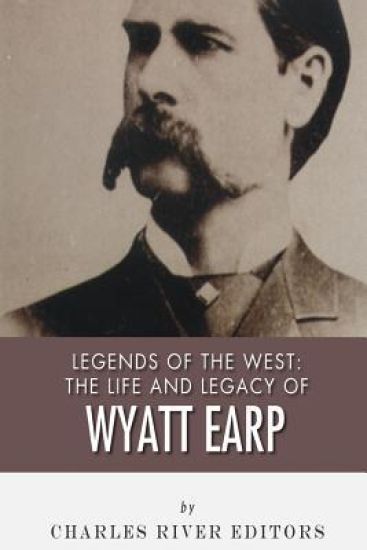
Legends of the West: The Life and Legacy of Wyatt Earp

Legends of the West: The Life and Legacy of Wyatt Earp

Charles River

Createspace Independent Publishing Platform
2013
nidottu
*Includes 30 pictures of Wyatt Earp and important people, places, and events in his life. *Explains the background surrounding the Gunfight at the OK Corral and a detailed description of how the fight went down. *Discusses lesser known facts about Earp's life, including his friendships with Hollywood movie stars like Charlie Chaplin and John Wayne. *Includes a Bibliography for further reading. Space may be the final frontier, but no frontier has ever captured the American imagination like the "Wild West", which still evokes images of dusty cowboys, outlaws, gunfights, gamblers, and barroom brawls over 100 years after the West was settled. A constant fixture in American pop culture, the 19th century American West continues to be vividly and colorful portrayed not just as a place but as a state of mind. In Charles River Editors' Legends of the West series, readers can get caught up to speed on the lives of America's most famous frontier figures in the time it takes to finish a commute, while learning interesting facts long forgotten or never known. Of all the colorful characters that inhabited the West during the 19th century, the most famous of them all is Wyatt Earp (1848-1929), who has long been regarded as the embodiment of the Wild West. Considered the "toughest and deadliest gunman of his day", Earp symbolized the swagger, the heroism, and even the lawlessness of the West, notorious for being a law enforcer, gambler, saloon keeper, and vigilante. The Western icon is best known for being a sheriff in Tombstone, but before that he had been arrested and jailed several times himself, in one case escaping from prison, and he was not above gambling and spending time in "houses of ill-fame". The seminal moment in Earp's life also happened to be the West's most famous gunfight, the Gunfight at the O. K. Corral, which famously pitted Earp, his brothers Morgan and Virgil, and Doc Holliday against Billy Clanton, Tom McLaury and Frank McLaury. Though the gunfight lasted less than a minute, it is still widely remembered as the climactic event of the period, representing lawlessness and justice, vendettas, and a uniquely Western moral code. For Earp, the aftermath led to assassination attempts on his brothers, one of which was successful, touching off the "Earp Vendetta Ride". By the end of the 19th century, Earp was already a poignant symbol of that time and day, having permanently etched his name in the folklore of the West, but he stayed out west, engaging in everything from gold mining to vigilante justice on the Mexican border. A living legend, he even served as an advisor to early Hollywood, which was already pumping out Western movies. When he died in 1929 at the age of 80, one of the West's toughest fighers and one of its longest survivors had finally passed. Legends of the West: The Life and Legacy of Wyatt Earp details Earp's amazing life and career, including all of its famous ups and infamous downs, while also analyzing his legacy and the mythology that has enveloped his story. Along with pictures of important people, places, and events in his life, you will learn about Wyatt Earp like you never have before, in no time at all.

American Legends: The Life of Lauren Bacall

American Legends: The Life of Lauren Bacall

Charles River

Createspace Independent Publishing Platform
2013
nidottu
*Includes pictures. *Includes Bacall's own quotes about her life and career. *Includes a bibliography for further reading. "Imagination is the highest kite that can fly." - Lauren Bacall A lot of ink has been spilled covering the lives of history's most influential figures, but how much of the forest is lost for the trees? In Charles River Editors' American Legends series, readers can get caught up to speed on the lives of America's most important men and women in the time it takes to finish a commute, while learning interesting facts long forgotten or never known. It is exceedingly difficult to think about Lauren Bacall without also thinking of her famous husband, Humphrey Bogart. After all, it is no accident that Bacall was entirely unknown before starring at just 20 years old with her future husband in Howard Hawks' famous film To Have and Have Not in 1944. And of course, Bogart's infatuation with the young actress helped ensure she would continue to be cast in movies with him moving forward. "Bogie and Bacall" are just one of a number of legendary romantic screen duos in film history, and there have been other famous screen couples who made headlines off the set as well, but few compare in terms of success. In the wake of their first film together, Bacall and Bogart captivated audiences in other films during the decade, including The Big Sleep (1946), Dark Victory (1947), and finally, Key Largo (1948). Even though they did not appear in a large number of films together, the popularity and cultural significance of these films solidified the status of "Bogie and Bacall" as one of the premier romantic couples in film history. When Bogart died in 1957, Bacall was still in her 30s, yet from 1957 onward her name scarcely surfaces in popular culture, as though Bacall was simply wiped away with her late husband. In fact, it often comes as a great surprise to people that Bacall is still alive and well as she nears her 90th birthday. For her part, Bacall has remained at least partially in the public eye through her own meticulous documentation of her life, captured through two detailed memoirs (the first published in the late 1970s, the second published in 2005.) It is true that Bacall never reached anything close to the heights of the fame she enjoyed with Bogart, but she appeared in many movies in the years after his death and was even involved in a second high-profile marriage with actor Jason Robards from 1961-1969. She has remained active well into old age and never officially retired; in fact, she held a starring role in the 2012 film The Forger. American Legends: The Life of Lauren Bacall examines each period of Bacall's life, addressing her life before, during, and after her relationship with Humphrey Bogart. In particular, Bacall's career is a case study in how to age gracefully on film and television. Her life and career illuminate many pertinent areas of cinema and American culture, and the role of women in film and society. Along with pictures of important people, places, and events, you will learn about Lauren Bacall like never before, in no time at all.
American Legends: The Life of Brigham Young

American Legends: The Life of Brigham Young

Charles River

Createspace Independent Publishing Platform
2013
nidottu
*Includes pictures of Young and important people and places in his life. *Discusses Young's leadership of the Mormons, his views on issues like polygamy, and his controversial battles with federal authorities. *Includes a Bibliography for further reading. "I know just as well what to teach this people and just what to say to them and what to do in order to bring them into the celestial kingdom... I have never yet preached a sermon and sent it out to the children of men, that they may not call Scripture. Let me have the privilege of correcting a sermon, and it is as good Scripture as they deserve. The people have the oracles of God continually." - Brigham Young A lot of ink has been spilled covering the lives of history's most influential figures, but how much of the forest is lost for the trees? In Charles River Editors' American Legends series, readers can get caught up to speed on the lives of America's most important men and women in the time it takes to finish a commute, while learning interesting facts long forgotten or never known. Next to Joseph Smith, Brigham Young is one of the best known Mormon leaders and perhaps the most important. After Smith's death, it was Young who led Mormon pioneers westward in a journey that the Latter Day Saints often likened to the Exodus, and Young became popular as "American Moses". At the same time, Young and his group were involved in a seemingly never ending list of controversies, both of their own making and the misconceptions of so many Americans who were unfamiliar with the religion. As Young's prominence and fame grew, people came from all over the world to meet the Mormon leader. And when they did, they met, by most accounts, an unremarkable man. He was handsome, of six feet height and a continual growth-of-girt over two hundred pounds. His eyes were blue-gray, not friendly, but secretive, some said, pointing out his clenched mouth, clearly used to firmness. He was not an animated talker, except for the finger he used to emphasize a moral point. When he sermonized, he barely filled his speeches with excerpts from the Book of Mormon, but instead provided anecdotes about fence building or cattle raising. His choice of words was well rounded, but he did possess provincialisms of his Vermont birth, with disagreeable choices in pronunciation. Maybe these plainspoken and unremarkable characteristics are explainable by the station of his birth. It was said he distrusted intellectuals, evidenced partly by his dissatisfaction with his apostles who exhibited a love for ideas, or even his own abhorrence of doctors, saying he had never let a doctor in his house for 40 years. Young was a person people were sure they'd never meet again, and they were usually right. What can be said about Young is his plain-spoken demeanor of appearance and personality made his efforts to connect with the members of his church all the more authentic. He looked and acted like most Mormons, and despite the dressed up appearance he gave to dignitaries who met him, his common touch worked because he genuinely cared about his fellow Saints. No matter the controversies that raged in the territory of Utah about Mormon lieutenants harassing federal officials, or the rumors of Danite murders of non-Mormons and apostates. The people of Zion cared about him, seeing him as their representative, and in the years to come, the defender of their way of life. American Legends: The Life of Brigham Young chronicles the amazing life of the Mormon leader, examines his leadership of the group, and analyzes his enduring legacy. Along with pictures of important people, and places, you will learn about Brigham Young like you never have before, in no time at all.
American Legends: The Life of Sacagawea

American Legends: The Life of Sacagawea

Charles River

Createspace Independent Publishing Platform
2013
nidottu
*Includes pictures of art depicting Sacagawea and important people, places, and events in her life. *Includes passages about Sacagawea from the journals of Lewis and Clark. *Explains Sacagawea's role in the legendary Lewis and Clark Expedition *Includes a Bibliography for further reading. "Your woman who accompanied you that long dangerous and fatigueing rout to the Pacific Ocian and back diserved a greater reward for her attention and services on that rout than we had in our power to give her at the Mandans." - William Clark in a letter to Sacajawea's husband A lot of ink has been spilled covering the lives of history's most influential figures, but how much of the forest is lost for the trees? In Charles River Editors' American Legends series, readers can get caught up to speed on the lives of America's most important men and women in the time it takes to finish a commute, while learning interesting facts long forgotten or never known. Sacagawea is one of the most famous Native American women in American history, and few played such a central role in the settlement of the West for the young nation. As a young woman who was married to a French trapper from Quebec, Sacagawea happened to be in the right place at the right time for the legendary Lewis and Clark expedition, which set off for the Pacific coast after President Thomas Jefferson negotiated the Louisiana Purchase with France. The young Shoshone girl acted as a guide and interpreter for the expedition, helping it safely travel thousands of miles west from North Dakota to the Pacific over unfamiliar ground and amongst unfamiliar peoples. Put simply, the expedition could not have succeeded without her. Sacagawea's role in the Lewis and Clark expedition made her a national figure, and she continued to be popularized in literature and even among groups advocating for women's rights. Sacagawea is still taught to every American in school and stands alongside Pocahontas as the most famous Native American women, even though few people knew much about her life aside from her role in the trek. For that reason, few truly know about her life, her tribe, or her death, the latter of which is still controversial. At the same time, given the history and conflicts between the United States and various Native American tribes during the 19th century, Sacagawea's role in helping the nation push westward at the expense of Native Americans has taken on a more mixed and controversial character. American Legends: The Life of Sacagawea profiles the life and legacy of the famous Shoshone woman, including the known and unknown, while analyzing her lasting legacy. Along with pictures of important people, places, and events, you will learn about Sacagawea like you never have before, in no time at all.