Kirjojen hintavertailu – 12 903 725 kirjaa ja 27 kauppaa

Kirjailija

Charles River

Kirjat ja teokset yhdessä paikassa: 4 673 kirjaa, julkaisuja vuosilta 2013–2022, suosituimpiin kuuluu William Powell and Myrna Loy: The Lives and Careers of One of Classical Hollywood's Most Iconic Duos. Vertaile teosten hintoja ja tarkista saatavuus suomalaisista kirjakaupoista.

4 673 kirjaa

Kirjojen julkaisuvuodet: 2013–2022.

American Legends: The Life of Muhammad Ali

American Legends: The Life of Muhammad Ali

Charles River

Createspace Independent Publishing Platform
2013
nidottu
*Includes Ali's most colorful quotes. *Includes pictures of Ali and other boxers he fought. "To prove I am great, he will fall in eight." - Muhammad Ali A lot of ink has been spilled covering the lives of history's most influential figures, but how much of the forest is lost for the trees? In Charles River Editors' American Legends series, readers can get caught up to speed on the lives of America's most important men and women in the time it takes to finish a commute, while learning interesting facts long forgotten or never known. The sports world has never suffered from a shortage of self-promoters, but none have ever walked the walk and backed up the talk like Muhammad Ali, boxing's greatest icon and possibly history's most famous athlete. Indeed, even referring to Ali just as a boxer does a disservice to the transcendent figure he has become around the world as a living legend. Of course, the legend of Ali begins in the squared circle, where a young, brash kid named Cassius Clay rose to the top of the boxing world with a style so unorthodox that anyone else attempting it would all but assure he'd get knocked out. But Ali became the heavyweight champ by keeping his hands low, "floating like a butterfly and stinging like a bee", and outboxing heavyweight champions like Sonny Liston, Joe Frazier, George Foreman, and Floyd Patterson. In his early years, Muhammad Ali truly was the Greatest, and he could only be stopped by the Vietnam War, when his refusal to enter the armed forces resulted in his arrest and the stripping of his title. Ali also lost 3 years of his fighting prime before returning to the ring, but his most iconic fights were still ahead of him, including the "The Thrilla in Manilla" and "The Rumble in the Jungle". By now, Ali's outspoken nature had earned him both praise and scorn in the boxing world and outside of it; Smokin Joe Frazier spent decades infuriated by Ali's disparaging comments about him during their clashes. In fact, it's unclear whether Ali would be as idolized as he is now if he hadn't suffered Parkinson's Disease, likely a result of all his fights and the longevity of his career. Since his retirement, Ali has remained a pop culture fixture and global icon, and he has been honored with too many awards to count. Held in awe just about everywhere, Ali has lit the torch at the Olympics, received the Presidential Medal of Freedom, and received the Presidential Citizens Medal, among other honors. American Legends: The Life of Muhammad Ali looks at the life and career of boxing's greatest icon, his colorful quotes, and his lasting legacy. Along with pictures of important people, places, and events, you will learn about Ali like you never have before, in no time at all.

American Legends: The Life of Frank Sinatra

American Legends: The Life of Frank Sinatra

Charles River

Createspace Independent Publishing Platform
2013
nidottu
*Includes pictures. *Includes some of Sinatra's most famous and colorful quotes. *Includes a Bibliography for further reading. "May you live to be 100 and may the last voice you hear be mine." - Frank Sinatra A lot of ink has been spilled covering the lives of history's most influential figures, but how much of the forest is lost for the trees? In Charles River Editors' American Legends series, readers can get caught up to speed on the lives of America's most important men and women in the time it takes to finish a commute, while learning interesting facts long forgotten or never known. America has always celebrated its star entertainers, but Frank Sinatra remains a unique American legend. A pop culture fixture for over half a century, Sinatra's music is still cherished, and his persona remains its own archetype of the quintessential American star. Sinatra transcended genres to the extent that his music stands alone as its own kind of American music, with songs like "New York, New York," "Chicago," and "Come Fly With Me" instantly recognizable among all Americans. Of course, there was also the life that went with the music. The cultural identity of the Rat Pack, epitomized in the 1960 film Ocean's Eleven, further contributed to his fame, and everyone knows and appreciates the image of easy living, smooth voice and exuberant star power that Sinatra represents. If anything, Sinatra's ability to make so many people feel happy and good about themselves was one of the main ingredients of his success. And as evidence of the fact that Americans don't mind their stars doing a little dirt, Sinatra's rap sheet and relationship with the mob are practically a celebrated part of his life. Given his almost universal appeal, it is easy to forget that Sinatra did not always enjoy strong popularity during his career. He had a meteoric rise to fame, but he also suffered a terrible mid-career slump in popularity and was forced to work hard to reinvent his public image. In a sense, the many changes to his public identity only make him even more American; the American public loves an underdog figure, and during his rise back to fame Sinatra came to embody the struggling American hero. The many transformations that Sinatra made throughout his career were necessary to cement his legacy as an unshakable American icon. American Legends: The Life of Frank Sinatra looks at the life, career and legacy of Ol' Blue Eyes. Along with pictures of important people, places and events in his life, you will learn about Sinatra like you never have before, in no time at all.
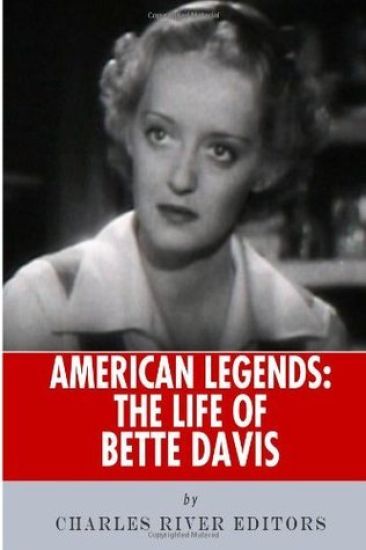
American Legends: The Life of Bette Davis

American Legends: The Life of Bette Davis

Charles River

Createspace Independent Publishing Platform
2013
nidottu
*Includes pictures of Davis and important people, places, and scenes. *Includes Davis' own quotes about her upbringing, films and relationships. *Includes a Bibliography for further reading. "Even the most inconsiderable film ... seemed temporarily better than they were because of that precise, nervy voice, the pale ash-blond hair, the popping, neurotic eyes, a kind of corrupt and phosphorescent prettiness ... I would rather watch Miss Davis than any number of competent pictures." - English critic Graham Greene, 1936 A lot of ink has been spilled covering the lives of history's most influential figures, but how much of the forest is lost for the trees? In Charles River Editors' American Legends series, readers can get caught up to speed on the lives of America's most important men and women in the time it takes to finish a commute, while learning interesting facts long forgotten or never known. Bette Davis presided over Hollywood at a time in which the film industry was at its most influential. Every actress from Katharine Hepburn to Ingrid Bergman and Ginger Rodgers, themselves now considered among Hollywood's greatest icons, lived in the shadow of Bette Davis. Not only was Davis a box office sensation and commercial success - she became the highest paid actress in 1938 - but she garnered more critical acclaim than any other actress during the time period, as evidenced by the fact that she was the first actress to be nominated for 10 Academy Awards. Even more than two decades after her death, Davis remains popular, and films of hers, most notably All About Eve (1950) and Now, Voyager (1942), are routinely viewed by the public and continue to be taught in college film classes. Recently, her place in history was cemented when she was named as the second greatest actress of the 20th century by the American Film Institute behind only Katharine Hepburn (AFI 100 Years...100 Stars). Her legacy remains unbroken, not only because of her own film performances but also due to the influence she had on subsequent actresses. While no one would question Bette Davis' importance in American film history, it is impossible not to acknowledge that her persona carries a novelty highly distinct from that of other actresses. Davis admittedly never possessed the glamour of Marlene Dietrich, Ingrid Bergman, or other such stars of the time period. Even Katharine Hepburn, another eccentric contemporary of hers, was considered far more capable of playing a romantic lead than Davis. As a result, Davis was relegated to appearing in roles that were less glamorous, unfortunate or even unsympathetic. At the same time, there were benefits that went along with the limitations; Davis was denied the opportunity to appear as attractive as possible before the audience, but she was also able to achieve a unique niche and receive roles that were in many respects more interesting than the one-dimensional characters portrayed by her contemporaries. In this regard, it was her "otherness" that paved the way for Bette Davis to receive the roles that would give her more wealth and critical acclaim than any actress that had come before her. American Legends: The Life of Bette Davis profiles the life and career of one of America's most iconic actresses. Along with pictures of important people, places, and events, you will learn about Bette Davis like you never have before, in no time at all.
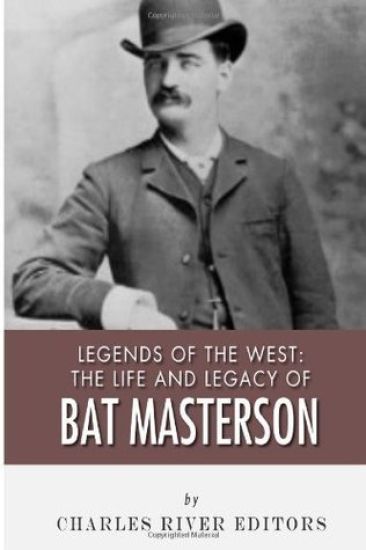
Legends of the West: The Life and Legacy of Bat Masterson

Legends of the West: The Life and Legacy of Bat Masterson

Charles River

Createspace Independent Publishing Platform
2013
nidottu
*Includes pictures of important people and places. *Discusses Masterson's most famous shootouts and his friendship with famous Westerners like Wyatt Earp and Buffalo Bill. *Includes a Bibliography for further reading. "I have come over a thousand miles to settle this. I know you are heeled armed]. Now fight " - Bat Masterson Space may be the final frontier, but no frontier has ever captured the American imagination like the "Wild West", which still evokes images of dusty cowboys, outlaws, gunfights, gamblers, and barroom brawls over 100 years after the West was settled. A constant fixture in American pop culture, the 19th century American West continues to be vividly and colorful portrayed not just as a place but as a state of mind. In Charles River Editors' Legends of the West series, readers can get caught up to speed on the lives of America's most famous frontier figures in the time it takes to finish a commute, while learning interesting facts long forgotten or never known. Though he is no longer as well remembered as he once was, one of the most famous and notorious lawmen of the Wild West was Bat Masterson, who drifted around Dodge City and other parts of the West and was associated with legends like Wyatt Earp. Carrying a six-shooter that he called "the gun that tamed the West", Masterson was involved in several duels and shootouts, much of which was embellished during the early 20th century when he became a newspaper columnist and was given a chance to frame anecdotes about the frontier days and talk about colorful characters like Doc Holliday. Like Wyatt Earp, who once served as a lawman under him, Masterson was primarily known as being on the right side of the law, but he wasn't afraid to firmly straddle both sides of it. While tall tales about shootouts were commonplace and believed wholesale throughout the West in the 19th century, few men had as strong a reputation as Bat Masterson, who was known for public shootouts, one of which took place in Dodge City in 1878 that ended with the death of his brother and town marshal, Ed Masterson. Bat also took part in the famous Earp Vendetta Ride near Tombstone, which occurred in the wake of the Shootout at the O. K. Corral. Given the number of times he fought, and the fact that he was shot and injured himself, perhaps Bat Masterson's most remarkable feat was that he managed to survive into the 20th century, something few Western legends of his era (with the exception of Wyatt Earp) accomplished. Thanks to his survival, Masterson was able to parlay his notoriety into opportunities back East, including even being appointed marshal in New York by President Theodore Roosevelt. Through his reputation and his position as a writer, when Masterson died in 1921 at an office desk writing a newspaper column, he was something of a folk hero, and he would go on to be the title character of a critically acclaimed television series in the late 1950s. Legends of the West: The Life and Legacy of Bat Masterson chronicles the Western icon's life and examines the myths and legends in an attempt to separate fact from fiction. Along with pictures of important people, places, and events, you will learn about Bat Masterson like you never have before, in no time at all.
American Legends: The Life of Davy Crockett

American Legends: The Life of Davy Crockett

Charles River

Createspace Independent Publishing Platform
2013
nidottu
*Discusses some of the legends and controversies surrounding Crockett's life, including his fate at the Alamo. *Includes passages from Crockett's autobiography about some of his frontier exploits and legendary adventures. *Includes the story about Crockett's famous Not Yours To Give speech, and the debate over whether he actually gave it. *Includes pictures of Crockett and other important people and places in his life. *Includes a Bibliography for further reading. "I know not whether, in the eyes of the world, a brilliant death is not preferred to an obscure life of rectitude. Most men are remembered as they died, and not as they lived. We gaze with admiration upon the glories of the setting sun, yet scarcely bestow a passing glance upon its noonday splendor." - Davy Crockett A lot of ink has been spilled covering the lives of history's most influential figures, but how much of the forest is lost for the trees? In Charles River Editors' American Legends series, readers can get caught up to speed on the lives of America's most important men and women in the time it takes to finish a commute, while learning interesting facts long forgotten or never known. The Wild West and the frontier have long held a special place in the narrative of American history, and of all the legends and folk heroes who lived in the 19th century, none became as famous as Davy Crockett, "The King of the Wild Frontier". Crockett had the distinction of being a living legend in his own life. Known as a hardscrabble frontiersman who could spin a good yarn but who also took a no-nonsense approach that brought him from the backwoods of Tennessee to the halls of Congress. Though he served during the presidency of another Westerner, Andrew Jackson, Crockett was very much his own man, and he was distrustful of other politicians, a sentiment that has only endured him further to subsequent generations of Americans. In 1834, Crockett was promoting his autobiography, which provided colorful accounts of his life on the frontier, all while facing reelection. In the midst of the campaign, Crockett noted, "I told the people of my district that I would serve them as faithfully as I had done; but if not ... you may all go to hell, and I will go to Texas." When he lost in 1834, he kept his word and set off for Texas, a spot he grew to love so much that he would write to his children in 1836, "I must say as to what I have seen of Texas, it is the garden spot of the world. The best land & best prospects for health I ever saw is here, and I do believe it is a fortune to any man to come here. There is a world of country to settle." Crockett was famous in his lifetime, but it was his death in Texas that made him an American legend. Though there is still some mystery and controversy surrounding exactly what transpired at the Battle of the Alamo, the deaths of Crockett, Travis, Bowie and the rest of the defenders at the hands of Santa Anna's Mexican soldiers became a symbol of sacrifice and defiance, and the battle itself became a rallying cry throughout the rest of Texas' War for Independence. Naturally, it also cemented Crockett's legacy as well. American Legends: The Life of Davy Crockett looks at the amazing life of the frontier hero, his controversial death, and the fantastic legends and mythmaking that have shaped his legacy. Along with pictures of important people, places, and events, you will learn about The King of the Wild Frontier like you never have before, in no time at all.
American Legends: The Life of John Brown

American Legends: The Life of John Brown

Charles River

Createspace Independent Publishing Platform
2013
nidottu
*Includes pictures of Brown and important people and places in his life. *Includes Brown's jailhouse interview and courtroom statement after being convicted and sentenced to death. *Discusses the relationships Brown had with famous contemporaries like Frederick Douglass, Henry David Thoreau, and Ralph Waldo Emerson. "I, John Brown, am now quite certain that the crimes of this guilty land will never be purged away but with blood. I had, as I now think vainly, flattered myself that without very much bloodshed it might be done." - John Brown the day of his execution A lot of ink has been spilled covering the lives of history's most influential figures, but how much of the forest is lost for the trees? In Charles River Editors' American Legends series, readers can get caught up to speed on the lives of America's most important men and women in the time it takes to finish a commute, while learning interesting facts long forgotten or never known. Throughout the 1850s, American politicians tried to sort out the nation's intractable issues. In an attempt to organize the center of North America - Kansas and Nebraska - without offsetting the slave-free balance, Senator Stephen Douglas of Illinois proposed the Kansas-Nebraska Act. The Kansas-Nebraska Act eliminated the Missouri Compromise line of 1820, which the Compromise of 1850 had maintained. Settlers could now vote whether they wanted their state to be slave or free, and the primary result was that thousands of zealous pro-slavery and anti-slavery advocates both moved to Kansas to influence the vote, creating a dangerous and ultimately deadly mix. The most famous and infamous of them all was John Brown, one of the most controversial men in American history. A radical abolitionist, Brown organized a small band of like-minded followers and fought with the armed groups of pro-slavery men in Kansas for several months, including a notorious incident known as the Pottawatomie Massacre, in which Brown's supporters murdered five men. In 1859 he began to set a new plan in motion that he hoped would create a full scale slave uprising in the South. Brown's plan relied on raiding Harpers Ferry, a strategically located armory in western Virginia that had been the main federal arms depot after the Revolution. Given its proximity to the South, Brown hoped to seize thousands of rifles and move them south, gathering slaves and swelling his numbers as he went. The slaves would then be armed and ready to help free more slaves, inevitably fighting Southern militias along the way. Brown traveled to Harper's Ferry that summer under an assumed name and waited for his recruits, but he struggled to get even 20 people to join him. Rather than call off the plan, however, Brown went ahead with it, and that Fall, he and his men used hundreds of rifles to seize the armory at Harper's Ferry. However, the plan went haywire from the start, and word of his attack quickly spread. Local pro-slavery men formed a militia and pinned Brown and his men down while they were still at the armory. The fallout from John Brown's raid on Harpers Ferry was intense. Southerners had long suspected that abolitionists hoped to arm the slaves and use violence to abolish slavery, and Brown's raid seemed to confirm that. Meanwhile, much of the northern press praised Brown for his actions. In the South, conspiracy theories ran wild about who had supported the raid, and many believed prominent abolitionist Republicans had been behind the raid as well. Brown's raid has often been considered one of the main precursors to the Civil War. American Legends: The Life of John Brown chronicles the life of the controversial abolitionist, examining his raid and his lasting legacy. Along with pictures of important people, places, and events, you will learn about John Brown like you never have before, in no time at all.
Legends of Music: The Life and Legacy of Jimi Hendrix

Legends of Music: The Life and Legacy of Jimi Hendrix

Charles River

Createspace Independent Publishing Platform
2013
nidottu
*Includes a suggested playlist of Hendrix's greatest songs and performances. *Includes pictures of Hendrix and important people and places in his life. *Includes a Bibliography for further reading. "They're claiming that the grunge bands] finally put Seattle on the map, but, like, what map? ... I mean, we had Jimi Hendrix. Heck, what more do we want?" - Kurt Cobain It is rare in the world of music for a general consensus to form over who was the best at anything. Many would call The Beatles the greatest rock band, but it's easy to find strongly opinionated dissenters. However, when it came to playing a guitar and laying the soundtrack for the psychedelic era, just about everyone agrees there was Jimi Hendrix (1942-1970) and then there was everyone else. Anyone arguing otherwise either never heard his music or saw him perform. In fact, Jimi Hendrix is one of the few musicians known primarily for his sound and what he could do with a guitar than for his discography. A part of that is due to his untimely death and entry into the 27 Club, but it is also due to the fact that he was so revolutionary with the use of an electric guitar and so skilled at playing it that the effects have largely not been duplicated since. It was heavy, loud, and completely raw, and yet he was a pioneer in genres as varied as blues and heavy metal. As Pete Townshend famously put it, "With Jimi, I didn't have any envy. I never had any sense that I could ever come close." Ironically, Jimi would later insist that the music that came to him sounded so much better in his head than he was capable of playing that sometimes he didn't even bother grabbing his guitar to try to sound it out. While rock fans can only imagine what it must have sounded like if Jimi didn't feel qualified to play it, they're more than happy with what he did play. When The Jimi Hendrix Experience was inducted into the Rock & Roll Hall of Fame, their award noted that Hendrix "expanded the range and vocabulary of the electric guitar into areas no musician had ever ventured before. His boundless drive, technical ability and creative application of such effects as wah-wah and distortion forever transformed the sound of rock and roll." Jimi would have been memorable simply on the basis of being rock's greatest guitarist, but he also epitomized the counterculture and psychedelic nature of the times, adding a visual flare to his performances that provided a picture with the audio. Jimi wore outfits that defined the era, and whether he was somehow managing to play his guitar with one hand or lighting it on fire, Pete Townshend of The Who noted that it somehow seemed to sober up even those who were tripping on LSD in the crowd. Unfortunately, drugs were at the center of Hendrix's life, music, and death. In the early morning hours of September 18, 1970, Hendrix died of an accidental overdose, just two weeks before Janis Joplin would die of an overdose at the same age. Like other members of the 27 Club, including Jim Morrison, Janis Joplin, and Kurt Cobain, Hendrix has become something of a cult figure, and his popularity remains much higher in death than in life. Legends of Music: The Life and Legacy of Jimi Hendrix covers the great guitarist's life and career in detail, both in and out of the studio, while also discussing his death and analyzing his lasting legacy. Along with a suggested playlist of Hendrix's songs and pictures of important people, places, and events in his life, you will learn about Jimi like you never have before, in no time at all.
American Legends: The Life of Ernest Hemingway

American Legends: The Life of Ernest Hemingway

Charles River

Createspace Independent Publishing Platform
2013
nidottu
*Includes pictures of important people and places. *Includes some of Hemingway's most famous quotes. *Analyzes the real life inspirations behind Hemingway's work and separates fact from fiction regarding Hemingway's life. *Includes a Bibliography for further reading. "If a writer of prose knows enough of what he is writing about he may omit things that he knows and the reader, if the writer is writing truly enough, will have a feeling of those things as strongly as though the writer had stated them. The dignity of movement of an ice-berg is due to only one-eighth of it being above water. A writer who omits things because he does not know them only makes hollow places in his writing." - Ernest Hemingway, Death in the Afternoon A lot of ink has been spilled covering the lives of history's most influential figures, but how much of the forest is lost for the trees? In Charles River Editors' American Legends series, readers can get caught up to speed on the lives of America's most important men and women in the time it takes to finish a commute, while learning interesting facts long forgotten or never known. Ernest Hemingway is famous across the world and has been remembered in his own country as an American icon widely considered one of the most influential American authors of the 20th century. Students are unlikely to leave high school without reading one of Hemingway's classics, especially The Sun Also Rises (1926), and they are usually introduced to rudimentary details about Hemingway's eclectic life and controversial death. Hemingway's literary career included several unquestioned classics, but a great deal of his fame and notoriety today comes from the fact that it has become impossible to separate his work from his life. In fact, Hemingway's service in World War I and his time as a war correspondent at places like Normandy during D-Day in World War II have also established him as the kind of masculine, adventurous man that Americans have long held out as cultural heroes. This is made even more ironic by the fact that Hemingway spent so much time overseas, both in Europe and Africa, to the extent that he became one of the most identifiable members of the "Lost Generation" of American expatriates, which included literary stars like F. Scott Fitzgerald and Gertrude Stein. It is possible today for people to be familiar with the basic outline of his life despite rarely coming into contact with his writing. Of course, Hemingway's life story is incomplete without discussion of his suicide, which naturally makes the man come across as even more enigmatic. As people continue to debate the exact physical and mental reasons behind Hemingway's suicide, it has helped ensure that a spotlight remains fixated on his life as a whole, and everything from the controversial relationships he had to the mysterious nature of his death continues to provide grist for literature and Hollywood today. American Legends: The Life of Ernest Hemingway profiles the life and career of one of America's most famous authors. Along with pictures of important people, places, and events, you will learn about Hemingway like you never have before, in no time at all.
American Legends: The Life of F. Scott Fitzgerald

American Legends: The Life of F. Scott Fitzgerald

Charles River

Createspace Independent Publishing Platform
2013
nidottu
*Includes pictures of important people and places. *Includes some of Fitzgerald's most famous quotes. *Analyzes the real life inspirations behind Fitzgerald's work and the stormy relationship with Zelda. *Includes a Bibliography for further reading. "All good writing is swimming under water and holding your breath." - F. Scott Fitzgerald A lot of ink has been spilled covering the lives of history's most influential figures, but how much of the forest is lost for the trees? In Charles River Editors' American Legends series, readers can get caught up to speed on the lives of America's most important men and women in the time it takes to finish a commute, while learning interesting facts long forgotten or never known. The 1920s in the United States were known as the "Roaring Twenties" and the Jazz Age, a time in the nation that glorified hard and fast living. Nobody personified the age or wrote so descriptively about it better than F. Scott Fitzgerald (1896-1940), whose name became synonymous with the times after penning the epic Great Gatsby. Along with his dazzling wife Zelda, Fitzgerald was all too keen to play the role. When his writing made them celebrities, they were celebrated by the national press for being "young, seemingly wealthy, beautiful, and energetic." While Scott used their relationship as material in his novels, Zelda wrote herself, and she also strove to become a ballerina. However, the Fitzgeralds barely outlasted the '20s. Their hard living left Fitzgerald, a notorious alcoholic, in poor health by the '30s. Financially broke, he would die of a massive heart attack in 1940, by which time Zelda had already suffered various mental illnesses. Zelda died in a freak fire in 1948, both Fitzgeralds having burned out almost as quickly as they had shined. Interest in the Fitzgeralds, and particularly F. Scott Fitzgerald's writing, revived in the '50s and has been steady ever since, with Fitzgerald's Great Gatsby and other stories like This Side of Paradise being read in classrooms across the United States. In addition to their extraordinary literary quality, they continue to represent the optimism of the Roaring Twenties. American Legends: The Life of F. Scott Fitzgerald profiles the life and career of one of America's most famous writers and cultural icons. Along with pictures of important people, places, and events, you will learn about F. Scott Fitzgerald like you never have before, in no time at all.
Blackbeard: The Life and Legacy of History's Most Famous Pirate

Blackbeard: The Life and Legacy of History's Most Famous Pirate

Charles River

Createspace Independent Publishing Platform
2013
nidottu
*Includes historic illustrations of Blackbeard and important people, places, and events in his life. *Includes a profile of Blackbeard from the famous English pirate history "A General History of the Pyrates". *Discusses common legends about Blackbeard and his appearance, separating fact from fiction. "So our Heroe, Captain Teach, assumed the Cognomen of Black-beard, from that large Quantity of Hair, which, like a frightful Meteor, covered his whole Face, and frightened America more than any Comet that has appeared there a long Time. This Beard was black, which he suffered to grow of an extravagant Length; as to Breadth, it came up to his Eyes; he was accustomed to twist it with Ribbons, in small Tails, after the Manner of our Ramilies Wiggs, and turn them about his Ears." - Charles Johnson, A General History of the Robberies and Murders of the most notorious Pyrates It would be an understatement to say that pop culture's perception of piracy and pirates has been primarily influenced by Captain Edward Teach, known to the world as Blackbeard, the most famous pirate of all time. An English pirate who terrorized the high seas near the Carolinas in the early 18th century, a period often referred to as the Golden Age of Piracy, Blackbeard was the gold standard, and in the 300 years since his death he has inspired legends that have spanned books like Treasure Island, movies, and even theme park rides. Of course, like any legendary figure, Blackbeard is remembered today based more on myths than reality. People continue to let their imaginations go when it comes to Blackbeard, picturing a pirate who captured more booty than any other pirate, hid buried treasure, and lit his hair on fire before battle. People have long claimed that his ghost still haunts the Atlantic Ocean, and his contemporaries were so scared of him that they claimed to have seen his headless body swim around his pirate boat three times. The myths and legends surrounding Blackbeard tend to obscure the life he really lived, but his piracy was also notorious enough to capture headlines during his time. The British Crown put a higher price on his head than any other pirate of the era, and when an author writing under the pseudonym Charles Johnson wrote about Blackbeard in A General History of the Robberies and Murders of the most notorious Pyrates, a legend was born. Blackbeard: The Life and Legacy of History's Most Famous Pirate looks at the mysterious life and death of Blackbeard, separating fact from fiction while analyzing his lasting legacy. Along with pictures depicting Blackbeard and important people, places, and events in his life, you will learn about the famous pirate like you never have before, in no time at all.

American Legends: The Life of Thomas Edison

American Legends: The Life of Thomas Edison

Charles River

Createspace Independent Publishing Platform
2013
nidottu
Includes a list of Edison's patents. Includes pictures of Edison and important people in his life. Includes some of Edison's most inspiring quotes and explanations about his inventive techniques. "He led no armies into battle, he conquered no countries, and he enslaved no peoples... Nonetheless, he exerted a degree of power the magnitude of which no warrior ever dreamed. His name still commands a respect as sweeping in scope and as world-wide as that of any other mortal - a devotion rooted deep in human gratitude and untainted by the bias that is often associated with race, color, politics, and religion." A lot of ink has been spilled covering the lives of history's most influential figures, but how much of the forest is lost for the trees? In Charles River Editors' American Legends series, readers can get caught up to speed on the lives of America's most important men and women in the time it takes to finish a commute, while learning interesting facts long forgotten or never known. Thomas Edison holds a unique legacy in the United States, but there's no denying that his inventions have benefited the world as a whole. Known as "The Wizard of Menlo Park", every American knows that their nation's most prolific inventor harnessed the power of electricity to create the first light bulb. But that was just one of over 1,000 patents Edison would establish during his life, as he not only dreamed up new devices but also revolutionized the way materials were mass produced. His life's work heavily influenced everything from electric power, batteries and lighting to cement, telegraphy and mining. While Edison's inventions are important, what he represented was also critical to the nation as a whole. Edison represented the American Dream, specifically the notion that hard work can accomplish anything, and he always understood that himself, once exhorting the nation, "Be courageous Whatever setbacks America has encountered, it has always emerged as a stronger and more prosperous nation." As one Edison biographer put it, "Thomas Edison was more responsible than any one else for creating the modern world... No one did more to shape the physical/cultural makeup of present day civilization..." American Legends: The Life of Thomas Edison chronicles the amazing life and inventions of The Wizard of Menlo Park, but it also looks at little known facts about his life outside of his work. Along with pictures of important people and places, you will learn about Edison like you never have before, in no time at all.

Legends of the West: Dodge City, Kansas

Legends of the West: Dodge City, Kansas

Charles River

Createspace Independent Publishing Platform
2013
nidottu
*Includes pictures of Dodge City and important people and places. *Profiles Dodge City's most famous residents, including Bat Masterson and Wyatt Earp. *Highlights the history of Dodge City, as well as its forms of entertainment. *Includes a Bibliography for further reading. "Dodge City Town Company, Ford Co., Kansas. Inducements offered to actual settlers Prospects of the town better than any other in the upper Arkansas Valley Free Bridge across the Arkansas River The town a little over one year old, and contains over seventy buildings Good school, hotel, etc. AT & SF RR depot in town... Enquire of: R. M. Wright at Chas. Rath & Co. store or E. B. Kirk, Secy and Treas., Fort Dodge." Dodge City Messenger, June 25, 1874 Space may be the final frontier, but no frontier has ever captured the American imagination like the "Wild West", which still evokes images of dusty cowboys, outlaws, gunfights, gamblers, and barroom brawls over 100 years after the West was settled. A constant fixture in American pop culture, the 19th century American West continues to be vividly and colorful portrayed not just as a place but as a state of mind. In Charles River Editors' Legends of the West series, readers can get caught up to speed on the lives of America's most famous frontier figures in the time it takes to finish a commute, while learning interesting facts long forgotten or never known. The Wild West has made legends out of many men, but it has forged a lasting legacy for some of the frontier towns that hosted famous Western icons as well, and aside from Tombstone and Deadwood, no frontier town is better known than Dodge City, Kansas. In the immediate wake of the Civil War, a settlement originally developed around Fort Dodge, which had been built to protect against Indian attacks, and it became a favorite spot for the buffalo hunters on the Plains who were engaged in exterminating the bison to harm the Native American tribes. By 1876, however, Dodge City had become a popular destination spot for cattle drives starting from as far south as Texas. With that, the town also came to symbolize everything about the Old West. Dodge City brought together cowboys, lawmen, saloons, gambling, brothels, and everything in between, creating an environment that was always colorful and occasionally fatal. Since Dodge City was on the frontier, it took awhile for the law to catch up to it; even as late as September 1876, a local paper noted, "The citizens of Dodge have organized a vigilance committee and last week the committee addressed the following pointed note to every gambler in the city; 'Sir: You are hereby notified to leave this city before 6 o'clock, a. m. of Sept. 17th, 1876, and not return here.'" Lawmen finally became a fixture of Dodge City in the late 1870s, but as with so many other places in the West, the line between hero and villain was blurred; cowboy Pink Sims later wrote about Dodge City, "It was stated that the marshals were all pimps, gamblers and saloonkeepers. They had the cowboys disarmed, and with their teeth pulled they were harmless. If they got too bad or went and got a gun, they were cut down with shotguns." Dodge City's lawmen included some of the most famous men of the Wild West, including Bat Masterson and Wyatt Earp, who mixed it up in Dodge City as a deputy marshal several years before he was involved in the Gunfight at the O. K. Corral in Tombstone. Given the way the frontier town developed, as well as the people who called it home, Dodge City was certain to hold a special place in Western lore. Legends of the West: Dodge City, Kansas comprehensively covers the history of the city, profiles the people who called it home, and highlights the attractions and events that made it famous. Along with pictures of important people, places, and events, you will learn about Dodge City like you never have before, in no time at all.

American Legends: The Salem Witch Trials

American Legends: The Salem Witch Trials

Charles River

Createspace Independent Publishing Platform
2013
nidottu
*Includes descriptions of the trials and executions of the accused. *Includes testimony from some of the cases and the petitions of some of the accused asking for clemency. *Includes pictures depicting important people, places, and events. *Includes a Bibliography for further reading. "More than once it has been said, too, that the Salem witchcraft was the rock on which the theocracy shattered." - George Lincoln Burr A lot of ink has been spilled covering the lives of history's most influential figures, but how much of the forest is lost for the trees? In Charles River Editors' American Legends series, readers can get caught up to speed on the lives of America's most important men and women in the time it takes to finish a commute, while learning interesting facts long forgotten or never known. The sleepy town of Salem, Massachusetts was not unlike every other small village that dotted the countryside around Boston until 1692, when religious authorities held a series of hearings accusing dozens of people of witchcraft across a handful of towns outside of Boston, including Ipswich and Andover. However, since the most notorious trials were held in Salem, they have been known ever since as the Salem Witch Trials. Today the Salem Witch Trials are often remembered as being a relic of a superstitious past, and Salem has transformed itself into a tourist haven and Halloween destination by capitalizing off the Salem Witch trials. But it was deadly serious in 1692, when 19 men and women found themselves taken to "Gallows Hill" and hanged for being witches. Another man who was over 80 years old was pressed to death for refusing to be tried for witchcraft. And from February 1692 - May 1693, hundreds of others were accused of witchcraft, and dozens of them were imprisoned for months until the mass hysteria finally died down. The Salem Witch Trials are still taught to American schoolchildren, but much of the context is removed from the narrative, and important questions are often never posed. How did the Salem Witch Trials go on for over a year? Why did it happen in Salem? Why were the condemned people accused of witchcraft? American Legends: The Salem Witch Trials chronicles the history that led up to the infamous trials, and the legends and myths surrounding them. Along with pictures of important people, places, and events, you will learn about the Salem Witch Trials like you never have before, in no time at all.
Ernest Hemingway & F. Scott Fitzgerald: America's Greatest 20th Century Novelist

Ernest Hemingway & F. Scott Fitzgerald: America's Greatest 20th Century Novelist

Charles River

Createspace Independent Publishing Platform
2013
nidottu
*Includes pictures of important people and places. *Includes some of the authors' most famous quotes. *Analyzes the real life inspirations behind their work and relationships. *Explains the relationship and rivalry between Hemingway and Fitzgerald. *Includes a Bibliography of each for further reading. The 1920s in the United States were known as the "Roaring Twenties" and the Jazz Age, a time in the nation that glorified hard and fast living. Nobody personified the age or wrote so descriptively about it better than F. Scott Fitzgerald (1896-1940), whose name became synonymous with the times after penning the epic Great Gatsby. Along with his dazzling wife Zelda, Fitzgerald was all too keen to play the role. When his writing made them celebrities, they were celebrated by the national press for being "young, seemingly wealthy, beautiful, and energetic." While Scott used their relationship as material in his novels, Zelda wrote herself, and she also strove to become a ballerina. However, the Fitzgerald's barely outlasted the '20s. Their hard living left Fitzgerald, a notorious alcoholic, in poor health by the '30s. Financially broke, he would die of a massive heart attack in 1940, by which time Zelda had already suffered various mental illnesses. Zelda died in a freak fire in 1948, both Fitzgerald's having burned out almost as quickly as they had shined. Fitzgerald traveled constantly, and one of his expatriate friends in Europe was none other than Ernest Hemingway, widely considered one of the most influential American authors of the 20th century. Students are unlikely to leave high school without reading one of Hemingway's classics, especially The Sun Also Rises (1926), and they are usually introduced to rudimentary details about Hemingway's eclectic life and controversial death. Hemingway's literary career included several unquestioned classics, but a great deal of his fame and notoriety today comes from the fact that it has become impossible to separate his work from his life. In fact, Hemingway's service in World War I and his time as a war correspondent at places like Normandy during D-Day in World War II have also established him as the kind of masculine, adventurous man that Americans have long held out as cultural heroes. This is made even more ironic by the fact that Hemingway spent so much time overseas, both in Europe and Africa, to the extent that he became one of the most identifiable members of the "Lost Generation" of American expatriates, which included literary stars like Fitzgerald and Gertrude Stein. It is possible today for people to be familiar with the basic outline of his life despite rarely coming into contact with his writing. Fitzgerald and Hemingway had tumultuous lives, so it was only fitting that they had a tumultuous friendship that also bordered on rivalry. In fact, Fitzgerald hoped that the last novel he was working on before his untimely end, The Last Tycoon, would propel him to the top of the literary world again, a spot occupied by Hemingway after the publication of For Whom The Bell Tolls. While that novel wouldn't do it, The Great Gatsby ultimately ensured that Fitzgerald would remain renowned, and the two have been permanently associated with each other ever since. America's Greatest 20th Century Novelists profiles the lives and careers of two of America's most famous writers and cultural icons. Along with pictures of important people, places, and events, you will learn about Hemingway and Fitzgerald like you never have before.
The Top 5 Most Influential Explorers: Marco Polo, Christopher Columbus, Hernán Cortés, Ferdinand Magellan, and Sir Francis Drake
Includes extracts from Columbus's journal of his first voyage. Includes Cortes's letter to King Charles V describing Tenochtitlan and the Aztec Empire. Includes passages from Antonio Pigafetta, a member of Magellan's crew. Includes descriptions of both the Aztec and Inca Empires. Includes pictures of the explorers and important Includes a Bibliography for further reading. *Includes a Table of Contents. Marco Polo was hardly the only European merchant or trader who traveled to the Far East, but it was his written account of his travels that would generate extreme interest in Asia. Having described such a rich land full of desired resources, Marco Polo's travels became a source for European cartographers of the era, and they became the impetus for men like Christopher Columbus, who added his own annotations to Marco Polo's account and used it as a reference for his own legendary expedition in search of the Far East. Centuries later, historians have scoured over the account and what was written in an effort to validate its authenticity, leading to sharp debates today. The most seminal event of the last millennium might also be its most controversial. As schoolchildren have been taught for over 500 years, "In 1492 Columbus sailed the ocean blue." In October of that year, the Italian Christopher Columbus immortalized himself by landing in the New World and beginning the process of European settlement in the Americas for Spain, bringing the Age of Exploration to a new hemisphere with him. Ironically, the Italian had led a Spanish expedition, in part because the Portugese rejected his offers in the belief that sailing west to Asia would take too long. Today Ferdinand Magellan is remembered as the first man to circumnavigate the globe, an ironic legacy given that he died half a world away from completing that journey. But though it ended catastrophically for Magellan and most of his crew, his expedition accomplished its objective, and in economic terms, the opening up of new trade routes with Asia was a more significant development than the conquest of the Americas for the Europeans of the early 16th century. The life of Sir Francis Drake, or, more precisely, the tale of it, is one of those prime examples that history is written by the winners. Drake was the most famous sailor of the Elizabethan Era, and he has long been considered a hero by the English. His successes against the Spanish as a captain and a privateer were legendary, and Drake was celebrated for fighting the Queen's enemies, sinking their ships, and capturing the treasure that would otherwise be used to finance attacks on England. Drake vigorously pursued every mission given to him by Elizabeth I, and brought all his skill, experience and training to bear against her enemies. He was recognized at court for his valor, praised in story and song, and remembered for the kind of personality and esprit de corps that the English have long desired and celebrated in their military heroes.
The Top 5 Greatest Native Americans: Sitting Bull, Crazy Horse, Geronimo, Tecumseh, and Chief Joseph
Includes pictures. Includes bibliographies of each man Tecumseh's reputation among Americans has been both the most unique and anomalous. As the leader of the Shawnee, Tecumseh was the most famous Native American of the early 19th century, and he attempted to peacefully establish a Native American nation east of the Mississippi River in the wake of the American Revolution. Tecumseh allied with the British during the War of 1812 against the Americans, and he continued to fight on until he was killed at the Battle of the Thames. Without their leader, Tecumseh's Confederacy began to rapidly disintegrate. The pan-Indian icon continues to be a household name across the United States today, nearly 200 years after his death. The name "Geronimo" evokes a number of different emotions. Those who believed in 19th century America's "Manifest Destiny" viewed Geronimo and all Native Americans as impediments to God's will for the nation. Even today, many Americans associate the name Geronimo with a war cry, and the name Geronimo itself only came about because of a battle he fought against the Mexicans. Over time, however, those who empathized with the fate of the Native Americans saw Geronimo as one of a number of Native American leaders who resisted the U. S. and Mexican governments as their lands were being appropriated, often eluding large numbers of soldiers pursuing them. Around the same time, Sitting Bull and Crazy Horse became legends at the Battle of the Little Bighorn, during which an estimated 2,000 Sioux and Cheyenne warriors inspired by one of Sitting Bull's visions routed and then annihilated the 7th U. S. Cavalry led by George Custer. That disaster led the American government to double down on its efforts to "pacify" the Sioux, and by the end of the decade many of them had surrendered and been moved onto a reservation. Sitting Bull and Crazy Horse were two of the last Sioux leaders to surrender, and both suffered controversial deaths on reservations. When he died in 1904, most Americans who knew his people's story considered Chief Joseph, whose Nez Perc name is Himahtooyahlatkekt ("Thunder Rolling Down from the Mountains"), a military genius and an "Indian Napoleon." This assessment of the Native American leader was based on a 1,500-mile odyssey during which he and his people left their reservation in the hopes of escaping to Canada, where the Nez Perc intended to join Sitting Bull and his Hunkpapa Sioux band. The real Chief Joseph was a gifted speaker and more diplomat than war leader. Joseph had inherited tribal leadership from his father in 1871, and for six tumultuous years he attempted to peacefully resist settlers who desired the tribe's fertile potential farmland in the Wallowa Valley of present-day northeastern Oregon. Thus it was Chief Joseph who fought the Nez Perce War against the U. S. Army in 1877, earning grudging respect from the people who sought to defeat them.