Kirjojen hintavertailu – 12 903 725 kirjaa ja 27 kauppaa

Kirjailija

Charles River

Kirjat ja teokset yhdessä paikassa: 4 673 kirjaa, julkaisuja vuosilta 2013–2022, suosituimpiin kuuluu William Powell and Myrna Loy: The Lives and Careers of One of Classical Hollywood's Most Iconic Duos. Vertaile teosten hintoja ja tarkista saatavuus suomalaisista kirjakaupoista.

4 673 kirjaa

Kirjojen julkaisuvuodet: 2013–2022.

Pretty Boy Floyd: La notoria vida y muerte del forajido de la Era de la Depresión
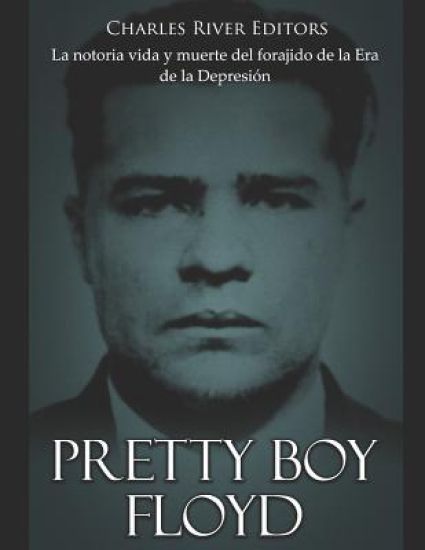
"Si se congregan en torno a m , ni os, una historia contar sobre Pretty Boy Floyd, un forajido, Oklahoma lo conoci bien". - Woody Guthrie, "La balada de Pretty Boy Floyd" (1939)El 1ero de noviembre de 1932 fue un lindo d a oto al en la adormilada y algodonera ciudad de Sallisaw, Oklahoma, el coraz n el condado de Sequoyah. Los rayos cegadores del sol de mediod a estaban brillando con toda intensidad, pero el calor de otra manera abrasador era compensado por una brisa fresca. Estas eran condiciones ideales para un martes, un d a de la semana aparentemente com n y corriente, pero lo que estaba teniendo lugar en el Banco Estatal de Sallisaw era todo menos ordinario. A primera vista, parecer a que un carnaval ambulante o una celebridad local hubiera llegado a la ciudad. Las aceras frente al banco y sus establecimientos circundantes estaban llenos de lugare os, generaciones de familias, j venes enamorados y grupos de amigos. Ciertamente se hab an reunido para presenciar un espect culo, aunque de un tipo completamente diferente. Las puertas del Banco Estatal de Sallisaw se abrieron con un sonoro golpe, dando inicio al espect culo. Salieron tambale ndose un par de ladrones, cada uno cargando abultados sacos de billetes y monedas, y empu ando brillantes pistolas Colt .45. Los cajeros, atados de manos y pies dentro del banco se retorc an desesperadamente por el suelo para expresar su angustia, estirando el cuello y dirigiendo sus gritos apagados hacia la puerta abierta. Uno incluso hab a logrado liberarse de su mordaza y estaba pidiendo ayuda a la multitud al otro lado de la calle. Desafortunadamente, sus gritos fueron superados, no por los propios gritos de alarma de los espectadores, sino por un estruendoso aplauso, complementado por v tores, silbidos y una constelaci n de pa uelos agit ndose. Algunos de quienes despejaron el camino para el auto de escape de los ladrones eran supuestamente clientes presentes en el establecimiento durante el mismo atraco. El gallardo l der, aclamado por muchos como el "Robin Hood de Cookson Hills", no era otro que Pretty Boy Floyd, un personaje desconcertante, tan aborrecido como era venerado. Para los federales, Pretty Boy Floyd era un canalla manipulador y venenoso que hab a sido notoriamente ensalzado como un antih roe con un coraz n de oro. Como un ladr n de bancos de carrera, presuntamente asociado con hasta 40 robos a bancos, su rostro pronto quedar a estampado en el cartel de los M s Buscados del FBI de 1934 junto a John Dillinger, Baby Face Nelson y Alvin Karper. Tambi n estuvo implicado en m ltiples asesinatos, y sin embargo, los admiradores de Pretty Boy Floyd han estado dispuestos a pasar por alto estos cr menes. Algunos incluso han proporcionado justificaciones para su comportamiento y sostienen que fue injustamente vilipendiado por luchar contra un sistema injusto. Para ellos, hab a sido tomado como un chivo expiatorio, y l mismo us ese ngulo, se alando en una oportunidad: "Supongo que me han acusado de todo lo que sucedi , a excepci n del secuestro del ni o Lindbergh, la primavera pasada". Como todo esto sugiere, es virtualmente imposible construir un perfil completamente objetivo de este bandido, m s de 80 a os despu s de su vida delictiva. Aparte de las inexactitudes y la informaci n conflictiva que resulta de la mala calidad de los registros, la verdad absoluta sobre los cr menes de Pretty Boy Floyd muri con l y con aquellos supuestamente involucrados, d cadas atr s. Dicho esto, explorar la infancia del forajido, sus a os de formaci n y vida personal, as como los detalles de sus delitos m s graves, permite a las personas sacar sus propias conclusiones. Pretty Boy Floyd: la notoria vida y muerte del forajido de la Era de la Depresi n describe c mo se convirti en uno de los forajidos m s famosos de los Estados Unidos, y los atrevidos cr menes que lo hicieron tan temido.

Jan Hus: The Life and Legacy of the Christian Theologian Executed for Heresy Before the Reformation
*Includes pictures*Includes contemporary accounts*Includes a bibliography for further reading"Therefore, faithful Christian, seek the truth, listen to the truth, learn the truth, love the truth, tell the truth, learn the truth, defend the truth even to death." - Jan HusTheologian and reformer John Wycliffe never had the opportunity to take his doctrines outside of his native England, but he could never have imagined that his teachings would one day travel as far as 920 miles east to Bohemia. In fact, while his contentious convictions aroused much ado at home, receiving both praise and contempt from followers and ecclesiastical figures, his messages would be far more resonant across the Channel than they ever were back home. The revival of Wycliffe's ideas, many believe, was ignited by receptive Bohemian students who were introduced to the reformer's works at Oxford University and became so moved by his thoughts that they felt it absolutely imperative to spread the good word in their own kingdoms. Questioning Christians quietly perused compilations of Wycliffe's books and were, at the very least, intrigued by the nonconformist's opinions. One curious mind, however, was supposedly so inspired by Wycliffe that he was at once galvanized into action. Instead of simply parroting Wycliffe's seditious ideas, he launched an entire movement and remained fervidly true to his cause, even when his own life was at stake. This fearless firebrand was none other than Jan Hus, the father of the Bohemian Reformation and one of the most infamous heretics in all of Europe. The parallels between the lives of Wycliffe and his Czech devotee were as numerous as they were uncanny. For starters, both Wycliffe and Hus came from humble beginnings, and they shared a number of similar accomplishments, including the translation of the Bible into their native languages well before Gutenberg invented the printing press. Wycliffe was apparently the first to render the Bible into English, while Hus and his successors revised the Bohemian (medieval Czech) Bible. If Wycliffe was the "Morning Star of the Reformation," Hus was the Guiding Star of the movement. Hus started as a Czech priest, but he quickly became notorious for debating several Church doctrines such as the Eucharist, Church ecclesiology, and many more topics. Today, he is viewed as a predecessor of the Lutherans, but the Church viewed him as a threat, and the Catholics eventually engaged Hus' followers (known as Hussites) in several battles in the early 15th century. Hus himself was burned at the stake in 1415, but his followers fought on in a series of battles known as the Hussite Wars, and Czechoslovakia's inhabitants by and large remained Hussite afterward. About 100 years later, Martin Luther would spark the Reformation across the continents. Jan Hus: The Life and Legacy of the Christian Theologian Executed for Heresy Before the Reformation chronicles the reformer's life and teachings, and the influence he had in the wake of his death. Along with pictures of important people and places, you will learn about Hus like never before.
Czechoslovakia and Yugoslavia: The History and Legacy of the Multiethnic Nations that Split Apart after the Cold War
*Includes pictures*Includes a bibliography for further readingOn New Year's Day 1993, Czechoslovakia broke into two separate countries, the Czech Republic and Slovakia. Thus ended one of the creations brought about by the Treaty of Versailles after World War I, and as a country that had existed for just under 75 years, Czechoslovakia spent most of its time under the tyranny of fascism or communism. Of course, the country's origins go back far longer than the 1910s, and they were complex and convoluted. The very geography of central Europe meant this territory had been conquered and occupied many times over the course of history, and for much of the modern era, the area belonged to much larger empires, including the Holy Roman Empire, the Austrian Habsburg Empire, and finally the Austro-Hungarian Empire. Nevertheless, two distinct ethnicities had come to make up the bulk of the territory's inhabitants: the Czechs, predominantly in the areas of Bohemia and Moravia, and the Slovaks, in Slovakia. Both peoples had their own Slavic-based languages, but the languages were similar enough to be mutually intelligible. Czechoslovakia's split was mostly peaceful, which stands in stark contrast to that of Yugoslavia, arguably one of the most unusual geopolitical creations of the 20th century. The Yugoslav state had never existed in any historical sense, and the ties that bound together its constituent peoples were tenuous at best. Although nominally all "Slavs," the country was an amalgamation of languages, alphabets, cultures, religions and traditions, which ensured its short existence was littered with splits, conflicts, and shocking violence. In a sense, it's somewhat surprising that it lasted as long as it did. In the wake of World War I, as the political boundaries of Europe and the Middle East were redrawn, the Kingdom of Yugoslavia, initially known as the Kingdom of Serbs, Croats and Slovenes, came into existence with a monarch as its head of state. Confirmed at the 1919 Versailles Conference, the "first" Yugoslavia was a particularly fragile enterprise, and there was almost constant tension between the majority Serbs and the other Yugoslav nationalities, especially the Croats. As a result, the Kingdom was a land of political assassinations, underground terrorist organizations, and ethnic animosities. In 1929, King Alexander I suspended democracy and ruled as a dictator until he himself was assassinated in 1934. The Kingdom of Yugoslavia was particularly vulnerable to the forces that engulfed the rest of Europe at the end of the 1930s, including fascism and communism. When the Axis forces attacked in 1941, the country quickly capitulated and was dismembered by the Nazis and their allies. A separate Croatian state was formed, led by Ante Pavelic, who committed some of the worst crimes and human rights abuses of the war. The Balkan region was virtually emptied of its Jewish population, victims of the Nazi Holocaust. During his reign, Tito managed to quash the intense national feelings of the diverse groups making up the Yugoslavian population, and he did so through several methods. He managed to successfully play the two superpower rivals, the United States and Soviet Union, off against each other during the Cold War, and in doing so, he maintained a considerable amount of independence from both, even as he additionally received foreign aid to keep his regime afloat. All the while he remained defiant, once penning a legendary letter to Joseph Stalin warning the Soviet dictator, "To Joseph Stalin: Stop sending people to kill me We've already captured five of them, one of them with a bomb and another with a rifle... If you don't stop sending killers, I'll send a very fast working one to Moscow and I certainly won't have to send another."
Japan and World War I: The History of the Japanese Empire's Participation in the Great War
*Includes pictures*Includes online resources and a bibliography for further readingWorld War I, also known in its time as the "Great War" or the "War to End all Wars", was an unprecedented holocaust in terms of its sheer scale. Fought by men who hailed from all corners of the globe, it saw millions of soldiers do battle in brutal assaults of attrition which dragged on for months with little to no respite. Tens of millions of artillery shells and untold hundreds of millions of rifle and machine gun bullets were fired in a conflict that demonstrated man's capacity to kill each other on a heretofore unprecedented scale, and as always, such a war brought about technological innovation at a rate that made the boom of the Industrial Revolution seem stagnant. Needless to say, the First World War came at an unfortunate time for those who would fight in it, and while the role of Japan in World War II is widely known, Japan's important role in the First World War is mostly overlooked. The Japanese contribution to the defeat of Germany and the Central Powers was important enough for Japan to be included among the Big Five Allied delegations at the 1919 peace negotiations, along with the British, French, Italians and Americans, but it also served as a precursor of sorts for what would transpire a generation later. In the Second World War, Japanese forces ranged over an immense portion of the globe, from Hawaii to Sri Lanka, but during World War I, Japanese naval forces spanned an even larger portion of the globe. Japanese warships escorted troopships carrying Australian and New Zealand Army Corps troops to the Middle East, Japanese cruisers hunted German commerce raiders in the Indian Ocean, the Bay of Bengal and all over the Pacific, and Japanese destroyers plowed Mediterranean waters as they escorted British convoys from Egypt to Gibraltar and searched for German and Austrian submarines. Japanese troops besieged the German citadel of Qingdao in China, forcing that German colonial city and naval base to surrender, and through it all, Japanese naval forces stood guard off Mexico, Hawaii and the American West Coast. All of this was accomplished with by far the fewest military losses of any of the major Allies. Japan lost perhaps 4,000 soldiers and sailors during the war, while the French and Germans lost several million. For comparison, tiny Montenegro had 20,000 World War 1 casualties, Portugal 33,000, and Bulgaria suffered 267,000. Indeed, the Japanese losses in World War I represented a small fraction of the losses incurred in the Russo-Japanese War of 1904-1905. Yet Japanese strategic gains were far greater that what was obtained in the previous war, as they took the German North Pacific islands, they had a relatively free hand to exploit China, and they gained an uneasy peace with the young Soviet Union. In short, World War 1 brought Japan recognition as one of the world's primary military and economic powers. Japan and World War I: The History of the Japanese Empire's Participation in the Great War analyzes the actions of the forgotten ally, and how Japan's participation helped set the stage for its expansion across the Pacific. Along with pictures of important people, places, and events, you will learn about Japan and World War I like never before.
Maimonides and St. Thomas Aquinas: The Lives and Works of the Middle Ages' Most Influential Religious Philosophers
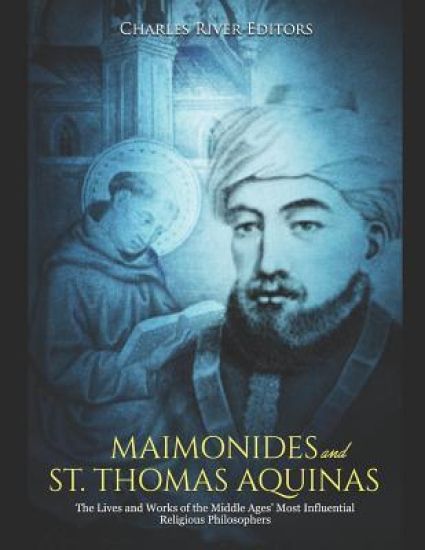
*Includes pictures*Includes online resources and a bibliography for further reading"One should accept the truth from whatever source it proceeds." - Maimonides Moses Ben Maimon, frequently called Maimonides, was a medieval philosopher who revolutionized thinking about ethics, reason, and the Jewish Torah through his emphasis on reason and evidence. His works were broadly accepted by the Sephardi Jewish community and spread across the medieval world, reaching the Jewish populations as far as Yemen, and though he lived in the 12th century, Maimonides continues to be one of the most studied scholars of Jewish law, philosophy, and theology. Many consider him forward-thinking for his time, and his texts continue to reach numerous modern audiences through translations, commentaries, and in-depth study. Maimonides' ideas and theological interpretations remain influential in contemporary times. His work influenced numerous Jewish and Islamic scholars for centuries and contributed to the modern understanding of the Torah and Jewish law, while outside of religion, his ideas were popular topics in philosophy and went on to influence thinkers like Thomas Aquinas, Leibnitz, Leo Strauss, and the Humanist intellectual movement. Of particular importance was his emphasis on personal humility, forming decisions based on a body of evidence, and reasoning through arguments before arriving at a conclusion. His work was diverse, forward-thinking for his time, and demonstrated his intellectual pursuits across numerous fields. As a result, despite living almost 1,000 years ago, he continues to be one of the most influential scholars of ethics and Jewish philosophy and law due to the comprehensive and rationalist nature of his work. It would be hard to overstate the influence that St. Thomas Aquinas (1225-1274) has had on both the Catholic world and the West as a whole over the last 750 years. Even in secular circles, Aquinas is known as one of the most important medieval philosophers, and in many respects a harbinger of the Renaissance that began to flourish across Europe in the centuries that followed his life. His groundbreaking work, Summa Theologica, remains one of the most influential philosophical texts in history, earning him a place in the pantheon alongside Plato, Aristotle, and Socrates. Aquinas had just as great an influence on Christianity as well. His philosophical works forged and established natural theology, squaring Catholicism with reason and logic, the ideals and aspects of modern thought that really took hold during the Renaissance. With his work on logic, theology, and metaphysics, as one of the Church's Doctors, Thomas Aquinas remains the Catholic Church's greatest theologian and philosopher, and he is still held out by the Church as the role model for those studying to become a Catholic priest. Maimonides and St. Thomas Aquinas: The Lives and Works of the Middle Ages' Most Influential Religious Philosophers profiles the two philosophers, from their backgrounds to their most important ideas. Along with pictures of important people, places, and events, you will learn about Maimonides and St. Thomas Aquinas like never before.
America's Most Influential Jazz Artists

America's Most Influential Jazz Artists

Charles River

Independently Published
2019
nidottu
*Includes pictures*Includes online resources and a bibliography for further reading "Art is dangerous. It is one of the attractions: when it ceases to be dangerous you don't want it." - Duke EllingtonLouis Armstrong once claimed that "Every time I close my eyes blowing that trumpet of mine-I look right in the heart of good old New Orleans... It has given me something to live for." This statement conjures an image which most anyone familiar with jazz music can recall: Armstrong clutching his trumpet forcefully, his eyes closed in a manner that distances him from his physical surroundings in favor of a perfect harmony between the man and his instrument. As Armstrong alludes to in this remark, this connection also speaks to the enduring influence of his New Orleans background, which informed his musical style and indeed continued to live on through his music. To be sure, while performing, Armstrong appeared lost in a reverie, a condition that imbued his performances with a kind of mythical flair, as if one were watching a man consumed by a moment of transcendence. In other words, if the music of Louis Armstrong produced an emotional response in the listener, this invariably paled in comparison with the deep, organic pathos he was able to produce through his music. In 1956, Duke Ellington was featured on the cover of Time Magazine after a bravura performance at the Newport Jazz Festival that summer. This remains one of his most iconic achievements, and a landmark for jazz music as a whole (only four jazz musicians were ever displayed on the cover of Time). At the same time, however, this recognition stands as one of the prevailing ironies of Ellington's career, as he was deep into the latter stages of his performing life by this point. Indeed, there is a way in which everything that Ellington had done up to that point in his career was obscured. Put differently, it is misleading to recognize Duke simply for his accomplished performance at the festival, as one could justifiably argue that he transformed the very nature of jazz (both its stylistic qualities and its cultural identity) in his career up until this point. While those two men became jazz's most famous performers, others rose as legendary singers. If Billie Holiday wanted to become a jazz singer, she chose the best of all eras in which to attempt it. A wave of great jazz and jazz/pop crossover artists swept over the United States from the 1920s through the 1950s, generating a golden age for the genre. This wondrous jazz era was well represented by both black and white master artists, men, women, vocalists, and instrumentalists, and Billie Holiday has stood the test of time as well as any, despite struggling with an environment that easily could have doomed such aspirations. Etta James, the legendary jazz, gospel, rhythm & blues, and soul singer, was perfectly positioned to reign as the supreme artist in the emerging soul genre of the '40s and '50s in America. No one ever doubted her talent, the highly distinctive and versatile nature of her voice, or her drive to succeed, and yet, she has been "woefully overlooked" in the history of indigenous rock and blues music in the United States. She is famous and recognized for several iconic hits with which she is eternally associated, such as "I'd Rather Go Blind" and "At Last," but her place in the pantheon of great soul artists is unsteady and not always instantly recognizable by those outside of a knowledgeable group of devotees. For the rest of soul music's listeners, mention of her name will result in a hasty inclusion into the inner circle of leading artists, as though James had been momentarily forgotten. Once the object of focus, however, she is revered as one of the titans of the genre, and those who had allowed her to slip from their minds are immediately reawakened to her powerful vocal and interpretive gifts.
The Whitman Massacre: The History and Legacy of the Native American Attack on Missionaries that Started the Cayuse War
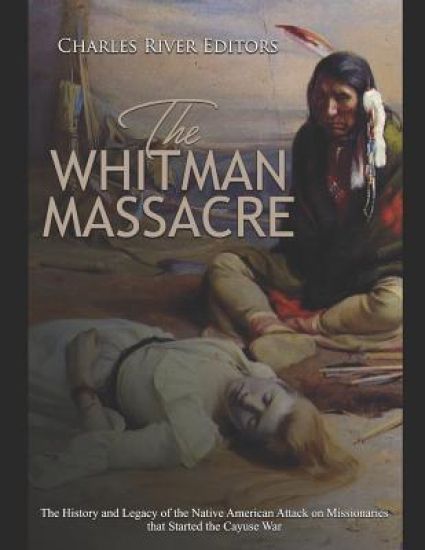
*Includes pictures*Includes contemporaneous accounts*Includes online resources and a bibliography for further reading"I and some others went upstairs where we could look from a window and see a part of the conflict near the Doctor's house. Three or four men were butchering a beef there. I saw them engaged with quite a number of Indians. Mr. Kimball was dealing hard with several, he having an axe to fight with. He fought desperately for awhile but they killed him at last." - Mary Marsh Cason's account of the attackAt the start of the 1840s, the Oregon Country had no political boundaries or effective government. The only administrative organization in the territory was the Hudson's Bay Company, which applied only to British subjects, and aside from natives, the region was populated by a handful of independent traders, hunters, and prospectors, as well as those employed in the various company depots. The first to begin showing up in large numbers were missionaries. The native populations were by then diminished by disease and dispirited, which meant they were more receptive to missionary aid and the Christian message. Christianity, of course, was not entirely unknown among the indigenous populations, given that marriages between white men and Indian women created a hybrid of "folk" Christianity that was commonly observed among the Indians. The first wave of missionaries represented the American Methodists, arriving in or around 1834, followed a year or two later by a second series of arrivals, sponsored this time by the American Board of Commissioners for Foreign Missions (ABCFM). The ABCFM was an ecumenical organization founded to promote the general outreach of the Presbyterian and Dutch Reform churches in the United States. Roman Catholics arrived around 1830, bringing missionaries mostly from Canada and Europe. Perhaps the most famous missionary party of this era consisted of a Presbyterian missionary group including Marcus Whitman and his wife Narcissa, who established their mission on the confluence of the Walla Walla and Columbia Rivers. The Whitman Mission later became an important staging post on the Oregon Trail. The fortunes of the Whitman Mission, however, became something of an object lesson in race relations in the new territory, ultimately with very tragic results. The mission was well funded, and its settlement, at least by the standards of native society, was lavish. Initially, the couple and their followers treated the neighboring Cayuse tribe with generosity, distributing material largess as well as medicine and rudimentary education. The relationship between the two parties, however, was complicated, and Marcus Whitman appeared to grow disenchanted with persistent demands for material goods made upon the mission. Eventually, he stopped providing goods, which sowed a certain amount of discontent among the Cayuse, and animosity took root. When an epidemic of measles swept through the community, killing hundreds of natives, they blamed the mission for poisoning them. In November 1847, Marcus and Narcissa Whitman, along with 11 other missionaries, were massacred by a Cayuse war party. That attack would have profound implications not only for the Cayuse and other native tribes of the region, but also for the future direction of the territory. The immediate aftermath brought conflicts known as the Cayuse Wars, which resulted in the banishment of the native peoples of the region to reservations and galvanized the federal government to act over the status of the Oregon Country. The Whitman Massacre: The History and Legacy of the Native American Attack on Missionaries that Started the Cayuse War looks at the chain of events that led to one of the most notorious attacks of the 19th century on the frontier. Along with pictures depicting important people, places, and events, you will learn about the Whitman Massacre like never before.
The First Battle of the Marne: The History and Legacy of the First Major Allied Victory in World War I
*Includes pictures*Includes online resources and a bibliography for further reading"So we come to the Marne. This will ever remain the Mystery Battle of all time. We can see more clearly across the mists of time how Hannibal conquered at Cannea, than why Joffre won at the Marne. No great acquisition of strength to either side - except that usually invaders outrun their supplies and defenders fall back upon their reserves - important, but not decisive. Not much real fighting, comparatively few casualties, no decisive episode in any part of the immense field; fifty explanations, all well documented, five hundred volumes of narrative and comment - but the mystery remains." - Winston ChurchillThe enduring image of World War I is of men stuck in muddy trenches, and of vast armies deadlocked in a fight neither could win. It was a war of barbed wire, poison gas, and horrific losses as officers led their troops on mass charges across No Man's Land and into a hail of bullets. While these impressions are all too true, they hide the fact that trench warfare was dynamic and constantly evolving throughout the war as all armies struggled to find a way to break through the opposing lines. Needless to say, the First World War came at an unfortunate time for those who would fight in it. After an initial period of relatively rapid maneuver during which the German forces pushing through Belgium and the French and British forces attempting to stymie them made an endless series of abortive flanking movements that extended the lines to the sea, a stalemate naturally tended to develop. The infamous trench lines soon snaked across the French and Belgian countryside, creating an essentially futile static slaughterhouse whose sinister memory remains to this day. However, if trench warfare was an inevitability during the war, it is only because the events leading up to the First Battle of the Marne were quite different. The armies at the beginning of the war moved quickly through the land, but the First Battle of the Marne devolved into a bloody pitched battle that led to the construction of trenches after the Germans retreated, blocked in their pursuit of Paris. When the aftermath disintegrated into a war between trenches, some Germans thought they had the upper hand since they were occupying French territory, but with fewer soldiers than the combined Allied nations and fewer resources and supplies, it was possibly only a matter of time before they were ultimately defeated. The commander of the German armies, General Helmuth von Moltke, allegedly said to Kaiser Wilhelm II immediately after the First Battle of the Marne, "Your Majesty, we have lost the war." Winston Churchill himself would later reference that anecdote, writing, "Whether General von Moltke actually said to the Emperor, 'Majesty, we have lost the war, ' we do not know. We know anyhow that with a prescience greater in political than in military affairs, he wrote to his wife on the night of the 9th, 'Things have not gone well. The fighting east of Paris has not gone in our favour, and we shall have to pay for the damage we have done.'"The First Battle of the Marne: The History and Legacy of the First Major Allied Victory in World War I analyzes one of the Great War's most important conflicts, and how it brought about trench warfare. Along with pictures of important people, places, and events, you will learn about the First Battle of the Marne like never before.
Ellington and Armstrong: The Lives and Careers of America's Most Famous Jazz Performers
*Includes pictures*Includes online resources and a bibliography for further readingLouis Armstrong once claimed that "Every time I close my eyes blowing that trumpet of mine-I look right in the heart of good old New Orleans... It has given me something to live for." This statement conjures an image which most anyone familiar with jazz music can recall: Armstrong clutching his trumpet forcefully, his eyes closed in a manner that distances him from his physical surroundings in favor of a perfect harmony between the man and his instrument. As Armstrong alludes to in this remark, this connection also speaks to the enduring influence of his New Orleans background, which informed his musical style and indeed continued to live on through his music. To be sure, while performing, Armstrong appeared lost in a reverie, a condition that imbued his performances with a kind of mythical flair, as if one were watching a man consumed by a moment of transcendence. In other words, if the music of Louis Armstrong produced an emotional response in the listener, this invariably paled in comparison with the deep, organic pathos he was able to produce through his music. Of course, Armstrong's testament to the power of New Orleans is also particularly noteworthy in light of the fact that New Orleans was hardly the benevolent city that one might assume on the basis of his testimony. It is well known to anyone with even a passing knowledge of Armstrong that New Orleans was the site of Armstrong's nascent love for music, but also an environment that took no prisoners and exposed him to sights that would traditionally be shielded from the eyes of children: extreme violence, prostitution, and abject poverty. Throughout his life, Armstrong was not afraid to make frequent reference to New Orleans, yet the frankness with which he spoke did not preclude maintaining an appreciation for the city-and, indeed, crediting it with fostering his nascent interest in music as a boy. There was, accordingly, a remarkably complex relationship between Louis Armstrong and the city of New Orleans, as the city simultaneously served as an environment that forced him to confront extreme adversity, and assumed a crucial role in developing his musical sensibilities. In 1956, Duke Ellington was featured on the cover of Time Magazine after a bravura performance at the Newport Jazz Festival that summer. This remains one of his most iconic achievements, and a landmark for jazz music as a whole (only four jazz musicians were ever displayed on the cover of Time). At the same time, however, this recognition stands as one of the prevailing ironies of Ellington's career, as he was deep into the latter stages of his performing life by this point. Indeed, there is a way in which everything that Ellington had done up to that point in his career was obscured. Put differently, it is misleading to recognize Duke simply for his accomplished performance at the festival, as one could justifiably argue that he transformed the very nature of jazz (both its stylistic qualities and its cultural identity) in his career up until this point. Ellington was both a pioneer and someone invested in the cultural history of his race. He was able to implement new motifs to jazz, but did so in a manner that was forever committed to honoring the heritage of African-American music. In addition to live performances, Ellington worked in radio and film, and his work remains some of the most important in American culture during the time period. His music addressed not only race but also influenced the evolution of jazz through the first half of the 20th century. Ellington and Armstrong: The Lives and Careers of America's Most Famous Jazz Performers profiles both legends, and how they reached the forefront of jazz music. Along with pictures depicting important people, places, and events, you will learn about Duke Ellington and Louis Armstrong like never before.
The Dissolution of Czechoslovakia: The History of the Central European Nation from Its Founding to Its Breakup
*Includes pictures*Includes a bibliography for further readingOn New Year's Day 1993, Czechoslovakia broke into two separate countries, the Czech Republic and Slovakia. Thus ended one of the creations brought about by the Treaty of Versailles after World War I, and as a country that had existed for just under 75 years, Czechoslovakia spent most of its time under the tyranny of fascism or communism. Of course, the country's origins go back far longer than the 1910s, and they were complex and convoluted. The very geography of central Europe meant this territory had been conquered and occupied many times over the course of history, and for much of the modern era, the area belonged to much larger empires, including the Holy Roman Empire, the Austrian Habsburg Empire, and finally the Austro-Hungarian Empire. Nevertheless, two distinct ethnicities had come to make up the bulk of the territory's inhabitants: the Czechs, predominantly in the areas of Bohemia and Moravia, and the Slovaks, in Slovakia. Both peoples had their own Slavic-based languages, but the languages were similar enough to be mutually intelligible. Despite any ethnic similarities, the country that formed in 1918 among the ashes of the Austro-Hungarian Empire was by no means a "nation-state" as most people understand that term. In fact, much of the territory which bordered Germany was inhabited by ethnic German speakers, including one of Prague's most famous sons, the writer Franz Kafka. One of the 20th century's most celebrated authors spoke German as his first language. As such, the lands that became Czechoslovakia had usually existed in some kind of supranational system where identity was allowed to be relatively fluid. Czechoslovakia would also play a crucial role in bringing about World War II, a sign that the area's nationalism, which ultimately split Czechoslovakia apart in 1993, had long spelled danger in a place where so many groups competed for power. The presence of German speakers would serve as a pretext for Hitler's acquisition of the Sudetenland, creating a crisis ahead of history's deadliest war and serving as a harbinger of things to come. The Dissolution of Czechoslovakia: The History of the Central European Nation from Its Founding to Its Breakup examines how the multicultural nation was founded, the inherent tensions there, and how it eventually came apart. Along with pictures of important people and places, you will learn about Czechoslovakia like never before.
Nueva Ámsterdam: La historia del asentamiento holandés antes de que se convirtiera en la ciudad de Nueva York
Los primeros avistamientos europeos conocidos de la isla y sus habitantes fueron realizados por el explorador italiano Giovanni da Verrazzano en 1524 y por el explorador negro portugu s Estaban G mez en 1526. Luego de que el ingl s Henry Hudson, bajo los auspicios de la Compa a Holandesa de las Indias Orientales, pasara por Manhattan en 1609, regres a casa con buenas y malas noticias. Al igual que otros exploradores antes que l, no hab a podido encontrar una ruta mar tima hacia el Oriente. Sin embargo, hab a regresado con mapas (confiscados por los brit nicos) y pieles de castor. Con eso, qued claro que la regi n alrededor de la bah a que tomar a el nombre de Hudson era un nuevo territorio prometedor para el comercio y los asentamientos, y que ser a el sitio de conflictos entre los holandeses y los brit nicos durante el resto del siglo. En 1614, otro comerciante de las Indias Orientales, Adriaen Block, entr por los estrechos del East River entre Queens y la isla de Randall, un pasaje dif cil y peligroso donde m s tarde se hundieron numerosos barcos y al que Block bautiz como Hellegat o Puerta del Infierno. El mundo europeo conocer a el nombre "Manhates" cuando Block regres a Holanda con mapas nuevos y mejorados. Despu s de esa nueva exploraci n, los holandeses volvieron para construir asentamientos en el extremo sur de Manhattan y otros lugares, y en 1626 el comercio muy activo entre los nativos americanos y los colonos europeos, y entre los colonos y sus pa ses de origen. 1626 fue tambi n el a o en que se llev a cabo la famosa "compra" de Manhattan, una transacci n sobre la que no ha sobrevivido ning n registro. Peter Minuit, el Director General de Nueva msterdam, pag el equivalent a sesenta art culos de mercader as como telas, calderas, herramientas y collares, una cantidad que pas a la historia con valor de aproximadamente $24 d lares. Si bien esto parece perversamente bajo hoy en d a, a los que tienen alma de contadores les gusta especular con esta cantidad; si los Lenni-Lenapes lo hubieran invertido a una tasa de inter s del 10% a lo largo de los siglos, hoy tendr a un valor de $117 billones, lo suficiente para comprar el actual Manhattan actual muchas veces. Muchas otras de compras de este tipo tuvieron lugar, pero debido a que los nativos americanos y los europeos ten an conceptos muy diferentes de lo que significaba "poseer" o "vender" tierras, los malentendidos y la violencia con frecuencia estallaron en ambos lados. Los robos menores (a menudo sin fundamento) podr an encender la ira de los colonos, dando como resultado escaramuzas sangrientas como la Guerra de los Cerdos (1640) y la Guerra del rbol de Durazno (1655), nombradas as por los art culos supuestamente robados. Cuando se cre en 1621 la Compa a de las Indias Occidentales, que presid a el comercio holand s en las Am ricas, el peque o asentamiento en la punta de Manhattan comenz a crecer y a la vez a fluctuar. Cuando Willem Kieft lleg como director en 1638, ya era una especie de guarida de la iniquidad, plena de "travesuras y perversidades", donde los residentes se dedicaban a fumar, beber grog y cerveza. Bajo el gobierno de Kieft, se adquiri m s tierra principalmente a trav s de sangrientas guerras, casi de exterminio, con la poblaci n de nativos americanos, cuyo n mero tambi n disminuy debido a las enfermedades de origen europeo. Nueva msterdam: la historia del asentamiento holand s antes de que se convirtiera en la ciudad de Nueva York, narra los or genes de dicho asentamiento y describe a los ind genas que lo habitaban. Junto con ilustraciones de personas, lugares y eventos importantes, el lector aprender sobre la vieja Nueva msterdam como nunca antes, en dos sentadas.
Ellington and Armstrong: The Lives and Careers of America's Most Famous Jazz Performers
*Includes pictures*Includes online resources and a bibliography for further readingLouis Armstrong once claimed that "Every time I close my eyes blowing that trumpet of mine-I look right in the heart of good old New Orleans... It has given me something to live for." This statement conjures an image which most anyone familiar with jazz music can recall: Armstrong clutching his trumpet forcefully, his eyes closed in a manner that distances him from his physical surroundings in favor of a perfect harmony between the man and his instrument. As Armstrong alludes to in this remark, this connection also speaks to the enduring influence of his New Orleans background, which informed his musical style and indeed continued to live on through his music. To be sure, while performing, Armstrong appeared lost in a reverie, a condition that imbued his performances with a kind of mythical flair, as if one were watching a man consumed by a moment of transcendence. In other words, if the music of Louis Armstrong produced an emotional response in the listener, this invariably paled in comparison with the deep, organic pathos he was able to produce through his music. Of course, Armstrong's testament to the power of New Orleans is also particularly noteworthy in light of the fact that New Orleans was hardly the benevolent city that one might assume on the basis of his testimony. It is well known to anyone with even a passing knowledge of Armstrong that New Orleans was the site of Armstrong's nascent love for music, but also an environment that took no prisoners and exposed him to sights that would traditionally be shielded from the eyes of children: extreme violence, prostitution, and abject poverty. Throughout his life, Armstrong was not afraid to make frequent reference to New Orleans, yet the frankness with which he spoke did not preclude maintaining an appreciation for the city-and, indeed, crediting it with fostering his nascent interest in music as a boy. There was, accordingly, a remarkably complex relationship between Louis Armstrong and the city of New Orleans, as the city simultaneously served as an environment that forced him to confront extreme adversity, and assumed a crucial role in developing his musical sensibilities. In 1956, Duke Ellington was featured on the cover of Time Magazine after a bravura performance at the Newport Jazz Festival that summer. This remains one of his most iconic achievements, and a landmark for jazz music as a whole (only four jazz musicians were ever displayed on the cover of Time). At the same time, however, this recognition stands as one of the prevailing ironies of Ellington's career, as he was deep into the latter stages of his performing life by this point. Indeed, there is a way in which everything that Ellington had done up to that point in his career was obscured. Put differently, it is misleading to recognize Duke simply for his accomplished performance at the festival, as one could justifiably argue that he transformed the very nature of jazz (both its stylistic qualities and its cultural identity) in his career up until this point. Ellington was both a pioneer and someone invested in the cultural history of his race. He was able to implement new motifs to jazz, but did so in a manner that was forever committed to honoring the heritage of African-American music. In addition to live performances, Ellington worked in radio and film, and his work remains some of the most important in American culture during the time period. His music addressed not only race but also influenced the evolution of jazz through the first half of the 20th century. Ellington and Armstrong: The Lives and Careers of America's Most Famous Jazz Performers profiles both legends, and how they reached the forefront of jazz music. Along with pictures depicting important people, places, and events, you will learn about Duke Ellington and Louis Armstrong like never before.
The Knights Hospitaller: The History and Legacy of the Medieval Catholic Military Order
*Includes pictures*Includes medieval accounts*Includes online resources and a bibliography for further readingFor centuries, Christians and Muslims were embroiled in one of the most infamous territorial disputes of all time, viciously and relentlessly battling one another for the Holy Land. In the heart of Jerusalem sat one of the shining jewels of the Christian faith, the Church of the Holy Sepulchre. Legend has it that this was where their Savior had been buried before his fabled resurrection. What was more, it was said to house the very cross Jesus Christ had died upon. It was for precisely these reasons that fearless pilgrims, near and far, risked their lives and made the treacherous trek to Jerusalem. Like other secretive groups, the mystery surrounding the Catholic military orders that sprung up in the wake of the First Crusade helped their legacies endure. While some conspiracy theorists attempt to tie the groups to other alleged secret socities like the Illuminati, other groups have tried to assert connections with them to bolster their own credentials. Who they were and what they had in their possession continue to be a source of great intrigue. The story of the Order of Knights of the Hospital of Saint John of Jerusalem, frequently shortened to the Knights Hospitaller, is long and complicated. Although the roots of the organization existed before the First Crusade, the order would not develop until 20 years after the famous call by Pope Urban II to conquer the Holy Land of Jerusalem for Christianity. Moreover, while the identity of the Knights Hospitaller was focused on the principles of crusading and military conquest, the order also focused on charitable Christian causes like the healing the sick and feeding the poor and hungry. In fact, functioning as a hospital was the original purpose of the Order before it started to militarize, yet as time wore on, such ideals would fade in the face of wealth, power, and desperation to reclaim the vestiges of prestige lost over the centuries. The Knights Hospitaller formed in the 12th century and continue to exist in contemporary times, albeit in a considerably different form. Over the last millennium, the organization has fulfilled different roles, served varying masters, and continued to uphold the tenets of crusading even when there was no Crusade to fight. All the while, as it went through centuries of murkiness, including the development of a notorious reputation, the Knights Hospitaller continued to adapt. In contemporary times, the Knights Hospitaller could no longer be said to uphold the morals of the Crusades, but it definitely continues to adhere to the tenets of chivalry and charity. To get to this new position, however, the Order needed to undergo trials, tribulations, and years of resorting to begging. The Knights Hospitaller: The History and Legacy of the Medieval Catholic Military Order chronicles the known history of the order and examines the secrecy and mysteries surrounding it. Along with pictures of important people, places, and events, you will learn about the Knights Hospitaller like never before.