Kirjojen hintavertailu – 12 903 725 kirjaa ja 27 kauppaa

Kirjailija

Charles River

Kirjat ja teokset yhdessä paikassa: 4 673 kirjaa, julkaisuja vuosilta 2013–2022, suosituimpiin kuuluu William Powell and Myrna Loy: The Lives and Careers of One of Classical Hollywood's Most Iconic Duos. Vertaile teosten hintoja ja tarkista saatavuus suomalaisista kirjakaupoista.

4 673 kirjaa

Kirjojen julkaisuvuodet: 2013–2022.

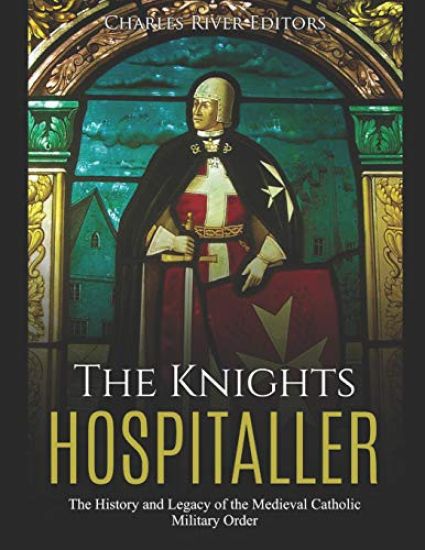
The Knights Hospitaller: The History and Legacy of the Medieval Catholic Military Order
*Includes pictures*Includes medieval accounts*Includes online resources and a bibliography for further readingFor centuries, Christians and Muslims were embroiled in one of the most infamous territorial disputes of all time, viciously and relentlessly battling one another for the Holy Land. In the heart of Jerusalem sat one of the shining jewels of the Christian faith, the Church of the Holy Sepulchre. Legend has it that this was where their Savior had been buried before his fabled resurrection. What was more, it was said to house the very cross Jesus Christ had died upon. It was for precisely these reasons that fearless pilgrims, near and far, risked their lives and made the treacherous trek to Jerusalem. Like other secretive groups, the mystery surrounding the Catholic military orders that sprung up in the wake of the First Crusade helped their legacies endure. While some conspiracy theorists attempt to tie the groups to other alleged secret socities like the Illuminati, other groups have tried to assert connections with them to bolster their own credentials. Who they were and what they had in their possession continue to be a source of great intrigue. The story of the Order of Knights of the Hospital of Saint John of Jerusalem, frequently shortened to the Knights Hospitaller, is long and complicated. Although the roots of the organization existed before the First Crusade, the order would not develop until 20 years after the famous call by Pope Urban II to conquer the Holy Land of Jerusalem for Christianity. Moreover, while the identity of the Knights Hospitaller was focused on the principles of crusading and military conquest, the order also focused on charitable Christian causes like the healing the sick and feeding the poor and hungry. In fact, functioning as a hospital was the original purpose of the Order before it started to militarize, yet as time wore on, such ideals would fade in the face of wealth, power, and desperation to reclaim the vestiges of prestige lost over the centuries. The Knights Hospitaller formed in the 12th century and continue to exist in contemporary times, albeit in a considerably different form. Over the last millennium, the organization has fulfilled different roles, served varying masters, and continued to uphold the tenets of crusading even when there was no Crusade to fight. All the while, as it went through centuries of murkiness, including the development of a notorious reputation, the Knights Hospitaller continued to adapt. In contemporary times, the Knights Hospitaller could no longer be said to uphold the morals of the Crusades, but it definitely continues to adhere to the tenets of chivalry and charity. To get to this new position, however, the Order needed to undergo trials, tribulations, and years of resorting to begging. The Knights Hospitaller: The History and Legacy of the Medieval Catholic Military Order chronicles the known history of the order and examines the secrecy and mysteries surrounding it. Along with pictures of important people, places, and events, you will learn about the Knights Hospitaller like never before.
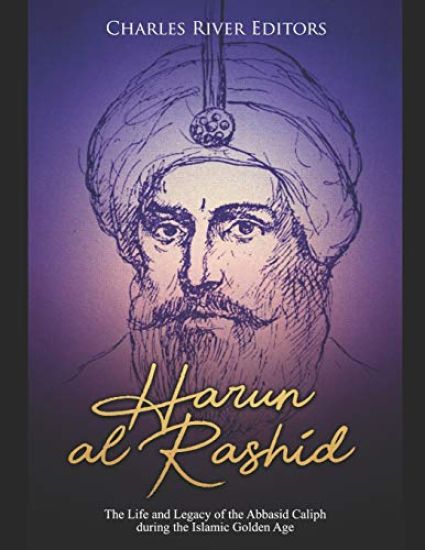
Harun al-Rashid: The Life and Legacy of the Abbasid Caliph during the Islamic Golden Age
*Includes pictures*Includes medieval accounts*Includes online resources and a bibliography for further readingLike many historical figures, Harun al-Rashid's biography has become part reality and part myth. A real individual and the fourth caliph of the Abbasid Caliphate, Harun al-Rashid is best known to many individuals because of his role in famous literature like One Thousand and One Nights, not necessarily because of his policy decisions. This is unusual because Harun al-Rashid was perhaps the most influential of the Abbasid caliphs due to his role in bringing economic prosperity, destroying one of the most powerful Islamic families of the 9th century CE, and ending the Abbasid Dynasty for good. The reputation of Harun al-Rashid is a controversial one over 1,000 years later. Although historians are often loathe to admit it, they understand that history, like other social and cultural subjects, is subject to the opinions and influences of the society in which it was written, and for centuries, numerous cultures in the Western world (primarily Europe, Australasia, North America, and sometimes Latin and South America) insisted that Islamic societies could not possess the intellectual progress and discourse Western society attributed to itself. According to Amira Bennison, "It was a commonplace of the European imperial age that the Islamic world was intellectually backward and that Muslims not only could not have produced the Enlightenment and Industrial Evolution but also required European tutelage." In short, European intellectuals believed Muslims, due to their religious, cultural, and ethnic backgrounds, lacked the capacity to be progressive - as determined by European standards - and were thus intellectually and culturally backwards. This interpretation of Islamic culture and society transcended intellectual barriers and seeped into the history and literature produced by scholars of the Western world, and in time, Harun al-Rashid became the figure through which the Western world applied its ideas of Arabian culture, Islam, and the power of the caliphates. The difficulty for historians and modern audiences, then, is trying to determine what about Harun al-Rashid is fact and what is fiction, produced over time by biased sources or legends. By the 21st century, much of the historical information about him has been distorted by folk tales and the exaggerations of medieval historians of all religions and walks of life. Even with numerous pop culture appearances, the actual history of the Abbasid caliph is difficult to determine because of the wealth of misinformation throughout Eastern and Western media alike. When Harun al-Rashid died in the early 9th century, the Abbasid Caliphate fell into civil war. Harun al-Rashid had chosen his son al-Amin to be the new caliph, but his other son, al-Ma'mun, had similar ambitions. Al-Ma'mun would receive the support of some of the noble families and make a claim for the throne, and after a two-year siege of the capital in Baghdad, al-Amin perished and al-Ma'mun took the throne in 813. He ruled for the following 20 years in relative peace though he was forced to put down local rebellions spurred by the Byzantines. Al-Ma'mun, to repay his allies, would create an autonomous Khorasan region in northeast Persia filled with Persian noble families. While scholars can still debate his legacy, none can argue that while Harun al-Rashid did not politically advance the Abbasid Caliphate and may actually be blamed for its eventual destruction, his emphasis on arts and culture brought the caliphate into the Islamic Golden Age and created the romanticized image of the Arab ruler in folk tales throughout Eastern and Western cultures.
The Athenian Navy and Spartan Army: The History and Legacy of Ancient Greece's Most Famous Military Forces
*Includes pictures*Includes ancient accounts*Includes a bibliography for further reading"Forward, sons of the Greeks, Liberate the fatherland, Liberate your children, your women, The altars of the gods of your fathers, And the graves of your ancestors: Now is the fight for everything." - The Greek battle hymn sung before the Battle of Salamis according to AeschylusDominated to this day by the sprawling white marble complex of the Acropolis, Athens is a city which is immensely and rightly proud of its past. For a period of roughly three centuries, the polis of Athens stood, if not in a position of unchallenged supremacy among the cities of Hellas, then at the very least among its three most important polities. Its fledgling empire, though small by the standards later set by Alexander or the Romans, or even by those of its ancient enemy Persia, nonetheless encompassed cities as far afield as Asia Minor and Southern Italy, a remarkable fact considering such expansion was achieved by the inhabitants of a single city and its immediate surroundings, rather than by an entire nation. Yet despite a martial tradition that, if taken as a whole, was second to none save the Spartans, Athens is chiefly remembered for two reasons: its political system, which would in time form the nucleus of all Western democratic systems of government, and the remarkable number of outstanding individuals which, during the Golden Age of Athens, lived and flourished in the enlightened city-state. The Ancient Athenians formed the backbone of the West's entire culture, from the arts to philosophy and everything in between. In virtually all fields of human endeavor Athens was so much at the forefront of dynamism and innovation that the products of its most brilliant minds remain not only influential but entirely relevant to this day. The most unique city-state in Ancient Greece was Sparta, which continues to fascinate contemporaneous society. It is not entirely clear why Sparta placed such a great emphasis on having a militaristic society, but the result was that military fitness was a preoccupation from birth. If a Spartan baby did not appear physically fit at birth, it was left to die. Spartan children underwent military training around the age of 7 years old, and every male had to join the army around the age of 18. The Spartans, whose carefully constructed approach to warfare and - there is no other word for it - Spartan way of life, earned the grudging admiration of all of Greece and succeeded in establishing themselves in the years following the reforms of the semi-legendary ruler Lycurgus as the greatest military force in all of Hellas. Athens might have the mightiest fleet and the greatest cadre of philosophers and dramatists, Thessaly might have had the most vaunted cavalry, and the great city-states of Argos, Thebes and Corinth all had their own claims to fame, but on the battlefield the Spartan phalanx stood without peer. So feared were they in Greece that their very appearance on the battlefield could cause entire enemy armies to flee in terror, and in one of history's most famous battles, 300 Spartan warriors headed a combined Greek force which held off the hundreds of thousands of Persian warriors of Xerxes's invading army for three days at Thermopylae, inflicting an estimated 20,000 casualties upon them before dying to the last man rather than retreating. The Athenian Navy and Spartan Army: The History and Legacy of Ancient Greece's Most Famous Military Forces chronicles how these hoplites and sailors helped revolutionize ancient warfare and helped the Greek city-states rise to prominence. Along with pictures depicting important people, places, and events, you will learn about the Athenian navy and Spartan army like never before.
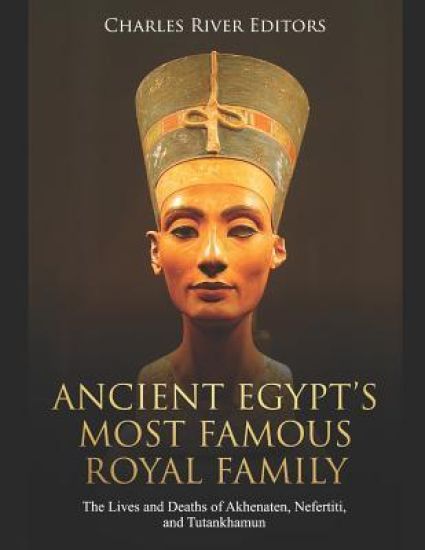
Ancient Egypt's Most Famous Royal Family: The Lives and Deaths of Akhenaten, Nefertiti, and Tutankhamun
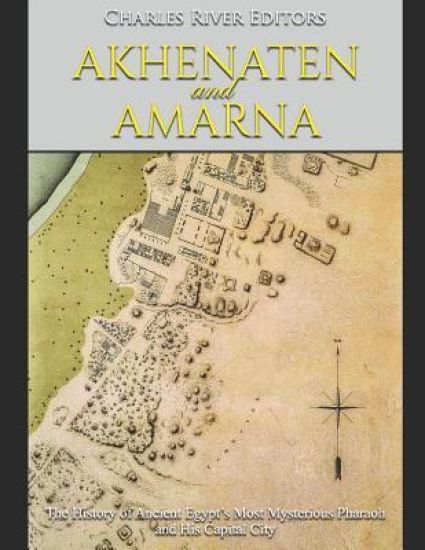
*Includes pictures*Includes ancient accounts*Includes a bibliography for further readingAfrica may have given rise to the first human beings, and Egypt probably gave rise to the first great civilizations, which continue to fascinate modern societies across the globe nearly 5,000 years later. From the Library and Lighthouse of Alexandria to the Great Pyramid at Giza, the Ancient Egyptians produced several wonders of the world, revolutionized architecture and construction, created some of the world's first systems of mathematics and medicine, and established language and art that spread across the known world. With world-famous leaders like King Tut and Cleopatra, it's no wonder that today's world has so many Egyptologists. Perhaps the most intriguing aspect of ancient Egyptian civilization was its inception from the ground up, as the ancient Egyptians had no prior civilization which they could use as a template. In fact, ancient Egypt itself became a template for the civilizations that followed. The Greeks and the Romans were so impressed with Egyptian culture that they often attributed many attributes of their own culture‒usually erroneously‒to the Egyptians. With that said, some minor elements of ancient Egyptian culture were, indeed, passed on to later civilizations. Egyptian statuary appears to have had an initial influence on the Greek version, and the ancient Egyptian language continued long after the pharaonic period in the form of the Coptic language. Although the Egyptians may not have passed their civilization directly on to later peoples, the key elements that comprised Egyptian civilization, including their religion, early ideas of state, and art and architecture, can be seen in other pre-modern civilizations. Indeed, since Egyptian civilization represented some fundamental human concepts, a study of their culture can be useful when trying to understand many other pre-modern cultures. Part of the reason Egyptian history is so intriguing is because it is so enigmatic - even today, despite the wealth of written materials and countless monuments, Egyptologists constantly uncover more mysteries about ancient Egypt, even if many of those mysteries are somewhat mundane and appeal more to academics. For example, historians still debate precise chronologies of dynasties, theological nuances, and architectural details. One such mystery that shows no signs of going away is the history of the archeological site known as Amarna, which is actually the name of the modern village that is closest to the ancient Egyptian city of Akhet-Aten. Akhet-Aten was built during the reign of one of Egypt's most enigmatic pharaohs, Akhenaten (ruled ca. 1364-1347 BCE), and modern archaeological studies have shown it was hastily built and almost as quickly abandoned. Although the city had a brief lifespan, it was vitally important at the time, so much so that the late Eighteenth Dynasty has been named the Amarna Period by modern scholars. The importance is reflected in the changes that Akhenaten attempted to make to Egyptian religion, art, architecture, and society, all of which can be found among the ruins of Amarna, from texts that described the Aten as the one true god to the depictions of the royal family that were like nothing seen before or after in ancient Egyptian art. An examination of Akhenaten's rule and the life of the city of Akhet-Aten has helped modern scholars unravel some of the mysteries of the Amarna Period, but many still remain.
Rocky Mountain Harry Yount: The Life and Legacy of the Famous American Explorer and Mountain Man
*Includes pictures*Includes contemporary accounts*Includes online resources and a bibliography for further readingBy the golden age of the mountain man in the mid-19th-century, there were perhaps only 3,000 living in the West. Their origins were disparate, although they included many Anglo-Americans. A good number hailed from wilderness regions of Kentucky and Virginia and throughout the newly purchased Louisiana Territory, which occupied the entire central section of the continent. French Canadians traveled from the north to work in the fur trade, while Creole-Europeans represented approximately 15% of the men known to be living the isolated mountain life. Others were of M tis, Spanish, American, Black, Indian, and mixed-blood origin, most often Iroquois or Delaware. Most came to the West in their late adolescent years, the oldest learning the trade in their 30s. Many roamed the west for as long as their constitutions would hold up under constant attacks on their health and personal safety. Some stayed too long and failed to survive the experience. Among the most famous, Jim Bridger arrived at the age of 16, while Edward Robinson was eventually killed in his 60s by what were known as "bad snakes," a reference to the Snake tribe in Idaho country. Jim Beckwourth left the mountains at 68 and Old Bill Williams died at the age of 62 when a band of Utes "made him to come." During the mid-19th century, the mountain man persona transformed into that of a more multifaceted individual. Frontiersmen who were once alone in the West were hired on as guides and scouts for the military, or for settlement caravans crossing the new trails to the Pacific Northwest and California. A third generation of mountain men followed the Civil War as veterans headed west to test their survival skills learned in the military. The search for opportunities near the Pacific was not merely an option exercised by unemployed soldiers who could find no other use for themselves, as many had no home to which they could return. Meanwhile, the opportunities widened for prospectors, hunters, merchants, farmers, ranchers, and lawmen, occupations not yet in existence for the prior generation. In the case of Civil War veteran Harry S. Yount, a new niche opened with the federal government for the early maintenance of forests in the West, and for the protection of wildlife in the northern Rocky Mountains. Through his service as the first gamekeeper of what was to become Yellowstone National Park, Yount is to this day honored as a prototypical model in the establishment of the National Park Service. Due to his two annual reports to the Department of the Interior later, he is recognized as the first individual to recommend a specialized force with which to guarantee land and wildlife management in the first years of American environmentalism, and pursuant to his knowledge of the wild country of Montana and Wyoming, he was a crucial employee of one of the first major geological expeditions to the Rocky Mountains that charted the land from Montana to Arizona and provided the first thorough scientific study of the great mountain range. Despite some leg dysfunction from a wound received in the war, and with little experience as a mountaineer, Yount joined several geologists and cartographers in the first ascents of the major peaks of the Grand Teton Range. His era was the first in which some in the West began to seriously consider the preservation of once abundant wildlife species. Despite being a proponent of such protections, Yount was nevertheless a product of his time. He participated in the widespread decimation of the buffalo, however reluctantly, for no other reason than to destroy the indigenous peoples' food source and force their relocation to reservations. As a transitional figure, he presents a moral dilemma to 21st century sensibilities.
South Africa: The History and Legacy of the Nation from European Colonization to the End of the Apartheid Era
*Includes pictures*Includes online resources and a bibliography for further readingThe Boer War was the defining conflict of South African history and one of the most important conflicts in the history of the British Empire. Naturally, complicated geopolitics underscored it, going back centuries. In fact, the European history of South Africa began with the 1652 arrival of a small Dutch flotilla in Table Bay, at the southern extremity of the African continent, which made landfall with a view to establishing a victualing station to service passing Dutch East India Company (Vereenigde Oost-Indische Compagnie) ships. The Dutch at that point largely dominated the East Indian Trade, and it was their establishment of the settlement of Kaapstad, or Cape Town, that set in motion the lengthy and often turbulent history of South Africa. For over a century, the Cape remained a Dutch East India Company settlement, and in the interests of limiting expenses, strict parameters were established to avoid the development of a colony. As religious intolerance in Europe drove a steady trickle of outward emigration, however, Dutch settlers began to informally expand beyond the Cape, settling the sparsely inhabited hinterland to the north and east of Cape Town. In doing so, they fell increasingly outside the administrative scope of the Company, and they developed an individualistic worldview, characterized by self-dependence and self-reliance. They were also bonded as a society by a rigorous and literal interpretation of the Old Testament. In their wake, towards the end of the 17th century, followed a wave of French Huguenot immigrants, fleeing a renewal of anti-Protestantism in Europe. They were integrated over the succeeding generations, creating a hybridized language and culture that emerged in due course as the Cape Dutch, The Afrikaner or the Boer. The Napoleonic Wars radically altered the old, established European power dynamics, and in 1795, the British, now emerging as the globe's naval superpower, assumed control of the Cape as part of the spoils of war. Possession passed back and forth once or twice, but more or less from that point onwards, the British established their presence at the Cape, which they held until the unification of South Africa in 1910. However, it would only come after several rounds of conflicts. On June 1, 1948, Daniel Malan arrived in Pretoria by train to take office, and there he was met by a huge crowd of cheering whites. He told the audience, "In the past, we felt like strangers in our own country, but today, South Africa belongs to us once more. For the first time since Union, South Africa is our own. May God grant that it always remain our own." Back in Johannesburg, the leadership of the ANC, including the young attorney Nelson Mandela, listened to these celebratory prognostications in a grim mood. As strangers in their own country, they all understood that the South African liberation struggle would not be won overnight. In fact, the era of apartheid was only just about to formally start. Although apartheid is typically dated from the late 1940s until its dismantling decades later, segregationist policies had been the norm in South Africa from nearly the moment European explorers sailed to the region and began settling there. Whether it was displacing and fighting indigenous groups like the Khoi and San, or fighting other whites like the Boer, separation between ethnicities was the norm in South Africa for centuries before the election of Malan signaled the true rise of the Afrikaner far right. South Africa: The History and Legacy of the Nation from European Colonization to the End of the Apartheid Era looks at the controversial history of the country, from the initial European explorers to the successful struggle to dismantle apartheid.
Apartheid in South Africa: The History and Legacy of the Notorious Segregationist Policies in the 20th Century
*Includes pictures*Includes online resources and a bibliography for further reading"During my lifetime I have dedicated myself to this struggle of the African people. I have fought against white domination, and I have fought against black domination. I have cherished the ideal of a democratic and free society in which all persons will live together in harmony and with equal opportunities. It is an ideal which I hope to live for. But, my lord, if needs be, it is an ideal for which I am prepared to die." - Nelson Mandela, 1964On June 1, 1948, Daniel Malan arrived in Pretoria by train to take office, and there he was met by a huge crowd of cheering whites. He told the audience, "In the past, we felt like strangers in our own country, but today, South Africa belongs to us once more. For the first time since Union, South Africa is our own. May God grant that it always remain our own." Back in Johannesburg, the leadership of the ANC, including the young attorney Nelson Mandela, listened to these celebratory prognostications in a grim mood. As strangers in their own country, they all understood that the South African liberation struggle would not be won overnight. In fact, the era of apartheid was only just about to formally start. Although apartheid is typically dated from the late 1940s until its dismantling decades later, segregationist policies had been the norm in South Africa from nearly the moment European explorers sailed to the region and began settling there. Whether it was displacing and fighting indigenous groups like the Khoi and San, or fighting other whites like the Boer, separation between ethnicities was the norm in South Africa for centuries before the election of Malan signaled the true rise of the Afrikaner far right. The man most associated with dismantling apartheid, of course, is Nelson Mandela. With the official policy of apartheid instituted in 1948 by an all-white government, Mandela was tried for treason between the years of 1956-61 before being acquitted. He participated in the Defiance Campaign of 1952, and oversaw the 1955 Congress of the People, but when the African National Congress was banned in 1960, he proposed a military wing, despite his initial reluctance toward violent resistance, a reluctance which had its roots in original nonviolent protests through the South African Communist Party. The ANC did not openly discourage such an idea, and the Umkhonto we Sizwe was established. Mandela was again arrested in 1962 and tried for attempts to overthrow the government by violence. The sentence was five years of hard labor, but this was increased to a life sentence in 1964, a sentence handed down to seven of his closest colleagues as well. Mandela would eventually serve 27 years, but his statements made in court received enormous international coverage and acclaim, and his reputation grew during his time in Robben Island Prison of Capetown, the Pollsmoor and Victor Verster Prisons. He was ultimately released in February 1990, in large part as a result of the international campaign generated by his words and the current South African story. Shortly after that, he was elected as the first man of African descent to the presidency of South Africa, which he held from 1994-1999. Most significant was that Mandela was elected from the first multi-factional, multi-racial election ever held in the country, a result of extensive negotiations with then President F. W. Klerk. Apartheid in South Africa: The History and Legacy of the Notorious Segregationist Policies in the 20th Century looks at the controversial policies, the background behind them, and their influence on the country. Along with pictures and a bibliography, you will learn about apartheid in South Africa like never before.
Apartheid in South Africa: The History and Legacy of the Notorious Segregationist Policies in the 20th Century
*Includes pictures*Includes online resources and a bibliography for further reading"During my lifetime I have dedicated myself to this struggle of the African people. I have fought against white domination, and I have fought against black domination. I have cherished the ideal of a democratic and free society in which all persons will live together in harmony and with equal opportunities. It is an ideal which I hope to live for. But, my lord, if needs be, it is an ideal for which I am prepared to die." - Nelson Mandela, 1964On June 1, 1948, Daniel Malan arrived in Pretoria by train to take office, and there he was met by a huge crowd of cheering whites. He told the audience, "In the past, we felt like strangers in our own country, but today, South Africa belongs to us once more. For the first time since Union, South Africa is our own. May God grant that it always remain our own." Back in Johannesburg, the leadership of the ANC, including the young attorney Nelson Mandela, listened to these celebratory prognostications in a grim mood. As strangers in their own country, they all understood that the South African liberation struggle would not be won overnight. In fact, the era of apartheid was only just about to formally start. Although apartheid is typically dated from the late 1940s until its dismantling decades later, segregationist policies had been the norm in South Africa from nearly the moment European explorers sailed to the region and began settling there. Whether it was displacing and fighting indigenous groups like the Khoi and San, or fighting other whites like the Boer, separation between ethnicities was the norm in South Africa for centuries before the election of Malan signaled the true rise of the Afrikaner far right. The man most associated with dismantling apartheid, of course, is Nelson Mandela. With the official policy of apartheid instituted in 1948 by an all-white government, Mandela was tried for treason between the years of 1956-61 before being acquitted. He participated in the Defiance Campaign of 1952, and oversaw the 1955 Congress of the People, but when the African National Congress was banned in 1960, he proposed a military wing, despite his initial reluctance toward violent resistance, a reluctance which had its roots in original nonviolent protests through the South African Communist Party. The ANC did not openly discourage such an idea, and the Umkhonto we Sizwe was established. Mandela was again arrested in 1962 and tried for attempts to overthrow the government by violence. The sentence was five years of hard labor, but this was increased to a life sentence in 1964, a sentence handed down to seven of his closest colleagues as well. Mandela would eventually serve 27 years, but his statements made in court received enormous international coverage and acclaim, and his reputation grew during his time in Robben Island Prison of Capetown, the Pollsmoor and Victor Verster Prisons. He was ultimately released in February 1990, in large part as a result of the international campaign generated by his words and the current South African story. Shortly after that, he was elected as the first man of African descent to the presidency of South Africa, which he held from 1994-1999. Most significant was that Mandela was elected from the first multi-factional, multi-racial election ever held in the country, a result of extensive negotiations with then President F. W. Klerk. Apartheid in South Africa: The History and Legacy of the Notorious Segregationist Policies in the 20th Century looks at the controversial policies, the background behind them, and their influence on the country. Along with pictures and a bibliography, you will learn about apartheid in South Africa like never before.
South Africa: The History and Legacy of the Nation from European Colonization to the End of the Apartheid Era
*Includes pictures*Includes online resources and a bibliography for further readingThe Boer War was the defining conflict of South African history and one of the most important conflicts in the history of the British Empire. Naturally, complicated geopolitics underscored it, going back centuries. In fact, the European history of South Africa began with the 1652 arrival of a small Dutch flotilla in Table Bay, at the southern extremity of the African continent, which made landfall with a view to establishing a victualing station to service passing Dutch East India Company (Vereenigde Oost-Indische Compagnie) ships. The Dutch at that point largely dominated the East Indian Trade, and it was their establishment of the settlement of Kaapstad, or Cape Town, that set in motion the lengthy and often turbulent history of South Africa. For over a century, the Cape remained a Dutch East India Company settlement, and in the interests of limiting expenses, strict parameters were established to avoid the development of a colony. As religious intolerance in Europe drove a steady trickle of outward emigration, however, Dutch settlers began to informally expand beyond the Cape, settling the sparsely inhabited hinterland to the north and east of Cape Town. In doing so, they fell increasingly outside the administrative scope of the Company, and they developed an individualistic worldview, characterized by self-dependence and self-reliance. They were also bonded as a society by a rigorous and literal interpretation of the Old Testament. In their wake, towards the end of the 17th century, followed a wave of French Huguenot immigrants, fleeing a renewal of anti-Protestantism in Europe. They were integrated over the succeeding generations, creating a hybridized language and culture that emerged in due course as the Cape Dutch, The Afrikaner or the Boer. The Napoleonic Wars radically altered the old, established European power dynamics, and in 1795, the British, now emerging as the globe's naval superpower, assumed control of the Cape as part of the spoils of war. Possession passed back and forth once or twice, but more or less from that point onwards, the British established their presence at the Cape, which they held until the unification of South Africa in 1910. However, it would only come after several rounds of conflicts. On June 1, 1948, Daniel Malan arrived in Pretoria by train to take office, and there he was met by a huge crowd of cheering whites. He told the audience, "In the past, we felt like strangers in our own country, but today, South Africa belongs to us once more. For the first time since Union, South Africa is our own. May God grant that it always remain our own." Back in Johannesburg, the leadership of the ANC, including the young attorney Nelson Mandela, listened to these celebratory prognostications in a grim mood. As strangers in their own country, they all understood that the South African liberation struggle would not be won overnight. In fact, the era of apartheid was only just about to formally start. Although apartheid is typically dated from the late 1940s until its dismantling decades later, segregationist policies had been the norm in South Africa from nearly the moment European explorers sailed to the region and began settling there. Whether it was displacing and fighting indigenous groups like the Khoi and San, or fighting other whites like the Boer, separation between ethnicities was the norm in South Africa for centuries before the election of Malan signaled the true rise of the Afrikaner far right. South Africa: The History and Legacy of the Nation from European Colonization to the End of the Apartheid Era looks at the controversial history of the country, from the initial European explorers to the successful struggle to dismantle apartheid.
Rocky Mountain Harry Yount: The Life and Legacy of the Famous American Explorer and Mountain Man
*Includes pictures*Includes contemporary accounts*Includes online resources and a bibliography for further readingBy the golden age of the mountain man in the mid-19th-century, there were perhaps only 3,000 living in the West. Their origins were disparate, although they included many Anglo-Americans. A good number hailed from wilderness regions of Kentucky and Virginia and throughout the newly purchased Louisiana Territory, which occupied the entire central section of the continent. French Canadians traveled from the north to work in the fur trade, while Creole-Europeans represented approximately 15% of the men known to be living the isolated mountain life. Others were of M tis, Spanish, American, Black, Indian, and mixed-blood origin, most often Iroquois or Delaware. Most came to the West in their late adolescent years, the oldest learning the trade in their 30s. Many roamed the west for as long as their constitutions would hold up under constant attacks on their health and personal safety. Some stayed too long and failed to survive the experience. Among the most famous, Jim Bridger arrived at the age of 16, while Edward Robinson was eventually killed in his 60s by what were known as "bad snakes," a reference to the Snake tribe in Idaho country. Jim Beckwourth left the mountains at 68 and Old Bill Williams died at the age of 62 when a band of Utes "made him to come." During the mid-19th century, the mountain man persona transformed into that of a more multifaceted individual. Frontiersmen who were once alone in the West were hired on as guides and scouts for the military, or for settlement caravans crossing the new trails to the Pacific Northwest and California. A third generation of mountain men followed the Civil War as veterans headed west to test their survival skills learned in the military. The search for opportunities near the Pacific was not merely an option exercised by unemployed soldiers who could find no other use for themselves, as many had no home to which they could return. Meanwhile, the opportunities widened for prospectors, hunters, merchants, farmers, ranchers, and lawmen, occupations not yet in existence for the prior generation. In the case of Civil War veteran Harry S. Yount, a new niche opened with the federal government for the early maintenance of forests in the West, and for the protection of wildlife in the northern Rocky Mountains. Through his service as the first gamekeeper of what was to become Yellowstone National Park, Yount is to this day honored as a prototypical model in the establishment of the National Park Service. Due to his two annual reports to the Department of the Interior later, he is recognized as the first individual to recommend a specialized force with which to guarantee land and wildlife management in the first years of American environmentalism, and pursuant to his knowledge of the wild country of Montana and Wyoming, he was a crucial employee of one of the first major geological expeditions to the Rocky Mountains that charted the land from Montana to Arizona and provided the first thorough scientific study of the great mountain range. Despite some leg dysfunction from a wound received in the war, and with little experience as a mountaineer, Yount joined several geologists and cartographers in the first ascents of the major peaks of the Grand Teton Range. His era was the first in which some in the West began to seriously consider the preservation of once abundant wildlife species. Despite being a proponent of such protections, Yount was nevertheless a product of his time. He participated in the widespread decimation of the buffalo, however reluctantly, for no other reason than to destroy the indigenous peoples' food source and force their relocation to reservations. As a transitional figure, he presents a moral dilemma to 21st century sensibilities.
Witchcraft in the United States: The History of Witches, Practices, and Persecution in America
*Includes pictures*Includes contemporary accounts of trials*Includes online resources and a bibliography for further reading"Since man cannot live without miracles, he will provide himself with miracles of his own making. He will believe in witchcraft and sorcery, even though he may otherwise be a heretic, an atheist, and a rebel." - - Fyodor Dostoyevsky, The Brothers KaramazovWhen people hear the word "witchcraft," certain images come to mind. American history buffs will immediately think of Salem, where hysteria in the 17th century led to notorious trials that continue to be the source of several historical studies, with scholars analyzing things from every direction. Was it a religious fervor? Was it a land grab? Was there fungus in the grain? Over 400 years later, there are still fundamental questions regarding the complete breakdown of moral order that pinned friend against friend and neighbor against neighbor. As Salem proved, there has long been a natural curiosity about witchcraft. Some of the best-selling children's books and adult novels have been about witchcraft, such as The Witch of Blackbird Pond. One of Roald Dahl's most famous works was The Witches, and Harry Potter became a global phenomenon. As adults, fans of Anne Rice, Neil Gaiman, and Alice Hoffman will find books about witches among their reading list, and there are countless movies and television shows devoted to the topic. All cultures and belief systems have ideas and definitions of what makes a witch, and this ultimately comes down to the human mind's natural need to break things into opposites. For all good, there must be evil, and for those who started to settle North America in the 17th century and beyond, witchcraft became the perfect explanation for what they couldn't understand or control. Settling a new land - whether by choice or not - came with its own set of complications and ills. Life was hard in an unsettled area, especially when Europeans and Native Americans clashed in the New World, and when the European settlers started importing African slaves, that introduced new ideas about what constituted good and evil. As a result, while most studies of witchcraft in the United States tend to focus on Salem, that hardly does the subject matter justice, because understanding Native American and African concepts about witchcraft are just as important to American history as European ideas. Witchcraft in the United States: The History of Witches, Practices, and Persecution in America examines how various cultures perceived witchcraft and the impact it had in the United States and the colonial period. Along with pictures and a bibliography, you will learn about the history of witchcraft in America like never before.