Kirjojen hintavertailu – 12 903 725 kirjaa ja 27 kauppaa

Kirjailija

Charles River

Kirjat ja teokset yhdessä paikassa: 4 673 kirjaa, julkaisuja vuosilta 2013–2022, suosituimpiin kuuluu William Powell and Myrna Loy: The Lives and Careers of One of Classical Hollywood's Most Iconic Duos. Vertaile teosten hintoja ja tarkista saatavuus suomalaisista kirjakaupoista.

4 673 kirjaa

Kirjojen julkaisuvuodet: 2013–2022.

Flat Earth: A History of Strange Tales, Bizarre Beliefs, and Conspiracy Theories about the Earth's Surface
*Includes pictures*Includes online resources and a bibliography for further readingThe world is filled with mysteries, and even in the modern age, much of the planet remains unexplored. The depths of the oceans and the intricate and extensive cave systems that honeycomb some parts of the Earth are still largely unknown. Thus, it should come as no surprise that when it comes to this terra incognita, people have projected all sorts of ideas. Tales of sunken cities or lost civilizations are just some of the fanciful theories, and those could even be considered tame in comparison to the idea that Earth is flat. Despite this notion being rejected by the scientific community for millennia, and despite the fact that geology, volcanology, oceanography, and physics have all proven that the planet is not flat, the idea of a hollow Earth continues to intrigue people and gain eager and sincere adherents. This is made all the more remarkable by the fact that space programs are more than 60 years old, and people can fly around the world on planes in a matter of hours. Taken at face value, this idea is patently ridiculous, but it provokes strong emotions in some people, sincere people who have thought extensively about their beliefs. These people feel they are privy to a hidden truth, and that the rest of the world is wrong and ignorant, but this feeling of mental superiority isn't the only appeal in clinging to radical notions. There is also the thrill of adventure, the feeling that one is part of a dangerous minority attempting to overthrow the dominant paradigm. It is far better, some would feel, to live in a world full of mystery and hope, than a decaying, "rational" world where everything can be explained but nothing solved. Flat Earth: A History of Strange Tales, Bizarre Beliefs, and Conspiracy Theories about the Earth's Surface offers a sampling of the many strange stories and theories regarding the planet's surface. Along with pictures of important people, places, and events, you will learn about the theories like never before.
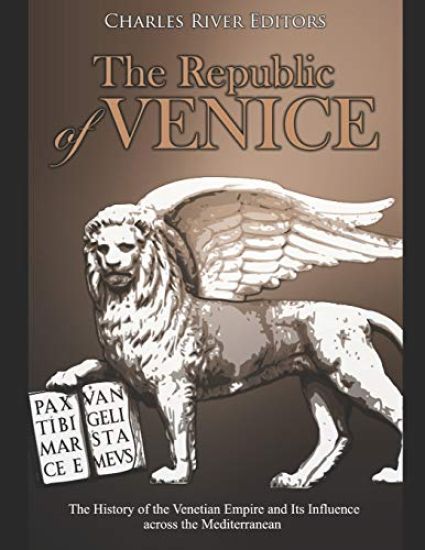
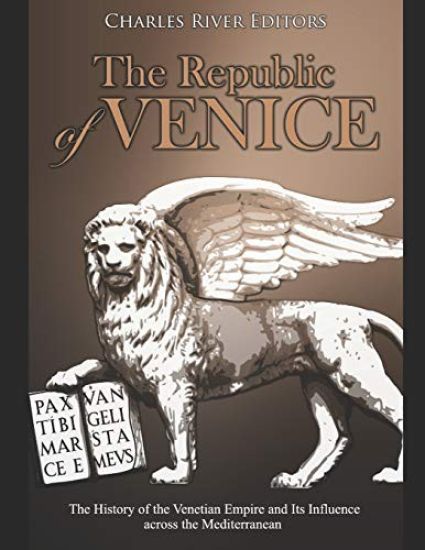
The Republic of Venice: The History of the Venetian Empire and Its Influence across the Mediterranean
*Includes pictures*Includes medieval accounts*Includes online resources and a bibliography for further reading"As in the Arsenal of the VenetiansBoils in winter the tenacious pitchTo smear their unsound vessels over againFor sail they cannot; and instead thereofOne makes his vessel new, and one recaulksThe ribs of that which many a voyage has madeOne hammers at the prow, one at the sternThis one makes oars and that one cordage twistsAnother mends the mainsail and the mizzen..." - Dante's InfernoThe mystical floating city of Venice has inspired awe for generations, and it continues to be one of the most visited European cities for good reason. Tourists are drawn to the stunning blend of classical, Gothic, and Renaissance-inspired architecture across the picturesque towns and villages, the charming open-air markets, the mouthwatering traditional cuisine, and of course, the famous gondolas drifting down the twinkling blue waters. While these gondolas, along with the time-honored models of the Venetian vessels docked in the harbors, are one of the city's most defining landmarks, their beginnings are shrouded in a more obscure part of Venetian history. To the first settlers of the unpromising, marshy islands of Venice in the 5th century BCE, it appeared as if any attempt at civilization was doomed to fail. Yet, even with the cards stacked against them, the artful inhabitants mastered the unlivable terrain and slowly pieced together a society that would put the small, unassuming city right on the map. In time, the city evolved into the most powerful maritime empire in all of Europe. Founded in the wake of the decline of the Roman Empire, the Republic of Venice lasted for more than a thousand years, from 697-1797, and in order to understand its singular position in world history, it is necessary to first note its geographical positioning and its topographical make-up: Located in northeastern Italy at the head of the Adriatic, the city is made up of 120 islands that are connected by 430 bridges that cross over 170 canals, referred to as a "rio" or plural "rii" (Italian for river). As a maritime power, the interests of Venice once reached all the way to Asia, which allowed it to form an important crossroads within the Eastern Mediterranean, in terms of trade. In Venice, a vast array of products (raw materials, spices, cloth) came all the way from North Africa, Russia, and India and were exchanged for the goods and wealth of Europe." Venice, of course, earned its remarkable reputation on its own merit, but the reason for its current fame should be credited at least in part to its status as one of the most important tourist destinations of all time, attracting travelers interested in religion, art, culture, architecture, the seashore as well as shopping. As far back as the 16th century, pilgrims flocked there to take in its numerous holy sites, the remnants of the city's medieval heritage, and in the 17th century, rich northern Europeans flocked to the city as part of their lengthy Grand Tour, hoping to feast their eyes on the unusual cityscape and its unique cultural heritage. Many of those famous writers penned unforgettable accounts of the city in English and in German, stories that only served to increase its fortunes over time. The Republic of Venice: The History of the Venetian Empire and Its Influence across the Mediterranean dives into the city's origin story, how it became one of the most important powers in Europe, and its inevitable undoing. Along with pictures of important people, places, and events, you will learn about the Venetian Republic like never before.
The Republic of Venice: The History of the Venetian Empire and Its Influence across the Mediterranean
*Includes pictures*Includes medieval accounts*Includes online resources and a bibliography for further reading"As in the Arsenal of the VenetiansBoils in winter the tenacious pitchTo smear their unsound vessels over againFor sail they cannot; and instead thereofOne makes his vessel new, and one recaulksThe ribs of that which many a voyage has madeOne hammers at the prow, one at the sternThis one makes oars and that one cordage twistsAnother mends the mainsail and the mizzen..." - Dante's InfernoThe mystical floating city of Venice has inspired awe for generations, and it continues to be one of the most visited European cities for good reason. Tourists are drawn to the stunning blend of classical, Gothic, and Renaissance-inspired architecture across the picturesque towns and villages, the charming open-air markets, the mouthwatering traditional cuisine, and of course, the famous gondolas drifting down the twinkling blue waters. While these gondolas, along with the time-honored models of the Venetian vessels docked in the harbors, are one of the city's most defining landmarks, their beginnings are shrouded in a more obscure part of Venetian history. To the first settlers of the unpromising, marshy islands of Venice in the 5th century BCE, it appeared as if any attempt at civilization was doomed to fail. Yet, even with the cards stacked against them, the artful inhabitants mastered the unlivable terrain and slowly pieced together a society that would put the small, unassuming city right on the map. In time, the city evolved into the most powerful maritime empire in all of Europe. Founded in the wake of the decline of the Roman Empire, the Republic of Venice lasted for more than a thousand years, from 697-1797, and in order to understand its singular position in world history, it is necessary to first note its geographical positioning and its topographical make-up: Located in northeastern Italy at the head of the Adriatic, the city is made up of 120 islands that are connected by 430 bridges that cross over 170 canals, referred to as a "rio" or plural "rii" (Italian for river). As a maritime power, the interests of Venice once reached all the way to Asia, which allowed it to form an important crossroads within the Eastern Mediterranean, in terms of trade. In Venice, a vast array of products (raw materials, spices, cloth) came all the way from North Africa, Russia, and India and were exchanged for the goods and wealth of Europe." Venice, of course, earned its remarkable reputation on its own merit, but the reason for its current fame should be credited at least in part to its status as one of the most important tourist destinations of all time, attracting travelers interested in religion, art, culture, architecture, the seashore as well as shopping. As far back as the 16th century, pilgrims flocked there to take in its numerous holy sites, the remnants of the city's medieval heritage, and in the 17th century, rich northern Europeans flocked to the city as part of their lengthy Grand Tour, hoping to feast their eyes on the unusual cityscape and its unique cultural heritage. Many of those famous writers penned unforgettable accounts of the city in English and in German, stories that only served to increase its fortunes over time. The Republic of Venice: The History of the Venetian Empire and Its Influence across the Mediterranean dives into the city's origin story, how it became one of the most important powers in Europe, and its inevitable undoing. Along with pictures of important people, places, and events, you will learn about the Venetian Republic like never before.
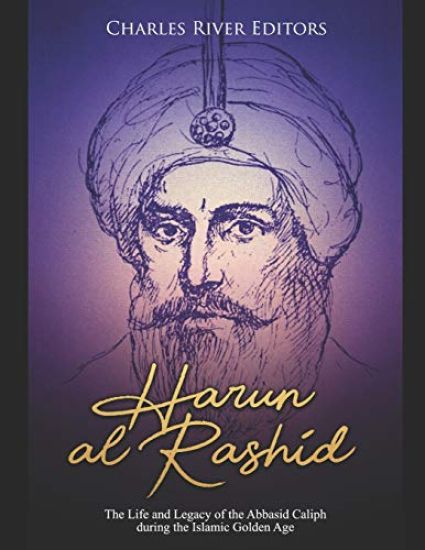
Harun al-Rashid: The Life and Legacy of the Abbasid Caliph during the Islamic Golden Age
*Includes pictures*Includes medieval accounts*Includes online resources and a bibliography for further readingLike many historical figures, Harun al-Rashid's biography has become part reality and part myth. A real individual and the fourth caliph of the Abbasid Caliphate, Harun al-Rashid is best known to many individuals because of his role in famous literature like One Thousand and One Nights, not necessarily because of his policy decisions. This is unusual because Harun al-Rashid was perhaps the most influential of the Abbasid caliphs due to his role in bringing economic prosperity, destroying one of the most powerful Islamic families of the 9th century CE, and ending the Abbasid Dynasty for good. The reputation of Harun al-Rashid is a controversial one over 1,000 years later. Although historians are often loathe to admit it, they understand that history, like other social and cultural subjects, is subject to the opinions and influences of the society in which it was written, and for centuries, numerous cultures in the Western world (primarily Europe, Australasia, North America, and sometimes Latin and South America) insisted that Islamic societies could not possess the intellectual progress and discourse Western society attributed to itself. According to Amira Bennison, "It was a commonplace of the European imperial age that the Islamic world was intellectually backward and that Muslims not only could not have produced the Enlightenment and Industrial Evolution but also required European tutelage." In short, European intellectuals believed Muslims, due to their religious, cultural, and ethnic backgrounds, lacked the capacity to be progressive - as determined by European standards - and were thus intellectually and culturally backwards. This interpretation of Islamic culture and society transcended intellectual barriers and seeped into the history and literature produced by scholars of the Western world, and in time, Harun al-Rashid became the figure through which the Western world applied its ideas of Arabian culture, Islam, and the power of the caliphates. The difficulty for historians and modern audiences, then, is trying to determine what about Harun al-Rashid is fact and what is fiction, produced over time by biased sources or legends. By the 21st century, much of the historical information about him has been distorted by folk tales and the exaggerations of medieval historians of all religions and walks of life. Even with numerous pop culture appearances, the actual history of the Abbasid caliph is difficult to determine because of the wealth of misinformation throughout Eastern and Western media alike. When Harun al-Rashid died in the early 9th century, the Abbasid Caliphate fell into civil war. Harun al-Rashid had chosen his son al-Amin to be the new caliph, but his other son, al-Ma'mun, had similar ambitions. Al-Ma'mun would receive the support of some of the noble families and make a claim for the throne, and after a two-year siege of the capital in Baghdad, al-Amin perished and al-Ma'mun took the throne in 813. He ruled for the following 20 years in relative peace though he was forced to put down local rebellions spurred by the Byzantines. Al-Ma'mun, to repay his allies, would create an autonomous Khorasan region in northeast Persia filled with Persian noble families. While scholars can still debate his legacy, none can argue that while Harun al-Rashid did not politically advance the Abbasid Caliphate and may actually be blamed for its eventual destruction, his emphasis on arts and culture brought the caliphate into the Islamic Golden Age and created the romanticized image of the Arab ruler in folk tales throughout Eastern and Western cultures.
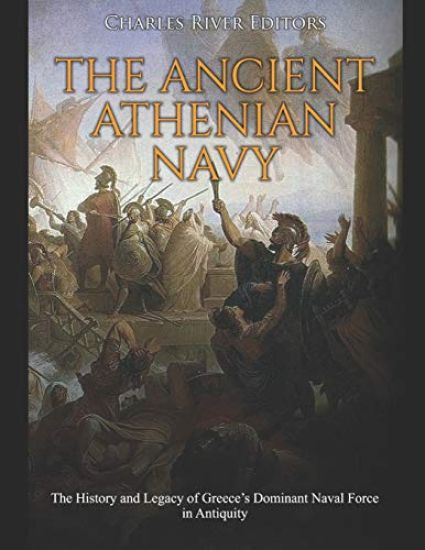
The Ancient Athenian Navy: The History and Legacy of Greece's Dominant Naval Force in Antiquity
*Includes pictures*Includes ancient accounts*Includes online resources and a bibliography for further reading"Forward, sons of the Greeks, Liberate the fatherland, Liberate your children, your women, The altars of the gods of your fathers, And the graves of your ancestors: Now is the fight for everything." - The Greek battle hymn sung before the Battle of Salamis according to AeschylusDominated to this day by the sprawling white marble complex of the Acropolis, Athens is a city which is immensely and rightly proud of its past. For a period of roughly three centuries, the polis of Athens stood, if not in a position of unchallenged supremacy among the cities of Hellas, then at the very least among its three most important polities. Its fledgling empire, though small by the standards later set by Alexander or the Romans, or even by those of its ancient enemy Persia, nonetheless encompassed cities as far afield as Asia Minor and Southern Italy, a remarkable fact considering such expansion was achieved by the inhabitants of a single city and its immediate surroundings, rather than by an entire nation. Yet despite a martial tradition that, if taken as a whole, was second to none save the Spartans, Athens is chiefly remembered for two reasons: its political system, which would in time form the nucleus of all Western democratic systems of government, and the remarkable number of outstanding individuals which, during the Golden Age of Athens, lived and flourished in the enlightened city-state. The Ancient Athenians formed the backbone of the West's entire culture, from the arts to philosophy and everything in between. The flowering of Greek civilization was further made possible by an increase of trade between the cities and with other civilizations. Trade became a major occupation on account of the scarcity of agricultural land in the largely mountainous regions of the Balkan peninsula. The polis of Athens, in particular, assumed economic dominance in the Aegean in from the 6th century BCE. The consequent increase in wealth, resources and population made a cultural renaissance possible. Commerce, in turn, led to the rise of an affluent aristocratic class which had the leisure to devote itself to learning, philosophy, and art. It also led to an industrial class of freemen who were artists and craftsmen. However, none of it would've been possible without military forces undergirding Athens' might, and for much of its history, the Athenian navy was the single strongest force in the Mediterranean, having defeated the overwhelming might of Persia in pitched battle upon the open sea numerous times. The Athenian army itself, though subordinate to its naval power - a sop to the fact that it was trade and empire-building that had made Athens rich - was nothing to be sneered at, as it succeeded in meting out a humiliating defeat to Darius's Persians at Marathon. Nonetheless, the Spartan military is remembered for being the preeminent land force, while Athens constructed its empire and enforced its will through pioneering ship technology and tactics. In the process, the Athenians heavily influenced how naval warfare would be conducted in the ancient world for centuries. The Ancient Athenian Navy: The History and Legacy of Greece's Dominant Naval Force in Antiquity chronicles how the navy helped Athens flourish, and why it ruled the Mediterranean in the Classical Era. Along with pictures depicting important people, places, and events, you will learn about the Athenian navy like never before.
The Ancient Athenian Navy: The History and Legacy of Greece's Dominant Naval Force in Antiquity
*Includes pictures*Includes ancient accounts*Includes online resources and a bibliography for further reading"Forward, sons of the Greeks, Liberate the fatherland, Liberate your children, your women, The altars of the gods of your fathers, And the graves of your ancestors: Now is the fight for everything." - The Greek battle hymn sung before the Battle of Salamis according to AeschylusDominated to this day by the sprawling white marble complex of the Acropolis, Athens is a city which is immensely and rightly proud of its past. For a period of roughly three centuries, the polis of Athens stood, if not in a position of unchallenged supremacy among the cities of Hellas, then at the very least among its three most important polities. Its fledgling empire, though small by the standards later set by Alexander or the Romans, or even by those of its ancient enemy Persia, nonetheless encompassed cities as far afield as Asia Minor and Southern Italy, a remarkable fact considering such expansion was achieved by the inhabitants of a single city and its immediate surroundings, rather than by an entire nation. Yet despite a martial tradition that, if taken as a whole, was second to none save the Spartans, Athens is chiefly remembered for two reasons: its political system, which would in time form the nucleus of all Western democratic systems of government, and the remarkable number of outstanding individuals which, during the Golden Age of Athens, lived and flourished in the enlightened city-state. The Ancient Athenians formed the backbone of the West's entire culture, from the arts to philosophy and everything in between. The flowering of Greek civilization was further made possible by an increase of trade between the cities and with other civilizations. Trade became a major occupation on account of the scarcity of agricultural land in the largely mountainous regions of the Balkan peninsula. The polis of Athens, in particular, assumed economic dominance in the Aegean in from the 6th century BCE. The consequent increase in wealth, resources and population made a cultural renaissance possible. Commerce, in turn, led to the rise of an affluent aristocratic class which had the leisure to devote itself to learning, philosophy, and art. It also led to an industrial class of freemen who were artists and craftsmen. However, none of it would've been possible without military forces undergirding Athens' might, and for much of its history, the Athenian navy was the single strongest force in the Mediterranean, having defeated the overwhelming might of Persia in pitched battle upon the open sea numerous times. The Athenian army itself, though subordinate to its naval power - a sop to the fact that it was trade and empire-building that had made Athens rich - was nothing to be sneered at, as it succeeded in meting out a humiliating defeat to Darius's Persians at Marathon. Nonetheless, the Spartan military is remembered for being the preeminent land force, while Athens constructed its empire and enforced its will through pioneering ship technology and tactics. In the process, the Athenians heavily influenced how naval warfare would be conducted in the ancient world for centuries. The Ancient Athenian Navy: The History and Legacy of Greece's Dominant Naval Force in Antiquity chronicles how the navy helped Athens flourish, and why it ruled the Mediterranean in the Classical Era. Along with pictures depicting important people, places, and events, you will learn about the Athenian navy like never before.
Flat Earth: A History of Strange Tales, Bizarre Beliefs, and Conspiracy Theories about the Earth's Surface
*Includes pictures*Includes online resources and a bibliography for further readingThe world is filled with mysteries, and even in the modern age, much of the planet remains unexplored. The depths of the oceans and the intricate and extensive cave systems that honeycomb some parts of the Earth are still largely unknown. Thus, it should come as no surprise that when it comes to this terra incognita, people have projected all sorts of ideas. Tales of sunken cities or lost civilizations are just some of the fanciful theories, and those could even be considered tame in comparison to the idea that Earth is flat. Despite this notion being rejected by the scientific community for millennia, and despite the fact that geology, volcanology, oceanography, and physics have all proven that the planet is not flat, the idea of a hollow Earth continues to intrigue people and gain eager and sincere adherents. This is made all the more remarkable by the fact that space programs are more than 60 years old, and people can fly around the world on planes in a matter of hours. Taken at face value, this idea is patently ridiculous, but it provokes strong emotions in some people, sincere people who have thought extensively about their beliefs. These people feel they are privy to a hidden truth, and that the rest of the world is wrong and ignorant, but this feeling of mental superiority isn't the only appeal in clinging to radical notions. There is also the thrill of adventure, the feeling that one is part of a dangerous minority attempting to overthrow the dominant paradigm. It is far better, some would feel, to live in a world full of mystery and hope, than a decaying, "rational" world where everything can be explained but nothing solved. Flat Earth: A History of Strange Tales, Bizarre Beliefs, and Conspiracy Theories about the Earth's Surface offers a sampling of the many strange stories and theories regarding the planet's surface. Along with pictures of important people, places, and events, you will learn about the theories like never before.
Witchcraft in the United States: The History of Witches, Practices, and Persecution in America
*Includes pictures*Includes contemporary accounts of trials*Includes online resources and a bibliography for further reading"Since man cannot live without miracles, he will provide himself with miracles of his own making. He will believe in witchcraft and sorcery, even though he may otherwise be a heretic, an atheist, and a rebel." - - Fyodor Dostoyevsky, The Brothers KaramazovWhen people hear the word "witchcraft," certain images come to mind. American history buffs will immediately think of Salem, where hysteria in the 17th century led to notorious trials that continue to be the source of several historical studies, with scholars analyzing things from every direction. Was it a religious fervor? Was it a land grab? Was there fungus in the grain? Over 400 years later, there are still fundamental questions regarding the complete breakdown of moral order that pinned friend against friend and neighbor against neighbor. As Salem proved, there has long been a natural curiosity about witchcraft. Some of the best-selling children's books and adult novels have been about witchcraft, such as The Witch of Blackbird Pond. One of Roald Dahl's most famous works was The Witches, and Harry Potter became a global phenomenon. As adults, fans of Anne Rice, Neil Gaiman, and Alice Hoffman will find books about witches among their reading list, and there are countless movies and television shows devoted to the topic. All cultures and belief systems have ideas and definitions of what makes a witch, and this ultimately comes down to the human mind's natural need to break things into opposites. For all good, there must be evil, and for those who started to settle North America in the 17th century and beyond, witchcraft became the perfect explanation for what they couldn't understand or control. Settling a new land - whether by choice or not - came with its own set of complications and ills. Life was hard in an unsettled area, especially when Europeans and Native Americans clashed in the New World, and when the European settlers started importing African slaves, that introduced new ideas about what constituted good and evil. As a result, while most studies of witchcraft in the United States tend to focus on Salem, that hardly does the subject matter justice, because understanding Native American and African concepts about witchcraft are just as important to American history as European ideas. Witchcraft in the United States: The History of Witches, Practices, and Persecution in America examines how various cultures perceived witchcraft and the impact it had in the United States and the colonial period. Along with pictures and a bibliography, you will learn about the history of witchcraft in America like never before.