Kirjojen hintavertailu – 12 903 725 kirjaa ja 27 kauppaa

Kirjailija

Charles River

Kirjat ja teokset yhdessä paikassa: 4 673 kirjaa, julkaisuja vuosilta 2013–2022, suosituimpiin kuuluu William Powell and Myrna Loy: The Lives and Careers of One of Classical Hollywood's Most Iconic Duos. Vertaile teosten hintoja ja tarkista saatavuus suomalaisista kirjakaupoista.

4 673 kirjaa

Kirjojen julkaisuvuodet: 2013–2022.

Boudica: The Life and Legacy of the Celtic Queen Who Rebelled against the Romans in Britain
*Includes pictures*Includes ancient accounts*Includes online resources and a bibliography for further reading " The Romans] thinking that it might be some help to the allies Britons], whom they were forced to abandon, constructed a strong stone wall from sea to sea, in a straight line between the towns that had been there built for fear of the enemy, where Severus also had formerly built a rampart." - Bede's description of Hadrian's Wall in the Middle AgesThe famous conqueror from the European continent came ashore with thousands of men, ready to set up a new kingdom in England. The Britons had resisted the amphibious invasion from the moment his forces landed, but he was able to push forward. In a large winter battle, the Britons' large army attacked the invaders but was eventually routed, and the conqueror was able to set up a new kingdom. Over 1,100 years before William the Conqueror became the King of England after the Battle of Hastings, Julius Caesar came, saw, and conquered part of "Britannia," setting up a Roman province with a puppet king in 54 BCE. In the new province, the Romans eventually constructed a military outpost overlooking a bridge across the River Thames. The new outpost was named Londinium, and it covered just over two dozen acres. Londinium had become the largest city in Britannia shortly before being burned down in a native revolt led by an infamous Celtic Iceni queen named Boudica. With a name meaning "Victory," Boudica was a charismatic woman who commanded nearly 100,000 Celts and led them on a campaign to expel the Roman overlords from Britain around the year 61 CE. Often called the "Celtic Queen," she wore a warrior's necklace around her delicate neck and rode upon a sturdy steed. According to the ancient historian Cassius Dio, "In stature, she was very tall, in appearance most terrifying, in the glance of her eye most fierce, and her voice was harsh." It is said she had a piercing glare that could shrink her people's enemies, which in this case were the Roman legionnaires under the vengeful general Suetonius. Boudica was not only a woman of high intelligence but also a Druid priestess of great repute, which caused the Romans a unique kind of concern. The Celts have fascinated people for centuries, and the biggest fascination of all has been over the Druids, a religious class at the heart of Celtic society that wielded great power. Naturally, people have been interested in Druids for centuries mostly because they don't understand much about the Druids or their practices. The word comes from the Romans, who labeled them "Druidae" in reference to the white robed order of Celtic priests living in Gaul, Britain and Ireland. They were a well-organized, secretive group who kept no written records and performed their rituals - allegedly including human sacrifice - in oaken groves, all of which interested and horrified Roman writers. As Pliny wrote in the 1st century CE, "Barbarous rites were found in Gaul even within my own memory. For it was then that the emperor Tiberius passed a decree through the senate outlawing their Druids and these types of diviners and physicians. But why do I mention this about a practice which has crossed the sea and reached the ends of the earth? For even today Britain performs rites with such ceremony that you would think they were the source for the extravagant Persians. It is amazing how distant people are so similar in such practices. But at least we can be glad that the Romans have wiped out the murderous cult of the Druids, who thought human sacrifice and ritual cannibalism were the greatest kind of piety." While Boudica fought for freedom, the Romans were willing to fight just as hard for the wealth of the Celtic resources, including troves of gold, silver, and tin.

Ancient Egypt's Most Famous Royal Family: The Lives and Deaths of Akhenaten, Nefertiti, and Tutankhamun
*Includes pictures*Includes ancient accounts*Includes a bibliography for further readingAfrica may have given rise to the first human beings, and Egypt probably gave rise to the first great civilizations, which continue to fascinate modern societies across the globe nearly 5,000 years later. From the Library and Lighthouse of Alexandria to the Great Pyramid at Giza, the Ancient Egyptians produced several wonders of the world, revolutionized architecture and construction, created some of the world's first systems of mathematics and medicine, and established language and art that spread across the known world. With world-famous leaders like King Tut and Cleopatra, it's no wonder that today's world has so many Egyptologists. Perhaps the most intriguing aspect of ancient Egyptian civilization was its inception from the ground up, as the ancient Egyptians had no prior civilization which they could use as a template. In fact, ancient Egypt itself became a template for the civilizations that followed. The Greeks and the Romans were so impressed with Egyptian culture that they often attributed many attributes of their own culture‒usually erroneously‒to the Egyptians. With that said, some minor elements of ancient Egyptian culture were, indeed, passed on to later civilizations. Egyptian statuary appears to have had an initial influence on the Greek version, and the ancient Egyptian language continued long after the pharaonic period in the form of the Coptic language. Although the Egyptians may not have passed their civilization directly on to later peoples, the key elements that comprised Egyptian civilization, including their religion, early ideas of state, and art and architecture, can be seen in other pre-modern civilizations. Indeed, since Egyptian civilization represented some fundamental human concepts, a study of their culture can be useful when trying to understand many other pre-modern cultures. Part of the reason Egyptian history is so intriguing is because it is so enigmatic - even today, despite the wealth of written materials and countless monuments, Egyptologists constantly uncover more mysteries about ancient Egypt, even if many of those mysteries are somewhat mundane and appeal more to academics. For example, historians still debate precise chronologies of dynasties, theological nuances, and architectural details. One such mystery that shows no signs of going away is the history of the archeological site known as Amarna, which is actually the name of the modern village that is closest to the ancient Egyptian city of Akhet-Aten. Akhet-Aten was built during the reign of one of Egypt's most enigmatic pharaohs, Akhenaten (ruled ca. 1364-1347 BCE), and modern archaeological studies have shown it was hastily built and almost as quickly abandoned. Although the city had a brief lifespan, it was vitally important at the time, so much so that the late Eighteenth Dynasty has been named the Amarna Period by modern scholars. The importance is reflected in the changes that Akhenaten attempted to make to Egyptian religion, art, architecture, and society, all of which can be found among the ruins of Amarna, from texts that described the Aten as the one true god to the depictions of the royal family that were like nothing seen before or after in ancient Egyptian art. An examination of Akhenaten's rule and the life of the city of Akhet-Aten has helped modern scholars unravel some of the mysteries of the Amarna Period, but many still remain.
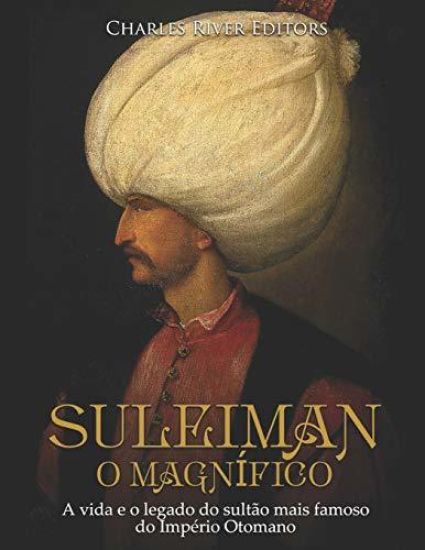
Suleiman, o Magnífico: A vida e o legado do sultão mais famoso do Império Otomano
Em termos de geopol tica, talvez o evento mais importante da Idade M dia tenha sido o cerco otomano de Constantinopla em 1453. A cidade tinha sido uma capital imperial desde o s culo 4, quando Constantino, o Grande, mudou o centro de poder do Imp rio Romano, estabelecendo efetivamente duas metades quase igualmente poderosas do maior imp rio da antiguidade. Constantinopla continuaria a servir como a capital do Imp rio Bizantino, mesmo depois que a metade ocidental do Imp rio Romano entrou em colapso no final do s culo 5. Naturalmente, o Imp rio Otomano tamb m usaria Constantinopla como a capital de seu imp rio ap s a conquista do Imp rio Bizantino, e gra as sua localiza o estrat gica, ele um centro comercial h anos e permanece um hoje sob o nome turco de Istambul. O fim do Imp rio Bizantino teve um efeito profundo n o apenas no Oriente M dio, mas tamb m na Europa. Constantinopla tinha desempenhado um papel crucial nas Cruzadas, e a queda dos bizantinos significava que os otomanos agora compartilhavam uma fronteira com a Europa. O imp rio isl mico era visto como uma amea a pelo continente predominantemente crist o a oeste, e levou pouco tempo para diferentes na es europ ias come arem a colidir com os poderosos turcos. De fato, os otomanos iriam colidir com russos, austr acos, venezianos, poloneses e muito mais antes de entrar em colapso como resultado da Primeira Guerra Mundial, quando faziam parte das pot ncias centrais. A conquista otomana de Constantinopla tamb m desempenhou um papel decisivo na promo o do Renascimento na Europa Ocidental. A influ ncia do Imp rio Bizantino ajudou a garantir que fosse o guardi o de v rios textos antigos, principalmente dos gregos antigos, e quando Constantinopla caiu, refugiados bizantinos reuniram-se para o oeste em busca de ref gio na Europa. Esses refugiados trouxeram livros que ajudaram a despertar o interesse pela antiguidade que alimentaram o Renascimento italiano e essencialmente puseram fim Idade M dia. Na esteira de tomar Constantinopla, o Imp rio Otomano passaria os pr ximos s culos expandindo seu tamanho, poder e influ ncia, batendo contra a Europa Oriental e se tornando um dos atores geopol ticos mais importantes do mundo. Foi uma ascens o que realmente n o iria come ar a diminuir at o s culo 19, e o governante mais influente que ajudou a trazer a Pax Ottomana foi Suleiman, o Magn fico. Na poca da ascens o de Suleiman, o Imp rio Otomano j estava em boas condi es. Era politicamente est vel, culturalmente florescente, dominando o com rcio na rea e de posse de uma organiza o militar superior, o que permitiu a Suleiman I continuar o trabalho de seus antecessores sem muita necessidade de mudar a dire o do imp rio. O dom nio agressivo de Selim deixou os jan zaros eficientes e fortes, os mamelucos derrotados e as cidades sagradas incorporadas ao imp rio. A Rep blica de Veneza no oeste, assim como os saf vidas no leste, enfraqueceram-se e, pela primeira vez, o otomano tinha uma frota capaz de desafiar velhas estruturas comerciais e se erguer como uma nova pot ncia dominante nos mares. As coisas estavam indo bem e Suleiman pretendia continuar assim. Suleiman, o Magn fico: A Vida e o Legado do Sult o Mais Famoso do Imp rio Otomano narra a vida e realiza es de Suleiman, e o enorme impacto que ele teve em seu imp rio e no mundo ao seu redor. Juntamente com fotos de pessoas importantes, lugares e eventos, voc aprender sobre Suleiman como nunca antes.
The Bronze Age in Europe: The History and Legacy of Civilizations Across Europe from 3200-600 BCE
*Includes pictures*Includes online resources and a bibliography for further readingWhile the Bronze Age is recognized as one of history's most important phases, it's been hard for historians to precisely date. The idea of the Bronze Age comes from a three-age system developed in the 19th century through which archaeologists and historians believe cultures evolve. These three ages are the Stone Age, the Bronze Age, and the Iron Age, and the concept of the system stems from the simultaneous development of museums in Europe during that time. In the Royal Museum of Nordic Antiquities in Denmark, Christian J rgensen Thomsen, the director of the museum, began classifying objects of stone, bronze, or iron to better categorize and exhibit them. Each archaeological artifact was thus sorted according to their materials and further organized by shape and style. Through such methodology, working alongside archaeological reports, he was able to show how certain objects changed over time (Fagan 1996, 712). Such a typology, combined with stratigraphy noted in archaeological reports, was useful to early archaeologists with no reliable method for dating artifacts. By understanding which object came before or after, early archaeologists had a relative dating system with which to assess the age of an object or culture. This kind of system was useful to the archaeologists who often encountered objects from above-ground burials that lacked stratigraphy. When this three-age system reached England, John Lubbock expanded on it by applying cultural anthropology to the ages. Over time, other researchers would gradually add their interpretations to the system, with many arguing for sub-divisions of the Stone Age or the introduction of a Copper Age between the Neolithic and the Bronze Ages (Rowley-Conwy 2007, 243). The classification system was meant as a way for modern scientists to classify and understand prehistoric cultures, the final stage of which was the Iron Age, which ended when a culture developed the ability to record their history. Of course, given the rate of each culture's development, this means that when the historical period begins is not uniform or even universal. For example, Native Americans of the Great Plains had not yet developed a written record when they first encountered Europeans. Likewise, they did not have access to the raw materials to enter the Bronze Age or Iron Age, whereas in other cases, such as in Europe, cultures entered the historical period through the conquests of the Roman Empire (which had developed writing), regardless of whether the conquered cultures had previously reached a Bronze or Iron Age. Meanwhile, the cultures not conquered by the Romans, such as those in Northern Germany and Scandinavia, continued to develop an Iron Age and eventually, a historical age, with the introduction of writing by the Vikings. While the simplified, three-age system and typology worked for Thomsen and archaeologists in Denmark, the application of such a system could not be applied on a broader scale due to the numerous variables faced by each developing civilization (Rowley-Conwy 2007). Therefore, rather than examining a wide-ranging Bronze Age in Europe in general, individual cultures and civilizations must be examined on their own, starting with the earliest civilizations to begin mastering the techniques of bronze-making. With that said, certain generalities can be made regarding life before the Bronze Age. The Bronze Age in Europe: The History and Legacy of Civilizations Across Europe from 3200-600 BCE looks at the different cultures that emerged over those crucial years. Along with pictures depicting important people, places, and events, you will learn about the Bronze Age in Europe like never before.
The Byzantine Army: The History and Legacy of the Byzantine Empire's Military during the Middle Ages
*Includes pictures*Includes ancient accounts*Includes online resources and a bibliography for further readingIt would be hard if not outright impossible to overstate the impact Roman Emperor Constantine I had on the history of Christianity, Ancient Rome, and Europe as a whole. Best known as Constantine the Great, the kind of moniker only earned by rulers who have distinguished themselves in battle and conquest, Constantine remains an influential and controversial figure to this day. He achieved enduring fame by being the first Roman emperor to personally convert to Christianity, and for his notorious Edict of Milan, the imperial decree which legalized the worship of Christ and promoted religious freedom throughout the Empire. More than 1500 years after Constantine's death, Abdu'l-Bah , the head of the Bah ' Faith, wrote, "His blessed name shines out across the dawn of history like the morning star, and his rank and fame among the world's noblest and most highly civilized is still on the tongues of Christians of all denominations"However, it can be argued that despite his military successes - the most notable of which occurred fighting for supremacy against other Romans - Constantine may well have set the stage for the ultimate collapse of the Roman Empire as it had existed up until that point. It was Constantine who first decided that Rome, exposed and vulnerable near the gathering masses of barbarians moving into Germania and Gaul, was a strategically unsafe base for the Empire, and thus expanded the city of New Rome on the Dardanelles straits, creating what eventually became Constantinople. By moving the political, administrative and military capital of the Empire from Rome to the East, as well as the Imperial court with all its attendant followers, Constantine laid the groundwork for the eventual schism which saw the two parts of the Roman Empire become two entirely separate entities, go their own way, and eventually collapse piecemeal under repeated waves of invasion. As a result, the Byzantine Empire was the heir to two great cultures that cradled and nurtured European civilization: Greece and Rome. Constantinople, now called Istanbul, became a center of power, culture, trade, and technology poised on the edges of Europe and Asia, and its influence was felt not only throughout Europe but the Middle East, Africa, Central Asia, and the Far East. Coins dating from the reign of Emperor Justinian I (r.527-565) have been found in southern India, and Chinese records show that the "Fulin," as the Chinese named the Byzantines, were received at court as early as 643 CE. For a thousand years, the Byzantine Empire protected Europe from the Islamic Arab Empire, allowing it to pursue its own destiny. Finally, Byzantium was a polyglot society in which a multitude of ethnic groups lived under the emperor prizing peace above war, an inspiration surely for the modern age when divisive nationalism threatens to dominate society once more. Despite all this, the Byzantine Empire is often treated as a medieval oddity, an absolute state stunted by a myopic religion, a corrupt, labyrinthine bureaucracy, and an inability to adapt to change. In truth, none of these judgments bear any serious scrutiny - Byzantium was a strong, organized, highly effective and adaptable civilization for most of its long history. It owed its success in no small part to its military, which, in contrast to the feudal armies of Western Europe and the tribally based forces of the Middle East, operated with a high level of discipline, strategic prowess, efficiency, and organization. The Byzantine Army: The History and Legacy of the Byzantine Empire's Military during the Middle Ages examines the history of the Byzantine military machine, why it was so successful, and why, in the end, it failed to preserve a civilization that had lasted a thousand years.
Fighting in World War I: The History and Legacy of Warfare during the Great War
*Includes pictures*Includes soldiers' accounts*Includes online resources and a bibliography for further readingWorld War I, also known in its time as the "Great War" or the "War to End all Wars", was an unprecedented holocaust in terms of its sheer scale. Fought by men who hailed from all corners of the globe, it saw millions of soldiers do battle in brutal assaults of attrition which dragged on for months with little to no respite. Tens of millions of artillery shells and untold hundreds of millions of rifle and machine gun bullets were fired in a conflict that demonstrated man's capacity to kill each other on a heretofore unprecedented scale, and as always, such a war brought about technological innovation at a rate that made the boom of the Industrial Revolution seem stagnant. The arms race before the war and the attempt to break the deadlock of the Western and Eastern Fronts by any means possible changed the face of battle in ways that would have previously been deemed unthinkable. Before 1914, flying machines were objects of public curiosity; the first flights of any account on rotor aircraft had been made less than 5 years before and were considered to be the province of daredevils and lunatics. By 1918, all the great powers were fielding squadrons of fighting aircraft armed with machine-guns and bombs, to say nothing of light reconnaissance planes. Tanks, a common feature on the battlefield by 1918, had not previously existed outside of the realm of science fiction stories written by authors like H. G. Wells. Machine guns had gone from being heavy, cumbersome pieces with elaborate water-cooling systems to single-man-portable, magazine-fed affairs like the Chauchat, the Lewis Gun and the M1918 BAR. To these grim innovations were added flamethrowers, hand grenades, zeppelins, observation balloons, poison gas, and other improvements or inventions that revolutionized the face of warfare. These technological developments led to an imbalance. Before the introduction of the man-portable light machine gun (which took place in the second half of the war), not to mention tanks (which also joined the fight late in the game), defensive firepower vastly outweighed offensive capability. Massed batteries of artillery, emplaced heavy machine guns, barbed wire entanglements, and bewildering fortifications meant that ground could not be taken except at incredible cost. This led to the (somewhat unjustified) criticism famously leveled at the generals of World War I that their soldiers were "lions led by donkeys". Certainly, every army that fought in the Great War had its share of officers, at all levels of command, who were incompetent, unsuitable, foolish, or just plain stupid, but there were plenty of seasoned professionals who understood their job and did it well. The main problem facing commanders in the war was that there was such a bewildering array of new armaments, with such vast destructive potential, that previous military doctrines were virtually useless. Cavalry, which had been expected to play a major role both as reconnaissance and as "mounted infantry", operating in much the same way as airborne and mechanized troops would later to rapidly outflank enemy positions, quickly proved useless. Frontal infantry assaults were cut to shreds by enemy defensive fire, but there seemed to be no major alternative. Ground had to be taken, even if at great cost, and to do so, more destructive weapons were devised, tested and deployed. As a result, World War I was the first truly industrial war, and it created a paradigm which reached its zenith with World War II and towards which virtually all equipment, innovation and training were dedicated throughout the Cold War and the remainder of the 20th century. To this day, modern warfare remains synonymous with tanks and mass infantry battles.
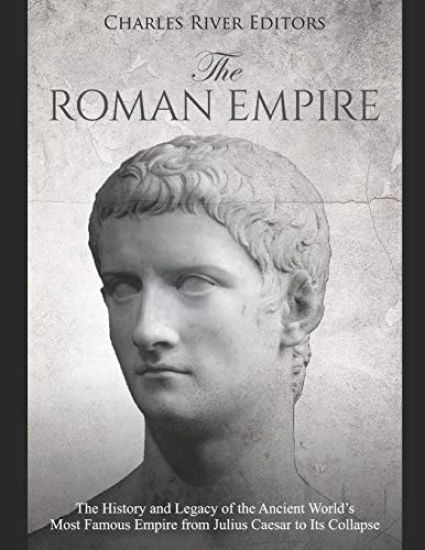
The Roman Empire: The History and Legacy of the Ancient World's Most Famous Empire from Julius Caesar to Its Collapse
*Includes pictures*Includes ancient accounts*Includes online resources and a bibliography for further readingPossibly the most important man of antiquity, and even all of history, was Julius Caesar. Alexander Hamilton, the famous American patriot, once remarked that "the greatest man who ever lived was Julius Caesar". Such a tribute, coming from one of the Founding Fathers of the quintessential modern democracy in reference to a man who destroyed the Roman Republic, is testament to the enduring mark that Caesar left upon the world. The ultimate conqueror, statesman, dictator, visionary, and opportunist, during his time in power Caesar expanded the borders of Rome to almost twice their previous size, revolutionized the infrastructure of the Roman state, and destroyed the Roman Republic for good, leaving a line of emperors in its place. His legacy is so strong that his name has become, in many languages, synonymous with power: the Emperors of Austria and Germany bore the title Kaiser, and the Czars of Russia also owe the etymology of their title to Caesar. His name also crept further eastward out of Europe, even cropping up in Hindi and Urdu, where the term for "Emperor" is Kaisar. Even in his time, Caesar was in many ways larger than life, and because of his legacy as virtual founder of the Roman Empire, much of what was written about - and by - him during his life and immediately after his assassination was politically motivated. His successor, Octavian Augustus, had a strong interest in ensuring that Caesar's life be painted in a favorable light, while Caesar's political enemies attempted to paint him as a corrupt, undemocratic dictator who was destroying the old order of the Republic. This makes it exceedingly difficult to separate historical fact from apocryphal interjection, as the writings of Cicero (a rival of Caesar's) and the later biographies of Suetonius and Plutarch can be misleading. Nonetheless, along with Caesar's De Bello Gallico, his famous notes on his campaign against the Gauls, they remain our chief sources for Caesar's life - a life everyone agreed was nothing short of remarkable and changed the course of history forever. As Roman leaders vied with each other for power and constantly fought civil wars, Rome's famous roads fall into disrepair, the economy was crippled, the continent-wide trade system that had flourished in the previous years was replaced with a basic barter system, and there was a reduction in international trade. People became ever more fearful for their personal safety, and the Imperial Crisis saw an increasing trend toward sacrificing personal liberties and rights in return for guarantees of safety from wealthy landowners. All of this foreshadowed the emergence of the European feudal system and serfdom. These were obviously turbulent times, and given the volatility, many historians have debated how the Roman Empire managed to survive in any form at all, let alone remain robust enough to allow Diocletian and his successors to restore it. Given the many people involved, and the relatively short era in which everything transpired, Rome's Imperial Crisis has been difficult for historians to summarize, which is why, despite being one of the most intriguing periods in Roman history, it is often overlooked by people who have chosen to focus on the more cohesive periods before and after it. The Roman Empire: The History and Legacy of the Ancient World's Most Famous Empire from Julius Caesar to Its Collapse examines the history of Rome after the fall of the Republic. Along with pictures depicting important people, places, and events, you will learn about the empire like never before.
O Império Português e a África: A História e o Legado da Exploração e Colonização por Portugal da Costa da África Ocidental
Em meados do s culo 15, o Imp rio Bizantino entrou em colapso, e as v rias Cruzadas que haviam ocorrido na regi o interromperam em grande parte os caminhos terrestres da Rota da Seda e do com rcio. Al m das dificuldades no com rcio, houve a ascens o do Imp rio Otomano no lugar do Bizantino, al m da eclos o da peste negra na Europa. Mais ou menos nessa poca, teve in cio um per odo de explora o na Europa, e os principais fatores que contribu ram para tal foram introduzidos pelos chineses, embora de maneira indireta. A b ssola magn tica j havia sido desenvolvida e vinha sendo usada pelos marinheiros chineses desde o s culo 12, apesar de ter sido criada pela primeira vez no s culo 3 d. C., como um dispositivo de adivinha o. A dinastia Song, ent o, come ou a usar o dispositivo para navega o terrestre no s culo 11, e marinheiros passaram a us -la logo depois. A tecnologia se espalhou lentamente para o oeste atrav s de comerciantes rabes, embora possam existir argumentos para uma cria o europeia aut noma da b ssola (Southey 1812: 210). Independentemente disso, no in cio do s culo 13, a b ssola encontrou seu caminho at os comerciantes ocidentais, chegando em um momento em que o com rcio aumentava em toda a Europa. O com rcio foi capaz de crescer na Europa e em todo o mundo devido introdu o de navios mais eficazes, e algumas das melhorias recebidas pelos navios foram primeiro apresentadas pelos chineses. A introdu o de m ltiplos navios de mastro, al m de lemes de popa, permitiu que os navios viajassem mais rapidamente e fossem mais manobr veis. No in cio do s culo 15, os navios j eram, agora, muito maiores e capazes de suportar viagens de longa dist ncia com um n mero m nimo de tripulantes a bordo. Com isso, os portugueses come aram a explorar a costa oeste da frica e o Atl ntico sob as ordens do Infante D. Henrique, o Navegador. Naquele momento, os europeus ainda n o tinham sido capazes de navegar por toda a frica, pois os navios constru dos n o eram capazes de navegar para muito longe da costa, e a navega o em guas abertas era complicada, mas os portugueses continuaram a se aventurar pela costa oeste da frica, procurando maneiras de evitarem os otomanos e os mu ulmanos da frica que dificultavam as rotas comerciais terrestres. Em 1.451, o Infante D. Henrique, o Navegador, ajudou a financiar e desenvolver um novo tipo de navio, a caravela, que apresentava velas latinas triangulares e seria capaz de viajar em mar aberto e navegar contra o vento. Em 1.488, Bartolomeu Dias contornou a ponta-sul da frica, nomeada como Cabo da Boa Esperan a pelo rei Jo o de Portugal, e adentrou o Oceano ndico a partir do Atl ntico. Um explorador, Crist v o Colombo, procurou financiamento entre os portugueses para encontrar um caminho at a sia, navegando para o oeste, mas foi rejeitado. Naquele momento, no final do s culo 15, a domina o de Portugal das rotas mar timas da frica Ocidental levou sua vizinha, a Coroa de Castela, e os monarcas cat licos na Espanha moderna a procurarem uma rota alternativa at o sul e leste da sia (denominado ndias), portanto, forneceram a Colombo o financiamento necess rio. Em ltima an lise, Colombo descobriu as Am ricas em 1.492, e os assentamentos espanh is nas " ndias Ocidentais" acabaram sendo estabelecidos. claro que, quando se tornou bvio que Colombo n o havia desembarcado na sia, todos compreenderam que aquela n o era, necessariamente, a rota que os europeus procuravam, e os portugueses continuaram a enviar exploradores pelo Cabo da Boa Esperan a, na tentativa de alcan ar as ndias Orientais. Ap s uma viagem de dois anos, em 1.499, Vasco da Gama chegou com sucesso ndia e retornou a Portugal.
Osiris, Zeus, and Odin: The History of the Most Prominent Gods in the Ancient Egyptian, Greek, and Norse Pantheons
*Includes pictures*Includes ancient accounts*Includes online resources and a bibliography for further readingGiven the abundance of funerary artifacts that have been found within the sands of Egypt, it sometimes seems as though the Ancient Egyptians were more concerned with the matters of the afterlife than they were with matters of the life they experienced from day to day. This is underscored most prominently by the pyramids, which have captured the world's imagination for centuries. Thus, it's little surprise that Osiris was one of the most important gods in the Egyptian pantheon, and he could well be the most famous of the Egyptian gods today. Aside from the ubiquity of the sun-god Re in much of modern popular culture, it is Osiris who captivates the minds of modern readers most. His story is both familiar and strangely alien. He is the god of the dead, but he became so by the very fact of his mortality. All the gods of ancient Egypt were capable of dying, but Osiris was also a symbol of resurrection, not unlike Christ in Christian theology. Osiris was betrayed by somebody close to him (in this case, his brother Seth) and was murdered and reborn, but here is where Osiris and Christ part ways. Osiris's death is brutal, and his resurrection is the product of his wife Isis's love for him. Furthermore, Osiris was associated with the kings of Egypt because the Egyptians believed he was a king himself. The ancient Egyptians could trace their kings back, one by one, to a time when the gods were believed to have ruled the land in person. Osiris was the third or fourth successor to the Egyptian throne after creation, and the Egyptians believed that Osiris's connection with kingship is what allowed their kings to be reborn in a way themselves. He was also said to be physically enormous - almost 15 and a half feet according to some sources - which was said to have aided him in his military campaigns. One of the reasons Zeus remains one of the most recognizable gods in history is because of the spread of his influence. Due to the conquests of Alexander the Great, Zeus was brought along with other elements of Hellenization to Egypt and the Near East, and a few centuries later, Rome all but adopted him as their own chief god, Jupiter. From there, he was exported around the Roman Empire and fused with numerous other local gods in the process. Ultimately, Zeus was a prominent god from the period of pre-recorded history until the Christianization of Greece, which was complete by the early 7th century A. D. It is difficult for modern observers to understand how a hot-headed, sex-obsessed god could command the love and admiration of so many Greeks, not to mention their cultural heirs throughout the Roman Empire. What did the worship of this god provide for his worshipers? How did belief in his existence fulfill their spiritual needs? How was he different from other members of his pantheon? This book explores the figure of Zeus, including his origins, the stories told about him, the way he was worshiped and how he is remembered today. Alongside his son Thor, Odin is one of the best known Norse gods, and it's often easy to forget that he was once at the heart of a pantheon devoutly worshiped by millions of Europeans in the Middle Ages. Odin has numerous names and titles (over 200 by one account), but his best known title is "The All-Father," the co-creator of Earth ("Midgard"), humanity and all of the creatures that inhabitant this world. He is also, importantly, the god of prophecy, ecstasy, and poetry, all roles that were closely connected in the Norse world, as the line between poet and prophet was a blurry one and they were seen as possessing their inspiration through a type of ecstatic fury. These roles were connected to Odin's patronage of knowledge, especially mystical knowledge, since he was the discoverer of magical runes and songs which he then passed to humanity.
Ancient Greek Technology: The History and Legacy of the Technological Advances Made in Greece during Antiquity
*Includes pictures*Includes ancient accounts*Includes online resources and a bibliography for further reading"What I would prefer is that you should fix your eyes every day on the greatness of Athens as she really is, and should fall in love with her. When you realize her greatness, then reflect that what made her great was men with a spirit of adventure, men who knew their duty, men who were ashamed to fall below a certain standard. If they ever failed in an enterprise, they made up their minds that at any rate the city should not find their courage lacking to her, and they gave to her the best contribution that they could." - The Funeral Oration of Pericles, quoted by ThucydidesIn virtually all fields of human endeavor, ancient Athens was so much at the forefront of dynamism and innovation that the products of its most brilliant minds remain not only influential but entirely relevant to this day. In the field of medicine, the great physician Hippocrates not only advanced the practical knowledge of human anatomy and care-giving but changed the entire face of the medical profession. The great philosophers of Athens, men like Aristotle, Socrates, and Plato, interrogated themselves with startling complexity about the nature of good and evil, questioned the existence of divinity, advocated intelligent design, and went so far as to argue that all life was composed of infinitesimal particles. Great architects and sculptors such as Phidias produced works of art of such breathtaking realism and startling dynamism that they later formed the driving force behind the resurgence of sculpture during the Renaissance and served as masters to artists such as Michelangelo, Bernini, and Donatello. The plays of dramatists such as Aristophanes not only displayed an acerbic wit and a genius for political satire so pronounced that their works continue to be performed - and topical - to this day, but served as the inspiration for virtually all playwrights from Shakespeare to the present day. And this does not take into account the host of equally brilliant mathematicians, natural philosophers, historians, astronomers and politicians that the city's great schools nurtured and produced. The flowering of Greek civilization was further made possible by an increase of trade between the cities and with other civilizations. Trade became a major occupation on account of the scarcity of agricultural land in the largely mountainous regions of the Balkan peninsula. The polis of Athens, in particular, assumed economic dominance in the Aegean in from the sixth-century BC. The consequent increase in wealth, resources and population made a cultural renaissance possible. Commerce, in turn, led to the rise of an affluent aristocratic class which had the leisure to devote itself to learning, philosophy, and art. It also led to an industrial class of freemen who were artists and craftsmen. Religion also played a role in the development of Greek culture and technology. The ancient Greeks worshipped a multiplicity of gods, the chief of which dwelt on Mount Olympus in the first mountainous region of central Greece. The city-states would regularly send athletes to compete in the Olympic Games in their honor. Thales of Miletus (c.524 - 546 BC), named by the classicist John Burnet "the first scientist," observed the natural world and sought rational explanations for it. From him a tradition emerged which explored the world and the actions of humans through natural science, reason, mathematics, metaphysics, and ontology. After Thales a stream of philosophers, mathematicians and engineers emerged including names that are well known today, including Plato, Aristotle, Socrates, Pythagoras, Archimedes, Heraclitus, Epicurus, Diogenes, and Plutarch.
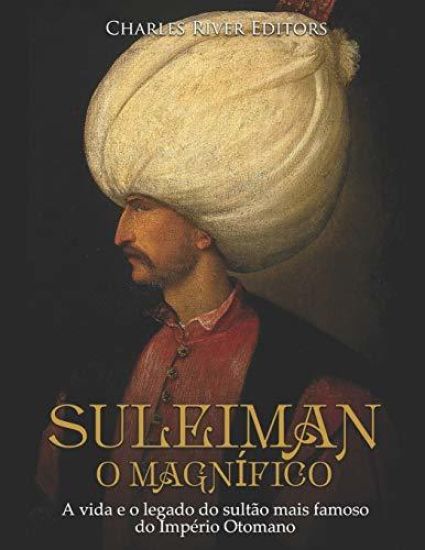
Suleiman, o Magnífico: A vida e o legado do sultão mais famoso do Império Otomano
Em termos de geopol tica, talvez o evento mais importante da Idade M dia tenha sido o cerco otomano de Constantinopla em 1453. A cidade tinha sido uma capital imperial desde o s culo 4, quando Constantino, o Grande, mudou o centro de poder do Imp rio Romano, estabelecendo efetivamente duas metades quase igualmente poderosas do maior imp rio da antiguidade. Constantinopla continuaria a servir como a capital do Imp rio Bizantino, mesmo depois que a metade ocidental do Imp rio Romano entrou em colapso no final do s culo 5. Naturalmente, o Imp rio Otomano tamb m usaria Constantinopla como a capital de seu imp rio ap s a conquista do Imp rio Bizantino, e gra as sua localiza o estrat gica, ele um centro comercial h anos e permanece um hoje sob o nome turco de Istambul. O fim do Imp rio Bizantino teve um efeito profundo n o apenas no Oriente M dio, mas tamb m na Europa. Constantinopla tinha desempenhado um papel crucial nas Cruzadas, e a queda dos bizantinos significava que os otomanos agora compartilhavam uma fronteira com a Europa. O imp rio isl mico era visto como uma amea a pelo continente predominantemente crist o a oeste, e levou pouco tempo para diferentes na es europ ias come arem a colidir com os poderosos turcos. De fato, os otomanos iriam colidir com russos, austr acos, venezianos, poloneses e muito mais antes de entrar em colapso como resultado da Primeira Guerra Mundial, quando faziam parte das pot ncias centrais. A conquista otomana de Constantinopla tamb m desempenhou um papel decisivo na promo o do Renascimento na Europa Ocidental. A influ ncia do Imp rio Bizantino ajudou a garantir que fosse o guardi o de v rios textos antigos, principalmente dos gregos antigos, e quando Constantinopla caiu, refugiados bizantinos reuniram-se para o oeste em busca de ref gio na Europa. Esses refugiados trouxeram livros que ajudaram a despertar o interesse pela antiguidade que alimentaram o Renascimento italiano e essencialmente puseram fim Idade M dia. Na esteira de tomar Constantinopla, o Imp rio Otomano passaria os pr ximos s culos expandindo seu tamanho, poder e influ ncia, batendo contra a Europa Oriental e se tornando um dos atores geopol ticos mais importantes do mundo. Foi uma ascens o que realmente n o iria come ar a diminuir at o s culo 19, e o governante mais influente que ajudou a trazer a Pax Ottomana foi Suleiman, o Magn fico. Na poca da ascens o de Suleiman, o Imp rio Otomano j estava em boas condi es. Era politicamente est vel, culturalmente florescente, dominando o com rcio na rea e de posse de uma organiza o militar superior, o que permitiu a Suleiman I continuar o trabalho de seus antecessores sem muita necessidade de mudar a dire o do imp rio. O dom nio agressivo de Selim deixou os jan zaros eficientes e fortes, os mamelucos derrotados e as cidades sagradas incorporadas ao imp rio. A Rep blica de Veneza no oeste, assim como os saf vidas no leste, enfraqueceram-se e, pela primeira vez, o otomano tinha uma frota capaz de desafiar velhas estruturas comerciais e se erguer como uma nova pot ncia dominante nos mares. As coisas estavam indo bem e Suleiman pretendia continuar assim. Suleiman, o Magn fico: A Vida e o Legado do Sult o Mais Famoso do Imp rio Otomano narra a vida e realiza es de Suleiman, e o enorme impacto que ele teve em seu imp rio e no mundo ao seu redor. Juntamente com fotos de pessoas importantes, lugares e eventos, voc aprender sobre Suleiman como nunca antes.
Aleister Crowley: The Life and Legacy of the Notorious Cult Leader and Novelist
*Includes pictures*Includes quotes*Includes online resources and a bibliography for further reading"What a piece of work is a man how noble in reason how infinite in faculty in form and moving how express and admirable in action how like an angel in apprehension how like a god the beauty of the world the paragon of animals " - William Shakespeare. HamletAny work about the mercurial Aleister Crowley is better off being labeled a "story" than a "biography" thanks to the impossibility of being sure that anything one reads about him is true. The basic recorded facts, including birth date, educational records, and published works, are reliable indicators that can be likened to stars guiding a lost desert traveler if the sky is clear. For the rest, one is wandering in the wilderness. He has been labeled a Satanist, a sociopath, a drug addict, a murderer, and, not to put too fine a point on it; "the wickedest man on earth" by several prominent newspapers. He has also been hailed as the prophet of the New Age charged with bringing about the spiritual awakening of humanity, a brilliant writer, an intrepid mountaineer, a heroic MI6/MI5 agent, and a gifted magician. He even launched his own religion, called Thelema, which persists to this day. As such, a story about Aleister Crowley must include a timeline of important events in his life, at least as accurately as possible, while examining the several characteristics and aspects of his life and work that make him so influential. Once reviled and discarded by all but his most fervent followers, Crowley's writings reemerged as the subject of serious scholarship in the 1990s. Aleister Crowley: The Life and Legacy of the Notorious Cult Leader and Novelist profiles one of the 20th century's most colorful and controversial figures. Along with pictures of important people, places, and events, you will learn about Crowley like never before.
The Byzantine Army: The History and Legacy of the Byzantine Empire's Military during the Middle Ages
*Includes pictures*Includes ancient accounts*Includes online resources and a bibliography for further readingIt would be hard if not outright impossible to overstate the impact Roman Emperor Constantine I had on the history of Christianity, Ancient Rome, and Europe as a whole. Best known as Constantine the Great, the kind of moniker only earned by rulers who have distinguished themselves in battle and conquest, Constantine remains an influential and controversial figure to this day. He achieved enduring fame by being the first Roman emperor to personally convert to Christianity, and for his notorious Edict of Milan, the imperial decree which legalized the worship of Christ and promoted religious freedom throughout the Empire. More than 1500 years after Constantine's death, Abdu'l-Bah , the head of the Bah ' Faith, wrote, "His blessed name shines out across the dawn of history like the morning star, and his rank and fame among the world's noblest and most highly civilized is still on the tongues of Christians of all denominations"However, it can be argued that despite his military successes - the most notable of which occurred fighting for supremacy against other Romans - Constantine may well have set the stage for the ultimate collapse of the Roman Empire as it had existed up until that point. It was Constantine who first decided that Rome, exposed and vulnerable near the gathering masses of barbarians moving into Germania and Gaul, was a strategically unsafe base for the Empire, and thus expanded the city of New Rome on the Dardanelles straits, creating what eventually became Constantinople. By moving the political, administrative and military capital of the Empire from Rome to the East, as well as the Imperial court with all its attendant followers, Constantine laid the groundwork for the eventual schism which saw the two parts of the Roman Empire become two entirely separate entities, go their own way, and eventually collapse piecemeal under repeated waves of invasion. As a result, the Byzantine Empire was the heir to two great cultures that cradled and nurtured European civilization: Greece and Rome. Constantinople, now called Istanbul, became a center of power, culture, trade, and technology poised on the edges of Europe and Asia, and its influence was felt not only throughout Europe but the Middle East, Africa, Central Asia, and the Far East. Coins dating from the reign of Emperor Justinian I (r.527-565) have been found in southern India, and Chinese records show that the "Fulin," as the Chinese named the Byzantines, were received at court as early as 643 CE. For a thousand years, the Byzantine Empire protected Europe from the Islamic Arab Empire, allowing it to pursue its own destiny. Finally, Byzantium was a polyglot society in which a multitude of ethnic groups lived under the emperor prizing peace above war, an inspiration surely for the modern age when divisive nationalism threatens to dominate society once more. Despite all this, the Byzantine Empire is often treated as a medieval oddity, an absolute state stunted by a myopic religion, a corrupt, labyrinthine bureaucracy, and an inability to adapt to change. In truth, none of these judgments bear any serious scrutiny - Byzantium was a strong, organized, highly effective and adaptable civilization for most of its long history. It owed its success in no small part to its military, which, in contrast to the feudal armies of Western Europe and the tribally based forces of the Middle East, operated with a high level of discipline, strategic prowess, efficiency, and organization. The Byzantine Army: The History and Legacy of the Byzantine Empire's Military during the Middle Ages examines the history of the Byzantine military machine, why it was so successful, and why, in the end, it failed to preserve a civilization that had lasted a thousand years.
The Chicago Outfit: The History and Legacy of the Organized Crime Syndicate Led by Al Capone
*Includes pictures*Includes online resources and a bibliography for further reading "This American system of ours ... call it Americanism, call it capitalism, call it what you like, gives to each and every one of us a great opportunity if we only seize it with both hands and make the most of it." - Al CaponeSprightly swing music spills across the dimly lit club. The grayish curtains of cigarette smoke part every once in a while to reveal a sparkling stage and tables upon tables of patrons, some incurably inebriated and others high on the fast-paced nightlife. Fabulous flappers in shimmery cocktail dresses and stylish feather headbands throw their hands up and stomp their feet to the addictive beat on the dance floor. Smartly dressed men, their hair neatly parted and slicked back, toss fistfuls of dice onto the plush green baize of the craps tables. Some hover over roulette wheels, staring intently at the spinning flashes of silver, while others finger their playing cards as they sip on tumblers of whiskey, eyeing both the river and the tower of tokens next to them. Frisky tunes, chic fashion, and American gambling are nostalgic, rose-tinted images most choose to project when visualizing the Roaring Twenties, but the other side of the coin brought an uninviting, much harsher reality that most would prefer to sweep under the rug. The first real estate bubble was on the brink of bursting, and progress was evident, but painfully slow, which gave way to yet another era of violent riots, lynchings, and other forms of oppression imposed on minorities. Then, of course, there were mobsters. Remove the silk three-piece suits, burnished Tommy guns, and obscene stacks of cash from the equation, and one would be left with limp, bullet-ridden bodies either slumped over their steering wheels or sprawled out like broken rag dolls on the floors of public establishments, the walls painted with blood spatters and shattered glass littered about. These, they say, are the lucky ones, for their corpses, though laid out as a public message, provide the deceased's loved ones with some form of closure. Over the decades, dozens involved in this deadly game disappeared altogether, never again to see the light of day. In the midst of it all, the Chicago Outfit, one of the longest-running criminal organizations in the land of the free, was perhaps the most notorious of them all. The baleful brotherhood bore a terrifying brand defined by cutthroat competitiveness, sadistic torture tactics, and excessive bloodshed, among scores of other despicable acts. Worse yet, they seemed to be untouchable. Aside from Scarface himself, there was the vindictive and eerily competent Louis "Little New York" Campagna, a vicious assassin suspected of unloading 59 bullets into a traitorous associate. Then there was Anthony "the Ant" Spilotro, the inspiration for Nicky Santoro, Joe Pesci's character in Martin Scorsese's Casino, who, despite his petite stature, was a barbaric, cruel man with an explosive temper and no capacity for remorse. Needless to say, the Chicago Outfit was, at its height, a formidable force to be reckoned with, one that authorities and rival gangs alike wisely steered clear of. But as the old adage goes, a chain is only as strong as its weakest link, and like a house of cards, its carefully structured hierarchy and the complexity of its operations were most impressive, but one loosely positioned card was all it took to trigger its collapse. Time and time again, Outfit leaders and their minions bent over backwards in a way only contortionists could be proud of to plug the holes rapidly sprouting up, but ultimately it wouldn't be enough. The Chicago Outfit: The History and Legacy of the Organized Crime Syndicate Led by Al Capone profiles how the group rose in the criminal underworld, and all the controversies that ensued.
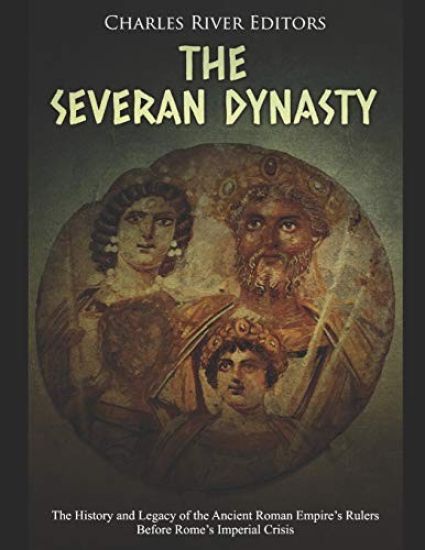
The Severan Dynasty: The History and Legacy of the Ancient Roman Empire's Rulers Before Rome's Imperial Crisis
*Includes pictures*Includes ancient accounts*Includes online resources and a bibliography for further reading"If a man were called upon to fix that period in the history of the world during which the condition of the human race was most happy and prosperous he would, without hesitation, name that which elapsed from the deaths of Domitian to the accession of Commodus." - Edward Gibbon "The Five Good Emperors," a reference to the five emperors who ruled the Roman Empire between 96 and 180 CE (Nerva, Trajan, Hadrian, Antoninus Pius, and Marcus Aurelius), was a term first coined by Machiavelli and later adopted and popularized by historian Edward Gibbon, who said that under these men, the Roman Empire "was governed by absolute power under the guidance of wisdom and virtue." This period of 84 years is generally regarded as the high point of the Roman Empire, at least after Augustus, but what is uncertain and a matter of ongoing debate is whether the five emperors were personally responsible for the situation and the accompanying prosperity enjoyed throughout the empire at the time or if they were simply the beneficiaries of the Pax Romana, inaugurated by Augustus in the early part of the 1st century CE. In other words, historians have wondered whether anyone in power during those years would have enjoyed the same rewards. With all of that said, according to some academics, the success these rulers had in centralizing the empire's administration, while undoubtedly bringing huge benefits, also sowed the seeds for later problems. After all, as so many Roman emperors proved, from Caligula and Nero to Commodus, the empire's approach to governance was predicated on the ruler's ability. When incompetent or insane emperors came to power, the whole edifice came tumbling down. The Severan dynasty came shortly after the Five Good Emperors, and it also consisted of five emperors who ruled the empire from 193-235, except for a brief interlude between 217 and 218 when Macrinus held the imperial throne. In chronological order, the five were Septimius Severus the Founder (193-211), Caracalla (198-217), Geta (209-211), Elagabalus (218-221), and Alexander Severus (222-235). Their reigns coincided with the period in Roman history characterized by academics as the "High Point" of the empire, but this specific dynastic period, following the troubled years after the rule of Marcus Aurelius' son Commodus, did not see the empire return to the heights reached under the Five Good Emperors. It was a period in which the inherent weaknesses of the imperial system were exacerbated, and the policies of successive emperors paved the way for the era generally known as Rome's Imperial Crisis or "The Time of Chaos" (235-284). The Severans' story encapsulates many highs and lows, including able and venal emperors, expansion and loss of territory, great artistic achievements, and intellectual advancements, coupled with some of the worst cruelty ever perpetrated by Romans. The Severans have also fared well historically thanks to their successors, because the 50 years following the assassination of Severus Alexander on March 19, 235 has been generally regarded by academics as one of the lowest points in the history of the Roman Empire. Severus Alexander was the last of the Severan emperors, and the subsequent years of crisis (235-285) were characterized by a series of short reigns, usually ending in the violent death of the reigning emperor. At the same time, this period of time also saw the empire beset by threatening forces on all sides. The Romans faced a newly resurgent Persia in the east, as well as significant forces from German tribes on the Rhine and Goths along the Danube. The various conflicts would result in the unprecedented death of a sitting emperor in battle, which took place in 251 with Emperor Decius, and Emperor Valerian was also captured in 260.
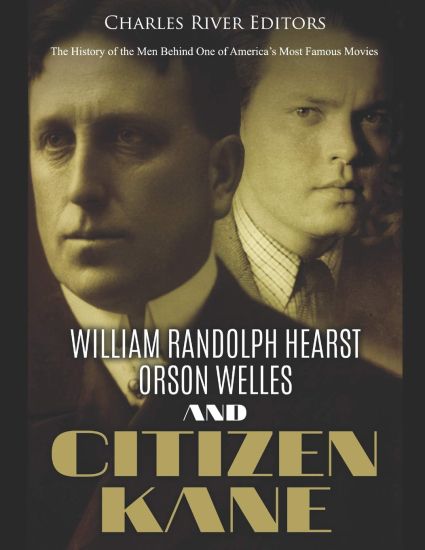
William Randolph Hearst, Orson Welles, and Citizen Kane: The History of the Men Behind One of America's Most Famous Movies
*Includes pictures*Includes online resources and a bibliography for further readingWhen William Randolph Hearst was in his late 50s and at the height of his power, journalist Robert Duffuss observed, "His career is unique in American history, or, for that matter, all history. Compared with him the Bennetts and even the Pulitzers are small...his acquaintances...credit him with personal charm, but do not deny his ruthlessness in business operations. Shopkeepers and his nearest rivals are simply not in his class. Here is success on a dizzying and truly American scale. Here is journalism as large as the Rocky Mountains or the Painted Desert." However, despite his massive success, and perhaps in large measure because of it, many of Heart's contemporaries depicted him in negative ways. As Duffuss also noted, when it came to the newspaper magnate's reputation, there was "a curious suggestion of lath and plaster about it, and far from being universally honored and admired as other self-made men have been, Mr. Hearst is regarded by multitudes of his fellow citizens with extreme aversion and distrust. Indeed, his career is almost never examined dispassionately and for this reason some of the salient facts about him are worth setting down in a somewhat cold-blooded manner." It is only right to keep every positive and negative viewpoint in mind when looking at the life of a man who built his own fortune with money inherited from a father who literally grubbed it out of the ground with his own hands. While the senior Hearst may never have gotten the soil of old California from under his nails, William Randolph would never know what it felt like to live a life of manual labor; instead, he founded his empire on another kind of dirt, that which he was able to dig up and publish about the people, great and small, of his day. He would also stir up a good bit of dirt himself. When it comes to Hollywood and the entertainment industry, perhaps nobody catapulted to fame as quickly or as strangely as Orson Welles, and it was due in large measure to the man who hated him more than anyone else in the world. Though Welles he had worked on stage productions from an early age and seamlessly transitioned into radio, few were familiar with his work until a legendary 1938 radio broadcast of H. G. Wells' The War of the Worlds, during which some people who heard Welles narrating the work truly believed that an alien invasion was underway. As Welles famously apologized at the end of the broadcast, "This is Orson Welles, ladies and gentlemen, out of character, to assure you that The War of the Worlds has no further significance than as the holiday offering it was intended to be; The Mercury Theatre's own radio version of dressing up in a sheet and jumping out of a bush and saying 'Boo '"Although the alleged widespread hysteria caused by that broadcast is mostly overstated, the notorious broadcast made Welles a household name, and he only followed it up with one of the greatest movies ever made: Citizen Kane. As the co-writer, producer, director, and main star of the film, a biting social critique of William Randolph Hearst, Welles' first movie would end up being his most famous and critically acclaimed. Of course, it also ensured that he would continue to work across every entertainment medium for the next 4 decades, juggling radio, the stage, movies, and television throughout the rest of his illustrious career. William Randolph Hearst, Orson Welles, and Citizen Kane: The History of the Men Behind One of America's Most Famous Movies examines the various roles Hearst played in American journalism and politics during his life, and how he "inspired" Welles to make one of America's most important films. Along with pictures depicting important people, places, and events, you will learn about the story of Hearst, Welles, and Citizen Kane like never before.
Ancient Greek Technology: The History and Legacy of the Technological Advances Made in Greece during Antiquity
*Includes pictures*Includes ancient accounts*Includes online resources and a bibliography for further reading"What I would prefer is that you should fix your eyes every day on the greatness of Athens as she really is, and should fall in love with her. When you realize her greatness, then reflect that what made her great was men with a spirit of adventure, men who knew their duty, men who were ashamed to fall below a certain standard. If they ever failed in an enterprise, they made up their minds that at any rate the city should not find their courage lacking to her, and they gave to her the best contribution that they could." - The Funeral Oration of Pericles, quoted by ThucydidesIn virtually all fields of human endeavor, ancient Athens was so much at the forefront of dynamism and innovation that the products of its most brilliant minds remain not only influential but entirely relevant to this day. In the field of medicine, the great physician Hippocrates not only advanced the practical knowledge of human anatomy and care-giving but changed the entire face of the medical profession. The great philosophers of Athens, men like Aristotle, Socrates, and Plato, interrogated themselves with startling complexity about the nature of good and evil, questioned the existence of divinity, advocated intelligent design, and went so far as to argue that all life was composed of infinitesimal particles. Great architects and sculptors such as Phidias produced works of art of such breathtaking realism and startling dynamism that they later formed the driving force behind the resurgence of sculpture during the Renaissance and served as masters to artists such as Michelangelo, Bernini, and Donatello. The plays of dramatists such as Aristophanes not only displayed an acerbic wit and a genius for political satire so pronounced that their works continue to be performed - and topical - to this day, but served as the inspiration for virtually all playwrights from Shakespeare to the present day. And this does not take into account the host of equally brilliant mathematicians, natural philosophers, historians, astronomers and politicians that the city's great schools nurtured and produced. The flowering of Greek civilization was further made possible by an increase of trade between the cities and with other civilizations. Trade became a major occupation on account of the scarcity of agricultural land in the largely mountainous regions of the Balkan peninsula. The polis of Athens, in particular, assumed economic dominance in the Aegean in from the sixth-century BC. The consequent increase in wealth, resources and population made a cultural renaissance possible. Commerce, in turn, led to the rise of an affluent aristocratic class which had the leisure to devote itself to learning, philosophy, and art. It also led to an industrial class of freemen who were artists and craftsmen. Religion also played a role in the development of Greek culture and technology. The ancient Greeks worshipped a multiplicity of gods, the chief of which dwelt on Mount Olympus in the first mountainous region of central Greece. The city-states would regularly send athletes to compete in the Olympic Games in their honor. Thales of Miletus (c.524 - 546 BC), named by the classicist John Burnet "the first scientist," observed the natural world and sought rational explanations for it. From him a tradition emerged which explored the world and the actions of humans through natural science, reason, mathematics, metaphysics, and ontology. After Thales a stream of philosophers, mathematicians and engineers emerged including names that are well known today, including Plato, Aristotle, Socrates, Pythagoras, Archimedes, Heraclitus, Epicurus, Diogenes, and Plutarch.
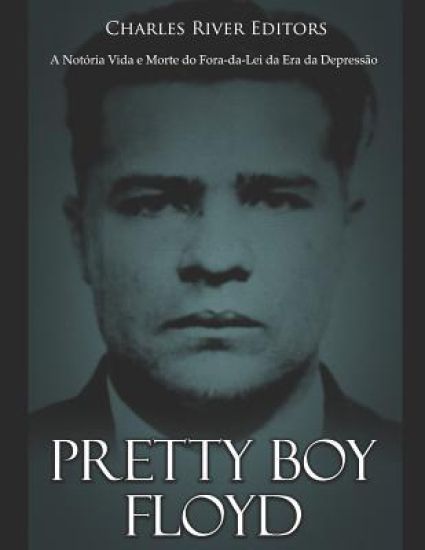
Pretty Boy Floyd: A Notória Vida e Morte do Fora-da-Lei da Era da Depressão
As portas do Sallisaw State Bank abriram-se com um estrondo retumbante, sinalizando o in cio do show. Para fora, cambaleou um par de ladr es, cada um sacudindo sacos de notas, moedas e armas de fogo (Colt .45) cintilantes. Os contadores imobilizados, dentro do banco, contorceram-se desesperadamente pelo ch o, aflitos, esticando os pesco os e direcionando os gritos abafados para a porta aberta. Um deles at conseguiu se desvencilhar de sua morda a e chamou a multid o do outro lado da rua, pedindo ajuda. Infelizmente, seus gritos foram ignorados, n o pelos pr prios gritos assustados dos espectadores, mas por aplausos estrondosos, complementados por gritos, assobios e uma constela o de len os sendo agitados no ar. Alguns dos que abriram caminho para o carro de fuga dos ladr es foram, supostamente, clientes presentes no estabelecimento durante a pr pria invas o. O l der, um jovem cavalheiro de mand bula quadrada, olhar cativante e cabelo escuro penteado para tr s, notou seus admiradores e, com um r pido aceno de m o, entrou no ve culo. De acordo com o folclore local, muitos dos espectadores haviam sido informados sobre o assalto anteriormente por ningu m menos que o pr prio l der. Ousado em seus empreendimentos, entrou nos estabelecimentos vizinhos ao banco nos dias anteriores e simplesmente pediu a seus propriet rios que se abstivessem de avisar os policiais, com o que, de bom grado, concordaram. Ele at mesmo deu tempo suficiente para os c mplices retirarem suas economias do banco. Aqueles propriet rios n o foram os nicos rostos familiares na multid o. Sentado na varanda do dep sito de trem do outro lado da rua, em um canteiro central, estava o av do l der, acompanhado por outros membros de sua fam lia, amigos e vizinhos. Eles aceitaram o convite n o convencional sem hesitar, e, em vez de dissuadi-lo de cometer um crime, foram seus apoiadores mais entusiasmados. Jim Lessley, sobrinho do l der, revelou as motiva es de seu tio em uma entrevista anos depois, dizendo: "Meu tio e meu av tinham uma conta de poupan a conjunta e perderam o dinheiro na Grande Depress o de 1929. Ele] disse ao vov que iria pegar o dinheiro de volta." E foi isso o que ele fez. Embora estivesse longe de ser o seu maior roubo (os ladr es fugiram com U$ 2.531,73, cerca de U$ 50.200 hoje), o l der atencioso n o era do tipo que fugia sem antes deixar vest gios literais do que havia feito. Ele pescou algo em seu saco do tesouro, e v rios punhados de moedas voaram pela janela. As ruas, diziam, ficaram t o congestionadas com os espectadores avan ando para recolher o troco que uma barricada foi criada entre os carros da pol cia que se aproximavam e o ve culo de fuga, permitindo que o ltimo derrapasse pela curva e desaparecesse de vista. Antes de sua fuga suave, um pequeno saco cheio de contas tamb m foi roubado, nas palavras do l der, "para os estudantes". O l der charmoso, considerado por muitos o "Robin Hood de Cookson Hills," n o foi outro sen o "Pretty Boy" Floyd, um personagem desconcertante t o abominado quanto reverenciado. Para a pol cia, "Pretty Boy" Floyd foi um patife venenoso e manipulador, notoriamente considerado um anti-her i com cora o de ouro. Com uma carreira de assaltos a bancos, supostamente associado a at 40 invas es, seu rosto logo foi estampado no p ster de 1934 dos Mais Procurados do FBI, ao lado de John Dillinger, "Baby Face" Nelson e Alvin Karper. Ele tamb m esteve envolvido em v rios assassinatos, mas os admiradores de "Pretty Boy" Floyd estavam dispostos a ignorar aqueles crimes, com alguns at fornecendo justificativas para seu comportamento e argumentando que ele foi injustamente difamado por lutar contra um sistema injusto. Para eles, ele foi escolhido como bode expiat rio, e ele mesmo tirou vantagem daquele ponto de vista, uma vez, dizendo: "Acho que fui acusado de tudo o que aconteceu, exceto pelo sequestro da crian a Lindbergh, na primave