Kirjojen hintavertailu – 12 903 725 kirjaa ja 27 kauppaa

Kirjailija

Charles River

Kirjat ja teokset yhdessä paikassa: 4 673 kirjaa, julkaisuja vuosilta 2013–2022, suosituimpiin kuuluu William Powell and Myrna Loy: The Lives and Careers of One of Classical Hollywood's Most Iconic Duos. Vertaile teosten hintoja ja tarkista saatavuus suomalaisista kirjakaupoista.

4 673 kirjaa

Kirjojen julkaisuvuodet: 2013–2022.

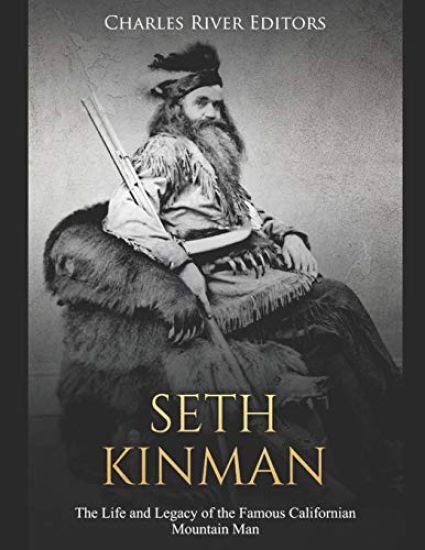
Seth Kinman: The Life and Legacy of the Famous Californian Mountain Man
*Includes pictures*Includes online resources and a bibliography for further readingBy the golden age of the mountain man in the mid-19th-century, there were perhaps only 3,000 living in the West. Their origins were disparate, although they included many Anglo-Americans. A good number hailed from wilderness regions of Kentucky and Virginia and throughout the newly purchased Louisiana Territory, which occupied the entire central section of the continent. French Canadians traveled from the north to work in the fur trade, while Creole-Europeans represented approximately 15% of the men known to be living the isolated mountain life. Others were of M tis, Spanish, American, Black, Indian, and mixed-blood origin, most often Iroquois or Delaware. Most came to the West in their late adolescent years, the oldest learning the trade in their 30s. Many roamed the west for as long as their constitutions would hold up under constant attacks on their health and personal safety. Some stayed too long and failed to survive the experience. Among the most famous, Jim Bridger arrived at the age of 16, while Edward Robinson was eventually killed in his 60s by what were known as "bad snakes," a reference to the Snake tribe in Idaho country. Jim Beckwourth left the mountains at 68 and Old Bill Williams died at the age of 62 when a band of Utes "made him to come." In the same vein, Americans have always shared an ongoing fascination with what was for them the realm of the "exotic" in the collective imagination. Such a preoccupation with alternative experience extends to a preoccupation with pre-recorded history, as it did in the furor over the discovery of extinct dinosaurs' first fossils. Similarly, stepping out of the familiar could satisfy the urge for both danger and wonder by contemplating the future, and the question of what might or might not exist. To this day, such a powerful imaginative force has underpinned the abundant science fiction and horror genres of modern films, including dramatic attempts at reviving and dominating massive and ancient beasts. Among the people who aimed to thrive in this deadly business, few became as famous or acclaimed as Seth Kinman. A tendency toward the eccentric is evident in many of the famous frontiersmen. The dangerous and solitary nature of such a life calling appears to require it, and the months of hardship between islands of human communication frequently creates it. Kinman, a notable early settler in Humboldt County, California, stands among the most diverse in his unorthodox frontier life. While most northern trappers were occupied almost solely with furnishing products to the European fur trade, Kinman, a more social person with eclectic skills, reveled in his associations with four American presidents and adoring crowds on the East Coast. In his time as a hunter supporting the forts and sawmills of his isolated region of Humboldt County, he also served as innkeeper, saloon owner, and a highly regarded musician. Most extraordinary of all was his work as a craftsman, fashioning novel furniture items taken from the bones, hides, and heads of his region's most exotic creatures, most notably elk and grizzly bear. To the non-explorer, Kinman and his creations came to symbolize the grandeur and impetus of western expansion, and such a status served as the perfect engine for the federal government's agenda and for the presidents for whom the West was an increasingly weighty issue. In his career, Kinman is believed to have personally killed over 800 grizzly bears and an untold number of elk. In what is now seen to be an environmental and social catastrophe, his prodigious "accomplishments" included the decimation of the national wildlife in his region and the wholesale abuse of the indigenous tribes in northern California.
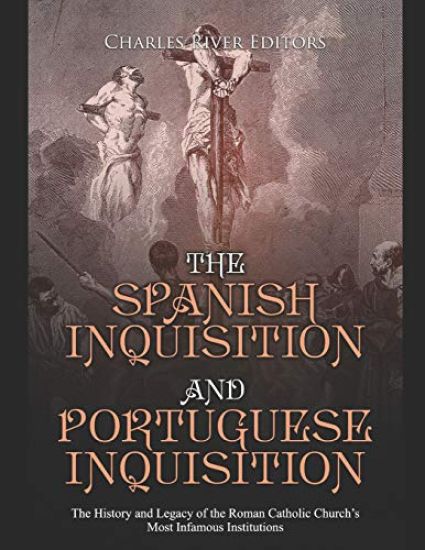
The Spanish Inquisition and Portuguese Inquisition: The History and Legacy of the Roman Catholic Church's Most Infamous Institutions
*Includes pictures*Includes contemporary accounts"Persecution is not an original feature in any religion; but it is always the strongly marked feature of all law-religions, or religions established by law." - Thomas Paine, Rights of ManIn many modern societies, laws have been put in place to protect citizens from discrimination based on their gender, beliefs, race, and sexuality. The sheer thought of having these rights impeded upon in any way is something people in the West often consider unthinkable. In this day and age, people will fight tooth and nail to right cases of discrimination and injustice, from seeking legal action to filing criminal charges against the discriminating party. Multiple organizations around the world exist to help combat and protect its citizens from prejudicial inequities. Social media has also become a channel for those around the world to voice these injustices. Those around the world who empathize with the discriminated band together and condemn the accused bigots. Resulting boycotts, petitions, and negative backlash from social media and the Internet have been known to play a significant role in contributing to the downfall of individuals and corporations that have been accused of discrimination of any kind. The road to the modern age of cultural harmony and acceptance is one of the finest feats of human progress, but having said that, there was once a time when the mere doubt of a religious figure's existence was not only punishable by law, it could very well cost a man his life. This was the crime of heresy. This kind of religious persecution has been around for thousands of years, and Christians were often the victims, but when the Catholic Church began its rapid expansion throughout Europe during the Middle Ages, the tables were turned. In 1184, Pope Lucius III issued a papal bull that would kick off a long-standing tradition of heretic-hunting, and as a result, the Age of the Inquisitions commenced. In a twist of events, the persecuted became the persecutors. From then on, the Roman Catholic Church took it upon itself to hold tribunals, or judicial courts, in a quest to exterminate heresy once and for all. These inquisitions, which would plague Europe for centuries, is believed to have seen hundreds of thousands persecuted for beliefs that went against the Church. A startling portion of them would be brutally tortured and sent to their deaths. None of these would hold a candle to the one birthed in the 15th century - the Spanish Inquisition. The notorious inquisition, the subject of multiple documentaries, movies, and other pop culture mediums, is an era darkly remembered for its oppression, barbarous torture, and religious tyranny. Serving as a backdrop for it all was a deadly disease, a man likened to Satan, and the tumultuous rise and fall of one of the most dreadful periods in European history. The Portuguese found access to the trade regions that they had been searching for, but sailing from Portugal to India and beyond would require too many resources to travel with at once. To remedy this problem, Portugal began establishing a number of forts and trading posts along the route. The Portuguese were able to establish a fort on the west coast of India, Fort Manuel, in 1500, and in 1505 a fort was erected off the coast of Tanzania, thus beginning a trend of European colonization in Africa and Asia that would last for the next 400 years. However, as the Catholic empires expanded across the globe, persecution would travel with them. The Spanish Inquisition and Portuguese Inquisition: The History and Legacy of the Roman Catholic Church's Most Infamous Institutions looks at how the Inquisitions came to be, and how people were tortured and executed. Along with pictures depicting important people, places, and events, you will learn about the Inquisitions like never before.
The Colonization of South Africa: The History and Legacy of the European Subjugation of South Africa
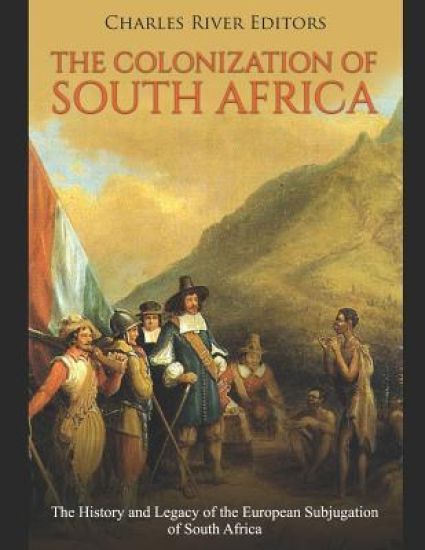
*Includes pictures*Includes contemporary accounts*Includes online resources and a bibliography for further reading"The Boers were hostile toward indigenous African peoples, with whom they fought frequent range wars, and toward the government of the Cape, which was attempting to control Boer movements and commerce. They overtly compared their way of life to that of the Israel patriarchs of the Bible, developing independent patriarchal communities based upon a mobile pastoralist economy. Staunch Calvinists, they saw themselves as the children of God in the wilderness, a Christian elect divinely ordained to rule the land and the backward natives therein. By the end of the 18th century the cultural links between the Boers and their urban counterparts were diminishing, although both groups continued to speak a type of Flemish." - Encyclopaedia BritannicaThe Boer War was the defining conflict of South African history and one of the most important conflicts in the history of the British Empire. Naturally, complicated geopolitics underscored it, going back centuries. In fact, the European history of South Africa began with the 1652 arrival of a small Dutch flotilla in Table Bay, at the southern extremity of the African continent, which made landfall with a view to establishing a victualing station to service passing Dutch East India Company (Vereenigde Oost-Indische Compagnie) ships. The Dutch at that point largely dominated the East Indian Trade, and it was their establishment of the settlement of Kaapstad, or Cape Town, that set in motion the lengthy and often turbulent history of South Africa. For over a century, the Cape remained a Dutch East India Company settlement, and in the interests of limiting expenses, strict parameters were established to avoid the development of a colony. As religious intolerance in Europe drove a steady trickle of outward emigration, however, Dutch settlers began to informally expand beyond the Cape, settling the sparsely inhabited hinterland to the north and east of Cape Town. In doing so, they fell increasingly outside the administrative scope of the Company, and they developed an individualistic worldview, characterized by self-dependence and self-reliance. They were also bonded as a society by a rigorous and literal interpretation of the Old Testament. In their wake, towards the end of the 17th century, followed a wave of French Huguenot immigrants, fleeing a renewal of anti-Protestantism in Europe. They were integrated over the succeeding generations, creating a hybridized language and culture that emerged in due course as the Cape Dutch, The Afrikaner or the Boer. The Napoleonic Wars radically altered the old, established European power dynamics, and in 1795, the British, now emerging as the globe's naval superpower, assumed control of the Cape as part of the spoils of war. In doing so, they recognized the enormous strategic value of the Cape as global shipping routes were developing and expanding. Possession passed back and forth once or twice, but more or less from that point onwards, the British established their presence at the Cape, which they held until the unification of South Africa in 1910. However, it would only come after several rounds of conflicts. The Colonization of South Africa: The History and Legacy of the European Subjugation of South Africa looks at the controversial expeditions, fighting, and results. Along with pictures and a bibliography, you will learn about the colonization of South Africa like never before.
The Bronze Age in Europe: The History and Legacy of Civilizations Across Europe from 3200-600 BCE
*Includes pictures*Includes online resources and a bibliography for further readingWhile the Bronze Age is recognized as one of history's most important phases, it's been hard for historians to precisely date. The idea of the Bronze Age comes from a three-age system developed in the 19th century through which archaeologists and historians believe cultures evolve. These three ages are the Stone Age, the Bronze Age, and the Iron Age, and the concept of the system stems from the simultaneous development of museums in Europe during that time. In the Royal Museum of Nordic Antiquities in Denmark, Christian J rgensen Thomsen, the director of the museum, began classifying objects of stone, bronze, or iron to better categorize and exhibit them. Each archaeological artifact was thus sorted according to their materials and further organized by shape and style. Through such methodology, working alongside archaeological reports, he was able to show how certain objects changed over time (Fagan 1996, 712). Such a typology, combined with stratigraphy noted in archaeological reports, was useful to early archaeologists with no reliable method for dating artifacts. By understanding which object came before or after, early archaeologists had a relative dating system with which to assess the age of an object or culture. This kind of system was useful to the archaeologists who often encountered objects from above-ground burials that lacked stratigraphy. When this three-age system reached England, John Lubbock expanded on it by applying cultural anthropology to the ages. Over time, other researchers would gradually add their interpretations to the system, with many arguing for sub-divisions of the Stone Age or the introduction of a Copper Age between the Neolithic and the Bronze Ages (Rowley-Conwy 2007, 243). The classification system was meant as a way for modern scientists to classify and understand prehistoric cultures, the final stage of which was the Iron Age, which ended when a culture developed the ability to record their history. Of course, given the rate of each culture's development, this means that when the historical period begins is not uniform or even universal. For example, Native Americans of the Great Plains had not yet developed a written record when they first encountered Europeans. Likewise, they did not have access to the raw materials to enter the Bronze Age or Iron Age, whereas in other cases, such as in Europe, cultures entered the historical period through the conquests of the Roman Empire (which had developed writing), regardless of whether the conquered cultures had previously reached a Bronze or Iron Age. Meanwhile, the cultures not conquered by the Romans, such as those in Northern Germany and Scandinavia, continued to develop an Iron Age and eventually, a historical age, with the introduction of writing by the Vikings. While the simplified, three-age system and typology worked for Thomsen and archaeologists in Denmark, the application of such a system could not be applied on a broader scale due to the numerous variables faced by each developing civilization (Rowley-Conwy 2007). Therefore, rather than examining a wide-ranging Bronze Age in Europe in general, individual cultures and civilizations must be examined on their own, starting with the earliest civilizations to begin mastering the techniques of bronze-making. With that said, certain generalities can be made regarding life before the Bronze Age. The Bronze Age in Europe: The History and Legacy of Civilizations Across Europe from 3200-600 BCE looks at the different cultures that emerged over those crucial years. Along with pictures depicting important people, places, and events, you will learn about the Bronze Age in Europe like never before.
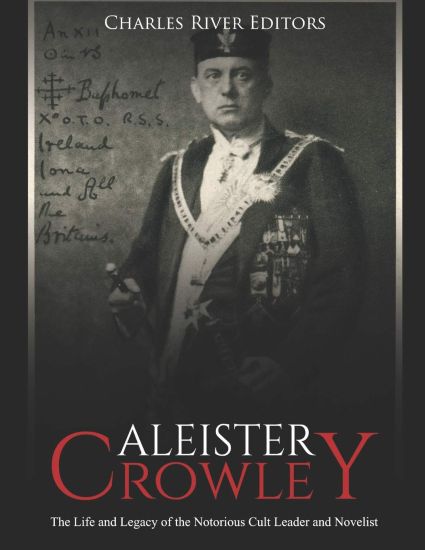
Aleister Crowley: The Life and Legacy of the Notorious Cult Leader and Novelist
*Includes pictures*Includes quotes*Includes online resources and a bibliography for further reading"What a piece of work is a man how noble in reason how infinite in faculty in form and moving how express and admirable in action how like an angel in apprehension how like a god the beauty of the world the paragon of animals " - William Shakespeare. HamletAny work about the mercurial Aleister Crowley is better off being labeled a "story" than a "biography" thanks to the impossibility of being sure that anything one reads about him is true. The basic recorded facts, including birth date, educational records, and published works, are reliable indicators that can be likened to stars guiding a lost desert traveler if the sky is clear. For the rest, one is wandering in the wilderness. He has been labeled a Satanist, a sociopath, a drug addict, a murderer, and, not to put too fine a point on it; "the wickedest man on earth" by several prominent newspapers. He has also been hailed as the prophet of the New Age charged with bringing about the spiritual awakening of humanity, a brilliant writer, an intrepid mountaineer, a heroic MI6/MI5 agent, and a gifted magician. He even launched his own religion, called Thelema, which persists to this day. As such, a story about Aleister Crowley must include a timeline of important events in his life, at least as accurately as possible, while examining the several characteristics and aspects of his life and work that make him so influential. Once reviled and discarded by all but his most fervent followers, Crowley's writings reemerged as the subject of serious scholarship in the 1990s. Aleister Crowley: The Life and Legacy of the Notorious Cult Leader and Novelist profiles one of the 20th century's most colorful and controversial figures. Along with pictures of important people, places, and events, you will learn about Crowley like never before.
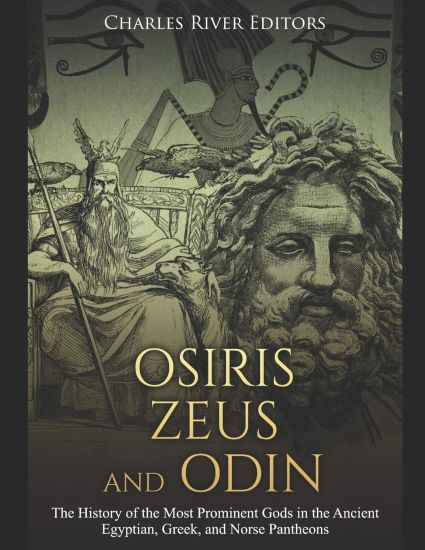
Osiris, Zeus, and Odin: The History of the Most Prominent Gods in the Ancient Egyptian, Greek, and Norse Pantheons
*Includes pictures*Includes ancient accounts*Includes online resources and a bibliography for further readingGiven the abundance of funerary artifacts that have been found within the sands of Egypt, it sometimes seems as though the Ancient Egyptians were more concerned with the matters of the afterlife than they were with matters of the life they experienced from day to day. This is underscored most prominently by the pyramids, which have captured the world's imagination for centuries. Thus, it's little surprise that Osiris was one of the most important gods in the Egyptian pantheon, and he could well be the most famous of the Egyptian gods today. Aside from the ubiquity of the sun-god Re in much of modern popular culture, it is Osiris who captivates the minds of modern readers most. His story is both familiar and strangely alien. He is the god of the dead, but he became so by the very fact of his mortality. All the gods of ancient Egypt were capable of dying, but Osiris was also a symbol of resurrection, not unlike Christ in Christian theology. Osiris was betrayed by somebody close to him (in this case, his brother Seth) and was murdered and reborn, but here is where Osiris and Christ part ways. Osiris's death is brutal, and his resurrection is the product of his wife Isis's love for him. Furthermore, Osiris was associated with the kings of Egypt because the Egyptians believed he was a king himself. The ancient Egyptians could trace their kings back, one by one, to a time when the gods were believed to have ruled the land in person. Osiris was the third or fourth successor to the Egyptian throne after creation, and the Egyptians believed that Osiris's connection with kingship is what allowed their kings to be reborn in a way themselves. He was also said to be physically enormous - almost 15 and a half feet according to some sources - which was said to have aided him in his military campaigns. One of the reasons Zeus remains one of the most recognizable gods in history is because of the spread of his influence. Due to the conquests of Alexander the Great, Zeus was brought along with other elements of Hellenization to Egypt and the Near East, and a few centuries later, Rome all but adopted him as their own chief god, Jupiter. From there, he was exported around the Roman Empire and fused with numerous other local gods in the process. Ultimately, Zeus was a prominent god from the period of pre-recorded history until the Christianization of Greece, which was complete by the early 7th century A. D. It is difficult for modern observers to understand how a hot-headed, sex-obsessed god could command the love and admiration of so many Greeks, not to mention their cultural heirs throughout the Roman Empire. What did the worship of this god provide for his worshipers? How did belief in his existence fulfill their spiritual needs? How was he different from other members of his pantheon? This book explores the figure of Zeus, including his origins, the stories told about him, the way he was worshiped and how he is remembered today. Alongside his son Thor, Odin is one of the best known Norse gods, and it's often easy to forget that he was once at the heart of a pantheon devoutly worshiped by millions of Europeans in the Middle Ages. Odin has numerous names and titles (over 200 by one account), but his best known title is "The All-Father," the co-creator of Earth ("Midgard"), humanity and all of the creatures that inhabitant this world. He is also, importantly, the god of prophecy, ecstasy, and poetry, all roles that were closely connected in the Norse world, as the line between poet and prophet was a blurry one and they were seen as possessing their inspiration through a type of ecstatic fury. These roles were connected to Odin's patronage of knowledge, especially mystical knowledge, since he was the discoverer of magical runes and songs which he then passed to humanity.
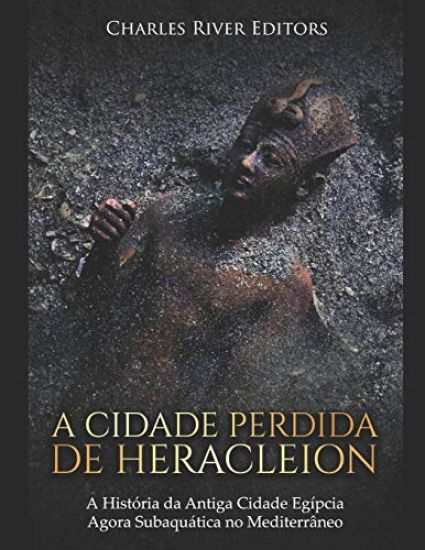
A Cidade Perdida de Heracleion: A História da Antiga Cidade Egípcia Agora Subaquática no Mediterrâneo
A frica pode ter dado origem aos primeiros seres humanos, e o Egito provavelmente deu origem s primeiras grandes civiliza es, que continuam a fascinar as sociedades modernas em todo o mundo quase 5.000 anos depois. Da Biblioteca e Farol de Alexandria Grande Pir mide de Giz , os antigos eg pcios produziram v rias maravilhas do mundo, revolucionaram a arquitetura e a constru o, criaram alguns dos primeiros sistemas de matem tica e medicina do mundo e estabeleceram a linguagem e a arte que se espalham pelo mundo. mundo conhecido. Com l deres mundialmente famosos como o rei Tut e Cle patra, n o de admirar que o mundo de hoje tenha tantos egipt logos. O que torna ainda mais not veis as conquistas dos antigos eg pcios que o Egito era historicamente um lugar de grande turbul ncia pol tica. Sua posi o tornou-a valiosa e vulner vel para as tribos do Mediterr neo e do Oriente M dio, e o Egito Antigo n o teve escassez de sua pr pria guerra interna. Seus conquistadores mais famosos viriam da Europa, com Alexandre, o Grande, lan ando as bases para a linha hel nica de Ptolomeu e os romanos extinguindo essa linha depois de derrotar Cle patra e lev -la ao suic dio. Talvez o aspecto mais intrigante da antiga civiliza o eg pcia tenha surgido desde o in cio, j que os antigos eg pcios n o tinham uma civiliza o anterior que pudessem usar como modelo. De fato, o antigo Egito se tornou um modelo para as civiliza es que se seguiram. Os gregos e os romanos ficaram t o impressionados com a cultura eg pcia que frequentemente atribu am muitos atributos de sua pr pria cultura - geralmente erroneamente - aos eg pcios. Com isso dito, alguns elementos menores da cultura eg pcia antiga foram, de fato, passados para civiliza es posteriores. A estatu ria eg pcia parece ter tido uma influ ncia inicial na vers o grega, e a antiga l ngua eg pcia continuou muito depois do per odo fara nico na forma da l ngua copta. Embora os eg pcios possam n o ter passado sua civiliza o diretamente para os povos posteriores, os elementos-chave que compunham a civiliza o eg pcia - sua religi o, ideias iniciais de estado, arte e arquitetura - podem ser vistos em outras civiliza es pr -modernas. De fato, uma vez que a civiliza o eg pcia representava alguns conceitos humanos fundamentais, um estudo de sua cultura pode ser til ao tentar entender muitas outras culturas pr -modernas. Uma das principais raz es pelas quais os estudiosos modernos sabem muito sobre a hist ria eg pcia devido a muitos monumentos encontrados no Nilo. Embora alguns dos t mulos constru dos na margem oeste do rio Nilo tenham sofrido uma grande quantidade de danos causados pelo vento e todos os grandes monumentos tenham suportado a devasta o do tempo, eles s o incrivelmente bem preservados, gra as tanto ao clima rido do Egito quanto boa paisagem. m o de obra. Os construtores de monumentos eg pcios eram verdadeiramente uma classe acima de seus contempor neos em termos de seu com rcio, que foi ajudado pelo fato de trabalharem com materiais mais permanentes de arenito e calc rio, ao contr rio dos construtores mesopot micos que foram obrigados a trabalhar principalmente com barro e tijolo.
O Império Português e a África: A História e o Legado da Exploração e Colonização por Portugal da Costa da África Ocidental
Em meados do s culo 15, o Imp rio Bizantino entrou em colapso, e as v rias Cruzadas que haviam ocorrido na regi o interromperam em grande parte os caminhos terrestres da Rota da Seda e do com rcio. Al m das dificuldades no com rcio, houve a ascens o do Imp rio Otomano no lugar do Bizantino, al m da eclos o da peste negra na Europa. Mais ou menos nessa poca, teve in cio um per odo de explora o na Europa, e os principais fatores que contribu ram para tal foram introduzidos pelos chineses, embora de maneira indireta. A b ssola magn tica j havia sido desenvolvida e vinha sendo usada pelos marinheiros chineses desde o s culo 12, apesar de ter sido criada pela primeira vez no s culo 3 d. C., como um dispositivo de adivinha o. A dinastia Song, ent o, come ou a usar o dispositivo para navega o terrestre no s culo 11, e marinheiros passaram a us -la logo depois. A tecnologia se espalhou lentamente para o oeste atrav s de comerciantes rabes, embora possam existir argumentos para uma cria o europeia aut noma da b ssola (Southey 1812: 210). Independentemente disso, no in cio do s culo 13, a b ssola encontrou seu caminho at os comerciantes ocidentais, chegando em um momento em que o com rcio aumentava em toda a Europa. O com rcio foi capaz de crescer na Europa e em todo o mundo devido introdu o de navios mais eficazes, e algumas das melhorias recebidas pelos navios foram primeiro apresentadas pelos chineses. A introdu o de m ltiplos navios de mastro, al m de lemes de popa, permitiu que os navios viajassem mais rapidamente e fossem mais manobr veis. No in cio do s culo 15, os navios j eram, agora, muito maiores e capazes de suportar viagens de longa dist ncia com um n mero m nimo de tripulantes a bordo. Com isso, os portugueses come aram a explorar a costa oeste da frica e o Atl ntico sob as ordens do Infante D. Henrique, o Navegador. Naquele momento, os europeus ainda n o tinham sido capazes de navegar por toda a frica, pois os navios constru dos n o eram capazes de navegar para muito longe da costa, e a navega o em guas abertas era complicada, mas os portugueses continuaram a se aventurar pela costa oeste da frica, procurando maneiras de evitarem os otomanos e os mu ulmanos da frica que dificultavam as rotas comerciais terrestres. Em 1.451, o Infante D. Henrique, o Navegador, ajudou a financiar e desenvolver um novo tipo de navio, a caravela, que apresentava velas latinas triangulares e seria capaz de viajar em mar aberto e navegar contra o vento. Em 1.488, Bartolomeu Dias contornou a ponta-sul da frica, nomeada como Cabo da Boa Esperan a pelo rei Jo o de Portugal, e adentrou o Oceano ndico a partir do Atl ntico. Um explorador, Crist v o Colombo, procurou financiamento entre os portugueses para encontrar um caminho at a sia, navegando para o oeste, mas foi rejeitado. Naquele momento, no final do s culo 15, a domina o de Portugal das rotas mar timas da frica Ocidental levou sua vizinha, a Coroa de Castela, e os monarcas cat licos na Espanha moderna a procurarem uma rota alternativa at o sul e leste da sia (denominado ndias), portanto, forneceram a Colombo o financiamento necess rio. Em ltima an lise, Colombo descobriu as Am ricas em 1.492, e os assentamentos espanh is nas " ndias Ocidentais" acabaram sendo estabelecidos. claro que, quando se tornou bvio que Colombo n o havia desembarcado na sia, todos compreenderam que aquela n o era, necessariamente, a rota que os europeus procuravam, e os portugueses continuaram a enviar exploradores pelo Cabo da Boa Esperan a, na tentativa de alcan ar as ndias Orientais. Ap s uma viagem de dois anos, em 1.499, Vasco da Gama chegou com sucesso ndia e retornou a Portugal.
The Cajuns: The History of the French-Speaking Ethnic Group in Canada and Louisiana
*Includes pictures*Includes online resources and a bibliography for further readingDeep within the bayous and swamps of Louisiana resides a population descended from an exodus. These people, called Cajuns or Acadians, were expelled from their homelands. Persecuted and homeless, they traveled hundreds of miles south in search of a new home and ultimately settled in the Pelican State, where they made new lives for themselves free from their British conquerors. Though not always warmly welcomed, they were accepted, allowing them to practice their different culture amidst their new neighbors. Though their home has changed flags over the centuries, the people themselves have remained, retaining a culture that goes back several centuries. While people continue to assimilate, some have continued to live same lifestyles their ancestors did for generations, and they continue to fascinate outsiders, so much so that they occasionally end up being featured on the History Channel. The Cajuns: The History of the French-Speaking Ethnic Group in Canada and Louisiana profiles the people, from their origins to their history across North America. Along with pictures of important people, places, and events, you will learn about the Cajuns like never before.
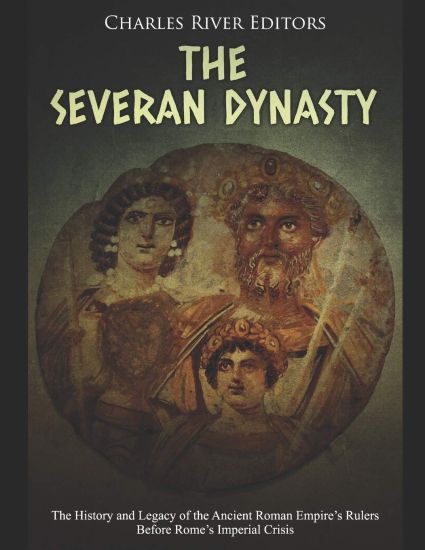
The Severan Dynasty: The History and Legacy of the Ancient Roman Empire's Rulers Before Rome's Imperial Crisis
*Includes pictures*Includes ancient accounts*Includes online resources and a bibliography for further reading"If a man were called upon to fix that period in the history of the world during which the condition of the human race was most happy and prosperous he would, without hesitation, name that which elapsed from the deaths of Domitian to the accession of Commodus." - Edward Gibbon "The Five Good Emperors," a reference to the five emperors who ruled the Roman Empire between 96 and 180 CE (Nerva, Trajan, Hadrian, Antoninus Pius, and Marcus Aurelius), was a term first coined by Machiavelli and later adopted and popularized by historian Edward Gibbon, who said that under these men, the Roman Empire "was governed by absolute power under the guidance of wisdom and virtue." This period of 84 years is generally regarded as the high point of the Roman Empire, at least after Augustus, but what is uncertain and a matter of ongoing debate is whether the five emperors were personally responsible for the situation and the accompanying prosperity enjoyed throughout the empire at the time or if they were simply the beneficiaries of the Pax Romana, inaugurated by Augustus in the early part of the 1st century CE. In other words, historians have wondered whether anyone in power during those years would have enjoyed the same rewards. With all of that said, according to some academics, the success these rulers had in centralizing the empire's administration, while undoubtedly bringing huge benefits, also sowed the seeds for later problems. After all, as so many Roman emperors proved, from Caligula and Nero to Commodus, the empire's approach to governance was predicated on the ruler's ability. When incompetent or insane emperors came to power, the whole edifice came tumbling down. The Severan dynasty came shortly after the Five Good Emperors, and it also consisted of five emperors who ruled the empire from 193-235, except for a brief interlude between 217 and 218 when Macrinus held the imperial throne. In chronological order, the five were Septimius Severus the Founder (193-211), Caracalla (198-217), Geta (209-211), Elagabalus (218-221), and Alexander Severus (222-235). Their reigns coincided with the period in Roman history characterized by academics as the "High Point" of the empire, but this specific dynastic period, following the troubled years after the rule of Marcus Aurelius' son Commodus, did not see the empire return to the heights reached under the Five Good Emperors. It was a period in which the inherent weaknesses of the imperial system were exacerbated, and the policies of successive emperors paved the way for the era generally known as Rome's Imperial Crisis or "The Time of Chaos" (235-284). The Severans' story encapsulates many highs and lows, including able and venal emperors, expansion and loss of territory, great artistic achievements, and intellectual advancements, coupled with some of the worst cruelty ever perpetrated by Romans. The Severans have also fared well historically thanks to their successors, because the 50 years following the assassination of Severus Alexander on March 19, 235 has been generally regarded by academics as one of the lowest points in the history of the Roman Empire. Severus Alexander was the last of the Severan emperors, and the subsequent years of crisis (235-285) were characterized by a series of short reigns, usually ending in the violent death of the reigning emperor. At the same time, this period of time also saw the empire beset by threatening forces on all sides. The Romans faced a newly resurgent Persia in the east, as well as significant forces from German tribes on the Rhine and Goths along the Danube. The various conflicts would result in the unprecedented death of a sitting emperor in battle, which took place in 251 with Emperor Decius, and Emperor Valerian was also captured in 260.
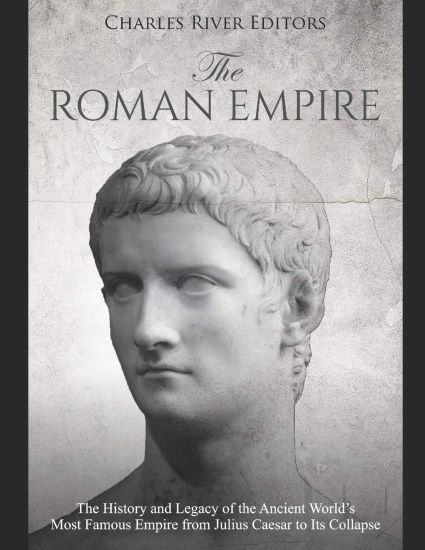
The Roman Empire: The History and Legacy of the Ancient World's Most Famous Empire from Julius Caesar to Its Collapse
*Includes pictures*Includes ancient accounts*Includes online resources and a bibliography for further readingPossibly the most important man of antiquity, and even all of history, was Julius Caesar. Alexander Hamilton, the famous American patriot, once remarked that "the greatest man who ever lived was Julius Caesar". Such a tribute, coming from one of the Founding Fathers of the quintessential modern democracy in reference to a man who destroyed the Roman Republic, is testament to the enduring mark that Caesar left upon the world. The ultimate conqueror, statesman, dictator, visionary, and opportunist, during his time in power Caesar expanded the borders of Rome to almost twice their previous size, revolutionized the infrastructure of the Roman state, and destroyed the Roman Republic for good, leaving a line of emperors in its place. His legacy is so strong that his name has become, in many languages, synonymous with power: the Emperors of Austria and Germany bore the title Kaiser, and the Czars of Russia also owe the etymology of their title to Caesar. His name also crept further eastward out of Europe, even cropping up in Hindi and Urdu, where the term for "Emperor" is Kaisar. Even in his time, Caesar was in many ways larger than life, and because of his legacy as virtual founder of the Roman Empire, much of what was written about - and by - him during his life and immediately after his assassination was politically motivated. His successor, Octavian Augustus, had a strong interest in ensuring that Caesar's life be painted in a favorable light, while Caesar's political enemies attempted to paint him as a corrupt, undemocratic dictator who was destroying the old order of the Republic. This makes it exceedingly difficult to separate historical fact from apocryphal interjection, as the writings of Cicero (a rival of Caesar's) and the later biographies of Suetonius and Plutarch can be misleading. Nonetheless, along with Caesar's De Bello Gallico, his famous notes on his campaign against the Gauls, they remain our chief sources for Caesar's life - a life everyone agreed was nothing short of remarkable and changed the course of history forever. As Roman leaders vied with each other for power and constantly fought civil wars, Rome's famous roads fall into disrepair, the economy was crippled, the continent-wide trade system that had flourished in the previous years was replaced with a basic barter system, and there was a reduction in international trade. People became ever more fearful for their personal safety, and the Imperial Crisis saw an increasing trend toward sacrificing personal liberties and rights in return for guarantees of safety from wealthy landowners. All of this foreshadowed the emergence of the European feudal system and serfdom. These were obviously turbulent times, and given the volatility, many historians have debated how the Roman Empire managed to survive in any form at all, let alone remain robust enough to allow Diocletian and his successors to restore it. Given the many people involved, and the relatively short era in which everything transpired, Rome's Imperial Crisis has been difficult for historians to summarize, which is why, despite being one of the most intriguing periods in Roman history, it is often overlooked by people who have chosen to focus on the more cohesive periods before and after it. The Roman Empire: The History and Legacy of the Ancient World's Most Famous Empire from Julius Caesar to Its Collapse examines the history of Rome after the fall of the Republic. Along with pictures depicting important people, places, and events, you will learn about the empire like never before.
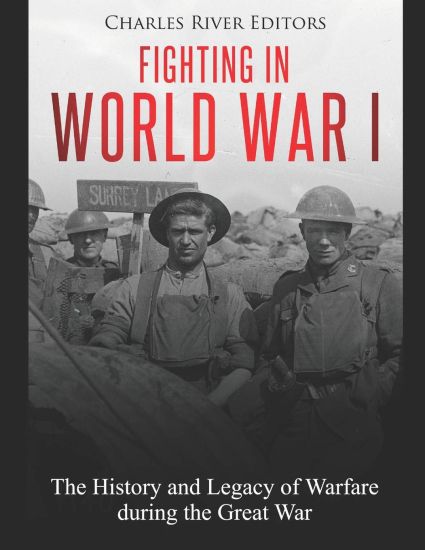
Fighting in World War I: The History and Legacy of Warfare during the Great War
*Includes pictures*Includes soldiers' accounts*Includes online resources and a bibliography for further readingWorld War I, also known in its time as the "Great War" or the "War to End all Wars", was an unprecedented holocaust in terms of its sheer scale. Fought by men who hailed from all corners of the globe, it saw millions of soldiers do battle in brutal assaults of attrition which dragged on for months with little to no respite. Tens of millions of artillery shells and untold hundreds of millions of rifle and machine gun bullets were fired in a conflict that demonstrated man's capacity to kill each other on a heretofore unprecedented scale, and as always, such a war brought about technological innovation at a rate that made the boom of the Industrial Revolution seem stagnant. The arms race before the war and the attempt to break the deadlock of the Western and Eastern Fronts by any means possible changed the face of battle in ways that would have previously been deemed unthinkable. Before 1914, flying machines were objects of public curiosity; the first flights of any account on rotor aircraft had been made less than 5 years before and were considered to be the province of daredevils and lunatics. By 1918, all the great powers were fielding squadrons of fighting aircraft armed with machine-guns and bombs, to say nothing of light reconnaissance planes. Tanks, a common feature on the battlefield by 1918, had not previously existed outside of the realm of science fiction stories written by authors like H. G. Wells. Machine guns had gone from being heavy, cumbersome pieces with elaborate water-cooling systems to single-man-portable, magazine-fed affairs like the Chauchat, the Lewis Gun and the M1918 BAR. To these grim innovations were added flamethrowers, hand grenades, zeppelins, observation balloons, poison gas, and other improvements or inventions that revolutionized the face of warfare. These technological developments led to an imbalance. Before the introduction of the man-portable light machine gun (which took place in the second half of the war), not to mention tanks (which also joined the fight late in the game), defensive firepower vastly outweighed offensive capability. Massed batteries of artillery, emplaced heavy machine guns, barbed wire entanglements, and bewildering fortifications meant that ground could not be taken except at incredible cost. This led to the (somewhat unjustified) criticism famously leveled at the generals of World War I that their soldiers were "lions led by donkeys". Certainly, every army that fought in the Great War had its share of officers, at all levels of command, who were incompetent, unsuitable, foolish, or just plain stupid, but there were plenty of seasoned professionals who understood their job and did it well. The main problem facing commanders in the war was that there was such a bewildering array of new armaments, with such vast destructive potential, that previous military doctrines were virtually useless. Cavalry, which had been expected to play a major role both as reconnaissance and as "mounted infantry", operating in much the same way as airborne and mechanized troops would later to rapidly outflank enemy positions, quickly proved useless. Frontal infantry assaults were cut to shreds by enemy defensive fire, but there seemed to be no major alternative. Ground had to be taken, even if at great cost, and to do so, more destructive weapons were devised, tested and deployed. As a result, World War I was the first truly industrial war, and it created a paradigm which reached its zenith with World War II and towards which virtually all equipment, innovation and training were dedicated throughout the Cold War and the remainder of the 20th century. To this day, modern warfare remains synonymous with tanks and mass infantry battles.
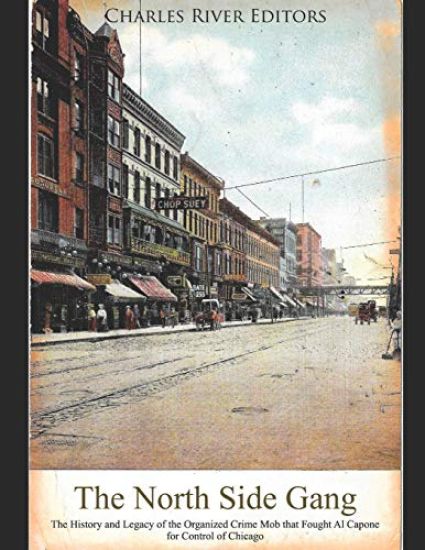
The North Side Gang: The History and Legacy of the Organized Crime Mob that Fought Al Capone for Control of Chicago
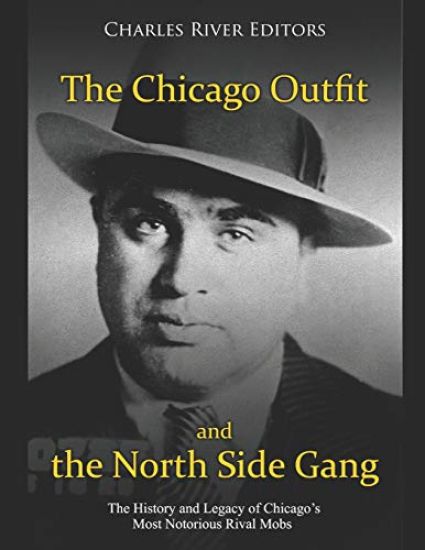
*Includes pictures*Includes online resources and a bibliography for further reading "I hope, when my time comes, that I die decently in bed. I don't want to be murdered beside the garbage cans in some Chicago alley." - Bugs Moran20th century Chicago was an ideal breeding ground for organized crime. A buzzing circuit board dotted with towering skyscrapers, brick buildings, worker's cottages, and an eclectic collection of greystone manors, the Windy City was further decked out with electric entertainment districts, the theaters, clubs, brothels, restaurants, and niteries that lined its streets. The city was illuminated by dazzling marquees and light-up signage, and enlivened by the muffled medley of midnight chatter and big band music seeping out of the nightspots. Those who ambled along the boardwalks flanking the Chicago River were greeted by moored commercial fishing boats bobbing in the water, as well as bustling stalls stocked with trout, salmon, and rainbow smelt. The rise of Chicago's gangland can be attributed to a number of factors. First, there was the sudden explosion in its population, which saw an influx of immigrants - mainly from eastern and southern Europe, as well as Americans from neighboring and faraway states - teem into the city in search of promising job opportunities and a better life. The abrupt inundation of permanent citizens rendered the already suffering policeman to civilian ratio out of kilter, and the authorities' control of the city became further unzipped. Moreover, children and impressionable youths were regularly exposed to the overwhelming and unblushing presence of organized crime, meaning that the transitions of petty thieves and minor-league thugs to career crooks and full-time gangsters were only natural segues. The privileged pursued politics, medicine, law, and other respectable professions, but the poor folks, set several steps back by their limited resources, turned to crime. Plenty were desperate to feed their families and cheat the unjust system. In the midst of it all, the Chicago Outfit, one of the longest-running criminal organizations in the land of the free, was perhaps the most notorious of them all. The baleful brotherhood bore a terrifying brand defined by cutthroat competitiveness, sadistic torture tactics, and excessive bloodshed, among scores of other despicable acts. On February 14, 1929, members of the North Side Gang arrived at a warehouse on North Clark Street in Chicago, only to be approached by several police officers. The officers then marched them outside up against a wall, pulled out submachine guns and shotguns, and gunned them all down on the spot. A famous legend is that one of the shot men, Frank Gusenberg, dying from 14 gunshot wounds, told police that nobody shot him. Though Gusenberg's statement is probably apocryphal, nobody opened their mouths. Nobody was ever convicted for the "Saint Valentine's Day Massacre," the most infamous gangland hit in American history, but it's an open secret that it was the work of America's most famous gangster, Al Capone. While the North Side Gang is not as infamous as Capone's mob, the fact that the North Siders were the targets indicate just how powerful Capone's rivals were. Indeed, members like Bugs Moran would carry on a rivalry with Capone that lasted upwards of a decade. The North Side Gang: The History and Legacy of the Organized Crime Mob that Fought Al Capone for Control of Chicago profiles how the group rose in the criminal underworld, and all the controversies that ensued. Along with pictures of important people, places, and events, you will learn about the North Side Gang like never before.
The North Side Gang: The History and Legacy of the Organized Crime Mob that Fought Al Capone for Control of Chicago
*Includes pictures*Includes online resources and a bibliography for further reading "I hope, when my time comes, that I die decently in bed. I don't want to be murdered beside the garbage cans in some Chicago alley." - Bugs Moran20th century Chicago was an ideal breeding ground for organized crime. A buzzing circuit board dotted with towering skyscrapers, brick buildings, worker's cottages, and an eclectic collection of greystone manors, the Windy City was further decked out with electric entertainment districts, the theaters, clubs, brothels, restaurants, and niteries that lined its streets. The city was illuminated by dazzling marquees and light-up signage, and enlivened by the muffled medley of midnight chatter and big band music seeping out of the nightspots. Those who ambled along the boardwalks flanking the Chicago River were greeted by moored commercial fishing boats bobbing in the water, as well as bustling stalls stocked with trout, salmon, and rainbow smelt. The rise of Chicago's gangland can be attributed to a number of factors. First, there was the sudden explosion in its population, which saw an influx of immigrants - mainly from eastern and southern Europe, as well as Americans from neighboring and faraway states - teem into the city in search of promising job opportunities and a better life. The abrupt inundation of permanent citizens rendered the already suffering policeman to civilian ratio out of kilter, and the authorities' control of the city became further unzipped. Moreover, children and impressionable youths were regularly exposed to the overwhelming and unblushing presence of organized crime, meaning that the transitions of petty thieves and minor-league thugs to career crooks and full-time gangsters were only natural segues. The privileged pursued politics, medicine, law, and other respectable professions, but the poor folks, set several steps back by their limited resources, turned to crime. Plenty were desperate to feed their families and cheat the unjust system. In the midst of it all, the Chicago Outfit, one of the longest-running criminal organizations in the land of the free, was perhaps the most notorious of them all. The baleful brotherhood bore a terrifying brand defined by cutthroat competitiveness, sadistic torture tactics, and excessive bloodshed, among scores of other despicable acts. On February 14, 1929, members of the North Side Gang arrived at a warehouse on North Clark Street in Chicago, only to be approached by several police officers. The officers then marched them outside up against a wall, pulled out submachine guns and shotguns, and gunned them all down on the spot. A famous legend is that one of the shot men, Frank Gusenberg, dying from 14 gunshot wounds, told police that nobody shot him. Though Gusenberg's statement is probably apocryphal, nobody opened their mouths. Nobody was ever convicted for the "Saint Valentine's Day Massacre," the most infamous gangland hit in American history, but it's an open secret that it was the work of America's most famous gangster, Al Capone. While the North Side Gang is not as infamous as Capone's mob, the fact that the North Siders were the targets indicate just how powerful Capone's rivals were. Indeed, members like Bugs Moran would carry on a rivalry with Capone that lasted upwards of a decade. The North Side Gang: The History and Legacy of the Organized Crime Mob that Fought Al Capone for Control of Chicago profiles how the group rose in the criminal underworld, and all the controversies that ensued. Along with pictures of important people, places, and events, you will learn about the North Side Gang like never before.