Kirjojen hintavertailu – 12 903 725 kirjaa ja 27 kauppaa

Kirjailija

Charles River

Kirjat ja teokset yhdessä paikassa: 4 673 kirjaa, julkaisuja vuosilta 2013–2022, suosituimpiin kuuluu William Powell and Myrna Loy: The Lives and Careers of One of Classical Hollywood's Most Iconic Duos. Vertaile teosten hintoja ja tarkista saatavuus suomalaisista kirjakaupoista.

4 673 kirjaa

Kirjojen julkaisuvuodet: 2013–2022.

Gnosticism: The History and Legacy of the Mysterious Ancient Religion
*Includes pictures*Includes ancient accounts*Includes online resources and a bibliography for further reading"This knowledge is not something that can be put into words like other sciences; but after long-continued intercourse between teacher and pupil, in joint pursuit of the subject, suddenly, like light flashing forth when a fire is kindled, it is born in the soul and straightway nourishes itself." - PlatoGnosticism is one of the great mysteries in the history of Western religion. At its core is an ancient Greek word, gnōsis, a word prominent in the writings of Plato which refers to a deep personal knowledge or understanding that often transcends the physical world. The Gnostics painted a picture of a fallen, broken world in which physicality was a product of a lesser deity. This deity was created in defiance of the One and in order to trap humans and blind them to the truths of their predicament and divine origins. By acquiring insight, or gnōsis, in this secret nature of the world, humans might escape their prison. Only through knowledge can people be set free. As that makes clear, Gnosticism as a belief system is difficult to define since it is not a well-organized or uniform doctrine like Christianity or Judaism, but at one time there was some synchronization with Christianity that nurtured both movements. As a religion and philosophy, Gnosticism flourished alongside Christianity, and it is not easy to say which one came first, but it is certain that both movements influenced each other. To paraphrase John Dominic Crossan, it is unclear whether Gnosticism was a Christian heresy, a Jewish heresy, or an original religion that powerfully merged with both. Gnosticism borrowed elements from Christians, just as the whole of Christianity took a certain Gnostic flavor, to the point that some books of the New Testament, especially the Gospel of John, could easily pass as a proto-Gnostic document. At the risk of oversimplifying, Gnosticism was the belief that the souls are divine sparks imprisoned in imperfect physical bodies, due to the machinations of a lesser and evil god who created the world. This evil god is identified with the creator of the Genesis and the Hebrew Bible. The material world and the body are prisons separated from the divine realm, from which humans must escape through the ascent of various levels. This is possible through the acquisition of secret knowledge reserved for the elect. This special revelation or gnosis (knowledge) was supposedly disclosed by Jesus to his dearest disciples, and it can be found in the Gnostic books, deliberately written in cryptic language. The acquisition of the secrets necessary for the salvation of the soul in many cases implied a radical asceticism and corporal sacrifice. Due to such classical roots, it would be easy to conclude that Gnosticism is an ancient philosophy, and a cursory glance might categorize it as simply a way of understanding the world and promoting investigation. However, the term is most often used to describe not a philosophy but a religion, and not just any religion, but a branch of one of the most resilient and influential traditions in history: Christianity. So what exactly is Gnosticism, and why does it remain such a source of confusion, captivation, and charisma for modern scholarship and culture alike? These answers are complex, and indicative of how the many turnings of the last two millennia have unexpectedly unearthed some answers while burying others even deeper. Gnosticism: The History and Legacy of the Mysterious Ancient Religion looks at the different origins that shaped Gnosticism, what Gnostics believed and practiced, and the influence they had on other religions. Along with pictures depicting important people, places, and events, you will learn about Gnosticism like never before.
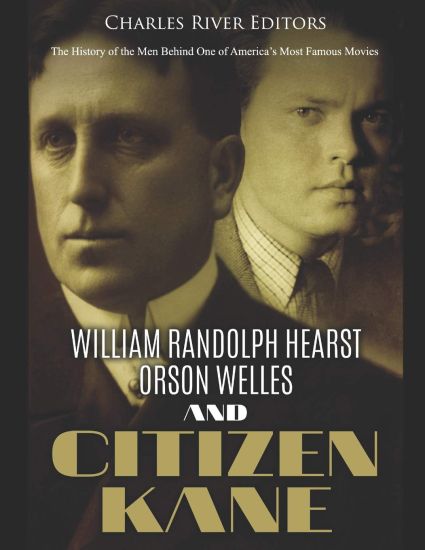
William Randolph Hearst, Orson Welles, and Citizen Kane: The History of the Men Behind One of America's Most Famous Movies
*Includes pictures*Includes online resources and a bibliography for further readingWhen William Randolph Hearst was in his late 50s and at the height of his power, journalist Robert Duffuss observed, "His career is unique in American history, or, for that matter, all history. Compared with him the Bennetts and even the Pulitzers are small...his acquaintances...credit him with personal charm, but do not deny his ruthlessness in business operations. Shopkeepers and his nearest rivals are simply not in his class. Here is success on a dizzying and truly American scale. Here is journalism as large as the Rocky Mountains or the Painted Desert." However, despite his massive success, and perhaps in large measure because of it, many of Heart's contemporaries depicted him in negative ways. As Duffuss also noted, when it came to the newspaper magnate's reputation, there was "a curious suggestion of lath and plaster about it, and far from being universally honored and admired as other self-made men have been, Mr. Hearst is regarded by multitudes of his fellow citizens with extreme aversion and distrust. Indeed, his career is almost never examined dispassionately and for this reason some of the salient facts about him are worth setting down in a somewhat cold-blooded manner." It is only right to keep every positive and negative viewpoint in mind when looking at the life of a man who built his own fortune with money inherited from a father who literally grubbed it out of the ground with his own hands. While the senior Hearst may never have gotten the soil of old California from under his nails, William Randolph would never know what it felt like to live a life of manual labor; instead, he founded his empire on another kind of dirt, that which he was able to dig up and publish about the people, great and small, of his day. He would also stir up a good bit of dirt himself. When it comes to Hollywood and the entertainment industry, perhaps nobody catapulted to fame as quickly or as strangely as Orson Welles, and it was due in large measure to the man who hated him more than anyone else in the world. Though Welles he had worked on stage productions from an early age and seamlessly transitioned into radio, few were familiar with his work until a legendary 1938 radio broadcast of H. G. Wells' The War of the Worlds, during which some people who heard Welles narrating the work truly believed that an alien invasion was underway. As Welles famously apologized at the end of the broadcast, "This is Orson Welles, ladies and gentlemen, out of character, to assure you that The War of the Worlds has no further significance than as the holiday offering it was intended to be; The Mercury Theatre's own radio version of dressing up in a sheet and jumping out of a bush and saying 'Boo '"Although the alleged widespread hysteria caused by that broadcast is mostly overstated, the notorious broadcast made Welles a household name, and he only followed it up with one of the greatest movies ever made: Citizen Kane. As the co-writer, producer, director, and main star of the film, a biting social critique of William Randolph Hearst, Welles' first movie would end up being his most famous and critically acclaimed. Of course, it also ensured that he would continue to work across every entertainment medium for the next 4 decades, juggling radio, the stage, movies, and television throughout the rest of his illustrious career. William Randolph Hearst, Orson Welles, and Citizen Kane: The History of the Men Behind One of America's Most Famous Movies examines the various roles Hearst played in American journalism and politics during his life, and how he "inspired" Welles to make one of America's most important films. Along with pictures depicting important people, places, and events, you will learn about the story of Hearst, Welles, and Citizen Kane like never before.
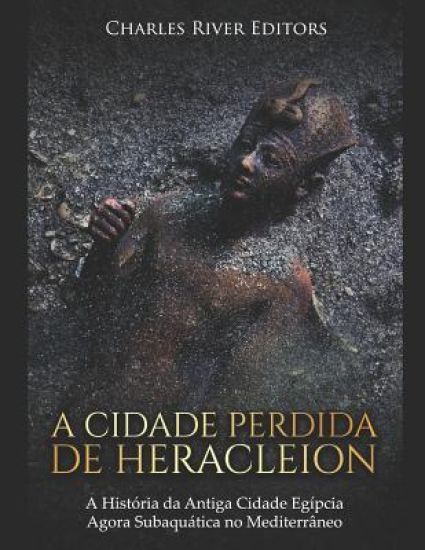
A Cidade Perdida de Heracleion: A História da Antiga Cidade Egípcia Agora Subaquática no Mediterrâneo
A frica pode ter dado origem aos primeiros seres humanos, e o Egito provavelmente deu origem s primeiras grandes civiliza es, que continuam a fascinar as sociedades modernas em todo o mundo quase 5.000 anos depois. Da Biblioteca e Farol de Alexandria Grande Pir mide de Giz , os antigos eg pcios produziram v rias maravilhas do mundo, revolucionaram a arquitetura e a constru o, criaram alguns dos primeiros sistemas de matem tica e medicina do mundo e estabeleceram a linguagem e a arte que se espalham pelo mundo. mundo conhecido. Com l deres mundialmente famosos como o rei Tut e Cle patra, n o de admirar que o mundo de hoje tenha tantos egipt logos. O que torna ainda mais not veis as conquistas dos antigos eg pcios que o Egito era historicamente um lugar de grande turbul ncia pol tica. Sua posi o tornou-a valiosa e vulner vel para as tribos do Mediterr neo e do Oriente M dio, e o Egito Antigo n o teve escassez de sua pr pria guerra interna. Seus conquistadores mais famosos viriam da Europa, com Alexandre, o Grande, lan ando as bases para a linha hel nica de Ptolomeu e os romanos extinguindo essa linha depois de derrotar Cle patra e lev -la ao suic dio. Talvez o aspecto mais intrigante da antiga civiliza o eg pcia tenha surgido desde o in cio, j que os antigos eg pcios n o tinham uma civiliza o anterior que pudessem usar como modelo. De fato, o antigo Egito se tornou um modelo para as civiliza es que se seguiram. Os gregos e os romanos ficaram t o impressionados com a cultura eg pcia que frequentemente atribu am muitos atributos de sua pr pria cultura - geralmente erroneamente - aos eg pcios. Com isso dito, alguns elementos menores da cultura eg pcia antiga foram, de fato, passados para civiliza es posteriores. A estatu ria eg pcia parece ter tido uma influ ncia inicial na vers o grega, e a antiga l ngua eg pcia continuou muito depois do per odo fara nico na forma da l ngua copta. Embora os eg pcios possam n o ter passado sua civiliza o diretamente para os povos posteriores, os elementos-chave que compunham a civiliza o eg pcia - sua religi o, ideias iniciais de estado, arte e arquitetura - podem ser vistos em outras civiliza es pr -modernas. De fato, uma vez que a civiliza o eg pcia representava alguns conceitos humanos fundamentais, um estudo de sua cultura pode ser til ao tentar entender muitas outras culturas pr -modernas. Uma das principais raz es pelas quais os estudiosos modernos sabem muito sobre a hist ria eg pcia devido a muitos monumentos encontrados no Nilo. Embora alguns dos t mulos constru dos na margem oeste do rio Nilo tenham sofrido uma grande quantidade de danos causados pelo vento e todos os grandes monumentos tenham suportado a devasta o do tempo, eles s o incrivelmente bem preservados, gra as tanto ao clima rido do Egito quanto boa paisagem. m o de obra. Os construtores de monumentos eg pcios eram verdadeiramente uma classe acima de seus contempor neos em termos de seu com rcio, que foi ajudado pelo fato de trabalharem com materiais mais permanentes de arenito e calc rio, ao contr rio dos construtores mesopot micos que foram obrigados a trabalhar principalmente com barro e tijolo.
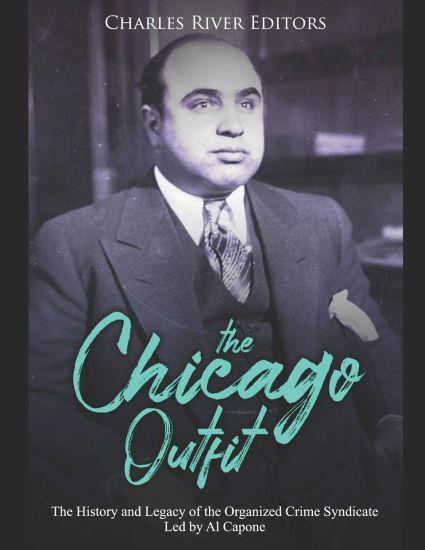
The Chicago Outfit: The History and Legacy of the Organized Crime Syndicate Led by Al Capone
*Includes pictures*Includes online resources and a bibliography for further reading "This American system of ours ... call it Americanism, call it capitalism, call it what you like, gives to each and every one of us a great opportunity if we only seize it with both hands and make the most of it." - Al CaponeSprightly swing music spills across the dimly lit club. The grayish curtains of cigarette smoke part every once in a while to reveal a sparkling stage and tables upon tables of patrons, some incurably inebriated and others high on the fast-paced nightlife. Fabulous flappers in shimmery cocktail dresses and stylish feather headbands throw their hands up and stomp their feet to the addictive beat on the dance floor. Smartly dressed men, their hair neatly parted and slicked back, toss fistfuls of dice onto the plush green baize of the craps tables. Some hover over roulette wheels, staring intently at the spinning flashes of silver, while others finger their playing cards as they sip on tumblers of whiskey, eyeing both the river and the tower of tokens next to them. Frisky tunes, chic fashion, and American gambling are nostalgic, rose-tinted images most choose to project when visualizing the Roaring Twenties, but the other side of the coin brought an uninviting, much harsher reality that most would prefer to sweep under the rug. The first real estate bubble was on the brink of bursting, and progress was evident, but painfully slow, which gave way to yet another era of violent riots, lynchings, and other forms of oppression imposed on minorities. Then, of course, there were mobsters. Remove the silk three-piece suits, burnished Tommy guns, and obscene stacks of cash from the equation, and one would be left with limp, bullet-ridden bodies either slumped over their steering wheels or sprawled out like broken rag dolls on the floors of public establishments, the walls painted with blood spatters and shattered glass littered about. These, they say, are the lucky ones, for their corpses, though laid out as a public message, provide the deceased's loved ones with some form of closure. Over the decades, dozens involved in this deadly game disappeared altogether, never again to see the light of day. In the midst of it all, the Chicago Outfit, one of the longest-running criminal organizations in the land of the free, was perhaps the most notorious of them all. The baleful brotherhood bore a terrifying brand defined by cutthroat competitiveness, sadistic torture tactics, and excessive bloodshed, among scores of other despicable acts. Worse yet, they seemed to be untouchable. Aside from Scarface himself, there was the vindictive and eerily competent Louis "Little New York" Campagna, a vicious assassin suspected of unloading 59 bullets into a traitorous associate. Then there was Anthony "the Ant" Spilotro, the inspiration for Nicky Santoro, Joe Pesci's character in Martin Scorsese's Casino, who, despite his petite stature, was a barbaric, cruel man with an explosive temper and no capacity for remorse. Needless to say, the Chicago Outfit was, at its height, a formidable force to be reckoned with, one that authorities and rival gangs alike wisely steered clear of. But as the old adage goes, a chain is only as strong as its weakest link, and like a house of cards, its carefully structured hierarchy and the complexity of its operations were most impressive, but one loosely positioned card was all it took to trigger its collapse. Time and time again, Outfit leaders and their minions bent over backwards in a way only contortionists could be proud of to plug the holes rapidly sprouting up, but ultimately it wouldn't be enough. The Chicago Outfit: The History and Legacy of the Organized Crime Syndicate Led by Al Capone profiles how the group rose in the criminal underworld, and all the controversies that ensued.

The Book of the Dead: The History and Legacy of Ancient Egypt's Famous Funerary Texts
*Includes pictures*Includes passages from the texts*Includes online resources and a bibliography for further readingGiven the abundance of funerary artifacts that have been found within the sands of Egypt, it sometimes seems as though the Ancient Egyptians were more concerned with the matters of the afterlife than they were with matters of the life they experienced from day to day. This is underscored most prominently by the pyramids, which have captured the world's imagination for centuries. The pyramids of Egypt are such recognizable symbols of antiquity that for millennia, people have made assumptions about what they are and why they exist, without full consideration of the various meanings these ancient symbolic structures have had over the centuries. Generations have viewed them as symbols of a lost past, which in turn is often portrayed as a world full of romance and mystery. This verbal meaning has become associated with the structures through the tourism industry, where intrigue obviously boosts ticket sales. In fact, the Egyptian pyramids are so old that they were also drawing tourists even in ancient times. In antiquity, the Great Pyramid of Giza was listed as one of Seven Ancient Wonders of the World, and it is the only one still surviving today. Though the ancient tombs have been extensively plundered, they still stand as gateways to the afterlife that provide a murky window into the past of a fascinating civilization. Most importantly, the relatively untouched tomb of the young King Tutankhamun offered clear insight. Many of the objects that were discovered in Tutankhamun's tomb were clearly made specifically for him and his burial, such as the coffins, funerary masks, canopic equipment and statues. Other objects, such as the furniture, clothing, and chariots, were obviously items that had been used during Tutankhamun's lifetime. The motifs found upon many of his possessions depicted him in triumph over his enemies. For example, a painted wooden chest bears a fine example of such a scene; the king is shown in his chariot, followed by his troops, attacking a group of Nubians. Scenes depicting aggression and triumph over Egypt's enemies by Egypt's king are classical examples of Egyptian kingship. To accomplish all the necessities the Egyptians believed in, they relied on spells and invocations, which were collected in a series of funerary texts such as the Pyramid Texts. By the era of the New Kingdom, the most popular funerary text was The Book of the Dead, one of the most evocative titles of literature in the history of humankind. Its mystical writings offer a glimpse into a realm of magical thinking beyond the skills of most writers of fiction. Resplendent with highly accomplished artwork, The Book of the Dead has enraptured scholars and laymen for centuries. For that reason, it may surprise many that The Book of the Dead does not actually exist as a book. In fact, what is referred to as The Book of the Dead today is actually the accumulation of around 400 spells that exist in transliteration and translation from the whole gamut of Egyptian history. The name was given to this collection of texts by modern Egyptologists, but the fact remains that no one text contains all of the spells associated with this body of work. To the ancient Egyptians, these spells would have loosely contributed to a collection known as The Book of Coming Forth by Day. This moniker is extremely important to the understanding of its primary purpose: returning from the depths of "night." The Egyptian concept of "coming forth by day" meant rebirth, just as the sun is "reborn" each morning after its "death" at sunset. In other words, rather than the work being any kind of magical book to summon, speak with, or fight against "the dead," it is actually a manual for the dead to go beyond their physical death and "come forth" into an eternal state of bliss.
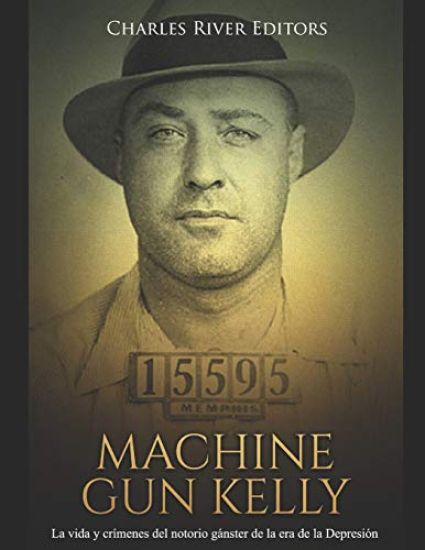
Machine Gun Kelly: La vida y crímenes del notorio gánster de la era de la Depresión
Contrabandista de licores veterano. Prol fico asaltante de bancos. Secuestrador sin igual. Una despiadada mente maestra criminal. Con un apodo tan recio como el de George "Machine Gun (Metralleta)" Kelly, no deber a sorprender que se le asocie con frecuencia a tales t rminos. Puede que hayan pasado 86 a os desde su muerte, pero el nombre y el legado de este mafioso de la poca de la Depresi n siguen siendo tan relevantes como siempre. Este popular apodo no solo ha sido adoptado por un rapero popular, sino que sigue siendo objeto de diversos art culos, libros, canciones, pel culas y otros medios de la cultura popular. Por supuesto, dada su fama y notoriedad, siempre es v lido preguntar cu nta verdad hay en las fascinantes historias llenas de acci n que rodean su corta y memorable vida delictiva. Machine Gun Kelly: La vida y cr menes del notorio g nster de la era de la Depresi n describe c mo se convirti en uno de los forajidos m s famosos de Estados Unidos, y los osados cr menes que lo hicieron tan temido. En conjunto con im genes de personas, lugares y eventos importantes, aprender sobre Machine Gun Kelly como nunca antes.
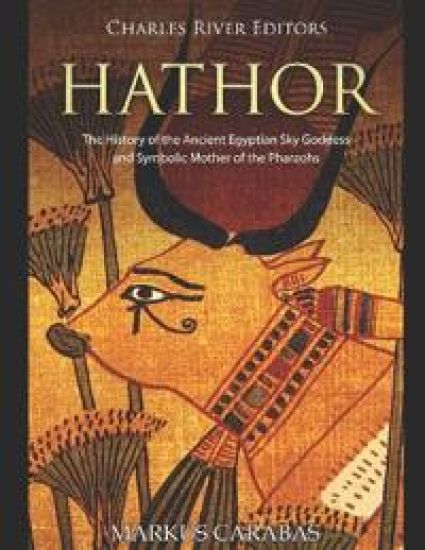
Hathor: The History of the Ancient Egyptian Sky Goddess and Symbolic Mother of the Pharaohs
*Includes pictures*Includes ancient accounts*Includes online resources and a bibliography for further readingAfrica may have given rise to the first human beings, and Egypt probably gave rise to the first great civilizations, which continue to fascinate modern societies across the globe nearly 5,000 years later. From the Library and Lighthouse of Alexandria to the Great Pyramid at Giza, the Ancient Egyptians produced several wonders of the world, revolutionized architecture and construction, created some of the world's first systems of mathematics and medicine, and established language and art that spread across the known world. With world-famous leaders like King Tut and Cleopatra, it's no wonder that today's world has so many Egyptologists. Today, the goddess Hathor is one of the least known deities in the ancient Egyptian pantheon, and the ancient Egyptians would surely be surprised by this fact. Hathor enjoyed a principal position among the gods of ancient Egypt for much of Egyptian history. If anything, she was ubiquitous, with several key cult centers at Dendera, Memphis, and Thebes, and she played various roles for Egyptian society. Like many Egyptian deities, Hathor took the form of animals at times. She could "become" a vulture, a cow, or a human, but she was most often depicted as the latter. She is identified in her human form by her long black hair, tied back with a filet beneath a pair of cow horns with the sun disk in between them. The presence of the disk between the horns is a clear indication of her association with the sun deity. That she wore a uraeus - the upright snake seen on the forehead of royal gods and humans - is a sign of her association with royalty, too. Whenever an ancient Egyptian deity was associated with royalty, they invariably had a connection with one of the first divine kings: Ra, Osiris, or Horus. Hathor, however, had connections with all three. In the case of her cult center at Dendera, she was not just the wet nurse or mother of Horus‒as was the case later, with Isis‒but she was also his consort. In this way, she became the consort of all kings and as such, garnered the characteristics of an "ideal" partner or queen. This consort of kings was also adept at magic, particularly healing magic, which would become a more predominant characteristic of Hathor in the myths in which she appeared with Horus. Aside from this more mundane role, she was also the "great cow of the heavens that gave birth to the sun" at Dendera. It was, perhaps, this great multiplicity that resulted in her losing prominence in the conscious memory of the world. Many deities in world religions often have a small coterie of roles that could be logically spliced together to make a single, divine figure whose character can easily be described, but this is not the case for Hathor. She appears in creation stories as the principle bringing forth the universe and is similarly referred to as the great mother goddess of the sky whose symbolic tree both nourishes and nurtures. Yet she is also the alluring goddess of love whose ecstatic cult practices were born from a grotesque myth involving the floodplains of the Nile being saturated with the blood of humans she massacred. She may be difficult to sum up by a person who has grown up surrounded by the symbols of monotheism, but she is an excellent example of the multi-faceted concepts the ancient Egyptians reconciled in their religion. To understand a little more about Hathor, it will be useful to gain a better understanding of how the ancient Egyptians thought. Hathor: The History of the Ancient Egyptian Sky Goddess and Symbolic Mother of the Pharaohs examines the history of the deity, her characteristics, and her lasting legacy on Egypt. Along with pictures depicting important people, places, and events, you will learn about Hathor like never before.
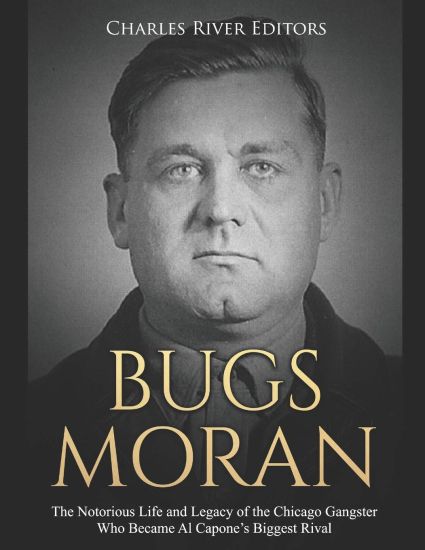
Bugs Moran: The Notorious Life and Legacy of the Chicago Gangster Who Became Al Capone's Biggest Rival
*Includes picturesIncludes a bibliography for further reading "I hope, when my time comes, that I die decently in bed. I don't want to be murdered beside the garbage cans in some Chicago alley." - Bugs MoranSprightly swing music spills across the dimly lit club. The grayish curtains of cigarette smoke part every once in a while to reveal a sparkling stage and tables upon tables of patrons, some incurably inebriated and others high on the fast-paced nightlife. Fabulous flappers in shimmery cocktail dresses and stylish feather headbands throw their hands up and stomp their feet to the addictive beat on the dance floor. Smartly dressed men, their hair neatly parted and slicked back, toss fistfuls of dice onto the plush green baize of the craps tables. Some hover over roulette wheels, staring intently at the spinning flashes of silver, while others finger their playing cards as they sip on tumblers of whiskey, eyeing both the river and the tower of tokens next to them. Frisky tunes, chic fashion, and American gambling are nostalgic, rose-tinted images most choose to project when visualizing the Roaring Twenties, but the other side of the coin brought an uninviting, much harsher reality that most would prefer to sweep under the rug. The first real estate bubble was on the brink of bursting, and progress was evident, but painfully slow, which gave way to yet another era of violent riots, lynchings, and other forms of oppression imposed on minorities. Then, of course, there were mobsters. Remove the silk three-piece suits, burnished Tommy guns, and obscene stacks of cash from the equation, and one would be left with limp, bullet-ridden bodies either slumped over their steering wheels or sprawled out like broken rag dolls on the floors of public establishments, the walls painted with blood spatters and shattered glass littered about. These, they say, are the lucky ones, for their corpses, though laid out as a public message, provide the deceased's loved ones with some form of closure. Over the decades, dozens involved in this deadly game disappeared altogether, never again to see the light of day. One of the most infamous of the gangsters during this era was George "Bugs" Moran, who bore all the qualities of a stereotypical 20th century mobster. They didn't call him "Bugs" for nothing, as the man was a vindictive, ticking time bomb who unleashed hell upon anyone who dared cross him. One of the most prolific career criminals of his time, he was convicted and incarcerated at least three times before his 21st birthday. George was a seasoned gunman (so much so that he was eventually crowned the "father of drive-by shootings"), an expert rum-runner, and the fearsome head of one of the most prominent gangs in all of Chicago. It was these activities and his gang's most prominent rivalry that have ensured Bugs Moran remains a household name today. On February 14, 1929, members of his North Side Gang arrived at a warehouse on North Clark Street in Chicago, only to be approached by several police officers. The officers then marched them outside up against a wall, pulled out submachine guns and shotguns, and gunned them all down on the spot. A famous legend is that one of the shot men, Frank Gusenberg, dying from 14 gunshot wounds, told police that nobody shot him. Though Gusenberg's statement is probably apocryphal, nobody opened their mouths. Nobody was ever convicted for the "Saint Valentine's Day Massacre," the most infamous gangland hit in American history, but it's an open secret that it was the work of America's most famous gangster, Al Capone. Indeed, "Scarface" has captured the nation's popular imagination since Prohibition, managing to be the most notorious gangster in America while living a very visible and high-profile life in Chicago. Bugs and Scarface had hated each other for over a decade, and, though he narrowly avoided it, Bugs was supposed to be the main target.
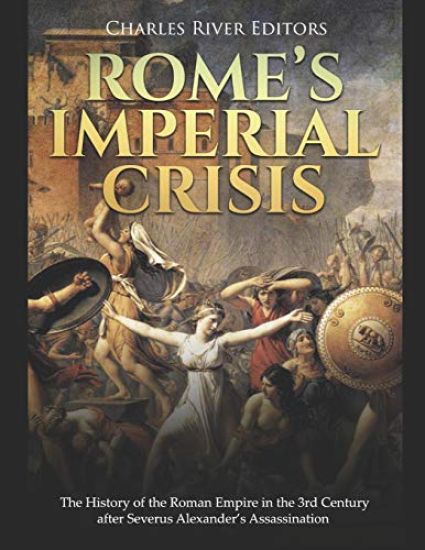
Rome's Imperial Crisis: The History of the Roman Empire in the 3rd Century after Severus Alexander's Assassination
*Includes pictures*Includes online resources and a bibliography for further readingThe 50 years following the assassination of Severus Alexander on March 19, 235 CE has been generally regarded by academics as one of the lowest points in the history of the Roman Empire. This stands in stark contrast to the previous 150 years, which included the reigns of the Five Good Emperors and has been universally praised as one of the high points of the empire. Severus Alexander was the last of the Severan emperors, and the subsequent years of crisis (235-285 CE) were characterized by a series of short reigns, usually ending in the violent death of the reigning emperor. At the same time, this period of time also saw the empire beset by threatening forces on all sides. The Romans faced a newly resurgent Persia in the east, as well as significant forces from German tribes on the Rhine and Goths along the Danube. The various conflicts would result in the unprecedented death of a sitting emperor in battle, which took place in 251 with Emperor Decius, and Emperor Valerian was captured in 260 CE. Despite the disasters, there was at least some good news for the Romans. Aurelian and Probus both managed to recover lost territory, and they recovered some of Rome's prestige in doing so. The final turning point came with the accession of Diocletian in 284 CE. From that point on, the empire embarked upon a period of restoration, but before reaching that stage, the empire had no fewer than 20 emperors in those 50 years, even with the exclusion of an additional five Gallic "emperors" who set themselves up as independent rulers between 260 and 274 CE. Diocletian's reign would see reforms put into place to achieve the desired end of the Imperial Crisis, and several of the emperors before him may well have had the ability to manage the reform process, but the army's power and willingness to use and abuse power ensured that few of them truly had a chance to really make their marks. It was the worst period in the history of the Roman Empire to that point, even as it forced the Romans to deal with belligerent foreign powers and problems created by the emergence of increasingly powerful and populous provinces. The pressures created by population growth, both within the empire and outside of it, have been thoroughly researched, but more recently, issues created by climate change have also commanded attention. The previously held assumption was that population increases in modern Germany and further east pushed hostile groups into Roman territory, and it is now believed that in the 2nd century CE, climate change led to significant rises in sea levels that caused massive flooding and the destruction of crops in Eastern Europe. This may have given people the impetus to migrate south and west, at the very time Rome was focused on containing the Sassanid Persian Empire. It is often overlooked that the Persian Empire was every bit as large as that of the Romans and equally well developed militarily during this period, which explains the difficulty Rome had in their relations. As Roman leaders vied with each other for power and constantly fought civil wars, Rome's famous roads fall into disrepair, the economy was crippled, the continent-wide trade system that had flourished in the previous years was replaced with a basic barter system, and there was a reduction in international trade. People became ever more fearful for their personal safety, and the Imperial Crisis saw an increasing trend toward sacrificing personal liberties and rights in return for guarantees of safety from wealthy landowners. All of this foreshadowed the emergence of the European feudal system and serfdom. These were obviously turbulent times, and given the volatility, many historians have debated how the Roman Empire managed to survive in any form at all, let alone remain robust enough to allow Diocletian to restore order.
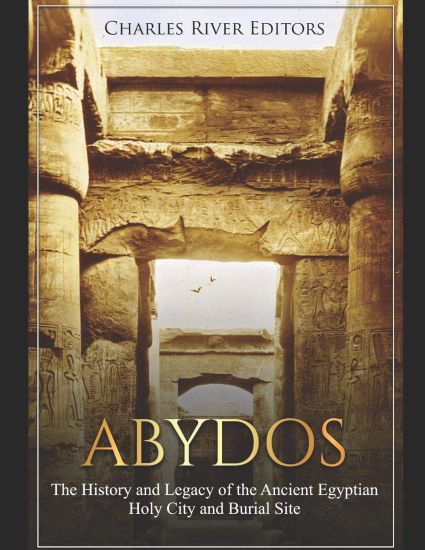
Abydos: The History and Legacy of the Ancient Egyptian Holy City and Burial Site
*Includes pictures*Includes ancient accounts*Includes online resources and a bibliography for further readingAfrica may have given rise to the first human beings, and Egypt probably gave rise to the first great civilizations, which continue to fascinate modern societies across the globe nearly 5,000 years later. From the Library and Lighthouse of Alexandria to the Great Pyramid at Giza, the Ancient Egyptians produced several wonders of the world, revolutionized architecture and construction, created some of the world's first systems of mathematics and medicine, and established language and art that spread across the known world. With world-famous leaders like King Tut and Cleopatra, it's no wonder that today's world has so many Egyptologists. In ancient Egypt, cities held political and religious significance, which meant that if the political or religious tides changed, so too could the fortunes of particular cities. Memphis is perhaps the best known of ancient Egypt's cities because it was fortunate enough to be the political capital of the Egyptian state for most of its history. Hundreds of miles to Memphis' south, Thebes became an important city during the Middle Kingdom and its stature grew during the New Kingdom when many of the pharaohs came from there and the national god, Amun, had its cult center in the city. Others cities, such as Tanis and Sais, were important for much shorter periods in Egyptian history. The city of Abju, which was known as Abydus to the Greeks, and later became known simply as "Abydos" had a history that was as long as Memphis', and although its influence on pharaonic culture may not have been as apparent, it was no less profound. The city of Abydos was the most important political city in ancient Egypt's "Archaic" or Early Dynastic Period, which encompassed the first two dynasties of Egyptian history (ca. 3100-2650 BC). All of the kings of the First Dynasty and two of the kings of the Second Dynasty are believed to have resided in the nearby, but as of yet unlocated, city of Thinis and were buried in the necropolis of Abydos, making it one of the holiest sites in early pharaonic history. After the Archaic Period, Abydos lost much of its political influence to Memphis, Thebes, and other cities, but retained its significance by becoming an important religious center. Beginning in the Old Kingdom (ca. 2686-2181 BC), the first major temples were built near the city, attracting priests and pilgrims alike, but it was in the Middle Kingdom (ca. 2055-1650 BC) when Abydos became the center of the Osiris cult. As the importance and popularity of Osiris grew throughout Egypt, so too did the city. Several kings in the New Kingdom (ca. 1550-1069 BC) and Late Period built mortuary temples to their own cults and added to the existing monuments to Osiris in order to ensure their immortality and to prove their piousness to their people. Eventually, though, when the Greeks took control of Egypt, the importance of Abydos waned and so too did its size. Abydos: The History and Legacy of the Ancient Egyptian Holy City and Burial Site examines the history of the city, and what life and death were like there. Along with pictures depicting important people, places, and events, you will learn about Abydos like never before.
Hathor: The History of the Ancient Egyptian Sky Goddess and Symbolic Mother of the Pharaohs

Hathor: The History of the Ancient Egyptian Sky Goddess and Symbolic Mother of the Pharaohs

Charles River

Independently Published
2019
nidottu

Halvin toimitettuna 19,90 €

*Includes pictures*Includes ancient accounts*Includes online resources and a bibliography for further readingAfrica may have given rise to the first human beings, and Egypt probably gave rise to the first great civilizations, which continue to fascinate modern societies across the globe nearly 5,000 years later. From the Library and Lighthouse of Alexandria to the Great Pyramid at Giza, the Ancient Egyptians produced several wonders of the world, revolutionized architecture and construction, created some of the world's first systems of mathematics and medicine, and established language and art that spread across the known world. With world-famous leaders like King Tut and Cleopatra, it's no wonder that today's world has so many Egyptologists. Today, the goddess Hathor is one of the least known deities in the ancient Egyptian pantheon, and the ancient Egyptians would surely be surprised by this fact. Hathor enjoyed a principal position among the gods of ancient Egypt for much of Egyptian history. If anything, she was ubiquitous, with several key cult centers at Dendera, Memphis, and Thebes, and she played various roles for Egyptian society. Like many Egyptian deities, Hathor took the form of animals at times. She could "become" a vulture, a cow, or a human, but she was most often depicted as the latter. She is identified in her human form by her long black hair, tied back with a filet beneath a pair of cow horns with the sun disk in between them. The presence of the disk between the horns is a clear indication of her association with the sun deity. That she wore a uraeus - the upright snake seen on the forehead of royal gods and humans - is a sign of her association with royalty, too. Whenever an ancient Egyptian deity was associated with royalty, they invariably had a connection with one of the first divine kings: Ra, Osiris, or Horus. Hathor, however, had connections with all three. In the case of her cult center at Dendera, she was not just the wet nurse or mother of Horus‒as was the case later, with Isis‒but she was also his consort. In this way, she became the consort of all kings and as such, garnered the characteristics of an "ideal" partner or queen. This consort of kings was also adept at magic, particularly healing magic, which would become a more predominant characteristic of Hathor in the myths in which she appeared with Horus. Aside from this more mundane role, she was also the "great cow of the heavens that gave birth to the sun" at Dendera. It was, perhaps, this great multiplicity that resulted in her losing prominence in the conscious memory of the world. Many deities in world religions often have a small coterie of roles that could be logically spliced together to make a single, divine figure whose character can easily be described, but this is not the case for Hathor. She appears in creation stories as the principle bringing forth the universe and is similarly referred to as the great mother goddess of the sky whose symbolic tree both nourishes and nurtures. Yet she is also the alluring goddess of love whose ecstatic cult practices were born from a grotesque myth involving the floodplains of the Nile being saturated with the blood of humans she massacred. She may be difficult to sum up by a person who has grown up surrounded by the symbols of monotheism, but she is an excellent example of the multi-faceted concepts the ancient Egyptians reconciled in their religion. To understand a little more about Hathor, it will be useful to gain a better understanding of how the ancient Egyptians thought. Hathor: The History of the Ancient Egyptian Sky Goddess and Symbolic Mother of the Pharaohs examines the history of the deity, her characteristics, and her lasting legacy on Egypt. Along with pictures depicting important people, places, and events, you will learn about Hathor like never before.
Rome's Imperial Crisis: The History of the Roman Empire in the 3rd Century after Severus Alexander's Assassination
*Includes pictures*Includes online resources and a bibliography for further readingThe 50 years following the assassination of Severus Alexander on March 19, 235 CE has been generally regarded by academics as one of the lowest points in the history of the Roman Empire. This stands in stark contrast to the previous 150 years, which included the reigns of the Five Good Emperors and has been universally praised as one of the high points of the empire. Severus Alexander was the last of the Severan emperors, and the subsequent years of crisis (235-285 CE) were characterized by a series of short reigns, usually ending in the violent death of the reigning emperor. At the same time, this period of time also saw the empire beset by threatening forces on all sides. The Romans faced a newly resurgent Persia in the east, as well as significant forces from German tribes on the Rhine and Goths along the Danube. The various conflicts would result in the unprecedented death of a sitting emperor in battle, which took place in 251 with Emperor Decius, and Emperor Valerian was captured in 260 CE. Despite the disasters, there was at least some good news for the Romans. Aurelian and Probus both managed to recover lost territory, and they recovered some of Rome's prestige in doing so. The final turning point came with the accession of Diocletian in 284 CE. From that point on, the empire embarked upon a period of restoration, but before reaching that stage, the empire had no fewer than 20 emperors in those 50 years, even with the exclusion of an additional five Gallic "emperors" who set themselves up as independent rulers between 260 and 274 CE. Diocletian's reign would see reforms put into place to achieve the desired end of the Imperial Crisis, and several of the emperors before him may well have had the ability to manage the reform process, but the army's power and willingness to use and abuse power ensured that few of them truly had a chance to really make their marks. It was the worst period in the history of the Roman Empire to that point, even as it forced the Romans to deal with belligerent foreign powers and problems created by the emergence of increasingly powerful and populous provinces. The pressures created by population growth, both within the empire and outside of it, have been thoroughly researched, but more recently, issues created by climate change have also commanded attention. The previously held assumption was that population increases in modern Germany and further east pushed hostile groups into Roman territory, and it is now believed that in the 2nd century CE, climate change led to significant rises in sea levels that caused massive flooding and the destruction of crops in Eastern Europe. This may have given people the impetus to migrate south and west, at the very time Rome was focused on containing the Sassanid Persian Empire. It is often overlooked that the Persian Empire was every bit as large as that of the Romans and equally well developed militarily during this period, which explains the difficulty Rome had in their relations. As Roman leaders vied with each other for power and constantly fought civil wars, Rome's famous roads fall into disrepair, the economy was crippled, the continent-wide trade system that had flourished in the previous years was replaced with a basic barter system, and there was a reduction in international trade. People became ever more fearful for their personal safety, and the Imperial Crisis saw an increasing trend toward sacrificing personal liberties and rights in return for guarantees of safety from wealthy landowners. All of this foreshadowed the emergence of the European feudal system and serfdom. These were obviously turbulent times, and given the volatility, many historians have debated how the Roman Empire managed to survive in any form at all, let alone remain robust enough to allow Diocletian to restore order.
The Cajuns: The History of the French-Speaking Ethnic Group in Canada and Louisiana
*Includes pictures*Includes online resources and a bibliography for further readingDeep within the bayous and swamps of Louisiana resides a population descended from an exodus. These people, called Cajuns or Acadians, were expelled from their homelands. Persecuted and homeless, they traveled hundreds of miles south in search of a new home and ultimately settled in the Pelican State, where they made new lives for themselves free from their British conquerors. Though not always warmly welcomed, they were accepted, allowing them to practice their different culture amidst their new neighbors. Though their home has changed flags over the centuries, the people themselves have remained, retaining a culture that goes back several centuries. While people continue to assimilate, some have continued to live same lifestyles their ancestors did for generations, and they continue to fascinate outsiders, so much so that they occasionally end up being featured on the History Channel. The Cajuns: The History of the French-Speaking Ethnic Group in Canada and Louisiana profiles the people, from their origins to their history across North America. Along with pictures of important people, places, and events, you will learn about the Cajuns like never before.
History for Kids: The Life of Emily Dickinson

History for Kids: The Life of Emily Dickinson

Charles River

Independently Published
2019
nidottu
*Includes pictures*Includes quotes"Saying nothing...sometimes says the most." - Emily Dickinson Emily Dickinson was very shy and did not have many friends. Instead of visiting people or talking to them, she liked to write letters. She also liked to write poems. Her poems were different than those written by most people. She wrote in very short lines. She also made up her own grammar rules, and used capital letters, periods and commas in strange places. Sometimes she gave her poems titles and sometimes she did not. While she was still alive, she did not share her poetry with many people. Only a few of her poems were published. But when she died, her family found many, many poems they never knew about, and has them printed in books and magazines. When people read her poems, some thought there were some of the best poems ever written. They began teaching her peoms to school children, who still learn some of her work today. Many people who have read her poetry have tried to learn more about her life but Emily Dickenson is a hard person to understand. When she was a child, most girls did not go to school for very long, but Emily finished high school and went to college for a while. Many of her poems are about God and the Christian faith, but she often complained that she found it hard to understand what was going on in churches. She cared very much for the few friends that she had but she did not liked to be hugged or touched. She never got married but often wrote about love and romance. The most important thing about Emily's poems was that she used them to talk about how she felt at times when she could not share her feelings with other people. This book is the story of how Emily Dickinson lived her life. It also has pictures of her, her family and friends, and important places in her life.
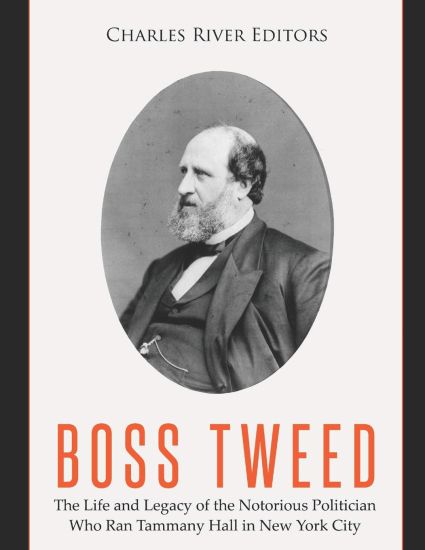
Boss Tweed: The Life and Legacy of the Notorious Politician Who Ran Tammany Hall in New York City
*Includes pictures*Includes contemporary accounts*Includes online resources and a bibliography for further reading"I don't care who does the electing, so long as I get to do the nominating." - Boss Tweed"It's hard not to admire the skill behind Tweed's system ... The Tweed ring at its height was an engineering marvel, strong and solid, strategically deployed to control key power points: the courts, the legislature, the treasury and the ballot box. Its frauds had a grandeur of scale and an elegance of structure: money-laundering, profit sharing and organization." - Kenneth D. AckermanOf all the great cities in the world, few personify their country like New York City. As America's largest city and best known immigration gateway into the country, the Big Apple represents the beauty, diversity and sheer strength of the United States, a global financial center that has enticed people chasing the "American Dream" for centuries. However, for all the promise and opportunities America seemingly held out, and for all of the nostalgia and pride the country's history invokes among Americans today, the simple truth is many never climbed the ladder. One of the few who did was William Magear Tweed, known more widely as Boss Tweed, one of the most famous - and corrupt - politicians in American history. In the 19th century, Tweed was an influential mover and shaker for Tammany Hall, the infamous Democratic political machine in New York City and the driving force behind the party's success in the city for decades. Although Tweed never technically held a position of power in New York City's government, he essentially ran the city and its finances between 1868 and 1871 as a political boss of Tammany, and even before that, Tweed would make a name for himself among politicians as an alderman who had a penchant for figuring out how to profit from political situations. By the end of his life, people across the state commonly referred to his operation as the Tweed Ring. While Tweed was at one point among the wealthiest men in the country during the 19th century, he would die in prison thanks to the illegal accumulation of this wealth. Over the course of his time at Tammany Hall, he would steal millions of dollars from state taxpayers, and he was known for extorting large sums of money for political favors. He was finally brought down by the media in a crusade of sorts that would set the precedent for how the press would deal with political scandals for years to come. As a contemporary writer, William R. Martin, put it in 1878, "Three casual expressions attributed to Mr. Tweed, illustrated by his brief political history, indicate his theory of administration. The first was, 'The way to have power is to take it;' the second, 'He is human;' and the third, 'What are you going to do about it' In his career was exhibited the despotic phase of municipal administration. He got for himself and his associates offices, one after the other, by taking them with or without right, until he held the power of the State, and then fortified his position by enacting appropriate laws. His means of doing this was to approach men through their self-interests, and to buy their support by promises, offices, and money. His appreciation of this trait in the character of the men about him was expressed in his belief that they were 'human.' The arrogance of the full possession of power and the defiance against the remonstrances of honest men drove him to the extreme of audacity, 'What are you going to do about it' which preceded his fall. There was no greater popular mistake than to call Mr. Tweed and his associates a 'ring.' They were so at the outset by the 'cohesive power of public plunder, ' but, once in possession, like a crew of pirates who had gained the deck of a prize, they became arrayed against each other."