Kirjojen hintavertailu – 12 903 725 kirjaa ja 27 kauppaa

Kirjailija

Charles River

Kirjat ja teokset yhdessä paikassa: 4 673 kirjaa, julkaisuja vuosilta 2013–2022, suosituimpiin kuuluu William Powell and Myrna Loy: The Lives and Careers of One of Classical Hollywood's Most Iconic Duos. Vertaile teosten hintoja ja tarkista saatavuus suomalaisista kirjakaupoista.

4 673 kirjaa

Kirjojen julkaisuvuodet: 2013–2022.

Os Apócrifos da Bíblia: A História dos Antigos Textos Apócrifos Deixados do Antigo Testamento e do Novo Testamento
A B blia o livro mais famoso do mundo, lido por um n mero incont vel de crist os e outros ao longo dos s culos. Mesmo aqueles que n o s o crist os ou remotamente religiosos podem recitar Mateus, Marcos, Lucas e Jo o como os quatro primeiros evangelhos do Novo Testamento, e livros como G nesis e xodo incluem algumas das hist rias mais famosas da hist ria humana. O estudo dos evangelhos ap crifos, documentos sobre a vida ou declara es de Jesus que n o se tornaram parte do Novo Testamento, uma disciplina popular entre os estudiosos que agora enche v rias prateleiras de qualquer biblioteca respeit vel. Apesar da crescente seculariza o da sociedade, parece haver um apetite pela figura hist rica de Jesus. No entanto, menos leitores consideram a quest o de saber se o Antigo Testamento, tamb m conhecido como a B blia Hebraica, "completo", e se na antiguidade havia outros livros al m de G nesis, o xodo ou Ju zes, com diferentes hist rias e caracteres desconhecidos, exclu dos do c non e se perderam nas areias do tempo. A maioria dos leitores sup e que a grande saga de Israel, come ando com as hist rias pastorais dos patriarcas, a epopeia do xodo e a conquista da Terra Prometida, at a corte do rei Davi, uma hist ria compacta, completa e nica. Em sua forma atual, parece come ar do come o, e como tal foi aceito por todos na antiguidade, mas algu m na antiga Israel escreveu outras interpreta es? Que o Antigo Testamento n o era um produto acabado na poca do Segundo Templo (500 aC-70 dC) e que havia mais livros em circula o pode ser estabelecido considerando que a literatura ap crifa judaica citada no Novo Testamento. A Ep stola de Judas menciona uma luta entre o diabo e um arcanjo pela alma de Mois s, um epis dio n o encontrado no Pentateuco. O autor da ep stola que est citando de Enoque, um ap crifo livro do antigo testamento, ou possivelmente da ascens o de Mois s, que o autor de Judas considerado como autoritativo. O ap stolo Paulo cita duas vezes o livro ap crifo conhecido como a Vida de Ad o e Eva em sua segunda carta aos Cor ntios, e o Evangelho de Mateus cita uma profecia escrita, desconhecida at hoje, de que o messias seria chamado de Nazareno. "Uma das hist rias mais enigm ticas e populares derivadas dos ap crifos judaicos que Eva n o foi a primeira mulher criada por Deus; seu nome mencionado apenas uma vez no livro de Isa as, mas o profeta cobre a lenda com um v u de sil ncio. Mesmo hoje em dia, nem todos os ramos da igreja crist concordam sobre quais escritos devem ser considerados "can nicos" e quais s o "ap crifos", embora alguns textos ap crifos frequentemente tenham v nculos not veis com livros considerados "can nicos". Independentemente disso, os Ap crifos do Novo Testamento referem-se a textos escritos por crist os primitivos que n o foram inclu dos na B blia usados pelos principais ramos do cristianismo hoje. Esses textos variam em assunto, com alguns sendo relatos de Jesus, outros sendo sobre a natureza de Deus, e ainda outros sendo relatos e ensinamentos dos ap stolos de Jesus. O que os torna fascinantes n o apenas a hist ria por tr s da qual eles s o considerados n o-can nicos, mas o que eles nos dizem sobre a Igreja primitiva e o cristianismo primitivo. Al m disso, eles oferecem uma vis o sobre quais fontes foram usadas para escrev -las e se elas compartilhavam as mesmas fontes que os textos que comp em a B blia hoje. Dada a sua import ncia hist rica e religiosa, ainda h um debate acirrado sobre a autenticidade de muitos desses textos.

The Sentinelese: The History of the Uncontacted People on North Sentinel Island
*Includes pictures*Includes online resources and a bibliography for further readingThere is no record of Marco Polo ever visiting the Andaman Islands, so his brief description of the islanders must have been drawn from a secondary source. They were, he wrote, "a most brutish and savage race, having heads, eyes, and teeth like those of dogs. They are very cruel, and kill and eat every foreigner whom they can lay their hands upon." Most subsequent travelers and travelogues have tended to agree, although in an age of inclusion and diversity, the modern understanding and appreciation of the indigenous Andamanese is somewhat more sympathetic. Nonetheless, that one common theme has persisted, in particular in the many colonial-era chronicles, which were all written at a time when Darwin and his contemporaries were rationalizing evolution, and evolutionary divergence. How could it be, they ask, that a small pocket of the human race could be content to linger so far behind in the journey of human development? The Andaman and Nicobar Islands comprise a tiny archipelago of some 200 islands in the Indian Ocean. They are located in a seemingly insignificant spot in the Bay of Bengal, comprising a combined area of only 3,500 square miles, but the islands are a tropical idyll, populated by dark Indians drawn mainly from the east coast, with a curious aboriginal people who appear more African than Asian. The islands have been within sight of international shipping routes since the very birth of ocean travel, and yet, until the arrival of the great European trading enterprises, the archipelago remained virtually unvisited, and absolutely unsettled by any other than its indigenous inhabitants. The Sentinelese: The History of the Uncontacted People on North Sentinel Island profiles the indigenous people, famous attempts to contact them, and what's known and unknown about them. Along with pictures of important people, places, and events, you will learn about the Sentinelese like never before.
The Sentinelese: The History of the Uncontacted People on North Sentinel Island
*Includes pictures*Includes online resources and a bibliography for further readingThere is no record of Marco Polo ever visiting the Andaman Islands, so his brief description of the islanders must have been drawn from a secondary source. They were, he wrote, "a most brutish and savage race, having heads, eyes, and teeth like those of dogs. They are very cruel, and kill and eat every foreigner whom they can lay their hands upon." Most subsequent travelers and travelogues have tended to agree, although in an age of inclusion and diversity, the modern understanding and appreciation of the indigenous Andamanese is somewhat more sympathetic. Nonetheless, that one common theme has persisted, in particular in the many colonial-era chronicles, which were all written at a time when Darwin and his contemporaries were rationalizing evolution, and evolutionary divergence. How could it be, they ask, that a small pocket of the human race could be content to linger so far behind in the journey of human development? The Andaman and Nicobar Islands comprise a tiny archipelago of some 200 islands in the Indian Ocean. They are located in a seemingly insignificant spot in the Bay of Bengal, comprising a combined area of only 3,500 square miles, but the islands are a tropical idyll, populated by dark Indians drawn mainly from the east coast, with a curious aboriginal people who appear more African than Asian. The islands have been within sight of international shipping routes since the very birth of ocean travel, and yet, until the arrival of the great European trading enterprises, the archipelago remained virtually unvisited, and absolutely unsettled by any other than its indigenous inhabitants. The Sentinelese: The History of the Uncontacted People on North Sentinel Island profiles the indigenous people, famous attempts to contact them, and what's known and unknown about them. Along with pictures of important people, places, and events, you will learn about the Sentinelese like never before.
California: The History and Legacy of the Land Before and After It Joined the United States
*Includes pictures*Includes contemporary accounts*Includes online resources and a bibliography for further readingThe history of California is one that witnessed the rise and fall of several nations and peoples. From the first natives to settle the fertile lands to the encroaching foreigners from the south, east, west, and north, the land that eventually became the Golden State received them all. From across oceans, mountains, plains, and deserts, people came to take advantage of the region's natural resources. In the mid-19th century, the battles would culminate with a young republic claiming the land in its endeavor to stretch from sea to shining sea. Given that Americans were still mostly on the East Coast, the early settlers and prospectors who came west would find a land rich in resources and people but without the means and ability to properly tap those resources. Thus, the land would change hands several times, with the natives stuck in the middle, as they so often were in colonial struggles. One of the most important and memorable events of America's westward push across the frontier came with the discovery of gold in the lands that became California in January 1848. Located thousands of miles away from the country's power centers on the east coast at the time, the announcement came a month before the Mexican-American War had ended, and among the very few Americans that were near the region at the time, many of them were Army soldiers who were participating in the war and garrisoned there. San Francisco was still best known for being a Spanish military and missionary outpost during the colonial era, and only a few hundred called it home. Mexico's independence, and its possession of those lands, had come only a generation earlier. Everything changed almost literally overnight. While the Mexican-American War technically concluded with a treaty in February 1848, the announcement brought an influx of an estimated 90,000 "Forty-Niners" to the region in 1849, hailing from other parts of America and even as far away as Asia. All told, an estimated 300,000 people would come to California over the next few years, as men dangerously trekked thousands of miles in hopes of making a fortune, and in a span of months, San Francisco's population exploded, making it one of the first mining boomtowns to truly spring up in the West. This was a pattern that would repeat itself across the West anytime a mineral discovery was made, from the Southwest and Tombstone to the Dakotas and Deadwood. Of course, that was made possible by the collective memory of the original California gold rush. When it became a state, California faced many problems, some of which were national issues, and others that had a Californian flavor. At the same time, the state never lost its place in the Union, pitching in whenever and however it could as part of the nation. Though it might have done things its own way, the fact that California has always handled problems as only California could be what has set it apart from other states. California: The History and Legacy of the Land Before and After It Joined the United States examines the long and winding history of the region. Along with pictures depicting important people, places, and events, you will learn about California like never before.
The Golden State: The History of California's Growth into the Largest State in the Union
*Includes pictures*Includes contemporary accounts*Includes online resources and a bibliography for further readingThe history of California is one that witnessed the rise and fall of several nations and peoples. From the first natives to settle the fertile lands to the encroaching foreigners from the south, east, west, and north, the land that eventually became the Golden State received them all. From across oceans, mountains, plains, and deserts, people came to take advantage of the region's natural resources. In the mid-19th century, the battles would culminate with a young republic claiming the land in its endeavor to stretch from sea to shining sea. Given that Americans were still mostly on the East Coast, the early settlers and prospectors who came west would find a land rich in resources and people but without the means and ability to properly tap those resources. Thus, the land would change hands several times, with the natives stuck in the middle, as they so often were in colonial struggles. One of the most important and memorable events of America's westward push across the frontier came with the discovery of gold in the lands that became California in January 1848. Located thousands of miles away from the country's power centers on the east coast at the time, the announcement came a month before the Mexican-American War had ended, and among the very few Americans that were near the region at the time, many of them were Army soldiers who were participating in the war and garrisoned there. San Francisco was still best known for being a Spanish military and missionary outpost during the colonial era, and only a few hundred called it home. Mexico's independence, and its possession of those lands, had come only a generation earlier. Everything changed almost literally overnight. While the Mexican-American War technically concluded with a treaty in February 1848, the announcement brought an influx of an estimated 90,000 "Forty-Niners" to the region in 1849, hailing from other parts of America and even as far away as Asia. All told, an estimated 300,000 people would come to California over the next few years, as men dangerously trekked thousands of miles in hopes of making a fortune, and in a span of months, San Francisco's population exploded, making it one of the first mining boomtowns to truly spring up in the West. This was a pattern that would repeat itself across the West anytime a mineral discovery was made, from the Southwest and Tombstone to the Dakotas and Deadwood. Of course, that was made possible by the collective memory of the original California gold rush. Despite the mythology and the romantic portrayals that helped make the California Gold Rush, most of the individuals who came to make a fortune struck out instead. The gold rush was a boon to business interests, which ensured important infrastructure developments like the railroad and the construction of westward paths, but ultimately, it also meant that big business reaped most of the profits associated with mining the gold. While the Forty-Niners are often remembered for panning gold out of mountain streams, it required advanced mining technology for most to make a fortune. Nevertheless, the California Gold Rush became an emblem of the American Dream, and the notion that Americans could obtain untold fortunes regardless of their previous social status. As historian H. W. Brands said of the impact the gold rush had on Americans at the time, "The old American Dream ... was the dream of the Puritans, of Benjamin Franklin's 'Poor Richard'... of men and women content to accumulate their modest fortunes a little at a time, year by year by year. The new dream was the dream of instant wealth, won in a twinkling by audacity and good luck... it] became a prominent part of the American psyche only after Sutter's Mill."
The Carolingian Empire: The History and Legacy of the Frankish Rulers Who Unified Most of Europe and Established the Holy Roman Empire in the Middle A
*Includes pictures*Includes medieval accounts*Includes online resources and a bibliography for further readingThe Carolingian Dynasty, which carved out a major empire in Europe from 750-887, ushered in an important period in the Early Middle Ages. The Carolingians were in their time seen as the successors of Ancient Rome in the West, and while they sought to reestablish the glory of antiquity, they're remembered today for effectively founding the states that would become France and Germany. The Carolingians are also credited with creating the first Renaissance, the Carolingian Renaissance, centuries before the Italian Renaissance. Many of the great Latin classics survive today because of copies made during this period. In addition, the revisions made to written script at this time made texts easier to read, so much so that most of those changes remain in the modern system of writing. The Carolingians lived at a moment in time where they saw that antiquity was seen as worth preserving, but they also sought to adapt it to the times, setting the groundwork for many aspects of what would become the modern world. Nobody was more important in bringing this about than Charlemagne, the most famous man of the Middle Ages, and likely the most influential. Upon the death of his father, Pepin the Short, in 768, Charlemagne became King of the Franks, and he proceeded to create one of the largest European empires since the collapse of Rome. Through his conquests across Western Europe and Italy, Charlemagne became the first Holy Roman Emperor after a famous imperial coronation by Pope Leo III. In becoming the first Holy Roman Emperor, Charlemagne essentially established the new order on the European continent, thereby directly influencing how European politics and royalty proceeded in the coming centuries. As if to demonstrate how large he loomed in life, Charlemagne was numbered Charles I in Germany, France, and the Holy Roman Empire. Charlemagne is also viewed as having brought about the Carolingian Renaissance, a revival of art, religion, and culture through the Catholic Church. This helped establish a uniform European culture, helping Charlemagne earn the title "Father of Europe." After World War II, when France and Germany were looking for common ground, Charlemagne would often be held up as a unifying force between peoples who had so often been enemies. The Carolingian Empire: The History and Legacy of the Frankish Rulers Who Unified Most of Europe and Established the Holy Roman Empire in the Middle Ages profiles the rulers who helped bring about modern Europe, and the history of their empire. Along with pictures of important people, places, and events, you will learn about the Carolingians like never before.
The Arawak: The History and Legacy of the Indigenous Natives in South America and the Caribbean
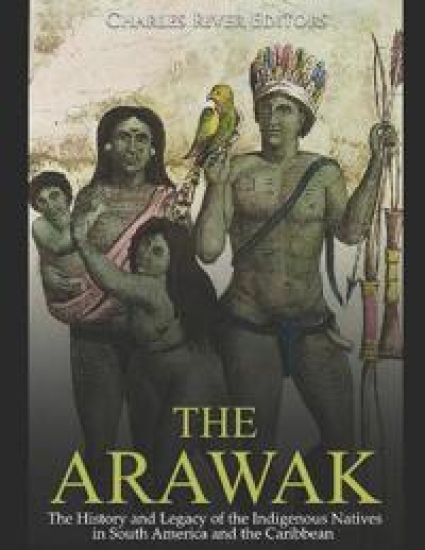
*Includes pictures*Includes contemporary accounts*Includes online resources and a bibliography for further reading"As soon as I arrived in the Indies, on the first Island which I found, I took some of the natives by force in order that they might learn and might give me information of whatever there is in these parts." - Christopher ColumbusOn October 12, 1492, one of the most important "first contacts" of the modern era was made when three ships of Spanish origin approached the island archipelago now known as the Bahamas, cautiously dropping anchor as the captain of the fleet gazed across to what he assumed was the coast of India. According to the popular version of the story, amazed at the sight of ships and men of such unfamiliar appearance, the native people of the island plunged into the clear waters of the western Atlantic, expertly swimming or aboard dugout canoes, and came out to greet the strangers. In all probability, the meeting was much more cautious and incremental, but the idea that these innocent people, raised in a tropical Eden, might embrace with such open enthusiasm their own destruction is picturesque, and no doubt appeals to contemporary perceptions. By whatever means one might choose to view it, this meeting of cultures certainly did mark the beginning of a bold new chapter in the history of Europe, and the beginning of the end of an ancient race of native people occupying a vast new continent. The entries into Christopher Columbus' log as he recorded his first encounters with the indigenous people of the "Indies" are very telling. The island people arrived alongside his ships, offering humble gifts that Columbus described as "parrots and balls of cotton and spears and many other things, which they exchanged for the glass beads and hawks' bells." These were the Ta nos people, or the "Arawaks" as they would come to be known, and Columbus described them as "well built...with good bodies and handsome features." This description, while deceptively simple, had a chilling implication, because Columbus was not taking note of these facts out of idle interest but in terms of how best to exploit them. As the natives offered up gifts, and the open hand of friendship, and by implication the freedom of their islands, Columbus remarked simply on their primitive appearance and primaeval technology, and how easy they would be to overcome. He noted, "They do not bear arms, and do not know them, for I showed them a sword, they took it by the edge and cut themselves out of ignorance. They have no iron. Their spears are made of cane. They would make fine servants. With fifty men we could subjugate them all and make them do whatever we want." What Columbus wanted in the first instance was gold, and he was quick to observe the small items of gold jewelry worn by his visitors, which alerted him immediately to the fact that there was gold to be found somewhere on these islands. To get to the bottom of it, Columbus would waste no time. Thus, a chain of events was set in motion that would permanently affect Western Civilization. The Arawak: The History and Legacy of the Indigenous Natives in South America and the Caribbean examines the culture and history of the indigenous groups, and what happened when they came into contact with the Europeans. Along with pictures of important people, places, and events, you will learn about the Arawak like never before.
Baron von Steuben: The Life and Legacy of the Prussian General Who Drilled the Continental Army at Valley Forge during the Revolutionary War
*Includes pictures*Includes contemporary accounts*Includes online resources and a bibliography for further reading"You say to your soldier, 'Do this' and he does it. But I am obliged to say to the American, 'This is why you ought to do this' and then he does it." - attributed to Baron von Steuben By the time the Revolutionary War started, military confrontations between the world powers had become so common that combat was raised to the status of a fine art, consuming a large portion of time for adolescent males in training and comprising a sizeable component of the economy. Weaponry was developed to a degree of quality not accessible to most North Americans, and European aristocrats were reared in the mastery of swordsmanship with an emphasis on the saber for military use. Likewise, the cavalry, buoyed by a tradition of expert horsemanship and saddle-based combat, was a fighting force largely beyond reach for colonists, which meant that fighting on horses was an undeveloped practice in the fledgling Continental Army, and the American military did not yet fully comprehend the value of cavalry units. Few sword masters were to find their way to North America in time for the war, and the typical American musket was a fair hunting weapon rather than a military one. Even the foot soldier knew little of European military discipline. German participation is historically noted for the Hessians, mercenary soldiers recruited in whole companies by Britain, whose standing army featured relatively low numbers when the American Revolution began. However, other Germans noted for their mastery of the science of war sided with the colonies, and among the most essential European contributors to the American cause turned out to be a Prussian officer of German descent. Though he hailed from dubious lineage, he enjoyed the full title of Baron Friedrich Wilhelm Rudolf Gerhard Augustin von Steuben, and when he came to fight in the Revolution, his purportedly lustrous military credentials could not be accurately verified by the American liaisons who were in contact with him. Like the Marquis de Lafayette before him, von Steuben came to Washington's army via the recommendation of Benjamin Franklin, who hoped to use their appointments to curry political favor internationally. Furthermore, the letters sent with von Steuben to America underwent such upgrades of prestige and glamorization as to frame his introduction as a national deceit. Despite the wavering attention paid by the colonial representatives to his biography, von Steuben may well have contributed more to the rebel victory than any other single presence on the American continent. After another disappointing year of defeats in 1777, Washington's 11,000 men entered winter quarters at Valley Forge in Pennsylvania, about 20 miles outside of occupied Philadelphia. His army had repeatedly faced a lack of discipline and chronic disorganization, and Congress began to consider replacing Washington, who was understandably devastated. Making matters worse, the winter was unusually harsh, leading to an estimated 2,000 or so deaths in camp from diseases. Gouverneur Morris would later call the soldiers at Valley Forge a "skeleton of an army...in a naked, starving condition, out of health, out of spirits." However, it was at Valley Forge that Washington truly forged his army, most notably by implementing a more rigorous training program for his troops that was led by von Steuben, who had fought with Frederick the Great. Despite speaking little English, von Steuben went about drafting a drill manual in French, and he personally presided over training drills and military parades. With the help of von Steuben, the Continental Army left Valley Forge in the spring of 1778 a more disciplined army than ever before, and the worst of Washington's failures were behind him. Von Steuben would continue to serve with the Continental Army through the end of the war.
Saint Nicholas and Krampus: The History of the Popular Companions Who Reward and Punish Children during the Christmas Season
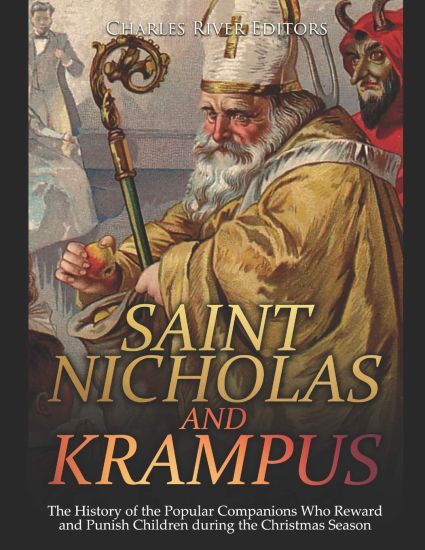
*Includes pictures*Includes contemporary accounts*Includes online resources and a bibliography for further readingChristmas is the most important holiday of the year. After the corresponding days that exalt the national pride of each country, such as Independence Day in the United States, Victory Day in Russia, or Bastille Day in France, it's December 25 that articulates the life, the work and the economy in much of the world, including many non-Christian countries. Since ancient times, the beginning of winter has been the occasion for most people to eat, drink, dance, and get together to beat the drum and take a break. Especially since the 20th century on, the days adjacent to the holiday have become an occasion to do big business. The winter season is the most solid stimulus for the economy - more than any fiscal package - since the incomes of families, spending, credit, and consumption in all productive sectors are significantly increased. In the United States alone, Christmas sales are estimated to generate $3 trillion. One of the most important figures constantly brought up during the Christmas season is Saint Nicholas, despite the fact most people know little about him. In the 21st century, Saint Nicholas (or as people often refer to him, "Jolly Old Saint Nick") has been reduced to a pretend, adorably portly grandfather-type, a visual often accompanied by a fleet of magical reindeer and a bustling workshop staffed by endlessly cheerful elves. Most assume, quite understandably, that Saint Nicholas was the fount of inspiration that Santa Claus' myth weavers steadily drank from over the centuries. While this is accurate to some extent, it is important to remember that the parallels between Saint Nicholas and the present-day Santa Claus marketed by mass media are actually quite limited. Santa Claus is a man with many monikers - Kris Kringle, Father Christmas, Papai Noel, among others - and is perhaps the most iconic and internationally recognized personality in recent history. Pop culture enthusiasts know to trace Santa's roots to Saint Nicholas, and it's widely accepted that Coke manufactured the contemporary image of Santa embraced by the world today. On both counts, they are only partially correct, because in reality, Santa is a colorful amalgamation of different figures who appear in various countries' folk stories across a wide range of centuries. After Nicholas of Myra's death, December 6 became his feast day, and over the centuries, children anticipated his appearance with gifts. However, other children, particularly those of the mischievous sort, trembled under their covers on December 6, because they could not look forward to tinkling sleigh bells or belly-shaking laughs. Instead, they feared the disconcerting sounds of heavy breathing, guttural growls, and rattling chains, all of which came from the terrifying Krampus. Despite the best efforts of the Catholic Church and other conservative groups, Krampus is in the midst of a major Renaissance, penetrating not only modern literature, but even becoming a fixture of pop culture. This is evidenced by the creature's recent starring roles in the films Krampus, Night of the Krampus, and Mother Krampus, and its cameos in such TV shows and animations as Grimm, Supernatural, American Dad, and Venture Brothers. Saint Nicholas and Krampus: The History of the Popular Companions Who Reward and Punish Children during the Christmas Season looks at what the real St. Nicholas's life was like, how he served as the historical inspiration for Santa, and how Krampus developed as a sidekick of sorts. Along with pictures depicting important people, places, and events, you will learn about Saint Nicholas and Krampus like never before.
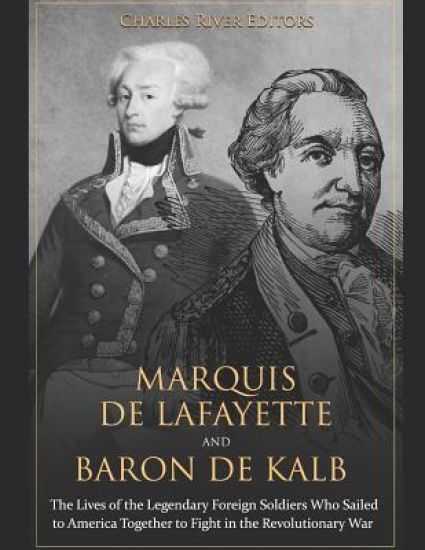
Baron de Kalb and Baron von Steuben: The Lives and Legacies of the Legendary German Generals Who Joined the Continental Army
*Includes pictures*Includes contemporary accounts*Includes online resources and a bibliography for further readingBy the time the Revolutionary War started, military confrontations between the world powers had become so common that combat was raised to the status of a fine art, consuming a large portion of time for adolescent males in training and comprising a sizeable component of the economy. Weaponry was developed to a degree of quality not accessible to most North Americans, and European aristocrats were reared in the mastery of swordsmanship with an emphasis on the saber for military use. Likewise, the cavalry, buoyed by a tradition of expert horsemanship and saddle-based combat, was a fighting force largely beyond reach for colonists, which meant that fighting on horses was an undeveloped practice in the fledgling Continental Army, and the American military did not yet fully comprehend the value of cavalry units. Few sword masters were to find their way to North America in time for the war, and the typical American musket was a fair hunting weapon rather than a military one. Even the foot soldier knew little of European military discipline. German participation is historically noted for the Hessians, mercenary soldiers recruited in whole companies by Britain, whose standing army featured relatively low numbers when the American Revolution began. However, other Germans noted for their mastery of the science of war sided with the colonies, and one of them was Baron Johann von de Kalb, a mentor and elder colleague of the legendary Marquis de Lafayette. Considered by some to be far too old for one attempting to rejuvenate the career of a soldier, de Kalb was a keen student of war with a steady mind and hand. Once able to prove his worth to the Continental Congress, he rose immediately to the rank of Brigadier General under George Washington, served with distinction, and died heroically in the Battle of Camden, a battle in the South that foretold the eventual surrender of Lord Cornwallis at Yorktown. For professionals of a European country to graft themselves to the culture of another was not so unusual in the 18th century, whether in the arts, government, or the military, but de Kalb was distinctly unique from a young age as a German with a strong Francophile bent. As a youth, he served in a German infantry division training and fighting for the French king, and after two grisly wars that left no nation in Europe untouched, he threw off his anticipated retirement and turned toward the American Revolution against Britain. By the time of his participation in the American theater, de Kalb was in his 50s, but given that he was still physically strong and well-trained in combat, he took up the fight against Britain as a matter of personal rejuvenation, on both a political and emotional level. In his efforts on behalf of the colonies, he proved himself to possess extraordinary vitality, regardless of age, and his legacy, much like that of his prot ge, remains a strong one. To this day, he is commemorated by numerous communities and counties across the present-day U. S. Though he hailed from dubious lineage, Baron von Steuben enjoyed the full title of Baron Friedrich Wilhelm Rudolf Gerhard Augustin von Steuben, and when he came to fight in the Revolution, his purportedly lustrous military credentials could not be accurately verified by the American liaisons who were in contact with him. Like the Marquis de Lafayette and Baron de Kalb before him, von Steuben came to Washington's army via the recommendation of Benjamin Franklin, who hoped to use their appointments to curry political favor internationally. Furthermore, the letters sent with von Steuben to America underwent such upgrades of prestige and glamorization that his introduction was essentially an intentional deceit on the parts of the Americans in France.
Baron de Kalb and Baron von Steuben: The Lives and Legacies of the Legendary German Generals Who Joined the Continental Army
*Includes pictures*Includes contemporary accounts*Includes online resources and a bibliography for further readingBy the time the Revolutionary War started, military confrontations between the world powers had become so common that combat was raised to the status of a fine art, consuming a large portion of time for adolescent males in training and comprising a sizeable component of the economy. Weaponry was developed to a degree of quality not accessible to most North Americans, and European aristocrats were reared in the mastery of swordsmanship with an emphasis on the saber for military use. Likewise, the cavalry, buoyed by a tradition of expert horsemanship and saddle-based combat, was a fighting force largely beyond reach for colonists, which meant that fighting on horses was an undeveloped practice in the fledgling Continental Army, and the American military did not yet fully comprehend the value of cavalry units. Few sword masters were to find their way to North America in time for the war, and the typical American musket was a fair hunting weapon rather than a military one. Even the foot soldier knew little of European military discipline. German participation is historically noted for the Hessians, mercenary soldiers recruited in whole companies by Britain, whose standing army featured relatively low numbers when the American Revolution began. However, other Germans noted for their mastery of the science of war sided with the colonies, and one of them was Baron Johann von de Kalb, a mentor and elder colleague of the legendary Marquis de Lafayette. Considered by some to be far too old for one attempting to rejuvenate the career of a soldier, de Kalb was a keen student of war with a steady mind and hand. Once able to prove his worth to the Continental Congress, he rose immediately to the rank of Brigadier General under George Washington, served with distinction, and died heroically in the Battle of Camden, a battle in the South that foretold the eventual surrender of Lord Cornwallis at Yorktown. For professionals of a European country to graft themselves to the culture of another was not so unusual in the 18th century, whether in the arts, government, or the military, but de Kalb was distinctly unique from a young age as a German with a strong Francophile bent. As a youth, he served in a German infantry division training and fighting for the French king, and after two grisly wars that left no nation in Europe untouched, he threw off his anticipated retirement and turned toward the American Revolution against Britain. By the time of his participation in the American theater, de Kalb was in his 50s, but given that he was still physically strong and well-trained in combat, he took up the fight against Britain as a matter of personal rejuvenation, on both a political and emotional level. In his efforts on behalf of the colonies, he proved himself to possess extraordinary vitality, regardless of age, and his legacy, much like that of his prot ge, remains a strong one. To this day, he is commemorated by numerous communities and counties across the present-day U. S. Though he hailed from dubious lineage, Baron von Steuben enjoyed the full title of Baron Friedrich Wilhelm Rudolf Gerhard Augustin von Steuben, and when he came to fight in the Revolution, his purportedly lustrous military credentials could not be accurately verified by the American liaisons who were in contact with him. Like the Marquis de Lafayette and Baron de Kalb before him, von Steuben came to Washington's army via the recommendation of Benjamin Franklin, who hoped to use their appointments to curry political favor internationally. Furthermore, the letters sent with von Steuben to America underwent such upgrades of prestige and glamorization that his introduction was essentially an intentional deceit on the parts of the Americans in France.
Saint Nicholas and Santa Claus: The History of the Man and the Character Behind the Most Popular Christmas Traditions
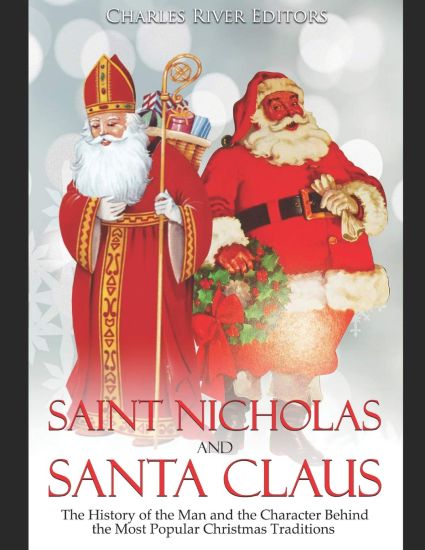
*Includes pictures*Includes contemporary accounts*Includes online resources and a bibliography for further readingChristmas is the most important holiday of the year. After the corresponding days that exalt the national pride of each country, such as Independence Day in the United States, Victory Day in Russia, or Bastille Day in France, it's December 25 that articulates the life, the work and the economy in much of the world, including many non-Christian countries. Since ancient times, the beginning of winter has been the occasion for most people to eat, drink, dance, and get together to beat the drum and take a break. Especially since the 20th century on, the days adjacent to the holiday have become an occasion to do big business. The winter season is the most solid stimulus for the economy - more than any fiscal package - since the incomes of families, spending, credit, and consumption in all productive sectors are significantly increased. In the United States alone, Christmas sales are estimated to generate $3 trillion. One of the most important figures constantly brought up during the Christmas season is Saint Nicholas, despite the fact most people know little about him. In the 21st century, Saint Nicholas (or as people often refer to him, "Jolly Old Saint Nick") has been reduced to a pretend, adorably portly grandfather-type, a visual often accompanied by a fleet of magical reindeer and a bustling workshop staffed by endlessly cheerful elves. Most assume, quite understandably, that Saint Nicholas was the fount of inspiration that Santa Claus' myth weavers steadily drank from over the centuries. While this is accurate to some extent, it is important to remember that the parallels between Saint Nicholas and the present-day Santa Claus marketed by mass media are actually quite limited. As a result, this internationally celebrated figure has become more fiction than fact. However, when historians peel back the superficial layers of whimsy and caricatural perkiness swathed around his name, an image arises of a far more complex and fascinating character who did more than kick off the timeless tradition of gift-giving. Nicholas was not just a seasonal gift-giver, but a philanthropist who dedicated his life to helping the disadvantaged. He was not just a beloved bishop, but a fierce defender of the faith who remained undaunted in the face of persecution. To brand him a pious and God-fearing individual would be a massive understatement - indeed, he was, to those around him, the definition of a walking divinity, and an unrivaled miracle-worker sent straight from Heaven. Meanwhile, the turning point for old St. Nicholas, now Santa Claus, came with the December 24, 1881 edition of Harper s Weekly. Artist Thomas Nast gave him his definitive look for the Christmas issue as an old man with a huge round belly and a belt, a thick white beard, a red nose, a cap, mistletoe on his head, a miniature horse toy in one hand, a pipe between his fingers, and a child hanging from his neck. Ever since, Santa has been known the world over for being delightfully paunchy and endlessly jolly. To most, these two descriptors alone are enough to conjure up his name, and lead them to envision a round-bellied, grandfather-type, clad in a fur-trimmed, cherry-red ensemble, armed with candy canes and a bottomless sack of presents, and blessed with a bushy, silvery-white beard. Saint Nicholas and Santa Claus: The History of the Man and the Character Behind the Most Popular Christmas Traditions looks at what the real bishop's life was like, and how he served as the historical inspiration for Santa. Along with pictures depicting important people, places, and events, you will learn about Saint Nicholas and Santa Claus like never before.
Saint Nicholas and Santa Claus: The History of the Man and the Character Behind the Most Popular Christmas Traditions
*Includes pictures*Includes contemporary accounts*Includes online resources and a bibliography for further readingChristmas is the most important holiday of the year. After the corresponding days that exalt the national pride of each country, such as Independence Day in the United States, Victory Day in Russia, or Bastille Day in France, it's December 25 that articulates the life, the work and the economy in much of the world, including many non-Christian countries. Since ancient times, the beginning of winter has been the occasion for most people to eat, drink, dance, and get together to beat the drum and take a break. Especially since the 20th century on, the days adjacent to the holiday have become an occasion to do big business. The winter season is the most solid stimulus for the economy - more than any fiscal package - since the incomes of families, spending, credit, and consumption in all productive sectors are significantly increased. In the United States alone, Christmas sales are estimated to generate $3 trillion. One of the most important figures constantly brought up during the Christmas season is Saint Nicholas, despite the fact most people know little about him. In the 21st century, Saint Nicholas (or as people often refer to him, "Jolly Old Saint Nick") has been reduced to a pretend, adorably portly grandfather-type, a visual often accompanied by a fleet of magical reindeer and a bustling workshop staffed by endlessly cheerful elves. Most assume, quite understandably, that Saint Nicholas was the fount of inspiration that Santa Claus' myth weavers steadily drank from over the centuries. While this is accurate to some extent, it is important to remember that the parallels between Saint Nicholas and the present-day Santa Claus marketed by mass media are actually quite limited. As a result, this internationally celebrated figure has become more fiction than fact. However, when historians peel back the superficial layers of whimsy and caricatural perkiness swathed around his name, an image arises of a far more complex and fascinating character who did more than kick off the timeless tradition of gift-giving. Nicholas was not just a seasonal gift-giver, but a philanthropist who dedicated his life to helping the disadvantaged. He was not just a beloved bishop, but a fierce defender of the faith who remained undaunted in the face of persecution. To brand him a pious and God-fearing individual would be a massive understatement - indeed, he was, to those around him, the definition of a walking divinity, and an unrivaled miracle-worker sent straight from Heaven. Meanwhile, the turning point for old St. Nicholas, now Santa Claus, came with the December 24, 1881 edition of Harper s Weekly. Artist Thomas Nast gave him his definitive look for the Christmas issue as an old man with a huge round belly and a belt, a thick white beard, a red nose, a cap, mistletoe on his head, a miniature horse toy in one hand, a pipe between his fingers, and a child hanging from his neck. Ever since, Santa has been known the world over for being delightfully paunchy and endlessly jolly. To most, these two descriptors alone are enough to conjure up his name, and lead them to envision a round-bellied, grandfather-type, clad in a fur-trimmed, cherry-red ensemble, armed with candy canes and a bottomless sack of presents, and blessed with a bushy, silvery-white beard. Saint Nicholas and Santa Claus: The History of the Man and the Character Behind the Most Popular Christmas Traditions looks at what the real bishop's life was like, and how he served as the historical inspiration for Santa. Along with pictures depicting important people, places, and events, you will learn about Saint Nicholas and Santa Claus like never before.
Osman I: The Life and Legacy of the Ottoman Empire's First Sultan
*Includes pictures*Includes contemporary accounts*Includes online resources and a bibliography for further readingIn terms of geopolitics, perhaps the most seminal event of the Middle Ages was the successful Ottoman siege of Constantinople in 1453. The city had been an imperial capital as far back as the 4th century, when Constantine the Great shifted the power center of the Roman Empire there, effectively establishing two almost equally powerful halves of antiquity's greatest empire. Constantinople would continue to serve as the capital of the Byzantine Empire even after the Western half of the Roman Empire collapsed in the late 5th century. Naturally, the Ottoman Empire would also use Constantinople as the capital of its empire after their conquest effectively ended the Byzantine Empire, and thanks to its strategic location, it has been a trading center for years and remains one today under the Turkish name of Istanbul. In the wake of taking Constantinople, the Ottoman Empire would spend the next few centuries expanding its size, power, and influence, bumping up against Eastern Europe and becoming one of the world's most important geopolitical players. It was a rise that would not truly start to wane until the 19th century, and the Ottomans would maintain their empire until the end of World War I. Osman I, who is now recognized as being the first leader of the Ottoman Empire before dying in 1323 or 1324, is one of history's most important leaders, so it is ironic that little is known about his life. Historians have searched in vain for a single historical record dating from his reign, despite the fact he was the founder of the Ottoman Empire, a state which conquered Asia Minor, most of the Middle East, North Africa, and the Balkans before reaching the very walls of Vienna. In the struggle between Christian and Islamic powers, it was the first state to challenge hegemony over Europe since the Umayyad Caliphate was defeated by the Franks at the Battle of Tours in 732. Even after its demise, the politics of the Balkan states is very much influenced by the Ottoman past, and Muslim populations remain in the European lands once occupied by the Ottomans. The Middle East's politics and conflicts trace back to the dissolution of the empire, and in Turkey, the Ottoman legacy remains a topic of national debate. President Recep Tayyip Erdogan has declared that modern Turkey is the "continuation" of the Ottoman Empire, arguing that Turkey needs to return to its Islamic roots. While there may be no contemporary records about Osman, plenty of evidence exists about his deeds, the times he lived in, and Ottoman society under his leadership. Accounts of his life wEre written more than 100 years after his death, and his birthdate is unknown, though he must have been born in the middle of the 13th century. Even his name is not entirely clear; "Osman" suggests an Arabic origin, but he was a Turk and his name was probably Atman or Ataman. This is certainly how the contemporary Greek historian Pachymeres (1242-c.1310) renders the name, and it is possible that Atman adopted the more prestigious name Osman later in life. Most importantly, according to tradition he was the son of Ertugrul, leader of the Kayi tribe of the Oghuz Turks. Osman I: The Life and Legacy of the Ottoman Empire's First Sultan chronicles his life and accomplishments, and the massive impact he had on the Ottomans and the world around him. Along with pictures of important people, places, and events, you will learn about Osman I like never before.
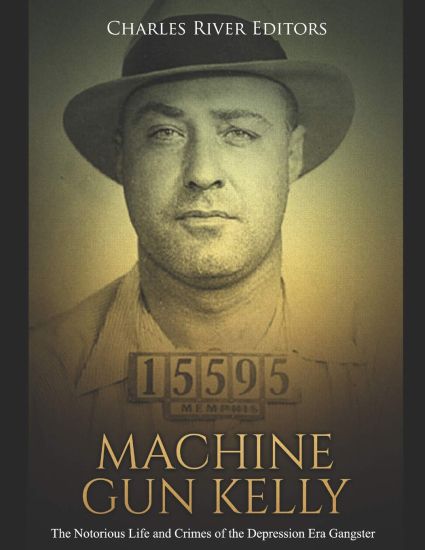
Machine Gun Kelly: The Notorious Life and Crimes of the Depression Era Gangster
*Includes pictures*Includes quotes and contemporary accounts *Includes online resources and a bibliography for further readingVeteran bootlegger. Prolific bank robber. Kidnapper extraordinaire. Ruthless criminal mastermind. With a nickname as hardcore as George "Machine Gun" Kelly's, it should come as no surprise that such terms are frequently associated with him. 86 years may have come and gone since his death, but this Depression-era mobster's name and legacy are still as relevant as ever. Not only has this legendary nickname been adopted by a popular rapper, he remains the subject of various articles, books, songs, films, and other pop culture mediums. Of course, given his fame and notoriety, it's always fair to ask how much truth there is to the riveting, action-packed tales surrounding his short, memorable life of crime. Machine Gun Kelly: The Notorious Life and Crimes of the Depression Era Gangster profiles how he became one of America's most famous outlaws, and the daring crimes that made him so feared. Along with pictures of important people, places, and events, you will learn about Machine Gun Kelly like never before.
Los apócrifos de la Biblia: la historia de los antiguos textos apócrifos dejados fuera del Antiguo Testamento y el Nuevo Testamento
El estudio de los evangelios ap crifos -relatos de la vida o dichos de Jes s que no entraron al Nuevo Testamento- es una disciplina popular entre los acad micos que llena ya varios estantes de cualquier biblioteca respetable. A pesar de la creciente secularizaci n de la sociedad, parece haber un apetito por la figura hist rica de Jes s. Mucho menos lectores de estudios b blicos consideran la cuesti n de si el Antiguo Testamento, conocido tambi n como Biblia Hebrea, est "completo", es decir, si hubo otros libros aparte del G nesis, el xodo y Jueces, con distintas historias y personajes desconocidos, que quedaron excluidos de la colecci n y perdidos en las arenas del tiempo. La mayor parte de los lectores da por hecho que la gran saga de Israel, comenzando por los relatos pastoriles de los patriarcas, la epopeya del xodo y la conquista de la Tierra Prometida, hasta la corte del rey David, es una historia compacta, completa, nica, que desde un principio estuvo en su forma actual, y que como tal fue aceptada de manera un nime en la antig edad. Escribi alguien en el antiguo Israel otras versiones de las conocidas historias de la escuela dominical? Que la Biblia Hebrea o Antiguo Testamento (AT) no era una entidad definitivamente cerrada en la poca del segundo templo (500 AC - 70 DC) y que hab a m s libros que los que contiene, se puede comprobar f cilmente al considerar que el Nuevo Testamento cita literatura ap crifa. La carta de Judas menciona una pelea entre el diablo y un arc ngel por el alma de Mois s que no se encuentra en el Pentateuco: el autor de esa ep stola est citando el libro de Enoc, ap crifo del Antiguo Testamento, o posiblemente la Ascensi n de Mois s, que el autor de Judas consideraba como textos autorizados. El ap stol Pablo cita en dos ocasiones del ap crifo conocido como Vida de Ad n y Eva en su segunda carta a los corintios, y el Evangelio de Mateo se refiere a una profec a escrita, desconocida hasta la fecha, en el sentido de que el mes as "ser llamado nazareno". Una de las historias m s extra as y llamativas derivada de los ap crifos hebreos es que Eva no fue la primera mujer que Dios cre . Hubo otra antes que ella. Su nombre es mencionado una sola vez en el libro de Isa as, pero el profeta cubre la leyenda con un velo de silencio. Los libros perdidos del Viejo Testamento repasa la historia y las ideas de los libros excluidos del canon hebreo, los principales personajes y los descubrimientos que m s han influido en la disciplina de los estudios b blicos. Jes s de Nazareth fue un maestro jud o de origen rural que vivi en el primer tercio del siglo I de nuestra era. Durante una celebraci n de la Pascua en Jerusal n fue condenado a la pena de muerte -espec ficamente crucifixi n- por la autoridad imperial de Roma, que en ese momento ten a el control de su pa s. Muchas cosas m s podr an decirse de su vida, pero aparte de este peque o resumen y quiz uno o dos detalles m s, ser a complicado que todos los acad micos estudiosos de la Biblia levantaran su mano en se al de acuerdo. Sin embargo, la literatura escrita en los siguientes 250 a os despu s de la muerte de este predicador jud o -relativamente desconocido en vida- fue abundante, casi estridente. Cu ntas personas dejaron por escrito vida o dichos de Jes s de Nazareth? La persona poco versada en estos temas responder que cuatro: los autores de los evangelios de Mateo, Marcos, Lucas y Juan, libros que se encuentran en el Nuevo Testamento. Pero para muchos resulta una sorpresa saber que los evangelios que aparecen en la Biblia no son sino una peque a muestra de los que se produjeron. Desde el principio, la producci n literaria de quienes consideraban a Jes s como Mes as fue abundante.
The Union Pacific: The History of America's Most Famous Railroad Company and Its Role in the Transcontinental Railroad
*Includes pictures*Includes contemporary accounts*Includes online resources and a bibliography for further readingThe Lewis and Clark Expedition, notwithstanding its merits as a feat of exploration, was also the first tentative claim on the vast interior and the western seaboard of North America by the United States. It set in motion the great movement west that began almost immediately with the first commercial overland expedition funded by John Jacob Astor's Pacific Fur Company and would continue with the establishment of the Oregon Trail and California Trail. That quest would reach its ultimate expression and its conclusion in 1869, when the last spike was driven into the Union Pacific Railroad. The railroad system being laid down across the United States during the 1860s remain the very epitome of contradiction. On the one hand, it was a triumph of engineering skills over thousands of miles of rough terrain, but on the other hand, it drained the natural resources in those places nearly dry. It "civilized" the American West by making it easier for women and children to travel there, but it dispossessed Native American civilizations that had lived there for generations. It made the careers of many men and destroyed the lives from many others. It was bold and careless, ingenious and cruel, gentle and violent, and it enriched some and bankrupted others. In short, it was the best and worst of 19th century America in action. As settlers pushed west and the Gold Rush brought an influx of Americans to California, the need for something like the Transcontinental Railroad was apparent to the government in the 1850s, and with the help of private companies, government officials conducted all kinds of land surveys in order to plot a course. Of course, even once routes chosen, the backbreaking work itself had to be done to connect railroad lines across the span of nearly 2,000 miles. This required an incredible amount of manpower, often consisting of unskilled laborers engaging in dangerous work, and the financial resources poured into it were also extreme. J. O. Wilder, a Central Pacific-Southern Pacific employee, described a typical scene: "The Chinese were as steady, hard-working a set of men as could be found. With the exception of a few whites at the west end of Tunnel No. 6, the laboring force was entirely composed of Chinamen with white foremen and a 'boss/translator'. A single foreman (often Irish) with a gang of 30 to 40 Chinese men generally constituted the force at work at each end of a tunnel; of these, 12 to 15 men worked on the heading, and the rest on the bottom, removing blasted material. When a gang was small or the men were needed elsewhere, the bottoms were worked with fewer men or stopped so as to keep the headings going." Ultimately, the projects were considered so important that work on them progressed throughout the Civil War, and it took the better part of the 1860s before a grand system of rail lines was finally completed. Once they were in place, they proved a boon to building up the American West, especially the Southwest and Pacific Northwest in places like Nevada, Utah, Wyoming, Colorado, Oregon and Washington. The Union Pacific: The History of America's Most Famous Railroad Company and Its Role in the Transcontinental Railroad examines how the Union Pacific was established and went on to become one of the most important companies in North America. Along with pictures depicting important people, places, and events, you will learn about the Union Pacific like never before.
Chicago in the 20th Century: The History and Legacy of the Windy City's Modernization
*Includes pictures*Includes online resources and a bibliography for further readingThough it started as a 300 person settlement in 1832, Chicago's location near the Great Lakes and its access to the Mississippi River turned it into a major trading city overnight. The city became even more important when railroads were constructed to connect the country, making it the first major city in the "West" during the mid-19th century. By 1871, the original 300 person settlement was now home to about 300,000 people, and Chicago had become the first major city built by Americans rather than European colonial powers Thus, it had taken less than 40 years for the new settlement of 300 to become a city of nearly 300,000, but it only took two days in 1871 for much of it to be destroyed. On the night of October 8, 1871, a blaze in the southwestern section of Chicago began to burn out of control. The popular legend is that a cow in Mrs. Catherine O'Leary's barn had kicked over a lantern and started a fire. The story blaming the cow was a colorful fabrication, but the fire itself was very real, lasting almost two whole days and devouring several square miles of the city. The fire was so powerful that firefighters could not put it out, due to dry conditions, stiff winds, and the fact the city was mostly made of wood. Walking around Chicago today, it's easy to forget about its past as a rural frontier. That's due in no small part to the way Chicago responded to the Great Fire of 1871. Immediately after the fire, Chicago encouraged inhabitants and architects to build over the ruins, spurring creative architecture with elaborate designs. Architects descended upon the city for the opportunity to rebuild the area, and over the next few decades they had rebuilt Chicago with the country's most modern architecture and monuments. Chicago recovered well enough within 20 years to win the right to host the World's Fair in 1893, which was commemorating the 400th anniversary of Columbus' discovery of the New World. Covering nearly two square miles, the Fair's grounds created a city within a city, and Daniel Burnham was in the middle of it all. With several other noteworthy architects, including Louis Sullivan, Burnham designed the layout of the grounds and the construction of the buildings on the ground. During the late 19th century, "neoclassicism" was in vogue, and American architects designed buildings incorporating ancient Greek and Roman architecture. With its white colored buildings, the Fair stood out from the rest of Chicago, earning it the label "White City." Throughout 1893, it attracted millions of visitors, allowing Chicago to introduce itself to foreign visitors and reintroduce itself as a major American city. As the 19th century gave way to the 20th, it became apparent that Chicago's prominence had ended, and it moved ahead with the rest of the nation, a city among many. The 20th century brought new problems, not just for Chicago but for the entire nation. Labor, crime, and race relations rose to the forefront as major issues faced by cities throughout the nation, and how Chicago handled these issues shaped the city throughout the century, transforming the Windy City permanently. Chicago in the 20th Century: The History and Legacy of the Windy City's Modernization examines how Chicago became one of America's greatest cities. Along with pictures depicting important people, places, and events, you will learn about 20th century Chicago like never before.