Kirjojen hintavertailu – 12 903 725 kirjaa ja 27 kauppaa

Kirjailija

Charles River

Kirjat ja teokset yhdessä paikassa: 4 673 kirjaa, julkaisuja vuosilta 2013–2022, suosituimpiin kuuluu William Powell and Myrna Loy: The Lives and Careers of One of Classical Hollywood's Most Iconic Duos. Vertaile teosten hintoja ja tarkista saatavuus suomalaisista kirjakaupoista.

4 673 kirjaa

Kirjojen julkaisuvuodet: 2013–2022.

The CSS Shenandoah: The History of the Famous Confederate Raider that Surrendered Over Half a Year After the Civil War Ended
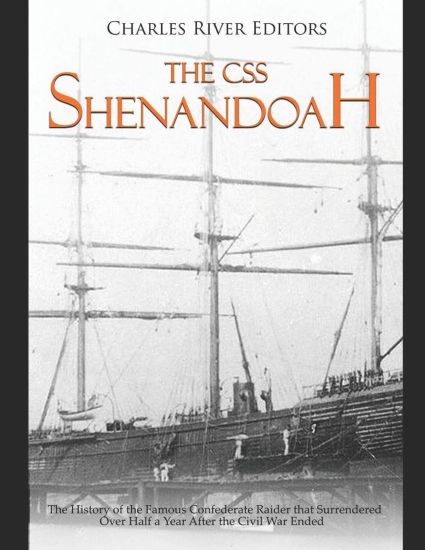
*Includes pictures*Includes accounts*Includes online resources and a bibliography for further readingAfter the first year of the Civil War, the Confederacy was faced with a serious problem. While the South had enjoyed some stunning victories on land, they had been all but cut off from the world at sea. The more industrialized North had realized that in case of an extended war, the best way to defeat the Confederacy was to starve it of supplies. The rebels started the war with no real navy to speak of, and so the federal government quickly set up a blockade of all Southern ports and river mouths. By depriving the South of revenues derived from its main export, cotton, the North seriously injured the Southern economy. Without European intervention and the ability to build a navy that could rival the Union's, the Confederacy was mostly reduced to token resistance and using fast moving ships that could evade the blockade and import and export goods. Again, that was only partially successful, and today, the blockade runners are better known for their extracurricular activities; most notably, some of the crews also acted as privateers on the high seas, attacking U. S. shipping and taking any loot for themselves. The daring exploits of these commerce raiders caught the imagination of Southern soldiers and civilians and buoyed up morale, even as the war news turned increasingly grim. Given how deadly the war was, what makes the history of the CSS Shenandoah, the last ship of the Civil War to surrender, all the more remarkable is that it was one of the only forces not to inflict casualties. It is also an intriguing story, for it begins with a tale of spies at work, not in a country torn apart by war, but in England, a nation both drawn to and terrified of the Civil War. There, the Sea King was purchased and became a different type of ship with a different name, rigged for fighting and rebranded the CSS Shenandoah. Somewhat ironically, it was named for one of the South's most appealing regions, one absolutely fought over and ravaged several times during the war. Of course, the Shenandoah was also responsible for millions of dollars' worth of destruction to private civilians' property, actions the Confederates justified in late 1864 by pointing to the total war promoted by General Ulysses S. Grant, and especially General William Tecumseh Sherman, who was cutting a wide swathe through Georgia around the time the Shenandoah set sail from Liverpool in late 1864. As Sherman completed the March to the Sea, Lieutenant Commander James Waddell aboard the Shenandoah drove whalers from their ships, took their cargo, and then destroyed their vessels. In the end, it was not what the Shenandoah did that made it controversial so much as when it did it, because thanks to the painfully slow communications of the 19th century, the crew of the ship wrought some of the most serious damage in the weeks after the war was over. Indeed, when the ship surrendered to the British government in November 1865, it became the last Confederate vessel in the world to do so, meaning the crew faced the possibility of being labeled pirates. Fortunately, it was recognized at the time, as it is today, that this was merely an accident of history, not deliberate piracy, and the men were not prosecuted. Instead, they returned to their home with more stories to tell than most sailors, and less blood on their hands. The CSS Shenandoah: The History of the Famous Confederate Raider that Surrendered Over Half a Year After the Civil War Ended examines how the legendary ship preyed on Union shipping across the globe during and after the war. Along with pictures depicting important people, places, and events, you will learn about the CSS Shenandoah like never before.
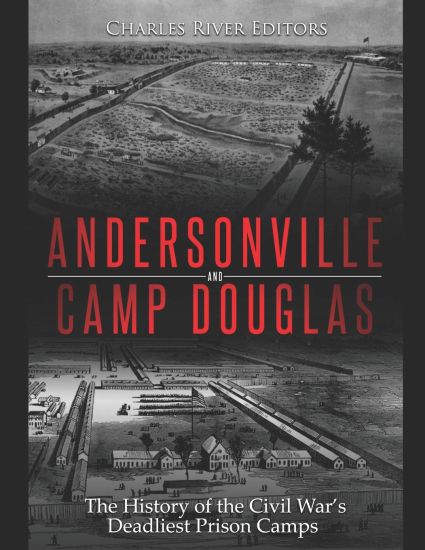
Andersonville and Camp Douglas: The History of the Civil War's Deadliest Prison Camps
*Includes pictures*Includes accounts*Includes online resources and a bibliography for further reading "Wuld that I was an artist & had the material to paint this camp & all its horors or the tounge of some eloquent Statesman and had the privleage of expresing my mind to our hon. rulers at Washington, I should gloery to describe this hell on earth where it takes 7 of its ocupiants to make a shadow." - Sgt. David Kennedy "There is so much filth about the camp that it is terrible trying to live here." - Michigan cavalryman John RansomNotorious, a hell on earth, a cesspool, a death camp, and infamous have all been used by prisoners and critics to describe Andersonville Prison, constructed to house Union prisoners of war in 1864, and all descriptions apply. Located in Andersonville, Georgia and known colloquially as Camp Sumter, Andersonville only served as a prison camp for 14 months, but during that time 45,000 Union soldiers suffered there, and nearly 13,000 died. Victims found at the end of the war who had been held at Camp Sumter resembled victims of Auschwitz, starving and left to die with no regard for human life. Rumors about the horrors of Andersonville were making the rounds by the summer of 1864, and they were bad enough that during the Atlanta campaign, Union General William Tecumseh Sherman gave orders for a cavalry raid attempting to liberate the prisoners there. The Union cavalry were repulsed by Southern militia and cavalry at that point, and even after Sherman took Atlanta, the retreating Confederates moved under the assumption that the Union would target Andersonville yet again. Before the end of the war, the Confederates were moving prisoners from Andersonville to Camp Lawton, but by then, Andersonville was already synonymous with horror. Unable to supply its own armies, the Confederates had inadequately supplied the prison and its thousands of Union prisoners, leaving over 25% of the prisoners to die of starvation and disease. All told, Andersonville accounted for 40% of the deaths of all Union prisoners in the South, and the causes of death included malnutrition, disease, poor sanitation, overcrowding, and exposure to inclement weather. In fact, Andersonville infuriated the North so much that Henry Wirz, the man in charge of Andersonville, was the only Confederate executed after the war. When Union forces marched through Georgia and liberated Andersonville in May 1865, photographers were brought in to record the scenes of overcrowding, sickness, and death, ensuring the sight was preserved for future generations to see. Conversely, Camp Douglas, closed at roughly the same time, was torn down, and its very existence was nearly wiped from memory. The attempt to forget Camp Douglas was understandable, because in the last two years of the war, at least 4,000 Confederate prisoners died there, meaning nearly 1 in 5 Confederates who were sent there never left. In many ways, the story of Camp Douglas is the story of the Civil War itself. The camp got its start as a brand new facility filled with men ready to fight a war that most on both sides believed would last only a few months. However, as the war went on, the facilities were overwhelmed by the sheer scale of the damage and the massive numbers of people involved. In the first few years of the war, the kind of total war practiced by Grant and Sherman in 1864 was unthinkable, and the two sides liberally conducted prisoner exchanges and paroled prisoners based solely on their word. As time passed, however, bitterness hardened between the two sides, and the war aims changed as the North looked for new strategies to finally subdue the South. The resulting chain of events led to the horrors of Camp Douglas. This book examines how Andersonville and Camp Douglas became so notorious, and what life was like there for the prisoners.
La evolución de la Navidad: la historia de la festividad cristiana desde el nacimiento de Jesús hasta nuestros días
La Navidad es la fiesta m s importante del calendario internacional. Despu s de los respectivos d as que exaltan el orgullo nacional de los pa ses -el D a de la Independencia en Estados Unidos, el D a de la Victoria en Rusia, el D a de la Bastilla en Francia- sin duda es el 25 de diciembre el que articula la vida familiar, el trabajo y la econom a de pr cticamente todo el orbe... incluyendo muchos pa ses no cristianos. Desde tiempos remotos, el inicio del invierno ha sido la poca en que la gente come, bebe y se re ne para hacer algarab a e iniciar un periodo de descanso. Algunos se refugian en un rinc n de su casa, extra an, repelan; y otros, abrumados por las enormes expectativas y los recuerdos, incluso deciden terminar con su vida. Creyentes o no, nadie escapa a la fiesta. Sobre todo a partir del siglo XX, los d as contiguos a la festividad principal se han convertido en ocasi n para hacer negocios. La temporada invernal es el est mulo m s grande que recibe la econom a de muchos pa ses -m s que cualquier paquete de est mulo fiscal-, pues el ingreso de las familias, el gasto, el consumo y el cr dito en todas las ramas econ micas se incrementan significativamente. Tan s lo en Estados Unidos se estima que las ventas navide as se acercan a los tres billones de d lares... un tres seguido de doce ceros. A este jubileo del consumo, la glotoner a y la compra de regalos innecesarios, lo acompa an una serie de costumbres hechas para complacer a los ni os: un pino con luces y adornos en el interior de las casas, villancicos navide os, preparaci n de comidas dulces, la figura rechoncha de Santa Claus y, en menor medida, los nacimientos, representaciones en miniatura del nacimiento de Jes s. Cada pa s conserva adem s costumbres nicas, muy estimadas por la poblaci n. En Rusia la gente prepara doce platos en honor de los doce ap stoles, y despu s regresa a la iglesia para una vigilia que dura toda la noche. En Estonia los ni os deben cantar antes de recibir los regalos. En M xico se re nen grupos de personas que van de puerta en puerta cantando la historia de Jos y Mar a en busca de alojamiento; en la casa que los recibe se rompen pi atas llenas de dulces. En Estados Unidos las calles se decoran con derroche de luz y color, y coros de ni os cantan villancicos junto a enormes abetos. En la India, con todo y su minor a cristiana, la gente llama a la Navidad "el gran d a" y lo celebran plantando rboles. Eso, en cuanto a los extremos: al principio las narrativas evang licas, y en la actualidad el negocio multimillonario en el que se transformaron. Pero c mo se lleg de aquella historia en la Biblia -una joven jud a dando a luz al mes as de Israel en un pesebre en la ciudad de Bel n- a la Navidad moderna? C mo terminaron Santa Claus, el abeto de Navidad, los trineos de nieve, los regalos y las reuniones familiares -ocasi n de estr s para muchos- convirti ndose en rasgos distintivos de esta celebraci n, si nada de eso estaba ah en un inicio? La respuesta es que est n ah porque, a lo largo de veinte siglos, hubo una cadena de acontecimientos, personajes, tradiciones orales, obras art sticas que se unieron para hacer de la Navidad la estaci n para compartir, abrazarse, reencontrar a la familia, dar regalos y mucha az car a los ni os. Es la historia de ese largo proceso -del evangelista escribiendo la historia de un nacimiento, al mayor periodo de consumo en la econom a de los pa ses de Occidente- sin duda lo m s fascinante. De eso trata este libro: no del nacimiento de Jes s hace dos mil a os en el actual estado de Israel, sino de c mo la narraci n de ese alumbramiento se convirti en el d a de estar contentos. Fa, la la la la...
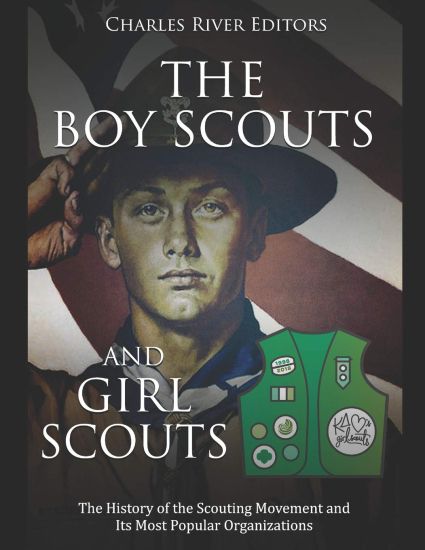
The Boy Scouts and Girl Scouts: The History of the Scouting Movement and Its Most Popular Organizations
*Includes pictures*Includes online resources and a bibliography for further reading"On my honor, I will do my best, to do my duty, to God and my country, and to obey the Scout Law, to help other people at all times, to keep myself physically strong, mentally awake, and morally straight." - Scout Oath"Girls must be partners and comrades, rather than dolls." - attributed to Agnes Baden-PowellGiven the prominence of Scouting culture in the United States, many assume that the movement is rooted in North America. On the contrary, the movement was initiated in and spread forth from the United Kingdom, more specifically in England. It was the brainchild of the 1st Baron Baden-Powell, a beloved and decorated war veteran armed with not only Martini-Henry rifles and Lee-Enfield carbines, but a vision that would one day be espoused by every nation on Earth except Andorra, China, Cuba, North Korea, and Laos. Baden-Powell had honed his tracking and scouting skills in war, and in the course he published books about those skills that he anticipated would have a limited audience. Instead, he was astounded by the popularity of Aids to Scouting, which had sailed to the top of the bestsellers list in his absence. Parents, teachers, and youth groups alike who purchased the book for their children and students responded with rave reviews. Invigorated by the UK's seemingly blossoming interest in the outdoors, Baden-Powell traveled to Glasgow, where he attended the Annual Drill Inspection and Review of the Boys' Brigade. Before long, he had put together a Scouting organization, and its influence would spread across the globe in a few short years. To most, a Boy Scout is the personification of righteousness, self-sufficiency, and adaptability. In contemporary culture, particularly in the West, the stock images of Boy Scouts are associated with irreproachable conduct, so much so that they have been inordinately branded as goodie-two-shoes. For the most part, the clich is well-intentioned and somewhat endearing. For such an interpretation, viewers can refer to the character Russell from the Disney-Pixar movie Up, a Junior Wilderness Explorer who embarks on a quest to secure the "Assisting the Elderly" badge. The nervous, but delightfully bubbly Scout was quick to capture the hearts of millions upon millions around the world. On the other end of the same spectrum is the stereotype that reduces them to unimaginative conformists, bookish narks, and blind followers. Many Americans have heard the phrase, "He is such a Boy Scout," in passing, perhaps said with a scoff or followed by a dramatic eyeroll. The Boy Scout trope is frequently woven into movies, TV shows, and other works of fiction as one-dimensional characters. More often than not, they are polite to a fault and depicted as obsessive patch collectors, the hackneyed antithesis of the rebellious protagonist. Inevitably, Lord Baden-Powell's sister, Agnes Baden-Powell, took note of her brother's activities and fledgling organizations, and she would help create similar opportunities for girls. Thus, it was somewhat inevitable that Girl Scouts are, more often than not, perceived as the more harmless companion of the Boy Scouts, forming an industrious and upstanding force of young men and women. With their colorful collection of patches, matching hats and uniforms, and Colgate smiles, they are often written off as naive do-gooders doing their best to spread cheer to those in their communities. However, contrary to popular belief, the Girl Scouts are far more than just adorable cookie peddlers and volunteer crossing guards for senior citizens. In fact, 73% of the women in the U. S. Senate and 51% of the women serving in the House of Representatives are former Girl Scouts. The same applies to a majority of the women governors across the country.
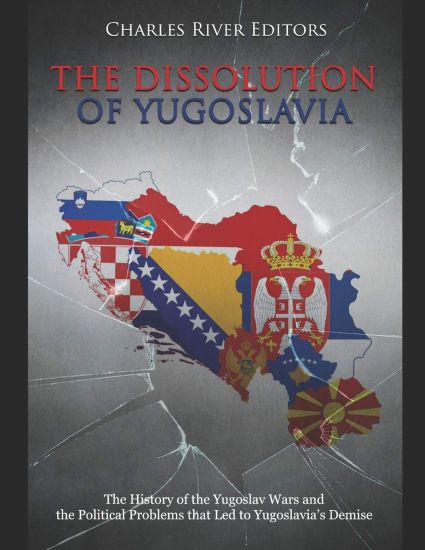
The Dissolution of Yugoslavia: The History of the Yugoslav Wars and the Political Problems that Led to Yugoslavia's Demise
*Includes pictures*Includes online resources and a bibliography for further readingYugoslavia was arguably one of the most unusual geopolitical creations of the 20th century. The Yugoslav state had never existed in any historical sense, and the ties that bound together its constituent peoples were tenuous at best. Although nominally all "Slavs," the country was an amalgamation of languages, alphabets, cultures, religions and traditions, which ensured its short existence was littered with splits, conflicts, and shocking violence. In a sense, it's somewhat surprising that it lasted as long as it did. In the wake of World War I, as the political boundaries of Europe and the Middle East were redrawn, the Kingdom of Yugoslavia, initially known as the Kingdom of Serbs, Croats and Slovenes, came into existence with a monarch as its head of state. Confirmed at the 1919 Versailles Conference, the "first" Yugoslavia was a particularly fragile enterprise, and there was almost constant tension between the majority Serbs and the other Yugoslav nationalities, especially the Croats. As a result, the Kingdom was a land of political assassinations, underground terrorist organizations, and ethnic animosities. In 1929, King Alexander I suspended democracy and ruled as a dictator until he himself was assassinated in 1934. During his reign, Tito managed to quash the intense national feelings of the diverse groups making up the Yugoslavian population, and he did so through several methods. He managed to successfully play the two superpower rivals, the United States and Soviet Union, off against each other during the Cold War, and in doing so, he maintained a considerable amount of independence from both, even as he additionally received foreign aid to keep his regime afloat. All the while he remained defiant, once penning a legendary letter to Joseph Stalin warning the Soviet dictator, "To Joseph Stalin: Stop sending people to kill me We've already captured five of them, one of them with a bomb and another with a rifle... If you don't stop sending killers, I'll send a very fast working one to Moscow and I certainly won't have to send another." Internal issues plagued the country in its final years and Tito had tinkered with Yugoslavia's constitution on several occasions. His final attempt, in 1974, saw the partial separation of Kosovo - crucial in the Serb national story - from the rest of Serbia. A number of reasons led to the rising Serb nationalist sentiment after Tito's death, but Kosovo was a central aspect. Yugoslavia required far-sighted, magnanimous leaders to avoid internecine disputes, but none were available, or at least in positions of power in the 1980s. In Croatia, Franjo Tudjman - a long time Croat nationalist - emerged as the republic's leader, and Slobodan Milosevic rose to prominence in the middle of the decade and, despite apparently being a career communist, positioned himself as "defender of the Serbs." He began ousting his rivals and installing sympathetic underlings into leadership positions in Kosovo, Vojvodina, and Montenegro, essentially giving him a majority bloc at the federal level. Depending on the source, many authors have focused on different catalysts for Yugoslavia's demise, but Vesna Drapac may have succinctly summed the situation up when he wrote that by the end, the state "lacked a reason to exist." There is certainly something in this sentiment, but the disintegration came at an enormous cost. The Dissolution of Yugoslavia: The History of the Yugoslav Wars and the Political Problems that Led to Yugoslavia's Demise examines how the multicultural nation broke apart in the 1980s and 1990s. Along with pictures of important people and places, you will learn about the Yugoslave Wars like never before.
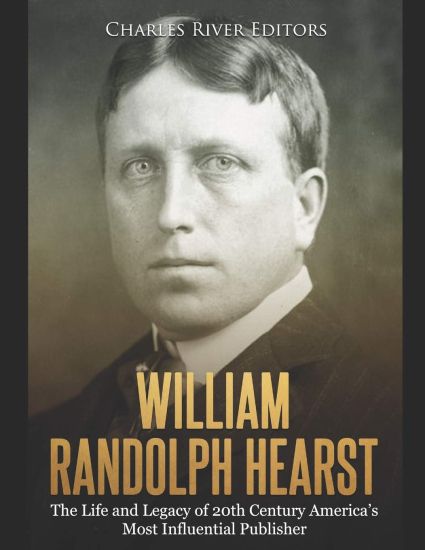
William Randolph Hearst: The Life and Legacy of 20th Century America's Most Influential Publisher
*Includes pictures*Includes online resources and a bibliography for further reading"Any man who has the brains to think and the nerve to act for the benefit of the people of the country is considered a radical by those who are content with stagnation and willing to endure disaster." - William Randolph HearstWhen William Randolph Hearst was in his late 50s and at the height of his power, journalist Robert Duffuss observed, "His career is unique in American history, or, for that matter, all history. Compared with him the Bennetts and even the Pulitzers are small...his acquaintances...credit him with personal charm, but do not deny his ruthlessness in business operations. Shopkeepers and his nearest rivals are simply not in his class. Here is success on a dizzying and truly American scale. Here is journalism as large as the Rocky Mountains or the Painted Desert." However, despite his massive success, and perhaps in large measure because of it, many of Heart's contemporaries depicted him in negative ways. As Duffuss also noted, when it came to the newspaper magnate's reputation, there was "a curious suggestion of lath and plaster about it, and far from being universally honored and admired as other self-made men have been, Mr. Hearst is regarded by multitudes of his fellow citizens with extreme aversion and distrust. Indeed, his career is almost never examined dispassionately and for this reason some of the salient facts about him are worth setting down in a somewhat cold-blooded manner." This was never more apparent than during the release of Citizen Kane, a barely veiled biography of Hearst which managed to cut him so deeply that he forbade his papers from making reference to the critically acclaimed classic. It is only right to keep every positive and negative viewpoint in mind when looking at the life of a man who built his own fortune with money inherited from a father who literally grubbed it out of the ground with his own hands. While the senior Hearst may never have gotten the soil of old California from under his nails, William Randolph would never know what it felt like to live a life of manual labor; instead, he founded his empire on another kind of dirt, that which he was able to dig up and publish about the people, great and small, of his day. He would also stir up a good bit of dirt himself, living a high life with his mistress in California while his wife raised their children and did charitable work back in New York. Eventually, he would go too far, and nearly lose his empire when he backed Adolf Hitler over Franklin D. Roosevelt. By the time he died, it is fair to say that he had seen it all, done it all, bought most of it, and lost much of it. In spite of all this, he left behind an empire that continues to dominate the publishing business to this day. William Randolph Hearst: The Life and Legacy of 20th Century America's Most Influential Publisher examines the various roles Hearst played in American journalism and politics during his life, and how he shaped the industry. Along with pictures depicting important people, places, and events, you will learn about Hearst like never before.
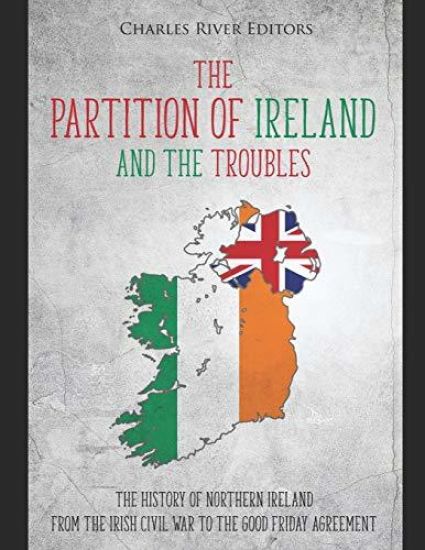
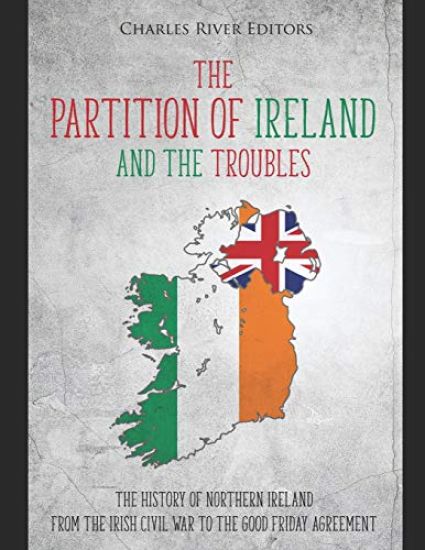
The Partition of Ireland and the Troubles: The History of Northern Ireland from the Irish Civil War to the Good Friday Agreement
*Includes pictures*Includes online resources and a bibliography for further reading"The Honorable Member must remember that in the South they boasted of a Catholic State. They still boast of Southern Ireland being a Catholic State. All I boast of is that we are a Protestant Parliament and a Protestant State. It would be rather interesting for historians of the future to compare a Catholic State launched in the South with a Protestant State launched in the North and to see which gets on the better and prospers the more." - Sir James Craig There are very few national relationships quite as complicated and enigmatic as the one that exists between the English and the Irish. For two peoples so interconnected by geography and history, the depth of animosity that is often expressed is difficult at times to understand. At the same time, historic links of family and clan, and common Gaelic roots, have at times fostered a degree of mutual regard, interdependence, and cooperation that is also occasionally hard to fathom. During World War I, for example, Ireland fought for the British Empire as part of that empire, and the Irish response to the call to arms was at times just as enthusiastic as that of other British dominions such as Canada, Australia, and New Zealand. An excerpt from one war recruitment poster asked, "What have you done for Ireland? How have you answered the Call? Are you pleased with the part you're playing in the job that demands us all? Have you changed the tweed for the khaki to serve with rank and file, as your comrades are gladly serving, or isn't it worth your while?" And yet, at the same time, plots were unearthed to cooperate with the Germans in toppling British rule in Ireland, which would have virtually ensured an Allied defeat. In World War II, despite Irish neutrality, 12,000 Irish soldiers volunteered to join the Khaki line, returning after the war to the scorn and vitriol of a great many of their more radical countrymen. One of the most bitter and divisive struggles in the history of the British Isles, and in the history of the British Empire, played out over the question of Home Rule and Irish independence, and then later still as the British province of Northern Ireland grappled within itself for the right to secede from the United Kingdom or the right to remain. What is it within this complicated relationship that has kept this strange duality of mutual love and hate at play? A rendition of "Danny Boy" has the power to reduce both Irishmen and Englishmen to tears, and yet they have torn at one another in a violent conflict that can be traced to the very dawn of their contact. This history of the British Isles themselves is in part responsible. The fraternal difficulties of two neighbors so closely aligned, but so unequally endowed, can be blamed for much of the trouble. The imperialist tendencies of the English themselves, tendencies that created an empire that embodied the best and worst of humanity, alienated them from not only the Irish, but the Scots and Welsh too. However, the British also extended that colonial duality to other great societies of the world, India not least among them, without the same enduring suspicion and hostility. There is certainly something much more than the sum of its parts in this curious combination of love and loathing that characterizes the Anglo-Irish relationship. The Partition of Ireland and the Troubles: The History of Northern Ireland from the Irish Civil War to the Good Friday Agreement analyzes the tumultuous events that marked the creation of Northern Ireland, and the conflicts fueled by the partition. Along with pictures of important people, places, and events, you will learn about Northern Ireland like never before.
The Partition of Ireland and the Troubles: The History of Northern Ireland from the Irish Civil War to the Good Friday Agreement
*Includes pictures*Includes online resources and a bibliography for further reading"The Honorable Member must remember that in the South they boasted of a Catholic State. They still boast of Southern Ireland being a Catholic State. All I boast of is that we are a Protestant Parliament and a Protestant State. It would be rather interesting for historians of the future to compare a Catholic State launched in the South with a Protestant State launched in the North and to see which gets on the better and prospers the more." - Sir James Craig There are very few national relationships quite as complicated and enigmatic as the one that exists between the English and the Irish. For two peoples so interconnected by geography and history, the depth of animosity that is often expressed is difficult at times to understand. At the same time, historic links of family and clan, and common Gaelic roots, have at times fostered a degree of mutual regard, interdependence, and cooperation that is also occasionally hard to fathom. During World War I, for example, Ireland fought for the British Empire as part of that empire, and the Irish response to the call to arms was at times just as enthusiastic as that of other British dominions such as Canada, Australia, and New Zealand. An excerpt from one war recruitment poster asked, "What have you done for Ireland? How have you answered the Call? Are you pleased with the part you're playing in the job that demands us all? Have you changed the tweed for the khaki to serve with rank and file, as your comrades are gladly serving, or isn't it worth your while?" And yet, at the same time, plots were unearthed to cooperate with the Germans in toppling British rule in Ireland, which would have virtually ensured an Allied defeat. In World War II, despite Irish neutrality, 12,000 Irish soldiers volunteered to join the Khaki line, returning after the war to the scorn and vitriol of a great many of their more radical countrymen. One of the most bitter and divisive struggles in the history of the British Isles, and in the history of the British Empire, played out over the question of Home Rule and Irish independence, and then later still as the British province of Northern Ireland grappled within itself for the right to secede from the United Kingdom or the right to remain. What is it within this complicated relationship that has kept this strange duality of mutual love and hate at play? A rendition of "Danny Boy" has the power to reduce both Irishmen and Englishmen to tears, and yet they have torn at one another in a violent conflict that can be traced to the very dawn of their contact. This history of the British Isles themselves is in part responsible. The fraternal difficulties of two neighbors so closely aligned, but so unequally endowed, can be blamed for much of the trouble. The imperialist tendencies of the English themselves, tendencies that created an empire that embodied the best and worst of humanity, alienated them from not only the Irish, but the Scots and Welsh too. However, the British also extended that colonial duality to other great societies of the world, India not least among them, without the same enduring suspicion and hostility. There is certainly something much more than the sum of its parts in this curious combination of love and loathing that characterizes the Anglo-Irish relationship. The Partition of Ireland and the Troubles: The History of Northern Ireland from the Irish Civil War to the Good Friday Agreement analyzes the tumultuous events that marked the creation of Northern Ireland, and the conflicts fueled by the partition. Along with pictures of important people, places, and events, you will learn about Northern Ireland like never before.
Baron Johann de Kalb: The Life and Legacy of the German Major General Who Fought in the American Revolution
*Includes pictures*Includes contemporary accounts*Includes online resources and a bibliography for further reading"So, there lies the brave de Kalb. The generous stranger, who came from a distant land to fight our battles and to water with his blood the tree of liberty. Would to God he had lived to share its fruits " - George Washington By the time the Revolutionary War started, military confrontations between the world powers had become so common that combat was raised to the status of a fine art, consuming a large portion of time for adolescent males in training and comprising a sizeable component of the economy. Weaponry was developed to a degree of quality not accessible to most North Americans, and European aristocrats were reared in the mastery of swordsmanship with an emphasis on the saber for military use. Likewise, the cavalry, buoyed by a tradition of expert horsemanship and saddle-based combat, was a fighting force largely beyond reach for colonists, which meant that fighting on horses was an undeveloped practice in the fledgling Continental Army, and the American military did not yet fully comprehend the value of cavalry units. Few sword masters were to find their way to North America in time for the war, and the typical American musket was a fair hunting weapon rather than a military one. Even the foot soldier knew little of European military discipline. German participation is historically noted for the Hessians, mercenary soldiers recruited in whole companies by Britain, whose standing army featured relatively low numbers when the American Revolution began. However, other Germans noted for their mastery of the science of war sided with the colonies, and one of them was Baron Johann von de Kalb, a mentor and elder colleague of the legendary Marquis de Lafayette. Considered by some to be far too old for one attempting to rejuvenate the career of a soldier, de Kalb was a keen student of war with a steady mind and hand. Once able to prove his worth to the Continental Congress, he rose immediately to the rank of Brigadier General under George Washington, served with distinction, and died heroically in the Battle of Camden, a battle in the South that foretold the eventual surrender of Lord Cornwallis at Yorktown. For professionals of a European country to graft themselves to the culture of another was not so unusual in the 18th century, whether in the arts, government, or the military, but de Kalb was distinctly unique from a young age as a German with a strong Francophile bent. As a youth, he served in a German infantry division training and fighting for the French king, and after two grisly wars that left no nation in Europe untouched, he threw off his anticipated retirement and turned toward the American Revolution against Britain. By the time of his participation in the American theater, de Kalb was in his 50s, but given that he was still physically strong and well-trained in combat, he took up the fight against Britain as a matter of personal rejuvenation, on both a political and emotional level. In his efforts on behalf of the colonies, he proved himself to possess extraordinary vitality, regardless of age, and his legacy, much like that of his prot ge, remains a strong one. To this day, he is commemorated by numerous communities and counties across the present-day U. S. Baron Johann de Kalb: The Life and Legacy of the German Major General Who Fought in the American Revolution profiles one of the Revolutionary War's most famous soldiers. Along with pictures of important people, places, and events, you will learn about de Kalb like never before.
Papai Noel: As origens históricas e a evolução da figura lendária do Natal
O Natal o feriado mais importante do ano. Ap s os dias que exaltam o orgulho nacional de cada pa s, como o Dia da Independ ncia nos Estados Unidos, o Dia da Vit ria na R ssia ou o Dia da Bastilha na Fran a, 25 de dezembro o dia que estrutura a vida, o trabalho e a economia em grande parte do mundo, incluindo muitos pa ses n o crist os. Desde os tempos antigos, o in cio do inverno (no hemisf rio norte) tem sido uma ocasi o para que a maioria das pessoas coma, beba, dance e se re na para celebrar e descansar. Especialmente, desde o S culo 20, os dias adjacentes ao feriado tornaram-se uma ocasi o para se fazer grandes neg cios. A temporada de inverno o est mulo mais s lido para a economia - mais do que qualquer fardo fiscal - j que as rendas das fam lias, gastos, cr dito e consumo em todos os setores produtivos aumentam significativamente. Nos Estados Unidos, estima-se que as vendas de Natal gerem US$ 3 trilh es. Desde ent o, o Papai Noel conhecido em todo o mundo por ser encantadoramente barrigudo e infinitamente alegre. Para a maioria, essas duas descri es s o suficientes para evocar seu nome e lev -los a imaginar um av de barriga redonda, vestido com um conjunto vermelho-cereja, armado com bast es de doces e um saco sem fundo cheio de presentes, al m de aben oado com uma barba espessa branco-prateada. Papai Noel um homem com muitos apelidos - Kris Kringle, Papai Natal, entre outros - e , talvez, a personalidade mais ic nica e conhecida internacionalmente na hist ria recente. Os entusiastas da cultura pop sabem como tra ar as ra zes do Papai Noel at S o Nicolau de Myra (como sugerido por outro nome alternativo, "Saint Nick"), e amplamente aceito que a Coca-Cola fabricou a imagem contempor nea do Papai Noel adotada pelo mundo. Ambos os casos est o apenas parcialmente corretos, porque, na realidade, o Papai Noel uma mistura cheia de cor de diferentes figuras que aparecem nas hist rias folcl ricas de v rios pa ses ao longo de uma ampla gama de s culos. Papai Noel: As origens hist ricas e a evolu o da figura lend ria do Natal analisa como o personagem e seus famosos atributos surgiram, as inspira es hist ricas por tr s dele, e todas as hist rias que evolu ram em torno dele. Junto com fotos que retratam pessoas, lugares e eventos importantes, voc aprender sobre a hist ria do Papai Noel como nunca antes.
Papai Noel: As origens históricas e a evolução da figura lendária do Natal
O Natal o feriado mais importante do ano. Ap s os dias que exaltam o orgulho nacional de cada pa s, como o Dia da Independ ncia nos Estados Unidos, o Dia da Vit ria na R ssia ou o Dia da Bastilha na Fran a, 25 de dezembro o dia que estrutura a vida, o trabalho e a economia em grande parte do mundo, incluindo muitos pa ses n o crist os. Desde os tempos antigos, o in cio do inverno (no hemisf rio norte) tem sido uma ocasi o para que a maioria das pessoas coma, beba, dance e se re na para celebrar e descansar. Especialmente, desde o S culo 20, os dias adjacentes ao feriado tornaram-se uma ocasi o para se fazer grandes neg cios. A temporada de inverno o est mulo mais s lido para a economia - mais do que qualquer fardo fiscal - j que as rendas das fam lias, gastos, cr dito e consumo em todos os setores produtivos aumentam significativamente. Nos Estados Unidos, estima-se que as vendas de Natal gerem US$ 3 trilh es. Desde ent o, o Papai Noel conhecido em todo o mundo por ser encantadoramente barrigudo e infinitamente alegre. Para a maioria, essas duas descri es s o suficientes para evocar seu nome e lev -los a imaginar um av de barriga redonda, vestido com um conjunto vermelho-cereja, armado com bast es de doces e um saco sem fundo cheio de presentes, al m de aben oado com uma barba espessa branco-prateada. Papai Noel um homem com muitos apelidos - Kris Kringle, Papai Natal, entre outros - e , talvez, a personalidade mais ic nica e conhecida internacionalmente na hist ria recente. Os entusiastas da cultura pop sabem como tra ar as ra zes do Papai Noel at S o Nicolau de Myra (como sugerido por outro nome alternativo, "Saint Nick"), e amplamente aceito que a Coca-Cola fabricou a imagem contempor nea do Papai Noel adotada pelo mundo. Ambos os casos est o apenas parcialmente corretos, porque, na realidade, o Papai Noel uma mistura cheia de cor de diferentes figuras que aparecem nas hist rias folcl ricas de v rios pa ses ao longo de uma ampla gama de s culos. Papai Noel: As origens hist ricas e a evolu o da figura lend ria do Natal analisa como o personagem e seus famosos atributos surgiram, as inspira es hist ricas por tr s dele, e todas as hist rias que evolu ram em torno dele. Junto com fotos que retratam pessoas, lugares e eventos importantes, voc aprender sobre a hist ria do Papai Noel como nunca antes.
The CSS Alabama and CSS Shenandoah: The History and Legacy of the Confederacy's Legendary Raiding Ships during the Civil War
*Includes pictures*Includes accounts*Includes online resources and a bibliography for further readingAfter the first year of the Civil War, the Confederacy was faced with a serious problem. While the South had enjoyed some stunning victories on land, they had been all but cut off from the world at sea. The more industrialized North had realized that in case of an extended war, the best way to defeat the Confederacy was to starve it of supplies. The rebels started the war with no real navy to speak of, and so the federal government quickly set up a blockade of all Southern ports and river mouths. By depriving the South of revenues derived from its main export, cotton, the North seriously injured the Southern economy. Without European intervention and the ability to build a navy that could rival the Union's, the Confederacy was mostly reduced to token resistance and using fast moving ships that could evade the blockade and import and export goods. Again, that was only partially successful, and today, the blockade runners are better known for their extracurricular activities; most notably, some of the crews also acted as privateers on the high seas, attacking U. S. shipping and taking any loot for themselves. The daring exploits of these commerce raiders caught the imagination of Southern soldiers and civilians and buoyed up morale, even as the war news turned increasingly grim. The USS Kearsarge would face off against the Alabama off the French coast. Unaware the Union ship was partly fitted with the armor of an ironclad, the Confederates decided to attack, and after the Alabama was escorted out of the French harbor by French ships, the Alabama and Kearsage dueled with each other in full view of hundreds of Frenchmen gathered on the coast. The battle lasted about an hour until the Alabama was headed to the bottom and dozens of its sailors were killed or wounded. Dozens more would be rescued, including some by the Kearsarge, and with that, the most famous Confederate raiding vessel of all was no more. The battle itself was celebrated in a number of artworks, including a few paintings by Edouard Manet, and the end of the Alabama brought relief to Union supporters across America. Given how deadly the war was, what makes the history of the CSS Shenandoah, the last ship of the Civil War to surrender, all the more remarkable is that it was one of the only forces not to inflict casualties. It is also an intriguing story, for it begins with a tale of spies at work, not in a country torn apart by war, but in England, a nation both drawn to and terrified of the Civil War. There, the Sea King was purchased and became a different type of ship with a different name, rigged for fighting and rebranded the CSS Shenandoah. Somewhat ironically, it was named for one of the South's most appealing regions, one absolutely fought over and ravaged several times during the war. In the end, it was not what the Shenandoah did that made it controversial so much as when it did it, because thanks to the painfully slow communications of the 19th century, the crew of the ship wrought some of the most serious damage in the weeks after the war was over. Indeed, when the ship surrendered to the British government in November 1865, it became the last Confederate vessel in the world to do so, meaning the crew faced the possibility of being labeled pirates. Fortunately, it was recognized at the time, as it is today, that this was merely an accident of history, not deliberate piracy, and the men were not prosecuted. Instead, they returned to their home with more stories to tell than most sailors, and less blood on their hands. This book examines how the legendary ship preyed on Union shipping across the globe for much of the war. Along with pictures depicting important people, places, and events, you will learn about the CSS Alabama and CSS Shenandoah like never before.
Suleiman the Magnificent: The Life and Legacy of the Ottoman Empire's Most Famous Sultan
*Includes pictures*Includes online resources and a bibliography for further readingIn terms of geopolitics, perhaps the most seminal event of the Middle Ages was the successful Ottoman siege of Constantinople in 1453. The city had been an imperial capital as far back as the 4th century, when Constantine the Great shifted the power center of the Roman Empire there, effectively establishing two almost equally powerful halves of antiquity's greatest empire. Constantinople would continue to serve as the capital of the Byzantine Empire even after the Western half of the Roman Empire collapsed in the late 5th century. Naturally, the Ottoman Empire would also use Constantinople as the capital of its empire after their conquest effectively ended the Byzantine Empire, and thanks to its strategic location, it has been a trading center for years and remains one today under the Turkish name of Istanbul. In the wake of taking Constantinople, the Ottoman Empire would spend the next few centuries expanding its size, power, and influence, bumping up against Eastern Europe and becoming one of the world's most important geopolitical players. It was a rise that would not truly start to wane until the 19th century, and the most influential ruler who helped bring the "Pax Ottomana" about was Suleiman the Magnificent. By the time of Suleiman's ascension, the Ottoman Empire was already in good condition. It was politically stable, culturally flourishing, dominating trade in the area, and in possession of a superior military organisation, which allowed Suleiman I to continue his predecessors' work without much need to change the direction of the empire. Selim's aggressive rule left the Janissaries efficient and strong, the Mamluks defeated, and the holy cities subsumed into the empire. The Republic of Venice in the west, as well as the Safavids in the east, had been weakened, and for the first time, the Ottoman had a fleet able to challenge old trade structures and rise as a new dominant power on the seas. Things were going well, and Suleiman intended to keep it that way. Suleiman would rule for about 45 years, during which the Ottoman Empire reached its greatest extent, both in terms of expansion and culture. His reforms made the Ottomans arguably the world's most powerful force on land and at sea. It was during his reign that the Ottomans made their most forceful incursions into Europe, greatly changing the way alliances and power were balanced on that continent. The time after Suleiman's death was once recognized by scholars and historians as the "Decline of the Ottoman Empire," but this consensus opinion changed in the 1980s and is now commonly referred to as the "Era of Transformation." The following years were not necessarily a decline but a shift in the empire's focus, where the constant expansion and warring halted in exchange for internal stability. The focus would necessarily shift to maintaining the status quo as one of the world's leading empires, a difficult quest when the Habsburg takeover of the Holy Roman Empire and the beginning of the colonial period as initiated by Spain and Portugal are taken into consideration. Suleiman the Magnificent: The Life and Legacy of the Ottoman Empire's Most Famous Sultan chronicles Suleiman's life and accomplishments, and the massive impact he had on his empire and the world around him. Along with pictures of important people, places, and events, you will learn about Suleiman like never before.
Suleiman the Magnificent: The Life and Legacy of the Ottoman Empire's Most Famous Sultan
*Includes pictures*Includes online resources and a bibliography for further readingIn terms of geopolitics, perhaps the most seminal event of the Middle Ages was the successful Ottoman siege of Constantinople in 1453. The city had been an imperial capital as far back as the 4th century, when Constantine the Great shifted the power center of the Roman Empire there, effectively establishing two almost equally powerful halves of antiquity's greatest empire. Constantinople would continue to serve as the capital of the Byzantine Empire even after the Western half of the Roman Empire collapsed in the late 5th century. Naturally, the Ottoman Empire would also use Constantinople as the capital of its empire after their conquest effectively ended the Byzantine Empire, and thanks to its strategic location, it has been a trading center for years and remains one today under the Turkish name of Istanbul. In the wake of taking Constantinople, the Ottoman Empire would spend the next few centuries expanding its size, power, and influence, bumping up against Eastern Europe and becoming one of the world's most important geopolitical players. It was a rise that would not truly start to wane until the 19th century, and the most influential ruler who helped bring the "Pax Ottomana" about was Suleiman the Magnificent. By the time of Suleiman's ascension, the Ottoman Empire was already in good condition. It was politically stable, culturally flourishing, dominating trade in the area, and in possession of a superior military organisation, which allowed Suleiman I to continue his predecessors' work without much need to change the direction of the empire. Selim's aggressive rule left the Janissaries efficient and strong, the Mamluks defeated, and the holy cities subsumed into the empire. The Republic of Venice in the west, as well as the Safavids in the east, had been weakened, and for the first time, the Ottoman had a fleet able to challenge old trade structures and rise as a new dominant power on the seas. Things were going well, and Suleiman intended to keep it that way. Suleiman would rule for about 45 years, during which the Ottoman Empire reached its greatest extent, both in terms of expansion and culture. His reforms made the Ottomans arguably the world's most powerful force on land and at sea. It was during his reign that the Ottomans made their most forceful incursions into Europe, greatly changing the way alliances and power were balanced on that continent. The time after Suleiman's death was once recognized by scholars and historians as the "Decline of the Ottoman Empire," but this consensus opinion changed in the 1980s and is now commonly referred to as the "Era of Transformation." The following years were not necessarily a decline but a shift in the empire's focus, where the constant expansion and warring halted in exchange for internal stability. The focus would necessarily shift to maintaining the status quo as one of the world's leading empires, a difficult quest when the Habsburg takeover of the Holy Roman Empire and the beginning of the colonial period as initiated by Spain and Portugal are taken into consideration. Suleiman the Magnificent: The Life and Legacy of the Ottoman Empire's Most Famous Sultan chronicles Suleiman's life and accomplishments, and the massive impact he had on his empire and the world around him. Along with pictures of important people, places, and events, you will learn about Suleiman like never before.
Saint Nicholas of Myra: The Life and Legacy of the Ancient Christian Bishop Who Became the Inspiration for Santa Claus
*Includes pictures*Includes ancient accounts*Includes online resources and a bibliography for further readingChristmas is the most important holiday of the year. After the corresponding days that exalt the national pride of each country, such as Independence Day in the United States, Victory Day in Russia, or Bastille Day in France, it's December 25 that articulates the life, the work and the economy in much of the world, including many non-Christian countries. Since ancient times, the beginning of winter has been the occasion for most people to eat, drink, dance, and get together to beat the drum and take a break. One of the most important figures constantly brought up during the Christmas season is Saint Nicholas, despite the fact most people know little about him. In the 21st century, Saint Nicholas (or as people often refer to him, "Jolly Old Saint Nick") has been reduced to a pretend, adorably portly grandfather-type, a visual often accompanied by a fleet of magical reindeer and a bustling workshop staffed by endlessly cheerful elves. Most assume, quite understandably, that Saint Nicholas was the fount of inspiration that Santa Claus' myth weavers steadily drank from over the centuries. While this is accurate to some extent, it is important to remember that the parallels between Saint Nicholas and the present-day Santa Claus marketed by mass media are actually quite limited. Santa Claus is a man with many monikers - Kris Kringle, Father Christmas, Papai Noel, among others - and is perhaps the most iconic and internationally recognized personality in recent history. Pop culture enthusiasts know to trace Santa's roots to Saint Nicholas, and it's widely accepted that Coke manufactured the contemporary image of Santa embraced by the world today. On both counts, they are only partially correct, because in reality, Santa is a colorful amalgamation of different figures who appear in various countries' folk stories across a wide range of centuries. For starters, despite centuries of unabashed whitewashing, science has confirmed that Saint Nicholas, as his birthplace should suggest, was not white, nor was he excessively overweight. In the early 2000s, teams of researchers acquired copies of x-rays and logs of measurements originally compiled by scientists of Nicholas's skull in 1950, in the hopes of examining its framework in further detail. In 2004, a facial anthropologist at the University of Manchester, Dr. Caroline Wilkinson, succeeded in producing a forensically reconstructed 3D model of Nicholas's face; the reconstruction was refined in 2014. In both reconstructions, which captured Nicholas around the time of his death, his skin is olive-toned. It seems that he did sport a full beard, but it was untamed, scraggly, and silvery. He was balding and had benign, but forgettable features, with slightly protruding ears, brown eyes the shape of almonds, and small, sunken cheeks. And whereas Santa is, to most young ones, deceptively tremendous in both height and girth, more so when pictured with his tiny elves, Nicholas was roughly 5'6. Then there are the scientists who insist that he was shorter, and that his height was considerably below average, at just about 5'0.
Marshal Tito and Nicolae Ceaușescu: The Lives and Legacies of the Eastern Bloc's Most Notorious Non-Soviet Leaders
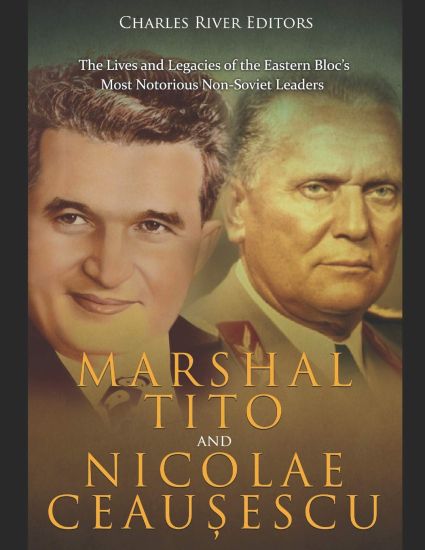
*Includes pictures*Includes quotes*Includes online resources and a bibliography for further readingThe World War II era produced many leaders of titanic determination, men whose strengths and weaknesses left an extraordinary imprint on historical affairs. The struggle between massively divergent ideologies, exacerbated by huge social changes affected by the world's technological metamorphosis into the machine age, catapulted some individuals unexpectedly onto the world stage. Josip Broz Tito, better known to history as Marshal Tito, was undoubtedly one of these figures. Originally a machinist, Tito leveraged his success in the Communist Party of Yugoslavia (CPY) and a number of extraordinary strokes of luck into dictatorial rule over Yugoslavia for a span of 35 years. World War II proved the watershed that enabled him to secure control of the country, leading an ever more powerful army of communist partisans against both the Germans and other Yugoslav factions. During the war, SS leader Heinrich Himmler himself begrudgingly stated, "He has really earned his title of Marshal. When we catch him we shall kill him at once... but I wish we had a dozen Titos in Germany, men who were leaders and had such resolution and good nerves, that, even though they were forever encircled, they would never give in." During his reign, Tito managed to quash the intense national feelings of the diverse groups making up the Yugoslavian population, and he did so through several methods. He managed to successfully play the two superpower rivals, the United States and Soviet Union, off against each other during the Cold War, and in doing so, he maintained a considerable amount of independence from both, even as he additionally received foreign aid to keep his regime afloat. All the while he remained defiant, once penning a legendary letter to Joseph Stalin warning the Soviet dictator, "To Joseph Stalin: Stop sending people to kill me We've already captured five of them, one of them with a bomb and another with a rifle... If you don't stop sending killers, I'll send a very fast working one to Moscow and I certainly won't have to send another." Nicolae Ceaușescu, one of the 20th century's most notorious dictators, was both typical and unusual. Outwardly he resembled a standard leader of a communist country in Eastern Europe during the Cold War, yet he was even more repressive and opulent than his contemporaries. In Romania itself, Ceaușescu led a life as an isolated outsider, notably less urbane than the Bucharest elite, and given that he was born in rural poverty to peasant parents, his rise was perhaps the unlikeliest of any of the communists of that generation. As it turned out, circumstances presented themselves in a manner that led to his elevation, including the acquaintances he made whilst serving time in prison in the 1930s and 1940s, the rise of communism after World War II, and the Soviet occupation of a country that had previously banned the ideology. Ceaușescu was a compromise candidate when Romanian leader Gheorghe Gheorghiu-Dej died in 1965, and he initially appeared to be a liberal-minded, nationalist-orientated reformer. Ceaușescu did fit very easily into one stereotype, however, by proving that absolute power corrupts absolutely. From the early 1970s, he and his wife Elena constructed the most grotesquely personalized cult of dictatorship in the region, and while operating at the pinnacle of a highly corrupt pyramid, the couple bled their country dry with a succession of incompetent and warped policies. Ceaușescu's own father would say of him, "He tells nothing but lies." His son wasn't much more charitable, saying, "The new kind of politicians lie all the time. But my father was one of the old kind, more of a fanatic. He was driven by some kind of fanaticism. This belief that you can do good. It's a sort of madness."
Marshal Tito and Nicolae Ceaușescu: The Lives and Legacies of the Eastern Bloc's Most Notorious Non-Soviet Leaders
*Includes pictures*Includes quotes*Includes online resources and a bibliography for further readingThe World War II era produced many leaders of titanic determination, men whose strengths and weaknesses left an extraordinary imprint on historical affairs. The struggle between massively divergent ideologies, exacerbated by huge social changes affected by the world's technological metamorphosis into the machine age, catapulted some individuals unexpectedly onto the world stage. Josip Broz Tito, better known to history as Marshal Tito, was undoubtedly one of these figures. Originally a machinist, Tito leveraged his success in the Communist Party of Yugoslavia (CPY) and a number of extraordinary strokes of luck into dictatorial rule over Yugoslavia for a span of 35 years. World War II proved the watershed that enabled him to secure control of the country, leading an ever more powerful army of communist partisans against both the Germans and other Yugoslav factions. During the war, SS leader Heinrich Himmler himself begrudgingly stated, "He has really earned his title of Marshal. When we catch him we shall kill him at once... but I wish we had a dozen Titos in Germany, men who were leaders and had such resolution and good nerves, that, even though they were forever encircled, they would never give in." During his reign, Tito managed to quash the intense national feelings of the diverse groups making up the Yugoslavian population, and he did so through several methods. He managed to successfully play the two superpower rivals, the United States and Soviet Union, off against each other during the Cold War, and in doing so, he maintained a considerable amount of independence from both, even as he additionally received foreign aid to keep his regime afloat. All the while he remained defiant, once penning a legendary letter to Joseph Stalin warning the Soviet dictator, "To Joseph Stalin: Stop sending people to kill me We've already captured five of them, one of them with a bomb and another with a rifle... If you don't stop sending killers, I'll send a very fast working one to Moscow and I certainly won't have to send another." Nicolae Ceaușescu, one of the 20th century's most notorious dictators, was both typical and unusual. Outwardly he resembled a standard leader of a communist country in Eastern Europe during the Cold War, yet he was even more repressive and opulent than his contemporaries. In Romania itself, Ceaușescu led a life as an isolated outsider, notably less urbane than the Bucharest elite, and given that he was born in rural poverty to peasant parents, his rise was perhaps the unlikeliest of any of the communists of that generation. As it turned out, circumstances presented themselves in a manner that led to his elevation, including the acquaintances he made whilst serving time in prison in the 1930s and 1940s, the rise of communism after World War II, and the Soviet occupation of a country that had previously banned the ideology. Ceaușescu was a compromise candidate when Romanian leader Gheorghe Gheorghiu-Dej died in 1965, and he initially appeared to be a liberal-minded, nationalist-orientated reformer. Ceaușescu did fit very easily into one stereotype, however, by proving that absolute power corrupts absolutely. From the early 1970s, he and his wife Elena constructed the most grotesquely personalized cult of dictatorship in the region, and while operating at the pinnacle of a highly corrupt pyramid, the couple bled their country dry with a succession of incompetent and warped policies. Ceaușescu's own father would say of him, "He tells nothing but lies." His son wasn't much more charitable, saying, "The new kind of politicians lie all the time. But my father was one of the old kind, more of a fanatic. He was driven by some kind of fanaticism. This belief that you can do good. It's a sort of madness."
Fort Astoria: The History and Legacy of the First American Settlement on the Pacific Coast
*Includes pictures*Includes contemporary accounts*Includes online resources and a bibliography for further readingIn 1808, North West Company explorer Alexander Mackenzie traced the great Canadian river now bearing his name to the Arctic Ocean, disappointed that it did not empty, as expected, into the Pacific Ocean. This, however, was further incentive to look south and west, and at about the same time, North West Company trader and explorer David Thompson undertook a series of journeys of exploration that opened up a vast new territory comprising the upper Columbia River, British Columbia, Idaho and Montana. From the other direction came the first significant figure representing American commerce, John Jacob Astor, a brash German immigrant destined to become the wealthiest man in America. At the age of 17, Astor moved to London to work for his eldest brother, George, a manufacturer of musical instruments. Three years later, he departed for the U. S. to seek his fortune, in possession of a few flutes and $25.00. Arriving at the port of Baltimore, he soon migrated north to New York City to join his brother, Henry. In 1785, he married Sarah Cox Todd, with whom he would raise seven children. In the following year, one decade after the signing of Jefferson's Declaration of Independence, Astor established his first fur shop, often going into the wilderness himself to guarantee that it remained well stocked. Within a few years, he found his calling in the larger fur and shipping trades, aptly demonstrating an intent to go well beyond the status of a provincial merchant. "Astute and pragmatic," the ambitious and at times ruthless Astor owned more than a dozen ships by the turn of the century. Not yet having reached the age of 30, he was already trading in China for tea, opium, and a number of other products not native to the American continent. Astor's imagination concocted and perfected the vision of a multi-directional flow of trade, with products crossing the continent from New York to Oregon, where he had already purchased property by 1806. The fur products would be sent on to several eastern points. Return trips would bring all manner of exotic Asian products to eastern American and European cities. On the periphery were numerous tribes of the Pacific Northwest, furnishing Astor's company with furs in return for cheaply obtained blankets and beads. Similarly, an additional source of beaver, otter, and other fur-bearing animals was to come from Russian America (present-day Alaska) through Archangelsk (now the city of Sitka). The Russians greatly preferred American business to that of European enterprises and were particularly hopeful that Britain would be pushed out of the region due to political strife between the two countries. While the settlement at Astoria made preparations to explore the interior and set up connecting posts, the international competition increased. By now, American claims were becoming more tangible, especially after Captain Robert Gray's exploration of the Columbia River 30 miles into the interior. Gray, a Bostonian, not only sailed upriver, but established the first American trading relationship with lower Columbia tribes. The Chinook proved to be essential to facilitating the Pacific Fur Company's progress with fellow tribes farther to the interior, although they were never considered entirely reliable. Fort Astoria: The History and Legacy of the First American Settlement on the Pacific Coast examines the land disputes, and how events unfolded on the way to Oregon becoming part of America. Along with pictures depicting important people, places, and events, you will learn about Oregon Country like never before.
Fort Astoria: The History and Legacy of the First American Settlement on the Pacific Coast
*Includes pictures*Includes contemporary accounts*Includes online resources and a bibliography for further readingIn 1808, North West Company explorer Alexander Mackenzie traced the great Canadian river now bearing his name to the Arctic Ocean, disappointed that it did not empty, as expected, into the Pacific Ocean. This, however, was further incentive to look south and west, and at about the same time, North West Company trader and explorer David Thompson undertook a series of journeys of exploration that opened up a vast new territory comprising the upper Columbia River, British Columbia, Idaho and Montana. From the other direction came the first significant figure representing American commerce, John Jacob Astor, a brash German immigrant destined to become the wealthiest man in America. At the age of 17, Astor moved to London to work for his eldest brother, George, a manufacturer of musical instruments. Three years later, he departed for the U. S. to seek his fortune, in possession of a few flutes and $25.00. Arriving at the port of Baltimore, he soon migrated north to New York City to join his brother, Henry. In 1785, he married Sarah Cox Todd, with whom he would raise seven children. In the following year, one decade after the signing of Jefferson's Declaration of Independence, Astor established his first fur shop, often going into the wilderness himself to guarantee that it remained well stocked. Within a few years, he found his calling in the larger fur and shipping trades, aptly demonstrating an intent to go well beyond the status of a provincial merchant. "Astute and pragmatic," the ambitious and at times ruthless Astor owned more than a dozen ships by the turn of the century. Not yet having reached the age of 30, he was already trading in China for tea, opium, and a number of other products not native to the American continent. Astor's imagination concocted and perfected the vision of a multi-directional flow of trade, with products crossing the continent from New York to Oregon, where he had already purchased property by 1806. The fur products would be sent on to several eastern points. Return trips would bring all manner of exotic Asian products to eastern American and European cities. On the periphery were numerous tribes of the Pacific Northwest, furnishing Astor's company with furs in return for cheaply obtained blankets and beads. Similarly, an additional source of beaver, otter, and other fur-bearing animals was to come from Russian America (present-day Alaska) through Archangelsk (now the city of Sitka). The Russians greatly preferred American business to that of European enterprises and were particularly hopeful that Britain would be pushed out of the region due to political strife between the two countries. While the settlement at Astoria made preparations to explore the interior and set up connecting posts, the international competition increased. By now, American claims were becoming more tangible, especially after Captain Robert Gray's exploration of the Columbia River 30 miles into the interior. Gray, a Bostonian, not only sailed upriver, but established the first American trading relationship with lower Columbia tribes. The Chinook proved to be essential to facilitating the Pacific Fur Company's progress with fellow tribes farther to the interior, although they were never considered entirely reliable. Fort Astoria: The History and Legacy of the First American Settlement on the Pacific Coast examines the land disputes, and how events unfolded on the way to Oregon becoming part of America. Along with pictures depicting important people, places, and events, you will learn about Oregon Country like never before.