Kirjojen hintavertailu – 12 903 725 kirjaa ja 27 kauppaa

Kirjailija

Charles River

Kirjat ja teokset yhdessä paikassa: 4 673 kirjaa, julkaisuja vuosilta 2013–2022, suosituimpiin kuuluu William Powell and Myrna Loy: The Lives and Careers of One of Classical Hollywood's Most Iconic Duos. Vertaile teosten hintoja ja tarkista saatavuus suomalaisista kirjakaupoista.

4 673 kirjaa

Kirjojen julkaisuvuodet: 2013–2022.

Camp Douglas: The History of the Notorious Union Prison Camp that Became Known as the North's Andersonville
*Includes pictures*Includes contemporary accounts*Includes online resources and a bibliography for further reading"Sir, the amount of standing water, unpoliced grounds, of foul sinks, of unventilated and crowded barracks, of general disorder, of soil reeking miasmatic accretions, of rotten bones and emptying of camp kettles, is enough to drive a sanitarian to despair. I hope that no thought will be entertained of mending matters. The absolute abandonment of the spot seems to be the only judicious course. I do not believe that any amount of drainage would purge that soil loaded with accumulated filth or those barracks fetid with two stories of vermin and animal exhalations. Nothing but fire can cleanse them." - Henry Whitney Bellows, president of the U. S. Sanitary Commission, in a report to Lieutenant Colonel William Hoffman, Office of the Commissary-General of Prisoners, about Camp DouglasIt is impossible to conduct a war without atrocities occurring, primarily because war itself is an atrocity, but when those who win the war write the histories, as they almost always do, they typically ignore or seek to explain away their own malevolent acts while exaggerating those of their defeated enemy. This goes a long way in explaining why the name Andersonville immediately conjures up visions of horrific suffering for many Americans, while the name Camp Douglas means almost nothing to those who aren't intimately familiar with the Civil War. When Union forces marched through Georgia and liberated Andersonville in May 1865, photographers were brought in to record the scenes of overcrowding, sickness, and death, ensuring the sight was preserved for future generations to see. Unable to supply its own armies, the Confederates had inadequately supplied the prison and its thousands of Union prisoners, leaving over 25% of the prisoners to die of starvation and disease. All told, Andersonville accounted for 40% of the deaths of all Union prisoners in the South, and the causes of death included malnutrition, disease, poor sanitation, overcrowding, and exposure to inclement weather. In fact, Andersonville infuriated the North so much that Henry Wirz, the man in charge of Andersonville, was the only Confederate executed after the war. Conversely, Camp Douglas, closed at roughly the same time, was torn down, and its very existence was nearly wiped from memory. The attempt to forget Camp Douglas was understandable, because in the last two years of the war, at least 4,000 Confederate prisoners died there, meaning nearly 1 in 5 Confederates who were sent there never left. In many ways, the story of Camp Douglas is the story of the Civil War itself. The camp got its start as a brand new facility filled with men ready to fight a war that most on both sides believed would last only a few months. However, as the war went on, the facilities were overwhelmed by the sheer scale of the damage and the massive numbers of people involved. In the first few years of the war, the kind of total war practiced by Grant and Sherman in 1864 was unthinkable, and the two sides liberally conducted prisoner exchanges and paroled prisoners based solely on their word. As time passed, however, bitterness hardened between the two sides, and the war aims changed as the North looked for new strategies to finally subdue the South. The resulting chain of events led to the horrors of Camp Douglas. Camp Douglas: The History of the Notorious Union Prison Camp that Became Known as the North's Andersonville examines how Camp Douglas earned its awful moniker, and what life was like there for Confederate prisoners. Along with pictures depicting important people, places, and events, you will learn about Camp Douglas like never before.

The Girl Scouts: The History and Legacy of the Popular Youth Organization across the World
*Includes pictures*Includes online resources and a bibliography for further reading"Girls must be partners and comrades, rather than dolls." - attributed to Agnes Baden-PowellGiven the prominence of Scouting culture in the United States, many assume that the movement is rooted in North America. On the contrary, the movement was initiated in and spread forth from the United Kingdom, more specifically in England. It was the brainchild of the 1st Baron Baden-Powell, a beloved and decorated war veteran armed with not only Martini-Henry rifles and Lee-Enfield carbines, but a vision that would one day be espoused by every nation on Earth except Andorra, China, Cuba, North Korea, and Laos. Baden-Powell had honed his tracking and scouting skills in war, and in the course he published books about those skills that he anticipated would have a limited audience. Instead, he was astounded by the popularity of Aids to Scouting, which had sailed to the top of the bestsellers list in his absence. Parents, teachers, and youth groups alike who purchased the book for their children and students responded with rave reviews. Invigorated by the UK's seemingly blossoming interest in the outdoors, Baden-Powell traveled to Glasgow, where he attended the Annual Drill Inspection and Review of the Boys' Brigade. Before long, he had put together a Scouting organization, and its influence would spread across the globe in a few short years. Inevitably, his sister, Agnes Baden-Powell, took note of her brother's activities and fledgling organizations, and she would help create similar opportunities for girls. Thus, it was somewhat inevitable that Girl Scouts are, more often than not, perceived as the more harmless companion of the Boy Scouts, forming an industrious and upstanding force of young men and women. With their colorful collection of patches, matching hats and uniforms, and Colgate smiles, they are often written off as naive do-gooders doing their best to spread cheer to those in their communities. However, contrary to popular belief, the Girl Scouts are far more than just adorable cookie peddlers and volunteer crossing guards for senior citizens. In fact, 73% of the women in the U. S. Senate and 51% of the women serving in the House of Representatives are former Girl Scouts. The same applies to a majority of the women governors across the country. In the process, the Girl Scouts have forged their own reputation and legacy across the world. The Girl Scouts: The History and Legacy of the Popular Youth Organization across the World chronicles the history of the organization, the powerful women behind it, the growth of the sisterhood, and its members' various accomplishments. Along with pictures and a bibliography, you will learn about the Girl Scouts like never before.
The Girl Scouts: The History and Legacy of the Popular Youth Organization across the World
*Includes pictures*Includes online resources and a bibliography for further reading"Girls must be partners and comrades, rather than dolls." - attributed to Agnes Baden-PowellGiven the prominence of Scouting culture in the United States, many assume that the movement is rooted in North America. On the contrary, the movement was initiated in and spread forth from the United Kingdom, more specifically in England. It was the brainchild of the 1st Baron Baden-Powell, a beloved and decorated war veteran armed with not only Martini-Henry rifles and Lee-Enfield carbines, but a vision that would one day be espoused by every nation on Earth except Andorra, China, Cuba, North Korea, and Laos. Baden-Powell had honed his tracking and scouting skills in war, and in the course he published books about those skills that he anticipated would have a limited audience. Instead, he was astounded by the popularity of Aids to Scouting, which had sailed to the top of the bestsellers list in his absence. Parents, teachers, and youth groups alike who purchased the book for their children and students responded with rave reviews. Invigorated by the UK's seemingly blossoming interest in the outdoors, Baden-Powell traveled to Glasgow, where he attended the Annual Drill Inspection and Review of the Boys' Brigade. Before long, he had put together a Scouting organization, and its influence would spread across the globe in a few short years. Inevitably, his sister, Agnes Baden-Powell, took note of her brother's activities and fledgling organizations, and she would help create similar opportunities for girls. Thus, it was somewhat inevitable that Girl Scouts are, more often than not, perceived as the more harmless companion of the Boy Scouts, forming an industrious and upstanding force of young men and women. With their colorful collection of patches, matching hats and uniforms, and Colgate smiles, they are often written off as naive do-gooders doing their best to spread cheer to those in their communities. However, contrary to popular belief, the Girl Scouts are far more than just adorable cookie peddlers and volunteer crossing guards for senior citizens. In fact, 73% of the women in the U. S. Senate and 51% of the women serving in the House of Representatives are former Girl Scouts. The same applies to a majority of the women governors across the country. In the process, the Girl Scouts have forged their own reputation and legacy across the world. The Girl Scouts: The History and Legacy of the Popular Youth Organization across the World chronicles the history of the organization, the powerful women behind it, the growth of the sisterhood, and its members' various accomplishments. Along with pictures and a bibliography, you will learn about the Girl Scouts like never before.
Homo erectus: A história dos seres humanos arcaicos que deixaram a África e formaram as primeiras sociedades de caçadores coletores
A maioria dos cientistas acredita que a evolu o dos seres humanos tem uma hist ria enquanto a pr pria vida. Os humanos anatomicamente modernos e todas as outras formas de vida que existiram no planeta surgiram primeiro dos micro-organismos unicelulares que surgiram aproximadamente 4 bilh es de anos atr s. Atrav s dos processos de muta o e sele o natural, todas as formas de vida se desenvolveram, e essa linhagem cont nua da vida torna dif cil dizer com precis o quando uma esp cie se separa completamente da outra. Em outras palavras, os cientistas ainda debatem, quando um ser humano se tornou um ser humano, ao inv s da esp cie ancestral que veio antes. Cerca de 1,8 milh es anos atr s, uma terceira esp cie de Homo apareceu no registro f ssil. H. erectus teria compartilhado a paisagem por um tempo com H. habilis e H. rudolfensis, mas os f sseis de H. erectus n o est o limitados a frica Oriental e Austral. Em vez disso, eles s o encontrados em toda a frica e partes do continente e insular da sia. Esta a primeira esp cie de Homo encontrada fora da frica (Rightmire 1993). Caracter sticas de H. erectus sugerem uma evolu o em dire o aos humanos modernos, e as caracter sticas que separam H. erectus das outras esp cies de Homo s o encontradas no cr nio. O tamanho do c rebro era de aproximadamente 900 cc, tornando-o maior do que o tamanho do c rebro de H. habilis. O H. erectus n o teria a maior capacidade cerebral do g nero Homo durante sua exist ncia, com o surgimento de H. heidelbergensis, aproximadamente a 800.000 anos atr s. O tamanho maior do c rebro pode n o importar muito quando o tamanho do c rebro considerado com o tamanho do corpo, que tamb m aumenta. O desenvolvimento do cr nio tamb m mudou em H. erectus. Enquanto o corpo se tornou maior, caso o c rebro n o se tornou mais vertical em rela o ao corpo, resultando em uma apar ncia inclinada e muito semelhante a um jogador de futebol americano. Outras caracter sticas que se desenvolveram no cr nio s o cristas de sobrancelha mais grossas e o desenvolvimento de proje es sseas na parte posterior do cr nio (Gilbert e Asfaw 2008). Enquanto as caracter sticas faciais de H. erectus teria feito eles visivelmente diferente se eles estivessem vivos hoje, sua morfologia poscranial pode ter sido parecida com os humanos modernos. Uma diferen a fundamental a densidade ou a espessura dos ossos; em H. erectus os ossos s o mais robustos, mas caso contr rio, eles aparecem muito semelhantes aos seres humanos modernos. O comprimento dos membros posteriores em rela o as armas semelhante aos humanos modernos, o que significa que H. erectus pode ter sido capaz de andar em uma maneira similar.(Richtmire, 1993:57-84). Isto pode ou n o pode ser ligado com a distribui o generalizada de H. erectus. Talvez mais importante para o H. Erectus do que simplesmente ser capaz de sair da frica seria a capacidade de se adaptar s mudan as clim ticas e essencialmente modificar o ambiente ao seu redor. Mais notavelmente, a grande vantagem que H. erectus teria tido a capacidade de controlar o fogo. Essa habilidade, que nenhum outro animal dominou, ajudou a viajar pelo mundo, e pode datar de 1,7 milh o de anos atr s, at 200 mil anos atr s. A maioria dos cientistas concorda que o H. erectus foi capaz de controlar o fogo h pelo menos 600 mil anos, e humanos anatomicamente modernos foram capazes de criar e usar fogo h 150 mil anos. As primeiras esp cies de Homo teriam se familiarizado com os efeitos do fogo, desde a devasta o que poderia causar aos habitats da floresta at os r pidos inc ndios florestais da savana. Esses inc ndios teriam matado e queimado animais que o Homo antigo teria encontrado enquanto saqueavam ap s um inc ndio natural.
La evolución de la Navidad: la historia de la festividad cristiana desde el nacimiento de Jesús hasta nuestros días
La Navidad es la fiesta m s importante del calendario internacional. Despu s de los respectivos d as que exaltan el orgullo nacional de los pa ses -el D a de la Independencia en Estados Unidos, el D a de la Victoria en Rusia, el D a de la Bastilla en Francia- sin duda es el 25 de diciembre el que articula la vida familiar, el trabajo y la econom a de pr cticamente todo el orbe... incluyendo muchos pa ses no cristianos. Desde tiempos remotos, el inicio del invierno ha sido la poca en que la gente come, bebe y se re ne para hacer algarab a e iniciar un periodo de descanso. Algunos se refugian en un rinc n de su casa, extra an, repelan; y otros, abrumados por las enormes expectativas y los recuerdos, incluso deciden terminar con su vida. Creyentes o no, nadie escapa a la fiesta. Sobre todo a partir del siglo XX, los d as contiguos a la festividad principal se han convertido en ocasi n para hacer negocios. La temporada invernal es el est mulo m s grande que recibe la econom a de muchos pa ses -m s que cualquier paquete de est mulo fiscal-, pues el ingreso de las familias, el gasto, el consumo y el cr dito en todas las ramas econ micas se incrementan significativamente. Tan s lo en Estados Unidos se estima que las ventas navide as se acercan a los tres billones de d lares... un tres seguido de doce ceros. A este jubileo del consumo, la glotoner a y la compra de regalos innecesarios, lo acompa an una serie de costumbres hechas para complacer a los ni os: un pino con luces y adornos en el interior de las casas, villancicos navide os, preparaci n de comidas dulces, la figura rechoncha de Santa Claus y, en menor medida, los nacimientos, representaciones en miniatura del nacimiento de Jes s. Cada pa s conserva adem s costumbres nicas, muy estimadas por la poblaci n. En Rusia la gente prepara doce platos en honor de los doce ap stoles, y despu s regresa a la iglesia para una vigilia que dura toda la noche. En Estonia los ni os deben cantar antes de recibir los regalos. En M xico se re nen grupos de personas que van de puerta en puerta cantando la historia de Jos y Mar a en busca de alojamiento; en la casa que los recibe se rompen pi atas llenas de dulces. En Estados Unidos las calles se decoran con derroche de luz y color, y coros de ni os cantan villancicos junto a enormes abetos. En la India, con todo y su minor a cristiana, la gente llama a la Navidad "el gran d a" y lo celebran plantando rboles. Eso, en cuanto a los extremos: al principio las narrativas evang licas, y en la actualidad el negocio multimillonario en el que se transformaron. Pero c mo se lleg de aquella historia en la Biblia -una joven jud a dando a luz al mes as de Israel en un pesebre en la ciudad de Bel n- a la Navidad moderna? C mo terminaron Santa Claus, el abeto de Navidad, los trineos de nieve, los regalos y las reuniones familiares -ocasi n de estr s para muchos- convirti ndose en rasgos distintivos de esta celebraci n, si nada de eso estaba ah en un inicio? La respuesta es que est n ah porque, a lo largo de veinte siglos, hubo una cadena de acontecimientos, personajes, tradiciones orales, obras art sticas que se unieron para hacer de la Navidad la estaci n para compartir, abrazarse, reencontrar a la familia, dar regalos y mucha az car a los ni os. Es la historia de ese largo proceso -del evangelista escribiendo la historia de un nacimiento, al mayor periodo de consumo en la econom a de los pa ses de Occidente- sin duda lo m s fascinante. De eso trata este libro: no del nacimiento de Jes s hace dos mil a os en el actual estado de Israel, sino de c mo la narraci n de ese alumbramiento se convirti en el d a de estar contentos. Fa, la la la la...
The Punjab: The History of the Punjabis and the Contested Region on the Border Between India and Pakistan
*Includes pictures*Includes contemporary accounts*Includes online resources and a bibliography for further readingBritish India ultimately covered some 54 percent of the landmass and 77 percent of the population. By the time the British began to contemplate a withdrawal from India, 565 princely states were officially recognized, in addition to thousands of zamindaris and jagirs, which were in effect feudal estates. The stature of each Princely State was defined by the number of guns fired in salute upon a ceremonial occasion honoring one or other of the princes. These ranged from nine-gun to twenty-one-gun salutes and, in a great many cases, no salute at all. The Princely States were reasonably evenly spread between ancient Muslim and Hindu dynasties, but bearing in mind the minority status of Muslims in India, Muslims were disproportionately represented. This tended to grant Muslims an equally disproportionate share of what power was devolved to local leaderships, and it positioned powerful Muslim leaders to exert a similarly unequal influence on British policy. It stands to reason, therefore, as India began the countdown to independence after World War II, that the Indian Muslim leadership would begin to express anxiety over the prospect of universal suffrage and majority rule. At less than 20 percent of the population, Indian Muslims would inevitably find themselves overwhelmed by the Hindu majority, and as the British prepared to divest themselves of India, ancient enmities between Hindu and Muslim, long papered over by the secular and remote government of Britain, began once again to surface. While the conflict between India and Pakistan is multi-faceted, there has always been great division over the Punjab. The word "Punjab" derives from the Persian words "Punj," meaning "five," and " b," meaning river, combined into the "Land of the Five Rivers." These rivers are the five major tributaries of the River Indus - the Jehlum, the Chenab, the Ravi, the Beas and the Sutlej. They flow southwest off the southern slopes of the Himalayas, meeting the Arabian Sea just south of the modern Pakistani port city of Karachi. This is the valley of the Indus River, the site of some of the oldest and most accomplished civilizations in the world. The Punjab is defined by the floodplains of the five rivers that give the area its name, and as a result, it is one of the most fertile regions of South Asia. However, since the 1947 partition of India, the "Land of Five Rivers" is something of a misnomer, as the partition not only divided India but also the Punjab. The eastern part of Punjab remained a province of India, while the western section was ceded to the newly created Pakistan. As a contiguous region, the Punjab retains its essential character, but now the Indian state of Punjab has only two rivers, the Beas and the Sutlej, and the Pakistani province has the Jhelum, Chenab and Ravi. The Punjab: The History of the Punjabis and the Contested Region on the Border Between India and Pakistan looks at the region and the origins of the Punjabis, as well as how it became one of the most contested spots in the world. Along with pictures and a bibliography, you will learn about the Punjab like never before.
The Punjab: The History of the Punjabis and the Contested Region on the Border Between India and Pakistan
*Includes pictures*Includes contemporary accounts*Includes online resources and a bibliography for further readingBritish India ultimately covered some 54 percent of the landmass and 77 percent of the population. By the time the British began to contemplate a withdrawal from India, 565 princely states were officially recognized, in addition to thousands of zamindaris and jagirs, which were in effect feudal estates. The stature of each Princely State was defined by the number of guns fired in salute upon a ceremonial occasion honoring one or other of the princes. These ranged from nine-gun to twenty-one-gun salutes and, in a great many cases, no salute at all. The Princely States were reasonably evenly spread between ancient Muslim and Hindu dynasties, but bearing in mind the minority status of Muslims in India, Muslims were disproportionately represented. This tended to grant Muslims an equally disproportionate share of what power was devolved to local leaderships, and it positioned powerful Muslim leaders to exert a similarly unequal influence on British policy. It stands to reason, therefore, as India began the countdown to independence after World War II, that the Indian Muslim leadership would begin to express anxiety over the prospect of universal suffrage and majority rule. At less than 20 percent of the population, Indian Muslims would inevitably find themselves overwhelmed by the Hindu majority, and as the British prepared to divest themselves of India, ancient enmities between Hindu and Muslim, long papered over by the secular and remote government of Britain, began once again to surface. While the conflict between India and Pakistan is multi-faceted, there has always been great division over the Punjab. The word "Punjab" derives from the Persian words "Punj," meaning "five," and " b," meaning river, combined into the "Land of the Five Rivers." These rivers are the five major tributaries of the River Indus - the Jehlum, the Chenab, the Ravi, the Beas and the Sutlej. They flow southwest off the southern slopes of the Himalayas, meeting the Arabian Sea just south of the modern Pakistani port city of Karachi. This is the valley of the Indus River, the site of some of the oldest and most accomplished civilizations in the world. The Punjab is defined by the floodplains of the five rivers that give the area its name, and as a result, it is one of the most fertile regions of South Asia. However, since the 1947 partition of India, the "Land of Five Rivers" is something of a misnomer, as the partition not only divided India but also the Punjab. The eastern part of Punjab remained a province of India, while the western section was ceded to the newly created Pakistan. As a contiguous region, the Punjab retains its essential character, but now the Indian state of Punjab has only two rivers, the Beas and the Sutlej, and the Pakistani province has the Jhelum, Chenab and Ravi. The Punjab: The History of the Punjabis and the Contested Region on the Border Between India and Pakistan looks at the region and the origins of the Punjabis, as well as how it became one of the most contested spots in the world. Along with pictures and a bibliography, you will learn about the Punjab like never before.
Santa Claus: The Historical Origins and Evolution of the Legendary Christmas Figure
*Includes pictures*Includes contemporary accounts*Includes online resources and a bibliography for further reading"Dear Editor -I am 8 years old. Some of my little friends say there is no Santa Claus. Papa says, 'If you see it in The Sun, it's so.' Please tell me the truth, is there a Santa Claus?" - Letter written by Virginia O Hanlon in The Sun newspaper (1897)Christmas is the most important holiday of the year. After the corresponding days that exalt the national pride of each country, such as Independence Day in the United States, Victory Day in Russia, or Bastille Day in France, it's December 25 that articulates the life, the work and the economy in much of the world, including many non-Christian countries. Since ancient times, the beginning of winter has been the occasion for most people to eat, drink, dance, and get together to beat the drum and take a break. Especially since the 20th century on, the days adjacent to the holiday have become an occasion to do big business. The winter season is the most solid stimulus for the economy - more than any fiscal package - since the incomes of families, spending, credit, and consumption in all productive sectors are significantly increased. In the United States alone, Christmas sales are estimated to generate $3 trillion. In the early 19th century, two literary works appeared and helped shape Christmas. The first was a collection of stories by Washington Irving, entitled Sketch Book, from 1819. The work "not only gave to American literature the characters of Ichabod Crane and Rip Van Winkle, but sparked widespread interest in Christmas as a cozy domestic ritual." Next came A Visit from St. Nicholas, a children's poem better known as "The Night Before Christmas," which was published anonymously in 1823, but is traditionally attributed to Clement Clarke Moore, a university professor and Biblical scholar. The poem spread quickly and helped install a definitive image of Santa Claus in the popular imagination, with his sleigh, his eight reindeer (each one with a name), his red nose, and his journeys down chimneys to fill children's stockings with toys. Supposedly, Moore got his inspiration during a shopping outing in a sleigh, and he based his Santa Claus on a Dutchman who lived in Chelsea." So up to the house-top the coursers they flew, With the sleigh full of toys, and St. Nicholas too. And then, in a twinkling, I heard on the roofThe prancing and pawing of each little hoof. As I drew in my hand, and was turning around, Down the chimney St. Nicholas came with a bound. He was dressed all in fur, from his head to his foot, And his clothes were all tarnished with ashes and soot;A bundle of toys he had flung on his back, And he looked like a peddler just opening his pack. His eyes -- how they twinkled his dimples how merry His cheeks were like roses, his nose like a cherry His droll little mouth was drawn up like a bow, And the beard of his chin was as white as the snow..." Meanwhile, the turning point for old St. Nicholas, now Santa Claus, came with the December 24, 1881 edition of Harper s Weekly. Artist Thomas Nast gave him his definitive look for the Christmas issue as an old man with a huge round belly and a belt, a thick white beard, a red nose, a cap, mistletoe on his head, a miniature horse toy in one hand, a pipe between his fingers, and a child hanging from his neck. Ever since, Santa has been known the world over for being delightfully paunchy and endlessly jolly. To most, these two descriptors alone are enough to conjure up his name, and lead them to envision a round-bellied, grandfather-type, clad in a fur-trimmed, cherry-red ensemble, armed with candy canes and a bottomless sack of presents, and blessed with a bushy, silvery-white beard.
Before the Bear: The History and Legacy of California Before It Joined the United States
*Includes pictures*Includes contemporary accounts*Includes online resources and a bibliography for further reading"As the spring and summer of 1848 advanced, the reports came faster and faster from the gold-mines at Sutter's saw-mill. Stories reached us of fabulous discoveries, and spread throughout the land. Everybody was talking of "Gold gold " until it assumed the character of a fever. Some of our soldiers began to desert; citizens were fitting out trains of wagons and pack-mules to go to the mines. We heard of men earning fifty, five hundred, and thousands of dollars per day..." - William Tecumseh ShermanThe history of California is one that witnessed the rise and fall of several nations and peoples. From the first natives to settle the fertile lands to the encroaching foreigners from the south, east, west, and north, the land that eventually became the Golden State received them all. From across oceans, mountains, plains, and deserts, people came to take advantage of the region's natural resources. In the mid-19th century, the battles would culminate with a young republic claiming the land in its endeavor to stretch from sea to shining sea. Given that Americans were still mostly on the East Coast, the early settlers and prospectors who came west would find a land rich in resources and people but without the means and ability to properly tap those resources. Thus, the land would change hands several times, with the natives stuck in the middle, as they so often were in colonial struggles. One of the most important and memorable events of America's westward push across the frontier came with the discovery of gold in the lands that became California in January 1848. Located thousands of miles away from the country's power centers on the east coast at the time, the announcement came a month before the Mexican-American War had ended, and among the very few Americans that were near the region at the time, many of them were Army soldiers who were participating in the war and garrisoned there. San Francisco was still best known for being a Spanish military and missionary outpost during the colonial era, and only a few hundred called it home. Mexico's independence, and its possession of those lands, had come only a generation earlier. Everything changed almost literally overnight. While the Mexican-American War technically concluded with a treaty in February 1848, the announcement brought an influx of an estimated 90,000 "Forty-Niners" to the region in 1849, hailing from other parts of America and even as far away as Asia. All told, an estimated 300,000 people would come to California over the next few years, as men dangerously trekked thousands of miles in hopes of making a fortune, and in a span of months, San Francisco's population exploded, making it one of the first mining boomtowns to truly spring up in the West. This was a pattern that would repeat itself across the West anytime a mineral discovery was made, from the Southwest and Tombstone to the Dakotas and Deadwood. Of course, that was made possible by the collective memory of the original California gold rush. Despite the mythology and the romantic portrayals that helped make the California Gold Rush, most of the individuals who came to make a fortune struck out instead. The gold rush was a boon to business interests, which ensured important infrastructure developments like the railroad and the construction of westward paths, but ultimately, it also meant that big business reaped most of the profits associated with mining the gold. While the Forty-Niners are often remembered for panning gold out of mountain streams, it required advanced mining technology for most to make a fortune. As the Gold Rush intensified and brought more people to California, it would officially join the Union in 1850, but even that was fraught with political turmoil.
The Reconquista: The History and Legacy of the Conflicts Between the Moors and Christians on the Iberian Peninsula
*Includes pictures*Includes medieval accounts*Includes online resources and a bibliography for further readingThe term "Reconquista" is a Spanish word transferred to the English language to represent the nearly 800 years in which the Moors and Christians struggled against one another for control of the Iberian Peninsula. Although the phrase typically refers to the time when the numerous Christian kingdoms mobilized to overthrow the Islamic Caliphates set up in the peninsula, the term can additionally be used to refer to the entire situation starting in the 8th century, when Islamic civilization slowly moved out of North Africa, across the Mediterranean Sea, and into southern Iberia. Not surprisingly, three religions attempting to coexist during medieval times resulted in nearly incessant conflicts, marked by high taxation, disparate societies, rigid cultural controls, and systemic violence. Despite the odds, these three religions managed to live in a state of quasi-acceptance and peace in most of the major cities like Cordoba and Toledo, with sporadic warfare occurring on the borders between Al-Andalus and the Christian kingdoms near the Pyrenees Mountains. Muslims, Christians, and Jews would attempt to reorganize their societies several times over the centuries through warfare, always with Jews on the lower rungs and Christians and Muslims fighting it out above them. Though it's often forgotten today, the fighting that took place during the Reconquista was not originally driven by religion. Instead, the majority of the battles were fought by ambitious rulers who sought territorial expansion, like many other civilizations during the Middle Ages. In fact, the Reconquista would not gain its unique religious flavor until the 13th century, when the territories that would become Castile and Aragon drummed up religious fervor to achieve its aims and gained papal support from Rome. After the Reconquista officially ended, the anger, bitterness, and resentment fostered by the fighting resulted in further warfare as the newly created Christian kingdoms of Spain and Portugal continued their fight by chasing after and conquering Muslim territories and civilizations in Africa. Another byproduct of the Reconquista was the notorious Spanish Inquisition, and Ferdinand and Isabella's choice to expel the Jews had dire consequences not only for the Jewish population but for Spain as well. The country's economy suffered after the expulsion, as the country lost many skilled craftsmen, money lenders and bankers, a critical part of their economy. Meanwhile, the Jews who took refuge in Turkey were welcomed by the Ottoman Sultan and put to work making weapons to use against Europe. The famous Renaissance political philosopher Niccolo Machiavelli later cited the expulsion of the Jews as an act of "pious cruelty". For many years afterward, the very same people of Castile who had perpetrated the anti-Semitism blamed the expulsion of the Jews for many of their troubles. The legacy of the Reconquista has reverberated throughout the peninsula ever since, resulting in a diverse culture, continued religious tensions, and historical accounts and legends about glorious warfare, brutal torture, and the formation of devoutly religious states that lasted until the 20th century. The Reconquista: The History and Legacy of the Conflicts Between the Moors and Christians on the Iberian Peninsula examines the events that shaped the modern history of Spain and Portugal, and the ramifications. Along with pictures of important people, places, and events, you will learn about the Reconquista like never before.
The Reconquista: The History and Legacy of the Conflicts Between the Moors and Christians on the Iberian Peninsula
*Includes pictures*Includes medieval accounts*Includes online resources and a bibliography for further readingThe term "Reconquista" is a Spanish word transferred to the English language to represent the nearly 800 years in which the Moors and Christians struggled against one another for control of the Iberian Peninsula. Although the phrase typically refers to the time when the numerous Christian kingdoms mobilized to overthrow the Islamic Caliphates set up in the peninsula, the term can additionally be used to refer to the entire situation starting in the 8th century, when Islamic civilization slowly moved out of North Africa, across the Mediterranean Sea, and into southern Iberia. Not surprisingly, three religions attempting to coexist during medieval times resulted in nearly incessant conflicts, marked by high taxation, disparate societies, rigid cultural controls, and systemic violence. Despite the odds, these three religions managed to live in a state of quasi-acceptance and peace in most of the major cities like Cordoba and Toledo, with sporadic warfare occurring on the borders between Al-Andalus and the Christian kingdoms near the Pyrenees Mountains. Muslims, Christians, and Jews would attempt to reorganize their societies several times over the centuries through warfare, always with Jews on the lower rungs and Christians and Muslims fighting it out above them. Though it's often forgotten today, the fighting that took place during the Reconquista was not originally driven by religion. Instead, the majority of the battles were fought by ambitious rulers who sought territorial expansion, like many other civilizations during the Middle Ages. In fact, the Reconquista would not gain its unique religious flavor until the 13th century, when the territories that would become Castile and Aragon drummed up religious fervor to achieve its aims and gained papal support from Rome. After the Reconquista officially ended, the anger, bitterness, and resentment fostered by the fighting resulted in further warfare as the newly created Christian kingdoms of Spain and Portugal continued their fight by chasing after and conquering Muslim territories and civilizations in Africa. Another byproduct of the Reconquista was the notorious Spanish Inquisition, and Ferdinand and Isabella's choice to expel the Jews had dire consequences not only for the Jewish population but for Spain as well. The country's economy suffered after the expulsion, as the country lost many skilled craftsmen, money lenders and bankers, a critical part of their economy. Meanwhile, the Jews who took refuge in Turkey were welcomed by the Ottoman Sultan and put to work making weapons to use against Europe. The famous Renaissance political philosopher Niccolo Machiavelli later cited the expulsion of the Jews as an act of "pious cruelty". For many years afterward, the very same people of Castile who had perpetrated the anti-Semitism blamed the expulsion of the Jews for many of their troubles. The legacy of the Reconquista has reverberated throughout the peninsula ever since, resulting in a diverse culture, continued religious tensions, and historical accounts and legends about glorious warfare, brutal torture, and the formation of devoutly religious states that lasted until the 20th century. The Reconquista: The History and Legacy of the Conflicts Between the Moors and Christians on the Iberian Peninsula examines the events that shaped the modern history of Spain and Portugal, and the ramifications. Along with pictures of important people, places, and events, you will learn about the Reconquista like never before.
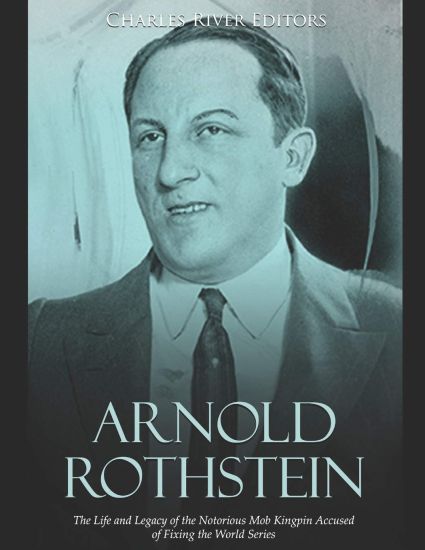
Arnold Rothstein: The Life and Legacy of the Notorious Mob Kingpin Accused of Fixing the World Series
*Includes pictures*Includes online resources and a bibliography for further reading "Look out for Number One. If you don't, no one else will. If a man is dumb, someone is going to get the best of him, so why not you? If you don't, you're as dumb as he is." - Arnold RothsteinSprightly swing music spills across the dimly lit club. The grayish curtains of cigarette smoke part every once in a while to reveal a sparkling stage and tables upon tables of patrons, some incurably inebriated and others high on the fast-paced nightlife. Fabulous flappers in shimmery cocktail dresses and stylish feather headbands throw their hands up and stomp their feet to the addictive beat on the dance floor. Smartly dressed men, their hair neatly parted and slicked back, toss fistfuls of dice onto the plush green baize of the craps tables. Some hover over roulette wheels, staring intently at the spinning flashes of silver, while others finger their playing cards as they sip on tumblers of whiskey, eyeing both the river and the tower of tokens next to them. Frisky tunes, chic fashion, and American gambling are nostalgic, rose-tinted images most choose to project when visualizing the Roaring Twenties, but the other side of the coin brought an uninviting, much harsher reality that most would prefer to sweep under the rug. The first real estate bubble was on the brink of bursting, and progress was evident, but painfully slow, which gave way to yet another era of violent riots, lynchings, and other forms of oppression imposed on minorities. Then, of course, there were mobsters. Remove the silk three-piece suits, burnished Tommy guns, and obscene stacks of cash from the equation, and one would be left with limp, bullet-ridden bodies either slumped over their steering wheels or sprawled out like broken rag dolls on the floors of public establishments, the walls painted with blood spatters and shattered glass littered about. These, they say, are the lucky ones, for their corpses, though laid out as a public message, provide the deceased's loved ones with some form of closure. Over the decades, dozens involved in this deadly game disappeared altogether, never again to see the light of day. One of the most integral members of that criminal underworld was Arnold Rothstein, the archetype of the old school mobster. He was intelligent, charming, well-spoken, grotesquely wealthy, and a sharp dresser, often pictured with a patterned bowtie and a flat-top fedora snugly fit over his receding hairline. And yet, he was nothing like the stereotypical mobster; Arnold was not a drinker or smoker, and he was not one to be tempted by illicit substances. He was a notorious high roller, with pockets holding wads of $100 bills, but to the casual eye, he was just another dapper, well-mannered gentleman who frequented the tracks and casinos after a long day at the office. In addition to his aversion to the aforementioned vices, Rothstein never chewed gum or cursed (at least in public). He snacked on figs and fruits, and he was equipped with an insatiable sweet tooth. Affectionately nicknamed the "Cookie Monster" by his loved ones, Rothstein adored cookies of all kinds - which he washed down with a glass of milk every evening before bed - and constantly ate cakes, pies, and all sorts of desserts. Perhaps not surprisingly given his vocation, Rothstein was a man of routine, and while he was firmly entrenched in the seamy underbelly of society, he was a lone wolf, more of a mentor and an adviser than he was a vicious thug who wreaked havoc in the streets. Moreover, he was not particularly aggressive, to the extent that he was only alleged to have committed physical assault a handful of times, if that. Arnold Rothstein: The Life and Legacy of the Notorious Mob Kingpin Accused of Fixing the World Series profiles how Rothstein rose to the top of the criminal underworld, and all the controversies that ensued.
The Evolution of Christmas: The History of the Christian Holiday from the Birth of Jesus to Today
*Includes pictures*Includes online resources and a bibliography for further reading"From the beginning, the Church s hold over Christmas was (and remains still) rather tenuous. There were always people for whom Christmas was a time of pious devotion rather than carnival, but such people were always in the minority. It may not be going too far to say that Christmas has always been an extremely difficult holiday to Christianize." - Stephen Nissenbaum, The Battle for ChristmasChristmas is the most important holiday of the year. After the corresponding days that exalt the national pride of each country, such as Independence Day in the United States, Victory Day in Russia, or Bastille Day in France, it's December 25 that articulates the life, the work and the economy in much of the world, including many non-Christian countries. Since ancient times, the beginning of winter has been the occasion for most people to eat, drink, dance, and get together to beat the drum and take a break. Especially since the 20th century on, the days adjacent to the holiday have become an occasion to do big business. The winter season is the most solid stimulus for the economy - more than any fiscal package - since the incomes of families, spending, credit, and consumption in all productive sectors are significantly increased. In the United States alone, Christmas sales are estimated to generate $3 trillion. This jubilee of consumption and purchase of goods and gifts is accompanied by a series of child-pleasing customs: a pine tree with lights and ornaments inside the homes; Christmas carol;, preparation of sweet meals and treats; the chubby figure of Santa Claus; and, to a lesser extent, Nativity scenes depicting the birth of Jesus. Each country also preserves exclusive traditions that are highly esteemed among their own population. In Russia, people cook 12 dishes in honor of the 12 apostles, then return to the church for an all-night vigil. In Estonia, children must sing before receiving their gifts. In Mexico, groups of people wander from door-to-door singing the story of Joseph and Mary when they were searching for a place to stay, and inside the house that receives them, they break pi atas full of candy. In the United States, the streets are decorated with colorful lights, and choirs of children sing carols beside huge fir trees. In India, even with its Christian minority, people call Christmas "the big day" and celebrate it by planting trees. The holiday animates debate, too. For those interested in history, it is the time of documentaries on television where so-called experts repeat the worn-out speech that the Church deliberately put the date of Christmas over a pagan celebration, the Saturnalia, or Sol Invictus, the solar god of the Roman Empire. Others will say that Santa Claus is a legacy of Norse mythology related to Odin's journey through the heavens, and that the star of Bethlehem could have been a spectacular planetary conjunction that occurred in 7 BCE. For the self-denominated neo-atheists, it is the time to offer interviews on major networks and declare that everything is a hoax, and that the story of Jesus's birth is a myth copied from the story of the god Mitra. The celebration goes unnoticed for no one, making Christmas arguably the only holiday that, for better or worse, unites the whole planet. How did things progress from that story in the Bible, with a Jewish girl giving birth to the Messiah of Israel in a manager in the city of Bethlehem, to the modern colossus that is the Christmas holiday? How did Santa Claus, the Christmas tree, the snow sleighs, the presents, and family reunions become the distinctive features of the holiday if none of them were there at the beginning? The answers can be attributed to a chain of events, characters, oral traditions, artistic works, and an assimilation of local folklore.
The Evolution of Christmas: The History of the Christian Holiday from the Birth of Jesus to Today
*Includes pictures*Includes online resources and a bibliography for further reading"From the beginning, the Church s hold over Christmas was (and remains still) rather tenuous. There were always people for whom Christmas was a time of pious devotion rather than carnival, but such people were always in the minority. It may not be going too far to say that Christmas has always been an extremely difficult holiday to Christianize." - Stephen Nissenbaum, The Battle for ChristmasChristmas is the most important holiday of the year. After the corresponding days that exalt the national pride of each country, such as Independence Day in the United States, Victory Day in Russia, or Bastille Day in France, it's December 25 that articulates the life, the work and the economy in much of the world, including many non-Christian countries. Since ancient times, the beginning of winter has been the occasion for most people to eat, drink, dance, and get together to beat the drum and take a break. Especially since the 20th century on, the days adjacent to the holiday have become an occasion to do big business. The winter season is the most solid stimulus for the economy - more than any fiscal package - since the incomes of families, spending, credit, and consumption in all productive sectors are significantly increased. In the United States alone, Christmas sales are estimated to generate $3 trillion. This jubilee of consumption and purchase of goods and gifts is accompanied by a series of child-pleasing customs: a pine tree with lights and ornaments inside the homes; Christmas carol;, preparation of sweet meals and treats; the chubby figure of Santa Claus; and, to a lesser extent, Nativity scenes depicting the birth of Jesus. Each country also preserves exclusive traditions that are highly esteemed among their own population. In Russia, people cook 12 dishes in honor of the 12 apostles, then return to the church for an all-night vigil. In Estonia, children must sing before receiving their gifts. In Mexico, groups of people wander from door-to-door singing the story of Joseph and Mary when they were searching for a place to stay, and inside the house that receives them, they break pi atas full of candy. In the United States, the streets are decorated with colorful lights, and choirs of children sing carols beside huge fir trees. In India, even with its Christian minority, people call Christmas "the big day" and celebrate it by planting trees. The holiday animates debate, too. For those interested in history, it is the time of documentaries on television where so-called experts repeat the worn-out speech that the Church deliberately put the date of Christmas over a pagan celebration, the Saturnalia, or Sol Invictus, the solar god of the Roman Empire. Others will say that Santa Claus is a legacy of Norse mythology related to Odin's journey through the heavens, and that the star of Bethlehem could have been a spectacular planetary conjunction that occurred in 7 BCE. For the self-denominated neo-atheists, it is the time to offer interviews on major networks and declare that everything is a hoax, and that the story of Jesus's birth is a myth copied from the story of the god Mitra. The celebration goes unnoticed for no one, making Christmas arguably the only holiday that, for better or worse, unites the whole planet. How did things progress from that story in the Bible, with a Jewish girl giving birth to the Messiah of Israel in a manager in the city of Bethlehem, to the modern colossus that is the Christmas holiday? How did Santa Claus, the Christmas tree, the snow sleighs, the presents, and family reunions become the distinctive features of the holiday if none of them were there at the beginning? The answers can be attributed to a chain of events, characters, oral traditions, artistic works, and an assimilation of local folklore.
The Dissolution of Yugoslavia: The History of the Yugoslav Wars and the Political Problems that Led to Yugoslavia's Demise
*Includes pictures*Includes online resources and a bibliography for further readingYugoslavia was arguably one of the most unusual geopolitical creations of the 20th century. The Yugoslav state had never existed in any historical sense, and the ties that bound together its constituent peoples were tenuous at best. Although nominally all "Slavs," the country was an amalgamation of languages, alphabets, cultures, religions and traditions, which ensured its short existence was littered with splits, conflicts, and shocking violence. In a sense, it's somewhat surprising that it lasted as long as it did. In the wake of World War I, as the political boundaries of Europe and the Middle East were redrawn, the Kingdom of Yugoslavia, initially known as the Kingdom of Serbs, Croats and Slovenes, came into existence with a monarch as its head of state. Confirmed at the 1919 Versailles Conference, the "first" Yugoslavia was a particularly fragile enterprise, and there was almost constant tension between the majority Serbs and the other Yugoslav nationalities, especially the Croats. As a result, the Kingdom was a land of political assassinations, underground terrorist organizations, and ethnic animosities. In 1929, King Alexander I suspended democracy and ruled as a dictator until he himself was assassinated in 1934. During his reign, Tito managed to quash the intense national feelings of the diverse groups making up the Yugoslavian population, and he did so through several methods. He managed to successfully play the two superpower rivals, the United States and Soviet Union, off against each other during the Cold War, and in doing so, he maintained a considerable amount of independence from both, even as he additionally received foreign aid to keep his regime afloat. All the while he remained defiant, once penning a legendary letter to Joseph Stalin warning the Soviet dictator, "To Joseph Stalin: Stop sending people to kill me We've already captured five of them, one of them with a bomb and another with a rifle... If you don't stop sending killers, I'll send a very fast working one to Moscow and I certainly won't have to send another." Internal issues plagued the country in its final years and Tito had tinkered with Yugoslavia's constitution on several occasions. His final attempt, in 1974, saw the partial separation of Kosovo - crucial in the Serb national story - from the rest of Serbia. A number of reasons led to the rising Serb nationalist sentiment after Tito's death, but Kosovo was a central aspect. Yugoslavia required far-sighted, magnanimous leaders to avoid internecine disputes, but none were available, or at least in positions of power in the 1980s. In Croatia, Franjo Tudjman - a long time Croat nationalist - emerged as the republic's leader, and Slobodan Milosevic rose to prominence in the middle of the decade and, despite apparently being a career communist, positioned himself as "defender of the Serbs." He began ousting his rivals and installing sympathetic underlings into leadership positions in Kosovo, Vojvodina, and Montenegro, essentially giving him a majority bloc at the federal level. Depending on the source, many authors have focused on different catalysts for Yugoslavia's demise, but Vesna Drapac may have succinctly summed the situation up when he wrote that by the end, the state "lacked a reason to exist." There is certainly something in this sentiment, but the disintegration came at an enormous cost. The Dissolution of Yugoslavia: The History of the Yugoslav Wars and the Political Problems that Led to Yugoslavia's Demise examines how the multicultural nation broke apart in the 1980s and 1990s. Along with pictures of important people and places, you will learn about the Yugoslave Wars like never before.
Israel's Most Legendary Operations: The History and Legacy of the Capture of Adolf Eichmann, Operation Wrath of God, and Operation Entebbe
*Includes pictures*Includes online resources and a bibliography for further readingHistorians once portrayed Eichmann mostly as a colorless, unimaginative bureaucrat who carried out the Holocaust simply because he lacked the imagination to reject the crime. Essentially "banal," this version of Eichmann turned him into a compliant functionary who handled the ghastly matter of collecting, transporting, and murdering millions of people with the same bland methodical means that other administrators applied to supplying the Wehrmacht with bread rations or new boots. Of course, Eichmann's story is best known for the way in which the Mossad, Israel's intelligence agency, kidnapped him out of Argentina in 1960 to put him on trial back in the Jewish State. Employing the same failed defense used by many defendants at the Nuremburg Trials, Eichmann claimed he was simply following the orders of his superiors and was bound by an oath of loyalty, and while judges found him not guilty of personally killing anyone, he was found guilty of crimes against humanity, war crimes, and other crimes before being executed. At 10:00 a.m. on September 12, 1972, Prime Minister Golda Meir appeared before a special session of the Knesset, the Israeli parliament. Wasting no time, the austere, chain-smoking grandmother addressed a full house of 120 members. "I want to share my plans with you," she said. 'I've decided to pursue each and every one of them. Not one of the people involved in any way will be walking around on this earth for much longer. We will chase them to the last." These determined and resolute words were spoken in reference to the surviving operatives and planners of one of the most audacious terrorist attacks mounted against Israel since the founding of the nation in 1948. A week earlier, on September 5, 1972, 8 Palestinian terrorists belonging to the Black September faction of the Palestine Liberation Organization (PLO) entered the Olympic Village in Munich, West Germany, and took 11 Israeli athletes and team members hostage. After a lengthy standoff and a bungled rescue operation, all 11 were killed. A few months before Munich, on May 8, 1972, a new style of warfare came to the fore when 4 members of Black September hijacked Belgian Sabena Flight 571 en route from Brussels to Tel Aviv. From a security perspective, this was quite an unprecedented situation, as an operation to free hostages on board a commercial airliner had never been tried before. Hijackings and similar attacks only increased in number and violence in the following years. In response, the Israelis instituted a policy of an "eye for an eye," destroying Arab aircraft whenever the Palestinians or others damaged or destroyed one of their own. They also established a custom of refusing to negotiate with hostage-takers and terrorists, while greatly increasing security measures surrounding their national airline, El Al. Nonetheless, the violence only increased after the Israelis won the Yom Kippur War of 1973 in spite of early Arab successes. In the process of countering these attacks and hijackings, the Israelis developed valuable skills in commando operations and hostage rescue. This experience stood them in good stead in the summer of 1976, when a large-scale hijacking led to a daring Israeli operation thousands of miles from the Levant at the Ugandan airport of Entebbe, then part of the domain of dictator Idi "Big Daddy" Amin. Israel's Most Legendary Operations: The History and Legacy of the Capture of Adolf Eichmann, Operation Wrath of God, and Operation Entebbe examines the chain of events that led to three of the 20th century's most dramatic operations. Along with pictures of important people, places, and events, you will learn about Israel's most famous operations like never before.
Arnold Rothstein: The Life and Legacy of the Notorious Mob Kingpin Accused of Fixing the World Series
*Includes pictures*Includes online resources and a bibliography for further reading "Look out for Number One. If you don't, no one else will. If a man is dumb, someone is going to get the best of him, so why not you? If you don't, you're as dumb as he is." - Arnold RothsteinSprightly swing music spills across the dimly lit club. The grayish curtains of cigarette smoke part every once in a while to reveal a sparkling stage and tables upon tables of patrons, some incurably inebriated and others high on the fast-paced nightlife. Fabulous flappers in shimmery cocktail dresses and stylish feather headbands throw their hands up and stomp their feet to the addictive beat on the dance floor. Smartly dressed men, their hair neatly parted and slicked back, toss fistfuls of dice onto the plush green baize of the craps tables. Some hover over roulette wheels, staring intently at the spinning flashes of silver, while others finger their playing cards as they sip on tumblers of whiskey, eyeing both the river and the tower of tokens next to them. Frisky tunes, chic fashion, and American gambling are nostalgic, rose-tinted images most choose to project when visualizing the Roaring Twenties, but the other side of the coin brought an uninviting, much harsher reality that most would prefer to sweep under the rug. The first real estate bubble was on the brink of bursting, and progress was evident, but painfully slow, which gave way to yet another era of violent riots, lynchings, and other forms of oppression imposed on minorities. Then, of course, there were mobsters. Remove the silk three-piece suits, burnished Tommy guns, and obscene stacks of cash from the equation, and one would be left with limp, bullet-ridden bodies either slumped over their steering wheels or sprawled out like broken rag dolls on the floors of public establishments, the walls painted with blood spatters and shattered glass littered about. These, they say, are the lucky ones, for their corpses, though laid out as a public message, provide the deceased's loved ones with some form of closure. Over the decades, dozens involved in this deadly game disappeared altogether, never again to see the light of day. One of the most integral members of that criminal underworld was Arnold Rothstein, the archetype of the old school mobster. He was intelligent, charming, well-spoken, grotesquely wealthy, and a sharp dresser, often pictured with a patterned bowtie and a flat-top fedora snugly fit over his receding hairline. And yet, he was nothing like the stereotypical mobster; Arnold was not a drinker or smoker, and he was not one to be tempted by illicit substances. He was a notorious high roller, with pockets holding wads of $100 bills, but to the casual eye, he was just another dapper, well-mannered gentleman who frequented the tracks and casinos after a long day at the office. In addition to his aversion to the aforementioned vices, Rothstein never chewed gum or cursed (at least in public). He snacked on figs and fruits, and he was equipped with an insatiable sweet tooth. Affectionately nicknamed the "Cookie Monster" by his loved ones, Rothstein adored cookies of all kinds - which he washed down with a glass of milk every evening before bed - and constantly ate cakes, pies, and all sorts of desserts. Perhaps not surprisingly given his vocation, Rothstein was a man of routine, and while he was firmly entrenched in the seamy underbelly of society, he was a lone wolf, more of a mentor and an adviser than he was a vicious thug who wreaked havoc in the streets. Moreover, he was not particularly aggressive, to the extent that he was only alleged to have committed physical assault a handful of times, if that. Arnold Rothstein: The Life and Legacy of the Notorious Mob Kingpin Accused of Fixing the World Series profiles how Rothstein rose to the top of the criminal underworld, and all the controversies that ensued.
Homo erectus: A história dos seres humanos arcaicos que deixaram a África e formaram as primeiras sociedades de caçadores coletores
A maioria dos cientistas acredita que a evolu o dos seres humanos tem uma hist ria enquanto a pr pria vida. Os humanos anatomicamente modernos e todas as outras formas de vida que existiram no planeta surgiram primeiro dos micro-organismos unicelulares que surgiram aproximadamente 4 bilh es de anos atr s. Atrav s dos processos de muta o e sele o natural, todas as formas de vida se desenvolveram, e essa linhagem cont nua da vida torna dif cil dizer com precis o quando uma esp cie se separa completamente da outra. Em outras palavras, os cientistas ainda debatem, quando um ser humano se tornou um ser humano, ao inv s da esp cie ancestral que veio antes. Cerca de 1,8 milh es anos atr s, uma terceira esp cie de Homo apareceu no registro f ssil. H. erectus teria compartilhado a paisagem por um tempo com H. habilis e H. rudolfensis, mas os f sseis de H. erectus n o est o limitados a frica Oriental e Austral. Em vez disso, eles s o encontrados em toda a frica e partes do continente e insular da sia. Esta a primeira esp cie de Homo encontrada fora da frica (Rightmire 1993). Caracter sticas de H. erectus sugerem uma evolu o em dire o aos humanos modernos, e as caracter sticas que separam H. erectus das outras esp cies de Homo s o encontradas no cr nio. O tamanho do c rebro era de aproximadamente 900 cc, tornando-o maior do que o tamanho do c rebro de H. habilis. O H. erectus n o teria a maior capacidade cerebral do g nero Homo durante sua exist ncia, com o surgimento de H. heidelbergensis, aproximadamente a 800.000 anos atr s. O tamanho maior do c rebro pode n o importar muito quando o tamanho do c rebro considerado com o tamanho do corpo, que tamb m aumenta. O desenvolvimento do cr nio tamb m mudou em H. erectus. Enquanto o corpo se tornou maior, caso o c rebro n o se tornou mais vertical em rela o ao corpo, resultando em uma apar ncia inclinada e muito semelhante a um jogador de futebol americano. Outras caracter sticas que se desenvolveram no cr nio s o cristas de sobrancelha mais grossas e o desenvolvimento de proje es sseas na parte posterior do cr nio (Gilbert e Asfaw 2008). Enquanto as caracter sticas faciais de H. erectus teria feito eles visivelmente diferente se eles estivessem vivos hoje, sua morfologia poscranial pode ter sido parecida com os humanos modernos. Uma diferen a fundamental a densidade ou a espessura dos ossos; em H. erectus os ossos s o mais robustos, mas caso contr rio, eles aparecem muito semelhantes aos seres humanos modernos. O comprimento dos membros posteriores em rela o as armas semelhante aos humanos modernos, o que significa que H. erectus pode ter sido capaz de andar em uma maneira similar.(Richtmire, 1993:57-84). Isto pode ou n o pode ser ligado com a distribui o generalizada de H. erectus. Talvez mais importante para o H. Erectus do que simplesmente ser capaz de sair da frica seria a capacidade de se adaptar s mudan as clim ticas e essencialmente modificar o ambiente ao seu redor. Mais notavelmente, a grande vantagem que H. erectus teria tido a capacidade de controlar o fogo. Essa habilidade, que nenhum outro animal dominou, ajudou a viajar pelo mundo, e pode datar de 1,7 milh o de anos atr s, at 200 mil anos atr s. A maioria dos cientistas concorda que o H. erectus foi capaz de controlar o fogo h pelo menos 600 mil anos, e humanos anatomicamente modernos foram capazes de criar e usar fogo h 150 mil anos. As primeiras esp cies de Homo teriam se familiarizado com os efeitos do fogo, desde a devasta o que poderia causar aos habitats da floresta at os r pidos inc ndios florestais da savana. Esses inc ndios teriam matado e queimado animais que o Homo antigo teria encontrado enquanto saqueavam ap s um inc ndio natural.
The Rise, Fall, and Rebirth of Chicago: The History and Legacy of America's Third Largest City
*Includes pictures*Includes online resources and a bibliography for further readingThough it started as a 300 person settlement in 1832, Chicago's location near the Great Lakes and its access to the Mississippi River turned it into a major trading city overnight. The city became even more important when railroads were constructed to connect the country, making it the first major city in the "West" during the mid-19th century. By 1871, the original 300 person settlement was now home to about 300,000 people, and Chicago had become the first major city built by Americans rather than European colonial powers Thus, it had taken less than 40 years for the new settlement of 300 to become a city of nearly 300,000, but it only took two days in 1871 for much of it to be destroyed. On the night of October 8, 1871, a blaze in the southwestern section of Chicago began to burn out of control. The popular legend is that a cow in Mrs. Catherine O'Leary's barn had kicked over a lantern and started a fire. The story blaming the cow was a colorful fabrication, but the fire itself was very real, lasting almost two whole days and devouring several square miles of the city. The fire was so powerful that firefighters could not put it out, due to dry conditions, stiff winds, and the fact the city was mostly made of wood. Walking around Chicago today, it's easy to forget about its past as a rural frontier. That's due in no small part to the way Chicago responded to the Great Fire of 1871. Immediately after the fire, Chicago encouraged inhabitants and architects to build over the ruins, spurring creative architecture with elaborate designs. Architects descended upon the city for the opportunity to rebuild the area, and over the next few decades they had rebuilt Chicago with the country's most modern architecture and monuments. Chicago recovered well enough within 20 years to win the right to host the World's Fair in 1893, which was commemorating the 400th anniversary of Columbus' discovery of the New World. Covering nearly two square miles, the Fair's grounds created a city within a city, and Daniel Burnham was in the middle of it all. With several other noteworthy architects, including Louis Sullivan, Burnham designed the layout of the grounds and the construction of the buildings on the ground. During the late 19th century, "neoclassicism" was in vogue, and American architects designed buildings incorporating ancient Greek and Roman architecture. With its white colored buildings, the Fair stood out from the rest of Chicago, earning it the label "White City." Throughout 1893, it attracted millions of visitors, allowing Chicago to introduce itself to foreign visitors and reintroduce itself as a major American city. As the 19th century gave way to the 20th, it became apparent that Chicago's prominence had ended, and it moved ahead with the rest of the nation, a city among many. The 20th century brought new problems, not just for Chicago but for the entire nation. Labor, crime, and race relations rose to the forefront as major issues faced by cities throughout the nation, and how Chicago handled these issues shaped the city throughout the century, transforming the Windy City permanently.