Kirjojen hintavertailu – 12 903 725 kirjaa ja 27 kauppaa

Kirjailija

Charles River

Kirjat ja teokset yhdessä paikassa: 4 673 kirjaa, julkaisuja vuosilta 2013–2022, suosituimpiin kuuluu William Powell and Myrna Loy: The Lives and Careers of One of Classical Hollywood's Most Iconic Duos. Vertaile teosten hintoja ja tarkista saatavuus suomalaisista kirjakaupoista.

4 673 kirjaa

Kirjojen julkaisuvuodet: 2013–2022.

Modern Ireland: The History of the Emerald Isle from the Middle Ages to Today
*Includes pictures*Includes contemporary accounts"What have you done for Ireland? How have you answered the Call? Are you pleased with the part you're playing in the job that demands us all? Have you changed the tweed for the khaki to serve with rank and file, as your comrades are gladly serving, or isn't it worth your while?" - An extract from World War I recruitment posterThere are very few national relationships quite as complicated and enigmatic as the one that exists between the English and the Irish. For two peoples so interconnected by geography and history, the depth of animosity that is often expressed is difficult at times to understand. At the same time, historic links of family and clan, and common Gaelic roots, have at times fostered a degree of mutual regard, interdependence, and cooperation that is also occasionally hard to fathom. During World War I, for example, Ireland fought for the British Empire as part of that empire, and the Irish response to the call to arms was at times just as enthusiastic as that of other British dominions such as Canada, Australia, and New Zealand. And yet, at the same time, plots were unearthed to cooperate with the Germans in toppling British rule in Ireland, which would have virtually ensured an Allied defeat. In World War II, despite Irish neutrality, 12,000 Irish soldiers volunteered to join the Khaki line, returning after the war to the scorn and vitriol of a great many of their more radical countrymen. One of the most bitter and divisive struggles in the history of the British Isles, and in the history of the British Empire, played out over the question of Home Rule and Irish independence, and then later still as the British province of Northern Ireland grappled within itself for the right to secede from the United Kingdom or the right to remain. What is it within this complicated relationship that has kept this strange duality of mutual love and hate at play? A rendition of "Danny Boy" has the power to reduce both Irishmen and Englishmen to tears, and yet they have torn at one another in a violent conflict that can be traced to the very dawn of their contact. This history of the British Isles themselves is in part responsible. The fraternal difficulties of two neighbors so closely aligned, but so unequally endowed, can be blamed for much of the trouble. The imperialist tendencies of the English themselves, tendencies that created an empire that embodied the best and worst of humanity, alienated them from not only the Irish, but the Scots and Welsh too. However, the British also extended that colonial duality to other great societies of the world, India not least among them, without the same enduring suspicion and hostility. There is certainly something much more than the sum of its parts in this curious combination of love and loathing that characterizes the Anglo-Irish relationship. Modern Ireland: The History of the Emerald Isle from the Middle Ages to Today analyzes the tumultuous events that marked Irish history over the centuries, particularly Ireland's relations with England. Along with pictures of important people, places, and events, you will learn about modern Ireland like never before.
The Roman Provinces of North Africa: The History of the Region and Its Rulers after the Punic Wars
*Includes pictures *Includes ancient accounts *Includes online resources and a bibliography for further reading Carthage was one of the great ancient civilizations, and at its peak, the wealthy Carthaginian empire dominated the Mediterranean against the likes of Greece and Rome, with commercial enterprises and influence stretching from Spain to Turkey. In fact, at several points in history it had a very real chance of replacing the fledgling Roman Empire or the failing Greek poleis (city-states) altogether as master of the Mediterranean. Although Carthage by far preferred to exert economic pressure and influence before resorting to direct military power (and even went so far as to rely primarily on mercenary armies paid with its vast wealth for much of its history, it nonetheless produced a number of outstanding generals, from the likes of Hanno Magnus to, of course, the great bogeyman of Roman nightmares himself: Hannibal. Certain foreign policy decisions led to continuing enmity between Carthage and the burgeoning power of Rome, and what followed was a series of wars which turned from a battle for Mediterranean hegemony into an all-out struggle for survival. Although the Romans gained the upper hand in the wake of the First Punic War, Hannibal brought the Romans to their knees for over a decade during the Second Punic War. While military historians are still amazed that he was able to maintain his army in Italy near Rome for nearly 15 years, scholars are still puzzled over some of his decisions, including why he never attempted to march on Rome in the first place. After the serious threat Hannibal posed during the Second Punic War, the Romans didn't wait much longer to take the fight to the Carthaginians in the Third Punic War, which ended with Roman legions smashing Carthage to rubble. As legend has it, the Romans literally salted the ground upon which Carthage stood to ensure its destruction once and for all. At its height, the Roman Empire covered huge swathes of Western Europe, the Middle East, Egypt, and North Africa, and while many people are aware of Rome's influence and legacy in Europe and the Middle East, they often have less understanding of Roman settlements on North Africa's Mediterranean coast. Nonetheless, this was an area that produced a number of emperors (including the only black emperors), some of the most sophisticated towns and cities of the empire, and Roman ruins that offer some of the best evidence of the Roman way of life to be found anywhere in the world. Apart from the complicated nature of evolving administrative systems in the area, another major challenge for modern researchers of the Roman period in North African history is that the natural environment was very different from that of today. The usual assumption is that the region was only fertile on the coast and that the hinterlands could not have provided the resources needed to maintain large, wealthy populations. However, in ancient times, North Africa was a fertile region, and scientists believe the vast area of steep grasslands that covered most of what is the Sahara Desert today began to dry about 5,000 years ago, and the process of grasslands turning into deserts was slow. While there is considerable debate as to the time the process took and whether the small-scale farming techniques used in the region contributed to the process of desiccation, it is clear that the area around Carthage, for example, had a wide area of well-cultivated lands, and that such cultivation lasted well into the Middle Ages. The Roman Provinces of North Africa: The History of the Region and Its Rulers after the Punic Wars looks at Rome's famous conquests, and what the area was like until the dissolution of history's most famous empire. Along with pictures depicting important people, places, and events, you will learn about the Roman provinces of North Africa like never before.
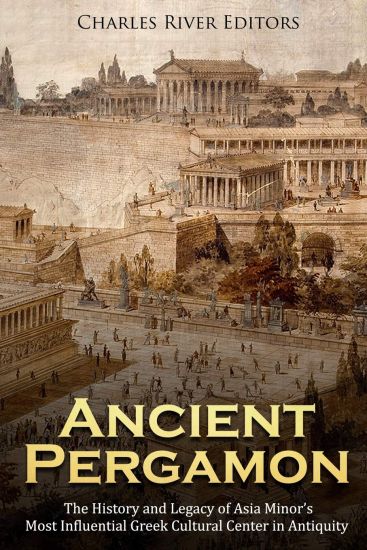
Ancient Pergamon: The History and Legacy of Asia Minor's Most Influential Greek Cultural Center in Antiquity
*Includes pictures *Includes ancient accounts *Includes online resources and a bibliography for further reading The Library of Alexandria was one of the few libraries in the ancient Greek world, which helped ensure that mathematicians, scientists and other scholars from across the Mediterranean traveled to Egypt to study there, and it was so impressive in its size and influence that it left an indelible mark on the world that still reverberates today. At the same time, the importance of such a library meant Alexandria was not the only city with one, which is why the Ptolemies carried their patronage of the arts and the desire for Alexandria to be the cultural center of the Hellenistic world to a whole new level when they banned the export of papyrus - the paper-like reed that was used to compose books in the ancient world - from Egypt (Erskine 1995, 46). At the time, the Ptolemies were not the only Greek kings with a great library in their capital, because the Attalid dynasty of Pergamon also built a library as a testament to Hellenism (Fox, 2001, 393). The Library of Pergamon was established slightly later than the Library of Alexandria, during the reign of king Eumenes II (197-158 BCE) (Thorton 1941, 12), but Eumenes embarked on a program to stock the Library of Pergamon with some of the greatest works of Greek literature in order to rival the Library of Alexandria (Canfora 1989, 46). For example, a complete set of Demosthenes' works was among the classics that graced the shelves in the Pergamon collection (Canfora 1989, 45). This competition seems to have been the basis for the papyrus ban, as the Ptolemies intended to halt academic work in Pergamon, such as editing new editions of the classics. While the Ptolemaic ban on papyrus may have slowed operations at the Library of Pergamon, the introduction of parchment as a medium of writing helped re-stock Pergamon's Library (Thorton 1941, 12). Ultimately, however, despite being considered a great institution of the ancient world in its own right, the Library of Pergamon never approached the size or influence of the Library of Alexandria, making it the loser in the heated competition for academic and cultural prestige. Pergamon (or Pergamum) was a rich and influential ancient city in Aeolis, a major and important district, located on the western coast of Asia Minor. Pergamon was located around 25 kilometers from the Aegean Sea in modern-day Bergama, located in the Izmir Province of Turkey. The city of Pergamon is located on a hilltop in the valley of the river Kaikos, 1,000 ft. above sea level. On the north, the city is surrounded by mountains, while on the east and west, it is surrounded by two major tributaries, the rivers Selinos to the east and Ketios to the west. According to many historians and archaeologists, the city of Pergamon had enormous strategic value, since it overlooked the Caicus River Valley (Bakır ay in modern Turkey), which provided essential access from Pergamon to the Aegean Coast. Pergamon reached the height of its power during the Hellenistic period, becoming the capital of the Attalid kings, which ruled during the 3rd and 2nd centuries BCE. During the Roman period, the city was the first capital of the Asian province, but it ultimately lost this status to its local rival, Ephesus. Thanks to its royalty-decreed monopoly on parchment fabrication ("pergamon" in the Ancient Greek language) and tissues and its transnational commercial activity, the city became an important multicultural center for the entire empire. Furthermore, the city was decorated with gigantic monuments which gave urbanism a new start, competing with the two other important Hellenic centers, Alexandria and Antioch. Ancient Pergamon: The History and Legacy of Asia Minor's Most Influential Greek Cultural Center in Antiquity examines the history of one of the most important Greek cities.
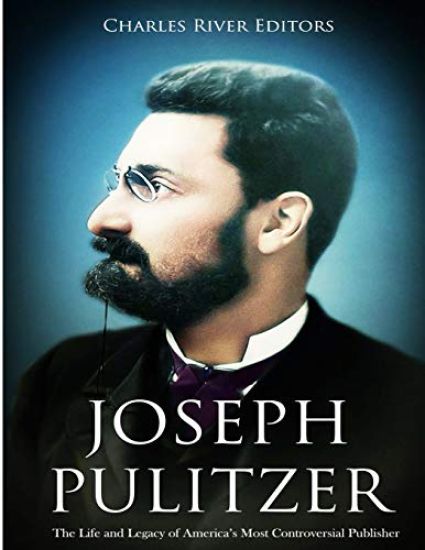
Joseph Pulitzer: The Life and Legacy of America's Most Controversial Publisher

Joseph Pulitzer: The Life and Legacy of America's Most Controversial Publisher

Charles River

Createspace Independent Publishing Platform
2018
nidottu
*Includes pictures *Includes contemporary accounts *Includes online resources and a bibliography for further reading "Publicity, publicity, publicity is the greatest moral factor and force in our public life." - Joseph Pulitzer Say the name Pulitzer and the minds of many across the world quickly turn to the famous prizes given for excellence in journalism, literature, and music, but these prizes were named after a man believed to have been tormented by some of the choices he had made during his life. Coming to America as a nearly penniless immigrant, he demonstrated that the young nation could be a land of opportunity, and he earned money and fame largely through hard work. Later, as the owner of one of the most powerful papers in the country, he seemed to develop an almost frenzied need to stay on top, no matter the cost. Writing for the Post-Dispatch in 1997, Harry Levins observed that Pulitzer considered journalism "a serious instrument of civilization, yet in some periods filled his front pages with froth and sensationalism. Sided with the common man, yet lived like the Gilded Age millionaire he was. Waxed indignant at big business and its profit-seeking machinations, yet insisted that his own big business turn a tidy profit." Indeed, in an effort to turn a profit, plenty of his contemporaries believed he went way too far. In a battle to sell papers, he played a significant role in the burgeoning industry of "yellow journalism," and following the Spanish-American War, he often struggled to come to terms with the role he had played in getting America involved in that conflict. As he grew older, he would attempt to step away from that reputation, and in an effort to redeem himself, he bequeathed much of his fortune to organizations that could establish scholarships and even the first school of journalism, teaching future journalists who came after him to do better. Joseph Pulitzer: The Life and Legacy of America's Most Controversial Publisher examines the various roles Pulitzer played in American journalism and politics during his life, and how he shaped the industry. Along with pictures depicting important people, places, and events, you will learn about Pulitzer like never before.
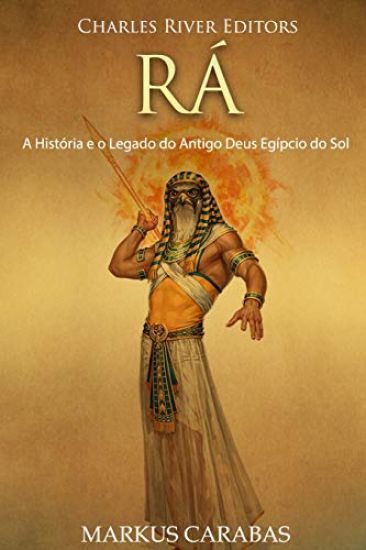
Rá: A História e o Legado do Antigo Deus Egípcio do Sol

Rá: A História e o Legado do Antigo Deus Egípcio do Sol

Markus Carabas; Charles River

Createspace Independent Publishing Platform
2018
nidottu
Talvez o aspecto mais intrigante da antiga civiliza o eg pcia seja sua concep o a partir do zero, uma vez que os antigos eg pcios n o tiveram acesso nenhuma civiliza o pr via que pudessem utilizar como refer ncia. Na verdade, o Antigo Egito tornou-se um modelo para as civiliza es seguintes. Os gregos e os romanos ficaram t o impressionados com a cultura eg pcia que, muitas vezes, atribu am de maneira err nea muitas caracter sticas da pr pria cultura aos eg pcios. Com isto dito, alguns elementos da antiga cultura eg pcia foram, de fato, transferidos para civiliza es posteriores. A estatu ria eg pcia parece ter, inicialmente, influenciado a vers o grega, e a l ngua eg pcia antiga sobreviveu como l ngua copta por muito tempo ap s o per odo fara nico. Embora os eg pcios possam n o ter passado sua cultura diretamente a povos posteriores, elementos-chave que compunham a civiliza o eg pcia, incluindo religi o, ideias iniciais de estado, arte e arquitetura, podem ser encontrados em outras civiliza es. Por exemplo, civiliza es bastante separadas no tempo e espa o, como China e Mesoam rica, possu am elementos-chave semelhantes aos encontrados no Antigo Egito. Sem d vida, j que a civiliza o eg pcia representa conceitos humanos fundamentais, um estudo de sua cultura pode ser muito til para compreender diversas outras culturas pr -modernas. Para os antigos eg pcios, como em qualquer sociedade composta por humanos curiosos, o mundo era um lugar confuso e muitas vezes assustador, repleto de destrui o, morte e fen menos inexplic veis. A fim de encontrar o sentido de tal exist ncia, eles recorreram s hist rias teleol gicas. Criar uma explica o para um fen meno, deixava-o menos horripilante e ajudava a dar sentido ao mundo que os rodeava. N o surpreende, portanto, que antigos deuses eg pcios tenham se infiltrado em todas as particularidades da exist ncia. Dada a abund ncia de artefatos funer rios encontrados nas areias do Egito pode-se, s vezes, parecer que os antigos eg pcios estavam mais preocupados com quest es da vida p s-morte do que com a vida que levavam diariamente. Isso enfatizado pelas pir mides que capturam a imagina o do mundo h s culos. O nome de R era praticamente onipresente nos textos eg pcios antigos, a tal ponto que muitas pessoas hoje se depararam com ele em aulas de hist ria. Amun-Ra, Atum-Ra e Ra-Harakhti t m sido usados no cinema e na literatura modernos h d cadas, mas isolar "R " como um nico personagem, apesar de toda sua preemin ncia no conceito da mitologia eg pcia, frustrantemente dif cil. Pessoas familiarizadas com a mitologia eg pcia conhecem R como o deus-sol, isso parece explicar a centralidade de R na religi o eg pcia antiga, mas h muitas mais quest es envolvidas no fato dele ser tido como uma entidade solar do que uma simples manifesta o do fen meno di rio e inspirador para os primeiros humanos. R foi rei e tirano, amante e amigo. somente atrav s da compreens o dessa divindade que, hoje, as pessoas podem apreciar plenamente a riqueza de seu car ter e dos pap is que desempenhou no pensamento religioso do Egito Antigo. R A Hist ria e Legado do Antigo Deus Eg pcio do Sol analisa o deus que teve impacto decisivo sobre os conceitos de vida dos eg pcios. Junto com fotos que retratam pessoas, lugares e eventos importantes, voc aprender sobre R como nunca antes.
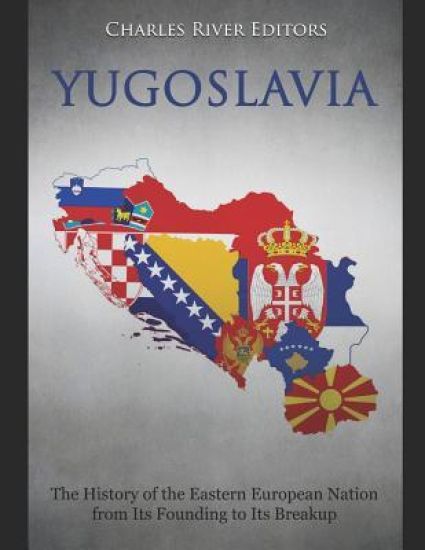
Yugoslavia: The History of the Eastern European Nation from Its Founding to Its Breakup
*Includes pictures*Includes online resources and a bibliography for further readingYugoslavia was arguably one of the most unusual geopolitical creations of the 20th century. The Yugoslav state had never existed in any historical sense, and the ties that bound together its constituent peoples were tenuous at best. Although nominally all "Slavs," the country was an amalgamation of languages, alphabets, cultures, religions and traditions, which ensured its short existence was littered with splits, conflicts, and shocking violence. In a sense, it's somewhat surprising that it lasted as long as it did. In the wake of World War I, as the political boundaries of Europe and the Middle East were redrawn, the Kingdom of Yugoslavia, initially known as the Kingdom of Serbs, Croats and Slovenes, came into existence with a monarch as its head of state. Confirmed at the 1919 Versailles Conference, the "first" Yugoslavia was a particularly fragile enterprise, and there was almost constant tension between the majority Serbs and the other Yugoslav nationalities, especially the Croats. As a result, the Kingdom was a land of political assassinations, underground terrorist organizations, and ethnic animosities. In 1929, King Alexander I suspended democracy and ruled as a dictator until he himself was assassinated in 1934. The Kingdom of Yugoslavia was particularly vulnerable to the forces that engulfed the rest of Europe at the end of the 1930s, including fascism and communism. When the Axis forces attacked in 1941, the country quickly capitulated and was dismembered by the Nazis and their allies. A separate Croatian state was formed, led by Ante Pavelic, who committed some of the worst crimes and human rights abuses of the war. The Balkan region was virtually emptied of its Jewish population, victims of the Nazi Holocaust. During his reign, Tito managed to quash the intense national feelings of the diverse groups making up the Yugoslavian population, and he did so through several methods. He managed to successfully play the two superpower rivals, the United States and Soviet Union, off against each other during the Cold War, and in doing so, he maintained a considerable amount of independence from both, even as he additionally received foreign aid to keep his regime afloat. All the while he remained defiant, once penning a legendary letter to Joseph Stalin warning the Soviet dictator, "To Joseph Stalin: Stop sending people to kill me We've already captured five of them, one of them with a bomb and another with a rifle... If you don't stop sending killers, I'll send a very fast working one to Moscow and I certainly won't have to send another." Internal issues plagued the country in its final years and Tito had tinkered with Yugoslavia's constitution on several occasions. His final attempt, in 1974, saw the partial separation of Kosovo - crucial in the Serb national story - from the rest of Serbia. A number of reasons led to the rising Serb nationalist sentiment after Tito's death, but Kosovo was a central aspect. Yugoslavia required far-sighted, magnanimous leaders to avoid internecine disputes, but none were available, or at least in positions of power in the 1980s. In Croatia, Franjo Tudjman - a long time Croat nationalist - emerged as the republic's leader, and Slobodan Milosevic rose to prominence in the middle of the decade and, despite apparently being a career communist, positioned himself as "defender of the Serbs." He began ousting his rivals and installing sympathetic underlings into leadership positions in Kosovo, Vojvodina, and Montenegro, essentially giving him a majority bloc at the federal level. Depending on the source, many authors have focused on different catalysts for Yugoslavia's demise, but Vesna Drapac may have succinctly summed the situation up when he wrote that by the end, the state "lacked a reason to exist."
Los Gurkas: La historia y legado de los soldados nepaleses utilizados en la India por el Imperio británico
"Si un hombre dice que no teme morir, est mintiendo o es un gurka". - Mariscal de Campo Sam ManekshawEl Regimiento Gurka es sin duda uno de los regimientos del ej rcito brit nico con m s historia. De forma similar a la Legi n Extranjera francesa, sin embargo, ha sido tradicionalmente un regimiento de aventureros y soldados de fortuna, con la simple diferencia de que los gurkas representan solo una etnia minoritaria de la poblaci n nepalesa en general, distinguida por una larga y augusta tradici n marcial. Tradicionalmente, el cuerpo de oficiales de los diversos regimientos de gurkas ha provenido de las filas regulares del ej rcito brit nico, siendo la fluidez en nepal s un requisito b sico. Sin embargo, las bases, y m s recientemente muchos oficiales, provienen de la poblaci n de las monta as nepal es. Para los gurka, Nepal significa no el territorio de 90.000 kil metros cuadrados conocido hoy como Nepal, sino el Valle de Katmand , o Valle de Nepal, drenado por los afluentes del r o Bagmati y rodeado por las estribaciones del Himalaya que la mayor a de los gurkas llaman hogar. Hoy Nepal es una rep blica independiente ubicada entre la India y China, y ocupa el sur del sotavento del Himalaya. La naci n tiene unos 837 kil metros de largo y cerca de 160 kil metros de ancho, y ha sido la naturaleza escabrosa y enrarecida del paisaje la que ha moldeado la constituci n y la mentalidad de las personas en su interior. Los nepaleses tnicos son generalmente bajos y robustos, con pulmones voluminosos y cuerpos fuertes y musculosos. El porteo humano ha sido durante milenios el nico medio de transporte en las monta as y estribaciones que rodean el valle, e incluso hoy en d a probablemente haya poco m s de 320 km de carreteras de asfalto en el pa s. Las principales v as p blicas son los senderos peatonales que interconectan a las comunidades de monta a diseminadas por la regi n. La palabra gurka (o gurkha) puede significar muchas cosas para muchas personas, y esto se debe en gran parte a que no todos los nepal es son gurka, y ciertamente los gurkas no se limitan estrictamente a Nepal. La definici n m s precisa de un gurka probablemente ser a un miembro de un grupo de clanes ligeramente confederados que debe su lealtad a la tradici n militar gurka, y que pertenece al antiguo estado de Gorkha, que ahora forma solo una peque a regi n del Nepal moderno. Su religi n es predominantemente hind , y sus dialectos var an considerablemente en torno a la lingua franca regional de Nepal . Hay nueve tribus principales de gurkas, y estas son Thakurs, Chhetri, Magars, Gurungs, Tamangs, Limbus, Rais, Sanvars y Newars. Las nicas caracter sticas comunes entre todas estas, con la posible excepci n de los Newars, son una antigua vocaci n al porte de armas, y el arma caracter stica, el "Khukuri", que es omnipresente entre todos los gurkas y es el arma b sica de cualquier miembro de la Brigada Gurka. Los gurkas: La historia y legado de los soldados nepaleses utilizados en la India por el Imperio brit nico examina a estos famosos soldados y sus contribuciones a lo largo de los siglos. En conjunto con im genes de personas, lugares y eventos importantes, aprender acerca de los gurkas como nunca antes.
Uncle Sam's Devil Island: The History and Legacy of Alcatraz Island

Uncle Sam's Devil Island: The History and Legacy of Alcatraz Island

Charles River

Createspace Independent Publishing Platform
2018
nidottu
*Includes pictures *Includes online resources and a bibliography for further reading Alcatraz Island has been home to a lighthouse, a military fort, a national park, and gatherings of Native American protesters, but say the name Alcatraz to any American and they will immediately associate it with prison. This is somewhat ironic since the island, just a mile and a half away from San Francisco in the Bay, was a federal prison for only three decades, but in that time, "The Rock" became notorious for being the most secure prison in the nation. In that time, 3 dozen prisoners tried to escape, which led to the "Battle of Alcatraz" and some of the most complex plots ever made to bust out, but nobody ever successfully escaped The Rock, and several died trying. As one commenter poignantly put it, "You break the rules, you go to prison. You break the prison rules, you go to Alcatraz Prison." Another writer echoed this sentiment, calling Alcatraz "the great garbage can of San Francisco Bay, into which every federal prison dumped its most rotten apples." In a sense, it was fitting that Alcatraz became the most famous prison in American history, because hundreds of years before the penitentiary was located there, it was being used by Native Americans to banish members. Thanks to the strong currents near it and the cold, inhospitable terrain of the small island, Native Americans only used it sparingly, and unruly members were often sent there as punishment. While local Native Americans referred to it as "Evil Island," the island got its most famous name from Spanish explorer Juan Manuel de Ayala, who mapped the Bay in 1775 and named the island "La Isla de los Alcatraces" ("The Island of the Pelicans"). Although pelicans no longer call the island home, a French explorer in the early 19th century confirmed that the island was "covered with a countless number of these birds. A gun fired over the feathered legions caused them to fly up in a great cloud and with a noise like a hurricane." Like the Native Americans, the Spanish barely used the island, but given its location, the island would eventually have military value. The federal government eventually established a fort on the island, and it was soon used to hold Confederate prisoners during the Civil War. During the war, one Union supporter gloated over the news that one Confederate sympathizer "will be transported to the healthful but breezy atmosphere of Alcatraz Island, where he can ruminate ad nauseum and chew the bitter end of treason." For all of these reasons, Alcatraz has a unique legacy and it remains a fixture of American pop culture. Indeed, it remains one of San Francisco's most popular tourist destinations. As a former captain of the guards, Philip Bergen, put it, "The public never wanted to know that real Alcatraz. Even today after the prison has been closed for so many decades, the public just won't let go of the myths." Uncle Sam's Devil Island: The History and Legacy of Alcatraz Island chronicles the history of the island before, during, and after it became America's most notorious prison. Along with pictures of important people, places, and events, you will learn about the Rock like never before.
The Opium Wars and Sino-Japanese Wars: The History of the Conflicts that Ended China's Standing as a World Power
*Includes pictures*Includes contemporary accountsThe 19th century saw the rise of one of the largest, most powerful empires of the modern era. The sun never set on the British Empire, whose holdings spanned the globe, in one form or another. Its naval supremacy linked the Commonwealth of Canada with the colonies in South Africa and India, and through them trade flowed east and west. An integral but underutilized part of this vast trade network included China, a reclusive Asian kingdom closed off from the Western world that desired none of its goods. Unfortunately for China, the British had the might of an empire and economic force, not to mention modern arms, on their side. Breaking into China's lucrative trade markets nearly destroyed the nation, severely discredited the Chinese dynasty, wreaked havoc on its people, and further propelled Britain's empire into a dominant economic and military position. The collision of these two empires took many years and caused much bloodshed. In fact, the troubles started well before the eventual hostilities, festering as frustration mounted until finally boiling over. Such was the state of relations between the British Empire and Qing Dynasty for the better part of the century, its footing upended from the very start of relations. Though both nations modernized, and China far outweighed Japan in terms of men and materiel potential, the island nation handily won its first modern war. The conflict resulted in Japan's short-term gains in the wake of victory, and the long term disaster for both sides' new roles in Asia, for with the end of Chinese dominance in East Asia came a new era for the region as a whole, an era whose consequences and horrors would not be fully realized for several more decades. In 1937, the Empire of Japan once more went to war with China, a nation broken into petty warlord fiefdoms and wracked by civil war. The most modern Asian nation enacted a brutal campaign over the fragmented realms that made up China, committing atrocities just as horrendous as their Axis ally in Europe. Despite this, the sheer size of China, coupled with Japan's overextension, allowed the larger, less developed nation to endure. At the same time, China was experiencing an equally brutal civil war between Nationalist and Communist forces. This civil war became inextricably intertwined with the Second Sino-Japanese War and World War II, and the sheer scale of the horrors of the conflict remain hard to believe today, even as action in that theater is often overlooked because of events in Europe. The Opium Wars and Sino-Japanese Wars: The History of the Conflicts that Ended China's Standing as a World Power examines the origins of the wars, their results, and how they destroyed the Chinese Empire and led to Mao's takeover after World War II. Along with pictures and a bibliography, you will learn about the Opium Wars and Sino-Japanese Wars like never before.
The Birth of the Republic of Ireland: The History of Ireland's Split from the British Empire in the Early 20th Century
*Includes pictures*Includes online resources and a bibliography for further reading"If you strike us down now we shall rise again and renew the fight. You cannot conquer Ireland; you cannot extinguish the Irish passion for freedom. If our deed has not been sufficient to win freedom then our children will win it by a better deed." - Patrick Pearse There are very few national relationships quite as complicated and enigmatic as the one that exists between the English and the Irish. For two peoples so interconnected by geography and history, the depth of animosity that is often expressed is difficult at times to understand. At the same time, historic links of family and clan, and common Gaelic roots, have at times fostered a degree of mutual regard, interdependence, and cooperation that is also occasionally hard to fathom. During World War I, for example, Ireland fought for the British Empire as part of that empire, and the Irish response to the call to arms was at times just as enthusiastic as that of other British dominions such as Canada, Australia, and New Zealand. And yet, at the same time, plots were unearthed to cooperate with the Germans in toppling British rule in Ireland, which would have virtually ensured an Allied defeat. In World War II, despite Irish neutrality, 12,000 Irish soldiers volunteered to join the Khaki line, returning after the war to the scorn and vitriol of a great many of their more radical countrymen. One of the most bitter and divisive struggles in the history of the British Isles, and in the history of the British Empire, played out over the question of Home Rule and Irish independence, and then later still as the British province of Northern Ireland grappled within itself for the right to secede from the United Kingdom or the right to remain. What is it within this complicated relationship that has kept this strange duality of mutual love and hate at play? A rendition of "Danny Boy" has the power to reduce both Irishmen and Englishmen to tears, and yet they have torn at one another in a violent conflict that can be traced to the very dawn of their contact. This history of the British Isles themselves is in part responsible. The fraternal difficulties of two neighbors so closely aligned, but so unequally endowed, can be blamed for much of the trouble. The imperialist tendencies of the English themselves, tendencies that created an empire that embodied the best and worst of humanity, alienated them from not only the Irish, but the Scots and Welsh too. However, the British also extended that colonial duality to other great societies of the world, India not least among them, without the same enduring suspicion and hostility. There is certainly something much more than the sum of its parts in this curious combination of love and loathing that characterizes the Anglo-Irish relationship. The Birth of the Republic of Ireland: The History of Ireland's Split from the British Empire in the Early 20th Century analyzes the tumultuous events that marked Irish history during the early 20th century. Along with pictures of important people, places, and events, you will learn about Ireland in the early 20th century like never before.
Tycho Brahe and Johannes Kepler: The Lives of the Early Modern Astronomers Whose Partnership Revolutionized the Field of Astronomy
*Includes pictures *Includes contemporary accounts *Includes online resources and a bibliography for further reading "That the machine of Heaven is not a hard and impervious body full of various real spheres, as up to now has been believed by most people. It will be proved that it extends everywhere, most fluid and simple, and nowhere presents obstacles as was formerly held, the circuits of the Planets being wholly free and without the labour and whirling round of any real spheres at all, being divinely governed under a given law." - Tycho Brahe A mystical dwarf jester gifted with the second sight. A pet elk with an incurable addiction to booze. A kidnapping in broad daylight. A daunting dictator who dines with kings and princes in his miniature kingdom. These may seem like characters and elements lifted straight out of a medieval fantasy novel, but they are just a few of the bizarre, fascinating episodes that make up Tycho Brahe's strange life. Of all the stories, Brahe's death may be the strangest of all, and it has led to the exhumation of his corpse on multiple occasions, in one case more than 400 years after he died. Trying to define a man who had the qualities of a mathematician, astronomer, philosopher, inventor, and astrologer can prove difficult. But all of that can be ascribed to Johannes Kepler, one of the giants of his era who ushered in the Scientific Revolution and is often considered the first modern scientist. Kepler stood at a moment in time when the intellectual worldview of most in northern Europe was medieval in nature, influenced mostly by spirituality, mysticism, religion, and metaphysics. Kepler, however, was far-thinking in his outlook, taking advantages of the latest technological ideas from the Renaissance and the new translations of Greco-Roman philosophers from out of the Spanish kingdoms and the former-Byzantine Empire. Kepler himself struggled with the seemingly incongruous division between metaphysics and empiricism. By practicing empiricism and coming up with his famous laws of planetary motion, he was forced to defend his positions against a number of important ideas in western philosophy and the contemporary understanding of nature and the cosmos. All the while, Kepler was never able to escape the medieval mind he possessed, and he looked for God in the designs of the cosmos, thus attempting to wed the supernatural to the physical. Ironically, Kepler never produced results that confirmed his worldview of the cosmos - he never found the divine design of nature - but he did produce ideas that led to the view of today's universe. As such, Kepler's work came to form the backbone of modern astronomy Tycho Brahe and Johannes Kepler: The Lives of the Early Modern Astronomers Whose Partnership Revolutionized the Field of Astronomy examines the work that made the two of them some of history's most important scientists. Along with pictures of important people, places, and events, you will learn about Tycho Brahe and Johannes Kepler like never before.
The Birth of the Republic of Ireland: The History of Ireland's Split from the British Empire in the Early 20th Century
*Includes pictures*Includes online resources and a bibliography for further reading"If you strike us down now we shall rise again and renew the fight. You cannot conquer Ireland; you cannot extinguish the Irish passion for freedom. If our deed has not been sufficient to win freedom then our children will win it by a better deed." - Patrick Pearse There are very few national relationships quite as complicated and enigmatic as the one that exists between the English and the Irish. For two peoples so interconnected by geography and history, the depth of animosity that is often expressed is difficult at times to understand. At the same time, historic links of family and clan, and common Gaelic roots, have at times fostered a degree of mutual regard, interdependence, and cooperation that is also occasionally hard to fathom. During World War I, for example, Ireland fought for the British Empire as part of that empire, and the Irish response to the call to arms was at times just as enthusiastic as that of other British dominions such as Canada, Australia, and New Zealand. And yet, at the same time, plots were unearthed to cooperate with the Germans in toppling British rule in Ireland, which would have virtually ensured an Allied defeat. In World War II, despite Irish neutrality, 12,000 Irish soldiers volunteered to join the Khaki line, returning after the war to the scorn and vitriol of a great many of their more radical countrymen. One of the most bitter and divisive struggles in the history of the British Isles, and in the history of the British Empire, played out over the question of Home Rule and Irish independence, and then later still as the British province of Northern Ireland grappled within itself for the right to secede from the United Kingdom or the right to remain. What is it within this complicated relationship that has kept this strange duality of mutual love and hate at play? A rendition of "Danny Boy" has the power to reduce both Irishmen and Englishmen to tears, and yet they have torn at one another in a violent conflict that can be traced to the very dawn of their contact. This history of the British Isles themselves is in part responsible. The fraternal difficulties of two neighbors so closely aligned, but so unequally endowed, can be blamed for much of the trouble. The imperialist tendencies of the English themselves, tendencies that created an empire that embodied the best and worst of humanity, alienated them from not only the Irish, but the Scots and Welsh too. However, the British also extended that colonial duality to other great societies of the world, India not least among them, without the same enduring suspicion and hostility. There is certainly something much more than the sum of its parts in this curious combination of love and loathing that characterizes the Anglo-Irish relationship. The Birth of the Republic of Ireland: The History of Ireland's Split from the British Empire in the Early 20th Century analyzes the tumultuous events that marked Irish history during the early 20th century. Along with pictures of important people, places, and events, you will learn about Ireland in the early 20th century like never before.
The Bear River Massacre: The History and Legacy of the U.S. Army's Most Notorious Attack on the Shoshone in the Pacific Northwest
*Includes pictures *Includes contemporary accounts *Includes online resources and a bibliography for further reading From the "Trail of Tears" to Wounded Knee and Little Bighorn, the narrative of American history is incomplete without the inclusion of the Native Americans that lived on the continent before European settlers arrived in the 16th and 17th centuries. Since the first contact between natives and settlers, tribes like the Sioux, Cherokee, and Navajo have both fascinated and perplexed outsiders with their history, language, and culture. The Shoshone are still remembered for their assistance, especially Sacagawea, and they maintained contact with Americans throughout the 19th century, but unfortunately, the cooperation gave way to conflict as white settlers began to move westward and enter onto lands occupied by the Shoshone. In 1862, California officials sent the Third California Volunteer Infantry under the command of Colonel Patrick Connor to construct a fort (Fort Douglas) in the foothills of the Wasatch Mountains above Salt Lake City, in an effort to keep lines of communication open so pioneers would not be hesitant about settling in the region. Meanwhile, Shoshone Chief Bear Hunter (Wirasuap) led his band on raids against mining camps and Mormon settlements. In January 1863, Colonel Connor led 300 volunteers out of the newly completed Fort Douglas through 140 miles of bitter cold to reach Chief Bear Hunter's camp on the eastern shore of the Great Salt Lake, culminating in what would become known as the Bear River Massacre at Preston, Idaho. During the fighting, Connor's men trapped and killed an estimated 350-500 Northwestern Shoshone, including women, children, and the elderly. According to William Hull, a local settler sent to look for survivors, "After killing most of the men and many of the children, they raped and assaulted the women. In some cases, soldiers held the feet of infants by the heel and beat their brains out on any hard substance they could find. Women who resisted the soldiers were shot and killed. Never will I forget the scene, dead bodies were everywhere. I counted eight deep in one place and in several places they were three to five deep; all in all we counted nearly four hundred; two-thirds of this number being women and children. We found two Indian women alive whose thighs had been broken by the bullets. Two little boys and one little girl about three years of age were still living. The little girl was badly wounded, having eight flesh wounds in her body." This would be the highest number of fatalities suffered by the Shoshone at the hands of the U. S. military, but the fighting was far from over. Capitalizing on their victory, which effectively ended what had been widely reported as "Wirasuap's War Path," the federal government approved an open claim on the most hospitable lands of the Great Basin, leaving the Shoshone with the understanding that their lands would soon be lost to white ranchers, farmers, and prospectors. The Shoshone would continue to oppose American soldiers during the "Snake War," a reference to Americans' collective term for the Northern Paiute, Bannock, and Western Shoshone bands living along the Snake River in Oregon, Nevada, California, and Idaho Territory, but most of the Shoshone's resistance ended by 1865. By the time the Shoshone had been relegated to reservation life, there were fewer than 5,000 members left. The Bear River Massacre: The History and Legacy of the U. S. Army's Most Notorious Attack on the Shoshone in the Pacific Northwest looks at the chain of events that led to one of the most notorious attacks of the 19th century on the frontier. Along with pictures depicting important people, places, and events, you will learn about the Bear River Massacre like never before.
The Roman Provinces of North Africa: The History of the Region and Its Rulers after the Punic Wars
*Includes pictures *Includes ancient accounts *Includes online resources and a bibliography for further reading Carthage was one of the great ancient civilizations, and at its peak, the wealthy Carthaginian empire dominated the Mediterranean against the likes of Greece and Rome, with commercial enterprises and influence stretching from Spain to Turkey. In fact, at several points in history it had a very real chance of replacing the fledgling Roman Empire or the failing Greek poleis (city-states) altogether as master of the Mediterranean. Although Carthage by far preferred to exert economic pressure and influence before resorting to direct military power (and even went so far as to rely primarily on mercenary armies paid with its vast wealth for much of its history, it nonetheless produced a number of outstanding generals, from the likes of Hanno Magnus to, of course, the great bogeyman of Roman nightmares himself: Hannibal. Certain foreign policy decisions led to continuing enmity between Carthage and the burgeoning power of Rome, and what followed was a series of wars which turned from a battle for Mediterranean hegemony into an all-out struggle for survival. Although the Romans gained the upper hand in the wake of the First Punic War, Hannibal brought the Romans to their knees for over a decade during the Second Punic War. While military historians are still amazed that he was able to maintain his army in Italy near Rome for nearly 15 years, scholars are still puzzled over some of his decisions, including why he never attempted to march on Rome in the first place. After the serious threat Hannibal posed during the Second Punic War, the Romans didn't wait much longer to take the fight to the Carthaginians in the Third Punic War, which ended with Roman legions smashing Carthage to rubble. As legend has it, the Romans literally salted the ground upon which Carthage stood to ensure its destruction once and for all. At its height, the Roman Empire covered huge swathes of Western Europe, the Middle East, Egypt, and North Africa, and while many people are aware of Rome's influence and legacy in Europe and the Middle East, they often have less understanding of Roman settlements on North Africa's Mediterranean coast. Nonetheless, this was an area that produced a number of emperors (including the only black emperors), some of the most sophisticated towns and cities of the empire, and Roman ruins that offer some of the best evidence of the Roman way of life to be found anywhere in the world. Apart from the complicated nature of evolving administrative systems in the area, another major challenge for modern researchers of the Roman period in North African history is that the natural environment was very different from that of today. The usual assumption is that the region was only fertile on the coast and that the hinterlands could not have provided the resources needed to maintain large, wealthy populations. However, in ancient times, North Africa was a fertile region, and scientists believe the vast area of steep grasslands that covered most of what is the Sahara Desert today began to dry about 5,000 years ago, and the process of grasslands turning into deserts was slow. While there is considerable debate as to the time the process took and whether the small-scale farming techniques used in the region contributed to the process of desiccation, it is clear that the area around Carthage, for example, had a wide area of well-cultivated lands, and that such cultivation lasted well into the Middle Ages. The Roman Provinces of North Africa: The History of the Region and Its Rulers after the Punic Wars looks at Rome's famous conquests, and what the area was like until the dissolution of history's most famous empire. Along with pictures depicting important people, places, and events, you will learn about the Roman provinces of North Africa like never before.
Tycho Brahe and Johannes Kepler: The Lives of the Early Modern Astronomers Whose Partnership Revolutionized the Field of Astronomy
*Includes pictures *Includes contemporary accounts *Includes online resources and a bibliography for further reading "That the machine of Heaven is not a hard and impervious body full of various real spheres, as up to now has been believed by most people. It will be proved that it extends everywhere, most fluid and simple, and nowhere presents obstacles as was formerly held, the circuits of the Planets being wholly free and without the labour and whirling round of any real spheres at all, being divinely governed under a given law." - Tycho Brahe A mystical dwarf jester gifted with the second sight. A pet elk with an incurable addiction to booze. A kidnapping in broad daylight. A daunting dictator who dines with kings and princes in his miniature kingdom. These may seem like characters and elements lifted straight out of a medieval fantasy novel, but they are just a few of the bizarre, fascinating episodes that make up Tycho Brahe's strange life. Of all the stories, Brahe's death may be the strangest of all, and it has led to the exhumation of his corpse on multiple occasions, in one case more than 400 years after he died. Trying to define a man who had the qualities of a mathematician, astronomer, philosopher, inventor, and astrologer can prove difficult. But all of that can be ascribed to Johannes Kepler, one of the giants of his era who ushered in the Scientific Revolution and is often considered the first modern scientist. Kepler stood at a moment in time when the intellectual worldview of most in northern Europe was medieval in nature, influenced mostly by spirituality, mysticism, religion, and metaphysics. Kepler, however, was far-thinking in his outlook, taking advantages of the latest technological ideas from the Renaissance and the new translations of Greco-Roman philosophers from out of the Spanish kingdoms and the former-Byzantine Empire. Kepler himself struggled with the seemingly incongruous division between metaphysics and empiricism. By practicing empiricism and coming up with his famous laws of planetary motion, he was forced to defend his positions against a number of important ideas in western philosophy and the contemporary understanding of nature and the cosmos. All the while, Kepler was never able to escape the medieval mind he possessed, and he looked for God in the designs of the cosmos, thus attempting to wed the supernatural to the physical. Ironically, Kepler never produced results that confirmed his worldview of the cosmos - he never found the divine design of nature - but he did produce ideas that led to the view of today's universe. As such, Kepler's work came to form the backbone of modern astronomy Tycho Brahe and Johannes Kepler: The Lives of the Early Modern Astronomers Whose Partnership Revolutionized the Field of Astronomy examines the work that made the two of them some of history's most important scientists. Along with pictures of important people, places, and events, you will learn about Tycho Brahe and Johannes Kepler like never before.
The Vikings at Home and Abroad: The History of the Norsemen during the Viking Age
*Includes pictures*Includes medieval accounts*Includes online resources and a bibliography for further readingOver the centuries, the West has become fascinated by the Vikings, one of the most mysterious and interesting European civilizations. In addition to being perceived as a remarkably unique culture among its European counterparts, what's known and not known about the Vikings' accomplishments has added an intriguing aura to the historical narrative. Were they fierce and fearsome warriors? Were they the first Europeans to visit North America? It seems some of the legends are true, and some are just that, legend. Like many civilizations of past millennia, the Vikings are remembered in popular culture more for the fantastical accounts of their history than for reality. The written records of the history of the Viking period, consisting mostly of Norse sagas, metaphoric poems called skalds and monastic chronicles, were written down well after the events they described and tended to be lurid accounts rife with hyperbole. Furthermore, the most scathing tales of Viking raids are contained in the histories of monastic communities which were targets of Norse rapacity. These chronicles speak of the heathen Viking depredations of monastic treasuries and the ferocious torture and killing of Christian monks. The colorful bloody tales were certainly based on more than grains of truth, but they were also purposefully augmented to inject drama into history. Similarly Norse sagas written down in the post-Viking Age fixed what had hitherto been flexible oral tradition. They were often slanted to legitimize a clan or leader's authority by emphasizing an ancestor's bravery and skill in pillaging opponent's communities. However, the Vikings' reputation for ferocious seaborne attacks along the coasts of Northern Europe is no exaggeration. It is true that the Norsemen, who traded extensively throughout Europe, often increased the profits obtained from their nautical ventures through plunder, acquiring precious metals and slaves. Of course, the Vikings were not the only ones participating in this kind of income generation - between the 8th and the 11th centuries, European tribes, clans, kingdoms and monastic communities were quite adept at fighting with each other for the purpose of obtaining booty. The Vikings were simply more consistently successful than their contemporaries and thus became suitable symbols for the iniquity of the times. The Norsemen were also medieval Europe's greatest explorers, moving across the North Atlantic to settle in Iceland, Greenland, and even North America. The first step in this epic journey was Iceland, a rugged island in the North Atlantic about 400 miles from the Faroe Islands and about 700 miles from the north coast of Scotland. Iceland has been called "the land of ice and fire," and the name is an apt one. Rugged fjords lead to towering glaciers. In spots, hot springs and geysers give a little warmth to green meadows and patches of bare, exposed bedrock. Active volcanoes loom over the landscape, sending plumes of smoke into the air and sometimes streams of lava far and wide. It's a land guaranteed to capture the imagination of an adventurous and pagan people who saw spirits in every hill and stream. Their settlements in Greenland were perhaps the most impressive, given that the bleak and unforgiving land was mostly uninhabited when they first made it there. Greenland is huge, measuring almost 840,000 square miles (1.35 million square kilometers). The interior is uninhabitable glacier and mountain, but the periphery is cut by countless fjords that shelter the inhabitants from some of the worst of the winds. Nonetheless, the Norse managed to live there for about 450 years among some of their most remote outposts, and Greenland would maintain strong ties to the rest of Europe.
The People from Here: The History and Legacy of the Washoe

The People from Here: The History and Legacy of the Washoe

Charles River

Createspace Independent Publishing Platform
2018
nidottu
*Includes pictures *Includes contemporary accounts *Includes online resources and a bibliography for further reading "It is said that Col. Connor is determined to exterminate the Indians who have been killing the Emigrants on the route to the Gold Mines in Washington Territory. Small detachments have been leaving for the North for several days. If the present expedition copies the doings of the other that preceded it, it will result in catching some friendly Indians, murdering them, and letting the guilty scamps remain undisturbed in their mountain haunts." - George A. Smith, Journal History of the LDS Church From the "Trail of Tears" to Wounded Knee and Little Bighorn, the narrative of American history is incomplete without the inclusion of the Native Americans that lived on the continent before European settlers arrived in the 16th and 17th centuries. Since the first contact between natives and settlers, tribes like the Sioux, Cherokee, and Navajo have both fascinated and perplexed outsiders with their history, language, and culture. The People from Here: The History and Legacy of the Washoe looks at the long history of the Native American tribe, their origins, and what happened when they came into contact with whites. Along with pictures depicting important people, places, and events, you will learn about the Washoe like never before.
Ancient Pergamon: The History and Legacy of Asia Minor's Most Influential Greek Cultural Center in Antiquity
*Includes pictures *Includes ancient accounts *Includes online resources and a bibliography for further reading The Library of Alexandria was one of the few libraries in the ancient Greek world, which helped ensure that mathematicians, scientists and other scholars from across the Mediterranean traveled to Egypt to study there, and it was so impressive in its size and influence that it left an indelible mark on the world that still reverberates today. At the same time, the importance of such a library meant Alexandria was not the only city with one, which is why the Ptolemies carried their patronage of the arts and the desire for Alexandria to be the cultural center of the Hellenistic world to a whole new level when they banned the export of papyrus - the paper-like reed that was used to compose books in the ancient world - from Egypt (Erskine 1995, 46). At the time, the Ptolemies were not the only Greek kings with a great library in their capital, because the Attalid dynasty of Pergamon also built a library as a testament to Hellenism (Fox, 2001, 393). The Library of Pergamon was established slightly later than the Library of Alexandria, during the reign of king Eumenes II (197-158 BCE) (Thorton 1941, 12), but Eumenes embarked on a program to stock the Library of Pergamon with some of the greatest works of Greek literature in order to rival the Library of Alexandria (Canfora 1989, 46). For example, a complete set of Demosthenes' works was among the classics that graced the shelves in the Pergamon collection (Canfora 1989, 45). This competition seems to have been the basis for the papyrus ban, as the Ptolemies intended to halt academic work in Pergamon, such as editing new editions of the classics. While the Ptolemaic ban on papyrus may have slowed operations at the Library of Pergamon, the introduction of parchment as a medium of writing helped re-stock Pergamon's Library (Thorton 1941, 12). Ultimately, however, despite being considered a great institution of the ancient world in its own right, the Library of Pergamon never approached the size or influence of the Library of Alexandria, making it the loser in the heated competition for academic and cultural prestige. Pergamon (or Pergamum) was a rich and influential ancient city in Aeolis, a major and important district, located on the western coast of Asia Minor. Pergamon was located around 25 kilometers from the Aegean Sea in modern-day Bergama, located in the Izmir Province of Turkey. The city of Pergamon is located on a hilltop in the valley of the river Kaikos, 1,000 ft. above sea level. On the north, the city is surrounded by mountains, while on the east and west, it is surrounded by two major tributaries, the rivers Selinos to the east and Ketios to the west. According to many historians and archaeologists, the city of Pergamon had enormous strategic value, since it overlooked the Caicus River Valley (Bakır ay in modern Turkey), which provided essential access from Pergamon to the Aegean Coast. Pergamon reached the height of its power during the Hellenistic period, becoming the capital of the Attalid kings, which ruled during the 3rd and 2nd centuries BCE. During the Roman period, the city was the first capital of the Asian province, but it ultimately lost this status to its local rival, Ephesus. Thanks to its royalty-decreed monopoly on parchment fabrication ("pergamon" in the Ancient Greek language) and tissues and its transnational commercial activity, the city became an important multicultural center for the entire empire. Furthermore, the city was decorated with gigantic monuments which gave urbanism a new start, competing with the two other important Hellenic centers, Alexandria and Antioch. Ancient Pergamon: The History and Legacy of Asia Minor's Most Influential Greek Cultural Center in Antiquity examines the history of one of the most important Greek cities.