Kirjojen hintavertailu – 12 903 725 kirjaa ja 27 kauppaa

Kirjailija

Charles River

Kirjat ja teokset yhdessä paikassa: 4 673 kirjaa, julkaisuja vuosilta 2013–2022, suosituimpiin kuuluu William Powell and Myrna Loy: The Lives and Careers of One of Classical Hollywood's Most Iconic Duos. Vertaile teosten hintoja ja tarkista saatavuus suomalaisista kirjakaupoista.

4 673 kirjaa

Kirjojen julkaisuvuodet: 2013–2022.

Uncle Sam's Devil Island: The History and Legacy of Alcatraz Island

Uncle Sam's Devil Island: The History and Legacy of Alcatraz Island

Charles River

Createspace Independent Publishing Platform
2018
nidottu
*Includes pictures *Includes online resources and a bibliography for further reading Alcatraz Island has been home to a lighthouse, a military fort, a national park, and gatherings of Native American protesters, but say the name Alcatraz to any American and they will immediately associate it with prison. This is somewhat ironic since the island, just a mile and a half away from San Francisco in the Bay, was a federal prison for only three decades, but in that time, "The Rock" became notorious for being the most secure prison in the nation. In that time, 3 dozen prisoners tried to escape, which led to the "Battle of Alcatraz" and some of the most complex plots ever made to bust out, but nobody ever successfully escaped The Rock, and several died trying. As one commenter poignantly put it, "You break the rules, you go to prison. You break the prison rules, you go to Alcatraz Prison." Another writer echoed this sentiment, calling Alcatraz "the great garbage can of San Francisco Bay, into which every federal prison dumped its most rotten apples." In a sense, it was fitting that Alcatraz became the most famous prison in American history, because hundreds of years before the penitentiary was located there, it was being used by Native Americans to banish members. Thanks to the strong currents near it and the cold, inhospitable terrain of the small island, Native Americans only used it sparingly, and unruly members were often sent there as punishment. While local Native Americans referred to it as "Evil Island," the island got its most famous name from Spanish explorer Juan Manuel de Ayala, who mapped the Bay in 1775 and named the island "La Isla de los Alcatraces" ("The Island of the Pelicans"). Although pelicans no longer call the island home, a French explorer in the early 19th century confirmed that the island was "covered with a countless number of these birds. A gun fired over the feathered legions caused them to fly up in a great cloud and with a noise like a hurricane." Like the Native Americans, the Spanish barely used the island, but given its location, the island would eventually have military value. The federal government eventually established a fort on the island, and it was soon used to hold Confederate prisoners during the Civil War. During the war, one Union supporter gloated over the news that one Confederate sympathizer "will be transported to the healthful but breezy atmosphere of Alcatraz Island, where he can ruminate ad nauseum and chew the bitter end of treason." For all of these reasons, Alcatraz has a unique legacy and it remains a fixture of American pop culture. Indeed, it remains one of San Francisco's most popular tourist destinations. As a former captain of the guards, Philip Bergen, put it, "The public never wanted to know that real Alcatraz. Even today after the prison has been closed for so many decades, the public just won't let go of the myths." Uncle Sam's Devil Island: The History and Legacy of Alcatraz Island chronicles the history of the island before, during, and after it became America's most notorious prison. Along with pictures of important people, places, and events, you will learn about the Rock like never before.

Famine and Rebellion: The History of Ireland Under the British Empire in the 19th Century
*Includes pictures*Includes online resources and a bibliography for further reading"If you strike us down now we shall rise again and renew the fight. You cannot conquer Ireland; you cannot extinguish the Irish passion for freedom. If our deed has not been sufficient to win freedom then our children will win it by a better deed." - Padraig Pearse There are very few national relationships quite as complicated and enigmatic as the one that exists between the English and the Irish. For two peoples so interconnected by geography and history, the depth of animosity that is often expressed is difficult at times to understand. At the same time, historic links of family and clan, and common Gaelic roots, have at times fostered a degree of mutual regard, interdependence, and cooperation that is also occasionally hard to fathom. During World War I, for example, Ireland fought for the British Empire as part of that empire, and the Irish response to the call to arms was at times just as enthusiastic as that of other British dominions such as Canada, Australia, and New Zealand. And yet, at the same time, plots were unearthed to cooperate with the Germans in toppling British rule in Ireland, which would have virtually ensured an Allied defeat. In World War II, despite Irish neutrality, 12,000 Irish soldiers volunteered to join the Khaki line, returning after the war to the scorn and vitriol of a great many of their more radical countrymen. One of the most bitter and divisive struggles in the history of the British Isles, and in the history of the British Empire, played out over the question of Home Rule and Irish independence, and then later still as the British province of Northern Ireland grappled within itself for the right to secede from the United Kingdom or the right to remain. What is it within this complicated relationship that has kept this strange duality of mutual love and hate at play? A rendition of "Danny Boy" has the power to reduce both Irishmen and Englishmen to tears, and yet they have torn at one another in a violent conflict that can be traced to the very dawn of their contact. This history of the British Isles themselves is in part responsible. The fraternal difficulties of two neighbors so closely aligned, but so unequally endowed, can be blamed for much of the trouble. The imperialist tendencies of the English themselves, tendencies that created an empire that embodied the best and worst of humanity, alienated them from not only the Irish, but the Scots and Welsh too. However, the British also extended that colonial duality to other great societies of the world, India not least among them, without the same enduring suspicion and hostility. There is certainly something much more than the sum of its parts in this curious combination of love and loathing that characterizes the Anglo-Irish relationship. Famine and Rebellion: The History of Ireland Under the British Empire in the 19th Century analyzes the tumultuous events that marked Irish history during British rule in the 19th century. Along with pictures of important people, places, and events, you will learn about Ireland in the 19th century like never before.
The Opium Wars and Sino-Japanese Wars: The History of the Conflicts that Ended China's Standing as a World Power
*Includes pictures*Includes contemporary accountsThe 19th century saw the rise of one of the largest, most powerful empires of the modern era. The sun never set on the British Empire, whose holdings spanned the globe, in one form or another. Its naval supremacy linked the Commonwealth of Canada with the colonies in South Africa and India, and through them trade flowed east and west. An integral but underutilized part of this vast trade network included China, a reclusive Asian kingdom closed off from the Western world that desired none of its goods. Unfortunately for China, the British had the might of an empire and economic force, not to mention modern arms, on their side. Breaking into China's lucrative trade markets nearly destroyed the nation, severely discredited the Chinese dynasty, wreaked havoc on its people, and further propelled Britain's empire into a dominant economic and military position. The collision of these two empires took many years and caused much bloodshed. In fact, the troubles started well before the eventual hostilities, festering as frustration mounted until finally boiling over. Such was the state of relations between the British Empire and Qing Dynasty for the better part of the century, its footing upended from the very start of relations. Though both nations modernized, and China far outweighed Japan in terms of men and materiel potential, the island nation handily won its first modern war. The conflict resulted in Japan's short-term gains in the wake of victory, and the long term disaster for both sides' new roles in Asia, for with the end of Chinese dominance in East Asia came a new era for the region as a whole, an era whose consequences and horrors would not be fully realized for several more decades. In 1937, the Empire of Japan once more went to war with China, a nation broken into petty warlord fiefdoms and wracked by civil war. The most modern Asian nation enacted a brutal campaign over the fragmented realms that made up China, committing atrocities just as horrendous as their Axis ally in Europe. Despite this, the sheer size of China, coupled with Japan's overextension, allowed the larger, less developed nation to endure. At the same time, China was experiencing an equally brutal civil war between Nationalist and Communist forces. This civil war became inextricably intertwined with the Second Sino-Japanese War and World War II, and the sheer scale of the horrors of the conflict remain hard to believe today, even as action in that theater is often overlooked because of events in Europe. The Opium Wars and Sino-Japanese Wars: The History of the Conflicts that Ended China's Standing as a World Power examines the origins of the wars, their results, and how they destroyed the Chinese Empire and led to Mao's takeover after World War II. Along with pictures and a bibliography, you will learn about the Opium Wars and Sino-Japanese Wars like never before.
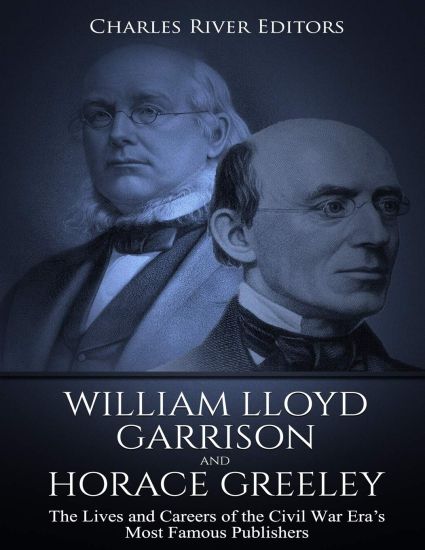
William Lloyd Garrison and Horace Greeley: The Lives and Careers of the Civil War Era's Most Famous Publishers
*Includes pictures *Includes online resources and a bibliography for further reading "I cherish as strong a love for the land of my nativity as any man living. I am proud of her civil, political and religious institutions... But I have some solemn accusations to bring against her. I accuse her of insulting the majesty of Heaven with the grossest mockery that was ever exhibited to man - inasmuch as, professing to be the land of the free and the asylum of the oppressed, she falsifies every profession, and shamelessly plays the tyrant." - William Lloyd Garrison "Journalism will kill you, but it will keep you alive while you're at it." - Horace Greeley Nearly a century after the first unified resistance against the British, strife over slavery widened to the point of civil war, and the condition of slaves in America was in several aspects worse than at any time during the 18th century. As the nation tried to sort out its most intractable political issue, politicians and advocates on each side of the divide became increasingly more passionate, and vocal. The dam would burst completely after Abraham Lincoln's election in 1860, and the refusal of Northern states to strictly apply the new fugitive slave law would be explicitly cited in several of the Southern states' articles of secession in late 1860 and early 1861. By April 1861, the Civil War had broken out. Well before Lincoln and the "Black Republicans" were cited by secessionist firebrands looking to justify their stances, one of the men they most bitterly opposed was abolitionist editor William Lloyd Garrison. While many begin their adult lives with very strident views and then mellow over time, he did just the opposite. Raised by a pious single mother, he embraced the general teachings of the Christian faith as a young man, and in his 20s, he became convicted that slavery was the greatest moral evil in the nation. Thereafter, he devoted most of his life to seeing it ended, and he refused to give an inch in the name of compromise on the things he felt strongly about. As he famously put it, "With reasonable men, I will reason; with humane men I will plead; but to tyrants I will give no quarter, nor waste arguments where they will certainly be lost." At the end of his life, Garrison could look back on the fact that he had played a major role in ending America's original sin, and its most evil institution. At the same time, he had also to be aware that many of the wrongs he opposed, such as the death penalty and war, remained in place, while the rights he championed, for men and women of all races, remained to be realized. While Garrison had a profound influence on the abolition movement, few of his contemporaries were as influential as Horace Greeley. There is little one can say about Greeley that has not already been said, much of it during his lifetime, for unlike many others, fame came to him early, and by the end of his life he was already one of the most famous men in the United States. Of course, no one who knew him as a young man would ever have thought that this would be the case, for he was born into less than ideal circumstances, and he went out to work early as a print setter. He experienced several business failures before finding success with the New York Tribune. On the other hand, he enjoyed quick but brief political successes, followed by frequent but unsuccessful runs for public office. In his 2017, essay, "Emerson's Newspaperman: Horace Greeley and Radical Intellectual Culture, 1836-1872," David O. Dowling observed that Greeley "brokered his career in large part on public controversy, much of which he openly courted. In the process, he became victim to savage lampoons, particularly by Thomas Nast...his views elicited a deluge of responses precisely because his outspoken editorials had run counter to the status quo..."
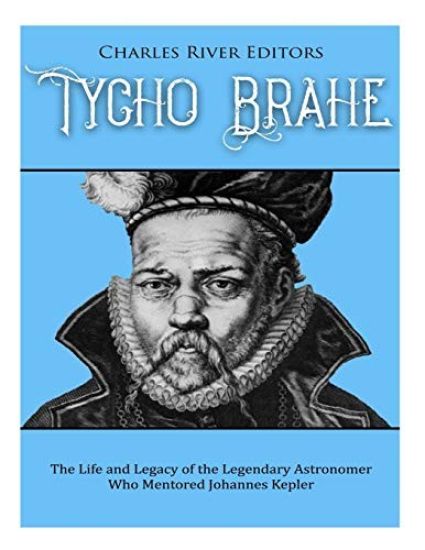
Tycho Brahe: The Life and Legacy of the Legendary Astronomer Who Mentored Johannes Kepler
*Includes pictures *Includes contemporary accounts *Includes online resources and a bibliography for further reading "That the machine of Heaven is not a hard and impervious body full of various real spheres, as up to now has been believed by most people. It will be proved that it extends everywhere, most fluid and simple, and nowhere presents obstacles as was formerly held, the circuits of the Planets being wholly free and without the labour and whirling round of any real spheres at all, being divinely governed under a given law." - Tycho Brahe A mystical dwarf jester gifted with the second sight. A pet elk with an incurable addiction to booze. A kidnapping in broad daylight. A daunting dictator who dines with kings and princes in his miniature kingdom. These may seem like characters and elements lifted straight out of a medieval fantasy novel, but they are just a few of the bizarre, fascinating episodes that make up Tycho Brahe's strange life. Of all the stories, Brahe's death may be the strangest of all, and it has led to the exhumation of his corpse on multiple occasions, in one case more than 400 years after he died. As interesting as the stories about Brahe are, chances are he wouldn't be remembered if not for the important work he did, especially in the realm of astronomy. He lived in an era when the intellectual worldview of most in northern Europe was medieval in nature, influenced mostly by spirituality, mysticism, religion, and metaphysics. Brahe, however, was far-thinking in his outlook, taking advantages of the latest technological ideas and practicing empiricism to revolutionize the field of science. This work eventually led Brahe to cross paths with Johannes Kepler, whose laws on planetary motion would change everything. Tycho Brahe: The Life and Legacy of the Legendary Astronomer Who Mentored Johannes Kepler examines the life and work that made him one of history's most important scientists. Along with pictures of important people, places, and events, you will learn about Tycho Brahe like never before.
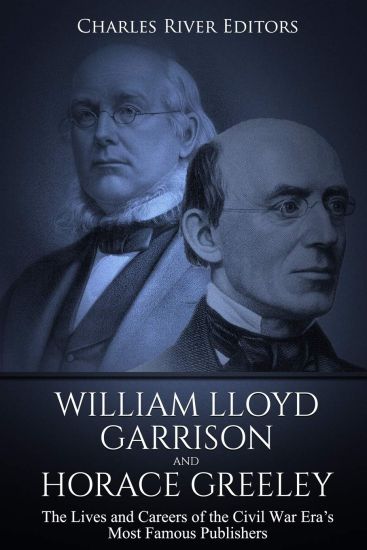
William Lloyd Garrison and Horace Greeley: The Lives and Careers of the Civil War Era's Most Famous Publishers
*Includes pictures *Includes online resources and a bibliography for further reading "I cherish as strong a love for the land of my nativity as any man living. I am proud of her civil, political and religious institutions... But I have some solemn accusations to bring against her. I accuse her of insulting the majesty of Heaven with the grossest mockery that was ever exhibited to man - inasmuch as, professing to be the land of the free and the asylum of the oppressed, she falsifies every profession, and shamelessly plays the tyrant." - William Lloyd Garrison "Journalism will kill you, but it will keep you alive while you're at it." - Horace Greeley Nearly a century after the first unified resistance against the British, strife over slavery widened to the point of civil war, and the condition of slaves in America was in several aspects worse than at any time during the 18th century. As the nation tried to sort out its most intractable political issue, politicians and advocates on each side of the divide became increasingly more passionate, and vocal. The dam would burst completely after Abraham Lincoln's election in 1860, and the refusal of Northern states to strictly apply the new fugitive slave law would be explicitly cited in several of the Southern states' articles of secession in late 1860 and early 1861. By April 1861, the Civil War had broken out. Well before Lincoln and the "Black Republicans" were cited by secessionist firebrands looking to justify their stances, one of the men they most bitterly opposed was abolitionist editor William Lloyd Garrison. While many begin their adult lives with very strident views and then mellow over time, he did just the opposite. Raised by a pious single mother, he embraced the general teachings of the Christian faith as a young man, and in his 20s, he became convicted that slavery was the greatest moral evil in the nation. Thereafter, he devoted most of his life to seeing it ended, and he refused to give an inch in the name of compromise on the things he felt strongly about. As he famously put it, "With reasonable men, I will reason; with humane men I will plead; but to tyrants I will give no quarter, nor waste arguments where they will certainly be lost." At the end of his life, Garrison could look back on the fact that he had played a major role in ending America's original sin, and its most evil institution. At the same time, he had also to be aware that many of the wrongs he opposed, such as the death penalty and war, remained in place, while the rights he championed, for men and women of all races, remained to be realized. While Garrison had a profound influence on the abolition movement, few of his contemporaries were as influential as Horace Greeley. There is little one can say about Greeley that has not already been said, much of it during his lifetime, for unlike many others, fame came to him early, and by the end of his life he was already one of the most famous men in the United States. Of course, no one who knew him as a young man would ever have thought that this would be the case, for he was born into less than ideal circumstances, and he went out to work early as a print setter. He experienced several business failures before finding success with the New York Tribune. On the other hand, he enjoyed quick but brief political successes, followed by frequent but unsuccessful runs for public office. In his 2017, essay, "Emerson's Newspaperman: Horace Greeley and Radical Intellectual Culture, 1836-1872," David O. Dowling observed that Greeley "brokered his career in large part on public controversy, much of which he openly courted. In the process, he became victim to savage lampoons, particularly by Thomas Nast...his views elicited a deluge of responses precisely because his outspoken editorials had run counter to the status quo..."
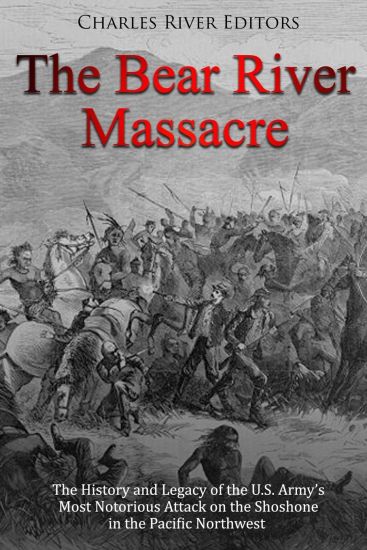
The Bear River Massacre: The History and Legacy of the U.S. Army's Most Notorious Attack on the Shoshone in the Pacific Northwest
*Includes pictures *Includes contemporary accounts *Includes online resources and a bibliography for further reading From the "Trail of Tears" to Wounded Knee and Little Bighorn, the narrative of American history is incomplete without the inclusion of the Native Americans that lived on the continent before European settlers arrived in the 16th and 17th centuries. Since the first contact between natives and settlers, tribes like the Sioux, Cherokee, and Navajo have both fascinated and perplexed outsiders with their history, language, and culture. The Shoshone are still remembered for their assistance, especially Sacagawea, and they maintained contact with Americans throughout the 19th century, but unfortunately, the cooperation gave way to conflict as white settlers began to move westward and enter onto lands occupied by the Shoshone. In 1862, California officials sent the Third California Volunteer Infantry under the command of Colonel Patrick Connor to construct a fort (Fort Douglas) in the foothills of the Wasatch Mountains above Salt Lake City, in an effort to keep lines of communication open so pioneers would not be hesitant about settling in the region. Meanwhile, Shoshone Chief Bear Hunter (Wirasuap) led his band on raids against mining camps and Mormon settlements. In January 1863, Colonel Connor led 300 volunteers out of the newly completed Fort Douglas through 140 miles of bitter cold to reach Chief Bear Hunter's camp on the eastern shore of the Great Salt Lake, culminating in what would become known as the Bear River Massacre at Preston, Idaho. During the fighting, Connor's men trapped and killed an estimated 350-500 Northwestern Shoshone, including women, children, and the elderly. According to William Hull, a local settler sent to look for survivors, "After killing most of the men and many of the children, they raped and assaulted the women. In some cases, soldiers held the feet of infants by the heel and beat their brains out on any hard substance they could find. Women who resisted the soldiers were shot and killed. Never will I forget the scene, dead bodies were everywhere. I counted eight deep in one place and in several places they were three to five deep; all in all we counted nearly four hundred; two-thirds of this number being women and children. We found two Indian women alive whose thighs had been broken by the bullets. Two little boys and one little girl about three years of age were still living. The little girl was badly wounded, having eight flesh wounds in her body." This would be the highest number of fatalities suffered by the Shoshone at the hands of the U. S. military, but the fighting was far from over. Capitalizing on their victory, which effectively ended what had been widely reported as "Wirasuap's War Path," the federal government approved an open claim on the most hospitable lands of the Great Basin, leaving the Shoshone with the understanding that their lands would soon be lost to white ranchers, farmers, and prospectors. The Shoshone would continue to oppose American soldiers during the "Snake War," a reference to Americans' collective term for the Northern Paiute, Bannock, and Western Shoshone bands living along the Snake River in Oregon, Nevada, California, and Idaho Territory, but most of the Shoshone's resistance ended by 1865. By the time the Shoshone had been relegated to reservation life, there were fewer than 5,000 members left. The Bear River Massacre: The History and Legacy of the U. S. Army's Most Notorious Attack on the Shoshone in the Pacific Northwest looks at the chain of events that led to one of the most notorious attacks of the 19th century on the frontier. Along with pictures depicting important people, places, and events, you will learn about the Bear River Massacre like never before.
The Vikings in Iceland: The History of the Norse Expeditions and Settlements across Iceland
*Includes pictures*Includes medieval accounts*Includes online resources and a bibliography for further readingLike many civilizations of past millennia, the Vikings are remembered in popular culture more for the fantastical accounts of their history than for reality. The written records of the history of the Viking period, consisting mostly of Norse sagas, metaphoric poems called skalds and monastic chronicles, were written down well after the events they described and tended to be lurid accounts rife with hyperbole. Furthermore, the most scathing tales of Viking raids are contained in the histories of monastic communities which were targets of Norse rapacity. These chronicles speak of the heathen Viking depredations of monastic treasuries and the ferocious torture and killing of Christian monks. The colorful bloody tales were certainly based on more than grains of truth, but they were also purposefully augmented to inject drama into history. Similarly Norse sagas written down in the post-Viking Age fixed what had hitherto been flexible oral tradition. They were often slanted to legitimize a clan or leader's authority by emphasizing an ancestor's bravery and skill in pillaging opponent's communities. As a result, the almost ubiquitous depiction of the Vikings as horn-helmeted, brutish, hairy giants who mercilessly marauded among the settlements of Northern Europe is based on an abundance of prejudicial historical writing by those who were on the receiving end of Viking depredations, and much of the popular picture of the Vikings is a result of the romantic imagination of novelists and artists. For example, there is neither historical nor archaeological evidence that the typically red haired, freckled Norsemen entered battle wearing a metal helmet decorated with horns. This headgear was an invention of the Swedish painter and illustrator Johan August Malmstr m (1829-1901), and his work was so widely disseminated in popular books that the image stuck. Today the imaginary Viking helmet is an almost mandatory costume accessory in productions of Wagner's opera Der Ring des Nibelungen, which is not about the Vikings at all. It seems the horned helmet evolved from an imaginary reinterpretation of genuine Viking images of a winged helmet that may have been worn by priests in Viking religious ceremonies. The Norsemen were also medieval Europe's greatest explorers, moving across the North Atlantic to settle in Iceland, Greenland, and even North America. The first step in this epic journey was Iceland, a rugged island in the North Atlantic about 400 miles from the Faroe Islands and about 700 miles from the north coast of Scotland. Iceland has been called "the land of ice and fire," and the name is an apt one. Rugged fjords lead to towering glaciers. In spots, hot springs and geysers give a little warmth to green meadows and patches of bare, exposed bedrock. Active volcanoes loom over the landscape, sending plumes of smoke into the air and sometimes streams of lava far and wide. It's a land guaranteed to capture the imagination of an adventurous and pagan people who saw spirits in every hill and stream. Iceland was settled by the Norse in the late 9th century, and they started a thriving and unique culture at the edge of the known world. Until it was taken over by the Kingdom of Norway in 1262, it had no central government, instead consisting of a patchwork of large and small chiefdoms mediating disputes via an early form of the parliamentary system. The Vikings in Iceland: The History of the Norse Expeditions and Settlements across Iceland looks at the history of the Vikings' activities in Iceland, and how they affected subsequent exploration and colonization. Along with pictures depicting important people, places, and events, you will learn about the Vikings in Iceland like never before.
The Vikings in Iceland: The History of the Norse Expeditions and Settlements across Iceland
*Includes pictures*Includes medieval accounts*Includes online resources and a bibliography for further readingLike many civilizations of past millennia, the Vikings are remembered in popular culture more for the fantastical accounts of their history than for reality. The written records of the history of the Viking period, consisting mostly of Norse sagas, metaphoric poems called skalds and monastic chronicles, were written down well after the events they described and tended to be lurid accounts rife with hyperbole. Furthermore, the most scathing tales of Viking raids are contained in the histories of monastic communities which were targets of Norse rapacity. These chronicles speak of the heathen Viking depredations of monastic treasuries and the ferocious torture and killing of Christian monks. The colorful bloody tales were certainly based on more than grains of truth, but they were also purposefully augmented to inject drama into history. Similarly Norse sagas written down in the post-Viking Age fixed what had hitherto been flexible oral tradition. They were often slanted to legitimize a clan or leader's authority by emphasizing an ancestor's bravery and skill in pillaging opponent's communities. As a result, the almost ubiquitous depiction of the Vikings as horn-helmeted, brutish, hairy giants who mercilessly marauded among the settlements of Northern Europe is based on an abundance of prejudicial historical writing by those who were on the receiving end of Viking depredations, and much of the popular picture of the Vikings is a result of the romantic imagination of novelists and artists. For example, there is neither historical nor archaeological evidence that the typically red haired, freckled Norsemen entered battle wearing a metal helmet decorated with horns. This headgear was an invention of the Swedish painter and illustrator Johan August Malmstr m (1829-1901), and his work was so widely disseminated in popular books that the image stuck. Today the imaginary Viking helmet is an almost mandatory costume accessory in productions of Wagner's opera Der Ring des Nibelungen, which is not about the Vikings at all. It seems the horned helmet evolved from an imaginary reinterpretation of genuine Viking images of a winged helmet that may have been worn by priests in Viking religious ceremonies. The Norsemen were also medieval Europe's greatest explorers, moving across the North Atlantic to settle in Iceland, Greenland, and even North America. The first step in this epic journey was Iceland, a rugged island in the North Atlantic about 400 miles from the Faroe Islands and about 700 miles from the north coast of Scotland. Iceland has been called "the land of ice and fire," and the name is an apt one. Rugged fjords lead to towering glaciers. In spots, hot springs and geysers give a little warmth to green meadows and patches of bare, exposed bedrock. Active volcanoes loom over the landscape, sending plumes of smoke into the air and sometimes streams of lava far and wide. It's a land guaranteed to capture the imagination of an adventurous and pagan people who saw spirits in every hill and stream. Iceland was settled by the Norse in the late 9th century, and they started a thriving and unique culture at the edge of the known world. Until it was taken over by the Kingdom of Norway in 1262, it had no central government, instead consisting of a patchwork of large and small chiefdoms mediating disputes via an early form of the parliamentary system. The Vikings in Iceland: The History of the Norse Expeditions and Settlements across Iceland looks at the history of the Vikings' activities in Iceland, and how they affected subsequent exploration and colonization. Along with pictures depicting important people, places, and events, you will learn about the Vikings in Iceland like never before.
O Exército Britânico nas Guerras Mundiais: A História das Forças Terrestres da Grã-Bretanha durante a Primeira Guerra Mundial e a Segunda Guerra Mundi
A Primeira Guerra Mundial, tamb m conhecida em sua poca como a "Grande Guerra" ou a "Guerra para Acabar com Todas as Guerras", foi um holocausto sem precedentes em termos de sua escala. Lutado por homens que vinham de todos os cantos do globo, viu milh es de soldados batalharem em ataques brutais de atrito que se arrastaram por meses com pouca ou nenhuma pausa. Dezenas de milh es de proj teis de artilharia e incont veis centenas de milh es de balas de fuzis e metralhadoras foram disparados em um conflito que demonstrou a capacidade do homem de matar uns aos outros numa escala sem precedentes e, como sempre, tal guerra trouxe inova o tecnol gica a uma taxa Isso fez com que o boom da Revolu o Industrial parecesse estagnado. A imagem duradoura da Primeira Guerra Mundial de homens presos em trincheiras lamacentas e de vastos ex rcitos em uma batalha que nenhum dos dois poderia vencer. Foi uma guerra de arame farpado, g s venenoso e terr veis perdas, enquanto oficiais conduziam suas tropas em cargas em massa pela Terra de Ningu m e em uma saraivada de balas. Embora essas impress es sejam verdadeiras demais, elas escondem o fato de que a guerra de trincheiras era din mica e estava constantemente evoluindo durante a guerra, enquanto todos os ex rcitos lutavam para encontrar uma maneira de romper as linhas opostas. Embora a Primeira Guerra Mundial seja quase sin nimo de guerra de trincheiras, esse m todo de combate n o era novidade. Tinha havido uso extensivo de trincheiras durante as fases posteriores da Guerra Civil americana (1864-1865), e uma guerra de trincheiras foi constante durante a segunda guerra dos B eres (1899-1902), a Guerra Russo-japonesa (1904-1905) e a guerra dos Balc s (1912-1913). Esses conflitos mostraram que o poder de fogo moderno combinado com posi es entrincheiradas deram uma vantagem decisiva ao defensor, mas os observadores europeus falharam em aprender quaisquer li es desses conflitos, e a escala da guerra de trincheiras na Primeira Guerra Mundial eclipsou qualquer coisa antes ou depois, especialmente em Frente Ocidental. No in cio de 1941, n o estava claro se os Aliados seriam capazes de permanecer na guerra por muito mais tempo. O primeiro-ministro brit nico, Winston Churchill, j havia imortalizado os homens da Royal Air Force com uma das mais famosas cota es de guerra do Ocidente, mas o potencial de uma invas o alem na Gr -Bretanha ainda se aproximava. Com o conforto da retrospectiva, os historiadores agora sugerem que a imagem era na verdade mais complexa do que isso, mas a Batalha da Gr -Bretanha, travada durante todo o ver o e in cio do outono de 1940, foi inquestionavelmente pica no escopo. A maior campanha a rea da hist ria na poca, a alardeada Luftwaffe nazista tentou esmagar a For a A rea Real, mas felizmente, a RAF ficou cara a cara com a Luftwaffe e assegurou a invas o planejada de Hitler foi permanentemente colocada em espera. A vit ria aliada na Batalha da Gr -Bretanha infligiu uma derrota psicol gica e f sica Luftwaffe e ao regime nazista em geral, e como o ltimo basti o da democracia na Europa, a Gr -Bretanha forneceria o apoio para a invas o da Europa em junho de 1944 que libertou o continente. . Por essas raz es, a Batalha da Inglaterra foi um dos pontos decisivos do conflito mais mortal da hist ria. Os Estados Unidos come aram em 1942 determinados a vingar Pearl Harbor, mas os Aliados, agora incluindo a Uni o Sovi tica por necessidade, n o concordaram com a estrat gia de guerra. Em 1941, tanto alem es quanto brit nicos movimentaram ex rcitos para o norte da frica, onde a It lia j havia tentado e n o conseguiu chegar ao Canal de Suez.
O exército britânico na Primeira Guerra Mundial: A história e o legado do exército em todos os momentos da primeira grande guerra
A Primeira Guerra Mundial, tamb m conhecida em sua poca como a "Grande Guerra" ou a "Guerra para Acabar com Todas as Guerras", foi um holocausto sem precedentes em termos de sua escala. Lutado por homens que vinham de todos os cantos do globo, viu milh es de soldados batalharem em ataques brutais de atrito que se arrastaram por meses com pouca ou nenhuma pausa. Dezenas de milh es de proj teis de artilharia e incont veis centenas de milh es de balas de fuzis e metralhadoras foram disparados em um conflito que demonstrou a capacidade do homem de matar uns aos outros numa escala sem precedentes e, como sempre, tal guerra trouxe inova o tecnol gica a uma taxa Isso fez com que o boom da Revolu o Industrial parecesse estagnado. A imagem duradoura da Primeira Guerra Mundial de homens presos em trincheiras lamacentas e de vastos ex rcitos em uma batalha que nenhum dos dois poderia vencer. Foi uma guerra de arame farpado, g s venenoso e terr veis perdas, enquanto oficiais conduziam suas tropas em cargas em massa pela Terra de Ningu m e em uma saraivada de balas. Embora essas impress es sejam verdadeiras demais, elas escondem o fato de que a guerra de trincheiras era din mica e estava constantemente evoluindo durante a guerra, enquanto todos os ex rcitos lutavam para encontrar uma maneira de romper as linhas opostas. Embora a Primeira Guerra Mundial seja quase sin nimo de guerra de trincheiras, esse m todo de combate n o era novidade. Tinha havido uso extensivo de trincheiras durante as fases posteriores da Guerra Civil americana (1864-1865), e uma guerra de trincheiras foi constante durante a segunda guerra dos B eres (1899-1902), a Guerra Russo-japonesa (1904-1905) e a guerra dos Balc s (1912-1913). Esses conflitos mostraram que o poder de fogo moderno combinado com posi es entrincheiradas deram uma vantagem decisiva ao defensor, mas os observadores europeus falharam em aprender quaisquer li es desses conflitos, e a escala da guerra de trincheiras na Primeira Guerra Mundial eclipsou qualquer coisa antes ou depois, especialmente em Frente Ocidental. Desde a Revolu o Industrial, a produ o de armas e material aumentou em ordens de magnitude, assim como a qualidade e a uniformidade dos produtos. V rios desenvolvimentos j haviam ocorrido nos anos que antecederam o conflito, trampolins para a vasta escalada na inova o militar que ocorreu imediatamente antes e durante a Primeira Guerra Mundial. A principal delas foi a inven o da p lvora sem fuma a, que ocorreu simultaneamente entre v rias pot ncias entre 1890 e 1905. Este foi um desenvolvimento crucial, pois eliminou o literal "nevoeiro de guerra" que em vastas quantidades obscureceu o campo de batalha inteiramente e em um n vel individual, ambos deram a posi o de atiradores e tornaram imposs vel para eles disparar com precis o a menos que se afastassem sua pr pria nuvem de fuma a. Mais inova es inclu ram a ado o em servi o da primeiras polia metralhadoras, antecessores daqueles que poderia causar tal carnificina nas trincheiras e o desenvolvimento do canh o que n o rolar para tr s ap s cada tiro como s culo XIX pe as, mas manteve-se fixo no lugar.
O exército britânico na Primeira Guerra Mundial: A história e o legado do exército em todos os momentos da primeira grande guerra
A Primeira Guerra Mundial, tamb m conhecida em sua poca como a "Grande Guerra" ou a "Guerra para Acabar com Todas as Guerras", foi um holocausto sem precedentes em termos de sua escala. Lutado por homens que vinham de todos os cantos do globo, viu milh es de soldados batalharem em ataques brutais de atrito que se arrastaram por meses com pouca ou nenhuma pausa. Dezenas de milh es de proj teis de artilharia e incont veis centenas de milh es de balas de fuzis e metralhadoras foram disparados em um conflito que demonstrou a capacidade do homem de matar uns aos outros numa escala sem precedentes e, como sempre, tal guerra trouxe inova o tecnol gica a uma taxa Isso fez com que o boom da Revolu o Industrial parecesse estagnado. A imagem duradoura da Primeira Guerra Mundial de homens presos em trincheiras lamacentas e de vastos ex rcitos em uma batalha que nenhum dos dois poderia vencer. Foi uma guerra de arame farpado, g s venenoso e terr veis perdas, enquanto oficiais conduziam suas tropas em cargas em massa pela Terra de Ningu m e em uma saraivada de balas. Embora essas impress es sejam verdadeiras demais, elas escondem o fato de que a guerra de trincheiras era din mica e estava constantemente evoluindo durante a guerra, enquanto todos os ex rcitos lutavam para encontrar uma maneira de romper as linhas opostas. Embora a Primeira Guerra Mundial seja quase sin nimo de guerra de trincheiras, esse m todo de combate n o era novidade. Tinha havido uso extensivo de trincheiras durante as fases posteriores da Guerra Civil americana (1864-1865), e uma guerra de trincheiras foi constante durante a segunda guerra dos B eres (1899-1902), a Guerra Russo-japonesa (1904-1905) e a guerra dos Balc s (1912-1913). Esses conflitos mostraram que o poder de fogo moderno combinado com posi es entrincheiradas deram uma vantagem decisiva ao defensor, mas os observadores europeus falharam em aprender quaisquer li es desses conflitos, e a escala da guerra de trincheiras na Primeira Guerra Mundial eclipsou qualquer coisa antes ou depois, especialmente em Frente Ocidental. Desde a Revolu o Industrial, a produ o de armas e material aumentou em ordens de magnitude, assim como a qualidade e a uniformidade dos produtos. V rios desenvolvimentos j haviam ocorrido nos anos que antecederam o conflito, trampolins para a vasta escalada na inova o militar que ocorreu imediatamente antes e durante a Primeira Guerra Mundial. A principal delas foi a inven o da p lvora sem fuma a, que ocorreu simultaneamente entre v rias pot ncias entre 1890 e 1905. Este foi um desenvolvimento crucial, pois eliminou o literal "nevoeiro de guerra" que em vastas quantidades obscureceu o campo de batalha inteiramente e em um n vel individual, ambos deram a posi o de atiradores e tornaram imposs vel para eles disparar com precis o a menos que se afastassem sua pr pria nuvem de fuma a. Mais inova es inclu ram a ado o em servi o da primeiras polia metralhadoras, antecessores daqueles que poderia causar tal carnificina nas trincheiras e o desenvolvimento do canh o que n o rolar para tr s ap s cada tiro como s culo XIX pe as, mas manteve-se fixo no lugar.
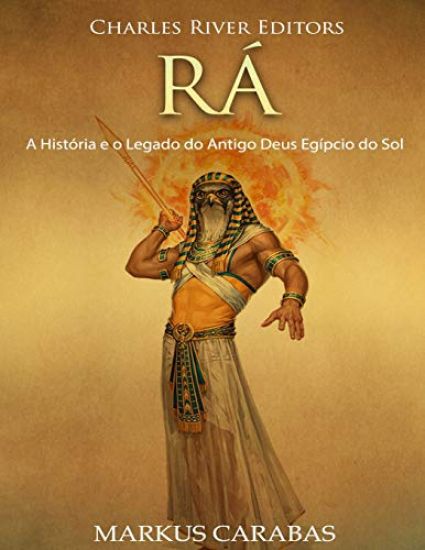
Rá: A História e o Legado do Antigo Deus Egípcio do Sol

Rá: A História e o Legado do Antigo Deus Egípcio do Sol

Charles River

Createspace Independent Publishing Platform
2018
nidottu
Talvez o aspecto mais intrigante da antiga civiliza o eg pcia seja sua concep o a partir do zero, uma vez que os antigos eg pcios n o tiveram acesso nenhuma civiliza o pr via que pudessem utilizar como refer ncia. Na verdade, o Antigo Egito tornou-se um modelo para as civiliza es seguintes. Os gregos e os romanos ficaram t o impressionados com a cultura eg pcia que, muitas vezes, atribu am de maneira err nea muitas caracter sticas da pr pria cultura aos eg pcios. Com isto dito, alguns elementos da antiga cultura eg pcia foram, de fato, transferidos para civiliza es posteriores. A estatu ria eg pcia parece ter, inicialmente, influenciado a vers o grega, e a l ngua eg pcia antiga sobreviveu como l ngua copta por muito tempo ap s o per odo fara nico. Embora os eg pcios possam n o ter passado sua cultura diretamente a povos posteriores, elementos-chave que compunham a civiliza o eg pcia, incluindo religi o, ideias iniciais de estado, arte e arquitetura, podem ser encontrados em outras civiliza es. Por exemplo, civiliza es bastante separadas no tempo e espa o, como China e Mesoam rica, possu am elementos-chave semelhantes aos encontrados no Antigo Egito. Sem d vida, j que a civiliza o eg pcia representa conceitos humanos fundamentais, um estudo de sua cultura pode ser muito til para compreender diversas outras culturas pr -modernas. Para os antigos eg pcios, como em qualquer sociedade composta por humanos curiosos, o mundo era um lugar confuso e muitas vezes assustador, repleto de destrui o, morte e fen menos inexplic veis. A fim de encontrar o sentido de tal exist ncia, eles recorreram s hist rias teleol gicas. Criar uma explica o para um fen meno, deixava-o menos horripilante e ajudava a dar sentido ao mundo que os rodeava. N o surpreende, portanto, que antigos deuses eg pcios tenham se infiltrado em todas as particularidades da exist ncia. Dada a abund ncia de artefatos funer rios encontrados nas areias do Egito pode-se, s vezes, parecer que os antigos eg pcios estavam mais preocupados com quest es da vida p s-morte do que com a vida que levavam diariamente. Isso enfatizado pelas pir mides que capturam a imagina o do mundo h s culos. O nome de R era praticamente onipresente nos textos eg pcios antigos, a tal ponto que muitas pessoas hoje se depararam com ele em aulas de hist ria. Amun-Ra, Atum-Ra e Ra-Harakhti t m sido usados no cinema e na literatura modernos h d cadas, mas isolar "R " como um nico personagem, apesar de toda sua preemin ncia no conceito da mitologia eg pcia, frustrantemente dif cil. Pessoas familiarizadas com a mitologia eg pcia conhecem R como o deus-sol, isso parece explicar a centralidade de R na religi o eg pcia antiga, mas h muitas mais quest es envolvidas no fato dele ser tido como uma entidade solar do que uma simples manifesta o do fen meno di rio e inspirador para os primeiros humanos. R foi rei e tirano, amante e amigo. somente atrav s da compreens o dessa divindade que, hoje, as pessoas podem apreciar plenamente a riqueza de seu car ter e dos pap is que desempenhou no pensamento religioso do Egito Antigo. R A Hist ria e Legado do Antigo Deus Eg pcio do Sol analisa o deus que teve impacto decisivo sobre os conceitos de vida dos eg pcios. Junto com fotos que retratam pessoas, lugares e eventos importantes, voc aprender sobre R como nunca antes.
The People from Here: The History and Legacy of the Washoe

The People from Here: The History and Legacy of the Washoe

Charles River

Createspace Independent Publishing Platform
2018
nidottu
*Includes pictures *Includes contemporary accounts *Includes online resources and a bibliography for further reading "It is said that Col. Connor is determined to exterminate the Indians who have been killing the Emigrants on the route to the Gold Mines in Washington Territory. Small detachments have been leaving for the North for several days. If the present expedition copies the doings of the other that preceded it, it will result in catching some friendly Indians, murdering them, and letting the guilty scamps remain undisturbed in their mountain haunts." - George A. Smith, Journal History of the LDS Church From the "Trail of Tears" to Wounded Knee and Little Bighorn, the narrative of American history is incomplete without the inclusion of the Native Americans that lived on the continent before European settlers arrived in the 16th and 17th centuries. Since the first contact between natives and settlers, tribes like the Sioux, Cherokee, and Navajo have both fascinated and perplexed outsiders with their history, language, and culture. The People from Here: The History and Legacy of the Washoe looks at the long history of the Native American tribe, their origins, and what happened when they came into contact with whites. Along with pictures depicting important people, places, and events, you will learn about the Washoe like never before.
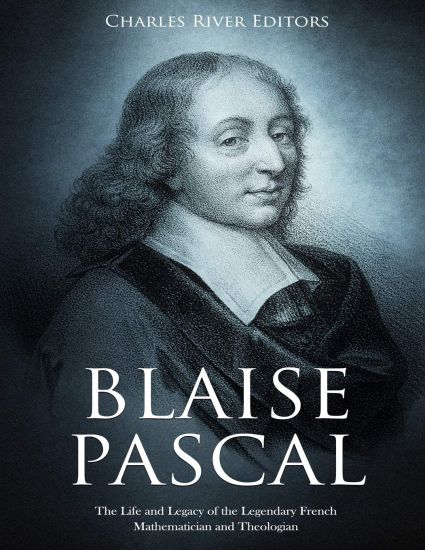
Blaise Pascal: The Life and Legacy of the Legendary French Mathematician and Theologian
*Includes pictures *Includes contemporary accounts *Includes online resources and a bibliography for further reading "People almost invariably arrive at their beliefs not on the basis of proof but on the basis of what they find attractive." - Blaise Pascal Blaise Pascal's time on earth may have been brief - no more than 39 years - but this unconventionally educated, yet brilliant scientist, mathematician, and man of letters accomplished more than most people could hope to achieve in two lifetimes. The SI unit of pressure, Pascal, is named after this polymath, and he is the namesake of a procedural programming language designed by Niklaus Wirth between the years of 1968 and 1969. On top of the countless busts, statues, and plaques erected in his honor, several institutions bear his name, as does a university in his hometown of Clermont-Ferrand. The Blaise Pascal Chairs, a glittering accolade awarded to exceptional international scientists every year, was also established in his honor. How did Blaise Pascal leave such a legacy in such a short amount of time? Blaise Pascal: The Life and Legacy of the Legendary French Mathematician and Theologian examines the life and work that made him one of modern history's most important figures. Along with pictures of important people, places, and events, you will learn about Pascal like never before.
Blaise Pascal: The Life and Legacy of the Legendary French Mathematician and Theologian
*Includes pictures *Includes contemporary accounts *Includes online resources and a bibliography for further reading "People almost invariably arrive at their beliefs not on the basis of proof but on the basis of what they find attractive." - Blaise Pascal Blaise Pascal's time on earth may have been brief - no more than 39 years - but this unconventionally educated, yet brilliant scientist, mathematician, and man of letters accomplished more than most people could hope to achieve in two lifetimes. The SI unit of pressure, Pascal, is named after this polymath, and he is the namesake of a procedural programming language designed by Niklaus Wirth between the years of 1968 and 1969. On top of the countless busts, statues, and plaques erected in his honor, several institutions bear his name, as does a university in his hometown of Clermont-Ferrand. The Blaise Pascal Chairs, a glittering accolade awarded to exceptional international scientists every year, was also established in his honor. How did Blaise Pascal leave such a legacy in such a short amount of time? Blaise Pascal: The Life and Legacy of the Legendary French Mathematician and Theologian examines the life and work that made him one of modern history's most important figures. Along with pictures of important people, places, and events, you will learn about Pascal like never before.
Homo erectus: The History of the Archaic Humans Who Left Africa and Formed the First Hunter-Gatherer Societies
*Includes pictures*Includes online resources and a bibliography for further readingMost scientists believe the evolution of humans has a history as long as life itself. Anatomically modern humans and all other life that has existed on the planet first came about from the single-celled microorganisms that emerged approximately 4 billion years ago. Through the processes of mutation and natural selection, all forms of life developed, and this continuous lineage of life makes it difficult to say precisely when one species completely separates from another. In other words, scientists still debate when a human became a human rather than the ancestor species that came before. Around 1.8 million years ago, a third species of Homo appeared in the fossil record. H. erectus would have shared the landscape for a time with H. habilis and H. rudolfensis, but the fossils of H. erectus are not limited to eastern and southern Africa. Instead, they are found across Africa and parts of mainland and insular Asia. This is the first species of Homo to be found outside Africa (Rightmire 1993). Features of H. erectus suggest an evolution toward modern humans, and the features which separate H. erectus from the other Homo species are found in the skull. The size of the brain was approximately 900 cc, making it larger than the brain size of H. habilis. H. erectus would not have the largest brain capacity of the Homo genus during its existence, with the emergence of H. heidelbergensis approximately 800,000 years ago. The larger brain size may not matter much when the size of the brain is considered with the size of the body, which also increased. While the facial features of H. erectus would have made them noticeably different if they were alive today, their postcranial morphology may have been similar to modern humans. A key difference is the density or thickness of the bones; in H. erectus the limb bones are more robust, but otherwise they appear very similar to modern humans. The length of the hindlimbs in relation to the arms is similar to modern humans, which means that H. erectus may have been able to walk in a similar way. (Richtmire 1993: 57-84). This may or may not be linked with the widespread distribution of H. erectus. Perhaps more important for H. erectus than simply being able to walk out of Africa would have been the ability to adapt to changing climates and essentially modify the environment around them. Most notably, the major advantage that H. erectus would have had is the ability to control fire. This skill, which no other animal has mastered, helped H. erectus travel across the world, and it may date as far back as 1.7 million years ago to as recently as 200,000 years ago. Most scientists agree that H. erectus was able to control fire by at least 600,000 years ago, and anatomically modern humans were able to create and use fire 150,000 years ago. The early species of Homo would have been familiar with the effects of fire, from the devastation it could cause to jungle habitats to the rapid spreading wildfires of the savanna. These fires would have killed and burned animals that early Homo would have found while scavenging after a natural fire. Homo erectus: The History of the Archaic Humans Who Left Africa and Formed the First Hunter-Gatherer Societies examines how H. erectus evolved, and what their lives were like. Along with pictures of important people, places, and events, you will learn about H. erectus like never before.
Homo erectus: The History of the Archaic Humans Who Left Africa and Formed the First Hunter-Gatherer Societies
*Includes pictures*Includes online resources and a bibliography for further readingMost scientists believe the evolution of humans has a history as long as life itself. Anatomically modern humans and all other life that has existed on the planet first came about from the single-celled microorganisms that emerged approximately 4 billion years ago. Through the processes of mutation and natural selection, all forms of life developed, and this continuous lineage of life makes it difficult to say precisely when one species completely separates from another. In other words, scientists still debate when a human became a human rather than the ancestor species that came before. Around 1.8 million years ago, a third species of Homo appeared in the fossil record. H. erectus would have shared the landscape for a time with H. habilis and H. rudolfensis, but the fossils of H. erectus are not limited to eastern and southern Africa. Instead, they are found across Africa and parts of mainland and insular Asia. This is the first species of Homo to be found outside Africa (Rightmire 1993). Features of H. erectus suggest an evolution toward modern humans, and the features which separate H. erectus from the other Homo species are found in the skull. The size of the brain was approximately 900 cc, making it larger than the brain size of H. habilis. H. erectus would not have the largest brain capacity of the Homo genus during its existence, with the emergence of H. heidelbergensis approximately 800,000 years ago. The larger brain size may not matter much when the size of the brain is considered with the size of the body, which also increased. While the facial features of H. erectus would have made them noticeably different if they were alive today, their postcranial morphology may have been similar to modern humans. A key difference is the density or thickness of the bones; in H. erectus the limb bones are more robust, but otherwise they appear very similar to modern humans. The length of the hindlimbs in relation to the arms is similar to modern humans, which means that H. erectus may have been able to walk in a similar way. (Richtmire 1993: 57-84). This may or may not be linked with the widespread distribution of H. erectus. Perhaps more important for H. erectus than simply being able to walk out of Africa would have been the ability to adapt to changing climates and essentially modify the environment around them. Most notably, the major advantage that H. erectus would have had is the ability to control fire. This skill, which no other animal has mastered, helped H. erectus travel across the world, and it may date as far back as 1.7 million years ago to as recently as 200,000 years ago. Most scientists agree that H. erectus was able to control fire by at least 600,000 years ago, and anatomically modern humans were able to create and use fire 150,000 years ago. The early species of Homo would have been familiar with the effects of fire, from the devastation it could cause to jungle habitats to the rapid spreading wildfires of the savanna. These fires would have killed and burned animals that early Homo would have found while scavenging after a natural fire. Homo erectus: The History of the Archaic Humans Who Left Africa and Formed the First Hunter-Gatherer Societies examines how H. erectus evolved, and what their lives were like. Along with pictures of important people, places, and events, you will learn about H. erectus like never before.