Kirjojen hintavertailu – 12 903 725 kirjaa ja 27 kauppaa

Kirjailija

Charles River

Kirjat ja teokset yhdessä paikassa: 4 673 kirjaa, julkaisuja vuosilta 2013–2022, suosituimpiin kuuluu William Powell and Myrna Loy: The Lives and Careers of One of Classical Hollywood's Most Iconic Duos. Vertaile teosten hintoja ja tarkista saatavuus suomalaisista kirjakaupoista.

4 673 kirjaa

Kirjojen julkaisuvuodet: 2013–2022.

The Rise of Constantinople: The Ancient History of the City that Became the Byzantine Empire's Capital
*Includes pictures *Includes ancient accounts *Includes online resources and a bibliography for further reading "So the church has been made a spectacle of great beauty, stupendous to those who see it and altogether incredible to those who hear of it... Its breadth and length have been so fittingly proportioned that it may without impropriety be described as being both very long and extremely broad. And it boasts of an ineffable beauty, for it subtly combines its mass with the harmony of its proportions, having neither any excess nor any deficiency, inasmuch as it is more pompous than ordinary buildings] and considerably more decorous than those which are huge beyond measure; and it abounds exceedingly in gleaming sunlight. You might say that the interior] space is not illuminated by the sun from the outside, but that the radiance is generated within, so great an abundance of light bathes this shrine all round." - Procopius's description of the Hagia Sophia in Constantinople It would be hard if not outright impossible to overstate the impact Roman Emperor Constantine I had on the history of Christianity, Ancient Rome, and Europe as a whole. Best known as Constantine the Great, the kind of moniker only earned by rulers who have distinguished themselves in battle and conquest, Constantine remains an influential and controversial figure to this day. He achieved enduring fame by being the first Roman emperor to personally convert to Christianity, and for his notorious Edict of Milan, the imperial decree which legalized the worship of Christ and promoted religious freedom throughout the Empire. More than 1500 years after Constantine's death, Abdu'l-Bah , the head of the Bah ' Faith, wrote, "His blessed name shines out across the dawn of history like the morning star, and his rank and fame among the world's noblest and most highly civilized is still on the tongues of Christians of all denominations" Moreover, even though he is best remembered for his religious reforms and what his (mostly Christian) admirers described as his spiritual enlightenment, Constantine was also an able and effective ruler in his own right. Rising to power in a period of decline and confusion for the Roman Empire, he gave it a new and unexpected lease on life by repelling the repeated invasions of the Germanic tribes on the Northern and Eastern borders of the Roman domains, even going so far as to re-expand the frontier into parts of Trajan's old conquest of Dacia (modern Romania), which had been abandoned as strategically untenable. However, it can be argued that despite his military successes - the most notable of which occurred fighting for supremacy against other Romans - Constantine may well have set the stage for the ultimate collapse of the Roman Empire as it had existed up until that point. It was Constantine who first decided that Rome, exposed and vulnerable near the gathering masses of barbarians moving into Germania and Gaul, was a strategically unsafe base for the Empire, and thus expanded the city of New Rome on the Dardanelles straits, creating what eventually became Constantinople. By moving the political, administrative and military capital of the Empire from Rome to the East, as well as the Imperial court with all its attendant followers, Constantine laid the groundwork for the eventual schism which saw the two parts of the Roman Empire become two entirely separate entities, go their own way, and eventually collapse piecemeal under repeated waves of invasion. The Rise of Constantinople: The Ancient History of the City that Became the Byzantine Empire's Capital looks at the events that brought about the transformation of Byzantium, and how Constantinople became one of the most important cities in the world. Along with pictures depicting important people, places, and events, you will learn about the rise of Constantinople like never before.

Horace Greeley: The Life and Legacy of 19th Century America's Most Influential Editor

Horace Greeley: The Life and Legacy of 19th Century America's Most Influential Editor

Charles River

Createspace Independent Publishing Platform
2018
nidottu
*Includes pictures *Includes contemporary accounts *Includes online resources and a bibliography for further reading "Journalism will kill you, but it will keep you alive while you're at it." - Horace Greeley "That poor white hat If, alas, it covered many weaknesses, it covered also much strength, much real kindness and benevolence, and much that the world will be better for." - Harriet Beecher Stowe's remark about Horace Greeley There is little one can say about Horace Greeley that has not already been said, much of it during his lifetime, for unlike many others, fame came to him early, and by the end of his life he was already one of the most famous men in the United States. Of course, no one who knew him as a young man would ever have thought that this would be the case, for he was born into less than ideal circumstances, and he went out to work early as a print setter. He experienced several business failures before finding success with the New York Tribune. On the other hand, he enjoyed quick but brief political successes, followed by frequent but unsuccessful runs for public office. In his 2017, essay, "Emerson's Newspaperman: Horace Greeley and Radical Intellectual Culture, 1836-1872," David O. Dowling observed that Greeley "brokered his career in large part on public controversy, much of which he openly courted. In the process, he became victim to savage lampoons, particularly by Thomas Nast...his views elicited a deluge of responses precisely because his outspoken editorials had run counter to the status quo. A newspaper editor, Greeley insisted, was 'not a mere jumping jack, who only needed to know what other people thought to ensure my instant and abject conformity to their prejudices.'" At the close of a biography of Greeley, historian Glyndon G. Van Deusen noted, "His genuine human sympathies, his moral fervor, even the exhibitionism that was a part of his makeup, made it inevitable that he should crusade for a better world. He did so with apostolic zeal... Greeley's effectiveness as a crusader was limited by some of his traits and characteristics. Culturally deficient, he was to the end ignorant of his own limitations, and this ignorance was a great handicap...symbolized an America that, though often shortsighted and misled, was never suffocated by the wealth pouring from its farms and furnaces ...he inspired others with hope and confidence, making them feel that their dreams also had the substance of realty. It is his faith, and theirs that has given him his place in American history. In that faith he still marches among us, scolding and benevolent, exhorting us to confidence and to victory in the great struggles of our own day..." Horace Greeley: The Life and Legacy of 19th Century America's Most Influential Editor examines the various roles Greeley played in American politics during his life, and how he shaped the debates. Along with pictures depicting important people, places, and events, you will learn about Horace Greeley like never before.
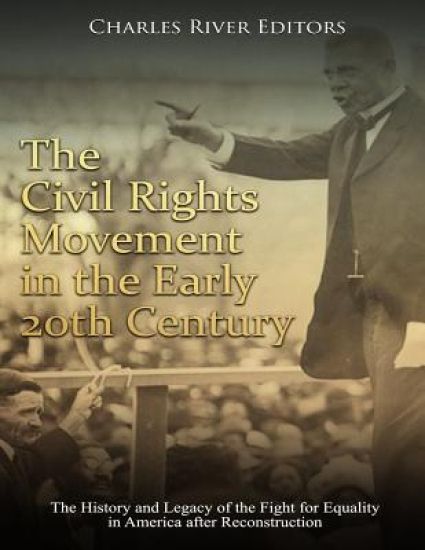
The Civil Rights Movement in the Early 20th Century: The History and Legacy of the Fight for Equality in America after Reconstruction
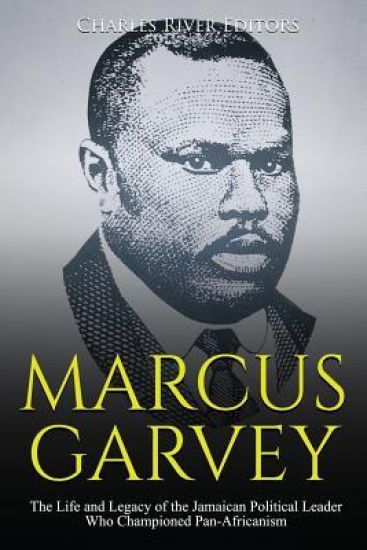
*Includes pictures *Includes online resources and a bibliography for further reading Despite a Union victory and Lincoln's Emancipation Proclamation, unthinkable in the previous century, a new form of suppression and violence descended on the African-American population. "Reconstruction" is employed as a generic term for the period that followed the American Civil War. Suggesting a successful rejuvenation of a war-ravaged South, it lamentably gave way to a resurrection of the same white ruling class and slave-owner mentality, protecting the status quo in the legislatures and courts. With the distortion of Reconstruction's intent came a body of racial policy and a tacitly understood social code that barred the pre-war slave class from personal freedom and opportunity, at the risk of great personal violence for anyone who objected. The arduous task of overthrowing Jim Crow codes and legislation marked one of the first strides toward the modern struggle for ethnic equality in American society and required nearly a century of struggle. That effort spawned a multitude of heroic African-American activists, but it is remembered in large part for the work of a few iconic African-American men of stature. Much like their later counterparts, Reverend Martin Luther King, Jr. and Malcolm X, the debate between gradual integration through temporary accommodation and overtly insistent activism was led by Booker T. Washington and W. E. B. Du Bois. Through the last years of the 19th century, Washington's gentler approach of enhancing black prospects through vocational education, largely accomplished with white permission and funds, seemed the popular choice. His legacy can be sensed in King's subsequent willingness to extend an olive branch to white Americans in a sense of unity, although Washington's propensity for accommodation held no place in King's ministry. Despite being so recognized, and perhaps in part because of it, by the early 20th century, Washington's tactics were questioned by other black leaders, notably W. E. B. Du Bois, who wanted to protest more vehemently in an effort to secure civil rights. Washington, 12 years Du Bois' senior, entered the field of education and founded the famous Tuskegee Institute based on his vision of what a population emerging from generations of slavery required in order to successfully integrate into modern life. His position was simply one of incremental entry by the provision of industrial education and political accommodation. He urged blacks to accept discrimination in the short term and concentrate on elevating themselves, thereby proving themselves through hard work and material prosperity. Du Bois would have none of that, believing it amounted to an approval of the Jim Crow regime of the South and a passive acceptance of racism. In opposition, he and other black leaders organized the Niagara Movement, citing opposition to Washington's moral leadership of the movement and marking their determination to fight for full civil equality for black Americans. The movement did not gain much traction, but it was in direct line of ascension to the much more influential National Association for the Advancement of Colored People (NAACP). The third and most improbable approach toward American civil rights for black citizens blended the beliefs of Washington and Du Bois, and it was spearheaded by global activist Marcus Aurelius Garvey. The Jamaican began his career as an activist with a devotion to Washington's path, but he subsequently leaned to the alternative, and beyond. Beyond the worldview of both colleagues, Marcus Garvey's bigger-than-life scheme was to establish a black-owned and managed shipping line to transport much of America's black population back to Africa.
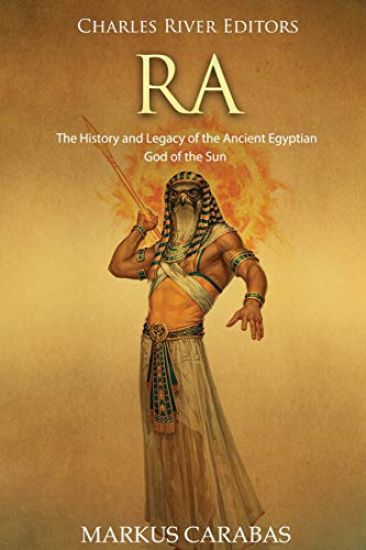
Ra: The History and Legacy of the Ancient Egyptian God of the Sun

Ra: The History and Legacy of the Ancient Egyptian God of the Sun

Markus Carabas; Charles River

Createspace Independent Publishing Platform
2018
nidottu
*Includes pictures *Includes ancient accounts *Includes online resources and a bibliography for further reading Africa may have given rise to the first human beings, and Egypt probably gave rise to the first great civilizations, which continue to fascinate modern societies across the globe nearly 5,000 years later. From the Library and Lighthouse of Alexandria to the Great Pyramid at Giza, the Ancient Egyptians produced several wonders of the world, revolutionized architecture and construction, created some of the world's first systems of mathematics and medicine, and established language and art that spread across the known world. With world-famous leaders like King Tut and Cleopatra, it's no wonder that today's world has so many Egyptologists. Although the Egyptians may not have passed their civilization directly on to later peoples, the key elements that comprised Egyptian civilization, including their religion, early ideas of state, and art and architecture, can be found among other civilizations. For instance, civilizations far separated in time and space, such as China and Mesoamerica, possessed key elements that were similar to those found in ancient Egypt. Indeed, since Egyptian civilization represented some fundamental human concepts, a study of their culture can be useful when trying to understand many other pre-modern cultures. To the ancient Egyptians, as was the case with any society made up of inquiring humans, the world was a confusing and often terrifying place of destruction, death and unexplained phenomena. In order to make sense of such an existence, they resorted to teleological stories. Giving a phenomenon a story made it less horrifying, and it also helped them make sense of the world around them. Unsurprisingly, then, the ancient Egyptian gods permeated every aspect of existence. Given the abundance of funerary artifacts that have been found within the sands of Egypt, it sometimes seems as though the Ancient Egyptians were more concerned with the matters of the afterlife than they were with matters of the life they experienced from day to day. This is underscored most prominently by the pyramids, which have captured the world's imagination for centuries. Ra's name was all but ubiquitous in ancient Egyptian texts, to the point that many people today have come across it in history classes. Amun-Ra, Atum-Ra, and Ra-Harakhti have been used in modern cinema and literature for decades, yet isolating "Ra" as a single character, for all its preeminence in the concept of Egyptian mythology, is frustratingly difficult. People familiar with Egyptian mythology know Ra as a sun god, which would seem to explain Ra's centrality in ancient Egyptian religion, but there is so much more to his being a solar entity than a simple manifestation of this awe-inspiring, daily phenomenon for early humans. Ra was a king and tyrant, a lover and friend. It is only through the understanding of this deity as such that people today can fully appreciate the richness of his character and the roles he played in ancient Egyptian religious thought. Ra: The History and Legacy of the Ancient Egyptian God of the Sun looks at the god that had such a decisive impact on the Egyptians' concepts of life. Along with pictures depicting important people, places, and events, you will learn about Ra like never before.
The Aborigines: The History and Legacy of Australia's Indigenous People

The Aborigines: The History and Legacy of Australia's Indigenous People

Charles River

Createspace Independent Publishing Platform
2018
nidottu
*Includes pictures *Includes a bibliography and online resources for further reading "It is quite time that our children were taught a little more about their country, for shame's sake." - Henry Lawson, Australian poet A land of almost 3 million square miles has lain since time immemorial on the southern flank of the planet, so isolated that it remained almost entirely outside of European knowledge until 1770. From there, however, the subjugation of Australia would take place rapidly. Within 20 years of the first British settlements being established, the British presence in Terra Australis was secure, and no other major power was likely to mount a challenge. In 1815, Napoleon would be defeated at Waterloo, and soon afterwards would be standing on the barren cliffs of Saint Helena, staring across the limitless Atlantic. The French, without a fleet, were out of the picture, the Germans were yet to establish a unified state, let alone an overseas empire of any significance, and the Dutch were no longer counted among the top tier of European powers. Australia lay at an enormous distance from London, and its administration was barely supervised. Thus, its development was slow in the beginning, and its function remained narrowly defined, but as the 19th century progressed and peace took hold over Europe, things began to change. Immigration was steady, and the small spores of European habitation on the continent steadily grew. At the same time, the Royal Navy found itself with enormous resources of men and ships at a time when there was no war to fight. British sailors were thus employed for survey and exploration work, and the great expanses of Australia attracted particular interest. It was an exciting time, and an exciting age - the world was slowly coming under European sway, and Britain was rapidly emerging as its leader. That said, the 19th century certainly wasn't exciting for the people who already lived in Australia. The history of the indigenous inhabitants of Australia, known in contemporary anthropology as the "Aboriginal and Torres Strait Islander people of Australia," is a complex and continually evolving field of study, and it has been colored by politics. For generations after the arrival of whites in Australia, the Aboriginal people were disregarded and marginalized, largely because they offered little in the way of a labor resource, and they occupied land required for European settlement. At the same time, it is a misconception that indigenous Australians meekly accepted the invasion of their country by the British, for they did not. They certainly resisted, but as far as colonial wars during that era went, the frontier conflicts of Australia did not warrant a great deal of attention. Indigenous Australians were hardly a warlike people, and without central organization, or political cohesion beyond scattered family groups, they succumbed to the orchestrated advance of white settlement with passionate, but futile resistance. In many instances, aggressive clashes between the two groups simply gave the white colonists reasonable cause to inflict a style of genocide on the Aborigines that stood in the way of progress. In any case, their fate had largely been sealed by the first European sneeze in the Terra Australis, which preceded the importation of the two signature mediums of social destruction. The first was a collection of alien diseases, chief among smallpox, but also cholera, influenza, measles, tuberculosis, syphilis and the common cold. The second was alcohol. Smallpox alone killed more than 50% of the aboriginal population, and once the fabric of indigenous society had crumbled, alcohol provided emotional relief, but relegated huge numbers of Aborigines to the margins of a robust and emerging colonial society.
Oregon Country: The History and Legacy of the Disputed Region and the Treaty that Led to Oregon's Statehood
*Includes pictures *Includes contemporary accounts *Includes online resources and a bibliography for further reading The westward movement of Americans in the 19th century was one of the largest and most consequential migrations in history, and among the paths that blazed west, the most well-known is the Oregon Trail, which was not a single trail but a network of paths that began at one of four "jumping off" points. The eastern section of the Oregon Trail, which followed the Missouri River through Kansas, Nebraska, and Wyoming, was shared by people traveling along the California, Bozeman, and Mormon Trails. These trails branched off at various points, and the California Trail diverged from the Oregon Trail at Fort Hall in southern Idaho. From there, the Oregon Trail moved northward, along the Snake River, then through the Blue Mountains to Fort Walla Walla. From there, travelers would cross the prairie before reaching the Methodist mission at The Dalles, which roughly marked the end of the Trail. The Trail stretched roughly half the country, and hundreds of thousands of settlers would use it, yet the Oregon Trail is famous not so much for its physical dimensions but for what it represented. As many who used the Oregon Trail described in memoirs, the West represented opportunities for adventure, independence, and fortune, and fittingly, the ever popular game named after the Oregon Trail captures that mentality and spirit by requiring players to safely move a party west to the end of the trail. Perhaps most famously, the game that helped popularize current generations' interest in the Oregon Trail highlighted the obstacles the pioneers faced in moving West. Indeed, as all too many settlers discovered, traveling along the Trail was fraught with various kinds of obstacles and danger, including bitter weather, potentially deadly illnesses, and hostile Native Americans, not to mention an unforgiving landscape that famous American explorer Stephen Long deemed "unfit for human habitation." And while many would look back romantically at the Oregon Trail over time, 19th century Americans were all too happy and eager for the transcontinental railroad to help speed their passage west and render overland paths like the Oregon Trail obsolete. Oregon Country: The History and Legacy of the Disputed Region and the Treaty that Led to Oregon's Statehood examines the land disputes, and how events unfolded on the way to Oregon becoming part of America. Along with pictures depicting important people, places, and events, you will learn about Oregon Country like never before.
The Civil Rights Movement in the Early 20th Century: The History and Legacy of the Fight for Equality in America after Reconstruction
*Includes pictures *Includes online resources and a bibliography for further reading Despite a Union victory and Lincoln's Emancipation Proclamation, unthinkable in the previous century, a new form of suppression and violence descended on the African-American population. "Reconstruction" is employed as a generic term for the period that followed the American Civil War. Suggesting a successful rejuvenation of a war-ravaged South, it lamentably gave way to a resurrection of the same white ruling class and slave-owner mentality, protecting the status quo in the legislatures and courts. With the distortion of Reconstruction's intent came a body of racial policy and a tacitly understood social code that barred the pre-war slave class from personal freedom and opportunity, at the risk of great personal violence for anyone who objected. The arduous task of overthrowing Jim Crow codes and legislation marked one of the first strides toward the modern struggle for ethnic equality in American society and required nearly a century of struggle. That effort spawned a multitude of heroic African-American activists, but it is remembered in large part for the work of a few iconic African-American men of stature. Much like their later counterparts, Reverend Martin Luther King, Jr. and Malcolm X, the debate between gradual integration through temporary accommodation and overtly insistent activism was led by Booker T. Washington and W. E. B. Du Bois. Through the last years of the 19th century, Washington's gentler approach of enhancing black prospects through vocational education, largely accomplished with white permission and funds, seemed the popular choice. His legacy can be sensed in King's subsequent willingness to extend an olive branch to white Americans in a sense of unity, although Washington's propensity for accommodation held no place in King's ministry. Despite being so recognized, and perhaps in part because of it, by the early 20th century, Washington's tactics were questioned by other black leaders, notably W. E. B. Du Bois, who wanted to protest more vehemently in an effort to secure civil rights. Washington, 12 years Du Bois' senior, entered the field of education and founded the famous Tuskegee Institute based on his vision of what a population emerging from generations of slavery required in order to successfully integrate into modern life. His position was simply one of incremental entry by the provision of industrial education and political accommodation. He urged blacks to accept discrimination in the short term and concentrate on elevating themselves, thereby proving themselves through hard work and material prosperity. Du Bois would have none of that, believing it amounted to an approval of the Jim Crow regime of the South and a passive acceptance of racism. In opposition, he and other black leaders organized the Niagara Movement, citing opposition to Washington's moral leadership of the movement and marking their determination to fight for full civil equality for black Americans. The movement did not gain much traction, but it was in direct line of ascension to the much more influential National Association for the Advancement of Colored People (NAACP). The third and most improbable approach toward American civil rights for black citizens blended the beliefs of Washington and Du Bois, and it was spearheaded by global activist Marcus Aurelius Garvey. The Jamaican began his career as an activist with a devotion to Washington's path, but he subsequently leaned to the alternative, and beyond. Beyond the worldview of both colleagues, Marcus Garvey's bigger-than-life scheme was to establish a black-owned and managed shipping line to transport much of America's black population back to Africa.
America's Deadliest Hurricanes: The History of the Three Worst Hurricanes in American History
*Includes pictures *Includes accounts *Includes online resources and a bibliography for further reading Hurricanes have been devastating communities for thousands of years, bringing about various combinations of rain and wind that can do everything from taking down some dead limbs to wiping out houses. They are also common enough that people who live for any length of time in a region prone to having hurricanes are inclined to accept them as something of a periodic nuisance rather than a serious danger. Modern construction styles allow houses to withstand winds in excess of 100 miles an hour, and early warning systems allow people to evacuate. Thus, most hurricanes of the 21st century take fewer lives than a serious highway accident. As a result, the world watched in horror as Hurricane Katrina decimated New Orleans in August 2005, and the calamity seemed all the worse because many felt that technology had advanced far enough to prevent such tragedies, whether through advanced warning or engineering. Spawning off the Bahamian coast that month, Katrina quickly grew to be one of the deadliest natural disasters in American history, killing more than 1,800 people and flooding a heavy majority of one of America's most famous cities. At first, the storm seemed to be harmless, scooting across the Floridian coast as a barely noticeable Category 1 storm, but when Katrina reached the warm waters of the Gulf of Mexico, its winds grew exponentially before slamming into the southern Louisiana coast as a massive Category 5 hurricane. In addition to the deadly nature of the hurricane, it was also incredibly destructive as a result of failed levees around the New Orleans area. By the time the storm had passed, it had wreaked an estimated $108 billion of damage across the region, and the human suffering, with nearly 2,000 deaths and a million people displaced, was available for viewing across the world. Naturally, the reactions of political leaders would be heavily scrutinized in the aftermath, and people studied the lessons to be learned from the disaster to prevent a similar occurrence in the future. It was only well into the 20th century that meteorologists began to name storms as a way of distinguishing which storm out of several they were referencing, and it seems somewhat fitting that the hurricane that traumatized Galveston was nameless. Due to the lack of technology and warning, many of the people it killed were never identified, and the nameless corpses were eventually burned in piles of bodies that could not be interred due to the soggy soil. Others were simply buried at sea. The second deadliest hurricane in American history claimed 2,500 lives, so it's altogether possible that the Galveston hurricane killed over 4 times more than the next deadliest in the U. S. To this day, it remains the country's deadliest natural disaster. Similarly, the hurricane that struck southern Florida in September 1928 killed hundreds more, with an estimated death toll of over 2,500 people. Without the warnings available today, it was inevitable that the Category 5 hurricane wrought almost inconceivable destruction as it made landfall in Florida with winds at nearly 150 miles per hour. In addition to the powerful storm itself, the flooding of Lake Okeechobee, the 7th largest freshwater lake in the country, exacerbated the damage by spilling across several hundred square miles, which were covered in up to 20 feet of water in some places. America's Deadliest Hurricanes: The History of the Three Worst Hurricanes in American History examines each of the deadly storms, from their meteorological origins to the tolls and aftermath of each one. Along with pictures of important people, places, and events, you will learn about the hurricanes like never before.
The War Crimes Trials for World War II: The History and Legacy of Nazi Germany and Japan's War Crimes Trials After the War
*Includes pictures *Includes accounts *Includes online resources and a bibliography for further reading At the end of World War II, the world was faced with some sobering statistics. With over 50,000,000 deaths when both military and civilian losses had been accounted for, the death toll was devastating, and for many of those who lived in countries that had been ravaged by war, hunger and financial strain had become parts of daily life. Furthermore, beyond the physical damage was the growing knowledge of the atrocities that had been committed both before and during the war. In fact, the Allies were discussing how to dole out justice for Axis war crimes as early as 1943, and once the war was over, it was time for the nations to turn their attention towards determining the proper punishments. The judgment of the German leadership and its role in the death, destruction, and demoralization they had brought to the world would take place at Nuremberg. The Nuremberg Trials were a series of 13 proceedings held under the authority of the International Military Tribunal between November 1945 and June 1948, but the trial most associated with Nuremberg is the first trial, in which eight judges appointed by Britain, the United States, the Soviet Union, and France deliberated over the guilt or innocence of 22 men identified as significant leaders of the Nazi cause. This trial took place between November 20, 1945 and August 31, 1946. Later trials included other Germans who held what were considered to be position of power- doctors, businessman, or lower-level functionaries whose positions of influence gave them, in the eyes of the Allies, increased responsibility for their actions. Though almost every person convicted in the 13 Nuremberg Trials was male, there was also a female physician convicted at the doctors' trial. In all, the Nuremberg trials numbered 489 separate hearings, and despite taking place nearly 70 years ago, the impact of the trials can still be felt today. As Harold Marcuse, author and associate professor of history at the University of California, notes, the trials were held for "the most heinous perpetrators of the most despicable crimes, as evidenced by the high proportion of guilty verdicts and the severity of the sentences....a total over all 13 trials] of 1,672 people were tried and 1,416 found guilty as charged." While some were tried in absentia and never brought to justice, the Nuremberg trials were largely viewed as bringing a sense of closure to the war, and they have been dramatized in numerous movies and documentaries ever since. Though they are now mostly forgotten, the International Military Tribunal for the Far East was the Pacific Theater's equivalent. Known as the Tokyo Trials, 11 countries contributed prosecutors as 28 Japanese faced trials for crimes against humanity. The trials were politically charged from the start, considering the end of World War II, the beginning of the Cold War, and the American occupation of Japan, and in many respects, the Tokyo Trials were part of a new era in American-Japanese relations. Of course, the Nuremberg Trials are better known than their Asian counterpart, and the war crimes trials have far different legacies, because while Germany internalized the lessons of the Nazi war crimes, an argument could be made that Japan did not, or at least not to the same extent. A long, grueling legal process, the trials took nearly two years to complete, and throughout the proceedings, much was revealed regarding Japan's conduct in the war. The War Crimes Trials for World War II: The History and Legacy of Nazi Germany and Japan's War Crimes Trials After the War chronicles the history of the trials from their conception to their completion. Along with pictures of important people, places, and events, you will learn about the trials like never before.
The Tokyo War Crimes Tribunal: The History and Legacy of the War Crimes Trials against Japan after World War II
*Includes pictures *Includes contemporary records *Includes online resources and a bibliography for further reading "There were, I suppose, three possible courses: to let the atrocities which had been committed go unpunished; to put the perpetrators to death or punish them by executive action; or to try them. Which was it to be? Was it possible to let such atrocities go unpunished? Could France, could Russia, could Holland, Belgium, Norway, Czechoslovakia, Poland or Yugoslavia be expected to consent to such a course? ... It will be remembered that after the first world war alleged criminals were handed over to be tried by Germany, and what a farce that was The majority got off and such sentences as were inflicted were derisory and were soon remitted." - Baron Geoffrey Lawrence, December 1946 At the end of World War II, the world was faced with some sobering statistics. With over 50,000,000 deaths when both military and civilian losses had been accounted for, the death toll was devastating, and for many of those who lived in countries that had been ravaged by war, hunger and financial strain had become parts of daily life. Furthermore, beyond the physical damage was the growing knowledge of the atrocities that had been committed both before and during the war. In fact, the Allies were discussing how to dole out justice for Axis war crimes as early as 1943, and once the war was over, the victorious Allies sought to address every aspect of it to both punish war criminals and attempt to ensure that there was never a conflict like it again. The judgment of the German leadership and its role in the death, destruction, and demoralization they had brought to the world would take place at Nuremberg. The Nuremberg Trials were a series of 13 proceedings held under the authority of the International Military Tribunal between November 1945 and June 1948, but the trial most associated with Nuremberg is the first trial, in which eight judges appointed by Britain, the United States, the Soviet Union, and France deliberated over the guilt or innocence of 22 men identified as significant leaders of the Nazi cause. This trial took place between November 20, 1945 and August 31, 1946. Later trials included other Germans who held what were considered to be position of power- doctors, businessman, or lower-level functionaries whose positions of influence gave them, in the eyes of the Allies, increased responsibility for their actions. Though almost every person convicted in the 13 Nuremberg Trials was male, there was also a female physician convicted at the doctors' trial. Though they are now mostly forgotten, the International Military Tribunal for the Far East was the Pacific Theater's equivalent. Known as the Tokyo Trials, 11 countries contributed prosecutors as 28 Japanese faced trials for crimes against humanity. The trials were politically charged from the start, considering the end of World War II, the beginning of the Cold War, and the American occupation of Japan, and in many respects, the Tokyo Trials were part of a new era in American-Japanese relations. The Tokyo War Crimes Tribunal: The History and Legacy of the War Crimes Trials against Japan after World War II chronicles the history of the trials from their conception to their completion. Along with pictures of important people, places, and events, you will learn about the trials like never before.
Os neandertais e Cro-Magnon: a história e o legado do primeiro povo a migrar para a Europa
Na cultura popular, o termo Neandertal usado como insulto coloquial para algu m considerado abastardado ou est pido. Esse parece ter sido o caso at o reconhecimento dos Neandertais como esp cie. O primeiro f ssil descoberto de Neandertal foi o cr nio de uma crian a na B lgica em 1829 que, posteriormente, foi gravemente danificado. Outra descoberta ocorreu em 1856 numa mina de calc rio numa regi o Neandertal na Alemanha atual; um cr nio com caracter sticas distintas (indicando esp cies diferentes de Neandertais) tamb m foi descoberto pouco mais de uma d cada depois, no Sudoeste da Fran a. O ltimo seria reconhecido como um exemplo da esp cie Homo Sapiens, esses humanos anatomicamente modernos chegaram Europa entre 45-43 mil anos atr s, no mesmo per odo em que se acredita que os Neandertais come aram a se extinguir. Os Neandertais s o membros do g nero Homo, como o Homo sapiens, e compartilham cerca de 99,7% de seu DNA com humanos modernos (Reynolds e Gallagher 2012). Ambas as esp cies at conviveram brevemente por um tempo na Eur sia. No entanto, os Neandertais evolu ram separadamente na Europa, longe dos humanos modernos que evolu ram na frica. Fisicamente, o esqueleto Neandertal era muito mais robusto, sugerindo mais espa o para ligamentos musculares. No entanto, enquanto Neandertais eram mais fortes do que humanos modernos, a altura m dia do primeiro era menor: 1,67 metro de altura. Outras caracter sticas f sicas que diferenciam os Neandertais dos humanos modernos s o encontradas no cr nio. Seus cr nios eram, no geral, baixos e alongados e a testa, inclinada com uma eleva o occipital (proje o ssea na parte de tr s do cr nio), enquanto humanos modernos possuem uma testa mais vertical, sem tal eleva o occipital. A capacidade craniana do Neandertal tamb m era maior do que a do homem moderno, entre 1.500 e 1.740 cent metros c bicos; ele n o tinha queixo, mas suas rbitas eram mais circulares quando em contraste com as do Homo sapiens, que possu a queixo e tendia a ter rbitas mais retangulares. (Wolpoff 1999). Apesar das diferen as, os Neandertais podem ter sido discern veis o suficiente para interagirem com Homo sapiens ou mesmo se misturarem eles durante os milhares de anos que conviveram na Europa. Os Cro-Magnons eram Homo sapiens, e as caracter sticas mais marcantes da esp cie s o os tra os culturais que aparecerem nos registros arqueol gicos. Ferramentas passaram a ser produzidas com diversos materiais. As pessoas viajavam por longas dist ncias ou realizavam trocas para a aquisi o de materiais espec ficos para as ferramentas. Materiais simb licos tornavam-se cada vez mais comum entre eles; pinturas rupestres, estatuetas, contas de conchas, pingentes e at enterros eram mais comuns entre humanos modernos do que entre Neandertais, e este pensamento abstrato pode ter ajudado a esp cie a obter maior sucesso em adapta es do que outros humanos contempor neos. Enquanto no S culo 21, os cientistas podem se referir aos Cro-Magnons como os primeiros seres humanos modernos europeus, a situa o n o era a mesma quando restos mortais de Cro-Magnons foram descobertos pela primeira vez. Na Europa do S culo 19, houve um debate nacionalista sobre onde os "primeiros" europeus teriam surgido e, a mistura entre conceitos nacionalistas e hierarquia cultural preeminentes na Europa fez da compreens o cient fica do papel dos Cro-Magnons dentro da evolu o humana um processo lento. necess rio, portanto, olhar para a hist ria biol gica dos Cro-Magnons e para a hist ria cultural europ ia antes da an lise e compreens o de como restos mortais de Cro-Magnons foram vistos e usados nos ltimos s culos.
Os neandertais e Cro-Magnon: a história e o legado do primeiro povo a migrar para a Europa
Na cultura popular, o termo Neandertal usado como insulto coloquial para algu m considerado abastardado ou est pido. Esse parece ter sido o caso at o reconhecimento dos Neandertais como esp cie. O primeiro f ssil descoberto de Neandertal foi o cr nio de uma crian a na B lgica em 1829 que, posteriormente, foi gravemente danificado. Outra descoberta ocorreu em 1856 numa mina de calc rio numa regi o Neandertal na Alemanha atual; um cr nio com caracter sticas distintas (indicando esp cies diferentes de Neandertais) tamb m foi descoberto pouco mais de uma d cada depois, no Sudoeste da Fran a. O ltimo seria reconhecido como um exemplo da esp cie Homo Sapiens, esses humanos anatomicamente modernos chegaram Europa entre 45-43 mil anos atr s, no mesmo per odo em que se acredita que os Neandertais come aram a se extinguir. Os Neandertais s o membros do g nero Homo, como o Homo sapiens, e compartilham cerca de 99,7% de seu DNA com humanos modernos (Reynolds e Gallagher 2012). Ambas as esp cies at conviveram brevemente por um tempo na Eur sia. No entanto, os Neandertais evolu ram separadamente na Europa, longe dos humanos modernos que evolu ram na frica. Fisicamente, o esqueleto Neandertal era muito mais robusto, sugerindo mais espa o para ligamentos musculares. No entanto, enquanto Neandertais eram mais fortes do que humanos modernos, a altura m dia do primeiro era menor: 1,67 metro de altura. Outras caracter sticas f sicas que diferenciam os Neandertais dos humanos modernos s o encontradas no cr nio. Seus cr nios eram, no geral, baixos e alongados e a testa, inclinada com uma eleva o occipital (proje o ssea na parte de tr s do cr nio), enquanto humanos modernos possuem uma testa mais vertical, sem tal eleva o occipital. A capacidade craniana do Neandertal tamb m era maior do que a do homem moderno, entre 1.500 e 1.740 cent metros c bicos; ele n o tinha queixo, mas suas rbitas eram mais circulares quando em contraste com as do Homo sapiens, que possu a queixo e tendia a ter rbitas mais retangulares. (Wolpoff 1999). Apesar das diferen as, os Neandertais podem ter sido discern veis o suficiente para interagirem com Homo sapiens ou mesmo se misturarem eles durante os milhares de anos que conviveram na Europa. Os Cro-Magnons eram Homo sapiens, e as caracter sticas mais marcantes da esp cie s o os tra os culturais que aparecerem nos registros arqueol gicos. Ferramentas passaram a ser produzidas com diversos materiais. As pessoas viajavam por longas dist ncias ou realizavam trocas para a aquisi o de materiais espec ficos para as ferramentas. Materiais simb licos tornavam-se cada vez mais comum entre eles; pinturas rupestres, estatuetas, contas de conchas, pingentes e at enterros eram mais comuns entre humanos modernos do que entre Neandertais, e este pensamento abstrato pode ter ajudado a esp cie a obter maior sucesso em adapta es do que outros humanos contempor neos. Enquanto no S culo 21, os cientistas podem se referir aos Cro-Magnons como os primeiros seres humanos modernos europeus, a situa o n o era a mesma quando restos mortais de Cro-Magnons foram descobertos pela primeira vez. Na Europa do S culo 19, houve um debate nacionalista sobre onde os "primeiros" europeus teriam surgido e, a mistura entre conceitos nacionalistas e hierarquia cultural preeminentes na Europa fez da compreens o cient fica do papel dos Cro-Magnons dentro da evolu o humana um processo lento. necess rio, portanto, olhar para a hist ria biol gica dos Cro-Magnons e para a hist ria cultural europ ia antes da an lise e compreens o de como restos mortais de Cro-Magnons foram vistos e usados nos ltimos s culos.