Kirjojen hintavertailu – 12 903 725 kirjaa ja 27 kauppaa
Kirjailija
Charles River
Kirjat ja teokset yhdessä paikassa: 4 673 kirjaa, julkaisuja vuosilta 2013–2022, suosituimpiin kuuluu William Powell and Myrna Loy: The Lives and Careers of One of Classical Hollywood's Most Iconic Duos. Vertaile teosten hintoja ja tarkista saatavuus suomalaisista kirjakaupoista.
*Includes pictures *Includes a bibliography and online resources for further reading "It is quite time that our children were taught a little more about their country, for shame's sake." - Henry Lawson, Australian poet A land of almost 3 million square miles has lain since time immemorial on the southern flank of the planet, so isolated that it remained almost entirely outside of European knowledge until 1770. From there, however, the subjugation of Australia would take place rapidly. Within 20 years of the first British settlements being established, the British presence in Terra Australis was secure, and no other major power was likely to mount a challenge. In 1815, Napoleon would be defeated at Waterloo, and soon afterwards would be standing on the barren cliffs of Saint Helena, staring across the limitless Atlantic. The French, without a fleet, were out of the picture, the Germans were yet to establish a unified state, let alone an overseas empire of any significance, and the Dutch were no longer counted among the top tier of European powers. Australia lay at an enormous distance from London, and its administration was barely supervised. Thus, its development was slow in the beginning, and its function remained narrowly defined, but as the 19th century progressed and peace took hold over Europe, things began to change. Immigration was steady, and the small spores of European habitation on the continent steadily grew. At the same time, the Royal Navy found itself with enormous resources of men and ships at a time when there was no war to fight. British sailors were thus employed for survey and exploration work, and the great expanses of Australia attracted particular interest. It was an exciting time, and an exciting age - the world was slowly coming under European sway, and Britain was rapidly emerging as its leader. That said, the 19th century certainly wasn't exciting for the people who already lived in Australia. The history of the indigenous inhabitants of Australia, known in contemporary anthropology as the "Aboriginal and Torres Strait Islander people of Australia," is a complex and continually evolving field of study, and it has been colored by politics. For generations after the arrival of whites in Australia, the Aboriginal people were disregarded and marginalized, largely because they offered little in the way of a labor resource, and they occupied land required for European settlement. At the same time, it is a misconception that indigenous Australians meekly accepted the invasion of their country by the British, for they did not. They certainly resisted, but as far as colonial wars during that era went, the frontier conflicts of Australia did not warrant a great deal of attention. Indigenous Australians were hardly a warlike people, and without central organization, or political cohesion beyond scattered family groups, they succumbed to the orchestrated advance of white settlement with passionate, but futile resistance. In many instances, aggressive clashes between the two groups simply gave the white colonists reasonable cause to inflict a style of genocide on the Aborigines that stood in the way of progress. In any case, their fate had largely been sealed by the first European sneeze in the Terra Australis, which preceded the importation of the two signature mediums of social destruction. The first was a collection of alien diseases, chief among smallpox, but also cholera, influenza, measles, tuberculosis, syphilis and the common cold. The second was alcohol. Smallpox alone killed more than 50% of the aboriginal population, and once the fabric of indigenous society had crumbled, alcohol provided emotional relief, but relegated huge numbers of Aborigines to the margins of a robust and emerging colonial society.
*Includes pictures *Includes contemporary accounts *Includes online resources and a bibliography for further reading The British Museum has for centuries been a source of pride for the UK, and for good reason. Writing at the height of the Victorian Era, historian Edward Edwards observed, "In two particulars, more especially, our great National Museum stands distinguished among institutions of its kind. The collections which compose it extend over a wider range than that covered by any other public establishment having a like purpose. And, if we take them as a whole, those collections are also far more conspicuously indebted to the liberality of individual benefactors. In the public degree of which there is elsewhere no example, the British private Museum has been gradually built up by the munificence of open-handed Collectors, rather than by the public means of the Nation, as administered by Parliament, or by the Governments of the day." In the centuries that followed, the British Museum devoted itself to acquiring historical artifacts that showcased the influence and prestige of the British Empire, as well as the facilities in which to house them, surviving wars, financial challenges, controversies, and political pressures. In the process, it became one of the British Empire's greatest cultural jewels, and to this day it holds the distinctions of being the world's first national public museum and the most venerated museum of its kind in Britain. Of course, there are problems with almost every museum's collection, and the British Museum is a prime example. Objects in museums have to come from somewhere, and in many cases, the items on display were not passed on by the hands of the original owner. Put simply, museums have often acquired artifacts in dubious ways, and this was especially the case during the height of imperialism. Dealing with objects claimed by someone else is a constant issue in the 21st century, as it was over a century ago when Edwards noted, " The museum] testifies to the strength amongst us - even at times deeply tinged with civil discord - of public and patriotic feeling. Nor is this all. It testifies, negatively, but not less strongly, to a conscientious sense of responsibility, on the part of those who have administered British rule in conquered countries, and in remote dependencies of the Crown. Few readers of such a book as this are likely to be altogether unacquainted with national museums and national libraries which have been largely enriched by the strong hand of the spoiler. Into some such collections it is impossible for portions of the people at whose aggregate expense they are maintained to enter, without occasional feelings of disgust and humiliation. There are, it is true, a few trophies of successful war in our own Museum. But there is nothing in its vast stores which, to any visitor of any nationality whatever, can bring back memories oi ruthless and insolent spoliation." The British Museum: The History and Legacy of Britain's Most Famous Public Museum examines the origins of the museum, the buildings, and some of the most important items housed there. Along with pictures of important people, places, and events, you will learn about the British Museum like never before.
*Includes pictures *Includes contemporary accounts *Includes online resources and a bibliography for further reading The British Museum has for centuries been a source of pride for the UK, and for good reason. Writing at the height of the Victorian Era, historian Edward Edwards observed, "In two particulars, more especially, our great National Museum stands distinguished among institutions of its kind. The collections which compose it extend over a wider range than that covered by any other public establishment having a like purpose. And, if we take them as a whole, those collections are also far more conspicuously indebted to the liberality of individual benefactors. In the public degree of which there is elsewhere no example, the British private Museum has been gradually built up by the munificence of open-handed Collectors, rather than by the public means of the Nation, as administered by Parliament, or by the Governments of the day." In the centuries that followed, the British Museum devoted itself to acquiring historical artifacts that showcased the influence and prestige of the British Empire, as well as the facilities in which to house them, surviving wars, financial challenges, controversies, and political pressures. In the process, it became one of the British Empire's greatest cultural jewels, and to this day it holds the distinctions of being the world's first national public museum and the most venerated museum of its kind in Britain. Of course, there are problems with almost every museum's collection, and the British Museum is a prime example. Objects in museums have to come from somewhere, and in many cases, the items on display were not passed on by the hands of the original owner. Put simply, museums have often acquired artifacts in dubious ways, and this was especially the case during the height of imperialism. Dealing with objects claimed by someone else is a constant issue in the 21st century, as it was over a century ago when Edwards noted, " The museum] testifies to the strength amongst us - even at times deeply tinged with civil discord - of public and patriotic feeling. Nor is this all. It testifies, negatively, but not less strongly, to a conscientious sense of responsibility, on the part of those who have administered British rule in conquered countries, and in remote dependencies of the Crown. Few readers of such a book as this are likely to be altogether unacquainted with national museums and national libraries which have been largely enriched by the strong hand of the spoiler. Into some such collections it is impossible for portions of the people at whose aggregate expense they are maintained to enter, without occasional feelings of disgust and humiliation. There are, it is true, a few trophies of successful war in our own Museum. But there is nothing in its vast stores which, to any visitor of any nationality whatever, can bring back memories oi ruthless and insolent spoliation." The British Museum: The History and Legacy of Britain's Most Famous Public Museum examines the origins of the museum, the buildings, and some of the most important items housed there. Along with pictures of important people, places, and events, you will learn about the British Museum like never before.
*Includes pictures *Includes online resources and a bibliography for further reading World domination is a vision most kings, queens, and emperors can only dream of, and is a path less visited for good reason. It is one that requires above all, patience, as well as skill, tenacity, and an impenetrable plan of action. The only one to ever come close to this impossible level of prestige is the legendary British Empire. It was under the reign of King Henry VII of England that this ambitious idea of global expansion was first planted. In March of 1496, the king granted an exploratory charter to John Cabot, who would pilot a successful voyage that resulted in the occupation of an uninhabited island in Newfoundland. Though Cabot's second voyage ended in disaster, the courage and will he displayed during these endeavors inspired English explorers to organize more ventures and take to the seas themselves, as they hoped to see just how far they could push the envelope. Today, the British Army is one of the most powerful fighting forces in the world. Its highly trained professional soldiers are equipped with the most advanced military technology ever made. Its international interventions, while controversial both at home and abroad, are carried out with incredible professionalism and little loss of life among British servicemen and servicewomen. Naturally, the history and traditions behind this army are also impressive. Britain has not been successfully invaded in centuries. Its soldiers once created and defended a global empire, and during the Second World War, it was one of the leading nations standing against the brutal Axis forces, leading the way in the greatest seaborne invasion in military history. But it was not always like this. For most of its history, Britain was a patchwork of competing nations. England, the largest of its constituent countries, was often relatively weak as a land power compared with its European neighbors. Moreover, Britain's armies, like those of the other European powers, were neither professional nor standing armies for hundreds of years. The British Army: The History and Legacy of the Army that Helped Establish the World's Largest Empire examines the various battles and events that the army played such crucial roles in over the centuries. Along with pictures of important people, places, and events, you will learn about the British Army like never before.
*Includes pictures *Includes online resources and a bibliography for further reading World domination is a vision most kings, queens, and emperors can only dream of, and is a path less visited for good reason. It is one that requires above all, patience, as well as skill, tenacity, and an impenetrable plan of action. The only one to ever come close to this impossible level of prestige is the legendary British Empire. It was under the reign of King Henry VII of England that this ambitious idea of global expansion was first planted. In March of 1496, the king granted an exploratory charter to John Cabot, who would pilot a successful voyage that resulted in the occupation of an uninhabited island in Newfoundland. Though Cabot's second voyage ended in disaster, the courage and will he displayed during these endeavors inspired English explorers to organize more ventures and take to the seas themselves, as they hoped to see just how far they could push the envelope. Today, the British Army is one of the most powerful fighting forces in the world. Its highly trained professional soldiers are equipped with the most advanced military technology ever made. Its international interventions, while controversial both at home and abroad, are carried out with incredible professionalism and little loss of life among British servicemen and servicewomen. Naturally, the history and traditions behind this army are also impressive. Britain has not been successfully invaded in centuries. Its soldiers once created and defended a global empire, and during the Second World War, it was one of the leading nations standing against the brutal Axis forces, leading the way in the greatest seaborne invasion in military history. But it was not always like this. For most of its history, Britain was a patchwork of competing nations. England, the largest of its constituent countries, was often relatively weak as a land power compared with its European neighbors. Moreover, Britain's armies, like those of the other European powers, were neither professional nor standing armies for hundreds of years. The British Army: The History and Legacy of the Army that Helped Establish the World's Largest Empire examines the various battles and events that the army played such crucial roles in over the centuries. Along with pictures of important people, places, and events, you will learn about the British Army like never before.
*Includes pictures*Includes online resources and a bibliography for further readingIn the spring of 1786, an organization was founded in London to provide some aid for destitute blacks and Asians in the British capital who were by then beginning to become conspicuous. Quite a number of them were resettled blacks from the American colonies who aided British forces in the Revolutionary War and found themselves thereafter no longer welcome in the United States. Others were captives, slaves for one reason or another released on the high seas, and other stevedores and sailors washed up on the shore of England. It was generally believed that the figure was some 15,000, and with limited employment prospects and no community support, most were in very difficult circumstances indeed. The motivations for this were complicated and varied, and in part they could be explained by an interest in creating circumstances advantageous to blacks, but also to give them an opportunity to form and run a colony effectively in order to debunk a widely held belief that no black man could do such a thing. There was also some value in redistributing freed blacks from the various plantation colonies of the empire, not to mention the political expedience of protecting the British Isles themselves from an expanding population of non-whites generated as a consequence of imperial activities. The idea of locating this ideal colony in the vicinity of modern Sierra Leone came about thanks to the representations of a plant collector by the name of Henry Smeathman, who had recently returned from the West African region and believed that the Pepper Coast (also referred to as Grain Coast) offered the most viable prospects. At the time, British and European trade in West Africa was vibrant and wide-ranging, including the slave trade, and there was a steady movement of merchant and Royal Navy ships between West Africa and the British mainland. His reasons for advocating that spot are rather vague, although it probably was at the time one of the least deadly stretches of an otherwise fever-ridden coastline. There was a lot of sentimentality and idealism behind the development of the idea, as well as a certain amount of pragmatism, but the upshot of it was that in 1787, a shipment of 4,000 blacks arrived in several ships offshore of what would today be Freetown. They were essentially dropped off, wished the best of luck, and otherwise abandoned. Conditions, of course, were primitive, and the mortality rate among these early pioneers was atrocious. One of the first problems they faced was hostility from local tribes, and almost from the moment they landed, they found themselves in a state of war. Nonetheless, they managed to establish a bridgehead, and in due course a colony took root. Numbers were augmented occasionally by independent arrivals, and the steady deposit of captives collected in one way or another by the Royal Navy Atlantic Squadron. The Republic of Liberia looks at the tumultuous history of Liberia from its colonization to the deadly civil wars that ushered in a new democracy in the 21st century. Along with pictures, you will learn about Liberia like never before.
*Includes pictures *Includes online resources and a bibliography for further reading "Statistics are no substitute for judgment." - Henry Clay Frick The term robber baron has largely fallen into disuse in the 21st century but there was a time when it was a popular epithet that described the kind of man who, it was believed, built his fortune by taking things belonging to others. The Gilded Age and the dawn of the 20th century are often remembered as an era full of monopolies, trusts, and economic giants in heavy industries like oil and steel. Men like Andrew Carnegie built empires like Carnegie Steel, and financiers like J. P. Morgan merged and consolidated them. The era also made names like Astor, Cooke, and Vanderbilt instantly recognizable across the globe. Over time, the unfathomable wealth generated by the businesses made the individuals on top incredibly rich, and that in turn led to immense criticism and an infamous epithet used to rail against them: robber barons. The industrial might wielded by men like Gould in the later 19th century directly led to a public backlash and made President Teddy Roosevelt the "trust buster", and there has since been countless regulations to attempt to avoid the types of monopolies found over 100 years ago. However, many 20th century historians and writers pushed back against the allegations hurled at the "robber barons" and even took issue with the name. For example, Libertarian writer John Stossel argued, "They weren't robbers, because they didn't steal from anyone, and they weren't barons-they were born poor..." Of all the men labeled as robber barons during the Gilded Age, few were as influential as Henry Clay Frick, who rubbed shoulders with men like J. P. Morgan and Andrew Carnegie while overseeing some of the era's biggest companies. Though his was not the "rags to riches" story one often hears of this era, his drive and ambition helped transform a young man from a solidly middle class family into a millionaire by the age of 30. At the same time, despite the characteristic ruthlessness with which he dealt with business associates and foes alike, he was devoted and sometime even tender to his friends and family. After surviving an assassination attempt, he lived to toast the 20th century and avoided going down with so many others of his era on the Titanic, only to see the world he had worked to create consumed by a European war that spread around the world. Perhaps the most amazing thing about Frick is that his most well-known and lasting legacy had nothing to do with his business but with his most prized hobby. Should the name Frick come up in a New York boardroom today, it is not in the context of some business deal but instead in reference to a social event held at his former estate, now one of the most popular art museums in New York City. His own possessions, which grew out of his love of art, formed the initial core of the collection, and upon his death, he bequeathed the lion's share of his fortune to a foundation to preserve and expand upon it for generations to come. Henry Clay Frick: The Life and Legacy of the Railroad and Steel Magnate Who Became One of America's Most Famous Art Collectors analyzes the famous businessman's life and his lasting legacy. Along with pictures depicting important people, places, and events, you will learn about Frick like never before.
*Includes pictures *Includes contemporary accounts *Includes online resources and a bibliography for further reading When invoking the term "German unification," many might initially think of the tumultuous period at the end of the 20th century when communist East Germany and democratic West Germany came together to form the modern German state. However, that was technically a "reunification," because Germany was first unified as a nation-state in 1871. That unification formed a state much larger than today's Germany, stretching from Strasbourg in the Alsace region in today's France almost 1,500 kilometers to K nigsberg, now Kaliningrad in contemporary Russia, on the Baltic Sea. This unified Germany was an experiment with few historical precedents. The 19th century was, indeed, the "Age of Nationalism," but German speakers had traditionally been spread out across Europe, including the Austrian Empire, loose confederations such as the Holy Roman Empire, and many other countries. German unity was a seemingly impossible dream held by nationalists for many years, but it became a reality when Prussia, the largest state in the German Confederation, pursued a deliberate and aggressive strategy to bring as many German-speaking territories under its control. That is not to say most Germans resisted unification, because even as life in an assortment of German states had some advantages, an underlying insecurity prevailed in principalities lacking overarching authority. German-speaking lands had been the sites of some of the continent's most brutal wars. Moreover, there was a growing sense of German cultural and linguistic togetherness fostered by nationalists, artists, writers, and composers. Not surprisingly, German unity in 1871 caused geopolitical ripples that reverberated for decades. Other larger European powers, such as Britain, France, and Russia, came to feel threatened by the rise of Germany. These tensions were still prevalent at the outbreak of World War I in 1914, and it became even more important in World War II. In part this was because Germany also became an economic powerhouse, fundamentally altering the global economy. Alongside the rapid expansion of the United States, trade went through a transformation that still has ramifications today. The forces driving Germany's unification in the 19th century were similar to other trends of the era, but there were many specific and contingent factors playing out before 1871. In this respect, the unification of Germany is both an unusual and unfamiliar story. The Unification of Germany: The History and Legacy of the German Empire's Establishment looks at the life and work of Germany's most famous politician and how Germany was unified. Along with pictures of important people, places, and events, you will learn about German unification like never before.
*Includes pictures *Includes online resources and a bibliography for further reading In the spring of 1786, an organization was founded in London to provide some aid for destitute blacks and Asians in the British capital who were by then beginning to become conspicuous. Quite a number of them were resettled blacks from the American colonies who aided British forces in the Revolutionary War and found themselves thereafter no longer welcome in the United States. Others were captives, slaves for one reason or another released on the high seas, and other stevedores and sailors washed up on the shore of England. It was generally believed that the figure was some 15,000, and with limited employment prospects and no community support, most were in very difficult circumstances indeed. The motivations for this were complicated and varied, and in part they could be explained by an interest in creating circumstances advantageous to blacks, but also to give them an opportunity to form and run a colony effectively in order to debunk a widely held belief that no black man could do such a thing. There was also some value in redistributing freed blacks from the various plantation colonies of the empire, not to mention the political expedience of protecting the British Isles themselves from an expanding population of non-whites generated as a consequence of imperial activities. The idea of locating this ideal colony in the vicinity of modern Sierra Leone came about thanks to the representations of a plant collector by the name of Henry Smeathman, who had recently returned from the West African region and believed that the Pepper Coast (also referred to as Grain Coast) offered the most viable prospects. At the time, British and European trade in West Africa was vibrant and wide-ranging, including the slave trade, and there was a steady movement of merchant and Royal Navy ships between West Africa and the British mainland. His reasons for advocating that spot are rather vague, although it probably was at the time one of the least deadly stretches of an otherwise fever-ridden coastline. There was a lot of sentimentality and idealism behind the development of the idea, as well as a certain amount of pragmatism, but the upshot of it was that in 1787, a shipment of 4,000 blacks arrived in several ships offshore of what would today be Freetown. They were essentially dropped off, wished the best of luck, and otherwise abandoned. Conditions, of course, were primitive, and the mortality rate among these early pioneers was atrocious. One of the first problems they faced was hostility from local tribes, and almost from the moment they landed, they found themselves in a state of war. Nonetheless, they managed to establish a bridgehead, and in due course a colony took root. Numbers were augmented occasionally by independent arrivals, and the steady deposit of captives collected in one way or another by the Royal Navy Atlantic Squadron. The Liberian Civil Wars: The History and Legacy of the Deadly Conflicts and Liberia's Transition to Democracy in the 21st Century looks at the incredibly deadly conflicts, and how they changed the nation. Along with pictures, you will learn about the the wars and Liberia's transition like never before.
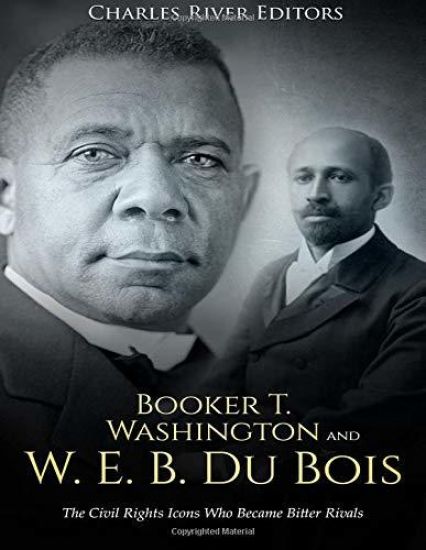
*Includes pictures *Includes online resources and a bibliography for further reading Despite a Union victory and Lincoln's Emancipation Proclamation, unthinkable in the previous century, a new form of suppression and violence descended on the African-American population. "Reconstruction" is employed as a generic term for the period that followed the American Civil War. Suggesting a successful rejuvenation of a war-ravaged South, it lamentably gave way to a resurrection of the same white ruling class and slave-owner mentality, protecting the status quo in the legislatures and courts. With the distortion of Reconstruction's intent came a body of racial policy and a tacitly understood social code that barred the pre-war slave class from personal freedom and opportunity, at the risk of great personal violence for anyone who objected. The arduous task of overthrowing Jim Crow codes and legislation marked one of the first strides toward the modern struggle for ethnic equality in American society and required nearly a century of struggle. That effort spawned a multitude of heroic African-American activists, but it is remembered in large part for the work of two iconic African-American men of stature. Much like their later counterparts, Reverend Martin Luther King, Jr. and Malcolm X, the debate between gradual integration through temporary accommodation and overtly insistent activism was led by Booker T. Washington and W. E. B. Du Bois. From 1890-1915, the most influential black man in America was Booker T. Washington, who less than 35 years earlier had been born into slavery. The young boy worked laboriously until emancipation before going on to seek an education, and by the time he was 40, he was consolidating a network of supporters that came to be known as the "Tuskegee Machine," helping coordinate action with the support of black businesses, religious communities, and others. Using his position of power, Washington spoke out against Jim Crow laws and Southern disfranchisement of blacks. Despite being so recognized, and perhaps in part because of it, by the early 20th century, Washington's tactics were questioned by other black leaders, notably W. E. B. Du Bois, who wanted to protest more vehemently in an effort to secure civil rights. Washington, 12 years Du Bois' senior, entered the field of education and founded the famous Tuskegee Institute based on his vision of what a population emerging from generations of slavery required in order to successfully integrate into modern life. His position was simply one of incremental entry by the provision of industrial education and political accommodation. He urged blacks to accept discrimination in the short term and concentrate on elevating themselves, thereby proving themselves through hard work and material prosperity. Du Bois would have none of that, believing it amounted to an approval of the Jim Crow regime of the South and a passive acceptance of racism. In opposition, he and other black leaders organized the Niagara Movement, citing opposition to Washington's moral leadership of the movement and marking their determination to fight for full civil equality for black Americans. The movement did not gain much traction, but it was in direct line of ascension to the much more influential National Association for the Advancement of Colored People (NAACP). Although Du Bois' name is still (and somewhat inexplicably) less well-known than that of Washington, his prolific writings serve as a bedrock to the modern social engines at work in the pursuit of racial equality in America. In his life and experience of nearly a century, he spanned the administrations of Andrew Johnson and Lyndon Baines Johnson, dying only one day before King's "I Have a Dream" speech.
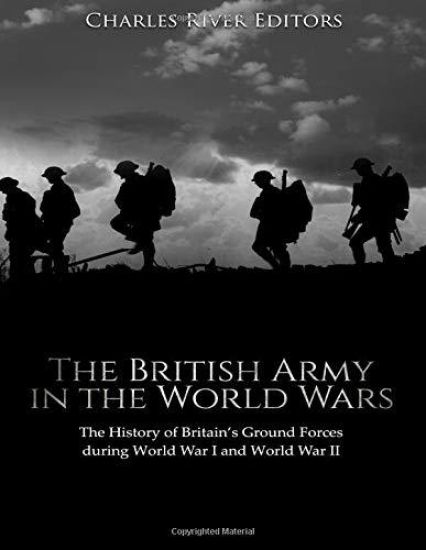
*Includes pictures *Includes online resources and a bibliography for further reading World War I, also known in its time as the "Great War" or the "War to End all Wars", was an unprecedented holocaust in terms of its sheer scale. Fought by men who hailed from all corners of the globe, it saw millions of soldiers do battle in brutal assaults of attrition which dragged on for months with little to no respite. Tens of millions of artillery shells and untold hundreds of millions of rifle and machine gun bullets were fired in a conflict that demonstrated man's capacity to kill each other on a heretofore unprecedented scale, and as always, such a war brought about technological innovation at a rate that made the boom of the Industrial Revolution seem stagnant. The enduring image of World War I is of men stuck in muddy trenches, and of vast armies deadlocked in a fight neither could win. It was a war of barbed wire, poison gas, and horrific losses as officers led their troops on mass charges across No Man's Land and into a hail of bullets. While these impressions are all too true, they hide the fact that trench warfare was dynamic and constantly evolving throughout the war as all armies struggled to find a way to break through the opposing lines. Needless to say, the First World War came at an unfortunate time for those who would fight in it. After an initial period of relatively rapid maneuver during which the German forces pushing through Belgium and the French and British forces attempting to stymie them made an endless series of abortive flanking movements that extended the lines to the sea, a stalemate naturally tended to develop. The infamous trench lines soon snaked across the French and Belgian countryside, creating an essentially futile static slaughterhouse whose sinister memory remains to this day. As with the other nations involved, the war came as a shock to the British army. For the past century, it had mostly been engaged in colonial conflicts against opponents with far more limited resources and technology, and this created a sense of superiority. Put simply, the British army was used to defeating any opponent it faced, and even against more challenging opponents, such as the Russians in the Crimea and the Boers in South Africa, Britain came out on top, suffering only a few embarrassments along the way. Europe's attempts to appease Hitler, most notably at Munich in 1938, failed, as Nazi Germany swallowed up Austria and Czechoslovakia by 1939. Italy was on the march as well, invading Albania in April of 1939. The straw that broke the camel's back, however, was Germany's invasion of Poland on September 1 of that year. Two days later, France and Great Britain declared war on Germany, and World War II had begun in earnest. Of course, as most people now know, the invasion of Poland was merely the preface to the Nazi blitzkrieg of most of Western Europe, which would include Denmark, Belgium, and France by the summer of 1940. The resistance put up by these countries is often portrayed as weak, and the narrative is that the British stood alone in 1940 against the Nazi onslaught, defending the British Isles during the Battle of Britain and preventing a potential German invasion. The British Army in the World Wars: The History of Britain's Ground Forces during World War I and World War II comprehensively analyzes Britain's experience in the field, the results, and the traumatic aftermath. Along with pictures of important people, places, and events, you will learn about the British Army in both wars like never before.
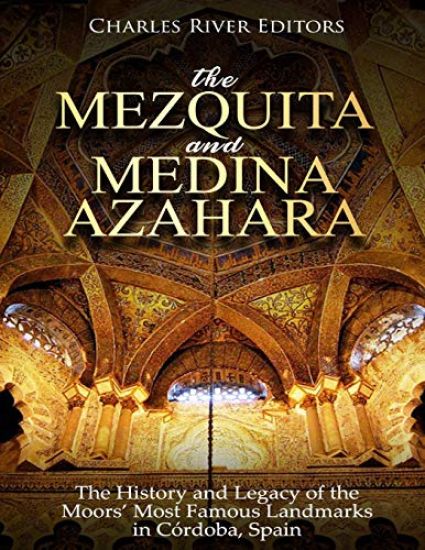
*Includes pictures *Includes online resources and a bibliography for further reading "To C rdoba belong all the beauty and ornaments that delight the eye or dazzle the sight. Her long line of Sultans form her crown of glory; her necklace is strung with the pearls which her poets have gathered from the ocean of language; her dress is of the banners of learning, well-knit together by her men of science; and the masters of every art and industry are the hem of her garments..." - Stanley Lane-Poole, "The Moors in Spain" The Calle Cardenal Herrero in C rdoba is an iconic cobbled street impossible to overlook, for it is home to the Andalusian city's spectacular Mosque-Cathedral. Also known as "La Mezquita," this one-of-a-kind Moorish and Christian place of worship reels in about 1.5 million visitors each year, most of whom find themselves spellbound by its hypnotic architectural features and the riveting history that has transpired and continues to within the beautifully weathered walls of the dual-church. That said, the Mezquita is far more than a mere tourist attraction - in recent years, the Mosque-Cathedral of C rdoba has become the crux of a complicated religious conflict resurrected by impassioned worshipers and patriotic locals who fear not only for the future of its legacy, but the preservation of its true history. It is easy for those on the outside looking in to make hasty judgments about the ongoing dispute, considering the endless amount of information that is uploaded online by the second. The contentious debates surrounding the Mezquita are often products of outdated prejudices, festering distrust, and whitewashing, all of which make it harder for the Mezquita to remain a non-discriminatory space serviceable to and appreciated by everyone today. Love, as they often say, is best expressed through meaningful actions, as opposed to syrupy words and hollow promises. To pragmatists, it's the smaller things that make the biggest splash, while hopeless romantics may take it upon themselves to go the extra mile. Apart from showering their better halves with trips abroad to bucket-list destinations and mountains of extravagant gifts, the wealthy might organize benefits and galas, and make handsome donations to a cause that deeply resonates with their loved one. Whereas most would deem the tokens of affection exchanged by celebrity power couples to be sweet, but inordinately excessive, many of those who pine after storybook romances are especially enamored of these grand gestures. However, nobody can deny that they've produced some of the most famous works in the world, including buildings such as the Taj Mahal. Such stories can certainly send the hearts of the starry-eyed aflutter, and while love is not quantifiable, few love stories can compare to the blissful fairy-tale attached to the Madinat al-Zahra, commonly known today as the Medina Azahara. This tale involved a king named Abd ar-Rahman who was so besotted with a maiden that he built an entire palace-city for her from scratch. Naturally, this wasn't just any old city - covering well over a million square meters by the foothills of the Cordoban Sierra Morena Mountains, this was allegedly the largest palace-city ever built in Europe. The Mezquita and Medina Azahara: The History and Legacy of the Moors' Most Famous Landmarks in C rdoba, Spain offers a virtual tour of this priceless place of worship, and how it has been at the center of religious debates for hundreds of years. Along with pictures of important people, places, and events, you will learn about the Mezquita and Medina Azahara like never before.
*Includes pictures *Includes online resources and a bibliography for further reading World War I, also known in its time as the "Great War" or the "War to End all Wars", was an unprecedented holocaust in terms of its sheer scale. Fought by men who hailed from all corners of the globe, it saw millions of soldiers do battle in brutal assaults of attrition which dragged on for months with little to no respite. Tens of millions of artillery shells and untold hundreds of millions of rifle and machine gun bullets were fired in a conflict that demonstrated man's capacity to kill each other on a heretofore unprecedented scale, and as always, such a war brought about technological innovation at a rate that made the boom of the Industrial Revolution seem stagnant. The enduring image of World War I is of men stuck in muddy trenches, and of vast armies deadlocked in a fight neither could win. It was a war of barbed wire, poison gas, and horrific losses as officers led their troops on mass charges across No Man's Land and into a hail of bullets. While these impressions are all too true, they hide the fact that trench warfare was dynamic and constantly evolving throughout the war as all armies struggled to find a way to break through the opposing lines. Needless to say, the First World War came at an unfortunate time for those who would fight in it. After an initial period of relatively rapid maneuver during which the German forces pushing through Belgium and the French and British forces attempting to stymie them made an endless series of abortive flanking movements that extended the lines to the sea, a stalemate naturally tended to develop. The infamous trench lines soon snaked across the French and Belgian countryside, creating an essentially futile static slaughterhouse whose sinister memory remains to this day. As with the other nations involved, the war came as a shock to the British army. For the past century, it had mostly been engaged in colonial conflicts against opponents with far more limited resources and technology, and this created a sense of superiority. Put simply, the British army was used to defeating any opponent it faced, and even against more challenging opponents, such as the Russians in the Crimea and the Boers in South Africa, Britain came out on top, suffering only a few embarrassments along the way. Europe's attempts to appease Hitler, most notably at Munich in 1938, failed, as Nazi Germany swallowed up Austria and Czechoslovakia by 1939. Italy was on the march as well, invading Albania in April of 1939. The straw that broke the camel's back, however, was Germany's invasion of Poland on September 1 of that year. Two days later, France and Great Britain declared war on Germany, and World War II had begun in earnest. Of course, as most people now know, the invasion of Poland was merely the preface to the Nazi blitzkrieg of most of Western Europe, which would include Denmark, Belgium, and France by the summer of 1940. The resistance put up by these countries is often portrayed as weak, and the narrative is that the British stood alone in 1940 against the Nazi onslaught, defending the British Isles during the Battle of Britain and preventing a potential German invasion. The British Army in the World Wars: The History of Britain's Ground Forces during World War I and World War II comprehensively analyzes Britain's experience in the field, the results, and the traumatic aftermath. Along with pictures of important people, places, and events, you will learn about the British Army in both wars like never before.
"Rei de Inglaterra, se voc n o fizer estas coisas, eu sou o comandante das for as armadas; e qualquer que seja o lugar que eu encontrar os seus homens na Fran a, eu f -los-ei fujir do pa s, se desejem ou n o." - Joana D'Arc Embora tenha terminado h mais de 550 anos, os cem anos de guerra ainda est o muito presentes em nossas mentes e no hist rico da Inglaterra e da France, mesmo o nome da guerra sendo um grande equ voco. Realmente uma s rie de conflitos separados entre as monarquias inglesas e francesas, intercalados com per odos da paz, sua imagem hist rica impar, na parte porque suas origens foram baseadas nas reivindica es reais que dataram s culos e os advers rios remanescidos ingleses e franceses para quase 400 anos depois que terminaram. Entretanto, a guerra era realmente transformadora em muitos aspectos, e no impacto que teve na geopol tica da Europa, o que n o pode ser ignorado. Enquanto alguns podem pensar sobre a guerra como sendo uma continua o da tradi o feudal dos cavaleiros e dos camponeses, os cem anos de guerra revolucionaram o hist rico de guerras ocidentais e ajudaram verdadeiramente no conceito do nacionalismo no continente. Na Inglaterra, recorda-se como um per odo de grandeza e de sucesso, mesmo sendo que os ingleses perderam enormes partes do territ rio, e os franceses se lembram da guerra como uma vit ria estrat gica que assegurou a independ ncia continuada da Fran a e a nega o do hegemonia inglesa. Compreender os cem anos de guerra compreender como Inglaterra se tornou politicamente independente do continente, como a tradi o dos cavaleiros deslizou e se tornou irrelevante, e como a domina o do campo de batalha pode ainda deixar a uma na o como perdedora na guerra. A Guerra dos Cem Anos conta a hist ria atr s de uma das guerras mais famosas de Europa, al m das batalhas do conflito e dos l deres. Junto com retratos de povos, de lugares, e de eventos importantes, voc aprender sobre os cem anos de guerra como nunca antes.
*Includes pictures *Includes online resources and a bibliography for further reading The Gilded Age and the dawn of the 20th century are often remembered as an era full of monopolies, trusts, and economic giants in heavy industries like oil and steel. Men like John Rockefeller built empires and financiers like J. P. Morgan merged and consolidated them. The era also made names like Astor, Cooke, and Vanderbilt instantly recognizable across the globe. Over time, the unfathomable wealth generated by the businesses made the individuals on top incredibly rich, and that in turn led to immense criticism and an infamous epithet used to rail against them: robber barons. The term robber baron has largely fallen into disuse in the 21st century but there was a time when it was a popular epithet that described the kind of man who, it was believed, built his fortune by taking things belonging to others. The Gilded Age and the dawn of the 20th century are often remembered as an era full of monopolies, trusts, and economic giants in heavy industries like oil and steel. Men like Andrew Carnegie built empires like Carnegie Steel, and financiers like J. P. Morgan merged and consolidated them. The era also made names like Astor, Cooke, and Vanderbilt instantly recognizable across the globe. Over time, the unfathomable wealth generated by the businesses made the individuals on top incredibly rich, and that in turn led to immense criticism and an infamous epithet used to rail against them: robber barons. The industrial might wielded by men like Gould in the later 19th century directly led to a public backlash and made President Teddy Roosevelt the "trust buster", and there has since been countless regulations to attempt to avoid the types of monopolies found over 100 years ago. However, many 20th century historians and writers pushed back against the allegations hurled at the "robber barons" and even took issue with the name. For example, Libertarian writer John Stossel argued, "They weren't robbers, because they didn't steal from anyone, and they weren't barons-they were born poor..." Dozens of these men would be pilloried as "robber barons," but few of them were as wealthy or influential as Andrew Carnegie, who built America's foremost steel empire. Ironically, Carnegie epitomized the American Dream, migrating with his poor family to America in the mid-19th century and rising to the top of the business world in his adopted country. A prodigious writer in addition to his keen sense of business, Carnegie was one of the most outspoken champions of capitalism at a time when there was pushback among lower social classes who witnessed the great disparities in wealth; as he once put it, "Upon the sacredness of property civilization itself depends-the right of the laborer to his hundred dollars in the savings bank, and equally the legal right of the millionaire to his millions." In a similar vein, he said, "Those who would administer wisely must, indeed, be wise, for one of the serious obstacles to the improvement of our race is indiscriminate charity." Though his was not the "rags to riches" story one often hears of this era, Henry Clay Frick's drive and ambition helped transform a young man from a solidly middle class family into a millionaire by the age of 30. At the same time, despite the characteristic ruthlessness with which he dealt with business associates and foes alike, he was devoted and sometime even tender to his friends and family. After surviving an assassination attempt, he lived to toast the 20th century and avoided going down with so many others of his era on the Titanic, only to see the world he had worked to create consumed by a European war that spread around the world.