Kirjojen hintavertailu – 12 903 725 kirjaa ja 27 kauppaa

Kirjailija

Charles River

Kirjat ja teokset yhdessä paikassa: 4 673 kirjaa, julkaisuja vuosilta 2013–2022, suosituimpiin kuuluu William Powell and Myrna Loy: The Lives and Careers of One of Classical Hollywood's Most Iconic Duos. Vertaile teosten hintoja ja tarkista saatavuus suomalaisista kirjakaupoista.

4 673 kirjaa

Kirjojen julkaisuvuodet: 2013–2022.

El Imperio jemer: La historia y legado de uno de los imperios más influyentes del sudeste asiático
El Imperio jemer, tambi n conocido como el Imperio de Angkor, fue un poderoso imperio del sudeste asi tico que se estableci en 802 EC y culmin en 1431 con la invasi n de los siameses y el abandono de Angkor. El Imperio jemer fue responsable de muchos de los templos y monumentos hist ricos que se encuentran en las selvas de la actual Camboya, y tambi n en otros pa ses del sudeste asi tico; todo gracias al hecho de que el Imperio jemer se extendi sobre la actual Camboya, partes de Tailandia, Laos y Vietnam, lo que lo hac a un socio comercial estrat gico con los barcos que viajaban desde China y la India. Entre toda su arquitectura, el imperio es m s conocido por la construcci n de Angkor Wat, una de las m s grandiosas maravillas del mundo moderno. Conocido como Angkor Wat ("Ciudad templo"), el gigantesco complejo fue construido por el rey Suryavarman II a principios del siglo XII para servir como el templo de estado y la capital del rey. Al haberse mantenido tan finamente conservado, ha mantenido una importancia religiosa durante casi 900 a os, primero dedicado al dios hind Vishnu, y luego al budismo. Es comprensible que se haya convertido en uno de los s mbolos y atracciones tur sticas m s relevantes de Camboya, e incluso aparece en su bandera nacional. Angkor Wat contin a fascinando al mundo, tanto por su grandiosidad y tama o, como por sus decoraciones ornamentales tanto en su interior como en su exterior. Habi ndose enfriado las luchas pol ticas en Camboya, Angkor Wat es ahora una importante atracci n tur stica que atrae a m s de medio mill n de extranjeros por a o, lo que representa m s de la mitad de los turistas del pa s. Como resultado, la influencia duradera que este imperio tuvo en la gente de Camboya todav a puede sentirse hoy en d a, con Angkor Wat figurando en la bandera nacional. El Imperio jemer: la historia y legado de uno de los imperios m s influyentes del sudeste asi tico narra la notable historia de los jemeres y su impacto en la regi n. En conjunto con im genes de lugares, personas y eventos importantes, aprender sobre el Imperio jemer como nunca antes.
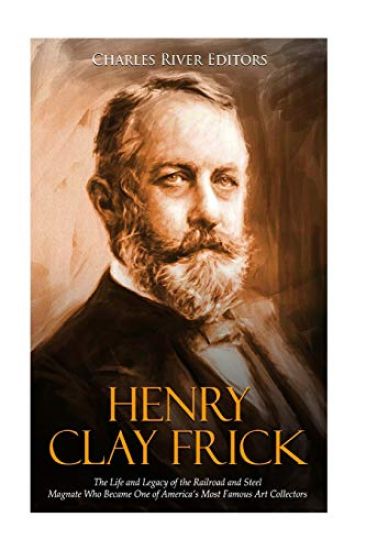
Henry Clay Frick: The Life and Legacy of the Railroad and Steel Magnate Who Became One of America's Most Famous Art Collectors
*Includes pictures *Includes online resources and a bibliography for further reading "Statistics are no substitute for judgment." - Henry Clay Frick The term robber baron has largely fallen into disuse in the 21st century but there was a time when it was a popular epithet that described the kind of man who, it was believed, built his fortune by taking things belonging to others. The Gilded Age and the dawn of the 20th century are often remembered as an era full of monopolies, trusts, and economic giants in heavy industries like oil and steel. Men like Andrew Carnegie built empires like Carnegie Steel, and financiers like J. P. Morgan merged and consolidated them. The era also made names like Astor, Cooke, and Vanderbilt instantly recognizable across the globe. Over time, the unfathomable wealth generated by the businesses made the individuals on top incredibly rich, and that in turn led to immense criticism and an infamous epithet used to rail against them: robber barons. The industrial might wielded by men like Gould in the later 19th century directly led to a public backlash and made President Teddy Roosevelt the "trust buster", and there has since been countless regulations to attempt to avoid the types of monopolies found over 100 years ago. However, many 20th century historians and writers pushed back against the allegations hurled at the "robber barons" and even took issue with the name. For example, Libertarian writer John Stossel argued, "They weren't robbers, because they didn't steal from anyone, and they weren't barons-they were born poor..." Of all the men labeled as robber barons during the Gilded Age, few were as influential as Henry Clay Frick, who rubbed shoulders with men like J. P. Morgan and Andrew Carnegie while overseeing some of the era's biggest companies. Though his was not the "rags to riches" story one often hears of this era, his drive and ambition helped transform a young man from a solidly middle class family into a millionaire by the age of 30. At the same time, despite the characteristic ruthlessness with which he dealt with business associates and foes alike, he was devoted and sometime even tender to his friends and family. After surviving an assassination attempt, he lived to toast the 20th century and avoided going down with so many others of his era on the Titanic, only to see the world he had worked to create consumed by a European war that spread around the world. Perhaps the most amazing thing about Frick is that his most well-known and lasting legacy had nothing to do with his business but with his most prized hobby. Should the name Frick come up in a New York boardroom today, it is not in the context of some business deal but instead in reference to a social event held at his former estate, now one of the most popular art museums in New York City. His own possessions, which grew out of his love of art, formed the initial core of the collection, and upon his death, he bequeathed the lion's share of his fortune to a foundation to preserve and expand upon it for generations to come. Henry Clay Frick: The Life and Legacy of the Railroad and Steel Magnate Who Became One of America's Most Famous Art Collectors analyzes the famous businessman's life and his lasting legacy. Along with pictures depicting important people, places, and events, you will learn about Frick like never before.
The Franco-Prussian War: The History of the War that Established the German Empire

The Franco-Prussian War: The History of the War that Established the German Empire

Charles River

Createspace Independent Publishing Platform
2018
nidottu
*Includes pictures *Includes online resources and a bibliography for further reading After Prussia was victorious in the Austro-Prussian War, Bismarck played a waiting game where the unification of Germany was concerned, as the joining of the southern states - initially resistant to Prussian rule, friendly with Austria, and bent on independence - would have to be overcome. What was needed was "a clear case of French aggression" toward either Prussia or the southern states. Not only would such a move by Emperor Napoleon III trigger the terms of the treaty between the German states, but it would keep the remaining world powers out of the conflict. The Franco-Prussian War started in August 1870, and a number of victories followed for the Prussians in battles in northeast France. By September, the strategic city of Metz was under siege, and forces fought a major battle at Sedan. Led by Field Marshal Helmuth von Moltke, the Prussians forced the French to surrender at Metz, and then at Sedan. Emperor Napoleon III, commanding his country's forces at Sedan, was taken prisoner, humiliating France and its impetuous leader. The Prussians immediately marched on Paris, but the capital refused to submit, and a separate siege was mounted that ended up lasting 130 days. Obviously, French society was in tumult, but a Third Republic and Government of National Defence was pronounced in place of the French Empire. An uprising subsequently took place in the stricken city, dubbed the "Paris Commune," which sought to establish a radical alternative to the status quo and was itself put down by French troops. Prussian forces besieged Paris starting in September 1870, and although French units attempted to make inroads at battles in the north and east of the country, the Prussians were in comfortable control of the conflict. Food was becoming scarce, and an armistice was signed on January 26, 1871 with Paris on the brink of starvation. The Prussians lost 45,000 men during the conflict, while France suffered almost three times as many dead and wounded. The French government accepted the terms of its defeat with the Germans, which would prove a painful experience, and for their part, the Prussians could avenge the humiliation of the Napoleonic occupation and the treatment at the hands of the French conqueror 65 years earlier. On January 18, 1871, King Wilhelm I was crowned Kaiser of the German Empire, and though the Franco-Prussian War was still taking place, this moment was essentially the point at which Germany was unified. The other German states had to agree to this profound constitutional change, but they acquiesced after the clear victory of the Prussian-led forces. German unification was the territorial expansion of Prussia by another name, but Berlin demonstrated it could protect the interests, or at least the safety, of German-speakers under their watch. Despite the campaigns of nationalists and liberals over the previous decades, it was ultimately a victory on the battlefield that united the German states. This was the real-world application of Bismarck's "Blood and Iron" concept. From this position of strength during war, Prussia achieved an unassailable position. During the relatively short wars of 1864, 1866, and 1870-71, Bismarck roused nationalist sentiment, and in so doing, he achieved the long awaited goal of German unification. Nevertheless, the manner in which Germany was united drew much criticism. Prussia was at the head of a militarized state led by an authoritarian regime. This version of a German Reich would move irrevocably toward the First World War, which started 43 years after the Empire's founding. For many, nationalism became a substitute for political participation in the unified Germany.
Leonor de Aquitania: La vida y legado de la más famosa reina de la Europa medieval

Leonor de Aquitania: La vida y legado de la más famosa reina de la Europa medieval

Charles River

Createspace Independent Publishing Platform
2018
nidottu
Junto a la efigie de la tumba del rey Enrique II en la abad a Fontevraud en Francia yace un curioso f retro cincelado en la forma de una joven mujer en reposo. La otrora vibrante pintura de la efigie se est descascarillando y varias reas de las tumbas de siglos de antig edad est n astilladas, pero las caracter sticas generales todav a pueden distinguirse. La hermosa reina coronada, representada con una suave sonrisa en su rostro, luc a un sencillo pero elegante vestido blanco y azul, y un libro abierto entre sus manos. La efigie no es otra que la duquesa Leonor de Aquitania. A lo largo de los a os, esta enigm tica figura del siglo XII ha sido retratada de incontables maneras, desde una valiente reina guerrera e ingeniosa pol tica hasta una sirena manipuladora y obsesionada con el control, cuyo nico objetivo en la vida era el poder. Leonor de Aquitania: la vida y legado de la m s famosa reina de la Europa medieval intenta ofrecer una mirada imparcial a la vida de Leonor, explorando los logros y duras pruebas de la duquesa-reina, y deconstruir las "leyendas negras" y otros relatos fascinantes que contin an rode ndola hoy en d a. En conjunto con fotograf as de personas, lugares y eventos importantes, aprender sobre Leonor de Aquitania como nunca antes.
The Liberian Civil Wars: The History and Legacy of the Deadly Conflicts and Liberia's Transition to Democracy in the 21st Century
*Includes pictures *Includes online resources and a bibliography for further reading In the spring of 1786, an organization was founded in London to provide some aid for destitute blacks and Asians in the British capital who were by then beginning to become conspicuous. Quite a number of them were resettled blacks from the American colonies who aided British forces in the Revolutionary War and found themselves thereafter no longer welcome in the United States. Others were captives, slaves for one reason or another released on the high seas, and other stevedores and sailors washed up on the shore of England. It was generally believed that the figure was some 15,000, and with limited employment prospects and no community support, most were in very difficult circumstances indeed. The motivations for this were complicated and varied, and in part they could be explained by an interest in creating circumstances advantageous to blacks, but also to give them an opportunity to form and run a colony effectively in order to debunk a widely held belief that no black man could do such a thing. There was also some value in redistributing freed blacks from the various plantation colonies of the empire, not to mention the political expedience of protecting the British Isles themselves from an expanding population of non-whites generated as a consequence of imperial activities. The idea of locating this ideal colony in the vicinity of modern Sierra Leone came about thanks to the representations of a plant collector by the name of Henry Smeathman, who had recently returned from the West African region and believed that the Pepper Coast (also referred to as Grain Coast) offered the most viable prospects. At the time, British and European trade in West Africa was vibrant and wide-ranging, including the slave trade, and there was a steady movement of merchant and Royal Navy ships between West Africa and the British mainland. His reasons for advocating that spot are rather vague, although it probably was at the time one of the least deadly stretches of an otherwise fever-ridden coastline. There was a lot of sentimentality and idealism behind the development of the idea, as well as a certain amount of pragmatism, but the upshot of it was that in 1787, a shipment of 4,000 blacks arrived in several ships offshore of what would today be Freetown. They were essentially dropped off, wished the best of luck, and otherwise abandoned. Conditions, of course, were primitive, and the mortality rate among these early pioneers was atrocious. One of the first problems they faced was hostility from local tribes, and almost from the moment they landed, they found themselves in a state of war. Nonetheless, they managed to establish a bridgehead, and in due course a colony took root. Numbers were augmented occasionally by independent arrivals, and the steady deposit of captives collected in one way or another by the Royal Navy Atlantic Squadron. The Liberian Civil Wars: The History and Legacy of the Deadly Conflicts and Liberia's Transition to Democracy in the 21st Century looks at the incredibly deadly conflicts, and how they changed the nation. Along with pictures, you will learn about the the wars and Liberia's transition like never before.
The Franco-Prussian War: The History of the War that Established the German Empire

The Franco-Prussian War: The History of the War that Established the German Empire

Charles River

Createspace Independent Publishing Platform
2018
nidottu
*Includes pictures *Includes online resources and a bibliography for further reading After Prussia was victorious in the Austro-Prussian War, Bismarck played a waiting game where the unification of Germany was concerned, as the joining of the southern states - initially resistant to Prussian rule, friendly with Austria, and bent on independence - would have to be overcome. What was needed was "a clear case of French aggression" toward either Prussia or the southern states. Not only would such a move by Emperor Napoleon III trigger the terms of the treaty between the German states, but it would keep the remaining world powers out of the conflict. The Franco-Prussian War started in August 1870, and a number of victories followed for the Prussians in battles in northeast France. By September, the strategic city of Metz was under siege, and forces fought a major battle at Sedan. Led by Field Marshal Helmuth von Moltke, the Prussians forced the French to surrender at Metz, and then at Sedan. Emperor Napoleon III, commanding his country's forces at Sedan, was taken prisoner, humiliating France and its impetuous leader. The Prussians immediately marched on Paris, but the capital refused to submit, and a separate siege was mounted that ended up lasting 130 days. Obviously, French society was in tumult, but a Third Republic and Government of National Defence was pronounced in place of the French Empire. An uprising subsequently took place in the stricken city, dubbed the "Paris Commune," which sought to establish a radical alternative to the status quo and was itself put down by French troops. Prussian forces besieged Paris starting in September 1870, and although French units attempted to make inroads at battles in the north and east of the country, the Prussians were in comfortable control of the conflict. Food was becoming scarce, and an armistice was signed on January 26, 1871 with Paris on the brink of starvation. The Prussians lost 45,000 men during the conflict, while France suffered almost three times as many dead and wounded. The French government accepted the terms of its defeat with the Germans, which would prove a painful experience, and for their part, the Prussians could avenge the humiliation of the Napoleonic occupation and the treatment at the hands of the French conqueror 65 years earlier. On January 18, 1871, King Wilhelm I was crowned Kaiser of the German Empire, and though the Franco-Prussian War was still taking place, this moment was essentially the point at which Germany was unified. The other German states had to agree to this profound constitutional change, but they acquiesced after the clear victory of the Prussian-led forces. German unification was the territorial expansion of Prussia by another name, but Berlin demonstrated it could protect the interests, or at least the safety, of German-speakers under their watch. Despite the campaigns of nationalists and liberals over the previous decades, it was ultimately a victory on the battlefield that united the German states. This was the real-world application of Bismarck's "Blood and Iron" concept. From this position of strength during war, Prussia achieved an unassailable position. During the relatively short wars of 1864, 1866, and 1870-71, Bismarck roused nationalist sentiment, and in so doing, he achieved the long awaited goal of German unification. Nevertheless, the manner in which Germany was united drew much criticism. Prussia was at the head of a militarized state led by an authoritarian regime. This version of a German Reich would move irrevocably toward the First World War, which started 43 years after the Empire's founding. For many, nationalism became a substitute for political participation in the unified Germany.
Anubis: The History and Legacy of the Ancient Egyptian God of the Afterlife

Anubis: The History and Legacy of the Ancient Egyptian God of the Afterlife

Markus Carabas; Charles River

Createspace Independent Publishing Platform
2018
nidottu
*Includes pictures *Includes ancient accounts *Includes online resources and a bibliography for further reading "When Nephthys gave birth to Anubis, Isis treated the child as if it were her own; for Nephthys is that which is beneath the earth and invisible, Isis that which is above the earth and visible; and the circle which touches these, called the horizon, being common to both, has received the name Anubis, and is represented in form like a dog; for the dog can see with his eyes both by night and by day alike." To the ancient Egyptians, as was the case with any society made up of inquiring humans, the world was a confusing and often terrifying place of destruction, death and unexplained phenomena. In order to make sense of such an existence, they resorted to teleological stories. Giving a phenomenon a story made it less horrifying, and it also helped them make sense of the world around them. Unsurprisingly, then, the ancient Egyptian gods permeated every aspect of existence. Given the abundance of funerary artifacts that have been found within the sands of Egypt, it sometimes seems as though the Ancient Egyptians were more concerned with the matters of the afterlife than they were with matters of the life they experienced from day to day. This is underscored most prominently by the pyramids, which have captured the world's imagination for centuries. Thus, it's little surprise that Anubis was one of the most important gods in the Egyptian pantheon. The image of Anubis, with his jet-black jackal's head downturned in merciless judgment, continues to inspire artists and neo-Pagans today. There is something about this somber figure that has made him stand the test of time and allowed him to survive while so many gods and goddesses have fallen from memory in the wake of newer religions that are aided by a more interconnected world. Perhaps it is because Anubis is associated with death, or maybe it's because the lack of references to him in Egypt's literary and archaeological record invites multiple interpretations. It also may be due to his appearances in the most emotive works of ancient Egyptian art, notably the vignettes from tombs depicting the mysterious journey of the dead, which beckon viewers to imagine an unearthly, poetic view of death so far removed from modern conceptions. In a sense, Anubis is both awful and majestic. To the ancient Egyptians, however, Anubis evolved over millennia, and even though his image may strike fear into modern hearts, in ancient times, his appearance was somewhat comforting to those who feared the invisible spirits inhabiting all things beside the Nile. Just as the dog is today a figure of protection against violence and trespass, so too was Anubis a figure whose fearsome aspect was a source of comfort for those following the code of their religion, ensuring their piety would be defendable in the Hall of Justice at the end of their lives. How his image was taken up by later cultures, ones who were not acolytes of the ancient Egyptian religion, is fascinating and a testament to human imagination. Anubis: The History and Legacy of the Ancient Egyptian God of the Afterlife looks at the god that had such a decisive impact on the Egyptians' concepts of death and afterlife. Along with pictures depicting important people, places, and events, you will learn about Anubis like never before.
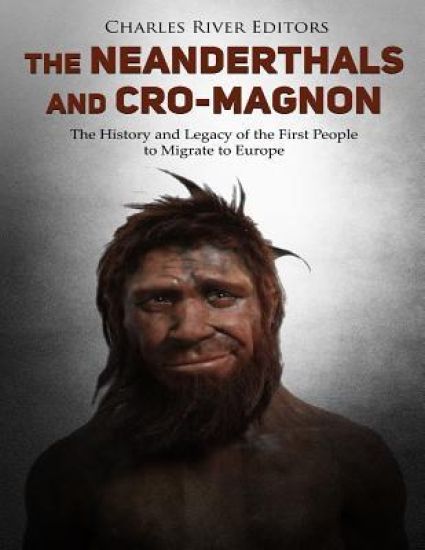
The Neanderthals and Cro-Magnon: The History and Legacy of the First People to Migrate to Europe
*Includes pictures *Includes online resources and a bibliography for further reading In popular culture, the term Neanderthal is used as a colloquial insult for a degenerate or someone perceived as stupid. This seems to have been the case even from the first recognition of the Neanderthals as a species. The first Neanderthal fossil discovery was that of a child's skull in Belgium in 1829, but it was badly damaged. Another would be discovered in 1856 in a limestone mine of the Neanderthal region of what is present-day Germany, and a skull with differing distinct traits (indicating a different species than the Neanderthals) would be discovered just over a decade later in southwestern France. The latter specimen would come to be recognized as an example of the species Homo Sapiens, and these anatomically modern humans arrived in Europe between 45,000 and 43,000 years ago, around the time the Neanderthals are believed to started going extinct. The Neanderthals are a member of the genus Homo just like Homo sapiens and share roughly 99.7% of their DNA with modern humans (Reynolds and Gallagher 2012). Both species even lived briefly during the same time in Eurasia. However, the Neanderthals evolved separately in Europe, away from modern humans, who evolved in Africa. The Neanderthals lived in Europe and Asia for nearly 200,000 years and thrived in these regions, but they went extinct between 40,000 and 30,000 years ago, around the same time that modern humans began arriving in Europe. This has prompted much speculation as to the nature of the interactions between Neanderthals and Homo sapiens, especially since some researchers believe they interacted with each other for over 5,000 years before the Neanderthals began going extinct at different times across Europe. One hypothesis is that Homo sapiens displaced the Neanderthals and were better suited for the environment, and it is obviously possible if not likely that these two groups had become competitors for food and other resources, with Homo sapiens being more successful in the end. If such close interactions were taking place, there is also a possibility that the relatively new-to-Europe Homo sapiens brought pathogens from Africa with them that were unknown to the Neanderthal's immune system. A more recent example of this type of resulting interaction is the European expansion into the Americas, which brought diseases like smallpox that the natives of America had never experienced before, especially diseases resulting from the domestication of animals. It is possible that the domestication of the dog by Homo sapiens may have contributed in spreading foreign diseases among the Neanderthals. Whether or not this occurred, it is highly likely that the interactions between the two groups became much more intimate at one point. The Neanderthals were able to make and use a diverse set of sophisticated tools, control fire, make and wear clothing, and create decorations and ornaments. There is even evidence that the Neanderthal buried their dead with grave offerings, a practice that is also associated with later Homo sapiens, which suggests the two species were exchanging ideas such as tool making and rituals. Archaeological sites from Spain to Russia have been discovered that contain transitional stone tools associated with either Homo sapiens or Neanderthals. From the archaeological evidence alone, it is difficult to determine the level of interactions that were held at these sites. These sites may have been used at the same time. The Neanderthals and Cro-Magnon: The History and Legacy of the First People to Migrate to Europe looks at the evolution of both and examines the theories regarding their histories and interactions. Along with pictures of important people, places, and events, you will learn about the Neanderthals and Cro-Magnon like never before.
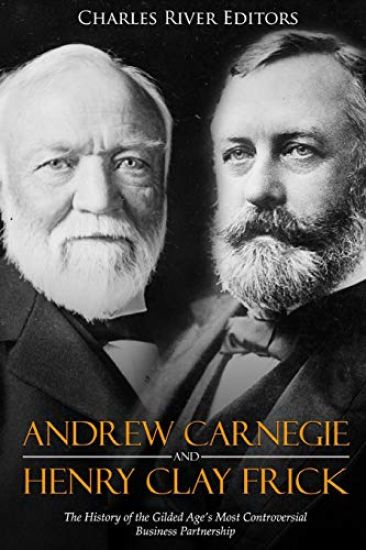
Andrew Carnegie and Henry Clay Frick: The History of the Gilded Age's Most Controversial Business Partnership
*Includes pictures *Includes online resources and a bibliography for further reading The Gilded Age and the dawn of the 20th century are often remembered as an era full of monopolies, trusts, and economic giants in heavy industries like oil and steel. Men like John Rockefeller built empires and financiers like J. P. Morgan merged and consolidated them. The era also made names like Astor, Cooke, and Vanderbilt instantly recognizable across the globe. Over time, the unfathomable wealth generated by the businesses made the individuals on top incredibly rich, and that in turn led to immense criticism and an infamous epithet used to rail against them: robber barons. The term robber baron has largely fallen into disuse in the 21st century but there was a time when it was a popular epithet that described the kind of man who, it was believed, built his fortune by taking things belonging to others. The Gilded Age and the dawn of the 20th century are often remembered as an era full of monopolies, trusts, and economic giants in heavy industries like oil and steel. Men like Andrew Carnegie built empires like Carnegie Steel, and financiers like J. P. Morgan merged and consolidated them. The era also made names like Astor, Cooke, and Vanderbilt instantly recognizable across the globe. Over time, the unfathomable wealth generated by the businesses made the individuals on top incredibly rich, and that in turn led to immense criticism and an infamous epithet used to rail against them: robber barons. The industrial might wielded by men like Gould in the later 19th century directly led to a public backlash and made President Teddy Roosevelt the "trust buster", and there has since been countless regulations to attempt to avoid the types of monopolies found over 100 years ago. However, many 20th century historians and writers pushed back against the allegations hurled at the "robber barons" and even took issue with the name. For example, Libertarian writer John Stossel argued, "They weren't robbers, because they didn't steal from anyone, and they weren't barons-they were born poor..." Dozens of these men would be pilloried as "robber barons," but few of them were as wealthy or influential as Andrew Carnegie, who built America's foremost steel empire. Ironically, Carnegie epitomized the American Dream, migrating with his poor family to America in the mid-19th century and rising to the top of the business world in his adopted country. A prodigious writer in addition to his keen sense of business, Carnegie was one of the most outspoken champions of capitalism at a time when there was pushback among lower social classes who witnessed the great disparities in wealth; as he once put it, "Upon the sacredness of property civilization itself depends-the right of the laborer to his hundred dollars in the savings bank, and equally the legal right of the millionaire to his millions." In a similar vein, he said, "Those who would administer wisely must, indeed, be wise, for one of the serious obstacles to the improvement of our race is indiscriminate charity." Though his was not the "rags to riches" story one often hears of this era, Henry Clay Frick's drive and ambition helped transform a young man from a solidly middle class family into a millionaire by the age of 30. At the same time, despite the characteristic ruthlessness with which he dealt with business associates and foes alike, he was devoted and sometime even tender to his friends and family. After surviving an assassination attempt, he lived to toast the 20th century and avoided going down with so many others of his era on the Titanic, only to see the world he had worked to create consumed by a European war that spread around the world.
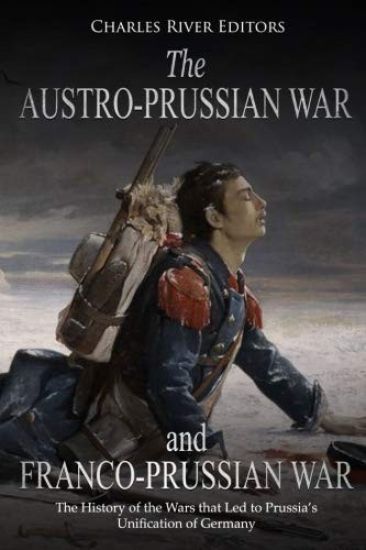
The Austro-Prussian War and Franco-Prussian War: The History of the Wars that Led to Prussia's Unification of Germany
*Includes pictures *Includes online resources and a bibliography for further reading Locked in a balance of power since the 1815 Congress of Vienna, the world was dominated by the great European powers of Britain, France, Russia, and Austria, and at the Congress of Vienna itself, Prussia had been a minor concern. Though the Prussians had come through in time to assist the Duke of Wellington at Waterloo, they were nevertheless taken for granted at the conference, with the major powers instead preferring to deal with the more historically powerful Austrian Hapsburgs. In his scathing commentary on Prussian culture, When Blood is Their Argument, Ford Maddox Ford attempted to explain the sudden rise of Prussian political and economic status from 1849-1880, writing, "She Prussia] had pushed herself from being a bad second in the comity of Germanism into a position of equality with, if not of predominance over, Austria, amongst the German peoples." Prussian leaders, especially Otto von Bismarck, the chancellor and advisor to Prussia's king, believed Prussia could be a united and respected power, but only without the traditional Austrian dominance. At the time, the Austrian empire was a collection of ethnically diverse peoples and had been dominated by a socio-political conservatism that sought to keep the empire ruled in Hapsburg tradition. After Prussia was victorious in the Austro-Prussian War, Bismarck played a waiting game where the unification of Germany was concerned, as the joining of the southern states - initially resistant to Prussian rule, friendly with Austria, and bent on independence - would have to be overcome. What was needed was "a clear case of French aggression" toward either Prussia or the southern states. Not only would such a move by Emperor Napoleon III trigger the terms of the treaty between the German states, but it would keep the remaining world powers out of the conflict. The Franco-Prussian War started in August 1870, and a number of victories followed for the Prussians in battles in northeast France. By September, the strategic city of Metz was under siege, and forces fought a major battle at Sedan. Led by Field Marshal Helmuth von Moltke, the Prussians forced the French to surrender at Metz, and then at Sedan. Emperor Napoleon III, commanding his country's forces at Sedan, was taken prisoner, humiliating France and its impetuous leader. The Prussians immediately marched on Paris, but the capital refused to submit, and a separate siege was mounted that ended up lasting 130 days. Obviously, French society was in tumult, but a Third Republic and Government of National Defence was pronounced in place of the French Empire. An uprising subsequently took place in the stricken city, dubbed the "Paris Commune," which sought to establish a radical alternative to the status quo and was itself put down by French troops. On January 18, 1871, King Wilhelm I was crowned Kaiser of the German Empire, and though the Franco-Prussian War was still taking place, this moment was essentially the point at which Germany was unified. The other German states had to agree to this profound constitutional change, but they acquiesced after the clear victory of the Prussian-led forces. German unification was the territorial expansion of Prussia by another name, but Berlin demonstrated it could protect the interests, or at least the safety, of German-speakers under their watch. Despite the campaigns of nationalists and liberals over the previous decades, it was ultimately a victory on the battlefield that united the German states. This was the real-world application of Bismarck's "Blood and Iron" concept. From this position of strength during war, Prussia achieved an unassailable position. During the relatively short wars of 1864, 1866, and 1870-71, Bismarck roused nationalist sentiment, and in so doing, he achieved the long awaited goal of German unification.
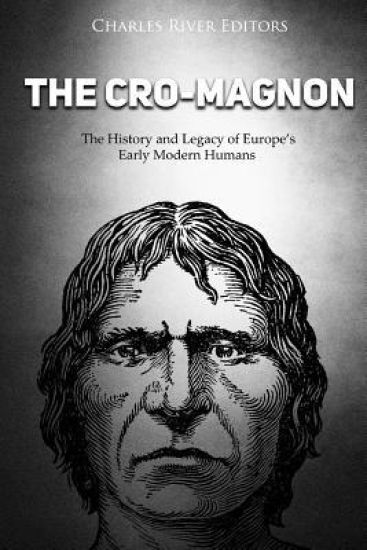
The Cro-Magnon: The History and Legacy of Europe's Early Modern Humans

The Cro-Magnon: The History and Legacy of Europe's Early Modern Humans

Charles River

Createspace Independent Publishing Platform
2018
nidottu
*Includes pictures *Includes online resources and a bibliography for further reading In March 1868 in a rock shelter in southwestern France, railroad workers came across relatively modern looking human skulls, flint tools and animal bones. To investigate the limestone cliff shelter, the French geologist Louis Lartet was brought in to perform excavations, during which he uncovered four partial skeletons and ornaments of shell, ivory and reindeer antler. Given the ancient nature of the remains, the specimen types were named after the Abri de Cr -Magnon (abri = rock shelter, an dcr = hole) they were discovered in. Notable finds from the rock shelter were the Cro-Magnon 1, a nearly complete male skull (missing only his teeth) with remains of his skeleton, Cro-Magnon 2, partial remains of a female cranium, and Cro-Magnon 3, the partial remains of a male cranium. Based on the remains, the site likely dates to the Upper Pleistocene Era between 32,000 and 30,000 years ago. Of the three skulls that were uncovered, Cro-Magnon 1 was considered the type specimen for the Western European "race" (an artificial construct of the time it was discovered), even though the skull featured more gracile features than the other two skulls and was not that similar to them either. The Cro-Magnon were Homo sapiens, and the most defining characteristics of the species are the cultural traits that begin to show in the archaeological record. Tools were beginning to be made from multiple materials, and these people would often travel long distances or trade to acquire specific materials for tools. Symbolic material became increasingly common among them, as cave paintings, figurines, shell beads, pendants, and even early burials were more common with modern humans than Neanderthals, and this abstract way of thinking may have helped the species be more successful in adapting than the other contemporary humans. While in the 21st century, scientists may refer to the Cro-Magnon as European Early Modern Humans, this was not case when the Cro-Magnon remains were first uncovered. In 19th century Europe, there was a nationalist debate as to where the "first" Europeans emerged, and the mixing of nationalistic concepts and cultural hierarchy that was prevalent in Europe at this time made the scientific understanding of the Cro-Magnon within human evolution slow to progress. It is therefore necessary to look at the Cro-Magnon's biological history and the European cultural history to analyze how the remains of Cro-Magnon have been viewed and used over the past few centuries. The Cro-Magnon: The History and Legacy of Europe's Early Modern Humans looks at how these early Homo sapiens reached Europe, their interactions with the Neanderthals, and more. Along with pictures depicting important people, places, and events, you will learn about the Cro-Magnon like never before.
El Escorial: A história e o legado do local real mais famoso da Espanha

El Escorial: A história e o legado do local real mais famoso da Espanha

Charles River

Createspace Independent Publishing Platform
2018
nidottu
Localizado entre a cadeia montanhosa da Sierra de Guadarrama, El Monte Abantos, ou o Monte Abantos, eleva-se sobre os seus arredores a uma altitude de 1753 metros, ou 5751 p s. Na verdade, n o h nada esteticamente espetacular sobre esse monte florestado, mas h uma aura de mist rio que paira sobre Abantos, muito parecido com a cortina de n voa que se ergue sobre o topo da montanha no in cio da manh . Madri, a pouco mais de 37 milhas de dist ncia, t o bela e vibrante como eles v m, mas o povo da cidade e os turistas muitas vezes se v em atra dos por este relevo, em particular a faixa tranquila de terra na encosta sul do Abantos. Este lugar pitoresco e panor mico rico em vistas dignas de cinema e uma refrescante fuga da agitada vida citadina, al m de tamb m ser o lar de um tesouro nacional insubstitu vel, outrora louvado como a oitava maravilha do mundo: El Escorial Quem ainda n o conhece El Escorial provavelmente n o se impressionar em um primeiro momento. Tem cores complementares, mas sem brilho, para n o mencionar as propor es uniformes, ainda que sem inspira o, de suas torres. A fachada, embora claramente uma estrutura robusta, carece de calor e criatividade. Os visitantes que passarem por qualquer uma de suas tr s portas, certamente, ficar o sem palavras por sua majestosidade oculta. Essa c psula do tempo monumental de esplendor barroco e renascentista, carimbado com as impress es de seus monarcas cat licos, aquele que pode ser apreciada pelos amantes da arte, independentemente de conhecimentos pr vios. A maioria das pessoas de sorte o suficiente para deleitar os olhos sobre o majestoso complexo que o El Escorial compartilham o mesmo sentimento: sua beleza indescrit vel. Este um lugar que emana opul ncia, um tipo de opul ncia temperada pela classe e pelo encanto hist rico, e n o pela extravagante e ostensiva ostenta o, muitas vezes exibida pelo nouveau riche. Dizer que o lugar adequado para um rei seria simplesmente minimizar seu esplendor. Claro, esse local era exatamente isso. A parte mais atraente deste composto n o est na sua beleza secreta, mas na sua hist ria envolvente e nas in meras e muitas vezes enigm ticas lendas associadas a este composto cativante. El Escorial: A Hist ria e Legado do local mais real da Espanha percorre o cronograma da resid ncia e observa alguns dos personagens fascinantes que l viviam. Juntamente com fotos de pessoas importantes, lugares e eventos, voc aprender sobre El Escorial como nunca antes.
W. E. B. Du Bois: The Life and Legacy of Early 20th Century America's Most Famous Civil Rights Activist
*Includes pictures *Includes online resources and a bibliography for further reading Despite a Union victory and Lincoln's Emancipation Proclamation, unthinkable in the previous century, a new form of suppression and violence descended on the African-American population. "Reconstruction" is employed as a generic term for the period that followed the American Civil War. Suggesting a successful rejuvenation of a war-ravaged South, it lamentably gave way to a resurrection of the same white ruling class and slave-owner mentality, protecting the status quo in the legislatures and courts. With the distortion of Reconstruction's intent came a body of racial policy and a tacitly understood social code that barred the pre-war slave class from personal freedom and opportunity, at the risk of great personal violence for anyone who objected. The arduous task of overthrowing Jim Crow codes and legislation marked one of the first strides toward the modern struggle for ethnic equality in American society and required nearly a century of struggle. That effort spawned a multitude of heroic African-American activists, but it is remembered in large part for the work of two iconic African-American men of stature. Much like their later counterparts, Reverend Martin Luther King, Jr. and Malcolm X, the debate between gradual integration through temporary accommodation and overtly insistent activism was led by Booker T. Washington and W. E. B. Du Bois. Through the last years of the 19th century, Washington's gentler approach of enhancing black prospects through vocational education, largely accomplished with white permission and funds, seemed the popular choice. His legacy can be sensed in King's subsequent willingness to extend an olive branch to white Americans in a sense of unity, although Washington's propensity for accommodation held no place in King's ministry. Ultimately, however, the vision that oversaw the creation of the Tuskegee Institute faded in the early 20th century as black intellectualism and stiffening resolve came to the fore. This side's greatest proponent, William Edward Burghardt Du Bois, still stands among the greatest and most controversial minds of any black leader in his country. The first African-American to receive a doctorate from Harvard University, Du Bois rose to become one of the most important social thinkers of his time in a 70-year career of combined scholarship, teaching, and activism. His lifelong efforts were devoted to the immediate acceptance of African-Americans as full citizens in good standing, and to the universal dismissal of white superiority. A co-founder of the National Association for the Advancement of Colored People, Du Bois was involved with virtually every equality-oriented organization of note in the early and mid-20th century, and his legacy can be found in a long line of extraordinary black scholars extending to the present day. Although Du Bois' name is still (and somewhat inexplicably) less well-known than that of Washington, his prolific writings serve as a bedrock to the modern social engines at work in the pursuit of racial equality in America. In his life and experience of nearly a century, he spanned the administrations of Andrew Johnson and Lyndon Baines Johnson, dying only one day before King's "I Have a Dream" speech. W. E. B. Du Bois: The Life and Legacy of Early 20th Century America's Most Famous Civil Rights Activist chronicles the life and work that made him one of America's most influential men. Along with pictures of important people, places, and events, you will learn about Du Bois like never before.
The British Army in World War I: The History and Legacy of the Army across All Theaters of the Great War
*Includes pictures *Includes online resources and a bibliography for further reading World War I, also known in its time as the "Great War" or the "War to End all Wars", was an unprecedented holocaust in terms of its sheer scale. Fought by men who hailed from all corners of the globe, it saw millions of soldiers do battle in brutal assaults of attrition which dragged on for months with little to no respite. Tens of millions of artillery shells and untold hundreds of millions of rifle and machine gun bullets were fired in a conflict that demonstrated man's capacity to kill each other on a heretofore unprecedented scale, and as always, such a war brought about technological innovation at a rate that made the boom of the Industrial Revolution seem stagnant. The enduring image of World War I is of men stuck in muddy trenches, and of vast armies deadlocked in a fight neither could win. It was a war of barbed wire, poison gas, and horrific losses as officers led their troops on mass charges across No Man's Land and into a hail of bullets. While these impressions are all too true, they hide the fact that trench warfare was dynamic and constantly evolving throughout the war as all armies struggled to find a way to break through the opposing lines. Needless to say, the First World War came at an unfortunate time for those who would fight in it. After an initial period of relatively rapid maneuver during which the German forces pushing through Belgium and the French and British forces attempting to stymie them made an endless series of abortive flanking movements that extended the lines to the sea, a stalemate naturally tended to develop. The infamous trench lines soon snaked across the French and Belgian countryside, creating an essentially futile static slaughterhouse whose sinister memory remains to this day. As with the other nations involved, the war came as a shock to the British army. For the past century, it had mostly been engaged in colonial conflicts against opponents with far more limited resources and technology, and this created a sense of superiority. Put simply, the British army was used to defeating any opponent it faced, and even against more challenging opponents, such as the Russians in the Crimea and the Boers in South Africa, Britain came out on top, suffering only a few embarrassments along the way. However, World War I, especially on the Western Front, was unlike anything the British had faced before. As the trenches were dug and the major armies settled in, the British faced armies like their own for the first time in 60 years, and they found that victory was far from easy. Along the way, the British army adapted and confronted new tactics, new weapons, and new horrors, sometimes coming up with bold innovations like the tank but occasionally finding itself unable to break the habit of conventional thinking. The British Army in World War I: The History and Legacy of the Army across All Theaters of the Great War comprehensively analyzes Britain's experience in the field, the results, and the traumatic aftermath. Along with pictures of important people, places, and events, you will learn about the British Army in World War I like never before.
The Mosque of Cristo de la Luz: The History and Legacy of the Moors' Famous Holy Site in Toledo, Spain
*Includes pictures *Includes contemporary accounts *Includes online resources and a bibliography for further reading "Bismila in the name of Allah]. Ahmad ibn Hadidi had this mosque erected using his own money requesting a reward in paradise for it from Allah. It was completed with the aid of Allah under the direction of Musa ibn Al , architect and Sa'ada, and concluded in Muharraq in 390." - An inscription on the foundation of the mosque The Mezquita del Cristo de la Luz is nowhere near the largest monument in Toledo. The grand Toledo Cathedral, for instance, dwarfs this modest, two-level structure with its height of 146 feet. The simple elegance of the mezquita pales in comparison to the city's stupendous landmarks. Toledo is, after all, home to the mighty stone fortification known as the Alcazar of Toledo, and the breathtaking masonry showpiece that is the Synagogue of Santa Maria la Blanca. Nevertheless, this multicultural mezquita is often hailed as one of the most precious treasures of Toledo, a place that truly embodies the unique, cross-cultural spirit of the city. The Mosque of Cristo de la Luz: The History and Legacy of the Moors' Famous Holy Site in Toledo, Spain explores the three major phases of its construction and tenure, as well as the riveting miracles that surround this hidden jewel in Toledo. Along with pictures of important people, places, and events, you will learn about the Mosque of Cristo de la Luz like never before.
The Unification of Germany: The History and Legacy of the German Empire's Establishment
*Includes pictures *Includes contemporary accounts *Includes online resources and a bibliography for further reading When invoking the term "German unification," many might initially think of the tumultuous period at the end of the 20th century when communist East Germany and democratic West Germany came together to form the modern German state. However, that was technically a "reunification," because Germany was first unified as a nation-state in 1871. That unification formed a state much larger than today's Germany, stretching from Strasbourg in the Alsace region in today's France almost 1,500 kilometers to K nigsberg, now Kaliningrad in contemporary Russia, on the Baltic Sea. This unified Germany was an experiment with few historical precedents. The 19th century was, indeed, the "Age of Nationalism," but German speakers had traditionally been spread out across Europe, including the Austrian Empire, loose confederations such as the Holy Roman Empire, and many other countries. German unity was a seemingly impossible dream held by nationalists for many years, but it became a reality when Prussia, the largest state in the German Confederation, pursued a deliberate and aggressive strategy to bring as many German-speaking territories under its control. That is not to say most Germans resisted unification, because even as life in an assortment of German states had some advantages, an underlying insecurity prevailed in principalities lacking overarching authority. German-speaking lands had been the sites of some of the continent's most brutal wars. Moreover, there was a growing sense of German cultural and linguistic togetherness fostered by nationalists, artists, writers, and composers. Not surprisingly, German unity in 1871 caused geopolitical ripples that reverberated for decades. Other larger European powers, such as Britain, France, and Russia, came to feel threatened by the rise of Germany. These tensions were still prevalent at the outbreak of World War I in 1914, and it became even more important in World War II. In part this was because Germany also became an economic powerhouse, fundamentally altering the global economy. Alongside the rapid expansion of the United States, trade went through a transformation that still has ramifications today. The forces driving Germany's unification in the 19th century were similar to other trends of the era, but there were many specific and contingent factors playing out before 1871. In this respect, the unification of Germany is both an unusual and unfamiliar story. The Unification of Germany: The History and Legacy of the German Empire's Establishment looks at the life and work of Germany's most famous politician and how Germany was unified. Along with pictures of important people, places, and events, you will learn about German unification like never before.
Booker T. Washington and W. E. B. Du Bois: The Civil Rights Icons Who Became Bitter Rivals
*Includes pictures *Includes online resources and a bibliography for further reading Despite a Union victory and Lincoln's Emancipation Proclamation, unthinkable in the previous century, a new form of suppression and violence descended on the African-American population. "Reconstruction" is employed as a generic term for the period that followed the American Civil War. Suggesting a successful rejuvenation of a war-ravaged South, it lamentably gave way to a resurrection of the same white ruling class and slave-owner mentality, protecting the status quo in the legislatures and courts. With the distortion of Reconstruction's intent came a body of racial policy and a tacitly understood social code that barred the pre-war slave class from personal freedom and opportunity, at the risk of great personal violence for anyone who objected. The arduous task of overthrowing Jim Crow codes and legislation marked one of the first strides toward the modern struggle for ethnic equality in American society and required nearly a century of struggle. That effort spawned a multitude of heroic African-American activists, but it is remembered in large part for the work of two iconic African-American men of stature. Much like their later counterparts, Reverend Martin Luther King, Jr. and Malcolm X, the debate between gradual integration through temporary accommodation and overtly insistent activism was led by Booker T. Washington and W. E. B. Du Bois. From 1890-1915, the most influential black man in America was Booker T. Washington, who less than 35 years earlier had been born into slavery. The young boy worked laboriously until emancipation before going on to seek an education, and by the time he was 40, he was consolidating a network of supporters that came to be known as the "Tuskegee Machine," helping coordinate action with the support of black businesses, religious communities, and others. Using his position of power, Washington spoke out against Jim Crow laws and Southern disfranchisement of blacks. Despite being so recognized, and perhaps in part because of it, by the early 20th century, Washington's tactics were questioned by other black leaders, notably W. E. B. Du Bois, who wanted to protest more vehemently in an effort to secure civil rights. Washington, 12 years Du Bois' senior, entered the field of education and founded the famous Tuskegee Institute based on his vision of what a population emerging from generations of slavery required in order to successfully integrate into modern life. His position was simply one of incremental entry by the provision of industrial education and political accommodation. He urged blacks to accept discrimination in the short term and concentrate on elevating themselves, thereby proving themselves through hard work and material prosperity. Du Bois would have none of that, believing it amounted to an approval of the Jim Crow regime of the South and a passive acceptance of racism. In opposition, he and other black leaders organized the Niagara Movement, citing opposition to Washington's moral leadership of the movement and marking their determination to fight for full civil equality for black Americans. The movement did not gain much traction, but it was in direct line of ascension to the much more influential National Association for the Advancement of Colored People (NAACP). Although Du Bois' name is still (and somewhat inexplicably) less well-known than that of Washington, his prolific writings serve as a bedrock to the modern social engines at work in the pursuit of racial equality in America. In his life and experience of nearly a century, he spanned the administrations of Andrew Johnson and Lyndon Baines Johnson, dying only one day before King's "I Have a Dream" speech.
Bugsy Siegel and Meyer Lansky: The Controversial Mobsters Who Worked with Lucky Luciano to Form the National Crime Syndicate
*Includes pictures *Includes online resources and a bibliography for further reading In the last 70 years, a countless number of people have come across the grisly and morbidly fascinating crime scene photographs of Benjamin "Bugsy" Siegel's murder. The photographs are as disconcerting as they are iconic, for they show a gritty glimpse into the haunting reality of a life too often glamorized by pop culture. The less-publicized photograph of Bugsy in the morgue is, in a way, a more chilling reminder of the barbarity and callous irony behind the term "organized crime." With the blood on his face rinsed off and his hair slicked back, it almost seems as if the photographer had caught Bugsy mid-slumber, but the balls of cotton plugging the gaping bullet holes in his face suggest otherwise. One minute, the fearless Bugsy was stalking the streets of Sin City, his mere presence enough to make even the most hardened thugs break out in a cold sweat, and the next minute, Bugsy was reduced to an unrecognizable body sprawled out on a hard metal slab, with the name on his toe tag misspelled. Bugsy, who helped turn Las Vegas into what it became, had risen to the upper echelons of New York's criminal underworld along with his childhood friend, Meyer Lansky. One of America's most infamous mobsters, Lansky was also one of the most mysterious, a perplexing, yet inexplicably intriguing individual with multiple reputations. To his admirers, he was in many ways the ultimate genius and survivor within the callous and cut-throat world of 20th century organized crime. Even in adulthood, Meyer was smaller than most, standing anywhere between 4'11" to 5'4", and weighing 136 pounds at his heaviest. He was not merely an intellectual - he was worldly and wise, one who often doled out advice akin to poetry to his children and grandchildren, his gravelly voice oddly soothing. At the same time, he had all the stealth and cunning of a sphinx, and while remarkably even-tempered, gangsters twice his size dared not cross him. To them, he was no more than a wildly ambitious, often misunderstood entrepreneur who trod upon the border between legality and lawlessness with all the mastery of a tightrope artist. He was, above all, the definition of humility, one whose "handshake was worth more than any contract," and a man who actively dodged the spotlight that doggedly tailed him until the end of his days. Conversely, most will quickly concede that while Lansky was an exceptionally clever criminal, he was a criminal all the same, and the crimes of this dark horse were unforgivable. Meyer was a fraudulent, tax-evading crook whose massive fortune was literally made off the bodies of countless victims. He was a silver-tongued fiend who preyed on the weak and impressionable, plying them with booze and drugs and feeding their gambling addictions. Lansky, whose most famous nickname remains the "Mob's Accountant," was one of the few gangsters of his era to die in old age, and he was never pinched for anything more serious than gambling. It's believed he made upwards of $20 million in his time as a mobster, but some still claim he was never the mogul the media painted him out to be. Instead, they assert that he was an expendable middleman, and that he was an overzealous rogue who squandered away whatever fortune he had. Bugsy Siegel and Meyer Lansky: The Controversial Mobsters Who Worked with Lucky Luciano to Form the National Crime Syndicate profiles the friends and partners as they rose from the streets of the Lower East Side to become some of the most influential organized crime leaders in America. Along with pictures of important people, places, and events, you will learn about Bugsy Siegel and Meyer Lansky like never before.