Kirjojen hintavertailu – 12 903 725 kirjaa ja 27 kauppaa

Kirjailija

Charles River

Kirjat ja teokset yhdessä paikassa: 4 673 kirjaa, julkaisuja vuosilta 2013–2022, suosituimpiin kuuluu William Powell and Myrna Loy: The Lives and Careers of One of Classical Hollywood's Most Iconic Duos. Vertaile teosten hintoja ja tarkista saatavuus suomalaisista kirjakaupoista.

4 673 kirjaa

Kirjojen julkaisuvuodet: 2013–2022.

El Imperio jemer: La historia y legado de uno de los imperios más influyentes del sudeste asiático
El Imperio jemer, tambi n conocido como el Imperio de Angkor, fue un poderoso imperio del sudeste asi tico que se estableci en 802 EC y culmin en 1431 con la invasi n de los siameses y el abandono de Angkor. El Imperio jemer fue responsable de muchos de los templos y monumentos hist ricos que se encuentran en las selvas de la actual Camboya, y tambi n en otros pa ses del sudeste asi tico; todo gracias al hecho de que el Imperio jemer se extendi sobre la actual Camboya, partes de Tailandia, Laos y Vietnam, lo que lo hac a un socio comercial estrat gico con los barcos que viajaban desde China y la India. Entre toda su arquitectura, el imperio es m s conocido por la construcci n de Angkor Wat, una de las m s grandiosas maravillas del mundo moderno. Conocido como Angkor Wat ("Ciudad templo"), el gigantesco complejo fue construido por el rey Suryavarman II a principios del siglo XII para servir como el templo de estado y la capital del rey. Al haberse mantenido tan finamente conservado, ha mantenido una importancia religiosa durante casi 900 a os, primero dedicado al dios hind Vishnu, y luego al budismo. Es comprensible que se haya convertido en uno de los s mbolos y atracciones tur sticas m s relevantes de Camboya, e incluso aparece en su bandera nacional. Angkor Wat contin a fascinando al mundo, tanto por su grandiosidad y tama o, como por sus decoraciones ornamentales tanto en su interior como en su exterior. Habi ndose enfriado las luchas pol ticas en Camboya, Angkor Wat es ahora una importante atracci n tur stica que atrae a m s de medio mill n de extranjeros por a o, lo que representa m s de la mitad de los turistas del pa s. Como resultado, la influencia duradera que este imperio tuvo en la gente de Camboya todav a puede sentirse hoy en d a, con Angkor Wat figurando en la bandera nacional. El Imperio jemer: la historia y legado de uno de los imperios m s influyentes del sudeste asi tico narra la notable historia de los jemeres y su impacto en la regi n. En conjunto con im genes de lugares, personas y eventos importantes, aprender sobre el Imperio jemer como nunca antes.

The British Army in World War I: The History and Legacy of the Army across All Theaters of the Great War
*Includes pictures *Includes online resources and a bibliography for further reading World War I, also known in its time as the "Great War" or the "War to End all Wars", was an unprecedented holocaust in terms of its sheer scale. Fought by men who hailed from all corners of the globe, it saw millions of soldiers do battle in brutal assaults of attrition which dragged on for months with little to no respite. Tens of millions of artillery shells and untold hundreds of millions of rifle and machine gun bullets were fired in a conflict that demonstrated man's capacity to kill each other on a heretofore unprecedented scale, and as always, such a war brought about technological innovation at a rate that made the boom of the Industrial Revolution seem stagnant. The enduring image of World War I is of men stuck in muddy trenches, and of vast armies deadlocked in a fight neither could win. It was a war of barbed wire, poison gas, and horrific losses as officers led their troops on mass charges across No Man's Land and into a hail of bullets. While these impressions are all too true, they hide the fact that trench warfare was dynamic and constantly evolving throughout the war as all armies struggled to find a way to break through the opposing lines. Needless to say, the First World War came at an unfortunate time for those who would fight in it. After an initial period of relatively rapid maneuver during which the German forces pushing through Belgium and the French and British forces attempting to stymie them made an endless series of abortive flanking movements that extended the lines to the sea, a stalemate naturally tended to develop. The infamous trench lines soon snaked across the French and Belgian countryside, creating an essentially futile static slaughterhouse whose sinister memory remains to this day. As with the other nations involved, the war came as a shock to the British army. For the past century, it had mostly been engaged in colonial conflicts against opponents with far more limited resources and technology, and this created a sense of superiority. Put simply, the British army was used to defeating any opponent it faced, and even against more challenging opponents, such as the Russians in the Crimea and the Boers in South Africa, Britain came out on top, suffering only a few embarrassments along the way. However, World War I, especially on the Western Front, was unlike anything the British had faced before. As the trenches were dug and the major armies settled in, the British faced armies like their own for the first time in 60 years, and they found that victory was far from easy. Along the way, the British army adapted and confronted new tactics, new weapons, and new horrors, sometimes coming up with bold innovations like the tank but occasionally finding itself unable to break the habit of conventional thinking. The British Army in World War I: The History and Legacy of the Army across All Theaters of the Great War comprehensively analyzes Britain's experience in the field, the results, and the traumatic aftermath. Along with pictures of important people, places, and events, you will learn about the British Army in World War I like never before.
The Austro-Prussian War and Franco-Prussian War: The History of the Wars that Led to Prussia's Unification of Germany
*Includes pictures *Includes online resources and a bibliography for further reading Locked in a balance of power since the 1815 Congress of Vienna, the world was dominated by the great European powers of Britain, France, Russia, and Austria, and at the Congress of Vienna itself, Prussia had been a minor concern. Though the Prussians had come through in time to assist the Duke of Wellington at Waterloo, they were nevertheless taken for granted at the conference, with the major powers instead preferring to deal with the more historically powerful Austrian Hapsburgs. In his scathing commentary on Prussian culture, When Blood is Their Argument, Ford Maddox Ford attempted to explain the sudden rise of Prussian political and economic status from 1849-1880, writing, "She Prussia] had pushed herself from being a bad second in the comity of Germanism into a position of equality with, if not of predominance over, Austria, amongst the German peoples." Prussian leaders, especially Otto von Bismarck, the chancellor and advisor to Prussia's king, believed Prussia could be a united and respected power, but only without the traditional Austrian dominance. At the time, the Austrian empire was a collection of ethnically diverse peoples and had been dominated by a socio-political conservatism that sought to keep the empire ruled in Hapsburg tradition. After Prussia was victorious in the Austro-Prussian War, Bismarck played a waiting game where the unification of Germany was concerned, as the joining of the southern states - initially resistant to Prussian rule, friendly with Austria, and bent on independence - would have to be overcome. What was needed was "a clear case of French aggression" toward either Prussia or the southern states. Not only would such a move by Emperor Napoleon III trigger the terms of the treaty between the German states, but it would keep the remaining world powers out of the conflict. The Franco-Prussian War started in August 1870, and a number of victories followed for the Prussians in battles in northeast France. By September, the strategic city of Metz was under siege, and forces fought a major battle at Sedan. Led by Field Marshal Helmuth von Moltke, the Prussians forced the French to surrender at Metz, and then at Sedan. Emperor Napoleon III, commanding his country's forces at Sedan, was taken prisoner, humiliating France and its impetuous leader. The Prussians immediately marched on Paris, but the capital refused to submit, and a separate siege was mounted that ended up lasting 130 days. Obviously, French society was in tumult, but a Third Republic and Government of National Defence was pronounced in place of the French Empire. An uprising subsequently took place in the stricken city, dubbed the "Paris Commune," which sought to establish a radical alternative to the status quo and was itself put down by French troops. On January 18, 1871, King Wilhelm I was crowned Kaiser of the German Empire, and though the Franco-Prussian War was still taking place, this moment was essentially the point at which Germany was unified. The other German states had to agree to this profound constitutional change, but they acquiesced after the clear victory of the Prussian-led forces. German unification was the territorial expansion of Prussia by another name, but Berlin demonstrated it could protect the interests, or at least the safety, of German-speakers under their watch. Despite the campaigns of nationalists and liberals over the previous decades, it was ultimately a victory on the battlefield that united the German states. This was the real-world application of Bismarck's "Blood and Iron" concept. From this position of strength during war, Prussia achieved an unassailable position. During the relatively short wars of 1864, 1866, and 1870-71, Bismarck roused nationalist sentiment, and in so doing, he achieved the long awaited goal of German unification.
Leonor de Aquitania: La vida y legado de la más famosa reina de la Europa medieval

Leonor de Aquitania: La vida y legado de la más famosa reina de la Europa medieval

Charles River

Createspace Independent Publishing Platform
2018
nidottu
Junto a la efigie de la tumba del rey Enrique II en la abad a Fontevraud en Francia yace un curioso f retro cincelado en la forma de una joven mujer en reposo. La otrora vibrante pintura de la efigie se est descascarillando y varias reas de las tumbas de siglos de antig edad est n astilladas, pero las caracter sticas generales todav a pueden distinguirse. La hermosa reina coronada, representada con una suave sonrisa en su rostro, luc a un sencillo pero elegante vestido blanco y azul, y un libro abierto entre sus manos. La efigie no es otra que la duquesa Leonor de Aquitania. A lo largo de los a os, esta enigm tica figura del siglo XII ha sido retratada de incontables maneras, desde una valiente reina guerrera e ingeniosa pol tica hasta una sirena manipuladora y obsesionada con el control, cuyo nico objetivo en la vida era el poder. Leonor de Aquitania: la vida y legado de la m s famosa reina de la Europa medieval intenta ofrecer una mirada imparcial a la vida de Leonor, explorando los logros y duras pruebas de la duquesa-reina, y deconstruir las "leyendas negras" y otros relatos fascinantes que contin an rode ndola hoy en d a. En conjunto con fotograf as de personas, lugares y eventos importantes, aprender sobre Leonor de Aquitania como nunca antes.
The Cro-Magnon: The History and Legacy of Europe's Early Modern Humans

The Cro-Magnon: The History and Legacy of Europe's Early Modern Humans

Charles River

Createspace Independent Publishing Platform
2018
nidottu
*Includes pictures *Includes online resources and a bibliography for further reading In March 1868 in a rock shelter in southwestern France, railroad workers came across relatively modern looking human skulls, flint tools and animal bones. To investigate the limestone cliff shelter, the French geologist Louis Lartet was brought in to perform excavations, during which he uncovered four partial skeletons and ornaments of shell, ivory and reindeer antler. Given the ancient nature of the remains, the specimen types were named after the Abri de Cr -Magnon (abri = rock shelter, an dcr = hole) they were discovered in. Notable finds from the rock shelter were the Cro-Magnon 1, a nearly complete male skull (missing only his teeth) with remains of his skeleton, Cro-Magnon 2, partial remains of a female cranium, and Cro-Magnon 3, the partial remains of a male cranium. Based on the remains, the site likely dates to the Upper Pleistocene Era between 32,000 and 30,000 years ago. Of the three skulls that were uncovered, Cro-Magnon 1 was considered the type specimen for the Western European "race" (an artificial construct of the time it was discovered), even though the skull featured more gracile features than the other two skulls and was not that similar to them either. The Cro-Magnon were Homo sapiens, and the most defining characteristics of the species are the cultural traits that begin to show in the archaeological record. Tools were beginning to be made from multiple materials, and these people would often travel long distances or trade to acquire specific materials for tools. Symbolic material became increasingly common among them, as cave paintings, figurines, shell beads, pendants, and even early burials were more common with modern humans than Neanderthals, and this abstract way of thinking may have helped the species be more successful in adapting than the other contemporary humans. While in the 21st century, scientists may refer to the Cro-Magnon as European Early Modern Humans, this was not case when the Cro-Magnon remains were first uncovered. In 19th century Europe, there was a nationalist debate as to where the "first" Europeans emerged, and the mixing of nationalistic concepts and cultural hierarchy that was prevalent in Europe at this time made the scientific understanding of the Cro-Magnon within human evolution slow to progress. It is therefore necessary to look at the Cro-Magnon's biological history and the European cultural history to analyze how the remains of Cro-Magnon have been viewed and used over the past few centuries. The Cro-Magnon: The History and Legacy of Europe's Early Modern Humans looks at how these early Homo sapiens reached Europe, their interactions with the Neanderthals, and more. Along with pictures depicting important people, places, and events, you will learn about the Cro-Magnon like never before.
W. E. B. Du Bois: The Life and Legacy of Early 20th Century America's Most Famous Civil Rights Activist
*Includes pictures *Includes online resources and a bibliography for further reading Despite a Union victory and Lincoln's Emancipation Proclamation, unthinkable in the previous century, a new form of suppression and violence descended on the African-American population. "Reconstruction" is employed as a generic term for the period that followed the American Civil War. Suggesting a successful rejuvenation of a war-ravaged South, it lamentably gave way to a resurrection of the same white ruling class and slave-owner mentality, protecting the status quo in the legislatures and courts. With the distortion of Reconstruction's intent came a body of racial policy and a tacitly understood social code that barred the pre-war slave class from personal freedom and opportunity, at the risk of great personal violence for anyone who objected. The arduous task of overthrowing Jim Crow codes and legislation marked one of the first strides toward the modern struggle for ethnic equality in American society and required nearly a century of struggle. That effort spawned a multitude of heroic African-American activists, but it is remembered in large part for the work of two iconic African-American men of stature. Much like their later counterparts, Reverend Martin Luther King, Jr. and Malcolm X, the debate between gradual integration through temporary accommodation and overtly insistent activism was led by Booker T. Washington and W. E. B. Du Bois. Through the last years of the 19th century, Washington's gentler approach of enhancing black prospects through vocational education, largely accomplished with white permission and funds, seemed the popular choice. His legacy can be sensed in King's subsequent willingness to extend an olive branch to white Americans in a sense of unity, although Washington's propensity for accommodation held no place in King's ministry. Ultimately, however, the vision that oversaw the creation of the Tuskegee Institute faded in the early 20th century as black intellectualism and stiffening resolve came to the fore. This side's greatest proponent, William Edward Burghardt Du Bois, still stands among the greatest and most controversial minds of any black leader in his country. The first African-American to receive a doctorate from Harvard University, Du Bois rose to become one of the most important social thinkers of his time in a 70-year career of combined scholarship, teaching, and activism. His lifelong efforts were devoted to the immediate acceptance of African-Americans as full citizens in good standing, and to the universal dismissal of white superiority. A co-founder of the National Association for the Advancement of Colored People, Du Bois was involved with virtually every equality-oriented organization of note in the early and mid-20th century, and his legacy can be found in a long line of extraordinary black scholars extending to the present day. Although Du Bois' name is still (and somewhat inexplicably) less well-known than that of Washington, his prolific writings serve as a bedrock to the modern social engines at work in the pursuit of racial equality in America. In his life and experience of nearly a century, he spanned the administrations of Andrew Johnson and Lyndon Baines Johnson, dying only one day before King's "I Have a Dream" speech. W. E. B. Du Bois: The Life and Legacy of Early 20th Century America's Most Famous Civil Rights Activist chronicles the life and work that made him one of America's most influential men. Along with pictures of important people, places, and events, you will learn about Du Bois like never before.
The Mosque of Cristo de la Luz: The History and Legacy of the Moors' Famous Holy Site in Toledo, Spain
*Includes pictures *Includes contemporary accounts *Includes online resources and a bibliography for further reading "Bismila in the name of Allah]. Ahmad ibn Hadidi had this mosque erected using his own money requesting a reward in paradise for it from Allah. It was completed with the aid of Allah under the direction of Musa ibn Al , architect and Sa'ada, and concluded in Muharraq in 390." - An inscription on the foundation of the mosque The Mezquita del Cristo de la Luz is nowhere near the largest monument in Toledo. The grand Toledo Cathedral, for instance, dwarfs this modest, two-level structure with its height of 146 feet. The simple elegance of the mezquita pales in comparison to the city's stupendous landmarks. Toledo is, after all, home to the mighty stone fortification known as the Alcazar of Toledo, and the breathtaking masonry showpiece that is the Synagogue of Santa Maria la Blanca. Nevertheless, this multicultural mezquita is often hailed as one of the most precious treasures of Toledo, a place that truly embodies the unique, cross-cultural spirit of the city. The Mosque of Cristo de la Luz: The History and Legacy of the Moors' Famous Holy Site in Toledo, Spain explores the three major phases of its construction and tenure, as well as the riveting miracles that surround this hidden jewel in Toledo. Along with pictures of important people, places, and events, you will learn about the Mosque of Cristo de la Luz like never before.
Bugsy Siegel and Meyer Lansky: The Controversial Mobsters Who Worked with Lucky Luciano to Form the National Crime Syndicate
*Includes pictures *Includes online resources and a bibliography for further reading In the last 70 years, a countless number of people have come across the grisly and morbidly fascinating crime scene photographs of Benjamin "Bugsy" Siegel's murder. The photographs are as disconcerting as they are iconic, for they show a gritty glimpse into the haunting reality of a life too often glamorized by pop culture. The less-publicized photograph of Bugsy in the morgue is, in a way, a more chilling reminder of the barbarity and callous irony behind the term "organized crime." With the blood on his face rinsed off and his hair slicked back, it almost seems as if the photographer had caught Bugsy mid-slumber, but the balls of cotton plugging the gaping bullet holes in his face suggest otherwise. One minute, the fearless Bugsy was stalking the streets of Sin City, his mere presence enough to make even the most hardened thugs break out in a cold sweat, and the next minute, Bugsy was reduced to an unrecognizable body sprawled out on a hard metal slab, with the name on his toe tag misspelled. Bugsy, who helped turn Las Vegas into what it became, had risen to the upper echelons of New York's criminal underworld along with his childhood friend, Meyer Lansky. One of America's most infamous mobsters, Lansky was also one of the most mysterious, a perplexing, yet inexplicably intriguing individual with multiple reputations. To his admirers, he was in many ways the ultimate genius and survivor within the callous and cut-throat world of 20th century organized crime. Even in adulthood, Meyer was smaller than most, standing anywhere between 4'11" to 5'4", and weighing 136 pounds at his heaviest. He was not merely an intellectual - he was worldly and wise, one who often doled out advice akin to poetry to his children and grandchildren, his gravelly voice oddly soothing. At the same time, he had all the stealth and cunning of a sphinx, and while remarkably even-tempered, gangsters twice his size dared not cross him. To them, he was no more than a wildly ambitious, often misunderstood entrepreneur who trod upon the border between legality and lawlessness with all the mastery of a tightrope artist. He was, above all, the definition of humility, one whose "handshake was worth more than any contract," and a man who actively dodged the spotlight that doggedly tailed him until the end of his days. Conversely, most will quickly concede that while Lansky was an exceptionally clever criminal, he was a criminal all the same, and the crimes of this dark horse were unforgivable. Meyer was a fraudulent, tax-evading crook whose massive fortune was literally made off the bodies of countless victims. He was a silver-tongued fiend who preyed on the weak and impressionable, plying them with booze and drugs and feeding their gambling addictions. Lansky, whose most famous nickname remains the "Mob's Accountant," was one of the few gangsters of his era to die in old age, and he was never pinched for anything more serious than gambling. It's believed he made upwards of $20 million in his time as a mobster, but some still claim he was never the mogul the media painted him out to be. Instead, they assert that he was an expendable middleman, and that he was an overzealous rogue who squandered away whatever fortune he had. Bugsy Siegel and Meyer Lansky: The Controversial Mobsters Who Worked with Lucky Luciano to Form the National Crime Syndicate profiles the friends and partners as they rose from the streets of the Lower East Side to become some of the most influential organized crime leaders in America. Along with pictures of important people, places, and events, you will learn about Bugsy Siegel and Meyer Lansky like never before.
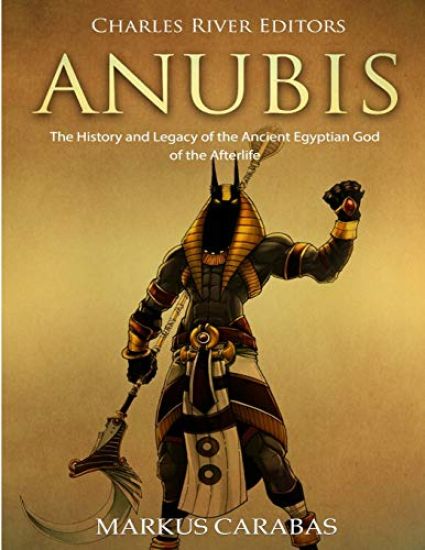
Anubis: The History and Legacy of the Ancient Egyptian God of the Afterlife

Anubis: The History and Legacy of the Ancient Egyptian God of the Afterlife

Markus Carabas; Charles River

Createspace Independent Publishing Platform
2018
nidottu
*Includes pictures *Includes ancient accounts *Includes online resources and a bibliography for further reading "When Nephthys gave birth to Anubis, Isis treated the child as if it were her own; for Nephthys is that which is beneath the earth and invisible, Isis that which is above the earth and visible; and the circle which touches these, called the horizon, being common to both, has received the name Anubis, and is represented in form like a dog; for the dog can see with his eyes both by night and by day alike." To the ancient Egyptians, as was the case with any society made up of inquiring humans, the world was a confusing and often terrifying place of destruction, death and unexplained phenomena. In order to make sense of such an existence, they resorted to teleological stories. Giving a phenomenon a story made it less horrifying, and it also helped them make sense of the world around them. Unsurprisingly, then, the ancient Egyptian gods permeated every aspect of existence. Given the abundance of funerary artifacts that have been found within the sands of Egypt, it sometimes seems as though the Ancient Egyptians were more concerned with the matters of the afterlife than they were with matters of the life they experienced from day to day. This is underscored most prominently by the pyramids, which have captured the world's imagination for centuries. Thus, it's little surprise that Anubis was one of the most important gods in the Egyptian pantheon. The image of Anubis, with his jet-black jackal's head downturned in merciless judgment, continues to inspire artists and neo-Pagans today. There is something about this somber figure that has made him stand the test of time and allowed him to survive while so many gods and goddesses have fallen from memory in the wake of newer religions that are aided by a more interconnected world. Perhaps it is because Anubis is associated with death, or maybe it's because the lack of references to him in Egypt's literary and archaeological record invites multiple interpretations. It also may be due to his appearances in the most emotive works of ancient Egyptian art, notably the vignettes from tombs depicting the mysterious journey of the dead, which beckon viewers to imagine an unearthly, poetic view of death so far removed from modern conceptions. In a sense, Anubis is both awful and majestic. To the ancient Egyptians, however, Anubis evolved over millennia, and even though his image may strike fear into modern hearts, in ancient times, his appearance was somewhat comforting to those who feared the invisible spirits inhabiting all things beside the Nile. Just as the dog is today a figure of protection against violence and trespass, so too was Anubis a figure whose fearsome aspect was a source of comfort for those following the code of their religion, ensuring their piety would be defendable in the Hall of Justice at the end of their lives. How his image was taken up by later cultures, ones who were not acolytes of the ancient Egyptian religion, is fascinating and a testament to human imagination. Anubis: The History and Legacy of the Ancient Egyptian God of the Afterlife looks at the god that had such a decisive impact on the Egyptians' concepts of death and afterlife. Along with pictures depicting important people, places, and events, you will learn about Anubis like never before.
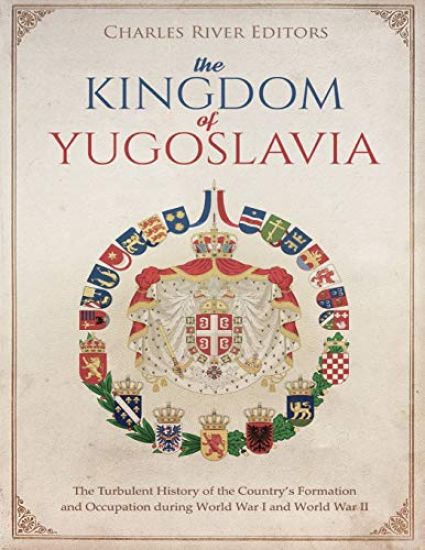
The Kingdom of Yugoslavia: The Turbulent History of the Country's Formation and Occupation during World War I and World War II
*Includes pictures *Includes online resources and a bibliography for further reading "No country of people's democracy has so many nationalities as this country has. Only in Czechoslovakia do there exist two kindred nationalities, while in some of the other countries there are only minorities. Consequently in these countries of people's democracy there has been no need to settle such serious problems as we have had to settle here... With them the basic factor is the class issue, with us it is both the nationalities and the class issue." - Tito Yugoslavia was arguably one of the most unusual geopolitical creations of the 20th century. The Yugoslav state had never existed in any historical sense, and the ties that bound together its constituent peoples were tenuous at best. Although nominally all "Slavs," the country was an amalgamation of languages, alphabets, cultures, religions and traditions, which ensured its short existence was littered with splits, conflicts, and shocking violence. In a sense, it's somewhat surprising that it lasted as long as it did. In the wake of World War I, as the political boundaries of Europe and the Middle East were redrawn, the Kingdom of Yugoslavia, initially known as the Kingdom of Serbs, Croats and Slovenes, came into existence with a monarch as its head of state. Confirmed at the 1919 Versailles Conference, the "first" Yugoslavia was a particularly fragile enterprise, and there was almost constant tension between the majority Serbs and the other Yugoslav nationalities, especially the Croats. As a result, the Kingdom was a land of political assassinations, underground terrorist organizations, and ethnic animosities. In 1929, King Alexander I suspended democracy and ruled as a dictator until he himself was assassinated in 1934. The Kingdom of Yugoslavia was particularly vulnerable to the forces that engulfed the rest of Europe at the end of the 1930s, including fascism and communism. When the Axis forces attacked in 1941, the country quickly capitulated and was dismembered by the Nazis and their allies. A separate Croatian state was formed, led by Ante Pavelic, who committed some of the worst crimes and human rights abuses of the war. The Balkan region was virtually emptied of its Jewish population, victims of the Nazi Holocaust. From the beginning, fascism was opposed by two major groups in the region, the monarchist Chetniks and the communist Partisans. The latter, led by Tito and backed by the democratic powers, emerged in the dominant position at the end of the war. The World War II era produced many leaders of titanic determination, men whose strengths and weaknesses left an extraordinary imprint on historical affairs, and the struggle between massively divergent ideologies catapulted some individuals unexpectedly onto the world stage. During his reign, Tito managed to quash the intense national feelings of the diverse groups making up the Yugoslavian population, and he did so through several methods. He managed to successfully play the two superpower rivals, the United States and Soviet Union, off against each other during the Cold War, and in doing so, he maintained a considerable amount of independence from both, even as he additionally received foreign aid to keep his regime afloat. Only upon his death did the fabric of the state tear asunder and age-old identities reassert themselves, bringing about a period of intense conflicts that produced a new equilibrium with ethnically-based successor states that cracked up the state he once led. Cold War rivalries also provided Yugoslavia with a geopolitical significance that evaporated after the fall of the Berlin Wall. Without its charismatic dictator who transcended national rivalries and two superpowers interested in its stability, Yugoslavia collapsed within the space of a few short, bloody years in the 1990s.
The Mezquita and Medina Azahara: The History and Legacy of the Moors' Most Famous Landmarks in Córdoba, Spain
*Includes pictures *Includes online resources and a bibliography for further reading "To C rdoba belong all the beauty and ornaments that delight the eye or dazzle the sight. Her long line of Sultans form her crown of glory; her necklace is strung with the pearls which her poets have gathered from the ocean of language; her dress is of the banners of learning, well-knit together by her men of science; and the masters of every art and industry are the hem of her garments..." - Stanley Lane-Poole, "The Moors in Spain" The Calle Cardenal Herrero in C rdoba is an iconic cobbled street impossible to overlook, for it is home to the Andalusian city's spectacular Mosque-Cathedral. Also known as "La Mezquita," this one-of-a-kind Moorish and Christian place of worship reels in about 1.5 million visitors each year, most of whom find themselves spellbound by its hypnotic architectural features and the riveting history that has transpired and continues to within the beautifully weathered walls of the dual-church. That said, the Mezquita is far more than a mere tourist attraction - in recent years, the Mosque-Cathedral of C rdoba has become the crux of a complicated religious conflict resurrected by impassioned worshipers and patriotic locals who fear not only for the future of its legacy, but the preservation of its true history. It is easy for those on the outside looking in to make hasty judgments about the ongoing dispute, considering the endless amount of information that is uploaded online by the second. The contentious debates surrounding the Mezquita are often products of outdated prejudices, festering distrust, and whitewashing, all of which make it harder for the Mezquita to remain a non-discriminatory space serviceable to and appreciated by everyone today. Love, as they often say, is best expressed through meaningful actions, as opposed to syrupy words and hollow promises. To pragmatists, it's the smaller things that make the biggest splash, while hopeless romantics may take it upon themselves to go the extra mile. Apart from showering their better halves with trips abroad to bucket-list destinations and mountains of extravagant gifts, the wealthy might organize benefits and galas, and make handsome donations to a cause that deeply resonates with their loved one. Whereas most would deem the tokens of affection exchanged by celebrity power couples to be sweet, but inordinately excessive, many of those who pine after storybook romances are especially enamored of these grand gestures. However, nobody can deny that they've produced some of the most famous works in the world, including buildings such as the Taj Mahal. Such stories can certainly send the hearts of the starry-eyed aflutter, and while love is not quantifiable, few love stories can compare to the blissful fairy-tale attached to the Madinat al-Zahra, commonly known today as the Medina Azahara. This tale involved a king named Abd ar-Rahman who was so besotted with a maiden that he built an entire palace-city for her from scratch. Naturally, this wasn't just any old city - covering well over a million square meters by the foothills of the Cordoban Sierra Morena Mountains, this was allegedly the largest palace-city ever built in Europe. The Mezquita and Medina Azahara: The History and Legacy of the Moors' Most Famous Landmarks in C rdoba, Spain offers a virtual tour of this priceless place of worship, and how it has been at the center of religious debates for hundreds of years. Along with pictures of important people, places, and events, you will learn about the Mezquita and Medina Azahara like never before.
A Guerra dos Cem Anos: A história da guerra mais famosa da Idade Média na Europa

A Guerra dos Cem Anos: A história da guerra mais famosa da Idade Média na Europa

Charles River

Createspace Independent Publishing Platform
2018
nidottu
"Rei de Inglaterra, se voc n o fizer estas coisas, eu sou o comandante das for as armadas; e qualquer que seja o lugar que eu encontrar os seus homens na Fran a, eu f -los-ei fujir do pa s, se desejem ou n o." - Joana D'Arc Embora tenha terminado h mais de 550 anos, os cem anos de guerra ainda est o muito presentes em nossas mentes e no hist rico da Inglaterra e da France, mesmo o nome da guerra sendo um grande equ voco. Realmente uma s rie de conflitos separados entre as monarquias inglesas e francesas, intercalados com per odos da paz, sua imagem hist rica impar, na parte porque suas origens foram baseadas nas reivindica es reais que dataram s culos e os advers rios remanescidos ingleses e franceses para quase 400 anos depois que terminaram. Entretanto, a guerra era realmente transformadora em muitos aspectos, e no impacto que teve na geopol tica da Europa, o que n o pode ser ignorado. Enquanto alguns podem pensar sobre a guerra como sendo uma continua o da tradi o feudal dos cavaleiros e dos camponeses, os cem anos de guerra revolucionaram o hist rico de guerras ocidentais e ajudaram verdadeiramente no conceito do nacionalismo no continente. Na Inglaterra, recorda-se como um per odo de grandeza e de sucesso, mesmo sendo que os ingleses perderam enormes partes do territ rio, e os franceses se lembram da guerra como uma vit ria estrat gica que assegurou a independ ncia continuada da Fran a e a nega o do hegemonia inglesa. Compreender os cem anos de guerra compreender como Inglaterra se tornou politicamente independente do continente, como a tradi o dos cavaleiros deslizou e se tornou irrelevante, e como a domina o do campo de batalha pode ainda deixar a uma na o como perdedora na guerra. A Guerra dos Cem Anos conta a hist ria atr s de uma das guerras mais famosas de Europa, al m das batalhas do conflito e dos l deres. Junto com retratos de povos, de lugares, e de eventos importantes, voc aprender sobre os cem anos de guerra como nunca antes.
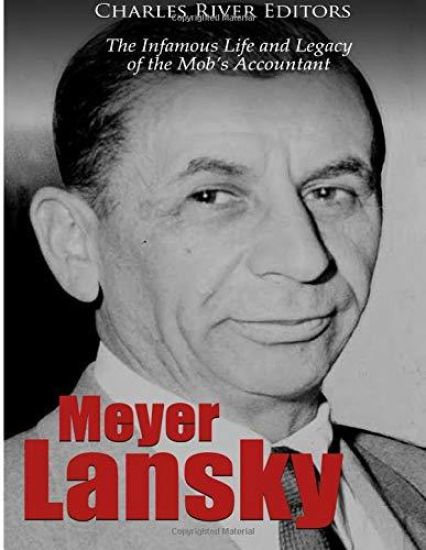
Meyer Lansky: The Infamous Life and Legacy of the Mob's Accountant

Meyer Lansky: The Infamous Life and Legacy of the Mob's Accountant

Charles River

Createspace Independent Publishing Platform
2018
nidottu
*Includes pictures *Includes online resources and a bibliography for further reading "Don't worry, don't worry. Look at the Astors and the Vanderbilts, all those big society people. They were the worst thieves - and now look at them. It's just a matter of time." - Meyer Lansky One of America's most infamous mobsters, Meyer Lansky, was also one of the most mysterious, a perplexing, yet inexplicably intriguing individual with multiple reputations. To his admirers, he was in many ways the ultimate genius and survivor within the callous and cut-throat world of 20th century organized crime. Even in adulthood, Meyer was smaller than most, standing anywhere between 4'11" to 5'4", and weighing 136 pounds at his heaviest. He was not merely an intellectual - he was worldly and wise, one who often doled out advice akin to poetry to his children and grandchildren, his gravelly voice oddly soothing. At the same time, he had all the stealth and cunning of a sphinx, and while remarkably even-tempered, gangsters twice his size dared not cross him. To them, he was no more than a wildly ambitious, often misunderstood entrepreneur who trod upon the border between legality and lawlessness with all the mastery of a tightrope artist. He was, above all, the definition of humility, one whose "handshake was worth more than any contract," and a man who actively dodged the spotlight that doggedly tailed him until the end of his days. Conversely, most will quickly concede that while Lansky was an exceptionally clever criminal, he was a criminal all the same, and the crimes of this dark horse were unforgivable. Meyer was a fraudulent, tax-evading crook whose massive fortune was literally made off the bodies of countless victims. He was a silver-tongued fiend who preyed on the weak and impressionable, plying them with booze and drugs and feeding their gambling addictions. Lansky, whose most famous nickname remains the "Mob's Accountant," was one of the few gangsters of his era to die in old age, and he was never pinched for anything more serious than gambling. It's believed he made upwards of $20 million in his time as a mobster, but some still claim he was never the mogul the media painted him out to be. Instead, they assert that he was an expendable middleman, and that he was an overzealous rogue who squandered away whatever fortune he had. Meyer Lansky: The Infamous Life and Legacy of the Mob's Accountant profiles the controversial life of one of organized crime's most notorious figures. Along with pictures of important people, places, and events, you will learn about Meyer Lansky like never before.
Meyer Lansky: The Infamous Life and Legacy of the Mob's Accountant

Meyer Lansky: The Infamous Life and Legacy of the Mob's Accountant

Charles River

Createspace Independent Publishing Platform
2018
nidottu
*Includes pictures *Includes online resources and a bibliography for further reading "Don't worry, don't worry. Look at the Astors and the Vanderbilts, all those big society people. They were the worst thieves - and now look at them. It's just a matter of time." - Meyer Lansky One of America's most infamous mobsters, Meyer Lansky, was also one of the most mysterious, a perplexing, yet inexplicably intriguing individual with multiple reputations. To his admirers, he was in many ways the ultimate genius and survivor within the callous and cut-throat world of 20th century organized crime. Even in adulthood, Meyer was smaller than most, standing anywhere between 4'11" to 5'4", and weighing 136 pounds at his heaviest. He was not merely an intellectual - he was worldly and wise, one who often doled out advice akin to poetry to his children and grandchildren, his gravelly voice oddly soothing. At the same time, he had all the stealth and cunning of a sphinx, and while remarkably even-tempered, gangsters twice his size dared not cross him. To them, he was no more than a wildly ambitious, often misunderstood entrepreneur who trod upon the border between legality and lawlessness with all the mastery of a tightrope artist. He was, above all, the definition of humility, one whose "handshake was worth more than any contract," and a man who actively dodged the spotlight that doggedly tailed him until the end of his days. Conversely, most will quickly concede that while Lansky was an exceptionally clever criminal, he was a criminal all the same, and the crimes of this dark horse were unforgivable. Meyer was a fraudulent, tax-evading crook whose massive fortune was literally made off the bodies of countless victims. He was a silver-tongued fiend who preyed on the weak and impressionable, plying them with booze and drugs and feeding their gambling addictions. Lansky, whose most famous nickname remains the "Mob's Accountant," was one of the few gangsters of his era to die in old age, and he was never pinched for anything more serious than gambling. It's believed he made upwards of $20 million in his time as a mobster, but some still claim he was never the mogul the media painted him out to be. Instead, they assert that he was an expendable middleman, and that he was an overzealous rogue who squandered away whatever fortune he had. Meyer Lansky: The Infamous Life and Legacy of the Mob's Accountant profiles the controversial life of one of organized crime's most notorious figures. Along with pictures of important people, places, and events, you will learn about Meyer Lansky like never before.
The Medina Azahara: The History and Legacy of the Moors' Medieval Capital in Spain

The Medina Azahara: The History and Legacy of the Moors' Medieval Capital in Spain

Charles River

Createspace Independent Publishing Platform
2018
nidottu
*Includes pictures *Includes medieval accounts *Includes online resources and a bibliography for further reading "To C rdoba belong all the beauty and ornaments that delight the eye or dazzle the sight. Her long line of Sultans form her crown of glory; her necklace is strung with the pearls which her poets have gathered from the ocean of language; her dress is of the banners of learning, well-knit together by her men of science; and the masters of every art and industry are the hem of her garments..." - Stanley Lane-Poole, "The Moors in Spain" Love, as they often say, is best expressed through meaningful actions, as opposed to syrupy words and hollow promises. To pragmatists, it's the smaller things that make the biggest splash, while hopeless romantics may take it upon themselves to go the extra mile. Apart from showering their better halves with trips abroad to bucket-list destinations and mountains of extravagant gifts, the wealthy might organize benefits and galas, and make handsome donations to a cause that deeply resonates with their loved one. Whereas most would deem the tokens of affection exchanged by celebrity power couples to be sweet, but inordinately excessive, many of those who pine after storybook romances are especially enamored of these grand gestures. However, nobody can deny that they've produced some of the most famous works in the world, including buildings such as the Taj Mahal. Such stories can certainly send the hearts of the starry-eyed aflutter, and while love is not quantifiable, few love stories can compare to the blissful fairy-tale attached to the Madinat al-Zahra, commonly known today as the Medina Azahara. This tale involved a king named Abd ar-Rahman who was so besotted with a maiden that he built an entire palace-city for her from scratch. Naturally, this wasn't just any old city - covering well over a million square meters by the foothills of the Cordoban Sierra Morena Mountains, this was allegedly the largest palace-city ever built in Europe. The Medina Azahara: The History and Legacy of the Moors' Medieval Capital in Spain looks at the origins behind the city and its importance to the Moors. Along with pictures of important people, places, and events, you will learn about the Medina Azahara like never before.
The Medina Azahara: The History and Legacy of the Moors' Medieval Capital in Spain

The Medina Azahara: The History and Legacy of the Moors' Medieval Capital in Spain

Charles River

Createspace Independent Publishing Platform
2018
nidottu
*Includes pictures *Includes medieval accounts *Includes online resources and a bibliography for further reading "To C rdoba belong all the beauty and ornaments that delight the eye or dazzle the sight. Her long line of Sultans form her crown of glory; her necklace is strung with the pearls which her poets have gathered from the ocean of language; her dress is of the banners of learning, well-knit together by her men of science; and the masters of every art and industry are the hem of her garments..." - Stanley Lane-Poole, "The Moors in Spain" Love, as they often say, is best expressed through meaningful actions, as opposed to syrupy words and hollow promises. To pragmatists, it's the smaller things that make the biggest splash, while hopeless romantics may take it upon themselves to go the extra mile. Apart from showering their better halves with trips abroad to bucket-list destinations and mountains of extravagant gifts, the wealthy might organize benefits and galas, and make handsome donations to a cause that deeply resonates with their loved one. Whereas most would deem the tokens of affection exchanged by celebrity power couples to be sweet, but inordinately excessive, many of those who pine after storybook romances are especially enamored of these grand gestures. However, nobody can deny that they've produced some of the most famous works in the world, including buildings such as the Taj Mahal. Such stories can certainly send the hearts of the starry-eyed aflutter, and while love is not quantifiable, few love stories can compare to the blissful fairy-tale attached to the Madinat al-Zahra, commonly known today as the Medina Azahara. This tale involved a king named Abd ar-Rahman who was so besotted with a maiden that he built an entire palace-city for her from scratch. Naturally, this wasn't just any old city - covering well over a million square meters by the foothills of the Cordoban Sierra Morena Mountains, this was allegedly the largest palace-city ever built in Europe. The Medina Azahara: The History and Legacy of the Moors' Medieval Capital in Spain looks at the origins behind the city and its importance to the Moors. Along with pictures of important people, places, and events, you will learn about the Medina Azahara like never before.
A KGB e a Stasi: a história das agências de inteligência mais infames do bloco oriental
A KGB uma das abreviaturas mais famosas do s culo 20 e tornou-se sin nimo das a es sombrias e muitas vezes violentas das ag ncias de seguran a interna e da pol cia secreta da Uni o Sovi tica. De fato, freq entemente usado para se referir s ag ncias de seguran a do Estado sovi tico ao longo de sua hist ria, desde o in cio da cria o da Cheka (Comiss o Extraordin ria) em 1917 at a elimina o oficial da KGB em 1992. Se est associada a Guerra Civil Russa excessos de Stalin remo es e mesmo Vladimir Putin, a KGB tem sido vista como maior pap o do Ocidente durante a segunda metade do s culo 20. " A] Stasi costumava usar um m todo que era realmente diab lico. Foi chamado Zersetzung, e descrito em outra diretriz. A palavra dif cil de traduzir porque significa originalmente "biodegrada o". Mas, na verdade, uma descri o bastante precisa. O objetivo era destruir secretamente a autoconfian a das pessoas, por exemplo, prejudicando sua reputa o, organizando falhas em seu trabalho e destruindo suas rela es pessoais. Considerando isso, a Alemanha Oriental era uma ditadura muito moderna. A Stasi n o tentou prender todos os dissidentes. Ele preferiu paralis -los, e isso p de acontecer porque tinha acesso a tantas informa es pessoais e a tantas institui es. " - Hubertus Knabe, historiador alem o A hist ria da Alemanha Oriental estava intimamente entrela ada com o desenvolvimento de seus servi os de seguran a, especificamente a Stasi. Em uma era de pa ses totalit rios dominados por ag ncias estatais repressivas, a Stasi destacou-se por seu tamanho e pela amplitude e profundidade de sua vigil ncia. Filmes como "Das Leben der Anderen" ("As Vidas dos Outros") encapsularam as atitudes e concep es p s-unificadoras da vida na Alemanha Oriental e das atividades da Stasi. Apesar de sua notoriedade, o legado da Stasi contestada na Alemanha moderna. Antigos alem es ocidentais e os ocidentais mais geralmente, estreitamente alinham o estado da Alemanha Oriental e a Stasi, emoldurando um "estado de Stasi". Aqueles na antiga Alemanha Oriental, no entanto, se ressentem as atitudes condescendentes e fus o das duas institui es, preferindo concentrar os elementos sociais do estado alem o oriental. Uwe Spiekermann, do Instituto Hist rico alem o, apresenta sucintamente as impress es de muitos quando se considera a Alemanha Oriental e sua cultura de vigil ncia: "Em retrospecto, a Stasi tornou-se um s mbolo para a RDA Alemanha Oriental]." O servi o de seguran a de estado alem o oriental, ou Staatssicherheitsdienst em alem o (abreviado para Stasi) formou-se em 1950. Ele pretendia ser do estado "capa e espada" e monitorados de perto grande parte da popula o para os pr ximos 40 anos. Algumas das figuras s o surpreendentes. No final dos anos 80, os arquivos da Stasi eram mantidos em seis milh es dos 18 milh es de habitantes. Quando os arquivos da Stasi foram abertos na d cada de 1990, foram descobertos arquivos que se estendiam por 178 quil metros. Ao longo da exist ncia da Alemanha Oriental, at dois milh es de pessoas atuaram como espi es, e 90.000 pessoas trabalharam no Minist rio, sem mencionar os in meros informantes "n o oficiais". A Alemanha Oriental tamb m tinha um bra o de intelig ncia estrangeira muito temido de seus servi os de intelig ncia, o HV A (alem o: Hauptverwaltung A ou departamento central), que se mostrou especialista em se infiltrar na sociedade da Alemanha Ocidental e realizar opera es em v rios outros pa ses. Mas por que a Stasi se formou e como se mostrou t o eficaz? Responder a essas quest es exige compreender as circunst ncias nicas em que a Alemanha Oriental foi formada, bem como a pol tica na Alemanha no final da Segunda Guerra Mundial e o in cio da Guerra Fria.
Evolução humana: A História dos Processos de Evolução e Seleção Natural que Deram Origem aos Humanos Modernos
"Devemos, no entanto, reconhecer, como parece-me, que o homem com todas as suas qualidades nobres... ainda carrega em sua estrutura corporal a marca indel vel de sua origem humilde." - Charles Darwin Desde que a mente humana desenvolveu a capacidade de pensar, as pessoas t m ponderado n o apenas o sentido da vida, mas a g nese do mundo, do universo e de todas as maravilhas naturais e formas preciosas de vida dentro dele. At hoje, todos esses assuntos intricados continuam a ser quest es de grande disputa, e s o frequentemente melhor encapsulados no debate entre criacionismo e evolu o. De um lado est o aqueles que est o convencidos de que foi Deus, ou algum outro ser supremo, que projetou e elaborou todos os detalhes do universo, como evidenciado pela pletora de mitos da cria o de v rios credos e tradi es. Entre um dos contos etiol gicos mais conhecidos est a cl ssica hist ria do Deus crist o que construiu: o mundo em 6 dias, o homem a partir do barro, e a mulher a partir da costela do homem. Este um conceito a que muitos ainda se apegam; aproximadamente 38% dos americanos acreditavam no criacionismo em 2017, conforme relatado por uma pesquisa Gallup. Depois, h as narrativas mais obscuras, como o mito da cria o japonesa, que conta como o deus e a deusa, Izanagi e Izanami, nasceram de "elementos misturados a um germe da vida," moldaram as ilhas japonesas com um pouco de lama e ajuda de uma equipe sagrada. Os maias pregaram sobre Tepeu, o criador de todas as coisas, e Gucumatz, o "esp rito emplumado," que produziu o mundo com nada al m de seus pensamentos, e colocou na Terra o primeiro quarteto de humanos feito a partir do milho branco e amarelo. Do outro lado est o aqueles que acreditam (ou como eles diriam, "aceitam") a evolu o e os processos cient ficos como fatos. Por mais cativantes que sejam tais mitos da cria o, cr ticos insistentes do criacionismo, que fazem campanha por sua descren a, dizem que n o h qualquer l gica por tr s desses contos desgastados pelo tempo. O renomado f sico te rico Stephen Hawking, sem d vida uma das pessoas mais brilhantes que j existiu, declarou: "Antes de entendermos a ci ncia, natural acreditar que Deus criou o universo. Mas agora a ci ncia oferece uma explica o mais convincente". Seus sentimentos s o ecoados pelo famoso ateu e bi logo evolucionista Richard Dawkins em O Gene Ego sta: "Hoje a teoria da evolu o t o aberta d vida quanto a teoria de que a terra gira em torno do sol ..." O incitador desta disputa existencial apaixonada, claro, n o outro sen o Charles Darwin, que inventou o termo "criacionistas" e impulsionou a controversa teoria da evolu o proemin ncia. Dado que ele ia contra a mar com seu trabalho cient fico, ele foi claramente um dos homens mais polarizadores de sua idade, e n o hesitaria em questionar um dos princ pios centrais da civiliza o ocidental: "Eu n o posso me convencer de que um Deus beneficente e onipotente teria projetado criativamente vespas parasitas com a inten o expressa de sua alimenta o dentro dos corpos vivos de lagartas." Embora a maioria hoje respeite e elogie o homem, Darwin ainda ressentido por alguns que alegam que ele envenenou in meras mentes com ideias virulentas e rid culas que minam o que eles acreditam ser a palavra infal vel do Senhor. Tendo isto em mente, enquanto foi de fato Darwin quem alimentou o fogo, ele n o o ateu radical e depreciativo que se preocupa em refutar Deus que a maioria presume que seja. O que est dentro desse homem fascinante um indiv duo complicado, neur tico e um pouco torturado, o que apenas torna esse pioneiro ainda mais atraente.
Cro-Magnon: A História e o Legado dos Primeiros Seres Humanos Modernos da Europa

Cro-Magnon: A História e o Legado dos Primeiros Seres Humanos Modernos da Europa

Charles River

Createspace Independent Publishing Platform
2018
nidottu
Em mar o de 1868, em um abrigo rochoso no sudoeste da Fran a, trabalhadores ferrovi rios se depararam com cr nios humanos, ferramentas de pedra lascada e ossos de animais relativamente modernos. O ge logo franc s, Louis Lartet, realizou escava es para investigar o abrigo rochoso de calc rio e acabou encontrando quatro esqueletos parciais e ornamentos de concha, marfim e chifre de rena. Dada a natureza secular do que se encontrou, os esp cimes foram nomeados em homenagem ao Abri de Cr -Magnon (abri = abrigo de rocha, e cr = buraco) em que foram descobertos. Alguns dos achados not veis do abrigo rochoso foram: Cro-Magnon 1, um cr nio masculino quase completo (com exce o dos dentes) e restos de seu esqueleto; Cro-Magnon 2, vest gios incompletos de um cr nio feminino e Cro-Magnon 3, restos parciais de um cr nio masculino. Baseado no que foi encontrado, o local provavelmente data da Era do Pleistoceno Superior h cerca de 32-30 mil anos. Dos tr s cr nios descobertos, o Cro-Magnon 1 foi considerado o esp cime exemplar da "ra a" (um conceito artificial da poca) europeia Ocidental, mesmo n o apresentando caracter sticas mais graciosas que os outros dois cr nios e n o sendo assim t o semelhante a eles. Os Cro-Magnons eram Homo sapiens, e as caracter sticas mais marcantes da esp cie s o os tra os culturais que aparecerem nos registros arqueol gicos. Ferramentas passaram a ser produzidas com diversos materiais. As pessoas viajavam por longas dist ncias ou realizavam trocas para a aquisi o de materiais espec ficos para as ferramentas. Materiais simb licos tornavam-se cada vez mais comum entre eles; pinturas rupestres, estatuetas, contas de conchas, pingentes e at enterros eram mais comuns entre humanos modernos do que entre Neandertais, e este pensamento abstrato pode ter ajudado a esp cie a obter maior sucesso em adapta es do que outros humanos contempor neos. Enquanto no S culo 21, os cientistas podem se referir aos Cro-Magnons como os primeiros seres humanos modernos europeus, a situa o n o era a mesma quando restos mortais de Cro-Magnons foram descobertos pela primeira vez. Na Europa do S culo 19, houve um debate nacionalista sobre onde os "primeiros" europeus teriam surgido e, a mistura entre conceitos nacionalistas e hierarquia cultural preeminentes na Europa fez da compreens o cient fica do papel dos Cro-Magnons dentro da evolu o humana um processo lento. necess rio, portanto, olhar para a hist ria biol gica dos Cro-Magnons e para a hist ria cultural europ ia antes da an lise e compreens o de como restos mortais de Cro-Magnons foram vistos e usados nos ltimos s culos. Cro-Magnon: A Hist ria e o Legado dos Primeiros Seres Humanos Modernos da Europa analisa como estes primeiros Homo sapiens chegaram a Europa, suas intera es com os Neandertais e mais. Junto com fotos que retratam pessoas, lugares e eventos importantes, voc aprender sobre os Cro-Magnons como nunca antes.