Kirjojen hintavertailu – 12 903 725 kirjaa ja 27 kauppaa

Kirjailija

Charles River

Kirjat ja teokset yhdessä paikassa: 4 673 kirjaa, julkaisuja vuosilta 2013–2022, suosituimpiin kuuluu William Powell and Myrna Loy: The Lives and Careers of One of Classical Hollywood's Most Iconic Duos. Vertaile teosten hintoja ja tarkista saatavuus suomalaisista kirjakaupoista.

4 673 kirjaa

Kirjojen julkaisuvuodet: 2013–2022.

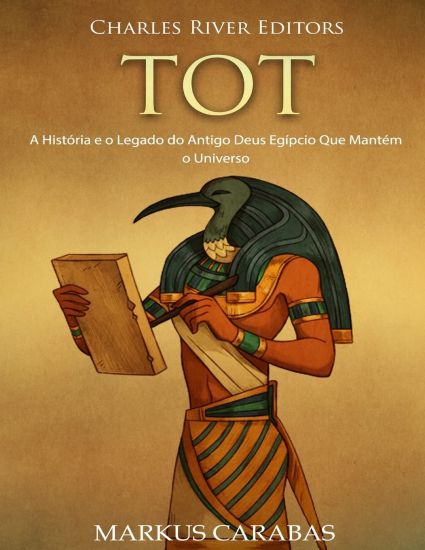
Tot: A História e o Legado do Antigo Deus Egípcio Que Mantém o Universo

Tot: A História e o Legado do Antigo Deus Egípcio Que Mantém o Universo

Markus Carabas; Charles River

Createspace Independent Publishing Platform
2018
nidottu
A frica pode ter dado origem os primeiros humanos, enquanto o Egito, provavelmente, deu origem s primeiras grandes civiliza es, que continuam a fascinar sociedades modernas por todo o mundo, mesmo depois de quase cinco mil anos. Da Biblioteca e do Farol de Alexandria Grande Pir mide de Giz , os antigos eg pcios criaram diversas maravilhas do mundo, revolucionaram a arquitetura e a constru o, criaram alguns dos primeiros sistemas de matem tica e medicina do mundo e estabeleceram idiomas e arte que se espalharam por todo o mundo conhecido. Com l deres mundialmente famosos como Rei Tut e Cle patra, n o de se admirar que hoje existem tantos egipt logos. Talvez o aspecto mais intrigante da antiga civiliza o eg pcia seja sua concep o a partir do zero, uma vez que os antigos eg pcios n o tiveram acesso nenhuma civiliza o pr via que pudessem utilizar como refer ncia. Na verdade, o Antigo Egito tornou-se um modelo para as civiliza es seguintes. Os gregos e os romanos ficaram t o impressionados com a cultura eg pcia que, muitas vezes, atribu am de maneira err nea muitas caracter sticas da pr pria cultura aos eg pcios. Com isto dito, alguns elementos da antiga cultura eg pcia foram, de fato, transferidos para civiliza es posteriores. A estatu ria eg pcia parece ter, inicialmente, influenciado a vers o grega, e a l ngua eg pcia antiga sobreviveu como l ngua copta por muito tempo ap s o per odo fara nico. Para os antigos eg pcios, como em qualquer sociedade composta por humanos curiosos, o mundo era um lugar confuso e muitas vezes assustador, repleto de destrui o, morte e fen menos inexplic veis. A fim de encontrar o sentido de tal exist ncia, eles recorreram s hist rias teleol gicas. Criar uma explica o para um fen meno, deixava-o menos horripilante e ajudava a dar sentido ao mundo que os rodeava. N o surpreende, portanto, que antigos deuses eg pcios tenham se infiltrado em todas as particularidades da exist ncia. Os babu nos possu am uma posi o de prest gio na religi o eg pcia. Eles eram considerados animais sagrados em v rios templos, porque eg pcios contempor neos os consideravam os observadores religiosos originais, particularmente em rela o ao deus sol, R . Os antigos eg pcios viam os babu nos selvagens se alongando nas pernas traseiras e com as dianteiras elevadas ao c u como em uma ora o ao deus sol ao alvorecer. E mais, estes antigos antepassados da terra do Egito eram saudados ao alvorecer pelas concatena es dos babu nos tagarelas que, de um ponto de vista religioso, eram compreendidas como uma devo o ao in cio da manh e, at acreditava-se que os babu nos falavam a l ngua original da religi o, e uma afirma o sobre serem capazes de compreenderem babu nos era feita por certos membros da classe sacerdotal. Mas a associa o ao bis que mais representa a imagem visual de Tot. J que os antigos eg pcios acreditavam que o universo surgiu das guas pantanosas de Nun, era o p ssaro aqu tico que recebia as venera es mais prestigiadas. P ssaros como gansos, gar as e bises eram associados a este per odo da cria o e, de acordo com algumas cren as, o mundo surgiu gra as ao alto "grasnar" de um ganso primordial, cuja casca do ovo era dita estar preservada no templo de Tot. Acreditava-se que R criara a forma de babu no de Tot para ser sua "lua brilhante," e sua forma de bis para ser um mensageiro entre o c u e a terra (apesar de ele ser ainda muito mais que isso). Tot: A Hist ria e o Legado do Antigo Deus Eg pcio que Mant m o Universo analisa a mitologia que envolve uma das mais famosas divindades da antiguidade. Junto com fotos que retratam pessoas, lugares e eventos importantes, voc aprender sobre Tot como nunca antes.
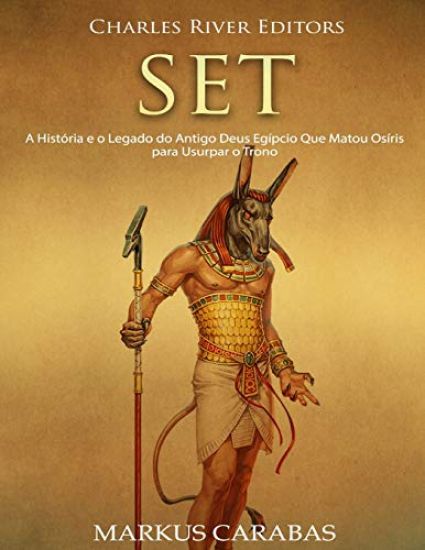
Set: A História e o Legado do Antigo Deus Egípcio Que Matou Osíris para Usurpar o Trono

Set: A História e o Legado do Antigo Deus Egípcio Que Matou Osíris para Usurpar o Trono

Markus Carabas; Charles River

Createspace Independent Publishing Platform
2018
nidottu
A frica pode ter dado origem os primeiros humanos, enquanto o Egito, provavelmente, deu origem s primeiras grandes civiliza es, que continuam a fascinar sociedades modernas por todo o mundo, mesmo depois de quase cinco mil anos. Da Biblioteca e do Farol de Alexandria Grande Pir mide de Giz , os antigos eg pcios criaram diversas maravilhas do mundo, revolucionaram a arquitetura e a constru o, criaram alguns dos primeiros sistemas de matem tica e medicina do mundo e estabeleceram idiomas e arte que se espalharam por todo o mundo conhecido. Com l deres mundialmente famosos como Rei Tut e Cle patra, n o de se admirar que hoje existem tantos egipt logos. Embora os eg pcios possam n o ter passado sua cultura diretamente a povos posteriores, elementos-chave que compunham a civiliza o eg pcia, incluindo religi o, ideias iniciais de estado, arte e arquitetura, podem ser encontrados em outras civiliza es. Por exemplo, civiliza es bastante separadas no tempo e espa o, como China e Mesoam rica, possu am elementos-chave semelhantes aos encontrados no Antigo Egito. Sem d vida, j que a civiliza o eg pcia representa conceitos humanos fundamentais, um estudo de sua cultura pode ser muito til para compreender diversas outras culturas pr -modernas. No primeiro per odo din stico, h uma representa o simb lica sobre as primeiras formas de reinado. O s mbolo consiste em "Duas Senhoras e Dois Senhores". As Senhoras eram as deusas Nekhbet e Uadjet, que representavam o Alto e o Baixo Egito, cada uma com sua coroa, Branca ou Vermelha, e os Dois Senhores eram os conflitantes deuses H rus e Set. Os confrontos entre esses dois deuses transcenderam a conflitos do mundo real, quando, durante a Segunda Dinastia, o Rei Peribsen colocou o misterioso "Animal de Set" como superior a seu nome, assim favorecendo um deus acima do outro. Peribsen manteve uma liga o pr xima a Set, traindo a conex o anterior dos reis com H rus, at que o rei Khasekhemui o tirou do trono e colocou ambos os animais dos deuses como superiores a seu pr prio nome e declarou que "os Dois Senhores agora descansavam". A historiadora moderna Geraldine Pinch sugere que este um exemplo antigo muito claro sobre a tend ncia dos eg pcios a mistificarem os conflitos do mundo real, uma caracter stica que os eg pcios mantiveram por toda sua longa hist ria. verdade que a vasta hist ria do Egito s pode ser vista superficialmente, mas, no caso dos mitos, apenas o bastante para contextualizar a hist ria pode ser o suficiente para se compreender a progress o de uma divindade como Set ao logo dos mil nios. Na verdade, o desenvolvimento do personagem de Set atrav s da hist ria possivelmente um dos mais fascinantes e ele se destaca entre as divindades eg pcias. Come ando como um dos "Dois Senhores," a pr -emin ncia de Set entre os deuses continuou ao longo de dinastias posteriores e ele nunca perdeu sua posi o entre as nove principais divindades conhecidas como En ade, mesmo com os problemas nefastos que tinha com o irm o, Os ris, sua irm e cunhada, sis, e seu sobrinho e filho deles, H rus. Em um primeiro olhar, f cil perceber que Set foi vilificado como uma esp cie de "monstro" ou "dem nio," mas ao compreender a estrutura religiosa da qual ele nasceu, os leitores modernos podem descobrir que o pol mico deus foi muito mais complexo do que apenas um "advers rio". Set: A Hist ria e o Legado do Antigo Deus Eg pcio que Matou Os ris para Usurpar o Trono analisa a mitologia que envolve uma das mais famosas divindades da antiguidade. Junto com fotos que retratam pessoas, lugares e eventos importantes, voc aprender sobre Set como nunca antes.
El Escorial: A história e o legado do local real mais famoso da Espanha

El Escorial: A história e o legado do local real mais famoso da Espanha

Charles River

Createspace Independent Publishing Platform
2018
nidottu
Localizado entre a cadeia montanhosa da Sierra de Guadarrama, El Monte Abantos, ou o Monte Abantos, eleva-se sobre os seus arredores a uma altitude de 1753 metros, ou 5751 p s. Na verdade, n o h nada esteticamente espetacular sobre esse monte florestado, mas h uma aura de mist rio que paira sobre Abantos, muito parecido com a cortina de n voa que se ergue sobre o topo da montanha no in cio da manh . Madri, a pouco mais de 37 milhas de dist ncia, t o bela e vibrante como eles v m, mas o povo da cidade e os turistas muitas vezes se v em atra dos por este relevo, em particular a faixa tranquila de terra na encosta sul do Abantos. Este lugar pitoresco e panor mico rico em vistas dignas de cinema e uma refrescante fuga da agitada vida citadina, al m de tamb m ser o lar de um tesouro nacional insubstitu vel, outrora louvado como a oitava maravilha do mundo: El Escorial Quem ainda n o conhece El Escorial provavelmente n o se impressionar em um primeiro momento. Tem cores complementares, mas sem brilho, para n o mencionar as propor es uniformes, ainda que sem inspira o, de suas torres. A fachada, embora claramente uma estrutura robusta, carece de calor e criatividade. Os visitantes que passarem por qualquer uma de suas tr s portas, certamente, ficar o sem palavras por sua majestosidade oculta. Essa c psula do tempo monumental de esplendor barroco e renascentista, carimbado com as impress es de seus monarcas cat licos, aquele que pode ser apreciada pelos amantes da arte, independentemente de conhecimentos pr vios. A maioria das pessoas de sorte o suficiente para deleitar os olhos sobre o majestoso complexo que o El Escorial compartilham o mesmo sentimento: sua beleza indescrit vel. Este um lugar que emana opul ncia, um tipo de opul ncia temperada pela classe e pelo encanto hist rico, e n o pela extravagante e ostensiva ostenta o, muitas vezes exibida pelo nouveau riche. Dizer que o lugar adequado para um rei seria simplesmente minimizar seu esplendor. Claro, esse local era exatamente isso. A parte mais atraente deste composto n o est na sua beleza secreta, mas na sua hist ria envolvente e nas in meras e muitas vezes enigm ticas lendas associadas a este composto cativante. El Escorial: A Hist ria e Legado do local mais real da Espanha percorre o cronograma da resid ncia e observa alguns dos personagens fascinantes que l viviam. Juntamente com fotos de pessoas importantes, lugares e eventos, voc aprender sobre El Escorial como nunca antes.
The Great Wall of Gorgan: The History of the Ancient Near East's Longest Defensive Wall
*Includes pictures *Includes online resources and a bibliography for further reading Throughout history, walls have been constructed as part of nations' and kingdoms' defensive structures to keep barbarian hordes, marauding rebels, and recalcitrant tribes out of defined geographic areas. Defensive walls were usually constructed by fairly advanced and sophisticated peoples, such as the Romans and Chinese, with varying degrees of success. Of course, the most famous of all defensive walls in the world is the Great Wall of China, which is actually a series of walls and forts built over the span of several centuries. The Chinese built the Great Wall of China, and several others, primarily to keep invaders from the north, such as the Mongols, out of their land, or at least to slow them down as they fled north after raids. The Romans also built spectacular walls, most notably the Antonine Wall and Hadrian's Wall. The purpose of those walls was to set the northern limit of the Roman Empire at approximately the modern border of England and Scotland, and, like the Great Wall of China, it was intended to keep out or slow down marauding barbarian tribes from the north. The Sasanians built an equally impressive wall in central Asia, one that was longer than Hadrian's Wall and by all accounts just as effective when it was still in use. Throughout the centuries, the Sasanian wall has gone by several different names, but it is now known as the "Great Wall of Gorgan" due to its length and location near the city of Gorgan in the modern nation-state of Iran. The Great Wall of Gorgan was used much longer than the better known Roman walls to keep enemies at bay. From the 5th century CE, and possibly centuries earlier, the Great Wall of Gorgan continually served as a military wall and fortification system until sometime after the Arab Muslim conquest of central Asia in the mid-7th century CE. In fact, while the Great Wall of Gorgan played in important role in the history of the Sasanian Empire, it may have been conceived by the Parthians or earlier. Today, many scholars consider the Sasanian Empire to be the last great empire of the ancient Near East because once it had been obliterated, Islam became the standard religion of the region, ushering in the Middle Ages. The Sasanian Empire was important for a number of reasons. Besides being the last of three great Persian dynasties, they carried on many Persian cultural traditions relating to religion and kingship. The Sasanians fostered and promoted the native religion of Zoroastrianism to the point of persecuting other religions from time to time. It was during the Sasanian period that the numerous Zoroastrian hymns, prayers, and rituals were collected under one book, known as the Avesta. The Sasanians, like the Achaemenids and Parthians, also carried forth the Persian conflicts with the Hellenic world. Although the Achaemenids fought the Macedonian Greeks and the Parthians challenged the Romans for control of Mesopotamia, the Sasanians faced Rome in its later stages of collapse and subsequently fought the revitalized Byzantine Empire. The Great Wall of Gorgan: The History of the Ancient Near East's Longest Defensive Wall examines the history of one of the most important walls of the ancient world. Along with pictures depicting important people, places, and events, you will learn about the Great Wall of Gorgan like never before.
The Kingdom of Yugoslavia: The Turbulent History of the Country's Formation and Occupation during World War I and World War II
*Includes pictures *Includes online resources and a bibliography for further reading "No country of people's democracy has so many nationalities as this country has. Only in Czechoslovakia do there exist two kindred nationalities, while in some of the other countries there are only minorities. Consequently in these countries of people's democracy there has been no need to settle such serious problems as we have had to settle here... With them the basic factor is the class issue, with us it is both the nationalities and the class issue." - Tito Yugoslavia was arguably one of the most unusual geopolitical creations of the 20th century. The Yugoslav state had never existed in any historical sense, and the ties that bound together its constituent peoples were tenuous at best. Although nominally all "Slavs," the country was an amalgamation of languages, alphabets, cultures, religions and traditions, which ensured its short existence was littered with splits, conflicts, and shocking violence. In a sense, it's somewhat surprising that it lasted as long as it did. In the wake of World War I, as the political boundaries of Europe and the Middle East were redrawn, the Kingdom of Yugoslavia, initially known as the Kingdom of Serbs, Croats and Slovenes, came into existence with a monarch as its head of state. Confirmed at the 1919 Versailles Conference, the "first" Yugoslavia was a particularly fragile enterprise, and there was almost constant tension between the majority Serbs and the other Yugoslav nationalities, especially the Croats. As a result, the Kingdom was a land of political assassinations, underground terrorist organizations, and ethnic animosities. In 1929, King Alexander I suspended democracy and ruled as a dictator until he himself was assassinated in 1934. The Kingdom of Yugoslavia was particularly vulnerable to the forces that engulfed the rest of Europe at the end of the 1930s, including fascism and communism. When the Axis forces attacked in 1941, the country quickly capitulated and was dismembered by the Nazis and their allies. A separate Croatian state was formed, led by Ante Pavelic, who committed some of the worst crimes and human rights abuses of the war. The Balkan region was virtually emptied of its Jewish population, victims of the Nazi Holocaust. From the beginning, fascism was opposed by two major groups in the region, the monarchist Chetniks and the communist Partisans. The latter, led by Tito and backed by the democratic powers, emerged in the dominant position at the end of the war. The World War II era produced many leaders of titanic determination, men whose strengths and weaknesses left an extraordinary imprint on historical affairs, and the struggle between massively divergent ideologies catapulted some individuals unexpectedly onto the world stage. During his reign, Tito managed to quash the intense national feelings of the diverse groups making up the Yugoslavian population, and he did so through several methods. He managed to successfully play the two superpower rivals, the United States and Soviet Union, off against each other during the Cold War, and in doing so, he maintained a considerable amount of independence from both, even as he additionally received foreign aid to keep his regime afloat. Only upon his death did the fabric of the state tear asunder and age-old identities reassert themselves, bringing about a period of intense conflicts that produced a new equilibrium with ethnically-based successor states that cracked up the state he once led. Cold War rivalries also provided Yugoslavia with a geopolitical significance that evaporated after the fall of the Berlin Wall. Without its charismatic dictator who transcended national rivalries and two superpowers interested in its stability, Yugoslavia collapsed within the space of a few short, bloody years in the 1990s.
The Neanderthals and Cro-Magnon: The History and Legacy of the First People to Migrate to Europe
*Includes pictures *Includes online resources and a bibliography for further reading In popular culture, the term Neanderthal is used as a colloquial insult for a degenerate or someone perceived as stupid. This seems to have been the case even from the first recognition of the Neanderthals as a species. The first Neanderthal fossil discovery was that of a child's skull in Belgium in 1829, but it was badly damaged. Another would be discovered in 1856 in a limestone mine of the Neanderthal region of what is present-day Germany, and a skull with differing distinct traits (indicating a different species than the Neanderthals) would be discovered just over a decade later in southwestern France. The latter specimen would come to be recognized as an example of the species Homo Sapiens, and these anatomically modern humans arrived in Europe between 45,000 and 43,000 years ago, around the time the Neanderthals are believed to started going extinct. The Neanderthals are a member of the genus Homo just like Homo sapiens and share roughly 99.7% of their DNA with modern humans (Reynolds and Gallagher 2012). Both species even lived briefly during the same time in Eurasia. However, the Neanderthals evolved separately in Europe, away from modern humans, who evolved in Africa. The Neanderthals lived in Europe and Asia for nearly 200,000 years and thrived in these regions, but they went extinct between 40,000 and 30,000 years ago, around the same time that modern humans began arriving in Europe. This has prompted much speculation as to the nature of the interactions between Neanderthals and Homo sapiens, especially since some researchers believe they interacted with each other for over 5,000 years before the Neanderthals began going extinct at different times across Europe. One hypothesis is that Homo sapiens displaced the Neanderthals and were better suited for the environment, and it is obviously possible if not likely that these two groups had become competitors for food and other resources, with Homo sapiens being more successful in the end. If such close interactions were taking place, there is also a possibility that the relatively new-to-Europe Homo sapiens brought pathogens from Africa with them that were unknown to the Neanderthal's immune system. A more recent example of this type of resulting interaction is the European expansion into the Americas, which brought diseases like smallpox that the natives of America had never experienced before, especially diseases resulting from the domestication of animals. It is possible that the domestication of the dog by Homo sapiens may have contributed in spreading foreign diseases among the Neanderthals. Whether or not this occurred, it is highly likely that the interactions between the two groups became much more intimate at one point. The Neanderthals were able to make and use a diverse set of sophisticated tools, control fire, make and wear clothing, and create decorations and ornaments. There is even evidence that the Neanderthal buried their dead with grave offerings, a practice that is also associated with later Homo sapiens, which suggests the two species were exchanging ideas such as tool making and rituals. Archaeological sites from Spain to Russia have been discovered that contain transitional stone tools associated with either Homo sapiens or Neanderthals. From the archaeological evidence alone, it is difficult to determine the level of interactions that were held at these sites. These sites may have been used at the same time. The Neanderthals and Cro-Magnon: The History and Legacy of the First People to Migrate to Europe looks at the evolution of both and examines the theories regarding their histories and interactions. Along with pictures of important people, places, and events, you will learn about the Neanderthals and Cro-Magnon like never before.
The Republic of Liberia: The Controversial History and Legacy of the West African Nation that Began as an Experimental Colony
*Includes pictures *Includes online resources and a bibliography for further reading In the spring of 1786, an organization was founded in London to provide some aid for destitute blacks and Asians in the British capital who were by then beginning to become conspicuous. Quite a number of them were resettled blacks from the American colonies who aided British forces in the Revolutionary War and found themselves thereafter no longer welcome in the United States. Others were captives, slaves for one reason or another released on the high seas, and other stevedores and sailors washed up on the shore of England. It was generally believed that the figure was some 15,000, and with limited employment prospects and no community support, most were in very difficult circumstances indeed. The motivations for this were complicated and varied, and in part they could be explained by an interest in creating circumstances advantageous to blacks, but also to give them an opportunity to form and run a colony effectively in order to debunk a widely held belief that no black man could do such a thing. There was also some value in redistributing freed blacks from the various plantation colonies of the empire, not to mention the political expedience of protecting the British Isles themselves from an expanding population of non-whites generated as a consequence of imperial activities. The idea of locating this ideal colony in the vicinity of modern Sierra Leone came about thanks to the representations of a plant collector by the name of Henry Smeathman, who had recently returned from the West African region and believed that the Pepper Coast (also referred to as Grain Coast) offered the most viable prospects. At the time, British and European trade in West Africa was vibrant and wide-ranging, including the slave trade, and there was a steady movement of merchant and Royal Navy ships between West Africa and the British mainland. His reasons for advocating that spot are rather vague, although it probably was at the time one of the least deadly stretches of an otherwise fever-ridden coastline. There was a lot of sentimentality and idealism behind the development of the idea, as well as a certain amount of pragmatism, but the upshot of it was that in 1787, a shipment of 4,000 blacks arrived in several ships offshore of what would today be Freetown. They were essentially dropped off, wished the best of luck, and otherwise abandoned. Conditions, of course, were primitive, and the mortality rate among these early pioneers was atrocious. One of the first problems they faced was hostility from local tribes, and almost from the moment they landed, they found themselves in a state of war. Nonetheless, they managed to establish a bridgehead, and in due course a colony took root. Numbers were augmented occasionally by independent arrivals, and the steady deposit of captives collected in one way or another by the Royal Navy Atlantic Squadron. The Republic of Liberia looks at the tumultuous history of Liberia from its colonization to the deadly civil wars that ushered in a new democracy in the 21st century. Along with pictures, you will learn about Liberia like never before.
A KGB: A História e Legado da Notória Agência de Espionagem da União Soviética

A KGB: A História e Legado da Notória Agência de Espionagem da União Soviética

Charles River

Createspace Independent Publishing Platform
2018
nidottu
A KGB uma das abreviaturas mais famosas do s culo 20 e tornou-se sin nimo das a es sombrias e muitas vezes violentas das ag ncias de seguran a interna e da pol cia secreta da Uni o Sovi tica. De fato, freq entemente usado para se referir s ag ncias de seguran a do Estado sovi tico ao longo de sua hist ria, desde o in cio da cria o da Cheka (Comiss o Extraordin ria) em 1917 at a elimina o oficial da KGB em 1992. Se est associada a Guerra Civil Russa excessos de Stalin remo es e mesmo Vladimir Putin, a KGB tem sido vista como maior pap o do Ocidente durante a segunda metade do s culo 20. A KGB: A hist ria e o legado da Not ria Ag ncia de Espionagem da Uni o Sovi tica, examina a hist ria de uma das ag ncias mais famosas na hist ria. Juntamente com fotos de pessoas importantes, lugares e eventos, voc aprender sobre a KGB como nunca antes.
Neandertais: A História dos Humanos Extintos Contemporâneos do Homo Sapiens na Europa
Os Neandertais viveram na Europa e na sia por quase 200 mil anos e l prosperaram, mas foram extintos h cerca de 40-30 mil anos, na mesma poca em que humanos modernos come avam a chegar Europa. Isso provocou enorme especula o sobre a natureza das intera es entre Neandertais e Homo sapiens, especialmente porque alguns pesquisadores acreditam que intera es entre as esp cies existiram por mais de 5 mil anos antes dos Neandertais come arem a serem extintos pela Europa. Uma hip tese que o Homo sapiens substituiu os Neandertais, pois estavam mais adaptados ao ambiente, e obviamente poss vel, se n o prov vel, que esses dois grupos tenham competido por comida e outros recursos, com o Homo sapiens sendo o mais bem-sucedido no final. Se tais intera es pr ximas estivessem ocorrendo, tamb m existe a possibilidade do Homo sapiens, relativamente novo na Europa, ter trazido consigo pat genos da frica que eram desconhecidos pelo sistema imunol gico dos Neandertais. Um exemplo mais recente desse tipo de intera o a expans o europeia para as Am ricas, que levou doen as como a var ola aos nativos americanos que nunca antes a haviam tido, entre outras doen as resultantes da domestica o de animais. poss vel que a domestica o do c o pelo Homo sapiens possa ter contribu do na propaga o de doen as estrangeiras entre os Neandertais. Quer isso tenha ocorrido ou n o, altamente prov vel que as intera es entre os dois grupos se tornaram muito mais ntimas em certo ponto. Os Neandertais foram capazes de criar e utilizar um conjunto diversificado de ferramentas sofisticadas, controlar o fogo, fabricar roupas e criar decora es e ornamentos. H at mesmo evid ncias de que Neandertais enterravam seus mortos com oferendas, uma pr tica tamb m associada ao Homo sapiens posterior, o que sugere que as duas esp cies trocavam ideias sobre ferramentas e rituais. S tios arqueol gicos foram encontrados da Espanha at a R ssia contendo ferramentas de pedra transit rias associadas ao Homo sapiens ou ao Neandertal. A partir de evid ncias arqueol gicas, dif cil determinar o n vel das intera es que ocorreram nesses locais que podem terem sido utilizados ao mesmo tempo. H tamb m fortes evid ncias gen ticas de acasalamento entre os Homo sapiens e os Neandertais. Tal teoria foi proposta em 1907, mas n o foi at recentemente que a ci ncia foi capaz de demonstrar que os genomas de todos os n o-africanos incluem por es de origem Neandertal. Estima-se que cerca de 2% do DNA de europeus e alguns asi ticos compartilhado com o antigo DNA dos Neandertais. tzi, o Homem do Gelo, que morreu h 5.300 anos, a mais antiga m mia europeia j descoberta e possui uma porcentagem ainda maior de DNA Neandertal. Os geneticistas tamb m descobriram que, embora o DNA nuclear do humano moderno tenha certa conex o aos antigos Neandertais, o DNA mitocondrial pode apenas ser transmitido pela m e. Isso sugere que machos Neandertais se acasalaram com f meas Homo sapiens e produziram descendentes f rteis que carregavam o DNA mitocondrial da m e humana; enquanto isso, machos Homo sapiens que se acasalaram com f meas Neandertais produziram apenas descendentes est reis ou malsucedidos. Seja qual for o caso, n o muito do genoma Neandertal parece ter sobrevivido no c digo gen tico dos atuais humanos modernos. Neandertais: A hist ria dos seres humanos extintos contempor neos do Homo Sapiens na Europa analisa a evolu o dos Neandertais e examina as teorias sobre como foram extintos. Junto com fotos que retratam pessoas, lugares e eventos importantes, voc aprender sobre os Cro-Magnons como nunca antes.
A Stasi: A História e o Legado da Agência de Polícia Secreta da Alemanha Oriental

A Stasi: A História e o Legado da Agência de Polícia Secreta da Alemanha Oriental

Charles River

Createspace Independent Publishing Platform
2018
nidottu
" A] Stasi costumava usar um m todo que era realmente diab lico. Foi chamado Zersetzung, e descrito em outra diretriz. A palavra dif cil de traduzir porque significa originalmente "biodegrada o". Mas, na verdade, uma descri o bastante precisa. O objetivo era destruir secretamente a autoconfian a das pessoas, por exemplo, prejudicando sua reputa o, organizando falhas em seu trabalho e destruindo suas rela es pessoais. Considerando isso, a Alemanha Oriental era uma ditadura muito moderna. A Stasi n o tentou prender todos os dissidentes. Ele preferiu paralis -los, e isso p de acontecer porque tinha acesso a tantas informa es pessoais e a tantas institui es. " - Hubertus Knabe, historiador alem o A hist ria da Alemanha Oriental estava intimamente entrela ada com o desenvolvimento de seus servi os de seguran a, especificamente a Stasi. Em uma era de pa ses totalit rios dominados por ag ncias estatais repressivas, a Stasi destacou-se por seu tamanho e pela amplitude e profundidade de sua vigil ncia. Filmes como "Das Leben der Anderen" ("As Vidas dos Outros") encapsularam as atitudes e concep es p s-unificadoras da vida na Alemanha Oriental e das atividades da Stasi. Apesar de sua notoriedade, o legado da Stasi contestada na Alemanha moderna. Antigos alem es ocidentais e os ocidentais mais geralmente, estreitamente alinham o estado da Alemanha Oriental e a Stasi, emoldurando um "estado de Stasi". Aqueles na antiga Alemanha Oriental, no entanto, se ressentem as atitudes condescendentes e fus o das duas institui es, preferindo concentrar os elementos sociais do estado alem o oriental. Uwe Spiekermann, do Instituto Hist rico alem o, apresenta sucintamente as impress es de muitos quando se considera a Alemanha Oriental e sua cultura de vigil ncia: "Em retrospecto, a Stasi tornou-se um s mbolo para a RDA Alemanha Oriental]." O servi o de seguran a de estado alem o oriental, ou Staatssicherheitsdienst em alem o (abreviado para Stasi) formou-se em 1950. Ele pretendia ser do estado "capa e espada" e monitorados de perto grande parte da popula o para os pr ximos 40 anos. Algumas das figuras s o surpreendentes. No final dos anos 80, os arquivos da Stasi eram mantidos em seis milh es dos 18 milh es de habitantes. Quando os arquivos da Stasi foram abertos na d cada de 1990, foram descobertos arquivos que se estendiam por 178 quil metros. Ao longo da exist ncia da Alemanha Oriental, at dois milh es de pessoas atuaram como espi es, e 90.000 pessoas trabalharam no Minist rio, sem mencionar os in meros informantes "n o oficiais". A Alemanha Oriental tamb m tinha um bra o de intelig ncia estrangeira muito temido de seus servi os de intelig ncia, o HV A (alem o: Hauptverwaltung A ou departamento central), que se mostrou especialista em se infiltrar na sociedade da Alemanha Ocidental e realizar opera es em v rios outros pa ses. Mas por que a Stasi se formou e como se mostrou t o eficaz? Responder a essas quest es exige compreender as circunst ncias nicas em que a Alemanha Oriental foi formada, bem como a pol tica na Alemanha no final da Segunda Guerra Mundial e o in cio da Guerra Fria. A Stasi: A Hist ria e o Legado da Ag ncia de Pol cia Secreta da Alemanha Oriental examina a hist ria de uma das ag ncias mais not rias na hist ria. Juntamente com fotos de pessoas importantes, lugares e eventos, voc aprender sobre a Stasi como nunca antes.
The Colonization and Establishment of Liberia: The History of the West African Nation Before the Liberian Civil Wars
*Includes pictures *Includes contemporary accounts *Includes online resources and a bibliography for further reading In the spring of 1786, an organization was founded in London to provide some aid for destitute blacks and Asians in the British capital who were by then beginning to become conspicuous. Quite a number of them were resettled blacks from the American colonies who aided British forces in the Revolutionary War and found themselves thereafter no longer welcome in the United States. Others were captives, slaves for one reason or another released on the high seas, and other stevedores and sailors washed up on the shore of England. It was generally believed that the figure was some 15,000, and with limited employment prospects and no community support, most were in very difficult circumstances indeed. The motivations for this were complicated and varied, and in part they could be explained by an interest in creating circumstances advantageous to blacks, but also to give them an opportunity to form and run a colony effectively in order to debunk a widely held belief that no black man could do such a thing. There was also some value in redistributing freed blacks from the various plantation colonies of the empire, not to mention the political expedience of protecting the British Isles themselves from an expanding population of non-whites generated as a consequence of imperial activities. The idea of locating this ideal colony in the vicinity of modern Sierra Leone came about thanks to the representations of a plant collector by the name of Henry Smeathman, who had recently returned from the West African region and believed that the Pepper Coast (also referred to as Grain Coast) offered the most viable prospects. At the time, British and European trade in West Africa was vibrant and wide-ranging, including the slave trade, and there was a steady movement of merchant and Royal Navy ships between West Africa and the British mainland. His reasons for advocating that spot are rather vague, although it probably was at the time one of the least deadly stretches of an otherwise fever-ridden coastline. There was a lot of sentimentality and idealism behind the development of the idea, as well as a certain amount of pragmatism, but the upshot of it was that in 1787, a shipment of 4,000 blacks arrived in several ships offshore of what would today be Freetown. They were essentially dropped off, wished the best of luck, and otherwise abandoned. Conditions, of course, were primitive, and the mortality rate among these early pioneers was atrocious. One of the first problems they faced was hostility from local tribes, and almost from the moment they landed, they found themselves in a state of war. Nonetheless, they managed to establish a bridgehead, and in due course a colony took root. Numbers were augmented occasionally by independent arrivals, and the steady deposit of captives collected in one way or another by the Royal Navy Atlantic Squadron. The Colonization and Establishment of Liberia: The History of the West African Nation Before the Liberian Civil Wars looks at how the colony grew, the ideals behind it, what life was like there, and how a tenuous democracy lasted in the colony for over 100 years. Along with pictures, you will learn about the settlement of Liberia like never before.
John Muir: The Life and Legacy of America's Most Famous Conservationist

John Muir: The Life and Legacy of America's Most Famous Conservationist

Charles River

Createspace Independent Publishing Platform
2018
nidottu
*Includes pictures *Includes contemporary accounts and quotes *Includes online resources and a bibliography for further reading "Keep close to Nature's heart... and break clear away, once in awhile, and climb a mountain or spend a week in the woods. Wash your spirit clean." - John Muir The name of John Muir as one of the earliest conservationists, naturalists and natural philosophers is forever entwined with California - he is the man behind the creation of the Yosemite National Park and the namesake of the John Muir Trail in Sierra Nevada - but Muir was 30 years old before ever set foot in the state. In fact, Muir was a Scotsman, and despite the fact that he lived in the United States for almost his entire life, he never lost his accent, nor did he lose his fundamental identity with the wild East Lothian countryside and the rugged Scottish coast upon which he was born. The United States is full of natural wonders, but few remain unspoiled by man as much as Yosemite National Park, a 750,000 square acre park near the Sierra Nevada mountain range. Despite being inhabited by people for nearly 3,000 years, the relatively remote spot helped ensure that even as America expanded west, the Yosemite area avoided being settled or exploited like so many other areas on the frontier. Although it is a World Heritage Site and has been visited by millions of people, nearly the entire park remains wilderness, replete with features like waterfalls, giant sequoia groves, mountains, and some of America's most impressive granite cliffs. Given its natural wonders, it should come as no surprise that the area attracted some of the 19th century's most famous conservationists, including Muir and his good friend Theodore Roosevelt. Muir in particular was instrumental in having Yosemite declared a national park, and he would wax eloquently about the area and the fight to preserve it: "The making of gardens and parks goes on with civilization all over the world, and they increase both in size and number as their value is recognized. Everybody needs beauty as well as bread, places to play in and pray in, where Nature may heal and cheer and give strength to body and soul alike. This natural beauty-hunger is made manifest in the little windowsill gardens of the poor, though perhaps only a geranium slip in a broken cup, as well as in the carefully tended rose and lily gardens of the rich, the thousands of spacious city parks and botanical gardens, and in our magnificent National Parks-the Yellowstone, Yosemite, Sequoia, etc.-Nature's sublime wonderlands, the admiration and joy of the world. Nevertheless, like anything else worth while, from the very beginning, however well guarded, they have always been subject to attack by despoiling gain-seekers and mischief-makers of every degree from Satan to Senators, eagerly trying to make everything immediately and selfishly commercial, with schemes disguised in smug-smiling philanthropy, industriously, sham-piously crying, 'Conservation, conservation, panutilization, ' that man and beast may be fed and the dear Nation made great. Thus long ago a few enterprising merchants utilized the Jerusalem temple as a place of business instead of a place of prayer, changing money, buying and selling cattle and sheep and doves; and earlier still, the first forest reservation, including only one tree, was likewise despoiled. Ever since the establishment of the Yosemite National Park, strife has been going on around its borders and I suppose this will go on as part of the universal battle between right and wrong, however much of its boundaries may be shorn, or its wild beauty destroyed." John Muir: The Life and Legacy of America's Most Famous Conservationist examines the legendary career of one of the country's most influential figures. Along with pictures of important people, places, and events, you will learn about John Muir like never before.
Roman Gaul: The History of Gaul as a Province of the Ancient Roman Empire

Roman Gaul: The History of Gaul as a Province of the Ancient Roman Empire

Charles River

Createspace Independent Publishing Platform
2018
nidottu
*Includes pictures *Includes ancient accounts *Includes online resources and a bibliography for further reading In the minds of most people today, Gaul equates to modern France. However, the vast geographical area that Caesar named Gaul, in fact, was made up of a number of very distinct regions and covered, in addition to modern-day France, Belgium, Luxembourg, parts of the Netherlands, Germany, Switzerland and Northern Italy. The Romans called the northern area of the Italian peninsula, which is now part of modern Italy, Cisalpine Gaul, or Gaul on this side of the Alps. Early Romans did not even consider this region as part of Italy and repeated incursions southwards, and the sacking of Rome itself in 390 BCE, resulted in Rome taking full control of the area in 221 BCE and thoroughly Romanizing it to the extent that even the Celtic language totally disappeared and was replaced by Latin. The region was initially a province but by the beginning of the 1st century BCE, it had become fully integrated into the Roman heartland and became an administrative region of Italy rather than a province. Ironically, the Roman Republic's development from a city state into a world power that controlled large swathes of modern Italy, Gaul and Spain, as well as other parts of Europe is seen by many as being the direct result of Roman fear of the "Celtic Threat." The sacking of Rome by the Gauls in 386 BCE became indelibly imprinted into the Roman psyche, and with this fear came a desire to put as much distance as possible between the city of Rome and any potential enemy. The result was the gradual acquisition of buffer zones that became provinces of an empire that grew without any particular thought out or deliberate strategy of expansion. The Gallic Wars, the series of campaigns waged by Caesar on behalf of the Roman Senate between 58-50 BCE, were among the defining conflicts of the Roman era. Not only was the expansion of the Republic's domains unprecedented (especially when considering it was undertaken under the auspices of a single general), it had a profound cultural impact on Rome itself as well. The Roman Republic, so dynamic in the wake of the destruction of their ancient enemy, Carthage, had recently suffered a series of dramatic upheavals; from the great slave rebellion of Spartacus to the brutal and bloody struggle for power of Marius and Sulla. Rome had been shaken to its very core, and a victory was essential both to replenish the dwindling national coffers and to instill in the people a sense of civic pride and a certainty in the supremacy of the Republic. Augustus and his successors then began a program of Romanization that, in a remarkably short period of time, transformed Gaul into four provinces. All of these locales added enormously to the Roman Empire in terms of manpower, material goods and wealth. Even today, historians are amazed at how such a large population that was not without its own systems of administration and vibrant culture and tradition could so easily succumb to Rome's pacification process, and to such an extent that, within short periods of time, the indigenous language and traditions of the Celtic peoples of Gaul were totally supplanted. The reasons why Rome was able to subjugate and then transform what was for that time an immense population of over 10 million people lie not only in its military superiority but its system of organization and its conscious program of Romanization. Roman Gaul: The History of Gaul as a Province of the Ancient Roman Empire looks at Caesar's famous conquest, and what Gaul was like for the next 5 centuries until the dissolution of history's most famous empire. Along with pictures depicting important people, places, and events, you will learn about Roman Gaul like never before.
Roman Gaul: The History of Gaul as a Province of the Ancient Roman Empire

Roman Gaul: The History of Gaul as a Province of the Ancient Roman Empire

Charles River

Createspace Independent Publishing Platform
2018
nidottu
*Includes pictures *Includes ancient accounts *Includes online resources and a bibliography for further reading In the minds of most people today, Gaul equates to modern France. However, the vast geographical area that Caesar named Gaul, in fact, was made up of a number of very distinct regions and covered, in addition to modern-day France, Belgium, Luxembourg, parts of the Netherlands, Germany, Switzerland and Northern Italy. The Romans called the northern area of the Italian peninsula, which is now part of modern Italy, Cisalpine Gaul, or Gaul on this side of the Alps. Early Romans did not even consider this region as part of Italy and repeated incursions southwards, and the sacking of Rome itself in 390 BCE, resulted in Rome taking full control of the area in 221 BCE and thoroughly Romanizing it to the extent that even the Celtic language totally disappeared and was replaced by Latin. The region was initially a province but by the beginning of the 1st century BCE, it had become fully integrated into the Roman heartland and became an administrative region of Italy rather than a province. Ironically, the Roman Republic's development from a city state into a world power that controlled large swathes of modern Italy, Gaul and Spain, as well as other parts of Europe is seen by many as being the direct result of Roman fear of the "Celtic Threat." The sacking of Rome by the Gauls in 386 BCE became indelibly imprinted into the Roman psyche, and with this fear came a desire to put as much distance as possible between the city of Rome and any potential enemy. The result was the gradual acquisition of buffer zones that became provinces of an empire that grew without any particular thought out or deliberate strategy of expansion. The Gallic Wars, the series of campaigns waged by Caesar on behalf of the Roman Senate between 58-50 BCE, were among the defining conflicts of the Roman era. Not only was the expansion of the Republic's domains unprecedented (especially when considering it was undertaken under the auspices of a single general), it had a profound cultural impact on Rome itself as well. The Roman Republic, so dynamic in the wake of the destruction of their ancient enemy, Carthage, had recently suffered a series of dramatic upheavals; from the great slave rebellion of Spartacus to the brutal and bloody struggle for power of Marius and Sulla. Rome had been shaken to its very core, and a victory was essential both to replenish the dwindling national coffers and to instill in the people a sense of civic pride and a certainty in the supremacy of the Republic. Augustus and his successors then began a program of Romanization that, in a remarkably short period of time, transformed Gaul into four provinces. All of these locales added enormously to the Roman Empire in terms of manpower, material goods and wealth. Even today, historians are amazed at how such a large population that was not without its own systems of administration and vibrant culture and tradition could so easily succumb to Rome's pacification process, and to such an extent that, within short periods of time, the indigenous language and traditions of the Celtic peoples of Gaul were totally supplanted. The reasons why Rome was able to subjugate and then transform what was for that time an immense population of over 10 million people lie not only in its military superiority but its system of organization and its conscious program of Romanization. Roman Gaul: The History of Gaul as a Province of the Ancient Roman Empire looks at Caesar's famous conquest, and what Gaul was like for the next 5 centuries until the dissolution of history's most famous empire. Along with pictures depicting important people, places, and events, you will learn about Roman Gaul like never before.
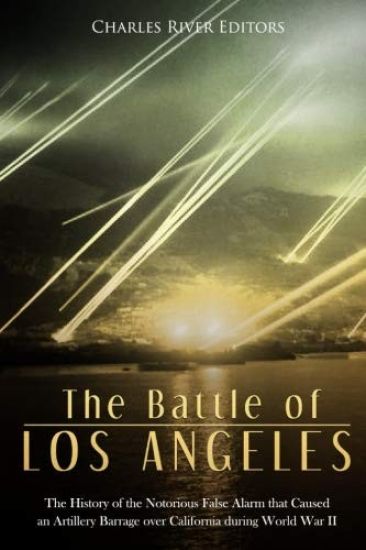
The Battle of Los Angeles: The History of the Notorious False Alarm that Caused an Artillery Barrage over California during World War II
*Includes pictures *Includes contemporary accounts *Includes online resources and a bibliography for further reading "Probably much of the confusion came from the fact that anti-aircraft shell bursts, caught by the searchlights, were themselves mistaken for enemy planes. In any case, the next three hours produced some of the most imaginative reporting of the war: "swarms" of planes (or, sometimes, balloons) of all possible sizes, numbering from one to several hundred, traveling at altitudes which ranged from a few thousand feet to more than 20,000 and flying at speeds which were said to have varied from "very slow" to over 200 miles per hour, were observed to parade across the skies. These mysterious forces dropped no bombs and, despite the fact that 1,440 rounds of anti-aircraft ammunition were directed against them, suffered no losses." - An excerpt from the U. S. Office of Air Force History All Americans are familiar with the "day that will live in infamy." At 9:30 a.m. on Sunday, December 7, 1941, Pearl Harbor, the advanced base of the United States Navy's Pacific Fleet, was ablaze. It had been smashed by aircraft launched by the carriers of the Imperial Japanese Navy. All eight battleships had been sunk or badly damaged, 350 aircraft had been knocked out, and over 2,000 Americans lay dead. Indelible images of the USS Arizona exploding and the USS Oklahoma capsizing and floating upside down have been ingrained in the American conscience ever since. In less than an hour and a half the Japanese had almost wiped out America's entire naval presence in the Pacific. Roosevelt addressed Congress and the nation the following day, giving a stirring speech seeking a declaration of war against Japan. The beginning lines of the speech are instantly familiar, with Roosevelt forever marking Pearl Harbor in the national conscience as "a date which will live in infamy." Congress voted overwhelmingly in support of an immediate declaration of war: 82-0 in the Senate and 388-1 in the House. Churchill had said that Britain would declare war "within the hour" if Japan attacked America. There was no way that the British were going to forget the support they had already received from Roosevelt. Britain was at war with Japan the same day. The other Axis powers quickly followed suit, with Germany and Italy declaring war on America and vice versa by December 11. Today Pearl Harbor is remembered in several important ways. First, it is widely viewed as a turning point for World War II, and if Hitler's attack on the Soviet Union in June 1941 had not already sealed his fate, his declaration of war against America that December did. Beyond that, the day provided some important pointers for how the war would pan out in the Pacific. Japan's conduct of battle was exposed as aggressive but inflexible, and its pilots proved brave but undisciplined. The Americans, derisively portrayed as decadent and weak, showed that they could and would fight. In the immediate aftermath, Americans immediately rallied around the flag, invoking Pearl Harbor as the reason necessitating it, but people were understandably nervous in the first few months of 1942. Japan badly battered the American fleet and invaded the Philippines, leaving many to assume that an attack on the American mainland was inevitable. The heightened nerves led to one of the strangest events of the war on the night of February 24-25, 1942, when guns across Los Angeles lit up the sky in response to alarms about Japanese plans overhead. Most people believe that it was a combination of illusion, miscommunication, and a dreadful domino effect that led to what is now remembered as the Battle of Los Angeles, but some continue to insist otherwise. The Battle of Los Angeles: The History of the Notorious False Alarm that Caused an Artillery Barrage over California during World War II explores the events leading up to the "battle" and the aftermath.
The Metropolitan Museum of Art: The History and Legacy of America's Largest Art Museum
*Includes pictures *Includes contemporary accounts *Includes online resources and a bibliography for further reading "The Metropolitan Museum of Art is unsurpassed at presenting more than 50 centuries of work. I go there constantly, seeing things over and over, better than I've ever seen them before." - Jerry Saltz Americans are rightfully proud of much of their heritage, especially as it relates to the ideas of democracy and government. The country has spread its ideals throughout the world and rose, in just two short centuries, to a place of global leadership. However, when it comes to art and culture, there's never been any doubt how young the nation is, especially compared to much older nations across the Atlantic. The Metropolitan Museum of Art was created to assuage some of that, and to show the world that America could hold its own with the leading galleries of the rest of the world. From the beginning, the Met has been unique, because unlike many European museums, the support for the sprawling New York City museum came from modern tycoons and philanthropists, instead of old families with wealth and land. Like the rest of the city, the museum grew quickly, as the millionaires of New York and other cities around the nation vied to see who could donate the most paintings or objects of art. Having one's work in the Met, or contributing to it, became something of a status symbol, a way to demonstrate prestige and importance. Having one's name on a gallery wall or a wing of the always expanding museum could cement a legacy. At the same time, the Met has always been a place that anyone could visit. Its very charter insisted that patrons be welcomed and educated by what they saw during their visits, a goal the museum has kept in focus for nearly 150 years. And while many European museums cater primarily to tourists, the Met remains something of a hometown treasure for New York City, focusing much of its attention on recognizing and balancing the city's cultural diversity with the needs of its patrons of all ages and socioeconomic backgrounds. The Metropolitan Museum of Art: The History and Legacy of America's Largest Art Museum chronicles the remarkable history of the museum and highlights some of its most important pieces. Along with pictures depicting important people, places, and events, you will learn about the Met like never before.
The Metropolitan Museum of Art: The History and Legacy of America's Largest Art Museum
*Includes pictures *Includes contemporary accounts *Includes online resources and a bibliography for further reading "The Metropolitan Museum of Art is unsurpassed at presenting more than 50 centuries of work. I go there constantly, seeing things over and over, better than I've ever seen them before." - Jerry Saltz Americans are rightfully proud of much of their heritage, especially as it relates to the ideas of democracy and government. The country has spread its ideals throughout the world and rose, in just two short centuries, to a place of global leadership. However, when it comes to art and culture, there's never been any doubt how young the nation is, especially compared to much older nations across the Atlantic. The Metropolitan Museum of Art was created to assuage some of that, and to show the world that America could hold its own with the leading galleries of the rest of the world. From the beginning, the Met has been unique, because unlike many European museums, the support for the sprawling New York City museum came from modern tycoons and philanthropists, instead of old families with wealth and land. Like the rest of the city, the museum grew quickly, as the millionaires of New York and other cities around the nation vied to see who could donate the most paintings or objects of art. Having one's work in the Met, or contributing to it, became something of a status symbol, a way to demonstrate prestige and importance. Having one's name on a gallery wall or a wing of the always expanding museum could cement a legacy. At the same time, the Met has always been a place that anyone could visit. Its very charter insisted that patrons be welcomed and educated by what they saw during their visits, a goal the museum has kept in focus for nearly 150 years. And while many European museums cater primarily to tourists, the Met remains something of a hometown treasure for New York City, focusing much of its attention on recognizing and balancing the city's cultural diversity with the needs of its patrons of all ages and socioeconomic backgrounds. The Metropolitan Museum of Art: The History and Legacy of America's Largest Art Museum chronicles the remarkable history of the museum and highlights some of its most important pieces. Along with pictures depicting important people, places, and events, you will learn about the Met like never before.
John Muir: The Life and Legacy of America's Most Famous Conservationist

John Muir: The Life and Legacy of America's Most Famous Conservationist

Charles River

Createspace Independent Publishing Platform
2018
nidottu
*Includes pictures *Includes contemporary accounts and quotes *Includes online resources and a bibliography for further reading "Keep close to Nature's heart... and break clear away, once in awhile, and climb a mountain or spend a week in the woods. Wash your spirit clean." - John Muir The name of John Muir as one of the earliest conservationists, naturalists and natural philosophers is forever entwined with California - he is the man behind the creation of the Yosemite National Park and the namesake of the John Muir Trail in Sierra Nevada - but Muir was 30 years old before ever set foot in the state. In fact, Muir was a Scotsman, and despite the fact that he lived in the United States for almost his entire life, he never lost his accent, nor did he lose his fundamental identity with the wild East Lothian countryside and the rugged Scottish coast upon which he was born. The United States is full of natural wonders, but few remain unspoiled by man as much as Yosemite National Park, a 750,000 square acre park near the Sierra Nevada mountain range. Despite being inhabited by people for nearly 3,000 years, the relatively remote spot helped ensure that even as America expanded west, the Yosemite area avoided being settled or exploited like so many other areas on the frontier. Although it is a World Heritage Site and has been visited by millions of people, nearly the entire park remains wilderness, replete with features like waterfalls, giant sequoia groves, mountains, and some of America's most impressive granite cliffs. Given its natural wonders, it should come as no surprise that the area attracted some of the 19th century's most famous conservationists, including Muir and his good friend Theodore Roosevelt. Muir in particular was instrumental in having Yosemite declared a national park, and he would wax eloquently about the area and the fight to preserve it: "The making of gardens and parks goes on with civilization all over the world, and they increase both in size and number as their value is recognized. Everybody needs beauty as well as bread, places to play in and pray in, where Nature may heal and cheer and give strength to body and soul alike. This natural beauty-hunger is made manifest in the little windowsill gardens of the poor, though perhaps only a geranium slip in a broken cup, as well as in the carefully tended rose and lily gardens of the rich, the thousands of spacious city parks and botanical gardens, and in our magnificent National Parks-the Yellowstone, Yosemite, Sequoia, etc.-Nature's sublime wonderlands, the admiration and joy of the world. Nevertheless, like anything else worth while, from the very beginning, however well guarded, they have always been subject to attack by despoiling gain-seekers and mischief-makers of every degree from Satan to Senators, eagerly trying to make everything immediately and selfishly commercial, with schemes disguised in smug-smiling philanthropy, industriously, sham-piously crying, 'Conservation, conservation, panutilization, ' that man and beast may be fed and the dear Nation made great. Thus long ago a few enterprising merchants utilized the Jerusalem temple as a place of business instead of a place of prayer, changing money, buying and selling cattle and sheep and doves; and earlier still, the first forest reservation, including only one tree, was likewise despoiled. Ever since the establishment of the Yosemite National Park, strife has been going on around its borders and I suppose this will go on as part of the universal battle between right and wrong, however much of its boundaries may be shorn, or its wild beauty destroyed." John Muir: The Life and Legacy of America's Most Famous Conservationist examines the legendary career of one of the country's most influential figures. Along with pictures of important people, places, and events, you will learn about John Muir like never before.
O Mito de Osíris: A História e o Legado da Lenda Mitológica Mais Importante do Antigo Egito
Para os antigos eg pcios, como em qualquer sociedade composta por humanos curiosos, o mundo era um lugar confuso e muitas vezes assustador, repleto de destrui o, morte e fen menos inexplic veis. A fim de encontrar o sentido de tal exist ncia, eles recorreram s hist rias teleol gicas. Criar uma explica o para um fen meno, deixava-o menos horripilante e ajudava a dar sentido ao mundo que os rodeava. N o surpreende, portanto, que antigos deuses eg pcios tenham se infiltrado em todas as particularidades da exist ncia. Dada a abund ncia de artefatos funer rios encontrados nas areias do Egito pode-se, s vezes, parecer que os antigos eg pcios estavam mais preocupados com quest es da vida p s-morte do que com a vida que levavam diariamente. Isso enfatizado pelas pir mides que capturam a imagina o do mundo h s culos. Portanto, n o grande a surpresa quando Os ris tido como um dos mais importantes deuses do pante o eg pcio, j que tamb m pode ser considerado o deus eg pcio mais famoso da atualidade. Apesar da onipresen a do deus-sol, R , em grande parte da cultura popular moderna, Os ris quem mais cativa a mente dos leitores. Sua hist ria familiar e estranhamente ex tica. Ele o deus dos mortos, mas tornou-se deus em raz o de sua pr pria mortalidade. Todos os deuses do Antigo Egito eram capazes de morrer, mas Os ris tamb m simbolizava a ressurrei o, n o distante do Cristo na teologia crist . Os ris foi tra do por algu m pr ximo a ele (neste caso, pelo irm o, Set), foi morto e renasceu, mas aqui onde Cristo e Os ris se separam. A morte de Os ris brutal e sua ressurrei o produto do amor que a esposa sis sente por ele. Al m disso, Os ris era associado aos reis do Egito, uma vez que os eg pcios acreditavam que ele pr prio era um rei. Os antigos eg pcios conseguiam tra ar seus reis, um a um, at o per odo em que deuses teriam governado o territ rio pessoalmente. Os ris foi o terceiro ou quarto sucessor ao trono eg pcio ap s a cria o, os eg pcios acreditavam que a conex o de Os ris com a realeza permitia que seus reis tamb m renascessem de alguma maneira. Ainda se dizia que o deus era fisicamente enorme, de acordo com algumas fontes, possu a quase cinco metros de altura, o que acreditam t -lo ajudado em campanhas militares. Apesar da apar ncia grotesca (sua pele provavelmente fosse verde e preta, uma tentativa inicial de retrata o da putrefa o ), Os ris era o ep tome da esperan a e da renova o. Sua pele, mais tarde, passou a representar o verde exuberante de planta es ao redor do Nilo e a f rtil terra negra, onde colheitas cresciam nas proximidades. Ele foi muitas vezes retratado como um rei mumificado, sentado em um trono, segurando um mangual de fara s e um cajado de pastores, uma vez que ele pr prio seria o pastor de seu povo at a terra dos mortos, o Duat. Na verdade, embora Os ris fosse retratado como capaz de enviar "dem nios" ao mundo dos vivos, foi considerado um benevolente rei do submundo. De acordo com cada fen meno ou sentimento experienciado pelos antigos eg pcios, havia uma divindade correspondente e uma hist ria que explicava a conex o. O aclamado egipt logo Garry Shaw descreveu esse ethos como "uma repeti o sem fim de cria es, destrui es e renascimentos, enredados em uma rede de intera es divinas... cada pessoa vivendo] como o her i da pr pria narrativa m tica a cada dia." Desta forma, os antigos eg pcios "se identificariam" com a divindade correspondente que definia sua situa o em dato momento. Shaw proveu excelentes exemplos sobre este tema: "Uma pessoa com dor de cabe a virava H rus, o Menino, cuidado por sua m e, que virava sis; na morte, o falecido virava diversos deuses enquanto realizava a travessia pelo reino da vida p s-morte, assumindo a autoridade divina de cada deus por um determinado tempo. Os mitos do Egito eram el sticos o