Kirjojen hintavertailu – 12 903 725 kirjaa ja 27 kauppaa

Kirjailija

Charles River

Kirjat ja teokset yhdessä paikassa: 4 673 kirjaa, julkaisuja vuosilta 2013–2022, suosituimpiin kuuluu William Powell and Myrna Loy: The Lives and Careers of One of Classical Hollywood's Most Iconic Duos. Vertaile teosten hintoja ja tarkista saatavuus suomalaisista kirjakaupoista.

4 673 kirjaa

Kirjojen julkaisuvuodet: 2013–2022.

The Second Sino-Japanese War: The History and Legacy of the Deadly Conflict that Lasted Through the End of World War II
*Includes pictures *Includes contemporary accounts *Includes online resources and a bibliography for further reading Though both nations modernized, and China far outweighed Japan in terms of men and materiel potential, the island nation handily won its first modern war. The conflict resulted in Japan's short-term gains in the wake of victory, and the long term disaster for both sides' new roles in Asia, for with the end of Chinese dominance in East Asia came a new era for the region as a whole, an era whose consequences and horrors would not be fully realized for several more decades. Though scarcely mentioned in the world of early 21st century politics, Manchuria represented a key region of Asia during the first half of the 20th century. Once the heartland of the fierce Manchu empire, this northeastern Chinese region's rich natural resources made it a prize for nations in the process of entering the modern age, and three ambitious nations in the midst of such a transformation lay close enough to Manchuria to attempt to claim it: Japan, Russia, and China. For countries attempting to shake off their feudal past and enter a dynamic era of industrialization, Manchuria's resources presented an irresistible lure. With immense natural resources coupled to economic activity more concentrated than elsewhere in China, this region, abutting Mongolia, Korea, the Yellow Sea, and the Great Wall "accounted for 90 percent of China's oil, 70 percent of its iron, 55 percent of its gold, and 33 percent of its trade. If Shanghai remained China's commercial center, by 1931 Manchuria had become its industrial center." (Paine, 2012, 15). Thus, it's not altogether surprising that Japan's invasion of Manchuria in 1931 resulted from a long, complex chain of historical events stretching back to the late 19th century. Approximately 380,000 square miles in extent, or 1.4 times the size of the American state of Texas, Manchuria came into Imperial Russia's possession in 1900 due to the "Boxer Rebellion" in China, but the Russians held it only briefly; their defeat in the Russo-Japanese War shook loose their control from important parts of Manchuria by the end of 1905. The Kwantung Army deliberately shoved it over that brink in 1931, and the Japanese invasion and occupation of Manchuria is sometimes described as the true beginning of World War II. At the very least, it marked the expansion of Japan's imperial empire, its ongoing friction with China, and what would turn into a Chinese resistance campaign that would last nearly 15 years until the end of World War II. Given its importance, the invasion of Manchuria continues to be remembered as one of the seminal events of the 20th century. In 1937, the Empire of Japan once more went to war with China, a nation broken into petty warlord fiefdoms and wracked by civil war. The most modern Asian nation enacted a brutal campaign over the fragmented realms that made up China, committing atrocities just as horrendous as their Axis ally in Europe. Despite this, the sheer size of China, coupled with Japan's overextension, allowed the larger, less developed nation to endure. At the same time, China was experiencing an equally brutal civil war between Nationalist and Communist forces. This civil war became inextricably intertwined with the Second Sino-Japanese War and World War II, and the sheer scale of the horrors of the conflict remain hard to believe today, even as action in that theater is often overlooked because of events in Europe. The Second Sino-Japanese War: The History and Legacy of the Deadly Conflict that Lasted Through the End of World War II examines the notorious fighting, as well as the crucial aftermath. Along with pictures and a bibliography, you will learn about the Second Sino-Japanese War like never before.
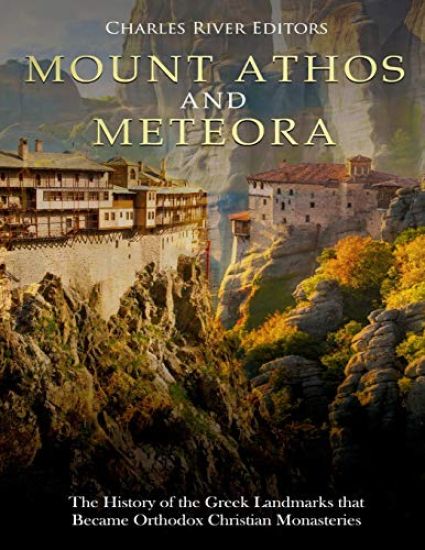
Mount Athos and Meteora: The History of the Greek Landmarks that Became Orthodox Christian Monasteries
*Includes pictures *Includes contemporary accounts *Includes online resources and a bibliography for further reading "Clear water where evergreens, azaleas cool ceremoniously...a kele lost among cedars, its roof open to eagles, door unhinged...silver leaves like a congregation of spiders..." When one hears these enchanting descriptions, from poet David Posner's 1964 composition "Mount Athos," it is not difficult to understand why this sleepy paradise is often extolled as the most peaceful and private corner of Greece, if not all of Europe. Mount Athos is the easternmost finger of the Halkidiki peninsula - a mountainous sliver of land that stretches about 37.3 miles long and 4.3-7.5 miles wide, with a surface area of about 150 square miles. Towering over the tightly-packed chestnut forests and the blue, crystalline waters of the Aegean Sea at a height of 6,670 feet is the snow-dusted crest of the mighty mountain itself. Known to the locals as Agion Oros, or the "Holy Mountain," the peninsula today is most famed for its exclusivity, a place that continues to bar all women and their daughters from entry. The fortress-like monasteries scattered amongst the slopes and the clusters of cells clinging to the cliffs are occupied by monks of the Eastern Orthodox Church. Of course, its male-only population is just one aspect of the peninsula's anomalous nature. Planted on the peninsula's coast is a black Byzantine Cross, a flat, cross-shaped monument with a trinity of flared, wide-armed, Greek crosses in place of its arms and a traditional Christian cross in its center, kissed with rust. It serves as an emblem of the monastic society that resides there, and it delineates the boundary between Mount Athos and the rest of Greece. Entering this hallowed peninsula is like setting foot into a living time capsule, because life here has not changed in well over 1,000 years. Mount Athos is one of only two places on earth (the other being the Mar Saba) that chooses to run on "Byzantine time," meaning Hour 0:00:00 only begins at sundown. Moreover, it is the only territory in the world that flies the Byzantine flag, a regal, sword and cross clutching double-headed eagle set against a rippling canvas of gold. Close to 1,850 miles to the west of Babylon, a group of mere mortals set out on a daring, but seemingly fragile quest to build their homes in a place that - at the very least - symbolically neighbored the Kingdom of God. Evidently, these mortals had earned the Lord's blessings, for there, a smattering of their descendants remain to this day. Contrary to the builders of Babel, these God-fearing venturers constructed these dwellings with the purpose of wholly devoting their lives to the Lord. More admirable yet, these dwellings were not lofty towers that took dozens of years to assemble, nor were they built atop solid ground; instead, they ranged from small huts to compact complexes perilously perched atop and embedded into the nooks and fissures of stone mountains. This forest of jagged stone pillar, which looms over gorgeous valleys and a lush, densely forested stretch of land, is none other than Meteora, situated in the quaint town of Kalabaka in the northwestern part of Thessaly, Greece. Mount Athos and Meteora: The History of the Greek Landmarks that Became Orthodox Christian Monasteries looks at the unique regions and what life has been like there since ancient times. Along with pictures depicting important people, places, and events, you will learn about Meteora and Mount Athos like never before.
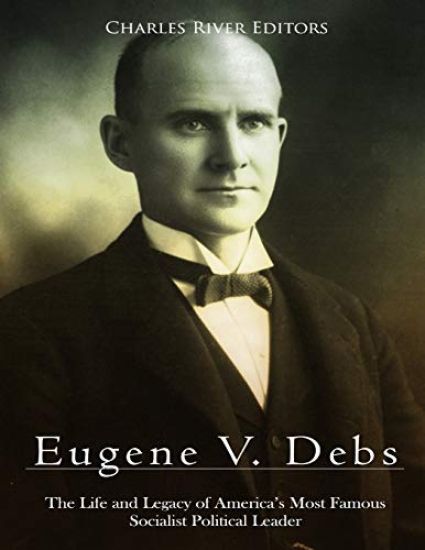
Eugene V. Debs: The Life and Legacy of America's Most Famous Socialist Political Leader
*Includes pictures *Includes contemporary accounts *Includes online resources and a bibliography for further reading "When great changes occur in history, when great principles are involved, as a rule the majority are wrong." - Eugene V. Debs History is full of tales of men who were in the right place at the right time and thereby rose to greatness, but rarely is the story told of a man who was in the right place at the wrong time. The life of Eugene V. Debs is such a tale. Debs was born in Middle America just before the outbreak of the Civil War, and had he been born a century later, or in a large city on one of the coasts, his story might have been much different. As he grew, he had the restlessness that often indicates greatness, but he lacked the crisis that might have allowed him to hone and use his leadership skills. He saw the needs of those less fortunate around him, and at first, like so many others, he thought that he could work within the system to correct them. However, when he ultimately concluded that he could best serve others through firebrand speeches and increasingly controversial actions, he was unable to convince enough people to follow him to make the massive changes he desired. Instead, he found himself thwarted time and again by those with more power and more established views. Of course, this is not to discount the profound impact Debs had on the country; after all, he was one of the most famous men in America during the late 19th and early 20th century. Indeed, he was able to give to the nation a new understanding of the values and power of industrial workers, helping organize them into some of the first industrial unions in the country. He also taught the men themselves to think as a unit, and to act with a united front that allowed them to make their voices heard and to earn for themselves and their families a living wage and benefits commiserate with their work's value. As one early 20th century socialist put it, "Something was in Debs, seemingly, that did not come out unless you saw him. I'm told that even those speeches of his which seem to any reader indifferent stuff, took on vitality from his presence. A hard-bitten socialist told me once, "Gene Debs is the only one who can get away with the sentimental flummery that's been tied onto Socialism in this country. Pretty nearly always it gives me a swift pain to go around to meetings and have people call me 'comrade.' That's a lot of bunk. But the funny part of it is that when Debs says 'comrade' it is all right. He means it. That old man with the burning eyes actually believes that there can be such a thing as the brotherhood of man. And that's not the funniest part of it. As long as he's around I believe it myself." In the course of his work, Debs also changed the political scene in America. He established the Socialist Party, and when he ran for president in 1912, he attracted a noticeable percentage of the popular vote. No Socialist politician has been as successful on the national level before or since. However, even as he garnered popularity, the times in which he lived hampered his work, for the outbreak of World War I, along with the Bolshevik Revolution in Russia, brought socialism under suspicion. Most controversially, Debs was arrested and imprisoned during World War I on charges of sedition, and while that episode has justly marred President Woodrow Wilson's legacy, prison damaged Debs' health even as his spirit strove on for one last victory. In many ways, his end seems tragic, but for those who benefited through the years from his practical work for organized labor and his theoretical work for socialism, his death marked neither a tragedy nor an end, just a new type of beginning. Eugene V. Debs: The Life and Legacy of America's Most Famous Socialist Political Leader chronicles the life and work that made him one of America's most influential men.
The Second Battle of Ypres: The History of the Notorious World War I Battle that Witnessed the First Mass Use of Poison Gas
*Includes pictures *Includes accounts *Includes online resources and a bibliography for further reading *Includes a table of contents World War I, also known in its time as the "Great War" or the "War to End all Wars", was an unprecedented holocaust in terms of its sheer scale. Fought by men who hailed from all corners of the globe, it saw millions of soldiers do battle in brutal assaults of attrition which dragged on for months with little to no respite. Tens of millions of artillery shells and untold hundreds of millions of rifle and machine gun bullets were fired in a conflict that demonstrated man's capacity to kill each other on a heretofore unprecedented scale, and as always, such a war brought about technological innovation at a rate that made the boom of the Industrial Revolution seem stagnant. The arms race before the war and the attempt to break the deadlock of the Western and Eastern Fronts by any means possible changed the face of battle in ways that would have previously been deemed unthinkable. Before 1914, flying machines were objects of public curiosity; the first flights of any account on rotor aircraft had been made less than 5 years before and were considered to be the province of daredevils and lunatics. By 1918, all the great powers were fielding squadrons of fighting aircraft armed with machine guns and bombs, to say nothing of light reconnaissance planes. Tanks, a common feature on the battlefield by 1918, had not previously existed outside of the realm of science fiction stories written by authors like H. G. Wells. Machine guns had gone from being heavy, cumbersome pieces with elaborate water-cooling systems to single-man-portable, magazine-fed affairs like the Chauchat, the Lewis Gun and the M1918 BAR. To these grim innovations were added flamethrowers, hand grenades, zeppelins, observation balloons, poison gas, and other improvements or inventions that revolutionized the face of warfare. With the exception of a few hours on Christmas Day 1914, the shelling, sniping, raids, and bloodshed at Ypres in Belgium never ceased from the moment of first contact between the British Expeditionary Force (BEF) and the Imperial German army. The Ypres salient had formed the previous year during the "race to the sea," when the opposing armies tried and failed to outflank each other in a series of maneuvers and counter-maneuvers. Still pleasant at the time of the First Battle of Ypres, the ground of the Ypres salient had deteriorated markedly by spring of 1915. At this point, the Germans had not yet leveled Ypres itself, though they had reduced the famous church and medieval Cloth Hall to rubble with long-range shelling. The Germans held the low ridges to the east, which surrounded the low ground held by the British in a bowl-like semicircle, with their "headquarters town" at Passchendaele. The Second Battle of Ypres resulted from the German decision to use poison gas against the Allied lines in an effort to produce a breakthrough. The French attempted the use of non-lethal tear gas first, in August 1914, after which the Germans did the same. Both attempts produced no results, and the Second Battle of Ypres would end inconclusively, but the gas attack opening this battle represented the first large-scale use of lethal chemicals in the war. The Second Battle of Ypres: The History of the Notorious World War I Battle that Witnessed the First Mass Use of Poison Gas analyzes one of the Great War's most important conflicts, and how it was emblematic of the stalemate that came from new technology and trench warfare. Along with pictures of important people, places, and events, you will learn about the Second Battle of Ypres like never before.
Ancient Gaul: The History and Legacy of the Gauls and the Region in Antiquity

Ancient Gaul: The History and Legacy of the Gauls and the Region in Antiquity

Charles River

Createspace Independent Publishing Platform
2018
nidottu
*Includes pictures*Includes ancient accounts*Includes online resources and a bibliography for further reading"Caesar, having stationed his army on both sides of the fortifications, in order that, if occasion should arise, each should hold and know his own post, orders the cavalry to issue forth from the camp and commence action. There was a commanding view from the entire camp, which occupied a ridge of hills; and the minds of all the soldiers anxiously awaited the issue of the battle. The Gauls had scattered archers and light-armed infantry here and there, among their cavalry, to give relief to their retreating troops, and sustain the impetuosity of our cavalry." - Julius Caesar, De Bello GallicoThe Roman Republic's development from a city state into a world power that controlled large swathes of modern Italy, Gaul and Spain, as well as other parts of Europe is seen by many as being the direct result of Roman fear of the "Celtic Threat." The sacking of Rome by the Gauls in 386 BCE became indelibly imprinted into the Roman psyche, and with this fear came a desire to put as much distance as possible between the city of Rome and any potential enemy. The result was the gradual acquisition of buffer zones that became provinces of an empire that grew without any particular thought out or deliberate strategy of expansion. The Gallic Wars, the series of campaigns waged by Julius Caesar on behalf of the Roman Senate between 58-50 BCE, were among the defining conflicts of the Roman era. Not only was the expansion of the Republic's domains unprecedented (especially when considering it was undertaken under the auspices of a single general), it had a profound cultural impact on Rome itself as well. The Roman Republic, so dynamic in the wake of the destruction of their ancient enemy, Carthage, had recently suffered a series of dramatic upheavals; from the great slave rebellion of Spartacus to the brutal and bloody struggle for power of Marius and Sulla. Rome had been shaken to its very core, and a victory was essential both to replenish the dwindling national coffers and to instill in the people a sense of civic pride and a certainty in the supremacy of the Republic. Quite simply, in terms of scale, the Gallic Wars were unmatched by anything the Roman Republic had witnessed since the Punic Wars. By the end of the campaigns, ancient historians estimated that more than a million people had died, and still more were displaced or enslaved. Even by the more conservative estimates of modern historians, a casualty count in the hundreds of thousands appears possible. Either way, the war was a cataclysm, involving tens of thousands of combatants, and it also marked the greatest displays of skill by one of the greatest battlefield generals history has ever known. Caesar's successful campaigns in Gaul have become the stuff of military legend on their merits, but it helped that he had the foresight to document them himself. Caesar himself wrote a famous firsthand account of the Gallic Wars, apparently from notes he had kept during the campaigns, and he wrote Commentarii de Bello Gallico (Commentaries on the Gallic War) in the third person. Caesar's account described the campaigning and the battles, all as part of a propaganda campaign to win the approval of the Roman people. As a result, he left out inconvenient facts, including how much of a fortune he made plundering, but the work still remains popular today, and it is still used to teach Latin. Ancient Gaul: The History and Legacy of the Gauls and the Region in Antiquity looks at the most famous events involving Gaul and the ancient world, from the Gauls' sack of Rome to Caesar's famous conquest. Along with pictures depicting important people, places, and events, you will learn about Gaul like never before.
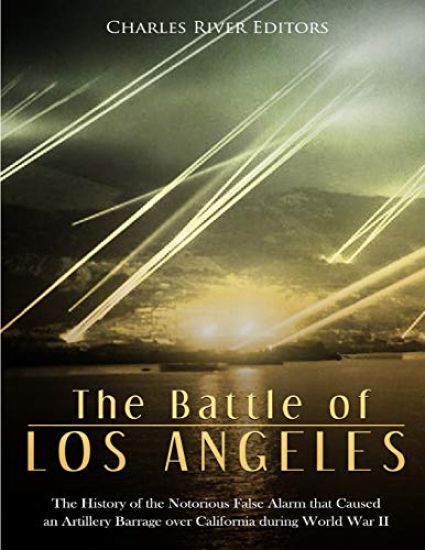
The Battle of Los Angeles: The History of the Notorious False Alarm that Caused an Artillery Barrage over California during World War II
*Includes pictures *Includes contemporary accounts *Includes online resources and a bibliography for further reading "Probably much of the confusion came from the fact that anti-aircraft shell bursts, caught by the searchlights, were themselves mistaken for enemy planes. In any case, the next three hours produced some of the most imaginative reporting of the war: "swarms" of planes (or, sometimes, balloons) of all possible sizes, numbering from one to several hundred, traveling at altitudes which ranged from a few thousand feet to more than 20,000 and flying at speeds which were said to have varied from "very slow" to over 200 miles per hour, were observed to parade across the skies. These mysterious forces dropped no bombs and, despite the fact that 1,440 rounds of anti-aircraft ammunition were directed against them, suffered no losses." - An excerpt from the U. S. Office of Air Force History All Americans are familiar with the "day that will live in infamy." At 9:30 a.m. on Sunday, December 7, 1941, Pearl Harbor, the advanced base of the United States Navy's Pacific Fleet, was ablaze. It had been smashed by aircraft launched by the carriers of the Imperial Japanese Navy. All eight battleships had been sunk or badly damaged, 350 aircraft had been knocked out, and over 2,000 Americans lay dead. Indelible images of the USS Arizona exploding and the USS Oklahoma capsizing and floating upside down have been ingrained in the American conscience ever since. In less than an hour and a half the Japanese had almost wiped out America's entire naval presence in the Pacific. Roosevelt addressed Congress and the nation the following day, giving a stirring speech seeking a declaration of war against Japan. The beginning lines of the speech are instantly familiar, with Roosevelt forever marking Pearl Harbor in the national conscience as "a date which will live in infamy." Congress voted overwhelmingly in support of an immediate declaration of war: 82-0 in the Senate and 388-1 in the House. Churchill had said that Britain would declare war "within the hour" if Japan attacked America. There was no way that the British were going to forget the support they had already received from Roosevelt. Britain was at war with Japan the same day. The other Axis powers quickly followed suit, with Germany and Italy declaring war on America and vice versa by December 11. Today Pearl Harbor is remembered in several important ways. First, it is widely viewed as a turning point for World War II, and if Hitler's attack on the Soviet Union in June 1941 had not already sealed his fate, his declaration of war against America that December did. Beyond that, the day provided some important pointers for how the war would pan out in the Pacific. Japan's conduct of battle was exposed as aggressive but inflexible, and its pilots proved brave but undisciplined. The Americans, derisively portrayed as decadent and weak, showed that they could and would fight. In the immediate aftermath, Americans immediately rallied around the flag, invoking Pearl Harbor as the reason necessitating it, but people were understandably nervous in the first few months of 1942. Japan badly battered the American fleet and invaded the Philippines, leaving many to assume that an attack on the American mainland was inevitable. The heightened nerves led to one of the strangest events of the war on the night of February 24-25, 1942, when guns across Los Angeles lit up the sky in response to alarms about Japanese plans overhead. Most people believe that it was a combination of illusion, miscommunication, and a dreadful domino effect that led to what is now remembered as the Battle of Los Angeles, but some continue to insist otherwise. The Battle of Los Angeles: The History of the Notorious False Alarm that Caused an Artillery Barrage over California during World War II explores the events leading up to the "battle" and the aftermath.
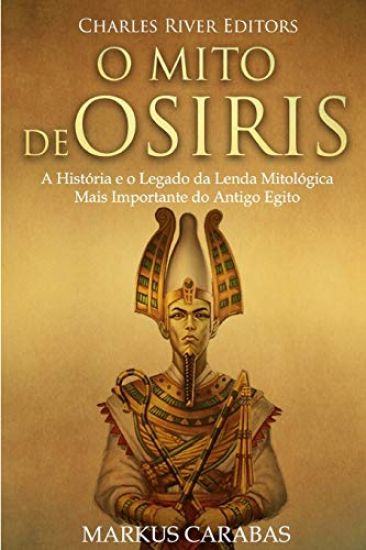
O Mito de Osíris: A História e o Legado da Lenda Mitológica Mais Importante do Antigo Egito
Para os antigos eg pcios, como em qualquer sociedade composta por humanos curiosos, o mundo era um lugar confuso e muitas vezes assustador, repleto de destrui o, morte e fen menos inexplic veis. A fim de encontrar o sentido de tal exist ncia, eles recorreram s hist rias teleol gicas. Criar uma explica o para um fen meno, deixava-o menos horripilante e ajudava a dar sentido ao mundo que os rodeava. N o surpreende, portanto, que antigos deuses eg pcios tenham se infiltrado em todas as particularidades da exist ncia. Dada a abund ncia de artefatos funer rios encontrados nas areias do Egito pode-se, s vezes, parecer que os antigos eg pcios estavam mais preocupados com quest es da vida p s-morte do que com a vida que levavam diariamente. Isso enfatizado pelas pir mides que capturam a imagina o do mundo h s culos. Portanto, n o grande a surpresa quando Os ris tido como um dos mais importantes deuses do pante o eg pcio, j que tamb m pode ser considerado o deus eg pcio mais famoso da atualidade. Apesar da onipresen a do deus-sol, R , em grande parte da cultura popular moderna, Os ris quem mais cativa a mente dos leitores. Sua hist ria familiar e estranhamente ex tica. Ele o deus dos mortos, mas tornou-se deus em raz o de sua pr pria mortalidade. Todos os deuses do Antigo Egito eram capazes de morrer, mas Os ris tamb m simbolizava a ressurrei o, n o distante do Cristo na teologia crist . Os ris foi tra do por algu m pr ximo a ele (neste caso, pelo irm o, Set), foi morto e renasceu, mas aqui onde Cristo e Os ris se separam. A morte de Os ris brutal e sua ressurrei o produto do amor que a esposa sis sente por ele. Al m disso, Os ris era associado aos reis do Egito, uma vez que os eg pcios acreditavam que ele pr prio era um rei. Os antigos eg pcios conseguiam tra ar seus reis, um a um, at o per odo em que deuses teriam governado o territ rio pessoalmente. Os ris foi o terceiro ou quarto sucessor ao trono eg pcio ap s a cria o, os eg pcios acreditavam que a conex o de Os ris com a realeza permitia que seus reis tamb m renascessem de alguma maneira. Ainda se dizia que o deus era fisicamente enorme, de acordo com algumas fontes, possu a quase cinco metros de altura, o que acreditam t -lo ajudado em campanhas militares. Apesar da apar ncia grotesca (sua pele provavelmente fosse verde e preta, uma tentativa inicial de retrata o da putrefa o ), Os ris era o ep tome da esperan a e da renova o. Sua pele, mais tarde, passou a representar o verde exuberante de planta es ao redor do Nilo e a f rtil terra negra, onde colheitas cresciam nas proximidades. Ele foi muitas vezes retratado como um rei mumificado, sentado em um trono, segurando um mangual de fara s e um cajado de pastores, uma vez que ele pr prio seria o pastor de seu povo at a terra dos mortos, o Duat. Na verdade, embora Os ris fosse retratado como capaz de enviar "dem nios" ao mundo dos vivos, foi considerado um benevolente rei do submundo. De acordo com cada fen meno ou sentimento experienciado pelos antigos eg pcios, havia uma divindade correspondente e uma hist ria que explicava a conex o. O aclamado egipt logo Garry Shaw descreveu esse ethos como "uma repeti o sem fim de cria es, destrui es e renascimentos, enredados em uma rede de intera es divinas... cada pessoa vivendo] como o her i da pr pria narrativa m tica a cada dia." Desta forma, os antigos eg pcios "se identificariam" com a divindade correspondente que definia sua situa o em dato momento. Shaw proveu excelentes exemplos sobre este tema: "Uma pessoa com dor de cabe a virava H rus, o Menino, cuidado por sua m e, que virava sis; na morte, o falecido virava diversos deuses enquanto realizava a travessia pelo reino da vida p s-morte, assumindo a autoridade divina de cada deus por um determinado tempo. Os mitos do Egito eram el sticos o
Milwaukee: The History of the Fur Trade Outpost that Became the Beer Capital of the World
*Includes pictures *Includes contemporary accounts *Includes online resources and a bibliography for further reading "It is true, similar things cultural events and societies] were done in other cities where the Forty-eighters sic] had congregated. But so far as I know, nowhere did their influence so quickly impress itself upon the whole social atmosphere as in 'German Athens of America' as Milwaukee was called at the time." - Carl Schurz, 1854 The area that became known as the Old Northwest caught the eye of European settlers as far back as the 17th century, when the French explorers Marquette and Jolliet found that waterways in the area connected the Mississippi River to the Great Lakes. The area was perfect for fur trade outposts long before it was settled by whites. Throughout the 19th century, American settlers pushing across the Western frontier came into contact with diverse American tribes, producing a series of conflicts ranging from the Great Plains to the Southwest, and from the Trail of Tears to the Pacific Northwest. One of these notorious conflicts was the Black Hawk War, named after a Sauk chief who led a band of about 1,500 in a series of small battles fought in the Wisconsin territory in 1832. Black Hawk led his people east across the Mississippi River in an attempt to reclaim his people's old lands in Illinois, and his defeat essentially ended all Native American resistance east of the Mississippi River and opened up the rest of Illinois and Wisconsin to white settlement. The war also provided an opportunity for some of the era's most famous Americans to get military experience, including several U. S. Senators, several Territorial Governors, future Confederate President Jefferson Davis, and most famously, Abraham Lincoln. Thus, it should come as no surprise that Milwaukee, the largest city in Wisconsin, has a history reflective of the Old Northwest. Known to the natives as a beautiful landscape at the mouth of a river on the edge of the Great Lakes, it did not take long for fur traders to join them in the serene location. Those fur traders, seeing a future city on the same spot as their sleepy trading post, worked to put the place on the map. Thanks to their vision and energy, Milwaukee transformed from a sleepy trading post to an industrial center, connected to the entire country and beyond through its industry and energy. Given its background and location, the story of Milwaukee may have resembled other nearby cities like Detroit or Chicago, but Milwaukee would have its own flavors and characters thanks to the unique ethnicities and businesses that arrived early on. Before the beer capital of the country became Brew Town, it was Cream Town, and before that it was just a trading post, where some men with a dream came to live. Like other major cities and the nation overall, the 20th century portended massive growth for Milwaukee, especially as rail and other forms of transportation helped connect the city to the rest of Wisconsin and beyond. With that growth came the growing pains of an industrial city gripped with all the plights of urban development and expansion, but despite that, the people of Milwaukee entered the new century in high hopes, hopes that survived the harsh realities of a century sundered by war, racism, and poverty. Milwaukee: The History of the Fur Trade Outpost that Became the Beer Capital of the World looks at the history of one of the Midwest's biggest cities. Along with pictures of important people, places, and events, you will learn about Milwaukee like never before.
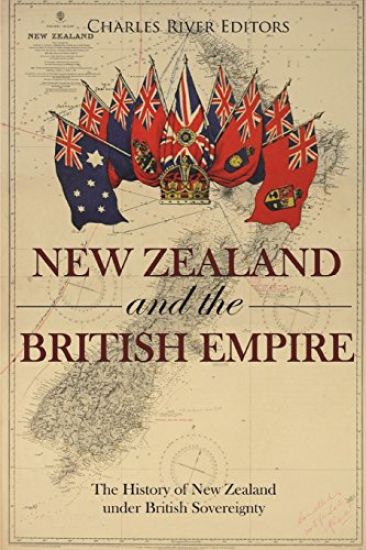
New Zealand and the British Empire: The History of New Zealand under British Sovereignty
*Includes pictures *Includes contemporary accounts *Includes online resources and a bibliography for further reading "When one house dies, a second lives." - Maori proverb By the mid-17th century, the existence of a land in the south referred to as Terra Australis was generally known and understood by the Europeans, and incrementally, its shores were observed and mapped. Van Diemen's Land, an island off the south coast of Australia now called Tasmania, was identified in 1642 by Dutch mariner Abel Tasman, and a few months later, the intrepid Dutchman would add New Zealand to the map of the known world. At the time, the English were the greatest naval power in Europe, but they arrived on the scene rather later. The first to appear was William Dampier, captain of the HMS Roebuck, in 1699, after he had been granted a Royal Commission by King William III to explore the east coast of New Holland. By then, the general global balance of power was shifting, and with the English gaining a solid foothold in India, their supremacy in the Indian Ocean trade zone began. The Dutch, once predominant in the region, began slowly to lose ground, slipping out of contention as a major global trading power. So too were the Portuguese, also once dominant in the region. It was now just the French and the English who were facing one another down in a quest to dominate the world, but their imperial interests were focused mainly in India and the East Indies, as well as the Caribbean and the Americas. As a result, the potential of a vast, practically uninhabited great southern continent did not yet hold much interest. By then the world was largely mapped, with just regions such as the Arctic Archipelago and the two poles remaining terra incognita. A few gaps needed to be filled in here and there, but all of the essential details were known. At the same time, a great deal of imperial energy was at play in Europe, particularly in Britain. Britain stood at the cusp of global dominance thanks almost entirely to the Royal Navy, which emerged in the 17th and 18th centuries as an institution significantly more than the sum of its parts. With vast assets available even in peacetime, expeditions of science and explorations were launched in every direction. This was done not only to claim ownership of the field of global exploration, but also to undercut the imperial ambitions of others, in particular the French. In 1769, Captain James Cook's historic expedition in the region would lead to an English claim on Australia, but before he reached Australia, he sailed near New Zealand and spent weeks mapping part of New Zealand's coast. Cook later asserted that the only major sources of timber and flax in the Pacific region were to be found in New Zealand and Norfolk Island, which would prove crucial to the British Empire and the Royal Navy in particular, and Cook also provided a firsthand account of a tense standoff with New Zealand's indigenous natives on the shoreline. Over the next 90 years, Cook's journey and his account would lay the basis for British activities in the region, and those activities would forge the modern history of New Zealand at a great cost. New Zealand and the British Empire: The History of New Zealand under British Sovereignty analyzes the expeditions that discovered New Zealand, the early settlements and conflicts waged there from 1650-1850, and the exploration that mapped New Zealand and led to its status as a dominion. Along with pictures of important people, places, and events, you will learn about New Zealand under British sovereignty like never before.
Milwaukee: The History of the Fur Trade Outpost that Became the Beer Capital of the World
*Includes pictures *Includes contemporary accounts *Includes online resources and a bibliography for further reading "It is true, similar things cultural events and societies] were done in other cities where the Forty-eighters sic] had congregated. But so far as I know, nowhere did their influence so quickly impress itself upon the whole social atmosphere as in 'German Athens of America' as Milwaukee was called at the time." - Carl Schurz, 1854 The area that became known as the Old Northwest caught the eye of European settlers as far back as the 17th century, when the French explorers Marquette and Jolliet found that waterways in the area connected the Mississippi River to the Great Lakes. The area was perfect for fur trade outposts long before it was settled by whites. Throughout the 19th century, American settlers pushing across the Western frontier came into contact with diverse American tribes, producing a series of conflicts ranging from the Great Plains to the Southwest, and from the Trail of Tears to the Pacific Northwest. One of these notorious conflicts was the Black Hawk War, named after a Sauk chief who led a band of about 1,500 in a series of small battles fought in the Wisconsin territory in 1832. Black Hawk led his people east across the Mississippi River in an attempt to reclaim his people's old lands in Illinois, and his defeat essentially ended all Native American resistance east of the Mississippi River and opened up the rest of Illinois and Wisconsin to white settlement. The war also provided an opportunity for some of the era's most famous Americans to get military experience, including several U. S. Senators, several Territorial Governors, future Confederate President Jefferson Davis, and most famously, Abraham Lincoln. Thus, it should come as no surprise that Milwaukee, the largest city in Wisconsin, has a history reflective of the Old Northwest. Known to the natives as a beautiful landscape at the mouth of a river on the edge of the Great Lakes, it did not take long for fur traders to join them in the serene location. Those fur traders, seeing a future city on the same spot as their sleepy trading post, worked to put the place on the map. Thanks to their vision and energy, Milwaukee transformed from a sleepy trading post to an industrial center, connected to the entire country and beyond through its industry and energy. Given its background and location, the story of Milwaukee may have resembled other nearby cities like Detroit or Chicago, but Milwaukee would have its own flavors and characters thanks to the unique ethnicities and businesses that arrived early on. Before the beer capital of the country became Brew Town, it was Cream Town, and before that it was just a trading post, where some men with a dream came to live. Like other major cities and the nation overall, the 20th century portended massive growth for Milwaukee, especially as rail and other forms of transportation helped connect the city to the rest of Wisconsin and beyond. With that growth came the growing pains of an industrial city gripped with all the plights of urban development and expansion, but despite that, the people of Milwaukee entered the new century in high hopes, hopes that survived the harsh realities of a century sundered by war, racism, and poverty. Milwaukee: The History of the Fur Trade Outpost that Became the Beer Capital of the World looks at the history of one of the Midwest's biggest cities. Along with pictures of important people, places, and events, you will learn about Milwaukee like never before.
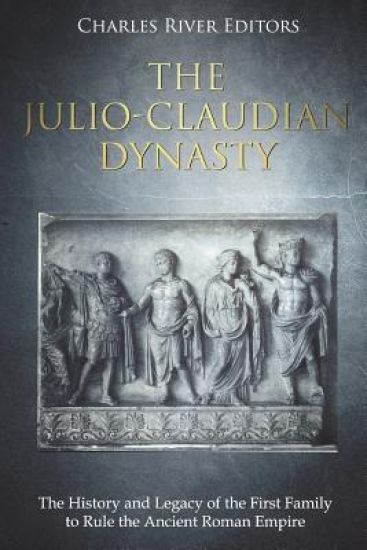
The Julio-Claudian Dynasty: The History and Legacy of the First Family to Rule the Ancient Roman Empire
*Includes pictures *Includes ancient accounts *Includes online resources and a bibliography for further reading The importance of Gaius Julius Caesar Augustus (or as he was known from birth, Gaius Octavius "Octavian" Thurinus) to the course of Western history is hard to overstate. His life, his rise to power, his political, and his social and military achievements all laid the foundations for the creation of an empire which would endure for almost five centuries, and whose traditions, laws, architecture and art continue to influence much of Europe and the world today. Octavian was the first true Roman Emperor, and the first man since the Etruscan Tarquins five centuries earlier to establish a successful hereditary ruling dynasty in what had been a proud Republic for over half a millennium. He was a canny strategist, an excellent orator, a fine writer, a generous patron of the arts and enthusiastic promoter of public works, but above all he was a master politician. Octavian's great-uncle (and adoptive father) Julius Caesar was a great general, and his rival Mark Antony was a great soldier, but as a politician Octavian outmatched them all. One of the most overlooked emperors was also one of the first, and he lived in chaotic times. Tiberius was born in 42 BCE, just as the Roman Republic was dissolving and a new Roman imperial power structure emerged under Octavian, who became Rome's first emperor as Caesar Augustus. Tiberius's life soon became caught up with Augustus's as the emperor worked to found and establish a dynasty, but it is unclear if Tiberius ever really wanted to be part of Augustus's plans or inherit imperial power - Tiberius was known as a man who schemed and planned, but he was also a scholar and showed a marked desire throughout his life to retreat and escape the demands of power. Partially due to this continual tension, Tiberius's life is enigmatic in many ways. All of Rome's poor rulers pale in comparison to Gaius Julius Caesar Augustus Germanicus, a young man remembered by posterity as Caligula. Given how bad some of Rome's emperors were, it's a testament to just how insane and reviled Caligula was that he is still remembered nearly 2,000 years later as the epitome of everything that could be wrong with a tyrant. The Romans had high hopes for him after he succeeded Tiberius in 37 CE, and by all accounts he was a noble and just ruler during his first few months in power. But after that, he suffered some sort of mysterious illness that apparently rendered him insane, and the list of Caligula's strange actions became quite lengthy in almost no time at all. Among other things, Caligula began appearing in public dressed as gods and goddesses, and his incest, sexual perversion, and thirst for blood were legendary at the time, difficult accomplishments considering Roman society was fairly accustomed to and tolerant of such things. Today, Claudius is particularly remembered for the conquest of Britain, as Roman power there had weakened since Julius Caesar had invaded nearly a century before. Beyond this, he established Roman colonies on the frontiers of the empire, annexed several territories in North Africa (including Thrace and Mauritania), and made Judea a province. Claudius's successor, Nero, ranks among the very worst of the Caesars, alongside the likes of mad Caligula, slothful Commodus, and paranoid Domitian, a figure so hated that, in many ancient Christian traditions, he is literally, without hyperbole, considered the Antichrist; according to a notable Biblical scholar, the coming of the Beast and the number 666 in the Book of Revelation are references to Nero. He was the man who, famously, "fiddled while Rome burned", an inveterate lecher, a murderous tyrant who showed little compunction in murdering his mother and who liked to use Christian martyrs as a source of illumination at night - by burning them alive.
Gaul and the Roman Republic: The History of Gaul Before the Rise of Rome

Gaul and the Roman Republic: The History of Gaul Before the Rise of Rome

Charles River

Createspace Independent Publishing Platform
2018
nidottu
*Includes pictures *Includes ancient accounts *Includes online resources and a bibliography for further reading "Caesar, having stationed his army on both sides of the fortifications, in order that, if occasion should arise, each should hold and know his own post, orders the cavalry to issue forth from the camp and commence action. There was a commanding view from the entire camp, which occupied a ridge of hills; and the minds of all the soldiers anxiously awaited the issue of the battle. The Gauls had scattered archers and light-armed infantry here and there, among their cavalry, to give relief to their retreating troops, and sustain the impetuosity of our cavalry." - Julius Caesar, De Bello Gallico The Roman Republic's development from a city state into a world power that controlled large swathes of modern Italy, Gaul and Spain, as well as other parts of Europe is seen by many as being the direct result of Roman fear of the "Celtic Threat." The sacking of Rome by the Gauls in 386 BCE became indelibly imprinted into the Roman psyche, and with this fear came a desire to put as much distance as possible between the city of Rome and any potential enemy. The result was the gradual acquisition of buffer zones that became provinces of an empire that grew without any particular thought out or deliberate strategy of expansion. The Gallic Wars, the series of campaigns waged by Julius Caesar on behalf of the Roman Senate between 58-50 BCE, were among the defining conflicts of the Roman era. Not only was the expansion of the Republic's domains unprecedented (especially when considering it was undertaken under the auspices of a single general), it had a profound cultural impact on Rome itself as well. The Roman Republic, so dynamic in the wake of the destruction of their ancient enemy, Carthage, had recently suffered a series of dramatic upheavals; from the great slave rebellion of Spartacus to the brutal and bloody struggle for power of Marius and Sulla. Rome had been shaken to its very core, and a victory was essential both to replenish the dwindling national coffers and to instill in the people a sense of civic pride and a certainty in the supremacy of the Republic. Quite simply, in terms of scale, the Gallic Wars were unmatched by anything the Roman Republic had witnessed since the Punic Wars. By the end of the campaigns, ancient historians estimated that more than a million people had died, and still more were displaced or enslaved. Even by the more conservative estimates of modern historians, a casualty count in the hundreds of thousands appears possible. Either way, the war was a cataclysm, involving tens of thousands of combatants, and it also marked the greatest displays of skill by one of the greatest battlefield generals history has ever known. Caesar's successful campaigns in Gaul have become the stuff of military legend on their merits, but it helped that he had the foresight to document them himself. Caesar himself wrote a famous firsthand account of the Gallic Wars, apparently from notes he had kept during the campaigns, and he wrote Commentarii de Bello Gallico (Commentaries on the Gallic War) in the third person. Caesar's account described the campaigning and the battles, all as part of a propaganda campaign to win the approval of the Roman people. As a result, he left out inconvenient facts, including how much of a fortune he made plundering, but the work still remains popular today, and it is still used to teach Latin. Gaul and the Roman Republic: The History of Gaul Before the Rise of Rome looks at Gaul and Caesar's famous conquest. Along with pictures depicting important people, places, and events, you will learn about Gaul and the Roman Republic like never before.
The European Discovery of New Zealand: The History and Legacy of Early Expeditions and British Settlements on New Zealand
*Includes pictures *Includes contemporary accounts *Includes online resources and a bibliography for further reading "When one house dies, a second lives." - Maori proverb By the mid-17th century, the existence of a land in the south referred to as Terra Australis was generally known and understood by the Europeans, and incrementally, its shores were observed and mapped. Van Diemen's Land, an island off the south coast of Australia now called Tasmania, was identified in 1642 by Dutch mariner Abel Tasman, and a few months later, the intrepid Dutchman would add New Zealand to the map of the known world. At the time, the English were the greatest naval power in Europe, but they arrived on the scene rather later. The first to appear was William Dampier, captain of the HMS Roebuck, in 1699, after he had been granted a Royal Commission by King William III to explore the east coast of New Holland. By then, the general global balance of power was shifting, and with the English gaining a solid foothold in India, their supremacy in the Indian Ocean trade zone began. The Dutch, once predominant in the region, began slowly to lose ground, slipping out of contention as a major global trading power. So too were the Portuguese, also once dominant in the region. It was now just the French and the English who were facing one another down in a quest to dominate the world, but their imperial interests were focused mainly in India and the East Indies, as well as the Caribbean and the Americas. As a result, the potential of a vast, practically uninhabited great southern continent did not yet hold much interest. By then the world was largely mapped, with just regions such as the Arctic Archipelago and the two poles remaining terra incognita. A few gaps needed to be filled in here and there, but all of the essential details were known. At the same time, a great deal of imperial energy was at play in Europe, particularly in Britain. Britain stood at the cusp of global dominance thanks almost entirely to the Royal Navy, which emerged in the 17th and 18th centuries as an institution significantly more than the sum of its parts. With vast assets available even in peacetime, expeditions of science and explorations were launched in every direction. This was done not only to claim ownership of the field of global exploration, but also to undercut the imperial ambitions of others, in particular the French. In 1769, Captain James Cook's historic expedition in the region would lead to an English claim on Australia, but before he reached Australia, he sailed near New Zealand and spent weeks mapping part of New Zealand's coast. Cook later asserted that the only major sources of timber and flax in the Pacific region were to be found in New Zealand and Norfolk Island, which would prove crucial to the British Empire and the Royal Navy in particular, and Cook also provided a firsthand account of a tense standoff with New Zealand's indigenous natives on the shoreline. Over the next 90 years, Cook's journey and his account would lay the basis for British activities in the region, and those activities would forge the modern history of New Zealand at a great cost. The European Discovery of New Zealand: The History and Legacy of Early Expeditions and British Settlements on New Zealand analyzes the expeditions that discovered New Zealand and the early settlements and conflicts waged there from 1650-1850. Along with pictures of important people, places, and events, you will learn about the European settlement of New Zealand like never before.
La Guerra Civil española: La historia y legado del controversial conflicto que estableció la dictadura de Francisco Franco en España
"Yo he amado (en verdad) a cinco mujeres, la Rep blica espa ola y la Cuarta Divisi n de Infanter a" - Ernest Hemingway La guerra civil espa ola ha tenido un gran impacto en la imaginer a hist rica. Sin lugar a dudas, el conflicto marc un hito en el siglo XX, como precursor de la Segunda Guerra Mundial, y como una muestra del auge de los movimientos extremistas en la d cada del 30, pero tuvo tambi n su propia y compleja narrativa, aun cuando se vio como un aut ntico conflicto internacional. Marc uno de los momentos clave, junto al derrumbe de Wall Street en 1929, entre las dos guerras apocal pticas de la primera mitad del siglo XX, y al haber transcurrido entre 1936 y 1939, Espa a result un terreno de pruebas para las t cticas, armamento e ideolog a poco antes de la Segunda Guerra Mundial. Para las potencias aliadas Inglaterra y Francia, Espa a se convirti en una contemporizaci n inc moda, sin embargo, como el nombre sugiere, el conflicto tuvo caracter sticas netamente espa olas. Las presiones que llevaron a la guerra, sus desaf os sociales, su larga e intrincada historia, y el conflicto mismo entre dos bandos que inclu an elementos tan dispares como el clero, los socialistas, los terratenientes, e incluso los anarquistas. Se estima que entre 500.000 y 2.000.000 personas murieron en la guerra. A diferencia de la Segunda Guerra Mundial, el conflicto espa ol atrajo a escritores y artistas, muchos de los cuales reflexionaron sobre los eventos e incluso se ofrecieron como voluntarios para luchar. Pablo Picasso con su pintura de Guernica, la periodista Martha Gellhorn con sus reportajes, la ic nica fotograf a de Robert Capa, El homenaje a Catalu a de George Orwell, Por qui n doblan las campanas de Ernest Hemingway, son solo algunos ejemplos del arte y la literatura que documentaron la guerra, y ochenta a os despu s, el conflicto y sus causas todav a inspiran a m sicos y escritores. Al final, las fuerzas reaccionarias, lideradas por el General Francisco Franco, triunfaron, y despu s de su victoria en 1939, Franco gobern Espa a con pu o de hierro durante 36 a os. A su muerte, sin embargo, sigui una versi n reconstruida de la Rep blica Espa ola, si bien esta vez como monarqu a constitucional. Parte del acuerdo t cito que condujo a la democracia en la d cada del 70 fue enterrar las antiguas rencillas y el recuerdo de la guerra civil, pero una falta de reconciliaci n ha dejado temas del conflicto sin resolver burbujeando bajo la superficie de la sociedad espa ola. En a os recientes, nuevos materiales y relatos han sido publicados, demostrando de manera elocuente que el impacto de la guerra se halla lejos de haberse diluido. La Guerra Civil espa ola: La historia y legado del controversial conflicto que estableci la dictadura de Francisco Franco en Espa a examina una de las guerras m s importantes del siglo XX, y c mo afect al mundo. Junto con im genes de personajes importantes, lugares, y eventos, usted aprender sobre la guerra civil espa ola como nunca antes.
Gaul and the Roman Republic: The History of Gaul Before the Rise of Rome

Gaul and the Roman Republic: The History of Gaul Before the Rise of Rome

Charles River

Createspace Independent Publishing Platform
2018
nidottu
*Includes pictures *Includes ancient accounts *Includes online resources and a bibliography for further reading "Caesar, having stationed his army on both sides of the fortifications, in order that, if occasion should arise, each should hold and know his own post, orders the cavalry to issue forth from the camp and commence action. There was a commanding view from the entire camp, which occupied a ridge of hills; and the minds of all the soldiers anxiously awaited the issue of the battle. The Gauls had scattered archers and light-armed infantry here and there, among their cavalry, to give relief to their retreating troops, and sustain the impetuosity of our cavalry." - Julius Caesar, De Bello Gallico The Roman Republic's development from a city state into a world power that controlled large swathes of modern Italy, Gaul and Spain, as well as other parts of Europe is seen by many as being the direct result of Roman fear of the "Celtic Threat." The sacking of Rome by the Gauls in 386 BCE became indelibly imprinted into the Roman psyche, and with this fear came a desire to put as much distance as possible between the city of Rome and any potential enemy. The result was the gradual acquisition of buffer zones that became provinces of an empire that grew without any particular thought out or deliberate strategy of expansion. The Gallic Wars, the series of campaigns waged by Julius Caesar on behalf of the Roman Senate between 58-50 BCE, were among the defining conflicts of the Roman era. Not only was the expansion of the Republic's domains unprecedented (especially when considering it was undertaken under the auspices of a single general), it had a profound cultural impact on Rome itself as well. The Roman Republic, so dynamic in the wake of the destruction of their ancient enemy, Carthage, had recently suffered a series of dramatic upheavals; from the great slave rebellion of Spartacus to the brutal and bloody struggle for power of Marius and Sulla. Rome had been shaken to its very core, and a victory was essential both to replenish the dwindling national coffers and to instill in the people a sense of civic pride and a certainty in the supremacy of the Republic. Quite simply, in terms of scale, the Gallic Wars were unmatched by anything the Roman Republic had witnessed since the Punic Wars. By the end of the campaigns, ancient historians estimated that more than a million people had died, and still more were displaced or enslaved. Even by the more conservative estimates of modern historians, a casualty count in the hundreds of thousands appears possible. Either way, the war was a cataclysm, involving tens of thousands of combatants, and it also marked the greatest displays of skill by one of the greatest battlefield generals history has ever known. Caesar's successful campaigns in Gaul have become the stuff of military legend on their merits, but it helped that he had the foresight to document them himself. Caesar himself wrote a famous firsthand account of the Gallic Wars, apparently from notes he had kept during the campaigns, and he wrote Commentarii de Bello Gallico (Commentaries on the Gallic War) in the third person. Caesar's account described the campaigning and the battles, all as part of a propaganda campaign to win the approval of the Roman people. As a result, he left out inconvenient facts, including how much of a fortune he made plundering, but the work still remains popular today, and it is still used to teach Latin. Gaul and the Roman Republic: The History of Gaul Before the Rise of Rome looks at Gaul and Caesar's famous conquest. Along with pictures depicting important people, places, and events, you will learn about Gaul and the Roman Republic like never before.
Alemania Occidental: Historia y Legado de la República Federal de Alemania durante la Guerra Fría
Tras la Segunda Guerra Mundial, el continente europeo qued devastado y el conflicto dej a la Uni n Sovi tica y a Estados Unidos como superpotencias indiscutibles. Esto marc el comienzo de m s de 45 a os de la Guerra Fr a y de un alineamiento pol tico de las democracias occidentales contra el bloque sovi tico comunista que produjo conflictos que enfrentaron a aliados de ambos bandos en la lucha, aun cuando los ej rcitos estadounidense y sovi tico nunca se enfrentaron entre s . Aunque nunca se hizo "caliente", la Guerra Fr a fue una poca tensa hasta la disoluci n de la URSS, y nada simbolizaba m s la divisi n que el Muro de Berl n, que literalmente divid a la ciudad. Berl n hab a sido un punto lgido incluso antes de que terminara la Segunda Guerra Mundial, y la ciudad fue ocupada por los diferentes Aliados incluso cuando el final de la guerra los convirti en adversarios. Despu s de que el bloqueo sovi tico de Berl n Occidental fuera impedido por el Puente A reo de Berl n, el Bloque Oriental y las potencias occidentales continuaron controlando diferentes secciones de la ciudad, y en la d cada de 1960, Alemania Oriental estaba presionando para encontrar una soluci n al problema de un enclave de libertad dentro de sus fronteras. Berl n Oeste era un para so para los alemanes orientales altamente instruidos que quer an libertad y una vida mejor en Occidente, y esta "fuga de cerebros" amenazaba la supervivencia de la econom a de Alemania Oriental. Para detener esto, el acceso a Occidente a trav s de Berl n Occidental tuvo que ser cortado, por lo que, en agosto de 1961, el primer ministro sovi tico Nikita Jrushchov autoriz al l der de Alemania Oriental Walter Ulbricht a comenzar la construcci n de lo que se conocer a como el Muro de Berl n. El muro, que comenz el domingo 13 de agosto, finalmente rodear a la ciudad, a pesar de la condena mundial, y el propio muro de Berl n se convertir a en el s mbolo de la represi n comunista en el bloque oriental. Tambi n puso fin a los intentos de Jrushchov de concluir un tratado de paz entre las Cuatro Potencias (los sovi ticos, los estadounidenses, el Reino Unido y Francia) y los dos estados alemanes. El muro servir a como una oportunidad perfecta para que dos presidentes (Kennedy y Reagan) martillaran a los comunistas sovi ticos y su represi n, pero el Muro de Berl n permanecer a en pie durante casi 30 a os, aislando al Este del Oeste. Se estima que unas 200 personas murieron tratando de cruzar el muro para desertar hacia el oeste. Por supuesto, el Muro de Berl n tambi n divid a literalmente a Alemania Occidental de Alemania Oriental, y Alemania Occidental se convirti en uno de los estados m s estables y pr speros de Europa durante la Guerra Fr a. Tuvo una historia notable, aunque interrumpida por numerosas crisis y problemas. Los alemanes occidentales enfrentaron honestamente su brutal pasado y absorbieron competentemente al sat lite sovi tico mucho m s pobre de Alemania Oriental tras la reunificaci n de Alemania en 1990. Esto, por supuesto, no era en absoluto cierto ni obvio cuando los Aliados derrotaron a los nazis al final de la guerra en 1945, pero lejos de cometer los mismos errores que las Potencias Aliadas cometieron despu s de la Primera Guerra Mundial, los Aliados optaron por moldear a Alemania Occidental como un estado liberal y democr tico que lograr a la prosperidad y renunciar a a la guerra. Alemania Occidental: La historia y el Legado de la Rep blica Federal de Alemania durante la Guerra Fr a examina el pa s y su lugar en el centro de la geopol tica despu s de la Segunda Guerra Mundial. Junto con fotos y una bibliograf a, usted aprender sobre Alemania Occidental como nunca antes.
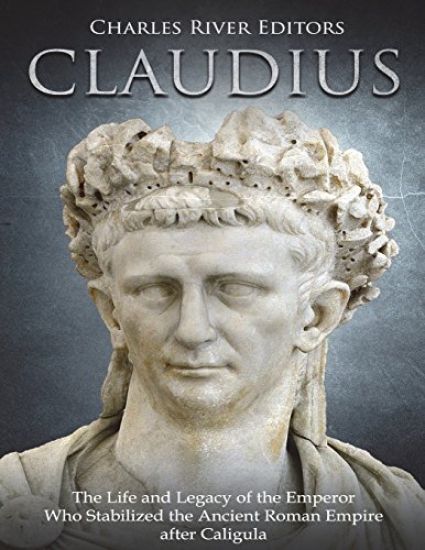
Claudius: The Life and Legacy of the Emperor Who Stabilized the Ancient Roman Empire after Caligula
*Includes pictures *Includes ancient accounts *Includes online resources and a bibliography for further reading Throughout the history of the Roman Empire, many rulers held the reins of ultimate power. Some of them, like Octavian, Trajan, Hadrian, Constantine, and Marcus Aurelius, are still celebrated and considered among antiquity's great statesmen, generals and thinkers. But the Roman Empire also had its fair share of notorious villains, from the sadistic Nero to the debauched Commodus. And yet, all of Rome's poor rulers pale in comparison to the record and legacy of Gaius Julius Caesar Augustus Germanicus, a young man remembered by posterity as Caligula. Given how bad some of Rome's emperors were, it's a testament to just how insane and reviled Caligula was that he is still remembered nearly 2,000 years later as the epitome of everything that could be wrong with a tyrant. The Romans had high hopes for him after he succeeded Tiberius in 37 CE, and by all accounts he was a noble and just ruler during his first few months in power. But after that, he suffered some sort of mysterious illness that apparently rendered him insane, and the list of Caligula's strange actions became quite lengthy in almost no time at all. Among other things, Caligula began appearing in public dressed as gods and goddesses, and his incest, sexual perversion, and thirst for blood were legendary at the time, difficult accomplishments considering Roman society was fairly accustomed to and tolerant of such things. Caligula has always fascinated people, and people have speculated for centuries whether the stories about his misdeeds are true, but what is clear is that the Romans had more than enough by 41 CE, when the Praetorian Guard turned on the young emperor and assassinated him. Caligula's reign was so traumatic to the Romans that they even considered restoring the Republic, but military officials ultimately installed Claudius, the only male left in the Julian family line, as emperor. Today, Claudius is particularly remembered for the conquest of Britain, as Roman power there had weakened since Julius Caesar had invaded nearly a century before. Beyond this, he established Roman colonies on the frontiers of the empire, annexed several territories in North Africa (including Thrace and Mauritania), and made Judea a province. Claudius's rule stands out in other aspects as well. He paid great attention to Rome's judicial system and religious policy, and the Empire's infrastructure was improved during his reign, with the construction of new roads and aqueducts, as well as a new harbor at Ostia. Efforts were also made to import grain as a reliable food source for Italy. Claudius also made significant changes to the government's administrative system, increasing the emperor's control and using freedmen as the heads of several divisions of administration, such as the treasury. Additionally, he realized the importance of the provinces and worked to incorporate them into the empire fully. What makes Claudius such a surprisingly effective emperor, aside from his strange route to power, was that he was considered physically and mentally incompetent for political life. At the same time, Claudius managed to take the throne against the will of the Senate thanks to the support of the Praetorian Guard, and despite his efforts to work with the Senate, the relationship would always be troublesome. Under Claudius, the Senate lost power, which is partially why some of the most important sources on Claudius's life and reign are openly hostile toward him. The Apocolocyntosis divi Claudii, written by Seneca (who had been exiled at the beginning of Claudius's reign), ridicules the emperor's physical difficulties and judicial decisions. Later writers, such as Tacitus, Cassius Dio, and Suetonius, echo what Seneca wrote, claiming that Claudius was controlled by his wives and the freedmen he'd made a part of his government.
Claudius: The Life and Legacy of the Emperor Who Stabilized the Ancient Roman Empire after Caligula
*Includes pictures *Includes ancient accounts *Includes online resources and a bibliography for further reading Throughout the history of the Roman Empire, many rulers held the reins of ultimate power. Some of them, like Octavian, Trajan, Hadrian, Constantine, and Marcus Aurelius, are still celebrated and considered among antiquity's great statesmen, generals and thinkers. But the Roman Empire also had its fair share of notorious villains, from the sadistic Nero to the debauched Commodus. And yet, all of Rome's poor rulers pale in comparison to the record and legacy of Gaius Julius Caesar Augustus Germanicus, a young man remembered by posterity as Caligula. Given how bad some of Rome's emperors were, it's a testament to just how insane and reviled Caligula was that he is still remembered nearly 2,000 years later as the epitome of everything that could be wrong with a tyrant. The Romans had high hopes for him after he succeeded Tiberius in 37 CE, and by all accounts he was a noble and just ruler during his first few months in power. But after that, he suffered some sort of mysterious illness that apparently rendered him insane, and the list of Caligula's strange actions became quite lengthy in almost no time at all. Among other things, Caligula began appearing in public dressed as gods and goddesses, and his incest, sexual perversion, and thirst for blood were legendary at the time, difficult accomplishments considering Roman society was fairly accustomed to and tolerant of such things. Caligula has always fascinated people, and people have speculated for centuries whether the stories about his misdeeds are true, but what is clear is that the Romans had more than enough by 41 CE, when the Praetorian Guard turned on the young emperor and assassinated him. Caligula's reign was so traumatic to the Romans that they even considered restoring the Republic, but military officials ultimately installed Claudius, the only male left in the Julian family line, as emperor. Today, Claudius is particularly remembered for the conquest of Britain, as Roman power there had weakened since Julius Caesar had invaded nearly a century before. Beyond this, he established Roman colonies on the frontiers of the empire, annexed several territories in North Africa (including Thrace and Mauritania), and made Judea a province. Claudius's rule stands out in other aspects as well. He paid great attention to Rome's judicial system and religious policy, and the Empire's infrastructure was improved during his reign, with the construction of new roads and aqueducts, as well as a new harbor at Ostia. Efforts were also made to import grain as a reliable food source for Italy. Claudius also made significant changes to the government's administrative system, increasing the emperor's control and using freedmen as the heads of several divisions of administration, such as the treasury. Additionally, he realized the importance of the provinces and worked to incorporate them into the empire fully. What makes Claudius such a surprisingly effective emperor, aside from his strange route to power, was that he was considered physically and mentally incompetent for political life. At the same time, Claudius managed to take the throne against the will of the Senate thanks to the support of the Praetorian Guard, and despite his efforts to work with the Senate, the relationship would always be troublesome. Under Claudius, the Senate lost power, which is partially why some of the most important sources on Claudius's life and reign are openly hostile toward him. The Apocolocyntosis divi Claudii, written by Seneca (who had been exiled at the beginning of Claudius's reign), ridicules the emperor's physical difficulties and judicial decisions. Later writers, such as Tacitus, Cassius Dio, and Suetonius, echo what Seneca wrote, claiming that Claudius was controlled by his wives and the freedmen he'd made a part of his government.
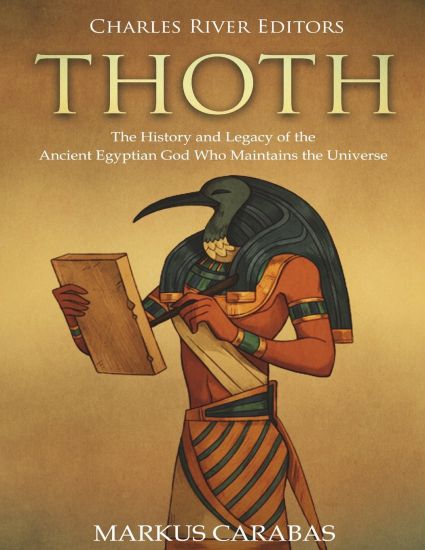
Thoth: The History and Legacy of the Ancient Egyptian God Who Maintains the Universe

Thoth: The History and Legacy of the Ancient Egyptian God Who Maintains the Universe

Charles River

Createspace Independent Publishing Platform
2018
nidottu
*Includes pictures *Includes ancient accounts *Includes online resources and a bibliography for further reading "Thus says Thoth, judge of truth, to the Great Ennead which is in the presence of Osiris: Hear this word of very truth. I have judged the heart of the deceased and his soul stands as a witness for him. His deeds are righteous in the great balance, and no sin has been found in him..." Africa may have given rise to the first human beings, and Egypt probably gave rise to the first great civilizations, which continue to fascinate modern societies across the globe nearly 5,000 years later. From the Library and Lighthouse of Alexandria to the Great Pyramid at Giza, the Ancient Egyptians produced several wonders of the world, revolutionized architecture and construction, created some of the world's first systems of mathematics and medicine, and established language and art that spread across the known world. With world-famous leaders like King Tut and Cleopatra, it's no wonder that today's world has so many Egyptologists. Perhaps the most intriguing aspect of ancient Egyptian civilization was its inception from the ground up, as the ancient Egyptians had no prior civilization which they could use as a template. In fact, ancient Egypt itself became a template for the civilizations that followed. The Greeks and the Romans were so impressed with Egyptian culture that they often attributed many attributes of their own culture - usually erroneously - to the Egyptians. To the ancient Egyptians, as was the case with any society made up of inquiring humans, the world was a confusing and often terrifying place of destruction, death and unexplained phenomena. In order to make sense of such an existence, they resorted to teleological stories. Giving a phenomenon a story made it less horrifying, and it also helped them make sense of the world around them. Unsurprisingly, then, the ancient Egyptian gods permeated every aspect of existence. Baboons held a prestigious place in Egyptian religion. They were kept as sacred animals in many temples because contemporary Egyptians considered them the original religious observers, particularly with respect to the sun god Re. Ancient Egyptians took the wild baboons stretching on their hind legs, forelegs raised to the sky, to be an oration to the sun god at dawn. Furthermore, these ancient ancestors of the land of Egypt were greeted at dawn by the concatenations of the baboons nattering, which the religious-minded took to be an early-morning devotion and even believed that the baboons spoke the original language of religion, and a claim they could understand baboons was often one asserted by certain members of the priestly class. However, it is his association with the ibis that most defines Thoth's visual imagery. Since the ancient Egyptians believed that the universe arose from the swamp-like waters of Nun, it was the water bird that garnered the most prestigious veneration. Birds like geese, herons and the ibises were associated with this period of creation, and, according to some beliefs, the world came about thanks to the great "honk" of a primordial goose, whose eggshell was said to be preserved in the temple of Thoth. It was believed that Re created Thoth's baboon form to be that of his "shining moon," but his ibis form was that of a messenger between heaven and earth (although he was much more than this). Thoth: The History and Legacy of the Ancient Egyptian God Who Maintains the Universe looks at the mythology surrounding one of antiquity's most famous deities. Along with pictures depicting important people, places, and events, you will learn about Thoth like never before.
The Julio-Claudian Dynasty: The History and Legacy of the First Family to Rule the Ancient Roman Empire
*Includes pictures *Includes ancient accounts *Includes online resources and a bibliography for further reading The importance of Gaius Julius Caesar Augustus (or as he was known from birth, Gaius Octavius "Octavian" Thurinus) to the course of Western history is hard to overstate. His life, his rise to power, his political, and his social and military achievements all laid the foundations for the creation of an empire which would endure for almost five centuries, and whose traditions, laws, architecture and art continue to influence much of Europe and the world today. Octavian was the first true Roman Emperor, and the first man since the Etruscan Tarquins five centuries earlier to establish a successful hereditary ruling dynasty in what had been a proud Republic for over half a millennium. He was a canny strategist, an excellent orator, a fine writer, a generous patron of the arts and enthusiastic promoter of public works, but above all he was a master politician. Octavian's great-uncle (and adoptive father) Julius Caesar was a great general, and his rival Mark Antony was a great soldier, but as a politician Octavian outmatched them all. One of the most overlooked emperors was also one of the first, and he lived in chaotic times. Tiberius was born in 42 BCE, just as the Roman Republic was dissolving and a new Roman imperial power structure emerged under Octavian, who became Rome's first emperor as Caesar Augustus. Tiberius's life soon became caught up with Augustus's as the emperor worked to found and establish a dynasty, but it is unclear if Tiberius ever really wanted to be part of Augustus's plans or inherit imperial power - Tiberius was known as a man who schemed and planned, but he was also a scholar and showed a marked desire throughout his life to retreat and escape the demands of power. Partially due to this continual tension, Tiberius's life is enigmatic in many ways. All of Rome's poor rulers pale in comparison to Gaius Julius Caesar Augustus Germanicus, a young man remembered by posterity as Caligula. Given how bad some of Rome's emperors were, it's a testament to just how insane and reviled Caligula was that he is still remembered nearly 2,000 years later as the epitome of everything that could be wrong with a tyrant. The Romans had high hopes for him after he succeeded Tiberius in 37 CE, and by all accounts he was a noble and just ruler during his first few months in power. But after that, he suffered some sort of mysterious illness that apparently rendered him insane, and the list of Caligula's strange actions became quite lengthy in almost no time at all. Among other things, Caligula began appearing in public dressed as gods and goddesses, and his incest, sexual perversion, and thirst for blood were legendary at the time, difficult accomplishments considering Roman society was fairly accustomed to and tolerant of such things. Today, Claudius is particularly remembered for the conquest of Britain, as Roman power there had weakened since Julius Caesar had invaded nearly a century before. Beyond this, he established Roman colonies on the frontiers of the empire, annexed several territories in North Africa (including Thrace and Mauritania), and made Judea a province. Claudius's successor, Nero, ranks among the very worst of the Caesars, alongside the likes of mad Caligula, slothful Commodus, and paranoid Domitian, a figure so hated that, in many ancient Christian traditions, he is literally, without hyperbole, considered the Antichrist; according to a notable Biblical scholar, the coming of the Beast and the number 666 in the Book of Revelation are references to Nero. He was the man who, famously, "fiddled while Rome burned", an inveterate lecher, a murderous tyrant who showed little compunction in murdering his mother and who liked to use Christian martyrs as a source of illumination at night - by burning them alive.