Kirjojen hintavertailu – 12 903 725 kirjaa ja 27 kauppaa

Kirjailija

Charles River

Kirjat ja teokset yhdessä paikassa: 4 673 kirjaa, julkaisuja vuosilta 2013–2022, suosituimpiin kuuluu William Powell and Myrna Loy: The Lives and Careers of One of Classical Hollywood's Most Iconic Duos. Vertaile teosten hintoja ja tarkista saatavuus suomalaisista kirjakaupoista.

4 673 kirjaa

Kirjojen julkaisuvuodet: 2013–2022.

Ancient Gaul: The History and Legacy of the Gauls and the Region in Antiquity

Ancient Gaul: The History and Legacy of the Gauls and the Region in Antiquity

Charles River

Createspace Independent Publishing Platform
2018
nidottu
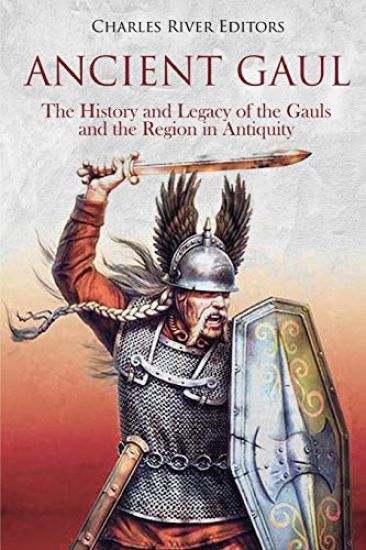
*Includes pictures *Includes ancient accounts *Includes online resources and a bibliography for further reading "Caesar, having stationed his army on both sides of the fortifications, in order that, if occasion should arise, each should hold and know his own post, orders the cavalry to issue forth from the camp and commence action. There was a commanding view from the entire camp, which occupied a ridge of hills; and the minds of all the soldiers anxiously awaited the issue of the battle. The Gauls had scattered archers and light-armed infantry here and there, among their cavalry, to give relief to their retreating troops, and sustain the impetuosity of our cavalry." - Julius Caesar, De Bello Gallico The Roman Republic's development from a city state into a world power that controlled large swathes of modern Italy, Gaul and Spain, as well as other parts of Europe is seen by many as being the direct result of Roman fear of the "Celtic Threat." The sacking of Rome by the Gauls in 386 BCE became indelibly imprinted into the Roman psyche, and with this fear came a desire to put as much distance as possible between the city of Rome and any potential enemy. The result was the gradual acquisition of buffer zones that became provinces of an empire that grew without any particular thought out or deliberate strategy of expansion. The Gallic Wars, the series of campaigns waged by Julius Caesar on behalf of the Roman Senate between 58-50 BCE, were among the defining conflicts of the Roman era. Not only was the expansion of the Republic's domains unprecedented (especially when considering it was undertaken under the auspices of a single general), it had a profound cultural impact on Rome itself as well. The Roman Republic, so dynamic in the wake of the destruction of their ancient enemy, Carthage, had recently suffered a series of dramatic upheavals; from the great slave rebellion of Spartacus to the brutal and bloody struggle for power of Marius and Sulla. Rome had been shaken to its very core, and a victory was essential both to replenish the dwindling national coffers and to instill in the people a sense of civic pride and a certainty in the supremacy of the Republic. Quite simply, in terms of scale, the Gallic Wars were unmatched by anything the Roman Republic had witnessed since the Punic Wars. By the end of the campaigns, ancient historians estimated that more than a million people had died, and still more were displaced or enslaved. Even by the more conservative estimates of modern historians, a casualty count in the hundreds of thousands appears possible. Either way, the war was a cataclysm, involving tens of thousands of combatants, and it also marked the greatest displays of skill by one of the greatest battlefield generals history has ever known. Caesar's successful campaigns in Gaul have become the stuff of military legend on their merits, but it helped that he had the foresight to document them himself. Caesar himself wrote a famous firsthand account of the Gallic Wars, apparently from notes he had kept during the campaigns, and he wrote Commentarii de Bello Gallico (Commentaries on the Gallic War) in the third person. Caesar's account described the campaigning and the battles, all as part of a propaganda campaign to win the approval of the Roman people. As a result, he left out inconvenient facts, including how much of a fortune he made plundering, but the work still remains popular today, and it is still used to teach Latin. Ancient Gaul: The History and Legacy of the Gauls and the Region in Antiquity looks at the most famous events involving Gaul and the ancient world, from the Gauls' sack of Rome to Caesar's famous conquest. Along with pictures depicting important people, places, and events, you will learn about Gaul like never before.

The Sino-Japanese Wars: The History and Legacy of the Early 20th Century Conflicts that Made Japan the Dominant Power in Asia
*Includes pictures*Includes contemporary accounts*Includes online resources and a bibliography for further readingFor decades Korea existed as a protectorate of China, paying homage to the mighty Chinese dynasties while minding its own business as best it could. However, sensing weakness in the former regional power after being defeated by the Europeans during the Second Opium War, escalating tensions over Korea between the old power of China and the new power of Japan led to the First Sino-Japanese War. In its first modern war, the modernized Japanese empire went to war against the dominant power in the region, and though interested Western powers favored China, Japan won the day, claiming Korea as their conquest and permanently upsetting the balance of power in the region. The conflict paved the way for the future Empire of Japan and the collapse of the Qing Dynasty. Though both nations modernized, and China far outweighed Japan in terms of men and materiel potential, the island nation handily won its first modern war. The conflict resulted in Japan's short-term gains in the wake of victory, and the long term disaster for both sides' new roles in Asia, for with the end of Chinese dominance in East Asia came a new era for the region as a whole, an era whose consequences and horrors would not be fully realized for several more decades. Japan's invasion of Manchuria in 1931 resulted from a long, complex chain of historical events stretching back to the late 19th century. Approximately 380,000 square miles in extent, or 1.4 times the size of the American state of Texas, Manchuria came into Imperial Russia's possession in 1900 due to the "Boxer Rebellion" in China, but the Russians held it only briefly; their defeat in the Russo-Japanese War shook loose their control from important parts of Manchuria by the end of 1905. Naturally, the Chinese also wanted their portion of the tempting Manchurian feast. Unable to go head to head with the organized, thoroughly militaristic Japanese, they sent some 6 million emigrant laborers and settlers into the area as a sort of "demographic occupation." Nominally Chinese but subject to massive Japanese investment and military infiltration, filled with bandits and rival chieftains, Manchuria hovered on the brink of another conflict in the 1920s. The Kwantung Army deliberately shoved it over that brink in 1931, and the Japanese invasion and occupation of Manchuria is sometimes described as the true beginning of World War II. At the very least, it marked the expansion of Japan's imperial empire, its ongoing friction with China, and what would turn into a Chinese resistance campaign that would last nearly 15 years until the end of World War II. Given its importance, the invasion of Manchuria continues to be remembered as one of the seminal events of the 20th century. In 1937, the Empire of Japan once more went to war with China, a nation broken into petty warlord fiefdoms and wracked by civil war. The most modern Asian nation enacted a brutal campaign over the fragmented realms that made up China, committing atrocities just as horrendous as their Axis ally in Europe. Despite this, the sheer size of China, coupled with Japan's overextension, allowed the larger, less developed nation to endure. At the same time, China was experiencing an equally brutal civil war between Nationalist and Communist forces. This civil war became inextricably intertwined with the Second Sino-Japanese War and World War II, and the sheer scale of the horrors of the conflict remain hard to believe today, even as action in that theater is often overlooked because of events in Europe. The Sino-Japanese Wars: The History and Legacy of the Early 20th Century Conflicts that Made Japan the Dominant Power in Asia examines what brought about the wars, the most notorious events, and the important aftermath. Along with pictures, you will learn about the wars like never before.
The Colonization and Establishment of Liberia: The History of the West African Nation Before the Liberian Civil Wars
*Includes pictures *Includes contemporary accounts *Includes online resources and a bibliography for further reading In the spring of 1786, an organization was founded in London to provide some aid for destitute blacks and Asians in the British capital who were by then beginning to become conspicuous. Quite a number of them were resettled blacks from the American colonies who aided British forces in the Revolutionary War and found themselves thereafter no longer welcome in the United States. Others were captives, slaves for one reason or another released on the high seas, and other stevedores and sailors washed up on the shore of England. It was generally believed that the figure was some 15,000, and with limited employment prospects and no community support, most were in very difficult circumstances indeed. The motivations for this were complicated and varied, and in part they could be explained by an interest in creating circumstances advantageous to blacks, but also to give them an opportunity to form and run a colony effectively in order to debunk a widely held belief that no black man could do such a thing. There was also some value in redistributing freed blacks from the various plantation colonies of the empire, not to mention the political expedience of protecting the British Isles themselves from an expanding population of non-whites generated as a consequence of imperial activities. The idea of locating this ideal colony in the vicinity of modern Sierra Leone came about thanks to the representations of a plant collector by the name of Henry Smeathman, who had recently returned from the West African region and believed that the Pepper Coast (also referred to as Grain Coast) offered the most viable prospects. At the time, British and European trade in West Africa was vibrant and wide-ranging, including the slave trade, and there was a steady movement of merchant and Royal Navy ships between West Africa and the British mainland. His reasons for advocating that spot are rather vague, although it probably was at the time one of the least deadly stretches of an otherwise fever-ridden coastline. There was a lot of sentimentality and idealism behind the development of the idea, as well as a certain amount of pragmatism, but the upshot of it was that in 1787, a shipment of 4,000 blacks arrived in several ships offshore of what would today be Freetown. They were essentially dropped off, wished the best of luck, and otherwise abandoned. Conditions, of course, were primitive, and the mortality rate among these early pioneers was atrocious. One of the first problems they faced was hostility from local tribes, and almost from the moment they landed, they found themselves in a state of war. Nonetheless, they managed to establish a bridgehead, and in due course a colony took root. Numbers were augmented occasionally by independent arrivals, and the steady deposit of captives collected in one way or another by the Royal Navy Atlantic Squadron. The Colonization and Establishment of Liberia: The History of the West African Nation Before the Liberian Civil Wars looks at how the colony grew, the ideals behind it, what life was like there, and how a tenuous democracy lasted in the colony for over 100 years. Along with pictures, you will learn about the settlement of Liberia like never before.
The Apocrypha of the Bible: The History of the Ancient Apocryphal Texts Left Out of the Old Testament and New Testament
*Includes pictures *Includes excerpts *Includes online resources and a bibliography for further reading The study of the apocryphal gospels, documents about the life or sayings of Jesus that did not become part of the New Testament, is a popular discipline among scholars that now fills several shelves of any respectable library. Despite the growing secularization of society, there seems to be an appetite for the historical figure of Jesus. However, fewer readers consider the question of whether the Old Testament, also known as the Hebrew Bible, is "complete," and whether in antiquity there were other books besides Genesis, the Exodus or Judges, with different histories and unknown characters, that were excluded from the canon and got lost in the sands of time. Most readers assume that the great saga of Israel, beginning with the pastoral stories of the patriarchs, the epic of the Exodus, and the conquest of the Promised Land, until the court of King David, is a compact, complete and unique story. In its current form, it seems to start from the beginning, and as such it was accepted by all in antiquity, but did someone in ancient Israel write other renditions? Recent archaeological and textual discoveries have revealed that literary production among the people of Israel before the life of Jesus was much more extensive and varied than previously supposed. The earliest Christian and Jewish exegetes were aware of some texts whose status was imprecise. Did the books of Tobit, Maccabees and Judith belong to Israel's sacred scriptures or not? What happened to certain books that are mentioned in the Bible but have not been found, such as stories about the court of King David, the Annals of Solomon, a Book of Jasher, and prominently the Book of Wars of the Lord? Between 50 and 90 CE, the various writings that comprise the New Testament were written, including the Four Gospels, the Acts of the Apostles, the Epistles of Paul, and other letters to more general communities of the early Church. But what is recognized as the 26 books of the New Testament today, in literally hundreds of English translations, actually took several more centuries to be determined as "canonical" by the Church. In fact, it was not until a synod in Rome in 382 that the Church in the West formally adopted a list of the canonical books of the New Testament. Even today, not every branch of the Christian church agrees on which writings should be regarded as "canonical" and which are "apocryphal", even though some apocryphal texts often have noticeable links with books regarded as "canonical". Regardless, the New Testament Apocrypha refers to texts written by early Christians that were not included in the Bible used by the main branches of Christianity today. These texts vary in subject matter, with some being accounts of Jesus, others being about the nature of God, and still others being accounts and teachings of Jesus' apostles. What makes them fascinating is not just the history behind why they are considered non-canonical, but what they tell us about the early Church and early Christianity. Moreover, they offer insight into what sources were used to write them, and whether they shared the same sources as the texts that comprise the Bible today. Given their historical and religious importance, there is still a fierce debate over the authenticity of many of these texts. The Apocrypha of the Bible: The History of the Ancient Apocryphal Texts Left Out of the Old Testament and New Testament looks at the history of the books excluded from the Bible, the characters and events told by the books, and the discoveries that have influenced Biblical studies in the last few centuries. Along with pictures of important people, places, and events, you will learn about the apocrypha of the Bible like never before.
The Apocrypha of the Bible: The History of the Ancient Apocryphal Texts Left Out of the Old Testament and New Testament
*Includes pictures *Includes excerpts *Includes online resources and a bibliography for further reading The study of the apocryphal gospels, documents about the life or sayings of Jesus that did not become part of the New Testament, is a popular discipline among scholars that now fills several shelves of any respectable library. Despite the growing secularization of society, there seems to be an appetite for the historical figure of Jesus. However, fewer readers consider the question of whether the Old Testament, also known as the Hebrew Bible, is "complete," and whether in antiquity there were other books besides Genesis, the Exodus or Judges, with different histories and unknown characters, that were excluded from the canon and got lost in the sands of time. Most readers assume that the great saga of Israel, beginning with the pastoral stories of the patriarchs, the epic of the Exodus, and the conquest of the Promised Land, until the court of King David, is a compact, complete and unique story. In its current form, it seems to start from the beginning, and as such it was accepted by all in antiquity, but did someone in ancient Israel write other renditions? Recent archaeological and textual discoveries have revealed that literary production among the people of Israel before the life of Jesus was much more extensive and varied than previously supposed. The earliest Christian and Jewish exegetes were aware of some texts whose status was imprecise. Did the books of Tobit, Maccabees and Judith belong to Israel's sacred scriptures or not? What happened to certain books that are mentioned in the Bible but have not been found, such as stories about the court of King David, the Annals of Solomon, a Book of Jasher, and prominently the Book of Wars of the Lord? Between 50 and 90 CE, the various writings that comprise the New Testament were written, including the Four Gospels, the Acts of the Apostles, the Epistles of Paul, and other letters to more general communities of the early Church. But what is recognized as the 26 books of the New Testament today, in literally hundreds of English translations, actually took several more centuries to be determined as "canonical" by the Church. In fact, it was not until a synod in Rome in 382 that the Church in the West formally adopted a list of the canonical books of the New Testament. Even today, not every branch of the Christian church agrees on which writings should be regarded as "canonical" and which are "apocryphal", even though some apocryphal texts often have noticeable links with books regarded as "canonical". Regardless, the New Testament Apocrypha refers to texts written by early Christians that were not included in the Bible used by the main branches of Christianity today. These texts vary in subject matter, with some being accounts of Jesus, others being about the nature of God, and still others being accounts and teachings of Jesus' apostles. What makes them fascinating is not just the history behind why they are considered non-canonical, but what they tell us about the early Church and early Christianity. Moreover, they offer insight into what sources were used to write them, and whether they shared the same sources as the texts that comprise the Bible today. Given their historical and religious importance, there is still a fierce debate over the authenticity of many of these texts. The Apocrypha of the Bible: The History of the Ancient Apocryphal Texts Left Out of the Old Testament and New Testament looks at the history of the books excluded from the Bible, the characters and events told by the books, and the discoveries that have influenced Biblical studies in the last few centuries. Along with pictures of important people, places, and events, you will learn about the apocrypha of the Bible like never before.
Mount Athos and Meteora: The History of the Greek Landmarks that Became Orthodox Christian Monasteries
*Includes pictures *Includes contemporary accounts *Includes online resources and a bibliography for further reading "Clear water where evergreens, azaleas cool ceremoniously...a kele lost among cedars, its roof open to eagles, door unhinged...silver leaves like a congregation of spiders..." When one hears these enchanting descriptions, from poet David Posner's 1964 composition "Mount Athos," it is not difficult to understand why this sleepy paradise is often extolled as the most peaceful and private corner of Greece, if not all of Europe. Mount Athos is the easternmost finger of the Halkidiki peninsula - a mountainous sliver of land that stretches about 37.3 miles long and 4.3-7.5 miles wide, with a surface area of about 150 square miles. Towering over the tightly-packed chestnut forests and the blue, crystalline waters of the Aegean Sea at a height of 6,670 feet is the snow-dusted crest of the mighty mountain itself. Known to the locals as Agion Oros, or the "Holy Mountain," the peninsula today is most famed for its exclusivity, a place that continues to bar all women and their daughters from entry. The fortress-like monasteries scattered amongst the slopes and the clusters of cells clinging to the cliffs are occupied by monks of the Eastern Orthodox Church. Of course, its male-only population is just one aspect of the peninsula's anomalous nature. Planted on the peninsula's coast is a black Byzantine Cross, a flat, cross-shaped monument with a trinity of flared, wide-armed, Greek crosses in place of its arms and a traditional Christian cross in its center, kissed with rust. It serves as an emblem of the monastic society that resides there, and it delineates the boundary between Mount Athos and the rest of Greece. Entering this hallowed peninsula is like setting foot into a living time capsule, because life here has not changed in well over 1,000 years. Mount Athos is one of only two places on earth (the other being the Mar Saba) that chooses to run on "Byzantine time," meaning Hour 0:00:00 only begins at sundown. Moreover, it is the only territory in the world that flies the Byzantine flag, a regal, sword and cross clutching double-headed eagle set against a rippling canvas of gold. Close to 1,850 miles to the west of Babylon, a group of mere mortals set out on a daring, but seemingly fragile quest to build their homes in a place that - at the very least - symbolically neighbored the Kingdom of God. Evidently, these mortals had earned the Lord's blessings, for there, a smattering of their descendants remain to this day. Contrary to the builders of Babel, these God-fearing venturers constructed these dwellings with the purpose of wholly devoting their lives to the Lord. More admirable yet, these dwellings were not lofty towers that took dozens of years to assemble, nor were they built atop solid ground; instead, they ranged from small huts to compact complexes perilously perched atop and embedded into the nooks and fissures of stone mountains. This forest of jagged stone pillar, which looms over gorgeous valleys and a lush, densely forested stretch of land, is none other than Meteora, situated in the quaint town of Kalabaka in the northwestern part of Thessaly, Greece. Mount Athos and Meteora: The History of the Greek Landmarks that Became Orthodox Christian Monasteries looks at the unique regions and what life has been like there since ancient times. Along with pictures depicting important people, places, and events, you will learn about Meteora and Mount Athos like never before.
The Gurkhas: The History and Legacy of the Nepalese Soldiers Used by the British Empire in India
*Includes pictures *Includes contemporary accounts *Includes online resources and a bibliography for further reading "If a man says he is not afraid of dying, he is either lying or is a Gurkha." - Field Marshal Sam Manekshaw The Gurkha Regiment is without question one of the most storied regiments of the British Army. Somewhat like the French Foreign Legion, however, it has traditionally been a regiment of adventurers and soldiers of fortune, with the simple difference that the Gurkhas represent only a minor ethnicity of the wider Nepalese population, distinguished by a long and august martial tradition. Traditionally, the officer corps of the various Gurkha regiments have been drawn from the regular ranks of the British Army, with fluency in Nepali a basic requirement. The rank and file, however, and more recently many officers, are drawn from the population of the Nepalese hill country. To the Gurkha, Nepal means not the 56,000 square mile territory known as Nepal today, but the Kathmandu Valley, or the Valley of Nepal, drained by the tributaries of the Bagmati River and surrounded by the Himalayan foothills that most Gurkhas call home. Today Nepal is an independent republic sandwiched between India and China, and occupying the southern lee of the Himalayas. The nation is 520 miles long and about 100 miles wide, and it is the rugged and rarefied nature of the landscape that has shaped the physiques and mindsets of the people within. Ethnic Nepalese are typically short and sturdy with voluminous lungs and strong, muscular frames. Human portage has for millennia been the only means of transport in mountains and foothills surrounding the valley, and even today there are probably little more than 200 miles of blacktop roads in the country. The main thoroughfares are the foot trails that interconnect the mountain communities scattered across the region. The word Gurkha can mean many things to many people, and this is largely because not every Nepali is a Gurkha, and certainly the Gurkhas are not confined strictly to Nepal. The most accurate definition of a Gurkha would probably be a member of a loosely confederated group of clans owing fealty to the Gurkha military tradition, and belonging to the old state of Gorkha, which now forms just a small region of modern Nepal. Their religion is predominately Hindu, and their dialects vary considerably around the regional lingua franca of Nepali. There are nine main tribes of Gurkhas, and these are Thakurs, Chhetri, Magars, Gurungs, Tamangs, Limbus, Rais, Sanvars and Newars. The single commonality of all of these, with the possible exception of the Newars, is an ancient claim to the bearing of arms, and the signature weapon, the "Khukuri," which is ubiquitous among all Gurkhas and is the basic weapon of any member of the Brigade of Gurkhas. The Gurkhas: The History and Legacy of the Nepalese Soldiers Used by the British Empire in India examines these famous soldiers and their contributions over the centuries. Along with pictures of important people, places, and events, you will learn about the Gurkhas like never before.
The Gurkhas: The History and Legacy of the Nepalese Soldiers Used by the British Empire in India
*Includes pictures *Includes contemporary accounts *Includes online resources and a bibliography for further reading "If a man says he is not afraid of dying, he is either lying or is a Gurkha." - Field Marshal Sam Manekshaw The Gurkha Regiment is without question one of the most storied regiments of the British Army. Somewhat like the French Foreign Legion, however, it has traditionally been a regiment of adventurers and soldiers of fortune, with the simple difference that the Gurkhas represent only a minor ethnicity of the wider Nepalese population, distinguished by a long and august martial tradition. Traditionally, the officer corps of the various Gurkha regiments have been drawn from the regular ranks of the British Army, with fluency in Nepali a basic requirement. The rank and file, however, and more recently many officers, are drawn from the population of the Nepalese hill country. To the Gurkha, Nepal means not the 56,000 square mile territory known as Nepal today, but the Kathmandu Valley, or the Valley of Nepal, drained by the tributaries of the Bagmati River and surrounded by the Himalayan foothills that most Gurkhas call home. Today Nepal is an independent republic sandwiched between India and China, and occupying the southern lee of the Himalayas. The nation is 520 miles long and about 100 miles wide, and it is the rugged and rarefied nature of the landscape that has shaped the physiques and mindsets of the people within. Ethnic Nepalese are typically short and sturdy with voluminous lungs and strong, muscular frames. Human portage has for millennia been the only means of transport in mountains and foothills surrounding the valley, and even today there are probably little more than 200 miles of blacktop roads in the country. The main thoroughfares are the foot trails that interconnect the mountain communities scattered across the region. The word Gurkha can mean many things to many people, and this is largely because not every Nepali is a Gurkha, and certainly the Gurkhas are not confined strictly to Nepal. The most accurate definition of a Gurkha would probably be a member of a loosely confederated group of clans owing fealty to the Gurkha military tradition, and belonging to the old state of Gorkha, which now forms just a small region of modern Nepal. Their religion is predominately Hindu, and their dialects vary considerably around the regional lingua franca of Nepali. There are nine main tribes of Gurkhas, and these are Thakurs, Chhetri, Magars, Gurungs, Tamangs, Limbus, Rais, Sanvars and Newars. The single commonality of all of these, with the possible exception of the Newars, is an ancient claim to the bearing of arms, and the signature weapon, the "Khukuri," which is ubiquitous among all Gurkhas and is the basic weapon of any member of the Brigade of Gurkhas. The Gurkhas: The History and Legacy of the Nepalese Soldiers Used by the British Empire in India examines these famous soldiers and their contributions over the centuries. Along with pictures of important people, places, and events, you will learn about the Gurkhas like never before.
Eugene V. Debs: The Life and Legacy of America's Most Famous Socialist Political Leader
*Includes pictures *Includes contemporary accounts *Includes online resources and a bibliography for further reading "When great changes occur in history, when great principles are involved, as a rule the majority are wrong." - Eugene V. Debs History is full of tales of men who were in the right place at the right time and thereby rose to greatness, but rarely is the story told of a man who was in the right place at the wrong time. The life of Eugene V. Debs is such a tale. Debs was born in Middle America just before the outbreak of the Civil War, and had he been born a century later, or in a large city on one of the coasts, his story might have been much different. As he grew, he had the restlessness that often indicates greatness, but he lacked the crisis that might have allowed him to hone and use his leadership skills. He saw the needs of those less fortunate around him, and at first, like so many others, he thought that he could work within the system to correct them. However, when he ultimately concluded that he could best serve others through firebrand speeches and increasingly controversial actions, he was unable to convince enough people to follow him to make the massive changes he desired. Instead, he found himself thwarted time and again by those with more power and more established views. Of course, this is not to discount the profound impact Debs had on the country; after all, he was one of the most famous men in America during the late 19th and early 20th century. Indeed, he was able to give to the nation a new understanding of the values and power of industrial workers, helping organize them into some of the first industrial unions in the country. He also taught the men themselves to think as a unit, and to act with a united front that allowed them to make their voices heard and to earn for themselves and their families a living wage and benefits commiserate with their work's value. As one early 20th century socialist put it, "Something was in Debs, seemingly, that did not come out unless you saw him. I'm told that even those speeches of his which seem to any reader indifferent stuff, took on vitality from his presence. A hard-bitten socialist told me once, "Gene Debs is the only one who can get away with the sentimental flummery that's been tied onto Socialism in this country. Pretty nearly always it gives me a swift pain to go around to meetings and have people call me 'comrade.' That's a lot of bunk. But the funny part of it is that when Debs says 'comrade' it is all right. He means it. That old man with the burning eyes actually believes that there can be such a thing as the brotherhood of man. And that's not the funniest part of it. As long as he's around I believe it myself." In the course of his work, Debs also changed the political scene in America. He established the Socialist Party, and when he ran for president in 1912, he attracted a noticeable percentage of the popular vote. No Socialist politician has been as successful on the national level before or since. However, even as he garnered popularity, the times in which he lived hampered his work, for the outbreak of World War I, along with the Bolshevik Revolution in Russia, brought socialism under suspicion. Most controversially, Debs was arrested and imprisoned during World War I on charges of sedition, and while that episode has justly marred President Woodrow Wilson's legacy, prison damaged Debs' health even as his spirit strove on for one last victory. In many ways, his end seems tragic, but for those who benefited through the years from his practical work for organized labor and his theoretical work for socialism, his death marked neither a tragedy nor an end, just a new type of beginning. Eugene V. Debs: The Life and Legacy of America's Most Famous Socialist Political Leader chronicles the life and work that made him one of America's most influential men.
The Second Battle of Ypres: The History of the Notorious World War I Battle that Witnessed the First Mass Use of Poison Gas
*Includes pictures *Includes accounts *Includes online resources and a bibliography for further reading *Includes a table of contents World War I, also known in its time as the "Great War" or the "War to End all Wars", was an unprecedented holocaust in terms of its sheer scale. Fought by men who hailed from all corners of the globe, it saw millions of soldiers do battle in brutal assaults of attrition which dragged on for months with little to no respite. Tens of millions of artillery shells and untold hundreds of millions of rifle and machine gun bullets were fired in a conflict that demonstrated man's capacity to kill each other on a heretofore unprecedented scale, and as always, such a war brought about technological innovation at a rate that made the boom of the Industrial Revolution seem stagnant. The arms race before the war and the attempt to break the deadlock of the Western and Eastern Fronts by any means possible changed the face of battle in ways that would have previously been deemed unthinkable. Before 1914, flying machines were objects of public curiosity; the first flights of any account on rotor aircraft had been made less than 5 years before and were considered to be the province of daredevils and lunatics. By 1918, all the great powers were fielding squadrons of fighting aircraft armed with machine guns and bombs, to say nothing of light reconnaissance planes. Tanks, a common feature on the battlefield by 1918, had not previously existed outside of the realm of science fiction stories written by authors like H. G. Wells. Machine guns had gone from being heavy, cumbersome pieces with elaborate water-cooling systems to single-man-portable, magazine-fed affairs like the Chauchat, the Lewis Gun and the M1918 BAR. To these grim innovations were added flamethrowers, hand grenades, zeppelins, observation balloons, poison gas, and other improvements or inventions that revolutionized the face of warfare. With the exception of a few hours on Christmas Day 1914, the shelling, sniping, raids, and bloodshed at Ypres in Belgium never ceased from the moment of first contact between the British Expeditionary Force (BEF) and the Imperial German army. The Ypres salient had formed the previous year during the "race to the sea," when the opposing armies tried and failed to outflank each other in a series of maneuvers and counter-maneuvers. Still pleasant at the time of the First Battle of Ypres, the ground of the Ypres salient had deteriorated markedly by spring of 1915. At this point, the Germans had not yet leveled Ypres itself, though they had reduced the famous church and medieval Cloth Hall to rubble with long-range shelling. The Germans held the low ridges to the east, which surrounded the low ground held by the British in a bowl-like semicircle, with their "headquarters town" at Passchendaele. The Second Battle of Ypres resulted from the German decision to use poison gas against the Allied lines in an effort to produce a breakthrough. The French attempted the use of non-lethal tear gas first, in August 1914, after which the Germans did the same. Both attempts produced no results, and the Second Battle of Ypres would end inconclusively, but the gas attack opening this battle represented the first large-scale use of lethal chemicals in the war. The Second Battle of Ypres: The History of the Notorious World War I Battle that Witnessed the First Mass Use of Poison Gas analyzes one of the Great War's most important conflicts, and how it was emblematic of the stalemate that came from new technology and trench warfare. Along with pictures of important people, places, and events, you will learn about the Second Battle of Ypres like never before.
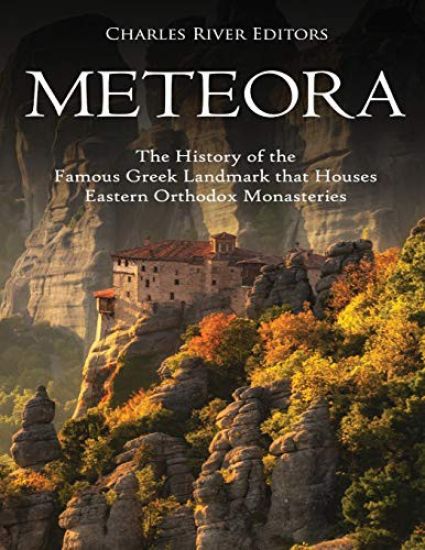
Meteora: The History of the Famous Greek Landmark that Houses Eastern Orthodox Monasteries
*Includes pictures *Includes contemporary accounts *Includes online resources and a bibliography for further reading The Tower of Babel is arguably among the most well-known allegories of the Old Testament. As told by the Book of Genesis, the story revolves around a post-flood batch of Noah's descendants who dwelled in Babylon's Mesopotami, a city erected by King Nimrod. The population multiplied rapidly over the years, and the city's inhabitants fostered the growth of their culture and enhancing the infrastructure of their territories, made easier by the existence of only one common language. Naturally, the pride of the Mesopotamian residents burgeoned, but their contentment, poisoned by their greed and ambition, began to decline. The only way to prevail over this slump, believed a particularly enterprising group of individuals, was to construct a colossal ziggurat (a "rectangular, stepped tower") that would ascend past the clouds and into the heavens. With this tower, they intended to "make a name for" mankind and the untouchable abilities of mere mortals, thereby severing their relationship with God their Creator for good. According to the Bible, God was far from impressed, and to add insult to injury, the architects behind this attempt deliberately opted for man-made materials, such as brick and tar, rather than stone, timber, and other natural building blocks gifted to them by God. The overblown pomposity and conceit of His subjects had to be ceased at once, lest they stray further away from Him. Thus, as the people slept, God reached down and scooped up handfuls of the slumbering Mesopotamians and strewed them across the continents, creating 70 different nations and tribes. When they awoke, the bewildered residents of the newly birthed nations were speaking in different tongues. With the architects scattered around the globe and now unable to understand one another, construction of the partially built ziggurat came screeching to a halt. It was later dubbed the "Tower of Babel," or the "Tower of Confusion." This miserable monument, which served as a haunting reminder of man's subservience to God, was continuously marred by fire and battered by the elements over the years until it eventually crumbled back into the earth. Close to 1,850 miles to the west of Babylon, roughly 3,000 years later, yet another group of mere mortals set out on a daring, but seemingly fragile quest to build their homes in a place that - at the very least - symbolically neighbored the Kingdom of God. Evidently, these mortals had earned the Lord's blessings, for there, a smattering of their descendants remain to this day. Contrary to the builders of Babel, these God-fearing venturers constructed these dwellings with the purpose of wholly devoting their lives to the Lord. More admirable yet, these dwellings were not lofty towers that took dozens of years to assemble, nor were they built atop solid ground; instead, they ranged from small huts to compact complexes perilously perched atop and embedded into the nooks and fissures of stone mountains. This forest of jagged stone pillar, which looms over gorgeous valleys and a lush, densely forested stretch of land, is none other than Meteora, situated in the quaint town of Kalabaka in the northwestern part of Thessaly, Greece. Meteora: The History of the Famous Greek Landmark that Houses Eastern Orthodox Monasteries looks at the unique place and what life has been like there since the monasteries were built there. Along with pictures depicting important people, places, and events, you will learn about Meteora like never before.
Meteora: The History of the Famous Greek Landmark that Houses Eastern Orthodox Monasteries
*Includes pictures *Includes contemporary accounts *Includes online resources and a bibliography for further reading The Tower of Babel is arguably among the most well-known allegories of the Old Testament. As told by the Book of Genesis, the story revolves around a post-flood batch of Noah's descendants who dwelled in Babylon's Mesopotami, a city erected by King Nimrod. The population multiplied rapidly over the years, and the city's inhabitants fostered the growth of their culture and enhancing the infrastructure of their territories, made easier by the existence of only one common language. Naturally, the pride of the Mesopotamian residents burgeoned, but their contentment, poisoned by their greed and ambition, began to decline. The only way to prevail over this slump, believed a particularly enterprising group of individuals, was to construct a colossal ziggurat (a "rectangular, stepped tower") that would ascend past the clouds and into the heavens. With this tower, they intended to "make a name for" mankind and the untouchable abilities of mere mortals, thereby severing their relationship with God their Creator for good. According to the Bible, God was far from impressed, and to add insult to injury, the architects behind this attempt deliberately opted for man-made materials, such as brick and tar, rather than stone, timber, and other natural building blocks gifted to them by God. The overblown pomposity and conceit of His subjects had to be ceased at once, lest they stray further away from Him. Thus, as the people slept, God reached down and scooped up handfuls of the slumbering Mesopotamians and strewed them across the continents, creating 70 different nations and tribes. When they awoke, the bewildered residents of the newly birthed nations were speaking in different tongues. With the architects scattered around the globe and now unable to understand one another, construction of the partially built ziggurat came screeching to a halt. It was later dubbed the "Tower of Babel," or the "Tower of Confusion." This miserable monument, which served as a haunting reminder of man's subservience to God, was continuously marred by fire and battered by the elements over the years until it eventually crumbled back into the earth. Close to 1,850 miles to the west of Babylon, roughly 3,000 years later, yet another group of mere mortals set out on a daring, but seemingly fragile quest to build their homes in a place that - at the very least - symbolically neighbored the Kingdom of God. Evidently, these mortals had earned the Lord's blessings, for there, a smattering of their descendants remain to this day. Contrary to the builders of Babel, these God-fearing venturers constructed these dwellings with the purpose of wholly devoting their lives to the Lord. More admirable yet, these dwellings were not lofty towers that took dozens of years to assemble, nor were they built atop solid ground; instead, they ranged from small huts to compact complexes perilously perched atop and embedded into the nooks and fissures of stone mountains. This forest of jagged stone pillar, which looms over gorgeous valleys and a lush, densely forested stretch of land, is none other than Meteora, situated in the quaint town of Kalabaka in the northwestern part of Thessaly, Greece. Meteora: The History of the Famous Greek Landmark that Houses Eastern Orthodox Monasteries looks at the unique place and what life has been like there since the monasteries were built there. Along with pictures depicting important people, places, and events, you will learn about Meteora like never before.
The Sino-Japanese Wars: The History and Legacy of the Early 20th Century Conflicts that Made Japan the Dominant Power in Asia
*Includes pictures*Includes contemporary accounts*Includes online resources and a bibliography for further readingFor decades Korea existed as a protectorate of China, paying homage to the mighty Chinese dynasties while minding its own business as best it could. However, sensing weakness in the former regional power after being defeated by the Europeans during the Second Opium War, escalating tensions over Korea between the old power of China and the new power of Japan led to the First Sino-Japanese War. In its first modern war, the modernized Japanese empire went to war against the dominant power in the region, and though interested Western powers favored China, Japan won the day, claiming Korea as their conquest and permanently upsetting the balance of power in the region. The conflict paved the way for the future Empire of Japan and the collapse of the Qing Dynasty. Though both nations modernized, and China far outweighed Japan in terms of men and materiel potential, the island nation handily won its first modern war. The conflict resulted in Japan's short-term gains in the wake of victory, and the long term disaster for both sides' new roles in Asia, for with the end of Chinese dominance in East Asia came a new era for the region as a whole, an era whose consequences and horrors would not be fully realized for several more decades. Japan's invasion of Manchuria in 1931 resulted from a long, complex chain of historical events stretching back to the late 19th century. Approximately 380,000 square miles in extent, or 1.4 times the size of the American state of Texas, Manchuria came into Imperial Russia's possession in 1900 due to the "Boxer Rebellion" in China, but the Russians held it only briefly; their defeat in the Russo-Japanese War shook loose their control from important parts of Manchuria by the end of 1905. Naturally, the Chinese also wanted their portion of the tempting Manchurian feast. Unable to go head to head with the organized, thoroughly militaristic Japanese, they sent some 6 million emigrant laborers and settlers into the area as a sort of "demographic occupation." Nominally Chinese but subject to massive Japanese investment and military infiltration, filled with bandits and rival chieftains, Manchuria hovered on the brink of another conflict in the 1920s. The Kwantung Army deliberately shoved it over that brink in 1931, and the Japanese invasion and occupation of Manchuria is sometimes described as the true beginning of World War II. At the very least, it marked the expansion of Japan's imperial empire, its ongoing friction with China, and what would turn into a Chinese resistance campaign that would last nearly 15 years until the end of World War II. Given its importance, the invasion of Manchuria continues to be remembered as one of the seminal events of the 20th century. In 1937, the Empire of Japan once more went to war with China, a nation broken into petty warlord fiefdoms and wracked by civil war. The most modern Asian nation enacted a brutal campaign over the fragmented realms that made up China, committing atrocities just as horrendous as their Axis ally in Europe. Despite this, the sheer size of China, coupled with Japan's overextension, allowed the larger, less developed nation to endure. At the same time, China was experiencing an equally brutal civil war between Nationalist and Communist forces. This civil war became inextricably intertwined with the Second Sino-Japanese War and World War II, and the sheer scale of the horrors of the conflict remain hard to believe today, even as action in that theater is often overlooked because of events in Europe. The Sino-Japanese Wars: The History and Legacy of the Early 20th Century Conflicts that Made Japan the Dominant Power in Asia examines what brought about the wars, the most notorious events, and the important aftermath. Along with pictures, you will learn about the wars like never before.
Booker T. Washington: The Life and Legacy of the Famous Civil Rights Activist

Booker T. Washington: The Life and Legacy of the Famous Civil Rights Activist

Charles River

Createspace Independent Publishing Platform
2018
nidottu
*Includes pictures *Includes quotes *Includes online resources and a bibliography for further reading "Men may make laws to hinder and fetter the ballot, but men cannot make laws that will bind or retard the growth of manhood. We went into slavery a piece of property; we came out American citizens. We went into slavery pagans; we came out Christians. We went into slavery without a language; we came out speaking the proud Anglo-Saxon tongue. We went into slavery with slave chains clanking about our wrists; we came out with the American ballot in our hands. Progress, progress is the law of nature; under God it shall be our eternal guiding star." - Booker T. Washington From 1890-1915, the most influential black man in America was Booker T. Washington, who less than 35 years earlier had been born into slavery. The young boy worked laboriously until emancipation before going on to seek an education, and by the time he was 40, he was consolidating a network of supporters that came to be known as the "Tuskegee Machine," helping coordinate action with the support of black businesses, religious communities, and others. Using his position of power, Washington spoke out against Jim Crow laws and Southern disfranchisement of blacks. Despite being so recognized, and perhaps in part because of it, by the early 20th century, Washington's tactics were questioned by other black leaders, notably W. E. B. Du Bois, who wanted to protest more vehemently in an effort to secure civil rights. Washington, 12 years Du Bois' senior, entered the field of education and founded the famous Tuskegee Institute based on his vision of what a population emerging from generations of slavery required in order to successfully integrate into modern life. His position was simply one of incremental entry by the provision of industrial education and political accommodation. He urged blacks to accept discrimination in the short term and concentrate on elevating themselves, thereby proving themselves through hard work and material prosperity. Du Bois would have none of that, believing it amounted to an approval of the Jim Crow regime of the South and a passive acceptance of racism. In opposition, he and other black leaders organized the Niagara Movement, citing opposition to Washington's moral leadership of the movement and marking their determination to fight for full civil equality for black Americans. The movement did not gain much traction, but it was in direct line of ascension to the much more influential National Association for the Advancement of Colored People (NAACP). Washington believed confrontation would only hurt the cause, and that cooperation and softer tones would wear down racism over time. Ultimately, both men wrote voluminously in support of their stances and thoughts. Washington wrote 14 books, including his renowned autobiography, Up From Slavery, which was published in 1901, and he continues to be recognized for helping to improve the relationships between blacks and whites, as well as helping blacks get further access to education and civil rights. Booker T. Washington: The Life and Legacy of the Famous Civil Rights Activist chronicles the life and work that made him one of America's most influential men. Along with pictures of important people, places, and events, you will learn about Booker T. Washington like never before.
Booker T. Washington: The Life and Legacy of the Famous Civil Rights Activist

Booker T. Washington: The Life and Legacy of the Famous Civil Rights Activist

Charles River

Createspace Independent Publishing Platform
2018
nidottu
*Includes pictures *Includes quotes *Includes online resources and a bibliography for further reading "Men may make laws to hinder and fetter the ballot, but men cannot make laws that will bind or retard the growth of manhood. We went into slavery a piece of property; we came out American citizens. We went into slavery pagans; we came out Christians. We went into slavery without a language; we came out speaking the proud Anglo-Saxon tongue. We went into slavery with slave chains clanking about our wrists; we came out with the American ballot in our hands. Progress, progress is the law of nature; under God it shall be our eternal guiding star." - Booker T. Washington From 1890-1915, the most influential black man in America was Booker T. Washington, who less than 35 years earlier had been born into slavery. The young boy worked laboriously until emancipation before going on to seek an education, and by the time he was 40, he was consolidating a network of supporters that came to be known as the "Tuskegee Machine," helping coordinate action with the support of black businesses, religious communities, and others. Using his position of power, Washington spoke out against Jim Crow laws and Southern disfranchisement of blacks. Despite being so recognized, and perhaps in part because of it, by the early 20th century, Washington's tactics were questioned by other black leaders, notably W. E. B. Du Bois, who wanted to protest more vehemently in an effort to secure civil rights. Washington, 12 years Du Bois' senior, entered the field of education and founded the famous Tuskegee Institute based on his vision of what a population emerging from generations of slavery required in order to successfully integrate into modern life. His position was simply one of incremental entry by the provision of industrial education and political accommodation. He urged blacks to accept discrimination in the short term and concentrate on elevating themselves, thereby proving themselves through hard work and material prosperity. Du Bois would have none of that, believing it amounted to an approval of the Jim Crow regime of the South and a passive acceptance of racism. In opposition, he and other black leaders organized the Niagara Movement, citing opposition to Washington's moral leadership of the movement and marking their determination to fight for full civil equality for black Americans. The movement did not gain much traction, but it was in direct line of ascension to the much more influential National Association for the Advancement of Colored People (NAACP). Washington believed confrontation would only hurt the cause, and that cooperation and softer tones would wear down racism over time. Ultimately, both men wrote voluminously in support of their stances and thoughts. Washington wrote 14 books, including his renowned autobiography, Up From Slavery, which was published in 1901, and he continues to be recognized for helping to improve the relationships between blacks and whites, as well as helping blacks get further access to education and civil rights. Booker T. Washington: The Life and Legacy of the Famous Civil Rights Activist chronicles the life and work that made him one of America's most influential men. Along with pictures of important people, places, and events, you will learn about Booker T. Washington like never before.
Alfred Nobel: The Life and Legacy of the Famous Scientist and the Nobel Prizes

Alfred Nobel: The Life and Legacy of the Famous Scientist and the Nobel Prizes

Charles River

Createspace Independent Publishing Platform
2018
nidottu
*Includes pictures*Includes quotes*Includes online resources and a bibliography for further reading"I intend to leave after my death a large fund for the promotion of the peace idea, but I am skeptical as to its results." - Alfred NobelIt does not take a genius to recognize the dangers of dynamite. The explosive is often glamorized as a colorful and boom-inducing explosion no more dangerous than a firecracker, even though an actual stick of dynamite is packed with a blast big enough to break through or move one cubic yard of solid rock, which weighs over a ton. Ironically, the individual who invented dynamite left a famous final will and testament, part of which read, "The whole of my remaining realizable estate shall be dealt with in the following way: the capital, invested in safe securities by my executors, shall constitute a fund, the interest on which shall be annually distributed in the form of prizes to those who, during the preceding year, shall have conferred the greatest benefit to mankind..." This was the final will of none other than Alfred B. Nobel, the man behind the Nobel Peace Prizes. It may seem paradoxical that the man behind the world's most famous peace prizes was the same one who invented dynamite, yet this is exactly the case. As this all suggests, the chemist, engineer, inventor, businessman, and philanthropist had a journey that brought several highs and lows during his storied career. Alfred Nobel: The Life and Legacy of the Famous Scientist and the Nobel Prizes examines the life and work that made Nobel one of history's most important scientists. Along with pictures of important people, places, and events, you will learn about Nobel like never before.
The Second Sino-Japanese War: The History and Legacy of the Deadly Conflict that Lasted Through the End of World War II
*Includes pictures *Includes contemporary accounts *Includes online resources and a bibliography for further reading Though both nations modernized, and China far outweighed Japan in terms of men and materiel potential, the island nation handily won its first modern war. The conflict resulted in Japan's short-term gains in the wake of victory, and the long term disaster for both sides' new roles in Asia, for with the end of Chinese dominance in East Asia came a new era for the region as a whole, an era whose consequences and horrors would not be fully realized for several more decades. Though scarcely mentioned in the world of early 21st century politics, Manchuria represented a key region of Asia during the first half of the 20th century. Once the heartland of the fierce Manchu empire, this northeastern Chinese region's rich natural resources made it a prize for nations in the process of entering the modern age, and three ambitious nations in the midst of such a transformation lay close enough to Manchuria to attempt to claim it: Japan, Russia, and China. For countries attempting to shake off their feudal past and enter a dynamic era of industrialization, Manchuria's resources presented an irresistible lure. With immense natural resources coupled to economic activity more concentrated than elsewhere in China, this region, abutting Mongolia, Korea, the Yellow Sea, and the Great Wall "accounted for 90 percent of China's oil, 70 percent of its iron, 55 percent of its gold, and 33 percent of its trade. If Shanghai remained China's commercial center, by 1931 Manchuria had become its industrial center." (Paine, 2012, 15). Thus, it's not altogether surprising that Japan's invasion of Manchuria in 1931 resulted from a long, complex chain of historical events stretching back to the late 19th century. Approximately 380,000 square miles in extent, or 1.4 times the size of the American state of Texas, Manchuria came into Imperial Russia's possession in 1900 due to the "Boxer Rebellion" in China, but the Russians held it only briefly; their defeat in the Russo-Japanese War shook loose their control from important parts of Manchuria by the end of 1905. The Kwantung Army deliberately shoved it over that brink in 1931, and the Japanese invasion and occupation of Manchuria is sometimes described as the true beginning of World War II. At the very least, it marked the expansion of Japan's imperial empire, its ongoing friction with China, and what would turn into a Chinese resistance campaign that would last nearly 15 years until the end of World War II. Given its importance, the invasion of Manchuria continues to be remembered as one of the seminal events of the 20th century. In 1937, the Empire of Japan once more went to war with China, a nation broken into petty warlord fiefdoms and wracked by civil war. The most modern Asian nation enacted a brutal campaign over the fragmented realms that made up China, committing atrocities just as horrendous as their Axis ally in Europe. Despite this, the sheer size of China, coupled with Japan's overextension, allowed the larger, less developed nation to endure. At the same time, China was experiencing an equally brutal civil war between Nationalist and Communist forces. This civil war became inextricably intertwined with the Second Sino-Japanese War and World War II, and the sheer scale of the horrors of the conflict remain hard to believe today, even as action in that theater is often overlooked because of events in Europe. The Second Sino-Japanese War: The History and Legacy of the Deadly Conflict that Lasted Through the End of World War II examines the notorious fighting, as well as the crucial aftermath. Along with pictures and a bibliography, you will learn about the Second Sino-Japanese War like never before.
The End of Democracy in Liberia: The History of the Coups that Overthrew Liberia's Leaders in the 1980s and Led to Civil War
*Includes pictures *Includes contemporary accounts *Includes online resources and a bibliography for further reading In the spring of 1786, an organization was founded in London to provide some aid for destitute blacks and Asians in the British capital who were by then beginning to become conspicuous. Quite a number of them were resettled blacks from the American colonies who aided British forces in the Revolutionary War and found themselves thereafter no longer welcome in the United States. Others were captives, slaves for one reason or another released on the high seas, and other stevedores and sailors washed up on the shore of England. It was generally believed that the figure was some 15,000, and with limited employment prospects and no community support, most were in very difficult circumstances indeed. The motivations for this were complicated and varied, and in part they could be explained by an interest in creating circumstances advantageous to blacks, but also to give them an opportunity to form and run a colony effectively in order to debunk a widely held belief that no black man could do such a thing. There was also some value in redistributing freed blacks from the various plantation colonies of the empire, not to mention the political expedience of protecting the British Isles themselves from an expanding population of non-whites generated as a consequence of imperial activities. The idea of locating this ideal colony in the vicinity of modern Sierra Leone came about thanks to the representations of a plant collector by the name of Henry Smeathman, who had recently returned from the West African region and believed that the Pepper Coast (also referred to as Grain Coast) offered the most viable prospects. At the time, British and European trade in West Africa was vibrant and wide-ranging, including the slave trade, and there was a steady movement of merchant and Royal Navy ships between West Africa and the British mainland. His reasons for advocating that spot are rather vague, although it probably was at the time one of the least deadly stretches of an otherwise fever-ridden coastline. There was a lot of sentimentality and idealism behind the development of the idea, as well as a certain amount of pragmatism, but the upshot of it was that in 1787, a shipment of 4,000 blacks arrived in several ships offshore of what would today be Freetown. They were essentially dropped off, wished the best of luck, and otherwise abandoned. Conditions, of course, were primitive, and the mortality rate among these early pioneers was atrocious. One of the first problems they faced was hostility from local tribes, and almost from the moment they landed, they found themselves in a state of war. Nonetheless, they managed to establish a bridgehead, and in due course a colony took root. Numbers were augmented occasionally by independent arrivals, and the steady deposit of captives collected in one way or another by the Royal Navy Atlantic Squadron. The End of Democracy in Liberia looks at how the 1980 coup changed the country's direction, and the tumultuous decade that followed. Along with pictures, you will learn about the end of democracy in Liberia like never before.