Kirjojen hintavertailu – 12 903 725 kirjaa ja 27 kauppaa

Kirjailija

Charles River

Kirjat ja teokset yhdessä paikassa: 4 673 kirjaa, julkaisuja vuosilta 2013–2022, suosituimpiin kuuluu William Powell and Myrna Loy: The Lives and Careers of One of Classical Hollywood's Most Iconic Duos. Vertaile teosten hintoja ja tarkista saatavuus suomalaisista kirjakaupoista.

4 673 kirjaa

Kirjojen julkaisuvuodet: 2013–2022.

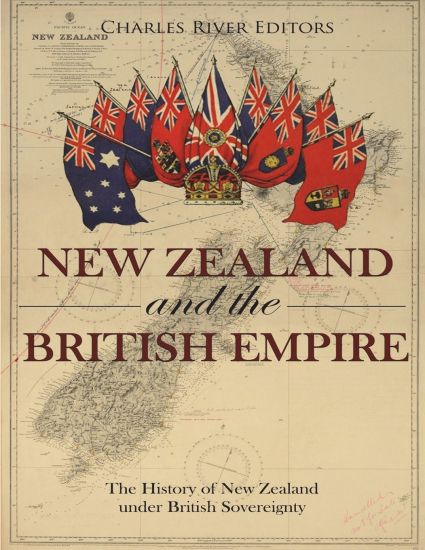
New Zealand and the British Empire: The History of New Zealand under British Sovereignty

New Zealand and the British Empire: The History of New Zealand under British Sovereignty

Charles River

Createspace Independent Publishing Platform
2018
nidottu

Halvin toimitettuna 20,70 €

*Includes pictures *Includes contemporary accounts *Includes online resources and a bibliography for further reading "When one house dies, a second lives." - Maori proverb By the mid-17th century, the existence of a land in the south referred to as Terra Australis was generally known and understood by the Europeans, and incrementally, its shores were observed and mapped. Van Diemen's Land, an island off the south coast of Australia now called Tasmania, was identified in 1642 by Dutch mariner Abel Tasman, and a few months later, the intrepid Dutchman would add New Zealand to the map of the known world. At the time, the English were the greatest naval power in Europe, but they arrived on the scene rather later. The first to appear was William Dampier, captain of the HMS Roebuck, in 1699, after he had been granted a Royal Commission by King William III to explore the east coast of New Holland. By then, the general global balance of power was shifting, and with the English gaining a solid foothold in India, their supremacy in the Indian Ocean trade zone began. The Dutch, once predominant in the region, began slowly to lose ground, slipping out of contention as a major global trading power. So too were the Portuguese, also once dominant in the region. It was now just the French and the English who were facing one another down in a quest to dominate the world, but their imperial interests were focused mainly in India and the East Indies, as well as the Caribbean and the Americas. As a result, the potential of a vast, practically uninhabited great southern continent did not yet hold much interest. By then the world was largely mapped, with just regions such as the Arctic Archipelago and the two poles remaining terra incognita. A few gaps needed to be filled in here and there, but all of the essential details were known. At the same time, a great deal of imperial energy was at play in Europe, particularly in Britain. Britain stood at the cusp of global dominance thanks almost entirely to the Royal Navy, which emerged in the 17th and 18th centuries as an institution significantly more than the sum of its parts. With vast assets available even in peacetime, expeditions of science and explorations were launched in every direction. This was done not only to claim ownership of the field of global exploration, but also to undercut the imperial ambitions of others, in particular the French. In 1769, Captain James Cook's historic expedition in the region would lead to an English claim on Australia, but before he reached Australia, he sailed near New Zealand and spent weeks mapping part of New Zealand's coast. Cook later asserted that the only major sources of timber and flax in the Pacific region were to be found in New Zealand and Norfolk Island, which would prove crucial to the British Empire and the Royal Navy in particular, and Cook also provided a firsthand account of a tense standoff with New Zealand's indigenous natives on the shoreline. Over the next 90 years, Cook's journey and his account would lay the basis for British activities in the region, and those activities would forge the modern history of New Zealand at a great cost. New Zealand and the British Empire: The History of New Zealand under British Sovereignty analyzes the expeditions that discovered New Zealand, the early settlements and conflicts waged there from 1650-1850, and the exploration that mapped New Zealand and led to its status as a dominion. Along with pictures of important people, places, and events, you will learn about New Zealand under British sovereignty like never before.

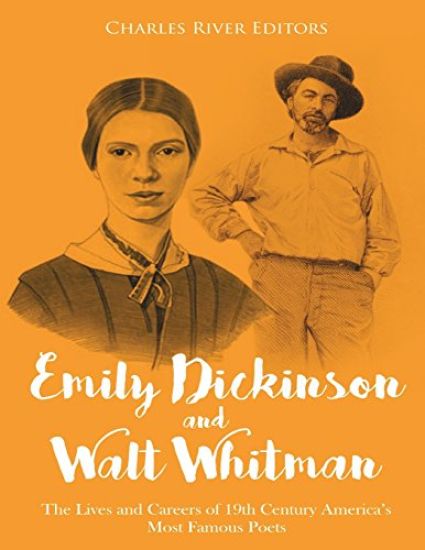
Emily Dickinson and Walt Whitman: The Lives and Careers of 19th Century America's Most Famous Poets
*Includes pictures*Includes contemporary accounts*Includes online resources and a bibliography for further readingWalt Whitman, the great American poet, is also in many ways a great American enigma, for more and less are known about him than other famous men in 19th century American history. On the one hand, he was the product of something of an all-American family, the sort of salt of the earth people he would later describe so vividly in his work. On the other, he was a complete bohemian and profligate, given to vanity in the way he dressed and lived. He started out his career as a school teacher and was later a newspaper man, but he left both those types of work for a job as a government bureaucrat. As a young man, when most of his peers were sowing their wild oats, he was considered by many to be a stick in the mud who neither drank nor chased women. Then, as a middle-aged man, when his peers had settled down into quieter lives, he remained single and seems to have pursued romantic relationships with both men and women. Then, of course, there was his poetry, words that summarized both the best and worst about his nation. His seminal work, Leaves of Grass, began as little more than a pamphlet but grew for decades, as each new edition added more poems. By the time of his death, it had become a large volume still studied today. While he wrote other pieces for publication, Leaves of Grass remained his magnum opus and his baby, nurturing and developing it throughout his life. And yet, through it all, the title remained the same self-deprecating play on words that he had given it when he first self-published the work in 1855. Like many writers of her day, Emily Dickinson was a virtual unknown during her lifetime. After her death, however, when people discovered the incredible amount of poetry that she had written, Dickinson became celebrated as one of America's greatest poets. Dickinson was notoriously introverted and mostly lived as a recluse, carrying out her friendships almost entirely by written letters. Her work was just as unique; her poetry is written with short lines, occasionally lacked titles, and often used slant rhyme and unconventional capitalization and punctuation. Only a few of her poems were published in her lifetime, but American schoolchildren across the country read her work today. As a result, Dickinson is, even to those who have studied her the most, an enigma and, even more to the point, a contradiction. Born in an era when women rarely received more than a rudimentary education, she attended college but left before graduating. Considered by many evangelical Christians to be a pioneer of religious poetry, she struggled during her entire life to fully embrace the Calvinist doctrines taught in her New England home. She embraced the friendship of women, sometimes to a level that bordered on the obsessive, but then easily removed herself from physical contact with all but a few of her closest family members. She seemed to be, in every way, the quintessential Victorian spinster, but her poetry and letters reveal shocking passions, often shared with married men. Not surprisingly, her poetry was just as diverse as her personal life, as she praised romantic love but criticized marriage. She wrote stanza after stanza of verse based on religious themes but never quite presented a clear cut view of the Christian faith. She produced in the same year passionate, even sexually charged verses, and also stilted observations of natural science. But in the midst of all this, she created a new genre of poetry, one that allowed her to speak her mind but in such a way that she could still move about, to the extent she wanted to, in polite society. Emily Dickinson and Walt Whitman: The Lives and Careers of 19th Century America's Most Famous Poets looks at the remarkable lives of the two, and the impact their famous works have had.
Emily Dickinson and Walt Whitman: The Lives and Careers of 19th Century America's Most Famous Poets
*Includes pictures*Includes contemporary accounts*Includes online resources and a bibliography for further readingWalt Whitman, the great American poet, is also in many ways a great American enigma, for more and less are known about him than other famous men in 19th century American history. On the one hand, he was the product of something of an all-American family, the sort of salt of the earth people he would later describe so vividly in his work. On the other, he was a complete bohemian and profligate, given to vanity in the way he dressed and lived. He started out his career as a school teacher and was later a newspaper man, but he left both those types of work for a job as a government bureaucrat. As a young man, when most of his peers were sowing their wild oats, he was considered by many to be a stick in the mud who neither drank nor chased women. Then, as a middle-aged man, when his peers had settled down into quieter lives, he remained single and seems to have pursued romantic relationships with both men and women. Then, of course, there was his poetry, words that summarized both the best and worst about his nation. His seminal work, Leaves of Grass, began as little more than a pamphlet but grew for decades, as each new edition added more poems. By the time of his death, it had become a large volume still studied today. While he wrote other pieces for publication, Leaves of Grass remained his magnum opus and his baby, nurturing and developing it throughout his life. And yet, through it all, the title remained the same self-deprecating play on words that he had given it when he first self-published the work in 1855. Like many writers of her day, Emily Dickinson was a virtual unknown during her lifetime. After her death, however, when people discovered the incredible amount of poetry that she had written, Dickinson became celebrated as one of America's greatest poets. Dickinson was notoriously introverted and mostly lived as a recluse, carrying out her friendships almost entirely by written letters. Her work was just as unique; her poetry is written with short lines, occasionally lacked titles, and often used slant rhyme and unconventional capitalization and punctuation. Only a few of her poems were published in her lifetime, but American schoolchildren across the country read her work today. As a result, Dickinson is, even to those who have studied her the most, an enigma and, even more to the point, a contradiction. Born in an era when women rarely received more than a rudimentary education, she attended college but left before graduating. Considered by many evangelical Christians to be a pioneer of religious poetry, she struggled during her entire life to fully embrace the Calvinist doctrines taught in her New England home. She embraced the friendship of women, sometimes to a level that bordered on the obsessive, but then easily removed herself from physical contact with all but a few of her closest family members. She seemed to be, in every way, the quintessential Victorian spinster, but her poetry and letters reveal shocking passions, often shared with married men. Not surprisingly, her poetry was just as diverse as her personal life, as she praised romantic love but criticized marriage. She wrote stanza after stanza of verse based on religious themes but never quite presented a clear cut view of the Christian faith. She produced in the same year passionate, even sexually charged verses, and also stilted observations of natural science. But in the midst of all this, she created a new genre of poetry, one that allowed her to speak her mind but in such a way that she could still move about, to the extent she wanted to, in polite society. Emily Dickinson and Walt Whitman: The Lives and Careers of 19th Century America's Most Famous Poets looks at the remarkable lives of the two, and the impact their famous works have had.
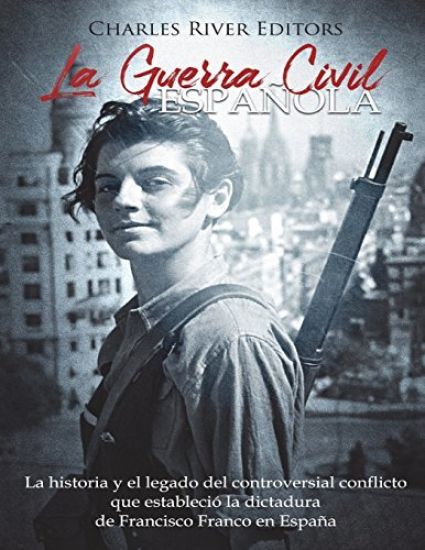
La Guerra Civil española: La historia y legado del controversial conflicto que estableció la dictadura de Francisco Franco en España
"Yo he amado (en verdad) a cinco mujeres, la Rep blica espa ola y la Cuarta Divisi n de Infanter a" - Ernest Hemingway La guerra civil espa ola ha tenido un gran impacto en la imaginer a hist rica. Sin lugar a dudas, el conflicto marc un hito en el siglo XX, como precursor de la Segunda Guerra Mundial, y como una muestra del auge de los movimientos extremistas en la d cada del 30, pero tuvo tambi n su propia y compleja narrativa, aun cuando se vio como un aut ntico conflicto internacional. Marc uno de los momentos clave, junto al derrumbe de Wall Street en 1929, entre las dos guerras apocal pticas de la primera mitad del siglo XX, y al haber transcurrido entre 1936 y 1939, Espa a result un terreno de pruebas para las t cticas, armamento e ideolog a poco antes de la Segunda Guerra Mundial. Para las potencias aliadas Inglaterra y Francia, Espa a se convirti en una contemporizaci n inc moda, sin embargo, como el nombre sugiere, el conflicto tuvo caracter sticas netamente espa olas. Las presiones que llevaron a la guerra, sus desaf os sociales, su larga e intrincada historia, y el conflicto mismo entre dos bandos que inclu an elementos tan dispares como el clero, los socialistas, los terratenientes, e incluso los anarquistas. Se estima que entre 500.000 y 2.000.000 personas murieron en la guerra. A diferencia de la Segunda Guerra Mundial, el conflicto espa ol atrajo a escritores y artistas, muchos de los cuales reflexionaron sobre los eventos e incluso se ofrecieron como voluntarios para luchar. Pablo Picasso con su pintura de Guernica, la periodista Martha Gellhorn con sus reportajes, la ic nica fotograf a de Robert Capa, El homenaje a Catalu a de George Orwell, Por qui n doblan las campanas de Ernest Hemingway, son solo algunos ejemplos del arte y la literatura que documentaron la guerra, y ochenta a os despu s, el conflicto y sus causas todav a inspiran a m sicos y escritores. Al final, las fuerzas reaccionarias, lideradas por el General Francisco Franco, triunfaron, y despu s de su victoria en 1939, Franco gobern Espa a con pu o de hierro durante 36 a os. A su muerte, sin embargo, sigui una versi n reconstruida de la Rep blica Espa ola, si bien esta vez como monarqu a constitucional. Parte del acuerdo t cito que condujo a la democracia en la d cada del 70 fue enterrar las antiguas rencillas y el recuerdo de la guerra civil, pero una falta de reconciliaci n ha dejado temas del conflicto sin resolver burbujeando bajo la superficie de la sociedad espa ola. En a os recientes, nuevos materiales y relatos han sido publicados, demostrando de manera elocuente que el impacto de la guerra se halla lejos de haberse diluido. La Guerra Civil espa ola: La historia y legado del controversial conflicto que estableci la dictadura de Francisco Franco en Espa a examina una de las guerras m s importantes del siglo XX, y c mo afect al mundo. Junto con im genes de personajes importantes, lugares, y eventos, usted aprender sobre la guerra civil espa ola como nunca antes.
Emily Dickinson: The Life and Legacy of the Famous American Poet

Emily Dickinson: The Life and Legacy of the Famous American Poet

Charles River

Createspace Independent Publishing Platform
2018
nidottu
*Includes pictures *Includes quotes *Includes online resources and a bibliography for further reading "Saying nothing...sometimes says the most." - Emily Dickinson Like many writers of her day, Emily Dickinson was a virtual unknown during her lifetime. After her death, however, when people discovered the incredible amount of poetry that she had written, Dickinson became celebrated as one of America's greatest poets. Dickinson was notoriously introverted and mostly lived as a recluse, carrying out her friendships almost entirely by written letters. Her work was just as unique; her poetry is written with short lines, occasionally lacked titles, and often used slant rhyme and unconventional capitalization and punctuation. Only a few of her poems were published in her lifetime, but American schoolchildren across the country read her work today. As a result, Dickinson is, even to those who have studied her the most, an enigma and, even more to the point, a contradiction. Born in an era when women rarely received more than a rudimentary education, she attended college but left before graduating. Considered by many evangelical Christians to be a pioneer of religious poetry, she struggled during her entire life to fully embrace the Calvinist doctrines taught in her New England home. She embraced the friendship of women, sometimes to a level that bordered on the obsessive, but then easily removed herself from physical contact with all but a few of her closest family members. She seemed to be, in every way, the quintessential Victorian spinster, but her poetry and letters reveal shocking passions, often shared with married men. Not surprisingly, her poetry was just as diverse as her personal life, as she praised romantic love but criticized marriage. She wrote stanza after stanza of verse based on religious themes but never quite presented a clear cut view of the Christian faith. She produced in the same year passionate, even sexually charged verses, and also stilted observations of natural science. But in the midst of all this, she created a new genre of poetry, one that allowed her to speak her mind but in such a way that she could still move about, to the extent she wanted to, in polite society. As one writer has observed, "To make the abstract tangible, to define meaning without confining it, to inhabit a house that never became a prison, Dickinson created in her writing a distinctively elliptical language for expressing what was possible but not yet realized. Like the Concord Transcendentalists whose works she knew well, she saw poetry as a double-edged sword. While it liberated the individual, it as readily left him ungrounded." This then, proved to be both her blessing and her burden, for, left adrift, she eventually lost at least some of her grip on reality and finished her life as a mysterious recluse, not unlike a character in her own poetry. Emily Dickinson: The Life and Legacy of the Famous American Poet looks at the reclusive life and remarkable work of the poet. Along with pictures depicting important people, places, and events, you will learn about Emily Dickinson like never before.
Emily Dickinson: The Life and Legacy of the Famous American Poet

Emily Dickinson: The Life and Legacy of the Famous American Poet

Charles River

Createspace Independent Publishing Platform
2018
nidottu
*Includes pictures *Includes quotes *Includes online resources and a bibliography for further reading "Saying nothing...sometimes says the most." - Emily Dickinson Like many writers of her day, Emily Dickinson was a virtual unknown during her lifetime. After her death, however, when people discovered the incredible amount of poetry that she had written, Dickinson became celebrated as one of America's greatest poets. Dickinson was notoriously introverted and mostly lived as a recluse, carrying out her friendships almost entirely by written letters. Her work was just as unique; her poetry is written with short lines, occasionally lacked titles, and often used slant rhyme and unconventional capitalization and punctuation. Only a few of her poems were published in her lifetime, but American schoolchildren across the country read her work today. As a result, Dickinson is, even to those who have studied her the most, an enigma and, even more to the point, a contradiction. Born in an era when women rarely received more than a rudimentary education, she attended college but left before graduating. Considered by many evangelical Christians to be a pioneer of religious poetry, she struggled during her entire life to fully embrace the Calvinist doctrines taught in her New England home. She embraced the friendship of women, sometimes to a level that bordered on the obsessive, but then easily removed herself from physical contact with all but a few of her closest family members. She seemed to be, in every way, the quintessential Victorian spinster, but her poetry and letters reveal shocking passions, often shared with married men. Not surprisingly, her poetry was just as diverse as her personal life, as she praised romantic love but criticized marriage. She wrote stanza after stanza of verse based on religious themes but never quite presented a clear cut view of the Christian faith. She produced in the same year passionate, even sexually charged verses, and also stilted observations of natural science. But in the midst of all this, she created a new genre of poetry, one that allowed her to speak her mind but in such a way that she could still move about, to the extent she wanted to, in polite society. As one writer has observed, "To make the abstract tangible, to define meaning without confining it, to inhabit a house that never became a prison, Dickinson created in her writing a distinctively elliptical language for expressing what was possible but not yet realized. Like the Concord Transcendentalists whose works she knew well, she saw poetry as a double-edged sword. While it liberated the individual, it as readily left him ungrounded." This then, proved to be both her blessing and her burden, for, left adrift, she eventually lost at least some of her grip on reality and finished her life as a mysterious recluse, not unlike a character in her own poetry. Emily Dickinson: The Life and Legacy of the Famous American Poet looks at the reclusive life and remarkable work of the poet. Along with pictures depicting important people, places, and events, you will learn about Emily Dickinson like never before.
El Escorial: The History and Legacy of Spain's Most Famous Royal Site

El Escorial: The History and Legacy of Spain's Most Famous Royal Site

Charles River

Createspace Independent Publishing Platform
2018
nidottu
*Includes pictures *Includes contemporary accounts *Includes online resources and a bibliography for further reading Nestled amongst the Sierra de Guadarrama mountain range, El Monte Abantos, or Mount Abantos, towers over its surroundings at a height of 5,751 feet. Indeed, there is nothing aesthetically spectacular about this forested mound, but there is an aura of mystery that hangs over Abantos, much like the curtain of mist that lingers over the mountaintop in the early morning. Madrid, just a little over 37 miles away, is as beautiful and vibrant as they come, yet city folk and tourists alike often find themselves drawn to this landform, in particular the quiet swathe of land on the southern slope of the Abantos. This picturesque place, rich with scenic, panoramic views, is a refreshing escape from the fast-paced city life, but it is also home to an irreplaceable national treasure once lauded as the eighth wonder of the world: El Escorial. Strangers to El Escorial will most likely be left unmoved by the multipurpose complex at first glance. It has complementary, but dull colors, not to mention uniform, yet uninspired proportions of its towers. The facade, while clearly a stalwart structure, lacks warmth and creativity. Visitors who walk through any of its three doors, however, will most certainly be rendered speechless by its hidden majesty. This monumental time capsule of Baroque and Renaissance splendor, stamped with the imprints of its Catholic monarchs, is one that can be appreciated by art lovers regardless of background. The majority of those fortunate enough to feast their eyes upon the majestic complex that is the El Escorial share the same sentiment: its beauty is indescribable. This is a place that oozes opulence, a kind of opulence flavored by class and historical charm, rather than the garish flamboyance and tawdry ostentation often displayed by the nouveau riche. To say that the place is fit for a king would simply be downplaying its splendor. Of course, this was exactly what it was. The most compelling part of this compound lies not in its secret beauty, but in its engrossing history and the countless, often cryptic legends associated with this captivating compound. El Escorial: The History and Legacy of Spain's Most Famous Royal Site journeys through the eventful timeline of the residence and looks at some of the fascinating characters who lived there. Along with pictures of important people, places, and events, you will learn about El Escorial like never before.
Mount Athos: The History of the Greek Mountain and the Center of Eastern Orthodox Monasticism
*Includes pictures *Includes online resources and a bibliography for further reading "Clear water where evergreens, azaleas cool ceremoniously...a kele lost among cedars, its roof open to eagles, door unhinged...silver leaves like a congregation of spiders..." When one hears these enchanting descriptions, from poet David Posner's 1964 composition "Mount Athos," it is not difficult to understand why this sleepy paradise is often extolled as the most peaceful and private corner of Greece, if not all of Europe. Mount Athos is the easternmost finger of the Halkidiki peninsula - a mountainous sliver of land that stretches about 37.3 miles long and 4.3-7.5 miles wide, with a surface area of about 150 square miles. Towering over the tightly-packed chestnut forests and the blue, crystalline waters of the Aegean Sea at a height of 6,670 feet is the snow-dusted crest of the mighty mountain itself. Known to the locals as Agion Oros, or the "Holy Mountain," the peninsula today is most famed for its exclusivity, a place that continues to bar all women and their daughters from entry. The fortress-like monasteries scattered amongst the slopes and the clusters of cells clinging to the cliffs are occupied by monks of the Eastern Orthodox Church. Of course, its male-only population is just one aspect of the peninsula's anomalous nature. Planted on the peninsula's coast is a black Byzantine Cross, a flat, cross-shaped monument with a trinity of flared, wide-armed, Greek crosses in place of its arms and a traditional Christian cross in its center, kissed with rust. It serves as an emblem of the monastic society that resides there, and it delineates the boundary between Mount Athos and the rest of Greece. Entering this hallowed peninsula is like setting foot into a living time capsule, because life here has not changed in well over 1,000 years. Mount Athos is one of only two places on earth (the other being the Mar Saba) that chooses to run on "Byzantine time," meaning Hour 0:00:00 only begins at sundown. Moreover, it is the only territory in the world that flies the Byzantine flag, a regal, sword and cross clutching double-headed eagle set against a rippling canvas of gold. Of course, to reduce Mount Athos to an antediluvian, single-sex monastic retreat would be an oversimplification of the fascinating history and simple, yet complex culture that has developed on this stunning strip of land. This is a place as mystically mysterious as it is serene, a space abound with treasures, miracles, and spiritual revelations. But for a place where purity and God-fearing devotion apparently reign supreme, it is certainly burdened with its fair share of controversy. Mount Athos: The History of the Greek Mountain and the Center of Eastern Orthodox Monasticism looks at the unique region and what life has been like there since medieval times. Along with pictures depicting important people, places, and events, you will learn about Mount Athos like never before.
Mount Athos: The History of the Greek Mountain and the Center of Eastern Orthodox Monasticism
*Includes pictures *Includes online resources and a bibliography for further reading "Clear water where evergreens, azaleas cool ceremoniously...a kele lost among cedars, its roof open to eagles, door unhinged...silver leaves like a congregation of spiders..." When one hears these enchanting descriptions, from poet David Posner's 1964 composition "Mount Athos," it is not difficult to understand why this sleepy paradise is often extolled as the most peaceful and private corner of Greece, if not all of Europe. Mount Athos is the easternmost finger of the Halkidiki peninsula - a mountainous sliver of land that stretches about 37.3 miles long and 4.3-7.5 miles wide, with a surface area of about 150 square miles. Towering over the tightly-packed chestnut forests and the blue, crystalline waters of the Aegean Sea at a height of 6,670 feet is the snow-dusted crest of the mighty mountain itself. Known to the locals as Agion Oros, or the "Holy Mountain," the peninsula today is most famed for its exclusivity, a place that continues to bar all women and their daughters from entry. The fortress-like monasteries scattered amongst the slopes and the clusters of cells clinging to the cliffs are occupied by monks of the Eastern Orthodox Church. Of course, its male-only population is just one aspect of the peninsula's anomalous nature. Planted on the peninsula's coast is a black Byzantine Cross, a flat, cross-shaped monument with a trinity of flared, wide-armed, Greek crosses in place of its arms and a traditional Christian cross in its center, kissed with rust. It serves as an emblem of the monastic society that resides there, and it delineates the boundary between Mount Athos and the rest of Greece. Entering this hallowed peninsula is like setting foot into a living time capsule, because life here has not changed in well over 1,000 years. Mount Athos is one of only two places on earth (the other being the Mar Saba) that chooses to run on "Byzantine time," meaning Hour 0:00:00 only begins at sundown. Moreover, it is the only territory in the world that flies the Byzantine flag, a regal, sword and cross clutching double-headed eagle set against a rippling canvas of gold. Of course, to reduce Mount Athos to an antediluvian, single-sex monastic retreat would be an oversimplification of the fascinating history and simple, yet complex culture that has developed on this stunning strip of land. This is a place as mystically mysterious as it is serene, a space abound with treasures, miracles, and spiritual revelations. But for a place where purity and God-fearing devotion apparently reign supreme, it is certainly burdened with its fair share of controversy. Mount Athos: The History of the Greek Mountain and the Center of Eastern Orthodox Monasticism looks at the unique region and what life has been like there since medieval times. Along with pictures depicting important people, places, and events, you will learn about Mount Athos like never before.
Booming Brew Town: The History of Milwaukee in the 20th Century

Booming Brew Town: The History of Milwaukee in the 20th Century

Charles River

Createspace Independent Publishing Platform
2018
nidottu
*Includes pictures *Includes online resources and a bibliography for further reading "It is true, similar things cultural events and societies] were done in other cities where the Forty-eighters sic] had congregated. But so far as I know, nowhere did their influence so quickly impress itself upon the whole social atmosphere as in 'German Athens of America' as Milwaukee was called at the time." - Carl Schurz, 1854 The area that became known as the Old Northwest caught the eye of European settlers as far back as the 17th century, when the French explorers Marquette and Jolliet found that waterways in the area connected the Mississippi River to the Great Lakes. The area was perfect for fur trade outposts long before it was settled by whites. Throughout the 19th century, American settlers pushing across the Western frontier came into contact with diverse American tribes, producing a series of conflicts ranging from the Great Plains to the Southwest, and from the Trail of Tears to the Pacific Northwest. One of these notorious conflicts was the Black Hawk War, named after a Sauk chief who led a band of about 1,500 in a series of small battles fought in the Wisconsin territory in 1832. Black Hawk led his people east across the Mississippi River in an attempt to reclaim his people's old lands in Illinois, and his defeat essentially ended all Native American resistance east of the Mississippi River and opened up the rest of Illinois and Wisconsin to white settlement. The war also provided an opportunity for some of the era's most famous Americans to get military experience, including several U. S. Senators, several Territorial Governors, future Confederate President Jefferson Davis, and most famously, Abraham Lincoln. Thus, it should come as no surprise that Milwaukee, the largest city in Wisconsin, has a history reflective of the Old Northwest. Known to the natives as a beautiful landscape at the mouth of a river on the edge of the Great Lakes, it did not take long for fur traders to join them in the serene location. Those fur traders, seeing a future city on the same spot as their sleepy trading post, worked to put the place on the map. Thanks to their vision and energy, Milwaukee transformed from a sleepy trading post to an industrial center, connected to the entire country and beyond through its industry and energy. Given its background and location, the story of Milwaukee may have resembled other nearby cities like Detroit or Chicago, but Milwaukee would have its own flavors and characters thanks to the unique ethnicities and businesses that arrived early on. Before the beer capital of the country became Brew Town, it was Cream Town, and before that it was just a trading post, where some men with a dream came to live. Like other major cities and the nation overall, the 20th century portended massive growth for Milwaukee, especially as rail and other forms of transportation helped connect the city to the rest of Wisconsin and beyond. With that growth came the growing pains of an industrial city gripped with all the plights of urban development and expansion, but despite that, the people of Milwaukee entered the new century in high hopes, hopes that survived the harsh realities of a century sundered by war, racism, and poverty. Booming Brew Town: The History of Milwaukee in the 20th Century looks at the modern history of one of the Midwest's biggest cities. Along with pictures of important people, places, and events, you will learn about Milwaukee like never before.
Booming Brew Town: The History of Milwaukee in the 20th Century

Booming Brew Town: The History of Milwaukee in the 20th Century

Charles River

Createspace Independent Publishing Platform
2018
nidottu
*Includes pictures *Includes online resources and a bibliography for further reading "It is true, similar things cultural events and societies] were done in other cities where the Forty-eighters sic] had congregated. But so far as I know, nowhere did their influence so quickly impress itself upon the whole social atmosphere as in 'German Athens of America' as Milwaukee was called at the time." - Carl Schurz, 1854 The area that became known as the Old Northwest caught the eye of European settlers as far back as the 17th century, when the French explorers Marquette and Jolliet found that waterways in the area connected the Mississippi River to the Great Lakes. The area was perfect for fur trade outposts long before it was settled by whites. Throughout the 19th century, American settlers pushing across the Western frontier came into contact with diverse American tribes, producing a series of conflicts ranging from the Great Plains to the Southwest, and from the Trail of Tears to the Pacific Northwest. One of these notorious conflicts was the Black Hawk War, named after a Sauk chief who led a band of about 1,500 in a series of small battles fought in the Wisconsin territory in 1832. Black Hawk led his people east across the Mississippi River in an attempt to reclaim his people's old lands in Illinois, and his defeat essentially ended all Native American resistance east of the Mississippi River and opened up the rest of Illinois and Wisconsin to white settlement. The war also provided an opportunity for some of the era's most famous Americans to get military experience, including several U. S. Senators, several Territorial Governors, future Confederate President Jefferson Davis, and most famously, Abraham Lincoln. Thus, it should come as no surprise that Milwaukee, the largest city in Wisconsin, has a history reflective of the Old Northwest. Known to the natives as a beautiful landscape at the mouth of a river on the edge of the Great Lakes, it did not take long for fur traders to join them in the serene location. Those fur traders, seeing a future city on the same spot as their sleepy trading post, worked to put the place on the map. Thanks to their vision and energy, Milwaukee transformed from a sleepy trading post to an industrial center, connected to the entire country and beyond through its industry and energy. Given its background and location, the story of Milwaukee may have resembled other nearby cities like Detroit or Chicago, but Milwaukee would have its own flavors and characters thanks to the unique ethnicities and businesses that arrived early on. Before the beer capital of the country became Brew Town, it was Cream Town, and before that it was just a trading post, where some men with a dream came to live. Like other major cities and the nation overall, the 20th century portended massive growth for Milwaukee, especially as rail and other forms of transportation helped connect the city to the rest of Wisconsin and beyond. With that growth came the growing pains of an industrial city gripped with all the plights of urban development and expansion, but despite that, the people of Milwaukee entered the new century in high hopes, hopes that survived the harsh realities of a century sundered by war, racism, and poverty. Booming Brew Town: The History of Milwaukee in the 20th Century looks at the modern history of one of the Midwest's biggest cities. Along with pictures of important people, places, and events, you will learn about Milwaukee like never before.
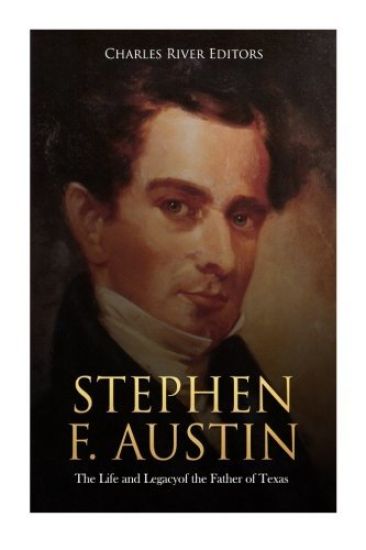
Stephen F. Austin: The Life and Legacy of the Father of Texas

Stephen F. Austin: The Life and Legacy of the Father of Texas

Charles River

Createspace Independent Publishing Platform
2018
nidottu
*Includes pictures *Includes contemporary accounts *Includes online resources and a bibliography for further reading "The independence of Texas is recognized Don't you see it in the papers?" - Stephen F. Austin's last words Texas has a unique history among the 50 states that comprise the United States of America, and much of that is due to the nature of the men who brought about its independence. Of them, few are as famous or more important than Stephen F. Austin. Born in the very shadow of the Founding Fathers in Virginia, Austin seemed destined from birth to do something special. Certainly, his father Moses saw potential in the boy, training him up to take the lead in whatever situation he found himself in, and various life experiences transformed Stephen. Moses provided his son with plenty of the difficulties, including bankruptcy, business losses, and family squabbles, all by the time his son was 20 years old. Ultimately Moses bequeathed his son the chance to become an empresario, a 19th century leader of American pioneers in Texas. Austin in turn shaped the future of Texas in a way that no other leader ever had the opportunity to do, and by carefully choosing men like himself, politically, religiously, and ethically, he helped create an independent nation (and future state) known for its rugged individualism and self-determination. Unfortunately, he also created a place where slavery, America's great shame, was allowed to flourish for more than 40 years, and a place where people of color would struggle for generations to receive equality under the laws, many of which he either wrote or inspired. Ironically, the man whose name is so synonymous with Texas was not involved in the most famous battles that secured its independence. This actually ensured that he survived when so many of his contemporaries died, but he still lost his run for the presidency of Texas and instead had to accept an appointment as the Republic's first Secretary of State. Ultimately, it made little difference in the end, for he served only two months before he died of pneumonia just after his 43rd birthday, but despite his premature death, what cannot be questioned is how profound an impact Austin had on Texas, Mexico, and the United States over the course of several decades. Stephen F. Austin: The Life and Legacy of the Father of Texas looks at how he became one of the Southwest's most important figures. Along with pictures of important people, places, and events, you will learn about Austin like never before.
The Modern Discovery of Australia and New Zealand: The History of the Indigenous Natives and the Initial European Expeditions and Settlements
*Includes pictures *Includes contemporary accounts *Includes online resources and a bibliography for further reading A land of almost 3 million square miles has lain since time immemorial on the southern flank of the planet, so isolated that it remained entirely outside of European knowledge until 1770. However, the first human footprints on this vast territory were felt 70,000 years earlier, as people began to cross the periodic land bridges and the short sea crossings from Southeast Asia. By the mid-17th century, the existence of a land in the south referred to as Terra Australis was generally known and understood by the Europeans, and incrementally, its shores were observed and mapped. Van Diemen's Land, an island off the south coast of Australia now called Tasmania, was identified in 1642 by Dutch mariner Abel Tasman, and a few months later, the intrepid Dutchman would add New Zealand to the map of the known world. At the time, the English were the greatest naval power in Europe, but they arrived on the scene rather later. The first to appear was William Dampier, captain of the HMS Roebuck, in 1699, after he had been granted a Royal Commission by King William III to explore the east coast of New Holland. By then, the general global balance of power was shifting, and with the English gaining a solid foothold in India, their supremacy in the Indian Ocean trade zone began. The Dutch, once predominant in the region, began slowly to lose ground, slipping out of contention as a major global trading power. So too were the Portuguese, also once dominant in the region. It was now just the French and the English who were facing one another down in a quest to dominate the world, but their imperial interests were focused mainly in India and the East Indies, as well as the Caribbean and the Americas. As a result, the potential of a vast, practically uninhabited great southern continent did not yet hold much interest. By then the world was largely mapped, with just regions such as the Arctic Archipelago and the two poles remaining terra incognita. A few gaps needed to be filled in here and there, but all of the essential details were known. At the same time, a great deal of imperial energy was at play in Europe, particularly in Britain. Britain stood at the cusp of global dominance thanks almost entirely to the Royal Navy, which emerged in the 17th and 18th centuries as an institution significantly more than the sum of its parts. With vast assets available even in peacetime, expeditions of science and explorations were launched in every direction. This was done not only to claim ownership of the field of global exploration, but also to undercut the imperial ambitions of others, in particular the French. In 1769, Captain James Cook's historic expedition in the region would lead to an English claim on Australia, but before he reached Australia, he sailed near New Zealand and spent weeks mapping part of New Zealand's coast. Cook later asserted that the only major sources of timber and flax in the Pacific region were to be found in New Zealand and Norfolk Island, which would prove crucial to the British Empire and the Royal Navy in particular, and Cook also provided a firsthand account of a tense standoff with New Zealand's indigenous natives on the shoreline. Over the next 90 years, Cook's journey and his account would lay the basis for British activities in the region, and those activities would forge the modern history of New Zealand at a great cost. The Modern Discovery of Australia and New Zealand: The History of the Indigenous Natives and the Initial European Expeditions and Settlements analyzes the expeditions that brought the Aborigines and Maori to Australia and New Zealand, and how the Europeans discovered the area in the 17th century. Along with pictures of important people, places, and events, you will learn about the discovery of Australia and New Zealand like never before.
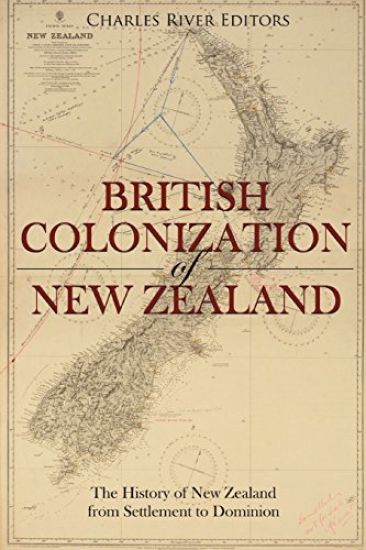
The British Colonization of New Zealand: The History of New Zealand from Settlement to Dominion
*Includes pictures *Includes contemporary accounts *Includes online resources and a bibliography for further reading "When one house dies, a second lives." - Maori proverb By the mid-17th century, the existence of a land in the south referred to as Terra Australis was generally known and understood by the Europeans, and incrementally, its shores were observed and mapped. Van Diemen's Land, an island off the south coast of Australia now called Tasmania, was identified in 1642 by Dutch mariner Abel Tasman, and a few months later, the intrepid Dutchman would add New Zealand to the map of the known world. At the time, the English were the greatest naval power in Europe, but they arrived on the scene rather later. The first to appear was William Dampier, captain of the HMS Roebuck, in 1699, after he had been granted a Royal Commission by King William III to explore the east coast of New Holland. By then, the general global balance of power was shifting, and with the English gaining a solid foothold in India, their supremacy in the Indian Ocean trade zone began. The Dutch, once predominant in the region, began slowly to lose ground, slipping out of contention as a major global trading power. So too were the Portuguese, also once dominant in the region. It was now just the French and the English who were facing one another down in a quest to dominate the world, but their imperial interests were focused mainly in India and the East Indies, as well as the Caribbean and the Americas. As a result, the potential of a vast, practically uninhabited great southern continent did not yet hold much interest. By then the world was largely mapped, with just regions such as the Arctic Archipelago and the two poles remaining terra incognita. A few gaps needed to be filled in here and there, but all of the essential details were known. At the same time, a great deal of imperial energy was at play in Europe, particularly in Britain. Britain stood at the cusp of global dominance thanks almost entirely to the Royal Navy, which emerged in the 17th and 18th centuries as an institution significantly more than the sum of its parts. With vast assets available even in peacetime, expeditions of science and explorations were launched in every direction. This was done not only to claim ownership of the field of global exploration, but also to undercut the imperial ambitions of others, in particular the French. In 1769, Captain James Cook's historic expedition in the region would lead to an English claim on Australia, but before he reached Australia, he sailed near New Zealand and spent weeks mapping part of New Zealand's coast. Cook later asserted that the only major sources of timber and flax in the Pacific region were to be found in New Zealand and Norfolk Island, which would prove crucial to the British Empire and the Royal Navy in particular, and Cook also provided a firsthand account of a tense standoff with New Zealand's indigenous natives on the shoreline. Over the next 90 years, Cook's journey and his account would lay the basis for British activities in the region, and those activities would forge the modern history of New Zealand at a great cost. The British Colonization of New Zealand: The History of New Zealand from Settlement to Dominion analyzes the expeditions that discovered New Zealand and the early settlements and conflicts waged there from 1650-1850. Along with pictures of important people, places, and events, you will learn about the European settlement of New Zealand like never before.
King Lysimachus: The Life and Legacy of the Ancient Macedonian King Who Succeeded Alexander the Great
*Includes pictures *Includes ancient accounts *Includes online resources and a bibliography for further reading In 323 BCE, Alexander the Great was on top of the world. Never a man to sit on his hands or rest upon his laurels, Alexander began planning his future campaigns, which may have included attempts to subdue the Arabian Peninsula or make another incursion into India. But fate had other plans for the young Macedonian king. One night, while feasting with his admiral Nearchus, he drank too much and took to bed with a fever. At first, it seemed like the fever was merely a consequence of his excess, and there was not much concern for his health, but when a week had elapsed and there was still no sign of his getting better, his friends and generals began to grow concerned. The fever grew, consuming him to the point that he could barely speak. After two weeks, on June 11, 323 BCE, Alexander the Great, King of Macedon, Hegemon of the League of Corinth, King of Kings, died. On his deathbed, some historians claim that when he was pressed to name a successor, Alexander muttered that his empire should go "to the strongest". Other sources claim that he passed his signet ring to his general Perdiccas, thereby naming him successor, but whatever his choices were or may have been, they were ignored. While the generals all subscribed to spreading Greek culture, they also had the loyalty of their own soldiers at their backs, and they would tear each other apart in a vicious internal struggle that lasted almost half a century before four factions emerged victorious: Macedonia; the Seleucid Empire in the east; the Kingdom of Pergamon in Asia Minor; and the Ptolemaic dynasty in Egypt. During the course of these wars, Alexander's only heir, the posthumously born Alexander IV, was murdered, extinguishing his bloodline for ever. Although it was an incredibly important period in world history, it is sometimes as confusing as it is frustrating for historians because the allegiances of the generals changed constantly and historical sources are often biased in some regards and utterly lacking in others. Ptolemy, Seleucus, and Antigonus are the most well-known of the successor generals because the classical historians wrote about them the most due to the longevity of their kingdoms, but Lysimachus was just as important during his lifetime. Lysimachus was never able to establish a dynasty as enduring as the ones led by Antigonus, Ptolemy, and Seleucus, and he did not have a specific book dedicated to his life by the 1st century CE historian Plutarch like the other Diadochi, his actions helped establish the political order of the eastern Mediterranean region before the Roman conquest. During his lifetime, Lysimachus went from being one of Alexander the Great's loyal bodyguards and generals to the king of Thrace and eventually, for a brief period, king of his homeland of Macedonia. The primary source materials paint the picture of a man driven by raw ambition, and as astute a politician as he was an able commander. Lysimachus's ambitions often earned him the enmity of peers, but they respected him due to his incredible battlefield successes and crafty guile. Ultimately, Lysimachus outlived all but one of Alexander's other successor generals during a time of great turmoil. King Lysimachus: The Life and Legacy of the Ancient Macedonian King Who Succeeded Alexander the Great looks at his tumultuous reign and how he affected the world in the wake of Alexander. Along with pictures depicting important people, places, and events, you will learn about King Lysimachus like never before.
The European Discovery of New Zealand: The History and Legacy of Early Expeditions and British Settlements on New Zealand
*Includes pictures *Includes contemporary accounts *Includes online resources and a bibliography for further reading "When one house dies, a second lives." - Maori proverb By the mid-17th century, the existence of a land in the south referred to as Terra Australis was generally known and understood by the Europeans, and incrementally, its shores were observed and mapped. Van Diemen's Land, an island off the south coast of Australia now called Tasmania, was identified in 1642 by Dutch mariner Abel Tasman, and a few months later, the intrepid Dutchman would add New Zealand to the map of the known world. At the time, the English were the greatest naval power in Europe, but they arrived on the scene rather later. The first to appear was William Dampier, captain of the HMS Roebuck, in 1699, after he had been granted a Royal Commission by King William III to explore the east coast of New Holland. By then, the general global balance of power was shifting, and with the English gaining a solid foothold in India, their supremacy in the Indian Ocean trade zone began. The Dutch, once predominant in the region, began slowly to lose ground, slipping out of contention as a major global trading power. So too were the Portuguese, also once dominant in the region. It was now just the French and the English who were facing one another down in a quest to dominate the world, but their imperial interests were focused mainly in India and the East Indies, as well as the Caribbean and the Americas. As a result, the potential of a vast, practically uninhabited great southern continent did not yet hold much interest. By then the world was largely mapped, with just regions such as the Arctic Archipelago and the two poles remaining terra incognita. A few gaps needed to be filled in here and there, but all of the essential details were known. At the same time, a great deal of imperial energy was at play in Europe, particularly in Britain. Britain stood at the cusp of global dominance thanks almost entirely to the Royal Navy, which emerged in the 17th and 18th centuries as an institution significantly more than the sum of its parts. With vast assets available even in peacetime, expeditions of science and explorations were launched in every direction. This was done not only to claim ownership of the field of global exploration, but also to undercut the imperial ambitions of others, in particular the French. In 1769, Captain James Cook's historic expedition in the region would lead to an English claim on Australia, but before he reached Australia, he sailed near New Zealand and spent weeks mapping part of New Zealand's coast. Cook later asserted that the only major sources of timber and flax in the Pacific region were to be found in New Zealand and Norfolk Island, which would prove crucial to the British Empire and the Royal Navy in particular, and Cook also provided a firsthand account of a tense standoff with New Zealand's indigenous natives on the shoreline. Over the next 90 years, Cook's journey and his account would lay the basis for British activities in the region, and those activities would forge the modern history of New Zealand at a great cost. The European Discovery of New Zealand: The History and Legacy of Early Expeditions and British Settlements on New Zealand analyzes the expeditions that discovered New Zealand and the early settlements and conflicts waged there from 1650-1850. Along with pictures of important people, places, and events, you will learn about the European settlement of New Zealand like never before.
Old Milwaukee: The Early History of Brew Town in the 19th Century

Old Milwaukee: The Early History of Brew Town in the 19th Century

Charles River

Createspace Independent Publishing Platform
2018
nidottu
*Includes pictures *Includes contemporary accounts *Includes online resources and a bibliography for further reading "It is true, similar things cultural events and societies] were done in other cities where the Forty-eighters sic] had congregated. But so far as I know, nowhere did their influence so quickly impress itself upon the whole social atmosphere as in 'German Athens of America' as Milwaukee was called at the time." - Carl Schurz, 1854 The area that became known as the Old Northwest caught the eye of European settlers as far back as the 17th century, when the French explorers Marquette and Jolliet found that waterways in the area connected the Mississippi River to the Great Lakes. The area was perfect for fur trade outposts long before it was settled by whites. Throughout the 19th century, American settlers pushing across the Western frontier came into contact with diverse American tribes, producing a series of conflicts ranging from the Great Plains to the Southwest, and from the Trail of Tears to the Pacific Northwest. One of these notorious conflicts was the Black Hawk War, named after a Sauk chief who led a band of about 1,500 in a series of small battles fought in the Wisconsin territory in 1832. Black Hawk led his people east across the Mississippi River in an attempt to reclaim his people's old lands in Illinois, and his defeat essentially ended all Native American resistance east of the Mississippi River and opened up the rest of Illinois and Wisconsin to white settlement. The war also provided an opportunity for some of the era's most famous Americans to get military experience, including several U. S. Senators, several Territorial Governors, future Confederate President Jefferson Davis, and most famously, Abraham Lincoln. Thus, it should come as no surprise that Milwaukee, the largest city in Wisconsin, has a history reflective of the Old Northwest. Known to the natives as a beautiful landscape at the mouth of a river on the edge of the Great Lakes, it did not take long for fur traders to join them in the serene location. Those fur traders, seeing a future city on the same spot as their sleepy trading post, worked to put the place on the map. Thanks to their vision and energy, Milwaukee transformed from a sleepy trading post to an industrial center, connected to the entire country and beyond through its industry and energy. Given its background and location, the story of Milwaukee may have resembled other nearby cities like Detroit or Chicago, but Milwaukee would have its own flavors and characters thanks to the unique ethnicities and businesses that arrived early on. Before the beer capital of the country became Brew Town, it was Cream Town, and before that it was just a trading post, where some men with a dream came to live. Old Milwaukee: The Early History of Brew Town in the 19th Century looks at the early history of one of the Midwest's biggest cities. Along with pictures of important people, places, and events, you will learn about Milwaukee like never before.
Grizzly Adams: The Life of the Mountain Man Who Trained Bears and Other Wild Animals for the Circus
*Includes pictures *Includes contemporary accounts *Includes online resources and a bibliography for further reading By the golden age of the mountain man in the mid-19th-century, there were perhaps only 3,000 living in the West. Their origins were disparate, although they included many Anglo-Americans. A good number hailed from wilderness regions of Kentucky and Virginia and throughout the newly purchased Louisiana Territory, which occupied the entire central section of the continent. French Canadians traveled from the north to work in the fur trade, while Creole-Europeans represented approximately 15% of the men known to be living the isolated mountain life. Others were of M tis, Spanish, American, Black, Indian, and mixed-blood origin, most often Iroquois or Delaware. Most came to the West in their late adolescent years, the oldest learning the trade in their 30s. Many roamed the west for as long as their constitutions would hold up under constant attacks on their health and personal safety. Some stayed too long and failed to survive the experience. Among the most famous, Jim Bridger arrived at the age of 16, while Edward Robinson was eventually killed in his 60s by what were known as "bad snakes," a reference to the Snake tribe in Idaho country. Jim Beckwourth left the mountains at 68 and Old Bill Williams died at the age of 62 when a band of Utes "made him to come." In the same vein, Americans have always shared an ongoing fascination with what was for them the realm of the "exotic" in the collective imagination. Such a preoccupation with alternative experience extends to a preoccupation with pre-recorded history, as it did in the furor over the discovery of extinct dinosaurs' first fossils. Similarly, stepping out of the familiar could satisfy the urge for both danger and wonder by contemplating the future, and the question of what might or might not exist. To this day, such a powerful imaginative force has underpinned the abundant science fiction and horror genres of modern films, including dramatic attempts at reviving and dominating massive and ancient beasts. In the absence of cinematic technology, the 18th and 19th centuries nevertheless celebrated the extremes of their own environmental fantasies as American exploration moved westward to the Pacific coast. In the days preceding the Industrial Revolution, a wave of mania swept the populace with exhibitions of newly discovered cultures and animals, first in sparse venues offering single items of interest, and later in mobile caravans carrying the wonders of the world from town to town. The first unveilings of exotic animals in early America were conducted by farmers who had by one means or another captured bear, deer, and mountain lions on their property. The venues for such showings were generally "rural taverns," and the object was drink and amusement. Such viewings were not intended to elicit awe, but to demean the captured animal. The dancing bear was a standard feature of these meetings, with the once feared creature muzzled, forced to parade endlessly about on two feet, and humiliated. Monkeys, parrots, and other unfamiliar animals from overseas were brought by merchant seamen. Examples of larger species were as a rule captured and transported in their infancy. The first elephant came to American shores in 1796 as a calf to join African lions and Royal Bengal tigers from India. Among the people who aimed to thrive in this deadly business, none became as famous or acclaimed as Grizzly Adams. Supplying the American portion of animal life from the West Coast for city audiences, Adams provided one of the "most amazing frontier biographies" in the mountain man era. The son of cotton mills and boot factories inexplicably went on to fame as a "wild animal fighter, collector and tamer." Adams inspired every kind of similar show ever since.
Armenian Myths and Legends: The History of the Mythology and Folk Tales from Armenia

Armenian Myths and Legends: The History of the Mythology and Folk Tales from Armenia

Charles River

Createspace Independent Publishing Platform
2018
nidottu
*Includes pictures *Includes ancient accounts *Includes online resources and a bibliography for further reading Armenia is considered to be one of the oldest cradles of civilization, with the area of historical Armenia roughly extending to the area stretching from the Euphrates River in the west, the region of Artsakh, parts of Caucasian Albania to the east, parts of the modern state of Georgia to the north, and its southern boundary abutting the northern tip of Mesopotamia. Armenia is a landlocked mountainous plateau which rises to an average of over 6,000 above sea level, and for this reason, the territory was commonly referred to as the Armenian Highlands. In these highlands, Armenian culture, as well as its language, started to develop. A rich cultural material, mythological and legendary tales, toponyms and names, as well as historical sources, serve as evidence that the Armenian Highlands have been inhabited by Armenians since the dawn of time. Like many other people all over the world, Armenian people also created their own mythology and heroes. The first pantheon of the Armenian pagan gods had gone through its formation parallel to the development of the Armenian people, as a consequence of the religious beliefs that the people bore. Before being the first kingdom to convert to and accept Christianity as its religion in the year of 301 AD, Armenians were pagan and believed in a multitude of gods and goddesses. These were attributed with many natural elements. The main sources that have conveyed the Armenian pagan myths and legends to the following generations are the Armenian historians of the 4-7th centuries, such as Agathangelos, Faustus the Byzantine, Movses Khorenatsi and Sebeos. Another prime source containing many clues which helps us grasp and comprehend these myths and legends is the Armenian national heroic epic Daredevils of Sassoun. Armenian Myths and Legends: The History of the Mythology and Folk Tales from Armenia looks at the stories that came from Armenia in ancient times, including their influences from other cultures. Along with pictures depicting important people, places, and events, you will learn about Armenian mythology like never before.