Kirjojen hintavertailu – 12 903 725 kirjaa ja 27 kauppaa

Kirjailija

Charles River

Kirjat ja teokset yhdessä paikassa: 4 673 kirjaa, julkaisuja vuosilta 2013–2022, suosituimpiin kuuluu William Powell and Myrna Loy: The Lives and Careers of One of Classical Hollywood's Most Iconic Duos. Vertaile teosten hintoja ja tarkista saatavuus suomalaisista kirjakaupoista.

4 673 kirjaa

Kirjojen julkaisuvuodet: 2013–2022.

Tulip Mania: The History and Legacy of the World's First Speculative Bubble during the Dutch Golden Age
*Includes pictures *Includes contemporary accounts *Includes online resources and a bibliography for further reading If one were to glide over the Dutch countryside via helicopter in the springtime, the beauty below them would seem almost surreal. The rolling rectangular fields are composed of immaculately neat, horizontal stripes in vibrant swatches of scarlet, pink, lavender, cream-white, and midnight-blue. The ethereal sight is even more breathtaking when one takes a stroll along these fields, surrounded by endless carpets of bright color. These world-famous three-petal, three-sepal flowers, all craning their necks towards the dazzling sun, are none other than Dutch tulips. The Netherlands is now the world's leading commercial producer of tulips, shipping out more than 3 billion of these colorful beauties each year. Standard tulips, depending on where one is based, typically sell for anywhere between $1.00 to $3.50 USD per stem today. They are a creative alternative to roses, lilies, and other traditional flowers. Needless to say, like every other floral breed, special tulips - such as hybrids, or ones with unique, multi-colored streaks and patterns - will cost buyers a pretty penny, but a bouquet is certainly not going to break the bank. Legend has it, however, that this was not always the case. As a matter of fact, these delightful "harbingers of spring" were supposedly once so rabidly sought-after that it wasn't just more valuable than gold - men threw themselves into financial ruin all for the sake of attaining just one of these sacred flowers. At the crescendo of what is now remembered as "Tulip Mania," or the "Tulip Craze," a single, shallot-like bulb of an unripe tulip was worth 20 times the annual salary of a skilled laborer. This aggressively volatile period, marked by convoluted and careless market speculation, inevitably culminated in the disastrous bursting of one of the world's first financial bubbles, an example of the perils of herd mentality. But how much truth is there to this oft-repeated story of the Tulpenmanie, really? Tulip Mania: The History and Legacy of the World's First Speculative Bubble during the Dutch Golden Age analyzes the legendary mania, and whether it was as dramatic as portrayed. Along with pictures of important people, places, and events, you will learn about Tulip Mania like never before.

The British Subjugation of Australia: The History of British Colonization and the Conquest of the Aboriginal Australians
*Includes pictures *Includes online resources and a bibliography for further reading "It is quite time that our children were taught a little more about their country, for shame's sake." - Henry Lawson, Australian poet A land of almost 3 million square miles has lain since time immemorial on the southern flank of the planet, so isolated that it remained almost entirely outside of European knowledge until 1770. From there, however, the subjugation of Australia would take place rapidly. Within 20 years of the first British settlements being established, the British presence in Terra Australis was secure, and no other major power was likely to mount a challenge. In 1815, Napoleon would be defeated at Waterloo, and soon afterwards would be standing on the barren cliffs of Saint Helena, staring across the limitless Atlantic. The French, without a fleet, were out of the picture, the Germans were yet to establish a unified state, let alone an overseas empire of any significance, and the Dutch were no longer counted among the top tier of European powers. Australia lay at an enormous distance from London, and its administration was barely supervised. Thus, its development was slow in the beginning, and its function remained narrowly defined, but as the 19th century progressed and peace took hold over Europe, things began to change. Immigration was steady, and the small spores of European habitation on the continent steadily grew. At the same time, the Royal Navy found itself with enormous resources of men and ships at a time when there was no war to fight. British sailors were thus employed for survey and exploration work, and the great expanses of Australia attracted particular interest. It was an exciting time, and an exciting age - the world was slowly coming under European sway, and Britain was rapidly emerging as its leader. That said, the 19th century certainly wasn't exciting for the people who already lived in Australia. The history of the indigenous inhabitants of Australia, known in contemporary anthropology as the "Aboriginal and Torres Strait Islander people of Australia," is a complex and continually evolving field of study, and it has been colored by politics. For generations after the arrival of whites in Australia, the Aboriginal people were disregarded and marginalized, largely because they offered little in the way of a labor resource, and they occupied land required for European settlement. At the same time, it is a misconception that indigenous Australians meekly accepted the invasion of their country by the British, for they did not. They certainly resisted, but as far as colonial wars during that era went, the frontier conflicts of Australia did not warrant a great deal of attention. Indigenous Australians were hardly a warlike people, and without central organization, or political cohesion beyond scattered family groups, they succumbed to the orchestrated advance of white settlement with passionate, but futile resistance. In many instances, aggressive clashes between the two groups simply gave the white colonists reasonable cause to inflict a style of genocide on the Aborigines that stood in the way of progress. In any case, their fate had largely been sealed by the first European sneeze in the Terra Australis, which preceded the importation of the two signature mediums of social destruction. The first was a collection of alien diseases, chief among smallpox, but also cholera, influenza, measles, tuberculosis, syphilis and the common cold. The second was alcohol. Smallpox alone killed more than 50% of the aboriginal population, and once the fabric of indigenous society had crumbled, alcohol provided emotional relief, but relegated huge numbers of Aborigines to the margins of a robust and emerging colonial society.
The Ghosts of Wales: A Collection of Ghost Stories across the Welsh Nation

The Ghosts of Wales: A Collection of Ghost Stories across the Welsh Nation

Charles River

Createspace Independent Publishing Platform
2018
nidottu
*Includes pictures *Includes online resources and a bibliography for further reading "To be born in Wales, not with a silver spoon in your mouth, but, with music in your blood and with poetry in your soul, is a privilege indeed." - Brian Harris Wales is a fascinating and ancient land filled with history. Prehistoric ruins, medieval castles, and old coaching inns are only some of the historic sites people visit. The Welsh have their distinct language and customs and have always felt themselves to be a people apart from the neighboring English. This division goes back to the 5th century, when the ancient Britons fled west in the face of the Anglo-Saxon incursion. The Anglo-Saxons were made up of three tribes-the Angles, Saxons, and Jutes-from what is now Denmark and northern Germany. These tribes took advantage of the Roman legion's departure to attack vulnerable Britons, taking over England until the Britons in Wales defied them. This defiance continued into the Middle Ages, and numerous wars occurred as successive English kings tried and eventually succeeded in asserting their will over the rebellious country. With such a storied and violent past, it is no surprise that Wales has many tales of ghosts. The Ghosts of Wales: A Collection of Ghost Stories across the Welsh Nation is a collection of such tales, just a few among the thousands of local legends and modern sightings that make people think Wales is one of the most haunted countries in the world. It is part of a collection of other books written by Sean McLachlan, including The Ghosts of England: A Collection of Ghost Stories across the English Nation and The Ghosts of Ireland: A Collection of Ghost Stories across the Emerald Isle. Along with pictures of important people, places, and events, you will learn about the ghosts of Wales like never before.
The Spanish Civil War: The History and Legacy of the Controversial Conflict that Established Francisco Franco's Dictatorship in Spain
*Includes pictures *Includes online resources and a bibliography for further reading "I've been in love (truly) with five women, the Spanish Republic and the 4th Infantry Division." - Ernest Hemingway The Spanish Civil War has exerted a powerful impact on the historical imagination. Without question, the conflict was a key moment in the 20th century, a precursor to World War II, and an encapsulation of the rise of extremist movements in the 1930s, but it was also a complex narrative in and of itself, even as it offered a truly international theatre of war. It marked one of the seminal moments, along with the 1929 Wall Street Crash, between the two apocalyptic wars of the early 20th century, and since it occurred between 1936 and 1939, Spain proved to be a testing ground of tactics, weaponry, and ideology ahead of World War II. For the Allied powers Britain and France, Spain became a nadir of "appeasement," yet, as the name suggests, the conflict had distinctly Spanish characteristics. The pressures that led to war were particular to the country, its social challenges, and its long and intricate history, and it was a conflict between two sides that included disparate elements like the clergy, socialists, landowners, and even anarchists. It is estimated that somewhere between 500,000-2,000,000 people were killed in the war. Unlike World War II, the Spanish conflict attracted artists and writers, many of whom reflected upon events and even volunteered to fight. Pablo Picasso's painting Guernica, journalist Martha Gellhorn's reports, Robert Capa's iconic photography, George Orwell's Homage to Catalonia, and Ernest Hemingway's For Whom the Bell Tolls are just some examples of the art and literature that documented the war, and 80 years later, the conflict and its causes still inspire musicians and writers. Ultimately, the forces of reaction, led by General Francisco Franco, triumphed, and after his victory in 1939, Franco ruled Spain with an iron fist for 36 years. Upon his death, however, a reconstructed version of the Spanish Republic was enacted, albeit this time as a constitutional monarchy. Part of the tacit agreement which led to democracy in the 1970s was a burial of former grievances and the memory of the civil war, but a lack of reconciliation has left the conflict's unresolved issues bubbling under the surface of Spanish society. In recent years, new material and accounts have been published, firmly demonstrating that the impact of the war is far from done. The Spanish Civil War: The History and Legacy of the Controversial Conflict that Established Francisco Franco's Dictatorship in Spain examines one of the 20th century's most important wars, and how it affected the world. Along with pictures of important people, places, and events, you will learn about the Spanish Civil War like never before.
The ANZAC: The History and Legacy of the Australian and New Zealand Army Corps during the 20th Century
*Includes pictures *Includes online resources and a bibliography for further reading A land of almost 3 million square miles has lain since time immemorial on the southern flank of the planet, so isolated that it remained almost entirely outside of European knowledge until 1770. From there, however, the subjugation of Australia and New Zealand would take place rapidly. Within 20 years of the first British settlements being established, the British presence in Terra Australis was secure, and no other major power was likely to mount a challenge. In 1815, Napoleon would be defeated at Waterloo, and soon afterwards would be standing on the barren cliffs of Saint Helena, staring across the limitless Atlantic. The French, without a fleet, were out of the picture, the Germans were yet to establish a unified state, let alone an overseas empire of any significance, and the Dutch were no longer counted among the top tier of European powers. New Zealand and Australia lay at an enormous distance from London, so their administration was barely supervised. Thus, its development was slow in the beginning, and their importance remained narrowly defined, but as the 19th century progressed and peace took hold over Europe, things began to change. Immigration was steady, and the small spores of European habitation there steadily grew. At the same time, the Royal Navy found itself with enormous resources of men and ships at a time when there was no war to fight. British sailors were thus employed for survey and exploration work, and the great expanses of Australia attracted particular interest. It was an exciting time, and an exciting age, as the world was slowly coming under European sway, and Britain was rapidly emerging as its leader. Thanks to British actions there, and further imperialistic ventures in Africa in the 19th century, New Zealand and Australian soldiers would be used at home and abroad to fight on behalf of the British Empire, most notably during World War I. Today, the ANZAC is best known for the controversial Gallipoli Campaign of World War I, fought against the defending Ottomans far away from the more memorable Western Front. Early in the war, the Ottomans knew the Dardanelles strait would most certainly be attacked and had prepared significant defenses. The plan drafted by the then First Lord of the Admiralty, Winston Churchill, was meant to destroy Ottoman defenses along the Dardanelles. However, Allied forces troops were unable to penetrate the Ottoman defenses, advancing only about 100 meters from the shores. The Ottomans, led by German General Liman von Sanders, further reinforced their positions. The later attempt of the British to establish a new beachhead was more successful, yet the British government refused to send significant reinforcements. The Gallipoli Campaign has been remembered as the Allies' biggest disaster of the war. While some of the great battles like the Somme and Verdun saw greater bloodshed in a shorter period of time, the grueling conditions and hopelessness of the Allied position in the Dardanelles still holds the Western imagination, and as a result, the brutal fighting also helped forge the identity of Australia and New Zealand. Still in the process of finding themselves as independent countries, they created their national identity on the beaches of Gallipoli. The grit and endurance of the ANZAC soldiers is remembered fondly in both nations over 100 years later, and April 25 is celebrated as ANZAC Day in both nations. Given their stellar legacy, it is little surprise that ANZAC soldiers were used by the British Empire for the next several decades, most notably in World War II, ensuring that even after the British Empire declined, the Australian and New Zealand troops' contributions to the Commonwealth remain a source of pride.
The British Subjugation of Australia: The History of British Colonization and the Conquest of the Aboriginal Australians
*Includes pictures *Includes online resources and a bibliography for further reading "It is quite time that our children were taught a little more about their country, for shame's sake." - Henry Lawson, Australian poet A land of almost 3 million square miles has lain since time immemorial on the southern flank of the planet, so isolated that it remained almost entirely outside of European knowledge until 1770. From there, however, the subjugation of Australia would take place rapidly. Within 20 years of the first British settlements being established, the British presence in Terra Australis was secure, and no other major power was likely to mount a challenge. In 1815, Napoleon would be defeated at Waterloo, and soon afterwards would be standing on the barren cliffs of Saint Helena, staring across the limitless Atlantic. The French, without a fleet, were out of the picture, the Germans were yet to establish a unified state, let alone an overseas empire of any significance, and the Dutch were no longer counted among the top tier of European powers. Australia lay at an enormous distance from London, and its administration was barely supervised. Thus, its development was slow in the beginning, and its function remained narrowly defined, but as the 19th century progressed and peace took hold over Europe, things began to change. Immigration was steady, and the small spores of European habitation on the continent steadily grew. At the same time, the Royal Navy found itself with enormous resources of men and ships at a time when there was no war to fight. British sailors were thus employed for survey and exploration work, and the great expanses of Australia attracted particular interest. It was an exciting time, and an exciting age - the world was slowly coming under European sway, and Britain was rapidly emerging as its leader. That said, the 19th century certainly wasn't exciting for the people who already lived in Australia. The history of the indigenous inhabitants of Australia, known in contemporary anthropology as the "Aboriginal and Torres Strait Islander people of Australia," is a complex and continually evolving field of study, and it has been colored by politics. For generations after the arrival of whites in Australia, the Aboriginal people were disregarded and marginalized, largely because they offered little in the way of a labor resource, and they occupied land required for European settlement. At the same time, it is a misconception that indigenous Australians meekly accepted the invasion of their country by the British, for they did not. They certainly resisted, but as far as colonial wars during that era went, the frontier conflicts of Australia did not warrant a great deal of attention. Indigenous Australians were hardly a warlike people, and without central organization, or political cohesion beyond scattered family groups, they succumbed to the orchestrated advance of white settlement with passionate, but futile resistance. In many instances, aggressive clashes between the two groups simply gave the white colonists reasonable cause to inflict a style of genocide on the Aborigines that stood in the way of progress. In any case, their fate had largely been sealed by the first European sneeze in the Terra Australis, which preceded the importation of the two signature mediums of social destruction. The first was a collection of alien diseases, chief among smallpox, but also cholera, influenza, measles, tuberculosis, syphilis and the common cold. The second was alcohol. Smallpox alone killed more than 50% of the aboriginal population, and once the fabric of indigenous society had crumbled, alcohol provided emotional relief, but relegated huge numbers of Aborigines to the margins of a robust and emerging colonial society.
The Belgrade Offensive: The History and Legacy of the Campaign to Liberate Yugoslavia's Capital from the Nazis during World War II
*Includes pictures *Includes online resources and a bibliography for further reading "The peoples of Yugoslavia do not want Fascism. They do not want a totalitarian regime, they do not want to become slaves of the German and Italian financial oligarchy as they never wanted to become reconciled to the semi-colonial dependence imposed on them by the so-called Western democracies after the first imperialist war." - Tito The Belgrade Offensive of 1944, while not considered one of the greatest and most important battles of the Second World War, was definitively an important moment of the war in the Balkans and marked the final defeat of the Axis in Southeastern Europe. The Axis campaign started in April 1941, when Germany and Italy, helped by Hungary and Bulgaria, attacked Yugoslavia and Greece. Almost immediately after the conquest of these two countries, occupying forces had to face the resistance of local guerilla movements, especially in Yugoslavia. It was divided between the remains of the Royal Army (the Chetniks or JVuO) and Communist Partisans. Yugoslav guerillas were a constant threat for the Axis in Balkans. Their fight was based on diversions, but they also conducted large military operations, making them unique in occupied Europe. During the four years of occupation, the Germans and Italians conducted five large operations and several smaller ones in order to defeat the guerillas and to secure the Balkans, which by 1943 was thought of as one of the possible landing zones for the Allies in Europe. Another aspect of the Yugoslav resistance was that the two resistance movements were also at war against each other, disputing whether Yugoslavia would stay under the influence of Western democracies or turn to Communism. Although pressed by the Germans and Italians in the entire country, resistance movements managed to survive the war years, waiting for the tides of war to turn in favor of the Allies. Chetniks were waiting for western the Allies, while the Partisans were hoping for the sooner arrival of the Red Army troops. Partisans established their base in the central mountains of Yugoslavia, while Chetniks drew their strength from traditionally royalist Serbia. Once the tactical advantage on the front changed in 1943 in favor of the Allies and Italy was defeated, both resistance movements turned to offensive operations. By that time, Partisans overcame Chetniks across the land. Strict organization of the Yugoslav Communist Party was transferred to military units and was far stronger than those of Chetniks. The bigger number of recruited men gave them the advantage, and the Partisans won the political and military support of the Allies both from the West and the East as they were considered the most useful resistance movement in fighting the Germans on Balkans. During the Tehran Conference in November 1943, the Communist People's Liberation Army of Yugoslavia (the NOVJ) was recognized as the allied force. One day after, the political body of the force, Anti-Fascist Council for the National Liberation of Yugoslavia (AVNOJ) declared itself as a legislative and governing body of Yugoslavia. King Peter II was forbidden to come back to Yugoslavia until the end of the war. As it was clear that the Germans were going defensive on all fronts and that the Red Army's arrival on the eastern border of Yugoslavia was imminent, the NOVJ set Serbia as its primary task. The Germans also realized the importance of Serbia and Belgrade as its key strategic point. In the eyes of the German High Command, Serbia was observed as a strategic entirety with Greece. The Morava-Vardar Valley was the fastest communication line with the Army Group E troops in Greece, and this communication was allowing quick movement of troops to respond to possible challenges. The fall of Serbia would mean the fall of this communication and a cut off of substantial forces in Greece.
Rodas: La historia y el legado de la isla griega desde tiempos antiguos hasta hoy

Rodas: La historia y el legado de la isla griega desde tiempos antiguos hasta hoy

Charles River

Createspace Independent Publishing Platform
2018
nidottu
Las percepciones modernas de la Grecia cl sica se basan casi invariablemente en Atenas y Esparta, pero tal vez haya pocas reas tan constantemente infravaloradas como la isla de Rodas. Aunque ha sido una parte s lida del mundo griego durante el tiempo que ha existido, Rodas, situada en las afueras de la costa de Asia Menor, fue tambi n desde sus primeros tiempos un puerto abierto a las civilizaciones del Mediterr neo Oriental, y Rodas estuvo involucrada en cada momento significativo de la historia de la antigua Grecia. La isla a menudo jug un papel clave en los acontecimientos mundiales que superaron con creces su peque o tama o, y en un momento dado incluso estuvo al lado de reinos mucho m s grandes como una de las principales potencias en el mundo griego. En los per odos Arcaico y Cl sico, Rodas a menudo se erigi como un excelente ejemplo de los altibajos de sus ciudades griegas, y como la isla m s grande del Dodecaneso, la historia de Rodas est en gran medida en l nea con la del resto de esas islas. Rodas fue colonizada por primera vez por los griegos de la tribu d rica alrededor del siglo VIII a. C., y se aline con sus ciudades d ricas en las islas circundantes y el continente de Asia Menor para formar el llamado Hex polis d rico. Despu s de la revuelta j nica a finales del siglo VI a. C., Rodas, junto con otras islas, estuvo en el camino de la flota persa que cruz el Egeo para enfrentarse a los griegos en las Guerras Persas. Despu s de las Guerras Persas, junto con el resto de las islas y con el Asia Menor Griega, Rodas fue subsumida en la alianza ateniense, que pronto se convertir a en el Imperio Ateniense. Sin embargo, Atenas pronto perder a su poder, y hacia el final de la Guerra del Peloponeso contra Esparta, su poder sobre sus aliados disminuir a. De hecho, en el a o 408 a. C., Rodas, compartiendo la herencia d rica con Esparta, ser a uno de los primeros y m s poderosos aliados de Atenas en la revuelta, y jug un papel clave en el final de la Guerra del Peloponeso al proporcionar una base para la nueva flota espartana para desafiar la supremac a naval ateniense. En el siglo siguiente, Rodas vacilar a entre las esferas de influencia ateniense y espartana, al mismo tiempo que permanecer a demasiado grande para ser sometida permanentemente por cualquiera de las dos ciudades, y as crecer a constantemente en el poder. Fue s lo debido al ascenso de Roma que Rodas, junto con el resto del mundo griego, perdi el poder, y fue gradualmente integrado en la esfera de influencia romana como un aliado antes de ser finalmente anexado al imperio. Despu s de la partici n y el colapso del antiguo Imperio Romano, en la Edad Media Rodas compartir a tanto las fortunas como las vicisitudes del estado sucesor de Roma, el Imperio Bizantino. Junto con los bizantinos, Rodas se enfrentar a primero contra los rabes del Este, y luego contra las Cruzadas europeas del Oeste. A medida que el Imperio Bizantino continuaba perdiendo poder y el caos se extend a en sus antiguas posesiones, Rodas eventualmente ser a ocupada por los Caballeros Hospitalarios, una orden de caballeros cruzados que inicialmente llegaron a la isla mientras se retiraban de Tierra Santa. Estos caballeros se aferraron a Rodas durante m s de 200 a os, convirti ndola en el cuartel general de su singular imperio militar, econ mico y pirata. Se convirti en un basti n de la cristiandad y un recordatorio del antiguo poder de los cruzados en una regi n del Mediterr neo oriental cada vez m s dominada por el Islam. Cuando el castillo de los caballeros de Rodas, a n en pie, cay finalmente ante los turcos otomanos en 1522, Rodas entr en un largo per odo de gobierno turco que dur casi 400 a os. No fue hasta 1948, despu s de sucesivas y breves ocupaciones italianas, alemanas y brit nicas, que la isla se uni finalmente al Estado griego moderno.
Grizzly Adams: The Life of the Mountain Man Who Trained Bears and Other Wild Animals for the Circus
*Includes pictures *Includes contemporary accounts *Includes online resources and a bibliography for further reading By the golden age of the mountain man in the mid-19th-century, there were perhaps only 3,000 living in the West. Their origins were disparate, although they included many Anglo-Americans. A good number hailed from wilderness regions of Kentucky and Virginia and throughout the newly purchased Louisiana Territory, which occupied the entire central section of the continent. French Canadians traveled from the north to work in the fur trade, while Creole-Europeans represented approximately 15% of the men known to be living the isolated mountain life. Others were of M tis, Spanish, American, Black, Indian, and mixed-blood origin, most often Iroquois or Delaware. Most came to the West in their late adolescent years, the oldest learning the trade in their 30s. Many roamed the west for as long as their constitutions would hold up under constant attacks on their health and personal safety. Some stayed too long and failed to survive the experience. Among the most famous, Jim Bridger arrived at the age of 16, while Edward Robinson was eventually killed in his 60s by what were known as "bad snakes," a reference to the Snake tribe in Idaho country. Jim Beckwourth left the mountains at 68 and Old Bill Williams died at the age of 62 when a band of Utes "made him to come." In the same vein, Americans have always shared an ongoing fascination with what was for them the realm of the "exotic" in the collective imagination. Such a preoccupation with alternative experience extends to a preoccupation with pre-recorded history, as it did in the furor over the discovery of extinct dinosaurs' first fossils. Similarly, stepping out of the familiar could satisfy the urge for both danger and wonder by contemplating the future, and the question of what might or might not exist. To this day, such a powerful imaginative force has underpinned the abundant science fiction and horror genres of modern films, including dramatic attempts at reviving and dominating massive and ancient beasts. In the absence of cinematic technology, the 18th and 19th centuries nevertheless celebrated the extremes of their own environmental fantasies as American exploration moved westward to the Pacific coast. In the days preceding the Industrial Revolution, a wave of mania swept the populace with exhibitions of newly discovered cultures and animals, first in sparse venues offering single items of interest, and later in mobile caravans carrying the wonders of the world from town to town. The first unveilings of exotic animals in early America were conducted by farmers who had by one means or another captured bear, deer, and mountain lions on their property. The venues for such showings were generally "rural taverns," and the object was drink and amusement. Such viewings were not intended to elicit awe, but to demean the captured animal. The dancing bear was a standard feature of these meetings, with the once feared creature muzzled, forced to parade endlessly about on two feet, and humiliated. Monkeys, parrots, and other unfamiliar animals from overseas were brought by merchant seamen. Examples of larger species were as a rule captured and transported in their infancy. The first elephant came to American shores in 1796 as a calf to join African lions and Royal Bengal tigers from India. Among the people who aimed to thrive in this deadly business, none became as famous or acclaimed as Grizzly Adams. Supplying the American portion of animal life from the West Coast for city audiences, Adams provided one of the "most amazing frontier biographies" in the mountain man era. The son of cotton mills and boot factories inexplicably went on to fame as a "wild animal fighter, collector and tamer." Adams inspired every kind of similar show ever since.
The Ghosts of the British Isles: A Collection of Ghost Stories and Other Supernatural Tales from Britain and Ireland
The United Kingdom is an ancient land steeped in history and tradition, filled with prehistoric ruins, majestic castles, and a countryside sculpted from millennia of human habitation. Its rolling countryside is dotted with prehistoric burial mounds and stone circles. Brooding castles hold tales of bloodshed and honor. Medieval churches have elaborate stained glass windows and gruesome carvings, reflecting a mixture of hope and darkness. Every hamlet and village has tales that go back centuries, and folk festivals with roots in pagan times. Thus, it is not surprising that many believe the area is filled with ghosts. For centuries, people have told tales of ghosts stalking its historic buildings, strange creatures lurking in its primeval forests, and unexplained paths linking its ancient sites. Scotland is a fascinating and ancient land filled with history. It has produced explorers, warriors, inventors, writers, and more than a few murderers. For many centuries, it fought bitter wars against England to maintain its independence, and even when those wars were finally lost, Scotland retained its distinct culture and identity. Though a part of the United Kingdom, it would be a mistake to lump it in with England, Wales, and Northern Ireland, as Scotland has its own tales to tell and traditions to maintain. Not everything in Scotland is as it appears, however. Some Scots say this is a land haunted by spirits, a place of strange disappearances and unexplained phenomena. Some of those tales are downright grisly. Scotland has always been a rival to its southern neighbor, and the rivalry extends to the number of hauntings in its medieval castles, stately homes, and old cobblestone streets. While many Englishmen claim that their country is the most haunted, the Scots can point to their own stories of ghosts as evidence they may beat the English in this dubious distinction. Ireland is an ancient land, filled with prehistoric ruins, age-old traditions, and a rich and abiding folklore. Many of the old Irish traditions and tales dwell upon the world beyond our own, the shadow world of spirits. Every village and landmark has a tale attached to it, a good many of them rooted in pagan beliefs from prehistoric times. Others are more modern, and deal with historic tragedies such as the English invasion, the Potato Famine, or the Troubles. According to some locals, ghosts seem to haunt every historic building and place, acting as symbols of the past that still haunts this troubled land. For example, at Aughagreagh in County Longford there's a wall running alongside a road. It's just a typical drystone wall like so many in Ireland used to show the boundary of a farmer's field. The road is just a typical road. But sometimes at night passersby will see a woman and two small children sitting on this wall. They wear tattered clothing in the style of the 19th century. Their faces are drawn and emaciated, their eyes sunken. They have a look of hopeless resignation about them. This is because they are famine victims. The wall stands on the road to the old workhouse, where Ireland's poor and starving were packed into cold rooms and forced to work long hours of hard labor in exchange for a crust of bread and constant abuse. They were literally punished for being poor, and their spirits have remained in this sad place. Ireland also has a rich folklore. Everyone knows about the fairy folk and leprechauns and many have heard of the fearsome banshee. The stranger side of the Emerald Isle goes much deeper than that, however, with tales of phantom armies marching through the sky, sea monsters swimming in the waters around the island, and stories of strange powers and dark magic. Indeed, these tales are not consigned to the past; many unexplained occurrences continue to happen, even today.
The Spread of HIV and AIDS: The History of the HIV Virus and the Rise of Infections across the World
At some point during the 1930s, an altered form of Simian Immunodeficiency Virus, or SIV, was transferred from a chimpanzee to a human hunter. This most likely occurred in the Democratic Republic of Congo when hunters handled and consumed meat from hunted chimpanzees. Those initially infected by the chimpanzees would spread the disease further, and a generation later, in 1959, a man in the Democratic Republic of Congo died due to AIDS-related complications. Using blood plasma, researchers have determined that he was the first documented case of the disease in humans. Flashing forward to the 1970s, the disease continued to spread throughout the world undetected. It reached countries such as the United States and England, passing the radar of most medical professionals, and as a result, no research was performed during the decade. By 1981, an extremely rare type of skin cancer, Kaposi's Sarcoma, became increasingly common among gay men in New York City and California. This, coupled with high rates of pneumonia, led researchers to believe immunodeficiency was on the rise due to a disease. By the end of 1981, 121 Americans had died as a result of the unknown disease, and the following year, the United States Centers for Disease Control and Prevention, or CDC, made initial predictions related to the disease. They hypothesized that the immune deficiencies present in gay men was the result of an infection. As a result, the phrase Acquired Immune Deficiency Syndrome, or AIDS, was coined. They also learned that other groups, such as drug users and hemophiliacs, were at equally high risk of contracting the disease. By 1983, the disease had reached five continents and was becoming more widespread in Europe. Gay men who had visited the United States and individuals who had connections to Africa were especially at risk. At this point, researchers began to investigate these ties. The disease was finally discovered in 1984 by Luc Montagnier at France's Pasteur Institute and Robert Gallo at the United States National Cancer Institute. It was named human immunodeficiency virus, or HIV, due to its impact on the immune system. During this time period, heterosexual individuals with no connections to drug use or central Africa also began to experience disease symptoms. Throughout the 1990s, drugs to target HIV became increasingly affected. AZT was found to help prevent the transfer of HIV from a mother to a fetus, and newer, stronger drug cocktails were invented. Living a full life with HIV became a reality, compared to being a death sentence just a decade earlier. After the 1995 introduction of HAART, or Highly Active Antiretroviral Therapy, death rates related to HIV and AIDS fell for the first time in the United States, but by the time the decade closed out, 33 million individuals worldwide were diagnosed with HIV and 14 million had died. In 1999, HIV/AIDS was the fourth biggest cause of death internationally. The Spread of HIV and AIDS: The History of the HIV Virus and the Rise of Infections across the World examines how the notorious killer became one of the most feared diagnoses in the world. Along with pictures depicting important people, places, and events, you will learn about the spread of HIV and AIDS like never before.
The Spread of HIV and AIDS: The History of the HIV Virus and the Rise of Infections across the World
At some point during the 1930s, an altered form of Simian Immunodeficiency Virus, or SIV, was transferred from a chimpanzee to a human hunter. This most likely occurred in the Democratic Republic of Congo when hunters handled and consumed meat from hunted chimpanzees. Those initially infected by the chimpanzees would spread the disease further, and a generation later, in 1959, a man in the Democratic Republic of Congo died due to AIDS-related complications. Using blood plasma, researchers have determined that he was the first documented case of the disease in humans. Flashing forward to the 1970s, the disease continued to spread throughout the world undetected. It reached countries such as the United States and England, passing the radar of most medical professionals, and as a result, no research was performed during the decade. By 1981, an extremely rare type of skin cancer, Kaposi's Sarcoma, became increasingly common among gay men in New York City and California. This, coupled with high rates of pneumonia, led researchers to believe immunodeficiency was on the rise due to a disease. By the end of 1981, 121 Americans had died as a result of the unknown disease, and the following year, the United States Centers for Disease Control and Prevention, or CDC, made initial predictions related to the disease. They hypothesized that the immune deficiencies present in gay men was the result of an infection. As a result, the phrase Acquired Immune Deficiency Syndrome, or AIDS, was coined. They also learned that other groups, such as drug users and hemophiliacs, were at equally high risk of contracting the disease. By 1983, the disease had reached five continents and was becoming more widespread in Europe. Gay men who had visited the United States and individuals who had connections to Africa were especially at risk. At this point, researchers began to investigate these ties. The disease was finally discovered in 1984 by Luc Montagnier at France's Pasteur Institute and Robert Gallo at the United States National Cancer Institute. It was named human immunodeficiency virus, or HIV, due to its impact on the immune system. During this time period, heterosexual individuals with no connections to drug use or central Africa also began to experience disease symptoms. Throughout the 1990s, drugs to target HIV became increasingly affected. AZT was found to help prevent the transfer of HIV from a mother to a fetus, and newer, stronger drug cocktails were invented. Living a full life with HIV became a reality, compared to being a death sentence just a decade earlier. After the 1995 introduction of HAART, or Highly Active Antiretroviral Therapy, death rates related to HIV and AIDS fell for the first time in the United States, but by the time the decade closed out, 33 million individuals worldwide were diagnosed with HIV and 14 million had died. In 1999, HIV/AIDS was the fourth biggest cause of death internationally. The Spread of HIV and AIDS: The History of the HIV Virus and the Rise of Infections across the World examines how the notorious killer became one of the most feared diagnoses in the world. Along with pictures depicting important people, places, and events, you will learn about the spread of HIV and AIDS like never before.
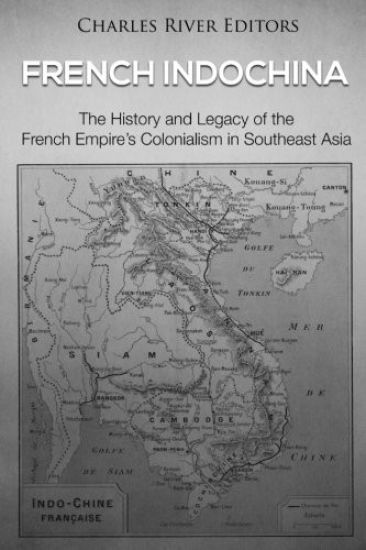
French Indochina: The History and Legacy of the French Empire's Colonialism in Southeast Asia
*Includes pictures *Includes online resources and a bibliography for further reading "Without Empire France today would only be a liberated country. Thanks to her Empire she is today a victorious country." - French Guianan lawyer and politician, Gaston Monnerville The U. S. Naval Station Argentia, located in Placentia Bay, a sheltered harbor on Newfoundland Island, was the unlikely setting for one of the most pivotal summit meetings of the 20th century. The meeting took place on August 9, 1941. World War II was in its second year, the British had won the Battle of Britain, but were still encircled by German U-Boats, and the British fleet was being decimated in the North Atlantic. In North Africa, a contest of armor was underway as Axis and Allied armies fought for control of Egypt, while Britain and her Commonwealth allies stood alone against the mighty German Wehrmacht. Roosevelt, however, pictured a very different post-war world than his British counterpart, Winston Churchill. When he and Churchill met at what came to be known as the Atlantic Conference, Churchill's pleas for U. S. manpower and aid were accepted, but only under clear conditions. If the United States was to come to the aid of Britain, it would be for the purpose of defeating the Germans and the Japanese and not to support the insupportable institutions of empire. Britain and, by extension, France and Portugal, the only remaining major European shareholders in foreign empire, would have to commit to decolonization as a basic prerequisite of substantial U. S. assistance. Churchill, a vocal and forceful proponent of empire and a man of the generation that had conquered the world, did not receive this news well. On the other side of the world, British and allied European Asian colonies lay very much in the path of the Japanese imperial march into Southeast Asia. However, as the inevitability of war grew daily, the nationalist movement in India was also beginning to gather pace. Without India and Indian manpower, war with Japan would be lost before it could begin. The Indians in a sense could hold the British hostage, and ultimately, in exchange for Indian cooperation in the war, the British would first have to commit to a post-war independence process. Meanwhile, the British were not the only European power to take note of this development. The French too were a major imperial power with a great deal to lose from such a monumental change, but their view of the global chessboard was somewhat different. France lay under German occupation, and an armistice had been signed on behalf of the French nation by Marshall Philippe P tain, commencing the era of Vichy France. In London, meanwhile, the firebrand French General Charles de Gaulle urged a continuation of the resistance, believing the French mainland to be only a small part of the picture. France was much more than just France. De Gaulle established the Free French movement in Britain, based on the loyalty and the ongoing Free French control of a majority of her overseas territories. The Free French movement and the Free French army based themselves in Francophone Africa. The saga of the Free French movement would impact the war in both North Africa and Europe, but most specifically, it would serve to radically redefine the French view of itself and her relationship with her overseas territories. Most importantly, it would set the tone for a style of decolonization very different from the British, and perhaps not surprisingly, things would not go smoothly, especially with the geopolitics of the Cold War affecting matters. French Indochina: The History and Legacy of the French Empire's Colonialism in Southeast Asia analyzes the colonization of Southeast Asia and what happened as a result of the decolonization. Along with pictures of important people, places, and events, you will learn about the French in Southeast Asia like never before.
Rodas: La historia y el legado de la isla griega desde tiempos antiguos hasta hoy

Rodas: La historia y el legado de la isla griega desde tiempos antiguos hasta hoy

Charles River

Createspace Independent Publishing Platform
2018
nidottu
Las percepciones modernas de la Grecia cl sica se basan casi invariablemente en Atenas y Esparta, pero tal vez haya pocas reas tan constantemente infravaloradas como la isla de Rodas. Aunque ha sido una parte s lida del mundo griego durante el tiempo que ha existido, Rodas, situada en las afueras de la costa de Asia Menor, fue tambi n desde sus primeros tiempos un puerto abierto a las civilizaciones del Mediterr neo Oriental, y Rodas estuvo involucrada en cada momento significativo de la historia de la antigua Grecia. La isla a menudo jug un papel clave en los acontecimientos mundiales que superaron con creces su peque o tama o, y en un momento dado incluso estuvo al lado de reinos mucho m s grandes como una de las principales potencias en el mundo griego. En los per odos Arcaico y Cl sico, Rodas a menudo se erigi como un excelente ejemplo de los altibajos de sus ciudades griegas, y como la isla m s grande del Dodecaneso, la historia de Rodas est en gran medida en l nea con la del resto de esas islas. Rodas fue colonizada por primera vez por los griegos de la tribu d rica alrededor del siglo VIII a. C., y se aline con sus ciudades d ricas en las islas circundantes y el continente de Asia Menor para formar el llamado Hex polis d rico. Despu s de la revuelta j nica a finales del siglo VI a. C., Rodas, junto con otras islas, estuvo en el camino de la flota persa que cruz el Egeo para enfrentarse a los griegos en las Guerras Persas. Despu s de las Guerras Persas, junto con el resto de las islas y con el Asia Menor Griega, Rodas fue subsumida en la alianza ateniense, que pronto se convertir a en el Imperio Ateniense. Sin embargo, Atenas pronto perder a su poder, y hacia el final de la Guerra del Peloponeso contra Esparta, su poder sobre sus aliados disminuir a. De hecho, en el a o 408 a. C., Rodas, compartiendo la herencia d rica con Esparta, ser a uno de los primeros y m s poderosos aliados de Atenas en la revuelta, y jug un papel clave en el final de la Guerra del Peloponeso al proporcionar una base para la nueva flota espartana para desafiar la supremac a naval ateniense. En el siglo siguiente, Rodas vacilar a entre las esferas de influencia ateniense y espartana, al mismo tiempo que permanecer a demasiado grande para ser sometida permanentemente por cualquiera de las dos ciudades, y as crecer a constantemente en el poder. Fue s lo debido al ascenso de Roma que Rodas, junto con el resto del mundo griego, perdi el poder, y fue gradualmente integrado en la esfera de influencia romana como un aliado antes de ser finalmente anexado al imperio. Despu s de la partici n y el colapso del antiguo Imperio Romano, en la Edad Media Rodas compartir a tanto las fortunas como las vicisitudes del estado sucesor de Roma, el Imperio Bizantino. Junto con los bizantinos, Rodas se enfrentar a primero contra los rabes del Este, y luego contra las Cruzadas europeas del Oeste. A medida que el Imperio Bizantino continuaba perdiendo poder y el caos se extend a en sus antiguas posesiones, Rodas eventualmente ser a ocupada por los Caballeros Hospitalarios, una orden de caballeros cruzados que inicialmente llegaron a la isla mientras se retiraban de Tierra Santa. Estos caballeros se aferraron a Rodas durante m s de 200 a os, convirti ndola en el cuartel general de su singular imperio militar, econ mico y pirata. Se convirti en un basti n de la cristiandad y un recordatorio del antiguo poder de los cruzados en una regi n del Mediterr neo oriental cada vez m s dominada por el Islam. Cuando el castillo de los caballeros de Rodas, a n en pie, cay finalmente ante los turcos otomanos en 1522, Rodas entr en un largo per odo de gobierno turco que dur casi 400 a os. No fue hasta 1948, despu s de sucesivas y breves ocupaciones italianas, alemanas y brit nicas, que la isla se uni finalmente al Estado griego moderno.
Alan Turing: The Life and Legacy of the English Computer Scientist Who Became World War II's Most Famous Codebreaker
*Includes pictures*Includes online resources and a bibliography for further reading"Sometimes, it is the people no one can imagine anything of who do the things no one can imagine..." - Alan TuringThe year is 1930. The United States is still freshly reeling from the cataclysmic stock market crash the previous October, and is desperately attempting to claw its way out from the slippery pits of the Great Depression. 4,000 miles away, British Prime Minister Ramsay MacDonald is struggling himself to prevail over a reality that is as irremediable as it is inextricable: preserving the Gold Standard and providing adequate aid to the poor and unemployed, the latter of which there were reportedly two million of by year's end. The situation in the United Kingdom is comparably dim, for not only had the British also been affected by the crash, they had yet to recover from the lasting wounds of the First World War. It would not be uncommon to see a mob of fuming men posted outside of a labor exchange or the so-called "instructional centers" introduced by Prime Minister MacDonald. These men were armed with not guns, but with placards the length of their torsos. "RELEASE US FROM HUNGER," one placard screamed in bold letters. "WE DEMAND WINTER RELIEF," read another. In another part of town, a number of impoverished families awaited their measly share of gruel, provided to them by a makeshift soup kitchen. The scenes became even more depressing following the setting of the sun. If one took a stroll through the streets of the "rough" neighborhoods, they would see countless silhouettes, large and small, camping out in alleyways, street corners, and embankments, huddled up in a futile attempt to escape the biting frost of winter. It was amidst this bleak atmosphere that a peerlessly profound young mind in South West England first envisioned a concept so momentous that it ultimately led to the creation of what is now considered the world's first computer. This young man was none other than Alan Turing, who was far from the suave, pipe-puffing dandy that many might associate with such a grand and futuristic idea. At the same time, Turing was hardly the kind of two-dimensional, stereotypically bookish character whose light bulb suddenly went off during an experiment binge either. On the contrary, Alan was a gauche and grief-stricken 17-year-old schoolboy who would channel all the pain and confusion from his poignant heartbreak into his tireless research, paving the path for the deeply transformative Computer Age. Alan Turing: The Life and Legacy of the English Computer Scientist Who Became World War II's Most Famous Codebreaker looks at the life of one of World War II's unsung heroes. Along with pictures of important people, places, and events, you will learn about Alan Turing like never before,
Alan Turing: The Life and Legacy of the English Computer Scientist Who Became World War II's Most Famous Codebreaker
*Includes pictures*Includes online resources and a bibliography for further reading"Sometimes, it is the people no one can imagine anything of who do the things no one can imagine..." - Alan TuringThe year is 1930. The United States is still freshly reeling from the cataclysmic stock market crash the previous October, and is desperately attempting to claw its way out from the slippery pits of the Great Depression. 4,000 miles away, British Prime Minister Ramsay MacDonald is struggling himself to prevail over a reality that is as irremediable as it is inextricable: preserving the Gold Standard and providing adequate aid to the poor and unemployed, the latter of which there were reportedly two million of by year's end. The situation in the United Kingdom is comparably dim, for not only had the British also been affected by the crash, they had yet to recover from the lasting wounds of the First World War. It would not be uncommon to see a mob of fuming men posted outside of a labor exchange or the so-called "instructional centers" introduced by Prime Minister MacDonald. These men were armed with not guns, but with placards the length of their torsos. "RELEASE US FROM HUNGER," one placard screamed in bold letters. "WE DEMAND WINTER RELIEF," read another. In another part of town, a number of impoverished families awaited their measly share of gruel, provided to them by a makeshift soup kitchen. The scenes became even more depressing following the setting of the sun. If one took a stroll through the streets of the "rough" neighborhoods, they would see countless silhouettes, large and small, camping out in alleyways, street corners, and embankments, huddled up in a futile attempt to escape the biting frost of winter. It was amidst this bleak atmosphere that a peerlessly profound young mind in South West England first envisioned a concept so momentous that it ultimately led to the creation of what is now considered the world's first computer. This young man was none other than Alan Turing, who was far from the suave, pipe-puffing dandy that many might associate with such a grand and futuristic idea. At the same time, Turing was hardly the kind of two-dimensional, stereotypically bookish character whose light bulb suddenly went off during an experiment binge either. On the contrary, Alan was a gauche and grief-stricken 17-year-old schoolboy who would channel all the pain and confusion from his poignant heartbreak into his tireless research, paving the path for the deeply transformative Computer Age. Alan Turing: The Life and Legacy of the English Computer Scientist Who Became World War II's Most Famous Codebreaker looks at the life of one of World War II's unsung heroes. Along with pictures of important people, places, and events, you will learn about Alan Turing like never before,
The Ghosts of the British Isles: A Collection of Ghost Stories and Other Supernatural Tales from Britain and Ireland
The United Kingdom is an ancient land steeped in history and tradition, filled with prehistoric ruins, majestic castles, and a countryside sculpted from millennia of human habitation. Its rolling countryside is dotted with prehistoric burial mounds and stone circles. Brooding castles hold tales of bloodshed and honor. Medieval churches have elaborate stained glass windows and gruesome carvings, reflecting a mixture of hope and darkness. Every hamlet and village has tales that go back centuries, and folk festivals with roots in pagan times. Thus, it is not surprising that many believe the area is filled with ghosts. For centuries, people have told tales of ghosts stalking its historic buildings, strange creatures lurking in its primeval forests, and unexplained paths linking its ancient sites. Scotland is a fascinating and ancient land filled with history. It has produced explorers, warriors, inventors, writers, and more than a few murderers. For many centuries, it fought bitter wars against England to maintain its independence, and even when those wars were finally lost, Scotland retained its distinct culture and identity. Though a part of the United Kingdom, it would be a mistake to lump it in with England, Wales, and Northern Ireland, as Scotland has its own tales to tell and traditions to maintain. Not everything in Scotland is as it appears, however. Some Scots say this is a land haunted by spirits, a place of strange disappearances and unexplained phenomena. Some of those tales are downright grisly. Scotland has always been a rival to its southern neighbor, and the rivalry extends to the number of hauntings in its medieval castles, stately homes, and old cobblestone streets. While many Englishmen claim that their country is the most haunted, the Scots can point to their own stories of ghosts as evidence they may beat the English in this dubious distinction. Ireland is an ancient land, filled with prehistoric ruins, age-old traditions, and a rich and abiding folklore. Many of the old Irish traditions and tales dwell upon the world beyond our own, the shadow world of spirits. Every village and landmark has a tale attached to it, a good many of them rooted in pagan beliefs from prehistoric times. Others are more modern, and deal with historic tragedies such as the English invasion, the Potato Famine, or the Troubles. According to some locals, ghosts seem to haunt every historic building and place, acting as symbols of the past that still haunts this troubled land. For example, at Aughagreagh in County Longford there's a wall running alongside a road. It's just a typical drystone wall like so many in Ireland used to show the boundary of a farmer's field. The road is just a typical road. But sometimes at night passersby will see a woman and two small children sitting on this wall. They wear tattered clothing in the style of the 19th century. Their faces are drawn and emaciated, their eyes sunken. They have a look of hopeless resignation about them. This is because they are famine victims. The wall stands on the road to the old workhouse, where Ireland's poor and starving were packed into cold rooms and forced to work long hours of hard labor in exchange for a crust of bread and constant abuse. They were literally punished for being poor, and their spirits have remained in this sad place. Ireland also has a rich folklore. Everyone knows about the fairy folk and leprechauns and many have heard of the fearsome banshee. The stranger side of the Emerald Isle goes much deeper than that, however, with tales of phantom armies marching through the sky, sea monsters swimming in the waters around the island, and stories of strange powers and dark magic. Indeed, these tales are not consigned to the past; many unexplained occurrences continue to happen, even today.
Ghost Tales of the United Kingdom: Historic Hauntings and Supernatural Stories from the UK
*Includes pictures *Includes accounts *Includes online resources and a bibliography for further reading "In Scotland, beautiful as it is, it was always raining. Even when it wasn't raining, it was about to rain, or had just rained. It's a very angry sky." - Colin Hay The United Kingdom is an ancient land steeped in history and tradition, filled with prehistoric ruins, majestic castles, and a countryside sculpted from millennia of human habitation. Its rolling countryside is dotted with prehistoric burial mounds and stone circles. Brooding castles hold tales of bloodshed and honor. Medieval churches have elaborate stained glass windows and gruesome carvings, reflecting a mixture of hope and darkness. Every hamlet and village has tales that go back centuries, and folk festivals with roots in pagan times. Thus, it is not surprising that many believe the area is filled with ghosts. For centuries, people have told tales of ghosts stalking its historic buildings, strange creatures lurking in its primeval forests, and unexplained paths linking its ancient sites. Scotland is a fascinating and ancient land filled with history. It has produced explorers, warriors, inventors, writers, and more than a few murderers. For many centuries, it fought bitter wars against England to maintain its independence, and even when those wars were finally lost, Scotland retained its distinct culture and identity. Though a part of the United Kingdom, it would be a mistake to lump it in with England, Wales, and Northern Ireland, as Scotland has its own tales to tell and traditions to maintain. Not everything in Scotland is as it appears, however. Some Scots say this is a land haunted by spirits, a place of strange disappearances and unexplained phenomena. There is no shortage when it comes to the strange stories Scotland has to offer, and the legends and lore have compelled many to dig a little deeper and even explore this wonderful land for themselves. Some of those tales are downright grisly. Scotland has always been a rival to its southern neighbor, and the rivalry extends to the number of hauntings in its medieval castles, stately homes, and old cobblestone streets. While many Englishmen claim that their country is the most haunted, the Scots can point to their own stories of ghosts as evidence they may beat the English in this dubious distinction. The Welsh have their distinct language and customs and have always felt themselves to be a people apart from the neighboring English. This division goes back to the 5th century, when the ancient Britons fled west in the face of the Anglo-Saxon incursion. The Anglo-Saxons were made up of three tribes-the Angles, Saxons, and Jutes-from what is now Denmark and northern Germany. These tribes took advantage of the Roman legion's departure to attack vulnerable Britons, taking over England until the Britons in Wales defied them. This defiance continued into the Middle Ages, and numerous wars occurred as successive English kings tried and eventually succeeded in asserting their will over the rebellious country. With such a storied and violent past, it is no surprise that Wales has many tales of ghosts. Ghost Tales of the United Kingdom: Historic Hauntings and Supernatural Stories from the UK offers a sampling of the many strange ghost stories and unexplained phenomena that make the UK such an intriguing place. Along with pictures of important people, places, and events, you will learn about the ghosts of the UK like never before.
French Indochina: The History and Legacy of the French Empire's Colonialism in Southeast Asia
*Includes pictures *Includes online resources and a bibliography for further reading "Without Empire France today would only be a liberated country. Thanks to her Empire she is today a victorious country." - French Guianan lawyer and politician, Gaston Monnerville The U. S. Naval Station Argentia, located in Placentia Bay, a sheltered harbor on Newfoundland Island, was the unlikely setting for one of the most pivotal summit meetings of the 20th century. The meeting took place on August 9, 1941. World War II was in its second year, the British had won the Battle of Britain, but were still encircled by German U-Boats, and the British fleet was being decimated in the North Atlantic. In North Africa, a contest of armor was underway as Axis and Allied armies fought for control of Egypt, while Britain and her Commonwealth allies stood alone against the mighty German Wehrmacht. Roosevelt, however, pictured a very different post-war world than his British counterpart, Winston Churchill. When he and Churchill met at what came to be known as the Atlantic Conference, Churchill's pleas for U. S. manpower and aid were accepted, but only under clear conditions. If the United States was to come to the aid of Britain, it would be for the purpose of defeating the Germans and the Japanese and not to support the insupportable institutions of empire. Britain and, by extension, France and Portugal, the only remaining major European shareholders in foreign empire, would have to commit to decolonization as a basic prerequisite of substantial U. S. assistance. Churchill, a vocal and forceful proponent of empire and a man of the generation that had conquered the world, did not receive this news well. On the other side of the world, British and allied European Asian colonies lay very much in the path of the Japanese imperial march into Southeast Asia. However, as the inevitability of war grew daily, the nationalist movement in India was also beginning to gather pace. Without India and Indian manpower, war with Japan would be lost before it could begin. The Indians in a sense could hold the British hostage, and ultimately, in exchange for Indian cooperation in the war, the British would first have to commit to a post-war independence process. Meanwhile, the British were not the only European power to take note of this development. The French too were a major imperial power with a great deal to lose from such a monumental change, but their view of the global chessboard was somewhat different. France lay under German occupation, and an armistice had been signed on behalf of the French nation by Marshall Philippe P tain, commencing the era of Vichy France. In London, meanwhile, the firebrand French General Charles de Gaulle urged a continuation of the resistance, believing the French mainland to be only a small part of the picture. France was much more than just France. De Gaulle established the Free French movement in Britain, based on the loyalty and the ongoing Free French control of a majority of her overseas territories. The Free French movement and the Free French army based themselves in Francophone Africa. The saga of the Free French movement would impact the war in both North Africa and Europe, but most specifically, it would serve to radically redefine the French view of itself and her relationship with her overseas territories. Most importantly, it would set the tone for a style of decolonization very different from the British, and perhaps not surprisingly, things would not go smoothly, especially with the geopolitics of the Cold War affecting matters. French Indochina: The History and Legacy of the French Empire's Colonialism in Southeast Asia analyzes the colonization of Southeast Asia and what happened as a result of the decolonization. Along with pictures of important people, places, and events, you will learn about the French in Southeast Asia like never before.
Seth: The History and Legacy of the Ancient Egyptian God Who Killed Osiris to Usurp the Throne

Seth: The History and Legacy of the Ancient Egyptian God Who Killed Osiris to Usurp the Throne

Markus Carabas; Charles River

Createspace Independent Publishing Platform
2018
nidottu
*Includes pictures*Includes ancient accounts*Includes online resources and a bibliography for further reading"On the third day Typhon Seth] was born, but not in due season or manner, but with a blow he broke through his mother's side and leapt forth ... For this reason the kings considered the third of the intercalated days as inauspicious, and transacted no business on that day, nor did they give any attention to their bodies until nightfall." - Plutarch, On Isis and OsirisAfrica may have given rise to the first human beings, and Egypt probably gave rise to the first great civilizations, which continue to fascinate modern societies across the globe nearly 5,000 years later. From the Library and Lighthouse of Alexandria to the Great Pyramid at Giza, the Ancient Egyptians produced several wonders of the world, revolutionized architecture and construction, created some of the world's first systems of mathematics and medicine, and established language and art that spread across the known world. With world-famous leaders like King Tut and Cleopatra, it's no wonder that today's world has so many Egyptologists. To the ancient Egyptians, as was the case with any society made up of inquiring humans, the world was a confusing and often terrifying place of destruction, death and unexplained phenomena. In order to make sense of such an existence, they resorted to teleological stories. Giving a phenomenon a story made it less horrifying, and it also helped them make sense of the world around them. Unsurprisingly, then, the ancient Egyptian gods permeated every aspect of existence. In the first dynastic period there is a symbolic depiction of the earliest form of kingship. The symbol consisted of the "Two Ladies and Two Lords." The Ladies were the goddesses Nekhbet and Wadjyt, who represented the Upper and Lower kingdoms of Egypt, each with her crown of either White or Red; the Two Lords were the conflicting gods Horus and Seth. The contention between these two gods was transmuted into real-world conflict when, during the Second Dynasty, king Peribsen chose to put the mysterious "Seth Animal" above his name, thus favoring one of the "Two Lords" over the other. Peribsen kept this close association with Seth, betraying the earlier kingly association with Horus, until king Khasekhemwy dethroned him and placed both gods" animals above his own name and declared "the Two Lords are at rest." The modern historian Geraldine Pinch suggests that this is a very early example of the Egyptians" tendency to mythologize their real-world conflicts, a trait the Egyptians would continue well into their long history. It's true that the vast history of Egypt can only be given a cursory view at any one time, but, in the case of its myths, just enough to contextualize the story can be sufficient to understand the progression of a deity like Seth through the millennia. In fact, the development of Seth's character throughout history is possibly one of the most fascinating and divisive among the Egyptian deities. Beginning as one of the "Two Lords" Seth's pre-eminence among the gods continues well into the later dynasties as he never loses his place among the principal nine deities, known as the Ennead, despite his nefarious dealings with his brother, Osiris, his sister and sister-in-law, Isis, and his nephew, their son, Horus. At first glance it is easy to see how Seth came to be vilified as a kind of "demon" or "devil" but, with an understanding of the belief structure he was born out of, modern readers can see that this divisive god was much more complex than a mere "adversary." Seth: The History and Legacy of the Ancient Egyptian God Who Killed Osiris to Usurp the Throne looks at the mythology surrounding one of antiquity's most famous deities. Along with pictures depicting important people, places, and events, you will learn about Seth like never before.