Kirjojen hintavertailu – 12 903 725 kirjaa ja 27 kauppaa

Kirjailija

Charles River

Kirjat ja teokset yhdessä paikassa: 4 673 kirjaa, julkaisuja vuosilta 2013–2022, suosituimpiin kuuluu William Powell and Myrna Loy: The Lives and Careers of One of Classical Hollywood's Most Iconic Duos. Vertaile teosten hintoja ja tarkista saatavuus suomalaisista kirjakaupoista.

4 673 kirjaa

Kirjojen julkaisuvuodet: 2013–2022.

Roman Egypt: The History and Legacy of Ancient Egypt as a Province of Rome

Roman Egypt: The History and Legacy of Ancient Egypt as a Province of Rome

Charles River

Createspace Independent Publishing Platform
2018
nidottu
*Includes pictures *Includes ancient accounts *Includes online resources and a bibliography for further reading Among all the periods in ancient Egyptian history, the Ptolemaic Kingdom and its most famous ruler, Cleopatra, may be the most well-known today. Although Alexander never lived to rule over Egypt, one of his generals, Ptolemy I, did, and it was he who established the last great pharaonic dynasty in Egypt, known as the Ptolemaic Dynasty. The Ptolemies gave ancient Egypt an injection of vitality that had not been seen in the Nile Valley for centuries, preserving many aspects of native Egyptian culture while adding their own layer of Hellenic culture. The end of the Ptolemies also happened to coincide with the most famous period of Roman history. In the latter 1st century BCE, men like Julius Caesar, Mark Antony, and Octavian participated in two civil wars that would spell the end of the Roman Republic and determine who would become the Roman emperor. In the middle of it all was history's most famous woman, Cleopatra, who famously seduced both Caesar and Antony and thereby positioned herself as one of the most influential people in a world of powerful men. Cleopatra was a legendary figure even to contemporary Romans and the ancient world, and she was a controversial figure who was equally reviled and praised through the years, depicted both as a benevolent ruler and an evil seductress (occasionally at the same time). Over 2,000 years after her death, everything about Cleopatra continues to fascinate people around the world, from her lineage as a Ptolemaic pharaoh, her physical features, the manner in which she seduced Caesar, her departure during the Battle of Actium, and her famous suicide. And despite being one of the most famous figures in history, there is still much mystery surrounding her and the end of the Ptolemies, leading historians and archaeologists scouring Alexandria, Egypt for clues about her life and Egypt's transition to Roman rule. As for Roman Egypt, the period from 30 B. C. until the Roman Empire was split into two halves in the 4th century CE. It is scarcely mentioned, yet, it was a time when Egypt, if no longer a great power in its own right, was a pivotal province in the Roman Empire. It could also be argued it was a power without which the Roman Empire would not have survived. Its wealth, especially its fertility, was the key for any Roman emperor hoping to feed and entertain Rome's ever-demanding masses and was particularly vital to Augustus as he established himself as the first emperor of Egypt. The institution of imperial, as opposed to senatorial, provinces proved crucial in the consolidation of imperial power. Moreover, how Egypt in this period was administered and exploited provides invaluable information as to how Rome manipulated and controlled large populations for its benefit in the rest of its empire. Tactics used again and again throughout the Roman world were honed in this, the most valuable of Rome's provinces. Egypt's key role in imperial politics was crucial, but so was its role in the rise of Christianity. For many years, the belief that Christianity had spread from Jerusalem to engulf the Roman Empire has been largely unchallenged, but more recent scholarship suggests the codification of Christian doctrine and success of missionaries from Alexandria and not Jerusalem, were instrumental in Christianity becoming the state religion of the empire. Given the importance of Christianity to both European and world history, this issue is of a real significance. Roman Egypt: The History and Legacy of Ancient Egypt as a Province of Rome chronicles the tumultuous history of Egypt at the end of the 1st century BCE, and its role as a Roman province. Along with pictures depicting important people, places, and events, you will learn about Roman Egypt like never before.
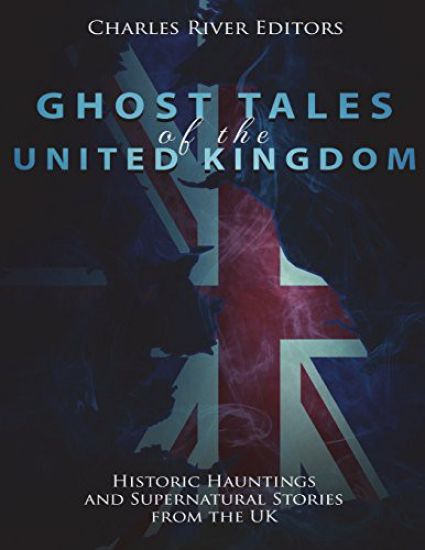
Ghost Tales of the United Kingdom: Historic Hauntings and Supernatural Stories from the UK
*Includes pictures *Includes accounts *Includes online resources and a bibliography for further reading "In Scotland, beautiful as it is, it was always raining. Even when it wasn't raining, it was about to rain, or had just rained. It's a very angry sky." - Colin Hay The United Kingdom is an ancient land steeped in history and tradition, filled with prehistoric ruins, majestic castles, and a countryside sculpted from millennia of human habitation. Its rolling countryside is dotted with prehistoric burial mounds and stone circles. Brooding castles hold tales of bloodshed and honor. Medieval churches have elaborate stained glass windows and gruesome carvings, reflecting a mixture of hope and darkness. Every hamlet and village has tales that go back centuries, and folk festivals with roots in pagan times. Thus, it is not surprising that many believe the area is filled with ghosts. For centuries, people have told tales of ghosts stalking its historic buildings, strange creatures lurking in its primeval forests, and unexplained paths linking its ancient sites. Scotland is a fascinating and ancient land filled with history. It has produced explorers, warriors, inventors, writers, and more than a few murderers. For many centuries, it fought bitter wars against England to maintain its independence, and even when those wars were finally lost, Scotland retained its distinct culture and identity. Though a part of the United Kingdom, it would be a mistake to lump it in with England, Wales, and Northern Ireland, as Scotland has its own tales to tell and traditions to maintain. Not everything in Scotland is as it appears, however. Some Scots say this is a land haunted by spirits, a place of strange disappearances and unexplained phenomena. There is no shortage when it comes to the strange stories Scotland has to offer, and the legends and lore have compelled many to dig a little deeper and even explore this wonderful land for themselves. Some of those tales are downright grisly. Scotland has always been a rival to its southern neighbor, and the rivalry extends to the number of hauntings in its medieval castles, stately homes, and old cobblestone streets. While many Englishmen claim that their country is the most haunted, the Scots can point to their own stories of ghosts as evidence they may beat the English in this dubious distinction. The Welsh have their distinct language and customs and have always felt themselves to be a people apart from the neighboring English. This division goes back to the 5th century, when the ancient Britons fled west in the face of the Anglo-Saxon incursion. The Anglo-Saxons were made up of three tribes-the Angles, Saxons, and Jutes-from what is now Denmark and northern Germany. These tribes took advantage of the Roman legion's departure to attack vulnerable Britons, taking over England until the Britons in Wales defied them. This defiance continued into the Middle Ages, and numerous wars occurred as successive English kings tried and eventually succeeded in asserting their will over the rebellious country. With such a storied and violent past, it is no surprise that Wales has many tales of ghosts. Ghost Tales of the United Kingdom: Historic Hauntings and Supernatural Stories from the UK offers a sampling of the many strange ghost stories and unexplained phenomena that make the UK such an intriguing place. Along with pictures of important people, places, and events, you will learn about the ghosts of the UK like never before.
Germany and the Cold War: The History and Legacy of the Divide between East Germany and West Germany
*Includes pictures*Includes online resources and a bibliography for further reading"From Stettin in the Baltic to Trieste in the Adriatic an 'Iron Curtain' has descended across the continent. Behind that line lie all the capitals of the ancient states of Central Europe and Eastern Europe. Warsaw, Berlin, Prague, Vienna, Budapest, Belgrade, Bucharest and Sofia; all these famous cities and the populations around them lie in what I must call the Soviet sphere, and all are subject, in one form or another, not only to Soviet influence but to a very high and in some cases increasing measure of control from Moscow." - Winston Churchill, 1946In the wake of World War II, the European continent was devastated, and the conflict left the Soviet Union and the United States as uncontested superpowers. This ushered in over 45 years of the Cold War, and a political alignment of Western democracies against the Communist Soviet bloc that produced conflicts pitting allies on each sides fighting, even as the American and Soviet militaries never engaged each other. Though it never got "hot," the Cold War was a tense era until the dissolution of the USSR, and nothing symbolized the split more than the Berlin Wall, which literally divided the city. Berlin had been a flashpoint even before World War II ended, and the city was occupied by the different Allies even as the close of the war turned them into adversaries. After the Soviets' blockade of West Berlin was prevented by the Berlin Airlift, the Eastern Bloc and the Western powers continued to control different sections of the city, and by the 1960s, East Germany was pushing for a solution to the problem of an enclave of freedom within its borders. West Berlin was a haven for highly-educated East Germans who wanted freedom and a better life in the West, and this "brain drain" was threatening the survival of the East German economy. The history of East Germany was a remarkable one, from its chaotic origins through its ossification as a Stalinist regime, until the country collapsed along with the Berlin Wall. Conversely, West Germany became one of the most stable and prosperous states in Europe during the Cold War. In many ways, the legacy of the split is still around today. The West Germans honestly confronted its brutal past and competently absorbed the far poorer Soviet satellite East Germany upon the reunification of Germany in 1990. This, of course, was not at all certain or obvious when the Allies beat back the Nazis at the end of the war in 1945, but far from making the same mistakes the Allied Powers made after World War I, the Allies opted to mold West Germany as a liberal, democratic state that would achieve prosperity and renounce war. With that said, Germany is still marked by the division, and in some respects, the old frontier still represents different expectations, social conditions, and worldviews. Germany and the Cold War: The History and Legacy of the Divide between East Germany and West Germany examines how the country was split, and how both countries marked the epicenter of the Cold War in the wake of World War II. Along with pictures and a bibliography, you will learn about Germany during the Cold War like never before.
Eleanor of Aquitaine: The Life and Legacy of Medieval Europe's Most Famous Queen

Eleanor of Aquitaine: The Life and Legacy of Medieval Europe's Most Famous Queen

Charles River

Createspace Independent Publishing Platform
2018
nidottu
*Includes pictures *Includes online resources and a bibliography for further reading Laying next to the tomb effigy of King Henry II in France's Fontevraud Abbey is a curious coffin chiseled in the shape of a young woman in repose. The once vibrant paint on the effigy is flaking, and several areas of the centuries-old tombs are chipped, but her general features are still somewhat recognizable. The beautiful crowned queen, depicted with a soft smile on her face, was dressed in a simple, but elegant gown in white and blue, and an open book in her arms. The effigy is for none other than Duchess Eleanor of Aquitaine. Over the years, this mysterious 12th century figure has been portrayed in countless ways, from a valiant warrior queen and resourceful politician to a control-obsessed and manipulative siren whose only objective in life was power. Eleanor of Aquitaine: The Life and Legacy of Medieval Europe's Most Famous Queen attempts to provide an unbiased look at Eleanor's life by exploring the achievements and trials of the duchess-queen, and deconstructing the "black legends" and other compelling tales that continue to envelop her to this day. Along with pictures depicting important people, places, and events, you will learn about Eleanor of Aquitaine like never before.
Eleanor of Aquitaine: The Life and Legacy of Medieval Europe's Most Famous Queen

Eleanor of Aquitaine: The Life and Legacy of Medieval Europe's Most Famous Queen

Charles River

Createspace Independent Publishing Platform
2018
nidottu
*Includes pictures *Includes online resources and a bibliography for further reading Laying next to the tomb effigy of King Henry II in France's Fontevraud Abbey is a curious coffin chiseled in the shape of a young woman in repose. The once vibrant paint on the effigy is flaking, and several areas of the centuries-old tombs are chipped, but her general features are still somewhat recognizable. The beautiful crowned queen, depicted with a soft smile on her face, was dressed in a simple, but elegant gown in white and blue, and an open book in her arms. The effigy is for none other than Duchess Eleanor of Aquitaine. Over the years, this mysterious 12th century figure has been portrayed in countless ways, from a valiant warrior queen and resourceful politician to a control-obsessed and manipulative siren whose only objective in life was power. Eleanor of Aquitaine: The Life and Legacy of Medieval Europe's Most Famous Queen attempts to provide an unbiased look at Eleanor's life by exploring the achievements and trials of the duchess-queen, and deconstructing the "black legends" and other compelling tales that continue to envelop her to this day. Along with pictures depicting important people, places, and events, you will learn about Eleanor of Aquitaine like never before.
Seth: The History and Legacy of the Ancient Egyptian God Who Killed Osiris to Usurp the Throne

Seth: The History and Legacy of the Ancient Egyptian God Who Killed Osiris to Usurp the Throne

Markus Carabas; Charles River

Createspace Independent Publishing Platform
2018
nidottu
*Includes pictures*Includes ancient accounts*Includes online resources and a bibliography for further reading"On the third day Typhon Seth] was born, but not in due season or manner, but with a blow he broke through his mother's side and leapt forth ... For this reason the kings considered the third of the intercalated days as inauspicious, and transacted no business on that day, nor did they give any attention to their bodies until nightfall." - Plutarch, On Isis and OsirisAfrica may have given rise to the first human beings, and Egypt probably gave rise to the first great civilizations, which continue to fascinate modern societies across the globe nearly 5,000 years later. From the Library and Lighthouse of Alexandria to the Great Pyramid at Giza, the Ancient Egyptians produced several wonders of the world, revolutionized architecture and construction, created some of the world's first systems of mathematics and medicine, and established language and art that spread across the known world. With world-famous leaders like King Tut and Cleopatra, it's no wonder that today's world has so many Egyptologists. To the ancient Egyptians, as was the case with any society made up of inquiring humans, the world was a confusing and often terrifying place of destruction, death and unexplained phenomena. In order to make sense of such an existence, they resorted to teleological stories. Giving a phenomenon a story made it less horrifying, and it also helped them make sense of the world around them. Unsurprisingly, then, the ancient Egyptian gods permeated every aspect of existence. In the first dynastic period there is a symbolic depiction of the earliest form of kingship. The symbol consisted of the "Two Ladies and Two Lords." The Ladies were the goddesses Nekhbet and Wadjyt, who represented the Upper and Lower kingdoms of Egypt, each with her crown of either White or Red; the Two Lords were the conflicting gods Horus and Seth. The contention between these two gods was transmuted into real-world conflict when, during the Second Dynasty, king Peribsen chose to put the mysterious "Seth Animal" above his name, thus favoring one of the "Two Lords" over the other. Peribsen kept this close association with Seth, betraying the earlier kingly association with Horus, until king Khasekhemwy dethroned him and placed both gods" animals above his own name and declared "the Two Lords are at rest." The modern historian Geraldine Pinch suggests that this is a very early example of the Egyptians" tendency to mythologize their real-world conflicts, a trait the Egyptians would continue well into their long history. It's true that the vast history of Egypt can only be given a cursory view at any one time, but, in the case of its myths, just enough to contextualize the story can be sufficient to understand the progression of a deity like Seth through the millennia. In fact, the development of Seth's character throughout history is possibly one of the most fascinating and divisive among the Egyptian deities. Beginning as one of the "Two Lords" Seth's pre-eminence among the gods continues well into the later dynasties as he never loses his place among the principal nine deities, known as the Ennead, despite his nefarious dealings with his brother, Osiris, his sister and sister-in-law, Isis, and his nephew, their son, Horus. At first glance it is easy to see how Seth came to be vilified as a kind of "demon" or "devil" but, with an understanding of the belief structure he was born out of, modern readers can see that this divisive god was much more complex than a mere "adversary." Seth: The History and Legacy of the Ancient Egyptian God Who Killed Osiris to Usurp the Throne looks at the mythology surrounding one of antiquity's most famous deities. Along with pictures depicting important people, places, and events, you will learn about Seth like never before.
The European Settlement of Australia: The History and Legacy of Early Expeditions and British Settlements on the Australian Continent
*Includes pictures *Includes contemporary accounts *Includes online resources and a bibliography for further reading "It is quite time that our children were taught a little more about their country, for shame's sake." - Henry Lawson, Australian poet A land of almost 3 million square miles has lain since time immemorial on the southern flank of the planet, so isolated that it remained entirely outside of European knowledge until 1770. However, the first human footprints on this vast territory were felt 70,000 years earlier, as people began to cross the periodic land bridges and the short sea crossings from Southeast Asia. The history of the indigenous inhabitants of Australia, known in contemporary anthropology as the "Aboriginal and Torres Strait Islander people of Australia," is a complex and continually evolving field of study, and it has been colored by politics. For generations after the arrival of whites in Australia, the Aboriginal people were disregarded and marginalized, largely because they offered little in the way of a labor resource, and they occupied land required for European settlement. At the same time, it is a misconception that indigenous Australians meekly accepted the invasion of their country by the British, for they did not. They certainly resisted, but as far as colonial wars during that era went, the frontier conflicts of Australia did not warrant a great deal of attention. Indigenous Australians were hardly a warlike people, and without central organization, or political cohesion beyond scattered family groups, they succumbed to the orchestrated advance of white settlement with passionate, but futile resistance. In many instances, aggressive clashes between the two groups simply gave the white colonists reasonable cause to inflict a style of genocide on the Aborigines that stood in the way of progress. In any case, their fate had largely been sealed by the first European sneeze in the Terra Australis, which preceded the importation of the two signature mediums of social destruction. The first was a collection of alien diseases, chief among smallpox, but also cholera, influenza, measles, tuberculosis, syphilis and the common cold. The second was alcohol. Smallpox alone killed more than 50% of the aboriginal population, and once the fabric of indigenous society had crumbled, alcohol provided emotional relief, but relegated huge numbers of Aborigines to the margins of a robust and emerging colonial society. The European Settlement of Australia: The History and Legacy of Early Expeditions and British Settlements on the Australian Continent analyzes the expeditions that discovered Australia and the subsequent settlements over the course of about 150 years. Along with pictures of important people, places, and events, you will learn about the European settlement of Australia like never before.
The European Settlement of Australia: The History and Legacy of Early Expeditions and British Settlements on the Australian Continent
*Includes pictures *Includes contemporary accounts *Includes online resources and a bibliography for further reading "It is quite time that our children were taught a little more about their country, for shame's sake." - Henry Lawson, Australian poet A land of almost 3 million square miles has lain since time immemorial on the southern flank of the planet, so isolated that it remained entirely outside of European knowledge until 1770. However, the first human footprints on this vast territory were felt 70,000 years earlier, as people began to cross the periodic land bridges and the short sea crossings from Southeast Asia. The history of the indigenous inhabitants of Australia, known in contemporary anthropology as the "Aboriginal and Torres Strait Islander people of Australia," is a complex and continually evolving field of study, and it has been colored by politics. For generations after the arrival of whites in Australia, the Aboriginal people were disregarded and marginalized, largely because they offered little in the way of a labor resource, and they occupied land required for European settlement. At the same time, it is a misconception that indigenous Australians meekly accepted the invasion of their country by the British, for they did not. They certainly resisted, but as far as colonial wars during that era went, the frontier conflicts of Australia did not warrant a great deal of attention. Indigenous Australians were hardly a warlike people, and without central organization, or political cohesion beyond scattered family groups, they succumbed to the orchestrated advance of white settlement with passionate, but futile resistance. In many instances, aggressive clashes between the two groups simply gave the white colonists reasonable cause to inflict a style of genocide on the Aborigines that stood in the way of progress. In any case, their fate had largely been sealed by the first European sneeze in the Terra Australis, which preceded the importation of the two signature mediums of social destruction. The first was a collection of alien diseases, chief among smallpox, but also cholera, influenza, measles, tuberculosis, syphilis and the common cold. The second was alcohol. Smallpox alone killed more than 50% of the aboriginal population, and once the fabric of indigenous society had crumbled, alcohol provided emotional relief, but relegated huge numbers of Aborigines to the margins of a robust and emerging colonial society. The European Settlement of Australia: The History and Legacy of Early Expeditions and British Settlements on the Australian Continent analyzes the expeditions that discovered Australia and the subsequent settlements over the course of about 150 years. Along with pictures of important people, places, and events, you will learn about the European settlement of Australia like never before.
Roman Egypt: The History and Legacy of Ancient Egypt as a Province of Rome

Roman Egypt: The History and Legacy of Ancient Egypt as a Province of Rome

Charles River

Createspace Independent Publishing Platform
2018
nidottu
*Includes pictures *Includes ancient accounts *Includes online resources and a bibliography for further reading Among all the periods in ancient Egyptian history, the Ptolemaic Kingdom and its most famous ruler, Cleopatra, may be the most well-known today. Although Alexander never lived to rule over Egypt, one of his generals, Ptolemy I, did, and it was he who established the last great pharaonic dynasty in Egypt, known as the Ptolemaic Dynasty. The Ptolemies gave ancient Egypt an injection of vitality that had not been seen in the Nile Valley for centuries, preserving many aspects of native Egyptian culture while adding their own layer of Hellenic culture. The end of the Ptolemies also happened to coincide with the most famous period of Roman history. In the latter 1st century BCE, men like Julius Caesar, Mark Antony, and Octavian participated in two civil wars that would spell the end of the Roman Republic and determine who would become the Roman emperor. In the middle of it all was history's most famous woman, Cleopatra, who famously seduced both Caesar and Antony and thereby positioned herself as one of the most influential people in a world of powerful men. Cleopatra was a legendary figure even to contemporary Romans and the ancient world, and she was a controversial figure who was equally reviled and praised through the years, depicted both as a benevolent ruler and an evil seductress (occasionally at the same time). Over 2,000 years after her death, everything about Cleopatra continues to fascinate people around the world, from her lineage as a Ptolemaic pharaoh, her physical features, the manner in which she seduced Caesar, her departure during the Battle of Actium, and her famous suicide. And despite being one of the most famous figures in history, there is still much mystery surrounding her and the end of the Ptolemies, leading historians and archaeologists scouring Alexandria, Egypt for clues about her life and Egypt's transition to Roman rule. As for Roman Egypt, the period from 30 B. C. until the Roman Empire was split into two halves in the 4th century CE. It is scarcely mentioned, yet, it was a time when Egypt, if no longer a great power in its own right, was a pivotal province in the Roman Empire. It could also be argued it was a power without which the Roman Empire would not have survived. Its wealth, especially its fertility, was the key for any Roman emperor hoping to feed and entertain Rome's ever-demanding masses and was particularly vital to Augustus as he established himself as the first emperor of Egypt. The institution of imperial, as opposed to senatorial, provinces proved crucial in the consolidation of imperial power. Moreover, how Egypt in this period was administered and exploited provides invaluable information as to how Rome manipulated and controlled large populations for its benefit in the rest of its empire. Tactics used again and again throughout the Roman world were honed in this, the most valuable of Rome's provinces. Egypt's key role in imperial politics was crucial, but so was its role in the rise of Christianity. For many years, the belief that Christianity had spread from Jerusalem to engulf the Roman Empire has been largely unchallenged, but more recent scholarship suggests the codification of Christian doctrine and success of missionaries from Alexandria and not Jerusalem, were instrumental in Christianity becoming the state religion of the empire. Given the importance of Christianity to both European and world history, this issue is of a real significance. Roman Egypt: The History and Legacy of Ancient Egypt as a Province of Rome chronicles the tumultuous history of Egypt at the end of the 1st century BCE, and its role as a Roman province. Along with pictures depicting important people, places, and events, you will learn about Roman Egypt like never before.

The French Invasion of Italy in 1494: The History and Legacy of the Conflict that Started the Italian Wars
*Includes pictures *Includes contemporary accounts *Includes online resources and a bibliography for further reading In 1494, there were five sovereign regional powers in Italy: Milan, Venice, Florence, the Papal States and Naples. In 1536, only one remained: Venice. These decades of conflict precipitated great anxiety among Western thinkers, and Italians responded to the fragmentation, forevermore, of Latin Christendom, the end of self-governance for Italians, and the beginning of the early modern era in a myriad of ways. They were always heavily influenced by the lived experience of warfare between large Christian armies on the peninsula. The diplomatic and military history of this 30 year period is a complex one that one eminent Renaissance historian, Lauro Martines, has described as "best told by a computer, so many and tangled are the treatises, negotiations and battles." At the same time, the fighting went in tandem with the Renaissance and was influenced by it. Most historians credit the city-state of Florence as the place that started and developed the Italian Renaissance, a process carried out through the patronage and commission of artists during the late 12th century. If Florence is receiving its due credit, much of it belongs to the Medicis, the family dynasty of Florence that ruled at the height of the Renaissance. The dynasty held such influence that some of its family members even became Pope. Lorenzo de Medici may have not been a king, prince or duke, but he nevertheless held significant influence over all of the noble houses of the region, from Milan and Naples to the King of France. Between 1482 and 1484, Lorenzo's influence prevented a close alliance between King Louis IX of France and the city of Venice, which was at war with Ferrara. Lorenzo's personal influence helped reduce Venice's power in the region. During the Baron's War of 1485 and 1486, while Florence sided with the pope, Lorenzo favored Ferdinando of Aragon, who had close ties with Naples, giving Lorenzo the chance to attempt to negotiate an improvement in relations between the pope and Naples. While the two had once been allied against Florence, their alliance had ended with the war. Lorenzo proposed a new agreement between the two, largely centered around financial obligations, in 1489. It was accepted in 1492, creating an enduring peace for some time. Perhaps fittingly, once Lorenzo the Magnificent died, the tenuous peace would go with him, touching off the Italian Wars. The French Invasion of Italy in 1494: The History and Legacy of the Conflict that Started the Italian Wars chronicles the decisive campaign that forever changed the Italian peninsula at the end of the 15th century. Along with pictures of important people, places, and events, you will learn about the First Italian War like never before.
The French Invasion of Italy in 1494: The History and Legacy of the Conflict that Started the Italian Wars
*Includes pictures *Includes contemporary accounts *Includes online resources and a bibliography for further reading In 1494, there were five sovereign regional powers in Italy: Milan, Venice, Florence, the Papal States and Naples. In 1536, only one remained: Venice. These decades of conflict precipitated great anxiety among Western thinkers, and Italians responded to the fragmentation, forevermore, of Latin Christendom, the end of self-governance for Italians, and the beginning of the early modern era in a myriad of ways. They were always heavily influenced by the lived experience of warfare between large Christian armies on the peninsula. The diplomatic and military history of this 30 year period is a complex one that one eminent Renaissance historian, Lauro Martines, has described as "best told by a computer, so many and tangled are the treatises, negotiations and battles." At the same time, the fighting went in tandem with the Renaissance and was influenced by it. Most historians credit the city-state of Florence as the place that started and developed the Italian Renaissance, a process carried out through the patronage and commission of artists during the late 12th century. If Florence is receiving its due credit, much of it belongs to the Medicis, the family dynasty of Florence that ruled at the height of the Renaissance. The dynasty held such influence that some of its family members even became Pope. Lorenzo de Medici may have not been a king, prince or duke, but he nevertheless held significant influence over all of the noble houses of the region, from Milan and Naples to the King of France. Between 1482 and 1484, Lorenzo's influence prevented a close alliance between King Louis IX of France and the city of Venice, which was at war with Ferrara. Lorenzo's personal influence helped reduce Venice's power in the region. During the Baron's War of 1485 and 1486, while Florence sided with the pope, Lorenzo favored Ferdinando of Aragon, who had close ties with Naples, giving Lorenzo the chance to attempt to negotiate an improvement in relations between the pope and Naples. While the two had once been allied against Florence, their alliance had ended with the war. Lorenzo proposed a new agreement between the two, largely centered around financial obligations, in 1489. It was accepted in 1492, creating an enduring peace for some time. Perhaps fittingly, once Lorenzo the Magnificent died, the tenuous peace would go with him, touching off the Italian Wars. The French Invasion of Italy in 1494: The History and Legacy of the Conflict that Started the Italian Wars chronicles the decisive campaign that forever changed the Italian peninsula at the end of the 15th century. Along with pictures of important people, places, and events, you will learn about the First Italian War like never before.
Tulip Mania: The History and Legacy of the World's First Speculative Bubble during the Dutch Golden Age

Tulip Mania: The History and Legacy of the World's First Speculative Bubble during the Dutch Golden Age

Charles River

Createspace Independent Publishing Platform
2018
nidottu

Halvin toimitettuna 16,70 €

*Includes pictures *Includes contemporary accounts *Includes online resources and a bibliography for further reading If one were to glide over the Dutch countryside via helicopter in the springtime, the beauty below them would seem almost surreal. The rolling rectangular fields are composed of immaculately neat, horizontal stripes in vibrant swatches of scarlet, pink, lavender, cream-white, and midnight-blue. The ethereal sight is even more breathtaking when one takes a stroll along these fields, surrounded by endless carpets of bright color. These world-famous three-petal, three-sepal flowers, all craning their necks towards the dazzling sun, are none other than Dutch tulips. The Netherlands is now the world's leading commercial producer of tulips, shipping out more than 3 billion of these colorful beauties each year. Standard tulips, depending on where one is based, typically sell for anywhere between $1.00 to $3.50 USD per stem today. They are a creative alternative to roses, lilies, and other traditional flowers. Needless to say, like every other floral breed, special tulips - such as hybrids, or ones with unique, multi-colored streaks and patterns - will cost buyers a pretty penny, but a bouquet is certainly not going to break the bank. Legend has it, however, that this was not always the case. As a matter of fact, these delightful "harbingers of spring" were supposedly once so rabidly sought-after that it wasn't just more valuable than gold - men threw themselves into financial ruin all for the sake of attaining just one of these sacred flowers. At the crescendo of what is now remembered as "Tulip Mania," or the "Tulip Craze," a single, shallot-like bulb of an unripe tulip was worth 20 times the annual salary of a skilled laborer. This aggressively volatile period, marked by convoluted and careless market speculation, inevitably culminated in the disastrous bursting of one of the world's first financial bubbles, an example of the perils of herd mentality. But how much truth is there to this oft-repeated story of the Tulpenmanie, really? Tulip Mania: The History and Legacy of the World's First Speculative Bubble during the Dutch Golden Age analyzes the legendary mania, and whether it was as dramatic as portrayed. Along with pictures of important people, places, and events, you will learn about Tulip Mania like never before.
The Ghosts of Wales: A Collection of Ghost Stories across the Welsh Nation

The Ghosts of Wales: A Collection of Ghost Stories across the Welsh Nation

Charles River

Createspace Independent Publishing Platform
2018
nidottu
*Includes pictures *Includes online resources and a bibliography for further reading "To be born in Wales, not with a silver spoon in your mouth, but, with music in your blood and with poetry in your soul, is a privilege indeed." - Brian Harris Wales is a fascinating and ancient land filled with history. Prehistoric ruins, medieval castles, and old coaching inns are only some of the historic sites people visit. The Welsh have their distinct language and customs and have always felt themselves to be a people apart from the neighboring English. This division goes back to the 5th century, when the ancient Britons fled west in the face of the Anglo-Saxon incursion. The Anglo-Saxons were made up of three tribes-the Angles, Saxons, and Jutes-from what is now Denmark and northern Germany. These tribes took advantage of the Roman legion's departure to attack vulnerable Britons, taking over England until the Britons in Wales defied them. This defiance continued into the Middle Ages, and numerous wars occurred as successive English kings tried and eventually succeeded in asserting their will over the rebellious country. With such a storied and violent past, it is no surprise that Wales has many tales of ghosts. The Ghosts of Wales: A Collection of Ghost Stories across the Welsh Nation is a collection of such tales, just a few among the thousands of local legends and modern sightings that make people think Wales is one of the most haunted countries in the world. It is part of a collection of other books written by Sean McLachlan, including The Ghosts of England: A Collection of Ghost Stories across the English Nation and The Ghosts of Ireland: A Collection of Ghost Stories across the Emerald Isle. Along with pictures of important people, places, and events, you will learn about the ghosts of Wales like never before.
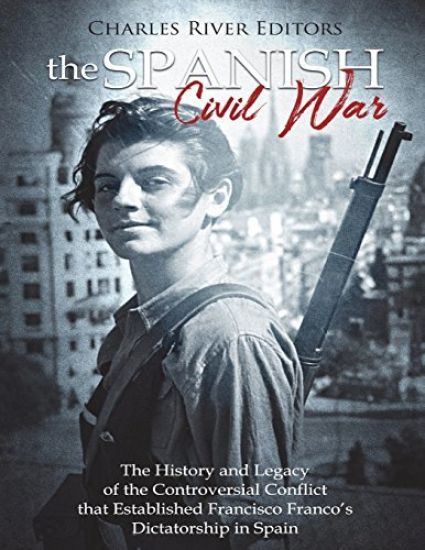
The Spanish Civil War: The History and Legacy of the Controversial Conflict that Established Francisco Franco's Dictatorship in Spain
*Includes pictures *Includes online resources and a bibliography for further reading "I've been in love (truly) with five women, the Spanish Republic and the 4th Infantry Division." - Ernest Hemingway The Spanish Civil War has exerted a powerful impact on the historical imagination. Without question, the conflict was a key moment in the 20th century, a precursor to World War II, and an encapsulation of the rise of extremist movements in the 1930s, but it was also a complex narrative in and of itself, even as it offered a truly international theatre of war. It marked one of the seminal moments, along with the 1929 Wall Street Crash, between the two apocalyptic wars of the early 20th century, and since it occurred between 1936 and 1939, Spain proved to be a testing ground of tactics, weaponry, and ideology ahead of World War II. For the Allied powers Britain and France, Spain became a nadir of "appeasement," yet, as the name suggests, the conflict had distinctly Spanish characteristics. The pressures that led to war were particular to the country, its social challenges, and its long and intricate history, and it was a conflict between two sides that included disparate elements like the clergy, socialists, landowners, and even anarchists. It is estimated that somewhere between 500,000-2,000,000 people were killed in the war. Unlike World War II, the Spanish conflict attracted artists and writers, many of whom reflected upon events and even volunteered to fight. Pablo Picasso's painting Guernica, journalist Martha Gellhorn's reports, Robert Capa's iconic photography, George Orwell's Homage to Catalonia, and Ernest Hemingway's For Whom the Bell Tolls are just some examples of the art and literature that documented the war, and 80 years later, the conflict and its causes still inspire musicians and writers. Ultimately, the forces of reaction, led by General Francisco Franco, triumphed, and after his victory in 1939, Franco ruled Spain with an iron fist for 36 years. Upon his death, however, a reconstructed version of the Spanish Republic was enacted, albeit this time as a constitutional monarchy. Part of the tacit agreement which led to democracy in the 1970s was a burial of former grievances and the memory of the civil war, but a lack of reconciliation has left the conflict's unresolved issues bubbling under the surface of Spanish society. In recent years, new material and accounts have been published, firmly demonstrating that the impact of the war is far from done. The Spanish Civil War: The History and Legacy of the Controversial Conflict that Established Francisco Franco's Dictatorship in Spain examines one of the 20th century's most important wars, and how it affected the world. Along with pictures of important people, places, and events, you will learn about the Spanish Civil War like never before.
Portuguese Macau: The History and Legacy of the Autonomous Chinese Territory that Became the Last European Colony in Asia
*Includes pictures *Includes contemporary accounts *Includes online resources and a bibliography for further reading The Portuguese explorer Jorge lvares visited the Chinese coast in 1513 and was the first European to do so via the sea. Shortly after, more Portuguese visited around the Tunmen Inlet, which is believed to have been somewhere around the Pearl River Delta, and an establishment was set up there in 1514. At this time the Chinese knew nothing of the Portuguese other than their violent takeover of Malacca, a tributary to the Chinese Empire, so the Portuguese were treated with caution. In 1516, Rafael Perestrello was dispatched from Malacca to the islands of Guangdong where his people were well received. Due to this favorable reception, more ships and trading vessels were sent the following year under the command of Perez de Andrade. The fleet anchored on the island Shang-chuan and was at first viewed with suspicion, given the frequent raids from Japanese pirates around the Guangdong region. However, Andrade was peaceful in his dealings with the Chinese and the Chinese allowed two of his ships to proceed to Guangzhou (Canton), while the others returned to Malacca or sailed up the coast with Chinese junks to other merchant factories. The peaceful interactions with the Portuguese was not to last for very long thanks to Andrade's brother, Sim o de Andrade, also known as Simon (Brinkley 1904: 170-142). The Portuguese fleet that arrived in 1518 under the command of Andrade's brother quickly turned to piracy, and the diplomatic relations between the Chinese and Portuguese deteriorated. At the time, an envoy was in Beijing, where they had been peacefully welcomed, but after hearing news of the actions of Portuguese (led by Sim o de Andrade), the Chinese demanded of the visiting envoy that the Portuguese leave Malacca (since it was a tributary of China). The envoy refused and was thrown in prison, where one of the Portuguese diplomats was executed. The rest of the envoy was eventually shipped off to prison in Guangzhou. The Portuguese would have completely lost their foothold in China were it not for the corruption and bribery that saturated the administrative system in Guangzhou (Smith 1920: 9). Despite the laws and regulations regarding dealings with foreigners, by 1537 three settlements had been established in the nearby region: Shang-chuan, Lang-peh-kao (Lampa ao), and Macau, which was established entirely on lies told to the Chinese. The Portuguese had told officials that tribute to the Chinese (which was in fact normal trading goods) had become wrecked in storms and needed to be dried. The Portuguese were allowed to erect sheds and structures for this purpose at Macau, but numerous merchants established themselves as tenants there and managed to pay the Chinese a yearly rent of 500 ounces of silver. The location of Macau was beneficial and strategically chosen by the Portuguese, as it was in close communication with Guangzhou and connected via a river system. In contrast to their earlier dealings with the Chinese, the Portuguese attempted to appear more humble and comply with the wishes of the Chinese rather than with force. As it turned out, the policy, in conjunction with increased European activities in the region, would help the Portuguese Empire hold on to Macau even as its fortunes dwindled everywhere else across the world. Portuguese Macau: The History and Legacy of the Autonomous Chinese Territory that Became the Last European Colony in Asia examines how this tiny foothold managed to last as a European possession for so long, and the dynamics that led to China establishing sovereignty over it at the end of the 20th century. Along with pictures depicting important people, places, and events, you will learn about Macau like never before.
Portuguese Macau: The History and Legacy of the Autonomous Chinese Territory that Became the Last European Colony in Asia
*Includes pictures *Includes contemporary accounts *Includes online resources and a bibliography for further reading The Portuguese explorer Jorge lvares visited the Chinese coast in 1513 and was the first European to do so via the sea. Shortly after, more Portuguese visited around the Tunmen Inlet, which is believed to have been somewhere around the Pearl River Delta, and an establishment was set up there in 1514. At this time the Chinese knew nothing of the Portuguese other than their violent takeover of Malacca, a tributary to the Chinese Empire, so the Portuguese were treated with caution. In 1516, Rafael Perestrello was dispatched from Malacca to the islands of Guangdong where his people were well received. Due to this favorable reception, more ships and trading vessels were sent the following year under the command of Perez de Andrade. The fleet anchored on the island Shang-chuan and was at first viewed with suspicion, given the frequent raids from Japanese pirates around the Guangdong region. However, Andrade was peaceful in his dealings with the Chinese and the Chinese allowed two of his ships to proceed to Guangzhou (Canton), while the others returned to Malacca or sailed up the coast with Chinese junks to other merchant factories. The peaceful interactions with the Portuguese was not to last for very long thanks to Andrade's brother, Sim o de Andrade, also known as Simon (Brinkley 1904: 170-142). The Portuguese fleet that arrived in 1518 under the command of Andrade's brother quickly turned to piracy, and the diplomatic relations between the Chinese and Portuguese deteriorated. At the time, an envoy was in Beijing, where they had been peacefully welcomed, but after hearing news of the actions of Portuguese (led by Sim o de Andrade), the Chinese demanded of the visiting envoy that the Portuguese leave Malacca (since it was a tributary of China). The envoy refused and was thrown in prison, where one of the Portuguese diplomats was executed. The rest of the envoy was eventually shipped off to prison in Guangzhou. The Portuguese would have completely lost their foothold in China were it not for the corruption and bribery that saturated the administrative system in Guangzhou (Smith 1920: 9). Despite the laws and regulations regarding dealings with foreigners, by 1537 three settlements had been established in the nearby region: Shang-chuan, Lang-peh-kao (Lampa ao), and Macau, which was established entirely on lies told to the Chinese. The Portuguese had told officials that tribute to the Chinese (which was in fact normal trading goods) had become wrecked in storms and needed to be dried. The Portuguese were allowed to erect sheds and structures for this purpose at Macau, but numerous merchants established themselves as tenants there and managed to pay the Chinese a yearly rent of 500 ounces of silver. The location of Macau was beneficial and strategically chosen by the Portuguese, as it was in close communication with Guangzhou and connected via a river system. In contrast to their earlier dealings with the Chinese, the Portuguese attempted to appear more humble and comply with the wishes of the Chinese rather than with force. As it turned out, the policy, in conjunction with increased European activities in the region, would help the Portuguese Empire hold on to Macau even as its fortunes dwindled everywhere else across the world. Portuguese Macau: The History and Legacy of the Autonomous Chinese Territory that Became the Last European Colony in Asia examines how this tiny foothold managed to last as a European possession for so long, and the dynamics that led to China establishing sovereignty over it at the end of the 20th century. Along with pictures depicting important people, places, and events, you will learn about Macau like never before.
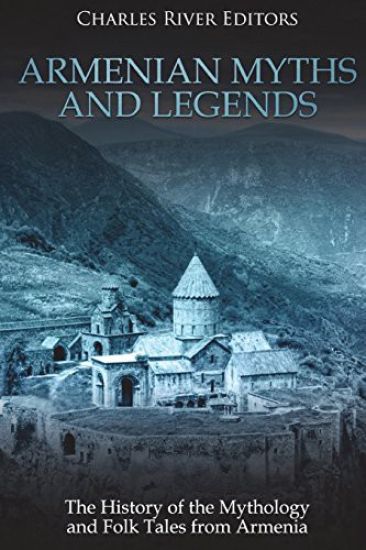
Armenian Myths and Legends: The History of the Mythology and Folk Tales from Armenia

Armenian Myths and Legends: The History of the Mythology and Folk Tales from Armenia

Charles River

Createspace Independent Publishing Platform
2018
nidottu
*Includes pictures *Includes ancient accounts *Includes online resources and a bibliography for further reading Armenia is considered to be one of the oldest cradles of civilization, with the area of historical Armenia roughly extending to the area stretching from the Euphrates River in the west, the region of Artsakh, parts of Caucasian Albania to the east, parts of the modern state of Georgia to the north, and its southern boundary abutting the northern tip of Mesopotamia. Armenia is a landlocked mountainous plateau which rises to an average of over 6,000 above sea level, and for this reason, the territory was commonly referred to as the Armenian Highlands. In these highlands, Armenian culture, as well as its language, started to develop. A rich cultural material, mythological and legendary tales, toponyms and names, as well as historical sources, serve as evidence that the Armenian Highlands have been inhabited by Armenians since the dawn of time. Like many other people all over the world, Armenian people also created their own mythology and heroes. The first pantheon of the Armenian pagan gods had gone through its formation parallel to the development of the Armenian people, as a consequence of the religious beliefs that the people bore. Before being the first kingdom to convert to and accept Christianity as its religion in the year of 301 AD, Armenians were pagan and believed in a multitude of gods and goddesses. These were attributed with many natural elements. The main sources that have conveyed the Armenian pagan myths and legends to the following generations are the Armenian historians of the 4-7th centuries, such as Agathangelos, Faustus the Byzantine, Movses Khorenatsi and Sebeos. Another prime source containing many clues which helps us grasp and comprehend these myths and legends is the Armenian national heroic epic Daredevils of Sassoun. Armenian Myths and Legends: The History of the Mythology and Folk Tales from Armenia looks at the stories that came from Armenia in ancient times, including their influences from other cultures. Along with pictures depicting important people, places, and events, you will learn about Armenian mythology like never before.
The Mosque-Cathedral of Córdoba: The History and Legacy of the Moors' Greatest Holy Site in Spain
*Includes pictures *Includes online resources and a bibliography for further reading "To C rdoba belong all the beauty and ornaments that delight the eye or dazzle the sight. Her long line of Sultans form her crown of glory; her necklace is strung with the pearls which her poets have gathered from the ocean of language; her dress is of the banners of learning, well-knit together by her men of science; and the masters of every art and industry are the hem of her garments..." - Stanley Lane-Poole, "The Moors in Spain" The Calle Cardenal Herrero in C rdoba is an iconic cobbled street impossible to overlook, for it is home to the Andalusian city's spectacular Mosque-Cathedral. Also known as "La Mezquita," this one-of-a-kind Moorish and Christian place of worship reels in about 1.5 million visitors each year, most of whom find themselves spellbound by its hypnotic architectural features and the riveting history that has transpired and continues to within the beautifully weathered walls of the dual-church. That said, the Mezquita is far more than a mere tourist attraction - in recent years, the Mosque-Cathedral of C rdoba has become the crux of a complicated religious conflict resurrected by impassioned worshipers and patriotic locals who fear not only for the future of its legacy, but the preservation of its true history. It is easy for those on the outside looking in to make hasty judgments about the ongoing dispute, considering the endless amount of information that is uploaded online by the second. The contentious debates surrounding the Mezquita are often products of outdated prejudices, festering distrust, and whitewashing, all of which make it harder for the Mezquita to remain a non-discriminatory space serviceable to and appreciated by everyone today. The Mosque-Cathedral of C rdoba: The History and Legacy of the Moors' Greatest Holy Site in Spain offers a virtual tour of this priceless place of worship, and how it has been at the center of religious debates for hundreds of years. Along with pictures of important people, places, and events, you will learn about the Mezquita like never before.
Old Milwaukee: The Early History of Brew Town in the 19th Century

Old Milwaukee: The Early History of Brew Town in the 19th Century

Charles River

Createspace Independent Publishing Platform
2018
nidottu
*Includes pictures *Includes contemporary accounts *Includes online resources and a bibliography for further reading "It is true, similar things cultural events and societies] were done in other cities where the Forty-eighters sic] had congregated. But so far as I know, nowhere did their influence so quickly impress itself upon the whole social atmosphere as in 'German Athens of America' as Milwaukee was called at the time." - Carl Schurz, 1854 The area that became known as the Old Northwest caught the eye of European settlers as far back as the 17th century, when the French explorers Marquette and Jolliet found that waterways in the area connected the Mississippi River to the Great Lakes. The area was perfect for fur trade outposts long before it was settled by whites. Throughout the 19th century, American settlers pushing across the Western frontier came into contact with diverse American tribes, producing a series of conflicts ranging from the Great Plains to the Southwest, and from the Trail of Tears to the Pacific Northwest. One of these notorious conflicts was the Black Hawk War, named after a Sauk chief who led a band of about 1,500 in a series of small battles fought in the Wisconsin territory in 1832. Black Hawk led his people east across the Mississippi River in an attempt to reclaim his people's old lands in Illinois, and his defeat essentially ended all Native American resistance east of the Mississippi River and opened up the rest of Illinois and Wisconsin to white settlement. The war also provided an opportunity for some of the era's most famous Americans to get military experience, including several U. S. Senators, several Territorial Governors, future Confederate President Jefferson Davis, and most famously, Abraham Lincoln. Thus, it should come as no surprise that Milwaukee, the largest city in Wisconsin, has a history reflective of the Old Northwest. Known to the natives as a beautiful landscape at the mouth of a river on the edge of the Great Lakes, it did not take long for fur traders to join them in the serene location. Those fur traders, seeing a future city on the same spot as their sleepy trading post, worked to put the place on the map. Thanks to their vision and energy, Milwaukee transformed from a sleepy trading post to an industrial center, connected to the entire country and beyond through its industry and energy. Given its background and location, the story of Milwaukee may have resembled other nearby cities like Detroit or Chicago, but Milwaukee would have its own flavors and characters thanks to the unique ethnicities and businesses that arrived early on. Before the beer capital of the country became Brew Town, it was Cream Town, and before that it was just a trading post, where some men with a dream came to live. Old Milwaukee: The Early History of Brew Town in the 19th Century looks at the early history of one of the Midwest's biggest cities. Along with pictures of important people, places, and events, you will learn about Milwaukee like never before.
The Mosque-Cathedral of Córdoba: The History and Legacy of the Moors' Greatest Holy Site in Spain
*Includes pictures *Includes online resources and a bibliography for further reading "To C rdoba belong all the beauty and ornaments that delight the eye or dazzle the sight. Her long line of Sultans form her crown of glory; her necklace is strung with the pearls which her poets have gathered from the ocean of language; her dress is of the banners of learning, well-knit together by her men of science; and the masters of every art and industry are the hem of her garments..." - Stanley Lane-Poole, "The Moors in Spain" The Calle Cardenal Herrero in C rdoba is an iconic cobbled street impossible to overlook, for it is home to the Andalusian city's spectacular Mosque-Cathedral. Also known as "La Mezquita," this one-of-a-kind Moorish and Christian place of worship reels in about 1.5 million visitors each year, most of whom find themselves spellbound by its hypnotic architectural features and the riveting history that has transpired and continues to within the beautifully weathered walls of the dual-church. That said, the Mezquita is far more than a mere tourist attraction - in recent years, the Mosque-Cathedral of C rdoba has become the crux of a complicated religious conflict resurrected by impassioned worshipers and patriotic locals who fear not only for the future of its legacy, but the preservation of its true history. It is easy for those on the outside looking in to make hasty judgments about the ongoing dispute, considering the endless amount of information that is uploaded online by the second. The contentious debates surrounding the Mezquita are often products of outdated prejudices, festering distrust, and whitewashing, all of which make it harder for the Mezquita to remain a non-discriminatory space serviceable to and appreciated by everyone today. The Mosque-Cathedral of C rdoba: The History and Legacy of the Moors' Greatest Holy Site in Spain offers a virtual tour of this priceless place of worship, and how it has been at the center of religious debates for hundreds of years. Along with pictures of important people, places, and events, you will learn about the Mezquita like never before.