Kirjojen hintavertailu – 12 903 725 kirjaa ja 27 kauppaa

Kirjailija

Charles River

Kirjat ja teokset yhdessä paikassa: 4 673 kirjaa, julkaisuja vuosilta 2013–2022, suosituimpiin kuuluu William Powell and Myrna Loy: The Lives and Careers of One of Classical Hollywood's Most Iconic Duos. Vertaile teosten hintoja ja tarkista saatavuus suomalaisista kirjakaupoista.

4 673 kirjaa

Kirjojen julkaisuvuodet: 2013–2022.

The ANZAC: The History and Legacy of the Australian and New Zealand Army Corps during the 20th Century
*Includes pictures *Includes online resources and a bibliography for further reading A land of almost 3 million square miles has lain since time immemorial on the southern flank of the planet, so isolated that it remained almost entirely outside of European knowledge until 1770. From there, however, the subjugation of Australia and New Zealand would take place rapidly. Within 20 years of the first British settlements being established, the British presence in Terra Australis was secure, and no other major power was likely to mount a challenge. In 1815, Napoleon would be defeated at Waterloo, and soon afterwards would be standing on the barren cliffs of Saint Helena, staring across the limitless Atlantic. The French, without a fleet, were out of the picture, the Germans were yet to establish a unified state, let alone an overseas empire of any significance, and the Dutch were no longer counted among the top tier of European powers. New Zealand and Australia lay at an enormous distance from London, so their administration was barely supervised. Thus, its development was slow in the beginning, and their importance remained narrowly defined, but as the 19th century progressed and peace took hold over Europe, things began to change. Immigration was steady, and the small spores of European habitation there steadily grew. At the same time, the Royal Navy found itself with enormous resources of men and ships at a time when there was no war to fight. British sailors were thus employed for survey and exploration work, and the great expanses of Australia attracted particular interest. It was an exciting time, and an exciting age, as the world was slowly coming under European sway, and Britain was rapidly emerging as its leader. Thanks to British actions there, and further imperialistic ventures in Africa in the 19th century, New Zealand and Australian soldiers would be used at home and abroad to fight on behalf of the British Empire, most notably during World War I. Today, the ANZAC is best known for the controversial Gallipoli Campaign of World War I, fought against the defending Ottomans far away from the more memorable Western Front. Early in the war, the Ottomans knew the Dardanelles strait would most certainly be attacked and had prepared significant defenses. The plan drafted by the then First Lord of the Admiralty, Winston Churchill, was meant to destroy Ottoman defenses along the Dardanelles. However, Allied forces troops were unable to penetrate the Ottoman defenses, advancing only about 100 meters from the shores. The Ottomans, led by German General Liman von Sanders, further reinforced their positions. The later attempt of the British to establish a new beachhead was more successful, yet the British government refused to send significant reinforcements. The Gallipoli Campaign has been remembered as the Allies' biggest disaster of the war. While some of the great battles like the Somme and Verdun saw greater bloodshed in a shorter period of time, the grueling conditions and hopelessness of the Allied position in the Dardanelles still holds the Western imagination, and as a result, the brutal fighting also helped forge the identity of Australia and New Zealand. Still in the process of finding themselves as independent countries, they created their national identity on the beaches of Gallipoli. The grit and endurance of the ANZAC soldiers is remembered fondly in both nations over 100 years later, and April 25 is celebrated as ANZAC Day in both nations. Given their stellar legacy, it is little surprise that ANZAC soldiers were used by the British Empire for the next several decades, most notably in World War II, ensuring that even after the British Empire declined, the Australian and New Zealand troops' contributions to the Commonwealth remain a source of pride.
The Belgrade Offensive: The History and Legacy of the Campaign to Liberate Yugoslavia's Capital from the Nazis during World War II
*Includes pictures *Includes online resources and a bibliography for further reading "The peoples of Yugoslavia do not want Fascism. They do not want a totalitarian regime, they do not want to become slaves of the German and Italian financial oligarchy as they never wanted to become reconciled to the semi-colonial dependence imposed on them by the so-called Western democracies after the first imperialist war." - Tito The Belgrade Offensive of 1944, while not considered one of the greatest and most important battles of the Second World War, was definitively an important moment of the war in the Balkans and marked the final defeat of the Axis in Southeastern Europe. The Axis campaign started in April 1941, when Germany and Italy, helped by Hungary and Bulgaria, attacked Yugoslavia and Greece. Almost immediately after the conquest of these two countries, occupying forces had to face the resistance of local guerilla movements, especially in Yugoslavia. It was divided between the remains of the Royal Army (the Chetniks or JVuO) and Communist Partisans. Yugoslav guerillas were a constant threat for the Axis in Balkans. Their fight was based on diversions, but they also conducted large military operations, making them unique in occupied Europe. During the four years of occupation, the Germans and Italians conducted five large operations and several smaller ones in order to defeat the guerillas and to secure the Balkans, which by 1943 was thought of as one of the possible landing zones for the Allies in Europe. Another aspect of the Yugoslav resistance was that the two resistance movements were also at war against each other, disputing whether Yugoslavia would stay under the influence of Western democracies or turn to Communism. Although pressed by the Germans and Italians in the entire country, resistance movements managed to survive the war years, waiting for the tides of war to turn in favor of the Allies. Chetniks were waiting for western the Allies, while the Partisans were hoping for the sooner arrival of the Red Army troops. Partisans established their base in the central mountains of Yugoslavia, while Chetniks drew their strength from traditionally royalist Serbia. Once the tactical advantage on the front changed in 1943 in favor of the Allies and Italy was defeated, both resistance movements turned to offensive operations. By that time, Partisans overcame Chetniks across the land. Strict organization of the Yugoslav Communist Party was transferred to military units and was far stronger than those of Chetniks. The bigger number of recruited men gave them the advantage, and the Partisans won the political and military support of the Allies both from the West and the East as they were considered the most useful resistance movement in fighting the Germans on Balkans. During the Tehran Conference in November 1943, the Communist People's Liberation Army of Yugoslavia (the NOVJ) was recognized as the allied force. One day after, the political body of the force, Anti-Fascist Council for the National Liberation of Yugoslavia (AVNOJ) declared itself as a legislative and governing body of Yugoslavia. King Peter II was forbidden to come back to Yugoslavia until the end of the war. As it was clear that the Germans were going defensive on all fronts and that the Red Army's arrival on the eastern border of Yugoslavia was imminent, the NOVJ set Serbia as its primary task. The Germans also realized the importance of Serbia and Belgrade as its key strategic point. In the eyes of the German High Command, Serbia was observed as a strategic entirety with Greece. The Morava-Vardar Valley was the fastest communication line with the Army Group E troops in Greece, and this communication was allowing quick movement of troops to respond to possible challenges. The fall of Serbia would mean the fall of this communication and a cut off of substantial forces in Greece.
Osiris: la historia y el legado del antiguo dios egipcio de los muertos

Osiris: la historia y el legado del antiguo dios egipcio de los muertos

Markus Carabas; Charles River

Createspace Independent Publishing Platform
2018
nidottu
frica puede haber sido la cuna de los primeros seres humanos, y Egipto probablemente levant la primera gran civilizaci n que, cinco mil a os despu s, contin a fascinando a las sociedades modernas de todo el globo. Desde la Biblioteca y el Faro de Alejandr a a la Gran Pir mide de Giza, los antiguos egipcios produjeron varias maravillas del mundo, revolucionaron la arquitectura y la construcci n, crearon algunos de los primeros sistemas de matem ticas y medicina del mundo, y establecieron un lenguaje y un arte que se esparci por todo la tierra conocida. Con personajes tan famosos como el Rey Tut Y Cleopatra, no es de sorprender que el mundo de hoy tenga tantos egipt logos. Lo que hace notables los logros de los antiguos egipcios es que el pa s fue hist ricamente un lugar de gran turbulencia pol tica. Su posici n lo hizo tan valioso como vulnerable a los ojos de otros pueblos a lo largo del Mediterr neo y el Medio Oriente; adem s, el Antiguo Egipto no careci de luchas intestinas. Sus m s famosos conquistadores vendr an de Europa, con Alejandro Magno poniendo los fundamentos de la dinast a ptolemaica hel nica, y con los romanos acabando con ese linaje luego de derrotar a Cleopatra y llevarla al suicidio. Dada la abundancia de artefactos funerarios que han sido hallados en las arenas de Egipto, a veces parece como si los egipcios estuvieran m s preocupados con los asuntos del m s all que en las cosas que experimentaban en su d a a d a. Esto destaca a n m s gracias a las pir mides, que han capturado la imaginaci n del mundo durante siglos. En consecuencia, no es de sorprender que Osiris fuese uno de los dioses m s importantes del pante n egipcio, tanto, que hoy en d a podr a ser el m s famoso de los dioses egipcios. Apartando la ubicuidad del dios sol Re en la cultura popular moderna, es Osiris quien captura las mentes de los lectores modernos. Su historia es tan familiar como extra amente ajena. Es el dios de los muertos, pero se convirti en eso por su sola mortalidad. Todos los dioses del antiguo Egipto eran capaces de morir, pero Osiris era tambi n un s mbolo de resurrecci n, no muy distinto a Cristo en la teolog a cristiana. Osiris fue traicionado por alguien cercano a l (en este caso su hermano Set), fue asesinado y renaci , pero aqu es donde Osiris y Cristo se diferencian. La muerte de Osiris es brutal, y su resurrecci n es el producto del amor de su esposa Isis hacia l. M s a n, Osiris fue asociado con los reyes de Egipto porque los egipcios cre an que l mismo era un rey. Los antiguos egipcios pod an listar a todos sus reyes, uno por uno, hasta el tiempo en que se cre a que los dioses gobernaron la tierra en persona. Osiris fue el tercero o cuarto sucesor en el trono egipcio despu s de la creaci n, y los egipcios cre an que la conexi n de Osiris con la monarqu a era permitir que sus reyes mismos renacieran. Se dec a tambi n que f sicamente era enorme -alrededor de cinco metros de acuerdo a algunas fuentes- lo que le ayud en sus campa as militares. Dependiendo del fen meno o del sentimiento que los antiguos egipcios experimentaran, hab a una deidad o historia correspondiente para explicar la conexi n. El aclamado egipt logo Gary Shaw describ a este ethos como una "una interminable repetici n de creaciones, destrucciones y renacimientos, formando una red de interacciones divinas... cada persona viviente] es cada d a el h roe de su propia narrativa m tica" . De esta forma, los antiguos egipcios se "asimilaban" a la deidad correspondiente que defin a su situaci n en un momento dado. Shaw brind un excelente conjunto de ejemplos sobre este tema: "Una persona con un dolor de cabeza se convert a en Horus Ni o, cuidado por su madre, que asimismo se convert a en Isis; en la muerte, el difunto se transformaba en diversos dioses mientras se desplazaba por el mundo de la otra vida, asumiendo por un rato la autoridad
West Germany: The History and Legacy of the Federal Republic of Germany during the Cold War
*Includes pictures *Includes online resources and a bibliography for further reading "Here in Berlin, one cannot help being aware that you are the hub around which turns the wheel of history. ... If ever there were a people who should be constantly sensitive to their destiny, the people of Berlin, East and West, should be they." - Martin Luther King, Jr. In the wake of World War II, the European continent was devastated, and the conflict left the Soviet Union and the United States as uncontested superpowers. This ushered in over 45 years of the Cold War, and a political alignment of Western democracies against the Communist Soviet bloc that produced conflicts pitting allies on each sides fighting, even as the American and Soviet militaries never engaged each other. Though it never got "hot," the Cold War was a tense era until the dissolution of the USSR, and nothing symbolized the split more than the Berlin Wall, which literally divided the city. Berlin had been a flashpoint even before World War II ended, and the city was occupied by the different Allies even as the close of the war turned them into adversaries. After the Soviets' blockade of West Berlin was prevented by the Berlin Airlift, the Eastern Bloc and the Western powers continued to control different sections of the city, and by the 1960s, East Germany was pushing for a solution to the problem of an enclave of freedom within its borders. West Berlin was a haven for highly-educated East Germans who wanted freedom and a better life in the West, and this "brain drain" was threatening the survival of the East German economy. In order to stop this, access to the West through West Berlin had to be cut off, so in August 1961, Soviet premier Nikita Khrushchev authorized East German leader Walter Ulbricht to begin construction of what would become known as the Berlin Wall. The wall, begun on Sunday August 13, would eventually surround the city, in spite of global condemnation, and the Berlin Wall itself would become the symbol for Communist repression in the Eastern Bloc. It also ended Khrushchev's attempts to conclude a peace treaty among the Four Powers (the Soviets, the Americans, the United Kingdom, and France) and the two German states. Of course, the Berlin Wall also literally divided West Germany from East Germany, and West Germany became one of the most stable and prosperous states in Europe during the Cold War. It had a remarkable history, albeit one that was interrupted by numerous crises and problems. The West Germans honestly confronted its brutal past and competently absorbed the far poorer Soviet satellite East Germany upon the reunification of Germany in 1990. This, of course, was not at all certain or obvious when the Allies beat back the Nazis at the end of the war in 1945, but far from making the same mistakes the Allied Powers made after World War I, the Allies opted to mold West Germany as a liberal, democratic state that would achieve prosperity and renounce war. West Germany: The History and Legacy of the Federal Republic of Germany during the Cold War examines the country and its place at the center of geopolitics after World War II. Along with pictures and a bibliography, you will learn about West Germany like never before.
The Tanks of World War II: The History and Legacy of Tank Warfare between the Allies and Axis
*Includes pictures *Includes accounts of the fighting *Includes online resources and a bibliography for further reading World War II was thus the culmination of a quarter century of tank development, and it would also be the first major test of tanks in mobile warfare, during which they had to face other tanks. However, many of the tanks were constructed with the static warfare of the Western Front in mind and were thus slow and had short operational ranges. Others were too light to face opposing tanks or the new generation of anti-tank weapons that hadn't existed in World War I. The unsuitability of these tank models for this new kind of warfare was quickly recognized, and the belligerent powers scrambled to create better designs. As each new, improved model came off the assembly lines, the opposing powers rushed to create a tank that could beat it. In that regard, World War II was also a war between rival engineers. At the same time, German military officials were at the forefront of developing new ideologies when it came to utilizing their tanks to maximum effect. Heinz Guderian even published a book on the topic before becoming one of the Third Reich's most effective tank commanders. Moreover, during the German invasion of Poland, Nazi forces gained experience they would use across Europe and in Russia. After all, it was in Poland that the Wehrmacht saw action for the first time, conducting what was not only an invasion but also a trial run of its new equipment and tactics. The Polish invasion proved invaluable in providing the German high command with a low-risk, high-value live fire exercise for their newly minted war machine, while the actual combat experience highlighted the remaining flaws in the system. During the campaign, the Germans honed tactics and weapon systems for the massive struggle with the Soviets, British, and United States that loomed on the horizon. The beginning of World War II found the major powers developing tanks to some extent, but lingering ideas from World War I affected the development of tanks during the Interwar period. As a result, aside from the blitzkrieg doctrine developed by the Nazis, tanks were still used in terms of infantry support, and there were few wars during this period to give strategists the chance to develop better uses for the new armored vehicles before World War II started. Commanders soon found that many of the tanks fielded in the campaigns of 1939-1941 lacked the necessary armor, guns, and designs. The Allies learned from the Germans as well. The first and most obvious lesson was to equip each tank with a radio. At the beginning of the war, most Allied tanks did not have radios and used small flags to signal to each other, an unreliable means under ideal conditions, let alone in the midst of battlefield chaos. The Panzers, on the other hand, were equipped with radios from the very start, providing German tank commanders with far more control over their units. Throughout the war, designers learned how to improve suspension, reorganize the interior to give the crews more room, and incorporate other upgrades that helped with the overall function of the tank. Practical experience from the tank crews was of vital importance in these developments. Inevitably, tactics evolved throughout the war. The Germans were early leaders in tank tactics, as their successes from Poland through the opening phases of Operation Barbarossa demonstrated. The main German tank tactic was the so-called Schwerpunkt ("center of gravity"), in which a concentration of tanks achieved a local superiority, broke through, and drove deep behind enemy lines, carving up frontline enemy forces that could then be surrounded and taken out by support tanks, infantry, and artillery. This is why German tanks were built for speed while maintaining good armor and weaponry.
The First Sino-Japanese War: The History and Legacy of the Conflict that Doomed the Chinese Empire and Led to the Rise of Imperial Japan
*Includes pictures *Includes accounts of the fighting *Includes online resources and a bibliography for further reading Completing the Meiji Restoration that heralded the dawn of a new era for both Japan and Asia, the island nation found itself thrust into the modern world, a world of industry and conquest. Flexing its new muscles, the burgeoning power soon came to blows with the regional power that for centuries dominated the area politically and culturally: China. Also seeking to modernize in the wake of Western exploitation, China struggled to adapt to the changing times, doing everything it could to maintain a balance between modernity and tradition. Japan found that balance, and, its new industry desperate for raw materials, looked to the peninsula of Korea for new markets and resources. China, in contrast, refused to strike such a balance, adopting a veneer of modernity while maintaining the status quo, both domestically and with regards to Korea. For decades Korea existed as a protectorate of China, paying homage to the mighty Chinese dynasties while minding its own business as best it could. However, sensing weakness in the former regional power after being defeated by the Europeans during the Second Opium War, escalating tensions over Korea between the old power of China and the new power of Japan led to the First Sino-Japanese War. In its first modern war, the modernized Japanese empire went to war against the dominant power in the region, and though interested Western powers favored China, Japan won the day, claiming Korea as their conquest and permanently upsetting the balance of power in the region. The conflict paved the way for the future Empire of Japan and the collapse of the Qing Dynasty. Though both nations modernized, and China far outweighed Japan in terms of men and materiel potential, the island nation handily won its first modern war. Why did the smaller Japan defeat the formerly mighty Qing Dynasty? What did both nations glean from the war? What did Western powers, watching the ancient dragon battle the upstart tiger, think of the war? The answers to these questions reflect both Japan's short-term gains in the wake of victory, and the long term disaster for both sides' new roles in Asia. For with the end of Chinese dominance in East Asia came a new era for the region as a whole, an era whose consequences and horrors would not be fully realized for several more decades. The First Sino-Japanese War: The History and Legacy of the Conflict that Doomed the Chinese Empire and Led to the Rise of Imperial Japan looks at how the two sides went to war, as well as the crucial aftermath. Along with pictures and a bibliography, you will learn about the First Sino-Japanese War like never before.
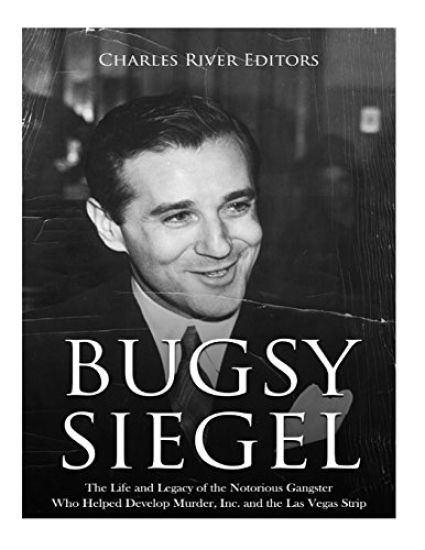
Bugsy Siegel: The Life and Legacy of the Notorious Gangster Who Helped Develop Murder, Inc. and the Las Vegas Strip
*Includes pictures *Includes online resources and a bibliography for further reading Behind a black marble coffee table with elegant cabriole legs sat a man once admired and reviled as one of the toughest gangsters to ever come out of Brooklyn. The man was slouched over to one side, his undeniably lifeless body cold on the couch. The normally pressed suit of the famously debonair desperado was wrinkled and soaked with his blood, his matching tie askew. Thanks to the graininess of the black-and-white shot, some of the blood is camouflaged by the gaudy floral print of the couch cradling his corpse. The fuzziness of the picture, however, does nothing to diminish the horror of the bullet-made craters on his irreparably disfigured face. In the last 70 years, a countless number of people have come across the grisly and morbidly fascinating crime scene photographs of Benjamin "Bugsy" Siegel's murder. The photographs are as disconcerting as they are iconic, for they show a gritty glimpse into the haunting reality of a life too often glamorized by pop culture. The less-publicized photograph of Bugsy in the morgue is, in a way, a more chilling reminder of the barbarity and callous irony behind the term "organized crime." With the blood on his face rinsed off and his hair slicked back, it almost seems as if the photographer had caught Bugsy mid-slumber, but the balls of cotton plugging the gaping bullet holes in his face suggest otherwise. One minute, the fearless Bugsy was stalking the streets of Sin City, his mere presence enough to make even the most hardened thugs break out in a cold sweat, and the next minute, Bugsy was reduced to an unrecognizable body sprawled out on a hard metal slab, with the name on his toe tag misspelled. Bugsy's death has since been recreated by multiple movies, television shows, and documentaries for good reason, because it was an electrifying, messy conclusion to a life that was as theatrical as it was turbulent. Bugsy Siegel: The Life and Legacy of the Notorious Gangster Who Helped Develop Murder, Inc. and the Las Vegas Strip profiles the controversial life and death of the "most feared" mobster of his day, along with everything he affected. Along with pictures of important people, places, and events, you will learn about Bugsy Siegel like never before.
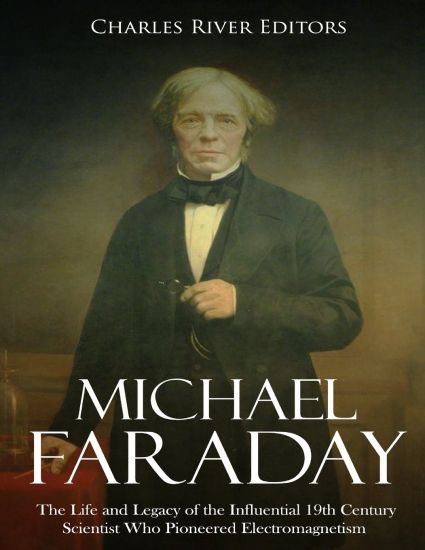
Michael Faraday: The Life and Legacy of the Influential 19th Century Scientist Who Pioneered Electromagnetism
*Includes pictures *Includes Faraday's own quotes about his work *Includes online resources and a bibliography for further reading "Nothing is too wonderful to be true, if it be consistent with the laws of nature." - Michael Faraday "Without such freedom there would have been no Shakespeare, no Goethe, no Newton, no Faraday, no Pasteur and no Lister." - Albert Einstein, in a speech on intellectual freedom after fleeing Nazi Germany, October 3, 1933 On April 18, 1955, a bell-like symphony of ringing telephones erupted in news stations, radio offices, and the homes of media figures across the United States. 38-year-old LIFE photographer Ralph Morse was among those whose phone started ringing off the hook. The groggy Morse was teetering on the line between lucidity and slumber when he picked up, but by the end of the call, which came from a clearly keen, but jittery LIFE editor, it was like he'd downed a liter of the world's strongest coffee. The one and only Albert Einstein had died. Morse grabbed his equipment, piled into his car, and raced to Princeton Hospital, where Einstein had been admitted to just 3 days earlier. Seeing that the place was pulsating with mobs of journalists, photographers, and nosy onlookers, Morse dipped into the Princeton Institute for Advanced Study and persuaded the superintendent to unlock Einstein's office with a case of premium scotch. As such, Morse was able to compactly capture one of the most defining photographs of the man's life and his work, and on the day of his death no less. Viewers are given a taste of Einstein's unrivaled tenacity with the mound of journals and books strewn about on his desk, his pipe and tobacco tin serving as makeshift paper weights. Behind his swiveling leather chair, sitting slightly askew, was a blackboard featuring a wall of complex formulas and equations. It was in this very study, as well as his home office back in Berlin, that Einstein, perhaps the most celebrated genius in history, displayed the photographs of his five muses. Though only the framed portraits of Gandhi and another German composer have been pictured in Einstein's study, the faces of three other illustrious scientists are said to have once graced his walls. One of them was Michael Faraday, an endlessly luminous mind equipped with an unflagging hunger for knowledge, a hunger so ungovernable that not even poverty or social norms could stand in the way of his ambitions. Indeed, it was reportedly Einstein's expertise in the lives of Maxwell and Faraday, as well as his mastery of their work and accomplishments, that landed him his first job at the Swiss Patent Office after months of job-scouring. Moreover, Einstein's admiration for Faraday was so profound that when a friend gifted him a biography of his "hero" for his birthday, Einstein cherished it to the utmost degree. He expressed his gratitude towards his friend in an eloquent letter, writing, "You have given me great joy with the little book about Faraday. This man loved mysterious Nature as a lover loves his distant beloved. In this day, there did not yet exist the dull specialization that stares with self-conceit through horn-rimmed glasses and destroys poetry..." Needless to say, Michael Faraday, often hailed as one of the "greatest experimenters" to have ever lived, was in his own right an indispensable and boundlessly influential scientific pioneer. But what was it about Faraday, among so many other noteworthy scientists, that captivated Einstein, one of history's most fabled polymaths? Michael Faraday: The Life and Legacy of the Influential 19th Century Scientist Who Pioneered Electromagnetism examines the life and work that made Faraday one of history's most important scientists. Along with pictures of important people, places, and events, you will learn about Michael Faraday like never before.
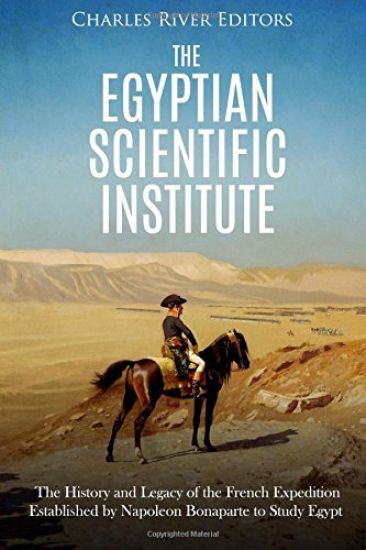
The Egyptian Scientific Institute: The History and Legacy of the French Expedition Established by Napoleon Bonaparte to Study Egypt
*Includes pictures *Includes contemporary accounts *Includes online resources and a bibliography for further reading "The genius of liberty, which made you, at her birth, the arbiter of Europe, wants to be genius of the seas and the furthest nations." - Napoleon's address to his soldiers before leaving for Egypt In 1798, an initial review of France's naval forces had led Napoleon to conclude his navy could not hope to outfight the power of the Royal Navy, which had been the dominant naval power for centuries, so he was forced to look elsewhere. After months of planning, Napoleon crafted a scheme to attack and conquer Egypt, denying the British easy access to their colonies in India, with the ultimate goal of linking up with the Sultan Tipoo in India itself and defeating the British in the field there. Napoleon sailed with Admiral Brueys and 30,000 troops that June, heading for Egypt. Notionally part of the Ottoman Empire, Egypt was de facto a weak independent regime run by the breakaway Mamelukes. For France, it offered an overland route to India and a chance to beat Britain at her own game via economic strangulation. Ironically, in their attempt to intercept Napoleon and the French fleet, Admiral Horatio Nelson and the British forces beat the French to Africa, failing to take into account their slower troop transports. While the British turned north, only two days later, on June 28, 1798, Napoleon's army disembarked at Alexandria. Back in Sicily, Nelson heard further reports about the French and again sailed south. This time, about 6 weeks after the French reached Egypt, Nelson's fleet destroyed the French Mediterranean fleet, leaving Napoleon stranded in Africa. In addition to being unable to be reinforced or supplied by sea, his ambitions to establish a permanent presence in Egypt were further frustrated by a number of uprisings. Early in 1799, Napoleon advanced against France's erstwhile enemy, the Ottoman Empire, invading modern Syria (then the province of Damascus) and conquering the cities of Gaza, Jaffa, Arish and Haifa. However, with the plague running rampant through his army and his lines of supply from Egypt stretched dangerously thin, Napoleon was unable to destroy the fortified city of Acre and was forced to retreat. The retreat cost him almost all of his wounded as, harassed by enemy forces, he was forced to abandon most of his casualties to the Ottomans' mercy, or lack thereof. Most of the wounded were tortured and beheaded. Napoleon harbored all kinds of delusions about his time in Egypt that were not based in reality, but he definitely left a lasting legacy in the region, one he would never live to see or appreciate. By shifting the theater of operations to Africa and the Middle East, Napoleon inadvertently ensured the Europeans would fight there in the future, and the French occupation impressed upon the locals the necessity of catching up to the modern world in terms of technology. Ancient tactics could not prevail against a modern army, no matter the numbers, but while that was a lesson Napoleon consistently taught his enemies in Egypt and the Levant to their detriment, the French also sped up the occupied populations' technological advances as well. Perhaps more importantly, the Egyptian Scientific Institute introduced numerous modern innovations, perhaps most importantly the printing press, which in turn encouraged literacy. This brought about the emergence of nationalism and liberalism, leading eventually to the establishment of Egyptian independence and modernization under the rule of Muhammad Ali Pasha in the first half of the 19th century, and eventually the Nahda, or Arab Renaissance. In a sense, the French arrival in Egypt marked the beginning of the modern Middle East.
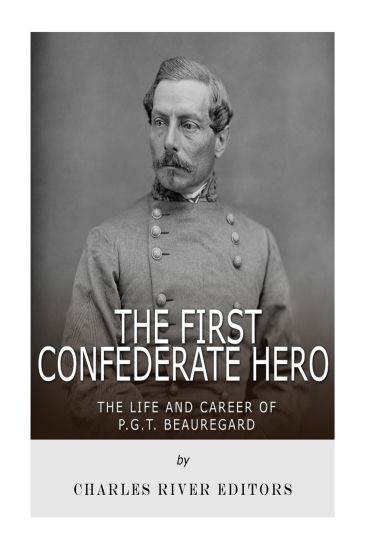
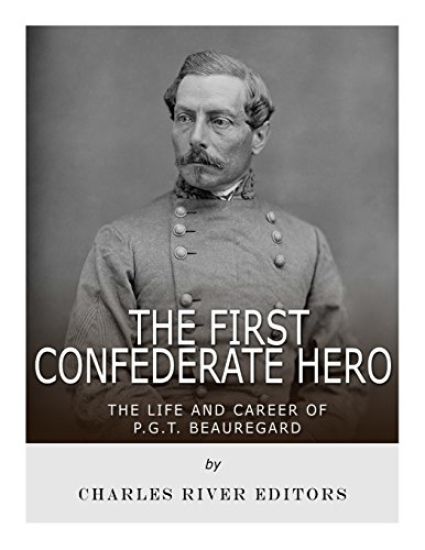
The First Confederate Hero: The Life and Career of P.G.T. Beauregard

The First Confederate Hero: The Life and Career of P.G.T. Beauregard

Charles River

Createspace Independent Publishing Platform
2018
nidottu
*Includes pictures *Includes contemporary accounts *Includes online resources and a bibliography for further reading "On the refusal of Major Anderson to engage, in compliance with my demand, to designate the time when he would evacuate Fort Sumter, and to agree meanwhile not to use his guns against us, at 3.20 o'clock in the morning of the 12th instant I gave him formal notice that within one hour my batteries would open on him." - P. G. T. Beauregard's Official Report on Fort Sumter Despite the fact that the Civil War was fought nearly 150 years ago, it remains a polarizing topic for the country to this day, and Americans continue to debate who the greatest generals of the war were, arguing the pros and cons and battle records of the men who fought. Although Confederate generals like Robert E. Lee, Stonewall Jackson and JEB Stuart have long been the most celebrated men of the South, in April 1861, the man of the hour was P. G. T. Beauregard, the South's hero of Fort Sumter. Though Beauregard has never been considered one of the pantheon members of the South, it was he who was in command at Fort Sumter and responsible for the first shots of the Civil War. Though Beauregard is remembered for his participation at Fort Sumter, the rest of his military career and personal life have been mostly relegated to the footnotes of history books. However, Beauregard was one of the most unique men of the war. A creole born in Louisiana, Beauregard's foreign appearance and demeanor were inescapable among his contemporaries, but he had a long and distinguished career at West Point and in the Mexican-American War even before the Civil War. Furthermore, Beauregard was one of the few who fought in crucial battles in both the East and West, commanding at the First Battle of Bull Run and later Shiloh, and his defense of Petersburg in 1864 saved the Confederacy for nearly another year. The First Confederate Hero: The Life and Career of P. G. T. Beauregard looks at the life and career of one of the South's most unusual and important fighters. Along with pictures of Beauregard and other important people, places and events in his life, you will learn about the hero of Fort Sumter like you never have before, in no time at all.
The Mojave Desert: The History and Legacy of North America's Most Famous Desert

The Mojave Desert: The History and Legacy of North America's Most Famous Desert

Charles River

Createspace Independent Publishing Platform
2018
nidottu
*Includes pictures *Includes online resources and a bibliography for further reading "The Mojave is a big desert and a frightening one. It's as though nature tested a man for endurance and constancy to prove whether he was good enough to get to California." - John Steinbeck The Mojave Desert, otherwise known as the "High Desert," is the smallest of the deserts in the North American continent, nestled between Los Angeles and Las Vegas, two of the most frequented tourist capitals in the country. That being said, this unassuming, yet mesmerizing desert is visited by millions each year, with over 2 million people flocking to Joshua Tree Park alone, for this diverse terrain is built on the back of a rich and unique history, be they real or fictitious. The Mojave Desert: The History and Legacy of North America's Most Famous Desert explores the development of the Mojave, from its formative years to the heterogeneous tract of land it is today. It also examines the native tribes who inhabited it, and their complex relationships with the foreign explorers who traversed their territories. The book also dives into the desert's literal golden era and takes a tour through the desert's fabled Death Valley. Along with pictures of important people, places, and events, you will learn about the Mojave Desert like never before.
Isis: The History and Legacy of the Ancient Egyptian God of the Dead

Isis: The History and Legacy of the Ancient Egyptian God of the Dead

Markus Carabas; Charles River

Createspace Independent Publishing Platform
2018
nidottu
*Includes pictures *Includes ancient accounts *Includes online resources and a bibliography for further reading Africa may have given rise to the first human beings, and Egypt probably gave rise to the first great civilizations, which continue to fascinate modern societies across the globe nearly 5,000 years later. From the Library and Lighthouse of Alexandria to the Great Pyramid at Giza, the Ancient Egyptians produced several wonders of the world, revolutionized architecture and construction, created some of the world's first systems of mathematics and medicine, and established language and art that spread across the known world. With world-famous leaders like King Tut and Cleopatra, it's no wonder that today's world has so many Egyptologists. To the ancient Egyptians, as was the case with any society made up of inquiring humans, the world was a confusing and often terrifying place of destruction, death and unexplained phenomena. In order to make sense of such an existence, they resorted to teleological stories. Giving a phenomenon a story made it less horrifying, and it also helped them make sense of the world around them. Unsurprisingly, then, the ancient Egyptian gods permeated every aspect of existence. Isis first appears during the period of Old Kingdom (ca. 2660-2190 BCE) but only later does she take on her most famous role of being a sister-wife of Osiris. Originally, she is simply the mother of Horus and the details surrounding his conception are more obscure. Her absence in the original myths about Osiris is confirmed by the fact that her appearances at Abydos, a famous cult center of Osiris, are scarce until the New Kingdom (ca. 1549-1069 BCE). In fact, Isis had no known cult center throughout the majority of ancient Egyptian dynastic history, though it didn't seem to have a negative effect on her worship. Isis was one of the nine principal deities of the Egyptian pantheon called the Ennead and her hieroglyph was the throne, a glyph that would later connect her with Osiris, whose hieroglyph was a throne and an eye, and royalty in general. In fact, as the goddess of the throne, she came to represent the "mother" of all the kings of Egypt. Regardless of her royal attributes, however, Isis was fundamentally a healer and a peacemaker. Nevertheless, as time went on and Egypt became more influenced by the outside world, Greece and Rome in particular, Isis came to be seen as the wrathful protector of Egypt and its kings. According to the sources, she was "cleverer than millions of gods" and more capable of protecting the country than "millions of soldiers." What is most fascinating about Isis is the agency she has in her myths, particularly the most famous, that of the death and rebirth cycle of Osiris. In this myth she even demonstrates traits of the female trickster, which is considerably less common in world mythology than the male equivalent. According to one New Kingdom source, Isis transformed herself into an old woman in order to fool the divine ferryman between the worlds of the living and the dead, and she also turned herself into a young woman in order to get Seth to admit that his claim for power was unjust. All the while, she created cultural and geographical mainstays - such as the Nile - while being worshipped as a helper goddess. It is curious that, until the 30th Dynasty, Isis was worshipped in the temples of other gods as she did not have a dedicated cult center of her own. During the 30th Dynasty, this changed with two large temples built in her honor in the Nile Delta. Later on, the Ptolemaic and Roman rulers of Egypt would develop these sites and her worship would outlive the draconian abolishment of pagan religion in Egypt and would even be transported out of Egypt as Isis was revered and worshipped at the farthest reaches of the Roman Empire.
The World's Most Famous Deserts: The History and Legacy of the Sahara Desert, Gobi Desert, and Mojave Desert
*Includes pictures *Includes online resources and a bibliography for further reading They say that one is subjected to a sobering sample of what can only be described as an existential crisis when traversing the golden and seemingly infinite terrain of the Sahara Desert. If one climbed any of the countless sand dunes and twirled around in a place, particularly under the starlit sky, they would scarcely be able to tell east from west without a compass, for there would be nothing but dizzying carpets of indistinguishable sand hills unfurling into the distant horizon. Daunting thoughts of purpose and self-worth aside, people fortunate enough to visit this sandy wonderland via a heavy-duty SUV, or more traditionally a hired camel caravan, are treated to a truly breathtaking sight. The wave-like ripples caressing the beautiful collection of irregularly shaped sand dunes, some barely half a story and others close to 600 feet in height, are as unique as the etchings on one's fingertips. To some, they are Mother Nature's stretch marks. To others, the wind-prompted patterns might conjure up an image of a god with a rake in hand, whistling carelessly and combing through the gritty grains of sand, as one would with a miniature zen garden to melt away their stresses. In August of 2008, London-based Jane Macartney published this striking description of the Gobi Desert in The Times: "On the Mongolian steppes, the emptiness and the silence inspire awe. From time to time, a huge, tawny eagle drifts on the breeze, watching for small animals to snatch amid the grasses. The only movement on the ground comes from the flocks of sheep and goats, yaks and cattle that roam, heads down, as they much their way across the grasslands..." Alongside this stunning and therapeutic view of the grassland critters are a smattering of white yurts which belonged to the Mongolian nomads who now inhabit the land. Gazing upon the rest of the Gobi, furnished with rolling plains, sweeping steppes, cragged mountains, and singing sand dunes, the desert instills in one a similar sense of inner peace. In fact, these Kodak scenes are so picture-perfect that it is almost impossible to imagine the adventurous discoveries, devastating wars, colorful commerce, and dramatically different landscape that once appeared in its place. The Mojave Desert, otherwise known as the "High Desert," is the smallest of the deserts in the North American continent, nestled between Los Angeles and Las Vegas, two of the most frequented tourist capitals in the country. That being said, this unassuming, yet mesmerizing desert is visited by millions each year, with over 2 million people flocking to Joshua Tree Park alone, for this diverse terrain is built on the back of a rich and unique history, be they real or fictitious. The World's Most Famous Deserts: The History and Legacy of the Sahara Desert, Gobi Desert, and Mojave Desert examines the history of each desert, from their origins to their ecology and inhabitants. Along with pictures of important people, places, and events, you will learn about the deserts like never before.
Machine Learning: An Overview of Artificial Intelligence

Machine Learning: An Overview of Artificial Intelligence

Charles River

Createspace Independent Publishing Platform
2018
nidottu
*Includes pictures *Includes online resources and a bibliography for further reading Machine learning, in its broadest sense, is a series of methods to recognize and exploit patterns in data. The name comes from the goal of trying to automate (via machines) the process that humans have used to observe the world around them and draw conclusions (i.e. learn) from those observations. Although all practical work in the machine learning field is done through computer programming, the concepts are independent of programming knowledge and instead rely on a mathematical basis. This overview will look only at the conceptual and mathematical side of the field, with little mention of the programming or practical applications. There are a multitude of algorithms that are grouped within the general category of machine learning. Depending on the type of information available, as well as the goal of a problem, many techniques will not work well or simply be impossible to apply. The key to learning different algorithms is to know in which situation each functions best. In many situations there is some sample data from a system and the goal is to interpret this data to define the system or to predict the behavior of new situations. These techniques will be examined later in the overview. Initially, problems will not provide sample data, but instead define a problem according to some constraints; the goal will be to find an optimal solution given the constraints. Machine Learning: The History of Automating Computers to Observe and Analyze Data looks at the attempts to develop machine learning, from successes to failures. Along with pictures depicting important people, places, and events, you will learn about machine learning like never before.
Ancient Macedonia: The History and Legacy of Alexander the Great and the Macedonians in Antiquity
*Includes pictures *Includes ancient accounts *Includes online resources and a bibliography for further reading "There is nothing impossible to him that will but try." - Alexander the Great The role of Macedonia and the Macedonians in the ancient world is apparent to those with even a cursory knowledge of the period. After all, Alexander the Great and his father, Philip II, were both Macedonians, and most know at least a little about their violent struggles to conquer Greece and the Near East. However, Macedonian history began long before Philip II and Alexander III and continued for some time after they were gone. Thus, in many ways, the historical memory of Macedonia and the Macedonians is the victim of historical myopia which is, in part, the result of popular entertainment. Alexander the Great makes for great fiction, so the more "tedious" aspects of Macedonian culture are often overlooked. An examination of ancient Macedonian culture, from its earliest known references to the arrival of the Romans, reveals that the Greeks' northern neighbors played an integral role in the development of Hellenic civilization. Although many of the traditional Greeks may not have considered the Macedonians to be fellow Hellenes at first, they were forced to accept them due to the Macedonian's superior military strength. By the time Alexander the Great had led his army across the Persian Empire, he and his fellow Macedonians had been, for the most part, accepted as Greeks by most other Greeks, but it was a long process. As the Athenians developed their government and philosophies, the Macedonians dedicated themselves to the art of war. Because of this, ancient Macedonia was, in many ways, a stark contrast to the republics and democracies of classical Greece. The Macedonian government was a traditional monarchy where only the strongest of the kings were able to survive assassination attempts and palace coups. The Macedonian kings were also expected to lead their armies into war, which they did almost continuously. Eventually, Macedonian culture slowly began to adopt many of their southern neighbors' attributes, and likewise, the Greek city-states came to see the Macedonians as less barbarian and more Greek. By the time the Romans had conquered Greece in the 2nd century BCE, Macedonia had been viewed by most Greeks and nearly all Romans as nothing more than the northern reaches of Greece. More importantly, the Macedonians were arguably the most responsible for spreading Hellenism across the world than even the Greeks and Romans. When Alexander died at the age of 32, he had made himself the most powerful man in the world, and his dominions stretched from the Punjab to modern Albania, making him one of the most successful conquerors in history. Alexander and his successors Hellenized as far as they reached, from Egypt to Persia and parts of Asia Minor, and their influence is still readily visible. Anthropologists have found that some of the earliest Buddha statues constructed in India bear an uncanny resemblance to Greek depictions of Apollo. Further west, much of Alexander's old empire was eventually conquered in the following centuries by Rome, including Ptolemaic Egypt, but instead of ending the Hellenistic culture, the Roman Empire further reinforced it. Having conquered Greece itself around 100 BCE, the Roman Empire heavily assimilated the Greeks' culture into its own. Latin was an offshoot of the Greeks' language, the Romans' mythology was nearly identical, and Roman poetry, literature and art all closely resembled what was produced to their east in the preceding centuries. As such, the Macedonians played a vital role in the course of Western Civilization. Ancient Macedonia: The History and Legacy of Alexander the Great and the Macedonians in Antiquity examines one of the most important ancient powers throughout its long and illustrious history.
La Antigua Rodas: La Historia Y El Legado De La Famosa Isla Griega En La Antigüedad

La Antigua Rodas: La Historia Y El Legado De La Famosa Isla Griega En La Antigüedad

Charles River

Createspace Independent Publishing Platform
2018
nidottu
Las percepciones modernas de la Grecia cl sica se basan casi invariablemente en Atenas y Esparta, pero tal vez haya pocas reas tan constantemente infravaloradas como la isla de Rodas. Aunque ha sido una parte s lida del mundo griego durante el tiempo que ha existido, Rodas, situada en las afueras de la costa de Asia Menor, fue tambi n desde sus primeros tiempos un puerto abierto a las civilizaciones del Mediterr neo Oriental, y Rodas estuvo involucrada en cada momento significativo de la historia de la antigua Grecia. La isla a menudo jug un papel clave en los acontecimientos mundiales que superaron con creces su peque o tama o, y en un momento dado incluso estuvo al lado de reinos mucho m s grandes como una de las principales potencias en el mundo griego. En los per odos Arcaico y Cl sico, Rodas a menudo se erigi como un excelente ejemplo de los altibajos de sus ciudades griegas, y como la isla m s grande del Dodecaneso, la historia de Rodas est en gran medida en l nea con la del resto de esas islas. Rodas fue colonizada por primera vez por los griegos de la tribu d rica alrededor del siglo VIII a. C., y se aline con sus ciudades d ricas en las islas circundantes y el continente de Asia Menor para formar el llamado Hex polis d rico. Despu s de la revuelta j nica a finales del siglo VI a. C., Rodas, junto con otras islas, estuvo en el camino de la flota persa que cruz el Egeo para enfrentarse a los griegos en las Guerras Persas. Despu s de las Guerras Persas, junto con el resto de las islas y con el Asia Menor Griega, Rodas fue subsumida en la alianza ateniense, que pronto se convertir a en el Imperio Ateniense. Sin embargo, Atenas pronto perder a su poder, y hacia el final de la Guerra del Peloponeso contra Esparta, su poder sobre sus aliados disminuir a. De hecho, en el a o 408 a. C., Rodas, compartiendo la herencia d rica con Esparta, ser a uno de los primeros y m s poderosos aliados de Atenas en la revuelta, y jug un papel clave en el final de la Guerra del Peloponeso al proporcionar una base para la nueva flota espartana para desafiar la supremac a naval ateniense. En el siglo siguiente, Rodas vacilar a entre las esferas de influencia ateniense y espartana, al mismo tiempo que permanecer a demasiado grande para ser sometida permanentemente por cualquiera de las dos ciudades, y as crecer a constantemente en el poder. Rodas alcanzar a el cenit de su poder en el per odo helen stico despu s de la muerte de Alejandro Magno en el a o 323 AEC. A pesar de que el resto de las ciudades-estado decay en comparaci n con los reinos mucho m s grandes de los sucesores de Alejandro en Egipto y Asia, Rodas pasar a a la vanguardia como una potencia principal en el mundo griego, firme con estos reinos helen sticos. Rodas fue durante un tiempo la primera potencia naval del Mediterr neo Oriental y una de las ciudades m s poderosas y ricas del mundo. Fue durante este tiempo que el Coloso de Rodas, una de las Siete Maravillas del Mundo Antiguo, fue construido en la isla para celebrar el triunfo igualmente monumental de Rodas sobre los ej rcitos de Demetrio el Asediador. Rodas tambi n se afianz en otras islas, y una extensa presencia en Asia Menor. Fue s lo debido al ascenso de Roma que Rodas, junto con el resto del mundo griego, perdi el poder, y fue gradualmente integrado en la esfera de influencia romana como un aliado antes de ser finalmente anexado al imperio. La Antigua Rodas: La Historia Y El Legado De La Famosa Isla Griega En La Antig edad examina la historia de una de las potencias griegas m s importantes del mundo antiguo. Junto con fotos que representan gente importante, lugares y eventos, usted aprender sobre Rodas como nunca antes.
The First Confederate Hero: The Life and Career of P.G.T. Beauregard

The First Confederate Hero: The Life and Career of P.G.T. Beauregard

Charles River

Createspace Independent Publishing Platform
2018
nidottu
*Includes pictures *Includes contemporary accounts *Includes online resources and a bibliography for further reading "On the refusal of Major Anderson to engage, in compliance with my demand, to designate the time when he would evacuate Fort Sumter, and to agree meanwhile not to use his guns against us, at 3.20 o'clock in the morning of the 12th instant I gave him formal notice that within one hour my batteries would open on him." - P. G. T. Beauregard's Official Report on Fort Sumter Despite the fact that the Civil War was fought nearly 150 years ago, it remains a polarizing topic for the country to this day, and Americans continue to debate who the greatest generals of the war were, arguing the pros and cons and battle records of the men who fought. Although Confederate generals like Robert E. Lee, Stonewall Jackson and JEB Stuart have long been the most celebrated men of the South, in April 1861, the man of the hour was P. G. T. Beauregard, the South's hero of Fort Sumter. Though Beauregard has never been considered one of the pantheon members of the South, it was he who was in command at Fort Sumter and responsible for the first shots of the Civil War. Though Beauregard is remembered for his participation at Fort Sumter, the rest of his military career and personal life have been mostly relegated to the footnotes of history books. However, Beauregard was one of the most unique men of the war. A creole born in Louisiana, Beauregard's foreign appearance and demeanor were inescapable among his contemporaries, but he had a long and distinguished career at West Point and in the Mexican-American War even before the Civil War. Furthermore, Beauregard was one of the few who fought in crucial battles in both the East and West, commanding at the First Battle of Bull Run and later Shiloh, and his defense of Petersburg in 1864 saved the Confederacy for nearly another year. The First Confederate Hero: The Life and Career of P. G. T. Beauregard looks at the life and career of one of the South's most unusual and important fighters. Along with pictures of Beauregard and other important people, places and events in his life, you will learn about the hero of Fort Sumter like you never have before, in no time at all.
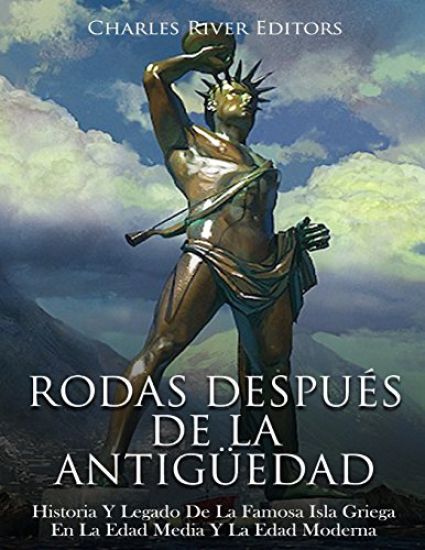
Rodas Después De La Antigüedad: Historia Y Legado De La Famosa Isla Griega En La Edad Media Y La Edad Moderna
Despu s de la revuelta j nica a finales del siglo VI a. C., Rodas, junto con otras islas, estuvo en el camino de la flota persa que cruz el Egeo para enfrentarse a los griegos en las guerras persas. Despu s de las Guerras Persas, junto con el resto de las islas y con el Asia Menor Griega, Rodas fue subsumida en la alianza ateniense, que pronto se convertir a en el Imperio Ateniense. Sin embargo, Atenas pronto perder a su poder, y hacia el final de la Guerra del Peloponeso contra Esparta, su poder sobre sus aliados disminuir a. De hecho, en el a o 408 a. C., Rodas, compartiendo la herencia d rica con Esparta, ser a uno de los primeros y m s poderosos aliados de Atenas en la revuelta, y jug un papel clave en el final de la Guerra del Peloponeso al proporcionar una base para la nueva flota espartana para desafiar la supremac a naval ateniense. En el siglo siguiente, Rodas vacilar a entre las esferas de influencia ateniense y espartana, al mismo tiempo que permanecer a demasiado grande para ser sometida permanentemente por cualquiera de las dos ciudades, y as crecer a constantemente en poder. Rodas alcanzar a el cenit de su poder en el per odo helen stico despu s de la muerte de Alejandro Magno en el a o 323 a. C. A pesar de que el resto de las ciudades-estado decayeron en comparaci n con los reinos mucho m s grandes de los sucesores de Alejandro en Egipto y Asia, Rodas pasar a a la vanguardia como una potencia principal en el mundo griego, permaneciendo de pie con estos reinos helen sticos. Rodas fue durante un tiempo la primera potencia naval del Mediterr neo Oriental y una de las ciudades m s poderosas y ricas del mundo. Fue durante este tiempo que el Coloso de Rodas, una de las Siete Maravillas del Mundo Antiguo, fue construido en la isla para celebrar el triunfo igualmente monumental de Rodas sobre los ej rcitos de Demetrio el Asediador. Rodas tambi n se afianz en otras islas, y una extensa presencia en Asia Menor. Con el surgimiento de Roma, Rodas, junto con el resto del mundo griego, perdi poder, y gradualmente se integr en la esfera romana de influencia como aliado antes de ser finalmente anexionado al imperio. Despu s de la partici n y el colapso del antiguo Imperio Romano, en la Edad Media Rodas compartir a tanto las fortunas como las vicisitudes del estado sucesor de Roma, el Imperio Bizantino. Junto con los bizantinos, Rodas se enfrentar a primero contra los rabes del Este, y luego contra las Cruzadas europeas del Oeste. A medida que el Imperio Bizantino continuaba perdiendo poder y el caos se extend a en sus antiguas posesiones, Rodas eventualmente ser a ocupada por los Caballeros Hospitalarios, una orden de caballeros cruzados que inicialmente llegaron a la isla mientras se retiraban de Tierra Santa. Estos caballeros se aferraron a Rodas durante m s de 200 a os, convirti ndola en el cuartel general de su singular imperio militar, econ mico y pirata. Se convirti en un basti n de la cristiandad y un recordatorio del antiguo poder de los cruzados en una regi n del Mediterr neo oriental cada vez m s dominada por el Islam. Cuando el castillo de los caballeros de Rodas, a n en pie, cay finalmente ante los turcos otomanos en 1522, Rodas entr en un largo per odo de gobierno turco que dur casi 400 a os. No fue hasta 1948, despu s de sucesivas y breves ocupaciones italianas, alemanas y brit nicas, que la isla se uni finalmente al Estado griego moderno. Hasta el d a de hoy, gracias a sus impresionantes sitios arqueol gicos, Rodas todav a conserva las marcas indelebles de su pasado hist rico. Rodas Despu s De La Antig edad: La Historia Y El Legado De La Famosa Isla Griega En La Edad Media Y La Edad Moderna examina la historia de uno de los lugares m s importantes del Mediterr neo. Junto con fotos que representan gente importante, lugares y eventos, usted aprender sobre Rodas como nunca antes.
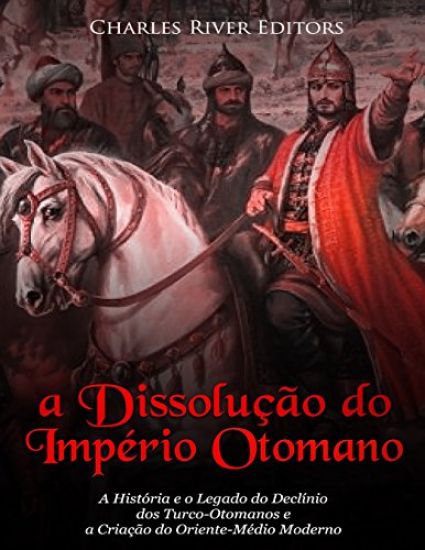
A Dissolução do Império Otomano: A História e o Legado do Declínio dos Turco-Otomanos e a Criação do Oriente-Médio Moderno
A longa agonia do "doente da Europa", uma express o utilizada pelo Czar da R ssia para se referir ao imp rio em decad ncia, poderia quase ofuscar das pessoas o seu incr vel poder e hist ria. Preservando sua heran a mista, proveniente de sua posi o geogr fica reconstru da sobre as cinzas do Imp rio Bizantino e da tradi o herdada das Conquistas Mu ulmanas, o Imp rio Otomano durou por mais de seis s culos. Seus soldados lutaram, morreram, e conquistaram terras em tr s continentes diferentes, fazendo dele um dos poucos imp rios multi tnicos est veis da hist ria - e provavelmente um dos ltimos. Assim sendo, quase inevit vel que a hist ria de sua dissolu o ocorre em meio a complexas disputas geopol ticas, bem como tens es sect rias que ainda s o essenciais para o entendimento do Oriente M dio, Norte da frica e Balc s. Durante o per odo que precedeu o seu colapso, o Imp rio Otomano estava no centro de uma crescente rivalidade entre duas das pot ncias globais concorrentes da poca, a Inglaterra e a Fran a. As duas pot ncias exerceram sua influ ncia sobre um imp rio decadente, cuja hist ria est ancorada tanto na Europa quanto na sia. Entretanto, enquanto que as duas pot ncias tenham sido instrumentais na derrota final e colapso do Imp rio Otomano, a sua postura quanto ao que viria a ser a "Quest o Oriental" - o destino do Imp rio Otomano - n o uma de evidente inimizade. Ambas Inglaterra e Fran a encontraram, s vezes, raz es para estender a vida do doente da Europa at que ele finalmente se aliou com seus inimigos m tuos. A posi o da R ssia quanto ao Imp rio Otomano bem mais clara; a pot ncia Asi tica e Europeia em ascens o enxergava os Otomanos como um rival, o qual eles buscaram conter, dividir e finalmente destruir por mais de 300 anos em uma s rie de guerras contra seu antigo advers rio. Por ltimo, mas n o menos importante, o crescimento do nacionalismo dentre povos sob dom nio otomano foi um fator chave na dissolu o do imp rio. Ao final do s culo XIX, pouco antes de seu colapso completo, o territ rio do Imp rio Otomano foi abalado devido ao crescente clamor por independ ncia oriundo das diferentes etnias que foram governadas durante centenas de anos. A inclusividade do Imp rio, que o marcava como sucessor direto do Imp rio Bizantino, foi certamente desafiada por uma lideran a arcaica. A inabilidade do Imp rio Otomano de criar uma identidade compartilhada, um estado central enfraquecido, e o aumento de dissid ncias internas foram alguns dos principais fatores explicando seu longo falecimento. Esse fracasso tamb m explica a necessidade da cria o de uma nova forma de identidade, o que foi eventualmente providenciado por Mustafa Kemal, o fundador da Turquia moderna. No geral, a hist ria da dissolu o pode ser definida como uma corrida entre a crescente "doen a" do Imp rio, por um lado (a inabilidade dos Otomanos de agradar e federalizar os v rios povos dentro de seu territ rio), e tentativas constantes de encontrar uma cura atrav s de reformas abrangentes. Essas quest es s o frequentemente apresentadas em conjunto, mas isso tende a voltar o foco para fora, para os v rios povos e suas aspira es, junto com o aumento da influ ncia europeia sobre o destino do Imp rio Otomano. Para considerar ambas "doen a" e cura, necess rio separ -las, antes de ent o voltar a aten o para a causa direta da dissolu o do imp rio (a Primeira Guerra Mundial) e seu legado. A Dissolu o do Imp rio Otomano: A Hist ria e o Legado do Decl nio dos Turco-Otomanos e a Cria o do Oriente-M dio Moderno narra o fim de um dos imp rios mais influentes da hist ria, e as suas consequ ncias. Junto de gravuras de personagens importantes, lugares e eventos, voc vai aprender sobre a dissolu o do Imp rio Otomano como nunca antes.
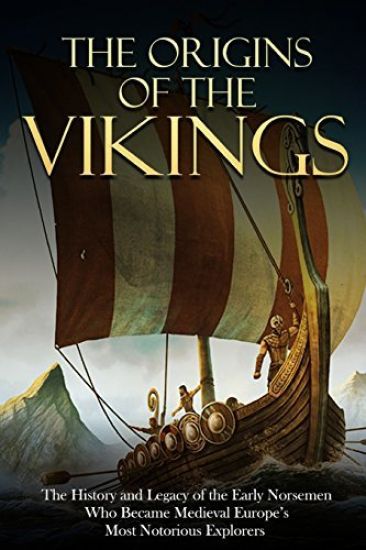
The Origins of the Vikings: The History and Legacy of the Early Norsemen Who Became Medieval Europe's Most Notorious Explorers
*Includes pictures*Includes contemporary accounts*Includes online resources and a bibliography for further readingOver the centuries, the West has become fascinated by the Vikings, one of the most mysterious and interesting European civilizations. In addition to being perceived as a remarkably unique culture among its European counterparts, what's known and not known about the Vikings' accomplishments has added an intriguing aura to the historical narrative. Were they fierce and fearsome warriors? Were they the first Europeans to visit North America? It seems some of the legends are true, and some are just that, legend. Like many civilizations of past millennia, the Vikings are remembered in popular culture more for the fantastical accounts of their history than for reality. The written records of the history of the Viking period, consisting mostly of Norse sagas, metaphoric poems called skalds and monastic chronicles, were written down well after the events they described and tended to be lurid accounts rife with hyperbole. Furthermore, the most scathing tales of Viking raids are contained in the histories of monastic communities which were targets of Norse rapacity. These chronicles speak of the heathen Viking depredations of monastic treasuries and the ferocious torture and killing of Christian monks. The colorful bloody tales were certainly based on more than grains of truth, but they were also purposefully augmented to inject drama into history. Similarly Norse sagas written down in the post-Viking Age fixed what had hitherto been flexible oral tradition. They were often slanted to legitimize a clan or leader's authority by emphasizing an ancestor's bravery and skill in pillaging opponent's communities. As a result, the almost ubiquitous depiction of the Vikings as horn-helmeted, brutish, hairy giants who mercilessly marauded among the settlements of Northern Europe is based on an abundance of prejudicial historical writing by those who were on the receiving end of Viking depredations, and much of the popular picture of the Vikings is a result of the romantic imagination of novelists and artists. For example, there is neither historical nor archaeological evidence that the typically red haired, freckled Norsemen entered battle wearing a metal helmet decorated with horns. This headgear was an invention of the Swedish painter and illustrator Johan August Malmstr m (1829-1901), and his work was so widely disseminated in popular books that the image stuck. Today the imaginary Viking helmet is an almost mandatory costume accessory in productions of Wagner's opera Der Ring des Nibelungen, which is not about the Vikings at all. It seems the horned helmet evolved from an imaginary reinterpretation of genuine Viking images of a winged helmet that may have been worn by priests in Viking religious ceremonies. However, the Vikings' reputation for ferocious seaborne attacks along the coasts of Northern Europe is no exaggeration. It is true that the Norsemen, who traded extensively throughout Europe, often increased the profits obtained from their nautical ventures through plunder, acquiring precious metals and slaves. Of course, the Vikings were not the only ones participating in this kind of income generation - between the 8th and the 11th centuries, European tribes, clans, kingdoms and monastic communities were quite adept at fighting with each other for the purpose of obtaining booty. The Vikings were simply more consistently successful than their contemporaries and thus became suitable symbols for the iniquity of the times. The Origins of the Vikings: The History and Legacy of the Early Norsemen Who Became Medieval Europe's Most Notorious Explorers examines the beginnings of the Viking civilization, and what set them down the path to trading and raiding all across the Atlantic.