Kirjojen hintavertailu – 12 903 725 kirjaa ja 27 kauppaa
Kirjailija
Charles River
Kirjat ja teokset yhdessä paikassa: 4 673 kirjaa, julkaisuja vuosilta 2013–2022, suosituimpiin kuuluu William Powell and Myrna Loy: The Lives and Careers of One of Classical Hollywood's Most Iconic Duos. Vertaile teosten hintoja ja tarkista saatavuus suomalaisista kirjakaupoista.
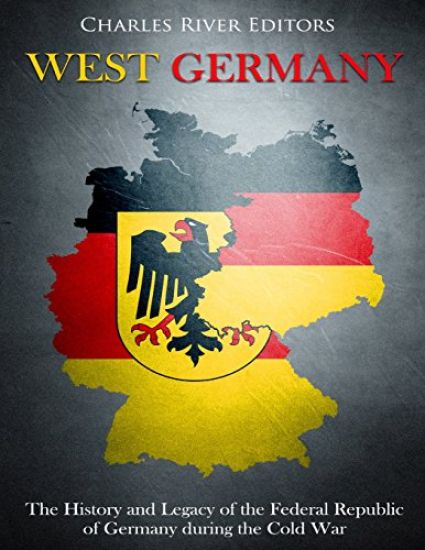
*Includes pictures *Includes online resources and a bibliography for further reading "Here in Berlin, one cannot help being aware that you are the hub around which turns the wheel of history. ... If ever there were a people who should be constantly sensitive to their destiny, the people of Berlin, East and West, should be they." - Martin Luther King, Jr. In the wake of World War II, the European continent was devastated, and the conflict left the Soviet Union and the United States as uncontested superpowers. This ushered in over 45 years of the Cold War, and a political alignment of Western democracies against the Communist Soviet bloc that produced conflicts pitting allies on each sides fighting, even as the American and Soviet militaries never engaged each other. Though it never got "hot," the Cold War was a tense era until the dissolution of the USSR, and nothing symbolized the split more than the Berlin Wall, which literally divided the city. Berlin had been a flashpoint even before World War II ended, and the city was occupied by the different Allies even as the close of the war turned them into adversaries. After the Soviets' blockade of West Berlin was prevented by the Berlin Airlift, the Eastern Bloc and the Western powers continued to control different sections of the city, and by the 1960s, East Germany was pushing for a solution to the problem of an enclave of freedom within its borders. West Berlin was a haven for highly-educated East Germans who wanted freedom and a better life in the West, and this "brain drain" was threatening the survival of the East German economy. In order to stop this, access to the West through West Berlin had to be cut off, so in August 1961, Soviet premier Nikita Khrushchev authorized East German leader Walter Ulbricht to begin construction of what would become known as the Berlin Wall. The wall, begun on Sunday August 13, would eventually surround the city, in spite of global condemnation, and the Berlin Wall itself would become the symbol for Communist repression in the Eastern Bloc. It also ended Khrushchev's attempts to conclude a peace treaty among the Four Powers (the Soviets, the Americans, the United Kingdom, and France) and the two German states. Of course, the Berlin Wall also literally divided West Germany from East Germany, and West Germany became one of the most stable and prosperous states in Europe during the Cold War. It had a remarkable history, albeit one that was interrupted by numerous crises and problems. The West Germans honestly confronted its brutal past and competently absorbed the far poorer Soviet satellite East Germany upon the reunification of Germany in 1990. This, of course, was not at all certain or obvious when the Allies beat back the Nazis at the end of the war in 1945, but far from making the same mistakes the Allied Powers made after World War I, the Allies opted to mold West Germany as a liberal, democratic state that would achieve prosperity and renounce war. West Germany: The History and Legacy of the Federal Republic of Germany during the Cold War examines the country and its place at the center of geopolitics after World War II. Along with pictures and a bibliography, you will learn about West Germany like never before.
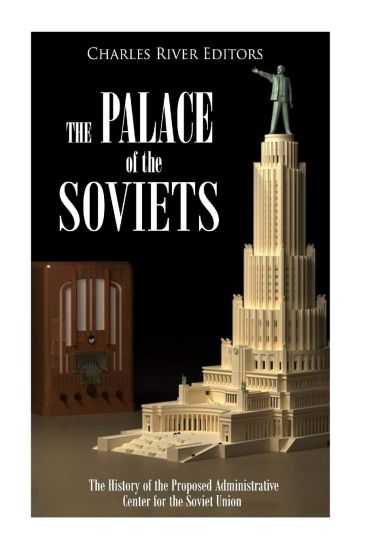
*Includes pictures*Includes online resources and a bibliography for further readingThe Palace of the Soviets (Russian: Dvorets Sovetov) was an unrealized project for the construction of a high-rise administrative building in Moscow, to be used for sessions of the Supreme Soviet of the USSR and mass demonstrations. According to architect Boris Iofan's plans, the height of the Palace of the Soviets, together with the one hundred-meter statue of Vladimir Lenin, would be 415 meters. The palace was to become the center of the new Soviet Moscow and the tallest building in the world, symbolizing the victory of socialism (Khmelnitsky, 2006, p. 7). Designing and the beginning of construction of the palace marked the transition to the Stalin Empire style in Soviet architecture (Rogachev, 2014, p. 187-230). In 1931, on the proposed site of construction for the Palace of the Soviets, the Cathedral of Christ the Savior was blown up. The preparatory works began the following year. The foundation of the palace was completed in 1939, but because of the beginning of the Great Patriotic War the project was frozen. In 1941-1942, the steel structures of the Palace of the Soviets were dismantled and used during the defense of Moscow for the construction of bridges (Kruzhkov, 2014). Another competition for the design of the Palace of the Soviets was held between 1956 and 1958, and a new site in the southwest of Moscow was prepared for it, but the plans were never implemented. In 1960, the world's largest outdoor winter swimming pool was created on the foundation of the original Palace of the Soviets, and it lasted until the 1990s. After its closure, the temple was rebuilt (RIA Novosti, 2013). The Palace of the Soviets: The History of the Proposed Administrative Center for the Soviet Union examines the grand designs envisioned by the USSR, and how the horrors of war indefinitely scrapped the project. Along with pictures of important people, places, and events, you will learn about the Palace of the Soviets like never before.
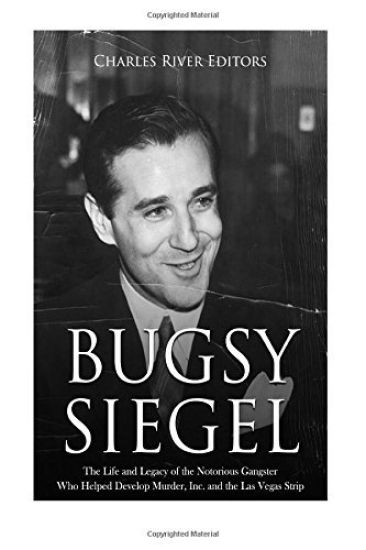
*Includes pictures *Includes online resources and a bibliography for further reading Behind a black marble coffee table with elegant cabriole legs sat a man once admired and reviled as one of the toughest gangsters to ever come out of Brooklyn. The man was slouched over to one side, his undeniably lifeless body cold on the couch. The normally pressed suit of the famously debonair desperado was wrinkled and soaked with his blood, his matching tie askew. Thanks to the graininess of the black-and-white shot, some of the blood is camouflaged by the gaudy floral print of the couch cradling his corpse. The fuzziness of the picture, however, does nothing to diminish the horror of the bullet-made craters on his irreparably disfigured face. In the last 70 years, a countless number of people have come across the grisly and morbidly fascinating crime scene photographs of Benjamin "Bugsy" Siegel's murder. The photographs are as disconcerting as they are iconic, for they show a gritty glimpse into the haunting reality of a life too often glamorized by pop culture. The less-publicized photograph of Bugsy in the morgue is, in a way, a more chilling reminder of the barbarity and callous irony behind the term "organized crime." With the blood on his face rinsed off and his hair slicked back, it almost seems as if the photographer had caught Bugsy mid-slumber, but the balls of cotton plugging the gaping bullet holes in his face suggest otherwise. One minute, the fearless Bugsy was stalking the streets of Sin City, his mere presence enough to make even the most hardened thugs break out in a cold sweat, and the next minute, Bugsy was reduced to an unrecognizable body sprawled out on a hard metal slab, with the name on his toe tag misspelled. Bugsy's death has since been recreated by multiple movies, television shows, and documentaries for good reason, because it was an electrifying, messy conclusion to a life that was as theatrical as it was turbulent. Bugsy Siegel: The Life and Legacy of the Notorious Gangster Who Helped Develop Murder, Inc. and the Las Vegas Strip profiles the controversial life and death of the "most feared" mobster of his day, along with everything he affected. Along with pictures of important people, places, and events, you will learn about Bugsy Siegel like never before.
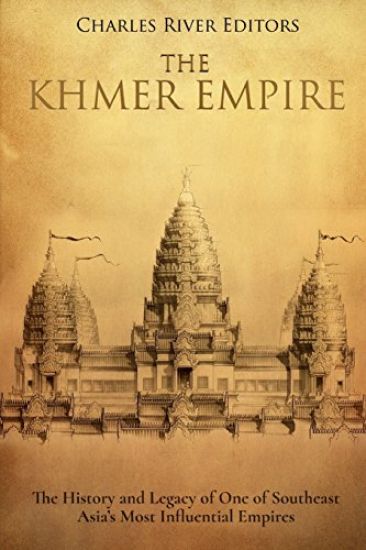
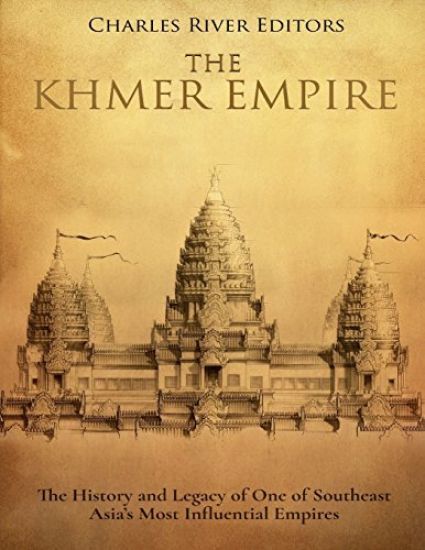
*Includes pictures *Includes contemporary accounts *Includes online resources and a bibliography for further reading The Khmer Empire, also known as the Angkor Empire, was a powerful empire of Southeast Asia that was established in 802 CE and ended in 1431 with the invasion of the Siamese and abandonment of Angkor. The Khmer Empire was responsible for many of the historic monuments and temples found throughout the jungles of modern-day Cambodia, and also in other countries of Southeast Asia, all made possible by the fact the Khmer Empire reached across modern-day Cambodia, parts of Thailand, Laos, and Vietnam, making it a strategic trading partner with ships traveling from China and India. Of all the architecture, the empire is best known for constructing Angkor Wat, one of the modern world's greatest wonders. Known in English as Angkor Wat ("City Temple"), the gigantic complex was built by King Suryavarman II in the early 12th century to serve as the king's state temple and capital city. Since it has remained so finely preserved, it has maintained religious significance for nearly 900 years, first dedicated to the Hindu god Vishnu, and then Buddhist. Understandably, it has become one of Cambodia's most potent symbols and tourist attractions, and it even appears on the Cambodian national flag. Angkor Wat continues to fascinate the world, both due to its sheer grandeur and size, as well as its ornamental decorations both inside and out. With political strife in Cambodia having cooled, Angkor Wat is now a major tourist attraction, bringing upwards of over half a million foreigners per year, which accounts for over half of the nation's tourists. As a result, the long-lasting influence that this empire had on the people of Cambodia can still be felt today, with Angkor Wat being featured on the national flag. The Khmer Empire: The History and Legacy of One of Southeast Asia's Most Influential Empires chronicles the remarkable history of the Khmer and their impact on the region. Along with pictures depicting important people, places, and events, you will learn about the Khmer Empire like never before.
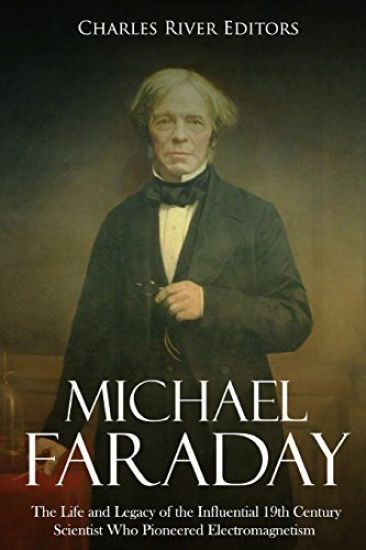
*Includes pictures *Includes Faraday's own quotes about his work *Includes online resources and a bibliography for further reading "Nothing is too wonderful to be true, if it be consistent with the laws of nature." - Michael Faraday "Without such freedom there would have been no Shakespeare, no Goethe, no Newton, no Faraday, no Pasteur and no Lister." - Albert Einstein, in a speech on intellectual freedom after fleeing Nazi Germany, October 3, 1933 On April 18, 1955, a bell-like symphony of ringing telephones erupted in news stations, radio offices, and the homes of media figures across the United States. 38-year-old LIFE photographer Ralph Morse was among those whose phone started ringing off the hook. The groggy Morse was teetering on the line between lucidity and slumber when he picked up, but by the end of the call, which came from a clearly keen, but jittery LIFE editor, it was like he'd downed a liter of the world's strongest coffee. The one and only Albert Einstein had died. Morse grabbed his equipment, piled into his car, and raced to Princeton Hospital, where Einstein had been admitted to just 3 days earlier. Seeing that the place was pulsating with mobs of journalists, photographers, and nosy onlookers, Morse dipped into the Princeton Institute for Advanced Study and persuaded the superintendent to unlock Einstein's office with a case of premium scotch. As such, Morse was able to compactly capture one of the most defining photographs of the man's life and his work, and on the day of his death no less. Viewers are given a taste of Einstein's unrivaled tenacity with the mound of journals and books strewn about on his desk, his pipe and tobacco tin serving as makeshift paper weights. Behind his swiveling leather chair, sitting slightly askew, was a blackboard featuring a wall of complex formulas and equations. It was in this very study, as well as his home office back in Berlin, that Einstein, perhaps the most celebrated genius in history, displayed the photographs of his five muses. Though only the framed portraits of Gandhi and another German composer have been pictured in Einstein's study, the faces of three other illustrious scientists are said to have once graced his walls. One of them was Michael Faraday, an endlessly luminous mind equipped with an unflagging hunger for knowledge, a hunger so ungovernable that not even poverty or social norms could stand in the way of his ambitions. Indeed, it was reportedly Einstein's expertise in the lives of Maxwell and Faraday, as well as his mastery of their work and accomplishments, that landed him his first job at the Swiss Patent Office after months of job-scouring. Moreover, Einstein's admiration for Faraday was so profound that when a friend gifted him a biography of his "hero" for his birthday, Einstein cherished it to the utmost degree. He expressed his gratitude towards his friend in an eloquent letter, writing, "You have given me great joy with the little book about Faraday. This man loved mysterious Nature as a lover loves his distant beloved. In this day, there did not yet exist the dull specialization that stares with self-conceit through horn-rimmed glasses and destroys poetry..." Needless to say, Michael Faraday, often hailed as one of the "greatest experimenters" to have ever lived, was in his own right an indispensable and boundlessly influential scientific pioneer. But what was it about Faraday, among so many other noteworthy scientists, that captivated Einstein, one of history's most fabled polymaths? Michael Faraday: The Life and Legacy of the Influential 19th Century Scientist Who Pioneered Electromagnetism examines the life and work that made Faraday one of history's most important scientists. Along with pictures of important people, places, and events, you will learn about Michael Faraday like never before.
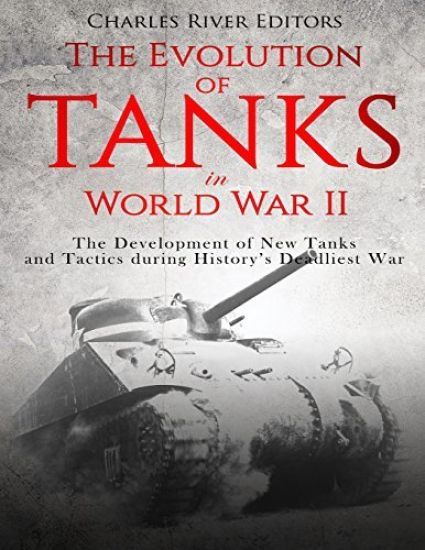
*Includes pictures *Includes accounts of the fighting *Includes online resources and a bibliography for further reading World War II was thus the culmination of a quarter century of tank development, and it would also be the first major test of tanks in mobile warfare, during which they had to face other tanks. However, many of the tanks were constructed with the static warfare of the Western Front in mind and were thus slow and had short operational ranges. Others were too light to face opposing tanks or the new generation of anti-tank weapons that hadn't existed in World War I. The unsuitability of these tank models for this new kind of warfare was quickly recognized, and the belligerent powers scrambled to create better designs. As each new, improved model came off the assembly lines, the opposing powers rushed to create a tank that could beat it. In that regard, World War II was also a war between rival engineers. At the same time, German military officials were at the forefront of developing new ideologies when it came to utilizing their tanks to maximum effect. Heinz Guderian even published a book on the topic before becoming one of the Third Reich's most effective tank commanders. Moreover, during the German invasion of Poland, Nazi forces gained experience they would use across Europe and in Russia. After all, it was in Poland that the Wehrmacht saw action for the first time, conducting what was not only an invasion but also a trial run of its new equipment and tactics. The Polish invasion proved invaluable in providing the German high command with a low-risk, high-value live fire exercise for their newly minted war machine, while the actual combat experience highlighted the remaining flaws in the system. During the campaign, the Germans honed tactics and weapon systems for the massive struggle with the Soviets, British, and United States that loomed on the horizon. Throughout the war, designers learned how to improve suspension, reorganize the interior to give the crews more room, and incorporate other upgrades that helped with the overall function of the tank. Practical experience from the tank crews was of vital importance in these developments. At the same time, tactics evolved throughout the war. The Germans were early leaders in tank tactics, as their successes from Poland through the opening phases of Operation Barbarossa demonstrated. The main German tank tactic was the so-called Schwerpunkt ("center of gravity"), in which a concentration of tanks achieved a local superiority, broke through, and drove deep behind enemy lines, carving up frontline enemy forces that could then be surrounded and taken out by support tanks, infantry, and artillery. This is why German tanks were built for speed while maintaining good armor and weaponry. In the early part of the war, Allied tanks spread out to act as infantry support, but once the Allies witnessed the efficacy of German tank tactics, they began to imitate them, prompting the Germans to further refine their own techniques. The Evolution of Tanks in World War II: The Development of New Tanks and Tactics during History's Deadliest War looks at the most important tanks from 1942-1945, and how doctrines changed in the wake of Germany's conquest of Western Europe. Along with pictures of important people, places, and events, you will learn about tank warfare in World War II like never before.
En la cultura popular, el t rmino "neandertal" es usado como un insulto coloquial para un degenerado o alguien que es percibido como est pido. Este parece haber sido el caso incluso desde el primer reconocimiento de los neandertales como una especie. El primer descubrimiento f sil de neandertal fue el cr neo de un ni o en B lgica en 1829, pero estaba gravemente da ado. Otro ser a descubierto en 1856 en una mina de piedra caliza de la regi n de Neanderthal, en lo que hoy es Alemania (por lo que fue llamado "Neandertal 1"), y poco m s de una d cada despu s ser a descubierta una calavera con rasgos distintivos diferentes (que indicaban una especie diferente a los neandertales), en el suroeste de Francia. El ltimo esp cimen llegar a a ser reconocido como un ejemplo de la especie H. Sapiens, y estos humanos anat micamente modernos llegaron a Europa hace 45.000-43.000 a os, alrededor del tiempo en que se cree que los neandertales comenzaron a extinguirse. Los neandertales son miembros del g nero Homo, al igual que el H. sapiens, y comparten aproximadamente el 99,7% de su ADN con los humanos modernos (Reynolds y Gallagher 2012). Ambas especies incluso vivieron brevemente durante la misma poca en Eurasia. Sin embargo, los neandertales evolucionaron separadamente en Europa, lejos del H. sapiens, que evolucion en frica. Los neandertales existieron en Europa y Asia durante casi 200.000 a os y prosperaron en estas regiones, pero se extinguieron hace 40.000 a 30.000 a os, en la misma poca en que los humanos modernos comenzaron a llegar a Europa. Esto ha provocado mucha especulaci n sobre la naturaleza de las interacciones entre los neandertales y H. sapiens, especialmente dado que algunos investigadores creen que interactuaron entre s durante m s de 5.000 a os antes de que los neandertales comenzaran a extinguirse en diferentes tiempos en toda Europa. Una hip tesis es que el H. sapiens desplaz a los neandertales y se adapt mejor a las condiciones del entorno, y es obviamente posible, si no probable, que estos dos grupos se hayan convertido en competidores por alimentos y otros recursos, con el H. sapiens siendo m s exitoso al final. Tambi n existe la posibilidad, si tales interacciones cercanas estaban teniendo lugar, de que el H. sapiens, relativamente nuevo en Europa, trajera consigo pat genos de frica que eran desconocidos para el sistema inmune del neandertal. Un ejemplo m s reciente de este tipo de interacci n resultante es la expansi n europea a las Am ricas, que trajo enfermedades, como la viruela, que los nativos de Am rica nunca hab an experimentado, especialmente las enfermedades resultantes de la domesticaci n de los animales. Es posible que la domesticaci n del perro por parte del H. sapiens haya contribuido a propagar enfermedades for neas entre los neandertales. Haya ocurrido esto o no, es muy probable que las interacciones entre los dos grupos se hicieran mucho m s ntimas en alg n momento. Los neandertales pudieron fabricar y usar una serie de diversas herramientas sofisticadas, controlar el fuego, hacer y usar ropa, y crear adornos y decoraciones. Incluso hay evidencia de que los neandertales enterraban a sus muertos con ofrendas f nebres, una pr ctica que tambi n est asociada con el posterior H. sapiens, lo que sugiere que las dos especies intercambiaban ideas como la fabricaci n de herramientas y rituales. Se han descubierto sitios arqueol gicos desde Espa a hasta Rusia que contienen herramientas de piedra transicionales asociadas con H. sapiens o neandertales. Es dif cil determinar nicamente a partir de la evidencia arqueol gica el nivel de las interacciones que se llevaron a cabo en estos sitios, que pueden haber sido utilizados al mismo tiempo. Los neandertales: la historia de los humanos extintos que fueron contempor neos del Homo Sapiens en Europa da un vistazo a la evoluci n de los neandertales y examina las teor as sob
frica puede haber sido la cuna de los primeros seres humanos, y Egipto probablemente levant la primera gran civilizaci n que, cinco mil a os despu s, contin a fascinando a las sociedades modernas de todo el globo. Desde la Biblioteca y el Faro de Alejandr a a la Gran Pir mide de Giza, los antiguos egipcios produjeron varias maravillas del mundo, revolucionaron la arquitectura y la construcci n, crearon algunos de los primeros sistemas de matem ticas y medicina del mundo, y establecieron un lenguaje y un arte que se esparci por todo la tierra conocida. Con personajes tan famosos como el Rey Tut Y Cleopatra, no es de sorprender que el mundo de hoy tenga tantos egipt logos. Lo que hace notables los logros de los antiguos egipcios es que el pa s fue hist ricamente un lugar de gran turbulencia pol tica. Su posici n lo hizo tan valioso como vulnerable a los ojos de otros pueblos a lo largo del Mediterr neo y el Medio Oriente; adem s, el Antiguo Egipto no careci de luchas intestinas. Sus m s famosos conquistadores vendr an de Europa, con Alejandro Magno poniendo los fundamentos de la dinast a ptolemaica hel nica, y con los romanos acabando con ese linaje luego de derrotar a Cleopatra y llevarla al suicidio. Dada la abundancia de artefactos funerarios que han sido hallados en las arenas de Egipto, a veces parece como si los egipcios estuvieran m s preocupados con los asuntos del m s all que en las cosas que experimentaban en su d a a d a. Esto destaca a n m s gracias a las pir mides, que han capturado la imaginaci n del mundo durante siglos. En consecuencia, no es de sorprender que Osiris fuese uno de los dioses m s importantes del pante n egipcio, tanto, que hoy en d a podr a ser el m s famoso de los dioses egipcios. Apartando la ubicuidad del dios sol Re en la cultura popular moderna, es Osiris quien captura las mentes de los lectores modernos. Su historia es tan familiar como extra amente ajena. Es el dios de los muertos, pero se convirti en eso por su sola mortalidad. Todos los dioses del antiguo Egipto eran capaces de morir, pero Osiris era tambi n un s mbolo de resurrecci n, no muy distinto a Cristo en la teolog a cristiana. Osiris fue traicionado por alguien cercano a l (en este caso su hermano Set), fue asesinado y renaci , pero aqu es donde Osiris y Cristo se diferencian. La muerte de Osiris es brutal, y su resurrecci n es el producto del amor de su esposa Isis hacia l. M s a n, Osiris fue asociado con los reyes de Egipto porque los egipcios cre an que l mismo era un rey. Los antiguos egipcios pod an listar a todos sus reyes, uno por uno, hasta el tiempo en que se cre a que los dioses gobernaron la tierra en persona. Osiris fue el tercero o cuarto sucesor en el trono egipcio despu s de la creaci n, y los egipcios cre an que la conexi n de Osiris con la monarqu a era permitir que sus reyes mismos renacieran. Se dec a tambi n que f sicamente era enorme -alrededor de cinco metros de acuerdo a algunas fuentes- lo que le ayud en sus campa as militares. Dependiendo del fen meno o del sentimiento que los antiguos egipcios experimentaran, hab a una deidad o historia correspondiente para explicar la conexi n. El aclamado egipt logo Gary Shaw describ a este ethos como una "una interminable repetici n de creaciones, destrucciones y renacimientos, formando una red de interacciones divinas... cada persona viviente] es cada d a el h roe de su propia narrativa m tica" . De esta forma, los antiguos egipcios se "asimilaban" a la deidad correspondiente que defin a su situaci n en un momento dado. Shaw brind un excelente conjunto de ejemplos sobre este tema: "Una persona con un dolor de cabeza se convert a en Horus Ni o, cuidado por su madre, que asimismo se convert a en Isis; en la muerte, el difunto se transformaba en diversos dioses mientras se desplazaba por el mundo de la otra vida, asumiendo por un rato la autoridad
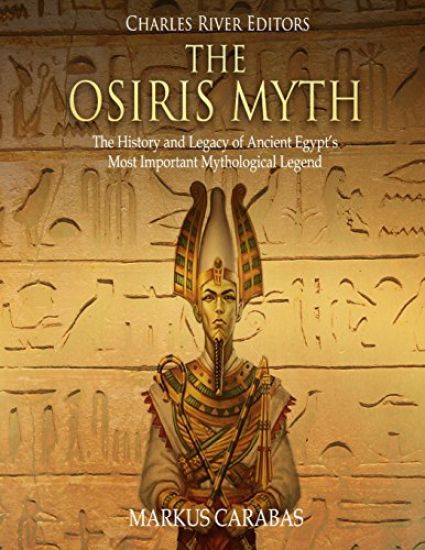
*Includes pictures *Includes online resources and a bibliography for further reading Africa may have given rise to the first human beings, and Egypt probably gave rise to the first great civilizations, which continue to fascinate modern societies across the globe nearly 5,000 years later. From the Library and Lighthouse of Alexandria to the Great Pyramid at Giza, the Ancient Egyptians produced several wonders of the world, revolutionized architecture and construction, created some of the world's first systems of mathematics and medicine, and established language and art that spread across the known world. With world-famous leaders like King Tut and Cleopatra, it's no wonder that today's world has so many Egyptologists. To the ancient Egyptians, as was the case with any society made up of inquiring humans, the world was a confusing and often terrifying place of destruction, death and unexplained phenomena. In order to make sense of such an existence, they resorted to teleological stories. Giving a phenomenon a story made it less horrifying, and it also helped them make sense of the world around them. Unsurprisingly, then, the ancient Egyptian gods permeated every aspect of existence. Given the abundance of funerary artifacts that have been found within the sands of Egypt, it sometimes seems as though the Ancient Egyptians were more concerned with the matters of the afterlife than they were with matters of the life they experienced from day to day. This is underscored most prominently by the pyramids, which have captured the world's imagination for centuries. Thus, it's little surprise that Osiris was one of the most important gods in the Egyptian pantheon, and he could well be the most famous of the Egyptian gods today. Aside from the ubiquity of the sun-god Re in much of modern popular culture, it is Osiris who captivates the minds of modern readers most. His story is both familiar and strangely alien. He is the god of the dead, but he became so by the very fact of his mortality. All the gods of ancient Egypt were capable of dying, but Osiris was also a symbol of resurrection, not unlike Christ in Christian theology. Osiris was betrayed by somebody close to him (in this case, his brother Seth) and was murdered and reborn, but here is where Osiris and Christ part ways. Osiris's death is brutal, and his resurrection is the product of his wife Isis's love for him. Depending on the phenomenon or feeling the ancient Egyptians experienced, there was a corresponding deity and a story to explain the connection. Acclaimed Egyptologist Garry Shaw described this ethos an "an endless repetition of creations, destructions and rebirths, entangled in a net of divine interactions ... each person living] as the hero of his own mythic narrative each day." In this way, the ancient Egyptian would "assimilate" themselves with the corresponding deity that defined their situation at any given time. Shaw provided an excellent set of examples on this topic: "A person with a headache became Horus the Child, cared for by his mother, who herself became Isis; in death, the deceased transformed into various gods whilst traversing the afterlife realm, assuming each deity's divine authority for a time. Egypt's myths were elastic enough to be shaped into everyone's lives ... myths, and the acts of the gods detailed therein, answered the question, 'why did this happen to me' There is comfort in precedent." The Osiris Myth: The History and Legacy of Ancient Egypt's Most Important Mythological Legend looks at the story that had such a decisive impact on the Egyptians' concept of afterlife, kingship, and more. Along with pictures depicting important people, places, and events, you will learn about the Osiris myth like never before.
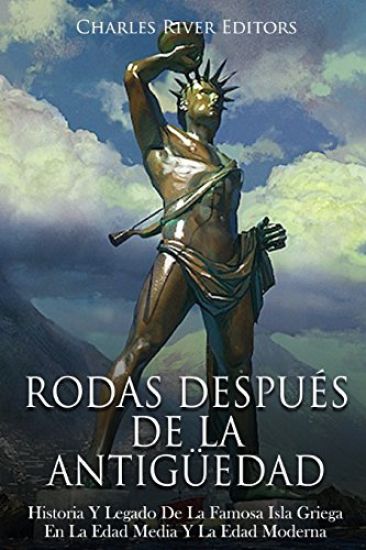
En los per odos Arcaico y Cl sico, Rodas a menudo se erigi como un excelente ejemplo de los altibajos de sus ciudades griegas, y como la isla m s grande del Dodecaneso, la historia de Rodas est en gran medida en l nea con la del resto de esas islas. Rodas fue colonizada por primera vez por los griegos de la tribu d rica alrededor del siglo VIII a. C., y se aline con sus ciudades d ricas en las islas circundantes y el continente de Asia Menor para formar el llamado Hex polis d rico. Despu s de la revuelta j nica a finales del siglo VI a. C., Rodas, junto con otras islas, estuvo en el camino de la flota persa que cruz el Egeo para enfrentarse a los griegos en las guerras persas. Despu s de las Guerras Persas, junto con el resto de las islas y con el Asia Menor Griega, Rodas fue subsumida en la alianza ateniense, que pronto se convertir a en el Imperio Ateniense. Sin embargo, Atenas pronto perder a su poder, y hacia el final de la Guerra del Peloponeso contra Esparta, su poder sobre sus aliados disminuir a. Rodas alcanzar a el cenit de su poder en el per odo helen stico despu s de la muerte de Alejandro Magno en el a o 323 a. C. A pesar de que el resto de las ciudades-estado decayeron en comparaci n con los reinos mucho m s grandes de los sucesores de Alejandro en Egipto y Asia, Rodas pasar a a la vanguardia como una potencia principal en el mundo griego, permaneciendo de pie con estos reinos helen sticos. Rodas fue durante un tiempo la primera potencia naval del Mediterr neo Oriental y una de las ciudades m s poderosas y ricas del mundo. Fue durante este tiempo que el Coloso de Rodas, una de las Siete Maravillas del Mundo Antiguo, fue construido en la isla para celebrar el triunfo igualmente monumental de Rodas sobre los ej rcitos de Demetrio el Asediador. Rodas tambi n se afianz en otras islas, y una extensa presencia en Asia Menor. Con el surgimiento de Roma, Rodas, junto con el resto del mundo griego, perdi poder, y gradualmente se integr en la esfera romana de influencia como aliado antes de ser finalmente anexionado al imperio. Despu s de la partici n y el colapso del antiguo Imperio Romano, en la Edad Media Rodas compartir a tanto las fortunas como las vicisitudes del estado sucesor de Roma, el Imperio Bizantino. Junto con los bizantinos, Rodas se enfrentar a primero contra los rabes del Este, y luego contra las Cruzadas europeas del Oeste. A medida que el Imperio Bizantino continuaba perdiendo poder y el caos se extend a en sus antiguas posesiones, Rodas eventualmente ser a ocupada por los Caballeros Hospitalarios, una orden de caballeros cruzados que inicialmente llegaron a la isla mientras se retiraban de Tierra Santa. Estos caballeros se aferraron a Rodas durante m s de 200 a os, convirti ndola en el cuartel general de su singular imperio militar, econ mico y pirata. Se convirti en un basti n de la cristiandad y un recordatorio del antiguo poder de los cruzados en una regi n del Mediterr neo oriental cada vez m s dominada por el Islam. Cuando el castillo de los caballeros de Rodas, a n en pie, cay finalmente ante los turcos otomanos en 1522, Rodas entr en un largo per odo de gobierno turco que dur casi 400 a os. No fue hasta 1948, despu s de sucesivas y breves ocupaciones italianas, alemanas y brit nicas, que la isla se uni finalmente al Estado griego moderno. Hasta el d a de hoy, gracias a sus impresionantes sitios arqueol gicos, Rodas todav a conserva las marcas indelebles de su pasado hist rico. Rodas Despu s De La Antig edad: La Historia Y El Legado De La Famosa Isla Griega En La Edad Media Y La Edad Moderna examina la historia de uno de los lugares m s importantes del Mediterr neo. Junto con fotos que representan gente importante, lugares y eventos, usted aprender sobre Rodas como nunca antes.
*Includes pictures *Includes contemporary accounts *Includes online resources and a bibliography for further reading "The genius of liberty, which made you, at her birth, the arbiter of Europe, wants to be genius of the seas and the furthest nations." - Napoleon's address to his soldiers before leaving for Egypt In 1798, an initial review of France's naval forces had led Napoleon to conclude his navy could not hope to outfight the power of the Royal Navy, which had been the dominant naval power for centuries, so he was forced to look elsewhere. After months of planning, Napoleon crafted a scheme to attack and conquer Egypt, denying the British easy access to their colonies in India, with the ultimate goal of linking up with the Sultan Tipoo in India itself and defeating the British in the field there. Napoleon sailed with Admiral Brueys and 30,000 troops that June, heading for Egypt. Notionally part of the Ottoman Empire, Egypt was de facto a weak independent regime run by the breakaway Mamelukes. For France, it offered an overland route to India and a chance to beat Britain at her own game via economic strangulation. Ironically, in their attempt to intercept Napoleon and the French fleet, Admiral Horatio Nelson and the British forces beat the French to Africa, failing to take into account their slower troop transports. While the British turned north, only two days later, on June 28, 1798, Napoleon's army disembarked at Alexandria. Back in Sicily, Nelson heard further reports about the French and again sailed south. This time, about 6 weeks after the French reached Egypt, Nelson's fleet destroyed the French Mediterranean fleet, leaving Napoleon stranded in Africa. In addition to being unable to be reinforced or supplied by sea, his ambitions to establish a permanent presence in Egypt were further frustrated by a number of uprisings. Early in 1799, Napoleon advanced against France's erstwhile enemy, the Ottoman Empire, invading modern Syria (then the province of Damascus) and conquering the cities of Gaza, Jaffa, Arish and Haifa. However, with the plague running rampant through his army and his lines of supply from Egypt stretched dangerously thin, Napoleon was unable to destroy the fortified city of Acre and was forced to retreat. The retreat cost him almost all of his wounded as, harassed by enemy forces, he was forced to abandon most of his casualties to the Ottomans' mercy, or lack thereof. Most of the wounded were tortured and beheaded. Napoleon harbored all kinds of delusions about his time in Egypt that were not based in reality, but he definitely left a lasting legacy in the region, one he would never live to see or appreciate. By shifting the theater of operations to Africa and the Middle East, Napoleon inadvertently ensured the Europeans would fight there in the future, and the French occupation impressed upon the locals the necessity of catching up to the modern world in terms of technology. Ancient tactics could not prevail against a modern army, no matter the numbers, but while that was a lesson Napoleon consistently taught his enemies in Egypt and the Levant to their detriment, the French also sped up the occupied populations' technological advances as well. Perhaps more importantly, the Egyptian Scientific Institute introduced numerous modern innovations, perhaps most importantly the printing press, which in turn encouraged literacy. This brought about the emergence of nationalism and liberalism, leading eventually to the establishment of Egyptian independence and modernization under the rule of Muhammad Ali Pasha in the first half of the 19th century, and eventually the Nahda, or Arab Renaissance. In a sense, the French arrival in Egypt marked the beginning of the modern Middle East.
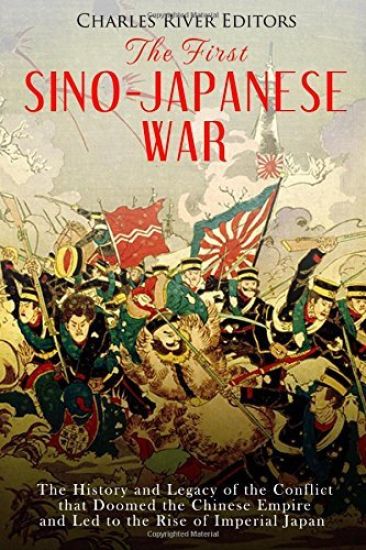
*Includes pictures *Includes accounts of the fighting *Includes online resources and a bibliography for further reading Completing the Meiji Restoration that heralded the dawn of a new era for both Japan and Asia, the island nation found itself thrust into the modern world, a world of industry and conquest. Flexing its new muscles, the burgeoning power soon came to blows with the regional power that for centuries dominated the area politically and culturally: China. Also seeking to modernize in the wake of Western exploitation, China struggled to adapt to the changing times, doing everything it could to maintain a balance between modernity and tradition. Japan found that balance, and, its new industry desperate for raw materials, looked to the peninsula of Korea for new markets and resources. China, in contrast, refused to strike such a balance, adopting a veneer of modernity while maintaining the status quo, both domestically and with regards to Korea. For decades Korea existed as a protectorate of China, paying homage to the mighty Chinese dynasties while minding its own business as best it could. However, sensing weakness in the former regional power after being defeated by the Europeans during the Second Opium War, escalating tensions over Korea between the old power of China and the new power of Japan led to the First Sino-Japanese War. In its first modern war, the modernized Japanese empire went to war against the dominant power in the region, and though interested Western powers favored China, Japan won the day, claiming Korea as their conquest and permanently upsetting the balance of power in the region. The conflict paved the way for the future Empire of Japan and the collapse of the Qing Dynasty. Though both nations modernized, and China far outweighed Japan in terms of men and materiel potential, the island nation handily won its first modern war. Why did the smaller Japan defeat the formerly mighty Qing Dynasty? What did both nations glean from the war? What did Western powers, watching the ancient dragon battle the upstart tiger, think of the war? The answers to these questions reflect both Japan's short-term gains in the wake of victory, and the long term disaster for both sides' new roles in Asia. For with the end of Chinese dominance in East Asia came a new era for the region as a whole, an era whose consequences and horrors would not be fully realized for several more decades. The First Sino-Japanese War: The History and Legacy of the Conflict that Doomed the Chinese Empire and Led to the Rise of Imperial Japan looks at how the two sides went to war, as well as the crucial aftermath. Along with pictures and a bibliography, you will learn about the First Sino-Japanese War like never before.
*Includes pictures *Includes contemporary accounts *Includes online resources and a bibliography for further reading The Khmer Empire, also known as the Angkor Empire, was a powerful empire of Southeast Asia that was established in 802 CE and ended in 1431 with the invasion of the Siamese and abandonment of Angkor. The Khmer Empire was responsible for many of the historic monuments and temples found throughout the jungles of modern-day Cambodia, and also in other countries of Southeast Asia, all made possible by the fact the Khmer Empire reached across modern-day Cambodia, parts of Thailand, Laos, and Vietnam, making it a strategic trading partner with ships traveling from China and India. Of all the architecture, the empire is best known for constructing Angkor Wat, one of the modern world's greatest wonders. Known in English as Angkor Wat ("City Temple"), the gigantic complex was built by King Suryavarman II in the early 12th century to serve as the king's state temple and capital city. Since it has remained so finely preserved, it has maintained religious significance for nearly 900 years, first dedicated to the Hindu god Vishnu, and then Buddhist. Understandably, it has become one of Cambodia's most potent symbols and tourist attractions, and it even appears on the Cambodian national flag. Angkor Wat continues to fascinate the world, both due to its sheer grandeur and size, as well as its ornamental decorations both inside and out. With political strife in Cambodia having cooled, Angkor Wat is now a major tourist attraction, bringing upwards of over half a million foreigners per year, which accounts for over half of the nation's tourists. As a result, the long-lasting influence that this empire had on the people of Cambodia can still be felt today, with Angkor Wat being featured on the national flag. The Khmer Empire: The History and Legacy of One of Southeast Asia's Most Influential Empires chronicles the remarkable history of the Khmer and their impact on the region. Along with pictures depicting important people, places, and events, you will learn about the Khmer Empire like never before.
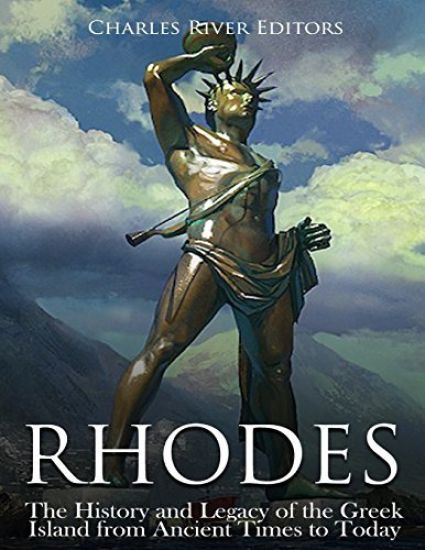
*Includes pictures *Includes contemporary accounts describing Rhodes *Includes online resources and a bibliography for further reading Modern perceptions of Classical Greece are almost invariably based on Athens and Sparta, but there are perhaps few areas as consistently undervalued as the island of Rhodes. Although solidly part of the Greek world for as long as there has been one, Rhodes, located just off the coast of Asia Minor, was also from its earliest times a port opening to the civilizations of the Eastern Mediterranean, and Rhodes was involved in every significant moment in ancient Greek history. The island often played a key role in world events which far surpassed its small size, and at one point even stood side-by-side with much larger kingdoms as one of the main powers in the Greek world. Rhodes would reach the zenith of its power in the Hellenistic period following the death of Alexander the Great in 323 BCE. Even as the rest of the city-states waned compared to the much larger kingdoms of Alexander's successors in Egypt and Asia, Rhodes would come to the forefront as a main power in the Greek world, standing toe-to-toe with these Hellenistic kingdoms. Rhodes was for a time the foremost naval power in the Eastern Mediterranean, and one of the most powerful and richest cities in the world. It was during this time that the Colossus of Rhodes, one of the Seven Wonders of the Ancient World, was built on the island to celebrate Rhodes' equally monumental triumph over the armies of Demetrius the Besieger. Rhodes also gained a foothold on other islands, and an extensive presence in Asia Minor. With the rise of Rome, Rhodes, along with the rest of the Greek world, lost power, and it was gradually integrated into the Roman sphere of influence as an ally before finally being annexed into the empire. After the partition and collapse of the ancient Roman Empire, in the Middle Ages Rhodes would share in both the fortunes and vicissitudes of Rome's successor state, the Byzantine Empire. Along with the Byzantines, Rhodes would face off first against the Arabs from the East, and then European Crusaders from the West. As the Byzantine Empire continued to lose power and chaos spread in its former holdings, Rhodes would eventually be occupied by the Knights Hospitaller, an order of Crusading knights who initially arrived on the island while retreating from the Holy Land. These knights would hold on to Rhodes for over 200 years, making it the headquarters of their unique military, economic, and piratical empire. It became a bastion of Christendom and a reminder of the former power of the Crusaders in an Eastern Mediterranean region increasingly dominated by Islam. When the Rhodian castle of the knights, still standing today, finally fell to the Ottoman Turks in 1522, Rhodes entered a long period of Turkish rule that lasted almost 400 years. It was only in 1948, after successive and brief Italian, German and British occupations, that the island was finally united with the modern Greek state, but to this day, thanks to its impressive archaeological sites, Rhodes still bears the indelible marks of its storied past. Rhodes: The History and Legacy of the Greek Island from Ancient Times to Today examines one of the most important Greek powers throughout its long and illustrious history. Along with pictures depicting important people, places, and events, you will learn about Rhodes like never before.
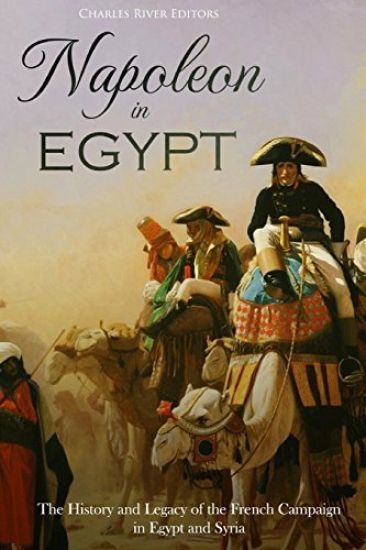
*Includes pictures *Includes accounts of the campaign *Includes online resources and a bibliography for further reading "The genius of liberty, which made you, at her birth, the arbiter of Europe, wants to be genius of the seas and the furthest nations." - Napoleon's address to his soldiers before leaving for Egypt In 1798, an initial review of France's naval forces had led Napoleon to conclude his navy could not hope to outfight the power of the Royal Navy, which had been the dominant naval power for centuries, so he was forced to look elsewhere. After months of planning, Napoleon crafted a scheme to attack and conquer Egypt, denying the British easy access to their colonies in India, with the ultimate goal of linking up with the Sultan Tipoo in India itself and defeating the British in the field there. Napoleon sailed with Admiral Brueys and 30,000 troops that June, heading for Egypt. Notionally part of the Ottoman Empire, Egypt was de facto a weak independent regime run by the breakaway Mamelukes. For France, it offered an overland route to India and a chance to beat Britain at her own game via economic strangulation. Ironically, in their attempt to intercept Napoleon and the French fleet, Admiral Horatio Nelson and the British forces beat the French to Africa, failing to take into account their slower troop transports. While the British turned north, only two days later, on June 28, 1798, Napoleon's army disembarked at Alexandria. Back in Sicily, Nelson heard further reports about the French and again sailed south. This time, about 6 weeks after the French reached Egypt, Nelson's fleet destroyed the French Mediterranean fleet, leaving Napoleon stranded in Africa. In addition to being unable to be reinforced or supplied by sea, his ambitions to establish a permanent presence in Egypt were further frustrated by a number of uprisings. Early in 1799, Napoleon advanced against France's erstwhile enemy, the Ottoman Empire, invading modern Syria (then the province of Damascus) and conquering the cities of Gaza, Jaffa, Arish and Haifa. However, with the plague running rampant through his army and his lines of supply from Egypt stretched dangerously thin, Napoleon was unable to destroy the fortified city of Acre and was forced to retreat. Napoleon harbored all kinds of delusions about his time in Egypt that were not based in reality, but he definitely left a lasting legacy in the region, one he would never live to see or appreciate. By shifting the theater of operations to Africa and the Middle East, Napoleon inadvertently ensured the Europeans would fight there in the future, and the French occupation impressed upon the locals the necessity of catching up to the modern world in terms of technology. Ancient tactics could not prevail against a modern army, no matter the numbers, but while that was a lesson Napoleon consistently taught his enemies in Egypt and the Levant to their detriment, the French also sped up the occupied populations' technological advances as well. Perhaps more importantly, the Egyptian Scientific Institute introduced numerous modern innovations, perhaps most importantly the printing press, which in turn encouraged literacy. This brought about the emergence of nationalism and liberalism, leading eventually to the establishment of Egyptian independence and modernization under the rule of Muhammad Ali Pasha in the first half of the 19th century, and eventually the Nahda, or Arab Renaissance. In a sense, the French arrival in Egypt marked the beginning of the modern Middle East. Napoleon in Egypt: The History and Legacy of the French Campaign in Egypt and Syria chronicles one of the legendary French leader's most forgotten campaigns. Along with pictures depicting important people, places, and events, you will learn about Napoleon's time in Egypt like never before.
Escondida en la cima de la colina Al-Sabika en Granada, regi n de Andaluc a, Espa a, al lado de la rumorosa corriente del r o Darro, hay una estructura majestuosa con vista a la encantadora ciudad y a los m sticos prados de La Vega. Esta fortaleza palaciega y la fabulosa Alhambra son la misma cosa. Para los que la vieron en todo su esplendor, esto fue el cielo en la tierra. Muchos cayeron pronto bajo el hechizo de su asombrosa belleza; sus admiradores la apodaron amorosamente "una perla engastada en esmeraldas." Hubo una poca en que este lugar estaba engalanado con una red de cautivadores castillos, casas angelicales y jardines preciosos, y una hermosa fortaleza militar que era la envidia de los reinos vecinos. Esta no es otra que la Alhambra, que alguna vez fue tan hermosa que, muchos de aquellos que la visitaron en sus d as de esplendor, la llamaron el para so en la tierra. Hoy en d a, este hist rico conjunto se ha convertido en el escenario y la inspiraci n de una gran cantidad de libros, m sica, pel culas y otras obras de arte y literatura, como Los cuentos de La Alhambra, de Washington Irving y la joya f lmica de Marcel L'Hervier, El Dorado. Un cintur n principal de asteroides ha sido bautizado con el nombre de este lugar de leyenda. La exquisita obra de arte sigue siendo adorada, tanto as que una campa a de 2007 atrajo al lugar una multitud calculada en 5.000 personas. All , ellos unieron sus manos y formaron un anillo de casi 5 kil metros alrededor de la espectacular fortaleza, con la esperanza de consolidar el monumento como una de las "Siete nueve maravillas del mundo." Dejando a un lado la asombrosa belleza, lo que hace de la Alhambra una de las eternas joyas cl sicas de toda Europa es el rico tapiz de historia que se despliega en las paredes del centenario para so palaciego. La mayor a de quienes son lo suficientemente afortunados como para que sus ojos se gocen con el majestuoso complejo que es el Alc zar de Sevilla, comparten el mismo sentimiento: su belleza es indescriptible. Es un lugar que rezuma opulencia, un tipo de opulencia aderezada por la clase y el encanto hist rico, m s que por el excesivo relumbre y la ordinaria ostentaci n desplegada por los nuevos ricos. Decir que el Alc zar es adecuado para un pr ncipe sencillamente rebajar a su esplendor. Por supuesto, esto es lo que el Alc zar era exactamente, y contin a siendo, porque este fant stico complejo es la m s antigua residencia real europea todav a en uso. La propiedad real, con 17.000 metros cuadrados de espectaculares estructuras y siete hect reas de frondosos jardines, es a n m s sublime al caer la noche. Los interminables arcos moros, y el sofisticado detalle de las torres de cuento de hadas y los lienzos murarios -desde la impactante silueta de las rectangulares almenas, rematadas por conos triangulares, a la spera, envejecida textura, y las huellas de humedad que decoloran la antigua fachada-, a n m s destacadas por las antorchas distribuidas dentro de sus l mites. Sin embargo, tras la partida de los visitantes nocturnos, los locuaces gu as tur sticos (ataviados con elaboradas vestimentas hist ricas), y hasta el ltimo de los empleados, el Alc zar, afirman algunos, se convierte en un abrumador y siniestro laberinto del que es casi imposible escapar.
Despu s de la revuelta j nica a finales del siglo VI a. C., Rodas, junto con otras islas, estuvo en el camino de la flota persa que cruz el Egeo para enfrentarse a los griegos en las guerras persas. Despu s de las Guerras Persas, junto con el resto de las islas y con el Asia Menor Griega, Rodas fue subsumida en la alianza ateniense, que pronto se convertir a en el Imperio Ateniense. Sin embargo, Atenas pronto perder a su poder, y hacia el final de la Guerra del Peloponeso contra Esparta, su poder sobre sus aliados disminuir a. De hecho, en el a o 408 a. C., Rodas, compartiendo la herencia d rica con Esparta, ser a uno de los primeros y m s poderosos aliados de Atenas en la revuelta, y jug un papel clave en el final de la Guerra del Peloponeso al proporcionar una base para la nueva flota espartana para desafiar la supremac a naval ateniense. En el siglo siguiente, Rodas vacilar a entre las esferas de influencia ateniense y espartana, al mismo tiempo que permanecer a demasiado grande para ser sometida permanentemente por cualquiera de las dos ciudades, y as crecer a constantemente en poder. Rodas alcanzar a el cenit de su poder en el per odo helen stico despu s de la muerte de Alejandro Magno en el a o 323 a. C. A pesar de que el resto de las ciudades-estado decayeron en comparaci n con los reinos mucho m s grandes de los sucesores de Alejandro en Egipto y Asia, Rodas pasar a a la vanguardia como una potencia principal en el mundo griego, permaneciendo de pie con estos reinos helen sticos. Rodas fue durante un tiempo la primera potencia naval del Mediterr neo Oriental y una de las ciudades m s poderosas y ricas del mundo. Fue durante este tiempo que el Coloso de Rodas, una de las Siete Maravillas del Mundo Antiguo, fue construido en la isla para celebrar el triunfo igualmente monumental de Rodas sobre los ej rcitos de Demetrio el Asediador. Rodas tambi n se afianz en otras islas, y una extensa presencia en Asia Menor. Con el surgimiento de Roma, Rodas, junto con el resto del mundo griego, perdi poder, y gradualmente se integr en la esfera romana de influencia como aliado antes de ser finalmente anexionado al imperio. Despu s de la partici n y el colapso del antiguo Imperio Romano, en la Edad Media Rodas compartir a tanto las fortunas como las vicisitudes del estado sucesor de Roma, el Imperio Bizantino. Junto con los bizantinos, Rodas se enfrentar a primero contra los rabes del Este, y luego contra las Cruzadas europeas del Oeste. A medida que el Imperio Bizantino continuaba perdiendo poder y el caos se extend a en sus antiguas posesiones, Rodas eventualmente ser a ocupada por los Caballeros Hospitalarios, una orden de caballeros cruzados que inicialmente llegaron a la isla mientras se retiraban de Tierra Santa. Estos caballeros se aferraron a Rodas durante m s de 200 a os, convirti ndola en el cuartel general de su singular imperio militar, econ mico y pirata. Se convirti en un basti n de la cristiandad y un recordatorio del antiguo poder de los cruzados en una regi n del Mediterr neo oriental cada vez m s dominada por el Islam. Cuando el castillo de los caballeros de Rodas, a n en pie, cay finalmente ante los turcos otomanos en 1522, Rodas entr en un largo per odo de gobierno turco que dur casi 400 a os. No fue hasta 1948, despu s de sucesivas y breves ocupaciones italianas, alemanas y brit nicas, que la isla se uni finalmente al Estado griego moderno. Hasta el d a de hoy, gracias a sus impresionantes sitios arqueol gicos, Rodas todav a conserva las marcas indelebles de su pasado hist rico. Rodas Despu s De La Antig edad: La Historia Y El Legado De La Famosa Isla Griega En La Edad Media Y La Edad Moderna examina la historia de uno de los lugares m s importantes del Mediterr neo. Junto con fotos que representan gente importante, lugares y eventos, usted aprender sobre Rodas como nunca antes.
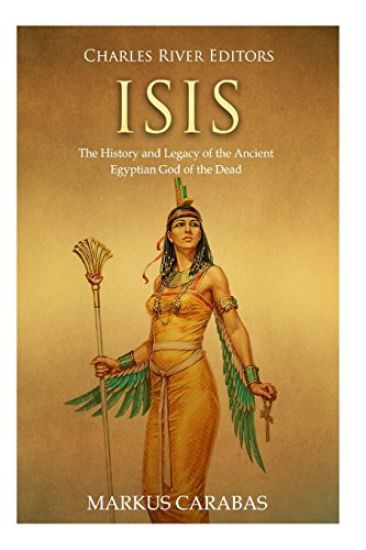
*Includes pictures *Includes ancient accounts *Includes online resources and a bibliography for further reading Africa may have given rise to the first human beings, and Egypt probably gave rise to the first great civilizations, which continue to fascinate modern societies across the globe nearly 5,000 years later. From the Library and Lighthouse of Alexandria to the Great Pyramid at Giza, the Ancient Egyptians produced several wonders of the world, revolutionized architecture and construction, created some of the world's first systems of mathematics and medicine, and established language and art that spread across the known world. With world-famous leaders like King Tut and Cleopatra, it's no wonder that today's world has so many Egyptologists. To the ancient Egyptians, as was the case with any society made up of inquiring humans, the world was a confusing and often terrifying place of destruction, death and unexplained phenomena. In order to make sense of such an existence, they resorted to teleological stories. Giving a phenomenon a story made it less horrifying, and it also helped them make sense of the world around them. Unsurprisingly, then, the ancient Egyptian gods permeated every aspect of existence. Isis first appears during the period of Old Kingdom (ca. 2660-2190 BCE) but only later does she take on her most famous role of being a sister-wife of Osiris. Originally, she is simply the mother of Horus and the details surrounding his conception are more obscure. Her absence in the original myths about Osiris is confirmed by the fact that her appearances at Abydos, a famous cult center of Osiris, are scarce until the New Kingdom (ca. 1549-1069 BCE). In fact, Isis had no known cult center throughout the majority of ancient Egyptian dynastic history, though it didn't seem to have a negative effect on her worship. Isis was one of the nine principal deities of the Egyptian pantheon called the Ennead and her hieroglyph was the throne, a glyph that would later connect her with Osiris, whose hieroglyph was a throne and an eye, and royalty in general. In fact, as the goddess of the throne, she came to represent the "mother" of all the kings of Egypt. Regardless of her royal attributes, however, Isis was fundamentally a healer and a peacemaker. Nevertheless, as time went on and Egypt became more influenced by the outside world, Greece and Rome in particular, Isis came to be seen as the wrathful protector of Egypt and its kings. According to the sources, she was "cleverer than millions of gods" and more capable of protecting the country than "millions of soldiers." What is most fascinating about Isis is the agency she has in her myths, particularly the most famous, that of the death and rebirth cycle of Osiris. In this myth she even demonstrates traits of the female trickster, which is considerably less common in world mythology than the male equivalent. According to one New Kingdom source, Isis transformed herself into an old woman in order to fool the divine ferryman between the worlds of the living and the dead, and she also turned herself into a young woman in order to get Seth to admit that his claim for power was unjust. All the while, she created cultural and geographical mainstays - such as the Nile - while being worshipped as a helper goddess. It is curious that, until the 30th Dynasty, Isis was worshipped in the temples of other gods as she did not have a dedicated cult center of her own. During the 30th Dynasty, this changed with two large temples built in her honor in the Nile Delta. Later on, the Ptolemaic and Roman rulers of Egypt would develop these sites and her worship would outlive the draconian abolishment of pagan religion in Egypt and would even be transported out of Egypt as Isis was revered and worshipped at the farthest reaches of the Roman Empire.
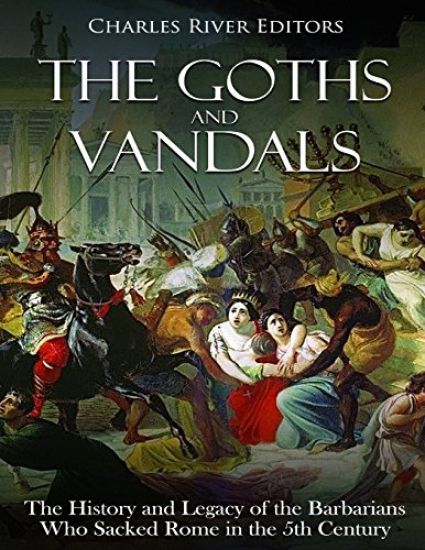
*Includes pictures *Includes online resources and a bibliography for further reading The birth of Europe as people know it today was hardly an easy and effortless process. The Old World was reshaped by centuries of continuous wars, raids, and the falls and rises of empires. The most turbulent of these events happened at the beginning of the Middle Ages, from the 3rd-7th centuries CE. This was the time when the old slave society gave way to the feudal system that marked the latter Middle Ages, and it was also a period of battles between the Roman Empire and various barbarian peoples. The Roman Emperors waged wars, made and broke alliances, and bribed and negotiated with chieftains of various "barbarian" tribes to preserve the territorial integrity of their Empires, but the razor-edge division between the civilized world of the Romans and that of the "savages" that threatened their borders was dulling with every decade. In fact, the constant need for army recruits swelled the Roman legions with barbarian foederati, a phenomenon that forced both the Romans and Byzantines to use a very subtle way of playing the barbarian tribes against each other via diplomatic schemes and bountiful rewards. A new religion was also taking root: Christianity became a reason for both unification and division, as different people adopted different variations of its teachings. It is true that the Vandals sacked Rome in 455 AD, but even that act was a unique historical accomplishment in itself as they were only the third people to inflict such destruction on one of the world's greatest cities. Despite living on the lawless marchlands of the Roman Empire, the Vandals were able to establish two different kingdoms, and introduce a fairly complicated code of royal succession, that gave stability to their people for some time. The Vandals also proved to be an extremely clever people in their use of violence and war, as they rarely engaged in violence for its own sake. They also often employed clever tactics on the battlefield to defeat the larger and more sophisticated armies of the Romans, and later, the Byzantines. It goes without saying that the Goths played an integral part in the history of Europe during this time, and they remain among the most notorious and controversial groups in history. By the 4th century CE, The Goths were among the prominent barbarian groups who became a threat to the Roman Empire, but they also had contacts with the Romans well before then, and they even traded for awhile. The two branches of the Goths that are best known, the Visigoths and Ostrogoths, stared down the Roman Empire as it neared its collapse and supplanted it with a kingdom in Italy in the 5th and 6th centuries respectively. The Visigoth leader Alaric and the Ostrogoth leader Theodoric are still well-known names due to their deeds and reigns in Europe. In addition to the Visigoths' conflicts with Rome, the ancient author Jordanes has helped keep the Goths relevant with his seminal work The Origin and Deeds of the Goths, which traces the group's history all the way back to about 1500 BCE and covers their migrations and wars on the European continent. While some still discount Jordanes' work as outright fiction, most historians still believe that it's a valuable historical work, and they continue to rely on it in attempts to study and trace the history of the Goths and their various branches over time. The Goths and Vandals: The History and Legacy of the Barbarians Who Sacked Rome in the 5th Century CE examines both groups, and how their actions in the 5th century helped bring about the end of the Western Roman Empire.
*Includes pictures *Includes online resources and a bibliography for further reading Africa may have given rise to the first human beings, and Egypt probably gave rise to the first great civilizations, which continue to fascinate modern societies across the globe nearly 5,000 years later. From the Library and Lighthouse of Alexandria to the Great Pyramid at Giza, the Ancient Egyptians produced several wonders of the world, revolutionized architecture and construction, created some of the world's first systems of mathematics and medicine, and established language and art that spread across the known world. With world-famous leaders like King Tut and Cleopatra, it's no wonder that today's world has so many Egyptologists. To the ancient Egyptians, as was the case with any society made up of inquiring humans, the world was a confusing and often terrifying place of destruction, death and unexplained phenomena. In order to make sense of such an existence, they resorted to teleological stories. Giving a phenomenon a story made it less horrifying, and it also helped them make sense of the world around them. Unsurprisingly, then, the ancient Egyptian gods permeated every aspect of existence. Given the abundance of funerary artifacts that have been found within the sands of Egypt, it sometimes seems as though the Ancient Egyptians were more concerned with the matters of the afterlife than they were with matters of the life they experienced from day to day. This is underscored most prominently by the pyramids, which have captured the world's imagination for centuries. Thus, it's little surprise that Osiris was one of the most important gods in the Egyptian pantheon, and he could well be the most famous of the Egyptian gods today. Aside from the ubiquity of the sun-god Re in much of modern popular culture, it is Osiris who captivates the minds of modern readers most. His story is both familiar and strangely alien. He is the god of the dead, but he became so by the very fact of his mortality. All the gods of ancient Egypt were capable of dying, but Osiris was also a symbol of resurrection, not unlike Christ in Christian theology. Osiris was betrayed by somebody close to him (in this case, his brother Seth) and was murdered and reborn, but here is where Osiris and Christ part ways. Osiris's death is brutal, and his resurrection is the product of his wife Isis's love for him. Depending on the phenomenon or feeling the ancient Egyptians experienced, there was a corresponding deity and a story to explain the connection. Acclaimed Egyptologist Garry Shaw described this ethos an "an endless repetition of creations, destructions and rebirths, entangled in a net of divine interactions ... each person living] as the hero of his own mythic narrative each day." In this way, the ancient Egyptian would "assimilate" themselves with the corresponding deity that defined their situation at any given time. Shaw provided an excellent set of examples on this topic: "A person with a headache became Horus the Child, cared for by his mother, who herself became Isis; in death, the deceased transformed into various gods whilst traversing the afterlife realm, assuming each deity's divine authority for a time. Egypt's myths were elastic enough to be shaped into everyone's lives ... myths, and the acts of the gods detailed therein, answered the question, 'why did this happen to me' There is comfort in precedent." The Osiris Myth: The History and Legacy of Ancient Egypt's Most Important Mythological Legend looks at the story that had such a decisive impact on the Egyptians' concept of afterlife, kingship, and more. Along with pictures depicting important people, places, and events, you will learn about the Osiris myth like never before.