Kirjojen hintavertailu – 12 903 725 kirjaa ja 27 kauppaa

Kirjailija

Charles River

Kirjat ja teokset yhdessä paikassa: 4 673 kirjaa, julkaisuja vuosilta 2013–2022, suosituimpiin kuuluu William Powell and Myrna Loy: The Lives and Careers of One of Classical Hollywood's Most Iconic Duos. Vertaile teosten hintoja ja tarkista saatavuus suomalaisista kirjakaupoista.

4 673 kirjaa

Kirjojen julkaisuvuodet: 2013–2022.

The Luddites: The History and Legacy of the English Rebels Who Protested against Advanced Machinery during the Industrial Revolution
*Includes pictures *Includes online resources and a bibliography for further reading Between the 18th and early 19th centuries, Britain experienced massive leaps in technological, scientific, and economical advancement. This powerful period has since been immortalized as the great Industrial Revolution, during which Britain became a formidable force that boasted unmatched economical growth, drastic changes in living conditions, and even the emergence of a neglected social class. Vast portions of rural lands were transformed into interconnected, complex, and multitasking cities. Dozens of innovative inventions and products were churned out in bulk and sold to the masses for the first time ever. Some of the greatest thinkers and creators ventured forth from the shadows. Scientists, engineers, merchants, and manufacturers alike were at the height of their prime, nurtured by a culture that embraced the vision of growth, progress, and industrial unity. The Industrial Revolution saw Britain rise to the top and become the envy of the world's most prestigious nations. At the same time, the pivotal era was far from perfect, featuring a dark underbelly and an army of unsung heroes. It was American writer and futurist Alvin Toffler who once called technology "the great growing engine of change." The 18th century German linguist Johann Gottfried von Herder was another proponent of enlightenment and technological progress. "Nothing in Nature stands still," said von Herder. "Everything strives and moves forward." One would be hard-pressed to find anyone today that would disagree with these sentiments. Those whose opinions suggest otherwise are often thoughtlessly dismissed, and those who hold them ridiculed as tin-foil-hat sporting paranoids or pretentious "hipsters." But what happens when the very instruments meant to help people begin to put lives at stake? Meet the Luddites, a 19th century brotherhood of rebels who vowed to annihilate every last one of the newfangled spinning machines that cost thousands their jobs. The Luddites' riots are indefensible, at least from the standpoint of violence, but they beg the question of whether the protests were nonsensical acts of rage carried out by thugs who sought to exploit imagined fears or desperate measures taken by those who felt neglected by the government. The Luddites: The History and Legacy of the English Rebels Who Protested against Advanced Machinery during the Industrial Revolution chronicles the revolution and the negative reaction to it. Along with pictures of important people, places, and events, you will learn about the Luddites like never before.
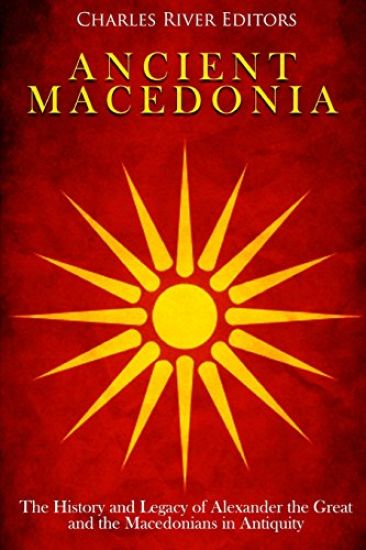
Ancient Macedonia: The History and Legacy of Alexander the Great and the Macedonians in Antiquity
*Includes pictures *Includes ancient accounts *Includes online resources and a bibliography for further reading "There is nothing impossible to him that will but try." - Alexander the Great The role of Macedonia and the Macedonians in the ancient world is apparent to those with even a cursory knowledge of the period. After all, Alexander the Great and his father, Philip II, were both Macedonians, and most know at least a little about their violent struggles to conquer Greece and the Near East. However, Macedonian history began long before Philip II and Alexander III and continued for some time after they were gone. Thus, in many ways, the historical memory of Macedonia and the Macedonians is the victim of historical myopia which is, in part, the result of popular entertainment. Alexander the Great makes for great fiction, so the more "tedious" aspects of Macedonian culture are often overlooked. An examination of ancient Macedonian culture, from its earliest known references to the arrival of the Romans, reveals that the Greeks' northern neighbors played an integral role in the development of Hellenic civilization. Although many of the traditional Greeks may not have considered the Macedonians to be fellow Hellenes at first, they were forced to accept them due to the Macedonian's superior military strength. By the time Alexander the Great had led his army across the Persian Empire, he and his fellow Macedonians had been, for the most part, accepted as Greeks by most other Greeks, but it was a long process. As the Athenians developed their government and philosophies, the Macedonians dedicated themselves to the art of war. Because of this, ancient Macedonia was, in many ways, a stark contrast to the republics and democracies of classical Greece. The Macedonian government was a traditional monarchy where only the strongest of the kings were able to survive assassination attempts and palace coups. The Macedonian kings were also expected to lead their armies into war, which they did almost continuously. Eventually, Macedonian culture slowly began to adopt many of their southern neighbors' attributes, and likewise, the Greek city-states came to see the Macedonians as less barbarian and more Greek. By the time the Romans had conquered Greece in the 2nd century BCE, Macedonia had been viewed by most Greeks and nearly all Romans as nothing more than the northern reaches of Greece. More importantly, the Macedonians were arguably the most responsible for spreading Hellenism across the world than even the Greeks and Romans. When Alexander died at the age of 32, he had made himself the most powerful man in the world, and his dominions stretched from the Punjab to modern Albania, making him one of the most successful conquerors in history. Alexander and his successors Hellenized as far as they reached, from Egypt to Persia and parts of Asia Minor, and their influence is still readily visible. Anthropologists have found that some of the earliest Buddha statues constructed in India bear an uncanny resemblance to Greek depictions of Apollo. Further west, much of Alexander's old empire was eventually conquered in the following centuries by Rome, including Ptolemaic Egypt, but instead of ending the Hellenistic culture, the Roman Empire further reinforced it. Having conquered Greece itself around 100 BCE, the Roman Empire heavily assimilated the Greeks' culture into its own. Latin was an offshoot of the Greeks' language, the Romans' mythology was nearly identical, and Roman poetry, literature and art all closely resembled what was produced to their east in the preceding centuries. As such, the Macedonians played a vital role in the course of Western Civilization. Ancient Macedonia: The History and Legacy of Alexander the Great and the Macedonians in Antiquity examines one of the most important ancient powers throughout its long and illustrious history.
The Evolution of Tanks in World War II: The Development of New Tanks and Tactics during History's Deadliest War
*Includes pictures *Includes accounts of the fighting *Includes online resources and a bibliography for further reading World War II was thus the culmination of a quarter century of tank development, and it would also be the first major test of tanks in mobile warfare, during which they had to face other tanks. However, many of the tanks were constructed with the static warfare of the Western Front in mind and were thus slow and had short operational ranges. Others were too light to face opposing tanks or the new generation of anti-tank weapons that hadn't existed in World War I. The unsuitability of these tank models for this new kind of warfare was quickly recognized, and the belligerent powers scrambled to create better designs. As each new, improved model came off the assembly lines, the opposing powers rushed to create a tank that could beat it. In that regard, World War II was also a war between rival engineers. At the same time, German military officials were at the forefront of developing new ideologies when it came to utilizing their tanks to maximum effect. Heinz Guderian even published a book on the topic before becoming one of the Third Reich's most effective tank commanders. Moreover, during the German invasion of Poland, Nazi forces gained experience they would use across Europe and in Russia. After all, it was in Poland that the Wehrmacht saw action for the first time, conducting what was not only an invasion but also a trial run of its new equipment and tactics. The Polish invasion proved invaluable in providing the German high command with a low-risk, high-value live fire exercise for their newly minted war machine, while the actual combat experience highlighted the remaining flaws in the system. During the campaign, the Germans honed tactics and weapon systems for the massive struggle with the Soviets, British, and United States that loomed on the horizon. Throughout the war, designers learned how to improve suspension, reorganize the interior to give the crews more room, and incorporate other upgrades that helped with the overall function of the tank. Practical experience from the tank crews was of vital importance in these developments. At the same time, tactics evolved throughout the war. The Germans were early leaders in tank tactics, as their successes from Poland through the opening phases of Operation Barbarossa demonstrated. The main German tank tactic was the so-called Schwerpunkt ("center of gravity"), in which a concentration of tanks achieved a local superiority, broke through, and drove deep behind enemy lines, carving up frontline enemy forces that could then be surrounded and taken out by support tanks, infantry, and artillery. This is why German tanks were built for speed while maintaining good armor and weaponry. In the early part of the war, Allied tanks spread out to act as infantry support, but once the Allies witnessed the efficacy of German tank tactics, they began to imitate them, prompting the Germans to further refine their own techniques. The Evolution of Tanks in World War II: The Development of New Tanks and Tactics during History's Deadliest War looks at the most important tanks from 1942-1945, and how doctrines changed in the wake of Germany's conquest of Western Europe. Along with pictures of important people, places, and events, you will learn about tank warfare in World War II like never before.
A Dissolução do Império Otomano: A História e o Legado do Declínio dos Turco-Otomanos e a Criação do Oriente-Médio Moderno
A longa agonia do "doente da Europa", uma express o utilizada pelo Czar da R ssia para se referir ao imp rio em decad ncia, poderia quase ofuscar das pessoas o seu incr vel poder e hist ria. Preservando sua heran a mista, proveniente de sua posi o geogr fica reconstru da sobre as cinzas do Imp rio Bizantino e da tradi o herdada das Conquistas Mu ulmanas, o Imp rio Otomano durou por mais de seis s culos. Seus soldados lutaram, morreram, e conquistaram terras em tr s continentes diferentes, fazendo dele um dos poucos imp rios multi tnicos est veis da hist ria - e provavelmente um dos ltimos. Assim sendo, quase inevit vel que a hist ria de sua dissolu o ocorre em meio a complexas disputas geopol ticas, bem como tens es sect rias que ainda s o essenciais para o entendimento do Oriente M dio, Norte da frica e Balc s. Durante o per odo que precedeu o seu colapso, o Imp rio Otomano estava no centro de uma crescente rivalidade entre duas das pot ncias globais concorrentes da poca, a Inglaterra e a Fran a. As duas pot ncias exerceram sua influ ncia sobre um imp rio decadente, cuja hist ria est ancorada tanto na Europa quanto na sia. Entretanto, enquanto que as duas pot ncias tenham sido instrumentais na derrota final e colapso do Imp rio Otomano, a sua postura quanto ao que viria a ser a "Quest o Oriental" - o destino do Imp rio Otomano - n o uma de evidente inimizade. Ambas Inglaterra e Fran a encontraram, s vezes, raz es para estender a vida do doente da Europa at que ele finalmente se aliou com seus inimigos m tuos. A posi o da R ssia quanto ao Imp rio Otomano bem mais clara; a pot ncia Asi tica e Europeia em ascens o enxergava os Otomanos como um rival, o qual eles buscaram conter, dividir e finalmente destruir por mais de 300 anos em uma s rie de guerras contra seu antigo advers rio. Por ltimo, mas n o menos importante, o crescimento do nacionalismo dentre povos sob dom nio otomano foi um fator chave na dissolu o do imp rio. Ao final do s culo XIX, pouco antes de seu colapso completo, o territ rio do Imp rio Otomano foi abalado devido ao crescente clamor por independ ncia oriundo das diferentes etnias que foram governadas durante centenas de anos. A inclusividade do Imp rio, que o marcava como sucessor direto do Imp rio Bizantino, foi certamente desafiada por uma lideran a arcaica. A inabilidade do Imp rio Otomano de criar uma identidade compartilhada, um estado central enfraquecido, e o aumento de dissid ncias internas foram alguns dos principais fatores explicando seu longo falecimento. Esse fracasso tamb m explica a necessidade da cria o de uma nova forma de identidade, o que foi eventualmente providenciado por Mustafa Kemal, o fundador da Turquia moderna. No geral, a hist ria da dissolu o pode ser definida como uma corrida entre a crescente "doen a" do Imp rio, por um lado (a inabilidade dos Otomanos de agradar e federalizar os v rios povos dentro de seu territ rio), e tentativas constantes de encontrar uma cura atrav s de reformas abrangentes. Essas quest es s o frequentemente apresentadas em conjunto, mas isso tende a voltar o foco para fora, para os v rios povos e suas aspira es, junto com o aumento da influ ncia europeia sobre o destino do Imp rio Otomano. Para considerar ambas "doen a" e cura, necess rio separ -las, antes de ent o voltar a aten o para a causa direta da dissolu o do imp rio (a Primeira Guerra Mundial) e seu legado. A Dissolu o do Imp rio Otomano: A Hist ria e o Legado do Decl nio dos Turco-Otomanos e a Cria o do Oriente-M dio Moderno narra o fim de um dos imp rios mais influentes da hist ria, e as suas consequ ncias. Junto de gravuras de personagens importantes, lugares e eventos, voc vai aprender sobre a dissolu o do Imp rio Otomano como nunca antes.
Sam Houston: The Life and Legacy of the Man Who Led the Texas Revolution

Sam Houston: The Life and Legacy of the Man Who Led the Texas Revolution

Charles River

Createspace Independent Publishing Platform
2018
nidottu
*Includes pictures *Includes online resources and a bibliography for further reading "We now occupy the proud attitude of a sovereign and independent Republic, which will impose upon us the obligation of evincing to the world that we are worthy to be free. This will only be accomplished by wise legislation, the maintenance of our integrity, and the faithful and just redemption of our plighted faith wherever it has been pledged." - Sam Houston More than most men in history, Sam Houston was a contradictory individual. He was born in the United States while George Washington was in office, and in an era when the native people who were gradually being subjugated were considered savages, he called them friends and even lived among them. He was abandoned by his first wife and, after suffering the sting of divorce, married again in the manner of his native family, only to abandon his Indian bride to return to life among his own people. In the interim, he fought for their rights in the halls of government, defending them even as he obtained favor in the eyes of one of their worst enemies. More than a decade passed before he would finally make a successful marriage, marrying a woman more than 20 years his junior but with the right mix of charm and grit to make a successful life with him and their large family. Though he was born and raised elsewhere, Houston is considered one of Texas' truest sons, and during his life he fought for its independence from Mexico and then for its submission to the United States. He owned slaves himself but spent his entire political career fighting against the spread of "the American cancer" to the West. Then, when his beloved state seceded from the Union, he not only opposed secession but sacrificed his own position to protest it, only to turn around and support the Confederacy during the last years of his life. What cannot be questioned is how profound an impact Sam Houston had on Texas, Mexico, and the United States over the course of several decades. He had a storied career both in times of war and peace, and he proved to be a stubborn but canny politician who represented multiple states. Sam Houston: The Life and Legacy of the Man Who Led the Texas Revolution looks at how he became one of the Southwest's most important figures. Along with pictures of important people, places, and events, you will learn about Sam Houston like never before.
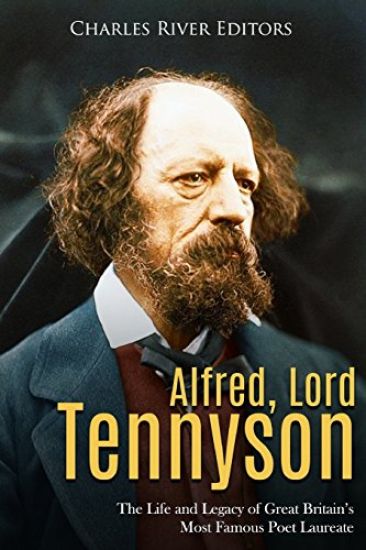
Alfred, Lord Tennyson: The Life and Legacy of Great Britain's Most Famous Poet Laureate
*Includes pictures *Includes excerpts of Tennyson's work *Includes online resources and a bibliography for further reading "Words, like nature, half reveal and half conceal the soul within." "Singing in her song she died, The Lady of Shalott." "'Tis better to have loved and lost than never to have loved at all." "Theirs not to make reply, Theirs not to reason why, Theirs but to do and die." These are just a few of the many great quotes bequeathed to the world by Alfred, Lord Tennyson, but as their tones suggest, they were products of a difficult and often tragic life. Born to a father plagued by bouts of drinking and depression, and surrounded by siblings with similar ailments, Tennyson grew up believing that he must be a victim of hereditary illness, to the point that he believed he must never marry or father children less he perpetuate the suffering on future generations. With these thoughts always in his head, he turned his mind towards a near worship of romantic love, while at the same time repeatedly painting a tragic ending for his most cherished characters, many of whom seemed to die of a broken heart or some illness or accident related to it. While in college, Tennyson made new friends, young men who might have shown him the lighter side of life, but he became extremely close to one, only to see his friend die a sudden and tragic death much too young. Out of this suffering came the work that would bring Tennyson the most fame and fortune during his lifetime, but it also brought years of grappling with misery as he attempted to carve out some sense of reason in a world devoid of his close companion. By the time Tennyson began to prosper, he was so accustomed to sorrow that he felt compelled to seek it out, focusing his attention in his middle years not on the comfortable home and growing family he had been blessed with, but instead on the tragic losses experienced by his country during the Crimean War. As Queen Victoria's poet laureate, Tennyson soon found a comfortable niche in a court accustomed to mourning, and in his final decades, the poet wrote one acclaimed piece after another that was perfectly attuned to the fatalistic Victorian aristocracy. It is only slightly ironic, then, that it was his focus on death that gave him immortality, for through the romantic eyes of young Anne Shirley, of Anne of Green Gables fame, that people today learn of the Lady of Shallot. Likewise, few English speakers make it through the pains of adolescence without being told it is better to have loved and lost, and even fewer make it to adulthood without learning that sometimes ours is not to reason why. Thus, in death, Tennyson found, at least in literary terms, eternal life. Alfred, Lord Tennyson: The Life and Legacy of Great Britain's Most Famous Poet Laureate chronicles the life and work that made Tennyson one of history's most famous poets. Along with pictures of important people, places, and events, you will learn about Tennyson like never before.
Napoleon in Egypt: The History and Legacy of the French Campaign in Egypt and Syria

Napoleon in Egypt: The History and Legacy of the French Campaign in Egypt and Syria

Charles River

Createspace Independent Publishing Platform
2018
nidottu
*Includes pictures *Includes accounts of the campaign *Includes online resources and a bibliography for further reading "The genius of liberty, which made you, at her birth, the arbiter of Europe, wants to be genius of the seas and the furthest nations." - Napoleon's address to his soldiers before leaving for Egypt In 1798, an initial review of France's naval forces had led Napoleon to conclude his navy could not hope to outfight the power of the Royal Navy, which had been the dominant naval power for centuries, so he was forced to look elsewhere. After months of planning, Napoleon crafted a scheme to attack and conquer Egypt, denying the British easy access to their colonies in India, with the ultimate goal of linking up with the Sultan Tipoo in India itself and defeating the British in the field there. Napoleon sailed with Admiral Brueys and 30,000 troops that June, heading for Egypt. Notionally part of the Ottoman Empire, Egypt was de facto a weak independent regime run by the breakaway Mamelukes. For France, it offered an overland route to India and a chance to beat Britain at her own game via economic strangulation. Ironically, in their attempt to intercept Napoleon and the French fleet, Admiral Horatio Nelson and the British forces beat the French to Africa, failing to take into account their slower troop transports. While the British turned north, only two days later, on June 28, 1798, Napoleon's army disembarked at Alexandria. Back in Sicily, Nelson heard further reports about the French and again sailed south. This time, about 6 weeks after the French reached Egypt, Nelson's fleet destroyed the French Mediterranean fleet, leaving Napoleon stranded in Africa. In addition to being unable to be reinforced or supplied by sea, his ambitions to establish a permanent presence in Egypt were further frustrated by a number of uprisings. Early in 1799, Napoleon advanced against France's erstwhile enemy, the Ottoman Empire, invading modern Syria (then the province of Damascus) and conquering the cities of Gaza, Jaffa, Arish and Haifa. However, with the plague running rampant through his army and his lines of supply from Egypt stretched dangerously thin, Napoleon was unable to destroy the fortified city of Acre and was forced to retreat. Napoleon harbored all kinds of delusions about his time in Egypt that were not based in reality, but he definitely left a lasting legacy in the region, one he would never live to see or appreciate. By shifting the theater of operations to Africa and the Middle East, Napoleon inadvertently ensured the Europeans would fight there in the future, and the French occupation impressed upon the locals the necessity of catching up to the modern world in terms of technology. Ancient tactics could not prevail against a modern army, no matter the numbers, but while that was a lesson Napoleon consistently taught his enemies in Egypt and the Levant to their detriment, the French also sped up the occupied populations' technological advances as well. Perhaps more importantly, the Egyptian Scientific Institute introduced numerous modern innovations, perhaps most importantly the printing press, which in turn encouraged literacy. This brought about the emergence of nationalism and liberalism, leading eventually to the establishment of Egyptian independence and modernization under the rule of Muhammad Ali Pasha in the first half of the 19th century, and eventually the Nahda, or Arab Renaissance. In a sense, the French arrival in Egypt marked the beginning of the modern Middle East. Napoleon in Egypt: The History and Legacy of the French Campaign in Egypt and Syria chronicles one of the legendary French leader's most forgotten campaigns. Along with pictures depicting important people, places, and events, you will learn about Napoleon's time in Egypt like never before.
La Antigua Rodas: La Historia Y El Legado De La Famosa Isla Griega En La Antigüedad

La Antigua Rodas: La Historia Y El Legado De La Famosa Isla Griega En La Antigüedad

Charles River

Createspace Independent Publishing Platform
2018
nidottu
Las percepciones modernas de la Grecia cl sica se basan casi invariablemente en Atenas y Esparta, pero tal vez haya pocas reas tan constantemente infravaloradas como la isla de Rodas. Aunque ha sido una parte s lida del mundo griego durante el tiempo que ha existido, Rodas, situada en las afueras de la costa de Asia Menor, fue tambi n desde sus primeros tiempos un puerto abierto a las civilizaciones del Mediterr neo Oriental, y Rodas estuvo involucrada en cada momento significativo de la historia de la antigua Grecia. La isla a menudo jug un papel clave en los acontecimientos mundiales que superaron con creces su peque o tama o, y en un momento dado incluso estuvo al lado de reinos mucho m s grandes como una de las principales potencias en el mundo griego. En los per odos Arcaico y Cl sico, Rodas a menudo se erigi como un excelente ejemplo de los altibajos de sus ciudades griegas, y como la isla m s grande del Dodecaneso, la historia de Rodas est en gran medida en l nea con la del resto de esas islas. Rodas fue colonizada por primera vez por los griegos de la tribu d rica alrededor del siglo VIII a. C., y se aline con sus ciudades d ricas en las islas circundantes y el continente de Asia Menor para formar el llamado Hex polis d rico. Despu s de la revuelta j nica a finales del siglo VI a. C., Rodas, junto con otras islas, estuvo en el camino de la flota persa que cruz el Egeo para enfrentarse a los griegos en las Guerras Persas. Despu s de las Guerras Persas, junto con el resto de las islas y con el Asia Menor Griega, Rodas fue subsumida en la alianza ateniense, que pronto se convertir a en el Imperio Ateniense. Sin embargo, Atenas pronto perder a su poder, y hacia el final de la Guerra del Peloponeso contra Esparta, su poder sobre sus aliados disminuir a. De hecho, en el a o 408 a. C., Rodas, compartiendo la herencia d rica con Esparta, ser a uno de los primeros y m s poderosos aliados de Atenas en la revuelta, y jug un papel clave en el final de la Guerra del Peloponeso al proporcionar una base para la nueva flota espartana para desafiar la supremac a naval ateniense. En el siglo siguiente, Rodas vacilar a entre las esferas de influencia ateniense y espartana, al mismo tiempo que permanecer a demasiado grande para ser sometida permanentemente por cualquiera de las dos ciudades, y as crecer a constantemente en el poder. Rodas alcanzar a el cenit de su poder en el per odo helen stico despu s de la muerte de Alejandro Magno en el a o 323 AEC. A pesar de que el resto de las ciudades-estado decay en comparaci n con los reinos mucho m s grandes de los sucesores de Alejandro en Egipto y Asia, Rodas pasar a a la vanguardia como una potencia principal en el mundo griego, firme con estos reinos helen sticos. Rodas fue durante un tiempo la primera potencia naval del Mediterr neo Oriental y una de las ciudades m s poderosas y ricas del mundo. Fue durante este tiempo que el Coloso de Rodas, una de las Siete Maravillas del Mundo Antiguo, fue construido en la isla para celebrar el triunfo igualmente monumental de Rodas sobre los ej rcitos de Demetrio el Asediador. Rodas tambi n se afianz en otras islas, y una extensa presencia en Asia Menor. Fue s lo debido al ascenso de Roma que Rodas, junto con el resto del mundo griego, perdi el poder, y fue gradualmente integrado en la esfera de influencia romana como un aliado antes de ser finalmente anexado al imperio. La Antigua Rodas: La Historia Y El Legado De La Famosa Isla Griega En La Antig edad examina la historia de una de las potencias griegas m s importantes del mundo antiguo. Junto con fotos que representan gente importante, lugares y eventos, usted aprender sobre Rodas como nunca antes.
The Panzers: The History and Legacy of Nazi Germany's Most Famous Tanks during World War II
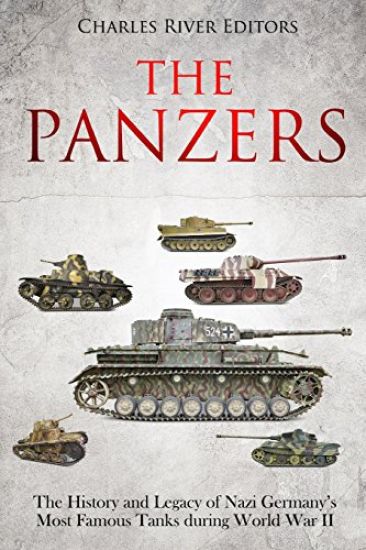
*Includes pictures*Includes online resources and a bibliography for further readingWorld War II was the culmination of a quarter century of tank development, and it would also be the first major test of tanks in mobile warfare, during which they had to face other tanks. However, many of the tanks were constructed with the static warfare of the Western Front in mind and were thus slow and had short operational ranges. Others were too light to face opposing tanks or the new generation of anti-tank weapons that hadn't existed in World War I. The unsuitability of these tank models for this new kind of warfare was quickly recognized, and the belligerent powers scrambled to create better designs. As each new, improved model came off the assembly lines, the opposing powers rushed to create a tank that could beat it. In that regard, World War II was also a war between rival engineers. At the same time, German military officials were at the forefront of developing new ideologies when it came to utilizing their tanks to maximum effect. Heinz Guderian even published a book on the topic before becoming one of the Third Reich's most effective tank commanders. Moreover, during the German invasion of Poland, Nazi forces gained experience they would use across Europe and in Russia. After all, it was in Poland that the Wehrmacht saw action for the first time, conducting what was not only an invasion but also a trial run of its new equipment and tactics. The Polish invasion proved invaluable in providing the German high command with a low-risk, high-value live fire exercise for their newly minted war machine, while the actual combat experience highlighted the remaining flaws in the system. During the campaign, the Germans honed tactics and weapon systems for the massive struggle with the Soviets, British, and United States that loomed on the horizon. The beginning of World War II found the major powers developing tanks to some extent, but lingering ideas from World War I affected the development of tanks during the Interwar period. As a result, aside from the blitzkrieg doctrine developed by the Nazis, tanks were still used in terms of infantry support, and there were few wars during this period to give strategists the chance to develop better uses for the new armored vehicles before World War II started. Commanders soon found that many of the tanks fielded in the campaigns of 1939-1941 lacked the necessary armor, guns, and designs. Inevitably, tactics evolved throughout the war. The Germans were early leaders in tank tactics, as their successes from Poland through the opening phases of Operation Barbarossa demonstrated. The main German tank tactic was the so-called Schwerpunkt ("center of gravity"), in which a concentration of tanks achieved a local superiority, broke through, and drove deep behind enemy lines, carving up frontline enemy forces that could then be surrounded and taken out by support tanks, infantry, and artillery. This is why German tanks were built for speed while maintaining good armor and weaponry. Germany's first great victories against Poland and France were due more to the shortcomings of their enemies than the preparedness of their own military, and this was especially the case with the Panzerwaffe, the armored arm of the German forces. At the outbreak of war, their tank designs lagged behind Russia and even France, both of which had superior heavy tanks. The medium-sized Panzerkampfwagen III and IV models were already in production, but delays meant that relatively few saw frontline combat in the opening campaigns. Thus, the bulk of the effort had to be taken on by light Panzer I, which had never been intended for combat service, and the slightly more powerful Panzer II. The Germans strengthened their tank corps with captured Czech models and, later, French tanks.
The Palace of the Soviets: The History of the Proposed Administrative Center for the Soviet Union
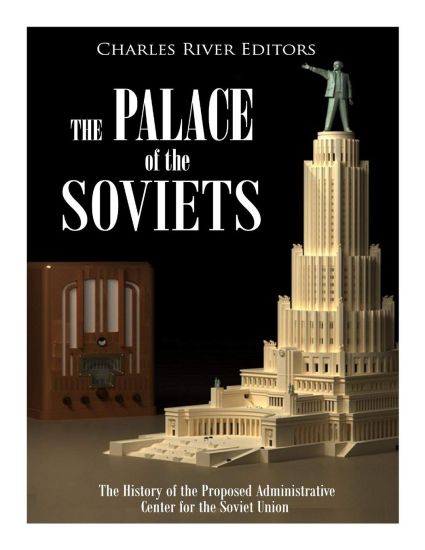
*Includes pictures*Includes online resources and a bibliography for further readingThe Palace of the Soviets (Russian: Dvorets Sovetov) was an unrealized project for the construction of a high-rise administrative building in Moscow, to be used for sessions of the Supreme Soviet of the USSR and mass demonstrations. According to architect Boris Iofan's plans, the height of the Palace of the Soviets, together with the one hundred-meter statue of Vladimir Lenin, would be 415 meters. The palace was to become the center of the new Soviet Moscow and the tallest building in the world, symbolizing the victory of socialism (Khmelnitsky, 2006, p. 7). Designing and the beginning of construction of the palace marked the transition to the Stalin Empire style in Soviet architecture (Rogachev, 2014, p. 187-230). In 1931, on the proposed site of construction for the Palace of the Soviets, the Cathedral of Christ the Savior was blown up. The preparatory works began the following year. The foundation of the palace was completed in 1939, but because of the beginning of the Great Patriotic War the project was frozen. In 1941-1942, the steel structures of the Palace of the Soviets were dismantled and used during the defense of Moscow for the construction of bridges (Kruzhkov, 2014). Another competition for the design of the Palace of the Soviets was held between 1956 and 1958, and a new site in the southwest of Moscow was prepared for it, but the plans were never implemented. In 1960, the world's largest outdoor winter swimming pool was created on the foundation of the original Palace of the Soviets, and it lasted until the 1990s. After its closure, the temple was rebuilt (RIA Novosti, 2013). The Palace of the Soviets: The History of the Proposed Administrative Center for the Soviet Union examines the grand designs envisioned by the USSR, and how the horrors of war indefinitely scrapped the project. Along with pictures of important people, places, and events, you will learn about the Palace of the Soviets like never before.
Roman Hispania: The History of Ancient Rome's Conquest of Spain and the Iberian Peninsula
*Includes pictures *Includes ancient accounts *Includes online resources and a bibliography for further reading Spain's geographical position has made it a focus of attention throughout history for numerous migrants, traders, colonizers, and conquerors alike. Iberia, also known as Hispaniola or Hispania, is in the southwestern corner of Europe and is separated from Africa by a mere eight miles, the point at which the Mediterranean meets the Atlantic. The whole of the Iberian Peninsula, which today incorporates the modern nation states of Spain and Portugal, was known to the Romans and Greeks as Hispania. Over the centuries, before Roman involvement in the Iberian Peninsula, it had been settled by different waves of eastern tribes: Celts, Phoenicians, Greeks, Africans, and Carthaginians. It was the settlement in the south of Spain by the last of these that led to Roman interest in the area, and ultimately to its conquest and integration into the Roman Empire, though the complete process was to take over 200 years. Once the Carthaginian territories had been taken, those parts of Hispania became the two provinces of Hispania Citerior and Hispania Ulterior, which in turn were later subdivided into further provinces. They became some of the wealthiest and most Romanized of the empire's provinces, but the process by which the whole of Spain came under Roman rule was both violent and complex. Given that the Iberian Peninsula is Europe's second largest peninsula, maintaining control required vigorous efforts, including Roman-sponsored migrations by the Sueves, Alani, Vandals, Visigoths, and other tribes. For example, the Visigoths first set foot on the peninsula in the year 416, where they were tasked with forcefully re-instituting Roman authority upon other Germanic invaders who had occupied the land. Initially, the Visigoths followed instructions to a tee, but as time progressed, it appeared that there may have been reason to have been suspicious of the Visigoths after all. In 418, they were relocated to France, where they established a makeshift kingdom of their own in Toulouse. When they inevitably wizened up to their employer's increasingly fragile authority, they realized it would not take much to squeeze the disintegrating empire out of the picture. The ramifications of 600 years of Roman rule had significant consequences for the rest of the ancient world, and it had a profound impact on subsequent European history. In fact, it can be argued that those consequences are still being felt in Spain today, in terms of language, culture and political complications. Roman Hispania: The History of Ancient Rome's Conquest of Spain and the Iberian Peninsula looks at the history of relations between the two ancient empires. Along with pictures depicting important people, places, and events, you will learn about Roman Hispania like never before.
A History of Some of China's Most Famous Landmarks

A History of Some of China's Most Famous Landmarks

Charles River

Createspace Independent Publishing Platform
2018
nidottu
*Includes pictures *Includes online resources and a bibliography for further reading China has always fascinated outsiders, much in the same way that distant light fascinates someone looking down a dark road. It is both familiar and mysterious, ancient and new, and fully understanding it seems to always remain just out of reach. From the Great Wall to the ancient teachings of Confucius, China's natural and man-made wonders have been topics of interest among Westerners since the Middle Ages and the pursuit of trade routes both by land and sea, amazing Marco Polo and 19th century British expeditions in similar ways despite the passage of several centuries between them. The Great Wall of China is perhaps the wonder of the world that has most captured the human imagination, and as the quotes about it indicate, the wall has acquired special significance even outside of China. The places and ways in which it has taken hold vary greatly, but one thing is certain: the Great Wall of China is as amazing as it is mysterious, and it's as mundane as it is magical. Naturally, the Wall has become the most recognizable symbol of China, used for both aggrandizement and criticism. Nationalists see it as a symbol of China's peaceful nature, engineering capability, and historic longevity, while detractors see the Wall as the embodiment of China's backwardness, closed-mindedness, and hubris. While history allots arguments for the claims of each side, both of them are colored by Great Wall mythology and current geopolitical concerns. Though the wall can symbolize all of these things about China, it is important to remember that the many long walls. upon some of which the current landmark was constructed, were put up by specific people for specific purposes. People across the world were excited when it was revealed in 1974 that archaeologists had uncovered a new and amazing find: an underground army consisting of thousands of clay soldiers, still standing at their posts despite being over 2,000 years old. In addition to the remarkable feats of craftsmanship and the almost unimaginable size and scale of the Terracotta Army, the sculpted statues seemed to bear testimony of something that modern people could not quite wrap their minds around, representing a time when China was born almost 200 years before Christ. The hope for many was that this remarkable army could reveal the secrets of China's first emperor, Qin Shi Huang, a man who united seven warring tribes into one of the most powerful nations on earth. The tremendous temples, captivating churches, magnificent mosques, and palatial places of worship around the world come in all shapes and sizes, and pay tribute to an array of gods and deities, but they all share one thing in common. These glorious structures, the pride and joy of a religion, are sacred spaces for prayer, meditation, and the veneration of one's god or gods. As such, they are designed and adorned with the most divine and irreplaceable hallmarks to honor their holy fathers and mothers. While the world today is a far cry from perfect, laws, for the most part, protect these places from those who hold misguided beliefs or harbor misplaced resentment towards its communities. The story of the Porcelain Tower of Nanjing includes all of these aspects, and then some. Its origins come from a cradle of creativity and enlightenment fostered by one fabled emperor from the Ming Dynasty bloodline; indeed, it was the pi ce de r sistance of his career. The Porcelain Tower's history also bore witness to an epoch of turbulence in Eastern history, set in one of the oldest countries in existence - China. The inimitable pagoda towered proudly over the city for some 4 centuries, but it was precisely this perilous patch that would claim what was once considered one of the Seven Wonders of the World.
The Ostrogoths: The History and Legacy of the Group that Established a Kingdom in Italy after the Collapse of Ancient Rome
*Includes pictures *Includes online resources and a bibliography for further reading "These later divided Gotland into three parts, so that Graip the eldest got the northern 3rd, Guti the middle 3rd, and Gunfjaun the youngest had the south. Then, over a long time, the people descended from these three multiplied so much that the land couldn't support them all. So they selected every 3rd person by lot to leave, with the right to keep and take away with them everything they owned except for their land. They were unwilling to leave then, but went to instead Torsburgen and settled there. But afterwards the country (i.e. Gotland) would not tolerate them, and drove them away." - Jordanes, The Origin and Deeds of the Goths The birth of Europe as people know it today was hardly an easy and effortless process. The Old World was reshaped by centuries of continuous wars, raids, and the falls and rises of empires. The most turbulent of these events happened at the beginning of the Middle Ages, from the 3rd-7th centuries CE. This was the time when the old slave society gave way to the feudal system that marked the latter Middle Ages, and it was also a period of battles between the Roman Empire and various barbarian groups. The Roman emperors waged wars, made and broke alliances, and bribed and negotiated with chieftains of various "barbarian" tribes to preserve the territorial integrity of their Empires, but the razor-edge division between the civilized world of the Romans and that of the "savages" that threatened their borders was dulling with every decade. In fact, the constant need for army recruits swelled the Roman legions with barbarian foederati, a phenomenon that forced both the Romans and Byzantines to use a very subtle way of pitting the barbarian tribes against each other via diplomatic schemes and bountiful rewards. A new religion was also taking root, and Christianity became a reason for both unification and division as different people adopted different variations of its teachings. It goes without saying that the Goths played an integral part in the history of Europe during this time, and they remain among the most notorious and controversial groups in history. By the 4th century CE, the Goths were among the prominent barbarian groups who became a threat to the Roman Empire, but they also had contacts with the Romans well before then, and they even traded for awhile. The two branches of the Goths that are best known, the Visigoths and Ostrogoths, stared down the Roman Empire as it neared its collapse and supplanted it with a kingdom in Italy in the 5th and 6th centuries respectively. The Visigoth leader Alaric and the Ostrogoth leader Theodoric are still well-known names due to their deeds and reigns in Europe. In addition to the various conflicts with Rome, the ancient author Jordanes has helped keep the Goths relevant with his seminal work The Origin and Deeds of the Goths, which traces the group's history all the way back to about 1500 BCE and covers their migrations and wars on the European continent. While some still discount Jordanes' work as outright fiction, most historians still believe that it's a valuable historical work, and they continue to rely on it in attempts to study and trace the history of the Goths and their various branches over time. The Ostrogoths: The History and Legacy of the Group that Established a Kingdom in Italy after the Collapse of Ancient Rome looks at the history of the Ostrogoths, from their origins to their rise in the 6th century. Along with pictures depicting important people, places, and events, you will learn about the Ostrogoths like never before.
The Ostrogoths: The History and Legacy of the Group that Established a Kingdom in Italy after the Collapse of Ancient Rome
*Includes pictures *Includes online resources and a bibliography for further reading "These later divided Gotland into three parts, so that Graip the eldest got the northern 3rd, Guti the middle 3rd, and Gunfjaun the youngest had the south. Then, over a long time, the people descended from these three multiplied so much that the land couldn't support them all. So they selected every 3rd person by lot to leave, with the right to keep and take away with them everything they owned except for their land. They were unwilling to leave then, but went to instead Torsburgen and settled there. But afterwards the country (i.e. Gotland) would not tolerate them, and drove them away." - Jordanes, The Origin and Deeds of the Goths The birth of Europe as people know it today was hardly an easy and effortless process. The Old World was reshaped by centuries of continuous wars, raids, and the falls and rises of empires. The most turbulent of these events happened at the beginning of the Middle Ages, from the 3rd-7th centuries CE. This was the time when the old slave society gave way to the feudal system that marked the latter Middle Ages, and it was also a period of battles between the Roman Empire and various barbarian groups. The Roman emperors waged wars, made and broke alliances, and bribed and negotiated with chieftains of various "barbarian" tribes to preserve the territorial integrity of their Empires, but the razor-edge division between the civilized world of the Romans and that of the "savages" that threatened their borders was dulling with every decade. In fact, the constant need for army recruits swelled the Roman legions with barbarian foederati, a phenomenon that forced both the Romans and Byzantines to use a very subtle way of pitting the barbarian tribes against each other via diplomatic schemes and bountiful rewards. A new religion was also taking root, and Christianity became a reason for both unification and division as different people adopted different variations of its teachings. It goes without saying that the Goths played an integral part in the history of Europe during this time, and they remain among the most notorious and controversial groups in history. By the 4th century CE, the Goths were among the prominent barbarian groups who became a threat to the Roman Empire, but they also had contacts with the Romans well before then, and they even traded for awhile. The two branches of the Goths that are best known, the Visigoths and Ostrogoths, stared down the Roman Empire as it neared its collapse and supplanted it with a kingdom in Italy in the 5th and 6th centuries respectively. The Visigoth leader Alaric and the Ostrogoth leader Theodoric are still well-known names due to their deeds and reigns in Europe. In addition to the various conflicts with Rome, the ancient author Jordanes has helped keep the Goths relevant with his seminal work The Origin and Deeds of the Goths, which traces the group's history all the way back to about 1500 BCE and covers their migrations and wars on the European continent. While some still discount Jordanes' work as outright fiction, most historians still believe that it's a valuable historical work, and they continue to rely on it in attempts to study and trace the history of the Goths and their various branches over time. The Ostrogoths: The History and Legacy of the Group that Established a Kingdom in Italy after the Collapse of Ancient Rome looks at the history of the Ostrogoths, from their origins to their rise in the 6th century. Along with pictures depicting important people, places, and events, you will learn about the Ostrogoths like never before.
Sam Houston: The Life and Legacy of the Man Who Led the Texas Revolution

Sam Houston: The Life and Legacy of the Man Who Led the Texas Revolution

Charles River

Createspace Independent Publishing Platform
2018
nidottu
*Includes pictures *Includes online resources and a bibliography for further reading "We now occupy the proud attitude of a sovereign and independent Republic, which will impose upon us the obligation of evincing to the world that we are worthy to be free. This will only be accomplished by wise legislation, the maintenance of our integrity, and the faithful and just redemption of our plighted faith wherever it has been pledged." - Sam Houston More than most men in history, Sam Houston was a contradictory individual. He was born in the United States while George Washington was in office, and in an era when the native people who were gradually being subjugated were considered savages, he called them friends and even lived among them. He was abandoned by his first wife and, after suffering the sting of divorce, married again in the manner of his native family, only to abandon his Indian bride to return to life among his own people. In the interim, he fought for their rights in the halls of government, defending them even as he obtained favor in the eyes of one of their worst enemies. More than a decade passed before he would finally make a successful marriage, marrying a woman more than 20 years his junior but with the right mix of charm and grit to make a successful life with him and their large family. Though he was born and raised elsewhere, Houston is considered one of Texas' truest sons, and during his life he fought for its independence from Mexico and then for its submission to the United States. He owned slaves himself but spent his entire political career fighting against the spread of "the American cancer" to the West. Then, when his beloved state seceded from the Union, he not only opposed secession but sacrificed his own position to protest it, only to turn around and support the Confederacy during the last years of his life. What cannot be questioned is how profound an impact Sam Houston had on Texas, Mexico, and the United States over the course of several decades. He had a storied career both in times of war and peace, and he proved to be a stubborn but canny politician who represented multiple states. Sam Houston: The Life and Legacy of the Man Who Led the Texas Revolution looks at how he became one of the Southwest's most important figures. Along with pictures of important people, places, and events, you will learn about Sam Houston like never before.
The Goths and Vandals: The History and Legacy of the Barbarians Who Sacked Rome in the 5th Century CE
*Includes pictures *Includes online resources and a bibliography for further reading The birth of Europe as people know it today was hardly an easy and effortless process. The Old World was reshaped by centuries of continuous wars, raids, and the falls and rises of empires. The most turbulent of these events happened at the beginning of the Middle Ages, from the 3rd-7th centuries CE. This was the time when the old slave society gave way to the feudal system that marked the latter Middle Ages, and it was also a period of battles between the Roman Empire and various barbarian peoples. The Roman Emperors waged wars, made and broke alliances, and bribed and negotiated with chieftains of various "barbarian" tribes to preserve the territorial integrity of their Empires, but the razor-edge division between the civilized world of the Romans and that of the "savages" that threatened their borders was dulling with every decade. In fact, the constant need for army recruits swelled the Roman legions with barbarian foederati, a phenomenon that forced both the Romans and Byzantines to use a very subtle way of playing the barbarian tribes against each other via diplomatic schemes and bountiful rewards. A new religion was also taking root: Christianity became a reason for both unification and division, as different people adopted different variations of its teachings. It is true that the Vandals sacked Rome in 455 AD, but even that act was a unique historical accomplishment in itself as they were only the third people to inflict such destruction on one of the world's greatest cities. Despite living on the lawless marchlands of the Roman Empire, the Vandals were able to establish two different kingdoms, and introduce a fairly complicated code of royal succession, that gave stability to their people for some time. The Vandals also proved to be an extremely clever people in their use of violence and war, as they rarely engaged in violence for its own sake. They also often employed clever tactics on the battlefield to defeat the larger and more sophisticated armies of the Romans, and later, the Byzantines. It goes without saying that the Goths played an integral part in the history of Europe during this time, and they remain among the most notorious and controversial groups in history. By the 4th century CE, The Goths were among the prominent barbarian groups who became a threat to the Roman Empire, but they also had contacts with the Romans well before then, and they even traded for awhile. The two branches of the Goths that are best known, the Visigoths and Ostrogoths, stared down the Roman Empire as it neared its collapse and supplanted it with a kingdom in Italy in the 5th and 6th centuries respectively. The Visigoth leader Alaric and the Ostrogoth leader Theodoric are still well-known names due to their deeds and reigns in Europe. In addition to the Visigoths' conflicts with Rome, the ancient author Jordanes has helped keep the Goths relevant with his seminal work The Origin and Deeds of the Goths, which traces the group's history all the way back to about 1500 BCE and covers their migrations and wars on the European continent. While some still discount Jordanes' work as outright fiction, most historians still believe that it's a valuable historical work, and they continue to rely on it in attempts to study and trace the history of the Goths and their various branches over time. The Goths and Vandals: The History and Legacy of the Barbarians Who Sacked Rome in the 5th Century CE examines both groups, and how their actions in the 5th century helped bring about the end of the Western Roman Empire.
Horus: The History and Legacy of the Ancient Egyptian God Who Was the Son of Isis and Osiris

Horus: The History and Legacy of the Ancient Egyptian God Who Was the Son of Isis and Osiris

Markus Carabas; Charles River

Createspace Independent Publishing Platform
2018
nidottu
*Includes pictures *Includes ancient accounts *Includes online resources and a bibliography for further reading Africa may have given rise to the first human beings, and Egypt probably gave rise to the first great civilizations, which continue to fascinate modern societies across the globe nearly 5,000 years later. From the Library and Lighthouse of Alexandria to the Great Pyramid at Giza, the Ancient Egyptians produced several wonders of the world, revolutionized architecture and construction, created some of the world's first systems of mathematics and medicine, and established language and art that spread across the known world. With world-famous leaders like King Tut and Cleopatra, it's no wonder that today's world has so many Egyptologists. To the ancient Egyptians, as was the case with any society made up of inquiring humans, the world was a confusing and often terrifying place of destruction, death and unexplained phenomena. In order to make sense of such an existence, they resorted to teleological stories. Giving a phenomenon a story made it less horrifying, and it also helped them make sense of the world around them. Unsurprisingly, then, the ancient Egyptian gods permeated every aspect of existence. There are few characters in Egyptian myth whose image and name are more widely known than Horus. His name most probably means "the Distant One;" as the celestial falcon, his wings were believed to span the length of the distant sky and his eyes were the sun and the moon. This name betrays the connection Horus shared with Re, the "all powerful" sun god, and also hints at his earlier incarnation as one of the earliest celestial gods in Egyptian religious belief. One of the earliest images from ancient Egypt is that of a falcon residing in the famous "sun-Barque" of Re, which the ancient Egyptians believed traversed the sky during the day and crossed the dangerous land of the dead during the night. Horus' place in the sun-barque probably represents Horus as a 'star or planet crossing the Winding Waterway of the sky," since the ancient Egyptians were famous for their complex astronomical system that incorporated many mythical elements, but his position there is much more than being just another of the sun-god's divine entourage. Horus' mythological lineage places him as the direct descendant of the Ennead, the nine gods and goddesses who were formed from the earlier abstract concepts in the primordial waters of "Nun". This places him at an interesting crossroads in terms of his relationships with the greater pantheon. Not being one of the Ennead weakens Horus' claim to the divine right of kingship, in contrast to Seth, his uncle, who could claim primacy as one of the Ennead himself. The result of this contention made for a fascinating power struggle and a myth that would have real-world ramifications throughout the vast expanse of Egyptian history. Horus would eventually ascend the throne of his father, Osiris, and for this reason he held a deep connection with the throne of united Egypt. The earliest kings were shown as hawks (long considered part of the "Falconidae Family") preying on their enemies, the reason for which lies in the mythological foundation of Horus' life and also in the real world understanding of the "history" of the royal line of kings. Integral to Horus' myths is the notion of royal inheritance. Born of the murdered god Osiris and the magical goddess Isis, Horus' - the younger, at least - life was defined by his establishment of the royal line of Egyptian kings. To the modern Western reader, this notion of gods being mortal and inheriting the power of their fathers may seem a little strange, but, to the ancient Egyptians, stories about feuding mortal deities were par for the rather strange course, and an understanding of the nuances of Egyptian religious belief can go some way towards dispelling that confusion.
The U.S. 7th Cavalry Regiment: The History and Legacy of America's Most Famous Military Unit during the Indian Wars
*Includes pictures *Includes accounts *Includes online resources and a bibliography for further reading Among the soldiers who fought in the Indian Wars, perhaps none are as famous as the 7th Cavalry Regiment, but it's typically for the wrong reasons. Since the Battle of the Little Bighorn, George Armstrong Custer and the 7th Cavalry have become associated with a relatively insignificant battle during America's Indian Wars, but one that has become one of the country's most mythologized events and continues to fascinate Americans over 140 years later. That's because the Battle of the Little Bighorn, fought in June 1876, was one of the U. S. military's biggest debacles. All told, the 7th Cavalry suffered over 50% casualties, with over 250 men killed and over 50 wounded. The dead included Custer's brothers Boston and Thomas, his brother-in-law James Calhoun, and his nephew Henry Reed. Custer and his men were buried where they fell. A year later, Custer's remains (or more accurately, the remains found in the spot labeled with his name) were relocated to West Point for final interment. Of course, the military failures at Little Bighorn would be overlooked, and even though Army officers in the wake of the battle largely faulted Custer for what had happened, and men like Jesse Reno went about trying to protect their own personal reputation, the image of the 7th Cavalry as brave soldiers making a defiant Last Stand captured the public's imagination and continues to be one of the popular perceptions today. Eventually, Custer and the 7th Cavalry's "Last Stand" would become a symbol for American heroism in the face of overwhelming odds, and it has only been recently that historians have begun to move away from the myth to analyze that battle in a more objective manner. Given what happened at the Little Bighorn, it was somewhat poetic that the 7th Cavalry participated in the last major event of the Indian Wars, but as fate would have it, that event would also be the most controversial. In late December 1890, a group of roughly 350 Lakota Sioux led by Big Foot and Spotted Elk were escorted to the Wounded Knee Creek area and ordered to establish a camp there, but fearing another possible uprising despite the fact the band was comprised mostly of women, about 500 Usoldiers from the 7th Cavalry Regiment, led by Major Samuel M. Whitside, approached the Lakota encampment on the morning of December 29 with orders to disarm and escort the Native Americans to a railhead for transport to Omaha, Nebraska. Some of the men in the 7th Cavalry had also been part of the regiment at Little Bighorn, so there could not have been a worse command to send on a mission that required interacting with the Lakota. The Wounded Knee Massacre had several outcomes. The soldiers who participated in the massacre were commended and awarded for their actions, with 20 of them receiving the nation's highest military award, the Congressional Medal of Honor, for action during the "battle." At the same time, Wounded Knee would grow to become a source of inspiration for a generation of Sioux people who came of age in the 1960s, and they sought to reestablish negotiations with the United States as a sovereign and independent nation. The American Indian Movement would engage in confrontational and at times violent resistance to perceived U. S. government oppression at Alcatraz, the Bureau of Indian Affairs building in Washington D. C., and later the town of Wounded Knee, South Dakota, and the Wounded Knee Massacre site. After the Indian Wars, the 7th Cavalry would go on to fight in every major war moving forward, but it remains best known for its role in the shaping of the late 19th century. The U. S. 7th Cavalry Regiment: The History and Legacy of America's Most Famous Military Unit during the Indian Wars examines the regiment's war record, from its inception to today.
La Alhambra y el Alcázar de Sevilla: la historia de las famosas fortalezas construidas por los moros en España
Escondida en la cima de la colina Al-Sabika en Granada, regi n de Andaluc a, Espa a, al lado de la rumorosa corriente del r o Darro, hay una estructura majestuosa con vista a la encantadora ciudad y a los m sticos prados de La Vega. Esta fortaleza palaciega y la fabulosa Alhambra son la misma cosa. Para los que la vieron en todo su esplendor, esto fue el cielo en la tierra. Muchos cayeron pronto bajo el hechizo de su asombrosa belleza; sus admiradores la apodaron amorosamente "una perla engastada en esmeraldas." Hubo una poca en que este lugar estaba engalanado con una red de cautivadores castillos, casas angelicales y jardines preciosos, y una hermosa fortaleza militar que era la envidia de los reinos vecinos. Esta no es otra que la Alhambra, que alguna vez fue tan hermosa que, muchos de aquellos que la visitaron en sus d as de esplendor, la llamaron el para so en la tierra. Hoy en d a, este hist rico conjunto se ha convertido en el escenario y la inspiraci n de una gran cantidad de libros, m sica, pel culas y otras obras de arte y literatura, como Los cuentos de La Alhambra, de Washington Irving y la joya f lmica de Marcel L'Hervier, El Dorado. Un cintur n principal de asteroides ha sido bautizado con el nombre de este lugar de leyenda. La exquisita obra de arte sigue siendo adorada, tanto as que una campa a de 2007 atrajo al lugar una multitud calculada en 5.000 personas. All , ellos unieron sus manos y formaron un anillo de casi 5 kil metros alrededor de la espectacular fortaleza, con la esperanza de consolidar el monumento como una de las "Siete nueve maravillas del mundo." Dejando a un lado la asombrosa belleza, lo que hace de la Alhambra una de las eternas joyas cl sicas de toda Europa es el rico tapiz de historia que se despliega en las paredes del centenario para so palaciego. La mayor a de quienes son lo suficientemente afortunados como para que sus ojos se gocen con el majestuoso complejo que es el Alc zar de Sevilla, comparten el mismo sentimiento: su belleza es indescriptible. Es un lugar que rezuma opulencia, un tipo de opulencia aderezada por la clase y el encanto hist rico, m s que por el excesivo relumbre y la ordinaria ostentaci n desplegada por los nuevos ricos. Decir que el Alc zar es adecuado para un pr ncipe sencillamente rebajar a su esplendor. Por supuesto, esto es lo que el Alc zar era exactamente, y contin a siendo, porque este fant stico complejo es la m s antigua residencia real europea todav a en uso. La propiedad real, con 17.000 metros cuadrados de espectaculares estructuras y siete hect reas de frondosos jardines, es a n m s sublime al caer la noche. Los interminables arcos moros, y el sofisticado detalle de las torres de cuento de hadas y los lienzos murarios -desde la impactante silueta de las rectangulares almenas, rematadas por conos triangulares, a la spera, envejecida textura, y las huellas de humedad que decoloran la antigua fachada-, a n m s destacadas por las antorchas distribuidas dentro de sus l mites. Sin embargo, tras la partida de los visitantes nocturnos, los locuaces gu as tur sticos (ataviados con elaboradas vestimentas hist ricas), y hasta el ltimo de los empleados, el Alc zar, afirman algunos, se convierte en un abrumador y siniestro laberinto del que es casi imposible escapar.
Alfred, Lord Tennyson: The Life and Legacy of Great Britain's Most Famous Poet Laureate
*Includes pictures *Includes excerpts of Tennyson's work *Includes online resources and a bibliography for further reading "Words, like nature, half reveal and half conceal the soul within." "Singing in her song she died, The Lady of Shalott." "'Tis better to have loved and lost than never to have loved at all." "Theirs not to make reply, Theirs not to reason why, Theirs but to do and die." These are just a few of the many great quotes bequeathed to the world by Alfred, Lord Tennyson, but as their tones suggest, they were products of a difficult and often tragic life. Born to a father plagued by bouts of drinking and depression, and surrounded by siblings with similar ailments, Tennyson grew up believing that he must be a victim of hereditary illness, to the point that he believed he must never marry or father children less he perpetuate the suffering on future generations. With these thoughts always in his head, he turned his mind towards a near worship of romantic love, while at the same time repeatedly painting a tragic ending for his most cherished characters, many of whom seemed to die of a broken heart or some illness or accident related to it. While in college, Tennyson made new friends, young men who might have shown him the lighter side of life, but he became extremely close to one, only to see his friend die a sudden and tragic death much too young. Out of this suffering came the work that would bring Tennyson the most fame and fortune during his lifetime, but it also brought years of grappling with misery as he attempted to carve out some sense of reason in a world devoid of his close companion. By the time Tennyson began to prosper, he was so accustomed to sorrow that he felt compelled to seek it out, focusing his attention in his middle years not on the comfortable home and growing family he had been blessed with, but instead on the tragic losses experienced by his country during the Crimean War. As Queen Victoria's poet laureate, Tennyson soon found a comfortable niche in a court accustomed to mourning, and in his final decades, the poet wrote one acclaimed piece after another that was perfectly attuned to the fatalistic Victorian aristocracy. It is only slightly ironic, then, that it was his focus on death that gave him immortality, for through the romantic eyes of young Anne Shirley, of Anne of Green Gables fame, that people today learn of the Lady of Shallot. Likewise, few English speakers make it through the pains of adolescence without being told it is better to have loved and lost, and even fewer make it to adulthood without learning that sometimes ours is not to reason why. Thus, in death, Tennyson found, at least in literary terms, eternal life. Alfred, Lord Tennyson: The Life and Legacy of Great Britain's Most Famous Poet Laureate chronicles the life and work that made Tennyson one of history's most famous poets. Along with pictures of important people, places, and events, you will learn about Tennyson like never before.