Kirjojen hintavertailu – 12 903 725 kirjaa ja 27 kauppaa

Kirjailija

Charles River

Kirjat ja teokset yhdessä paikassa: 4 673 kirjaa, julkaisuja vuosilta 2013–2022, suosituimpiin kuuluu William Powell and Myrna Loy: The Lives and Careers of One of Classical Hollywood's Most Iconic Duos. Vertaile teosten hintoja ja tarkista saatavuus suomalaisista kirjakaupoista.

4 673 kirjaa

Kirjojen julkaisuvuodet: 2013–2022.

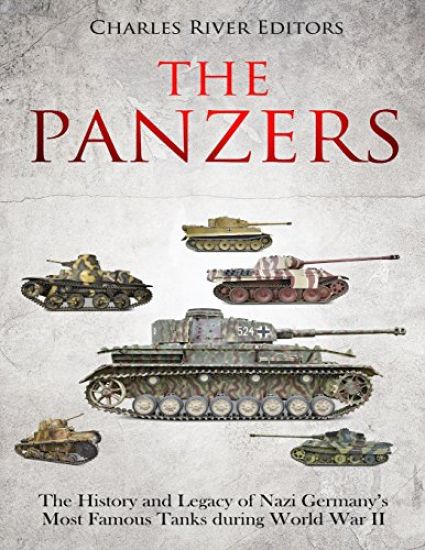
The Panzers: The History and Legacy of Nazi Germany's Most Famous Tanks during World War II
*Includes pictures*Includes online resources and a bibliography for further readingWorld War II was the culmination of a quarter century of tank development, and it would also be the first major test of tanks in mobile warfare, during which they had to face other tanks. However, many of the tanks were constructed with the static warfare of the Western Front in mind and were thus slow and had short operational ranges. Others were too light to face opposing tanks or the new generation of anti-tank weapons that hadn't existed in World War I. The unsuitability of these tank models for this new kind of warfare was quickly recognized, and the belligerent powers scrambled to create better designs. As each new, improved model came off the assembly lines, the opposing powers rushed to create a tank that could beat it. In that regard, World War II was also a war between rival engineers. At the same time, German military officials were at the forefront of developing new ideologies when it came to utilizing their tanks to maximum effect. Heinz Guderian even published a book on the topic before becoming one of the Third Reich's most effective tank commanders. Moreover, during the German invasion of Poland, Nazi forces gained experience they would use across Europe and in Russia. After all, it was in Poland that the Wehrmacht saw action for the first time, conducting what was not only an invasion but also a trial run of its new equipment and tactics. The Polish invasion proved invaluable in providing the German high command with a low-risk, high-value live fire exercise for their newly minted war machine, while the actual combat experience highlighted the remaining flaws in the system. During the campaign, the Germans honed tactics and weapon systems for the massive struggle with the Soviets, British, and United States that loomed on the horizon. The beginning of World War II found the major powers developing tanks to some extent, but lingering ideas from World War I affected the development of tanks during the Interwar period. As a result, aside from the blitzkrieg doctrine developed by the Nazis, tanks were still used in terms of infantry support, and there were few wars during this period to give strategists the chance to develop better uses for the new armored vehicles before World War II started. Commanders soon found that many of the tanks fielded in the campaigns of 1939-1941 lacked the necessary armor, guns, and designs. Inevitably, tactics evolved throughout the war. The Germans were early leaders in tank tactics, as their successes from Poland through the opening phases of Operation Barbarossa demonstrated. The main German tank tactic was the so-called Schwerpunkt ("center of gravity"), in which a concentration of tanks achieved a local superiority, broke through, and drove deep behind enemy lines, carving up frontline enemy forces that could then be surrounded and taken out by support tanks, infantry, and artillery. This is why German tanks were built for speed while maintaining good armor and weaponry. Germany's first great victories against Poland and France were due more to the shortcomings of their enemies than the preparedness of their own military, and this was especially the case with the Panzerwaffe, the armored arm of the German forces. At the outbreak of war, their tank designs lagged behind Russia and even France, both of which had superior heavy tanks. The medium-sized Panzerkampfwagen III and IV models were already in production, but delays meant that relatively few saw frontline combat in the opening campaigns. Thus, the bulk of the effort had to be taken on by light Panzer I, which had never been intended for combat service, and the slightly more powerful Panzer II. The Germans strengthened their tank corps with captured Czech models and, later, French tanks.
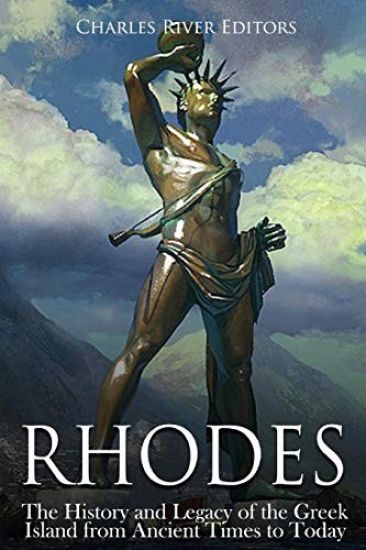
Rhodes: The History and Legacy of the Greek Island from Ancient Times to Today

Rhodes: The History and Legacy of the Greek Island from Ancient Times to Today

Charles River

Createspace Independent Publishing Platform
2018
nidottu
*Includes pictures *Includes contemporary accounts describing Rhodes *Includes online resources and a bibliography for further reading Modern perceptions of Classical Greece are almost invariably based on Athens and Sparta, but there are perhaps few areas as consistently undervalued as the island of Rhodes. Although solidly part of the Greek world for as long as there has been one, Rhodes, located just off the coast of Asia Minor, was also from its earliest times a port opening to the civilizations of the Eastern Mediterranean, and Rhodes was involved in every significant moment in ancient Greek history. The island often played a key role in world events which far surpassed its small size, and at one point even stood side-by-side with much larger kingdoms as one of the main powers in the Greek world. Rhodes would reach the zenith of its power in the Hellenistic period following the death of Alexander the Great in 323 BCE. Even as the rest of the city-states waned compared to the much larger kingdoms of Alexander's successors in Egypt and Asia, Rhodes would come to the forefront as a main power in the Greek world, standing toe-to-toe with these Hellenistic kingdoms. Rhodes was for a time the foremost naval power in the Eastern Mediterranean, and one of the most powerful and richest cities in the world. It was during this time that the Colossus of Rhodes, one of the Seven Wonders of the Ancient World, was built on the island to celebrate Rhodes' equally monumental triumph over the armies of Demetrius the Besieger. Rhodes also gained a foothold on other islands, and an extensive presence in Asia Minor. With the rise of Rome, Rhodes, along with the rest of the Greek world, lost power, and it was gradually integrated into the Roman sphere of influence as an ally before finally being annexed into the empire. After the partition and collapse of the ancient Roman Empire, in the Middle Ages Rhodes would share in both the fortunes and vicissitudes of Rome's successor state, the Byzantine Empire. Along with the Byzantines, Rhodes would face off first against the Arabs from the East, and then European Crusaders from the West. As the Byzantine Empire continued to lose power and chaos spread in its former holdings, Rhodes would eventually be occupied by the Knights Hospitaller, an order of Crusading knights who initially arrived on the island while retreating from the Holy Land. These knights would hold on to Rhodes for over 200 years, making it the headquarters of their unique military, economic, and piratical empire. It became a bastion of Christendom and a reminder of the former power of the Crusaders in an Eastern Mediterranean region increasingly dominated by Islam. When the Rhodian castle of the knights, still standing today, finally fell to the Ottoman Turks in 1522, Rhodes entered a long period of Turkish rule that lasted almost 400 years. It was only in 1948, after successive and brief Italian, German and British occupations, that the island was finally united with the modern Greek state, but to this day, thanks to its impressive archaeological sites, Rhodes still bears the indelible marks of its storied past. Rhodes: The History and Legacy of the Greek Island from Ancient Times to Today examines one of the most important Greek powers throughout its long and illustrious history. Along with pictures depicting important people, places, and events, you will learn about Rhodes like never before.
A History of Some of China's Most Famous Landmarks

A History of Some of China's Most Famous Landmarks

Charles River

Createspace Independent Publishing Platform
2018
nidottu
*Includes pictures *Includes online resources and a bibliography for further reading China has always fascinated outsiders, much in the same way that distant light fascinates someone looking down a dark road. It is both familiar and mysterious, ancient and new, and fully understanding it seems to always remain just out of reach. From the Great Wall to the ancient teachings of Confucius, China's natural and man-made wonders have been topics of interest among Westerners since the Middle Ages and the pursuit of trade routes both by land and sea, amazing Marco Polo and 19th century British expeditions in similar ways despite the passage of several centuries between them. The Great Wall of China is perhaps the wonder of the world that has most captured the human imagination, and as the quotes about it indicate, the wall has acquired special significance even outside of China. The places and ways in which it has taken hold vary greatly, but one thing is certain: the Great Wall of China is as amazing as it is mysterious, and it's as mundane as it is magical. Naturally, the Wall has become the most recognizable symbol of China, used for both aggrandizement and criticism. Nationalists see it as a symbol of China's peaceful nature, engineering capability, and historic longevity, while detractors see the Wall as the embodiment of China's backwardness, closed-mindedness, and hubris. While history allots arguments for the claims of each side, both of them are colored by Great Wall mythology and current geopolitical concerns. Though the wall can symbolize all of these things about China, it is important to remember that the many long walls. upon some of which the current landmark was constructed, were put up by specific people for specific purposes. People across the world were excited when it was revealed in 1974 that archaeologists had uncovered a new and amazing find: an underground army consisting of thousands of clay soldiers, still standing at their posts despite being over 2,000 years old. In addition to the remarkable feats of craftsmanship and the almost unimaginable size and scale of the Terracotta Army, the sculpted statues seemed to bear testimony of something that modern people could not quite wrap their minds around, representing a time when China was born almost 200 years before Christ. The hope for many was that this remarkable army could reveal the secrets of China's first emperor, Qin Shi Huang, a man who united seven warring tribes into one of the most powerful nations on earth. The tremendous temples, captivating churches, magnificent mosques, and palatial places of worship around the world come in all shapes and sizes, and pay tribute to an array of gods and deities, but they all share one thing in common. These glorious structures, the pride and joy of a religion, are sacred spaces for prayer, meditation, and the veneration of one's god or gods. As such, they are designed and adorned with the most divine and irreplaceable hallmarks to honor their holy fathers and mothers. While the world today is a far cry from perfect, laws, for the most part, protect these places from those who hold misguided beliefs or harbor misplaced resentment towards its communities. The story of the Porcelain Tower of Nanjing includes all of these aspects, and then some. Its origins come from a cradle of creativity and enlightenment fostered by one fabled emperor from the Ming Dynasty bloodline; indeed, it was the pi ce de r sistance of his career. The Porcelain Tower's history also bore witness to an epoch of turbulence in Eastern history, set in one of the oldest countries in existence - China. The inimitable pagoda towered proudly over the city for some 4 centuries, but it was precisely this perilous patch that would claim what was once considered one of the Seven Wonders of the World.
The Luddites: The History and Legacy of the English Rebels Who Protested against Advanced Machinery during the Industrial Revolution
*Includes pictures *Includes online resources and a bibliography for further reading Between the 18th and early 19th centuries, Britain experienced massive leaps in technological, scientific, and economical advancement. This powerful period has since been immortalized as the great Industrial Revolution, during which Britain became a formidable force that boasted unmatched economical growth, drastic changes in living conditions, and even the emergence of a neglected social class. Vast portions of rural lands were transformed into interconnected, complex, and multitasking cities. Dozens of innovative inventions and products were churned out in bulk and sold to the masses for the first time ever. Some of the greatest thinkers and creators ventured forth from the shadows. Scientists, engineers, merchants, and manufacturers alike were at the height of their prime, nurtured by a culture that embraced the vision of growth, progress, and industrial unity. The Industrial Revolution saw Britain rise to the top and become the envy of the world's most prestigious nations. At the same time, the pivotal era was far from perfect, featuring a dark underbelly and an army of unsung heroes. It was American writer and futurist Alvin Toffler who once called technology "the great growing engine of change." The 18th century German linguist Johann Gottfried von Herder was another proponent of enlightenment and technological progress. "Nothing in Nature stands still," said von Herder. "Everything strives and moves forward." One would be hard-pressed to find anyone today that would disagree with these sentiments. Those whose opinions suggest otherwise are often thoughtlessly dismissed, and those who hold them ridiculed as tin-foil-hat sporting paranoids or pretentious "hipsters." But what happens when the very instruments meant to help people begin to put lives at stake? Meet the Luddites, a 19th century brotherhood of rebels who vowed to annihilate every last one of the newfangled spinning machines that cost thousands their jobs. The Luddites' riots are indefensible, at least from the standpoint of violence, but they beg the question of whether the protests were nonsensical acts of rage carried out by thugs who sought to exploit imagined fears or desperate measures taken by those who felt neglected by the government. The Luddites: The History and Legacy of the English Rebels Who Protested against Advanced Machinery during the Industrial Revolution chronicles the revolution and the negative reaction to it. Along with pictures of important people, places, and events, you will learn about the Luddites like never before.
Los Neandertales: La Historia de los Humanos Extintos que Fueron Contemporáneos del Homo Sapiens en Europa
En la cultura popular, el t rmino "neandertal" es usado como un insulto coloquial para un degenerado o alguien que es percibido como est pido. Este parece haber sido el caso incluso desde el primer reconocimiento de los neandertales como una especie. El primer descubrimiento f sil de neandertal fue el cr neo de un ni o en B lgica en 1829, pero estaba gravemente da ado. Otro ser a descubierto en 1856 en una mina de piedra caliza de la regi n de Neanderthal, en lo que hoy es Alemania (por lo que fue llamado "Neandertal 1"), y poco m s de una d cada despu s ser a descubierta una calavera con rasgos distintivos diferentes (que indicaban una especie diferente a los neandertales), en el suroeste de Francia. El ltimo esp cimen llegar a a ser reconocido como un ejemplo de la especie H. Sapiens, y estos humanos anat micamente modernos llegaron a Europa hace 45.000-43.000 a os, alrededor del tiempo en que se cree que los neandertales comenzaron a extinguirse. Los neandertales son miembros del g nero Homo, al igual que el H. sapiens, y comparten aproximadamente el 99,7% de su ADN con los humanos modernos (Reynolds y Gallagher 2012). Ambas especies incluso vivieron brevemente durante la misma poca en Eurasia. Sin embargo, los neandertales evolucionaron separadamente en Europa, lejos del H. sapiens, que evolucion en frica. Los neandertales existieron en Europa y Asia durante casi 200.000 a os y prosperaron en estas regiones, pero se extinguieron hace 40.000 a 30.000 a os, en la misma poca en que los humanos modernos comenzaron a llegar a Europa. Esto ha provocado mucha especulaci n sobre la naturaleza de las interacciones entre los neandertales y H. sapiens, especialmente dado que algunos investigadores creen que interactuaron entre s durante m s de 5.000 a os antes de que los neandertales comenzaran a extinguirse en diferentes tiempos en toda Europa. Una hip tesis es que el H. sapiens desplaz a los neandertales y se adapt mejor a las condiciones del entorno, y es obviamente posible, si no probable, que estos dos grupos se hayan convertido en competidores por alimentos y otros recursos, con el H. sapiens siendo m s exitoso al final. Tambi n existe la posibilidad, si tales interacciones cercanas estaban teniendo lugar, de que el H. sapiens, relativamente nuevo en Europa, trajera consigo pat genos de frica que eran desconocidos para el sistema inmune del neandertal. Un ejemplo m s reciente de este tipo de interacci n resultante es la expansi n europea a las Am ricas, que trajo enfermedades, como la viruela, que los nativos de Am rica nunca hab an experimentado, especialmente las enfermedades resultantes de la domesticaci n de los animales. Es posible que la domesticaci n del perro por parte del H. sapiens haya contribuido a propagar enfermedades for neas entre los neandertales. Haya ocurrido esto o no, es muy probable que las interacciones entre los dos grupos se hicieran mucho m s ntimas en alg n momento. Los neandertales pudieron fabricar y usar una serie de diversas herramientas sofisticadas, controlar el fuego, hacer y usar ropa, y crear adornos y decoraciones. Incluso hay evidencia de que los neandertales enterraban a sus muertos con ofrendas f nebres, una pr ctica que tambi n est asociada con el posterior H. sapiens, lo que sugiere que las dos especies intercambiaban ideas como la fabricaci n de herramientas y rituales. Se han descubierto sitios arqueol gicos desde Espa a hasta Rusia que contienen herramientas de piedra transicionales asociadas con H. sapiens o neandertales. Es dif cil determinar nicamente a partir de la evidencia arqueol gica el nivel de las interacciones que se llevaron a cabo en estos sitios, que pueden haber sido utilizados al mismo tiempo. Los neandertales: la historia de los humanos extintos que fueron contempor neos del Homo Sapiens en Europa da un vistazo a la evoluci n de los neandertales y examina las teor as sob
Machine Learning: An Overview of Artificial Intelligence

Machine Learning: An Overview of Artificial Intelligence

Charles River

Createspace Independent Publishing Platform
2018
nidottu
*Includes pictures *Includes online resources and a bibliography for further reading Machine learning, in its broadest sense, is a series of methods to recognize and exploit patterns in data. The name comes from the goal of trying to automate (via machines) the process that humans have used to observe the world around them and draw conclusions (i.e. learn) from those observations. Although all practical work in the machine learning field is done through computer programming, the concepts are independent of programming knowledge and instead rely on a mathematical basis. This overview will look only at the conceptual and mathematical side of the field, with little mention of the programming or practical applications. There are a multitude of algorithms that are grouped within the general category of machine learning. Depending on the type of information available, as well as the goal of a problem, many techniques will not work well or simply be impossible to apply. The key to learning different algorithms is to know in which situation each functions best. In many situations there is some sample data from a system and the goal is to interpret this data to define the system or to predict the behavior of new situations. These techniques will be examined later in the overview. Initially, problems will not provide sample data, but instead define a problem according to some constraints; the goal will be to find an optimal solution given the constraints. Machine Learning: The History of Automating Computers to Observe and Analyze Data looks at the attempts to develop machine learning, from successes to failures. Along with pictures depicting important people, places, and events, you will learn about machine learning like never before.
Rodas Después De La Antigüedad: Historia Y Legado De La Famosa Isla Griega En La Edad Media Y La Edad Moderna
En los per odos Arcaico y Cl sico, Rodas a menudo se erigi como un excelente ejemplo de los altibajos de sus ciudades griegas, y como la isla m s grande del Dodecaneso, la historia de Rodas est en gran medida en l nea con la del resto de esas islas. Rodas fue colonizada por primera vez por los griegos de la tribu d rica alrededor del siglo VIII a. C., y se aline con sus ciudades d ricas en las islas circundantes y el continente de Asia Menor para formar el llamado Hex polis d rico. Despu s de la revuelta j nica a finales del siglo VI a. C., Rodas, junto con otras islas, estuvo en el camino de la flota persa que cruz el Egeo para enfrentarse a los griegos en las guerras persas. Despu s de las Guerras Persas, junto con el resto de las islas y con el Asia Menor Griega, Rodas fue subsumida en la alianza ateniense, que pronto se convertir a en el Imperio Ateniense. Sin embargo, Atenas pronto perder a su poder, y hacia el final de la Guerra del Peloponeso contra Esparta, su poder sobre sus aliados disminuir a. Rodas alcanzar a el cenit de su poder en el per odo helen stico despu s de la muerte de Alejandro Magno en el a o 323 a. C. A pesar de que el resto de las ciudades-estado decayeron en comparaci n con los reinos mucho m s grandes de los sucesores de Alejandro en Egipto y Asia, Rodas pasar a a la vanguardia como una potencia principal en el mundo griego, permaneciendo de pie con estos reinos helen sticos. Rodas fue durante un tiempo la primera potencia naval del Mediterr neo Oriental y una de las ciudades m s poderosas y ricas del mundo. Fue durante este tiempo que el Coloso de Rodas, una de las Siete Maravillas del Mundo Antiguo, fue construido en la isla para celebrar el triunfo igualmente monumental de Rodas sobre los ej rcitos de Demetrio el Asediador. Rodas tambi n se afianz en otras islas, y una extensa presencia en Asia Menor. Con el surgimiento de Roma, Rodas, junto con el resto del mundo griego, perdi poder, y gradualmente se integr en la esfera romana de influencia como aliado antes de ser finalmente anexionado al imperio. Despu s de la partici n y el colapso del antiguo Imperio Romano, en la Edad Media Rodas compartir a tanto las fortunas como las vicisitudes del estado sucesor de Roma, el Imperio Bizantino. Junto con los bizantinos, Rodas se enfrentar a primero contra los rabes del Este, y luego contra las Cruzadas europeas del Oeste. A medida que el Imperio Bizantino continuaba perdiendo poder y el caos se extend a en sus antiguas posesiones, Rodas eventualmente ser a ocupada por los Caballeros Hospitalarios, una orden de caballeros cruzados que inicialmente llegaron a la isla mientras se retiraban de Tierra Santa. Estos caballeros se aferraron a Rodas durante m s de 200 a os, convirti ndola en el cuartel general de su singular imperio militar, econ mico y pirata. Se convirti en un basti n de la cristiandad y un recordatorio del antiguo poder de los cruzados en una regi n del Mediterr neo oriental cada vez m s dominada por el Islam. Cuando el castillo de los caballeros de Rodas, a n en pie, cay finalmente ante los turcos otomanos en 1522, Rodas entr en un largo per odo de gobierno turco que dur casi 400 a os. No fue hasta 1948, despu s de sucesivas y breves ocupaciones italianas, alemanas y brit nicas, que la isla se uni finalmente al Estado griego moderno. Hasta el d a de hoy, gracias a sus impresionantes sitios arqueol gicos, Rodas todav a conserva las marcas indelebles de su pasado hist rico. Rodas Despu s De La Antig edad: La Historia Y El Legado De La Famosa Isla Griega En La Edad Media Y La Edad Moderna examina la historia de uno de los lugares m s importantes del Mediterr neo. Junto con fotos que representan gente importante, lugares y eventos, usted aprender sobre Rodas como nunca antes.
Napoleon Bonaparte's Invasion of the Levant: The History and Legacy of the French Campaign in Syria
*Includes pictures *Includes accounts of the campaign *Includes online resources and a bibliography for further reading "Soldiers You are one of the wings of the French army. You have made war on the mountains, on the plains, and in cities; it remains for you to fight on the seas. The Roman legions, that you sometimes imitated but no longer equalled, fought Carthage now on this same sea and now on the plains of Zama... Soldiers, sailors, you have been neglected until this day; today, the greatest concern of the Republic is for you... The genius of liberty, which made you, at her birth, the arbiter of Europe, wants to be genius of the seas and the furthest nations." - Napoleon's address to his soldiers before leaving for Africa An initial review of France's naval forces had led Napoleon to conclude his navy could not hope to outfight the power of the Royal Navy, which had been the dominant naval power for centuries, so he was forced to look elsewhere. After months of planning, Napoleon crafted a scheme to attack and conquer Egypt, denying the British easy access to their colonies in India, with the ultimate goal of linking up with the Sultan Tipoo in India itself and defeating the British in the field there. Napoleon sailed with Admiral Brueys and 30,000 troops that June, heading for Egypt. Notionally part of the Ottoman Empire, Egypt was de facto a weak independent regime run by the breakaway Mamelukes. For France, it offered an overland route to India and a chance to beat Britain at her own game via economic strangulation. Ironically, in their attempt to intercept Napoleon and the French fleet, Admiral Horatio Nelson and the British forces beat the French to Africa, failing to take into account their slower troop transports. While the British turned north, only two days later, on June 28, 1798, Napoleon's army disembarked at Alexandria. Back in Sicily, Nelson heard further reports about the French and again sailed south. This time, about 6 weeks after the French reached Egypt, Nelson's fleet destroyed the French Mediterranean fleet, leaving Napoleon stranded in Africa. In addition to being unable to be reinforced or supplied by sea, his ambitions to establish a permanent presence in Egypt were further frustrated by a number of uprisings. Early in 1799, Napoleon advanced against France's erstwhile enemy, the Ottoman Empire, invading modern Syria (then the province of Damascus) and conquering the cities of Gaza, Jaffa, Arish and Haifa. However, with the plague running rampant through his army and his lines of supply from Egypt stretched dangerously thin, Napoleon was unable to destroy the fortified city of Acre and was forced to retreat. The retreat cost him almost all of his wounded as, harassed by enemy forces, he was forced to abandon most of his casualties to the Ottomans' mercy, or lack thereof. Most of the wounded were tortured and beheaded. Upon returning to Cairo, Napoleon finally received dispatches from France which, with the Mediterranean rife with Royal Navy vessels, had been severely delayed. The dispatches told of renewed hostilities with Austria and her allies, and a series of defeats in Italy which had virtually annihilated all of Napoleon's previous hard-won gains in the Italian peninsula. Leaving his army under the command of his subordinate General Kleber, Napoleon took advantage of a lull in the Royal Navy blockade and embarked upon one of his remaining ships. He set sail for France, determined to rescue her from this fresh wave of enemies. Napoleon Bonaparte's Invasion of the Levant: The History and Legacy of the French Campaign in Syria chronicles one of the French leader's most forgotten campaigns. Along with pictures depicting important people, places, and events, you will learn about the French invasion of the Levant like never before.
Horus: The History and Legacy of the Ancient Egyptian God Who Was the Son of Isis and Osiris

Horus: The History and Legacy of the Ancient Egyptian God Who Was the Son of Isis and Osiris

Markus Carabas; Charles River

Createspace Independent Publishing Platform
2018
nidottu
*Includes pictures *Includes ancient accounts *Includes online resources and a bibliography for further reading Africa may have given rise to the first human beings, and Egypt probably gave rise to the first great civilizations, which continue to fascinate modern societies across the globe nearly 5,000 years later. From the Library and Lighthouse of Alexandria to the Great Pyramid at Giza, the Ancient Egyptians produced several wonders of the world, revolutionized architecture and construction, created some of the world's first systems of mathematics and medicine, and established language and art that spread across the known world. With world-famous leaders like King Tut and Cleopatra, it's no wonder that today's world has so many Egyptologists. To the ancient Egyptians, as was the case with any society made up of inquiring humans, the world was a confusing and often terrifying place of destruction, death and unexplained phenomena. In order to make sense of such an existence, they resorted to teleological stories. Giving a phenomenon a story made it less horrifying, and it also helped them make sense of the world around them. Unsurprisingly, then, the ancient Egyptian gods permeated every aspect of existence. There are few characters in Egyptian myth whose image and name are more widely known than Horus. His name most probably means "the Distant One;" as the celestial falcon, his wings were believed to span the length of the distant sky and his eyes were the sun and the moon. This name betrays the connection Horus shared with Re, the "all powerful" sun god, and also hints at his earlier incarnation as one of the earliest celestial gods in Egyptian religious belief. One of the earliest images from ancient Egypt is that of a falcon residing in the famous "sun-Barque" of Re, which the ancient Egyptians believed traversed the sky during the day and crossed the dangerous land of the dead during the night. Horus' place in the sun-barque probably represents Horus as a 'star or planet crossing the Winding Waterway of the sky," since the ancient Egyptians were famous for their complex astronomical system that incorporated many mythical elements, but his position there is much more than being just another of the sun-god's divine entourage. Horus' mythological lineage places him as the direct descendant of the Ennead, the nine gods and goddesses who were formed from the earlier abstract concepts in the primordial waters of "Nun". This places him at an interesting crossroads in terms of his relationships with the greater pantheon. Not being one of the Ennead weakens Horus' claim to the divine right of kingship, in contrast to Seth, his uncle, who could claim primacy as one of the Ennead himself. The result of this contention made for a fascinating power struggle and a myth that would have real-world ramifications throughout the vast expanse of Egyptian history. Horus would eventually ascend the throne of his father, Osiris, and for this reason he held a deep connection with the throne of united Egypt. The earliest kings were shown as hawks (long considered part of the "Falconidae Family") preying on their enemies, the reason for which lies in the mythological foundation of Horus' life and also in the real world understanding of the "history" of the royal line of kings. Integral to Horus' myths is the notion of royal inheritance. Born of the murdered god Osiris and the magical goddess Isis, Horus' - the younger, at least - life was defined by his establishment of the royal line of Egyptian kings. To the modern Western reader, this notion of gods being mortal and inheriting the power of their fathers may seem a little strange, but, to the ancient Egyptians, stories about feuding mortal deities were par for the rather strange course, and an understanding of the nuances of Egyptian religious belief can go some way towards dispelling that confusion.
Tadeusz Kosciuszko: The Life and Legacy of Poland's Most Famous General

Tadeusz Kosciuszko: The Life and Legacy of Poland's Most Famous General

Charles River

Createspace Independent Publishing Platform
2018
nidottu
*Includes pictures *Includes contemporary accounts *Includes online resources and a bibliography for further reading Many Americans labor under the misconception that the nation's colonial and national heritage was almost wholly accomplished by an English migration, and the notion of early American diversity ends at an acknowledgment of the slave trade conducted between Southern buyers, Northern shippers, the African continent and the Caribbean region. However, early America witnessed the development of New York by the Dutch, the southernmost regions by Spain, and what would become eastern Canada by the French after lengthy battles with Britain. In fact, the Seven Years' War during the 1750s was fought on a nearly global scale between several European belligerents. As a result, when the Revolution began, the Continental Army sported numerous volunteers from Ireland, Scotland, virtually every European nation between France and Russia, and men from the northern and southern borders of the European continent. There are good reasons America doesn't possess a constitutionally-confirmed national language, despite an English-speaking majority; among the early proposals for such a common language, German and French served as contenders, with the latter going on to become Western Europe's official diplomatic language. Likewise, those who accomplished the legislative, diplomatic, and military miracles that helped 13 separate colonies hold off the greatest power in the world represented a multi-national heritage. The prospects for a rustic, untrained revolution across the Atlantic carried powerful ramifications for politics, economics, and cultural identity of the individual. Autocrats of the 18th century feared an emerging model from the British-American war that might be refashioned by dissidents within their own colonies. Among those living the consequences of defeat and exile, the soldier class of Europe paid particularly close attention. Some were rapt by the growing ideology of the Enlightenment movement as it pertained to their own cultures while others grew weary of inertia imposed by an inability to practice their craft. For the gifted Tadeusz Kosciuszko, both were likely true. However, Poland's famous soldier, artist, engineer, and statesman possessed a uniquely expanded vision that perceived the American conflict as the test of a new universal paradigm. A philosophical revolution in itself, the vision held by Locke and Jefferson for a previously unknown standard of individual liberty found an obsessive place in Kosciuszko's life view. His response to its power was to make him a much-heralded citizen of both continents in perpetuity, in war and peacetime. A hero in Poland, Lithuania, and Belarus, Kosciuszkonot only fought as an officer in the Continental Army of General Washington, but also designed and constructed the defenses for some of America's earliest cities and important military defenses. As a friend to the fledgling state, he went on to lead a "national insurrection" in his Polish homeland against centuries-old Russian domination, mirroring the American effort. Denying allegiance and assistance to Tsars and Emperors such as Catherine and Napoleon unless Polish independence was guaranteed, Kosciuszko witnessed the disappearance of Poland from the world map, an absence not rectified for well over a century. Today, streets, bridges, monuments, and even neighborhoods bear Kosciuszko's name across the country, and in Polish communities, he is often hailed as a hero equal to General Washington himself. Tadeusz Kosciuszko: The Life and Legacy of Poland's Most Famous General profiles one of the Revolutionary War's most important figures. Along with pictures of important people, places, and events, you will learn about Kosciuszko like never before.
Fred Rogers: The Life and Legacy of the Legend behind Mister Rogers' Neighborhood

Fred Rogers: The Life and Legacy of the Legend behind Mister Rogers' Neighborhood

Charles River

Createspace Independent Publishing Platform
2018
nidottu
*Includes pictures *Includes contemporary accounts *Includes online resources and a bibliography for further reading "This is what I give. I give an expression of care every day to each child, to help him realize that he is unique. I end the program by saying, 'You've made this day a special day, by just your being you. There's no person in the whole world like you; and I like you just the way you are.' And I feel that if we in public television can only make it clear that feelings are mentionable and manageable, we will have done a great service for mental health." - Fred Rogers An anomalous YouTube video crudely entitled "Mr. Rogers is a sic] Evil Man" stands at over 1.8 million views, with 1,000 likes and a whopping 30,000 dislikes. Similarly, saying an ill word about the universally adored Mister Rogers on the forums of the imageboard, 4Chan, will get the commenter torn to shreds by even its notoriously toxic anonymous users, and almost definitely ousted from the online community for good. In an age where even the motives of Gandhi and Mother Teresa are questioned by the cynical and they are at times vilified as "frauds," one would be hard-pressed to find a rational argument against the untouchable character of Mister Rogers. When one does happen upon such an abnormality, the public is quick to defend the gentle soul. "It takes a special kind of scum to hate Mister Rogers," reads the top comment on the aforementioned video, posted by user Sergei Ivanovich Mosin. The video has been picked apart by multiple journalists from the likes of Huffington Post and the Pittsburgh Magazine, amongst many others. So who exactly was Fred Rogers, and how did the host of one of history's most beloved shows win the hearts of children around the world? Fred Rogers: The Life and Legacy of the Legend behind Mister Rogers' Neighborhood profiles one of America's most iconic television personalities. Along with pictures of important people, places, and events, you will learn about Fred Rogers like never before.
Pierre Curie: The Life and Legacy of the Legendary Scientist

Pierre Curie: The Life and Legacy of the Legendary Scientist

Charles River

Createspace Independent Publishing Platform
2018
nidottu
*Includes pictures *Includes Pierre's quotes about life and science *Includes online resources and a bibliography for further reading "Is it right to probe so deeply into Nature's secrets? The question must here be raised whether it will benefit mankind, or whether the knowledge will be harmful." - Pierre Curie The Curie name is without question a household name in the world of science, and even those unfamiliar with radiation have heard of Marie, the matriarch of the prodigious family, and the multiple glass ceilings she shattered with her literally radioactive findings. While this recognition is certainly well-deserved, many have neglected to acknowledge the momentous contributions made by her colleague and husband, Pierre. The fact Pierre has mostly been forgotten is the textbook definition of irony, because even the most enlightened minds of the early 20th century were stunted by a narrow, patriarchal mindset, forcing Marie to confront obstacles and tribulations that were unique solely to her as a scientist solely on account of gender. As such, some of her most groundbreaking moments would feature Pierre receiving the credit or giving the commemorative speech. It would be long after his death that his wife managed to ultimately cement her legacy as one of the greatest scientists of all time. While their respective positions have changed over time, Pierre's personal discoveries continue to live on in a variety of vessels, from the ticking quartz watch on one's wrist to motors and engines, and even military-grade ultrasonic devices. Pierre Curie: The Life and Legacy of the Legendary Scientist examines the life and career that made him one of the world's foremost scientists of his time. Along with pictures of important people, places, and events, you will learn about Pierre Curie like never before.
The History and Legacy of Asia Minor's Most Important Ancient Civilizations

The History and Legacy of Asia Minor's Most Important Ancient Civilizations

Charles River

Createspace Independent Publishing Platform
2018
nidottu
*Includes pictures *Includes ancient accounts *Includes online resources and a bibliography for further reading The pages of world history textbooks contain a litany of "lost" empires and civilizations, but usually, upon further review, it is revealed that these so called lost empires are often just lesser known cultures that had a less apparent impact on history than other more well-known civilizations. When one scours the pages of history for a civilization that was inexplicably lost, but had a great impact during its time, very few candidates can be found, but the Hittites are a notable example. In fact, the Hittites are an ancient people who remain somewhat enigmatic, and perhaps little known to most people, but their influence on the ancient Near East is undeniable. From high on their capital of Hattusa in central Anatolia, the Hittites were able to conquer and control a kingdom that roughly comprised the area of the modern nation-states of Turkey, Syria, and parts of Iraq and Lebanon through a combination of brute military force and shrewd diplomatic machinations. Among the peoples of the ancient Near East, few are more misunderstood than the Scythians. The Scythians swept into Anatolia in the early first millennium BCE and left a large swath of destruction in their wake. They challenged old, strong, and venerable kingdoms such as the Assyrians, Egyptians, and Medes, until they were defeated by the Medes and then gradually disappeared into historical obscurity once more. According to the ancient Greek historian Herodotus, the Scythians ruled a large part of the Near East for nearly 30 years, but before they disappeared from the historical record, the Scythians greatly impacted the history of the Near East. Of all the empires and kingdoms in the ancient world, few could compare with the Lydians in terms of wealth and opulence. From the early 7th century BCE until the middle of the 6th century BCE, the Lydians played an important role in the history of the eastern Mediterranean region as they took on the role of middleman between the empires of the Near East and the emerging Hellenic civilization in Greece. From their capital in Sardis, the Lydian kings traded and made alliances and war with numerous kings, tyrants, and generals, which ultimately cemented their role as a brief but historically important people and kingdom in the ancient world. The Phrygians built a powerful and wealthy kingdom, but they were overshadowed by their more powerful and wealthier neighbors, the Lydians. Although the Phrygians were literate, most of their surviving texts have been little use to modern historians who desire to reconstruct their chronology, so they are left to use often biased Classical and Assyrian sources. Problems concerning nomenclature have also clouded the modern understanding of Phrygia and the Phrygians; the Greeks would often refer to numerous non-Phrygian peoples as Phrygians, and while the Persians acknowledged the Phrygians as a distinct people, they only considered them so as part of a satrapy or province in the vast Achaemenid Persian Empire. The History and Legacy of Asia Minor's Most Important Ancient Civilizations looks at the groups that dominated the region in antiquity and the influence they left upon Asia Minor and their contemporaries. Along with pictures of important people, places, and events, you will learn about the history of Asia Minor's most important civilizations like never before.
The History and Legacy of Asia Minor's Most Important Ancient Civilizations

The History and Legacy of Asia Minor's Most Important Ancient Civilizations

Charles River

Createspace Independent Publishing Platform
2018
nidottu
*Includes pictures *Includes ancient accounts *Includes online resources and a bibliography for further reading The pages of world history textbooks contain a litany of "lost" empires and civilizations, but usually, upon further review, it is revealed that these so called lost empires are often just lesser known cultures that had a less apparent impact on history than other more well-known civilizations. When one scours the pages of history for a civilization that was inexplicably lost, but had a great impact during its time, very few candidates can be found, but the Hittites are a notable example. In fact, the Hittites are an ancient people who remain somewhat enigmatic, and perhaps little known to most people, but their influence on the ancient Near East is undeniable. From high on their capital of Hattusa in central Anatolia, the Hittites were able to conquer and control a kingdom that roughly comprised the area of the modern nation-states of Turkey, Syria, and parts of Iraq and Lebanon through a combination of brute military force and shrewd diplomatic machinations. Among the peoples of the ancient Near East, few are more misunderstood than the Scythians. The Scythians swept into Anatolia in the early first millennium BCE and left a large swath of destruction in their wake. They challenged old, strong, and venerable kingdoms such as the Assyrians, Egyptians, and Medes, until they were defeated by the Medes and then gradually disappeared into historical obscurity once more. According to the ancient Greek historian Herodotus, the Scythians ruled a large part of the Near East for nearly 30 years, but before they disappeared from the historical record, the Scythians greatly impacted the history of the Near East. Of all the empires and kingdoms in the ancient world, few could compare with the Lydians in terms of wealth and opulence. From the early 7th century BCE until the middle of the 6th century BCE, the Lydians played an important role in the history of the eastern Mediterranean region as they took on the role of middleman between the empires of the Near East and the emerging Hellenic civilization in Greece. From their capital in Sardis, the Lydian kings traded and made alliances and war with numerous kings, tyrants, and generals, which ultimately cemented their role as a brief but historically important people and kingdom in the ancient world. The Phrygians built a powerful and wealthy kingdom, but they were overshadowed by their more powerful and wealthier neighbors, the Lydians. Although the Phrygians were literate, most of their surviving texts have been little use to modern historians who desire to reconstruct their chronology, so they are left to use often biased Classical and Assyrian sources. Problems concerning nomenclature have also clouded the modern understanding of Phrygia and the Phrygians; the Greeks would often refer to numerous non-Phrygian peoples as Phrygians, and while the Persians acknowledged the Phrygians as a distinct people, they only considered them so as part of a satrapy or province in the vast Achaemenid Persian Empire. The History and Legacy of Asia Minor's Most Important Ancient Civilizations looks at the groups that dominated the region in antiquity and the influence they left upon Asia Minor and their contemporaries. Along with pictures of important people, places, and events, you will learn about the history of Asia Minor's most important civilizations like never before.
Hong Kong: The History and Legacy of Asia's Leading Financial Center

Hong Kong: The History and Legacy of Asia's Leading Financial Center

Charles River

Createspace Independent Publishing Platform
2018
nidottu
*Includes pictures *Includes online resources and a bibliography for further reading "Hong Kong has always been a dynamic and exciting and high-energy city, and it has that New York thing going on, and people here care about how they look." - Mickey Drexler In the 21st century, Hong Kong needs very little introduction to the general public, as it has become a major economic power in the world with a name as recognizable as London, New York or Berlin. In fact numerous textile and other products bear the familiar label "Made in Hong Kong." However, this was not always the case. This position as a major economic world market is relatively recent having only been established in the second half of the 20th century. The history of Hong Kong and life there before its rise to power is difficult to trace as it was not necessarily a major geographical region; such as the United Kingdom which could defend and develop separately from mainland Europe because it was an island. Rather Hong Kong, as the region is known today, is a land consisting of Hong Kong Island, the Kowloon Peninsula, the New Territories and more than 200 islands totaling 1,106 square kilometers of land. The region itself was likely largely ignored given the rough geography. The land itself is rather difficult to develop, being mountainous and hilly, resulting in less than 25% of the land available being developed in the modern era (Wong 2015: 19). Still, the land shows signs of prehistoric activity. Hong Kong: The History and Legacy of Asia's Leading Financial Center chronicles the turbulent history of Hong Kong, and how it became one of the wealthiest places in the world despite its challenging political environment. Along with pictures and a bibliography, you will learn about Hong Kong like never before.
The History and Legacy of the British Empire's Most Famous Trading Companies across the World
*Includes pictures *Includes online resources and a bibliography for further reading After the Englishman Henry Hudson, under the aegis of the Dutch East India Company, sailed by Manhattan in 1609, he returned home with good news and bad news. Like the other explorers before him, he hadn't been able to find a water route to the Orient. He had, however, returned with maps (confiscated by the English) and beaver pelts. With that, it became clear that the region around the bay that would take Hudson's name was a very promising new territory for trade and settlement, which would become a serious bone of contention between the Dutch and the English for the rest of the century. In 1614, another Dutch East India merchant, Adriaen Block, entered through the narrows of the East River between Queens and Randall's Island, a difficult and dangerous passage that later sank numerous ships and that Block named Hell's Gate (Hellegat). The European world would know the name "Manhates" when Block returned to the Netherlands with new and improved maps. During the early 18th century, trade interests in South America led to the South Sea bubble, which economists have called "one of the most famous and dramatic episodes in the history of speculation." The South Sea Company's spectacular fall impacted not only its investors, but public confidence in corporations, investments, and even banking worldwide. How did the directors of one of the most successful joint-stock companies at the time, sought after in social circles as financiers and masterminds, come to be called before Parliament to testify? The anger over the dishonesty of the directors of the company resulted in one member of the House of Lords suggesting that the South Sea Company directors "be sewn up in sacks, along with snakes and monies, and then drowned." Though the history of the South Sea Company is obscure and unfamiliar to most, the regular references to the company and the scandal that surrounded it have lead it to be regularly referenced by economists, historians, and even investors today. It is a story centered around England's history of debt, loans, and banking, all against the backdrop of modern history's most famous empire. Perhaps the most famous trade company in all of history, the East India Company served as one of the key players in the formation of the British Empire. From its origins as a trading company struggling to keep up with its superior Dutch, Portuguese, and Spanish competitors to its tenure as the ruling authority of the Indian subcontinent to its eventual hubristic downfall, the East India Company serves as a lens through which to explore the much larger economic and social forces that shaped the formation of a global British Empire. As a private company that became a non-state global power in its own right, the East India Company also serves as a cautionary tale all too relevant to the modern world's current political and economic situation. On its most basic level, the East India Company played an essential part in the development of long-distance trade between Britain and Asia. The trade in textiles, ceramics, tea, and other goods brought a huge influx of capital into the British economy. This not only fueled the Industrial Revolution, but also created a demand for luxury items amongst the middle classes. The economic growth provided by the East India Company was one factor in Britain's ascendancy from a middling regional power to the most powerful nation on the planet. The profits generated by the East India Company also created incentive for other European powers to follow its lead, which led to three centuries of competition for colonies around the world. This process went well beyond Asia to affect most of the planet, including Africa and the Middle East.
Medieval Ireland: The History and Legacy of the Irish during the Middle Ages

Medieval Ireland: The History and Legacy of the Irish during the Middle Ages

Charles River

Createspace Independent Publishing Platform
2018
nidottu
*Includes pictures*Includes online resources and a bibliography for further reading"What have you done for Ireland? How have you answered the Call? Are you pleased with the part you're playing in the job that demands us all? Have you changed the tweed for the khaki to serve with rank and file, as your comrades are gladly serving, or isn't it worth your while?" - An extract from World War I recruitment posterThere are very few national relationships quite as complicated and enigmatic as the one that exists between the English and the Irish. For two peoples so interconnected by geography and history, the depth of animosity that is often expressed is difficult at times to understand. At the same time, historic links of family and clan, and common Gaelic roots, have at times fostered a degree of mutual regard, interdependence, and cooperation that is also occasionally hard to fathom. During World War I, for example, Ireland fought for the British Empire as part of that empire, and the Irish response to the call to arms was at times just as enthusiastic as that of other British dominions such as Canada, Australia, and New Zealand. And yet, at the same time, plots were unearthed to cooperate with the Germans in toppling British rule in Ireland, which would have virtually ensured an Allied defeat. In World War II, despite Irish neutrality, 12,000 Irish soldiers volunteered to join the Khaki line, returning after the war to the scorn and vitriol of a great many of their more radical countrymen. One of the most bitter and divisive struggles in the history of the British Isles, and in the history of the British Empire, played out over the question of Home Rule and Irish independence, and then later still as the British province of Northern Ireland grappled within itself for the right to secede from the United Kingdom or the right to remain. What is it within this complicated relationship that has kept this strange duality of mutual love and hate at play? A rendition of "Danny Boy" has the power to reduce both Irishmen and Englishmen to tears, and yet they have torn at one another in a violent conflict that can be traced to the very dawn of their contact. This history of the British Isles themselves is in part responsible. The fraternal difficulties of two neighbors so closely aligned, but so unequally endowed, can be blamed for much of the trouble. The imperialist tendencies of the English themselves, tendencies that created an empire that embodied the best and worst of humanity, alienated them from not only the Irish, but the Scots and Welsh too. However, the British also extended that colonial duality to other great societies of the world, India not least among them, without the same enduring suspicion and hostility. There is certainly something much more than the sum of its parts in this curious combination of love and loathing that characterizes the Anglo-Irish relationship. Medieval Ireland: The History and Legacy of the Irish during the Middle Ages analyzes the tumultuous events that marked Irish history, and Ireland's relations with England. Along with pictures of important people, places, and events, you will learn about medieval Ireland like never before.
Admiral Horatio Nelson's Greatest Victories: The History and Legacy of the Battle of the Nile and the Battle of Trafalgar
*Includes pictures *Includes accounts of the battles *Includes online resources and a bibliography for further reading Over the course of its history, England has engaged in an uncountable number of battles, but none of her military heroes has had a greater military legacy than Admiral Lord Horatio Nelson, 1st Viscount Nelson, 1st Duke of Bront . Whether traveling to Trafalgar Square or one of the hundreds of pubs named after him, seemingly it becomes easy to believe that no Briton has cast as long a shadow. Nelson is known across the world for his decisive victory at Trafalgar, made all the more legendary by the fact that he was mortally wounded at the height of his greatest feat. And it is understandable that any man who could thwart Napoleon's ambitions as well as Nelson did would earn a place in the history books. But Nelson embodied every virtue of his homeland as a dashing, courageous military officer who was impeccably cultured, and the best at what he did. Indeed, as the personification of the supremacy of the Royal Navy, the man and his life had a powerful resonance well before his death. Before Trafalgar, Nelson had already earned enduring fame for the British victory at the Battle of the Nile. In 1798, he was given command of a small squadron and sent ahead to Gibraltar, and eventually given instructions to hunt down and destroy Napoleon's fleet. Indeed, the coming battle was the battle of annihilation Nelson had sought - of 13 French battleships engaged, 2 were destroyed and 9 were captured. British losses were negligible, with no ships lost and about 900 killed or wounded. French casualties were at least 2,000, with thousands more captured. The French Mediterranean fleet had been wiped out, and Napoleon's expeditionary force was now stranded. With Nelson's decisive victory, the Royal Navy had once again asserted itself as the dominant power in the Mediterranean. At the same time, Nelson's inability to intercept Napoleon at sea allowed the French transports and ground forces to survive unscathed, and they eventually made their way back to France. The stage was now set for over a decade of massive campaigns and battles that would lead to an even more famous victory for Nelson. Over the course of its history, England has engaged in an uncountable number of battles, but a select few have been celebrated like the Battle of Trafalgar, one of the most important naval battles in history. Before the battle, Napoleon still harbored dreams of sailing an invasion force across the English Channel and subduing England, but that would be dashed on October 21, 1805 by a British fleet that was outnumbered and outgunned. That morning, Nelson's fleet, 27 strong, bore down on the Franco-Spanish fleet, approaching at right angles in two columns. French Admiral Pierre-Charles Villeneuve's disposition was conventional - a single line of battle, ill formed due to the very light winds and the poor seamanship of many of the crews. Traditional naval warfare strategies called for approaching an enemy fleet in one line and then creating a parallel line that allowed as many guns as possible to fire. At the same time, that kind of line of battle allowed for admirals to signal during battle, and it made retreating in an orderly fashion easier. After all, if an enemy's ships pursued during a retreat, they would break their own line. The problem with that strategy as Nelson saw it is that the ability to retreat meant fighting a decisive naval battle would be made much more difficult. Thus, at Trafalgar he employed a completely innovative strategy. The British plan was to punch straight through the enemy line with two approaching columns of ships, which would cut the Franco-Spanish fleet's line in three, prompting the melee that they knew would capitalize on their tactical superiority. The impact of Trafalgar literally set the stage for the rest of the Napoleonic Era.
Admiral Horatio Nelson's Greatest Victories: The History and Legacy of the Battle of the Nile and the Battle of Trafalgar
*Includes pictures *Includes accounts of the battles *Includes online resources and a bibliography for further reading Over the course of its history, England has engaged in an uncountable number of battles, but none of her military heroes has had a greater military legacy than Admiral Lord Horatio Nelson, 1st Viscount Nelson, 1st Duke of Bront . Whether traveling to Trafalgar Square or one of the hundreds of pubs named after him, seemingly it becomes easy to believe that no Briton has cast as long a shadow. Nelson is known across the world for his decisive victory at Trafalgar, made all the more legendary by the fact that he was mortally wounded at the height of his greatest feat. And it is understandable that any man who could thwart Napoleon's ambitions as well as Nelson did would earn a place in the history books. But Nelson embodied every virtue of his homeland as a dashing, courageous military officer who was impeccably cultured, and the best at what he did. Indeed, as the personification of the supremacy of the Royal Navy, the man and his life had a powerful resonance well before his death. Before Trafalgar, Nelson had already earned enduring fame for the British victory at the Battle of the Nile. In 1798, he was given command of a small squadron and sent ahead to Gibraltar, and eventually given instructions to hunt down and destroy Napoleon's fleet. Indeed, the coming battle was the battle of annihilation Nelson had sought - of 13 French battleships engaged, 2 were destroyed and 9 were captured. British losses were negligible, with no ships lost and about 900 killed or wounded. French casualties were at least 2,000, with thousands more captured. The French Mediterranean fleet had been wiped out, and Napoleon's expeditionary force was now stranded. With Nelson's decisive victory, the Royal Navy had once again asserted itself as the dominant power in the Mediterranean. At the same time, Nelson's inability to intercept Napoleon at sea allowed the French transports and ground forces to survive unscathed, and they eventually made their way back to France. The stage was now set for over a decade of massive campaigns and battles that would lead to an even more famous victory for Nelson. Over the course of its history, England has engaged in an uncountable number of battles, but a select few have been celebrated like the Battle of Trafalgar, one of the most important naval battles in history. Before the battle, Napoleon still harbored dreams of sailing an invasion force across the English Channel and subduing England, but that would be dashed on October 21, 1805 by a British fleet that was outnumbered and outgunned. That morning, Nelson's fleet, 27 strong, bore down on the Franco-Spanish fleet, approaching at right angles in two columns. French Admiral Pierre-Charles Villeneuve's disposition was conventional - a single line of battle, ill formed due to the very light winds and the poor seamanship of many of the crews. Traditional naval warfare strategies called for approaching an enemy fleet in one line and then creating a parallel line that allowed as many guns as possible to fire. At the same time, that kind of line of battle allowed for admirals to signal during battle, and it made retreating in an orderly fashion easier. After all, if an enemy's ships pursued during a retreat, they would break their own line. The problem with that strategy as Nelson saw it is that the ability to retreat meant fighting a decisive naval battle would be made much more difficult. Thus, at Trafalgar he employed a completely innovative strategy. The British plan was to punch straight through the enemy line with two approaching columns of ships, which would cut the Franco-Spanish fleet's line in three, prompting the melee that they knew would capitalize on their tactical superiority. The impact of Trafalgar literally set the stage for the rest of the Napoleonic Era.
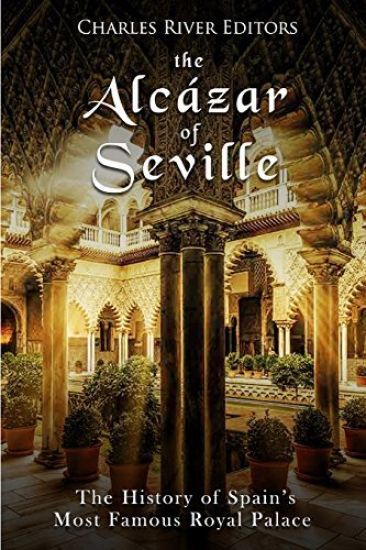
The Alcázar of Seville: The History of Spain's Most Famous Royal Palace

The Alcázar of Seville: The History of Spain's Most Famous Royal Palace

Charles River

Createspace Independent Publishing Platform
2018
nidottu
*Includes pictures *Includes contemporary accounts *Includes online resources and a bibliography for further reading The majority of those fortunate enough to feast their eyes upon the majestic complex that is the Alc zar of Seville share the same sentiment: its beauty is indescribable. This is a place that oozes opulence, a kind of opulence flavored by class and historical charm, rather than the garish flamboyance and tawdry ostentation often displayed by the nouveau riche. To say that the Alc zar is fit for the fussiest prince would simply be downplaying its splendor. Of course, this was exactly what the Alc zar was, and continues to be, for this fantastical compound is the oldest European royal residence still in use. The royal estate, with 17,000 square meters of spectacular structures and 7 hectares of lavish gardens, is even more sublime in the nighttime. The rambling Moorish arches, and the gorgeous detail of the fairy-tale turrets and curtain walls - from the striking shapes of the rectangular merlons, capped with triangular cones, to the coarse, aged texture and smears of damp discoloring the ancient facade - are all the more emphasized by the torches dotted throughout the premises. But following the departure of the nocturnal visitors, the interactive tour guides (clad in elaborate costumes of historical figures just hours before), and the last of the staff, the Alc zar, some say, becomes an intoxicating, sinister maze almost impossible to escape. The Alc zar of Seville: The History of Spain's Most Famous Royal Palace journeys through the eventful timeline of the palatial fortress, as well as the stages leading up to its fruition. It also explores some of the fascinating characters who lived there, and the most pivotal events that took place within the centuries-old brick walls. Along with pictures of important people, places, and events, you will learn about the Alc zar of Seville like never before.