Kirjojen hintavertailu – 12 903 725 kirjaa ja 27 kauppaa

Kirjailija

Charles River

Kirjat ja teokset yhdessä paikassa: 4 673 kirjaa, julkaisuja vuosilta 2013–2022, suosituimpiin kuuluu William Powell and Myrna Loy: The Lives and Careers of One of Classical Hollywood's Most Iconic Duos. Vertaile teosten hintoja ja tarkista saatavuus suomalaisista kirjakaupoista.

4 673 kirjaa

Kirjojen julkaisuvuodet: 2013–2022.

The First Battle of Ypres: The History of the Indecisive World War I Battle that Produced a Stalemate along the Belgian Coast
*Includes pictures *Includes accounts *Includes online resources and a bibliography for further reading The enduring image of World War I is of men stuck in muddy trenches, and of vast armies deadlocked in a fight neither could win. It was a war of barbed wire, poison gas, and horrific losses as officers led their troops on mass charges across No Man's Land and into a hail of bullets. While these impressions are all too true, they hide the fact that trench warfare was dynamic and constantly evolving throughout the war as all armies struggled to find a way to break through the opposing lines. The arms race before the war and the attempt to break the deadlock of the Western and Eastern Fronts by any means possible changed the face of battle in ways that would have previously been deemed unthinkable. Before 1914, flying machines were objects of public curiosity; the first flights of any account on rotor aircraft had been made less than 5 years before and were considered to be the province of daredevils and lunatics. By 1918, all the great powers were fielding squadrons of fighting aircraft armed with machine-guns and bombs, to say nothing of light reconnaissance planes. Tanks, a common feature on the battlefield by 1918, had not previously existed outside of the realm of science fiction stories written by authors like H. G. Wells. Machine guns had gone from being heavy, cumbersome pieces with elaborate water-cooling systems to single-man-portable, magazine-fed affairs like the Chauchat, the Lewis Gun and the M1918 BAR. To these grim innovations were added flamethrowers, hand grenades, zeppelins, observation balloons, poison gas, and other improvements or inventions that revolutionized the face of warfare. These technological developments led to an imbalance. Before the introduction of the man-portable light machine gun (which took place in the second half of the war), not to mention tanks (which also joined the fight late in the game), defensive firepower vastly outweighed offensive capability. Massed batteries of artillery, emplaced heavy machine guns, barbed wire entanglements, and bewildering fortifications meant that ground could not be taken except at incredible cost. This led to the (somewhat unjustified) criticism famously leveled at the generals of World War I that their soldiers were "lions led by donkeys". Needless to say, the First World War came at an unfortunate time for those who would fight in it. After an initial period of relatively rapid maneuver during which the German forces pushing through Belgium and the French and British forces attempting to stymie them made an endless series of abortive flanking movements that extended the lines to the sea, a stalemate naturally tended to develop. The infamous trench lines soon snaked across the French and Belgian countryside, creating an essentially futile static slaughterhouse whose sinister memory remains to this day. Until the war of maneuver returned in 1918 and led to a decisive outcome for the war, the nexus of this horror lay in the rainy, sodden levels and low ridges of Flanders, near the medieval town of Ypres. In this tiny fragment of Europe, half a million men died over the course of three major battles and the times of attrition between, perishing in a squelching pit of mud, blood-tinged water, and rotting human flesh. The First Battle of Ypres: The History of the Indecisive World War I Battle that Produced a Stalemate along the Belgian Coast analyzes one of the Great War's first major conflicts, and how it was emblematic of the stalemate that came from new technology and trench warfare. Along with pictures of important people, places, and events, you will learn about the First Battle of Ypres like never before.

Agrippa Hull: The Life and Legacy of the Revolutionary War's Most Famous Black Soldier
*Includes pictures *Includes contemporary accounts *Includes online resources and a bibliography for further reading By the time the Revolutionary War started, military confrontations between the world powers had become so common that combat was raised to the status of a fine art, consuming a large portion of time for adolescent males in training and comprising a sizable component of the economy. Weaponry was developed to a degree of quality not accessible to most North Americans, and European aristocrats were reared in the mastery of swordsmanship with an emphasis on the saber for military use. Likewise, the cavalry, buoyed by a tradition of expert horsemanship and saddle-based combat, was a fighting force largely beyond reach for colonists, which meant that fighting on horses was an undeveloped practice in the fledgling Continental Army, and the American military did not yet fully comprehend the value of cavalry units. Few sword masters were to find their way to North America in time for the war, and the typical American musket was a fair hunting weapon rather than a military one. Even the foot soldier knew little of European military discipline. However, with European nations unceasingly at war, soldiers from one side or the other often found themselves in disfavor, were marked men in exile, or were fleeing from a superior force. To General George Washington's good fortune, a few found their way to the colonies to join in the cause. Some were adventurers recently cut off from their own borders, while others embraced the American urge for freedom that so closely mirrored the same movements in their home countries. Nations such as France undoubtedly had an elevating effect on America's capacity to make formal war, and Lafayette is the most famous foreigner to serve in the Continental Army, but one of the most important individuals who arrived was a Polish nobleman named Tadeusz Kosciuszko, who had military and engineering experience. Raised in Stockbridge, Massachusetts, Hull's increasing fame is accessible in large part due to his association with Kosciuszko, who is still a hero across America today for helping design and construct the defenses of West Point, among other things. Serving as Kosciuszko's orderly for a period of 50 months in nearly every major battle, Hull was described by noted historian Gary Gary Nash as a great "unnoticed American." Nash further speaks of Hull's service to the Continental Army at the side of Kosciuszko as the core of his "hidden importance." By the end of the war, Hull had served for six years and two months in Washington's army, receiving a badge of honor for his extended service, and precious discharge papers signed by the commanding general himself. Beyond that unique professional collaboration and personal friendship, the savvy orderly set an example to all free blacks by achieving a lifestyle unthinkable for many white residents of Stockbridge or any American community. Likewise, excellence as an orderly to a high-ranking officer is not the most memorable story for an American biography; rather, Hull's influence on Kosciuszko's worldview constitutes the heightened social value of the alliance. Confident in his status as a full citizen, Hull's way of looking at the world reflected the sentiments that caused the colonies to consider revolution.. Accepted as an honored citizen in his community of Stockbridge, he lived a distinguished life that lasted until the outbreak of the Mexican-American War in the mid-19th century. Agrippa Hull: The Life and Legacy of the Revolutionary War's Most Famous Black Soldier profiles one of the Revolution's most unique participants. Along with pictures of important people, places, and events, you will learn about Hull like never before.
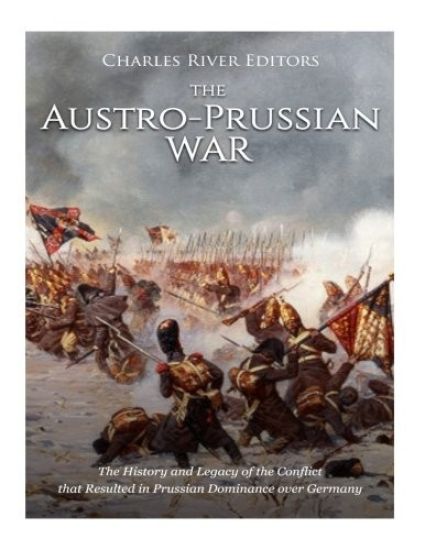
The Austro-Prussian War: The History and Legacy of the Conflict that Resulted in Prussian Dominance over Germany
*Includes pictures *Includes online resources and a bibliography for further reading The most famous battle of the 19th century was undoubtedly Waterloo, and the biggest battle of the Napoleonic Wars was Leipzig, but neither one of those legendary battles was the biggest of the century. That distinction instead belongs to the Battle of K niggr tz, a little known, but decisive conflict in a war between Prussia and Austria. Though it lasted only seven weeks and only had one truly decisive battle, the Austro-Prussian War nonetheless changed the political outlook in Europe forever. Locked in a balance of power since the 1815 Congress of Vienna, the world was dominated by the great European powers of Britain, France, Russia, and Austria, and at the Congress of Vienna itself, Prussia had been a minor concern. Though the Prussians had come through in time to assist the Duke of Wellington at Waterloo, they were nevertheless taken for granted at the conference, with the major powers instead preferring to deal with the more historically powerful Austrian Hapsburgs. In his scathing commentary on Prussian culture, When Blood is Their Argument, Ford Maddox Ford attempted to explain the sudden rise of Prussian political and economic status from 1849-1880, writing, "She Prussia] had pushed herself from being a bad second in the comity of Germanism into a position of equality with, if not of predominance over, Austria, amongst the German peoples." Prussian leaders, especially Otto von Bismarck, the chancellor and advisor to Prussia's king, believed Prussia could be a united and respected power, but only without the traditional Austrian dominance. At the time, the Austrian empire was a collection of ethnically diverse peoples and had been dominated by a socio-political conservatism that sought to keep the empire ruled in Hapsburg tradition. Though Prussia's leadership had its share of liberals and socialists to keep at bay, Prussia's relatively shorter history meant it was capable of change, and while Prussia's more ethnically unified population and its use of the Zollverein to exclude Austria from economic competition certainly played a role in the Prussians' victory, it took a seven-week military campaign to seal Austria's fate. Writing in 1872, the German General Staff (Grosser Generalstab) called the Austro-Prussian conflict a "necessity of the history of the world." Since Austria and Prussia were "each too strong to submit to the other," there would be, of necessity, a conflict between the two that allowed for the formation of a modern German state. Due to its short duration and the fact the war pit longstanding allies against one another, the war has alternately been known as the Seven Weeks' War and the Brothers War, but in the end, the Austro-Prussian War severely reduced Austria's status as a Germanic power and added territories to Prussia, resulting in a growth of population from 19 million to almost 24 million. Not only did the war vault Prussia to unquestioned leadership in the North German Confederation, it set a military precedent and proved "that preparation for war is a more potent factor than mere numbers in computing the strength of a nation." For military strategists and future combatants, the Austro-Prussian War was a precursor to a style of fighting which every major European power adopted in some form within a few years. The Austro-Prussian War: The History and Legacy of the Conflict that Resulted in Prussian Dominance over Germany looks at the short but momentous conflict and its geopolitical ramifications. Along with pictures of important people, places, and events, you will learn about the Austro-Prussian War like never before.
The History and Legacy of the British Empire's Most Famous Trading Companies across the World
*Includes pictures *Includes online resources and a bibliography for further reading After the Englishman Henry Hudson, under the aegis of the Dutch East India Company, sailed by Manhattan in 1609, he returned home with good news and bad news. Like the other explorers before him, he hadn't been able to find a water route to the Orient. He had, however, returned with maps (confiscated by the English) and beaver pelts. With that, it became clear that the region around the bay that would take Hudson's name was a very promising new territory for trade and settlement, which would become a serious bone of contention between the Dutch and the English for the rest of the century. In 1614, another Dutch East India merchant, Adriaen Block, entered through the narrows of the East River between Queens and Randall's Island, a difficult and dangerous passage that later sank numerous ships and that Block named Hell's Gate (Hellegat). The European world would know the name "Manhates" when Block returned to the Netherlands with new and improved maps. During the early 18th century, trade interests in South America led to the South Sea bubble, which economists have called "one of the most famous and dramatic episodes in the history of speculation." The South Sea Company's spectacular fall impacted not only its investors, but public confidence in corporations, investments, and even banking worldwide. How did the directors of one of the most successful joint-stock companies at the time, sought after in social circles as financiers and masterminds, come to be called before Parliament to testify? The anger over the dishonesty of the directors of the company resulted in one member of the House of Lords suggesting that the South Sea Company directors "be sewn up in sacks, along with snakes and monies, and then drowned." Though the history of the South Sea Company is obscure and unfamiliar to most, the regular references to the company and the scandal that surrounded it have lead it to be regularly referenced by economists, historians, and even investors today. It is a story centered around England's history of debt, loans, and banking, all against the backdrop of modern history's most famous empire. Perhaps the most famous trade company in all of history, the East India Company served as one of the key players in the formation of the British Empire. From its origins as a trading company struggling to keep up with its superior Dutch, Portuguese, and Spanish competitors to its tenure as the ruling authority of the Indian subcontinent to its eventual hubristic downfall, the East India Company serves as a lens through which to explore the much larger economic and social forces that shaped the formation of a global British Empire. As a private company that became a non-state global power in its own right, the East India Company also serves as a cautionary tale all too relevant to the modern world's current political and economic situation. On its most basic level, the East India Company played an essential part in the development of long-distance trade between Britain and Asia. The trade in textiles, ceramics, tea, and other goods brought a huge influx of capital into the British economy. This not only fueled the Industrial Revolution, but also created a demand for luxury items amongst the middle classes. The economic growth provided by the East India Company was one factor in Britain's ascendancy from a middling regional power to the most powerful nation on the planet. The profits generated by the East India Company also created incentive for other European powers to follow its lead, which led to three centuries of competition for colonies around the world. This process went well beyond Asia to affect most of the planet, including Africa and the Middle East.
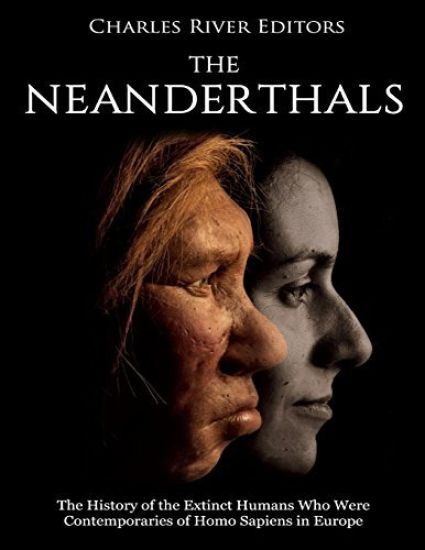
The Neanderthals: The History of the Extinct Humans Who Were Contemporaries of Homo Sapiens in Europe
*Includes pictures *Includes online resources and a bibliography for further reading In popular culture, the term Neanderthal is used as a colloquial insult for a degenerate or someone perceived as stupid. This seems to have been the case even from the first recognition of the Neanderthals as a species. The first Neanderthal fossil discovery was that of a child's skull in Belgium in 1829, but it was badly damaged. Another would be discovered in 1856 in a limestone mine of the Neanderthal region of what is present-day Germany, and a skull with differing distinct traits (indicating a different species than the Neanderthals) would be discovered just over a decade later in southwestern France. The latter specimen would come to be recognized as an example of the species Homo Sapiens, and these anatomically modern humans arrived in Europe between 45,000 and 43,000 years ago, around the time the Neanderthals are believed to started going extinct. The Neanderthals are a member of the genus Homo just like Homo sapiens and share roughly 99.7% of their DNA with modern humans (Reynolds and Gallagher 2012). Both species even lived briefly during the same time in Eurasia. However, the Neanderthals evolved separately in Europe, away from modern humans, who evolved in Africa. Physically, the Neanderthal skeleton was much more robust, suggesting that there was more room for muscle attachment. However, while Neanderthals were stronger than modern humans, the average height of the Neanderthal male was shorter, standing at only about 5'5 tall. Other physical characteristics that set the Neanderthals apart from modern humans were certain skull traits. The skull in general was low and elongated, featuring a sloping forehead with an occipital bun (a bone projection at the back of the skull), whereas modern humans have a more vertical forehead with no occipital bun. The cranial capacity of the Neanderthal skull was also greater than the modern human at 1,500-1,740 cc, and it lacked a chin and had more circular eye orbits, in contrast to Homo sapiens, which have a chin and tend to feature more rectangular eye orbits (Wolpoff 1999). Despite these differences, the Neanderthals may have been recognizable enough to interact with Homo sapiens or even blend in with Homo sapiens for the thousands of years they lived together in Europe. The Neanderthals lived in Europe and Asia for nearly 200,000 years and thrived in these regions, but they went extinct between 40,000 and 30,000 years ago, around the same time that modern humans began arriving in Europe. This has prompted much speculation as to the nature of the interactions between Neanderthals and Homo sapiens, especially since some researchers believe they interacted with each other for over 5,000 years before the Neanderthals began going extinct at different times across Europe. One hypothesis is that Homo sapiens displaced the Neanderthals and were better suited for the environment, and it is obviously possible if not likely that these two groups had become competitors for food and other resources, with Homo sapiens being more successful in the end. If such close interactions were taking place, there is also a possibility that the relatively new-to-Europe Homo sapiens brought pathogens from Africa with them that were unknown to the Neanderthal's immune system. A more recent example of this type of resulting interaction is the European expansion into the Americas, which brought diseases like smallpox that the natives of America had never experienced before, especially diseases resulting from the domestication of animals. It is possible that the domestication of the dog by Homo sapiens may have contributed in spreading foreign diseases among the Neanderthals. This book looks at the evolution of the Neanderthals and examines the theories regarding how they went extinct.
The Royal Tombs of Ancient Egypt: The History of the Ancient Egyptians' Most Famous Sacred Burial Sites
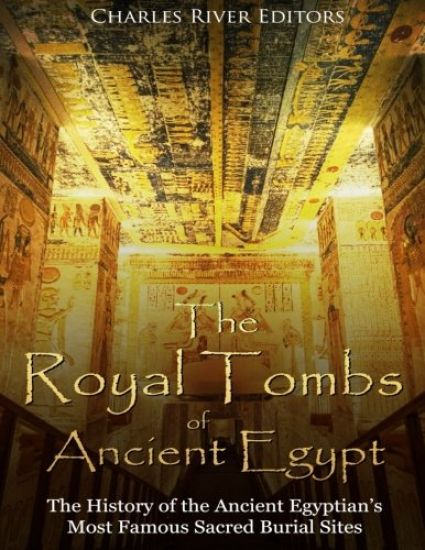
*Includes pictures *Includes ancient accounts *Includes online resources and a bibliography for further reading Africa may have given rise to the first human beings, and Egypt probably gave rise to the first great civilizations, which continue to fascinate modern societies across the globe nearly 5,000 years later. From the Library and Lighthouse of Alexandria to the Great Pyramid at Giza, the Ancient Egyptians produced several wonders of the world, revolutionized architecture and construction, created some of the world's first systems of mathematics and medicine, and established language and art that spread across the known world. With world-famous leaders like King Tut and Cleopatra, it's no wonder that today's world has so many Egyptologists. Given the abundance of funerary artifacts that have been found within the sands of Egypt, it sometimes seems as though the Ancient Egyptians were more concerned with the matters of the afterlife than they were with matters of the life they experienced from day to day. This is underscored most prominently by the pyramids, which have captured the world's imagination for centuries. The pyramids of Egypt are such recognizable symbols of antiquity that for millennia, people have made assumptions about what they are and why they exist, without full consideration of the various meanings these ancient symbolic structures have had over the centuries. Generations have viewed them as symbols of a lost past, which in turn is often portrayed as a world full of romance and mystery. This verbal meaning has become associated with the structures through the tourism industry, where intrigue obviously boosts ticket sales. In fact, the Egyptian pyramids are so old that they were also drawing tourists even in ancient times. In antiquity, the Great Pyramid of Giza was listed as one of Seven Ancient Wonders of the World, and it is the only one still surviving today. While the image that usually comes to mind is of the magnificent pyramids of Giza, there are many other pyramid fields in Egypt, and the one at Saqqara is the oldest and largest. It was the site for pyramids built by at least 11 pharaohs, along with subsidiary pyramids for their queens. In addition to having the most pyramids of any pyramid field in Egypt, Saqqara contains hundreds if not thousands of smaller tombs. Saqqara is located less than 10 miles south of Cairo on the west bank of the River Nile and runs about 3.75 miles on its north-south axis. The site is generally broken down into the region of North Saqqara and South Saqqara, since there are clusters of monuments on each end, but there are some interesting features in the middle portion as well. While the Step Pyramid of Djoser is by far the most famous monument at the site, Saqqara is a rich network of pyramids, temples, and tombs dating from the first dynasty of Egypt all the way to Greco-Roman times, an impressive span of more than 2,500 years. Indeed, Egyptologists have only uncovered a small fraction of the remains. When the pharaohs weren't busy with the pyramids at Saqqara and elsewhere, one of their most used sites is the Valley of the Kings, a royal necropolis located on the west bank of the Nile at Thebes. Here, pharaohs of the New Kingdom Period were buried in elaborate, treasure-filled tombs that were cut deep into the cliffs that walled the Nile Valley. In many of the royal tombs in the Valley of the Kings, intricate reliefs were painted on the walls that depicted the sun god and the dead king on their nightly journey through the underworld, which was known in Egyptian as the Duat (Wilkinson 2003, 82). These scenes, which vary slightly from tomb to tomb, are known collectively by modern scholars as The Book of Gates because they depict the sun god's journey through 12 gates or pylons, one for each hour of the night. This book analyzes the amazing history of Ancient Egyptian burials over the course of nearly 3,000 years.
The Royal Tombs of Ancient Egypt: The History of the Ancient Egyptians' Most Famous Sacred Burial Sites
*Includes pictures *Includes ancient accounts *Includes online resources and a bibliography for further reading Africa may have given rise to the first human beings, and Egypt probably gave rise to the first great civilizations, which continue to fascinate modern societies across the globe nearly 5,000 years later. From the Library and Lighthouse of Alexandria to the Great Pyramid at Giza, the Ancient Egyptians produced several wonders of the world, revolutionized architecture and construction, created some of the world's first systems of mathematics and medicine, and established language and art that spread across the known world. With world-famous leaders like King Tut and Cleopatra, it's no wonder that today's world has so many Egyptologists. Given the abundance of funerary artifacts that have been found within the sands of Egypt, it sometimes seems as though the Ancient Egyptians were more concerned with the matters of the afterlife than they were with matters of the life they experienced from day to day. This is underscored most prominently by the pyramids, which have captured the world's imagination for centuries. The pyramids of Egypt are such recognizable symbols of antiquity that for millennia, people have made assumptions about what they are and why they exist, without full consideration of the various meanings these ancient symbolic structures have had over the centuries. Generations have viewed them as symbols of a lost past, which in turn is often portrayed as a world full of romance and mystery. This verbal meaning has become associated with the structures through the tourism industry, where intrigue obviously boosts ticket sales. In fact, the Egyptian pyramids are so old that they were also drawing tourists even in ancient times. In antiquity, the Great Pyramid of Giza was listed as one of Seven Ancient Wonders of the World, and it is the only one still surviving today. While the image that usually comes to mind is of the magnificent pyramids of Giza, there are many other pyramid fields in Egypt, and the one at Saqqara is the oldest and largest. It was the site for pyramids built by at least 11 pharaohs, along with subsidiary pyramids for their queens. In addition to having the most pyramids of any pyramid field in Egypt, Saqqara contains hundreds if not thousands of smaller tombs. Saqqara is located less than 10 miles south of Cairo on the west bank of the River Nile and runs about 3.75 miles on its north-south axis. The site is generally broken down into the region of North Saqqara and South Saqqara, since there are clusters of monuments on each end, but there are some interesting features in the middle portion as well. While the Step Pyramid of Djoser is by far the most famous monument at the site, Saqqara is a rich network of pyramids, temples, and tombs dating from the first dynasty of Egypt all the way to Greco-Roman times, an impressive span of more than 2,500 years. Indeed, Egyptologists have only uncovered a small fraction of the remains. When the pharaohs weren't busy with the pyramids at Saqqara and elsewhere, one of their most used sites is the Valley of the Kings, a royal necropolis located on the west bank of the Nile at Thebes. Here, pharaohs of the New Kingdom Period were buried in elaborate, treasure-filled tombs that were cut deep into the cliffs that walled the Nile Valley. In many of the royal tombs in the Valley of the Kings, intricate reliefs were painted on the walls that depicted the sun god and the dead king on their nightly journey through the underworld, which was known in Egyptian as the Duat (Wilkinson 2003, 82). These scenes, which vary slightly from tomb to tomb, are known collectively by modern scholars as The Book of Gates because they depict the sun god's journey through 12 gates or pylons, one for each hour of the night. This book analyzes the amazing history of Ancient Egyptian burials over the course of nearly 3,000 years.
The Ottoman Empire: The History and Legacy of the Transcontinental Empire that Dominated Eastern Europe and the Middle East for Nearly 500 Years
*Includes pictures *Includes online resources and a bibliography for further reading In terms of geopolitics, perhaps the most seminal event of the Middle Ages was the successful Ottoman siege of Constantinople in 1453. The city had been an imperial capital as far back as the 4th century, when Constantine the Great shifted the power center of the Roman Empire there, effectively establishing two almost equally powerful halves of antiquity's greatest empire. Constantinople would continue to serve as the capital of the Byzantine Empire even after the Western half of the Roman Empire collapsed in the late 5th century. Naturally, the Ottoman Empire would also use Constantinople as the capital of its empire after their conquest effectively ended the Byzantine Empire, and thanks to its strategic location, it has been a trading center for years and remains one today under the Turkish name of Istanbul. The end of the Byzantine Empire had a profound effect not only on the Middle East but Europe as well. Constantinople had played a crucial part in the Crusades, and the fall of the Byzantines meant that the Ottomans now shared a border with Europe. The Islamic empire was viewed as a threat by the predominantly Christian continent to their west, and it took little time for different European nations to start clashing with the powerful Turks. In fact, the Ottomans would clash with Russians, Austrians, Venetians, Polish, and more before collapsing as a result of World War I, when they were part of the Central powers. When studying the fall of the Ottoman Empire, historians have argued over the breaking point that saw a leading global power slowly become a decadent empire. The failed Battle of Vienna in 1683 is certainly an important turning point for the expanding empire, as the defeat of Grand Vizier Kara Mustafa Pasha at the hands of a coalition led by the Austrian Habsburg dynasty, Holy Roman Empire and Polish-Lithuanian commonwealth marked the end of Ottoman expansionism. It was also the beginning of a slow decline during which the Ottoman Empire suffered multiple military defeats, found itself mired by corruption, and had to deal with the increasingly mutinous Janissaries (the Empire's initial foot soldiers). Despite it all, in the last century of its life it strove to reform its military, administration and economy until it was finally dissolved. Years before the final collapse of the Empire, the Tanzimat ("Reorganization"), a period of swiping reforms, led to significant changes in the country's military apparatus, among others, which certainly explains the initial success the Ottoman Empire was able to achieve against its rivals. Similarly, the drafting of a new Constitution (Kan n-u Es s , basic law) in 1876, despite it being shot down by Sultan Abdul Hamid II just two years later, as well as its revival by the "Young Turks" movement in 1908, highlights the understanding among Ottoman elites that change was needed, and their belief that such change was possible. Overall, the history of the dissolution can be defined as a race between the Empire's growing "illness" on one side (the Ottoman's inability to appease and federate the various people within its territory), and constant attempts to find a cure in the form of broad reforms. These questions are often presented together, but that tends to shift the focus outward, onto the various peoples and their aspirations, along with Europe's growing influence over the fate of the Ottoman Empire. To consider both the "illness" and the cure, it's necessary to separate them, before moving on to the direct cause of the empire's dissolution (World War I) and its heritage. The Ottoman Empire: The History and Legacy of the Transcontinental Empire that Dominated Eastern Europe and the Middle East for Nearly 500 Years chronicles the culture, battles, and events that took place across the vast Turkish Empire from the Middle Ages to the end of World W
La KGB y la Stasi: la historia de las agencias de inteligencia más infames del bloque del este
"La Stasi usaba a menudo un m todo que era realmente diab lico. Se llamaba Zersetzung, y se describe en otra pauta. La palabra es dif cil de traducir porque significa originalmente "biodegradaci n". Pero en realidad, es una descripci n bastante precisa. El objetivo era destruir secretamente la confianza en s misma de la gente, por ejemplo da ando su reputaci n, organizando fracasos en su trabajo y destruyendo sus relaciones personales." Hubertus Knabe, historiador alem n. La KGB es una de las abreviaturas m s famosas del siglo XX, y se ha convertido en sin nimo de las tenebrosas y a menudo violentas acciones de la polic a secreta de la Uni n Sovi tica y de las agencias de seguridad interna. De hecho, se utiliza a menudo para referirse a las agencias de seguridad del Estado Sovi tico a lo largo de su historia, desde la creaci n de la Checa (Comisi n Extraordinaria) en 1917 hasta la eliminaci n oficial de la KGB en 1992. Tanto si se relaciona con los excesos de la Guerra Civil rusa, las purgas de Stalin e incluso con Vladimir Putin, la KGB ha sido considerada durante mucho tiempo como el peor ogro del Occidente durante la segunda mitad del siglo XX. La historia de Alemania Oriental estuvo estrechamente ligada al desarrollo de sus servicios de seguridad, concretamente de la Stasi. En una poca de pa ses totalitarios dominados por agencias estatales represivas, la Stasi se destacaba por su tama o y por la amplitud y profundidad de su vigilancia. Pel culas como Das Leben der Anderen ("La vida de los otros") encapsulaban actitudes y concepciones posteriores a la unificaci n, tanto de la vida en Alemania Oriental como de las actividades de la Stasi. A pesar de su notoriedad, el legado de la Stasi es cuestionado en la Alemania moderna. Los antiguos alemanes occidentales, y los occidentales en general, alinean estrechamente el estado de Alemania Oriental y la Stasi, enmarcando un "estado de la Stasi". Los de la antigua Alemania Oriental, sin embargo, resienten las actitudes condescendientes y la fusi n de ambas instituciones, prefiriendo centrarse en los elementos sociales del Estado de Alemania Oriental. Uwe Spiekermann, del Instituto Hist rico Alem n, expone sucintamente las impresiones de muchos al considerar la Alemania Oriental y su cultura de vigilancia: "En retrospectiva, la Stasi se ha convertido en un s mbolo para la RDA Alemania Oriental]". El Servicio de Seguridad del Estado de Alemania Oriental, o Staatssicherheitsdienst en alem n (abreviado como Stasi) se fund en 1950. Se pretend a que fuera el "escudo y la espada" del Estado y vigil de cerca a gran parte de la poblaci n durante los pr ximos 40 a os. Algunas de las cifras son sorprendentes. A finales de los a os ochenta, la Stasi ten a archivos de seis millones de habitantes de un total de 18 millones. Cuando se abrieron los archivos de la Stasi en los a os 90, se descubrieron archivos que se extend an a lo largo de 178 kil metros. A lo largo de la existencia de Alemania Oriental, hasta dos millones de personas actuaron como esp as, y 90.000 personas trabajaron en el Ministerio, por no hablar de los numerosos informantes "no oficiales". Alemania Oriental tambi n contaba con un temido servicio de inteligencia extranjero de sus servicios de inteligencia, el HV A (Hauptverwaltung A o departamento central), que demostr ser experto en infiltrarse en la sociedad de Alemania Occidental y llevar a cabo operaciones en muchos otros pa ses. Pero, por qu se form la Stasi y c mo result ser tan eficaz? La respuesta a estas preguntas requiere el entendimiento de las circunstancias nicas en las que se form Alemania Oriental, as como la pol tica en Alemania al final de la Segunda Guerra Mundial y el comienzo de la Guerra Fr a.
The Neanderthals: The History of the Extinct Humans Who Were Contemporaries of Homo Sapiens in Europe
*Includes pictures *Includes online resources and a bibliography for further reading In popular culture, the term Neanderthal is used as a colloquial insult for a degenerate or someone perceived as stupid. This seems to have been the case even from the first recognition of the Neanderthals as a species. The first Neanderthal fossil discovery was that of a child's skull in Belgium in 1829, but it was badly damaged. Another would be discovered in 1856 in a limestone mine of the Neanderthal region of what is present-day Germany, and a skull with differing distinct traits (indicating a different species than the Neanderthals) would be discovered just over a decade later in southwestern France. The latter specimen would come to be recognized as an example of the species Homo Sapiens, and these anatomically modern humans arrived in Europe between 45,000 and 43,000 years ago, around the time the Neanderthals are believed to started going extinct. The Neanderthals are a member of the genus Homo just like Homo sapiens and share roughly 99.7% of their DNA with modern humans (Reynolds and Gallagher 2012). Both species even lived briefly during the same time in Eurasia. However, the Neanderthals evolved separately in Europe, away from modern humans, who evolved in Africa. Physically, the Neanderthal skeleton was much more robust, suggesting that there was more room for muscle attachment. However, while Neanderthals were stronger than modern humans, the average height of the Neanderthal male was shorter, standing at only about 5'5 tall. Other physical characteristics that set the Neanderthals apart from modern humans were certain skull traits. The skull in general was low and elongated, featuring a sloping forehead with an occipital bun (a bone projection at the back of the skull), whereas modern humans have a more vertical forehead with no occipital bun. The cranial capacity of the Neanderthal skull was also greater than the modern human at 1,500-1,740 cc, and it lacked a chin and had more circular eye orbits, in contrast to Homo sapiens, which have a chin and tend to feature more rectangular eye orbits (Wolpoff 1999). Despite these differences, the Neanderthals may have been recognizable enough to interact with Homo sapiens or even blend in with Homo sapiens for the thousands of years they lived together in Europe. The Neanderthals lived in Europe and Asia for nearly 200,000 years and thrived in these regions, but they went extinct between 40,000 and 30,000 years ago, around the same time that modern humans began arriving in Europe. This has prompted much speculation as to the nature of the interactions between Neanderthals and Homo sapiens, especially since some researchers believe they interacted with each other for over 5,000 years before the Neanderthals began going extinct at different times across Europe. One hypothesis is that Homo sapiens displaced the Neanderthals and were better suited for the environment, and it is obviously possible if not likely that these two groups had become competitors for food and other resources, with Homo sapiens being more successful in the end. If such close interactions were taking place, there is also a possibility that the relatively new-to-Europe Homo sapiens brought pathogens from Africa with them that were unknown to the Neanderthal's immune system. A more recent example of this type of resulting interaction is the European expansion into the Americas, which brought diseases like smallpox that the natives of America had never experienced before, especially diseases resulting from the domestication of animals. It is possible that the domestication of the dog by Homo sapiens may have contributed in spreading foreign diseases among the Neanderthals. This book looks at the evolution of the Neanderthals and examines the theories regarding how they went extinct.
The Ottoman Empire: The History and Legacy of the Transcontinental Empire that Dominated Eastern Europe and the Middle East for Nearly 500 Years
*Includes pictures *Includes online resources and a bibliography for further reading In terms of geopolitics, perhaps the most seminal event of the Middle Ages was the successful Ottoman siege of Constantinople in 1453. The city had been an imperial capital as far back as the 4th century, when Constantine the Great shifted the power center of the Roman Empire there, effectively establishing two almost equally powerful halves of antiquity's greatest empire. Constantinople would continue to serve as the capital of the Byzantine Empire even after the Western half of the Roman Empire collapsed in the late 5th century. Naturally, the Ottoman Empire would also use Constantinople as the capital of its empire after their conquest effectively ended the Byzantine Empire, and thanks to its strategic location, it has been a trading center for years and remains one today under the Turkish name of Istanbul. The end of the Byzantine Empire had a profound effect not only on the Middle East but Europe as well. Constantinople had played a crucial part in the Crusades, and the fall of the Byzantines meant that the Ottomans now shared a border with Europe. The Islamic empire was viewed as a threat by the predominantly Christian continent to their west, and it took little time for different European nations to start clashing with the powerful Turks. In fact, the Ottomans would clash with Russians, Austrians, Venetians, Polish, and more before collapsing as a result of World War I, when they were part of the Central powers. When studying the fall of the Ottoman Empire, historians have argued over the breaking point that saw a leading global power slowly become a decadent empire. The failed Battle of Vienna in 1683 is certainly an important turning point for the expanding empire, as the defeat of Grand Vizier Kara Mustafa Pasha at the hands of a coalition led by the Austrian Habsburg dynasty, Holy Roman Empire and Polish-Lithuanian commonwealth marked the end of Ottoman expansionism. It was also the beginning of a slow decline during which the Ottoman Empire suffered multiple military defeats, found itself mired by corruption, and had to deal with the increasingly mutinous Janissaries (the Empire's initial foot soldiers). Despite it all, in the last century of its life it strove to reform its military, administration and economy until it was finally dissolved. Years before the final collapse of the Empire, the Tanzimat ("Reorganization"), a period of swiping reforms, led to significant changes in the country's military apparatus, among others, which certainly explains the initial success the Ottoman Empire was able to achieve against its rivals. Similarly, the drafting of a new Constitution (Kan n-u Es s , basic law) in 1876, despite it being shot down by Sultan Abdul Hamid II just two years later, as well as its revival by the "Young Turks" movement in 1908, highlights the understanding among Ottoman elites that change was needed, and their belief that such change was possible. Overall, the history of the dissolution can be defined as a race between the Empire's growing "illness" on one side (the Ottoman's inability to appease and federate the various people within its territory), and constant attempts to find a cure in the form of broad reforms. These questions are often presented together, but that tends to shift the focus outward, onto the various peoples and their aspirations, along with Europe's growing influence over the fate of the Ottoman Empire. To consider both the "illness" and the cure, it's necessary to separate them, before moving on to the direct cause of the empire's dissolution (World War I) and its heritage. The Ottoman Empire: The History and Legacy of the Transcontinental Empire that Dominated Eastern Europe and the Middle East for Nearly 500 Years chronicles the culture, battles, and events that took place across the vast Turkish Empire from the Middle Ages to the end of World W
La KGB y la Stasi: la historia de las agencias de inteligencia más infames del bloque del este
"La Stasi usaba a menudo un m todo que era realmente diab lico. Se llamaba Zersetzung, y se describe en otra pauta. La palabra es dif cil de traducir porque significa originalmente "biodegradaci n". Pero en realidad, es una descripci n bastante precisa. El objetivo era destruir secretamente la confianza en s misma de la gente, por ejemplo da ando su reputaci n, organizando fracasos en su trabajo y destruyendo sus relaciones personales." Hubertus Knabe, historiador alem n. La KGB es una de las abreviaturas m s famosas del siglo XX, y se ha convertido en sin nimo de las tenebrosas y a menudo violentas acciones de la polic a secreta de la Uni n Sovi tica y de las agencias de seguridad interna. De hecho, se utiliza a menudo para referirse a las agencias de seguridad del Estado Sovi tico a lo largo de su historia, desde la creaci n de la Checa (Comisi n Extraordinaria) en 1917 hasta la eliminaci n oficial de la KGB en 1992. Tanto si se relaciona con los excesos de la Guerra Civil rusa, las purgas de Stalin e incluso con Vladimir Putin, la KGB ha sido considerada durante mucho tiempo como el peor ogro del Occidente durante la segunda mitad del siglo XX. La historia de Alemania Oriental estuvo estrechamente ligada al desarrollo de sus servicios de seguridad, concretamente de la Stasi. En una poca de pa ses totalitarios dominados por agencias estatales represivas, la Stasi se destacaba por su tama o y por la amplitud y profundidad de su vigilancia. Pel culas como Das Leben der Anderen ("La vida de los otros") encapsulaban actitudes y concepciones posteriores a la unificaci n, tanto de la vida en Alemania Oriental como de las actividades de la Stasi. A pesar de su notoriedad, el legado de la Stasi es cuestionado en la Alemania moderna. Los antiguos alemanes occidentales, y los occidentales en general, alinean estrechamente el estado de Alemania Oriental y la Stasi, enmarcando un "estado de la Stasi". Los de la antigua Alemania Oriental, sin embargo, resienten las actitudes condescendientes y la fusi n de ambas instituciones, prefiriendo centrarse en los elementos sociales del Estado de Alemania Oriental. Uwe Spiekermann, del Instituto Hist rico Alem n, expone sucintamente las impresiones de muchos al considerar la Alemania Oriental y su cultura de vigilancia: "En retrospectiva, la Stasi se ha convertido en un s mbolo para la RDA Alemania Oriental]". El Servicio de Seguridad del Estado de Alemania Oriental, o Staatssicherheitsdienst en alem n (abreviado como Stasi) se fund en 1950. Se pretend a que fuera el "escudo y la espada" del Estado y vigil de cerca a gran parte de la poblaci n durante los pr ximos 40 a os. Algunas de las cifras son sorprendentes. A finales de los a os ochenta, la Stasi ten a archivos de seis millones de habitantes de un total de 18 millones. Cuando se abrieron los archivos de la Stasi en los a os 90, se descubrieron archivos que se extend an a lo largo de 178 kil metros. A lo largo de la existencia de Alemania Oriental, hasta dos millones de personas actuaron como esp as, y 90.000 personas trabajaron en el Ministerio, por no hablar de los numerosos informantes "no oficiales". Alemania Oriental tambi n contaba con un temido servicio de inteligencia extranjero de sus servicios de inteligencia, el HV A (Hauptverwaltung A o departamento central), que demostr ser experto en infiltrarse en la sociedad de Alemania Occidental y llevar a cabo operaciones en muchos otros pa ses. Pero, por qu se form la Stasi y c mo result ser tan eficaz? La respuesta a estas preguntas requiere el entendimiento de las circunstancias nicas en las que se form Alemania Oriental, as como la pol tica en Alemania al final de la Segunda Guerra Mundial y el comienzo de la Guerra Fr a.
The Expansion of the Vikings: The History and Legacy of the Vikings' Conquests through Trading and Raiding
*Includes pictures *Includes medieval accounts *Includes online resources and a bibliography for further reading Over the centuries, the West has become fascinated by the Vikings, one of the most mysterious and interesting European civilizations. In addition to being perceived as a remarkably unique culture among its European counterparts, what's known and not known about the Vikings' accomplishments has added an intriguing aura to the historical narrative. Were they fierce and fearsome warriors? Were they the first Europeans to visit North America? It seems some of the legends are true, and some are just that, legend. Like many civilizations of past millennia, the Vikings are remembered in popular culture more for the fantastical accounts of their history than for reality. The written records of the history of the Viking period, consisting mostly of Norse sagas, metaphoric poems called skalds and monastic chronicles, were written down well after the events they described and tended to be lurid accounts rife with hyperbole. Furthermore, the most scathing tales of Viking raids are contained in the histories of monastic communities which were targets of Norse rapacity. These chronicles speak of the heathen Viking depredations of monastic treasuries and the ferocious torture and killing of Christian monks. The colorful bloody tales were certainly based on more than grains of truth, but they were also purposefully augmented to inject drama into history. Similarly Norse sagas written down in the post-Viking Age fixed what had hitherto been flexible oral tradition. They were often slanted to legitimize a clan or leader's authority by emphasizing an ancestor's bravery and skill in pillaging opponent's communities. As a result, the almost ubiquitous depiction of the Vikings as horn-helmeted, brutish, hairy giants who mercilessly marauded among the settlements of Northern Europe is based on an abundance of prejudicial historical writing by those who were on the receiving end of Viking depredations, and much of the popular picture of the Vikings is a result of the romantic imagination of novelists and artists. For example, there is neither historical nor archaeological evidence that the typically red haired, freckled Norsemen entered battle wearing a metal helmet decorated with horns. This headgear was an invention of the Swedish painter and illustrator Johan August Malmstr m (1829-1901), and his work was so widely disseminated in popular books that the image stuck. Today the imaginary Viking helmet is an almost mandatory costume accessory in productions of Wagner's opera Der Ring des Nibelungen, which is not about the Vikings at all. It seems the horned helmet evolved from an imaginary reinterpretation of genuine Viking images of a winged helmet that may have been worn by priests in Viking religious ceremonies. However, the Vikings' reputation for ferocious seaborne attacks along the coasts of Northern Europe is no exaggeration. It is true that the Norsemen, who traded extensively throughout Europe, often increased the profits obtained from their nautical ventures through plunder, acquiring precious metals and slaves. Of course, the Vikings were not the only ones participating in this kind of income generation - between the 8th and the 11th centuries, European tribes, clans, kingdoms and monastic communities were quite adept at fighting with each other for the purpose of obtaining booty. The Vikings were simply more consistently successful than their contemporaries and thus became suitable symbols for the iniquity of the times. The Expansion of the Vikings looks at the history of the Vikings' trading and raiding, and how they became some of the most famous conquerors of the Middle Ages. Along with pictures depicting important people, places, and events, you will learn about the Viking expansion like never before.
The Expansion of the Vikings: The History and Legacy of the Vikings' Conquests through Trading and Raiding
*Includes pictures *Includes medieval accounts *Includes online resources and a bibliography for further reading Over the centuries, the West has become fascinated by the Vikings, one of the most mysterious and interesting European civilizations. In addition to being perceived as a remarkably unique culture among its European counterparts, what's known and not known about the Vikings' accomplishments has added an intriguing aura to the historical narrative. Were they fierce and fearsome warriors? Were they the first Europeans to visit North America? It seems some of the legends are true, and some are just that, legend. Like many civilizations of past millennia, the Vikings are remembered in popular culture more for the fantastical accounts of their history than for reality. The written records of the history of the Viking period, consisting mostly of Norse sagas, metaphoric poems called skalds and monastic chronicles, were written down well after the events they described and tended to be lurid accounts rife with hyperbole. Furthermore, the most scathing tales of Viking raids are contained in the histories of monastic communities which were targets of Norse rapacity. These chronicles speak of the heathen Viking depredations of monastic treasuries and the ferocious torture and killing of Christian monks. The colorful bloody tales were certainly based on more than grains of truth, but they were also purposefully augmented to inject drama into history. Similarly Norse sagas written down in the post-Viking Age fixed what had hitherto been flexible oral tradition. They were often slanted to legitimize a clan or leader's authority by emphasizing an ancestor's bravery and skill in pillaging opponent's communities. As a result, the almost ubiquitous depiction of the Vikings as horn-helmeted, brutish, hairy giants who mercilessly marauded among the settlements of Northern Europe is based on an abundance of prejudicial historical writing by those who were on the receiving end of Viking depredations, and much of the popular picture of the Vikings is a result of the romantic imagination of novelists and artists. For example, there is neither historical nor archaeological evidence that the typically red haired, freckled Norsemen entered battle wearing a metal helmet decorated with horns. This headgear was an invention of the Swedish painter and illustrator Johan August Malmstr m (1829-1901), and his work was so widely disseminated in popular books that the image stuck. Today the imaginary Viking helmet is an almost mandatory costume accessory in productions of Wagner's opera Der Ring des Nibelungen, which is not about the Vikings at all. It seems the horned helmet evolved from an imaginary reinterpretation of genuine Viking images of a winged helmet that may have been worn by priests in Viking religious ceremonies. However, the Vikings' reputation for ferocious seaborne attacks along the coasts of Northern Europe is no exaggeration. It is true that the Norsemen, who traded extensively throughout Europe, often increased the profits obtained from their nautical ventures through plunder, acquiring precious metals and slaves. Of course, the Vikings were not the only ones participating in this kind of income generation - between the 8th and the 11th centuries, European tribes, clans, kingdoms and monastic communities were quite adept at fighting with each other for the purpose of obtaining booty. The Vikings were simply more consistently successful than their contemporaries and thus became suitable symbols for the iniquity of the times. The Expansion of the Vikings looks at the history of the Vikings' trading and raiding, and how they became some of the most famous conquerors of the Middle Ages. Along with pictures depicting important people, places, and events, you will learn about the Viking expansion like never before.
Competidores de Jesucristo: La historia de los otros Mesías de Israel durante el reinado del Imperio Romano

Competidores de Jesucristo: La historia de los otros Mesías de Israel durante el reinado del Imperio Romano

Gustavo Vazquez Lozano; Charles River

Createspace Independent Publishing Platform
2018
nidottu
En el siglo I de nuestra era vivi un hombre llamado Jes s en Judea, en ese tiempo una provincia de Roma. El hombre de origen rural era considerado por unos como un profeta, por otros como un loco y por otros m s como un peligro para la seguridad de Israel. En sus ltimos d as predic en Jerusal n sobre la inminente destrucci n de la ciudad santa y de su templo. Su profec a inclu a lenguaje parab lico. Jes s hablaba, seg n las fuentes que nos han llegado, sobre el viento que tra a se ales, posiblemente haciendo un eco a las palabras del profeta Isa as, y enigm ticas par bolas sobre el novio de bodas y la novia. Algunas personas hallaron ofensivas sus palabras, lo hicieron arrestar y azotar. Sin estar seguros de qu hacer con l, las autoridades del templo lo entregaron al procurador romano. Cuando Jes s estuvo frente a l, el gobernador de Roma lo interrog y le pregunt qu era todo aquello que estaba profetizando, pero el prisionero no dijo una sola palabra; permaneci en silencio. El procurador lo hizo azotar de nuevo, sin que el hombre se lamentara ni mostrara una l grima. Tampoco maldijo a quienes se burlaban de l y lo golpeaban. Jes s se lament una vez m s por el destino de los habitantes de Jerusal n y finalmente ah , no lejos del templo, encontr la muerte... aplastado por la piedra de una catapulta. No hay muchos detalles m s sobre la vida de Jes s hijo de Anan as, o Jes s ben Anan as, excepto que pereci cerca del templo en el a o 70 DC cuando un proyectil de una catapulta romana lo golpe en la cabeza durante el sitio a la ciudad. Este desafortunado profeta estuvo activo cuatro d cadas despu s de su mucho m s c lebre antecesor, Jes s de Nazaret, que muri no alcanzado por un proyectil en el templo, sino crucificado afuera de la ciudad alrededor del a o 30 DC. Es posible que ambos personajes alguna vez se hayan cruzado, cuando el hijo de Anan as era un muchacho y el nazareno ya un profeta influyente. Quiz el segundo inspir al primero. Nunca lo sabremos con seguridad, como tampoco sabremos qu otras cosas dijo e hizo Jes s hijo de Anan as, porque sus disc pulos -si es que los tuvo- no preservaron sus palabras ni repitieron ritualmente sus acciones. Solamente el historiador jud o Flavio Josefo preserv la curiosa historia de ese otro Jes s en su libro La Guerra de los Jud os, escrito cinco a os despu s de los hechos. El anterior es la mejor evidencia de que Jes s de Nazaret, el mes as cristiano, no fue el nico l der de un movimiento prof tico carism tico en el siglo I en Judea, ni siquiera en su natal Galilea, poblada de profetas y revolucionarios. Tampoco fue el nico jud o de su poca en ser considerado hijo de Dios con el poder de hacer milagros. Ciertamente tampoco fue el nico en ser llamado mes as cuando Roma ocupaba el pa s. Como l, otros galileos fueron ejecutados por las fuerzas de ocupaci n bajo cargos de sedici n (" ste es el rey de los jud os"). El fundador del cristianismo vivi en una provincia y en una poca que produjo otros como l, hombres inspirados que dec an tener un mensaje divino o una misi n del Padre celestial para la redenci n de su pueblo, Israel. En su mayor parte olvidados, ellos fueron los otros profetas, hacedores de milagros y mes as -en algunos casos aclamados como reyes- contempor neos de Jes s de Nazaret. El Nuevo Testamento no niega la existencia de otros hacedores de milagros activos en la misma poca; dan pistas sutiles pero inequ vocas de su presencia, y en el caso m s conspicuo, aunque reconocen su enorme carisma, se esmeran en ponerlo como inferior a Jes s. Estamos hablando de Juan el Bautista, un profeta por derecho propio, con un ministerio independiente que incluso expres sus dudas sobre su competidor, Jes s. Pero hubo otros m s.
Jesus Christ's Competitors: The History of Israel's Other Messiahs during the Reign of the Roman Empire
*Includes pictures *Includes ancient accounts *Includes online resources and a bibliography for further reading In the 1st century CE there lived a man named Jesus in Judea, a Roman province at the time. The humble peasant was considered by some to be a prophet, others saw him as a madman, and some considered him as a threat to the safety of the land. In his last days he preached in Jerusalem about the imminent destruction of the Holy City and its temple. He gained notoriety and his warning had an eerie feel about it. His prophecy included parabolic language. Jesus spoke, according to sources, about the wind that carried signs, possibly echoing the words of the prophet Isaiah, and enigmatic parables about the wedding groom and his bride. Some people found his words offensive, and had him arrested and flogged. Unsure what to do with him, the temple authorities handed him over to the Roman procurator. When Jesus was before him, Rome's governor questioned him and asked him what was all that he was prophesying about, but the prisoner did not utter a single word. The procurator had him whipped again, but Jesus did not complain or shed a tear. He did not curse the guards who made fun of him and beat his crushed body. Jesus lamented once again for the fate of the people of Jerusalem, and it was there, not far from the temple, that he was killed by a catapult. There are no other details about Jesus, the son of Ananias, or Jesus ben Ananias, who died near the temple of Jerusalem in 70 AD when a stone thrown by a Roman ballista hit him in the head, except that his last words were "Woe to me ." This doomed prophet was active four decades after a much more famous predecessor, Jesus of Nazareth, who was not knocked down by a stone near the temple but crucified outside the city around 30 AD. It's even possible that both individuals once crossed paths when the son of Ananias was a boy and the Nazarene was already an influential prophet. Maybe the latter was inspired by the Galilean. Historians will likely never know for sure because his disciples, if he had any, did not preserve his words or remember his deeds. Indeed, this Jesus may have been forgotten altogether if not for the Jewish historian Flavius Josephus recounting his strange story The Jewish Wars, written five years after the event. The former anecdote is, above all, great evidence that Jesus of Nazareth, the Christian messiah, was not the only charismatic prophet in Judea, not even in his native Galilee, which was populated by prophets and rebels. Jesus of Nazareth was not the only Jew of his time to be considered a son of God with power to perform miracles, and he was certainly not the only one to be called the messiah during the years of Roman occupation. Like him, other Galileans were executed by the imperial forces under charges of sedition ("This is the king of the Jews"). Indeed, the founder of Christianity lived in a province and a time where others like him blossomed, spiritual men who claimed to carry a divine message or mission from the heavenly Father for the redemption of his children, Israel. For the most part forgotten, they were "the other" prophets, miracle workers and messiahs - in some cases acclaimed as kings - and they were certainly contemporaries of Jesus of Nazareth. The New Testament does not deny the existence of such characters; in fact, it gives subtle but unequivocal clues to their presence. Like Jesus, other prophets, miracle-makers and aspiring messiahs were active in Judea under Herod and his sons, and then under Rome s prefects, like Pilate. They felt that the authority of the Highest was with them; they proclaimed that there was no other king but God, and they promised their followers they would see miraculous signs and God's deliverance if they only resisted just a little longer.
Fred Rogers: The Life and Legacy of the Legend behind Mister Rogers' Neighborhood

Fred Rogers: The Life and Legacy of the Legend behind Mister Rogers' Neighborhood

Charles River

Createspace Independent Publishing Platform
2018
nidottu
*Includes pictures *Includes contemporary accounts *Includes online resources and a bibliography for further reading "This is what I give. I give an expression of care every day to each child, to help him realize that he is unique. I end the program by saying, 'You've made this day a special day, by just your being you. There's no person in the whole world like you; and I like you just the way you are.' And I feel that if we in public television can only make it clear that feelings are mentionable and manageable, we will have done a great service for mental health." - Fred Rogers An anomalous YouTube video crudely entitled "Mr. Rogers is a sic] Evil Man" stands at over 1.8 million views, with 1,000 likes and a whopping 30,000 dislikes. Similarly, saying an ill word about the universally adored Mister Rogers on the forums of the imageboard, 4Chan, will get the commenter torn to shreds by even its notoriously toxic anonymous users, and almost definitely ousted from the online community for good. In an age where even the motives of Gandhi and Mother Teresa are questioned by the cynical and they are at times vilified as "frauds," one would be hard-pressed to find a rational argument against the untouchable character of Mister Rogers. When one does happen upon such an abnormality, the public is quick to defend the gentle soul. "It takes a special kind of scum to hate Mister Rogers," reads the top comment on the aforementioned video, posted by user Sergei Ivanovich Mosin. The video has been picked apart by multiple journalists from the likes of Huffington Post and the Pittsburgh Magazine, amongst many others. So who exactly was Fred Rogers, and how did the host of one of history's most beloved shows win the hearts of children around the world? Fred Rogers: The Life and Legacy of the Legend behind Mister Rogers' Neighborhood profiles one of America's most iconic television personalities. Along with pictures of important people, places, and events, you will learn about Fred Rogers like never before.