Kirjojen hintavertailu – 12 903 725 kirjaa ja 27 kauppaa
Kirjailija
Charles River
Kirjat ja teokset yhdessä paikassa: 4 673 kirjaa, julkaisuja vuosilta 2013–2022, suosituimpiin kuuluu William Powell and Myrna Loy: The Lives and Careers of One of Classical Hollywood's Most Iconic Duos. Vertaile teosten hintoja ja tarkista saatavuus suomalaisista kirjakaupoista.
En el siglo I de nuestra era vivi un hombre llamado Jes s en Judea, en ese tiempo una provincia de Roma. El hombre de origen rural era considerado por unos como un profeta, por otros como un loco y por otros m s como un peligro para la seguridad de Israel. En sus ltimos d as predic en Jerusal n sobre la inminente destrucci n de la ciudad santa y de su templo. Su profec a inclu a lenguaje parab lico. Jes s hablaba, seg n las fuentes que nos han llegado, sobre el viento que tra a se ales, posiblemente haciendo un eco a las palabras del profeta Isa as, y enigm ticas par bolas sobre el novio de bodas y la novia. Algunas personas hallaron ofensivas sus palabras, lo hicieron arrestar y azotar. Sin estar seguros de qu hacer con l, las autoridades del templo lo entregaron al procurador romano. Cuando Jes s estuvo frente a l, el gobernador de Roma lo interrog y le pregunt qu era todo aquello que estaba profetizando, pero el prisionero no dijo una sola palabra; permaneci en silencio. El procurador lo hizo azotar de nuevo, sin que el hombre se lamentara ni mostrara una l grima. Tampoco maldijo a quienes se burlaban de l y lo golpeaban. Jes s se lament una vez m s por el destino de los habitantes de Jerusal n y finalmente ah , no lejos del templo, encontr la muerte... aplastado por la piedra de una catapulta. No hay muchos detalles m s sobre la vida de Jes s hijo de Anan as, o Jes s ben Anan as, excepto que pereci cerca del templo en el a o 70 DC cuando un proyectil de una catapulta romana lo golpe en la cabeza durante el sitio a la ciudad. Este desafortunado profeta estuvo activo cuatro d cadas despu s de su mucho m s c lebre antecesor, Jes s de Nazaret, que muri no alcanzado por un proyectil en el templo, sino crucificado afuera de la ciudad alrededor del a o 30 DC. Es posible que ambos personajes alguna vez se hayan cruzado, cuando el hijo de Anan as era un muchacho y el nazareno ya un profeta influyente. Quiz el segundo inspir al primero. Nunca lo sabremos con seguridad, como tampoco sabremos qu otras cosas dijo e hizo Jes s hijo de Anan as, porque sus disc pulos -si es que los tuvo- no preservaron sus palabras ni repitieron ritualmente sus acciones. Solamente el historiador jud o Flavio Josefo preserv la curiosa historia de ese otro Jes s en su libro La Guerra de los Jud os, escrito cinco a os despu s de los hechos. El anterior es la mejor evidencia de que Jes s de Nazaret, el mes as cristiano, no fue el nico l der de un movimiento prof tico carism tico en el siglo I en Judea, ni siquiera en su natal Galilea, poblada de profetas y revolucionarios. Tampoco fue el nico jud o de su poca en ser considerado hijo de Dios con el poder de hacer milagros. Ciertamente tampoco fue el nico en ser llamado mes as cuando Roma ocupaba el pa s. Como l, otros galileos fueron ejecutados por las fuerzas de ocupaci n bajo cargos de sedici n (" ste es el rey de los jud os"). El fundador del cristianismo vivi en una provincia y en una poca que produjo otros como l, hombres inspirados que dec an tener un mensaje divino o una misi n del Padre celestial para la redenci n de su pueblo, Israel. En su mayor parte olvidados, ellos fueron los otros profetas, hacedores de milagros y mes as -en algunos casos aclamados como reyes- contempor neos de Jes s de Nazaret. El Nuevo Testamento no niega la existencia de otros hacedores de milagros activos en la misma poca; dan pistas sutiles pero inequ vocas de su presencia, y en el caso m s conspicuo, aunque reconocen su enorme carisma, se esmeran en ponerlo como inferior a Jes s. Estamos hablando de Juan el Bautista, un profeta por derecho propio, con un ministerio independiente que incluso expres sus dudas sobre su competidor, Jes s. Pero hubo otros m s.
*Includes pictures *Includes online resources and a bibliography for further reading "Hong Kong has always been a dynamic and exciting and high-energy city, and it has that New York thing going on, and people here care about how they look." - Mickey Drexler In the 21st century, Hong Kong needs very little introduction to the general public, as it has become a major economic power in the world with a name as recognizable as London, New York or Berlin. In fact numerous textile and other products bear the familiar label "Made in Hong Kong." However, this was not always the case. This position as a major economic world market is relatively recent having only been established in the second half of the 20th century. The history of Hong Kong and life there before its rise to power is difficult to trace as it was not necessarily a major geographical region; such as the United Kingdom which could defend and develop separately from mainland Europe because it was an island. Rather Hong Kong, as the region is known today, is a land consisting of Hong Kong Island, the Kowloon Peninsula, the New Territories and more than 200 islands totaling 1,106 square kilometers of land. The region itself was likely largely ignored given the rough geography. The land itself is rather difficult to develop, being mountainous and hilly, resulting in less than 25% of the land available being developed in the modern era (Wong 2015: 19). Still, the land shows signs of prehistoric activity. Hong Kong: The History and Legacy of Asia's Leading Financial Center chronicles the turbulent history of Hong Kong, and how it became one of the wealthiest places in the world despite its challenging political environment. Along with pictures and a bibliography, you will learn about Hong Kong like never before.
*Includes pictures *Includes online resources and a bibliography for further reading "Sometimes, I feel discriminated against, but it does not make me angry. It merely astonishes me. How can any deny themselves the pleasure of my company? It's beyond me." - Zora Neale Hurston The Great Migration was the name coined for the mass movement of African-Americans north of the Mason-Dixon line in the years following the Civil War and the abolition of slavery. The enormous promise of emancipation proved to be illusory for the majority of Southern blacks, whether free or formerly enslaved, and as a result, hundreds of thousand made use of their fundamental freedom to leave. This resulted in a "push" away from the South, caused by ongoing discrimination, entrenched Jim Crow laws, and increasing violence directed at blacks by whites. This was largely a movement driven by unreconciled whites who were apt to remind blacks that while slavery might have ended, equality should not be expected in its place. At the same time, another aspect was the "pull" towards seemingly greater opportunities available in the North. There were many reasons for this, but mainly it had to do with the massive industrial stimulus brought about by World War I. While the United States may not have been directly engaged in the war, the nation's industrial resources certainly were. Initially, the jobs created by this surge in industrialization were not available to blacks because of union restrictions intended to protect white labor, but when the war broke out in Europe in 1914, this changed dramatically. European immigration to the United States evaporated almost overnight, creating an immediate labor vacuum in the United States, and although this did not mollify restive white labor unions, it nonetheless created a surge in opportunities for blacks. Generally, the Great Migration is defined as having occurred between 1916 and 1970, during which time some 6 million African-Americans left the South for various northern states, not only primarily in the Northeast, but also in large numbers to the Midwest and the West. The First Great Migration, which took place mainly between 1916 and 1930, would bring about the Harlem Renaissance. The Second Great Migration, of course, occurred due to a similar industrialization that took place between 1940 and 1970. The figure typically cited for the First Great Migration is 1.6 million, and the phenomenon was ended temporarily mainly by the Great Depression, which reduced opportunities in the North considerably and made rural lifestyles more preferable for a time. The main centers of black migration during the first wave were not only the industrial cities in the Northeast, mainly New York and Philadelphia, but also Detroit, Pittsburgh, St. Louis, Cleveland and Chicago, among others. Indeed, the African-American population in New York in particular exploded during this period, from about 140,000 in 1910 to upwards of 650,000 by 1940. In Philadelphia, during the same period, the black population increased by almost 230,000, and Chicago had an even bigger increase. This migration, multi-faceted and multi-directional, found its principal cultural focus in New York City, most notably in Harlem. While many of these opportunities were made possible thanks to the work of Philip Payton, Jr., a prominent black businessman and real estate developer, no two historians will agree on the exact origins of the Harlem Renaissance, and there are few that are able to categorically agree on what the phenomenon actually represented. What is inescapable, however, is that a black cultural movement coalesced spontaneously in that area of uptown Manhattan. The Harlem Renaissance: The History and Legacy of Early 20th Century America's Most Influential Cultural Movement examines the events and works that occurred in and around Harlem, and how they affected the world at large.
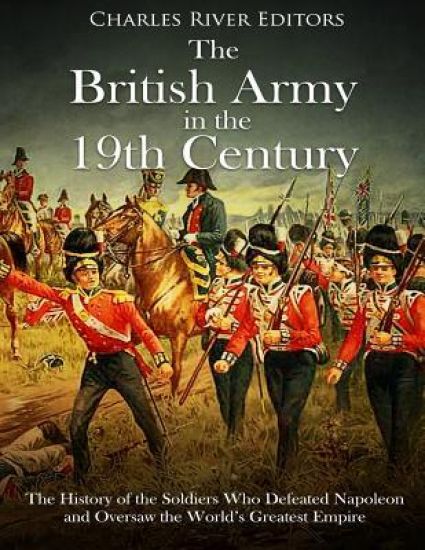
*Includes pictures *Includes contemporary accounts *Includes online resources and a bibliography for further reading World domination is a vision most kings, queens, and emperors can only dream of, and is a path less visited for good reason. It is one that requires above all, patience, as well as skill, tenacity, and an impenetrable plan of action. The only one to ever come close to this impossible level of prestige is the legendary British Empire. It was under the reign of King Henry VII of England that this ambitious idea of global expansion was first planted. In March of 1496, the king granted an exploratory charter to John Cabot, who would pilot a successful voyage that resulted in the occupation of an uninhabited island in Newfoundland. Though Cabot's second voyage ended in disaster, the courage and will he displayed during these endeavors inspired English explorers to organize more ventures and take to the seas themselves, as they hoped to see just how far they could push the envelope. Today, the British Army is one of the most powerful fighting forces in the world. Its highly trained professional soldiers are equipped with the most advanced military technology ever made. Its international interventions, while controversial both at home and abroad, are carried out with incredible professionalism and little loss of life among British servicemen and servicewomen. Naturally, the history and traditions behind this army are also impressive. Britain has not been successfully invaded in centuries. Its soldiers once created and defended a global empire, and during the Second World War, it was one of the leading nations standing against the brutal Axis forces, leading the way in the greatest seaborne invasion in military history. During the 19th century, Britain was at the height of its power, having proven its strength against Napoleon and emerging as one of the most respected military and political players in Europe. As the Industrial Revolution took hold, its factories and mines drove a staggering period of economic and technological growth. A global empire, supported by the might of the Royal Navy, provided the raw materials and markets the economy needed, as well as military bases and political influence in every corner of the globe. Success was a self-fulfilling prophecy, and Britain's economic and military might let the nation expand its power, absorbing more territory and resources. This ensured the need for a substantial army, as well as the need for the resources to maintain it, but it was not all smooth sailing. There were challenges to be met and periods of complacency to overcome. Queen Victoria's Army: The History of the British Army during the Victorian Era examines the history of the British Army in the late 19th century. Along with pictures of important people, places, and events, you will learn about the British Army during the Victorian Era like never before.
*Includes pictures *Includes online resources and a bibliography for further reading The modern history of Africa was, until very recently, written on behalf of the indigenous races by the white man, who had forcefully entered the continent during a particularly hubristic and dynamic phase of European history. In 1884, Prince Otto von Bismark, the German chancellor, brought the plenipotentiaries of all major powers of Europe together, to deal with Africa's colonization in such a manner as to avoid provocation of war. This event-known as the Berlin Conference of 1884-1885-galvanized a phenomenon that came to be known as the Scramble for Africa. The conference established two fundamental rules for European seizure of Africa. The first of these was that no recognition of annexation would granted without evidence of a practical occupation, and the second, that a practical occupation would be deemed unlawful without a formal appeal for protection made on behalf of a territory by its leader, a plea that must be committed to paper in the form of a legal treaty. This began a rush, spearheaded mainly by European commercial interests in the form of Chartered Companies, to penetrate the African interior and woo its leadership with guns, trinkets and alcohol, and having thus obtained their marks or seals upon spurious treaties, begin establishing boundaries of future European African colonies. The ease with which this was achieved was due to the fact that, at that point, traditional African leadership was disunited, and the people had just staggered back from centuries of concussion inflicted by the slave trade. Thus, to usurp authority, to intimidate an already broken society, and to play one leader against the other was a diplomatic task so childishly simple, the matter was wrapped up, for the most part, in less than a decade. There were some exceptions to this, however, the most notable of which was perhaps the Zulu Nation, a centralized monarchy of enormous military prowess that required a British colonial war, the much storied Anglo-Zulu War of 1879, to affect pacification. Another was the amaNdebele, an offshoot of the Zulu, established as early as the 1830s in the southeastern quarter of what would become Rhodesia, and later still, Zimbabwe, in the future. Both were powerful, centralized monarchies, fortified by an organized and aggressive professional army, subdivided into regiments, and owing fanatical loyalty to the crown. The Zulu were not dealt with by treaty, and their history is perhaps the subject of another episode of this series, but the amaNdebele were, and early European treaty and concession gatherers were required to tread with great caution as they entered their lands. It would be a long time before the inevitable course of history forced the amaNdebele to submit to European domination. Although treaties and British gunboat diplomacy played a role, it was ultimately war, conquest, and defeat in battle that brought the amaNdebele to heel.
*Includes pictures *Includes contemporary accounts *Includes online resources and a bibliography for further reading The majority of those fortunate enough to feast their eyes upon the majestic complex that is the Alc zar of Seville share the same sentiment: its beauty is indescribable. This is a place that oozes opulence, a kind of opulence flavored by class and historical charm, rather than the garish flamboyance and tawdry ostentation often displayed by the nouveau riche. To say that the Alc zar is fit for the fussiest prince would simply be downplaying its splendor. Of course, this was exactly what the Alc zar was, and continues to be, for this fantastical compound is the oldest European royal residence still in use. The royal estate, with 17,000 square meters of spectacular structures and 7 hectares of lavish gardens, is even more sublime in the nighttime. The rambling Moorish arches, and the gorgeous detail of the fairy-tale turrets and curtain walls - from the striking shapes of the rectangular merlons, capped with triangular cones, to the coarse, aged texture and smears of damp discoloring the ancient facade - are all the more emphasized by the torches dotted throughout the premises. But following the departure of the nocturnal visitors, the interactive tour guides (clad in elaborate costumes of historical figures just hours before), and the last of the staff, the Alc zar, some say, becomes an intoxicating, sinister maze almost impossible to escape. The Alc zar of Seville: The History of Spain's Most Famous Royal Palace journeys through the eventful timeline of the palatial fortress, as well as the stages leading up to its fruition. It also explores some of the fascinating characters who lived there, and the most pivotal events that took place within the centuries-old brick walls. Along with pictures of important people, places, and events, you will learn about the Alc zar of Seville like never before.
*Includes pictures *Includes online resources and a bibliography for further reading The most famous battle of the 19th century was undoubtedly Waterloo, and the biggest battle of the Napoleonic Wars was Leipzig, but neither one of those legendary battles was the biggest of the century. That distinction instead belongs to the Battle of K niggr tz, a little known, but decisive conflict in a war between Prussia and Austria. Though it lasted only seven weeks and only had one truly decisive battle, the Austro-Prussian War nonetheless changed the political outlook in Europe forever. Locked in a balance of power since the 1815 Congress of Vienna, the world was dominated by the great European powers of Britain, France, Russia, and Austria, and at the Congress of Vienna itself, Prussia had been a minor concern. Though the Prussians had come through in time to assist the Duke of Wellington at Waterloo, they were nevertheless taken for granted at the conference, with the major powers instead preferring to deal with the more historically powerful Austrian Hapsburgs. In his scathing commentary on Prussian culture, When Blood is Their Argument, Ford Maddox Ford attempted to explain the sudden rise of Prussian political and economic status from 1849-1880, writing, "She Prussia] had pushed herself from being a bad second in the comity of Germanism into a position of equality with, if not of predominance over, Austria, amongst the German peoples." Prussian leaders, especially Otto von Bismarck, the chancellor and advisor to Prussia's king, believed Prussia could be a united and respected power, but only without the traditional Austrian dominance. At the time, the Austrian empire was a collection of ethnically diverse peoples and had been dominated by a socio-political conservatism that sought to keep the empire ruled in Hapsburg tradition. Though Prussia's leadership had its share of liberals and socialists to keep at bay, Prussia's relatively shorter history meant it was capable of change, and while Prussia's more ethnically unified population and its use of the Zollverein to exclude Austria from economic competition certainly played a role in the Prussians' victory, it took a seven-week military campaign to seal Austria's fate. Writing in 1872, the German General Staff (Grosser Generalstab) called the Austro-Prussian conflict a "necessity of the history of the world." Since Austria and Prussia were "each too strong to submit to the other," there would be, of necessity, a conflict between the two that allowed for the formation of a modern German state. Due to its short duration and the fact the war pit longstanding allies against one another, the war has alternately been known as the Seven Weeks' War and the Brothers War, but in the end, the Austro-Prussian War severely reduced Austria's status as a Germanic power and added territories to Prussia, resulting in a growth of population from 19 million to almost 24 million. Not only did the war vault Prussia to unquestioned leadership in the North German Confederation, it set a military precedent and proved "that preparation for war is a more potent factor than mere numbers in computing the strength of a nation." For military strategists and future combatants, the Austro-Prussian War was a precursor to a style of fighting which every major European power adopted in some form within a few years. The Austro-Prussian War: The History and Legacy of the Conflict that Resulted in Prussian Dominance over Germany looks at the short but momentous conflict and its geopolitical ramifications. Along with pictures of important people, places, and events, you will learn about the Austro-Prussian War like never before.
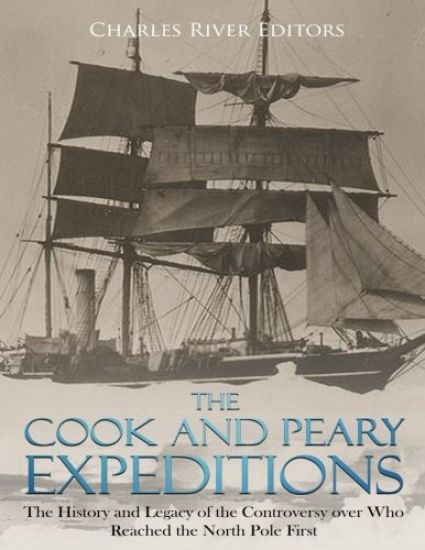
*Includes pictures *Includes contemporary accounts *Includes online resources and a bibliography for further reading "I have stated my case, presented my proofs. As to the relative merits of my claim, and Mr Peary's, place the two records side by side. Compare them. I shall be satisfied with your decision." - Frederick Albert Cook "Whatever the truth is, the situation is as wonderful as the Pole, and whatever they found there, those explorers, they have left there a story as great as a continent." - Lincoln Steffens It is the dreamland of most children in Europe and the Americas, and the mysterious home of the mythical Santa Claus, his devoted wife Mrs. Claus, the reindeer and the many elves who make Christmas toys each year. In many ways, the North Pole is the first geographical location many kids learn, if only because children over the age of 3 can manage to tell any interested adult that Santa Claus lives there. In reality, of course, the North Pole proved to be as elusive for many brave explorers as jolly old Santa has been for children who wait up at night by the chimney. The biggest problem, of course, is the North Pole's unforgiving location, far from sunshine or any sort of natural warmth. Another problem, one that would only became obvious in the 20th Century, was that it is located not on any piece of stable land but in the middle of the Arctic Ocean, usually covered by ever shifting ice floes. Finally, without modern technological advances, it was nearly impossible to tell when one has actually reached the planet's northernmost spot. The controversy truly began on September 1, 1909, when the New York Herald printed a headline that told readers, "The North Pole is Discovered by Doctor Frederick A. Cook." By mid-1909, almost everyone in the polar establishment believed that Frederick Cook was dead, since his expedition had not been seen or heard of for a year. Then, suddenly, the New York Herald broke the news - the indestructible Cook had returned to civilization, and what's more, he had reached the North Pole. The newspapers hailed it as a great American achievement, and overnight Cook found himself a hero and a major celebrity. However, less than a week later, on September 7, 1909, a rival newspaper, the New York Times, published their own version: "Peary Discovers the North Pole After Eight Trials in 23 Years." Who was to be believed? The physical characteristics of the North Pole were known to none, so no viable comparisons could be made, and since the North Pole lay on a shifting continent of ice, its position might be in one place today and another tomorrow. This has led to more than one argument about who actually made it and who did not; as historian E. Myles Standish put it, "Anyone who is acquainted with the facts and has any amount of logical reasoning can not avoid the conclusion that neither Cook, nor Peary, nor Byrd reached the North Pole; and they all knew it." Those sentiments were echoed by Canadian explorer Richard Weber, who asserted, "We came to the conclusion that Peary never got anywhere near the Pole. On the ice, everything looks the same. I'm afraid we'd have been lost without a global positioning system." The Cook and Peary Expeditions: The History and Legacy of the Controversy over Who Reached the North Pole First chronicles the groundbreaking expeditions. Along with pictures of important people, places, and events, you will learn about the expeditions like never before.
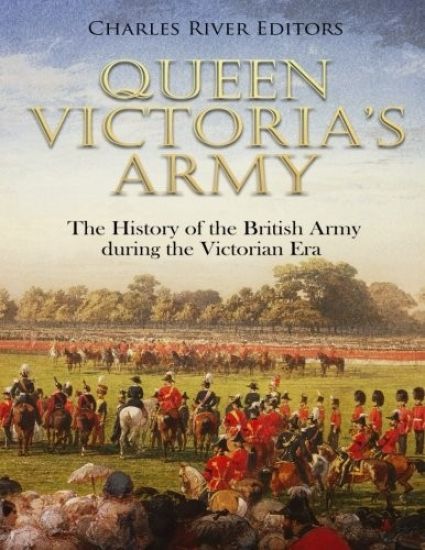
*Includes pictures *Includes contemporary accounts *Includes online resources and a bibliography for further reading World domination is a vision most kings, queens, and emperors can only dream of, and is a path less visited for good reason. It is one that requires above all, patience, as well as skill, tenacity, and an impenetrable plan of action. The only one to ever come close to this impossible level of prestige is the legendary British Empire. It was under the reign of King Henry VII of England that this ambitious idea of global expansion was first planted. In March of 1496, the king granted an exploratory charter to John Cabot, who would pilot a successful voyage that resulted in the occupation of an uninhabited island in Newfoundland. Though Cabot's second voyage ended in disaster, the courage and will he displayed during these endeavors inspired English explorers to organize more ventures and take to the seas themselves, as they hoped to see just how far they could push the envelope. Today, the British Army is one of the most powerful fighting forces in the world. Its highly trained professional soldiers are equipped with the most advanced military technology ever made. Its international interventions, while controversial both at home and abroad, are carried out with incredible professionalism and little loss of life among British servicemen and servicewomen. Naturally, the history and traditions behind this army are also impressive. Britain has not been successfully invaded in centuries. Its soldiers once created and defended a global empire, and during the Second World War, it was one of the leading nations standing against the brutal Axis forces, leading the way in the greatest seaborne invasion in military history. During the 19th century, Britain was at the height of its power, having proven its strength against Napoleon and emerging as one of the most respected military and political players in Europe. As the Industrial Revolution took hold, its factories and mines drove a staggering period of economic and technological growth. A global empire, supported by the might of the Royal Navy, provided the raw materials and markets the economy needed, as well as military bases and political influence in every corner of the globe. Success was a self-fulfilling prophecy, and Britain's economic and military might let the nation expand its power, absorbing more territory and resources. This ensured the need for a substantial army, as well as the need for the resources to maintain it, but it was not all smooth sailing. There were challenges to be met and periods of complacency to overcome. Queen Victoria's Army: The History of the British Army during the Victorian Era examines the history of the British Army in the late 19th century. Along with pictures of important people, places, and events, you will learn about the British Army during the Victorian Era like never before.
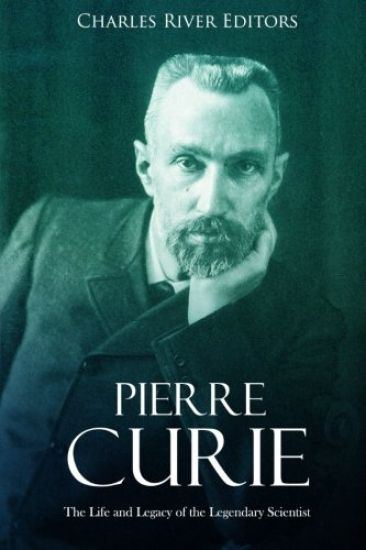
*Includes pictures *Includes Pierre's quotes about life and science *Includes online resources and a bibliography for further reading "Is it right to probe so deeply into Nature's secrets? The question must here be raised whether it will benefit mankind, or whether the knowledge will be harmful." - Pierre Curie The Curie name is without question a household name in the world of science, and even those unfamiliar with radiation have heard of Marie, the matriarch of the prodigious family, and the multiple glass ceilings she shattered with her literally radioactive findings. While this recognition is certainly well-deserved, many have neglected to acknowledge the momentous contributions made by her colleague and husband, Pierre. The fact Pierre has mostly been forgotten is the textbook definition of irony, because even the most enlightened minds of the early 20th century were stunted by a narrow, patriarchal mindset, forcing Marie to confront obstacles and tribulations that were unique solely to her as a scientist solely on account of gender. As such, some of her most groundbreaking moments would feature Pierre receiving the credit or giving the commemorative speech. It would be long after his death that his wife managed to ultimately cement her legacy as one of the greatest scientists of all time. While their respective positions have changed over time, Pierre's personal discoveries continue to live on in a variety of vessels, from the ticking quartz watch on one's wrist to motors and engines, and even military-grade ultrasonic devices. Pierre Curie: The Life and Legacy of the Legendary Scientist examines the life and career that made him one of the world's foremost scientists of his time. Along with pictures of important people, places, and events, you will learn about Pierre Curie like never before.
En t rminos geopol ticos, quiz s el acontecimiento m s importante de la Edad Media fue el xito del asedio otomano a Constantinopla en 1453. La ciudad hab a sido una capital imperial ya en el siglo IV, cuando Constantino el Grande traslad el centro de poder del Imperio Romano, estableciendo dos mitades casi igualmente poderosas del mayor imperio de la antig edad. Constantinopla continuar a sirviendo como capital del Imperio Bizantino incluso despu s de que la mitad occidental del Imperio Romano colapsara a finales del siglo V. Naturalmente, el Imperio Otomano tambi n usar a Constantinopla como la capital de su imperio despu s de que su conquista efectivamente terminara con el Imperio Bizantino, y gracias a su ubicaci n estrat gica, ha sido un centro comercial durante a os y sigue si ndolo hoy en d a bajo el nombre turco de Estambul. Tras la toma de Constantinopla, el Imperio Otomano pasar a los pr ximos siglos expandiendo su tama o, poder e influencia, chocando contra Europa del Este y convirti ndose en uno de los actores geopol ticos m s importantes del mundo. Fue un ascenso que no comenz a decaer hasta el siglo XIX. La larga agon a del "hombre enfermo de Europa", una expresi n utilizada por el Zar de Rusia para describir la ca da del Imperio Otomano, pod a casi cegar a la gente de su incre ble poder e historia. Preservando su herencia mixta, proveniente tanto de su posici n geogr fica que se elevaba sobre las cenizas del Imperio Bizantino como de la tradici n heredada de las conquistas musulmanas, el Imperio Otomano dur m s de seis siglos. Sus soldados lucharon, murieron y conquistaron tierras en tres continentes diferentes, convirti ndolo en uno de los pocos imperios multi tnicos estables de la historia, y probablemente uno de los ltimos. Por lo tanto, es algo inevitable que la historia de su declive est en el centro de complejas disputas geopol ticas, as como de tensiones sectarias que siguen siendo clave para entender Oriente Medio, el norte de frica y los Balcanes. Por ltimo, pero no menos importante, el ascenso del nacionalismo entre los pueblos bajo dominaci n otomana fue un factor clave en la disoluci n del imperio. A finales del siglo XIX, poco antes de su colapso final, el territorio del Imperio Otomano disminuy debido a la creciente demanda de independencia procedente de diferentes etnias que gobern durante cientos de a os. La inclusividad del Imperio, que lo marc como sucesor directo del Imperio Bizantino, fue ciertamente desafiada por un liderazgo envejecido. La incapacidad del Imperio Otomano para crear una identidad compartida, un estado central d bil y las crecientes disensiones internas fueron algunos de los principales factores que explicaron su larga desaparici n. Este fracaso tambi n explica la necesidad de crear una nueva forma de identidad, que en ltima instancia fue proporcionada por Mustaf Kemal, el padre fundador de la Turqu a moderna. En general, la historia de la disoluci n puede definirse como una carrera entre la creciente "enfermedad" del Imperio por un lado (la incapacidad Otomana para apaciguar y federar a los diversos pueblos dentro de su territorio), y los constantes intentos de encontrar una cura en forma de amplias reformas. Estas preguntas a menudo se presentan juntas, pero eso tiende a desplazar el enfoque hacia afuera, hacia los diversos pueblos y sus aspiraciones, junto con la creciente influencia de Europa sobre el destino del Imperio Otomano. Para considerar tanto la "enfermedad" como la cura, es necesario separarlos, antes de pasar a la causa directa de la disoluci n del imperio (Primera Guerra Mundial) y su herencia. El Enfermo De Europa: La Historia Del Declive Del Imperio Otomano En El Siglo XIX narra las luchas del vasto imperio turco antes de la Primera Guerra Mundial que provoc su disoluci n.
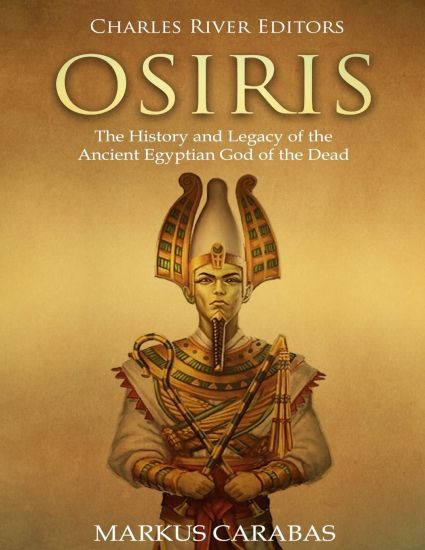
*Includes pictures *Includes ancient accounts *Includes online resources and a bibliography for further reading To the ancient Egyptians, as was the case with any society made up of inquiring humans, the world was a confusing and often terrifying place of destruction, death and unexplained phenomena. In order to make sense of such an existence, they resorted to teleological stories. Giving a phenomenon a story made it less horrifying, and it also helped them make sense of the world around them. Unsurprisingly, then, the ancient Egyptian gods permeated every aspect of existence. Given the abundance of funerary artifacts that have been found within the sands of Egypt, it sometimes seems as though the Ancient Egyptians were more concerned with the matters of the afterlife than they were with matters of the life they experienced from day to day. This is underscored most prominently by the pyramids, which have captured the world's imagination for centuries. Thus, it's little surprise that Osiris was one of the most important gods in the Egyptian pantheon, and he could well be the most famous of the Egyptian gods today. Aside from the ubiquity of the sun-god Re in much of modern popular culture, it is Osiris who captivates the minds of modern readers most. His story is both familiar and strangely alien. He is the god of the dead, but he became so by the very fact of his mortality. All the gods of ancient Egypt were capable of dying, but Osiris was also a symbol of resurrection, not unlike Christ in Christian theology. Osiris was betrayed by somebody close to him (in this case, his brother Seth) and was murdered and reborn, but here is where Osiris and Christ part ways. Osiris's death is brutal, and his resurrection is the product of his wife Isis's love for him. Furthermore, Osiris was associated with the kings of Egypt because the Egyptians believed he was a king himself. The ancient Egyptians could trace their kings back, one by one, to a time when the gods were believed to have ruled the land in person. Osiris was the third or fourth successor to the Egyptian throne after creation, and the Egyptians believed that Osiris's connection with kingship is what allowed their kings to be reborn in a way themselves. He was also said to be physically enormous - almost 15 and a half feet according to some sources - which was said to have aided him in his military campaigns. Despite his grotesque appearance - it's likely that his green and black skin coloration was an early attempt at depicting putrefaction - Osiris was the epitome of hope and renewal. His skin later came to represent the lush green of the crops around the Nile and the fertile black land they grew out of nearby. He was often shown as a mummified king sitting on a throne with the flail of a pharaoh and the crook of a shepherd, since he was the shepherd of people to the land of the dead, Duat. In fact, although Osiris was said to be capable of sending "demons" to the world of the living, he was generally considered to be a benevolent king of the underworld. Depending on the phenomenon or feeling the ancient Egyptians experienced, there was a corresponding deity and a story to explain the connection. Acclaimed Egyptologist Garry Shaw described this ethos an "an endless repetition of creations, destructions and rebirths, entangled in a net of divine interactions ... each person living] as the hero of his own mythic narrative each day." In this way, the ancient Egyptian would "assimilate" themselves with the corresponding deity that defined their situation at any given time. Osiris: The History and Legacy of the Ancient Egyptian God of the Dead looks at the mythology surrounding one of antiquity's most famous deities. Along with pictures depicting important people, places, and events, you will learn about Osiris like never before.
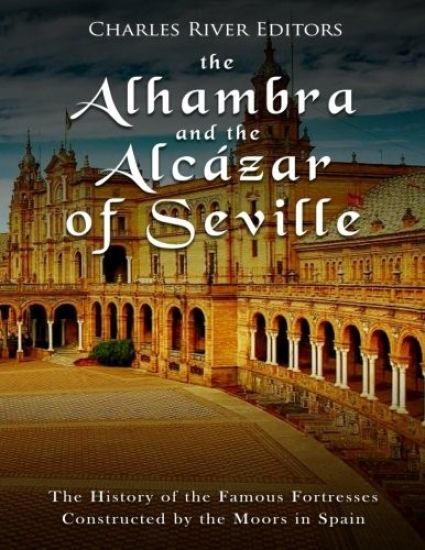
*Includes pictures *Includes contemporary accounts *Includes online resources and a bibliography for further reading Tucked away on the crest of the Al-Sabika Hill in Granada of Andalusia, Spain, just left of the babbling stream of the Darro River, sits a majestic structure overlooking the charming city and mystical meadows of La Vega. This palatial fortress and the fabled Alhambra are one and the same. To those that have seen it in its full glory, this was heaven on earth itself. Many were quick to fall under the spell of its breathtaking beauty, with its admirers lovingly dubbing it "a pearl set in emeralds." At one point in time, this place had been decked out with a network of captivating castles, heavenly homes and gorgeous gardens, and a handsome military fortress envied by the city's neighboring kingdoms. This was none other than Alhambra, once so enchanting that a countless number of those who visited the place in its heyday praised it as a true paradise on earth. Today, this historic complex has become the setting and inspiration for a host of books, music, movies, and other works of art and literature, such as Washington Irving's Tales of Alhambra, and Marcel L'Herbier's cinematic masterpiece, El Dorado. A main asteroid belt has even been named after the legendary place. The exquisite work of art continues to be beloved, so much so that a campaign in 2007 attracted an estimated 5,000 hopefuls to the site. There, the thousands laced their fingers together and formed a ring around the spectacular fortress stretching 1.5 miles long, in hopes of cementing the landmark's place among the "New 7 Wonders of the World." Astounding aesthetics aside, the rich tapestry of history that unfolded within the walls of the centuries-old palatial paradise is truly what makes Alhambra one of the classic, timeless gems in all of Europe. The Alc zar of Seville, a patchwork of enchanting palaces and gardens, is far more than just an impressive landmark - it is evidence of the beauty birthed from the multicultural Andalusian timeline, a harmonious masterpiece crafted by Muslims, Christians, and Jews. The royal estate, with 17,000 square meters of spectacular structures and 7 hectares of lavish gardens, is even more sublime in the nighttime. The rambling Moorish arches, and the gorgeous detail of the fairy-tale turrets and curtain walls - from the striking shapes of the rectangular merlons, capped with triangular cones, to the coarse, aged texture and smears of damp discoloring the ancient facade - are all the more emphasized by the torches dotted throughout the premises. But following the departure of the nocturnal visitors, the interactive tour guides (clad in elaborate costumes of historical figures just hours before), and the last of the staff, the Alc zar, some say, becomes an intoxicating, sinister maze almost impossible to escape. The Alhambra and the Alc zar of Seville: The History of the Famous Fortresses Constructed by the Moors in Spain offers a virtual tour of the fortress palaces, and it chronicles their history and legacy, including the events that inspired, advanced, and stalled their development throughout the years. Along with pictures of important people, places, and events, you will learn about the Alhambra and the Alc zar of Seville like never before.
*Includes pictures *Includes contemporary accounts *Includes online resources and a bibliography for further reading Tucked away on the crest of the Al-Sabika Hill in Granada of Andalusia, Spain, just left of the babbling stream of the Darro River, sits a majestic structure overlooking the charming city and mystical meadows of La Vega. This palatial fortress and the fabled Alhambra are one and the same. To those that have seen it in its full glory, this was heaven on earth itself. Many were quick to fall under the spell of its breathtaking beauty, with its admirers lovingly dubbing it "a pearl set in emeralds." At one point in time, this place had been decked out with a network of captivating castles, heavenly homes and gorgeous gardens, and a handsome military fortress envied by the city's neighboring kingdoms. This was none other than Alhambra, once so enchanting that a countless number of those who visited the place in its heyday praised it as a true paradise on earth. Today, this historic complex has become the setting and inspiration for a host of books, music, movies, and other works of art and literature, such as Washington Irving's Tales of Alhambra, and Marcel L'Herbier's cinematic masterpiece, El Dorado. A main asteroid belt has even been named after the legendary place. The exquisite work of art continues to be beloved, so much so that a campaign in 2007 attracted an estimated 5,000 hopefuls to the site. There, the thousands laced their fingers together and formed a ring around the spectacular fortress stretching 1.5 miles long, in hopes of cementing the landmark's place among the "New 7 Wonders of the World." Astounding aesthetics aside, the rich tapestry of history that unfolded within the walls of the centuries-old palatial paradise is truly what makes Alhambra one of the classic, timeless gems in all of Europe. The Alc zar of Seville, a patchwork of enchanting palaces and gardens, is far more than just an impressive landmark - it is evidence of the beauty birthed from the multicultural Andalusian timeline, a harmonious masterpiece crafted by Muslims, Christians, and Jews. The royal estate, with 17,000 square meters of spectacular structures and 7 hectares of lavish gardens, is even more sublime in the nighttime. The rambling Moorish arches, and the gorgeous detail of the fairy-tale turrets and curtain walls - from the striking shapes of the rectangular merlons, capped with triangular cones, to the coarse, aged texture and smears of damp discoloring the ancient facade - are all the more emphasized by the torches dotted throughout the premises. But following the departure of the nocturnal visitors, the interactive tour guides (clad in elaborate costumes of historical figures just hours before), and the last of the staff, the Alc zar, some say, becomes an intoxicating, sinister maze almost impossible to escape. The Alhambra and the Alc zar of Seville: The History of the Famous Fortresses Constructed by the Moors in Spain offers a virtual tour of the fortress palaces, and it chronicles their history and legacy, including the events that inspired, advanced, and stalled their development throughout the years. Along with pictures of important people, places, and events, you will learn about the Alhambra and the Alc zar of Seville like never before.
*Includes pictures *Includes quotes about Pasteur's life and work *Includes online resources and a bibliography for further reading "Do not let yourself be tainted with a barren skepticism." - Louis Pasteur While it would be impossible to name every individual who has contributed to the ever-advancing field of science, it almost goes without saying that one of the most important was Louis Pasteur, father of microbiology and modern immunology. Apart from propelling the field of vaccination to new heights, this visionary scientist would also revolutionize a significant part of the beverage industry, and highlight the importance of sterilization. These are only some of the extraordinary achievements on Louis' glaring r sum , one so well-rounded and extensive that it beggars belief. Like many other polymaths, this inspirational figure has become an unwitting incendiary, and he has attracted his fair share of critics over the years. Though undoubtedly one of the greatest intellectuals to have ever graced the world of science, Louis was also a conveniently private man steeped in scandal, fraudulence, and secrecy, which only makes his story all the more riveting. In 1995, which UNESCO declared "The Year of Pasteur," Louis Pasteur's name was posthumously disgraced on an international stage as a controversy ensued that would have certainly caused him to roll in his grave. Pasteur had remained a secretive man until the day of his death, even ordering his family members to hold onto his private journals and never disclose them to anyone. Most chalked it up to the man's introversion, and his secrets might have indeed died with him if not for his last surviving descendant, who donated the scientist's notes to the French National Library in the 1970s. Not only did Louis oversell some of his findings, he had, as it appears, unabashedly lied about the results of his experiments, and he has since been accused of stealing credit for some of his work. Concerning his rabies trials with the diseased mutts, for example, it was revealed that only 30 - a fraction of what Louis had reported - had been examined, and at least a third of them died from their illnesses. Most distressing of all, the "foolproof" vaccine he injected into the dogs was not the same vaccine he used on Joseph Meister, which meant that he had exposed the child to an untested treatment. On top of "regularly violat ing] the standard conception of the scientific method," as Princeton University historian Gerald Geison puts it, Pasteur's work on anthrax, he claims, "is a clear example of scientific misconduct by the current definition." Rumor has it that Jean-Joseph Henri Toussaint, a local veterinarian, was conducting research on the bacterium at the same time, but Toussaint used a chemical formula he personally designed instead of oxygen. Enraptured by the progress he was making, Toussaint visited Pasteur and made the mistake of confiding in him the recipe for the chemical formula. Before Toussaint knew it, Pasteur had appropriated his formula, and began using it in his public experiments. At the end of the day, whether or not Louis Pasteur is fully deserving of all the credit he's received is still a matter of dispute, but one truth is incontestable. Pasteur revolutionized biology and ushered it into the modern era, and the institute erected in his honor continues to bring about tremendous advances that are slowly, but surely making the world a better place. Louis Pasteur: The Life and Legacy of the Legendary French Scientist Recognized as the Father of Microbiology examines the career that made Pasteur one of the 19th century's foremost scientists. Along with pictures of important people, places, and events, you will learn about Louis Pasteur like never before.
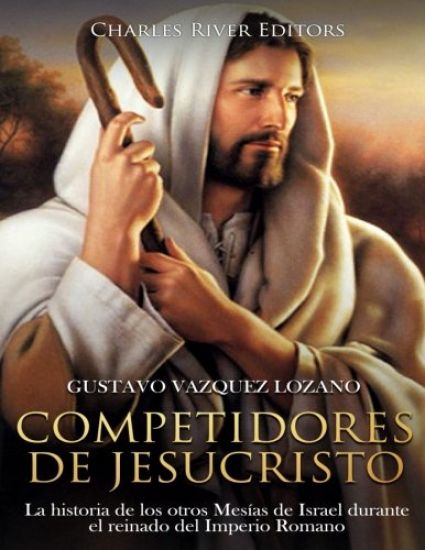
*Includes pictures *Includes ancient accounts *Includes online resources and a bibliography for further reading In the 1st century CE there lived a man named Jesus in Judea, a Roman province at the time. The humble peasant was considered by some to be a prophet, others saw him as a madman, and some considered him as a threat to the safety of the land. In his last days he preached in Jerusalem about the imminent destruction of the Holy City and its temple. He gained notoriety and his warning had an eerie feel about it. His prophecy included parabolic language. Jesus spoke, according to sources, about the wind that carried signs, possibly echoing the words of the prophet Isaiah, and enigmatic parables about the wedding groom and his bride. Some people found his words offensive, and had him arrested and flogged. Unsure what to do with him, the temple authorities handed him over to the Roman procurator. When Jesus was before him, Rome's governor questioned him and asked him what was all that he was prophesying about, but the prisoner did not utter a single word. The procurator had him whipped again, but Jesus did not complain or shed a tear. He did not curse the guards who made fun of him and beat his crushed body. Jesus lamented once again for the fate of the people of Jerusalem, and it was there, not far from the temple, that he was killed by a catapult. There are no other details about Jesus, the son of Ananias, or Jesus ben Ananias, who died near the temple of Jerusalem in 70 AD when a stone thrown by a Roman ballista hit him in the head, except that his last words were "Woe to me ." This doomed prophet was active four decades after a much more famous predecessor, Jesus of Nazareth, who was not knocked down by a stone near the temple but crucified outside the city around 30 AD. It's even possible that both individuals once crossed paths when the son of Ananias was a boy and the Nazarene was already an influential prophet. Maybe the latter was inspired by the Galilean. Historians will likely never know for sure because his disciples, if he had any, did not preserve his words or remember his deeds. Indeed, this Jesus may have been forgotten altogether if not for the Jewish historian Flavius Josephus recounting his strange story The Jewish Wars, written five years after the event. The former anecdote is, above all, great evidence that Jesus of Nazareth, the Christian messiah, was not the only charismatic prophet in Judea, not even in his native Galilee, which was populated by prophets and rebels. Jesus of Nazareth was not the only Jew of his time to be considered a son of God with power to perform miracles, and he was certainly not the only one to be called the messiah during the years of Roman occupation. Like him, other Galileans were executed by the imperial forces under charges of sedition ("This is the king of the Jews"). Indeed, the founder of Christianity lived in a province and a time where others like him blossomed, spiritual men who claimed to carry a divine message or mission from the heavenly Father for the redemption of his children, Israel. For the most part forgotten, they were "the other" prophets, miracle workers and messiahs - in some cases acclaimed as kings - and they were certainly contemporaries of Jesus of Nazareth. The New Testament does not deny the existence of such characters; in fact, it gives subtle but unequivocal clues to their presence. Like Jesus, other prophets, miracle-makers and aspiring messiahs were active in Judea under Herod and his sons, and then under Rome s prefects, like Pilate. They felt that the authority of the Highest was with them; they proclaimed that there was no other king but God, and they promised their followers they would see miraculous signs and God's deliverance if they only resisted just a little longer.
Desde que la mente humana desarroll la capacidad de pensamiento, las personas han considerado no solo el significado de la vida, sino la g nesis del mundo, el universo y todas las maravillas naturales y formas de vida preciosas dentro de l. Hasta el d a de hoy, todos estos temas intrincados contin an siendo asuntos muy discutidos, a menudo mejor encapsulados en el debate entre el creacionismo y la evoluci n. Considerando las discusiones saludables en los paneles organizados y conversaciones cotidianas, y los con frecuencia abrasadores argumentos en los foros en l nea y otras plataformas o redes sociales, es seguro decir que las llamas de este interminable discurso arden m s salvajes y brillantes que nunca hoy en d a. En el 2014, un debate p blico que se centr en si la creaci n es o no un modelo viable de or genes fue celebrado entre el cient fico comunicador y personalidad de televisi n Bill Nye, en el lado de los evolucionistas, y Ken Ham, un cristiano fundamentalista y creacionista "de la Tierra joven". Los 900 asientos en el auditorio del Museo de la Creaci n en Cincinnati se vendieron en 48 horas. Los ojos de los m s de tres millones de espectadores en vivo que el evento de dos horas reuni estaban pegados a las pantallas de sus televisores, computadoras y tel fonos, todos ansiosos por que sus portavoces designados argumentaran sus casos. El iniciador de esta apasionada disputa existencial, por supuesto, no es otro que Charles Darwin, quien acu el t rmino "creacionistas" y propuls a la prominencia la controvertida teor a de la evoluci n. Dado que iba contra corriente con su trabajo cient fico, era claramente uno de los hombres m s polarizadores de su poca, y no dudaba en cuestionar uno de los principios centrales de la civilizaci n occidental en sus publicaciones: "No me puedo persuadir a m mismo de que un Dios ben fico y omnipotente haya creado deliberadamente avispas paras ticas con la intenci n expresa de que se alimenten dentro de los cuerpos vivos de las orugas". Aunque la mayor a hoy en d a respeta y alaba al hombre, hay quien todav a resiente a Darwin, afirmando que ha envenenado innumerables mentes con ideas virulentas y rid culas que socavan lo que ellos creen es la palabra infalible del Se or. Teniendo esto en cuenta, si bien fue l quien aviv el fuego, Darwin no era el ateo extremo y despreciativo de la deidad, que se obsesion por refutar a Dios, que la mayor a presume que fue. Este fascinante hombre era en su interior un individuo complicado, neur tico y algo torturado, cosa que, sobra decirlo, solo hace a n m s convincente a este pionero. La mayor a de los cient ficos cree que la evoluci n de los humanos tiene una historia tan larga como la vida misma. Los humanos anat micamente modernos y toda la dem s vida que ha existido en el planeta tuvieron su origen en los organismos unicelulares que emergieron hace aproximadamente cuatro mil millones de a os. A trav s de los procesos de mutaci n y selecci n natural, se desarrollaron todas las formas de vida, y este linaje continuo de la vida hace dif cil poder decir precisamente cu ndo una especie se separa completamente de otra. En otras palabras, los cient ficos a n debaten cu ndo un humano se convirti en humano, en lugar de las especies ancestrales que le precedieron. Para entender la historia de la evoluci n humana, deben comprenderse los mecanismos que esencialmente "crearon" a los humanos modernos. Estos procesos son la selecci n natural y la evoluci n. Evoluci n humana: La historia de la evoluci n y los procesos de selecci n natural que dieron origen a los humanos modernos examina c mo evolucionaron los humanos a partir de microorganismos, y las teor as evolutivas que surgieron en el siglo XIX para explicarlo todo. En conjunto con fotograf as de personas, lugares y eventos importantes, aprender acerca de la evoluci n humana como nunca antes.
*Includes pictures *Includes quotes about Pasteur's life and work *Includes online resources and a bibliography for further reading "Do not let yourself be tainted with a barren skepticism." - Louis Pasteur While it would be impossible to name every individual who has contributed to the ever-advancing field of science, it almost goes without saying that one of the most important was Louis Pasteur, father of microbiology and modern immunology. Apart from propelling the field of vaccination to new heights, this visionary scientist would also revolutionize a significant part of the beverage industry, and highlight the importance of sterilization. These are only some of the extraordinary achievements on Louis' glaring r sum , one so well-rounded and extensive that it beggars belief. Like many other polymaths, this inspirational figure has become an unwitting incendiary, and he has attracted his fair share of critics over the years. Though undoubtedly one of the greatest intellectuals to have ever graced the world of science, Louis was also a conveniently private man steeped in scandal, fraudulence, and secrecy, which only makes his story all the more riveting. In 1995, which UNESCO declared "The Year of Pasteur," Louis Pasteur's name was posthumously disgraced on an international stage as a controversy ensued that would have certainly caused him to roll in his grave. Pasteur had remained a secretive man until the day of his death, even ordering his family members to hold onto his private journals and never disclose them to anyone. Most chalked it up to the man's introversion, and his secrets might have indeed died with him if not for his last surviving descendant, who donated the scientist's notes to the French National Library in the 1970s. Not only did Louis oversell some of his findings, he had, as it appears, unabashedly lied about the results of his experiments, and he has since been accused of stealing credit for some of his work. Concerning his rabies trials with the diseased mutts, for example, it was revealed that only 30 - a fraction of what Louis had reported - had been examined, and at least a third of them died from their illnesses. Most distressing of all, the "foolproof" vaccine he injected into the dogs was not the same vaccine he used on Joseph Meister, which meant that he had exposed the child to an untested treatment. On top of "regularly violat ing] the standard conception of the scientific method," as Princeton University historian Gerald Geison puts it, Pasteur's work on anthrax, he claims, "is a clear example of scientific misconduct by the current definition." Rumor has it that Jean-Joseph Henri Toussaint, a local veterinarian, was conducting research on the bacterium at the same time, but Toussaint used a chemical formula he personally designed instead of oxygen. Enraptured by the progress he was making, Toussaint visited Pasteur and made the mistake of confiding in him the recipe for the chemical formula. Before Toussaint knew it, Pasteur had appropriated his formula, and began using it in his public experiments. At the end of the day, whether or not Louis Pasteur is fully deserving of all the credit he's received is still a matter of dispute, but one truth is incontestable. Pasteur revolutionized biology and ushered it into the modern era, and the institute erected in his honor continues to bring about tremendous advances that are slowly, but surely making the world a better place. Louis Pasteur: The Life and Legacy of the Legendary French Scientist Recognized as the Father of Microbiology examines the career that made Pasteur one of the 19th century's foremost scientists. Along with pictures of important people, places, and events, you will learn about Louis Pasteur like never before.
*Includes pictures *Includes online resources and a bibliography for further reading "Sometimes, I feel discriminated against, but it does not make me angry. It merely astonishes me. How can any deny themselves the pleasure of my company? It's beyond me." - Zora Neale Hurston The Great Migration was the name coined for the mass movement of African-Americans north of the Mason-Dixon line in the years following the Civil War and the abolition of slavery. The enormous promise of emancipation proved to be illusory for the majority of Southern blacks, whether free or formerly enslaved, and as a result, hundreds of thousand made use of their fundamental freedom to leave. This resulted in a "push" away from the South, caused by ongoing discrimination, entrenched Jim Crow laws, and increasing violence directed at blacks by whites. This was largely a movement driven by unreconciled whites who were apt to remind blacks that while slavery might have ended, equality should not be expected in its place. At the same time, another aspect was the "pull" towards seemingly greater opportunities available in the North. There were many reasons for this, but mainly it had to do with the massive industrial stimulus brought about by World War I. While the United States may not have been directly engaged in the war, the nation's industrial resources certainly were. Initially, the jobs created by this surge in industrialization were not available to blacks because of union restrictions intended to protect white labor, but when the war broke out in Europe in 1914, this changed dramatically. European immigration to the United States evaporated almost overnight, creating an immediate labor vacuum in the United States, and although this did not mollify restive white labor unions, it nonetheless created a surge in opportunities for blacks. Generally, the Great Migration is defined as having occurred between 1916 and 1970, during which time some 6 million African-Americans left the South for various northern states, not only primarily in the Northeast, but also in large numbers to the Midwest and the West. The First Great Migration, which took place mainly between 1916 and 1930, would bring about the Harlem Renaissance. The Second Great Migration, of course, occurred due to a similar industrialization that took place between 1940 and 1970. The figure typically cited for the First Great Migration is 1.6 million, and the phenomenon was ended temporarily mainly by the Great Depression, which reduced opportunities in the North considerably and made rural lifestyles more preferable for a time. The main centers of black migration during the first wave were not only the industrial cities in the Northeast, mainly New York and Philadelphia, but also Detroit, Pittsburgh, St. Louis, Cleveland and Chicago, among others. Indeed, the African-American population in New York in particular exploded during this period, from about 140,000 in 1910 to upwards of 650,000 by 1940. In Philadelphia, during the same period, the black population increased by almost 230,000, and Chicago had an even bigger increase. This migration, multi-faceted and multi-directional, found its principal cultural focus in New York City, most notably in Harlem. While many of these opportunities were made possible thanks to the work of Philip Payton, Jr., a prominent black businessman and real estate developer, no two historians will agree on the exact origins of the Harlem Renaissance, and there are few that are able to categorically agree on what the phenomenon actually represented. What is inescapable, however, is that a black cultural movement coalesced spontaneously in that area of uptown Manhattan. The Harlem Renaissance: The History and Legacy of Early 20th Century America's Most Influential Cultural Movement examines the events and works that occurred in and around Harlem, and how they affected the world at large.