Kirjojen hintavertailu – 12 903 727 kirjaa ja 27 kauppaa

Kirjailija

Charles River

Kirjat ja teokset yhdessä paikassa: 4 673 kirjaa, julkaisuja vuosilta 2013–2022, suosituimpiin kuuluu William Powell and Myrna Loy: The Lives and Careers of One of Classical Hollywood's Most Iconic Duos. Vertaile teosten hintoja ja tarkista saatavuus suomalaisista kirjakaupoista.

4 673 kirjaa

Kirjojen julkaisuvuodet: 2013–2022.

The Battle of New Orleans: The History and Legacy of the Last Major Battle of the War of 1812
*Includes pictures *Includes accounts of the fighting written by participants on both sides *Includes a bibliography for further reading *Includes a table of contents There are countless examples of battles that take place in wars after a peace treaty is signed. The last battle of the Civil War was a skirmish in Texas that Confederate forces won, nearly a month after Lee's surrender at Appomattox. But it's certainly rare for the most famous battle of a war to take place after the peace treaty is signed. Luckily for Andrew Jackson, the War of 1812 was that unique exception. Less than a year after his victory in the Battle of Horseshoe Creek, Jackson led his forces into a more important battle at the Battle of New Orleans. The British hoped to grab as much of the land on the western frontier as they could, especially New Orleans, which had a prominent position on the Mississippi River for trading. With more than 8,000 soldiers aboard a British fleet sailing in from Jamaica in early January 1815, the attack on New Orleans promised to be a significant one, while Jackson's men defended New Orleans with about half that number. This went on despite the fact that the two sides had signed the Treaty of Ghent on Christmas Eve 1814, which was supposed to end the war. However, the slow nature of bringing news from England to America ensured that the battle would take place anyway. At the beginning of the battle, Jackson and his forces were aided by the weather, with the first fighting taking place in heavy fog. When the fog lifted as morning began, the British found themselves exposed to American artillery. On top of that, Jackson's men held out under an intense artillery bombardment and two frontal assaults on different wings of the battle, before Jackson led a counterattack. By the end of the battle, the Americans had scored a stunning victory. Jackson's men killed nearly 300 British, including their Major General Pakenham and his two lead subordinates. More importantly, nearly 1500 additional British were captured or injured, and the Americans suffered fewer than 500 casualties. The British army had not been fatally wounded, but what the soldiers on both sides thought was the first battle in the Louisiana campaign was costly. The British thus decided that the continued campaign (which intended to conquer all of the Louisiana Purchase that Thomas Jefferson had bought just a few years earlier) would be too costly and end in defeat. Thus, on February 5th, 1815, the British retreated by sea, right around the time news was reaching the west that the war had ended. Though it was an enormous victory for Jackson and the Americans - the most important of the entire war - it proved to be a completely unnecessary one. The Treaty of Ghent had officially ended the war by keeping the status quo ante bellum. This essentially meant that both sides agreed to offer nothing, keeping things as they were before the war, and had the results been different, the British would have been compelled to hand the important port back over. Moreover, by the end of February, Napoleon had successfully escaped exile in Elba, ensuring the British would have to focus their war machine on the French leader who had bedeviled them for over a decade. Regardless, the nation much appreciated Jackson's skills and the Battle of New Orleans was forever christened as one of the greatest in American history. Jackson was honored with a "Thanks from Congress," which was then the nation's highest military honor. Despite the huge failures of the War of 1812 - the Americans lost almost every battle except New Orleans, and Washington D. C. was destroyed - the nation now had something to celebrate. Jackson was celebrated as a hero from the West, marking the first time a "Westerner" held a position of national prominence in the United States, and he would subsequently become one of the 19th century's most influential presidents.

The California Gold Rush and the Klondike Gold Rush: The History of America's Most Famous Gold Rushes
*Includes pictures *Includes accounts of the gold rushes written by participants *Includes bibliographies for further reading *Includes a table of contents One of the most important and memorable events of the United States' westward push across the frontier came with the discovery of gold in the lands that became California in January 1848. Located thousands of miles away from the country's power centers on the east coast at the time, the announcement came a month before the Mexican-American War had ended, and among the very few Americans that were near the region at the time, many of them were Army soldiers who were participating in the war and garrisoned there. San Francisco was still best known for being a Spanish military and missionary outpost during the colonial era, and only a few hundred called it home. Mexico's independence, and its possession of those lands, had come only a generation earlier. Everything changed almost literally overnight. While the Mexican-American War technically concluded with a treaty in February 1848, the announcement brought an influx of an estimated 90,000 "Forty-Niners" to the region in 1849, hailing from other parts of America and even as far away as Asia. All told, an estimated 300,000 people would come to California over the next few years, as men dangerously trekked thousands of miles in hopes of making a fortune, and in a span of months, San Francisco's population exploded, making it one of the first mining boomtowns to truly spring up in the West. This was a pattern that would repeat itself across the West anytime a mineral discovery was made, from the Southwest and Tombstone to the Dakotas and Deadwood. Of course, that was made possible by the collective memory of the original California gold rush. Despite the mythology and the romantic portrayals that helped make the California Gold Rush, most of the individuals who came to make a fortune struck out instead. The gold rush was a boon to business interests, which ensured important infrastructure developments like the railroad and the construction of westward paths, but ultimately, it also meant that big business reaped most of the profits associated with mining the gold. While the Forty-Niners are often remembered for panning gold out of mountain streams, it required advanced mining technology for most to make a fortune. As historian H. W. Brands said of the impact the gold rush had on Americans at the time, "The old American Dream ... was the dream of the Puritans, of Benjamin Franklin's 'Poor Richard'... of men and women content to accumulate their modest fortunes a little at a time, year by year by year. The new dream was the dream of instant wealth, won in a twinkling by audacity and good luck... it] became a prominent part of the American psyche only after Sutter's Mill." While the gold rush may not have made every Forty-Niner rich, the events still continue to influence the country's collective mentality. When gold was discovered in the Yukon and Alaska almost 50 years after the rush in California, it drew tens of thousands of prospectors despite the unforgiving climate. Mineral resources had gone a long way in the United States acquiring Alaska a generation earlier, but the lack of transportation kept all but the most dedicated from venturing into the Yukon and Alaska until the announcement of the gold rush. For a few years, the attention turned to the Northwest, and thanks to vivid descriptions by writers like Jack London, the nation became intrigued with the idea of miners toughing out the winter conditions to find hidden gold. Of course, despite the mythology and the romantic portrayals that helped make the Klondike Gold Rush, most of the individuals who came to make a fortune struck out instead.
The Legendary Kings of Babylon: Hammurabi and Nebuchadnezzar II

The Legendary Kings of Babylon: Hammurabi and Nebuchadnezzar II

Charles River

Createspace Independent Publishing Platform
2018
nidottu
*Includes pictures of Babylonian artifacts depicting the kings, the Hanging Gardens, and the Code of Hammurabi. *Explains the legends and mysteries surrounding the kings, including Biblical accounts of Nebuchadnezzar and ancient accounts of the Hanging Gardens. *Includes the Code of Hammurabi. *Includes a Bibliography for further reading. "If a man has accused another of laying a kispu (spell) upon him, but has not proved it, the accused shall go to the sacred river, he shall plunge into the sacred river, and if the sacred river shall conquer him, he that accused him shall take possession of his house. If the sacred river shall show his innocence and he is saved, his accuser shall be put to death. He that plunged into the sacred river shall appropriate the house of him that accused him." - The Code of Hammurabi The Babylonians were one of the earliest of history's great ancient civilizations, and the most famous Babylonian of them all was Hammurabi, who came to the throne as the first king of the Babylonian empire around the beginning of the 18th century B. C. Hammurabi had a long and fruitful reign that saw him consolidate most of Mesopotamia under his control, but he's best known today for Hammurabi's Code, one of the earliest known code of laws in human history. Inscribed on stone tablets, Hammurabi's Code was found over 3,500 years later in the early 20th century, making him one of antiquity's most famous men. Babylonian culture, including art, architecture and literature, flourished during his reign, and Hammurabi (or the scribes in his employ) wrote enough public royal inscriptions and personal official letters to store in museums across the world. There are also many letters from other contemporary rulers that make reference to him or to significant events during his reign. The large amount of documentation available, both from and about him, has allowed modern scholars to paint a colorful picture of the famous king and the various facets of his life. Alongside Hammurabi, Nebuchadnezzar II is remembered as one of Ancient Babylon's most influential kings. Nearly 1,000 years after his famous predecessor, Nebuchadnezzar oversaw the expansion of the Neo-Babylonian Empire during the 7th and 6th centuries B. C., which placed him in conflict with Egypt and the ancient kingdom of Judah. His ruthless conquest of Judah resulted in the destruction of Jerusalem and the entire kingdom, and it ultimately earned him notoriety in the Old Testament, where he is mentioned in the books of Jeremiah, Ezekiel and Daniel. In addition to being depicted in the Bible, Nebuchadnezzar was well known among ancient historians and contemporary writers because of the Hanging Gardens of Babylon, one of the ancient wonders of the world. According to ancient accounts, Nebuchadnezzar constructed the Hanging Gardens for his homesick wife by creating terraced and cultivated orchards that were built over a series of buildings made of glazed ceramic. An estimated several thousands of gallons of water was drawn from a reservoir through a network of reeds and bricks, held together by asphalt and cement, with lead used as a sealant. The Gardens were built on a citadel 80 feet high with walls 22 feet thick. To this day, Nebuchadnezzar is associated with the Hanging Gardens, even as scholars continue to question whether the Hanging Gardens were actually built in Babylon or even existed at all. The Legendary Kings of Babylon chronicles the lives, legends, and legacies of the famous Babylonian kings. Along with pictures depicting important people and places, you will learn about Hammurabi and Nebuchadnezzar like you never have before.
The Crusader States: The History of the European States Established in the Middle East during the Crusades
*Includes pictures *Includes medieval accounts of various battles during the Crusades *Includes a bibliography for further reading *Includes a table of contents "I, or rather the Lord, beseech you as Christ's heralds to publish this everywhere and to persuade] all people of whatever rank, foot-soldiers and knights, poor and rich, to carry aid promptly to those Christians and to destroy that vile race from the lands of our friends. I say this to those who are present, it is meant also for those who are absent. Moreover, Christ commands it." - Pope Urban II, 1095 When a crusader army of Western European Franks took Jerusalem by storm on July 15, 1099, it was one of the more unexpected conquests in history. Everything seemed to be against them for the previous three years of crusade, right up to the final siege, and yet they finally prevailed. And when they did, they massacred most of the population before establishing a Christian realm in a region that had been taken over by the Muslims in 634. Ironically, this First Crusade is a difficult and polarizing event, even among modern historians, despite the fact it went largely unnoticed in the Islamic world at the time. For some, the crusaders were heroes and saints, and for others they were devils who disrupted the peaceful local sects of Muslims, Jews and Christians, establishing an alien colony that heralded modern European imperialism. Debate over whether the Crusades can truly be perceived as an early example of European colonialism continues in medieval historiography, though the evidence for this is thin. The territory taken by the Franks from the Turks had previously belonged to Eastern Christians and had only recently been seized by the Turks themselves. The Crusaders themselves saw it as a holy war of reclamation of previously lost, albeit almost-mythical, territory, and to them, the Muslims were the first aggressors. They were somewhat bolstered in this view by the support that they largely held from local Christians. These territories, which came to be known as the Crusader states, were relatively small and weak, and while they nominally aimed to be a bulwark of Christianity in the Holy Land, the Crusader States were reconquered centuries before modern European colonialism began. Nonetheless, the Crusades and the Crusader States galvanized the Christians of Western Europe to expand their world. While it remains unclear how much that world expanded in practical terms such as trade, or how it affected later attitudes during the expansion to the New World and other regions, it definitely engaged the European mind in both positive and negative ways. As such, the crusades soon achieved near-mythic status in the European literature and remain among the most important events of the Middle Ages. At the same time, the Crusader states were not one homogenized region but actually several distinct territories that had their own unique histories and interests. In fact, many of them were founded a century apart, with the Kingdom of Antioch established in 1097 and the Duchy of Cyprus in 1191, and they stretched across the Near East and the Mediterranean. As such, each one had different political, religious, and economic characteristics. Some of the smaller ones were tributaries to the larger states, and while some states like Antioch and Constantinople had a land-based feudal order, others like Cyprus were wholly owned subsidiaries of the Venetian oligarchy. The Crusader States: The History of the European States Established in the Middle East during the Crusades analyzes the controversial history and legacy of medieval Christianity's front lines during the crusades. Along with pictures depicting important people, places, and events, you will learn about the Crusader states like never before, in no time at all.
The Greatest Battles in History: The Battle of Antietam

The Greatest Battles in History: The Battle of Antietam

Charles River

Createspace Independent Publishing Platform
2018
nidottu
*Includes pictures of important people, places, and events. *Analyzes the generalship of the battle's most important leaders, including Lee, McClellan, Burnside, and others. *Includes descriptions of the fighting from the post-battle reports of some of the leading generals. *Includes a Bibliography for further reading. "Those in whose judgment I rely tell me that I fought the battle splendidly and that it was a masterpiece of art. ... I feel I have done all that can be asked in twice saving the country. ... I feel some little pride in having, with a beaten & demoralized army, defeated Lee so utterly." - George McClellan The names of history's most famous battles still ring in our ears today, their influence immediately understood by all. Marathon lent its name to the world's most famous race, but it also preserved Western civilization during the First Persian War. Saratoga, won by one of the colonists' most renowned war heroes before he became his nation's most vile traitor. Hastings ensured the Normans' success in England and changed the course of British history. Waterloo, which marked the reshaping of the European continent and Napoleon's doom, has now become part of the English lexicon. In Charles River Editors' Greatest Battles in History series, readers can get caught up to speed on history's greatest battles in the time it takes to finish a commute, while learning interesting facts long forgotten or never known. The bloodiest day in American history took place on the 75th anniversary of the signing of the Constitution. On September 17, 1862, Robert E. Lee's Confederate Army of Northern Virginia fought George McClellan's Union Army of the Potomac outside Sharpsburg along Antietam Creek. That day, nearly 25,000 would become casualties, and Lee's army would barely survive fighting the much bigger Northern army. The fighting that morning started with savage fighting on the Confederate left flank near Dunker church, in a corn field and forests. The Confederates barely held the field in the north sector, but even still, Lee's army may have been saved by the Northern army's inability to cross the creek near "Burnside's Bridge". Ambrose Burnside had been given command of the "Right Wing" of the Army of the Potomac (the I Corps and IX Corps) at the start of the Maryland Campaign for the Battle of South Mountain, but McClellan separated the two corps at the Battle of Antietam, placing them on opposite ends of the Union battle line. However, Burnside continued to act as though he was a wing commander instead of a corps commander, so instead of ordering the IX corps, he funneled orders through General Jacob D. Cox. This poor organization contributed to the corps's hours-long delay in attacking and crossing what is now called "Burnside's Bridge" on the right flank of the Confederate line. The delay allowed General A. P. Hill's Confederate division to reach the battlefield from Harpers Ferry in time to save Lee's right flank that afternoon. Fearing that his army was badly bloodied and figuring Lee had many more men than he did, McClellan refused to commit his reserves to continue the attacks. The day ended in a tactical stalemate Although the battle was tactically a draw, it resulted in forcing Lee's army out of Maryland and back into Virginia, making it a strategic victory for the North and an opportune time for President Abraham Lincoln to issue the Emancipation Proclamation, freeing all slaves in the rebellious states. The Greatest Battles in History: The Battle of Antietam comprehensively covers the fighting, analyzes the decisions made by the battle's most important leaders, and explains the aftermath of the battle and the legacies that were made and tarnished by the battle. Along with a bibliography, maps of the battle, and pictures of important people and places, you will learn about the Battle of Antietam like you never have before.
Simcoe's Rangers: The History of the British Queen's Rangers during the Revolutionary War
*Includes pictures *Includes accounts of Simcoe's Rangers and their battles *Includes footnotes, online resources, and a bibliography for further reading *Includes a table of contents The American Revolution is replete with seminal moments that every American learns in school, from the "shot heard 'round the world" to the Declaration of Independence, but the events that led up to the fighting at Lexington & Concord were borne out of 10 years of division between the British and their American colonies over everything from colonial representation in governments to taxation, the nature of searches, and the quartering of British regulars in private houses. From 1764-1775, a chain of events that included lightning rods like the Townshend Acts led to bloodshed in the form of the Boston Massacre, while the Boston Tea Party became a symbol of nonviolent protest. The political and military nature of the Revolutionary War was just as full of intrigue. While disorganized militias fought the Battles of Lexington & Concord, George Washington would lead the Continental Army in the field while men like Thomas Jefferson drafted the Declaration of Independence in Philadelphia and Benjamin Franklin negotiated overseas in France. Benedict Arnold would become one of his nation's most vital war heroes and its most notorious traitor, French forces would play a crucial role at the end of the war, and the Treaty of Paris would conclude the Revolution with one last great surprise. However, while the bigger pitched battles are well known, a lot of clandestine fighting and espionage took place behind the scenes, and it contributed to the results of the American Revolution. Much of this was undertaken by spies like Nathan Hale and spymasters like John Andre, but both sides also employed irregular units known colloquially as partisans. Among these irregulars, the best known were the Queen's Rangers, which fought in the Seven Years War and played a big role in the Revolution, both for traditional methods of warfare and for hunting down colonists as part of specific missions. Most recently, the Queen's Rangers have played a central role in the AMC series Turn, a dramatization of the Culper Ring spies in Long Island and New York City who worked on behalf of George Washington and the Continental Army. The series has featured the partisan unit's two famous leaders, John Graves Simcoe and Robert Rogers, and like other spy tales, theirs is a story of courage fraught with constant suspense at being found out and facing a caught spy's usual fate of imprisonment and execution. However, by making Rogers one of the most enigmatic characters on the show and making Simcoe the prime villain, the series actually obscures just how long and productive career the latter actually had in North America. In fact, the real story of Simcoe and Simcoe's Rangers needs no embellishment, because it was plenty interesting enough. Simcoe's Rangers: The History of the British Queen's Rangers during the Revolutionary War chronicles the tumultuous history of one of the most important cities of antiquity. Along with pictures depicting important people, places, and events, you will learn about Byblos like never before.
The Fugitive Slave Act of 1850: The History of the Controversial Law that Sparked the Confederacy's Secession and the Civil War
*Includes pictures *Includes stories about the fugitive slave law and accounts about it *Includes online resources and a bibliography for further reading Despite the attempt to settle America's slavery issue with the Missouri Compromise in 1820, the young nation kept pushing further westward, and with that more territory was acquired. After the Mexican-American War ended in 1848, the sectional crisis was brewing like never before, with California and the newly-acquired Mexican territory now ready to be organized into states. The country was once again left trying to figure out how to do it without offsetting the slave-free state balance that was already dividing the nation. With the new territory acquired in the Mexican-American War, pro and anti-slavery groups were at an impasse. The Whig Party, including a freshman Congressman named Abraham Lincoln, supported the Wilmot Proviso, which would have banned slavery in all territory acquired from Mexico, but the slave states would have none of it. Even after Texas was annexed as a slave state, the enormous new territory would doubtless contain many other new states, and the North hoped to limit slavery as much as possible in the new territories. The Compromise of 1850 was authored by the legendary Whig politician Henry Clay. In addition to admitting California to the Union as a free state to balance with Texas, it allowed Utah and New Mexico to decide the issue of slavery on the basis of what became known as "popular sovereignty", which meant the settlers could vote on whether their state should be a free state or slave state. Though a Whig proposed popular sovereignty in 1850, popular sovereignty as an idea would come to be championed by and associated with Democratic Illinois Senator Stephen Douglas. The Compromise also abolished the slave trade - though not the existence of slavery itself - in Washington, D. C. The Whigs commended the Compromise, thinking it was a moderate, pragmatic proposal that did not decidedly extend the existence of slavery and put slow and steady limits on it. Furthermore, it made the preservation of the Union the top priority. However, even though it added a new free state, many in the North were upset that the Compromise also included a new Fugitive Slave Act, which gave slaveholders increased powers to recapture slaves who had fled to free states by providing that a slave found in a free state could be ordered captured by police or federal marshals and returned to the slaveholder without any trial or due process whatsoever. In addition, no process was provided for the accused escaped slave to prove that he was actually free. This outraged most Northerners, who saw it as an unconstitutional infringement on the rights of their states and the rights of the individual accused of being an escaped slave. It also raised the specter of southern slave owners extending grip over the law enforcement of Northern states. Some states even refused to comply. In Wisconsin, a rioting anti-slavery crowd freed an escaped slave who had been recaptured by federal marshals. When the leader of the riot was imprisoned, the Wisconsin Supreme Court held the Fugitive Slave Act unconstitutional. When the U. S. Supreme Court overturned that decision, the Wisconsin Legislature simply refused to comply with the Fugitive Slave Act or enforce it. Similarly, other Northern states passed laws restricting the ability of federal marshals or bounty hunters to recapture escaped slaves, and they also made it illegal for state officials to help recapture escaped slaves or use state jails for that purpose. . As fate would have it, the refusal of Northern states to strictly apply the new fugitive slave law would be explicitly cited in several of the Southern states' articles of secession in late 1860 and early 1861. In that regard, the Fugitive Slave Act ended up being one of the main tipping points that finally split the nation in two.
The British Royal Family: The Life of Prince William, Duke of Cambridge

The British Royal Family: The Life of Prince William, Duke of Cambridge

Charles River

Createspace Independent Publishing Platform
2018
nidottu
*Includes pictures of William and important people, places, and events in his life. *Covers his relationship and wedding with Kate Middleton in detail. On 29 July 1981, millions across the world tuned in to watch one of the most televised events of the 20th century, the "fairytale" wedding of Charles, Prince of Wales and Lady Diana, which featured the inimitable splendour the British are famous for, and one of the most glamourous women of the 20th century. 30 years later, another royal wedding drew inevitable comparisons to the wedding of Diana and Charles. On 29 April 2011, it was the marriage of their first child, Prince William of Wales, second-in-line to the throne, that had hundreds of millions of people (and possibly over a billion) tuning in to watch. The royal wedding sparked renewed interest in the prince and Kate Middleton, his beautiful new wife. From his earliest years, Prince William has been a photographer's dream come true, in the same way his mother had been. While he is not necessarily known for his mother's media savvy, he is well-liked by the media and he is able, consciously or incidentally, to capitalize on this advantage. At the same time, from polo to charities, William is thoroughly his father Charles's son as a Windsor prince. Not only was William an attractive youngster with his mother's piercing blue eyes and blonde hair, attributes that he retained as he matured; Prince William also retained a touch that was both regal and common and modest. The combination has been regarded by reporter after reporter as "dynamite," indicating it has had powerful effect on William being cemented as both a king and a man in the public firmament, and it is impressive for a 30 year old whose full title is His Royal Highness Prince William Arthur Philip Louis, Duke of Cambridge, Earl of Strathearn, Baron Carrickfergus, Royal Knight Companion of the Most Noble Order of the Garter, Knight of the Most Ancient and Most Noble Order of the Thistle. The British Royal Family: The Life of Prince William, Duke of Cambridge looks at the life of the young prince, his relationships with his famous relatives throughout the Royal Family, his recent marriage, and his future. Along with pictures of important people, places, and events in his life, you will learn about Prince William like you never have before, in no time at all.
The White House: The History and Legacy of America's Executive Mansion

The White House: The History and Legacy of America's Executive Mansion

Charles River

Createspace Independent Publishing Platform
2018
nidottu
*Includes pictures *Profiles changes made by Presidents and First Ladies from Harry Truman to Jackie Kennedy *Includes descriptions of the White House written over the last 200 years *Includes a bibliography for further reading *Includes a table of contents "Sometimes I wake at night in the White House and rub my eyes and wonder if it is not all a dream." - Grover Cleveland For over two centuries, the capital of America has been located in Washington, D. C., and among all the iconic landmarks and monuments associated with the city, nothing provides symbolism quite like the White House, the primary residence and office of the president. The instantly recognizable exterior and its location have ensured that the White House is associated as the main seat of power in the world's most powerful country. At the same time, the majesty of the White House and its tranquil setting belie its rather chaotic history, which includes being burned down by the British during the War of 1812, suffering damage during wild inaugural balls, and undergoing countless renovations. As Brian Kelly, author of Best Little Stories from the White House: More Than 100 True Stories, put it, "You could almost argue, in fact, that it wasn't finished, truly, until yesterday. And...who knows what they may do to it tomorrow, as it has undergone so many changes, additions, improvements, and even subtractions in its two-hundred-year history. The fact is, the White House we see today is not the White House of yore." Just as the interior has changed, the use of the White House has also changed considerably over time. While the White House was always intended to serve as the president's home and a place to receive dignitaries, in the early 19th century, the White House was open to the public, to the extent that people could simply call on the president. Perhaps most notably, the White House has historically been open to public tours, albeit with exceptions made based on security issues, wars, and budget issues. The availability of the public to tour the White House is a strong reminder that while it may house the president during his term, the place ultimately belongs to the people. The White House: The History and Legacy of America's Executive Mansion looks at the history of the White House and how it has changed over time. Along with pictures of important people, places, and events, you will learn about the White House like never before, in no time at all.
Captain John Franklin and Sir Ernest Shackleton: The History of Britain's Most Famous Polar Explorers and Their Expeditions
*Includes pictures *Includes contemporary accounts *Includes online resources and a bibliography for further reading Most anyone who has received a basic education in world history knows the story of how "in 1492, Columbus sailed the ocean blue." Most also know that Christopher Columbus made first contact with the Americas while searching for a water route to Asia. However, far fewer people remember that the search for such a route continued for centuries after Columbus' death. After the discovery of the Americas, several European countries were interested in finding the route, and nations from France to Spain sent out explorers searching for the mysterious route. While these voyages did not reveal the hoped for route, they did result in large parts of both North and South America being mapped, and as more of the new land mass was determined, the parameters of the search for such a route were narrowed. By the 18th century, explorers began to seek such a route to the north, looking for the legendary Northwest Passage. Eventually, some countries lost interest, but England remained determined, and the masters of the waves continued to send ship after ship and crew after crew across the Atlantic. By the early 19th century, the search was taking expeditions to the Arctic, and each time a team returned to England telling stories of how it was stymied by ice or bad weather, another team confidently went out, certain that it would be the one to make it through. This ultimately led to the voyage of Captain John Franklin, who left Britain in 1845 for the Arctic in the hopes of completing mapping the Northwest Passage. Instead of returning with spices and silks, Franklin and his men disappeared, leaving behind them a mystery that plagued the English conscience for decades. Ironically, the ill-fated trip only became more legendary when its mystery was solved than it was when it remained a curiosity. It was a tale of ice and cold, starvation and desperation, and a tragically fatal one. Exploration of Earth's wilderness areas became an international obsession in the late 19th and early 20th centuries, as economically advantaged nations, in particular European powers and the United States were well equipped to mount exhaustive expeditions. From previously inaccessible forests and jungle country to the world's great mountain ranges, adventurers sought out the greatest extremes of climate and terrain in a race to plant the first flag where humanity struggled to survive. Locating the North Pole was, in a navigational sense, far more problematic than its counterpart in the south. The North Pole is situated on a moving foundation of ice, constantly shifting its position. To plant a flag there is useless, as it is prone to drift great distances in an unpredictable direction. However, reaching the South Pole presented the most torturous climatic obstacle on the planet, and with the size of the ice continent in the early years of the century, the distance from a ship in harbor to the center required a vast trek carrying minimal rations. Britain made its first and finest statement for actually reaching the South Pole in the first years of the 20th century. The dangers of the Antarctic, including scurvy, dehydration, and hypothermia, were well known to all major explorers. They also understood that even the most incidental detail of an expedition going amiss could spell doom for all parties involved. The era was universally dubbed the Heroic Age of Antarctic Exploration, but its greatest story did not stem from the actual achievement of reaching the pole. It was, rather, one of the most profound and heroic rescues ever witnessed that affirmed the empire's greatness, embodied by the inspired insistence and exemplary conduct of Sir Ernest Henry Shackleton. This unlikely figure entered the rich man's world of polar exploration through an astonishing persistence.
The Missouri Compromise: The History of the Political Agreement that Temporarily Staved Off Civil War
*Includes pictures *Includes quotes about the Missouri Compromise by contemporary politicians *Includes online resources, footnotes and a bibliography for further reading *Includes a table of contents " T]his momentous question, like a fire bell in the night, awakened and filled me with terror. I considered it at once as the knell of the Union. it is hushed indeed for the moment. but this is a reprieve only, not a final sentence. A geographical line, coinciding with a marked principle, moral and political, once conceived and held up to the angry passions of men, will never be obliterated; and every new irritation will mark it deeper and deeper." - Thomas Jefferson When President Thomas Jefferson went ahead with the Louisiana Purchase, he wasn't entirely sure what was on the land he was buying, or whether the purchase was even constitutional. Ultimately, the Louisiana Purchase encompassed all or part of 15 current U. S. states and two Canadian provinces, including Arkansas, Missouri, Iowa, Oklahoma, Kansas, Nebraska, parts of Minnesota that were west of the Mississippi River, most of North Dakota, nearly all of South Dakota, northeastern New Mexico, Northern Texas, the portions of Montana, Wyoming, and Colorado east of the Continental Divide, and Louisiana west of the Mississippi River, including the city of New Orleans. In addition, the Purchase contained small portions of land that would eventually become part of the Canadian provinces of Alberta and Saskatchewan. The purchase, which immediately doubled the size of the United States at the time, still comprises around 23% of current American territory. With so much new territory to carve into states, the balance of Congressional power became a hot topic in the decade after the purchase, especially when the people of Missouri sought to be admitted to the Union in 1819 with slavery being legal in the new state. While Congress was dealing with that, Alabama was admitted in December 1819, creating an equal number of free states and slave states. Thus, allowing Missouri to enter the Union as a slave state would disrupt the balance. The Senate ultimately got around this issue by establishing what became known as the Missouri Compromise. Legislation was passed that admitted Maine as a free state, thus balancing the number once Missouri joined as a slave state. Moreover, slavery would be excluded from the Missouri Territory north of the parallel 36 30' north, which was the Southern border of Missouri itself. As a slave state, Missouri would obviously serve as the lone exception to that line. The Missouri Compromise of 1820 staved off the crisis for the time being, but by setting a line that excluded slave states above the parallel, it would also become incredibly contentious. Despite the attempt to settle the slavery question with the Missouri Compromise, the young nation kept pushing further westward, and with that more territory was acquired. After the Mexican-American War ended in 1848, the sectional crisis was brewing like never before, with California and the newly-acquired Mexican territory now ready to be organized into states. The country was once again left trying to figure out how to do it without offsetting the slave-free state balance was tearing the nation apart. When popular sovereignty undid the compromise and became the standard in Kansas and Nebraska in the 1850s, the primary result was that thousands of zealous pro-slavery and anti-slavery advocates both moved to Kansas to influence the vote, creating a dangerous (and ultimately deadly) mix. Numerous attacks took place between the two sides, and many pro-slavery Missourians organized attacks on Kansas towns just across the border. The dam would burst completely after Abraham Lincoln's election in 1860, and by April of the following year, the Civil War that the Missouri Compromise sought to avoid had broken out.
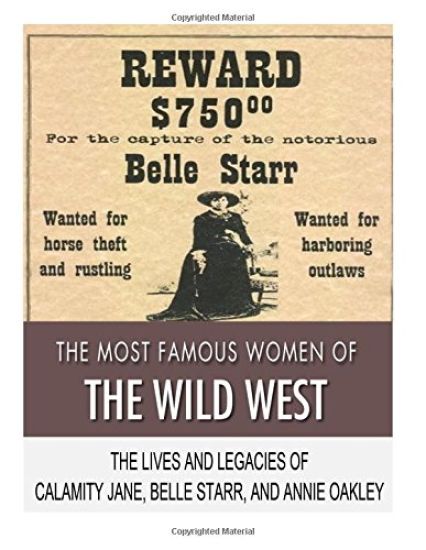
The Most Famous Women of the Wild West: The Lives and Legacies of Calamity Jane, Belle Starr, and Annie Oakley
*Includes pictures *Includes the women's quotes about their own lives *Includes online resources and a bibliography for further reading The most famous woman of the Wild West was also possibly the most colorful and mysterious. "Considered a remarkable good shot and a fearless rider for a girl of my age", Calamity Jane claimed to be a veteran of the Indian Wars, a scout, and the wife of Wild Bill Hickok, all on the way to becoming a dime novel heroine. While all of those legends have stuck, it's unclear to what extent if any they are actually true, and even her contemporaries doubted the authenticity of her statements. More than anything, people in frontier towns like Deadwood looked on with amusement at the girl who was more often than not drunk and was described by one of Wild Bill's friends as "simply a notorious character, dissolute and devilish." Her frequent drinking binges and her insistence that messing with her would "court calamity" had helped establish her nickname even before she arrived in Deadwood in the mid-1870s. Ultimately, Calamity Jane's tall tales, eccentric personality, and association with Wild Bill would all make her a popular figure in the last quarter of the 19th century, and she became so well known that she started taking part in traveling shows of the kind made famous by Buffalo Bill Cody. America has always preferred heroes who weren't clean cut, an informal ode to the rugged individualism and pioneering spirit that defined the nation in previous centuries. The early 19th century saw the glorification of frontier folk heroes like Davy Crockett and Daniel Boone, and after the Civil War, the outlaws of the West were more popular than the marshals. Outlaws like Jesse James and Billy the Kid robbed and fought their way into dime novels, but one of the most notorious and unique outlaws of them all was Myra Maybelle Shirley, a Southern girl who knew her way around horses and guns. Through her associations with other outlaws like the Starr clan and the James and Younger gang, Shirley entered law enforcement's radar herself. Shirley would get her famous nickname Belle Starr as a result of marrying outlaw Sam Starr, and it was that name that found itself plastered all across Wanted posters in the West. Though she was a crack shot and a renowned rider, Belle Starr was usually engaged in "lesser" crimes like stealing horses, rustling, fencing stolen goods and hiding other outlaws. She also became infamous for rumors about the various outlaws she romanced, which allegedly included Cole Younger. There was little about the childhood of Phoebe Ann Mosey that indicated that she would grow up to become Annie Oakley, one of the best sharpshooters the world has ever seen and an icon of the West. Her parents, Jacob and Susan, were Quakers who migrated from Pennsylvania to Darke County, Ohio after a fire destroyed their inn and their livelihood. Their daughter, who would become a national celebrity in her own life for "The Little Sure Shot of the West", learned her gun skills out of necessity, using them to hunt for food around the Cincinnati area thousands of miles away from the dusty towns, saloons and shootouts that have become symbols the Wild West. However, Annie would make her own mark by hitting so many marks back east, and by 18 she had made a name for herself by besting other sharpshooters, including Frank Butler, who performed a traveling act and became smitten by the young teen who beat him. Annie and Frank would marry when she was 16, and they continued to perform together until becoming part of Buffalo Bill's famous show, where Annie became acquainted with other legends like Sitting Bull. Annie would perform off and on for Buffalo Bill's show, but she also took her exploits to Europe and even the burgeoning film industry, performing "The Little Sure Shot of the West" for Thomas Edison's brand new kinetoscope, which could make a film.
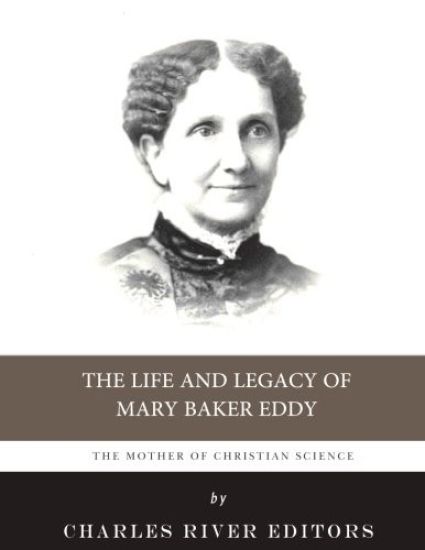
The Mother of Christian Science: The Life and Legacy of Mary Baker Eddy

The Mother of Christian Science: The Life and Legacy of Mary Baker Eddy

Charles River

Createspace Independent Publishing Platform
2018
nidottu
*Includes pictures of Mary Baker Eddy and important people and places in her life. *Explains the tenets of Christian Science and Mary Baker Eddy's founding of the Church of Christ, Scientist. *Discusses the controversies surrounding Mary Baker Eddy and Christian Science, including criticism by authors like Mark Twain. *Includes a list of Mary Baker Eddy's writings and a bibliography for further reading. "A book introduces new thoughts, but it cannot make them speedily understood. It is the task of the sturdy pioneer to hew the tall oak and to cut the rough granite. Future ages must declare what the pioneer has accomplished." - Mary Baker Eddy Among the various religious movements of the 19th century, few have had as widespread an influence as Christian Science, the religious system devised by a fragile little lady named Mary Baker Eddy. Eddy was a religious woman who suffered an injury in the 1860s that led her to found a new church premised most notably on the belief that people need not turn to medicine or drugs to heal themselves but simply to reach a better understanding of the nature of God. Just before founding this new church, Eddy published her movement's seminal text, Science and Health with Key to the Scriptures (1875), which laid out her expansive views about Christianity, and the metaphysical reasons she believed that people could overcome illness without relying on man-made technology. In effect, since sin, disease, and death are not God's making, men could also shed them by becoming closer to God. In addition to founding her church and authoring that seminal book, Eddy wrote voluminously over the coming decades, helping establish both the Christian Science Journal and most famously the Christian Science Monitor. Not surprisingly, Eddy's religious teachings were controversial, but so was the woman herself. She was embroiled in all sorts of disputes, including whether she had plagiarized the teachings of her contemporary, Phineas Quimby. Despite having famous critics like Mark Twain attacking her teachings, and others questioning whether they were even hers, the Church grew to include hundreds of thousands of followers in the early 20th century. While that number has dwindled over recent decades, the Church and its institutions are still going strong today. The Mother of Christian Science: The Life and Legacy of Mary Baker Eddy chronicles the life and works of the famous woman, as well as her lasting legacy. Along with pictures of important people, places, and events, you will learn about Mary Baker Eddy like you never have before, in no time at all.
The Top 5 Greatest Native Americans

The Top 5 Greatest Native Americans

Charles River

Createspace Independent Publishing Platform
2018
nidottu
*Includes pictures. Includes bibliographies of each man Tecumseh's reputation among Americans has been both the most unique and anomalous. As the leader of the Shawnee, Tecumseh was the most famous Native American of the early 19th century, and he attempted to peacefully establish a Native American nation east of the Mississippi River in the wake of the American Revolution. Tecumseh allied with the British during the War of 1812 against the Americans, and he continued to fight on until he was killed at the Battle of the Thames. Without their leader, Tecumseh's Confederacy began to rapidly disintegrate. The pan-Indian icon continues to be a household name across the United States today, nearly 200 years after his death. The name "Geronimo" evokes a number of different emotions. Those who believed in 19th century America's "Manifest Destiny" viewed Geronimo and all Native Americans as impediments to God's will for the nation. Even today, many Americans associate the name Geronimo with a war cry, and the name Geronimo itself only came about because of a battle he fought against the Mexicans. Over time, however, those who empathized with the fate of the Native Americans saw Geronimo as one of a number of Native American leaders who resisted the U. S. and Mexican governments as their lands were being appropriated, often eluding large numbers of soldiers pursuing them. Around the same time, Sitting Bull and Crazy Horse became legends at the Battle of the Little Bighorn, during which an estimated 2,000 Sioux and Cheyenne warriors inspired by one of Sitting Bull's visions routed and then annihilated the 7th U. S. Cavalry led by George Custer. That disaster led the American government to double down on its efforts to "pacify" the Sioux, and by the end of the decade many of them had surrendered and been moved onto a reservation. Sitting Bull and Crazy Horse were two of the last Sioux leaders to surrender, and both suffered controversial deaths on reservations. When he died in 1904, most Americans who knew his people's story considered Chief Joseph, whose Nez Perc name is Himahtooyahlatkekt ("Thunder Rolling Down from the Mountains"), a military genius and an "Indian Napoleon." This assessment of the Native American leader was based on a 1,500-mile odyssey during which he and his people left their reservation in the hopes of escaping to Canada, where the Nez Perc intended to join Sitting Bull and his Hunkpapa Sioux band. The real Chief Joseph was a gifted speaker and more diplomat than war leader. Joseph had inherited tribal leadership from his father in 1871, and for six tumultuous years he attempted to peacefully resist settlers who desired the tribe's fertile potential farmland in the Wallowa Valley of present-day northeastern Oregon. Thus it was Chief Joseph who fought the Nez Perce War against the U. S. Army in 1877, earning grudging respect from the people who sought to defeat them.
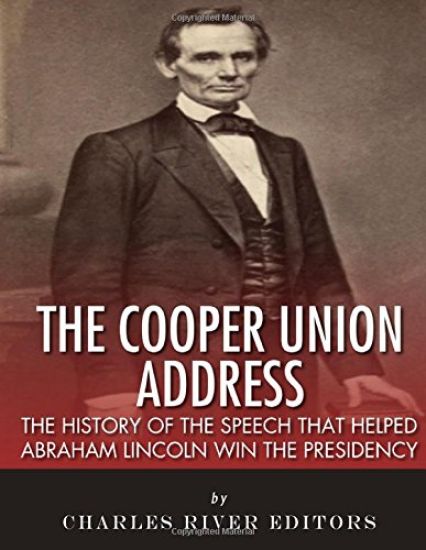
The Cooper Union Address: The History of the Speech that Helped Abraham Lincoln Win the Presidency
*Includes pictures *Includes excerpts from the speech *Includes reactions to the speech from newspaper reports and audience members *Includes online resources and a bibliography for further reading *Includes a table of contents "It is surely safe to assume that the thirty-nine framers of the original Constitution, and the seventy-six members of the Congress which framed the amendments thereto, taken together, do certainly include those who may be fairly called "our fathers who framed the Government under which we live." And so assuming, I defy any man to show that any one of them ever, in his whole life, declared that, in his understanding, any proper division of local from federal authority, or any part of the Constitution, forbade the Federal Government to control as to slavery in the federal territories." - Abraham Lincoln " O]ne of the most happiest and most convincing political arguments ever made in this City ... No man ever made such an impression on his first appeal to a New-York audience." - Horace Greeley After the Lincoln-Douglas debates made Lincoln a nationally recognized politician, Illinois papers began to mention Lincoln as a Republican candidate for President throughout 1859. Lincoln was humbled, though a bit dumbfounded. He thought himself more suited for the Senate, where he could orate and discuss ideas, and moreover there were Republicans of much greater national prominence on the East coast, particularly William Seward. Lacking any administrative experience, he wasn't sure he would enjoy being President, but even being considered was a great honor, and he quietly thought the idea over. In fact, Lincoln was still not considered a real option for the nomination until he delivered a speech at New York City's Cooper Union in February 1860, just a few months before the Republicans' convention in May. Lincoln had gained a bit of a national profile by debating Stephen Douglas during an Illinois Senate Race in 1858, and though he lost that election, Lincoln continued discussing the same themes, most notably slavery and Dred Scott in his Cooper Union speech. In the hard-hitting speech, Lincoln both deflected Southern criticisms and attacked them, chiding would-be secessionists, "Your purpose, then, plainly stated, is that you will destroy the Government, unless you be allowed to construe and enforce the Constitution as you please, on all points in dispute between you and us. You will rule or ruin in all events." Although just 7,000 words long, the Cooper Union Address was almost universally praised in the North, and biographer Harold Holzer credited it for leading Lincoln to the presidency: "Had Abraham Lincoln failed at his do-or-die debut in New York, he would never have won his party's presidential nomination three months later, not to mention election to the White House that November. Such was the impact of a triumph in the nation's media capital. Had he stumbled, none of the challenges that roiled his presidency would ever have tested his iron will... He had arrived at Cooper Union a politician with more defeats than victories, but he departed politically reborn." This book chronicles the history of the speech from its origins to its legacy. Along with pictures of important people, places, and events, you will learn about the Cooper Union Address like never before.
The Earp Brothers: Wyatt, Virgil and Morgan Earp

The Earp Brothers: Wyatt, Virgil and Morgan Earp

Charles River

Createspace Independent Publishing Platform
2018
nidottu
*Weaves the lives of the Earp brothers into one entertaining and educational narrative *Includes pictures of important people and places. Explains the origins of the Gunfight at the OK Corral and the controversial details that continue to be debated today. *Includes a Bibliography for further reading. Of all the colorful characters that inhabited the West during the 19th century, the most famous of them all is Wyatt Earp (1848-1929), who has long been regarded as the embodiment of the Wild West. Considered the "toughest and deadliest gunman of his day," Earp symbolized the swagger, the heroism, and even the lawlessness of the West, notorious for being a law enforcer, gambler, saloon keeper, and vigilante. The Western icon is best known for being a sheriff in Tombstone, but before that he had been arrested and jailed several times himself, in one case escaping from prison, and he was not above gambling and spending time in "houses of ill-fame." Though they have long been overshadowed by their more famous brother Wyatt, Virgil and Morgan Earp played decisive roles in some of the most famous events in the history of the Old West. Most notably, the two brothers were at Wyatt's side for America's most famous gunfight, the Gunfight at the O. K. Corral. Though the gunfight lasted less than a minute, it is still widely remembered as the climactic event of the period, representing lawlessness and justice, vendettas, and a uniquely Western moral code. Fought in the middle of Tombstone, Arizona, the gunfight pitted the three Earp brothers and Doc Holliday against Billy Clanton, Tom McLaury and Frank McLaury. By the time the 30 second gunfight was over, the McLaury brothers were dead in the street, Billy Clanton had suffered a painful and fatal gunshot wound to the chest, and Holliday, Virgil and Morgan Earp were all wounded. To this day, the motives behind the gunfight, and exactly how it all went down, remain heavily debated, but the aftermath of the gunfight is much better known. Both Virgil and Morgan were the targets of assassination attempts in the coming months, precipitating the Earp Vendetta Ride in 1882. The attention spent on the Gunfight and the Earp Vendetta Ride, as well as the fact that Wyatt Earp and Doc Holliday are two of the most famous men of the West, have largely obscured the personal details of Virgil and Morgan. The Earp Brothers chronicles the West's most famous brothers, while examining the roles they played in some of the West's most famous events. Along with pictures of important people, places, and events, you will learn about the Earp brothers like never before.
The Fort Pillow Massacre: The History and Legacy of the Civil War's Most Notorious Battle
*Includes pictures *Includes accounts of the battle made by participants *Includes testimony taken by Congress of Union soldiers after the battle *Includes online resources and a bibliography for further reading *Includes a table of contents "I found many of the dead lying close along by the water's edge, where they had evidently sought safety; they could not offer any resistance from the places where they were, in holes and cavilles along the banks; most of them had two wounds. I saw several colored soldiers of the Sixth United States Artillery, with their eyes punched out with bayonets; many of them were shot twice and bayonetted also. All those along the bank of the river were colored. The number of the colored near the river was about seventy. Going up into the fort, I saw there bodies partially consumed by fire. Whether burned before or after death I cannot say, any way there were several companies of rebels in the fort while these bodies were burning, and they could have pulled them out of the fire had they chosen to do so." - Robert S. Critchell, a naval officer during the Civil War At the end of 1863, Confederate cavalry leader Nathan Bedford Forrest began operations in west Tennessee with a small unit, but he managed to recruit several thousand volunteers, including a number of veteran soldiers, and he whipped them into shape so that they were combat ready before their first confrontation. Upon hearing of Forrest's growing aptitude for adaptive warfare, General Sherman wrote to Union Commander-in-Chief Henry Halleck that men like Forrest are "men that must all be killed or employed by us before we can hope for peace. They have no property or future, and therefore cannot be influenced by anything except personal considerations." Sherman repeatedly ordered his Memphis commanders to catch "that devil Forrest," essentially putting a bounty on his head. Forrest already had a controversial Civil War record entering 1864, but he was about to participate in perhaps the most controversial battle of the war. After functioning as an independent raider for several months, on April 12, 1864, units of Forrest's cavalry surrounded Fort Pillow on the Mississippi River, north of Memphis. Ironically, the fort had been built in 1861 and named after General Gideon Pillow, the same General Pillow who proved wildly incompetent at Fort Donelson and ignored Forrest's suggestion to escape the siege instead of surrendering to Grant. As far as skirmishes go, Fort Pillow was a completely unremarkable fight. Before attacking, Forrest demanded the unconditional surrender of the Union garrison, a normal custom of his, and he warned the Union commanding officer that he would not be responsible for his soldiers' actions if the warning went unheeded. What made Fort Pillow markedly different was that a sizable amount of the Union garrison defending the Fort was comprised of black soldiers, which particularly enraged Confederate soldiers whenever they encountered those they viewed as former slaves in the field. It is still unclear exactly how the fighting unfolded, but what is clear is that an unusually high percentage of Union soldiers were killed, and the Confederates were accused of massacring black soldiers after they had surrendered. Primary sources tell conflicting accounts of what happened at Battle of Fort Pillow, leaving scholars to piece together the battle and determine whether Confederate soldiers purposely shot Union soldiers after they had surrendered. The Fort Pillow Massacre: The History and Legacy of the Civil War's Most Notorious Battle chronicles the history of the Civil War's most infamous massacre. Along with pictures of important people, places, and events, you will learn about Fort Pillow like never before, in no time at all.
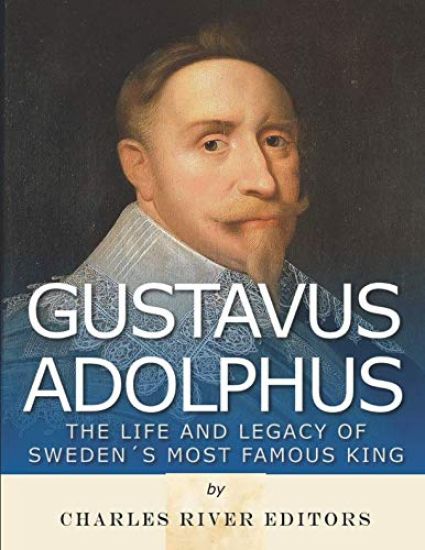
Gustavus Adolphus: The Life and Legacy of Sweden's Most Famous King

Gustavus Adolphus: The Life and Legacy of Sweden's Most Famous King

Charles River

Createspace Independent Publishing Platform
2018
nidottu
*Includes pictures*Includes contemporary accounts*Includes online resources and a bibliography for further reading"I had carefully learned to understand, about that experience which I could have upon things of rule, how fortune is failing or great, subject to such rule in common, so that otherwise I would have had scant reason to desire such a rule, had I not found myself obliged to it through God's bidding and nature. Now it was of my acquaintance, that inasmuch as God had let me be born a prince, such as I then am born, then my good and my destruction were knotted into one with the common good; for every reason then, it was now my promise that I should take great pains about their well-being and good governance and management, and thereabout bear close concern." - Gustavus Adolphus "Read over and over again the campaigns of Alexander, Hannibal, Caesar, Gustavus, Turenne, Eugene, and Frederic," reads an excerpt from one of Napoleon's memoirs. "This is the only way to become a great general and master the secrets of the art of war." The "Gustavus" in question is none other than King Gustav II Adolf, widely remembered by the Latinized version of his name, Gustavus Adolphus. Some hailed him as the "Lion of the North," others called him the "Golden King," and a few knew him by the affectionate nickname "Hook-nose." Today, Swedish, Finland, and Estonian citizens alike continue to celebrate Gustavus Adolphus Day on the 6th of November each year, topping off the flag day with special cakes garnished with chocolates that featured his likeness. But who exactly was Gustavus Adolphus the Great, and why does Sweden continue to hold him in such prominence today? Gustavus Adolphus: The Life and Legacy of Sweden's Most Famous King explores the early life of the Swedish king, his ascension to power, and his greatest achievements, as well as the revolutionary military tactics he used to shape modern warfare.
The March to Antietam: The History of the Confederate Invasion of Maryland Before the Bloodiest Day of the Civil War
*Includes pictures *Includes accounts of the campaign from soldiers and generals on both sides *Includes online resources and a bibliography for further reading *Includes a table of contents "Those in whose judgment I rely tell me that I fought the battle splendidly and that it was a masterpiece of art. ... I feel I have done all that can be asked in twice saving the country. ... I feel some little pride in having, with a beaten & demoralized army, defeated Lee so utterly." - George McClellan The bloodiest day in American history took place on the 75th anniversary of the signing of the Constitution. On September 17, 1862, Robert E. Lee's Confederate Army of Northern Virginia fought George McClellan's Union Army of the Potomac outside Sharpsburg along Antietam Creek. That day, nearly 25,000 would become casualties, and Lee's army would barely survive fighting the much bigger Northern army. Although the battle was tactically a draw, it resulted in forcing Lee's army out of Maryland and back into Virginia, making it a strategic victory for the North and an opportune time for President Abraham Lincoln to issue the Emancipation Proclamation, freeing all slaves in the rebellious states. For those reasons, Antietam is remembered as one of the major turning points of the Civil War, but it is often overlooked that the bloody battle only represented the climactic culmination of a 3 week campaign that saw George McClellan cautiously pull a fragmented Union army together and begin tracking Lee's army into Maryland. Sizing up McClellan, Lee had split his army up during its invasion, including sending Stonewall Jackson's men to Harpers Ferry, but the whole course of the campaign and possibly the war changed when the Union Army somehow found a copy of Lee's marching orders, telling them where the Confederate army would be and when. To Lee's surprise, McClellan's army began advancing far more rapidly, including attacking them at South Mountain before cornering them along Antietam Creek outside of Sharpsburg. The March to Antietam: The History of the Confederate Invasion of Maryland Before the Bloodiest Day of the Civil War looks at the events that led up to the Battle of Antietam, one of the crucial turning points of the Civil War. Along with bibliographies, maps of the battle, and pictures of important people and places, you will learn about the march to Antietam like never before, in no time at all.
The End of World War II: The History of the Battles that Ended the Fighting in Europe and the Pacific
*Includes pictures *Includes accounts of fighting at major battles like D-Day, Okinawa, Iwo Jima, the Bulge, and more *Includes online resources and a bibliography for further reading *Includes a table of contents During World War II, the free world literally hung in the balance, with the Axis and Allies engaging in warfare on an unprecedented scale. Although Hitler's Nazi Germany had overrun much of the European continent by 1940, the Allies began to reverse the momentum in 1942. By the end of 1943, with Allied forces firmly established in Italy and the Soviets on the verge of turning the tide in Russia, the British and Americans began to plot the invasion that would liberate Europe from the Nazis. After the successful amphibious invasion on D-Day in June 1944, the Allies began racing east toward Germany and liberating France along the way. The Allies had landed along a 50 mile stretch of French coast, and despite suffering 8,000 casualties on D-Day, over 100,000 still began the march across the western portion of the continent. By the end of August 1944, the German Army in France was shattered, with 200,000 killed or wounded and a further 200,000 captured. However, Adolf Hitler reacted to the news of invasion with glee, figuring it would give the Germans a chance to destroy the Allied armies that had water to their backs. As he put it, "The news couldn't be better. We have them where we can destroy them." After resisting the German attack at the Battle of the Bulge, the Allied armies began advancing, and with that, the race to Berlin was truly on. In the weeks it took for the Battle of Berlin to be fought, an American president passed away, a British Prime Minister had to make concessions he did not desire, a Russian leader fought his way into Western Europe to stay, and a German one took his own life. The battle's implications would be felt for the next 50 years. When Admiral Chester Nimitz was directed to capture an island in the Bonin group, Iwo Jima stood out for its importance in making progress against the mainland, with three airfields that would allow American air forces to attack the Japanese mainland. But the Japanese were also well aware of how important Iwo Jima was, and they fought desperately in bunkers and tunnels that required the Americans to carefully clear them out gradually. Near the end of 1944, as Allied forces were pushing across the Pacific and edging ever closer to Japan, plans were drawn up to invade the Ryuku islands, the most prominent of them being Okinawa. Military planners anticipated that an amphibious campaign would last a week, but instead of facing 60,000 Japanese defenders as estimated, there were closer to 120,000 on the island at the beginning of the campaign in April 1945. The Battle of Okinawa was the largest amphibious operation in the Pacific theater, and it would last nearly 3 months and wind up being the fiercest in the Pacific theater during the war, with nearly 60,000 American casualties and over 100,000 Japanese soldiers killed. In addition, the battle resulted in an estimated 40,000-150,000 Japanese civilian casualties. Given the horrific nature of the combat, and the fact that it was incessant for several weeks, it's no surprise that Okinawa had a profound psychological effect on the men who fought, but it also greatly influenced the thinking of military leaders who were planning subsequent campaigns, including a potential invasion of the Japanese mainland. The casualty tolls at Okinawa ultimately helped compel President Truman to use the atomic bombs on Hiroshima and Nagasaki in an effort to end the war before having to attempt such an invasion. The End of World War II: The History of the Battles that Ended the Fighting in Europe and the Pacific chronicles the background leading up to the end of the war in 1945. Along with pictures of important people, places, and events, you will learn about the end of World War II like never before.