Kirjojen hintavertailu – 12 903 727 kirjaa ja 27 kauppaa

Kirjailija

Charles River

Kirjat ja teokset yhdessä paikassa: 4 673 kirjaa, julkaisuja vuosilta 2013–2022, suosituimpiin kuuluu William Powell and Myrna Loy: The Lives and Careers of One of Classical Hollywood's Most Iconic Duos. Vertaile teosten hintoja ja tarkista saatavuus suomalaisista kirjakaupoista.

4 673 kirjaa

Kirjojen julkaisuvuodet: 2013–2022.

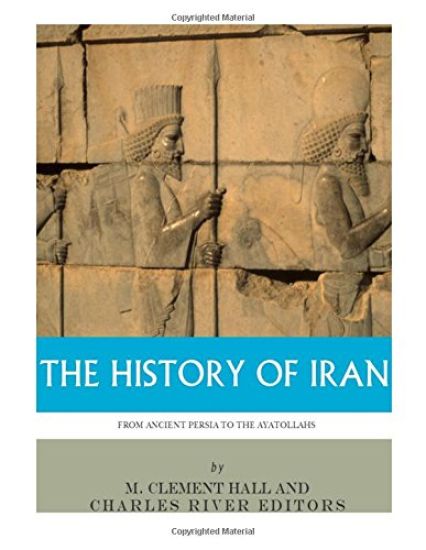
The History of Iran from Ancient Persia to the Ayatollahs

The History of Iran from Ancient Persia to the Ayatollahs

M. Clement Hall; Charles River

Createspace Independent Publishing Platform
2018
nidottu
*Covers the prehistoric era to the controversy over Iran's nuclear program. *Includes maps and pictures of important people. In 2011, violence erupted across the Middle East in the form of revolts against authoritarian regimes. Across the region, from Egypt to Syria, thousands fought and died to push out despots, some successfully and others unsuccessfully. Yet despite this historic violence, much of the world's foreign policy focus has been on Iran's nuclear program, and the potential for war between Iran, Israel, and the West. Although Iran had peaceful nuclear programs with Western cooperation before the Islamic revolution, it's widely believed that the regime, headed by Ayatollah Khomeini and now Ayatollah Khameini, began to work in earnest toward a nuclear program that could result in bombs around the late '90s. Still, it was (and remains) unclear the extent to which Iran's nuclear program has progressed, with the potential date of Iran obtaining nuclear weapons constantly changing. As Graham Allison, a Harvard professor and leading security strategist, put it in November 2011, the Iranian nuclear program is a "Cuban missile crisis in slow motion." People may know what's going on in Iran today, but the obsession over its nuclear program often overlooks the unique intricacies of the nation and its people, particularly the long, illustrious history of the Persian Empire. Iranians have long been proud of their history and culture, to the extent that foreign negotiators who do not entirely understand the history and culture have referred to a "Persian psyche". How did Iran get to where it is today, at the forefront of global affairs? The history of Iran and the theme of Persian conflict with the West stretches back thousands of years, and it is a unique history of empire, culture, art, pride, and religious nationalism. The History of Iran from Ancient Persia to the Ayatollahs comprehensively and descriptively covers this history, progressing through a timeline dating back to antiquity and examining all of the different religious, political, foreign, and military issues that affect Iran and are affected by Iran today. Along with maps showing how the modern state of Iran came to be formed, The History of Iran from Ancient Persia to the Ayatollahs will bring readers up to speed on one of the world's crucial countries today.
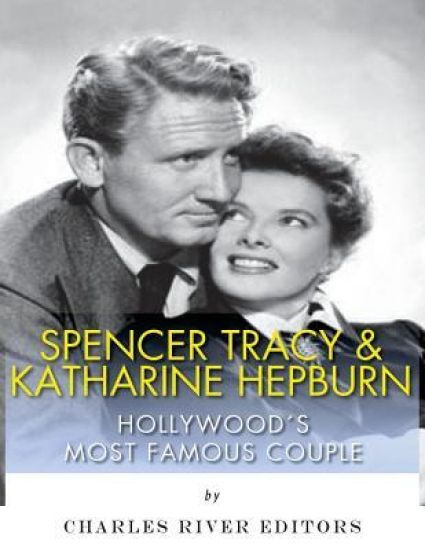
Spencer Tracy and Katharine Hepburn: Hollywood's Most Famous Couple

Spencer Tracy and Katharine Hepburn: Hollywood's Most Famous Couple

Charles River

Createspace Independent Publishing Platform
2018
nidottu
*Includes pictures. *Includes Hepburn and Tracy's quotes about their lives and careers. *Includes a bibliography for further reading. "Acting is the most minor of gifts and not a very high-class way to earn a living. After all, Shirley Temple could do it at the age of four." - Katharine Hepburn Of all the screen legends whose names remain synonymous with Hollywood, few took as long to become a star as Spencer Tracy, who is today recognized as one of the greatest actors ever but whose career did not truly take off until he was already in his mid-30s. After languishing with Fox for 5 years and over two dozen movies, one biographer had summed up his career to that point in time: "Tracy was scarcely a blip on the box office barometer in 1935, a critics' darling and little more." However, after joining MGM in 1935, Tracy catapulted to fame with one of the most impressive runs in Hollywood history, winning Oscars for Best Actor in 1938 and 1939 after already being nominated in 1937. Over the next three decades, Tracy would appear in classics like Captains Courageous and Judgment at Nuremburg, appear in 9 films with Katharine Hepburn, and receive 9 Oscar nominations over a span of 32 years, including for his final film, Guess Who's Coming to Dinner. Several contemporaries considered Tracy the greatest actor of his era, a sentiment summed up by actor Richard Widmark, who once said, "He's the greatest movie actor there ever was... I've learned more about acting from watching Tracy than in any other way." Tracy's career earned him an unbelievable number of accolades, and a place in the American Film Institute's Top 10 actors of the 20th century, but it's also an open question how much more he could have accomplished without a litany of health problems brought on by alcohol. Even as he went years at a time without drinking, the effects gradually wore him down physically, and by his early 60's, he needed full-time care, provided mostly by his most famous co-star and lover, Katharine Hepburn. Ironically, his relationship with Hepburn has actually served to overshadow his own acting career among modern viewers, even as his acting abilities remain universally recognized. Early in her career, there was no actress more controversial than Katharine Hepburn. By the end of her career, there was no actress more beloved than Katharine Hepburn. Famously labeled "box office poison" in 1938, it is clear that Hollywood was not prepared for the young Hepburn. Yet, even after being scorned by the general public, Hepburn still retained a magnetism that would endear her to the public for decades to come, and after a tumultuous first decade as an actress, Hepburn became arguably the biggest box office sensation in the industry. Moreover, in an era when most actresses were unable to secure starring roles after reaching middle age, Hepburn remained a leading lady even after turning 60. Hepburn acted in some capacity from the start of the 1930s through the early-1990s, and it is important to view how the nature of Hepburn's roles changed from her youth to old age. Aside from being one of the most recognized and acclaimed actresses in history, Hepburn's career is also of great importance because she forced Americans to reevaluate their expectations for female behavior, both in films themselves and off the movie set as well. As society began to pay greater attention to the importance of strong roles for women, Hepburn's career gained an even greater importance, and at a time in which women were expected to be passive, she was a fiercely individual figure who offered a daring alternative to the conventions of femininity that had long existed in American culture. This biography profiles the lives and careers of two of Hollywood's biggest icons. Along with pictures of important people, places, and events, you will learn about Tracy and Hepburn like you never have before.
The Sanctuary of Our Lady of Lourdes: The History and Legacy of the Catholic Church's Haven of Miracles
*Includes pictures *Includes medieval accounts *Includes online resources and a bibliography for further reading While an admirable work of art created by the lapping waters of the once turquoise Gave de Pau, the unassuming riverside grotto tucked away on the northern neck of the Massabielle ("Old Mass") in the quaint town of Lourdes is hardly the most majestic in Mother Nature's collection. In fact, the cramped cave was so unexceptional that, for the most part, it remained untouched until the mid-19th century, save for a few stranded fishermen or herdsmen who took refuge there from unanticipated tempests and thunderstorms. Surrounded by hearty shrubs and swathed in winding vines of ivy, the shallow grotto, as damp as it is dim, is not even large enough to accommodate a coven of witches. Despite its quotidian exterior and underwhelming dimensions, the grotto draws in millions upon millions of visitors year after year without fail today. Zigzagging queues of locals, out-of-towners, and Christian pilgrims alike wait patiently for their chance to not only appreciate, but pay their respects to the mystifyingly magnetic grotto. Many of the starstruck believers raise their hands, their eyes welling with genuine tears, towards a statue of whom the locals hail "Our Lady of Lourdes," which is housed in a niche illuminated by a Christmas-tree-shaped candelabra holding stacks of white taper candles. They say that judgment does not exist in Lourdes. Once one sets foot on this hallowed soil, all barriers of race, social status, background, and religious differences cease to exist. One is no more than a humble soul in search of a renewal of one's connection to God. In a statement released to the French press in mid-August of 2008, Father Jacques Nieuviarts guaranteed the following: "Those who touch the rock at the grotto in Lourdes... Perhaps they are praying to be imbued with the strength of this rock. Those who drink the water from the fountain feel that their inner thirst is being quenched, that they have been changed, and that the water has purified them... In lighting the candle, they open themselves up to the clarity that comes from God, and when they depart leaving a burning candle, their prayer continues in union with the prayers of all the other people who have placed their lighted candles at the grotto..." Given these promises of inner peace and spiritual awakenings, not to mention the countless cases - both claimed and "verified" - of miraculous healing this supernatural town is teeming with, it comes as no surprise that this once unassuming town has now become the second most popular tourist destination in France, following Paris. Over the years, this formerly quaint, but rinky-dink, gray-roofed cottage town has more than succeeded in putting itself on the map through its mystical sanctuaries built on miracles, but how exactly did they achieve such a designation? And how much truth, if any at all, is there in these so-called miracles? The Sanctuary of Our Lady of Lourdes: The History and Legacy of the Catholic Church's Haven of Miracles chronicles the remarkable history of the site and how it became one of the religion's most influential spots. Along with pictures depicting important people, places, and events, you will learn about the Sanctuary of Our Lady of Lourdes like never before.
The High Tide of the Confederacy: The History of the Climactic Final Day of the Battle of Gettysburg
*Includes pictures *Includes accounts of the fighting written by soldiers and generals on both sides *Includes online resources and a bibliography for further reading *Includes a table of contents Without question, the most famous battle of the war took place outside of the small town of Gettysburg, Pennsylvania, which happened to be a transportation hub that served as the center of a wheel with several roads leading out to other Pennsylvanian towns. From July 1-3, Robert E. Lee's Confederate Army of Northern Virginia tried everything in its power to decisively defeat George Meade's Union Army of the Potomac, unleashing ferocious assaults that inflicted nearly 50,000 casualties in all. Day 1 of the battle would have been one of the 25 biggest battles of the Civil War itself, and it ended with a tactical Confederate victory, but over the next two days, Lee would try and fail to dislodge the Union army with attacks on both of its flanks during the second day and a massive attack against the center on the third and final day. Given that the Army of Northern Virginia would never muster another invasion of the North after Gettysburg, and the Confederates had mixed success the first two days of the battle, the third day is often remembered as the "high tide" or "high water mark" of the Confederacy, symbolizing its last real chance to win the war. As a result, the most famous attack of the Civil War was also one of its most fateful and fatal: Pickett's Charge, the climactic assault on the final day of the Battle of Gettysburg, which has become the American version of the Charge of the Light Brigade and one of the most famous events of the entire Civil War. The charge required marching across an open field for about a mile, with the Union artillery holding high ground on all sides of the incoming Confederates. Though it is now known as Pickett's Charge, named after division commander George Pickett, the assignment for the charge was given to General James Longstreet, whose 1st Corps included Pickett's division, and it included divisions from A. P. Hill's 3rd Corps. Longstreet had serious misgivings about Lee's plan and tried futilely to talk him out of it. Longstreet later wrote that he said to his commander, "General Lee, I have been a soldier all my life. It is my opinion that no fifteen thousand men ever arrayed for battle can take that position." Aware of the insanity of sending 15,000 men hurtling into all the Union artillery, Lee planned to use the Confederate artillery to try to knock out the Union artillery ahead of time. Although old friend William Pendleton was the artillery chief, the artillery cannonade would be supervised by Edward Porter Alexander, Longstreet's chief artillerist, who would have to give the go-ahead to the charging infantry because they were falling under Longstreet's command. Alexander later noted that Longstreet was so disturbed and dejected about ordering the attack that at one point he tried to make Alexander order the infantry forward, essentially doing Longstreet's dirty work for him. Unfortunately for Porter Alexander and the Confederates, the sheer number of cannons belched out so much smoke that they had trouble gauging how effective the shells were. As it turned out, most of the artillery was overshooting the target, landing in the rear of the Union line, which unnerved the Union soldiers but didn't rattle their defensive lines. Ironically, as the Union guns responded, they also overshot their target, but that meant they were frequently hitting the soldiers massed behind the Confederate artillery waiting to make the charge. As Longstreet and Alexander anticipated, the charge was an utter disaster, incurring a nearly 50% casualty rate and failing to break the Union line. After the South had lost the war, the importance of Gettysburg as one of the "high tide" marks of the Confederacy became apparent to everyone, making the battle all the more important in the years after.
The Battle of Cannae: The History and Legacy of Ancient Rome's Most Decisive Military Defeat
*Includes pictures *Includes ancient accounts of the battle *Includes online resources and a bibliography for further reading *Includes a table of contents "Few battles of ancient times are more marked by ability...than the battle of Cannae. The position was such as to place every advantage on Hannibal's side. The manner in which the far from perfect Hispanic and Gallic foot was advanced in a wedge in chelon...was first held there and then withdrawn step by step, until it had reached the converse position...is a simple masterpiece of battle tactics. The advance at the proper moment of the African infantry, and its wheel right and left upon the flanks of the disordered and crowded Roman legionaries, is far beyond praise. The whole battle, from the Carthaginian standpoint, is a consummate piece of art, having no superior, few equal, examples in the history of war." - Theodore Dodge, military historian Although the Romans gained the upper hand over Carthage in the wake of the First Punic War, the legendary Carthaginian general Hannibal brought the Romans to their knees for over a decade during the Second Punic War. While military historians are still amazed that he was able to maintain his army in Italy near Rome for nearly 15 years, scholars are still puzzled over some of his decisions, including why he never attempted to march on Rome in the first place. Regardless, Hannibal was such a threat that the Romans responded in an unprecedented nature when the Carthaginians resumed the campaigning season in the spring of 216 BCE by capturing the city of Cannae, a crucial supply hub, and placing themselves along the line that convoys from the ports and warehouses of the south needed to travel to reach Rome. This was something the Romans could not and did not take lying down; Rome raised the largest army in their city's history, a force of between 80,000 and 100,000 men, and marched south with Consuls Varro and Paullus at the head of the army. This military behemoth disregarded the delaying tactics that Maximus had favored, fully determined to destroy Hannibal once and for all as quickly as possible. Despite the massive horde headed his way, Hannibal was ready for them. He encamped his army near the Aufidus, a river not far from Cannae, and waited. His intelligence told him that Consul Varro, the more influential of the two Roman generals, was a firebrand, talented in attack but with a tendency to overreach himself, and Hannibal resolved to use this flaw to his advantage. Hannibal arrayed his army in the open, sure that Varro would be unable to resist the temptation to offer battle, and then deliberately placed his weakest infantry in the center of his battle-line. Varro led the Roman legions straight at the centre of Hannibal's formation, proceeding in characteristic bull-headed fashion and spearheading the assault himself. Hannibal's troops in the center yielded before the legions, as Hannibal had anticipated, sucking the bulk of the Roman force deep into the centre of Hannibal's formation. Meanwhile, the wings of Hannibal's infantry automatically swung against the flanks of the Roman force while Hannibal's cavalry, led by his celebrated general Maharbal, crushed the Roman cavalry and light infantry deployed to protect the formation's flanks and rear and, in so doing, succeeded in encircling it completely. The Roman force now found itself unable to run or maneuver, completely surrounded by Hannibal's forces. It was one of the earliest examples of the pincer movement in the history of warfare. The result was a massacre, one of the most vicious battles in the history of the world. Around 75% of the Roman army was cut down in the ensuing melee, which would be in the vicinity of between 50,000-80,000 soldiers depending on which initial estimates are considered to be accurate. Among the casualties was the luckless Consul Paullus.
The History of the American Revolution

The History of the American Revolution

Charles River

Createspace Independent Publishing Platform
2018
nidottu
*Covers every major event in the history of the American Revolution, from the Sugar Act of 1764 to the Treaty of Paris in 1783. *Profiles the military and political leaders of the American Revolution and the roles they played, including George Washington, Thomas Jefferson, Samuel Adams, Paul Revere, Benedict Arnold, and more. *Examines the major battles of the Revolution, from Lexington to Yorktown. *Includes pictures of important people, places, and events. "The Revolution was effected before the war commenced. The Revolution was in the minds and hearts of the people.... This radical change in the principles, opinions, sentiments, and affections of the people was the real American Revolution." - John Adams, 1818 The American Revolution is replete with seminal moments that every American learns in school, from the "shot heard 'round the world" to the Declaration of Independence, but the events that led up to the fighting at Lexington & Concord were borne out of 10 years of division between the British and their American colonies over everything from colonial representation in governments to taxation, the nature of searches, and the quartering of British regulars in private houses. From 1764-1775, a chain of events that included lightning rods like the Townshend Acts led to bloodshed in the form of the Boston Massacre, while the Boston Tea Party became a symbol of nonviolent protest. The political and military nature of the Revolutionary War was just as full of intrigue. While disorganized militias fought the Battles of Lexington & Concord, George Washington would lead the Continental Army in the field while men like Thomas Jefferson drafted the Declaration of Independence in Philadelphia and Benjamin Franklin negotiated overseas in France. Benedict Arnold would become one of his nation's most vital war heroes and its most notorious traitor, French forces would play a crucial role at the end of the war, and the Treaty of Paris would conclude the Revolution with one last great surprise. The History of the American Revolution chronicles the momentous events before and during the American Revolution, from the beginning of the troubles with Britain in 1764 to the successful conclusion of the Revolution in 1783 with the Treaty of Paris. It comprehensively covers the important battles and the political and military roles played by American legends like Samuel Adams, Thomas Jefferson, Benjamin Franklin, George Washington and more. Along with pictures of important people, places, and events, you will learn about the American Revolution like you never have before.
The Expansion and Apogee of the Ottoman Empire: The History of the Turkish Empire at the Height of Its Power
*Includes pictures *Includes online resources and a bibliography for further reading In terms of geopolitics, perhaps the most seminal event of the Middle Ages was the successful Ottoman siege of Constantinople in 1453. The city had been an imperial capital as far back as the 4th century, when Constantine the Great shifted the power center of the Roman Empire there, effectively establishing two almost equally powerful halves of antiquity's greatest empire. Constantinople would continue to serve as the capital of the Byzantine Empire even after the Western half of the Roman Empire collapsed in the late 5th century. Naturally, the Ottoman Empire would also use Constantinople as the capital of its empire after their conquest effectively ended the Byzantine Empire, and thanks to its strategic location, it has been a trading center for years and remains one today under the Turkish name of Istanbul. The end of the Byzantine Empire had a profound effect not only on the Middle East but Europe as well. Constantinople had played a crucial part in the Crusades, and the fall of the Byzantines meant that the Ottomans now shared a border with Europe. The Islamic empire was viewed as a threat by the predominantly Christian continent to their west, and it took little time for different European nations to start clashing with the powerful Turks. In fact, the Ottomans would clash with Russians, Austrians, Venetians, Polish, and more before collapsing as a result of World War I, when they were part of the Central powers. The Ottoman conquest of Constantinople also played a decisive role in fostering the Renaissance in Western Europe. The Byzantine Empire's influence had helped ensure that it was the custodian of various ancient texts, most notably from the ancient Greeks, and when Constantinople fell, Byzantine refugees flocked west to seek refuge in Europe. Those refugees brought books that helped spark an interest in antiquity that fueled the Italian Renaissance and essentially put an end to the Middle Ages altogether. In the wake of taking Constantinople, the Ottoman Empire would spend the next few centuries expanding its size, power, and influence, bumping up against Eastern Europe and becoming one of the world's most important geopolitical players. It was a rise that would not truly start to wane until the 19th century. The Expansion and Apogee of the Ottoman Empire: The History of the Turkish Empire at the Height of Its Power examines what made the Turks' empire and power grow. Along with pictures of important people, places, and events, you will learn about the apogee of the Ottoman Empire like never before.
The Gettysburg Address: The History and Legacy of President Abraham Lincoln's Greatest Speech
*Includes pictures *Includes accounts of the speech and reactions written by people who were there *Discusses the influences on the speech and debates over the various versions that exist *Includes online resources and a bibliography for further reading *Includes a table of contents "Four score and seven years ago our fathers brought forth on this continent a new nation, conceived in liberty, and dedicated to the proposition that all men are created equal. Now we are engaged in a great civil war, testing whether that nation, or any nation so conceived and so dedicated, can long endure. We are met on a great battlefield of that war. We have come to dedicate a portion of that field, as a final resting place for those who here gave their lives that that nation might live." - Abraham Lincoln Without question, the most famous battle of the American Civil War took place outside of the small town of Gettysburg, Pennsylvania, which happened to be a transportation hub, serving as the center of a wheel with several roads leading out to other Pennsylvanian towns. From July 1-3, Robert E. Lee's Confederate Army of Northern Virginia tried everything in its power to decisively defeat George Meade's Union Army of the Potomac, unleashing ferocious assaults that inflicted nearly 50,000 casualties in all. When a crowd came to Gettysburg in November 1863 to commemorate the battle fought there 4 months earlier and dedicate a new national cemetery, they came to hear a series of speeches about the Civil War and the events of that battle. Today it may seem obvious to invite the president to such an occasion, but Lincoln was initially an afterthought, and though he did come to deliver remarks, he was not in fact the keynote speaker. Instead, the man chosen to give the keynote speech was Edward Everett, a politician and educator from Massachusetts. Everett had already been a Congressman, the 15th Governor of Massachusetts, Minister to Great Britain, and Secretary of State, and by the Civil War, he was considered perhaps the greatest orator in the nation, making him a natural choice to be the featured speaker at the dedication ceremony. Everett is still known today for his oratory, but more for the fact that he spoke for over two hours at Gettysburg immediately before President Lincoln delivered his immortal two-minute Gettysburg Address. Everett would later say, "I should be glad if I could flatter myself that I came as near to the central idea of the occasion, in two hours, as you did in two minutes." At the time, however, Lincoln and many others present at the event thought his speech fell flat and was ultimately a failure that would be consigned to the dustbin of history. Perhaps Lincoln's most impressive feat is that he was able to convey so much with so few words; after Everett spoke for hours at Gettysburg, Lincoln's Gettysburg Address only took a few minutes, but in those few minutes, Lincoln invoked the principles of human equality espoused by the Declaration of Independence. In the process, he redefined the Civil War as a struggle not merely for the Union but as "a new birth of freedom" that would bring true equality to all of its citizens, ensure that democracy would remain a viable form of government, and would also create a unified nation in which states' rights were no longer dominant. 150 years later, Lincoln's speech is still considered arguably the greatest in American history, yet the exact wording of the speech is disputed. The five known manuscripts of the Gettysburg Address differ in a number of details and also differ from contemporary newspaper reprints of the speech. In fact, at the time, few Americans knew the president had even given a speech at Gettysburg, and the Gettysburg Address was not widely covered in newspapers. The irony is lost on few, given that the Gettysburg Address continues to represent a concise and eloquent statement on the very purpose of the United States.
The Battle of Seven Pines: The History of the First Major Battle of the 1862 Peninsula Campaign
*Includes pictures *Includes accounts of the battle by generals on both sides *Includes a table of contents As Union commander George McClellan moved the Army of the Potomac up the Peninsula in early 1862, the Union army still had a nearly 2-1 advantage in manpower, so Army of Northern Virginia commander Joseph E. Johnston continued to gradually pull his troops back to a line of defense nearer Richmond as McClellan advanced. In conjunction, the Union Navy began moving its operations further up the James River, until it could get within 7 miles of the Confederate capital before being opposed by a Southern fort. McClellan continued to attempt to turn Johnston's flank, until the two armies were facing each other along the Chickahominy River. At this point, the Union army was close enough to Richmond that they could see the city's church steeples, but they would come no closer. By the end of May, Stonewall Jackson had startlingly defeated three separate Northern armies in the Valley, inducing Lincoln to hold back the I Corps from McClellan. When McClellan was forced to extend his line north to link up with troops that he expected to be sent overland to him, Johnston learned that McClellan was moving along the Chickahominy River. It was at this point that Johnston got uncharacteristically aggressive. Johnston had run out of breathing space for his army, and he believed McClellan was seeking to link up with McDowell's forces. Moreover, about a third of McClellan's army was south of the river, while the other parts of the army were still north of it, offering Johnston an enticing target. After a quick deluge turned the river into a rushing torrent that would make it impossible or the Union army to link back up or aid each other, Johnston drew up a very complex plan of attack for different wings of his army, and struck at the Army of the Potomac at the Battle of Seven Pines on May 31, 1862. Like Union general Irvin McDowell's plan for First Bull Run, the plan proved too complicated for Johnston's army to execute, and after a day of bloody fighting little was accomplished from a technical standpoint. At one point during the Battle of Seven Pines, Confederates under General James Longstreet marched in the wrong direction down the wrong road, causing congestion and confusion among other Confederate units and ultimately weakening the effectiveness of the massive Confederate counterattack launched against McClellan. Johnston wrote in his memoirs, "The operations of the Confederate troops in this battle were very much retarded by the dense woods and thickets that covered the ground, and by the deep mud and broad ponds of rain-water, in many places more than knee-deep, through which they had to struggle." Nonetheless, by the time the fighting was finished, nearly 40,000 had been engaged on both sides, and it was the biggest battle in the Eastern theater to date (second only to Shiloh at the time). Although it was inconclusive, McClellan was rattled by the attack, and near the end of the fighting that night Johnston had attempted to rally his men by riding up and down the lines only to be nearly blown off his horse by artillery fire and having to be taken off the field. Johnston explained, "About seven o'clock I received a slight wound in the right shoulder from a musket-shot, and, a few moments after, was unhorsed by a heavy fragment of shell which struck my breast. Those around had me borne from the field in an ambulance; not, however, before the President, who was with General Lee, not far in the rear, had heard of the accident, and visited me, manifesting great concern, as he continued to do until I was out of danger." Having been seriously wounded, Johnston's command was given the following day to military advisor Robert E. Lee. The Battle of Seven Pines: The History of the First Major Battle of the 1862 Peninsula Campaign looks at the events that led to one of the most fateful battles of the Civil War.
The Army of Northern Virginia: The History of the Most Famous Confederate Army during the American Civil War
*Includes pictures *Includes accounts of the fighting *Includes online resources and a bibliography for further reading Americans have long been fascinated by the Civil War, marveling at the size of the battles, the leadership of the generals, and the courage of the soldiers. Since the war's start over 150 years ago, the battles have been subjected to endless debate among historians and the generals themselves. The Civil War was the deadliest conflict in American history, and had the two sides realized it would take 4 years and inflict over a million casualties, it might not have been fought. Since it did, however, historians and history buffs alike have been studying and analyzing the biggest battles ever since. Of course, the most famous battles of the war involved the Army of the Potomac facing off against Robert E. Lee's Army of Northern Virginia at places like Antietam and Gettysburg. Antietam was the bloodiest day of the war and forced Lee out of Maryland, allowing Lincoln to issue the Emancipation Proclamation. The following summer would see the biggest and most famous battle at Gettysburg. Lee would try and fail to dislodge the Union army with attacks on both of its flanks during the second day and Pickett's Charge right down the center of the line on the third and final day. Meade's stout defense held, barely, repulsing each attempted assault, handing the Union a desperately needed victory that ended up being one of the Civil War's turning points. At the Battle of the Wilderness (May 5-7, 1864), Ulysses S. Grant and Robert E. Lee fought to a standstill in their first encounter, failing to dislodge each other despite incurring nearly 30,000 casualties between the Union Army of the Potomac and the Confederate Army of Northern Virginia. Despite the fierce fighting, Grant continued to push his battered but resilient army south, hoping to beat Lee's army to the crossroads at Spotsylvania Court House, but Lee's army beat Grant's to Spotsylvania and began digging in, setting the scene for on and off fighting from May 8-21 that ultimately inflicted more casualties than the Battle of the Wilderness. In fact, with over 32,000 casualties among the two sides, it was the deadliest battle of the Overland Campaign. After the last major pitched battle of the Overland Campaign was fought at Cold Harbor in early June, Ulysses S. Grant's Army of the Potomac had suffered more casualties during the campaign than Robert E. Lee had in his entire Army of Northern Virginia at the start of May. Understandably, the American public was shocked by the carnage, and to this day Grant has been accused of being a butcher, but attrition had become a vital war aim for the North, and Grant remained undeterred. Although the surrender of the Army of Northern Virginia to Grant and the Army of the Potomac at Appomattox Courthouse did not officially end the long and bloody Civil War, the surrender is often considered the final chapter of the war. For that reason, Appomattox has captured the popular imagination of Americans ever since Lee's surrender there on April 9, 1865. Lee is remembered today for constantly defeating the Union's Army of the Potomac in the Eastern theater from 1862-1865, considerably frustrating Lincoln and his generals. His leadership of his army led to him being deified after the war by some of his former subordinates, especially Virginians, and he came to personify the Lost Cause's ideal Southern soldier. His reputation was secured in the decades after the war as a general who brilliantly led his men to amazing victories against all odds. Despite his successes and his legacy, Lee wasn't perfect. And of all the battles Lee fought in, he was most criticized for Gettysburg, particularly his order of Pickett's Charge on the third and final day of the war.
The Greatest Generals of the Ancient World: The Lives and Legacies of Alexander the Great, Hannibal and Julius Caesar
*Includes pictures depicting important people, places, and events in the lives of Alexander, Hannibal and Caesar *Discusses little known facts about each man and whether some of the legends and myths about them were true. *Includes a Table of Contents covering each general. *Includes a bibliography on Alexander the Great and Hannibal for further reading. Over the last 2,000 years, ambitious men have dreamed of forging vast empires and attaining eternal glory in battle, but of all the generals who took steps toward such dreams, none were ever as successful as antiquity's three most famous military leaders. For thousands of years, leaders across the globe dreamed of emulating or rivaling the accomplishments of Julius Caesar, but Caesar's way of warfare and the organization of the Roman legions at the time were owed to Hannibal, whose crossing of the Alps and decisive victories over the Romans in Italy still amaze military officers today. And Caesar himself found personal inspiration in Alexander the Great (356-323 B. C.), the Macedonian King who managed to stretch an empire from Greece to the Himalayas in Asia at just 30 years old. It took less than 15 years for Alexander to conquer much of the known world. Each general also died untimely deaths. Alexander died of still unknown causes at the height of his conquests, when he was still in his early 30s. Although his empire was quickly divided, his legacy only grew, and Alexander became the stuff of legends even in his own time. Alexander was responsible for establishing 20 cities in his name across the world, most notably Alexandria in Egypt, and he was directly responsible for spreading Ancient Greek culture as far east as modern day India and other parts of Asia. For the ancient world, Alexander became the emblem of military greatness and accomplishment; it was reported that many of Rome's greatest leaders, including Pompey the Great, Augustus, and Caesar himself all visited Alexander's tomb in Alexandria, a mecca of sorts for antiquity's other leaders. Hannibal has the distinction of being the only man who nearly brought Rome to its knees before its decline almost 700 years later. Rome never suffered a more horrifying defeat in its history than at Cannae, and indeed, Hannibal nearly rewrote the course of Western history during the Second Punic War. Even today there remains great debate on just how he accomplished his masterful invasion of Italy across the Alps. Since his army included war elephants, historians still argue over exactly where and how he crossed over 2,000 years after he managed that incredible feat. Hannibal will always be listed among history's greatest generals, and his military campaign in Italy during the Second Punic War will always be studied, but part of the aura and mystique surrounding the Carthaginian legend is that there is still a lot of mystery. Possibly the most important man of antiquity, and even all of history, was Julius Caesar. Alexander Hamilton, the famous American patriot, once remarked that "the greatest man who ever lived was Julius Caesar". Such a tribute, coming from one of the Founding Fathers of the quintessential modern democracy in reference to a man who destroyed the Roman Republic, is testament to the enduring mark that Caesar left upon the world. The ultimate conqueror, statesman, dictator, visionary, and opportunist, during his time in power Caesar expanded the borders of Rome to almost twice their previous size, revolutionized the infrastructure of the Roman state, and destroyed the Roman Republic for good, leaving a line of emperors in its place. The Greatest Generals of the Ancient World chronicles the lives and battles of the famous generals. Along with pictures of important people, places, and events, you will learn about Alexander, Hannibal, and Caesar like you never have before.
The Hagia Sophia: The History of the Famous Church and Mosque

The Hagia Sophia: The History of the Famous Church and Mosque

Charles River

Createspace Independent Publishing Platform
2018
nidottu
*Includes pictures *Includes contemporary accounts of the construction of the Hagia Sophia and its appearance *Includes a bibliography for further reading "So the church has been made a spectacle of great beauty, stupendous to those who see it and altogether incredible to those who hear of it... Its breadth and length have been so fittingly proportioned that it may without impropriety be described as being both very long and extremely broad. And it boasts of an ineffable beauty, for it subtly combines its mass with the harmony of its proportions, having neither any excess nor any deficiency, inasmuch as it is more pompous than ordinary buildings] and considerably more decorous than those which are huge beyond measure; and it abounds exceedingly in gleaming sunlight. You might say that the interior] space is not illuminated by the sun from the outside, but that the radiance is generated within, so great an abundance of light bathes this shrine all round." - Procopius The Hagia Sophia, built from 532-537, is inarguably the masterpiece of Byzantine architecture and one of the greatest buildings ever constructed. Upon its completion, the Hagia Sophia remained the largest enclosed space in the world for nearly a thousand years, a reign that only ended after the rebuilding of St. Peter's in Rome. Fittingly, the rebuilding of St. Peter's was partly inspired by the conversion of Hagia Sophia into a mosque in 1453. The building of Hagia Sophia itself was shocking and transformational. Beginning with Procopius of Caesarea, Justinian's court historian, visitor after visitor noted that the giant dome seems to hover on air, and it's unquestionably true that the arches, vaults, semidomes, and domes add up for an otherworldly, ethereal effect. The surfaces are enriched by colored marble and elaborate mosaics, and when viewing from the aisles and galleries, looking into the nave is dramatic thanks to all the interconnecting layered spaces and repeating, complex curved forms. Interestingly, however, the brick exterior of the building was left unadorned, representing a shell that houses a magnificent interior. The Hagia Sophia examines the history of one of the world's most famous religious sites and analyzes the religion and politics that shaped its fate.
Legendary Pirates: The Life and Legacy of Calico Jack

Legendary Pirates: The Life and Legacy of Calico Jack

Charles River

Createspace Independent Publishing Platform
2018
nidottu
*Includes historic illustrations of Calico Jack and important people in his life. *Includes a profile of Calico Jack from the famous English pirate history "A General History of the Pyrates". *Discusses common legends about Calico Jack, Anne Bonny and Mary Read. *Includes a Bibliography for further reading. "The Day that Rackam was executed, by special Favour, he was admitted to see Anne Bonny]; but all the Comfort she gave him, was, that she was sorry to see him there, but if he had fought like a Man, he need not have been hang'd like a Dog." - Captain Charles Johnson, A General History of the Robberies and Murders of the most notorious Pyrates The people who have lived outside the boundaries of normal societies and refused to play by the rules have long fascinated the world, and nowhere is this more evident than the continuing interest in the pirates of centuries past. As the subjects of books, movies, and even theme park rides, people continue to let their imaginations go when it comes to pirates, with buried treasure, parrots, and walking the plank all ingrained in pop culture's perception of them. Charles River Editors' Legendary Pirates series covers the lives, piracy, legends, myths, and legacies of history's most famous pirates. One of the most famous pirates of all time is Calico Jack, and though he would accomplish many things in his career that would earn him notoriety among the pirates of his age, the simple truth is that he is remembered mostly for his association with Anne Bonny and Mary Read, two of history's most famous women pirates. In fact, had it not been for his involvement with them, his name might have disappeared from the history books entirely. And fittingly, even his nickname, "Calico," came from the type of fabric he preferred for his shirts, the same fabric typically used for women's everyday clothing. Rackham preferred attractive print fabrics produced for trade with natives in the New World, a flamboyant taste worthy of the common pirate stereotype. Before Rackham had even met Anne Bonny, who would become his lover, he had managed to make a name for himself as part of Charles Vane's pirate crew, and it was after a mutiny that he became the captain of a pirate ship. This would allow Calico Jack to make yet another contribution to pirate history and legend: the "Jolly Roger" pirate flag. Flying the simple yet frightening flag that featured a white skull and crossed swords against a black banner, Calico Jack ensured his targets knew they were in trouble as soon as they could spot the flag. To this day, the flag remains synonymous with piracy. Still, it seems Calico Jack will never escape the shadow of his famous female shipmates, despite the fact he was their captain, For his part, Jack never seems to have minded the women who stood beside and behind him through most of his short career, and if anything it seems he enjoyed having the fairer sex aboard, in more ways than one. Their most adventurous and notorious year, 1720, would also be Rackham's last, after they were eventually caught by authorities and tried. In one of the Golden Age of Piracy's most famous anecdotes, one of Calico Jack's last wishes was to see Anne Bonny one more time, and she "consoled" him by telling him that if he fought like a man he wouldn't have been hanged like a dog. Legendary Pirates: The Life and Legacy of Calico Jack looks at the mysterious life and legends of the famous pirate, attempting to separate fact from fiction while analyzing his lasting legacy. Along with pictures depicting Calico Jack and important people, places, and events in his life, you will learn about the pirate captain like you never have before, in no time at all.
Syria and the Assad Family: The History Behind Bashar al-Assad's Rise to Power and the Civil War
*Includes pictures. *Includes excerpts from interviews of the Assad family. *Explains the Assad family's religious and ethnic background, as well as modern Syria's history. *Includes a bibliography for further reading. "I'm not a puppet. I wasn't made by the west to go to the west or any other country. I'm Syrian. I'm made in Syria. I have to live in Syria and die in Syria." - Bashar al-Assad, 2012 In early 2011, a political movement swept across the Arabic speaking world that toppled despotic regimes and dictatorships. The political movement, which became known as the "Arab Spring," was popular in nature and made use of the internet, particularly social networking websites, to remove dictators such as Ben Ali of Tunisia, Hosni Mubarak of Egypt, and Muammar Qadaffi of Libya. Those dictators, who ruled their countries for decades, were unable to stem the tide of popular indignation against them even though they tried using force and propaganda in ways reminiscent of the Cold War era. While some of these dictators bowed to the political pressure and others were pushed out by force through civil wars, the events of the Arab Spring have come to be overshadowed by the civil war in the Arabic speaking nation of Syria, which has been ruled throughout the 21st century by Bashar al-Assad. Though he had not planned on ruling Syria, several events conspired to make Bashar the successor of his father Hafez, who himself was notorious for crushing an uprising in the Syrian city of Hama by massacring thousands of inhabitants. Though the West frequently looked for signs that Bashar might be a reformer, due in part to his formerly popular Western wife, Assad remained part of a critical alliance with Iran and the sub-state groups Hamas and Hezbollah, forming an influential bloc that has influenced events across the Middle East, and one that Israel and the West have tried to break over the past decade. Like the other dictators, Assad faced popular demonstrations against his regime at the height of the Arab Spring, but the outcome has proved to be much different there than in the other Arab nations. Assad steadfastly refused to step down from power, and the protests against him and his government quickly turned violent, which eventually enveloped Syria in a civil war that has already killed over 100,000, left over half a million refugees, and shows no signs of ending anytime soon. Furthermore, on August 21, 2013, a chemical weapon attack outside of the capital city Damascus left around 1,500 civilians dead, and anti-Assad factions in Syria, as well as enemies of the Assad regime in other countries, have blamed Bashar for the attack, while Assad claims his enemies are responsible. A crisis that may have threatened to involve either the United States, Russia, or both, appears to have been solved at least temporarily, but bigger issues concerning Syria still remain. The two major questions that concern the future of Syria are whether Bashar al-Assad will literally and politically survive the civil war, and what Syria's future will be in the wake of the civil war. Answering these questions requires an understanding of Bashar's religious sect, the Alawites, the regional strife among Sunni and Shiite nations, Arab nationalism, and the Assad family as a whole. Syria and the Assad Family is a history that examines how Hafez al-Assad's middle son grew up and the events that brought him to power in Syria. It also comprehensively analyzes the ongoing civil war against Assad. Along with pictures of important people, places, and events, you will learn about Syria's notorious dictator like you never have before.
"The Utility of the Union": The Lives and Legacies of Alexander Hamilton, James Madison, and the Federalist Papers
*Includes pictures of Hamilton, Madison and important people, places, and events in their lives. *Includes some of the most famous Federalist Papers and quotes from them. *Explains the history behind the drafting of the Articles of Confederation, the Constitution, and the Federalist Papers. *Includes a list of the Federalist Papers, their topics, and who is believed to have authored each one. *Analyzes how the Supreme Court has used and interpreted the Federalist Papers. *Includes a Bibliography for further reading. "It has been frequently remarked that it seems to have been reserved to the people of this country, by their conduct and example, to decide the important question, whether societies of men are really capable or not of establishing good government from reflection and choice, or whether they are forever destined to depend for their political constitutions on accident and force. If there be any truth in the remark, the crisis at which we are arrived may with propriety be regarded as the era in which that decision is to be made." - Alexander Hamilton, Federalist No. 1 The Founding Fathers have been revered by Americans for over 200 years, celebrated for creating a new nation founded upon the loftiest ideals of democracy and meritocracy. But if the American Dream has come to represent the ability to climb the social ladder with skill and hard work, no Founding Father represented the new America more than Alexander Hamilton. Unfortunately, one of the best known aspects of Hamilton's (1755-1804) life is the manner in which he died, shot and killed in a famous duel with Aaron Burr in 1804. But Hamilton started as an orphaned child in the West Indies before becoming one of the most instrumental Founding Fathers of the United States in that time, not only in helping draft and gain support for the U. S. Constitution but in also leading the Federalist party and building the institutions of the young federal government as Washington's Secretary of Treasury. Today James Madison's legacy mostly pales in comparison to the likes of George Washington, Ben Franklin and his closest colleague, Thomas Jefferson, but Madison's list of important accomplishments is monumental. A lifelong statesman, Madison was the youngest delegate at the Continental Congress from 1780-83, and at 36 he was one of the youngest men who headed to Philadelphia for the Constitutional Convention in 1787. Despite his age, he was the Convention's most influential thinker, and the man most responsible for the final draft of the U. S. Constitution. The Federalist Papers were written by Madison, Hamilton and Jay as a series of newspaper editorials that appeared in the American colonies during 1787 and 1789 urging the ratification of the new Constitution. 85 of these essays consist of what is today considered The Federalist Papers, with 77 of them published in The Independent Journal and The New York Packet between October 1787 and August 1788. A compilation of these and eight others, called The Federalist (or The New Constitution), was published in two volumes in 1788 by J. and A. McLean. The Federalist Papers sought to rally support for the Constitution's approval when those three anonymously wrote them, and given how different Hamilton and Madison proved to be ideologically, they demonstrate how men of vastly different political ideologies came to accept the same Constitution. 225 years later, the Federalist Papers are still just as relevant and influential as ever. In addition to being cited dozens of times a year by the Supreme Court in interpreting the Constitution and rendering decisions, the writings also allow readers and scholars today to get into the mindset of the Founding Fathers, including the "Father of the Constitution" himself.
The Partition of India and the British Mandate of Palestine: The Controversial History of Great Britain's Post-War Partition Plans and the Aftermath
*Includes pictures *Includes online resources and a bibliography for further reading The Ottoman Empire quickly collapsed after World War I, and its extensive lands were divvied up between the French and British. While the French gained control of the Levant, which would later become modern day nations like Syria, the British were given the Mandate for Palestine from the newly created League of Nations. The British Mandate for Palestine gave the British control over the lands that have since become Jordan, Israel, the West Bank, and the Gaza Strip. The terms of the British Mandate incorporated the language of the Balfour Declaration, recognizing the "historical connection of the Jewish people with Palestine." The British were also tasked with creating a Jewish state, which the United States Congress endorsed in 1922. In 1947, the British delegated the issue of partitioning the British Mandate to the United Nations, and the U. N. General Assembly set up the Special Committee on Palestine (UNSCOP). UNSCOP eventually came up with what is now known as the U. N. Partition Plan of 1947. The Partition Plan carved up two strange looking states, but their motive was to create an Israel in which the Jewish population was a 55% majority, while Palestine had an over 90% Palestinian Arab majority. Meanwhile, the city of Jerusalem would be administered internationally, due to the sensitive religious concerns of Muslims, Christians, and Jews. In addition to several Christian holy spots, Jerusalem's Al-Aqsa Mosque is the third holiest site in Islam, and it is situated right next to the Western Wall, the Jews' holiest remaining site. On May 14, 1948, the British Mandate officially expired. That same day, the Jewish National Council issued the Declaration of the Establishment of the State of Israel. About 10 minutes later, President Truman officially recognized the State of Israel, and the Soviet Union also quickly recognized Israel. However, the Palestinians and the Arab League did not recognize the new state, and the very next day, armies from Egypt, Syria, Lebanon and Iraq invaded the former British Mandate to squelch Israel, while Saudi Arabia assisted the Arab armies. Jordan would also get involved in the war, fighting the Israelis around Jerusalem, but ultimately Israel would survive. Thanks to its commercial complexion and the power invested in a board of directors, British rule in India was characterized by economic monopolies, aggressive trade practices, punitive taxation, and the impoverishment of vast regions of India. Much of the Company's industry was based on a policy of producing and exporting raw materials from India and importing manufactured goods to satisfy an almost unlimited local market. Home industries and the domestic cottage textile industry, in particular, were heavily impacted by this, and with the addition of land taxes and a general regime of economic exploitation, the British East India Company grew to be a heavy burden on the shoulders of ordinary Indians. British India ultimately covered some 54 percent of the landmass and 77 percent of the population. By the time the British began to contemplate a withdrawal from India, 565 princely states were officially recognized, in addition to thousands of zamindaris and jagirs, which were in effect feudal estates. It stands to reason, therefore, as India began the countdown to independence after World War II, that the Indian Muslim leadership would begin to express anxiety over the prospect of universal suffrage and majority rule. At less than 20 percent of the population, Indian Muslims would inevitably find themselves overwhelmed by the Hindu majority, and as the British prepared to divest themselves of India, ancient enmities between Hindu and Muslim, long papered over by the secular and remote government of Britain, began once again to surface.
The Soviet Union during World War II: The History and Legacy of the USSR's Participation in the War
*Includes pictures *Includes online resources and a bibliography for further reading World War II was fought on a scale unlike anything before or since in human history, and the unfathomable casualty counts are attributable in large measure to the carnage inflicted between Nazi Germany and the Soviet Union during Hitler's invasion of Russia and Stalin's desperate defense. The invasion came in 1941 following a nonaggression pact signed between the two in 1939, which allowed Hitler to focus his attention on the west without having to worry about an attack from the eastern front. While Germany was focusing on the west, the Soviet Union sent large contingents of troops to the border region between the two countries, and Stalin's plan to take territory in Poland and the Baltic States angered Hitler. By 1940, Hitler viewed Stalin as a major threat and had made the decision to invade Russia: "In the course of this contest, Russia must be disposed of... Spring 1941. The quicker we smash Russia the better." (Hoyt, p. 17) In the warm predawn darkness of June 22, 1941, 3 million men waited along a front hundreds of miles long, stretching from the Baltic coast of Poland to the Balkans. Ahead of them in the darkness lay the Soviet Union, its border guarded by millions of Red Army troops echeloned deep throughout the huge spaces of Russia. This massive gathering of Wehrmacht soldiers from Adolf Hitler's Third Reich and his allied states - notably Hungary and Romania - stood poised to carry out Operation Barbarossa, Hitler's surprise attack against the country of his putative ally, Soviet dictator Joseph Stalin. The Soviets were so caught by surprise at the start of the attack that the Germans were able to push several hundred miles into Russia across a front that stretched dozens of miles long, reaching the major cities of Leningrad and Sevastopol in just three months. The first major Russian city in their path was Minsk, which fell in only six days. In order to make clear his determination to win at all costs, Stalin had the three men in charge of the troops defending Minsk executed for their failure to hold their position. This move, along with unspeakable atrocities by the German soldiers against the people of Minsk, solidified the Soviet will. Entering 1943, the Allies looked to press their advantage in the Pacific and Western Europe. The United States was firmly pushing the Japanese back across the Pacific, while the Americans and British plotted a major invasion somewhere in Western Europe to relieve the pressure on the Soviets. By the time the Allies conducted that invasion, the Soviets had lifted the siege of Stalingrad. The Allies were now firmly winning the war. Even before the British and Americans were able to make major strategic decisions in 1943, a massive German surrender at Stalingrad in February marked the beginning of the end for Hitler's armies in Russia. From that point forward, the Red Army started to steadily push the Nazis backward toward Germany. Yet it would still take the Red Army almost an entire two years to push the Germans all the way out of Russia. In April 1945, the Allies were within sight of the German capital of Berlin. The Soviets, closing in from hard fought battles in the east, had lost millions of men in the war already, and with an invasion force 2.5 million strong, they longed for revenge and a chance to right the wrongs of not only this war but the last. Even for Berliners too exhausted to be saddened by a German loss, "liberation" by the Soviets was unthinkable. The battle would technically begin on April 16, 1945, and though it ended in a matter of weeks, it produced some of the war's most climactic events and had profound implications on the immediate future. In the wake of the war, the European continent was devastated, leaving the Soviet Union and the United States as uncontested superpowers.
La Expansión Y El Apogeo Del Imperio Otomano: La Historia Del Imperio Turco A La Altura De Su Poder
En t rminos de geopol tica, quiz s el acontecimiento m s importante de la Edad Media fue el exitoso asedio otomano de Constantinopla en 1453. La ciudad hab a sido una capital imperial ya en el siglo IV, cuando Constantino el Grande cambi el centro de poder del Imperio Romano, estableciendo efectivamente dos mitades casi igualmente poderosas del imperio m s grande de la antig edad. Constantinopla seguir a siendo la capital del Imperio Bizantino incluso despu s de que la mitad occidental del Imperio Romano se derrumbara a finales del siglo V. Naturalmente, el Imperio Otomano tambi n usar a a Constantinopla como capital de su imperio despu s de que su conquista terminara efectivamente con el Imperio Bizantino, y gracias a su ubicaci n estrat gica, ha sido un centro comercial durante a os y sigue siendo uno de ellos hoy en d a bajo el nombre turco de Estambul. El fin del Imperio Bizantino tuvo un profundo efecto no s lo en el Medio Oriente sino tambi n en Europa. Constantinopla hab a jugado un papel crucial en las Cruzadas, y la ca da de los bizantinos signific que los otomanos ahora compart an frontera con Europa. El imperio isl mico fue visto como una amenaza por el continente predominantemente cristiano en el oeste, y tom poco tiempo para que diferentes naciones europeas empezaran a chocar con los poderosos turcos. De hecho, los otomanos chocar an con rusos, austr acos, venecianos, polacos y m s, antes de colapsar como resultado de la Primera Guerra Mundial, cuando formaban parte de los poderes centrales. La conquista otomana de Constantinopla tambi n desempe un papel decisivo en el fomento del Renacimiento en Europa occidental. La influencia del Imperio Bizantino hab a ayudado a asegurar como guardi n de varios textos antiguos, sobre todo de los antiguos griegos, y cuando Constantinopla cay , los refugiados bizantinos acudieron en masa al oeste para refugiarse en Europa. Esos refugiados trajeron libros que ayudaron a despertar el inter s por la antig edad, que aliment el renacimiento italiano y esencialmente puso fin a la Edad Media. Despu s de tomar Constantinopla, el Imperio Otomano pasar a los pr ximos siglos expandiendo su tama o, poder e influencia, top ndose con Europa Oriental y convirti ndose en uno de los actores geopol ticos m s importantes del mundo. Fue un ascenso que no empez a decaer hasta el siglo XIX. La Expansi n y el Apogeo del Imperio Otomano: La Historia del Imperio Turco en la Altura de Su Poder examina lo que hizo crecer el imperio y el poder de los turcos. Junto con fotos de personas importantes, lugares y eventos, aprender sobre el apogeo del Imperio Otomano como nunca antes.
The German Air Force during the World Wars: The History of the Imperial German Air Service and the Luftwaffe
*Includes pictures *Includes accounts of the fighting *Includes online resources and a bibliography for further reading "My Luftwaffe is invincible... And so now we turn to England. How long will this one last - two, three weeks?" - Hermann Goering, June 1940 The first aircraft to appear in the skies over the battlefields of World War I showed few signs of the dominant future of airplanes in warfare. Small, fragile, and slow, they provided no hint of the sleek jet fighters that would one day slash across the skies of Earth faster than sound to unleash the lethal blast and fire of sophisticated missiles, or the bombers able to level an entire city with one nuclear bomb. That said, they did not represent a complete novelty in warfare either, at least not during the early months of World War I. At first, airplane improvements occurred in an ad hoc, almost accidental manner during the war. However, when pilots' mounting of armaments on airplanes proved a successful means of defeating other aircraft and even attacking men on the ground, a much more active and systematic development of warplanes began across the continent. Each advance prompted a countermeasure, as the two sides strove for primacy in a deadly, unforgiving environment which rewarded real advances in equipment and tactics with survival and punished poor ideas with death. But before long, relatively powerful, heavily armed aircraft buzzed through the skies over battle-stained Europe, tearing each other apart with furious gusts of machine gun fire and sending many of the vaunted dirigibles plunging, burning, to the ground. The new era of fighting aircraft arrived in dramatic fashion, raising successful pilots to celebrity or heroic status, and laying the groundwork for the tremendous potential of airpower to achieve its next logical expansion in World War II and beyond. The Germans produced cutting edge aerial technology during World War I, along with revolutionary dogfighting tactics and some of history's first flying aces, including the most famous, the Red Baron. But ultimately, economic shortages and lack of manpower hampered the Germans in the air, even when their men and machinery proved superior at critical periods of the war. The story would not turn out the same a generation later. The Third Reich's Luftwaffe began World War II with significant advantages over other European air forces, playing a critical role in the German war machine's swift, powerful advance. By war's end, however, the Luftwaffe had been decimated by combat losses and crippled by poor decisions at the highest levels of military decision-making, and it proved unable to challenge Allied air superiority despite a last-minute upsurge in German aircraft production. Given its unique strengths and distinctive weaknesses by the personal quirks of the men who developed it, the Luftwaffe initially overwhelmed the more conservative, outdated military aviation of other countries. Its leaders embraced such concepts as the dive-bomber, which proved both utterly devastating and extremely useful for supporting the sweeping, powerful movements of Blitzkrieg, while other martial establishments rejected dive-bombers as impractical or even impossible. The Luftwaffe's eventual loss of aerial domination exposed the Germans to precisely the same misfortunes on the ground as they had once relentlessly inflicted on the Poles and Russians. During its heyday, however, the Luftwaffe amply proved the leading role played by air power in the modern combined arms formula. It also produced a remarkable number of aces, whose exploits overshadowed the finest pilots of the Soviet Union, the United Kingdom, or the United States. The German Air Force during the World Wars: The History of the Imperial German Air Service and the Luftwaffe looks at the roles the German air force played during the wars, from their origins to their demise.
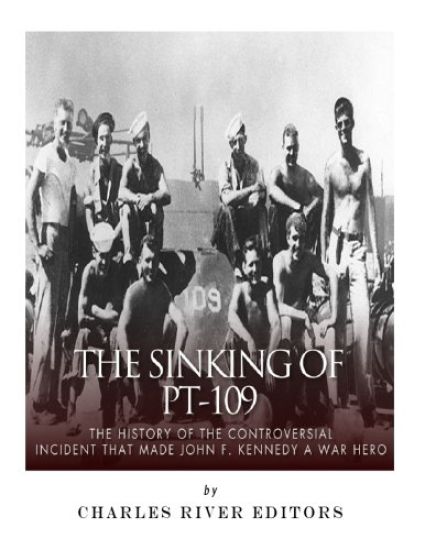
The Sinking of PT-109: The History of the Controversial Incident That Made John F. Kennedy a War Hero
*Includes pictures *Includes quotes from Kennedy and the crew about PT-109 *Includes footnotes and a bibliography for further reading *Includes a table of contents "There's nothing in the book about a situation like this. A lot of you have families and some of you have children. What do you want to do? I have nothing to lose." - John F. Kennedy after the collision with a Japanese destroyer On the night of August 1, 1943 and in the early morning hours of the next day, one of America's many patrol torpedo boats in the Pacific, PT-109 and her crew of 12 men, was performing its usual role in the Pacific Islands: a night patrol of the Blackett Strait in search of enemy convoys transporting large numbers of Japanese troops to southern Guadalcanal and other strategic locations. However, on this dark, moonless night, PT-109, with its engines idling to avoid creating wake, was severed in two by a collision with a Japanese destroyer, the Amagiri. With only seconds to respond after sighting the destroyer, the crew was unable to get the boat out of the Japanese destroyer's path, and it's unclear whether the Japanese destroyer even knew the other boat was there. While the destroyer suffered minimal damage, two crew members on PT-109 were instantly killed, and the other 10 who initially survived would have to struggle for their lives. In many ways, what happened following the collision is remembered better than the actual sinking, in part because the survivors' tale was so harrowing, and their survival was marked by their own bravery. Though the role and effectiveness of PT Boats continues to be a topic of debate, the crew's survival is a story of undisputed valor and providence. Of course, the story's association with a future president never hurts, and like so much of John F. Kennedy's life, the PT-109 incident is controversial. Kennedy survived the attack and famously saved nearly a dozen of his crew, one of whom he saved by swimming for several miles while clenching the crew member's lifejacket with his teeth. A member of the swim team at Harvard, Kennedy also did the bulk of the swimming when looking for food after the survivors reached a deserted island. For this, Kennedy ultimately received the Navy and Marine Corps Medal, but in the process, he suffered a back injury that would trouble him for the rest of his life. After recovering, Kennedy re-enlisted in the Navy and served on PT-59 until he was honorably discharged in 1945, just before Japan's surrender and the end of the War. Kennedy received numerous military awards, among them a Purple Heart and a World War II Victory Metal, and though he was not yet president and perhaps only held that ambition in the back of his mind, Kennedy had already seen more combat than most presidents. Naturally, his future political career would benefit from his service, but given that he was in charge of the crew at the time of PT-109's sinking, critics and detractors have pointed to it and try to pin the blame on him. The Sinking of PT-109 chronicles the famous and controversial incident that made Kennedy a hero during World War II. Along with pictures of important people, places, and events, you will learn about PT-109 like never before, in no time at all.