Kirjojen hintavertailu – 12 903 727 kirjaa ja 27 kauppaa
Kirjailija
Charles River
Kirjat ja teokset yhdessä paikassa: 4 673 kirjaa, julkaisuja vuosilta 2013–2022, suosituimpiin kuuluu William Powell and Myrna Loy: The Lives and Careers of One of Classical Hollywood's Most Iconic Duos. Vertaile teosten hintoja ja tarkista saatavuus suomalaisista kirjakaupoista.
*Includes pictures. *Includes accounts of the battles by citizens, soldiers and important generals. *Includes a bibliography for further reading. "When Barbarossa commences, the world will hold its breath and make no comment." - Hitler World War II was fought on a scale unlike anything before or since in human history, and the unfathomable casualty counts are attributable in large measure to the carnage inflicted between Nazi Germany and the Soviet Union during Hitler's invasion of Russia and Stalin's desperate defense. The invasion came in 1941 following a nonaggression pact signed between the two in 1939, which allowed Hitler to focus his attention on the west without having to worry about an attack from the eastern front. While Germany was focusing on the west, the Soviet Union sent large contingents of troops to the border region between the two countries, and Stalin's plan to take territory in Poland and the Baltic States angered Hitler. By 1940, Hitler viewed Stalin as a major threat and had made the decision to invade Russia: "In the course of this contest, Russia must be disposed of... Spring 1941. The quicker we smash Russia the better." (Hoyt, p. 17) Once the Siege of Leningrad began in the fall of 1941, the Soviets knew they were in a desperate struggle to the death. In fact, the Russians wouldn't have even been given a chance to surrender if they had wanted to, because the orders to the German forces instructed them to completely raze the city: "After the defeat of Soviet Russia there can be no interest in the continued existence of this large urban center... Following the city's encirclement, requests for surrender negotiations shall be denied, since the problem of relocating and feeding the population cannot and should not be solved by us. In this war for our very existence, we can have no interest in maintaining even a part of this very large urban population." Even though the Nazis never managed to entirely cut off that supply route, during the nearly 900 day siege, which lasted from September 1941 - January 1944, at least 750,000 civilians starved to death, one out of every three or four members of the pre-siege population. The siege was so devastating that estimates of civilian dead from all causes were estimated at over a million. To put the massive death toll of the siege of Leningrad in perspective, roughly 4 times more civilians died at Leningrad than in the two atomic bombings. Of course, the civilians were hardly the only ones struggling around Leningrad during the siege, because soldiers on both sides had to deal with combat and terrible weather conditions over the course of nearly 28 months. By the time the siege was lifted, the Germans had suffered an estimated 1 million casualties, while the Soviets suffered an estimated 1 million dead or missing and over 2 million wounded. Not surprisingly, the city itself was a hollow shell of itself, with over 11,000 buildings destroyed and wreckage strewn everywhere. In the spring of 1942, Germany once more made inroads toward Stalingrad, Stalin's own pet city. Not surprisingly, he ordered that it be held no matter what. There was more than vanity at stake though. Stalingrad was all that stood between Hitler and Moscow. It also was the last major obstacle to the Russian oil fields in the Caucuses which Stalin needed and Hitler coveted. If the city fell, so would the rest of the country, and Hitler would have an invaluable resource to fuel his armies. Altogether, the Battle of Stalingrad was the deadliest battle in the history of warfare, and the Soviets' decisive victory there is considered one of the biggest turning points in the entire war, and certainly in the European theater.
*Includes some of the most famous Federalist Papers and quotes from them. *Explains the history behind the drafting of the Articles of Confederation, the Constitution, and the Federalist Papers. *Includes a list of the Federalist Papers, their topics, and who is believed to have authored each one. *Analyzes how the Supreme Court has used and interpreted the Federalist Papers. "It has been frequently remarked that it seems to have been reserved to the people of this country, by their conduct and example, to decide the important question, whether societies of men are really capable or not of establishing good government from reflection and choice, or whether they are forever destined to depend for their political constitutions on accident and force. If there be any truth in the remark, the crisis at which we are arrived may with propriety be regarded as the era in which that decision is to be made." - Alexander Hamilton, Federalist No. 1 In 1787, delegates from the recently independent 13 colonies met in Philadelphia to try to forge a new, stronger Constitution. That summer, the representatives ironed out a document that had pluses and minuses for all involved, a point noted by Ben Franklin in explaining why he assented to it at the end of the process: "For when you assemble a number of men to have the advantage of their joint wisdom, you inevitably assemble with those men, all their prejudices, their passions, their errors of opinion, their local interests, and their selfish views. From such an assembly can a perfect production be expected? It therefore astonishes me, Sir, to find this system approaching so near to perfection as it does; and I think it will astonish our enemies, who are waiting with confidence to hear that our councils are confounded like those of the Builders of Babel; and that our States are on the point of separation, only to meet hereafter for the purpose of cutting one another's throats. Thus I consent, Sir, to this Constitution because I expect no better, and because I am not sure, that it is not the best." However, even after the final document was ready, it still had to be ratified by the colonies, which required the delegates to attempt to argue for or against it. Nobody did this better than John Jay, Alexander Hamilton, and James Madison in the Federalist Papers, which are now among the most famous and influential political writings in the nation's history. The Federalist Papers were written as a series of newspaper editorials that appeared in the American colonies during 1787 and 1789 urging the ratification of the new Constitution. 85 of these essays consist of what is today considered The Federalist Papers, with 77 of them published in The Independent Journal and The New York Packet between October 1787 and August 1788. A compilation of these and eight others, called The Federalist (or The New Constitution), was published in two volumes in 1788 by J. and A. McLean. The Federalist Papers sought to rally support for the Constitution's approval when those three anonymously wrote them, and given how different Hamilton and Madison proved to be ideologically, they demonstrate how men of vastly different political ideologies came to accept the same Constitution. 225 years later, the Federalist Papers are still just as relevant and influential as ever. In addition to being cited dozens of times a year by the Supreme Court in interpreting the Constitution and rendering decisions, the writings also allow readers and scholars today to get into the mindset of the Founding Fathers, including the "Father of the Constitution" himself. The Founding Documents: The Federalist Papers comprehensively covers the history behind the Federalist Papers, as well as some of their most famous quotes and key points. Along with pictures of important people, places, and events, you will learn about the Federalist Papers like you never have before, in no time at all.
*Includes pictures *Includes accounts of the flood written by survivors *Includes a bibliography for further reading "The deluge released by the dam's collapse carried more than 12,000 cubic meters of debris-filled water each second. Flow rates in the Mississippi River typically vary between 7,000 and 20,000 cubic meters per second." - Sid Perkins, Science News, Vol.176 In 2005, the world watched in horror as Hurricane Katrina decimated New Orleans, and the calamity seemed all the worse because many felt that technology had advanced far enough to prevent such tragedies, whether through advanced warning or engineering. However, the failure of human engineering like that seen in New Orleans was nothing new, and it had previously had even deadlier consequences in Johnstown, Pennsylvania. Although floods rarely get as much coverage as other kinds of natural disasters like volcanic explosions, the Johnstown Flood of 1889 has remained an exception due to the sheer destruction and magnitude of the disaster. On May 31, 1889, Johnstown became a casualty of a combination of heavy rains and the failure of the South Fork Dam to stem the rising water levels of Lake Conemaugh about 15 miles away. The dam's inability to contain the water and its subsequent collapse resulted in a catastrophic flood that swept through the town with virtually no warning. With water flowing at a rate equivalent to the Mississippi River, a tide of water and debris 60 feet high and traveling 40 miles per hour in some places surged through Johnstown and swept away people and property alike. The flood ultimately resulted in the deaths of over 2,000 people and destroyed thousands of buildings, wreaking damages estimated to be the equivalent of nearly half a billion dollars today. In 1889, the Johnstown Flood was the deadliest natural disaster in American history, and though it was later surpassed by other events, the unprecedented nature of the flood led to relief efforts never before seen, including by the Red Cross. The Johnstown Flood also led to a change in laws as people tried and failed to recoup damages caused by the collapse of the dam and the subsequent flood. The Johnstown Flood of 1889 chronicles the story America's deadliest natural disaster during the 19th century. Along with pictures of important people, places, and events, you will learn about the Johnstown Flood like never before, in no time at all.
*Includes pictures *Includes accounts of the fighting by soldiers and generals on both sides *Includes footnotes, online resources and a bibliography for further reading The bloodiest day in American history took place on the 75th anniversary of the signing of the Constitution. On September 17, 1862, Robert E. Lee's Confederate Army of Northern Virginia fought George McClellan's Union Army of the Potomac outside Sharpsburg along Antietam Creek. That day, nearly 25,000 would become casualties, and Lee's army would barely survive fighting the much bigger Northern army. Although the battle was tactically a draw, it resulted in forcing Lee's army out of Maryland and back into Virginia, making it a strategic victory for the North and an opportune time for President Abraham Lincoln to issue the Emancipation Proclamation, freeing all slaves in the rebellious states. When discussing the Civil War in Maryland, most of the focus is understandably on Antietam, but it's important not to overlook the battle that ultimately brought the Union and Confederate to Antietam Creek in the first place. The Battle of South Mountain was an opening salvo of sorts before Antietam, fought on September 14, 1862 among several gaps. An extension of the Blue Ridge Range, South Mountain was a heavily wooded and rocky terrain that ran southwest from Pennsylvania down to the Potomac River near Harpers Ferry. To the east of the mountain was the town of Frederick, Maryland, less than 50 miles from Washington, D. C. Despite being significantly outnumbered, Lee's army had the advantage of fighting defensively on higher terrain. At Crampton's Gap, Union General William Franklin's nearly 13,000 strong VI Corps crashed down on about 2,000 Confederates led by Howell Cobb who were part of Lafayette McLaws' division. McClellan had ordered Franklin's corps to set out for Crampton's Gap on the morning of September 14, wasting nearly 11 hours in the process, and Franklin delayed his assault for 3 more hours while arranging his lines for what turned out to be a short fight. The fighting that occurred on that long Sunday was fierce and constant. Artillery, musket, bayonet, and fists were all employed as weapons, resulting in a tremendous number of casualties. The Union forces engaged that day totaled 28,000 and by nightfall 2,325 were listed as casualties. The Confederate Army utilized 18,000 troops and suffered a loss of 2,685 men, an astounding 800 of which were listed as missing. By barely holding onto some of the passes, Lee was able to retreat to Sharpsburg, where he hoped to gather together his scattered forces. As it turned out, the last of the Confederates, A. P. Hill's Light Division, would only arrive around Sharpsburg during the afternoon on September 17, while the Battle of Antietam was at its peak and Lee's army was in danger of being surrounded and captured in its entirety. Thus, these men, many of whom are lost to history, engaged in a battle that led directly to the bloodiest single day in U. S. military history a few days later along Antietam Creek, and that battle would eventually compel President Lincoln to issue the Emancipation Proclamation. The Battle of South Mountain, therefore, proved to be the catalyst for events that forever altered the course of the Civil War and the nation. The Battle of South Mountain: The History of the Civil War Battle that Led the Union and Confederate Armies to Antietam looks at the events that led up and brought on the Battle of South Mountain. Along with pictures of important people and places, you will learn about South Mountain like never before.
*Includes pictures *Includes Whitman's quotes and excerpts of poetry *Includes online resources and a bibliography for further reading "The proof of a poet is that his country absorbs him as affectionately as he has absorbed it." - Walt Whitman Walt Whitman, the great American poet, is also in many ways a great American enigma, for more and less are known about him than other famous men in 19th century American history. On the one hand, he was the product of something of an all-American family, the sort of salt of the earth people he would later describe so vividly in his work. On the other, he was a complete bohemian and profligate, given to vanity in the way he dressed and lived. He started out his career as a school teacher and was later a newspaper man, but he left both those types of work for a job as a government bureaucrat. As a young man, when most of his peers were sowing their wild oats, he was considered by many to be a stick in the mud who neither drank nor chased women. Then, as a middle-aged man, when his peers had settled down into quieter lives, he remained single and seems to have pursued romantic relationships with both men and women. Then, of course, there was his poetry, words that summarized both the best and worst about his nation. His seminal work, Leaves of Grass, began as little more than a pamphlet but grew for decades, as each new edition added more poems. By the time of his death, it had become a large volume still studied today. While he wrote other pieces for publication, Leaves of Grass remained his magnum opus and his baby, nurturing and developing it throughout his life. And yet, through it all, the title remained the same self-deprecating play on words that he had given it when he first self-published the work in 1855. Floyd Stovall, who published a collection of Whitman's works in 1933, explained how Whitman's life and work affected the society around him: "Whitman, like the age that produced him, was both a culmination and a beginning. In him was the flower of romantic idealism in America, which had its roots in the eighteenth-century philosophy of progress, and in him also the seed of scientific realism, which throws its maze of branches about contemporary thought. He bridges the chasm made by the Civil War between the idealism of the past and the materialism of the present and thus becomes the representative of united America... Yet he was never popular. In the passionate conflicts of a changing civilization, the advocate of harmony is liable to be suspected by all factions. So it was with Whitman. The realist distrusted his faith in humanity, and the idealist was shocked because he extolled the animalism of man. On the one hand, he allowed his readers no escape from the imperfections of the world, while on the other he required them to transcend these imperfections. The popular writer, however, must be one who enables his readers to retain their faith in the actual world by obscuring its imperfections in the twilight of sentiment and fancy." Walt Whitman: The Life and Legacy of One of America's Most Influential Poets looks at the life and times of 19th century America's most controversial poet and the impact his famous work had. Along with pictures depicting important people, places, and events, you will learn about Walt Whitman like never before.
*Includes pictures *Includes online resources and a bibliography for further reading In 1831, a 26-year old French foreign service official by the name of Ferdinand de Lesseps was sent to Alexandria to serve as vice-consul. While undergoing an obligatory period of quarantine, the French Consul-General, Monsieur Mimaut, sent his new understudy a number of books to help pass the time, and one of these books proved to be a lengthy memorandum composed by French engineer Jacques-Marie le P re, writing on instructions from Napoleon Bonaparte. The subject was the linking of the Red Sea with the Mediterranean by the construction of a canal. This study made a deep impression on the mind of the young diplomat, and for the remainder of his term of service in Egypt, he applied himself to studying the question. Eventually, he came to believe that it was not only a viable project, but a potentially profitable one too, and, of course, it would be nothing less than a stupendous gift to mankind. As it turned out, the concept of linking the Red Sea with the Mediterranean was not by any means new. In fact, the idea was as old as trade across the isthmus itself. Work on the Canal of the Pharaohs, or Necho's Canal, as it is more commonly known, began during Egypt's Nineteenth Dynasty, under the reign either of Sethi I, or his son, the great Rameses II. The project sought to link the two oceans through an artificial canal of modest length linking a navigable stretch of the Nile to the Bitter Lakes, and then to the Red Sea. The Suez Canal: The History and Legacy of the World's Most Famous Waterway examines the various attempts to create the canal over thousands of years, and how the modern Suez Canal came to be. Along with pictures and a bibliography, you will learn about the Suez Canal like never before.
*Includes pictures *Includes quotes from Muslim Brotherhood leaders like Sayyid Qutb *Includes footnotes and a bibliography for further reading In 2011, Egypt quickly became one of the most active countries during the Arab Spring, with Tahrir Square in Cairo becoming the focal point of both violent protests and peaceful political demonstrations. Inspired by the protesters in Tunisia, beginning in January 2011, Egyptians rallied to the square and in the streets by the thousands, marching, protesting, and calling for the fall of then-President Hosni Mubarak. Throughout the next several months until the overthrow of Mubarak in February 2011, millions of protesters from a wide range of socio-economic, ethnic, and religious backgrounds demanded a regime change across Egypt. As significant as it was for the Egyptian people, the Egyptian Arab Spring was a key turning point for the Muslim Brotherhood - Egypt's largest and long-oppressed opposition group. The Brotherhood played a key role in organizing demonstrations, pitting the Egyptian and world media against the Mubarak regime, and orchestrating violent riots and clashes between civilian protesters and the Egyptian security forces, further portraying the regime in a negative light. But it was after the revolution that the Brotherhood truly reaped its rewards; it formed a legal political party and ran in the subsequent parliamentary elections, winning a large number of seats that were previously unavailable to them. Then, in June 2012, the Brotherhood made history in Egypt when it successfully managed to install its candidate Mohamed Morsi as president. Perhaps no group was surprised by the Egyptian Muslim Brotherhood's swift and largely unopposed rise to power than the Brotherhood itself; for decades, the group had suffered a long history of severe oppression and internal crises, but in the political environment created by the Arab Spring, it only took less than two years for the Brotherhood to control the Egyptian government. As it turned out, it was Islamists who reaped the greatest advantages of the Arab Spring, not only in Egypt, but abroad as well. In Tunisia, the Islamist Nahda party won the largest majority in the post-revolution elections and went on to lead the new government in a country that had endured the dictatorship of President Zine El-Abidine Ben Ali for five decades. Additionally, in other countries across the Arab world, Brotherhood-affiliated or Brotherhood-inspired parties won significant victories that would have been impossible a decade earlier; both the Brotherhood's Justice and Construction Party in Libya and the Muslim Brotherhood in Syria have made definitive gains in establishing political force and influence post-Arab Spring. Despite the gains the group finally made after the Egyptian Arab Spring, as of September 2014, the Brotherhood has reverted to its former position as a banned organization. Mohamed Morsi was toppled by a military coup in July 2013, and on December 25, 2013, the Muslim Brotherhood was officially declared by the Egyptian government a terrorist organization. In the following months, tens of thousands of alleged Brotherhood members and suspected supporters were arrested, tried for vague charges of involvement in violent protests and clashes, and sentenced to jail; in an unprecedented ruling, an Egyptian court went so far as to sentence several hundred to death for their participation in riots that turned violent. While the Muslim Brotherhood has always been centered in Egypt, its ideology and influence has been exported by many individuals and affiliated groups over the decades, to the extent that just about every radical Sunni group across the Middle East has its roots in the Brotherhood, from Hamas to Osama bin Laden's al-Qaeda. As a result, even as it remained a banned party in Egypt, it retained an outsized influence across the region.
*Includes pictures *Includes accounts of the fighting by soldiers *Includes online resources and a bibliography for further reading The powerful forces of the United States Navy (USN), Marine Corps, and Army advanced inexorably against Imperial Japan in 1944. Following massive interdiction of Japanese merchant shipping by American submarines and multiple naval victories, the Americans stood poised to liberate the Philippines, then move on to locations closer to the Japanese home islands. In early 1944, arguments raged over the best approach to the "strategic triangle" created by Formosa, Luzon, and China. Finally, on March 12th, the Joint Chiefs of Staff - consisting of Admirals William D. Leahy and Ernest J. King, and Generals George C. Marshall and Henry H. "Hap" Arnold - issued a directive picking the next target: " T]he most feasible approach to the Formosa-Luzon-China area is by way of Marianas-Carolines-Palau-Mindanao area, and that the control of the Marianas-Carolines-Palau area is essential to the projection of our forces into the former area, and their subsequent effective employment therefrom." The Americans' plans focused on three islands near the southern end of a 15-island, north to south aligned island chain: Saipan, Tinian, and Guam. These islands, relatively large, offered space for the construction of large air bases within strategic bomber range of Japan itself, as well as closer targets. The Japanese also recognized the strategic importance of the Mariana Islands, and Saipan in particular, given its location just 1,272 miles from Tokyo itself. This would place the Japanese capital well within the 3,250 mile range of the Boeing B-29 Superfortress. With these facts in their possession and the Marianas as one of the Americans' most logical next choices, the Japanese worked to move both reinforcements and materials for new fortifications to the southern Marianas in early 1944. Nevertheless, deadly USN submarines with determined crews seriously hampered these efforts. On February 29th, the USS Trout (SS-202), a Tambor-class submarine skippered by Lieutenant Commander Albert Clark, sank the transport Sakito Maru on its way to Saipan. This killed 2,420 men on board the ship, including a considerable portion of the IJA 18th Infantry Regiment. The Trout itself perished with all hands, either to depth charges from the destroyer Asashimo or from one of its own Mark XVIII torpedoes running in a circle and hitting it. Many other transports full of vital war materials went to the bottom as the USN submarines interdicted Japanese ship traffic to the Marianas. Major General Ikeda Keiji complained, "We cannot strengthen the fortifications ...] unless we can get materials suitable for permanent construction. Specifically, unless the units are supplied with cement, steel reinforcements for cement, barbed wire, lumber, etc., ...] no matter how many solders there they can do nothing ...] but sit around with their arms folded, and the situation is unbearable." (Denfeld, 1997, 17). The USN thus used its submarine superiority, to which the Japanese had no effective counter, to greatly hamper efforts to fortify and reinforce the Marianas. With that, the stage was set for the kind of deadly amphibious operations that would take place not only on the Mariana and Palau Islands but also Iwo Jima and Okinawa after it. As a result, the campaign helped persuade President Truman to use the atomic bombs against Japan, and the planes that delivered them to Hiroshima and Nagasaki would end up taking off from airfields constructed by the victorious Americans in the wake of their success in the Marianas. The Mariana and Palau Islands Campaign: The History of the Allied Victory That Preceded the Invasion of the Philippines looks at the important campaign and its aftermath. Along with pictures of important people, places, and events, you will learn about the campaign like never before.
*Includes pictures *Includes accounts of the fighting written by generals on both sides *Explains how Francis Scott Key witnessed the battle and wrote the national anthem *Includes online resources and a bibliography for further reading *Includes a table of contents "And the rockets' red glare, the bombs bursting in air, Gave proof through the night that our flag was still there." - Francis Scott Key Sandwiched between the Revolution and the Civil War, the War of 1812 is one of America's forgotten conflicts, and the stalemated nature of the war (which resolved virtually none of either side's war aims) has also ensured that it is often given merely a cursory overview. Indeed, one of the few aspects of the war that remains common knowledge is that the most famous battle, the Battle of New Orleans, was fought after the Treaty of Ghent had formally ended the war. One other famous aspect of the war is that one of the battles inspired Francis Scott Key to pen the Star-Spangled Banner, which ultimately became America's national anthem. While the British horrified many Americans with the ease in which they sacked the capital at Washington, they faced stiff resistance around Baltimore, with American forces successfully fighting a delaying action that allowed for a proper defense of the city and its harbor. On September 13, 1814, Key and others bore witness to a heavy British bombardment of Fort McHenry that lasted for over a day, yet they proved unable to reduce the American defenses despite trying to land an invasion force outside the fort. In the wake of the unsuccessful assault, the British pulled back their forces, spurring Francis Scott Key to write the poem "Defence of McHenry." Ironically, the lyrics to that poem would eventually go together with an old, popular British hymn to produce America's Star-Spangled Banner. The Battle of Baltimore during the War of 1812: The History of the Battle that Inspired the National Anthem looks at the campaign that culminated with the battle and its influence on Francis Scott Key. Along with pictures and a bibliography, you will learn about the Battle of Baltimore like never before, in no time at all.
*Includes pictures*Includes ancient accounts of Britain *Includes online resources and a bibliography for further reading" The Romans] thinking that it might be some help to the allies Britons], whom they were forced to abandon, constructed a strong stone wall from sea to sea, in a straight line between the towns that had been there built for fear of the enemy, where Severus also had formerly built a rampart." - Bede's description of Hadrian's Wall in the Middle AgesThe famous conqueror from the European continent came ashore with thousands of men, ready to set up a new kingdom in England. The Britons had resisted the amphibious invasion from the moment his forces landed, but he was able to push forward. In a large winter battle, the Britons' large army attacked the invaders but was eventually routed, and the conqueror was able to set up a new kingdom. Over 1,100 years before William the Conqueror became the King of England after the Battle of Hastings, Julius Caesar came, saw, and conquered part of "Britannia," setting up a Roman province with a puppet king in 54 BCE. In the new province, the Romans eventually constructed a military outpost overlooking a bridge across the River Thames. The new outpost was named Londinium, and it covered just over two dozen acres. For most of the past 1,000 years, London has been the most dominant city in the world, ruling over so much land that it was said the Sun never set on the British Empire. With the possible exception of Rome, no city has ever been more important or influential than London in human history. Thus, it was only fitting that it was the Romans who established London as a prominent city. Londinium was initially little more than a small military outpost near the northern boundary of the Roman province of Britannia, but its access to the River Thames and the North Sea made it a valuable location for a port. During the middle of the 1st century CE, the Romans conducted another invasion of the British Isles, after which Londinium began to grow rapidly. As the Romans stationed legions there to defend against the Britons, Londinium became a thriving international port, allowing trade with Rome and other cities across the empire. By the 2nd century CE, Londinium was a large Roman city, with tens of thousands of inhabitants using villas, palaces, a forum, temples, and baths. The Roman governor ruled from the city in a basilica that served as the seat of government. What was once a 30 acre outpost now spanned 300 acres and was home to nearly 15,000 people, including Roman soldiers, officials and foreign merchants. The Romans also built heavy defenses for the city, constructing several forts and the massive London Wall, parts of which are still scattered across the city today. Ancient Roman remains continue to dot London's landscape today, reminding everyone that almost a millennium before it became the home of royalty, London was already a center of power. The Romans were master builders, and much of what they built has stood the test of time. Throughout their vast empire they have left grand structures, from the Forum and Pantheon in Rome to the theatres and hippodromes of North Africa and the triumphal gates in Anatolia and France. Wherever they went, the Romans built imposing structures to show their power and ability, and one of their most impressive constructions was built on the northernmost fringe of the empire. Shortly after the emperor Hadrian came to power in the early 2nd century CE, he decided to seal off Scotland from Roman Britain with an ambitious wall stretching from sea to sea. To accomplish this, the wall had to be built from the mouth of the River Tyne - where Newcastle stands today - 80 Roman miles (76 miles or 122 kilometers) west to Bowness-on-Solway. The sheer scale of the job still impresses people today, and Hadrian's Wall has the advantage of being systematically studied and partially restored.
*Includes pictures *Includes accounts of the mutiny by some of the crew members *Includes a bibliography for further reading *Includes a table of contents "On the Twenty Eight of April at day break the Captain and me were surprised by Mr. Christian, Stewart Young Haywood and the Master at Arms, with twenty one people. Christian and the Master at Arms went into Mr. Bligh's Cabin and tied his hands behind him. Two men came into my Cabin, with muskets and Bayonets, told me if I spoke, that I was a dead man and that Mr. Christian had taken the Ship and that they was to put us onshore upon one of the Friendly Isles." - John Fryer, Master on the Bounty The Mutiny on the Bounty is one of those great stories in history that most people have heard of but few people know much about. In fact, those who think they know what happened are likely to have formed their opinions from what they saw on a movie screen than what they read in a book. Fortunately, the true story itself is every bit as exciting as anything Hollywood could dream up. In April 1789, the HMS Bounty was conducting operations in the Pacific when about half of the crew put in action a plot to take control of the ship from its captain, William Bligh. Along with Bligh, most of the rest of the crew that remained loyal to him were cast adrift while the Bounty sailed off. The mutineers sailed to Pitcairn Island, and they scattered on that island and in Tahiti before scuttling the Bounty itself, but in the meantime, Bligh and his loyal crew were managing to successfully travel over 3,000 miles and reach the Dutch East Indies. Eventually, Bligh was able to make it back to report the mutiny in 1790, and the Royal Navy sent another ship, the Pandora, to go find and arrest the mutineers. The Pandora eventually nabbed 14 of the mutineers, but as if all of that wasn't enough, it ran aground against the Great Barrier Reef, resulting in the deaths of 4 mutineers and dozens of crew. In the end, three of the mutineers were executed, and several were acquitted or pardoned, but the story became such a part of popular lore in Britain that it has been commemorated and depicted in various ways ever since. Of course, the mutiny on the Bounty has been made into several films starring Hollywood legends like Marlon Brando, Clark Gable, and Errol Flynn, and those movies often worked off one of the several novels written about the mutiny. The Mutiny on the Bounty tells the story of the most notorious mutiny in British history. Along with pictures of important people, places, and events, you will learn about the mutiny on the Bounty like never before, in no time at all.
*Covers the history of Iraq from its time as part of the Ottoman Empire to today. *Explains the political, religious, ethnic, and cultural differences within Iraqi society. For much of the past 30 years, Iraq has been one of the world's greatest hotspots. The 1980s saw Ba'athist strongman Saddam Hussein go to war with Iran, as well as the Kurds, who maintained an autonomous region of their own in northern Iraq. Hussein's invasion of Kuwait touched off a Gulf War that was followed by biting sanctions. And the 2003 American led invasion against Hussein's regime provided the uninformed an all too brutal crash course on Iraq's ethnic and religious divisions, and the Middle East's as a whole. For several years, thousands of American soldiers died while fighting both Sunni groups affiliated with al-Qaeda and Shiite militias affiliated with Iran, all while the Sunnis and Shiites targeted each other across the country. Americans became all too familiar with places like Fallujah and names like al-Sadr and al-Zarqawi. Today many people know more about Iraq than they ever wanted to know, but how did Iraq get to where it is today, at the forefront of global affairs? The history of Iraq stretches back thousands of years, all the way back to the ancient civilizations in Mesopotamia, and like other Middle Eastern nations, the modern state of Iraq was forged through several turbulent decades following World War I, the disbanding of the Ottoman Empire, and conflict with imperialistic Western powers. The History of Iraq, 1900-2012 comprehensively and descriptively covers this history, progressing through a timeline to explain how the modern state of Iraq was formed and explaining the religious, ethnic, and cultural differences within Iraqi society. The History of Iraq will bring you up to speed on one of the world's crucial countries today.
*Includes pictures *Includes online resources and a bibliography for further reading "The passive resistance to war, in which we have acquitted ourselves so well, must come to an end." - Prime Minister Winston Churchill Europe's attempts to appease Adolf Hitler, most notably at Munich in 1938, failed, as Nazi Germany swallowed up Austria and Czechoslovakia by 1939. Italy was on the march as well, invading Albania in April of 1939. The straw that broke the camel's back, however, was Germany's invasion of Poland on September 1 of that year. Two days later, France and Great Britain declared war on Germany, and World War II had begun in earnest. Of course, as most people now know, the invasion of Poland was merely the preface to the Nazi blitzkrieg of most of Western Europe, which would include Denmark, Belgium, and France by the summer of 1940. The resistance put up by these countries is often portrayed as weak, and the narrative is that the British stood alone in 1940 against the Nazi onslaught, defending the British Isles during the Battle of Britain and preventing a potential German invasion. At the beginning of 1941, it was unclear whether the Allies would be able to remain in the war for much longer. British Prime Minister Winston Churchill had already immortalized the men of the Royal Air Force with one of the West's most famous war-time quotes, but the potential of a German invasion of Britain still loomed. With the comfort of hindsight, historians now suggest that the picture was actually more complex than that, but the Battle of Britain, fought throughout the summer and early autumn of 1940, was unquestionably epic in scope. The largest air campaign in history at the time, the vaunted Nazi Luftwaffe sought to smash the Royal Air Force, but thankfully, the RAF stood toe to toe with the Luftwaffe and ensured Hitler's planned invasion was permanently put on hold. The Allied victory in the Battle of Britain inflicted a psychological and physical defeat on the Luftwaffe and Nazi regime at large, and as the last standing bastion of democracy in Europe, Britain would provide the toehold for the June 1944 invasion of Europe that liberated the continent. For those reasons alone, the Battle of Britain was one of the decisive turning points of history's deadliest conflict. Of course, that was all in the future, and things still looked bleak in 1941. Traditionally, defeated armies resorted to guerrilla warfare, at least those unwilling to acknowledge defeat, but the British were certainly not prepared to do that just yet. What the situation produced was one of the most storied covert special forces units in military history, one that influenced several other Western nations. The Special Air Service: The History of the Secret British Special Forces Unit from World War II to Today chronicles the major events and the hidden history of the SAS. Along with pictures of important people, places, and events, you will learn about the British SAS like never before.
*Includes pictures. *Includes bibliographies. The Founding Fathers have held a special place in American society since the nation gained its freedom, and many of them had become national heroes even before then. Over 200 years later, Americans still look with reverence to these men, often debating with each other what the Founding Fathers would think about a certain issue, or how they would judge a certain law or legislation. In many respects, these men have become icons, whose words, thoughts and deeds are rarely questioned. Every American is taught a pristine narrative of the life and legacy of George Washington and can easily recite the highlights and myths of Washington's life. Washington's Secretary of State and the 3rd president, Thomas Jefferson was instrumental in authoring the Declaration of Independence, laying out the ideological groundwork of the notion of states' rights, leading one of the first political parties, and overseeing the expansion of the United States during his presidency. Abraham Lincoln (1809-1865) is one of the most famous Americans in history and one of the country's most revered presidents. Schoolchildren can recite the life story of Lincoln, the "Westerner" who educated himself and became a self made man, rising from lawyer to leader of the new Republican Party before becoming the 16th President of the United States. Lincoln successfully navigated the Union through the Civil War but didn't live to witness his crowning achievement, becoming the first president assassinated when he was shot at Ford's Theater by John Wilkes Booth on April 14, 1865. When McKinley was assassinated in 1901, young Teddy Roosevelt was thrust into the presidency. Roosevelt's "Square Deal" domestic policies favored average citizens while busting trusts and monopolies. Teddy also promoted conservation as an environmental stance, while his "speak softly and carry a big stick" foreign policy is still an oft used phrase today. Teddy even earned a Nobel Prize during his presidency. Teddy is on Mount Rushmore and might be America's greatest 20th century president, but if he's not it might be because of his own relative. Whether Franklin Delano Roosevelt was America's greatest 20th century president or not, there's no question that he was the most unique. A well-connected relative of Theodore Roosevelt, FDR was groomed for greatness until he was struck down by what was widely believed to be polio at the time. Nevertheless, he persevered, rising through New York politics to reach the White House just as the country faced its greatest challenge since the Civil War, beginning his presidency with one of the most iconic lines ever spoken during an inaugural address. For over a decade, President Roosevelt threw everything he had at the Great Depression, and then threw everything the country had at the Axis powers during World War II. Ultimately, he succumbed to illness in the middle of his fourth term, just before the Allies won the war.
*Includes pictures*Includes accounts of the battles and the Bismarck's sinking by sailors on both sides*Includes online resources and a bibliography for further reading*Includes a table of contents "The Bismarck had put up a most gallant fight against impossible odds, worthy of the old days of the Imperial German Navy, and she went down with her colours flying." - Vice Admiral John Cronyn Tovey, commander of the task force fighting the Bismarck Immensely powerful and thickly armored, armed with eight 15-inch guns aimed by one of the most sophisticated target acquisition systems of its day, the Third Reich's premier battleship, the KMS Bismarck, left an indelible trail of legends behind it during its single, fatal foray against the British in 1941. Victorious over the HMS Hood, prowling the Arctic waters north of England, and circling in a desperate effort to evade the Royal Navy and reach the safety of Brest in France, the Bismarck's first and last combat voyage lasted a brief total of eight days. Though well-constructed for the most part and extremely formidable, the KMS Bismarck did not represent the world's most powerful battleship at the time, subsequent myth-making notwithstanding. The Americans, Italians, and indeed the pre-invasion French already possessed equal or slightly superior combat craft. The Japanese soon produced much stronger vessels. Nevertheless, Nazi Germany deployed no warship more powerful, so the Bismarck's loss caused a disproportionately high loss of German morale and a similar boost to English confidence during one of the darkest periods of the war. Naval warfare in 1941 sat on the cusp between the past - when battleships and their massive gun batteries ruled the waves - and the very near future - when aircraft carriers proved stunningly dominant over ships armed only with artillery. A single aircraft carrier involved itself in the pursuit and destruction of the Bismarck, causing one of the pivotal events of "Exercise Rhine" through nearly wholly random chance. The KMS Bismarck's destruction represented neither a predestined conclusion nor the result of the impending radical change in naval tactics and strategy. The Bismarck sailed during the narrow window at the start of World War II when the battleship remained a viable independent instrument of war rather than the mobile defense for aircraft carriers or the floating artillery battery supporting shore operations it became. Instead, human decisions and pure chance conjoined to result in the Bismarck's destruction. Admiral Gunther L tjens, overall expedition commander, committed several major errors during the operation. Towards its end, he wallowed in despair, failing to carry through on several ruses devised by his subordinates which, in the hands of a commander not already resigned to death, might have tipped the scale to the Bismarck's survival. Both sides made crucial errors, but those of Gunther L tjens proved most decisive. As Charles de Gaulle pithily observed, "Victory often goes to the army that makes the least mistakes, not the most brilliant plans." The sinking of the Bismarck demonstrated the truth of this aphorism. A handful of poor choices at vital turning points on the part of one man - L tjens - decided the fate of the KMS Bismarck and cost the lives of 2,088 men aboard her (or 94.7% of her crew), including his own. The Sinking of the Bismarck: The History of the Battle that Destroyed Nazi Germany's Most Famous Battleship chronicles the demise of World War II's most famous ship. Along with pictures of important people, places, and events, you will learn about the Bismarck like never before, in no time at all.
*Includes pictures *Profiles some of the strange creatures, legends, and mysteries of the Midwest *Includes online resources and a bibliography for further reading *Includes a table of contents "I don't live in Hollywood. I don't have celebrities as friends. I like them, but I don't pal around with them. I just live in the Midwest, a real normal world." - Jerry Springer The U. S. Census Bureau defines the Midwest as consisting of a dozen states: Illinois, Indiana, Iowa, Kansas, Michigan, Minnesota, Missouri, Nebraska, North Dakota, Ohio, South Dakota, and Wisconsin. Outsiders often deride the region, and for many who have never been there, America's heartland is just a bunch of "flyover states" with little influence, little history, and little interest. However, anyone familiar with the region this couldn't be further from the truth. The Midwest is rich in history and folklore, and it has more than its fair share of mysteries, too. Strange creatures, Native American legends, haunted houses, and unexplained phenomena are rife in these states, and this book will uncover just a sample of the countless strange tales of America's Heartland. The Mysterious Midwest: Mysteries, Legends, and Unexplained Phenomena in America's Heartland is part of an ongoing series by Sean McLachlan and Charles River Editors that includes The Weird Wild West, Mysteries of the South, and Mysterious New England, and more regional titles will be coming soon. This book offers a sampling of strange, unexplained, and just plain odd stories of the Midwest that have fascinated people in and around the region for centuries. Along with pictures of important people, places, and events, you will learn about the mysterious side of the Midwest like never before, in no time at all.
*Includes pictures *Includes the artists' quotes about their lives and careers *Includes online resources and a bibliography for further reading *Includes a table of contents If Sam Cooke, one of the greatest African-American soul singers in the genre's history, had been Irish, he might have kept company with the likes of the great balladeer and classical tenor John McCormack. If he had been born Italian, he might have starred in the refined, lyrical Mozart opera roles usually reserved for those with an extreme musical sensitivity. Such was the level of excellence in Cooke's inner understanding of his own voice, which was capable of exquisite classical precision and a finesse in phrasing that lay far beyond the norm. He could have prospered and attained greatness in any genre of his choice, but considering the timing of the American audience, and his African-American heritage, Sam Cooke instead pioneered a new genre and became its greatest practitioner by blending black musical traditions that incorporated all the refinement and beauty of European classical genres yet still spoke from the heart of his rural American roots. To some, the Stax Records model may have lagged behind Motown in terms of modernity, with its adherence to older musical and technological modes, but in actuality, Otis Redding and his musical circle represented a preservation movement of sorts, and "exemplified to many listeners the power of Southern 'deep soul' - hoarse, gritty vocals, brassy arrangements, and an emotional way with both party tunes and aching ballads." Such was the perfect conduit for an artist like Otis Redding, who felt compelled by the lifelong urge to sing, years before his dreams of a professional life would ever be realized. And, as the edifice of soul broke further into sub-styles, Redding seemed able to succeed in every one of them. Among the many stars gathered by Berry Gordy's Motown Records during the latter half of the 20th century, one of the most famous and successful was Marvin Gaye, even though the rigidity of the studio's operating procedures constantly collided with his capacity for stubbornness and insistence that he be given the independence to pursue his own artistic vision. Of course, it's easy to see it from both sides; despite the ceaseless thread of masterpieces emerging from Motown studio artists (many of them performed and recorded by Gaye), it might also be said in his defense that as part of the record company's mission statement, Motown operated in a state of near artistic lockdown where creative input by the artist was concerned. A certain inevitability characterizes the rise to fame of Aretha Franklin. Indeed, while it is true that neither of her parents were pop singers, they were each talented vocalists-Aretha's father, C. L., was a particularly famous preacher, with a voice so melodic that his sermons effectively doubled as musical performances. Moreover, in an age in which economic opportunities were particularly limited for African-Americans, Aretha was fortunate enough to grow up in a household of relative comfort. Not only was she exposed to music on a daily basis in her household, but her father was a savvy enough businessman to orchestrate her career during its nascent stages, helping her navigate the challenges of entering the music industry. To be certain, in many respects, Aretha Franklin was from an early age the beneficiary of opportunities that are simply unavailable to most aspiring vocalists. Among the most innovative and independent artists to come out of Motown in the latter half of the 20th century, along with colleagues Marvin Gaye, Isaac Hayes, and Michael Jackson, Stevie Wonder was said by many to possess three distinct obstacles to fulfillment in the music industry. He was poor, and worse, he was black and blind. Wonder, however, refused to shrink from or acknowledge any of these realities as barriers, asserting that he had not been in any way disadvantaged.
*Includes pictures *Explains the formation, influences, ideology, and goals of the group *Includes footnotes and a bibliography for further reading Also known as ISIS, Da'esh, al-Qaeda in Iraq (AQI), and a host of other names, the Islamic State in Iraq and the Levant (ISIL) has increasingly gained attention over the years for its brutal tactics and seemingly blatant disregard for human rights, but it has recently dominated the global media spotlight and made headlines when it attacked and seized control of Mosul, the second largest city in Iraq, and drove out an Iraqi army force that was more than five times its size in June 2014. It has since laid claim to various territories throughout Iraq and the Levant, and it has established operational control and maintained administrative structures on both sides of the Iraqi-Syrian border. Most recently, it declared the restoration of a caliphate and renamed itself the Islamic State. The ever-deteriorating crises in Iraq and Syria have continued to highlight the prolific activities of ISIS, but as a unified organization, ISIS is believed to consist of only a few thousand militants led by a shadowy and secretive leader named Abu Bakr al-Baghdadi. Nonetheless, despite its relatively small size, the group has taken on and at times successfully battled U. S. and Coalition forces, the Iraqi army, and other rival Iraqi and Syrian militant groups. The ferocity and fanaticism with which it fights, and the absolute commitment it has to the jihad in Iraq and the Levant, continue to set ISIS apart from other known terrorist organizations in the region. One of the reasons ISIS has gone by so many different names is because it has rebranded itself numerous times in the past. After starting as an al-Qaeda-inspired Sunni Islamist brigade that emerged from the ashes of the jihadist struggle against foreign forces in Iraq, the group grew into a full-fledged al-Qaeda branch, then evolved into a religiously motivated army, then finally separated from al-Qaeda to become the organization it is today. The frequent name changes are hardly cosmetic; they represent the multiple transformations the group has undergone and symbolize its flexibility and adaptability, which is also how the ISIL has not only survived for over a decade but even flourished as one of the most influential groups in the region. Today, the group attracts fighters who wish to join its ranks not just from across Iraq and the region but from all over the world. The group has also experienced many periods of withdrawal and reemergence, further confounding the true nature and structure of the organization, which has been littered with in-fighting, rivalries, and leadership shuffles. But the group's terrorism and violent capabilities have been made quite clear in the Syrian civil war, the fighting in Iraq, and even attacks into other countries within the region. Operatives have claimed bombings and attacks in Lebanon and Jordan, and there are known recruiting cells in places as far away as Egypt, Morocco, and the U. K. The Islamic State of Iraq and Syria: The History of ISIS/ISIL chronicles the birth and growth of the group, including the key figures and events that impacted its formation, as well as the ideology of the group and the historical context and environment that strengthened it. This book also looks at the various tactics and strategies the group has employed to achieve its goals and further its ideology, especially its notorious terrorist attacks. Along with pictures of important people, places, and events, you will learn about ISIS like never before, in no time at all.
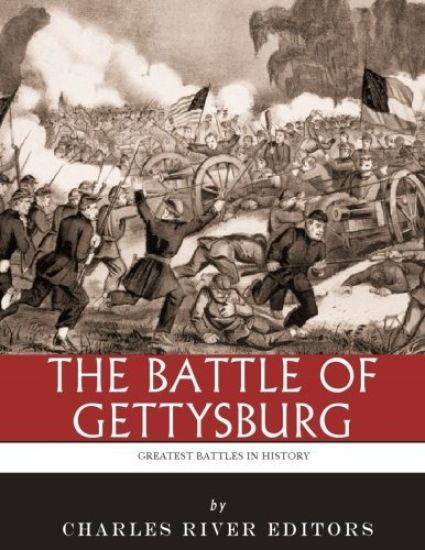
*Includes pictures of important people, places, and events. *Comprehensively covers the entire Pennsylvania campaign and its aftermath. *Analyzes the generalship of the battle's most important leaders, including Lee, Longstreet, Stuart, Meade, Hancock, Chamberlain, and more. *Includes bibliographies for further reading. "The fact of the matter is that George G. Meade, unexpectedly and against all odds, thoroughly outgeneraled Robert E. Lee at Gettysburg." - Stephen Sears The names of history's most famous battles still ring in our ears today, their influence immediately understood by all. Marathon lent its name to the world's most famous race, but it also preserved Western civilization during the First Persian War. Saratoga, won by one of the colonists' most renowned war heroes before he became his nation's most vile traitor. Hastings ensured the Normans' success in England and changed the course of British history. Waterloo, which marked the reshaping of the European continent and Napoleon's doom, has now become part of the English lexicon. In Charles River Editors' Greatest Battles in History series, readers can get caught up to speed on history's greatest battles in the time it takes to finish a commute, while learning interesting facts long forgotten or never known. Without question, the most famous battle of the American Civil War took place outside of the small town of Gettysburg, Pennsylvania, which happened to be a transportation hub, serving as the center of a wheel with several roads leading out to other Pennsylvanian towns. From July 1-3, Robert E. Lee's Confederate Army of Northern Virginia tried everything in its power to decisively defeat George Meade's Union Army of the Potomac, unleashing ferocious assaults that inflicted nearly 50,000 casualties in all. Day 1 of the battle would have been one of the 25 biggest battles of the Civil War itself, and it ended with a tactical Confederate victory. But over the next two days, Lee would try and fail to dislodge the Union army with attacks on both of its flanks during the second day and Pickett's Charge on the third and final day. Meade's stout defense held, barely, repulsing each attempted assault, handing the Union a desperately needed victory that ended up being one of the Civil War's turning points. After the South had lost the war, the importance of Gettysburg as one of the "high tide" marks of the Confederacy became apparent to everyone, making the battle all the more important in the years after it had been fought. While former Confederate generals cast about for scapegoats, with various officers pointing fingers at Robert E. Lee, James Longstreet, and James Stuart, historians and avid Civil War fans became obsessed with studying and analyzing all the command decisions and army movements during the entire campaign. Despite the saturation of coverage, Americans refuse to grow tired of visiting the battlefield and reliving the biggest battle fought in North America. The Greatest Battles in History: The Battle of Gettysburg comprehensively covers the entire Pennsylvania campaign, analyzes the decisions made by the battle's most important leaders, and explains the aftermath of the Union victory and the legacies that were made and tarnished by the battle. Along with bibliographies, maps of the battle, and pictures of important people and places, you will learn about the Battle of Gettysburg like you never have before, in no time at all.