Kirjojen hintavertailu – 12 903 727 kirjaa ja 27 kauppaa

Kirjailija

Charles River

Kirjat ja teokset yhdessä paikassa: 4 673 kirjaa, julkaisuja vuosilta 2013–2022, suosituimpiin kuuluu William Powell and Myrna Loy: The Lives and Careers of One of Classical Hollywood's Most Iconic Duos. Vertaile teosten hintoja ja tarkista saatavuus suomalaisista kirjakaupoista.

4 673 kirjaa

Kirjojen julkaisuvuodet: 2013–2022.

The Capture of Jefferson Davis: The History of the Confederate President's Attempt to Escape the Union Army
*Includes pictures *Includes accounts of Davis' escape and his correspondence with Southern generals *Includes accounts of Davis' capture and imprisonment *Includes online resources and a bibliography for further reading *Includes a table of contents On April 1, 1865, the Union army finally broke the Confederate army's siege lines around Petersburg at the Battle of Five Forks. When fighting across the siege lines erupted the next day, it forced Lee to make a disorderly retreat of both Petersburg and nearby Richmond. Left no choice with Lee's retreat, the Confederate government hurriedly evacuated Richmond, taking as many papers as they could, and Confederate president Jefferson Davis moved his headquarters to Danville, Virginia on April 3. On April 4, President Lincoln entered Richmond and famously toured the White House of the Confederacy, sitting at Davis's desk. To most observers, the South was clearly reaching its end, but Davis had no intention of quitting the war. Even while he was fleeing, he attempted to order Confederate generals in the field to keep fighting. On April 9, 1865, Lee formally surrendered his weary army to Grant at Appomattox. Appomattox is frequently cited as the end of the Civil War, but there still remained several Confederate armies across the country, mostly under the command of General Joseph E. Johnston, the same commander who arrived with reinforcements by rail during the First Battle of Bull Run and gave the South hope with victory in the first major battle. But on April 26, 1865, Johnston defied Davis's orders and surrendered all of his forces to General Sherman. Over the next month, the remaining Confederate forces would surrender or quit. The last skirmish between the two sides took place May 12-13, ending ironically with a Confederate victory at the Battle of Palmito Ranch in Texas. As fate would have it, the last fighting of the Civil War took place two days after Davis had been captured in Georgia, and his capture remained controversial for several decades. . Davis and his family had continued to flee south from Virginia trying to stay ahead of Union authorities, but with Lee and Johnston both surrendering, President Davis held a meeting of his Cabinet in Georgia in early May 1865, during which he officially dissolved the Confederate government. Davis still hoped to escape federal authorities, but his luck ran out on May 10 in Irwinville, Georgia, when he and his family were spotted. While attempting to run, Davis slung his wife's overcoat over his shoulders. In the North, Davis was portrayed as attempting to disguise himself as a woman to avoid capture. Publications gladly ran cartoons depicting Davis in dresses and women's attire. Placed in heavy shackles, he was transported to Fort Monroe, Virginia where he was charged with treason and planning to assassinate Lincoln, with the country still reeling over his assassination by John Wilkes Booth. Davis was put in a basement cell with one small barred window facing the moat. A grand jury would later indict him for treason. On December 25, 1868, treason charges were officially dropped against him, much to Davis' chagrin. Davis actually relished the possibility of challenging the charges in court and was dismayed that he wasn't given a soapbox to make his arguments. Though Davis was offered several positions as an agent for various British interests, Presidents Grant, Hayes, Garfield and Arthur cut short any such arrangements, intent on not rewarding his "traitorous" actions. Still, Davis enjoyed his time in Europe, and in the decades after the war, he made several more trips to Europe. The Capture of Jefferson Davis: The History of the Confederate President's Attempt to Escape the Union Army analyzes the history of one of the final chapters of the Civil War. Along with pictures of important people, places, and events, you will learn about the flight and capture of Jefferson Davis like never before.

Supreme Allied Commanders of World War II: The Lives and Legacies of Dwight D. Eisenhower and Douglas MacArthur
*Weaves the lives and careers of both generals into one entertaining and educational narrative. *Includes MacArthur's most colorful and inspiring quotes, including his famous Victory Broadcast and Farewell Address to Congress. *Includes pictures of Eisenhower, MacArthur and other important people, places, and events. *Discusses the careers and relationship between both generals. *Explains their roles in the Atlantic and Pacific, particularly the Philippines and D-Day. *Includes a Bibliography for further reading. "There is no substitute for victory." - Douglas MacArthur Dwight Eisenhower and Douglas MacArthur were the two most famous generals in the United States during World War II. Having risen the ranks via mostly administrative jobs between the two World Wars, the two men worked together in the Philippines during the 1930s, only to go their separate ways and earn eternal fame as Supreme Allied Commanders in the Atlantic and Pacific Theaters. A career military man, Ike was too young to serve in combat during World War I, but he began a long and productive career collaborating with future military legends George Patton and Douglas MacArthur while serving some of the nation's other famous generals, including George Marshall and John J. Pershing. Amazingly, he had never served in anything but administrative positions before World War II. By 1942, Eisenhower was given the role of appointed Supreme Commander Allied (Expeditionary) Force in North Africa, and after his success there, Eisenhower oversaw the invasion of Sicily in 1943, which at the time had been the largest amphibious invasion in history. In both campaigns he had the fortune of commanding George Patton. With those successes, President Roosevelt picked Eisenhower to be the Supreme Allied Commander of the Allied Expeditionary Force, leaving him in charge of Operation Overlord and the defining moment of his military career, D-Day. By the time he died in 1969, President Nixon aptly described Eisenhower as "the world's most admired and respected man, truly the first citizen of the world." Of all the military men America produced during the 19th and 20th centuries, it's hard to find one as important, successful and controversial as General Douglas MacArthur. The son of a Civil War veteran, MacArthur rose to become the most instrumental commander in the Pacific Theater during World War II. His legendary return to the Philippines in 1944 made good on one of the war's most famous vows, and it was MacArthur who fittingly who oversaw the occupation and reconstruction of Japan following the war. Given his long and celebrated career, MacArthur was the obvious choice to lead the newly created United Nations' troops during the Korean War, but his arguments over war strategy and policy eventually led to his controversial firing by President Harry Truman in 1951. After that, in his own words, he "faded away", living out his remaining days on the top floor of the Waldorf Hotel until his death in 1964. For many with a conservative disposition he remains a hero who, had he been listened to, would have prevented the current impasse with the rogue state that is modern North Korea. For some liberal thinkers he was dangerously obsessive while wholly ignorant of geopolitics, and he has been branded as a general who would have used atomic weapons and potentially triggered the third world war. Supreme Allied Commanders of World War II profiles the lives, careers, relationship and legacies of the two legendary generals, along with pictures and a bibliography.
The Gallic Wars: The Campaigns That Made Julius Caesar a Roman Legend

The Gallic Wars: The Campaigns That Made Julius Caesar a Roman Legend

Charles River

Createspace Independent Publishing Platform
2018
nidottu
*Includes pictures. *Includes excerpts from Caesar's own commentaries about the Gallic Wars. *Includes a bibliography for further reading. "As the action was carried on in sight of all, neither a brave nor cowardly act could be concealed; both the desire of praise and the fear of ignominy, urged on each party to valor. After fighting from noon almost to sunset, without victory inclining in favor of either, the Germans, on one side, made a charge against the enemy in a compact body, and drove them back; and, when they were put to flight, the archers were surrounded and cut to pieces. In other parts, likewise, our men pursued to the camp the retreating enemy, and did not give them an opportunity of rallying..." - Caesar, De Bello Gallico The Gallic Wars, the series of campaigns waged by Julius Caesar on behalf of the Roman Senate between 58-50 BC, were among the defining conflicts of the Roman era. Not only was the expansion of the Republic's domains unprecedented (especially when considering it was undertaken under the auspices of a single general), it had a profound cultural impact on Rome itself as well. The Roman Republic, so dynamic in the wake of the destruction of their ancient enemy, Carthage, had recently suffered a series of dramatic upheavals; from the great slave rebellion of Spartacus to the brutal and bloody struggle for power of Marius and Sulla. Rome had been shaken to its very core, and a victory was essential both to replenish the dwindling national coffers and to instill in the people a sense of civic pride and a certainty in the supremacy of the Republic. Quite simply, in terms of scale, the Gallic Wars were unmatched by anything the Roman Republic had witnessed since the Punic Wars. By the end of the campaigns, ancient historians estimated that more than a million people had died, and still more displaced or enslaved. Even by the more conservative estimates of modern historians, a casualty count in the hundreds of thousands appears possible. Either way, the war was a cataclysm, involving tens of thousands of combatants, and it also marked the greatest displays of skill by one of the greatest battlefield generals history has ever known. Caesar's successful campaigns in Gaul have become the stuff of military legend, in part because he had the foresight to document them himself. Caesar himself wrote a famous firsthand account of the Gallic Wars, apparently from notes he had kept during the campaigns, and he wrote Commentarii de Bello Gallico (Commentaries on the Gallic War) in the third person. Caesar's account described the campaigning and the battles, all as part of a propaganda campaign to win the popularity of the Roman people. As a result, he left out inconvenient facts, including how much of a fortune he made plundering, but the work still remains popular today, and it is still used to teach Latin. The Gallic Wars: The Campaigns That Made Julius Caesar a Roman Legend comprehensively looks at the campaigns that subdued Gaul and led to Caesar's conquest not just of the European continent but of Rome itself. Along with pictures, you will learn about the Gallic Wars like never before, in no time at all.
The Chicago Sanitary and Ship Canal: The History of the Waterway Connecting the Great Lakes to the Mississippi River
*Includes pictures *Includes footnotes, online resources and a bibliography for further reading *Includes a table of contents It has been called the greatest engineering project of the 1800s and the greatest undertaking by a single municipality, but the creation of the Chicago Canal was actually a reversal of nature, for the benefit of man. In the 19th century, some of the most important canals in the world were conceived or constructed, and while the Panama Canal and Suez Canal are better known, the Chicago canal is one of the greatest engineering projects in history. At nearly 30 miles long, the construction actually managed to reverse the flow of parts of the Chicago River, and though it was intended to be for sewage treatment, the canal continues to operate today, over 115 years after it officially opened. In the process, the canal opened up transportation between the Great Lakes and the Mississippi River, cementing Chicago's status as one of the most important cities in the United States. The Chicago Sanitary and Ship Canal: The History of the Waterway Connecting the Great Lakes to the Mississippi River looks at the important waterway. Along with pictures of important people, places, and events, you will learn about the Chicago canal like never before, in no time at all.
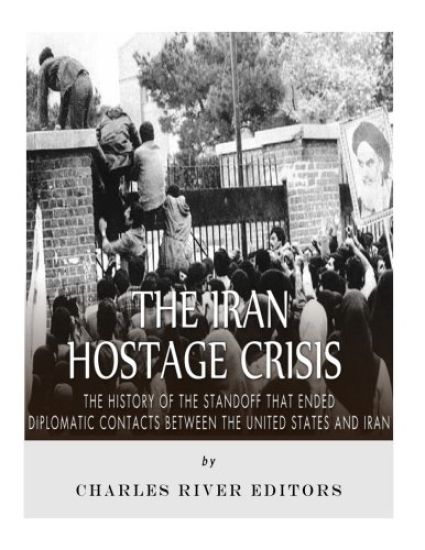
The Iran Hostage Crisis: The History of the Standoff that Ended Diplomatic Contacts Between the United States and Iran
*Includes pictures *Includes accounts of the crisis by hostages, politicians, and Iranian students *Includes online resources and a bibliography for further reading *Includes a table of contents "Carter's predecessor, whom he says he emulates -- Harry Truman -- would have landed the Marines and offered to cripple Iran's economic base. These Iranians have committed an act of war against the United States and all Carter wants to do at the moment is talk. It is time to speak with the power and the might of a first rate country instead of the wishy-washy language of diplomatic compromise." Daniel A. Darlington's Letter to the Editor, Denver Post On February 1, 1979, amid great fanfare, exiled cleric Ayatollah Ruhollah Khomeini landed in Tehran. The return of the leader of the revolution to his home country was one of the final markers of the Iranian Revolution, a national phenomenon that had global implications. The Iranian Revolution of 1979 has been described as an epochal event, called the peak of 20th century Islamic revivalism and revitalization, and analyzed as the one key incident that continues to impact politics across Iran, the Middle East, and the even the world as a whole. As a phenomenon that led to the creation of the first modern Islamic Republic in the world, the revolution marked the victory of Islam over secular politics, and Iran quickly became the aspiring model for Islamic fundamentalists and revivalists across the globe, regardless of nationality, culture, or religious sect. When Ayatollah Khomeini was declared ruler in December 1979 and the judicial system originally modeled on that of the West was swiftly replaced by one purely based on Islamic law, much of the world was in shock that such a religiously driven revolution could succeed so quickly, especially when it had such sweeping consequences beyond the realm of religion. Furthermore, while the focus of the revolution was primarily about Islam, the revolution was also colored by disdain for the West, distaste for autocracy, and a yearning for religious and cultural identity. This point was driven home on November 4, 1979 when Iranians stormed the U. S. embassy and took dozens of Americans hostage, sparking a crisis that would last for the rest of President Jimmy Carter's term. A few Americans escaped the embassy and hid in Tehran before being extracted (a mission that was recently adapted into the movie Argo), but for nearly 450 days, the crisis remained at the forefront of America's daily life, and aside from an embarrassing failed rescue mission, the administration seemed uncertain over how to approach the crisis and protect the American hostages. Eventually, all of the hostages were freed on the day Ronald Reagan was inaugurated as president in 1981, but the Iran hostage crisis had far reaching ramifications that have lasted to this day. Most notably, formal diplomatic contact between the United States and Iran ended, and no American embassy is open in that country nearly 35 years later. For anyone born during the 1960s, the Iran Hostage Crisis marked a change in American identity both as people and a nation. Those born in earlier decades had little to no understanding of radical Islam, and those born later could not conceive of a world without it. Some would say that the crisis was ultimately a good thing, in that it ushered Ronald Reagan into the White House and thus led to the fall of Communism, while others would say that it was a harbinger of doom, a demonstration that even as one geopolitical foe declined, another was on the rise. Some say America was singled out because it was seen as too strong, others because it was seen as too weak. The bottom line is that, while no one knows what might have been done to prevent it, everyone has an idea about how it might have been ended sooner.
The Library of Alexandria and the Lighthouse of Alexandria: The Ancient Egyptian City's Most Famous Sites
*Includes pictures depicting important people, places, and events. *Includes ancient accounts about the two sites and their destruction. *Includes a bibliography for further reading. In the modern world, libraries are taken for granted by most people, perhaps because their presence is ubiquitous. Every school has a library, large libraries can be found in every major city, and even most small towns have public libraries. However, the omnipresent nature of libraries is a fairly recent historical phenomenon, because libraries were still few and far between before the 19th century. For centuries in the Western world, during what is known as the Middle Ages, written knowledge was guarded closely and hidden away in private repositories, usually by the religious classes, and hidden away in private repositories. The lack of libraries in the West helped contribute to the popular imagination of the ancient Library at Alexandria, and all the myths and legends that have come to be associated with it, but the Library of Alexandria deserves its reputation. While the exact nature of the Library remains murky, it functioned for at least several centuries and is believed to have housed hundreds of thousands of books, most written as scrolls on papyrus, and it essentially became the culmination of two ancient literary and cultural traditions converging: the Greek and Egyptian. Of course, the most controversial aspect of the Library of Alexandria is its destruction, which is still a topic of debate today. Over 2,000 years ago, two ancient writers named Antipater of Sidon and Philo of Byzantium authored antiquity's most well known tour guides. After the two Greeks had traveled around the Mediterranean, they wrote of what they considered to be the classical world's greatest construction projects. While there is still some question as to who actually authored the text attributed to Philo and when it was authored, their lists ended up comprising the Seven Wonders of the Ancient World, igniting interest in the ones they chose and inspiring subsequent generations to identify their own era's Seven Wonders. The youngest of the Wonders also turned out to be the most practical and one of the longest-lived, surviving into the late Middle Ages. It was a lighthouse built on the northern coast of Egypt in Africa, at the Greek city founded in Alexander's name. It was the Pharos, the Great Lighthouse of Alexandria. Among antiquity's wonders, the Lighthouse of Alexandria was fairly unique both in terms of its purpose and its secular nature. While pyramids and statues served religious purposes in Egypt and Greece, and others were impressive works of art, the origins of the Lighthouse were not even as a lighthouse at all. Instead, the large formation on the island of Pharos in the harbor of Alexandria was originally meant to help sailors identify the location of the city during the day, and some speculate it was not until later that Alexandrians decided to make it a true lighthouse that would serve sailors at night. While there is still debate over its height, the Lighthouse of Alexandria was unquestionably one of the tallest man-made structures in the world at the time, if not the tallest. While ancient accounts often exaggerated its height, medieval Arab sources often claimed it was somewhere around 300-350 feet tall, with an incredibly wide base, and those sources wrote at a time where it had already required repairs due to earthquake damage. Efforts to repair it kept going until the 14th century, when the damage was so extensive that it was mostly left in ruins, the last of which were taken for other building projects and/or slipped underneath the Mediterranean. Fortunately, due to descriptions of the lighthouse and archaeological remains, modern scholars are able to understand this wonder better than most, and there may even be future attempts to build a replica and bring it back to life.
The Kamikazes: The History of Japan's World War II Suicide Pilots

The Kamikazes: The History of Japan's World War II Suicide Pilots

Charles River

Createspace Independent Publishing Platform
2018
nidottu
*Includes pictures *Includes diary entries and other accounts written by kamikaze pilots *Includes a bibliography for further reading One of the most fascinating aspects of World War II was Japan's use of suicide pilots known around the globe as kamikazes, though the Japanese referred to them as Tokubetsu kogekitai ("Special Attack Units"). Translated as "God Wind," "Divine Wind" and "God Spirit," kamikazes would sink 47 Allied vessels and damage over 300 by the end of the war, but the rise in the use of kamikaze attacks was evidence of the loss of Japan's air superiority and its waning industrial might. This method of fighting would become more common by the time Iwo Jima was fought over in early 1945, and it was especially prevalent during the invasion of Okinawa in April 1945. The "privilege" of being selected as a kamikaze pilot played directly into the deep-seated Japanese mindset of "death before defeat." The pilot training manual assured each kamikaze candidate that when they eliminated all thoughts of life and death, fear of losing the earthly life can be easily overcome. Still, not all cases of those chosen to be kamikazes were equally noble. Recruits were trained with torturous regimens or corporal punishment, and stories of mental impairment caused by drugs or saki abound. Some were described as "tottering" and dazed, being carried to their planes by maintenance officers, and forcibly pushed in if they backed down. Pilots who could not find their targets were told to turn around and spare their own lives for another day, but if a pilot returned nine times, he was to be shot. At the moment of collision, he was instructed to keep his eyes open at all times, and to shout "Hissatsu" ("clear kill"). Altogether, nearly 4,000 kamikaze pilots died in combat between October 1944 and August 1945, and about one in seven managed to hit his target. At their peak, they did far more damage to the American Navy than did conventional air attacks, and they undoubtedly placed a significant new obstacle in the path of the American forces slowly encircling the Japanese home islands. However, the widespread use of kamikaze tactics darkened and hardened attitudes toward Japan within the American military and helped to set the stage for the total war on Japanese civilians that the American military waged in the closing months of the war. The Marine Corps Gazette noted, "The ruthless atrocities by the Japanese throughout the war had already brought on an altered behavior (deemed so by traditional standards) by many Americans resulting in the desecration of Japanese remains, but the Japanese tactic of using the Okinawan people as human shields brought about a new aspect of terror and torment to the psychological capacity of the Americans." As one sailor aboard the USS Miami recalled about kamikaze attacks at Okinawa, "They came in swarms from all directions. The barrels of our ship's guns got so hot we had to use firehoses to cool them down." The kamikazes were the most effective weapon the Japanese had in terms of sinking ships, but they only appeared in the final year of the war. The fact that Japan's military leadership concluded it was both necessary and justified to establish special units of pilots trained to sacrifice their own lives by crashing their planes into enemy vessels was a mark of their own desperation. In the heat of battle, individual soldiers occasionally risked certain or near-certain death to protect their comrades or advance their mission, but organized unites devoted to suicide tactics were virtually unknown before 1944. They appeared only once the course of the war had turned decidedly against the Japanese. The Kamikazes chronicles the history of Japan's famous suicide pilots and explains when, why, and how Japan resorted to their use near the end of war. Along with pictures of important people, places, and events, you will learn about the kamikazes like never before.
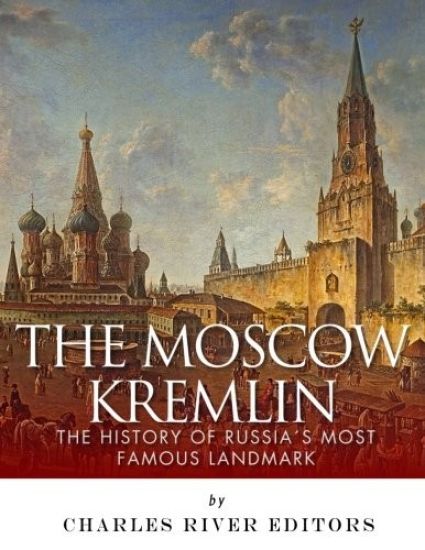
The Moscow Kremlin: The History of Russia's Most Famous Landmark

The Moscow Kremlin: The History of Russia's Most Famous Landmark

Charles River

Createspace Independent Publishing Platform
2018
nidottu
"Here are luxury and penury, abundance and the most extreme deprivation, piety and atheism, ... and an unbelievable frivolity-warring elements which, out of their constant conflicts, create this marvelous, outrageous, gigantic whole which we know by its collective name: Moscow." -- Konstantin Batyushkov Among all the world's capitals, few contain a governmental seat of power as imposing or impressive as the Kremlin in Moscow, Russia. While the name itself is often used as a shorthand to refer to the Russian government, and many people associate it with Red Square, the Kremlin is actually a fortress inside the heart of Moscow, replete with everything from ramparts and towers to decadent churches. The history of Russia is vast and winding, so it should come as no surprise that the same can be said for the Kremlin. Construction on the site was taking place by the 12th century, and by the 14th century it was imposing enough to withstand sieges. Ivan the Great added artistic flourishes to the Kremlin during the Renaissance, Catherine the Great had a residence built inside it during the 18th century, and Napoleon severely damaged the Kremlin in the course of ordering its destruction during the invasion of Russia in 1812. Even as Russian dynasties came and went, and a transition to the Soviet Union was made, the Kremlin remained, even as constant changes took place within it. The Moscow Kremlin: The History of Russia's Most Famous Landmark traces the history of Moscow's seat of power. Along with pictures of important people, places, and events, you will learn about the Kremlin like never before, in no time at all.
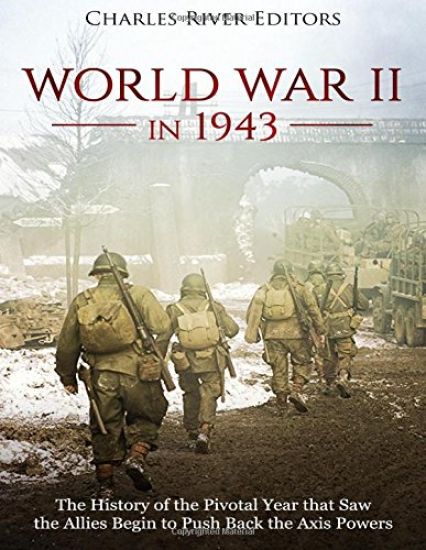
World War II in 1943: The History of the Pivotal Year that Saw the Allies Begin to Push Back the Axis Powers
*Includes pictures *Includes online resources and a bibliography for further reading Entering 1943, the Allies looked to press their advantage in the Pacific and Western Europe. The United States was firmly pushing the Japanese back across the Pacific, while the Americans and British plotted a major invasion somewhere in Western Europe to relieve the pressure on the Soviets. By the time the Allies conducted that invasion, the Soviets had lifted the siege of Stalingrad. The Allies were now firmly winning the war. Even before the British and Americans were able to make major strategic decisions in 1943, a massive German surrender at Stalingrad in February marked the beginning of the end for Hitler's armies in Russia. From that point forward, the Red Army started to steadily push the Nazis backward toward Germany. Yet it would still take the Red Army almost an entire two years to push the Germans all the way out of Russia. In July, just a few months after the surrender at Stalingrad, the Allies conducted what at the time was the largest amphibious invasion in history, coordinating the landing of two whole armies on Sicily, over a front more than 100 miles long. Within weeks of the beginning of the Allied campaign in Italy, Italy's government wasted no time negotiating peace with the Allies and quickly quit the war. Though Italy was no longer fighting for the Axis, German forces continued to occupy and control Italy in 1943. The Germans attempted to resist the Allies' invasion on Sicily but were badly outmanned and outgunned, leading to a German evacuation of the island within a month. The Allies would land on the mainland of Italy in September and continue to campaign against the Germans there. With Allied forces firmly established in Italy, the British and Americans began to plot a much more massive invasion to liberate Western Europe from the Nazis. In December 1943, President Roosevelt appointed General Dwight Eisenhower Supreme Allied Commander for the upcoming invasion, with General Montgomery as the top British commander coordinating with Eisenhower. During the first half of 1944, the Americans and British began a massive buildup of men and resources in England, while the military leaders devised an enormous and complex amphibious invasion of Western Europe. World War II in 1943: The History of the Pivotal Year that Saw the Allies Begin to Push Back the Axis Powers chronicles the seminal events of 1943. Along with pictures of important people, places, and events, you will learn about World War II in 1943 like never before.
The Iron Brigade: The History of the Famous Union Army Brigade During the Civil War

The Iron Brigade: The History of the Famous Union Army Brigade During the Civil War

Charles River

Createspace Independent Publishing Platform
2018
nidottu
*Includes pictures *Includes accounts of the fighting by soldiers in the brigade *Includes online resources and a bibliography for further reading *Includes a table of contents "They must be made of iron." - Army of the Potomac commander George McClellan, in reference to the Iron Brigade during the Maryland Campaign The title of "Iron Brigade" has been given to a number of different U. S. Army brigades over the last century and a half, but it has become almost entirely synonymous with the Civil War soldiers who fought in the brigade for the Army of the Potomac. Also known as the "Iron Brigade of the West," "Rufus King's Brigade" and the "Black Hat Brigade," the Iron Brigade was comprised of the 2nd, 6th, and 7th Wisconsin Volunteer Infantry Regiments, the 19th Indiana, Battery B of the 4th U. S. Light Artillery, and later, the 24th Michigan. Wisconsin governor Alexander William Randall had hoped to organize an all-Wisconsin brigade to contribute to the Union's Civil War effort, but the U. S. Army dispersed Wisconsin regiments to different areas as needs arose. Nevertheless, Wisconsin regiments comprised a majority of the brigade, and it would distinguish itself as the only all-Western brigade in the Army of the Potomac. It would come to be recognized for its unique uniforms, strong discipline, and "iron" disposition, earning the name during the Maryland Campaign both for its tenacity and for the costs paid by fighting so hard. Naturally, historians have focused on the battles where the Iron Brigade earned its name and demonstrated its reputation. Renowned Civil War historian Alan T. Nolan wrote and published the most complete military history of the Iron Brigade in 1961, tracing the brigade's activity in the Civil War from the first mustering of Wisconsin regiments to the battle of Gettysburg. Nolan's The Iron Brigade: A Military History served as the authority on Iron Brigade history for decades and called Gettysburg the Iron Brigade's "last stand," arguing that the battle was where the brigade lost its Western character. Since the publication of Nolan's book in 1961, however, new sources-including letters and journals of men in the brigade-have been discovered, providing new depth to the history of the Iron Brigade. Thus, scholars in more recent years have contributed to the history of the Iron Brigade by focusing on the character and contributions of different regiments within the Iron Brigade, or by picking up where Nolan left off at the Battle of Gettysburg. Historians like Lance J. Herdegen argue that there is much more to be learned about the Iron Brigade by examining its struggle in the years after Gettysburg. In The Iron Brigade in Civil War and Memory: The Black Hats from Bull Run to Appomattox and Thereafter (2012), Herdegen provides a deeper account not only of the remnants of the Iron Brigade in the last two years of the Civil War, but also of its individual soldiers during and after the war. Exploring the experiences of members of the Iron Brigade before, during and after the Civil War contributes to a better understanding of their rise to fame and glory, and the cost of their sacrifice. The Iron Brigade: The History of the Famous Union Army Brigade During the Civil War traces the development of the Iron Brigade in the early years of the Civil War, examining the battles that fostered its reputation as one of the best combat infantry brigades in the Union army. In addition, this book looks at what the later years of the war and thereafter meant to Black Hat veterans, and what made men from the western frontier want to fight in a war far from home. Along with pictures of important people, places, and events, you will learn about the Iron Brigade like never before.
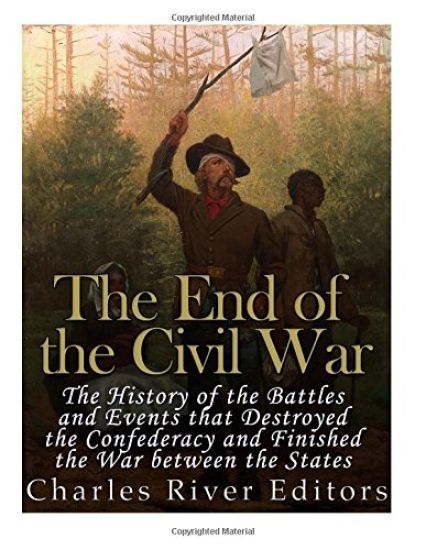
The End of the Civil War: The History of the Battles and Events that Destroyed the Confederacy and Finished the War Between the States
*Includes pictures *Analyzes the major campaigns of the last year of the war, from the Franklin-Nashville Campaign to the Appomattox Campaign *Covers events like the Lincoln assassination, Jefferson Davis' attempt to keep the war going while fleeing south, and the trials of Southerners and the Lincoln conspirators *Includes online resources and a bibliography for further reading *Includes a table of contents Americans have long been fascinated by the Civil War, marveling at the size of the battles, the leadership of the generals, and the courage of the soldiers. Since the war's start over 150 years ago, the battles have been subjected to endless debate among historians and the generals themselves. The Civil War was the deadliest conflict in American history, and had the two sides realized it would take 4 years and inflict over a million casualties, it might not have been fought. Since it did, however, historians and history buffs alike have been studying and analyzing the biggest battles ever since. By the close of 1864, Abraham Lincoln had been reelected, the Union army had taken Nashville from General Hood, and Sherman had concluded his total war, "slash-and-burn" march of destruction to Savannah, Georgia, offering it as a Christmas present to Lincoln. Nevertheless, with everything seemingly falling to pieces, the South still held out hope of some sort of miracle, and Davis even attempted to send a peace delegation to meet with Lincoln in the early months of 1865. On January 28, 1865 as Union General Ulysses S. Grant was continuing to lay siege to Lee's army at Petersburg, Virginia, Davis sent three commissioners headed by Vice-President Stephens to initiate informal peace talks with Lincoln. By February 3, however, the talks, known as the Hampton Roads Conference, came to a stalemate as Lincoln would accept nothing less than total union, while Davis would only accept Southern independence. To most observers, the South was clearly reaching its end, but Davis had no intention of quitting the war. Even while he was fleeing, he attempted to order Confederate generals in the field to keep fighting. On April 9, 1865, Lee formally surrendered his weary army to Grant at Appomattox. Appomattox is frequently cited as the end of the Civil War, but there still remained several Confederate armies across the country, mostly under the command of General Joseph E. Johnston, the same commander who arrived with reinforcements by rail during the First Battle of Bull Run and gave the South hope with victory in the first major battle. Of course, just as the war was nearing its end, its most shocking event took place. Until April 14, 1865, John Wilkes Booth was one of the most famous actors of his time, and President Abraham Lincoln had even watched him perform. But his most significant performance at a theater did not take place on the stage. That night, Booth became one of history's most infamous assassins when he assassinated President Lincoln at Ford's Theatre in Washington, D. C. All the while, the war technically continued. On April 26, 1865, Johnston defied Davis's orders and surrendered all of his forces to General Sherman. Over the next month, the remaining Confederate forces would surrender or quit. The last skirmish between the two sides took place May 12-13, ending ironically with a Confederate victory at the Battle of Palmito Ranch in Texas. As fate would have it, the last fighting of the Civil War took place two days after Davis had been captured in Georgia, and his capture remained controversial for several decades. On December 25, 1868, treason charges were officially dropped against him, much to Davis' chagrin. Davis actually relished the possibility of challenging the charges in court and was dismayed that he wasn't given a soapbox to make his arguments. This book chronicles the climactic events that finally brought America's deadliest war to a close.
The League of Nations: The Controversial History of the Failed Organization that Preceded the United Nations
*Includes pictures *Includes accounts of members of the League *Includes online resources and a bibliography for further reading "The program of the world's peace, therefore, is our program; and that program, the only possible program, as we see it, is this: 1. Open covenants of peace, openly arrived at, after which there shall be no private international understandings of any kind but diplomacy shall proceed always frankly and in the public view." - President Woodrow Wilson "I have loved but one flag and I can not share that devotion and give affection to the mongrel banner invented for a league." - Henry Cabot Lodge The United Nations is one of the most famous bodies in the world, and its predecessor, the League of Nations, might be equally notorious. In fact, President Woodrow Wilson's pet project was controversial from nearly the minute it was conceived. At the end of World War I, Wilson's pleas at the Paris Peace Conference relied on his Fourteen Points, which included the establishment of a League of Nations, but while his points were mostly popular amongst Americans and Europeans alike, leaders at the Peace Conference largely discarded them and favored different approaches. British leaders saw their singular aim as the maintenance of British colonial possessions. France, meanwhile, only wanted to ensure that Germany was weakened and unable to wage war again, and it too had colonial interests abroad that it hoped to maintain. Britain and France thus saw eye-to-eye, with both wanting a weaker Germany and both wanting to maintain their colonies. Wilson, however, wanted both countries to rid themselves of their colonies, and he wanted Germany to maintain its self-determination and right to self-defense. Wilson totally opposed the "war guilt" clause, which blamed the war on Germany. Wilson mostly found himself shut out, but Britain and France did not want American contributions to the war to go totally unappreciated, if only out of fear that the U. S. might turn towards improving their relations with Germany in response. Thus, to appease Wilson and the Americans, France and Britain consented to the creation of a League of Nations. However, even though his participation in the crafting of the Treaty of Versailles earned him a Nobel Prize that year, Wilson soon learned to his consternation that diplomacy with Congress would go no better than his diplomacy with European leaders. The only major provision that Wilson achieved in Europe, the League of Nations, was the most controversial in the United States. Both aisles of Congress had qualms with the idea, believing it violated the Constitution by giving power over self-defense to an international body. Other interests in the United States, especially Irish-Americans, had now totally turned against Wilson. The President's interest in national self-determination extended to many European countries, including Hungary, Poland, Czechoslovakia and Belgium, but it excluded one critical country: Ireland, a country currently embroiled in a revolution against Great Britain. Worse, Irish-Americans thought the League of Nations would harden Anglo control of global institutions. Simply put, Wilson returned home to find many Americans weren't buying the League of Nations. While the Senate was able to build a slim majority in favor of ratification, it could not support the necessary two-thirds majority. Although the League of Nations was short-lived and clearly failed in its primary mission, it did essentially spawn the United Nations at the end of World War II, and many of the UN's structures and organizations came straight from its predecessor, with the concepts of an International Court and a General Assembly coming straight from the League. More importantly, the failures of the League ensured that the UN was given stronger authority and enforcement mechanisms, most notably through the latter's Security Council.
The Iranian Revolutionary Guards: The History of Iran's Elite Military Organization

The Iranian Revolutionary Guards: The History of Iran's Elite Military Organization

Charles River

Createspace Independent Publishing Platform
2018
nidottu
*Includes pictures *Includes online resources and a bibliography In early November 2016, Salar Abnoush, a leader in the Iranian Revolutionary Guard Corps (IRGC), stated that the IRGC "will be in the U. S. and Europe very soon." This quote came just before the U. S. presidential election, a time when President Barack Obama was winding down his presidency and American society was busy reflecting on his past actions over the 8 years of his presidency. Of those actions that incoming President Donald Trump has decided to focus on, "tearing up" the Joint Comprehensive Plan of Action (also more commonly known as the Iran Nuclear Deal) was near the top of the list. The crux of the deal focuses on Iran's agreement to rolling back uranium stockpiles and enrichment capabilities in exchange for the ending of nuclear-related sanctions against Iran. Due to the IRGC's current involvement in the Iranian economy, they stand to gain from the ending of the sanctions. Possible threats to the deal by the incoming Trump Administration are of concern in Iran, and the threat of the IRGC spreading in Western countries is a concern as well. The impact of the changing of terms to the Iran Nuclear Deal is just one concern among many of members of the IRGC. The multi-party conflict of the Syrian Civil War has pulled Iran deeper into this global conflict, as the number of refugees and internally displaced people rise. Through it all, the Iranian Revolutionary Guard Corps has held a position of power and prestige in Iranian society and has inspired both revolution and concern around the world. The IRGC is notable for its involvement in conflicts around the Middle East, particularly in supporting Shi'a groups through military training and finance, as well as backup support on the battlefield. This is not to say the IRGC enters into conflicts for the sake of being involved, but rather, they see these particular situations as serving the interests of Iran and furthering their brand of Shi'ism, a sect of Islam. The IRGC sees itself as a protector of Islam, Iran's theocracy, and the principles of the 1979 Iranian Revolution, so its involvement is always framed in terms of benefits to the overall goals of promoting revolutionary ideals. As analyst Afshon Ostovar puts it, "The IRGC is a multifaceted organization with reach into many different areas. It is a security service, an intelligence operation, a social and cultural force, and a complex industrial economic conglomerate." The IRGC operates in a very similar manner to other Islamist paramilitary organizations, such as Hezbollah, Hamas, the Muslim Brotherhood, and--their current enemies on the battlefield--the Islamic State of Iraq and the Levant (ISIL) and Jabhat Al-Nusra. These Islamist groups' power and influence comes from their control over the societies in which they operate and whether or not they have influential allies. The main difference for the IRGC, however, is the support of Iranian leadership in carrying out their main mission of maintaining and exporting the revolution. In essence, the IRGC has rooted itself in Iranian society and spread its influence through association with the society's most integral components--the education system, businesses, civil organizations, and religion--all at the request and blessing of the Supreme Leader of Iran. This is a similar model ISIL and Jabhat Al-Nusra are attempting to carry out in Syria and Iraq, and the one that Hamas and Hezbollah currently carry out in Lebanon and the Palestinian territories. The IRGC is also very much involved in Iran's economy and has a stake in its nuclear ambitions.
The Twin Towers: The History of New York City's Original World Trade Center

The Twin Towers: The History of New York City's Original World Trade Center

Charles River

Createspace Independent Publishing Platform
2018
nidottu
*Includes pictures *Includes accounts of the construction and history of the Twin Towers *Covers the destruction of the World Trade Center during 9/11 *Includes online resources and a bibliography for further reading *Includes a table of contents "The World Trade Center site will forever hold a special place in our city, in our hearts. " - New York City Mayor Michael Bloomberg Before its destruction in the attacks on September 11, 2001, the World Trade Center in New York consisted of two of the world's most recognizable buildings, representing the strength and wealth of New York City in particular and the United States in general. That was the goal all along for philanthropist David Rockefeller, who had largely self-financed the development of One Chase Manhattan Plaza in the late 1950s in the hopes that the 70 story skyscraper would help spur further development nearby. Rockefeller envisioned Lower Manhattan as the site of a global financial center, full of stock exchanges, brokerages, investment banks, law firms, and other financial businesses. The name "World Trade Center," when spoken by an American, tends to conjure up the best and worst about the nation. The idea for such a financial center was conceived of in the heady days of post-World War II prosperity, when the nation's financial prospects had never looked better and Americans were trading all over the world with both former allies and enemies. At the same time, many in New York City, one of the jewels of the East Coast, had fallen on hard times, and it was hoped that the World Trade Center would revitalize Lower Manhattan and bring the Big Apple a bigger share of the prosperity the world was enjoying. Likewise, the center was designed by men steeped in the modern era, when architects could build skyscrapers as opposed to simple office complexes. As it would turn out, by the time construction on the buildings began, there were ominous clouds in the political and financial skies. The prosperity that had inspired its construction had given way to a financial malaise unlike any seen since the Great Depression, and many people were offended that money that could have gone to social programs was being used to build more office space. There was also political unrest, as many criticized the country's involvement in Vietnam. By the time the Twin Towers and the rest of the World Trade Center were completed, the project was considered by many to be not only a symbol of American prosperity but also another sign of capitalist greed. For 30 years, the Twin Towers were the most dramatic features of the New York skyline, and for a short while one of the towers could boast of being the tallest building in the world. People came from around the world to visit them for both business and pleasure, and while most days were busy but uneventful, there were exceptions. A stunt seemingly featuring a man dancing in the sky humanized and popularized the buildings, and they began to prosper, just as the nation itself would rise again out of the mire of the 1970s. Almost as quickly, a fire threatened the North Tower in 1975. In 1977, a man decided to scale the side of the South Tower, and in 1983, a fireman completed a stunt designed to warn people about the impossibility of evacuating everyone in case of emergency. Fatefully, the fireman's efforts fell on largely deaf ears, as no one could conceive of the need for such efforts. As everyone now knows, the World Trade Center could have stood for a century or more but didn't last half that long, because what they symbolically represented made them a physical target. The Twin Towers survived the first violent attack in 1993, but less than a decade later they were gone, the initial victims of a war still raging. The World Trade Center would be rebuilt, but New York City would never look the same again.
The Valley of the Kings: The History of Ancient Egypt's Most Famous Tombs and Burial Site
*Includes pictures *Includes descriptions of tombs like King Tut's *Includes online resources, footnotes, and a bibliography for further reading *Includes a table of contents "I saw to the excavation of the rock-tomb of his majesty, alone, no one seeing, no one hearing." - An inscription credited to an advisor of Thutmose I "Then his majesty said to them: 'This daughter of mine, Khnumetamun Hatshepsut-may she live -I have appointed as my successor upon my throne... she shall direct the people in every sphere of the palace; it is she indeed who shall lead you. Obey her words, unite yourselves at her command.' The royal nobles, the dignitaries, and the leaders of the people heard this proclamation of the promotion of his daughter, the King of Upper and Lower Egypt, Maatkare-may she live eternally." - An inscription on Hatshepsut's mortuary temple in the Valley of the Kings Africa may have given rise to the first humans, and Egypt probably gave rise to the first great civilizations, which continue to fascinate modern societies across the globe nearly 5,000 years later. From the Library and Lighthouse of Alexandria to the Great Pyramid at Giza, the Ancient Egyptians produced several wonders of the world, revolutionized architecture and construction, created some of the world's first systems of mathematics and medicine, and established language and art that spread across the known world. With world-famous leaders like King Tut and Cleopatra, it's no wonder that today's world has so many Egyptologists. Given the abundance of funerary artifacts that have been found within the sands of Egypt, it sometimes seems as though the Ancient Egyptians were more concerned with the matters of the afterlife than they were with matters of the life they experienced from day to day. One of the most abundant sources of these funerary artifacts is the Valley of the Kings, a royal necropolis located on the west bank of the Nile at Thebes. Here, pharaohs of the New Kingdom Period were buried in elaborate, treasure-filled tombs that were cut deep into the cliffs that walled the Nile Valley. In many of the royal tombs in the Valley of the Kings, intricate reliefs were painted on the walls that depicted the sun god and the dead king on their nightly journey through the underworld, which was known in Egyptian as the Duat (Wilkinson 2003, 82). These scenes, which vary slightly from tomb to tomb, are known collectively by modern scholars as The Book of Gates because they depict the sun god's journey through 12 gates or pylons, one for each hour of the night (Wilkinson 2003, 81). As the sun god and the dead king travel through the night, they have to contend with various demons and a giant snake known as Apophis (Lesko 1991, 119). The Egyptians believed this journey was cyclical, as they viewed time itself, so it took place daily (Lesko 1991, 119). Though these tombs have been extensively plundered, they still stand as gateways to the afterlife that provide a murky window into the past of a fascinating civilization. Most importantly, the relatively untouched tomb of the young King Tutankhamun offered clear insight. Many of the objects that were discovered in Tutankhamun's tomb were clearly made specifically for him and his burial, such as the coffins, funerary masks, canopic equipment and statues. Other objects, such as the furniture, clothing, and chariots, were obviously items that had been used during Tutankhamun's lifetime. The motifs found upon many of his possessions depicted him in triumph over his enemies. For example, a painted wooden chest bears a fine example of such a scene; the king is shown in his chariot, followed by his troops, attacking a group of Nubians. Scenes depicting aggression and triumph over Egypt's enemies by Egypt's king are classical examples of Egyptian kingship.
Captain John Franklin and Sir Ernest Shackleton: The History of Britain's Most Famous Polar Explorers and Their Expeditions
*Includes pictures *Includes contemporary accounts *Includes online resources and a bibliography for further reading Most anyone who has received a basic education in world history knows the story of how "in 1492, Columbus sailed the ocean blue." Most also know that Christopher Columbus made first contact with the Americas while searching for a water route to Asia. However, far fewer people remember that the search for such a route continued for centuries after Columbus' death. After the discovery of the Americas, several European countries were interested in finding the route, and nations from France to Spain sent out explorers searching for the mysterious route. While these voyages did not reveal the hoped for route, they did result in large parts of both North and South America being mapped, and as more of the new land mass was determined, the parameters of the search for such a route were narrowed. By the 18th century, explorers began to seek such a route to the north, looking for the legendary Northwest Passage. Eventually, some countries lost interest, but England remained determined, and the masters of the waves continued to send ship after ship and crew after crew across the Atlantic. By the early 19th century, the search was taking expeditions to the Arctic, and each time a team returned to England telling stories of how it was stymied by ice or bad weather, another team confidently went out, certain that it would be the one to make it through. This ultimately led to the voyage of Captain John Franklin, who left Britain in 1845 for the Arctic in the hopes of completing mapping the Northwest Passage. Instead of returning with spices and silks, Franklin and his men disappeared, leaving behind them a mystery that plagued the English conscience for decades. Ironically, the ill-fated trip only became more legendary when its mystery was solved than it was when it remained a curiosity. It was a tale of ice and cold, starvation and desperation, and a tragically fatal one. Exploration of Earth's wilderness areas became an international obsession in the late 19th and early 20th centuries, as economically advantaged nations, in particular European powers and the United States were well equipped to mount exhaustive expeditions. From previously inaccessible forests and jungle country to the world's great mountain ranges, adventurers sought out the greatest extremes of climate and terrain in a race to plant the first flag where humanity struggled to survive. Locating the North Pole was, in a navigational sense, far more problematic than its counterpart in the south. The North Pole is situated on a moving foundation of ice, constantly shifting its position. To plant a flag there is useless, as it is prone to drift great distances in an unpredictable direction. However, reaching the South Pole presented the most torturous climatic obstacle on the planet, and with the size of the ice continent in the early years of the century, the distance from a ship in harbor to the center required a vast trek carrying minimal rations. Britain made its first and finest statement for actually reaching the South Pole in the first years of the 20th century. The dangers of the Antarctic, including scurvy, dehydration, and hypothermia, were well known to all major explorers. They also understood that even the most incidental detail of an expedition going amiss could spell doom for all parties involved. The era was universally dubbed the Heroic Age of Antarctic Exploration, but its greatest story did not stem from the actual achievement of reaching the pole. It was, rather, one of the most profound and heroic rescues ever witnessed that affirmed the empire's greatness, embodied by the inspired insistence and exemplary conduct of Sir Ernest Henry Shackleton. This unlikely figure entered the rich man's world of polar exploration through an astonishing persistence.
The Sinking of the SS Central America: The Tragic Story of the Richest Shipwreck in History
*Includes pictures *Includes accounts of the sinking written by passengers *Includes a bibliography for further reading *Includes a table of contents "Captain Herndon pointed to the thinning clouds and predicted that their breaking up portended an end to the storm. He spoke to the men at the pumps; he cheered the men in the bailing lines. He told them he thought the storm was abating, and that if they would just continue to bail until noon, the steamer might be saved. ... Though the passengers received the captain's comments with great cheer, Herndon knew his hope was false. He knew the sea would rise again and the wind would blow with even greater fury. He knew that a ship floating 750 tons of iron with water filling her hold, and more water constantly rushing in, could remain afloat but a short while longer." - Gary Kinder, Ship of Gold in the Deep Blue Sea: The History and Discovery of the World's Richest Shipwreck There have been countless numbers of shipwrecks over the course of history, but few have had as great an impact as the sinking of the SS Central America in a hurricane in September 1857. The California Gold Rush was in full swing, state of the art steamer ships were used to transport the discovered gold back east, and the Central America was one of them. On its fateful voyage, the ship was carrying nearly 600 passengers and a huge haul of up to 20 tons of gold worth an estimated $2 million at the time. On the way from Cuba to New York City, the Central America was caught in a Stage 2 hurricane that it never had a chance of knowing about ahead of time. With winds over 100 miles per hour, the hurricane ripped its sails, and the ship started taking on water while struggling to keep its boiler going. These conditions all but doomed the ship, and while over 150 passengers were ferried in lifeboats to another ship for rescue, the intensity of the storm kept the other passengers of the Central America away from salvation. When the ship finally sank, 425 passengers went down with it, and only a handful of survivors were picked up in the ensuing days. The loss of life was a big enough calamity, but the Central America had gone down with so much gold that it scared the American public, which was already beginning to deal with a financial downturn that culminated in the Panic of 1857. This was understandable given that the ship was carrying the modern equivalent of hundreds of millions of dollars, and in fact, when 20th century salvage teams located the search and began bringing gold back up to the surface, they found one 80 pound piece that immediately became the most valuable piece of currency in the world. Naturally, lawsuits over the recovered gold sprang up, and the Central America has remained controversial ever since. The Sinking of the SS Central America: The Tragic Story of the Richest Shipwreck in History chronicles the tragic fate of the ship, the tribulations the survivors had to endure in the aftermath of the sinking, and its impact on the Panic of 1857. Along with pictures of important people, places, and events, you will learn about the USS Indianapolis like never before, in no time at all.
The Disappearance of Jean Spangler: The History of One of Hollywood's Most Enduring Unsolved Mysteries
*Includes pictures *Profiles Spangler's life and looks at the theories and suspects regarding her disappearance *Includes online resources, footnotes, and a bibliography for further reading "Can't wait any longer, Going to see Dr. Scott. It will work best this way while mother is away," - An unfinished letter found in Spangler's purse after her disappearance The Hollywood culture of the 1940s served as a symbol of fantasy for a country at war. The American population, steeped in a dark global reality, lived vicariously through the film industry's fantasy offerings on the big screen, and eagerly embraced the advent of television in the latter part of the decade. On the stage, images of idealized feminine beauty thrived in the Ziegfeld Follies tradition, Radio City Music Hall, Las Vegas, and the fantastical world created by Earl Carroll in his Hollywood theater. The marketing of American fantasy made for a spectacular outward show, but the interior of Hollywood's entertainment industry was at the same time experiencing its most corrupt decade. Mob bosses vied for power over the drug, alcohol, prostitution, and "protection" markets interconnected with the larger Hollywood image, and for women trying to get ahead in the movie or stage business, the environment was a dangerous one. Beauties came from all over the country to take their chance with fame, but for several, being abducted and gruesomely murdered was the best they could do to attain name recognition. Beginning with the mid-decade murder of actress Elizabeth Short, dubbed the Black Dahlia, a series of murders thought to be the serial work of one perpetrator became emblematic of Hollywood's hidden dangers. The mysterious case of actress and dancer Jean Spangler remains one of the most enduring such riddles in the annals of Hollywood crime. The nature of the case itself still evokes a public fascination many decades after her disappearance. Spangler found herself in southern California as a beautiful actress and dancer trying to land movie roles, a common story among the many young women gravitating to American entertainment centers from more conservative towns and cities. As a high-profile celebrity event, Spangler's case does not match the sensationalism attributed to figures such as Amelia Earhart, who sought to circumnavigate the globe by air, the political importance of union boss Jimmy Hoffa, or the fate of Judge Crater, a likely victim of the New York underworld. However, the Spangler story differs in that it carries no dearth of rational possibilities or relevant clues with which to accommodate all of the leading theories. In fact, in the minds of investigators, the difficulty of finding the best path to pursue was that there were "too many good clues, pointing in different directions." Likewise, where Earhart, Hoffa, and Crater intentionally pursued goals with inherent hazards, Spangler was publicly perceived as a professional if not personal innocent, hoping to make a living and to be discovered for greater things. The Disappearance of Jean Spangler: The History of One of Hollywood's Most Enduring Unsolved Mysteries looks at the life of Jean Spangler and the mysterious events behind her disappearance. Along with pictures of important people, places, and events, you will learn about Jean Spangler like never before, in no time at all.
The End of World War II in Europe: The History of the Final Campaigns that Led to Nazi Germany's Surrender
*Includes pictures *Includes accounts of the fighting during D-Day, the Battle of the Bulge, the Battle of Berlin, and more. *Includes online resources and a bibliography for further reading *Includes a table of contents By the end of 1943, with Allied forces firmly established in Italy and the Soviets on the verge of turning the tide in Russia, the British and Americans began to plot the invasion that would liberate Europe from the Nazis. During the first half of 1944, the Americans and British commenced a massive buildup of men and resources in the United Kingdom, while Allied Supreme Commander Dwight D. Eisenhower and military brass planned the details of an enormous and complex amphibious invasion of Europe. Though the Allies used misinformation to try deceiving the Germans, the most obvious place for an invasion was just across the narrow English Channel, and the Germans had built coastal fortifications throughout France to protect against just such an invasion. The invasion across the Channel came in the early morning hours of June 6, 1944. That day, forever known as D-Day, the Allies commenced Operation Overlord by staging the largest and most complex amphibious invasion in human history. The complex operation would require tightly coordinated naval and air bombardment, paratroopers, and even inflatable tanks that would be able to fire on fortifications from the coastline, all while landing over 150,000 men across nearly 70 miles of French beaches. Given the incredibly complex plan, it's no surprise that General Eisenhower had already written a letter apologizing for the failure of the invasion, which he carried in his coat pocket throughout the day. After the successful amphibious invasion on D-Day in June 1944, the Allies began racing east toward Germany and liberating France along the way. It was Hitler's belief that by splitting the Allied march across Europe in their drive toward Germany, he could cause the collapse of the enemy armies and cut off their supply lines. Part of Hitler's confidence came as a result of underestimating American resolve, but with the Soviets racing toward Berlin from the east, this final offensive would truly be the last gasp of the German war machine, and the month long campaign was fought over a large area of the Ardennes Forest, through France, Belgium and parts of Luxembourg. From an Allied point of view, the operations were commonly referred to as the Ardennes Offensive, while the German code phrase for the operation was Unternehmen Wacht am Rhein ("Operation Watch on the Rhine"), with the initial breakout going under the name of "Operation Mist." Today, Americans know it best as the Battle of the Bulge. After resisting the German attack, the Allied armies began advancing, and with that, the race to Berlin was truly on. In April 1945, the Allies were within sight of the German capital of Berlin, but Hitler refused to acknowledge the collapsed state of the German military effort even at this desperate stage, and he confined himself to his Berlin bunker where he met for prolonged periods only with those that professed eternal loyalty, even to the point of death. In his last weeks, Hitler continued to blame the incompetence of military officers for Germany's apparent failings, and he even blamed the German people themselves for a lack of spirit and strength. As their leader dwelled in a state of self-pity, without remorse or mercy but near suicide, the people of Berlin were simply left to await their fate as Russians advanced from the east and the other Allies advanced from the west. The battle would technically begin on April 16, 1945, and though it ended in a matter of weeks, it produced some of the war's most climactic events and had profound implications on the immediate future. In the wake of the war, the European continent was devastated, leaving the Soviet Union and the United States as uncontested superpowers.
The Forbidden City: The History of the Chinese Imperial Palace of the Ming and Qing Dynasties in Beijing
*Includes pictures *Includes online resources and a bibliography for further reading Located in the center of Beijing, the Forbidden City served as the palace for the emperor of China from 1420 to 1912 CE, a period encompassing the Ming and Qing dynasties. It was home to the celestial leaders of China, men that possessed the Mandate of Heaven. A total of 24 emperors lived and ruled from the vast and magnificent complex for almost 500 years, until the last Chinese dynasty was overthrown in 1912 with the abdication of Emperor Xuantong, more commonly known as Puyi. Known also as the Forbidden Palace, or amongst contemporary Chinese as the "Former Palace," the complex was first given its name in 1576. The Forbidden City was the home of many thousands of governmental staff, female servants and concubines, eunuchs, soldiers, and kitchen staff, and where their entire lives were built. Nonetheless, entrance to it from the outside was forbidden to all but the emperor, his court, and his relations. Without the permission of the emperor, access to or from the heart of the empire was impossible, but what was once inaccessible is now one of the most visited institutions in the world. Today, the Forbidden City is a UNESCO World Heritage site, operated as the largest museum in the world and located in the heart of the capital of the world's most populous country. The Forbidden City: The History of the Chinese Imperial Palace of the Ming and Qing Dynasties in Beijing examines the history of the palace. Along with pictures of important people, places, and events, you will learn about the Forbidden City like never before.