Kirjojen hintavertailu – 12 903 727 kirjaa ja 27 kauppaa

Kirjailija

Charles River

Kirjat ja teokset yhdessä paikassa: 4 673 kirjaa, julkaisuja vuosilta 2013–2022, suosituimpiin kuuluu William Powell and Myrna Loy: The Lives and Careers of One of Classical Hollywood's Most Iconic Duos. Vertaile teosten hintoja ja tarkista saatavuus suomalaisista kirjakaupoista.

4 673 kirjaa

Kirjojen julkaisuvuodet: 2013–2022.

The History of the Spanish-American War

The History of the Spanish-American War

Charles River

Createspace Independent Publishing Platform
2018
nidottu
*Includes pictures *Includes accounts of the USS Maine's explosion and the war written by soldiers and sailors *Includes online resources and a bibliography for further reading *Includes a table of contents "A splendid little war." - John Hay, U. S. Ambassador to the United Kingdom, describing the war in a letter to Theodore Roosevelt In 1898, one of Spain's last possessions in the New World, Cuba, was waging a war for independence, and though Cuba was technically exempted from the Monroe Doctrine because it was already a Spanish territory when the Monroe Doctrine was issued, many Americans believed that the United States should side with Cuba against Spain. Initially, Republican President William McKinley wanted to avoid any wars, and for its part, Spain also wanted to avoid any conflict with United States and its powerful navy. However, Spain also wanted to keep Cuba, which it regarded as a province of Spain rather than a colony. Cuba was very important to the Spanish economy as well, as it produced valuable commodities such as sugar and also had a booming port at Havana. All the while, American economic interests were being harmed by the ongoing conflict between Cuban nationalists and Spain. Merchants' trading with Cuba was suffering now that the island was undergoing conflict, and the American press capitalized on the ongoing Cuban struggle for independence, which had been flaring up time and again since 1868. In an effort to sell papers, the press frequently sensationalized stories, which came to be known as "yellow journalism." During the run-up to war, yellow journalism spread false stories about the Cuban conflict in order to sell newspapers in the competitive New York City market. Despite President McKinley's wishes to avoid a war, he was forced to support a war with Spain after the American navy vessel USS Maine suffered an explosion in Havana harbor. McKinley had sent the ship there to help protect American citizens in Cuba from the violence that was taking place there, but the explosion devastated the ship, which sunk quickly in the harbor. 266 American sailors aboard the USS Maine died. Although the cause of the explosion was never determined, yellow journalists in the American press blamed Spain, claiming the ship was sabotaged. President McKinley was unable to resist popular pressure after a U. S. Navy report also claimed that the ship had been subject to an explosion outside of its hull which ignited powder magazines inside the ship. Later investigations proved inconclusive, but President McKinley was now forced to accept war with Spain. Congress declared war, and the U. S. Navy began a blockade of Cuba and Puerto Rico. The U. S. Pacific fleet sailed to the Philippines, which were then a Spanish possession. Despite supply problems from operating so far from existing U. S. Naval bases, the U. S. fleet defeated the Spanish fleet in Manila. The U. S. Army, meanwhile, landed 15,000 troops on Cuba to battle fewer than 2,000 Spanish regulars. New York politician Theodore Roosevelt, who had been advocating for war with Spain to support the Cuban revolutionaries, joined the U. S. Army and participated in its Cuba campaign, becoming well known for his participation with the "Rough Riders". Despite the superiority of the Spanish rifles, they were overwhelmed by the number of U. S. Army forces supported by artillery and Gatling guns. Although the Spanish fought the U. S. Army to a stalemate in Puerto Rico, Spain was forced to make peace after the U. S. Navy destroyed both its Pacific and Atlantic fleets. The military defeat in Cuba meant that Spain would have to give Cuba its independence, and the destruction of its navy meant that Spain would have to cede its overseas colonies to the United States. The United States subsequently gained possession of the Philippines, Puerto Rico and Guam, marking the true beginning of American imperialism.

The Gray Ghost of the Confederacy: The Life and Legacy of John Mosby

The Gray Ghost of the Confederacy: The Life and Legacy of John Mosby

Jeffrey Mitchell; Charles River

Createspace Independent Publishing Platform
2018
nidottu
*Includes pictures. *Includes accounts of fighting written by Mosby and other generals. *Includes footnotes and a bibliography for further reading. "Our poor country has fallen a prey to the conqueror. The noblest cause ever defended by the sword is lost. The noble dead that sleep in their shallow though honored graves are far more fortunate than their survivors. I thought I had sounded the profoundest depth of human feeling, but this is the bitterest hour of my life." - John Mosby The Civil War is best remembered for the big battles and the legendary generals who fought on both sides, like Robert E. Lee facing off against Ulysses S. Grant in 1864. In kind, the Eastern theater has always drawn more interest and attention than the West. However, while massive armies marched around the country fighting each other, there were other small guerrilla groups that engaged in irregular warfare on the margins, and perhaps the most famous of them was Colonel John Mosby. Mosby, the "Gray Ghost" of the Confederate lore that celebrates the Lost Cause, has an image that has proven nearly impossible to corrupt or change, and time has done little good against it. Unlike the vanished 19th century code of honor that he represented, Mosby has retained the image and all its connotations; evident in the pictures taken of him in his Confederate uniform and historical portrayals of him, whether they were written just after the Civil War or much later. But that image, which he helped fashioned, was mostly an invention. Mosby styled himself a "Knight of the South", as other Virginians would do during the war, branding himself as a warrior of a culture who obeyed an unspoken code of honor. He defended women and lived by his word. Even the style of combat he chose conformed to the definition of honor that Southerners held. With repeated charges into the ranks of federal cavalry, Mosby was lionized by a culture that gloried in the acts of heroic violence. As the war dragged on, Mosby claimed to fight a style of war that was honorable, but if the Union ever entered into acts he considered uncivilized, he was never beyond revenge, including notorious summary executions of prisoners of war. He was so reviled in the North that rumors quickly spread that Mosby knew of John Wilkes Booth's conspiracy to assassinate Lincoln, and that he may have even assisted in it. While the South would come to idolize "Southern gentlemen" as epitomized by Robert E. Lee, Mosby operated under a far different nature. Though he enlisted with the Confederate army in Virginia after Fort Sumter, he ultimately left the infantry to join J. E. B. Stuart's cavalry, and he later became infamous as an irregular scout leading a group of rangers around Virginia. Of course, the successful feats of daring that Mosby would accomplish during the war, which included capturing a Union general and riding around behind enemy lines to raid and destroy supplies, were supported by the people of Virginia, thus legitimizing his unconventional move to leave army life. Mosby not only earned the nickname "Gray Ghost" by being elusive, he was so successful that part of Virginia was known as "Mosby's Confederacy" during the war, despite the presence of massive Union armies nearby. Mosby did all this while looking the part of a diminutive man, a physical appearance that Southern culture did not generally view as masculine. In fact, his small size, just 5'8 and 125 pounds, might actually have provoked his aggression. Either way, Mosby overcame and looked the part as a cavalier on a horse, weathered by the elements and war but never beaten down by the enemy he looked down upon from his mount. The Gray Ghost of the Confederacy chronicles the life of Mosby, as well as his Civil War record and legacy. Along with pictures of important people, places, and events, you will learn about the Gray Ghost like never before, in no time at all.
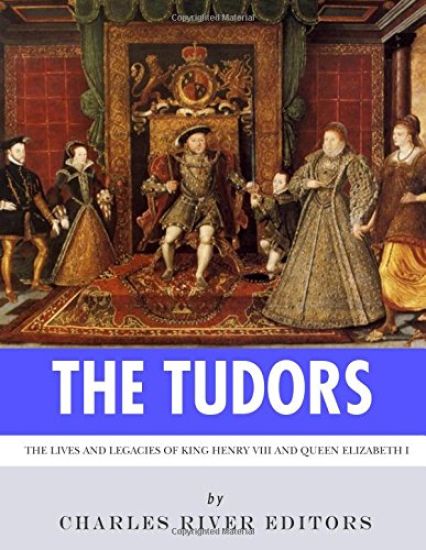
The Tudors: The Lives and Legacies of King Henry VIII and Queen Elizabeth I

The Tudors: The Lives and Legacies of King Henry VIII and Queen Elizabeth I

Charles River

Createspace Independent Publishing Platform
2018
nidottu
*Includes pictures of King Henry VIII, Queen Elizabeth I, and important people and events in their lives. Although the last Tudor ruler died over 400 years ago, it still remains England's most famous royal line, and it produced the most famous king and queen in history, both of whom continue to fascinate people around the world today. Over 450 years after his reign, Henry VIII is still the most famous and recognizable King of England, but it's for all the wrong reasons. Though well regarded by contemporaries as a learned king and "one of the most charismatic rulers to sit on the English throne", he is best remembered today for his gluttony and multiple marriages, particularly the gruesome way in which he was widowed on more than one occasion. Naturally, that was the focus of the popular Show Time drama series centered around his life, The Tudors. Henry VIII will probably continue to be best known for beheading some of his wives, most notably Anne Boleyn, so it is somewhat fitting that his most decisive act came as a result of a marital mishap. Sharply at odds with the Catholic Church over his attempt to dissolve his marriage with Catherine of Aragon, Henry VIII ultimately broke with the Church and established the Church of England, which forever both the religious history of England and the social hierarchy of the nation and its empire. When Queen Elizabeth II came to the throne in 1952, many commentators heralded the beginning of her reign as the second Elizabethan age. The first one, of course, concerned the reign of Henry VIII's second surviving daughter and middle surviving child, Queen Elizabeth I, one of England's most famous and influential rulers. It was an age when the arts, commerce and trade flourished. It was the epoch of gallantry and great, enduring literature. It was also an age of wars and military conflicts in which men were the primary drivers and women often were pawns. Elizabeth I changed the rules of the game and indeed she herself was changed by the game. She was a female monarch of England, a kingdom that had unceremoniously broken with the Catholic Church, and the Vatican and the rest of Christendom was baying for her blood. She had had commercial and militaristic enemies galore. In the end, she helped change the entire structure of female leadership. Elizabeth was the last Tudor sovereign, the daughter of the cruel and magnificent King Henry VIII and a granddaughter of the Tudor House's founder, the shrewd Henry VII. Elizabeth, hailed as "Good Queen Bess," "Gloriana" and "The Virgin Queen" to this day in the public firmament, would improve upon Henry VIII's successes and mitigate his failures, and despite her own failings would turn out to "have the heart and stomach of a king, and a king of England too". Indeed, that was the phrase she would utter in describing herself while exhorting her troops to fight for England against the Spanish Armada. The Tudors chronicles the reigns of England's most famous king and queen, but it also humanizes the man who fashioned himself both an athlete and scholar and the woman who ruled one of the world's most powerful kingdoms in an age dominated by men. Along with pictures of important people, places, and events in their lives, you will learn about Henry VIII and Elizabeth I like you never have before, in no time at all.
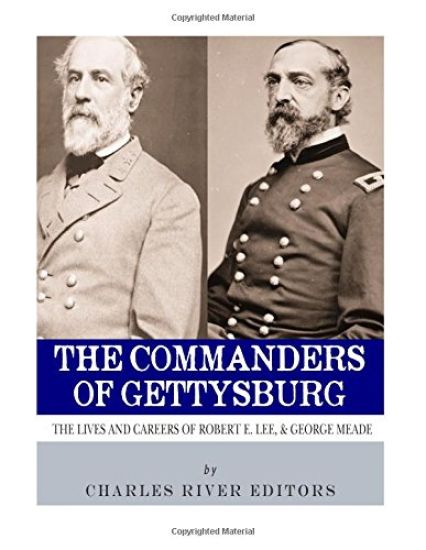
The Commanders of Gettysburg: The Lives and Careers of Robert E. Lee and George G. Meade
*Includes pictures of Meade, Lee, and important people, places, and events in their lives. *Includes Bibliographies of both Meade and Lee for further reading. "The fact of the matter is that George G. Meade, unexpectedly and against all odds, thoroughly outgeneraled Robert E. Lee at Gettysburg." - Stephen Sears With the exception of George Washington, perhaps the most famous general in American history is Robert E. Lee (January 19, 1807 - October 12, 1870), despite the fact he led the Confederate Army of Northern Virginia against the Union in the Civil War. Lee is remembered today for constantly defeating the Union's Army of the Potomac in the Eastern theater from 1862-1865, considerably frustrating Lincoln and his generals. His leadership of his army led to him being deified after the war by some of his former subordinates, especially Virginians, and he came to personify the Lost Cause's ideal Southern soldier. His reputation was secured in the decades after the war as a general who brilliantly led his men to amazing victories against all odds. Ironically, one of the generals who often escapes the attention of Civil War fans who compile the lists of best generals is the man who defeated Lee to win the war's most famous battle, George G. Meade (1815-1872). In late June 1863, Meade took command of the Army of the Potomac just 3 days before the start of the battle, and he was facing Lee, who had a nearly unblemished record in the East and was less than 2 months removed from a stunning victory at Chancellorsville. Given the command situations on July 1, 1863, certainly nobody would have expected Meade to get the better of Lee as they faced off for the first time, but that's exactly what happened. Using a strong "fishhook" line on high ground that allowed him to shift soldiers along interior lines, Meade skillfully held off ferocious attacks on both of his flanks during the second day of the battle. And despite his successes and his legacy, Lee wasn't perfect. On the final day, Meade accurately predicted Lee would attack his center, and Lee complied, ordering Pickett's Charge despite the fact his principle subordinate and corps leader, General James Longstreet, advised against the charge. Feeling the need to try to strike a decisive blow, Lee went ahead with the assault, ending his army's defeat at Gettysburg with a violent climax that left half of the men who charged killed or wounded. The Commanders of Gettysburg comprehensively covers the crucial command decisions made by Meade and Lee at Gettysburg, but it also chronicles the lives and careers of both generals, from West Point to their first meeting during the Mexican-American War, their climactic clash at Gettysburg, and their service through the end of the war. Along with bibliographies and pictures of important people, places, and events in their lives, you will learn about Lee and Meade like you never have before, in no time at all.
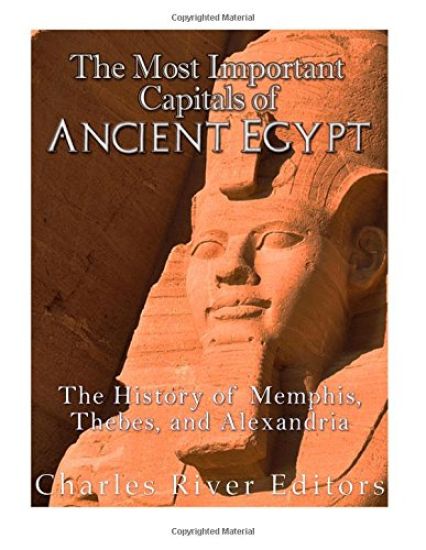
The Most Important Capitals of Ancient Egypt: The History of Memphis, Thebes, and Alexandria
*Includes pictures *Includes archaeological facts about the sites and descriptions of them *Includes online resources and a bibliography for further reading Africa may have given rise to the first humans, and Egypt probably gave rise to the first great civilizations, which continue to fascinate modern societies across the globe nearly 5,000 years later. From the Library and Lighthouse of Alexandria to the Great Pyramid at Giza, the Ancient Egyptians produced several wonders of the world, revolutionized architecture and construction, created some of the world's first systems of mathematics and medicine, and established language and art that spread across the known world. With world-famous leaders like King Tut and Cleopatra, it's no wonder that today's world has so many Egyptologists. Thus, it is somewhat ironic that over time, people have managed to retain hardly any information about Memphis, the Ancient Egyptian capital in which the pharaohs responsible for the Great Pyramids resided and ruled. At some point, even the precise location of Memphis came to be forgotten, and the city was believed lost to the annals of time. Archaeological David Jefferys, not to be dissuaded, has continued to insist that Memphis is not a "lost" city but simply a city that has been temporarily misplaced. To this day, teams of archaeologists continue to sift through the Egyptian sands in the hopes that they will at last unearth the walls of the elusive city. In the meantime, an examination of the scant historical record read in close conjunction with the archaeological record does allow a glimpse into what one of Egypt's most important cities was like. In just a few lines of his renowned Iliad, Homer immortalized in writing what the Thebans had immortalized in stone nearly a millennium before - Thebes "of the Hundred Gates" was home to some of the most splendid relics of the religion, history, and art of ancient Egypt and indeed of all the ancient world. As Thebes grew from an unimportant settlement to the richest city in the ancient world, unparalleled in its beauty and splendor, nearly all of its leaders left his or her mark in the form of one or more legendary monuments at the great temple complex to Amun-Ra at Karnak, the temple to Amun-Ra at Luxor, and the mortuary temples and tombs of the Valley of the Kings. As Thebes underwent the dramatic changes that came with its 3,000 years of political shifts, religious reforms, and ritual changes - not to mention its sometimes abrupt changes in fortune - its monuments grew and changed with it. The study of the fascinating archaeology of these sprawling structures thus provides an excellent point of entry for understanding nearly all aspects of Theban history and culture. The land and people of Egypt so impressed the Greeks that when Alexander the Great conquered the Nile Valley in the 4th century BCE, he decided that he would build a new city on its soil and name it Alexandria. After Alexander, the city of Alexandria grew and became the most important city in the world for centuries as it watched and played a role in the rise and fall of numerous dynasties. The city also became home to one of the Seven Wonders of the Ancient World - the Lighthouse of Alexandria - and a center of culture and learning, which was exemplified by the Library of Alexandria. Truly, Alexandria was as unique as it was great; it was a Greek city built on Egyptian soil that was later ruled by the Romans and then became an important center of early Christian culture. What made Alexandria stand apart from other ancient cities such as Rome and Babylon and how did it become the gift of the Mediterranean? The answer is complicated, but an examination of Alexandria's history reveals that from the time the city was founded until the Arab conquest, the different dynasties who ruled there took the time and effort to foster and patronize arts, culture, and learning.
The Greatest Battles in History: The Battle of Marathon

The Greatest Battles in History: The Battle of Marathon

Charles River

Createspace Independent Publishing Platform
2018
nidottu
*Includes pictures *Discusses how the battle was fought and legends about the battle such as Pheidippides running back to Athens *Includes a bibliography for further reference "The Athenians...charged the barbarians at a run. Now the distance between the two armies was little short of eight furlongs about a mile]. The Persians, therefore, when they saw the Greeks coming on at speed, made ready to receive them, although it seemed to them that the Athenians were bereft of their senses, and bent upon their own destruction; for they saw a mere handful of men coming on at a run without either horsemen or archers..." - Herodotus The Ancient Greeks have long been considered the forefathers of modern Western civilization, but the Golden Age of Athens and the spread of Greek influence across much of the known world only occurred due to one of the most crucial battles of antiquity: the Battle of Marathon. In 491 B. C., following a successful invasion of Thrace over the Hellespont, the Persian emperor Darius sent envoys to the main Greek city-states, including Sparta and Athens, demanding tokens of earth and water as symbols of submission, but Darius didn't exactly get the reply he sought. According to Herodotus in his famous Histories, "Xerxes however had not sent to Athens or to Sparta heralds to demand the gift of earth, and for this reason, namely because at the former time when Dareios had sent for this very purpose, the one people threw the men who made the demand into the pit and the others into a well, and bade them take from thence earth and water and bear them to the king." Thus, in 490 B. C., after the revolt in Ionia had been crushed, Darius sent his general Mardonius, at the head of a massive fleet and invading force, to destroy the meddlesome Greeks, starting with Athens. The Persian army, numbering anywhere between 30,000 and 300,000 men, landed on the plain at Marathon, a few dozen miles from Athens, where an Athenian army of 10,000 hoplite heavy infantry supported by 1,000 Plataeans prepared to contest their passage. The Athenians appealed to the Spartans for help, but the Spartans dithered; according to the Laws of Lycurgus, they were forbidden to march until the waxing moon was full. Accordingly, their army arrived too late. Thus, it fell upon the Athenians to shoulder the burden. With their army led by the great generals Miltiades and Themistocles, the Athenians charged the outnumbering Persians. Outmatched by the might of the heavy, bronze-armored Greek phalanx, the inferior Persian infantry was enveloped and destroyed, causing them to flee for their ships in panic. The Athenians had won a colossal victory against an overwhelming and seemingly invincible enemy. Somewhat ironically, the Battle of Marathon has been best commemorated by the race that bears its name, a tradition that started based on a legend that a Greek man named Pheidippides ran the 26.2 miles back to Athens in order to announce the Greek victory and subsequently collapsed and died as soon as he had done so. However, the importance of the battle itself cannot be overstated. The Battle of Marathon proved to be one of the biggest sources of enmity between the Greeks and Persians, and Darius's son Xerxes would seek to undo the results with his own invasion just years later. As it was, the rivalry between the Greeks and Persians would last for over 150 years and culminated with Alexander the Great's destruction of the Achaemenid Persian capital city of Persepolis. Marathon also positioned the city-state of Athens as a major power not only in Greece but throughout the Mediterranean and Near East, as their military, diplomatic, and economic influence grew after the battle. The Greatest Battles in History: The Battle of Marathon chronicles the decisive Greek victory that ended the First Persian War and ensured the safety of mainland Greece.
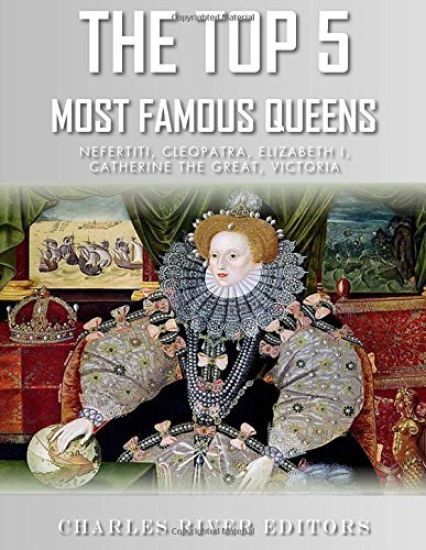
The Top 5 Most Famous Queens

The Top 5 Most Famous Queens

Charles River

Createspace Independent Publishing Platform
2018
nidottu
*Includes pictures. *Includes bibliographies of each queen for further reading. In the early 20th century, over 3,000 years after her death, Nefertiti became a household name across the world and one of the most famous women of the ancient world. Egyptologists were aware that she was a queen of the New Kingdom Egypt during the later portion of the 18th dynasty, but she was little known until the presentation of a reconstructed bust depicting her at the Berlin Museum in 1924. Nefertiti means "the beautiful one has come", and if the presented bust is anything to judge by she, was indeed a beautiful woman. Cleopatra was a captivating figure even to contemporary Romans and the ancient world, and she was a controversial figure who was equally reviled and praised through the years, depicted as a benevolent ruler and an evil seductress, sometimes at the same time. Over 2,000 years after her death, everything about Cleopatra continues to fascinate people around the world, from her lineage as a Ptolemaic pharaoh, her physical features, the manner in which she seduced Caesar, her departure during the Battle of Actium, and her famous suicide. And despite being one of the most famous figures in history, there is still much mystery surrounding her, leading historians and archaeologists scouring Alexandria, Egypt for clues about her life and the whereabouts of her royal palace and tomb. As one of the most famous women rulers in history, Russian Empress Catherine the Great has long been remembered not only as one of the most powerful women of her time, but she was also one of the most powerful and capable rulers in all of Europe. And her path to the throne was just as remarkable as her reign. Despite the strong-arm tactics, Catherine came to power in the midst of the Enlightenment, which was flourishing in France and Britain, and she would rule as an Enlightened ruler. A known correspondent of Voltaire's, Catherine sought to modernize Russia and turn it into a force in its own right, creating a rich and cultured court at the same time. Over the course of nearly 35 years in power, Catherine ushered in the Russian Enlightenment and presided over a period of time known as the Golden Age of the Russian Empire. When Queen Elizabeth II came to the throne in 1952, many commentators heralded the beginning of her reign as the second Elizabethan age. The first one, of course, concerned the reign of Henry VIII's second surviving daughter and middle surviving child, Queen Elizabeth I, one of England's most famous and influential rulers. It was an age when the arts, commerce and trade flourished. It was the epoch of gallantry and great, enduring literature. It was also an age of wars and military conflicts in which men were the primary drivers and women often were pawns. Elizabeth I still wielded great power in the 16th century, whereas Victoria was a constitutional monarch with limited power over the workings of the British government. But in a way, that made Victoria even more unique, as she still proved able to mold the cultural identity of a nearly 65 year long epoch. Furthermore, Victoria established some of the ceremonial customs of the British monarch and became both the forerunner and role model of subsequent queens, a legacy that continues to endure with her great-great granddaughter, Queen Elizabeth II.
The Dissolution of the Ottoman Empire: The History and Legacy of the Ottoman Turks' Decline and the Creation of the Modern Middle East
*Includes pictures *Includes a bibliography for further reading In January 2011, the Turkish television channel "Show TV" released A Magnificent Century (Muhtesem Yuzyıl), which would become one of Turkey's most popular TV shows for the coming years. The show, which takes place during the years of the Ottoman Empire's longest reigning Sultan, Suleiman the Magnificent, was popular even outside of Turkey, including in countries such as Bosnia, Macedonia and Greece. At the same time, Muhtesem Yuzyil's success prompted concerns over Turkish attempts to use what some perceived as a form of nostalgia for the Ottoman Empire, and this led to criticism from various local figures (including the Bishop of Thessalonica in Greece as well as a ban on Turkish soap operas in Macedonia) . Nonetheless, the success of A Magnificent Century is a testament to the vivid influence the multi-secular empire still has in the Middle East and the Balkans almost 100 years after its dissolution. The long agony of the "sick man of Europe," an expression used by the Tsar of Russia to depict the falling empire, could almost blind people to its incredible power and history. Preserving its mixed heritage, coming from both its geographic position rising above the ashes of the Byzantine Empire and the tradition inherited from the Muslim Conquests, the Ottoman Empire lasted more than six centuries. Its soldiers fought, died, and conquered lands on three different continents, making it one of the few stable multi-ethnic empires in history - and likely one of the last. Thus, it's somewhat inevitable that the history of its dissolution is at the heart of complex geopolitical disputes, as well as sectarian tensions that are still key to understanding the Middle East, North Africa and the Balkans. Looking at the events of the empire's last two centuries, and interpreting the fall of the Ottoman Empire as a slow but long decline is what could be called the "accepted narrative." At the start of World War I, the Ottoman Empire was often described as a dwindling power, mired by administrative corruption, using inferior technology, and plagued by poor leadership. The general idea is that the Ottoman Empire was "lagging behind," likely coming from the clear stagnation of the Empire between 1683 and 1826. Yet it can be argued that this portrayal is often misleading and fails to give a fuller picture of the state of the Ottoman Empire. The fact that the other existing multicultural Empire, namely the Austro-Hungarian Empire, also did not survive World War I should put into question this "accepted narrative." Looking at the reforms, technological advances and modernization efforts made by the Ottoman elite between 1826 and the beginning of World War I, one could really wonder why such a thirst for change failed to save the Ottomans when similar measures taken by other nations, such as Japan during the Meiji era, did in fact result in the rise of a global power in the 20th century. Overall, the history of the dissolution can be defined as a race between the Empire's growing "illness" on one side (the Ottoman's inability to appease and federate the various people within its territory), and constant attempts to find a cure in the form of broad reforms. These questions are often presented together, but that tends to shift the focus outward, onto the various peoples and their aspirations, along with Europe's growing influence over the fate of the Ottoman Empire. To consider both the "illness" and the cure, it's necessary to separate them, before moving on to the direct cause of the empire's dissolution (World War I) and its heritage. The Dissolution of the Ottoman Empire: The History and Legacy of the Ottoman Turks' Decline and the Creation of the Modern Middle East chronicles the end of one of history's most influential empires, and the aftermath.
The Top 5 Greatest Americans

The Top 5 Greatest Americans

Charles River

Createspace Independent Publishing Platform
2018
nidottu
*Includes pictures of important people, places, and events. *Includes bibliographies. Every American can easily recite the highlights of the "Father of Our Country". The remarkable Virginian led an under-resourced rag-tag army to ultimate victory in the American Revolution before becoming the nation's first president, setting every precedent for the executive branch of the new government, from forming a "Cabinet" to limiting himself to two terms. Nobody spent more time in the thick of America's political debates than Thomas Jefferson, one of the most famous and revered Americans. Jefferson was instrumental in all of the aforementioned debates, authoring the Declaration of Independence, laying out the ideological groundwork of the notion of states' rights, leading one of the first political parties, and overseeing the expansion of the United States during his presidency. Before the United States of America even existed, the first American celebrity was Benjamin Franklin (1706-1790). Franklin was an author, printer, political theorist, politician, postmaster, scientist, musician, inventor, satirist, civic activist, statesman, and diplomat, and he used his unique status as an international celebrity to become the colonies' best diplomat. Schoolchildren can recite the life story of Lincoln, the "Westerner" who educated himself and became a self made man, rising from lawyer to leader of the new Republican Party before becoming the 16th President of the United States. Lincoln successfully navigated the Union through the Civil War but didn't live to witness his crowning achievement, becoming the first president assassinated. The life and legend of Dr. King have been told to every American, many of whom come away equating King with the Civil Rights Movement as a whole. But King's life was about far more than leading movements and having dreams.
The Lawrence Massacre: The History of the Civil War's Most Notorious Guerrilla Attack

The Lawrence Massacre: The History of the Civil War's Most Notorious Guerrilla Attack

Charles River

Createspace Independent Publishing Platform
2018
nidottu
*Includes pictures *Includes accounts of the massacre by a former raider *Includes online resources and a bibliography for further reading *Includes a table of contents "Kansas should be laid waste at once." - William Clarke Quantrill "No more terrifying object ever came down a street than a mounted guerrilla wild for blood, the bridle-reins between his teeth or over the saddle-horn, the horse running recklessly, the rider yelling like a Comanche, his long unkempt hair flying wildly beyond the brim of his broad hat, and firing both to the right and left with deadly accuracy. When a town was filled with such men bent on death, terror ensued, reason and judgment fled, and hell yawned." - William Elsey Connelley, author of Quantrill and the Border Wars The Civil War is best remembered for the big battles and the legendary generals who fought on both sides, like Robert E. Lee facing off against Ulysses S. Grant in 1864. In kind, the Eastern theater has always drawn more interest and attention than the West. However, while massive armies marched around the country fighting each other, there were other small guerrilla groups that engaged in irregular warfare on the margins, and among these partisan bushwhackers, none are as infamous as William Quantrill and Quantrill's Raiders. Quantrill's Raiders operated along the border between Missouri and Kansas, which had been the scene of partisan fighting over a decade earlier during the debate over whether Kansas and Nebraska would enter the Union as free states or slave states. In "Bleeding Kansas", zealous pro-slavery and anti-slavery forces fought each other, most notably John Brown, and the region became a breeding ground for individuals like Quantrill who shifted right back into similar fighting once the Civil War started. Rather than target military infrastructure or enemy soldiers, the bushwhackers rode in smaller numbers and targeted civilians on the other side of the conflict, making legends out of men like Bloody Bill Anderson and John Mosby. The reason Quantrill's Raiders remain so notorious today is for the raid on Lawrence, Kansas in August 1863, during which they slaughtered nearly 200 boys and men between the ages of 14-90 under the pretext that they were capable of holding a gun and thus helping the Union cause. After that massacre, Union forces in the area retaliated in similar fashion, forcing Southern sympathizers out of several counties in the area and burning the property. Union forces also detained those accused of assisting Quantrill's Raiders, including their relatives. After raiding Lawrence, Quantrill's Raiders headed south, and they eventually split off into several groups. Quantrill himself was killed while fighting in June 1865, nearly two months after Lee surrendered to Grant at Appomattox, but his name was kept alive by the notorious deeds of his Raiders during the war and the criminal exploits of former Raiders like Jesse James and his brother, as well as the Younger brothers. These men, who had fought with Quantrill, became some of America's most famous outlaws, and they used guerrilla tactics to rob banks and trains while eluding capture. The Lawrence Massacre: The History of the Civil War's Most Notorious Guerrilla Attack chronicles the events that led up to the raid and its aftermath. Along with pictures of important people, places, and events, you will learn about the Lawrence Massacre like never before, in no time at all.
The Underground Railroad: The History and Legacy of America's Greatest Abolitionist Network
*Includes pictures of important people and places. *Comprehensively analyzes the history of the abolitionist movement and the 19th century politics in America that brought about the Underground Railroad. *Highlights famous individuals who helped the Underground Railroad, including Frederick Douglass and Harriet Tubman. *Includes a bibliography for further reading. "I was the conductor of the Underground Railroad for eight years, and I can say what most conductors can't say - I never ran my train off the track and I never lost a passenger." - Harriet Tubman The Underground Railroad is one of the most taught topics to young schoolchildren, and every American is familiar with the idea of fugitive slaves escaping to Canada and the North with the help of determined abolitionists and even former escaped slaves like Harriet Tubman. The secrecy involved in the Underground Railroad made it one of the most mysterious aspects of the mid-19th century in America, to the extent that claims spread that 100,000 slaves had escaped via the Underground Railroad. Of course, from a practical standpoint, the Underground Railroad had to remain covert not only for the sake of thousands of slaves, but for a small army of men and women of every race, religion and economic class who put themselves in peril on an ongoing basis throughout the first half of the 19th century, and in the years leading up to the war. Over 150 years later, that same secrecy has helped the Underground Railroad become so romanticized and mythologized that people often visualize it in ways that were far different from reality. Before the American Civil War eliminated slavery, it was a fixture in North America for over 200 years, and by 1850 a trained slave was worth approximately $2,500, around 10 times the sum of a typical annual salary in that day. As a result, the economic dependence on slavery in the South was an extreme one, and in the wake of the Fugitive Slave Act, black people in the North were under constant pressure to defend their "credentials" to bounty hunters and owners. Between the value of slaves in America, rising abolitionist sentiment at home and overseas, and political debates promoting or hindering the movement toward equality, the era in which the Underground Railroad operated cannot be easily fit into a concise body of principles, actions or geography. Hilary Russell may have put it best in saying of the Underground Railroad that while "a powerful and centralized system may not have existed but in legend, localized networks did." Communication standards over long distances being what they were in that century, she is most likely correct. The Underground Railroad was neither a true railroad nor underground, and it was not a route but a network comprised of a widespread conspiracy and social rebellion against present law. For the most part, people working on the Underground Railroad tried to protect themselves by not knowing the full details of the routes they were working on; instead, many people just played individual parts for the greater good. The Underground Railroad: The History and Legacy of America's Abolitionist Network comprehensively examines the history of the Underground Railroad, explaining how it operated and who worked for it, as well as the political history that made it necessary for escaped slaves. Along with pictures of important people, places, and events, you will learn about the Underground Railroad like never before, in no time at all.
The CSS Hunley: The History and Mystery of the Civil War's Most Famous Submarine

The CSS Hunley: The History and Mystery of the Civil War's Most Famous Submarine

Charles River

Createspace Independent Publishing Platform
2018
nidottu
*Includes pictures *Includes contemporary accounts of the Hunley and its mission *Explains the theories behind the Hunley's disappearance *Includes online resources and a bibliography for further reading *Includes a table of contents After a year of independence, the government and people of the Confederacy were beginning to worry. During their first year after seceding from the United States, everything had gone well. In 1861 and early 1862 the rebel army enjoyed success after success, and the initial optimism of those in the North who thought the rebels could be defeated in a few months had settled into the grim acknowledgement that the war would take years and cost many thousands of lives. Now things were turning against the South. It had lost ground in the west, and more seriously its economy was being strangled by a Union naval blockade on its ports. At the beginning of the war, Union General Winfield Scott had rightly seen that one of the Union's greatest advantages was that it had far more warships. He introduced the "Anaconda Plan," in which the Navy encircled the Confederacy like a vast snake, blocking every port and major river and cutting it off from the outside world. The Confederate Navy tried to fight off the blockade but was seriously outgunned. Confederate blockade runners, independent operators with fast ships, became national heroes for their daring races across the ocean with Union warships hot on their heels. While their adventures made for good headlines, the goods they slipped through the blockade weren't nearly enough to solve the chronic shortages. The South needed a different solution. It needed some sort of vessel that could defeat the blockading ships and yet be within the financial and technological means of the Confederate war chest. It was the proposed solution to this problem that led to one of the strangest and inspiring stories of the Civil War-that of the CSS H. L. Hunley, the first submarine to successfully sink an enemy vessel. It is the story of its obsessive inventor, Horace Lawson Hunley, and his brave and determined crewmembers. It is also a story of technology well ahead of its time. However, as historic and groundbreaking as the Hunley and its mission was, all of that may be overshadowed by the lingering debate over just what happened to the submarine, which never made it back to port after the attack. The submarine was eventually found, but historians still continue to look at all the evidence, including the positions of the crew, in an effort to conclusively determine how the Hunley sank. The enduring mystery has helped keep interest in the submarine alive at the very same time salvage efforts continue. The CSS Hunley: The History and Mystery of the Civil War's Most Famous Submarine profiles the historic submarine and its mysterious fate. Along with pictures of important people, places, and events, you will learn about the Hunley like never before, in no time at all.
The Roman Conquest of Britannia: The History and Legacy of Roman Britain from Julius Caesar to Hadrian
*Includes pictures*Includes ancient accounts of Britain *Includes online resources and a bibliography for further reading" The Romans] thinking that it might be some help to the allies Britons], whom they were forced to abandon, constructed a strong stone wall from sea to sea, in a straight line between the towns that had been there built for fear of the enemy, where Severus also had formerly built a rampart." - Bede's description of Hadrian's Wall in the Middle AgesThe famous conqueror from the European continent came ashore with thousands of men, ready to set up a new kingdom in England. The Britons had resisted the amphibious invasion from the moment his forces landed, but he was able to push forward. In a large winter battle, the Britons' large army attacked the invaders but was eventually routed, and the conqueror was able to set up a new kingdom. Over 1,100 years before William the Conqueror became the King of England after the Battle of Hastings, Julius Caesar came, saw, and conquered part of "Britannia," setting up a Roman province with a puppet king in 54 BCE. In the new province, the Romans eventually constructed a military outpost overlooking a bridge across the River Thames. The new outpost was named Londinium, and it covered just over two dozen acres. For most of the past 1,000 years, London has been the most dominant city in the world, ruling over so much land that it was said the Sun never set on the British Empire. With the possible exception of Rome, no city has ever been more important or influential than London in human history. Thus, it was only fitting that it was the Romans who established London as a prominent city. Londinium was initially little more than a small military outpost near the northern boundary of the Roman province of Britannia, but its access to the River Thames and the North Sea made it a valuable location for a port. During the middle of the 1st century CE, the Romans conducted another invasion of the British Isles, after which Londinium began to grow rapidly. As the Romans stationed legions there to defend against the Britons, Londinium became a thriving international port, allowing trade with Rome and other cities across the empire. By the 2nd century CE, Londinium was a large Roman city, with tens of thousands of inhabitants using villas, palaces, a forum, temples, and baths. The Roman governor ruled from the city in a basilica that served as the seat of government. What was once a 30 acre outpost now spanned 300 acres and was home to nearly 15,000 people, including Roman soldiers, officials and foreign merchants. The Romans also built heavy defenses for the city, constructing several forts and the massive London Wall, parts of which are still scattered across the city today. Ancient Roman remains continue to dot London's landscape today, reminding everyone that almost a millennium before it became the home of royalty, London was already a center of power. The Romans were master builders, and much of what they built has stood the test of time. Throughout their vast empire they have left grand structures, from the Forum and Pantheon in Rome to the theatres and hippodromes of North Africa and the triumphal gates in Anatolia and France. Wherever they went, the Romans built imposing structures to show their power and ability, and one of their most impressive constructions was built on the northernmost fringe of the empire. Shortly after the emperor Hadrian came to power in the early 2nd century CE, he decided to seal off Scotland from Roman Britain with an ambitious wall stretching from sea to sea. To accomplish this, the wall had to be built from the mouth of the River Tyne - where Newcastle stands today - 80 Roman miles (76 miles or 122 kilometers) west to Bowness-on-Solway. The sheer scale of the job still impresses people today, and Hadrian's Wall has the advantage of being systematically studied and partially restored.
The Declaration of Independence: The History and Legacy of America's Founding Document
*Includes pictures *Explains the changes made to the initial drafts of the Declaration and the history of how it was voted on *Includes letters and accounts written by Founding Fathers like Adams and Jefferson *Profiles every signer *Includes a bibliography for further reading *Includes a table of contents "Resolved, that these United Colonies are, and of right ought to be, free and independent States, that they are absolved from all allegiance to the British Crown, and that all political connection between them and the State of Great Britain is, and ought to be, totally dissolved." Although the Declaration of Independence is now considered one of the most important political documents in history, the men that drafted it did not initially favor such a move at the start of the American Revolution. Despite its assumption of governing duties, the Second Continental Congress never intended, at least initially, to become the governing body of a new nation. Instead, it merely hoped to transform the relationship between Britain and her colonies to allow for greater self-government on their side of the Atlantic. Separation between the two was rarely favored, and this initial sentiment coalesced into the Olive Branch Petition, which sought a reasonable motion of reconciliation between George III and the colonies. It was drafted by one of Virginia's delegates, Thomas Jefferson. By the summer of 1776, John Adams, Samuel Adams and others arguing for a formal break with Britain convinced their fellow Congressmen that the time had come to formalize their break from Britain. John, along with Thomas Jefferson, Benjamin Franklin, Roger Sherman and Robert Livingston, were appointed to draft the announcement informing Britain of their intentions. Together they completed the rough draft of the preamble on May. The committee then wanted John to complete the document, but he felt that Jefferson was a better writer. Ultimately the two men worked together to create Declaration of Independence in late June, with Adams providing much of the legal insight and Jefferson the prose. As a document, the Declaration justified the call for independence by listing grievances against the King and anchoring them with natural and legal rights, which formed the most memorable lines in the document. In addition to summarizing Jefferson's political philosophy, the Declaration was an amalgamation of the words and thoughts of famous political philosophers of the previous century, including Montesquieu and John Locke. Regardless, Jefferson is now remembered as the author of one of the English language's most timeless passages, "We hold these truths to be self-evident, that all men are created equal, that they are endowed by their Creator with certain unalienable Rights, that among these are Life, Liberty and the pursuit of Happiness." Throughout June of 1776, Jefferson worked in Philadelphia within short walking distance of the Congress, writing the first rough draft of the Declaration of Independence. In substance, it mostly resembled the final document, with an emphasis on natural rights and self-government. Throughout the editing process, it was reduced by nearly a quarter through the removal of sentences and redundancies. Congress approved of the Declaration of Independence on July 2, 1776 but returned it to Adams and Jefferson for some fine tuning before giving it their final approval two days later. Though Independence Day is celebrated on July 4, Adams wrote to Abigail on July 3, 1776 in the belief that it would be July 2 that would be remembered as the important day. The Declaration of Independence: The History and Legacy of America's Founding Document chronicles the history that brought about America's formal break from Great Britain. Along with pictures and a bibliography, you will learn about the Declaration of Independence like never before, in no time at all.
The American Civil War in 1864: The History and Legacy of the War's Penultimate Year

The American Civil War in 1864: The History and Legacy of the War's Penultimate Year

Charles River

Createspace Independent Publishing Platform
2018
nidottu
*Includes pictures *Includes accounts of the fighting *Includes online resources and a bibliography for further reading With Robert E. Lee's Army of Northern Virginia continuing to frustrate the Union Army of the Potomac's attempts to take Richmond in 1862 and 1863, President Lincoln shook things up by turning command of all the armies of the United States to Ulysses S. Grant in March 1864., Lee had won stunning victories at battles like Chancellorsville and Second Bull Run by going on the offensive and taking the strategic initiative, but Grant and Lincoln had no intention of letting him do so anymore. Attaching himself to the Army of the Potomac, Grant ordered Army of the Potomac commander George Meade, "Lee's army is your objective point. Wherever Lee goes, there you will go also." The Battle of the Wilderness was fought so close to where the Battle of Chancellorsville took place a year earlier that soldiers encountered skeletons that had been buried in shallow graves in 1863. Moreover, the woods were so thick that neither side could actually see who they were shooting at, and whole brigades at times got lost in the forest. Both armies sustained heavy casualties while Grant kept attempting to move the fighting to a setting more to his advantage, but the heavy forest made coordinated movements almost impossible. As Lee kept thwarting the Army of the Potomac during the Overland Campaign, Grant eventually refused to attack Lee in frontal assaults, and aware that Lee dared not venture out to counterattack, Grant nearly captured Richmond in mid-June by stealing a march on Lee's army and crossing the James River. The fog of war, poor luck, and a skillful impromptu defense by P. G. T. Beauregard stopped Grant from taking Petersburg, which was a critical railroad hub and supply line for Richmond, before Lee's army could confront, thereby saving the Confederacy for the time being. The two armies began to dig in around Petersburg, and unbeknownst to them they would be there for the next 9 months, constructing elaborate trenches and engaging in the kind of warfare that would be the forerunner of World War I. After successfully breaking the Confederate siege at Chattanooga near the end of 1863, William Tecumseh Sherman united several Union armies in the Western theater for the Atlanta Campaign, forming one of the biggest armies in American history. After detaching troops for essential garrisons and minor operations, Sherman assembled his nearly 100,000 men and in May 1864 began his invasion of Georgia from Chattanooga, Tennessee, where his forces spanned a line roughly 500 miles wide. . Sherman set his sights on the Confederacy's last major industrial city in the West and General Joseph E. Johnston's Army of Tennessee, which aimed to protect it. Atlanta's use to the Confederacy lay in its terminus for three major railroad lines that traveled across the South: the Georgia Railroad, Macon and Western, and the Western & Atlantic. The timing of the invasion was also crucial. Grant's lack of progress during the summer of 1864 ensured that anti-war criticism of the Lincoln Administration continued before the presidential election. It would fall upon Sherman's forces in the West to deliver the necessary victory. Johnston's army of 50,000 found itself confronted by almost double its numbers, and General Johnston began gradually retreating in the face of Sherman's forces, despite repulsing them in initial skirmishes at Resaca and Dalton. In August, Sherman moved his forces west across Atlanta and then south of it, positioning his men to cut off Atlanta's supply lines and railroads. When the Confederate attempts to stop the maneuvering failed, the writing was on the wall. On September 1, 1864, Hood and the Army of Tennessee evacuated Atlanta and torched everything of military value. On September 3, 1864, Sherman famously telegrammed Lincoln, "Atlanta is ours and fairly won."
The Gulf War: The History and Legacy of Operation Desert Shield and Operation Desert Storm
*Includes pictures *Includes online resources and a bibliography for further reading It was one of the 20th century's most decisive wars, but also one of its most influential. In the wake of Saddam Hussein's invasion of Kuwait, America led a coalition of dozens of nations that repelled the Iraqi attack and smashed Iraqi forces, much of which was captured on live television as global networks broadcast the images back home. On the now ironic date of September 11, 1990, President Bush addressed a joint session of Congress to explain why he was assembling a coalition of nations to intervene against Saddam Hussein's invasion of Kuwait. Bush stated, "Out of these troubled times, our fifth objective -- a new world order -- can emerge... A new era, freer from the threat of terror, stronger in the pursuit of justice and more secure in the quest for peace." As his son would later attempt over a decade later in another war against Iraq, President Bush sought to present the coalition of nearly 40 nations as indicative of multilateralism, even though it was dominated by American forces. At the time, the Soviet Union was less than a year away from collapsing, leaving the United States as the sole superpower. In fact, the "new world order" that Bill Clinton and future presidents stepped into was one that allowed for American unilateralism. Since World War II, the United States had protected the West during the Cold War, and President Kennedy had coined the term "Pax Americana" to describe his hope of peace for the world. 30 years later, American presidents now seemingly had the opportunity to use America's unchecked power to instill and preserve peace across the world. As events have proved, the attempt to forge Pax Americana would be much easier said than done, and American involvement in the Middle East has been directly tied to the First Gulf War. As Osama bin Laden and al-Qaeda attacked American targets throughout the 1990s, and most notably on 9/11, the terrorist leader pointed to the stationing of American troops in Saudi Arabia in response to Saddam's invasion of Kuwait. Bin Laden was livid, not just because foreign boots were stampeding on what is popularly considered the holiest land in Islam but also because he had wanted to help defend the Saudi kingdom with his own group. By lashing out, bin Laden was caught up in the Saudi government's crackdown on dissidents and was ultimately forced into exile. Bin Laden took refuge in Sudan in 1992, and later in Afghanistan in 1996. Of course, the Gulf War also played a role in the more controversial invasion of Iraq, which began in 2003 and was again led by the United States. That invasion came about as a result of faulty intelligence and Iraq's skirting of United Nations weapons resolutions, as well as a biting sanctions regime meant to compel Iraq to comply, all of which were put in place after the First Gulf War. The resulting chaos in Iraq, from the bloody fighting to the rise of the Islamic State, can thus all be tied back to the conflict a generation earlier. On top of that, the stateless Kurds in Iraq continue to be important geopolitical players, whether it was their actions during and after the Gulf War, or their involvement in the Syrian Civil War, politics in Turkey, and more. The Gulf War: The History and Legacy of Operation Desert Shield and Operation Desert Storm looks at the fighting and its aftermath. Along with pictures and a bibliography, you will learn about the Gulf War like never before.
The History of Syria: 1900-2012

The History of Syria: 1900-2012

M. Clement Hall; Charles River

Createspace Independent Publishing Platform
2018
nidottu
As one of the hottest political topics in the world today, nearly everyone is aware of the ongoing violence in Syria, between forces loyal to the regime of Bashar al-Assad and opposition looking to overthrow the regime. Within that narrative are a number of sensitive issues, including sectarian strife between the majority Sunni population and the Alawites, not to mention Christians. People may know what's going on in Syria today, but how did Syria get to where it is today, at the forefront of the Arab Spring? The history of Syria in the last century is one of turbulence, violence, and political intrigue, with local religious sects battling for control of the land while foreign powers vied to maintain influence over the region. What resulted was a toxic and twisted mess that has precipitously affected the entire region, from Israel and Lebanon to Iran and Iraq. The History of Syria: 1900-2012 comprehensively and descriptively unweaves the web, progressing through the history of Syria from the days of the Ottoman Empire to now, by examining all of the different religious, political, foreign, and military issues that affect Syria and are affected by Syria today. Along with maps showing how the modern state of Syria came to be formed, The History of Syria: 1900-2012 will bring readers up to speed on one of the world's most volatile and violent hotspots today.
The Greatest Battles in History: The Battle of Iwo Jima

The Greatest Battles in History: The Battle of Iwo Jima

Charles River

Createspace Independent Publishing Platform
2018
nidottu
*Includes historic pictures of the fighting. *Includes pictures of important people, places, and events. *Includes a bibliography for further reading. "From the Halls of Montezuma To the shores of Tripoli; We fight our country's battles In the air, on land, and sea; First to fight for right and freedom And to keep our honor clean; We are proud to claim the title Of United States Marine." On February 23, 1945, one of the most famous photographs in American history was taken atop Mount Suribachi, as five American soldiers began to raise an American flag. The picture, which most Americans are instantly familiar with, has come to symbolize the strength and sacrifice of America's armed forces, and though many realize it was taken during the Battle of Iwo Jima, much of the actual battle and the context of the picture itself have been overshadowed. The Battle of Iwo Jima, code name "Operation Detachment," is more of a misnomer than anything. It was fought as part of a large American invasion directed by steps toward the Japanese mainland, and it was more like a siege that lasted 36 days from February-March 1945, with non-stop fighting every minute. In fact, the iconic flag-raising photo was taken just four days into the battle, and as that picture suggests, the battle was not a pristine tactical event but an unceasing horror with no haven for protection. As veteran and author James F. Christ put it in the foreword of his exhaustive study of the action, "it is carnage...that is what Iwo was...the Gettysburg of the Pacific." Iwo Jima defined the classical amphibious assault of the World War II era, as much as the Normandy invasion did, but it came later in the war. In Europe, the Battle of the Bulge had already been won, and German forces would surrender in early May. However, the Japanese Empire was still at a considerable level of strength and state of resolve, and an essential offensive, grinding from island to island with naval unit to naval unit and air to air was met with maniacal resistance by the enemy. When Admiral Chester Nimitz was directed to capture an island in the Bonin group, Iwo Jima stood out for its importance in making progress against the mainland, with three airfields that would allow American air forces to attack the Japanese mainland. But the Japanese were also well aware of how important Iwo Jima was, and they fought desperately in bunkers and tunnels that required the Americans to carefully clear them out gradually. Less than 5% of the Japanese soldiers on Iwo Jima were taken alive, and American casualties were estimated at 26,000, with 6,800 killed or captured. A month later at Okinawa, which lasted from April-June, the Americans suffered an estimated 62,000 casualties, with 12,000 Americans killed or captured. These deadly campaigns came after widely-held predictions that taking these islands would amount to no more than a brief footnote in the overall theater. However, the national character of the Empire was equally misunderstood. Following the month of Iwo Jima, "commentator after commentator in the Anglo-American camp agreed that the Japanese were more despised than the Germans...uncommonly treacherous and savage...alluding to their remarkable tenacity...refused to give up any territory and incurred thousands of losses daily without any possibility of surrender." The fighting went a long way toward swaying the beliefs of American military advisors that invading Japan itself would cause millions of casualties, which ultimately helped induce President Truman to use the atomic bombs on Hiroshima and Nagasaki. The Greatest Battles in History: The Battle of Iwo Jima comprehensively covers the entire military situation that led up to the battle, analyzes the decisions made by the battle's most important leaders, and explains the aftermath of the American victory.