Kirjojen hintavertailu – 12 903 727 kirjaa ja 27 kauppaa
Kirjailija
Charles River
Kirjat ja teokset yhdessä paikassa: 4 673 kirjaa, julkaisuja vuosilta 2013–2022, suosituimpiin kuuluu William Powell and Myrna Loy: The Lives and Careers of One of Classical Hollywood's Most Iconic Duos. Vertaile teosten hintoja ja tarkista saatavuus suomalaisista kirjakaupoista.
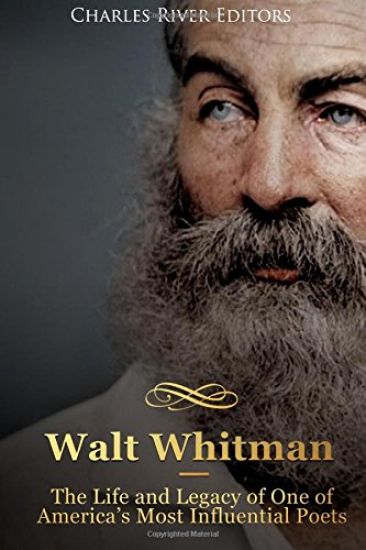
*Includes pictures *Includes Whitman's quotes and excerpts of poetry *Includes online resources and a bibliography for further reading "The proof of a poet is that his country absorbs him as affectionately as he has absorbed it." - Walt Whitman Walt Whitman, the great American poet, is also in many ways a great American enigma, for more and less are known about him than other famous men in 19th century American history. On the one hand, he was the product of something of an all-American family, the sort of salt of the earth people he would later describe so vividly in his work. On the other, he was a complete bohemian and profligate, given to vanity in the way he dressed and lived. He started out his career as a school teacher and was later a newspaper man, but he left both those types of work for a job as a government bureaucrat. As a young man, when most of his peers were sowing their wild oats, he was considered by many to be a stick in the mud who neither drank nor chased women. Then, as a middle-aged man, when his peers had settled down into quieter lives, he remained single and seems to have pursued romantic relationships with both men and women. Then, of course, there was his poetry, words that summarized both the best and worst about his nation. His seminal work, Leaves of Grass, began as little more than a pamphlet but grew for decades, as each new edition added more poems. By the time of his death, it had become a large volume still studied today. While he wrote other pieces for publication, Leaves of Grass remained his magnum opus and his baby, nurturing and developing it throughout his life. And yet, through it all, the title remained the same self-deprecating play on words that he had given it when he first self-published the work in 1855. Floyd Stovall, who published a collection of Whitman's works in 1933, explained how Whitman's life and work affected the society around him: "Whitman, like the age that produced him, was both a culmination and a beginning. In him was the flower of romantic idealism in America, which had its roots in the eighteenth-century philosophy of progress, and in him also the seed of scientific realism, which throws its maze of branches about contemporary thought. He bridges the chasm made by the Civil War between the idealism of the past and the materialism of the present and thus becomes the representative of united America... Yet he was never popular. In the passionate conflicts of a changing civilization, the advocate of harmony is liable to be suspected by all factions. So it was with Whitman. The realist distrusted his faith in humanity, and the idealist was shocked because he extolled the animalism of man. On the one hand, he allowed his readers no escape from the imperfections of the world, while on the other he required them to transcend these imperfections. The popular writer, however, must be one who enables his readers to retain their faith in the actual world by obscuring its imperfections in the twilight of sentiment and fancy." Walt Whitman: The Life and Legacy of One of America's Most Influential Poets looks at the life and times of 19th century America's most controversial poet and the impact his famous work had. Along with pictures depicting important people, places, and events, you will learn about Walt Whitman like never before.
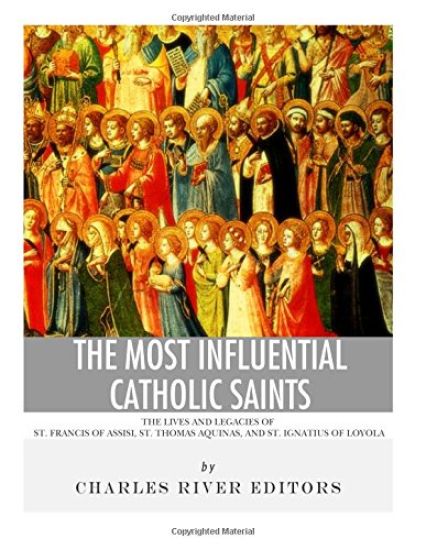
*Includes historic artwork depicting the saints and important people, places, and events in their lives. *Comprehensively covers the Orders founded by Francis and Ignatius, as well as the theology and philosophy espoused by Thomas. *Includes a bibliography on each saint for further reading. A lot of ink has been spilled covering the lives of history's most influential figures, but how much of the forest is lost for the trees? In Charles River Editors' Catholic Legends series, readers can get caught up to speed on the lives of the Church's most important men and women in the time it takes to finish a commute, while learning interesting facts long forgotten or never known. Alongside St. Ignatius, who founded the Jesuits, St. Francis of Assisi is widely regarded as one of the most venerated saints in the Catholic Church due to his work establishing religious Orders that have done an incalculable amount of good and service for societies. Like St. Ignatius, St. Francis also got his start as a soldier who experienced a vision that put him on a more divine path. St. Francis eventually became a pillar of the Church, both living in poverty to assist those in greatest need and in establishing the Franciscan Order, the Order of Poor Clares, an enclosed order for women, and the Third Order of Brothers and Sisters of Penance. Near the end of his life, he became the first person recorded in history to bear the stigmata, the Passion wounds that Christ suffered in crucifixion, which only added to his ultimate aura and legacy. It would be hard to overstate the influence that St. Thomas Aquinas (1225-1274) has had on both the Catholic world and the West as a whole over the last 750 years. Even in secular circles, Aquinas is known as one of the most important medieval philosophers, and in many respects a harbinger of the Renaissance that began to flourish across Europe in the centuries that followed his life. His groundbreaking work, Summa Theologica, remains one of the most influential philosophical texts in history, earning him a place in the pantheon alongside Plato, Aristotle, and Socrates. Aquinas had just as great an influence on Christianity as well. His philosophical works forged and established natural theology, squaring Catholicism with reason and logic, the ideals and aspects of modern thought that really took hold during the Renaissance. With his work on logic, theology, and metaphysics, as one of the Church's Doctors, Thomas Aquinas remains the Catholic Church's greatest theologian and philosopher, and he is still held out by the Church as the role model for those studying to become a Catholic priest. A Spanish knight who hailed from a noble Basque family, Ignatius seemed destined for military glory until he was badly wounded in 1521 during the Battle of Pamplona. While convalescing, Ignatius began reading De Vita Christi by Ludolph of Saxony, after which he began a tireless career in service of the Catholic Church. After spending several years studying the faith, Ignatius formed the Society of Jesus in 1539, and as its Superior General, he sent followers as missionaries across Europe to create schools, colleges, and seminaries. The Jesuits remain active across the world nearly 500 years later. By 1548, he had published his famous Spiritual Exercises, which help the faithful commit themselves to Christ by conducting different mental exercises. The Spiritual Exercises continue to be wildly popular across the world today, even among non-Catholics. The Most Influential Catholic Saints details the remarkable lives and legacies of each saint, and it includes pictures, bibliographies, and more. Learn about Francis of Assisi, Thomas Aquinas, and Ignatius like you never have before, in no time at all.
*Includes pictures *Includes accounts of the campaign written by soldiers and generals on both sides *Includes online resources and a bibliography for further reading *Includes a table of contents "Red shines the sun, stand by, It may not smile for us tomorrow. Start up the motors, let them have it full. Get going now, lift off against the foe, There's no way back, comrade, no way back. Dark clouds ahead, far to the west. Come then, say nothing - come " - "Red Shines the Sun," the Fallschirmjager anthem (Forty, 2001, 71). In 1941, with the dark star of Nazi conquest in the ascendant over Europe, German Fuhrer Adolf Hitler continued seeking fresh ways to expand the Third Reich's domains. Two strategic issues occupied Hitler's immediate attention: dealing with Britain and the Soviet Union. Hitler and Goering disagreed fundamentally on the next steps to be taken, and Hitler's ideas naturally won out over the Reichsmarshal's objections. Goering favored a direct attack on England and conquest of the British Isles as the next step to ensure the security of "Festung Europa." After conquering the English, the Germans would deprive the Americans of a European base from which to counterattack when they entered the war. The Third Reich could spend several years building up and creating new weaponry before tackling the Soviet Union. Hitler, on the other hand, wished to leave the British at least quasi-independent, and strike at their peripheral holdings, such as remaining portions of the British Empire, to induce them to sue for peace before the United States joined the conflict. Hitler always planned a treacherous attack against the Soviet Union, his ally in 1939, 1940 and early 1941 thanks to the secret Molotov-Ribbentrop Pact, but Soviet dictator Josef Stalin's actions induced the Fuhrer to move up his timetable for anti-Soviet action drastically. The Third Reich and USSR cooperated in conquering, dismembering, and plundering democratic Poland. The Soviet Union also negotiated for some time to become the fourth Axis member, alongside Germany, Italy, and Japan. However, Stalin launched unilateral aggression against Finland and seized Latvia, Lithuania, and Estonia, plus part of Bulgaria. While Hitler, alarmed at this, offered India and Iran to the Soviet Union, The Soviets responded firmly that they wanted the Balkans. This potential advance westwards into Europe by the communist dictatorship raised Hitler's suspicions to an even higher pitch. The Soviets also annexed parts of Romania, threatening Hitler's oil supply. The Fuhrer, seething at the treachery of the dictatorship his own dictatorship meant to betray, declared privately to his top generals: "Stalin is clever and cunning, ...] He demands more and more. He's a cold-blooded blackmailer. A German victory has become unbearable for Russia. Therefore: she must be brought to her knees as soon as possible." (Shirer, 2011, 788). Hitler believed the "liquidation" of Russia would likely also frighten the British into a negotiated peace. However, before attacking the USSR, Hitler wanted to secure the Balkans and Greece to protect his flank. In particular, he wanted to ensure that the British could not land an army from North Africa to threaten the Wehrmacht's advance into Russia. Accordingly, he gave Mussolini his assent for an Italian invasion. Mussolini's farcical army - ill-trained, ill-equipped, and led with a startling purity of incompetence - attacked Greece out of Albania and, despite its huge numbers, suffered a swift and stinging defeat at the hands of the Greek army. Accordingly, the Wehrmacht invaded, taking the Balkans and Greece in just three weeks. British, Commonwealth, and Greek troops evacuated to Crete, and thus set the stage for a Nazi invasion of the island - one involving the first mass deployment of paratroopers in history.
*Includes pictures *Includes accounts of the fighting by people on both sides *Includes online resources and a bibliography for further reading *Includes a table of contents "Wars should be fought in a better country than this." - Major General John P. Lucas The rugged island of Sicily, dominated in the east by the snow-crowned eminence of the active volcano Mount Etna (which rises to a height of 11,000 feet), lies in the ocean just off the "toe" of the "boot" of Italy. This spectacular setting witnessed one of 1943's pivotal battles as the theater of Allied operations shifted from North Africa to Europe - Operation Husky, a mixed victory wresting control of Sicily from the Axis. The action also caused Benito Mussolini's downfall, his imprisonment, and subsequent dramatic rescue by the scar-faced Otto Skorzeny - removing significant portions of Italy from the fascist camp, but nevertheless failing to prevent a long Italian campaign. Germany's North African defeat opened up the possibility of taking the war in the west to the European continent for the first time since France's lightning conquest by the Wehrmacht in 1940. The British and Americans debated the merits of landing in France directly in 1943, but they ultimately opted against it. The Soviets railed at the Westerners as "bastards of allies" - conveniently forgetting that they aided and abetted Hitler's violent expansionism in eastern Europe for over a year, starting in 1939 - but a 1943 "D-Day" style landing in France might have proven a strategic and logistical impossibility. In fact, the lackluster Allied showing on Sicily and the escape of most of the island's garrison encouraged Hitler to alter his plans and defend Italy vigorously. With its rugged mountain ridges, deep valleys, and numerous rivers, Italy contained tens of thousands of natural defensive positions. The Wehrmacht exploited these to the full during the ensuing campaign, bogging down the Anglo-American armies in an endless series of costly, time-consuming engagements. Even the rank and file German soldiers showed a clear awareness of the Italy's strategic significance: "'The Tommies will have to chew their way through us inch by inch, ' a German paratrooper wrote in an unfinished letter found on his corpse at Salerno, 'and we will surely make hard chewing for them.'" (Hastings, 2011, 408). Indeed, it was a tough slog, and few places were tougher on the Allies than Monte Cassino, which witnessed a series of Allied attacks along the German line that aimed to create a breakthrough to Rome. Ultimately, the attacks would force the Germans into retreat, but not before they had inflicted over 50,000 casualties at a cost of about 20,000 of their own. The battle is perhaps best remembered today for the destruction of a historic abbey that dated back to the 6th century, and the controversial decision to bomb it is still widely debated today, but regardless, Monte Cassino and other operations around Anzio made it possible for the Allies to take Rome on June 4, 1944. 2 days later, the Allies would land at Normandy. The Italian Campaign of World War II: The History of the Allied Operations that Knocked Fascist Italy Out of the War chronicles the crucial fighting, which featured the largest amphibious invasion in history at the time. Along with pictures of important people, places, and events, you will learn about the Italian Campaign like never before.
*Includes pictures *Includes contemporary accounts *Includes online resources and a bibliography for further reading "And when I could no longer look, I blest His grace that gave and took, That laid my goods now in the dust. Yea, so it was, and so 'twas just. It was his own; it was not mine. Far be it that I should repine." - Anne Bradstreet, "Upon the Burning of Our House July 10th, 1666" One of the greatest dangers of any generation is to see those who came before as one-dimensional characters with little to nothing to offer in the way of understanding of modern life. For instance, it is assumed by many that the Puritans who founded Massachusetts were a grim, dour lot devoted to spreading their strict, religious views across society. To some extent, this is true, but of course, not all Puritans were the same; there were outliers who made their own way within their culture and yet remained true to their own sense of self. Anne Bradstreet and her husband, Simon, were two of these people. Anne Bradstreet was born into an unusual family that, in the early years of the 17th century, believed in educating daughters as well as sons. She then moved to the American wilderness as a young bride and proceeded to produce children and poetry at nearly equal speed in the years that followed. Historian Theodore Stanton observed, "The most of her poems were produced between 1630 and 1642, that is, before she was thirty years old; and during these years she had neither leisure, nor elegant surroundings, nor freedom from anxious thoughts, nor even abounding health. Somehow, during her busy lifetime, she contrived to put upon record compositions numerous enough to fill a royal octavo volume of 400 pages, - compositions which entice and reward our reading of them, two hundred years after she lived." Anne also had the dubious honor of being the daughter of one governor of Massachusetts colony, the wife of another, and the sister of a third. This repeatedly put her in a unique position to shape, no matter how subtly, the culture of the early colony, and New England's early openness to at least basic education stems in part from her influence. On top of all this, she was the first published poet from the North American colonies, beating out the men who would follow her by a number of years. Anne Bradstreet: The Life and Legacy of the Famous Puritan Poet in the American Colonies examines Bradstreet's influential work. Along with pictures depicting important people, places, and events, you will learn about Anne Bradstreet like never before.
*Includes pictures *Includes Mao's quotes and accounts from Chinese living through it *Includes online resources and a bibliography for further reading *Includes a table of contents "A revolution is not a dinner party, or writing an essay, or painting a picture, or doing embroidery. It cannot be so refined, so leisurely and gentle, so temperate, kind, courteous, restrained and magnanimous. A revolution is an insurrection, an act of violence by which one class overthrows another." - Mao " The Cultural Revolution was] responsible for the most severe setback and the heaviest losses suffered by the Party, the country, and the people since the founding of the People's Republic." - The Communist Party's description of the Cultural Revolution in 1981, five years after Mao's death. It's a sure sign of fame when a man is known simply by his first name, and Mao Zedong, often referred to simply as Mao or Chairman Mao, was one of the most influential men of the 20th century. He was also arguably the most controversial; as the founder of the People's Republic of China, Mao rose from being a communist revolutionary to successfully overthrowing a regime and transforming China into a communist powerhouse in Asia. The ramifications of Mao's life and legacy are still very much felt today, as China continues to transition into a superpower that may soon lay claim to the world's largest economy. Mao's communist revolution is still controversial, but it was his reign over China that has made him notorious, and in the West he is often considered one of history's biggest tyrants. Mao's revolution and his subsequent policies have been accused of causing millions of deaths, possibly more than the likes of Hitler and Stalin. It has been roughly estimated that Mao was responsible for the deaths of anywhere from 40-70 million, but he has plenty of defenders as well, and they cite Mao's military and political leadership for inspiring similar revolutions across the world. When the Great Leap failed, he was outmaneuvered by experts in the party who went on to restore the more gradualist approach of the first Five-Year Plan. In the subsequent years, without an active governing role, Mao concluded that the gains of the revolution could be lost if China simply came under the grip of a new governing elite. He decided that the only way to instill a proper revolutionary fervor in the country's youth was to enlist them to wage a permanent war on the vestiges of "bourgeois culture" in China. It was against this backdrop that Mao announced the Cultural Revolution in 1966. Unlike the revolution that brought the communists to power by using armed struggle to gain political power, this new revolution was to be waged at the level of everyday life, carried out by common citizens against fellow citizens suspected of "rightist" tendencies. The vanguard of the movement was the volunteer "Red Guard," a citizen army of young people who wore red armbands and called out those they suspected of counterrevolutionary tendencies. The Cultural Revolution became a war of all against all. Students attacked and revolted against their teachers, young people exposed their parents as "rightists," urban intellectuals were forced to go to the countryside and work on farms, and Communist Party officials were publicly shamed in front of large crowds. Thousands and possibly even millions were killed or driven to suicide, among them Mao's intraparty rivals, Liu Shaoqi and Peng Dehuai. The Red Guard had as one of their tenets a fierce devotion to Mao, and they required that the Chairman's portrait be displayed in every household and on every street corner. Elements of traditional Chinese culture, including architecture, art, music, and literature, were rooted out and destroyed by the Red Guard in its fervent effort to cleanse communist culture of the relics of the past.
*Includes pictures *Includes online resources and a bibliography for further reading *Includes a table of contents "No compromise on the main purpose; no peace till victory; no pact with unrepentant wrong -- that is the Declaration of July 4th, 1918." - Winston Churchill, a month prior to the Hundred Days Offensive World War I, also known in its time as the "Great War" or the "War to End all Wars", was an unprecedented bloodbath in terms of its sheer scale. Fought by men who hailed from all corners of the globe, it saw millions of soldiers do battle in brutal assaults of attrition which dragged on for months with little to no respite. Tens of millions of artillery shells and untold hundreds of millions of rifle and machine gun bullets were fired in a conflict that demonstrated man's capacity to kill each other on a heretofore unprecedented scale, and as always, such a war brought about technological innovation at a rate that made the boom of the Industrial Revolution seem stagnant. As a result, World War I was the first truly industrial war, and it created a paradigm which reached its zenith with World War II and towards which virtually all equipment, innovation and training were dedicated throughout the Cold War and the remainder of the 20th century. To this day, modern warfare remains synonymous with tanks and mass infantry battles, although a confrontation of this nature has not occurred (except briefly during Operation Desert Storm) since World War II. For much of 1917, things went the Germans' way. With the Bolshevik Revolution underway, the Germans were able to move soldiers to the Western front as the Russians quit the war. Moreover, the Allied powers had failed badly in its Nivelle Offensive in May 1917 and suffered a defeat in November against at the Battle of Caporetto in Slovenia. Unbelievably, the French and British had not bothered to coordinate their commands until after those defeats: they finally formed a Supreme Council to coordinate their armies' movements and strategies. Despite those successes, when the United States joined the war in April 1917, it began mobilizing 4 million soldiers to join the war. The Central Powers knew that it would take months before the United States could land a substantial number of troops in Europe to join the fighting, and the Germans hoped to force the Allied powers to quit before the United States could make a difference. Thus, the Germans' Spring Offensive began in March 1918, using new infantry tactics to move on the most lightly defended points of the Allied trenches. The Germans quickly obtained a breakthrough and broke the Allied lines, pushing the Allied forces back nearly 40 miles, and the Germans were once again within less than 100 miles of Paris. Once again, however, the Allied powers halted the Germans' drive, with the help of reinforcing American and Australian troops. The Germans were right back where they started by July 1918, at which time about 10,000 Americans were arriving in France each day. The Allied powers began a counteroffensive known as the Hundred Days Offensive in August 1918 that was highly successful in pushing the Germans backward. In September, Bulgaria reached a separate armistice with the Allied powers, ceding control of the Balkans and cutting off German supplies. The defeated Ottoman Empire surrendered in late October. As the fortunes of the Central Powers waned, several lands in Austria-Hungary's empire began declaring independence. Finally, in November the German Kaiser Wilhelm II was forced into exile, and the Germans reached an armistice with the Allied powers at 11:00 a.m. on November 11, 1918. World War I had finally ended. The Hundred Days Offensive: The History of the Final Campaign of World War I analyzes the last and bloodiest campaign of the war. Along with pictures of important people, places, and events, you will learn about Hundred Days Offensive like never before, in no time at all.
*Includes pictures *Includes ancient accounts *Includes online resources and a bibliography for further reading "His character too had its distinct periods... Again, while his mother lived, he was a compound of good and evil; he was infamous for his cruelty, though he veiled his debaucheries, while he loved or feared Sejanus. Finally, he plunged into every wickedness and disgrace, when fear and shame being cast off, he simply indulged his own inclinations." - A description of Tiberius written by the ancient historian Tacitus Throughout the history of the Roman Empire, many rulers held the reins of ultimate power. Some of them, like Octavian, Trajan, Hadrian, Constantine, and Marcus Aurelius, are still celebrated and considered among antiquity's great statesmen, generals and thinkers. Conversely, the Roman Empire also had its fair share of notorious villains, from the sadistic Nero to the debauched Commodus, and all of Rome's poor rulers pale in comparison to the record and legacy of Gaius Julius Caesar Augustus Germanicus, a young man remembered by posterity as Caligula. One of the most overlooked emperors was also one of the first, and he lived in chaotic times. Tiberius was born in 42 BCE, just as the Roman Republic was dissolving and a new Roman imperial power structure emerged under Octavian, who became Rome's first emperor as Caesar Augustus. Tiberius's life soon became caught up with Augustus's as the emperor worked to found and establish a dynasty, but it is unclear if Tiberius ever really wanted to be part of Augustus's plans or inherit imperial power - Tiberius was known as a man who schemed and planned, but he was also a scholar and showed a marked desire throughout his life to retreat and escape the demands of power. Partially due to this continual tension, Tiberius's life is enigmatic in many ways. Tiberius championed the Republic and seemed to desire its return, yet his acceptance of imperial power and his reign solidified Rome's transition to an empire. He was a skilled general who showed concern for the well-being of his troops, and he displayed a remarkable patience as a military tactician. After he rose to become emperor in 14 CE, he ruled for over 22 years, which would be the longest reign of a Roman emperor over the next 100 years, but he remained suspicious of everyone and eventually chose the wrong person to trust, being eventually misled and betrayed by a man whom he thought was his closest friend. When he finally died, aged and lonely, he had become so hated that crowds celebrated his death. Not surprisingly, given Tiberius's lack of popularity, especially at the end of his life, many of the primary sources present a view of Tiberius that is skewed in one direction or other, usually negatively. For example, Tacitus explicitly aimed to display examples of morally good and evil characters for his audience, and described Tiberius as a man who undergoes moral decline to become a hypocritical leader and a cruel tyrant, an enemy of freedom and justice. Suetonius, likewise, is concerned with tying the story together under a moral theme, and he depicts Tiberius as a man with problems such as cruelty and hatred toward his family. Cassius Dio wrote later than the other authors, and his account has many similarities with Suetonius's and Tacitus's. On the other hand, the account of Velleius Paterculus, a contemporary of Tiberius's, gives a more positive viewpoint; Velleius celebrated the peace that was achieved under Augustus and the continuation of the benefits of Augustus's reign under Tiberius, as well as lauding Tiberius as a careful, brilliant, and courageous leader. Tiberius: The Life and Legacy of Ancient Rome's Second Emperor examines the history of one of the most famous fighting forces in the world. Along with pictures depicting important people, places, and events, you will learn about the emperor like never before.
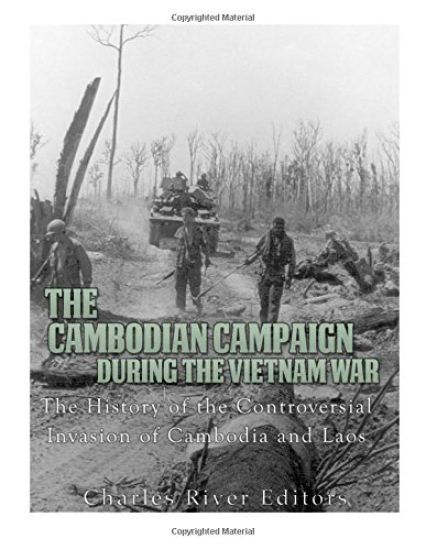
*Includes pictures *Includes excerpts of accounts of the fighting by soldiers *Includes online resources and a bibliography for further reading "When elephants fight, ants should stand aside." - Norodom Sihanouk, King of Cambodia, on the Vietnam War The Vietnam War could have been called a comedy of errors if the consequences weren't so deadly and tragic. In 1951, while war was raging in Korea, the United States began signing defense pacts with nations in the Pacific, intending to create alliances that would contain the spread of Communism. As the Korean War was winding down, America joined the Southeast Asia Treaty Organization, pledging to defend several nations in the region from Communist aggression. One of those nations was South Vietnam. By the end of 1967, with nearly half a million troops deployed, more than 19,000 deaths, and a war that cost $2 billion a month and seemed to grow bloodier by the day, the Johnson administration faced an increasingly impatient and skeptical nation. Early in 1968, a massive coordinated Viet Cong operation - the Tet Offensive - briefly paralyzed American and South Vietnamese forces across the country, threatening even the American embassy compound in Saigon. With this, the smiling mask slipped even further, inflaming the burgeoning antiwar movement. As the results of the Tet Offensive made clear, American forces were hamstrung by political constraints and a wide range of self-imposed limitations, and the United States struggled to deal with the greater strategic nimbleness of the North Vietnamese during the late 1960s. The tremendous power of the American military, blending technological strength and professional skill, gave the Americans the advantage in many, though of course not all, tactical encounters. On the strategic and operational level, however, the North Vietnamese held many of the trump cards. Constrained by a heavily defensive strategy, the U. S. found itself mostly forced to respond to the North's initiatives, and a reactive strategy placed even an extremely potent combatant at a severe disadvantage. The NVA and Viet Cong used this favorable situation to create numerous bases just across the Cambodian border from South Vietnam, enabling them to launch attacks and then retreat to their "neutral" refuge where the U. S. usually refused to authorize its troops to follow them. As U. S. Secretary of State Henry Kissinger said, "Washington had convinced itself that the four Indochinese states were separate entities, even though the communists had been treating them as a single theater for two decades and were conducting a coordinated strategy with respects to all of them." (Shaw, 2005, 3). Furthermore, the North Vietnamese developed a shortened supply route through Cambodia to lessen dependence on the partially compromised Ho Chi Minh Trail traversing Laos. Sihanouk allowed Hanoi to use the deep water port of Sihanoukville to bring weaponry and supplies in from ships sailing out of communist China, from where the Viet Cong moved them the short distance to the South Vietnamese border, along the so-called Sihanoukville Trail, without fear of American interdiction. This strategic situation changed briefly, however, during the 1970 Cambodian Campaign, when American and South Vietnamese forces crossed the border into Cambodia and brought the battle to the previously immune enemy there. The Cambodian Campaign during the Vietnam War: The History of the Controversial Invasion of Cambodia and Laos looks at the secret mission and the manner in which it roiled American sentiment at home. Along with pictures depicting important people, places, and events, you will learn about the bombing of Cambodia like never before.
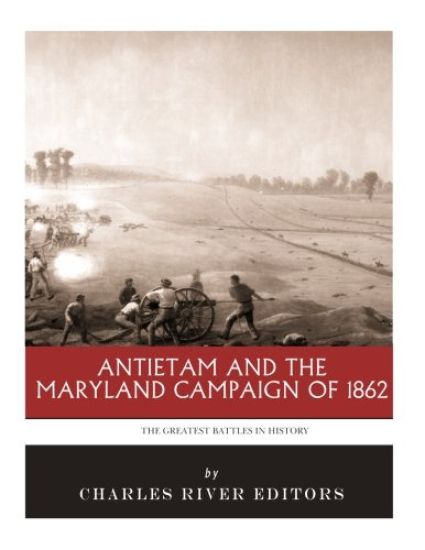
*Includes pictures of important people, places, and events. *Includes maps of the campaign and battles. *Comprehensively covers the entire Maryland campaign and its aftermath. *Analyzes the generalship of the battle's most important commanders, including Lee, McClellan, and others. *Includes a Bibliography for further reading. "Those in whose judgment I rely tell me that I fought the battle splendidly and that it was a masterpiece of art. ... I feel I have done all that can be asked in twice saving the country. ... I feel some little pride in having, with a beaten & demoralized army, defeated Lee so utterly." - George McClellan The names of history's most famous battles still ring in our ears today, their influence immediately understood by all. Marathon lent its name to the world's most famous race, but it also preserved Western civilization during the First Persian War. Saratoga, won by one of the colonists' most renowned war heroes before he became his nation's most vile traitor. Hastings ensured the Normans' success in England and changed the course of British history. Waterloo, which marked the reshaping of the European continent and Napoleon's doom, has now become part of the English lexicon. In Charles River Editors' Greatest Battles in History series, readers can get caught up to speed on history's greatest battles in the time it takes to finish a commute, while learning interesting facts long forgotten or never known. The bloodiest day in American history took place on the 75th anniversary of the signing of the Constitution. On September 17, 1862, Robert E. Lee's Confederate Army of Northern Virginia fought George McClellan's Union Army of the Potomac outside Sharpsburg along Antietam Creek. That day, nearly 25,000 would become casualties, and Lee's army would barely survive fighting the much bigger Northern army. Although the battle was tactically a draw, it resulted in forcing Lee's army out of Maryland and back into Virginia, making it a strategic victory for the North and an opportune time for President Abraham Lincoln to issue the Emancipation Proclamation, freeing all slaves in the rebellious states. For those reasons, Antietam is remembered as one of the major turning points of the Civil War, but it is often overlooked that the bloody battle only represented the climactic culmination of a 3 week campaign that saw George McClellan cautiously pull a fragmented Union army together and begin tracking Lee's army into Maryland. Sizing up McClellan, Lee had split his army up during its invasion, including sending Stonewall Jackson's men to Harpers Ferry, but the whole course of the campaign and possibly the war changed when the Union Army somehow found a copy of Lee's marching orders, telling them where the Confederate army would be and when. To Lee's surprise, McClellan's army began advancing far more rapidly, including attacking them at South Mountain before cornering them along Antietam Creek outside of Sharpsburg. The Greatest Battles in History: Antietam and the Maryland Campaign comprehensively covers the entire Maryland campaign, including Lee's strategy, the fighting at Harpers Ferry and South Mountain, the discovery of the infamous Lost Orders, and the climactic fighting at Antietam. Along with bibliographies, maps of the battle, and pictures of important people and places, you will learn about the Maryland Campaign like you never have before.
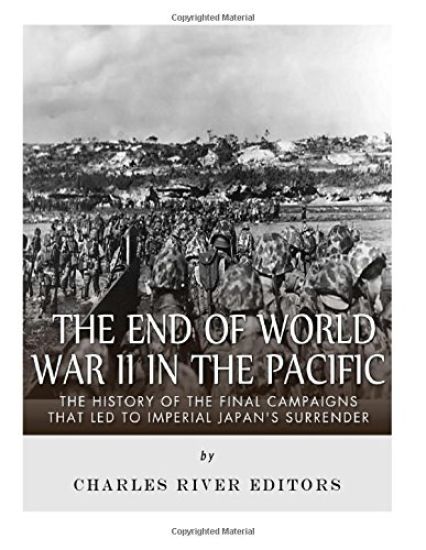
*Includes pictures *Includes accounts of the Philippines, the firebombing of Tokyo, Iwo Jima, Okinawa, the use of the atomic bombs, and more. *Includes online resources and a bibliography for further reading *Includes a table of contents By the spring of 1943, American military planners had begun to create a plan to dislodge Japan from east and southeast Asia. To do so, parts of the Philippines were considered main strategic points in the potential Allied attack in the Pacific. The end goal of the Allied plan was an invasion of the Japanese home islands, in which heavy aerial bombardment would precede a ground assault. In order for this to occur, Allied forces would have to occupy areas surrounding Japan, with China adding to Luzon (the largest island in the Philippines) and Formosa (a large island off the coast of China) to create a triangle from which they could launch their bombers. When Admiral Chester Nimitz was directed to capture an island in the Bonin group, Iwo Jima stood out for its importance in making progress against the mainland, with three airfields that would allow American air forces to attack the Japanese mainland. But the Japanese were also well aware of how important Iwo Jima was, and they fought desperately in bunkers and tunnels that required the Americans to carefully clear them out gradually. Less than 5% of the Japanese soldiers on Iwo Jima were taken alive, and American casualties were estimated at 26,000, with 6,800 killed or captured. A month later at Okinawa, which lasted from April-June, the Americans suffered an estimated 62,000 casualties, with 12,000 Americans killed or captured. These deadly campaigns came after widely-held predictions that taking these islands would amount to no more than a brief footnote in the overall theater. However, the national character of the Empire was equally misunderstood. Following the month of Iwo Jima, "commentator after commentator in the Anglo-American camp agreed that the Japanese were more despised than the Germans...uncommonly treacherous and savage...alluding to their remarkable tenacity...refused to give up any territory and incurred thousands of losses daily without any possibility of surrender." Near the end of 1944, as Allied forces were pushing across the Pacific and edging ever closer to Japan, plans were drawn up to invade the Ryuku islands, the most prominent of them being Okinawa. Military planners anticipated that an amphibious campaign would last a week, but instead of facing 60,000 Japanese defenders as estimated, there were closer to 120,000 on the island at the beginning of the campaign in April 1945. The Battle of Okinawa was the largest amphibious operation in the Pacific theater, and it would last nearly 3 months and wind up being the fiercest in the Pacific theater during the war, with nearly 60,000 American casualties and over 100,000 Japanese soldiers killed. In addition, the battle resulted in an estimated 40,000-150,000 Japanese civilian casualties. Given the horrific nature of the combat, and the fact that it was incessant for several weeks, it's no surprise that Okinawa had a profound psychological effect on the men who fought, but it also greatly influenced the thinking of military leaders who were planning subsequent campaigns, including a potential invasion of the Japanese mainland. The casualty tolls at Okinawa ultimately helped compel President Truman to use the atomic bombs on Hiroshima and Nagasaki in an effort to end the war before having to attempt such an invasion. The End of World War II in the Pacific: The History of the Final Campaigns that Led to Imperial Japan's Surrender chronicles the background leading up to the final fighting of World War II. Along with pictures of important people, places, and events, you will learn about the end of World War II in the Pacific like never before.
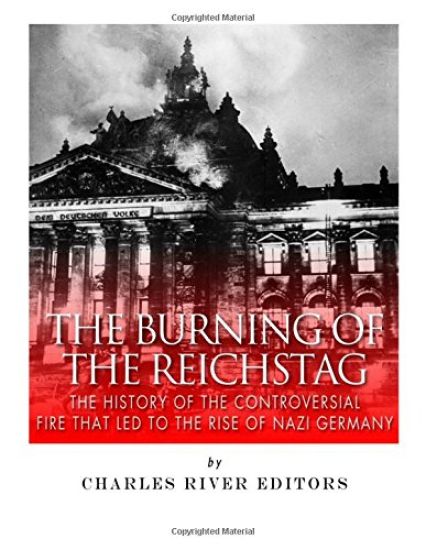
*Includes pictures *Discusses the mysteries surrounding who started the fire and whether the Nazis were responsible *Includes a bibliography for further reading *Includes a table of contents "These sub-humans do not understand how the people stand at our side. In their mouse-holes, out of which they now want to come, of course they hear nothing of the cheering of the masses." - Hitler speaking about Communists as the Reichstag burned "I don't care what happens in Russia I know that the Russians pay with bills, and I should prefer to know that their bills are paid I care about the Communist Party here in Germany and about Communist crooks who come here to set the Reichstag on fire " - Hermann Goering The early 1930s were a tumultuous period for German politics, even in comparison to the ongoing transition to the modern era that caused various forms of chaos throughout the rest of the world. In the United States, reliance on the outdated gold standard and an absurdly parsimonious monetary policy helped bring about the Great Depression. Meanwhile, the Empire of Japan began its ultimately fatal adventurism with the invasion of Manchuria, alienating the rest of the world with the atrocities it committed. Around the same time, Gandhi began his drive for the peaceful independence of India through nonviolent protests against the British. It was in Germany, however, that the strongest seeds of future tragedy were sown. The struggling Weimar Republic had become a breeding ground for extremist politics, including two opposed and powerful authoritarian entities: the right-wing National Socialists and the left-wing KPD Communist Party. As the 1930s dawned, these two totalitarian groups held one another in a temporary stalemate, enabling the fragile ghost of democracy to continue a largely illusory survival for a few more years. That stalemate was broken in dramatic fashion on a bitterly cold night in late February 1933, and it was the Nazis who emerged decisively as the victors. A single act of arson against the famous Reichstag building proved to be the catalyst that propelled Adolf Hitler to victory in the elections of March 1933, which set the German nation irrevocably on the path towards World War II. That war would plunge much of the planet into an existential battle that ultimately cost an estimated 60 million lives. Given its importance, the burning of the Reichstag has been viewed as a turning point in history, but the mystery over who was actually responsible still lingers. Officially, a German court convicted and executed a Dutch Communist, Marinus van der Lubbe, and the Nazis would rail against the fire as a Communist plot in the ensuing weeks. Van der Lubbe claimed at trial that he acted alone, and many Communists accused the Nazis of conducting the fire as a false flag operation, but in any case, in the wake of the fire, Communists across Germany were purged, allowing Hitler and the Nazis to strengthen their hold on political power. The Burning of the Reichstag: The History of the Controversial Fire That Led to the Rise of Nazi Germany analyzes the notorious fire that helped usher in the Nazis' rise to power in Germany. Along with pictures of important people, places, and events, you will learn about the Reichstag fire like never before, in no time at all.
*Includes pictures *Includes contemporary accounts of the monument's construction *Explains the various monument proposals and designs *Includes a bibliography for further reading *Includes a table of contents "This structure, dedicated to the first president of the United States, represents the simplicity, honor, and heights for which our national ideals strive." People have always loved symbols and monuments. Even before there was any sort of written language, there were places and things considered sacred, whether it was the Mesopotamians' ziggurats or the Egyptians' pyramids. Thus, it had long been a practice to make some sort of memorial to those who had died as a way to remember and honor them, and given the importance of George Washington to the young United States of America, it's no surprise that plans to build monuments to him began within months of his death. There are countless ways that Washington, remembered as "first in war, first in peace, and first in the hearts of his countrymen," has been commemorated across America, but the most famous is the Washington Monument. Congress had actually called for establishing a monument to Washington as far back as 1783, but it would not be until the 1830s that work on the world's tallest obelisk began in earnest. In fact, while the Washington Monument is taken as a given today, and it was designed to be "unparalleled in the world, and commensurate with the gratitude, liberality, and patriotism of the people by whom it is to be erected," there were several issues that nearly prevented it from being a reality, including political arguments, costs, and lack of progress. Though it may be hard to believe, the Washington Monument was not dedicated until the 1880s, nearly half a century after an obelisk was first envisioned. By the time it was finished, however, it was clear that the wait was worth it. Soaring nearly 550 feet into the air, the Washington Monument was the tallest structure in the world upon its completion, and it immediately began drawing hundreds of thousands of visitors, who could either climb stairs to the top or ride an elevator. The monument has remained one of the most instantly recognizable structures in the world ever since. The Washington Monument: The History of the World's Tallest Obelisk chronicles the construction and history of one of America's most famous memorials. Along with pictures of important people, places, and events, you will learn about the Washington Monument like never before, in no time at all.
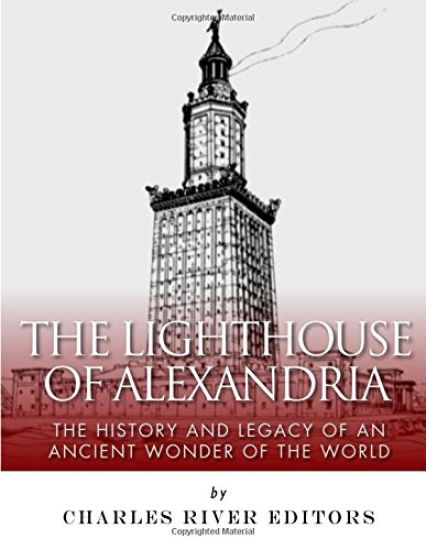
*Includes pictures. *Includes historic accounts that describe the Lighthouse. *Explains the debates over how the lighthouse was built and operated, and how it was destroyed. *Includes a bibliography for further reading. "At the harbor of Alexandria stands the tower called Pharos, the first wonder. It is held together by glass and lead and is 600 yards high" - Epiphanius the Monk "The Pharos today is composed of four stages. The first, of a rectangular design, is remarkably built in rectangular cut stones, of which the joints are so well concealed that the whole seems to be formed of a single block of stone, remaining insensible to the ravages of time." - Al Bakri, a medieval traveler and writer. Over 2,000 years ago, two ancient writers named Antipater of Sidon and Philo of Byzantium authored antiquity's most well known tour guides. After the two Greeks had traveled around the Mediterranean, they wrote of what they considered to be the classical world's greatest construction projects. While there is still some question as to who actually authored the text attributed to Philo and when it was authored, their lists ended up comprising the Seven Wonders of the Ancient World, igniting interest in the ones they chose and inspiring subsequent generations to identify their own era's Seven Wonders. The youngest of the Wonders also turned out to be the most practical and one of the longest-lived, surviving into the late Middle Ages. It was a lighthouse built on the northern coast of Egypt in Africa, at the Greek city founded in Alexander's name. It was the Pharos, the Great Lighthouse of Alexandria. Among antiquity's wonders, the Lighthouse of Alexandria was fairly unique both in terms of its purpose and its secular nature. While pyramids and statues served religious purposes in Egypt and Greece, and others were impressive works of art, the origins of the Lighthouse were not even as a lighthouse at all. Instead, the large formation on the island of Pharos in the harbor of Alexandria was originally meant to help sailors identify the location of the city during the day, and some speculate it was not until later that Alexandrians decided to make it a true lighthouse that would serve sailors at night. Julius Caesar himself noted the Lighthouse's other practical use in his commentaries about Rome's civil wars: "Now because of the narrowness of the strait there can be no access by ship to the harbour without the consent of those who hold the Pharos. In view of this, Caesar took the precaution of landing his troops while the enemy was preoccupied with fighting, seized the Pharos and posted a garrison there. The result was that safe access was secured for his...supplies and reinforcements." It's easy to understand Caesar's point, because while there is still debate over its height, the Lighthouse of Alexandria was unquestionably one of the tallest man-made structures in the world at the time, if not the tallest. While ancient accounts often exaggerated its height, medieval Arab sources often claimed it was somewhere around 300-350 feet tall, with an incredibly wide base, and those sources wrote at a time where it had already required repairs due to earthquake damage. Efforts to repair it kept going until the 14th century, when the damage was so extensive that it was mostly left in ruins, the last of which were taken for other building projects and/or slipped underneath the Mediterranean. Fortunately, due to descriptions of the lighthouse and archaeological remains, modern scholars are able to understand this wonder better than most, and there may even be future attempts to build a replica and bring it back to life. The Lighthouse of Alexandria covers the ancient wonder's history and the mysteries surrounding it, including the debate over how it was built, operated, and destroyed. Along with pictures and a bibliography, you will learn about the Lighthouse of Alexandria like never before.
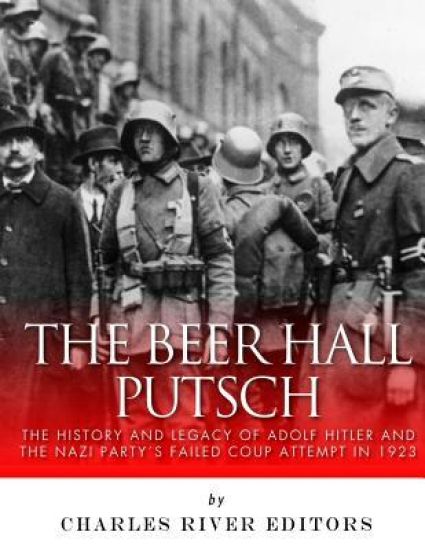
*Includes pictures *Details Hitler's rise to the head of the Nazi party before the putsch *Explains how the putsch transpired and failed *Includes a bibliography for further reading *Includes a table of contents "You can see that what motivates us is neither self-conceit or self-interest, but only a burning desire to join the battle in this grave eleventh hour for our German Fatherland ... One last thing I can tell you. Either the German revolution begins tonight or we will all be dead by dawn " - Hitler "I cannot remember in my entire life such a change in the attitude of a crowd in a few minutes, almost a few seconds ... Hitler had turned them inside out, as one turns a glove inside out, with a few sentences. It had almost something of hocus-pocus, or magic about it." - Dr. Karl Alexander von Mueller It is often claimed that Adolf Hitler rose to power in Germany through democratic means, and while that is a stretch, it is true that he managed to become an absolute dictator as Chancellor of Germany in the 1930s through a mixture of politics and intimidation. Ironically, he had set such a course only because of the failure of an outright coup attempt known as the Beer Hall Putsch about a decade earlier. At the close of World War I, Hitler was an impoverished young artist who scrapped by through selling souvenir paintings, but within a few years, his powerful oratory brought him to the forefront of the Nazi party in Munich and helped make the party much more popular. A smattering of followers in the hundreds quickly became a party of thousands, with paramilitary forces like the SA backing them, and at the head of it all was a man whose fiery orations denounced Jews, communists and other "traitors" for bringing upon the German nation the Treaty of Versailles, which had led to hyperinflation and a wrecked economy. During the first few years of the decade, the government in Munich had actually supported the fledgling Nazi party as a counterweight against the communists, which had attempted a coup years earlier, but it would nearly come back to haunt the authorities on November 8, 1923, when Hitler and his forces attempted to start a revolution and take over the city. Backed by men like Rudolf Hess, Hermann Goering, and Ernst R hm, Hitler and the Nazis came perilously close to succeeding, and they may have been undone only because of the SA's refusal to initiate violence against German police and Army members. By the following day, the police and Army put down the putsch, which climaxed with a short firefight in which the man standing next to Hitler was killed by a shot through the lungs, a bullet that came close to striking the future Fuhrer in the torso. However, despite being the instigator and being arrested in its aftermath as a traitor, the political atmosphere not only saved Hitler from a potential death sentence but practically made him a sympathetic figure. He would end up serving less than a year in prison (during which he dictated Mein Kampf to Hess), and as soon as he was released he went back to working with the Nazis, now convinced that the path to power lay through peaceful means. The Beer Hall Putsch chronicles the history of the Nazis' failed coup attempt. Along with pictures of important people, places, and events, you will learn about the Beer Hall Putsch like never before, in no time at all.
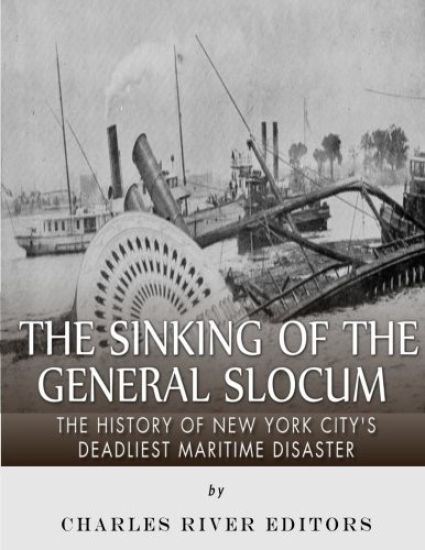
*Includes pictures *Includes accounts of the disaster by survivors and rescuers *Includes online resources and a bibliography for further reading *Includes a table of contents "There were scenes of horror on the General Slocum and on shore such as it would not be decent to set down on paper..." - J. S. Ogilvie, History of the General Slocum disaster by which nearly 1200 lives were lost by the burning of the steamer General Slocum in Hell gate, New York harbor, June 15, 1904 (1904) There is a popular saying that claims timing is everything, and in no other field of study is that truer than in history. For instance, under normal conditions, a ship that sank with more than 1,000 passengers aboard - most of whom died - would be big news, yet today the sinking of the PS General Slocum is often overlooked if not entirely forgotten. While it might have generated the type of publicity and reaction of the Johnstown Flood of 1889 or the Galveston Hurricane of 1900 under normal circumstances, deadliest disaster in New York City's history before 9/11, and the second deadliest maritime disaster in peacetime in American history has become something of a historical footnote. On June 15, 1904, an annual gala was held on the passenger ship as it steamed up the East River, with about 1,400 people from St. Mark's Evangelical Lutheran Church. Consisting mostly of German immigrants, the boat was packed with women and children, and when a small fire started on the ship shortly after the trip began, faulty equipment was unable to put it out or stop it from spreading. On top of that, the lifeboats were tied up and the crew, which never conducted emergency drills, was unprepared for a potential disaster. When parents put life preservers on their children and then had them enter the water, they soon learned that the life preservers were also faulty and didn't float. As the disaster unfolded, over 1,000 passengers burned to death or drowned, many swept under the water by the East River's current and weighed down by heavy wool clothing. Few people on board knew how to swim, exacerbating the situation, and eventually the overcrowded decks began to collapse, crushing some unfortunate victims. In the end, the General Slocum sank in shallow water while hundreds of corpses drifted ashore, and the fallout was immediate. The captain was indicted for criminal negligence and manslaughter, and the ship's owner was also charged. While the captain would receive a 10 year sentence, the company in charge of the General Slocum got off with a light fine. In a somewhat fitting postscript, the ship was salvaged and converted into a barge, only to sink once again during a heavy storm in 1911. Time heals all wounds, but in the case of the Slocum disaster, the wounds weren't so much healed as overshadowed. The Triangle Shirtwaist Factory fire took over 100 lives in New York City in 1911 and led to calls for serious workplace reforms, and a few years later, World War I began in Europe. With that, much of the sympathy Americans previously felt for the loss of over 1,000 German lives on the Slocum evaporated. The Sinking of the General Slocum: The History of New York City's Deadliest Maritime Disaster chronicles the fateful chain of events that led to one of the worst tragedies in American history. Along with pictures of important people, places, and events, you will learn about the General Slocum like never before, in no time at all.
*Includes pictures*Includes Norse accounts*Includes online resources and a bibliography for further reading"Nj rdr in N at n begot afterward two children: the son was called Freyr, and the daughter Freyja; they were fair of face and mighty. Freyr is the most renowned of the sir; he rules over the rain and the shining of the sun, and therewithal the fruit of the earth; and it is good to call on him for fruitful seasons and peace." Much of what is known of the Norse myths comes from the 10th century onwards. Until this time and, indeed, for centuries afterwards, Norse culture (particularly that of Iceland, where the myths were eventually transcribed) was an oral culture. In fact, in all Scandinavian countries well into the thirteenth century laws were memorized by officials known as "Lawspeakers" who recited them at the "Thing." The Thing was the legislative assembly in Scandinavia "held for judicial purposes." The Prose Edda is a collection of Norse Myths split into three sections, the Gylfaginning (the Deluding of Gylfi), the Sk ldskaparm l (the Language of Poetry) and the H ttatal (the Enumeration of Meters). The first has a frame story that entails a Swedish King, Gylfi, disguising himself as an old man, Gangleri, when he journeys to Asgard to meet the gods. When he arrives, he meets three men - "High One, Just-As-High, and Third" - who reveal to him stories of the world and the gods. The second section contains a warning for Christians not to believe in the Norse gods, specifically the two families, the sir and the Vanir, but also refutes the notion that they were demons, which was a common supposition among some Christians at the time. The Prose Edda begins in this line of thought with a euhemeristic prologue, which traces the history of the Norse Gods as human heroes of Troy, making Thor one of King Priam's sons. The Norse Myths also appear to follow a chronological narrative, which the historian John Lindow describes as having a "Mythical Past, Present and Future." Loki features in each of these literary "epochs" and it helps to understand the complexity of his character, as well as the belief system, to view the myths in this way. Freyr was son to sea-god Nj rdr and twin brother to love goddess Freyja, all of whom were part of the Vanir, a less warlike, divine family. As part of a hostage exchange between warring families, Nj rdr and Freyr were sent to live with the sir. As a member of the Vanir, his integration into the warlike family gave Freyr relatively little to do in surviving mythology. Many of the surviving stories involve Thor exercising his physical strength while Loki and Odin exercise their cunning. Freyr was not noted for either of these attributes, nor did he have a love of besting the Giants, the gods' eternal enemies. Freyr's role as a fertility god-a recurring theme in the Vanir-meant that his relatively rare appearences in the myths weighed heavily on the dominant, cult role he performed across Scandinavia from a surprisingly early time. That being said, there are few superfluous characters in Norse myth, and Freyr is present at two major moments of the gods' history: the union of the two families (although there are very few surviving texts describing this exact moment) and Ragnar k, the apocalyptic end. Freyr: The Origins and History of the Norse God of Love and Fertility looks at the stories about the legendary Norse deity. Along with pictures depicting important people, places, and events, you will learn about Freyr like never before.
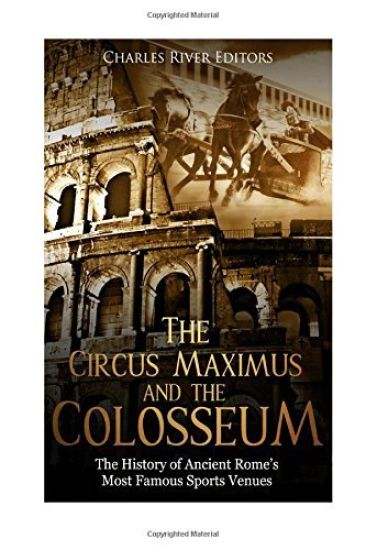
*Includes pictures *Includes ancient accounts *Includes online resources and a bibliography for further reading The ambitious and fearless emperors that built the legendary Roman Empire from scratch, the broad-shouldered and bronzed gladiators with their iconic plume helmets and glinting swords, and elaborate parties attended by toga-wearing Romans fueled by alcohol, violence, orgies, and other godless acts all paint a picture of Roman life. At the Circus Maximus, the guttural cheers of the spectators reverberated across the enormous open space, but their cries could hardly be heard over the rumble of the ground. On the ellipse-shaped track, 5 charioteers would skew their bodies and steer their magnificent vehicles around the curves. Gusts of sand and dirt flew up from the whizzing wheels and encircled the pounding hooves of the stunning stallions. Distracted personnel and guards dragging their feet were considered fair game. As one chariot careened to the side, preparing to collide with another chariot, a row of guards might have to try to duck out of the way in the nick of time. Some would be trampled by hooves. Chariot races were dangerous for participants too. A charioteer could become disoriented and fail to position himself as his horses moved instinctively, sending his body catapulting forward out of the chariot. Needless to say, chariot racing in Rome was a nail-biting spectacle. When the Colosseum was built in the late 1st century A. D., the Romans, a people known for their architectural acumen, managed to amaze themselves. Martial, a Roman poet writing during the inauguration of the Colosseum, clearly believed the Colosseum was so grand a monument that it was even greater than the other Wonders of the Ancient World, which had been written about and visited endlessly by the Romans and Greeks in antiquity. Indeed, although the Wonders were wondrous to behold, the Colosseum was a spectacular achievement in architecture, something new and innovative, and therefore an amazing "Wonder" in its own way. The Colosseum was designed to be both a symbol and show of strength by the famous Flavian emperors, most notably Vespasian and his sons Titus and Domitian. Vespasian had started the construction of the Colosseum shortly after becoming emperor in 69 A. D., but he died before he could present any spectacles in his giant amphitheatre. That honor went to his son Titus, who celebrated the inaugural opening in 80 A. D. with 100 days of games, despite the fact that the Colosseum was not completely finished. When his brother Domitian came to power in 81 A. D., he finished the amphitheatre, but not without making some changes to the overall design. By the time it was truly finished, the Colosseum stood about 150 feet tall, with the oval in the center stretching nearly two football fields long and over 500 feet across. The Colosseum is a large stadium even by today's standards, and its great size conveys the power of the empire as it dominates the landscape and towers over nearby buildings. Nearly 2,000 years later, the Colosseum still amazes millions of people who come to visit it, and when asked to visualize a monument that represents the Roman Empire, many conjure up an image of the large amphitheater. As Keith Hopkins and Mary Beard put it, the Colosseum is "the most famous, and instantly recognizable, monument to have survived from the classical world." At the same time, the Colosseum also represents the Roman games and spectacles, particularly the gladiatorial combats that so many people today find both abhorrent yet fascinating. Given its massive size and the architectural ingenuity involved, the Colosseum played host to all sorts of games, including massive hunts of exotic animals and even sea battles.
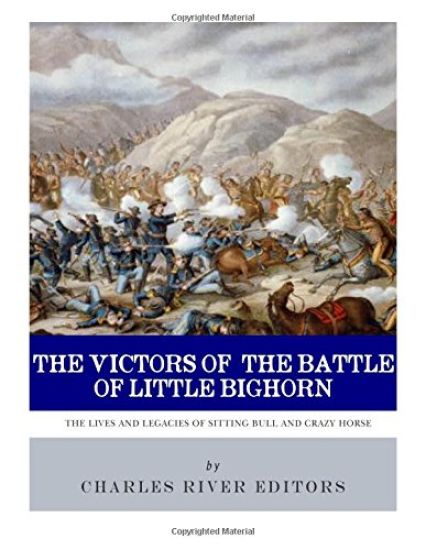
*Includes pictures of Sitting Bull, depictions of Crazy Horse, and important people and places in their lives. *Explains several Lakota oral legends, including the origins of the names Sitting Bull and Crazy Horse. *Explains the Battle of the Little Bighorn and their roles in it. "When I was a boy the Sioux owned the world. The sun rose and set on their land; they sent ten thousand men to battle. Where are the warriors today? Who slew them? Where are our lands? Who owns them? Is it wrong for me to love my own? Is it wicked for me because my skin is red? Because I am Sioux? Because I was born where my father lived? Because I would die for my people and my country?" - Sitting Bull "Upon suffering beyond suffering: the Red Nation shall rise again and it shall be a blessing for a sick world. A world filled with broken promises, selfishness and separations. A world longing for light again. I see a time of Seven Generations when all the colors of mankind will gather under the Sacred Tree of Life and the whole Earth will become one circle again." - Crazy Horse Like Geronimo in the Southwest during the same era, Sitting Bull and Crazy Horse were warriors and leaders of different groups of Lakota (Sioux) who fought in several skirmishes against settlers and U. S. forces across the Plains during the 1860s and 1870s. Admired by their own people for their kindness and strong leadership, reviled by their enemies for their defiance, when The Great Sioux War of 1876 began, Sitting Bull and Crazy Horse were two of the most important leaders among all Native American tribes on the Plains, and they were the ones to turn to for those who intended to keep fighting whites. Sitting Bull and Crazy Horse were hardly the only Native Americans fighting the U. S. Army at the time, but they became legends at the Battle of the Little Bighorn, during which an estimated 2,000 Lakota and Cheyenne warriors led by Crazy Horse and inspired by one of Sitting Bull's visions routed and then annihilated the 7th U. S. Cavalry led by George Custer. That disaster led the American government to double down on its efforts to "pacify" the Sioux, and by the end of the decade many of them had surrendered and been moved onto a reservation. Crazy Horse kept fighting for a year before surrendering, and Sitting Bull defiantly refused to surrender, instead heading with a smaller band into Canada and remaining exiled. When they finally did surrender, and the threat they posed eliminated, Americans viewed the two Native Americans as celebrities. Sitting Bull even went on to appear in Buffalo Bill Cody's Wild West Show during the 1880s. However, the two Lakota leaders would be connected in one more way: death. The deaths of both Sitting Bull and Crazy Horse took place on reservations and remain controversial to this day. The Victors of the Battle of the Little Bighorn looks at the two most famous leaders of the Lakota and the victors at Little Bighorn, but it also humanizes the men who became two of the most famous symbols of defiance in American history. Along with pictures of important people, places, and events, you will learn about Sitting Bull and Crazy Horse like you never have before.
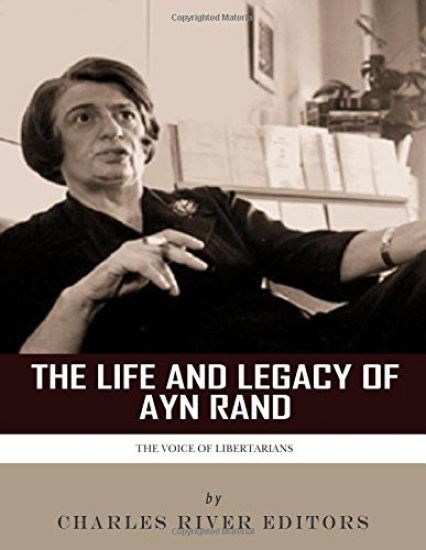
*Includes pictures of Rand and important people in her life. *Discusses Rand's works and her philosophy of Objectivism. *Includes many of Rand's most famous quotes. *Includes a Bibliography for further reading. "Government 'help' to business is just as disastrous as government persecution... the only way a government can be of service to national prosperity is by keeping its hands off." - Ayn Rand Ayn Rand was born in St. Petersburg, Russia to Jewish parents on February 2, 1905 as Alisa Zinov'yevna Rosenbaum, and she lived through the turbulence and transformation of early 20th century Russia. Her first exposure to reading came after she taught herself how to read at age six, and she decided at nine years old to become a writer after a chance encounter with the books of Victor Hugo, the writer she admired most. The seminal events in the young would-be writer's life came just a few years later, when she witnessed firsthand the Bolshevik Revolution and the ultimate Communist victory as a teenager. Rand's experience with the maelstrom of this revolutionary zeal and cultural breakdown greatly contributed toward the formation of Rand's philosophy of objectivism, individualism and anti-religious ideas. During her last year of high school, she was introduced to the history of the United States and immediately decided to make America her model of what an ideal society should look like. Rand came to the United States as a young woman for a visit in 1925, and, as fate would have it, she never returned to Russia. In middle age, Rand continued trying to write in some capacity as a profession, but she had also formed her personal philosophy of integrating ethics, metaphysics, epistemology, politics, economics, and sexuality into what came to be called Objectivism, or as she called it, "a philosophy for living on earth." Rand began writing Atlas Shrugged, her enormous three part major novel, each with ten chapters, in 1946. Nearly 10 years after it was begun she finished what ultimately became her greatest achievement, and she poignantly dramatized her unique philosophy. Though Atlas Shrugged had been a popular title when Ayn Rand published it in 1957, it's quite possible that the only reference to it that many Americans heard before 2009 came from the hit series Mad Men. However, this staple of conservative and libertarian reader took on new life as the new Obama Administration sought to use government resources to fix financial problems. In 2009, with the global economy hemorrhaging jobs, and Western governments pouring hundreds of billions of dollars in taxpayer money to "bail out" troubled financial firms and large companies, frustrated people and political analysts turned to a book written over 50 years earlier as a guide out of the abyss. Conservative politicians like Ron Paul (who named his son after Rand) and commentators like Glenn Beck and Rush Limbaugh publicly praised Rand and her works, and Supreme Court Justice Clarence Thomas labeled Atlas Shrugged one of his favorite novels. By January 2009, one article in the Wall Street Journal was titled, ""Atlas Shrugged From Fiction to Fact in 52 Years." Over the last few years, Rand has become a household name and her works have seen their sales spike. Rand and her work are now some of the most influential and relevant works in America today. The Voice of Libertarians chronicles the life, ideology and writings of the most famous Libertarian writer, examining her work and her enduring legacy. Along with pictures of important people, places, and events, you will learn about Ayn Rand like you never have before, in no time at all.