Kirjojen hintavertailu – 12 903 727 kirjaa ja 27 kauppaa

Kirjailija

Charles River

Kirjat ja teokset yhdessä paikassa: 4 673 kirjaa, julkaisuja vuosilta 2013–2022, suosituimpiin kuuluu William Powell and Myrna Loy: The Lives and Careers of One of Classical Hollywood's Most Iconic Duos. Vertaile teosten hintoja ja tarkista saatavuus suomalaisista kirjakaupoista.

4 673 kirjaa

Kirjojen julkaisuvuodet: 2013–2022.

The Trent Affair: The Diplomatic Incident That Nearly Brought Great Britain into the American Civil War
*Includes pictures *Includes accounts of the Trent Affair written by British and Northern politicians, as well as participants *Includes a bibliography for further reading *Includes a table of contents "Mr. Seward ... is exerting himself to provoke a quarrel with all Europe, in that spirit of senseless egotism which induces the Americans, with their dwarf fleet and shapeless mass of incoherent squads which they call an army, to fancy themselves the equal of France by land and Great Britain by sea." - The London Chronicle In November 1861, the American Civil War was still a relatively young conflict, and both sides were still jockeying for the upper hand. The Confederates had won the First Battle of Bull Run in July, and there had not been any major battles in the West, but the Union had also pushed the Confederates out of West Virginia and George McClellan was about to organize the Army of the Potomac for an offensive against Richmond. Months before then, Confederate President Jefferson Davis had sent out diplomatic agents to Europe in attempts to win recognition among major European powers, and to place even further pressure on the status quo, Southern merchants actually refused to export cotton, hoping the sheer weight of economics would compel them to help. As historian Charles Hubbard pointed out, "Davis left foreign policy to others in government and, rather than developing an aggressive diplomatic effort, tended to expect events to accomplish diplomatic objectives. The new president was committed to the notion that cotton would secure recognition and legitimacy from the powers of Europe. One of the Confederacy's strongest hopes at the time was the belief that the British, fearing a devastating impact on their textile mills, would recognize the Confederate States and break the Union blockade. The men Davis selected as secretary of state and emissaries to Europe were chosen for political and personal reasons - not for their diplomatic potential. This was due, in part, to the belief that cotton could accomplish the Confederate objectives with little help from Confederate diplomats." As it turned out, the Confederates were almost delivered a master stroke of good fortune when the USS San Jacinto seized the RMS Trent to pull two Southern diplomats, James Mason and John Slidell, off the British boat as contraband of war, sparking an international crisis that infuriated the British and put the North in hot water. Although the British furor provoked the Northern public and inflamed tensions, Union leaders sought to defuse the crisis as Britain demanded the release of the diplomats and a formal apology. For several tense weeks, both sides were on high alert, and the British bolstered their armed forces in the region (including in Canada), but the crisis was eventually resolved with the release of the two Confederates and a public disavowal of the USS San Jacinto's actions. Britain did not receive a formal apology, and the Confederate diplomats eventually made their way across the Atlantic to push for recognition, but they would ultimately fail in the goal, dealing a considerable blow to the South's chances. The Trent Affair chronicles the Civil War's most famous diplomatic crisis and analyzes its effects. Along with pictures of important people, places, and events, you will learn about the Trent Affair like never before, in no time at all.
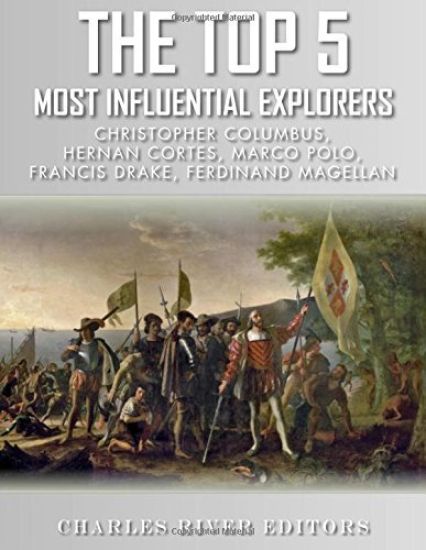
The Top 5 Most Influential Explorers

The Top 5 Most Influential Explorers

Charles River

Createspace Independent Publishing Platform
2018
nidottu
Includes extracts from Columbus's journal of his first voyage. Includes Cortes's letter to King Charles V describing Tenochtitlan and the Aztec Empire. Includes passages from Antonio Pigafetta, a member of Magellan's crew. Includes descriptions of both the Aztec and Inca Empires. Includes pictures of the explorers and important Includes a Bibliography for further reading. *Includes a Table of Contents. Marco Polo was hardly the only European merchant or trader who traveled to the Far East, but it was his written account of his travels that would generate extreme interest in Asia. Having described such a rich land full of desired resources, Marco Polo's travels became a source for European cartographers of the era, and they became the impetus for men like Christopher Columbus, who added his own annotations to Marco Polo's account and used it as a reference for his own legendary expedition in search of the Far East. Centuries later, historians have scoured over the account and what was written in an effort to validate its authenticity, leading to sharp debates today. The most seminal event of the last millennium might also be its most controversial. As schoolchildren have been taught for over 500 years, "In 1492 Columbus sailed the ocean blue." In October of that year, the Italian Christopher Columbus immortalized himself by landing in the New World and beginning the process of European settlement in the Americas for Spain, bringing the Age of Exploration to a new hemisphere with him. Ironically, the Italian had led a Spanish expedition, in part because the Portugese rejected his offers in the belief that sailing west to Asia would take too long. Today Ferdinand Magellan is remembered as the first man to circumnavigate the globe, an ironic legacy given that he died half a world away from completing that journey. But though it ended catastrophically for Magellan and most of his crew, his expedition accomplished its objective, and in economic terms, the opening up of new trade routes with Asia was a more significant development than the conquest of the Americas for the Europeans of the early 16th century. The life of Sir Francis Drake, or, more precisely, the tale of it, is one of those prime examples that history is written by the winners. Drake was the most famous sailor of the Elizabethan Era, and he has long been considered a hero by the English. His successes against the Spanish as a captain and a privateer were legendary, and Drake was celebrated for fighting the Queen's enemies, sinking their ships, and capturing the treasure that would otherwise be used to finance attacks on England. Drake vigorously pursued every mission given to him by Elizabeth I, and brought all his skill, experience and training to bear against her enemies. He was recognized at court for his valor, praised in story and song, and remembered for the kind of personality and esprit de corps that the English have long desired and celebrated in their military heroes.
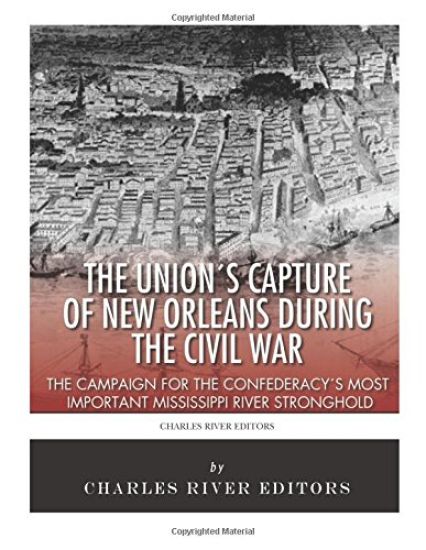
The Union's Capture of New Orleans during the Civil War: The Campaign for the Confederacy's Most Important Mississippi River Stronghold
*Includes pictures *Includes accounts of the campaign and occupation written by Benjamin Butler and others *Includes online resources and a bibliography for further reading *Includes a table of contents "As the officers and soldiers of the United States have been subject to repeated insults from the women (calling themselves ladies) of New Orleans in return for the most scrupulous non-interference and courtesy on our part, it is ordered that hereafter when any female shall by word, gesture, or movement insult or show contempt for any officer or soldier of the United States she shall be regarded and held liable to be treated as a woman of the town plying her avocation." - Benjamin Butler's General Order No. 28 In 1860, New Orleans was just as unique a city as it is today. It was racially and linguistically diverse, with many French, German, and Spanish speakers, and a population of white, black, and mixed-race inhabitants. Louisiana's population was 47% slave and also had one of the largest numbers of free blacks in the country. Situated near the mouth of the continent's largest river, the Mississippi, it was an international center for trade and industry. New Orleans was the sixth largest city in the country and the largest in any of the states that would end up joining the Confederacy. The volume of trade through its port was second only to New York, and the city's commercial ties with England and Spain and cultural ties with France meant that the European powers would be looking closely at how the city fared in the Civil War, especially after it was occupied by Union forces. The Lincoln administration, fearful of European meddling in the war effort, had to constantly keep European opinion in mind when dealing with the captured city, and the story of New Orleans in the Civil War is one of far-reaching political, racial, and social tensions. Given its importance, it's somewhat surprising in retrospect that the Union managed to capture New Orleans in an easier manner than places like Vicksburg and Atlanta. Admiral David Farragut's naval forces battered their shaky Confederate counterparts and were able to get over a dozen ships upriver past a couple of crucial Confederate forts along the Mississippi. By May 1862, Union forces occupied the city and General Benjamin Butler became its military governor, leaving the last true bastion of Confederate defenses on the Mississippi at Vicksburg. When Grant captured that in July 1863, the Union controlled the entire river and essentially cut the Confederacy in two. In many ways, the occupation of New Orleans for the rest of the war is as intriguing a story as the campaign to capture it. Butler was a political general, and while he would go on to be a politician in the North after the war, he became the most reviled man in the South as a result of his reign in New Orleans. During a governorship that helped earn him the moniker "Beast," Butler became notorious for several acts, including seizing a massive amount of money that had been deposited in the Dutch consul's office. But it was General Order No. 28, which said any woman in town who insulted a member of the Army would be treated like "a "woman of the town plying her avocation" (in other words, she'd be treated as a prostitute) that earned widespread condemnation across the nation, and even abroad in England. Butler was considered so brutal in the South that Confederate president Jefferson Davis personally ordered that he should be executed if he was captured. As it turned out, he never was, and when he was recalled east, he served in commands for the duration of the war before going on to a distinguished political career. The Union's Capture of New Orleans during the Civil War: The Campaign for the Confederacy's Most Important Mississippi River Stronghold chronicles the history of the campaign and the occupation of New Orleans by the Union in 1862.
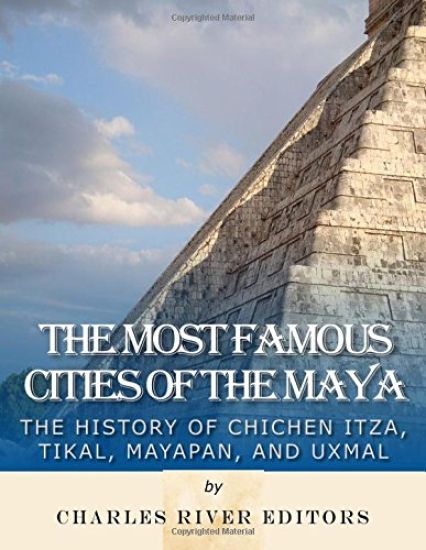
The Most Famous Cities of the Maya: The History of Chichén Itzá, Tikal, Mayapán, and Uxmal

The Most Famous Cities of the Maya: The History of Chichén Itzá, Tikal, Mayapán, and Uxmal

Jesse Harasta; Charles River

Createspace Independent Publishing Platform
2018
nidottu
*Includes pictures *Describes the history and archaeology at each site *Includes a bibliography for further reading Many ancient civilizations have influenced and inspired people in the 21st century, like the Greeks and the Romans, but of all the world's civilizations, none have intrigued people more than the Mayans, whose culture, astronomy, language, and mysterious disappearance all continue to captivate people. At the heart of the fascination is the most visited and the most spectacular of Late Classic Maya cities: Chich n Itz . Chich n Itz was inhabited for hundreds of years and was a very influential center in the later years of Maya civilization. At its height, Chich n Itz may have had over 30,000 inhabitants, and with a spectacular pyramid, enormous ball court, observatory and several temples, the builders of this city exceeded even those at Uxmal in developing the use of columns and exterior relief decoration. Of particular interest at Chich n Itz is the sacred cenote, a sinkhole was a focus for Maya rituals around water. Because adequate supplies of water, which rarely collected on the surface of the limestone based Yucatan, were essential for adequate agricultural production, the Maya here considered it of primary importance. Underwater archaeology carried out in the cenote at Chich n Itz revealed that offerings to the Maya rain deity Chaac (which may have included people) were tossed into the sinkhole. Early Mayap n was closely connected to the overshadowing power of the region at the time: the mighty trading city of Chich n Itz . Mayap n emerged first as a minor settlement in the orbit of Chich n, but it slowly came to replace it after the larger city's trade connections with the Toltecs of Tula crumbled and it suffered a staggering defeat by Mayap n's armies. The building styles and art in their city show both admiring references to the great Chich n Itz as well as an attempt to position Mayap n as a more orthodox heir of Maya tradition. At the same time, they emulated many features and could not escape the tremendous influences - especially in religion - of Chich n. This is seen in the fact that many of the most important buildings in the new city appear to be small-scale reproductions of ones in Chich n. The Maya maintained power in the Yucatan for over a thousand years, and at the height of its "Classical era" (3rd-9th centuries CE), the city of Tikal was one of the power centers of the empire. Archaeologists believe Tikal had been built as early as the 5th or 4th century BC, and eventually it became a political, economic and military capital that was an important part of a far-flung network across Mesoamerica, despite the fact it was seemingly conquered by Teotihuacan in the 4th century CE. It seems the foreign rulers came to assimilate Mayan culture, thus ensuring Tikal would continue to be a power base, and as a result, the city would not be abandoned until about the 10th century CE. During the Maya's Classical era, the city of Uxmal was one of its most noteworthy places. While it was not as powerful as cities like Tikal, Uxmal was apparently at the forefront of Mayan culture, particularly when it came to architecture. However, while Uxmal used high ground to display its prominence, and the ruins are still among the most popular places for tourists in the region, the site is still shrouded in mystery. Even as scholars continue to work on the site to further interpret it, it's still unclear when exactly Uxmal was founded, how many people called it home, and when it was abandoned, despite the existence of Mayan chronicles and oral legends. What is apparent, however, is the skills of Uxmal's artisans, whether through constructing structures like the five-level Pyramid of Magicians and the expansive Governor's Palace or adorning the structures with precisely detailed art and sculptures. In fact, the craftsmanship can be credited with helping to preserve Uxmal itself.
The Big Three: The Lives and Legacies of Franklin D. Roosevelt, Winston Churchill and Joseph Stalin
*Weaves the lives of the three leaders together into one gripping narrative. *Includes pictures of the Big Three and important people, places, and events in their lives. *Includes a list of Churchill's greatest quotes. *Includes a bibliography for further reading. "I ask you to judge me by the enemies I have made." - Franklin D. Roosevelt "Winston Churchill led the life that many men would love to live. He survived 50 gunfights and drank 20,000 bottles of champagne... And of course, by resisting Hitler, he saved Europe and perhaps the world." - Mark Riebling in "Churchill's Finest Hour". "It is time to finish retreating. Not one step back Such should now be our main slogan." - Joseph Stalin One is widely considered America's greatest 20th century president. Another was voted the Greatest Briton of All Time by his own countrymen. The other is considered one of history's greatest tyrants. Each of the Big Three, Franklin Delano Roosevelt, Winston Churchill, and Joseph Stalin, led remarkably influential lives, and never before has history provided a better example of the old maxim that the enemy of my enemy is my friend. On one point though, the biographers and historians remain unanimous: Churchill led an astonishing life as a soldier, world statesman, historian and Noble Prize Laureate. When he died at 90 in 1965, one of the most important figures in modern history had left the stage. From providing some of the 20th century's greatest soundbytes to successfully navigating Great Britain to victory in World War II against great odds, Churchill was at the forefront of global events for decades, becoming one of the most influential Britons in history. In 2002, he was named the Greatest Briton of All Time, and 40 years earlier he was the first person to be made an Honorary Citizen of the United States. Franklin Delano Roosevelt might be America's greatest 20th century president, but there's no question that he was the most unique. A well-connected relative of Theodore Roosevelt, FDR was groomed for greatness until he was struck down by polio. Nevertheless, he persevered, rising through New York politics to reach the White House just as the country faced its greatest challenge since the Civil War, beginning his presidency with one of the most iconic lines ever spoken during an inaugural address. For over a decade, President Roosevelt threw everything he had at the Great Depression, and then threw everything the country had at the Axis powers during World War II. If Adolf Hitler had not inflicted the devastation of World War II upon Europe, it's quite likely that the West would consider Joseph Stalin (1878-1953) the 20th century's greatest tyrant. A Bolshevik revolutionary who played a crucial role in the Russian Revolution of 1917 and the establishment of the Soviet Union, Stalin was one of the Communist regime's earliest leaders and went about consolidating power after the death of Vladimir Lenin, whose final wishes were that Stalin be removed from his post as General Secretary of the Communist Party and not be given the ability to take power. Of course, Stalin managed to do just that, modernizing the Soviet Union at a breakneck pace on the backs of millions of poor laborers and prisoners. Before World War II, Stalin consolidated his position by frequently purging party leaders (most famously Leon Trotsky) and Red Army leaders, executing hundreds of thousands of people at the least. The Big Three chronicles the lives of the three unique leaders and their incredibly unconventional alliance, weaving their lives together into one gripping narrative and analyzing their lasting legacies. Along with pictures, a bibliography, and a Table of Contents, you will learn about Churchill, Stalin and Roosevelt like you never have before.
The Leaders of the Union: The Lives and Legacies of Abraham Lincoln, Ulysses S. Grant, and William Tecumseh Sherman
*Includes pictures of each leader, and important people, places, and events in their lives. *Includes an original introduction for each leader. *Includes a bibliography for each leader. Despite the fact that the Civil War began over 150 years ago, it remains one of the most widely discussed topics in America today, with Americans arguing over its causes, reenacting its famous battles, and debating which general was better than others. Americans continue to be fascinated by the Civil War icons who made the difference between victory and defeat in the war's great battles, and historians still debate the causes of the Union victory in the war. While there is still much debate, all agree that the Union's three greatest leaders were President Abraham Lincoln and his top generals, Ulysses S. Grant and William Tecumseh Sherman. Abraham Lincoln (1809-1865) is one of the most famous Americans in history and one of the country's most revered presidents. Schoolchildren can recite the life story of Lincoln, the "Westerner" who educated himself and became a self made man, rising from lawyer to leader of the new Republican Party before becoming the 16th President of the United States. Lincoln successfully navigated the Union through the Civil War but didn't live to witness his crowning achievement, becoming the first president assassinated when he was shot at Ford's Theater by John Wilkes Booth on April 14, 1865. In the 19th century, one of the surest ways to rise to prominence in American society was to be a war hero, like Andrew Jackson and William Henry Harrison. But few would have predicted such a destiny for Hiram Ulysses Grant (1822-1885), who had been a career soldier with little experience in combat and a failed businessman when the Civil War broke out in 1861. 4 years later, the man would be known by a different name, and held in a far different light. William Tecumseh Sherman (February 8, 1820 - February 14, 1891) holds a unique position in American history. Synonymous with barbarity in the South, Sherman is lauded as a war hero in the North, and modern historians consider him the harbinger of total war. As a General in the Union Army during the American Civil War (1861-65), Sherman was recognized for his outstanding command of military strategy but criticized for the harshness of the "scorched earth" policies that he implemented in conducting total war against the Confederate States, especially in 1864 and 1865. Military historian B. H. Liddell Hart famously declared that Sherman was "the first modern general." The Leaders of the Union: The Lives and Legacies of Abraham Lincoln, Ulysses S. Grant, and William Tecumseh Sherman covers the lives and records of each man, while analyzing the legacies they left behind. Along with pictures of the three, and important people, places, and events in their lives, you will learn about the Leaders of the Union like you never have before, in no time at all.
The Mysteries of Mithras: The History and Legacy of Ancient Rome's Most Mysterious Religious Cult
*Includes pictures *Includes ancient accounts describing Mithras *Includes online resources and a bibliography for further reading *Includes a table of contents "It is as though the living tradition and written records of Christianity had disappeared from the world for fifteen hundred years, and there remained to us only a few hundred monuments and the ruins of some three-score churches. What could we glean from these of the doctrines of the faith? How, from such meagre remains, could we reconstruct the story of the God, the saving doctrines, the rituals, the liturgies?" - G. R. S. Mead, The Mysteries of Mithra In the early Roman Empire, as Christianity struggled to gain a foothold and survive in the polytheistic pool of Roman theology, its greatest rivals weren't the Caesars or the Roman aristocracy but rather the faith and devotion of the common Roman legionary. The faith of these men was centered on the god Mithras, who, they believed, led them to victory upon the field of battle and had done so for nearly four centuries Despite this widespread belief among soldiers, the cult of Mithras was not a creation of the Romans, although they would eventually add their own rituals and mysteries to the ancient religion. In fact, the Mithraic religion was an Indo-Persian creation, a theology which managed to travel from India and back into the Hellenic and Roman world by way of Alexander the Great's conquest of the Persian Empire. Eventually, the cult of Mithras would spread across the ancient world, and Mithras would be worshiped from the mountains of India to the coasts of Spain. As a result, the cult of Mithras could ultimately be found in every corner of the Roman Empire. The Mithras cult was one of the many "mystery religions" that the Romans adopted, several of which came from cultures outside of Rome. Isis, an Egyptian goddess, and Cybele, an Anatolian goddess, were both popular with Roman women, while Mithras, which was a variation of the name of the Zoroastrian demigod Mithra, was popular with Roman soldiers and the political elite for over 400 years. Since the Mithras cult, like all of the Roman mystery cults, was esoteric in nature, the exact nature of the influence other cultures had on the cult remains unknown, but some archaeological evidence has led modern scholars to make educated deductions. Some believe that the conscription of Persian soldiers into the Roman army and continued contact between the Parthians and Romans led to some members of the ever-eclectic Roman society adopting the cult directly from the Parthian/Zoroastrian religion (Clark 2001, 157). This seems like the most plausible explanation, but others have argued that the Mithras cult was actually a Roman religion that was given a Parthian fa ade to make it appear more exotic in order to attract Romans who were enthralled with eastern spirituality (Clark 2001, 157). The best evidence to determine the origins of the Mithras cult can be found in the many temples throughout Europe that the Romans erected to the god. These temples, known as mithraea, were subterranean chambers where the secret rituals of the cult took place. The best evidence from extant mithraea are the reliefs on the altars, which depict a graphic mythological story. The altar reliefs usually depict the god slaughtering a bull and often accompanied by a leaping dog (Clark 2001, 158). The references to Zoroastrian theology are unmistakable; the bull slaughter is similar to an account from a Zoroastrian text (the Bundahishen), while dogs were viewed as asha animals in Zoroastrian theology and an important part of the funerary ritual (Clark 2001, 158). The detailed iconography on the Mithras altars suggests that the inventors of the Mithras cult had more than just a superficial knowledge of Zoroastrianism, which in turn indicates a provenance of the religion somewhere in Persian or Parthia.
La Irlanda Extraña: Una Historia de Misterios Antiguos, Folklore Fantástico y Leyendas Urbanas a Través de la Isla Esmeralda
Irlanda tiene un rico folclore. Todo el mundo sabe acerca de las hadas y los duendes y muchos han o do hablar de la temible banshee. Tambi n est n las habituales historias de fantasmas que se encuentran en todas las tierras antiguas. El lado extra o de la Isla Esmeralda va mucho m s profundo que eso, sin embargo, con historias de ej rcitos fantasmas marchando a trav s del cielo, monstruos marinos nadando en las aguas alrededor de la isla, e historias de extra os poderes y magia oscura. De hecho, estos relatos no est n confinados al pasado; muchos sucesos inexplicables contin an ocurriendo, incluso hoy en d a. Aqu presentamos una muestra de algunos de los aspectos m s extra os de Irlanda. Esperamos que sirva de inspiraci n a los lectores para aprender m s sobre el pasado misterioso de Irlanda y su presente inusual, y tal vez conseguir que los lectores visiten Irlanda en persona. La Irlanda Extra a: Una Historia de Misterios Antiguos, Folklore Fant stico y Leyendas Urbanas a Trav s de la Isla Esmeralda es parte de una serie en curso de Sean McLachlan y Charles River Editors que incluye Escocia Extra a, Londres Misterioso, y m s. Este libro ofrece una muestra de extra as, inexplicables y sencillas historias de Irlanda que han fascinado a su gente y alrededor de la regi n durante siglos. Adem s de fotos de personas importantes, lugares y eventos, aprender acerca de La Irlanda Extra a como nunca antes.
The 1759 Battle of Quebec: The History and Legacy of Britain's Most Important Victory of the French & Indian War
*Includes pictures *Explains the development of French and British colonies in the New World *Includes accounts of the fighting *Includes a bibliography for further fighting *Includes a table of contents " W]e observed the Enemy marching down towards us in three Columns, at 10 they formed their Line of Battle, which was at least six deep, having their Flanks covered by a thick Wood on each Side, into which they threw above 3000 Canadians and Indians, who gauled us much; the Regulars then marched briskly up to us, and gave us their first Fire, at about Fifty Yards Distance, which we did not return, as it was General Wolfe's express Orders not to fire till they came within twenty Yards of us..." - The British Sergeant-Major of Gen. Hopson's Grenadiers On September 13, 1759, a battle was fought on the Plains of Abraham outside the old city of Qu bec that was one of the turning point battles in world history. Thanks to the British victory and the events that followed, Canada went from being a colony of France (New France) to being a colony of Great Britain, which permanently changed Canadian history. In many ways, the outcome of the battle brought about several American attempts to seize Canada during the Revolutionary War and War of 1812, and ultimately it ensured that when Canada became an independent country, it was part of the British Commonwealth with an Anglophone majority and a Francophone minority. Frictions over cultural and political issues between the English Canadians and the Qu b cois, dating back to the battle, continue to impact the state of affairs in Canada today. While the battle had a profound impact, it has also been romanticized and mythologized beyond even epic proportions. Though often forgotten today (more than 250 years after the battle), the Battle of the Plains of Abraham was the culmination of a long siege, and the decisive action itself was an incredibly short affair at less than half an hour. Despite that brevity, both commanding generals were mortally wounded in the exchange, making British General James Wolfe a national hero on both sides of the Atlantic and French General Louis-Joseph de Montcalm a convenient scapegoat. Only a few thousand soldiers were engaged on each side, and the battle ended with less than 1,500 casualties combined. Regardless, the French were compelled to quit Quebec after the battle, giving up one of their most important colonial possessions in the New World, and when the fighting ended in North America in 1760, the British still held the city. When the Seven Years War ended on the European continent, the subsequent treaty forced the French to cede most of their North American possessions to the British, and it also left Britain in tough economic straits, which would set about a chain of events that brought about the American Revolution in the following decade. The 1759 Battle of Quebec: The History and Legacy of Britain's Most Important Victory of the French & Indian War looks at the campaign that culminated with the pivotal battle of the French & Indian War. Along with pictures of important people, places, and events, you will learn about the Battle of Quebec like never before, in no time at all.
The Most Famous Ships of the Confederacy: The History of the Merrimac, CSS Alabama, and CSS Hunley
*Includes pictures *Includes accounts of the ships and their histories written by crewmembers *Includes online resources and bibliographies for further reading *Includes a table of contents On March 8, 1862, the newest era of naval warfare began. That day, the CSS Virginia, an ironclad created out of the hull of the scuttled USS Merrimac by the Confederates, sailed down the Elizabeth River to Hampton Roads, where a Union blockade fleet was anchored. The wooden ships of the North were no match for the ironclad, which quickly rammed and sank the USS Cumberland, and as it trained its sights on the USS Congress, one Union officer noted the former Merrimac fired "shot and shell into her with terrific effect, while the shot from the Congress glanced from her iron-plated sloping sides, without doing any apparent injury." The Merrimac had overwhelmingly demonstrated the superiority of the ironclad over the traditional frigates and gunships of the time, but it met its match the following day. On March 9, the North's ironclad, the USS Monitor, arrived to challenge the Confederate ironclad, setting off the most famous naval battle of the war. Throughout the war, the Confederate Navy tried to fight off the Union blockade but was seriously outgunned. Confederate blockade runners, independent operators with fast ships, became national heroes for their daring races across the ocean with Union warships hot on their heels. While their adventures made for good headlines, the goods they slipped through the blockade weren't nearly enough to solve the chronic shortages. The South needed a different solution. It needed some sort of vessel that could defeat the blockading ships and yet be within the financial and technological means of the Confederate war chest. It was the proposed solution to this problem that led to one of the strangest and inspiring stories of the Civil War-that of the CSS H. L. Hunley, the first submarine to successfully sink an enemy vessel. It is the story of its obsessive inventor, Horace Lawson Hunley, and his brave and determined crewmembers. It is also a story of technology well ahead of its time. However, as historic and groundbreaking as the Hunley and its mission was, all of that may be overshadowed by the lingering debate over just what happened to the submarine, which never made it back to port after the attack. Among all the Confederate commerce raiders, by far the most famous was the CSS Alabama. The Alabama attacked American ships and eluded the U. S. Navy around the globe for more than two years, all without ever having docked at a Southern port. The Alabama conducted seven expeditions, raiding commerce in locations as diverse as the Indian Ocean, Pacific Ocean, and Atlantic Ocean, capturing dozens of prizes across tens of thousands of miles of water. In fact, the Alabama would meet its demise as a result of having to head into port in France to refit and repair the ship after so much heavy use. While the Confederates tried to rely on blockade runners, the Union Navy assigned many ships the task of tracking them down and stopping them. One of these ships, the USS Kearsarge, would face off against the Alabama off the French coast. Unaware the Union ship was partly fitted with the armor of an ironclad, the Confederates decided to attack, and after the Alabama was escorted out of the French harbor by French ships, the Alabama and Kearsage dueled with each other in full view of hundreds of Frenchmen gathered on the coast. The battle lasted about an hour until the Alabama was headed to the bottom and dozens of its sailors were killed or wounded. The Most Famous Ships of the Confederacy: The History of the Merrimac, CSS Alabama, and CSS Hunley looks at the unique history of these legendary ships and the battles they fought. Along with pictures, you will learn about these Confederate ships like never before.
Gustavus Adolphus: The Life and Legacy of Sweden's Most Famous King

Gustavus Adolphus: The Life and Legacy of Sweden's Most Famous King

Charles River

Createspace Independent Publishing Platform
2018
nidottu
*Includes pictures*Includes contemporary accounts*Includes online resources and a bibliography for further reading"I had carefully learned to understand, about that experience which I could have upon things of rule, how fortune is failing or great, subject to such rule in common, so that otherwise I would have had scant reason to desire such a rule, had I not found myself obliged to it through God's bidding and nature. Now it was of my acquaintance, that inasmuch as God had let me be born a prince, such as I then am born, then my good and my destruction were knotted into one with the common good; for every reason then, it was now my promise that I should take great pains about their well-being and good governance and management, and thereabout bear close concern." - Gustavus Adolphus "Read over and over again the campaigns of Alexander, Hannibal, Caesar, Gustavus, Turenne, Eugene, and Frederic," reads an excerpt from one of Napoleon's memoirs. "This is the only way to become a great general and master the secrets of the art of war." The "Gustavus" in question is none other than King Gustav II Adolf, widely remembered by the Latinized version of his name, Gustavus Adolphus. Some hailed him as the "Lion of the North," others called him the "Golden King," and a few knew him by the affectionate nickname "Hook-nose." Today, Swedish, Finland, and Estonian citizens alike continue to celebrate Gustavus Adolphus Day on the 6th of November each year, topping off the flag day with special cakes garnished with chocolates that featured his likeness. But who exactly was Gustavus Adolphus the Great, and why does Sweden continue to hold him in such prominence today? Gustavus Adolphus: The Life and Legacy of Sweden's Most Famous King explores the early life of the Swedish king, his ascension to power, and his greatest achievements, as well as the revolutionary military tactics he used to shape modern warfare.
The Greatest Battles in History: The Battle of El Alamein

The Greatest Battles in History: The Battle of El Alamein

Charles River

Createspace Independent Publishing Platform
2018
nidottu
*Includes pictures. *Discusses both the First and Second Battle of El Alamein. *Includes accounts of the fighting by soldiers and important generals. *Includes a bibliography for further reading. "The desert was quivering with heat. The gun detachments and the platoons squatted in their pits and trenches, the sweat running in rivers down their dust-caked faces. There was a terrible stench. The flies swarmed in black clouds upon the dead bodies and excreta and tormented the wounded. The place was strewn with burning tanks and carriers, wrecked guns and vehicles, and over all drifted the smoke and the dust from bursting high explosives and from the blasts of guns." - Cecil Ernest Lucas-Phillips "It may almost be said, 'Before Alamein we never had a victory. After Alamein we never had a defeat.'" - Winston Churchill The United States began 1942 determined to avenge Pearl Harbor, but the Allies, now including the Soviet Union by necessity, did not agree on war strategy. In 1941, both the Germans and British had moved armies into North Africa, where Italy had already tried and failed to reach the Suez Canal, and the British sought American help in North Africa, where British General Bernard Montgomery was fighting the legendary "Desert Fox," General Erwin Rommel. At the same time, Stalin was desperate for Allied action on the European continent that could free up the pressure on the besieged Soviets. Roosevelt eventually sided with Churchill and decided to land American forces on North Africa to assist the British against Rommel, much to Stalin's chagrin. With the Axis forces trying to push through Egypt towards the Suez Canal and the British Mandate of Palestine, American forces landed to their west in North Africa, which ultimately compelled Rommel to try to break through before the Allies could build up and overwhelm them with superior numbers. Given that the combined Allied forces under Montgomery already had an advantage in manpower, Montgomery also wanted to be aggressive, and the fighting would start in late October 1942 with an Allied attack. At Alamein, 195,000 troops in 11 divisions faced off against 50,000 Germans (four divisions) and 54,000 Italians (eight divisions), where they were able to use their superior numbers and weapons to defeat the Axis troops. Over the next few weeks, the Allies made steady progress and forced Rommel to conduct a fighting retreat to safety until his army linked up with another Axis army in Tunisia, but the fighting at the end of 1942 inevitably compelled all Axis forces to quit the theater, the first time since the beginning of the war that Africa was safe for the Allies. The Second Battle of El Alamein was a turning point in the two-year conflict between Allied forces and a combined German-Italian force in North Africa. While the scale of the battle paled in comparison to the battles of the Eastern Front, where the majority of German troops were concentrated, it still marked an important victory in World War II, especially from the British perspective. The British, who had suffered through three years of war in which they seemed to teeter on the brink of defeat, were able to hang their hats on the victory, reviving the nation's morale and reaffirming its military might. The Greatest Battles in History: The Battle of El Alamein comprehensively covers the entire military situation that led up to the two battles of El Alamein, analyzes the decisions made by the battles' most important leaders, and explains the aftermath of the Allied victory. Along with a bibliography and pictures of important people and places, you will learn about El Alamein like never before, in no time at all.
The Rise and Fall of the Third Reich: The History and Legacy of Nazi Germany under Adolf Hitler
*Includes pictures *Includes online resources and a bibliography for further reading "I cannot remember in my entire life such a change in the attitude of a crowd in a few minutes, almost a few seconds ... Hitler had turned them inside out, as one turns a glove inside out, with a few sentences. It had almost something of hocus-pocus, or magic about it." - Dr. Karl Alexander von Mueller The early 1930s were a tumultuous period for German politics, even in comparison to the ongoing transition to the modern era that caused various forms of chaos throughout the rest of the world. In the United States, reliance on the outdated gold standard and an absurdly parsimonious monetary policy helped bring about the Great Depression. Meanwhile, the Empire of Japan began its ultimately fatal adventurism with the invasion of Manchuria, alienating the rest of the world with the atrocities it committed. Around the same time, Gandhi began his drive for the peaceful independence of India through nonviolent protests against the British. It was in Germany, however, that the strongest seeds of future tragedy were sown. The struggling Weimar Republic had become a breeding ground for extremist politics, including two opposed and powerful authoritarian entities: the right-wing National Socialists and the left-wing KPD Communist Party. As the 1930s dawned, these two totalitarian groups held one another in a temporary stalemate, enabling the fragile ghost of democracy to continue a largely illusory survival for a few more years. That stalemate was broken in dramatic fashion on a bitterly cold night in late February 1933, and it was the Nazis who emerged decisively as the victors. A single act of arson against the famous Reichstag building proved to be the catalyst that propelled Adolf Hitler to victory in the elections of March 1933, which set the German nation irrevocably on the path towards World War II. That war would plunge much of the planet into an existential battle that ultimately cost an estimated 60 million lives. Like other totalitarian regimes, the leader of the Nazis kept an iron grip on power in part by making sure nobody else could attain too much of it, leading to purges of high-ranking officials in the Nazi party. Of these purges, the most notorious was the Night of the Long Knives, a purge in the summer of 1934 that came about when Hitler ordered the surprise executions of several dozen leaders of the SA. This fanatically National Socialist paramilitary organization had been a key instrument in overthrowing democratic government in Germany and raising Hitler to dictatorial power in the first place. However, the SA was an arm of the Nazi phenomenon which had socialist leanings and which was the private army of Ernst R hm, which was enough for Hitler to consider the organization dangerous. R hm was a challenger to the Fuhrer's position with his mushrooming SA ranks, which were more loyal to him than to the nominal head of Nazi Germany. Europe's attempts to appease Hitler, most notably at Munich in 1938, failed, as Nazi Germany swallowed up Austria and Czechoslovakia by 1939. Italy was on the march as well, invading Albania in April of 1939. The straw that broke the camel's back, however, was Germany's invasion of Poland on September 1 of that year. Two days later, France and Great Britain declared war on Germany, and World War II had begun in earnest. In the wake of the war, the European continent was devastated, leaving the Soviet Union and the United States as uncontested superpowers. This ushered in over 45 years of the Cold War, and a political alignment of Western democracies against the Communist Soviet bloc that literally split Berlin in two. The Rise and Fall of the Third Reich: The History and Legacy of Nazi Germany under Adolf Hitler chronicles the rise and fall of the Nazi regime.
The Bay of Pigs Invasion: President Kennedy's Failed Attempt to Overthrow Fidel Castro
*Includes pictures. *Includes quotes about the plan and its failure, including from declassified CIA files. *Includes footnotes and a bibliography for further reading. "Openly and unabashedly they are organizing training camps; openly and unabashedly they are building air bases and air strips. Everyone knows who is building the strips and buying planes, that mercenaries are recruiting troops. They even have the cynicism to publish photographs." - Fidel Castro, March 1961 Within just a month of becoming President, the issue of communist Cuba became central to John F. Kennedy and his administration. On February 3rd, 1961, President Kennedy called for a plan to support Cuban refugees in the U. S., and a month later, he created the Peace Corps, a program that trained young American volunteers to help with economic and community development in poor countries. Both programs were integral pieces of the Cold War and were attempts to align disadvantaged groups abroad with the United State and the West against the Soviet Union and its Communist satellites. Meanwhile, covert operations were laying the groundwork for overthrowing Cuban leader Fidel Castro, and he knew it. Castro railed against CIA involvement among Cubans trying to overthrow him and his still young revolution. Matters came to a head that April, when the Kennedy Administration moved beyond soft measures to direct action. From April 17-20, 1,400 CIA-trained Cuban exiles landed on the beaches of Western Cuba in an attempt to overthrow Castro. This plan, known as the "Bay of Pigs," had been originally drafted by the Eisenhower Administration. The exiles landed in Cuba and were expected to be greeted by anti-Castro forces within the country, after which the U. S. would provide air reinforcement to the rebels and the Castro regime would slowly be overthrown. From the onset, almost every phase of the operation went wrong. Ships were prevented from reaching shore by reefs previously thought to be seaweed beds on the basis of U-2 photographs. Antiquated American bombers missed a high percentage of their targets, and with American involvement already apparent to the world, the second round of air attacks was cancelled. Most of those who reached the beach in the land invasion were killed or captured, and the United States suffered immeasurable embarrassment on the international stage. On April 21st, in a White House press conference, President Kennedy accepted full responsibility for the failure, and over the following year, the U. S. and Cuba negotiated the release of the imprisoned exiles, who were finally released in December of 1962 in exchange for $55.5 million worth of food and medicine. The aborted invasion also became a nationalistic rallying cry for Castro, helping to consolidate public support in favor of his revolutionary government. According to some, the invasion's famous name comes from a mistranslation for a type of fish found in the bay where the landing eventually occurred: the "Cochinos." Regardless, the Bay of Pigs is viewed historically as one of the most ill-conceived and poorly executed covert paramilitary actions in the history of the United States, or as one historian put it, "the ultimate symbol of boneheaded interventionism." More importantly, the failed invasion motivated Soviet leader Nikita Khrushchev to attempt to place medium range nuclear missiles in Cuba, due not only to his questioning of Kennedy's resolve but also to placate the concerns of Castro following the failed Bay of Pigs invasion. That would ultimately lead to the Cuban Missile Crisis in October 1962, arguably the closest the Cold War came to becoming a nuclear Armageddon.
The Conquerors of Europe: The Lives and Legacies of Julius Caesar and Napoleon Bonaparte
*Includes pictures of the two men and important people, places, and events in their lives. *Discusses and answers common myths and misconceptions about Caesar and Napoleon. *Includes a bibliography on Napoleon's life for further study. Over the last 2,500 years, many would-be kings and conquerors have marched armies across Europe in the hopes of establishing a dominant empire on the continent. But though many have tried, almost all of them have failed. The two greatest exceptions to that rule were Julius Caesar and Napoleon Bonaparte, and their accomplishments ensured that they will forever be enshrined among the ranks of history's greatest generals. Possibly the most important man of antiquity, and even all of history, was Julius Caesar. Alexander Hamilton, the famous American patriot, once remarked that "the greatest man who ever lived was Julius Caesar". Such a tribute, coming from one of the Founding Fathers of the quintessential modern democracy in reference to a man who destroyed the Roman Republic, is testament to the enduring mark that Caesar left upon the world. The ultimate conqueror, statesman, dictator, visionary, and opportunist, during his time in power Caesar expanded the borders of Rome to almost twice their previous size, revolutionized the infrastructure of the Roman state, and destroyed the Roman Republic for good, leaving a line of emperors in its place. His legacy is so strong that his name has become, in many languages, synonymous with power: the Emperors of Austria and Germany bore the title Kaiser, and the Czars of Russia also owe the etymology of their title to Caesar. His name also crept further eastward out of Europe, even cropping up in Hindi and Urdu, where the term for "Emperor" is Kaisar. When historians are asked to list the most influential people of the last 200 years, a handful of names might vary, but there is no question that the list will include Napoleon Bonaparte (1769-1821), the most successful French leader since Charlemagne and widely acknowledged as one of the greatest generals ever. Indeed, in his quest to emulate Caesar, Napoleon was likely the most influential man of the 19th century, leaving an indelible mark on everything from the strategy and tactics of warfare to the Napoleonic Code that drafted laws across the continent. To defeat Napoleon, the Europeans had to form large coalitions multiple times, which helped bring about the entangling alliances that sparked World War I after Europe was rebuilt following Waterloo and the Congress of Vienna. Napoleon's influence on the United States was also palpable. To finance his endeavors, he struck a deal with President Thomas Jefferson that became the Louisiana Purchase, and it was Napoleonic warfare that was used throughout the Civil War, leading to massive casualties because the weaponry of the 1860s was now more advanced than the tactics of 1815. When Napoleon died at St. Helena, he still engendered fear and distaste among the Europeans, but the man and his legacy continued to be held in awe across the world. In Napoleon's time, emperors and leaders still hoped to become the next Julius Caesar. After the Napoleonic Era, emperors and generals hoped to become the next Napoleon. For the next century, military leaders and even civilians struck Napoleonic poses when having their pictures taken, and phrases like "Napoleonic complex" and "meeting one's Waterloo" are now common phrases in the English lexicon. It would be truly impossible to envision or understand geopolitics in the West over the last two centuries without Napoleon. Whether Napoleon eclipsed Caesar remains a subject of endless debate, but the two men will be forever linked. Along with pictures of the two men and important people, places and events in their lives, you will learn about Caesar and Napoleon like you never have before, in no time at all.
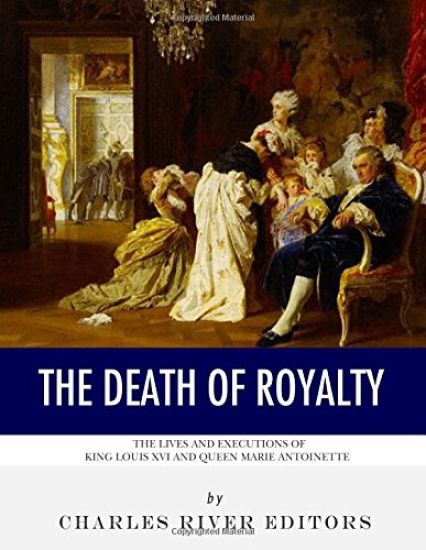
The Death of Royalty: The Lives and Executions of King Louis XVI and Queen Marie Antoinette
*Includes famous art depicting Louis XVI, Marie Antoinette, and important people, places, and events in their lives. *Includes a discussion of their roles in the American and French Revolutions. *Includes a comprehensive discussion of their trials and executions. "I die perfectly innocent of the so-called crimes of which I am accused. I pardon those who are the cause of my misfortunes." - Louis XVI "I was a queen, and you took away my crown; a wife, and you killed my husband; a mother, and you deprived me of my children. My blood alone remains: take it, but do not make me suffer long." - Marie Antoinette Louis XVI and Marie Antoinette are among France's most famous royalty, but for reasons they would have much rather avoided. Coming of age in the wake of the reign of the Sun King, Louis XIV, and his father, Louis XV, Louis XVI initially intended to be one of France's most enlightened Kings. Instead, he was destined to be the only French King ever executed. Indeed, it is his death and his role in fomenting the French Revolution (along with his infamous Queen, Marie Antoinette) that continue to play the central role in Louis XVI's legacy. Throughout history, a countless number of historical figures have had their lives overshadowed by the myths and legends that surround them to the extent that their legacy comes to define them. In French history, this is truer of Marie Antoinette than just about everyone else. Nearly 220 years after she was put to the guillotine, Marie Antoinette is more famous than ever, fairly or unfairly coming to epitomize royalty and everything that was wrong with it. Since her death, Marie Antoinette has been the subject of sharp historical debate over whether she was actually a catalyst in the French Revolution or simply an insignificant scapegoat who was unfairly made a target. At the same time, the one thing everybody associates with Antoinette is the phrase "Let them eat cake", a spoiled and ignorant comment supposedly made in response to being informed that the peasants had no bread. While that phrase has been used far and wide to depict someone as being out of touch, there's no indication Antoinette ever said anything like it. Nevertheless, she remains a pop culture fixture across the West, perceived just as negatively in death as she was in life. The Death of Royalty explains the couple's role in two of history's most famous revolutions, looks at the life of the famous, ill-fated Royal Family, attempts to separate fact from fiction and analyzes their legacies. Along with pictures of important people, places, and events, you will learn about Louis XVI and Marie Antoinette like you never have before, in no time at all.
The Most Famous Speeches of Abraham Lincoln: The History of the Cooper Union Address, the Gettysburg Address, and the Second Inaugural Address
*Includes pictures *Includes excerpts from the speeches *Includes reactions to the speeches from newspaper reports and audience members *Includes online resources and bibliographies for further reading *Includes a table of contents Abraham Lincoln was still not considered a real option for the Republican nomination until he delivered a speech at New York City's Cooper Union in February 1860, just a few months before the Republicans' convention in May. Lincoln had gained a bit of a national profile by debating Stephen Douglas during an Illinois Senate Race in 1858, and though he lost that election, Lincoln continued discussing the same themes, most notably slavery and Dred Scott in his Cooper Union speech. In the hard-hitting speech, Lincoln both deflected Southern criticisms and attacked them, chiding would-be secessionists, "Your purpose, then, plainly stated, is that you will destroy the Government, unless you be allowed to construe and enforce the Constitution as you please, on all points in dispute between you and us. You will rule or ruin in all events." Although just 7,000 words long, the Cooper Union Address was almost universally praised in the North, and biographer Harold Holzer credited it for leading Lincoln to the presidency: "Had Abraham Lincoln failed at his do-or-die debut in New York, he would never have won his party's presidential nomination three months later, not to mention election to the White House that November. Such was the impact of a triumph in the nation's media capital. Had he stumbled, none of the challenges that roiled his presidency would ever have tested his iron will... He had arrived at Cooper Union a politician with more defeats than victories, but he departed politically reborn." When a crowd came to Gettysburg in November 1863 to commemorate the battle fought there 4 months earlier and dedicate a new national cemetery, they came to hear a series of speeches about the Civil War and the events of that battle. Today it may seem obvious to invite the president to such an occasion, but Lincoln was initially an afterthought, and though he did come to deliver remarks, he was not in fact the keynote speaker. Instead, the man chosen to give the keynote speech was Edward Everett, a politician and educator from Massachusetts. Everett had already been a Congressman, the 15th Governor of Massachusetts, Minister to Great Britain, and Secretary of State, and by the Civil War, he was considered perhaps the greatest orator in the nation, making him a natural choice to be the featured speaker at the dedication ceremony. Everett is still known today for his oratory, but more for the fact that he spoke for over two hours at Gettysburg immediately before President Lincoln delivered his immortal two-minute Gettysburg Address. Everett would later say, "I should be glad if I could flatter myself that I came as near to the central idea of the occasion, in two hours, as you did in two minutes." At the time, however, Lincoln and many others present at the event thought his speech fell flat and was ultimately a failure that would be consigned to the dustbin of history. Lincoln wasn't given a chance to finish his work, but his thoughts and visions were eloquently saved for posterity in his second inaugural address, delivered a month before his death and considered one of America's greatest speeches. With the war nearing the end, Lincoln struck a conciliatory tone, reminding both sides that they prayed to the same God for victory and that neither side could divine God's will. "With malice toward none, with charity for all," Lincoln called for peace and reunion, his eye clearly on Reconstruction. Nobody will ever know if Lincoln could've managed the Reconstruction process in a better way than what actually unfolded, but in many respects, the second inaugural address was a fitting postscript of sorts to his presidency.
The Illustrated Step-By-Step Guide to Yoga for Stress Relief

The Illustrated Step-By-Step Guide to Yoga for Stress Relief

Charles River

Createspace Independent Publishing Platform
2018
nidottu
*Includes over 40 different postures and yogic practices are accompanied with photographs of the proper poses and explanations to make sure you're practicing yoga correctly. *Explains proper breathing techniques for dealing with stress The unrelenting ticking of the clock just minutes before a tight deadline. The bumper-to-bumper traffic that prevents us from reaching home after a long day of work. The sound of a crying infant in the early morning that makes us wonder if parenthood is really all it's cracked up to be. What unifies each of these situations is stress. Stress is a term used to describe a state of mental or emotional strain or tension resulting from adverse or very demanding circumstances. Stress is something that all people experience, with varying levels of stress being placed on our minds and bodies at any given time. The factors that cause stress are numerous: work, diet, relationships, body image, examinations, deadlines, assignments, peer pressure, lack of sleep, family, depression, breakups, etc. Whatever the cause, stress is an inevitable component of daily life. The trick to coping with stress is learning how to manage, prevent, and reduce it when necessary. People often search for ways to reduce stress, but one often overlooked method of dealing with stress is yoga. Yoga, a Sanskrit word, is a physical, mental, and spiritual discipline that originated from ancient India. A philosophy based on Patanjali's Yoga Sutras, yoga aims for the attainment of spiritual insight and mental peace. Literally, the word yoga means "to join." In one sense, this means unifying the mind and body so that both are in perfect harmony. As the philosophy goes, if the body is in a healthy state, then the mind can be in a healthy state. Similarly, a healthy mind can allow for a healthier body. Given its goals and practice, it's no surprise that yoga has become such a popular practice for reducing stress. It accomplishes this through breathing, mild to moderate exercise, and heightened connectedness to the self through conscious awareness and meditative techniques. The Illustrated Step-By-Step Guide to Yoga for Stress Relief can help people of all ages and backgrounds manage and reduce their stress, and it is designed for all experience levels, whether you are a beginner or a frequent practitioner of yoga. Over 40 different postures and yogic practices are accompanied with photographs of the proper poses and explanations to make sure you're practicing yoga correctly. Let this guide help you reduce and manage your stress today. Contents: Chapter 1: Why Yoga for Stress Relief? Chapter 2: Beginning the Yoga Session Chapter 3: Coming into Standing Position Chapter 4: Joint and Back Relaxation Chapter 5: Modified Sun Salutation Chapter 6: Relaxing Standing Postures Chapter 7: Sitting Postures Chapter 8: Relaxation and Concentration Postures Chapter 9: Supine Postures
The Illustrated Guide to Understanding Astrophysics and the Universe

The Illustrated Guide to Understanding Astrophysics and the Universe

Charles River

Createspace Independent Publishing Platform
2018
nidottu
*Includes 19 pictures of stars, galaxies, and other phenomena across the Universe." My goal is simple. It is a complete understanding of the universe, why it is as it is and why it exists at all." - Stephen HawkingFrom the dawn of time, man has sought to understand the Universe and his place in it. How did the Earth and the Solar System come to be? How was the Universe created? Like other scientific disciplines, astronomy and astrophysics is one big detective story. Hypotheses are formed, observations taken, and experiments performed in the search for universal laws that describe all that we see. A good hypothesis or theory will make predictions of future observations, the results of which will either refute the theory, or be consistent with it. Astronomy is at a distinct disadvantage over other branches of science in one crucial way: for the most part, our observations only consist of photons (i.e. light) from far away sources, rarely can we touch and manipulate the things we observe, and thus create our own controls for an "experiment". We must wait for those far-away objects to cooperate. The light must be analyzed in many different ways (variations in space, time, intensity and frequency to name just a few), comparing different objects with one another, and making informed opinions upon the results. The light over the whole electromagnetic spectrum from a particular "target" must be explained in a consistent way using the laws of physics, and often it's back to the telescope for a new set of observations when some part of the theory proves inadequate. Or, back to some intensive computations. Nevertheless, astronomers and astrophysicists have done remarkably well over the last couple of centuries, allowing us to present an overview of how the Universe functions. In this resourceful guide, common and uncommon questions about the Universe will be explained in comprehensive but easy to understand terms. You'll learn the answers to some of the most important questions, including: *How do stars form?*What happens when stars die?*What do we know about the origin of the universe?*What is dark matter and why do we suppose it exists?*How does our solar system fit into the Milky Way Galaxy?*What galaxies are around us, and how are galaxies classified?*What is the cosmological principle? The Illustrated Guide to Understanding Astrophysics and the Universe gives an entertaining and educational overview of our Universe, from the smallest matter to massive black holes, and everything in between. Whether you are an experienced amateur or a complete novice, let The Illustrated Guide to Understanding Astrophysics and the Universe be your guide to the stars.
The Last Confederate in the Field: The Life and Career of General Joseph E. Johnston

The Last Confederate in the Field: The Life and Career of General Joseph E. Johnston

Charles River

Createspace Independent Publishing Platform
2018
nidottu
*Includes pictures *Includes maps of famous battles. *Includes a Bibliography for further reading. " The South's ranking of senior generals] seeks to tarnish my fair fame as a soldier and a man, earned by more than thirty years of laborious and perilous service. I had but this, the scars of many wounds, all honestly taken in my front and in the front of battle, and my father's Revolutionary sword. It was delivered to me from his venerated hand, without a stain of dishonor. Its blade is still unblemished as when it passed from his hand to mine. I drew it in the war, not for rank or fame, but to defend the sacred soil, the homes and hearths, the women and children; aye, and the men of my mother Virginia, my native South." - Joseph E. Johnston to Jefferson Davis, September 1861 During the Civil War, one of the tales that was often told among Confederate soldiers was that Joseph E. Johnston was a crack shot who was a better bird hunter than just about everyone else in the South. However, as the story went, Johnston would never take the shot when asked to, complaining that something was wrong with the situation that prevented him from being able to shoot the bird when it was time. The story is almost certainly apocryphal, but it was aptly used to demonstrate the Confederates' frustration with a man who everyone regarded as a capable general. Johnston began the Civil War as one of the South's senior commanders, leading the ironically named Army of the Potomac to victory in the Battle of First Bull Run over Irvin McDowell's Union Army. But Johnston would become known more for losing by not winning. Johnston was never badly beaten in battle, but he had a habit of strategically withdrawing until he had nowhere left to retreat. When Johnston had retreated in the face of McClellan's army before Richmond in 1862, he finally launched a complex attack that not only failed but left him severely wounded, forcing him to turn over command of the Army of Northern Virginia to Robert E. Lee. Johnston and Confederate President Jefferson Davis had a volatile relationship throughout the war, but Johnston was too valuable to leave out of service and at the beginning of 1864 he was given command of the Army of Tennessee. When Johnston gradually retreated in the face of Sherman's massive army (which outnumbered his 2-1) before Atlanta in 1864, Davis removed Johnston from command of the Army of Tennessee and gave it to John Bell Hood. Johnston has never received the plaudits of many of the South's other generals; in fact, there are only a couple of monuments commemorating his service in the South. Yet Johnston was a competent general who fought in some of the most important campaigns of the Civil War, and it's often forgotten that it was his surrender to Sherman weeks after Appomattox that truly ended the Civil War. Johnston did so over Davis's command to keep fighting, incurring his wrath once more. Having dealt with each other, Sherman and Johnston became friends after the war, and when the elderly Johnston served as a pallbearer at Sherman's funeral, he contracted an illness that eventually killed him. Given his prominent and controversial role in the Civil War, Johnston naturally took to writing memoirs, Narrative of Military Operations During the Civil War, which gives an extremely detailed account of the war, a defense of his actions, and criticism of Jefferson Davis and John Bell Hood. One of the most interesting parts of Johnston's memoirs come at the end, with his letters, telegrams, and even an anecdote about the origins of the Confederate Battle Flag. The Last Confederate in the Field: The Life and Career of General Joseph E. Johnston examines Johnston's life, record in the war and legacy. Along with pictures of important people, places, and events in his life, you will learn about Johnston like you never have before, in no time at all.