Kirjojen hintavertailu – 12 903 727 kirjaa ja 27 kauppaa

Kirjailija

Charles River

Kirjat ja teokset yhdessä paikassa: 4 673 kirjaa, julkaisuja vuosilta 2013–2022, suosituimpiin kuuluu William Powell and Myrna Loy: The Lives and Careers of One of Classical Hollywood's Most Iconic Duos. Vertaile teosten hintoja ja tarkista saatavuus suomalaisista kirjakaupoista.

4 673 kirjaa

Kirjojen julkaisuvuodet: 2013–2022.

Sidon: The History and Legacy of the Ancient Phoenician City

Sidon: The History and Legacy of the Ancient Phoenician City

Charles River

Createspace Independent Publishing Platform
2018
nidottu
*Includes pictures *Includes ancient accounts of Sidon *Includes a bibliography for further reading Of all the peoples of the ancient Near East, the Phoenicians are among the most recognizable but also perhaps the least understood. The Phoenicians never built an empire like the Egyptians and Assyrians; in fact, the Phoenicians never created a unified Phoenician state but instead existed as independent city-state kingdoms scattered throughout the Mediterranean region. However, despite the fact there was never a "Phoenician Empire," the Phoenicians proved to be more prolific in their exploration and colonization than any other peoples in world history until the Spanish during the Age of Discovery. The Phoenicians were well-known across different civilizations throughout the ancient world, and their influence can be felt across much of the West today because they are credited with inventing the forerunner to the Greek alphabet, from which the Latin alphabet was directly derived. Nonetheless, the Phoenicians left behind few written texts, so modern historians have been forced to reconstruct their past through a variety of ancient Egyptians, Assyrian, Babylonian, Greek, and Roman sources. It's not even clear what the Phoenicians called themselves, because the name "Phoenician" is derived from the Greek word "phoinix", which possibly relates to the dyes they produced and traded (Markoe 2000, 10). The mystery of the ancient Phoenicians is further compounded by the fact that archaeologists have only been able to excavate small sections of the three primary Phoenician cities: Byblos, Sidon, and Tyre. For centuries, the port city of Sidon served as the capital of the Phoenician homeland, the administrative center of their maritime trading network, and the holy center of one of the most popular Levantine religious cults. Located in southern Phoenicia about 30 miles south of the present-day Lebanese capital of Beirut, the settlement has a narrative that stretches far into the depths of prehistory. The oldest archaeological remains date from the second half of the 4th millennium BCE. The history of Sidon, as with other Phoenician cities, constantly fluctuated between freedom and subjection. Its privileged geographical position on the coast was the source of its commercial development and its openness to foreign cultures, but in doing so the prosperous city became coveted by numerous conquerors. It passed through the successive influence of Egypt, the neighboring Phoenician city-state of Tyre, and eventually flourished under Persian rule as the seat of a satrap for the whole Euphrates region. The Persian king frequently made use of the renowned Sidonian fleet during his military campaigns, and the kings of Sidon were greatly rewarded for their services. During the campaigns of Alexander the Great, Sidon opened its doors to the young Macedonian, who chose to depose the long lasting dynasty of Sidonian kings. It later became the battleground between the Arab caliphates and European Crusaders during the Middle Ages in a conflict that in many ways continues to shape the region to this day. Like many other cities in the Levant, Sidon has been continuously inhabited over the centuries, and despite the transformations brought by multiple civilizations that succeeded the Phoenicians, the city maintained a thoroughly ancient identity and original character into the modern period. Nonetheless, much of its ancient history remains shrouded in mystery, not only by a lack of systematic archaeological excavation but also because much of its heritage has been lost through conflict and looting by treasure hunters throughout the 19th and 20th centuries. To this day a great amount of Sidon's archaeological assets are the property of foreign museum collections.
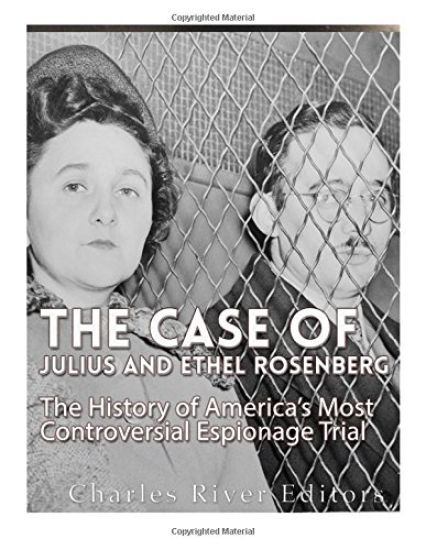
The Case of Julius and Ethel Rosenberg: The History of America's Most Controversial Espionage Trial
*Includes pictures *Includes accounts of the trial and testimony *Includes online resources and a bibliography for further reading *Includes a table of contents "This death sentence is not surprising. It had to be. There had to be a Rosenberg case, because there had to be an intensification of the hysteria in America to make the Korean War acceptable to the American people. There had to be hysteria and a fear sent through America in order to get increased war budgets. And there had to be a dagger thrust in the heart of the left to tell them that you are no longer gonna get five years for a Smith Act prosecution or one year for contempt of court, but we're gonna kill ya " - Julius Rosenberg In 1947, President Truman had tried to assure Americans, "I am not worried about the Communist Party taking over the Government of the United States, but I am against a person, whose loyalty is not to the Government of the United States, holding a Government job. They are entirely different things. I am not worried about this country ever going Communist. We have too much sense for that." Nonetheless, shortly after World War II, Congress' House Committee on Un-American Activities began investigating Americans across the country for suspected ties to Communism. The most famous victims of these witch hunts were Hollywood actors, such as Charlie Chaplin, whose "Un-American activity" was being neutral at the beginning of World War II, but at the beginning of the Cold War, America was gripped by the Red Scare. The Red Scare would reach a fever pitch after Wisconsin Senator Joseph McCarthy made waves in 1950 by telling the Republican Women's Club in Wheeling, West Virginia that he had a list of dozens of known Communists working in the State Department. The political theater helped Senator McCarthy become the prominent anti-Communist crusader in the government, and McCarthy continued to claim he held evidence suggesting Communist infiltration throughout the government, but anytime he was pressed to produce his evidence, McCarthy would not name names. Instead, he'd accuse those who questioned his evidence of being Communists themselves. The case of Alger Hiss and the rise of McCarthyism were undoubtedly instrumental in the way that one of the most notorious cases in American history unfolded in the early 1950s. After years of keeping tabs on Julius and Ethel Rosenberg, the two Communist sympathizers were indicted on charges of treason and conspiracy to commit espionage for passing off secrets about the atomic bomb to the Soviet Union. In the context of the Cold War and the Korean War, there could hardly be more serious charges, but the couple strenuously asserted their innocence, even after they were implicated by Ethel's own brother, David Greenglass. Throughout the trial and its aftermath, many Americans believed the Rosenbergs were innocent and/or were facing an unduly harsh death sentence. Indeed, authorities had hoped to wring confessions out of the two by threatening them with the chair, but they held steadfast all the way up until their executions on June 19, 1953. In the over 60 years since, there has been plenty of debate over whether the two of them were guilty, and, if so, what the extent of their espionage was. While historians have used declassified documents and memoirs of involved individuals to reach the widespread belief that Julius Rosenberg did commit espionage, there is still a lot of doubt regarding Ethel's involvement, and scholars still debate just what Julius may have sent the Soviets. The mystery and intrigue still surrounding the case, trial, and executions continue to fascinate people and generate plenty of ongoing speculation. The Case of Julius and Ethel Rosenberg: The History of America's Most Controversial Espionage Trial chronicles the events that led to the infamous trial and execution of the Rosenbergs.
Symbols of Defiance: The Lives and Legacies of Geronimo, Sitting Bull and Crazy Horse

Symbols of Defiance: The Lives and Legacies of Geronimo, Sitting Bull and Crazy Horse

Charles River

Createspace Independent Publishing Platform
2018
nidottu
*Includes pictures of Geronimo, Sitting Bull, Crazy Horse, and important people, places, and events in their lives. *Includes a comprehensive description of the Battle of Little Bighorn and Geronimo's attempt to elude the U. S. Army. *Includes a Bibliography for further reading. "This boy's name was Apache. Usen taught him how to prepare herbs for medicine, how to hunt, and how to fight. He was the first chief of the Indians and wore the eagle's feathers the sign of justice, wisdom, and power. To him and to his people, as they were created, Usen gave homes in the land of the West." - Geronimo, on the origins of the Apache people. "When I was a boy the Sioux owned the world. The sun rose and set on their land; they sent ten thousand men to battle. Where are the warriors today? Who slew them? Where are our lands? Who owns them? Is it wrong for me to love my own? Is it wicked for me because my skin is red? Because I am Sioux? Because I was born where my father lived? Because I would die for my people and my country?" - Sitting Bull "Upon suffering beyond suffering: the Red Nation shall rise again and it shall be a blessing for a sick world. A world filled with broken promises, selfishness and separations. A world longing for light again. I see a time of Seven Generations when all the colors of mankind will gather under the Sacred Tree of Life and the whole Earth will become one circle again." - Crazy Horse Three of the best known Native American legends in history are Geronimo, Sitting Bull and Crazy Horse, celebrated by Americans today for the very reason they were reviled by Americans of their own day. Americans have always appreciated plucky, persistent, and dogged individuals, and there are few examples in the nation's history that represent the fighting spirit better than the defiant Native American leaders. The name "Geronimo" evokes a number of different emotions. Those who believed in 19th century America's "Manifest Destiny" viewed Geronimo and all Native Americans as impediments to God's will for the nation. Even today, many Americans associate the name Geronimo with a war cry, and the name Geronimo itself only came about because of a battle he fought against the Mexicans. Over time, however, those who empathized with the fate of the Native Americans saw Geronimo as one of a number of Native American leaders who resisted the U. S. and Mexican governments as their lands were being appropriated, often eluding large numbers of soldiers pursuing them. Around the same time, Sitting Bull and Crazy Horse became legends at the Battle of the Little Bighorn, during which an estimated 2,000 Sioux and Cheyenne warriors inspired by one of Sitting Bull's visions routed and then annihilated the 7th U. S. Cavalry led by George Custer. That disaster led the American government to double down on its efforts to "pacify" the Sioux, and by the end of the decade many of them had surrendered and been moved onto a reservation. Sitting Bull and Crazy Horse were two of the last Sioux leaders to surrender, and both suffered controversial deaths on reservations. Symbols of Defiance chronicles the amazing lives of the three Native American leaders who defiantly fought to save their people's homeland, but it also humanizes the men who became three of the most famous Native Americans in American history. Along with pictures of important people, places, and events, you will learn about Geronimo, Sitting Bull, and Crazy Horse like you never have before, in no time at all.
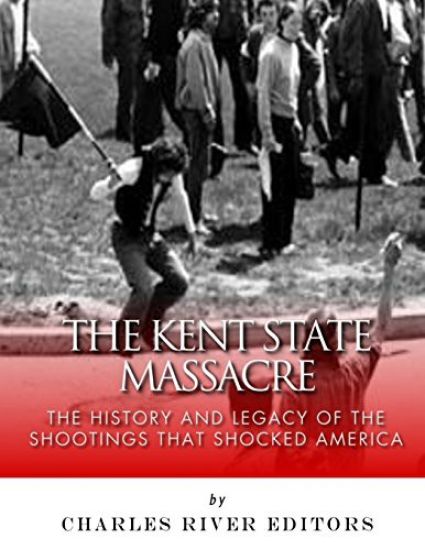
The Kent State Massacre: The History and Legacy of the Shootings That Shocked America

The Kent State Massacre: The History and Legacy of the Shootings That Shocked America

Charles River

Createspace Independent Publishing Platform
2018
nidottu
*Includes pictures *Includes accounts of the events in Kent State *Includes a bibliography for further reading "Suddenly, they turned around, got on their knees, as if they were ordered to, they did it all together, aimed. And personally, I was standing there saying, they're not going to shoot, they can't do that. If they are going to shoot, it's going to be blank." - One eyewitness to the shootings The Vietnam War was one of the most controversial events in American history, and political arguments over the war brought about massive cultural changes across the country during the 1960s. The war ultimately fueled the hippie counterculture, and anti-war protests spread across the country on campuses and in the streets. While some protesters spread peace and love, others rioted, and in August 1968, riots broke out in the streets of Chicago, leading to incredible scenes of National Guardsmen and police confronting 10,000 anti-war rioters during the Democratic National Convention. By the end of the decade, Vietnam had left tens of thousands of Americans dead, spawned a counterculture with millions of protesters, and destroyed a presidency, but there was plenty more yet to come. Vietnam was already wildly unpopular by 1970, but when President Nixon announced the bombing of Cambodia on April 30, 1970, protests exploded across college campuses. Some of those protests took place at Kent State in Kent, Ohio, and the state's governor replied by declaring a state of emergency and sending the Ohio National Guard to the campus. On May 4, a Monday, thousands of Kent State students decided to attend protests instead of class. Jeff Miller and his friends had tear gas shot at them by the Ohio National Guard, and Miller picked up one of the tear gas canisters and threw it back at the Guardsmen. At 12:24 p.m., some of the Guardsmen opened fire with live rounds. Miller was instantly killed by a shot through the mouth, and three others lay dead. None of the people wounded or killed were within 70 feet of the Guardsmen, and in the commotion of the scene, photographer John Filo took a picture of Miller's body, surrounded by confused bystanders and a kneeling girl holding up her hands as if to ask, "Why?" The photo would win the Pulitzer Prize that year. The shootings of unarmed protesters rattled the nation and inevitably led to hardened feelings and further protests. In the aftermath, other college student protesters hung banners that read "They Can't Kill Us All," and hundreds of campuses were brought to a standstill by protesting. Later estimates concluded that 4 million students joined protests across the country, and a protest in Washington, D. C. attracted about 100,000 in the days following the shootings. While both supporters and opponents of the war continued to debate with each other, sometimes heatedly, the shootings at Kent State led to Nixon's establishment of the President's Commission on Campus Unrest, and that group's report went on to claim, "Even if the guardsmen faced danger, it was not a danger that called for lethal force. The 61 shots by 28 guardsmen certainly cannot be justified. Apparently, no order to fire was given, and there was inadequate fire control discipline on Blanket Hill. The Kent State tragedy must mark the last time that, as a matter of course, loaded rifles are issued to guardsmen confronting student demonstrators." The Kent State Massacre chronicles the events that led up to one of the country's most notorious campus shootings, and the watershed moment that it came to represent for America during the Vietnam War. Along with pictures of important people, places, and events, you will learn about the Kent State shootings like never before, in no time at all.
The 1883 Eruption of Krakatoa: The History of the World's Most Notorious Volcanic Explosions
*Includes pictures *Includes accounts of the eruption *Includes a bibliography for further reading "In 1883, Krakatoa suddenly sprang into notoriety. Insignificantly though it had hitherto seemed the little island was soon to compel by its tones of thunder the whole world to pay it instant attention. It was to become the scene of a volcanic outbreak so appalling that it is destined to be remembered throughout the ages." - Sir Robert Ball Volcanic eruptions have amazed people for millennia, and notorious ones like the eruption of Mount St. Helens can still be immediately recalled even by some who weren't alive at the time, but perhaps the most famous and most destructive eruption in modern history was the 1883 eruption of Krakatoa. Even without the instantaneous forms of communication that are now available, the world watched in wonder for new updates about a tiny South Pacific island, and though few of them would ever go there, Krakatoa remained a source of fascination for the much of the world for the next 50 years. Krakatoa had already been the scene of volcanic activity for hundreds of years, and some of the eruptions had been documented by early European explorers in the 17th century. In 1681, one Dutchman named Johann Wilhelm Vogel noted, "I saw with amazement that the island of Krakatoa, on my first trip to Sumatra June 1679] completely green and healthy with trees, lay completely burnt and barren in front of our eyes and that at four locations was throwing up large chunks of fire. And when I asked the ship's Captain when the aforementioned island had erupted, he told me that this had happened in May 1680... He showed me a piece of pumice as big as his fist." Nonetheless, nobody could have prepared for the scope of the 1883 eruption, which was so violent that it destroyed most of the island of Krakatoa and could be heard about 3,000 miles away. The force of the explosion was equivalent to four times the strength of the most powerful nuclear weapon ever detonated, and the spread of ash and lava, as well as the tsunamis generated by the force of the eruption, ultimately killed at least 35,000 people (and possibly over 100,000) across the Dutch East Indies. With plumes of smoke rising upwards of 50 miles in the air, Krakatoa's eruption influenced the entire global climate for several years, and debris and corpses were still washing up on shores across the Pacific throughout that time. The force was so powerful that it actually affected the height of waves in the English Channel. The 1883 Eruption of Krakatoa chronicles the history of one of the world's most notorious natural disasters. Along with a bibliography and pictures of important people and places, you will learn about Krakatoa like never before, in no time at all.
The Sahara: The History and Legacy of the World's Greatest Desert

The Sahara: The History and Legacy of the World's Greatest Desert

Charles River

Createspace Independent Publishing Platform
2018
nidottu
*Includes pictures *Includes online resources and a bibliography for further reading They say that one is subjected to a sobering sample of what can only be described as an existential crisis when traversing the golden and seemingly infinite terrain of the Sahara Desert. If one climbed any of the countless sand dunes and twirled around in a place, particularly under the starlit sky, they would scarcely be able to tell east from west without a compass, for there would be nothing but dizzying carpets of indistinguishable sand hills unfurling into the distant horizon. Daunting thoughts of purpose and self-worth aside, people fortunate enough to visit this sandy wonderland via a heavy-duty SUV, or more traditionally a hired camel caravan, are treated to a truly breathtaking sight. The wave-like ripples caressing the beautiful collection of irregularly shaped sand dunes, some barely half a story and others close to 600 feet in height, are as unique as the etchings on one's fingertips. To some, they are Mother Nature's stretch marks. To others, the wind-prompted patterns might conjure up an image of a god with a rake in hand, whistling carelessly and combing through the gritty grains of sand, as one would with a miniature zen garden to melt away their stresses. It is easy to see why people might feel helplessly small and insignificant, especially when thrust into and lost in such a hauntingly beautiful, but perilous and apparently fathomless landscape. The smattering of flora and fauna stingily peppered throughout the immense slab of barren land would do little to pacify a fluttering stomach. Moreover, a somewhat menacing, monotonous drone pierces the silence, emitted by the vibrations of the sand grains cascading down the dunes. The musicians behind these dreary tunes are none other than the pockets of wind massaging these mountains of sand, and the peculiar phenomenon, evocative of a chorus of crying conch shells or a buzzing colony of incandescent bees, sends a tickle down one's spine. Of course, these curious sounds are anything but curious to those who inhabit or trek through these parts frequently. Some have become habituated to the humming of the dunes, so much so that they feel disquieted without it. The soundtrack it provides for their otherwise taxing journeys allows for self-reflective rumination and meditative musings, many of whom achieve a sense of inner peace through the soothing melody of the crooning dunes. But to a few, the songs of the dune are far more than merely white noise. Listen closely, they say, and one can almost hear the sand singing about the compelling historical events and fascinatingly complex life that shape this mystical desert. The Sahara: The History and Legacy of the World's Greatest Desert examines the history of Earth's largest hot desert. Along with pictures of important people, places, and events, you will learn about the Sahara like never before.
Submarines and the World Wars: The History of Submarine Warfare in World War I and World War II
*Includes pictures *Includes accounts of fighting *Includes online resources and a bibliography for further reading Submarine warfare began tentatively during the American Civil War (though the Netherlands and England made small prototypes centuries earlier, and the American sergeant Ezra Lee piloted the one-man "Turtle" vainly against HMS Eagle near New York in 1776). Robert Whitehead's invention of the torpedo introduced the weapon later used most frequently by submarines. Steady improvements to Whitehead's design led to the military torpedoes deployed against shipping during both World Wars. During World War I, German U-boats operated solo except on one occasion. Initially, the British and nations supplying England with food and materiel scattered vessels singly across the ocean, making them vulnerable to the lone submarines. However, widespread late war re-adoption of the convoy system tipped the odds in the surface ships' favor, as one U-boat skipper described: "The oceans at once became bare and empty; for long periods at a time the U-boats, operating individually, would see nothing at all; and then suddenly up would loom a huge concourse of ships, thirty or fifty or more of them, surrounded by a strong escort of warships of all types." (Blair, 1996, 55). World War I proved the value of submarines, ensuring their widespread employment in the next conflict, but by using U-boats against the shipping that kept Britain supplied, it might have ultimately cost Germany and Austria-Hungary the war by providing a reason for President Woodrow Wilson to bring the United States into the struggle. One critical innovation in World War II's Atlantic U-boat operations consisted of wolf-pack tactics, in which Admiral Karl D nitz put great faith: "The greater the number of U-boats that could be brought simultaneously into the attack, the more favourable would become the opportunities offered to each individual attacker. ...] it was obvious that, on strategic and general tactical grounds, attacks on convoys must be carried out by a number of U-boats acting in unison." (D nitz, 1990, 4). However, even the wolf-pack proved insufficient to defeat the Atlantic convoys and stop Allied commerce - the precise opposite of the Pacific theater, where America's excellent submarine forces annihilated much of Japan's merchant marine and inflicted severe damage on the Imperial Japanese Navy. Submarines exercised a decisive impact on the outcome of the Pacific Theater in World War II. The U. S. submarine fleet, largely though not exclusively under the overall command of Vice Admiral Charles Lockwood, strangled the supply lines and shipping traffic of the Empire of Japan. Their commerce raiding crippled both Japan's ability to keep its frontline units supplied and to manufacture the weapons, vessels, and vehicles needed to successfully carry on the struggle. Though constituting only 1.6% of the total U. S. Navy's tonnage in the Pacific, the submarine fleet inflicted massive losses on the Imperial Japanese Navy and Japan's crucial merchant marine. Submarines sank 55% of the merchant shipping lost, or approximately 1,300 vessels; overall, the Allies sank 77% of Japan's shipping. The submarines also sank 214 Japanese warships, including 82 of 1,000 tons or more - 4 carriers, 4 escort carriers, one battleship, 4 heavy cruisers, 9 light cruisers, 38 destroyers, and 23 submarines - or approximately 30% of the entire Imperial Japanese Navy. The sleek, predatory craft made in the shipyards of Virginia, Wisconsin, or Washington state devastated the naval and freighter assets of the Empire of the Rising Sun out of all proportion to their numbers, at a cost of 42 submarines on "Eternal Patrol." Submarines and the World Wars: The History of Submarine Warfare in World War I and World War II analyzes the underwater fighting during both great conflicts.
U.S. Route 66: The History of America's Most Famous Highway

U.S. Route 66: The History of America's Most Famous Highway

Charles River

Createspace Independent Publishing Platform
2018
nidottu
*Includes pictures *Describes the origins, route, construction, and history of the highway *Includes online resources and a bibliography for further reading *Includes a table of contents "Sometimes there's a tackiness about Route 66 that out-tacks any tackiness I've ever seen anywhere else. And the Meramec Caverns are the pinnacle of that tack." - Billy Connolly Start a sentence with, "Get your kicks on..." and most Americans will immediately complete the sentence with "Route 66." Route 66 conjures up visions of a fun road trip across the United States, whether it was a bird's eye view from a snappy convertible or from a station wagon hauling a trailer. There was fun to be had around every turn. For thousands, Route 66 was far from fun. Route 66 was the way to a better life. The celebrated Route 66 was commissioned in 1926 as the first highway linking Chicago to Los Angeles, and though most people today would avoid two-lane highways in favor of fast-moving interstates, the interstate system was still decades away at the time. Two of the few things modern America has in common with the America of the 1920s when it comes to roads and technology is the need to transport goods to market and the desire to see the vast lands that form the United States. Shortly before the Great Depression, Route 66 was the road that offered both. In 1985, the last original bits of pavement forming Route 66 vanished from maps, so technically, Route 66 has come and gone. But in a sense, Route 66 will never disappear. It left an indelible impression on American culture, and since its creation nearly a century ago, Route 66 has become so much more than a road; it is now a myth, legend, and fantasy. Called "the most magical road in all the world," it offered a trip through the heart of America in all her glory, and some of her inglorious days. Route 66: The History of America's Most Famous Highway looks at the construction, history, and legacy of the Main Street of America. Along with pictures of important people, places, and events, you will learn about Route 66 like never before, in no time at all.
Tikal and Uxmal: The History and Legacy of the Mayan Capitals of the Classic Era

Tikal and Uxmal: The History and Legacy of the Mayan Capitals of the Classic Era

Charles River

Createspace Independent Publishing Platform
2018
nidottu
*Includes pictures *Includes descriptions of the ruins and the history of the sites *Includes online resources and a bibliography for further reading Many ancient civilizations have influenced and inspired people in the 21st century. The Greeks and Romans continue to fascinate the West today. But of all the world's civilizations, none have intrigued people more than the Mayans, whose culture, astronomy, language, and mysterious disappearance all continue to captivate people. In 2012 especially, there was a renewed focus on the Mayans, whose advanced calendar has led many to speculate the world would end on the same date the Mayan calendar ends, but if anything, the focus on the "doomsday" scenario overshadowed the Mayans' true contribution to astronomy, language, sports, and art. The Maya maintained power in the Yucatan for over a thousand years, and at the height of its "Classical era" (3rd-9th centuries A. D.), the city of Tikal was one of the power centers of the empire. Archaeologists believe Tikal had been built as early as the 5th or 4th century BC, and eventually it became a political, economic and military capital that was an important part of a far-flung network across Mesoamerica, despite the fact it was seemingly conquered by Teotihuacan in the 4th century AD. It seems the foreign rulers came to assimilate Mayan culture, thus ensuring Tikal would continue to be a power base, and as a result, the city would not be abandoned until about the 10th century AD. As one of the Ancient Maya's most important sites, construction at Tikal was impressive, and even though it was apparently conquered, the city's records were unusually well preserved. This includes a list of the city's dynastic rulers, as well as the tombs and monuments dedicated to them. Thanks to this preservation, Tikal offers researchers their best look at the Ancient Maya and has gone a long way toward helping scholars understand Mayan history. Near the end of the Classic Era, the city of Uxmal was one of the Maya's most noteworthy cities and a capital after Tikal waned. While it was not as powerful as cities like Tikal, Uxmal was apparently at the forefront of Mayan culture, particularly when it came to architecture. However, while Uxmal used high ground to display its prominence, and the ruins are still among the most popular places for tourists in the region, the site is still shrouded in mystery. Even as scholars continue to work on the site to further interpret it, it's still unclear when exactly Uxmal was founded, how many people called it home, and when it was abandoned, despite the existence of Mayan chronicles and oral legends. What is apparent, however, is the skills of Uxmal's artisans, whether through constructing structures like the 5 level Pyramid of Magicians and the expansive Governor's Palace or adorning the structures with precisely detailed art and sculptures. In fact, the craftsmanship can be credited with helping to preserve Uxmal itself. Tikal and Uxmal: The History and Legacy of the Mayan Capitals of the Classic Era covers the history of the cities, as well as the speculation and debate surrounding them. Along with pictures and a bibliography, you will learn about Tikal and Uxmal like never before.
Black Bart & Howell Davis: Mastering Piracy

Black Bart & Howell Davis: Mastering Piracy

Charles River

Createspace Independent Publishing Platform
2018
nidottu
*Weaves the lives and piracy of the two famous pirates into one entertaining and educational narrative. *Explains how the myths and legends of the pirates helped create the instantly recognizable pirate stereotypes today. *Includes pictures depicting the pirates and important people, places, and events in their lives. *Includes contemporary accounts of the pirates written by Captain Charles Johnson *Includes Bibliographies "Roberts himself made a gallant Figure, at the Time of the Engagement, being dressed in a rich crimson Damask Wastcoat and Breeches, a red Feather in his Hat, a Gold Chain round his Neck, with a Diamond Cross hanging to it, a Sword in his Hand, and two Pair of Pistols hanging at the End of a Silk Sling, flung over his Shoulders (according to the Fashion of the Pyrates;)..." - Captain Charles Johnson Despite having one of the shortest careers of history's most famous pirates, Captain Howell Davis had one of the most colorful and important years during the Golden Age of Piracy. Though little is known about his life before July 1718, when he joined a pirate crew after they captured the slaver ship he was working on, it's a testament to his abilities that he became the captain of one of the pirates' ships very quickly after they had commandeered his ship. It also didn't take him long to earn a reputation for being devious and cunning, and more than once he was able to lie and bluff his way to taking a ship that probably could have defended itself against him. It was during one of his most daring escapades that one of his ruses was undone on the island of Principe, a Portuguese holding at the time. Though Davis didn't know it, one of his deceptions was unmasked, and the island's governor put his own plot in motion, setting Davis up for an ambush that left him and some of his men dead. But even in death, Davis remained influential; he had taken a pirate named Bartholomew Roberts under his wing, and Black Bart would succeed Davis as captain upon his death. Black Bart may not be as well known today as other pirates of the era, but he was truly the gold standard during the Golden Age of Piracy. Despite the fact he was initially reluctant to become a pirate and had to be talked into it, Roberts and his crew captured nearly 500 ships in just a few years, making him the most successful pirate in history. As tales of his exploits made their way around Europe and the Americas, Black Bart became a legend in his own time Although he was the most successful pirate of his time, he suffered a fate typical of the era's legendary pirates. In a battle with a Royal Navy ship in February 1722, Black Bart was killed by artillery on deck and his ships were captured, but not before his crew had tossed his body overboard, never to be seen again. Black Bart's death in battle was so important that pirate historian Marcus Rediker would later write, "The defeat of Roberts and the subsequent eradication of piracy off the coast of Africa represented a turning point in the slave trade and even in the larger history of capitalism." While Black Bart's success and infamous demise were both important parts of his story, the main reason he has endured is that he gave rise to some of the best known pirate stereotypes. In addition to making his crew swear to and uphold a pirate code, Roberts was known as a colorfully courageous commander who looked the part with extravagant costumes. It is thus no surprise that Roberts has been depicted as one of the foremost pirates of the age in literature and film, including in Robert Louis Stevenson's Treasure Island. Black Bart and Howell Davis looks at the lives and legends of the famous pirates, attempting to separate fact from fiction while analyzing their lasting legacies. Along with pictures, bibliographies and contemporary accounts, you'll learn about the two famous pirates like never before.
Antiquity's Greatest Philosophers: Socrates, Plato, and Aristotle

Antiquity's Greatest Philosophers: Socrates, Plato, and Aristotle

Charles River

Createspace Independent Publishing Platform
2018
nidottu
*Analyzes the controversies and mysteries surrounding Socrates' life and death, including the debate over his portrayal in Plato's Socratic dialogues. *Discusses the philosophers' writings about knowledge, logic, metaphysics, science, reason, Forms, political science, rhetoric and more. *Includes busts and other art depicting the philosophers and other important people. *Includes a Bibliography on each for further reading. In 427 B. C., the Ancient Greek city-state of Athens was flourishing. Approximately 80 years earlier, the Athenians had formed the first self-representative democracy in history, the Peloponnesian War against Sparta had only just started, and Socrates was only beginning to lay the foundation of what would become Western philosophy. None of Socrates' works survived antiquity, so most of what is known about him came from the writings of his followers, most notably Plato. What is known about Socrates is that he seemed to make a career out of philosophy, and Plato was intent on following in his footsteps. Yet for all of the influence of Socrates' life on his followers, it was Socrates' death around 399 B. C. that truly shaped them. Plato was so embittered by Socrates' trial in Athens that he completely soured on Athenian democracy, and Aristotle would later criticize politicians who relied on rhetoric; when Aristotle's own life was threatened, he fled Greece and allegedly remarked, "I will not allow the Athenians to sin twice against philosophy." About a decade after Socrates' death, Plato returned to Athens and founded his famous Platonic Academy around 387 B. C., which he oversaw for 40 years until his death. One of Plato's philosophical beliefs was that writing down teachings was less valuable than passing them down orally, and several of Plato's writings are responses to previous writings of his, so Plato's personally held beliefs are hard to discern. However, Plato educated several subsequent philosophers, chief among them Aristotle, and his writings eventually formed the backbone of Western philosophy. Alongside Socrates and Plato, Aristotle is, without question, one of the most influential ancient Greek philosophers and arguably the greatest icon of ancient thought. His life and work expanded rapidly and extensively across the ancient world, helped in part by the fact he tutored Alexander the Great, he was a recognized and celebrated intellectual force during all of antiquity and the Middle Ages. Furthermore, after Aristotle, Greek thought and political influence began a rapid decline, and the cultivation of knowledge, so important during the classic period, slowly but surely began to fade, making Aristotle the last of ancient Greece's great philosophers. Aristotle's influence on Western philosophical thought is marked by an extensive list of crucial issues that both signaled the way forward but at the same time boggled philosophers' minds throughout the centuries. Aristotle's reflections on Being, as well as his rigorous Logic, were his most important philosophical legacy, but he was also an intellectual in the broadest sense of the word. His interests went beyond metaphysical questions and into practical life and practical knowledge, from ethics to politics, rhetoric and the sciences, all of which left a profound impact on Western political thought and ethics. Naturally, this has also made him one of the foundations of knowledge and philosophical thought that subsequent philosophers relied on when forming and refining their own philosophies. Antiquity's Greatest Philosophers chronicles the lives, works, and philosophies of all three philosophers in depth, while analyzing their enduring legacies. You will learn about Socrates, Plato and Aristotle like never before.
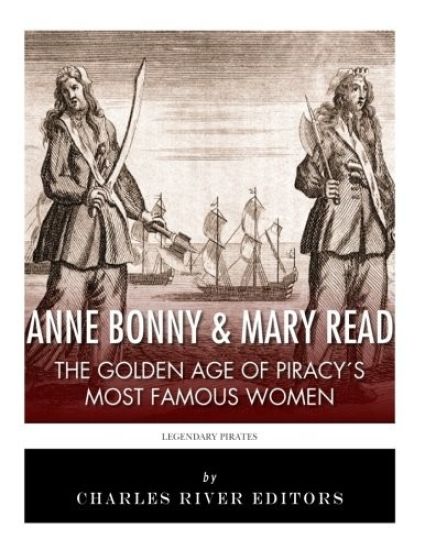
Anne Bonny & Mary Read: The Golden Age of Piracy's Most Famous Women

Anne Bonny & Mary Read: The Golden Age of Piracy's Most Famous Women

Charles River

Createspace Independent Publishing Platform
2018
nidottu
*Includes historic illustrations depicting Anne Bonny, Mary Read, and important people in their lives. *Includes a profile of Anne and Mary from the famous English pirate history "A General History of the Pyrates". *Discusses common legends about Anne and Mary, separating fact from fiction. *Includes a Bibliography for further reading. "NOW we are to begin a History full of surprizing Turns and Adventures; I mean, that of Mary Read and Anne Bonny, alias Bonn, which were the true Names of these two Pyrates; the odd Incidents of their rambling Lives are such, that some may be tempted to think the whole Story no better than a Novel or Romance; but since it is supported by many thousand Witnesses, I mean the People of Jamaica, who were present at their Tryals, and heard the Story of their Lives, upon the first discovery of their Sex; the Truth of it can be no more contested, than that there were such Men in the World, as Roberts and Black-beard..." - Captain Charles Johnson, A General History of the Robberies and Murders of the most notorious Pyrates One of the most famous pirates of all time, and possibly the most famous woman to ever become one, was Anne Bonny. The Irish-born girl moved with her family to the Bahamas at a young age in the early 18th century, which at that time was a hotbed for piracy by the likes of Blackbeard, but the redhead with a fiery temper would go on to forge her own reputation. After marrying a poor sailor who accepted clemency to give up piracy, Anne began a legendary affair with Calico Jack Rackam and became pregnant with his child, but that did not stop them from plundering the high seas aboard his pirate ship Revenge, at least until they were captured by British authorities. Anne avoided execution by "pleading her belly", getting a temporary stay of execution due to her pregnancy. Among all the pirates of the "Golden Age of Piracy", none were as unique as Mary Read, who was one of just two known women to be tried as a pirate during the Golden Age, alongside her own crewmate (and possible lover) Anne Bonny. Like Anne, Mary Read was an illegitimate child who spent some of her childhood dressed up as and disguised as a little boy through incredibly strange circumstances. But unlike her future shipmate, Mary ultimately took a liking to it, and she continued to disguise her gender to take on roles reserved for men, including in the British army. During that time, she fell in love with a Flemish soldier and eventually married him. Mary Read might have been content to live out her life with her husband in Holland, but after his death, she headed for the West Indies, only to have her ship commandeered by pirates. But Read, who had worked on a ship before, was only too happy to join the pirate crew and play the role of privateer. And in 1720, that crew was captured by Calico Jack, who already had his lover Anne Bonny as part of his crew and now unwittingly added a second female when Mary opted to join. Together the three played a legendary role as shipmates and possible lovers while continuing their piracy around the Bahamas, only to eventually be captured by authorities in October 1720. Most of the crew was executed, but Mary was able to successfully "plead the belly" and thereby receiving a stay of execution. This spared her the noose, but Mary would die of illness while still imprisoned in 1721. Anne Bonny & Mary Read chronicles the mysterious lives and legends of the two famous female pirates, attempting to separate fact from fiction while analyzing her lasting legacy. Along with pictures depicting Anne Bonny, Mary Read, and other important people, you will learn about the famous pirates like you never have before, in no time at all.
Ancient Cities: The History of Pompeii

Ancient Cities: The History of Pompeii

Charles River

Createspace Independent Publishing Platform
2018
nidottu
*Includes pictures of Pompeii, artifacts, and more. *Chronicles the history of Pompeii since the first settlements there nearly 3,000 years ago. *Includes quotes from Pliny the Younger about the eruption of Vesuvius. *Includes a Bibliography for further reading. They come in droves, busloads of tourists shepherded down through modern streets, shops and stalls, past souvenir stands and hordes of local guides offering insight and spectacle. From all across the world they come to the Italian region of Campania, to walk the cobbles of ancient streets, peer at frescoes, marvel at sculptures, and visit the remnants of historic villas, bath-houses and even brothels. In 2003, it was estimated these international visitors contributed some $35 million dollars to the Italian economy. A feature of the Grand Tour, an educational rite of passage for wealthy travelers from the mid-1600s to the mid-1800s, Pompeii has long been a popular destination for tourists; in 2008, an estimated 2.5 million tourists visited it. The type of tourists also changed over time. In 79 A. D., the year Vesuvius erupted, Pompeii was actually the equivalent of a resort town for wealthy Romans. Over 1500 years later, it was only the wealthy elite who could afford to travel, trekking through Italy to examine culture, art and the roots of Western civilization. They sought exposure to the relics of classical antiquity while deepening language skills, broadening aristocratic connections, commissioning paintings and generally mingling with the higher social classes of the Continent. In more contemporary times, increases in the technology of transportation allowed the movement of people from multiple social classes, scales of wealth and cultural backgrounds. The style of traveler has altered, but the attractions of Pompeii have not. Naturally, the main attraction of Pompeii is its time capsule nature, and the way in which it provides a snapshot of life in the past. The study of archaeology can examine varied scales of space and time, examining the long term changes of human material across centuries and continents, or the short term actions of a single event in one small room. Scale varies according to the research questions and the available data, but it goes without saying that it is highly unusual to encounter the material culture of an entire city effectively preserved within a single moment. Ancient Cities: The History of Pompeii comprehensively covers the history of the famous Roman city that was born, destroyed, and reborn again, looking at what life was like in the city before and during the eruption of Mount Vesuvius in 79 A. D. Along with pictures and a bibliography, you will learn about Pompeii like you never have before, in no time at all.
American Outlaws: The Life and Legacy of John Dillinger

American Outlaws: The Life and Legacy of John Dillinger

Charles River

Createspace Independent Publishing Platform
2018
nidottu
*Comprehensively covers Dillinger's most notorious robberies and prison escapes. *Includes pictures of Dillinger and important people and places in his life. *Includes a Bibliography for further reading. "I will be the meanest bastard you ever saw when I get out of here." - John Dillinger America has always preferred heroes who weren't clean cut, an informal ode to the rugged individualism and pioneering spirit that defined the nation in previous centuries. The early 19th century saw the glorification of frontier folk heroes like Davy Crockett and Daniel Boone. After the Civil War, the outlaws of the West were more popular than the marshals, with Jesse James and Billy the Kid finding their way into dime novels. And at the height of the Great Depression in the 1930s, there were the "public enemies", common criminals and cold blooded murderers elevated to the level of folk heroes by a public frustrated with their own inability to make a living honestly. Two months after Franklin D. Roosevelt's inauguration in 1933, a petty thief who had spent almost a decade behind bars for attempted theft and aggravated assault was released from jail. By the end of the year, that man, John Dillinger, would be America's most famous outlaw: Public Enemy Number One. From the time of his first documented heist in early July 1933, until his dramatic death in late July of the following year, he would capture the nation's attention and imagination as had no other outlaw since Jesse James. His exploits were real, and in many cases impressive, but Dillinger's importance and legacy have always been partly symbolic. The country was in a panic over a supposed crime wave that some historians believe was more perception than reality, but a new breed of criminal targeting the nation's already vulnerable banks was a potent illustration and metaphor of the way society's institutions and morals seemed to be coming undone. And in the mind of the public, the outlaws of the 30s were very different from the gangsters of the 20s; they hailed from the farm country of America's nostalgic past, not the corrupt cities of its unsettled present and scarier future. Much was made of Dillinger's roots in the farming town of Mooresville, Indiana, even though he came of age in Indianapolis, and was very much a city boy at heart. Ultimately, the story of Dillinger and the era's other famous criminals--Bonnie and Clyde, Baby Face Nelson, Pretty Boy Floyd--would largely be seen as a story of America's fall from grace. Just before Dillinger was released from prison in 1933, a feature article ran entitled "The Farmer Turned Gangster." America saw in Dillinger what it wanted to see, and even in Dillinger's lifetime it was nearly impossible to separate myth from reality. Even still, Dillinger would never have become the mythical figure he became if J. Edgar Hoover and the FBI hadn't actively marketed him as "Public Enemy Number One," and if he hadn't died in a way that was almost scripted for Hollywood. Dillinger's figure looms so large in American history and popular culture that it's easy to forget that his starring role in the daily news lasted for less than a year. American Outlaws: The Life and Legacy of John Dillinger looks at the life and crime of the famous outlaw, but it also humanizes them and examines their relationship. Along with pictures of Dillinger and important people, places, and events in his life, you will learn about the infamous public enemy like you never have before, in no time at all.
All Roads Lead to Rome: The History of the Appian Way

All Roads Lead to Rome: The History of the Appian Way

Charles River

Createspace Independent Publishing Platform
2018
nidottu
*Includes pictures. *Includes ancient accounts of the Appian Way's history and construction. *Explains the Appian Way's role during the Second Punic War and Spartacus' rebellion. *Includes a bibliography for further reading. "Appia teritur regina longarum viarum" ("The Appian Way is the queen of the long roads") - Statius The modern world has the ancient Romans to thank for the origins of many modern technologies, conveniences, and ideas such as running water, baths, and republican style government, but roads are another influence the Romans have had on the modern world that are often taken for granted. Although Roman roads may not have attained the glamorous status of other inventions, their influence is just as profound; roads provide essential communication and transport lines for any country - they are the veins and arteries that move the life-blood of trade and peoples that make a country thrive. Indeed, throughout the hundreds of years when Rome was ascendant in the ancient world, the roads they built held together first their republic and then their empire into a cohesive unit. Many of these roads were important, but one road stands above all others: the Appian Way (or Via Appia as it was called in the Latin spoken by the Romans). Since the Appian Way was first built in 312 BC, it has inspired poets, slaves, and conquerors, and Mark Antony, Spartacus, Hannibal, and Horace are just a few of the notable historical personalities who traveled on the Appian Way. For some, marching along the Appian Way became an integral part of their lives, while others lost their lives along the road (Hamblin and Grunsfeld 1974, 4-5). Fittingly, the road's construction was part of a long process in road building that was also indicative of Roman expansion across the Mediterranean, and at the peak of Roman power, the Appian Way extended over 300 miles. Due to its importance in world history and its primacy among other ancient Roman roads, a Roman named Publius Painius Statius assigned the moniker "lungarum regina viarum" ("Queen of long-distance roads") to the Appian Way in the 1st century AD, over 300 years after it was first built (Hamblin and Grunsfeld 1974, 3). The moniker stuck, and it has been called the Queen of Roads ever since. But while the Appian Way will always be associated with Ancient Rome, it was not only important to the ancient Romans but also in later periods of world history. It was deemed crucial enough that the Vatican ordered a parallel road network constructed alongside it during the Middle Ages, and it played an important role as recently as World War II. At the same time, the Appian Way has been so well-preserved that people can still walk along it today, even as they see Roman ruins on the sides of the road that remind tourists and viewers of both Rome's proud history and its eventual collapse. All Roads Lead to Rome: The History of the Appian Way chronicles the construction and history of Rome's most important road. Along with pictures of important people, places, and events, you will learn about the Appian Way like never before, in no time at all.
Alger Hiss and the Rosenbergs: The Controversial Trials of the Alleged Soviet Spies at the Height of the Red Scare
*Includes pictures *Includes accounts of the trial and key parts of the testimony *Includes online resources and a bibliography for further reading *Includes a table of contents "I am amazed; until the day I die I shall wonder how Whittaker Chambers got into my house to use my typewriter." - Alger Hiss "This death sentence is not surprising. It had to be. There had to be a Rosenberg case, because there had to be an intensification of the hysteria in America to make the Korean War acceptable to the American people. There had to be hysteria and a fear sent through America in order to get increased war budgets. And there had to be a dagger thrust in the heart of the left to tell them that you are no longer gonna get five years for a Smith Act prosecution or one year for contempt of court, but we're gonna kill ya " - Julius Rosenberg Shortly after World War II, Congress' House Committee on Un-American Activities began investigating Americans across the country for suspected ties to Communism. Among the people called before the House Committee on Un-American Activities, none are as controversial as Alger Hiss. Hiss had graduated from Harvard Law, after which he worked as a clerk for Supreme Court Justice Oliver Wendell Holmes, worked in the Roosevelt administration for the Agricultural Adjustment Association, and was Head of the Carnegie Endowment for International Peace. That background didn't exactly sound like one held by a Soviet spy, let alone a Communist, but Elizabeth Bentley, a former Communist, notified the Committee about a suspected spy ring and named several names, including Hiss. More notably, Hiss was also accused of being a Communist and Soviet spy by an admitted Communist, Whittaker Chambers. The Hiss case came at a time when the Committee was populated by right-wing zealots, including a young Congressman from California named Richard Nixon. Decorum was in scarce supply, and "Hiss was everything Nixon despised...wealthy, liberal, educated and handsome." Although Hiss was believed at first and Nixon was cast as the public villain for doggedly questioning him over Communist ties, Chambers eventually produced State Department documents typed on Hiss's typewriter, and Hiss was forced to admit that he previously knew and had associated with Chambers, who had renounced his Communism and had become editor of Time Magazine. Though the FBI and the Committee were never able to prove Hiss was a spy, they were able to get Hiss on a charge of perjury, for which he was sentenced to five years in prison, and the conviction of Hiss added to the luster of Nixon's anti-communist credentials. The case of Alger Hiss and the rise of McCarthyism were undoubtedly instrumental in the way that one of the most notorious cases in American history unfolded in the early 1950s. After years of keeping tabs on Julius and Ethel Rosenberg, the two Communist sympathizers were indicted on charges of treason and conspiracy to commit espionage for passing off secrets about the atomic bomb to the Soviet Union. In the context of the Cold War and the Korean War, there could hardly be more serious charges, but the couple strenuously asserted their innocence, even after they were implicated by Ethel's own brother, David Greenglass. Throughout the trial and its aftermath, many Americans believed the Rosenbergs were innocent and/or were facing an unduly harsh death sentence. Indeed, authorities had hoped to wring confessions out of the two by threatening them with the chair, but they held steadfast all the way up until their executions on June 19, 1953. In the over 60 years since, there has been plenty of debate over whether the two of them were guilty, and, if so, what the extent of their espionage was. While historians have used declassified documents and memoirs of involved individuals to reach the widespread belief that Julius Rosenberg did commit espionage, there is still a lot of doubt regarding Ethel's involvement.
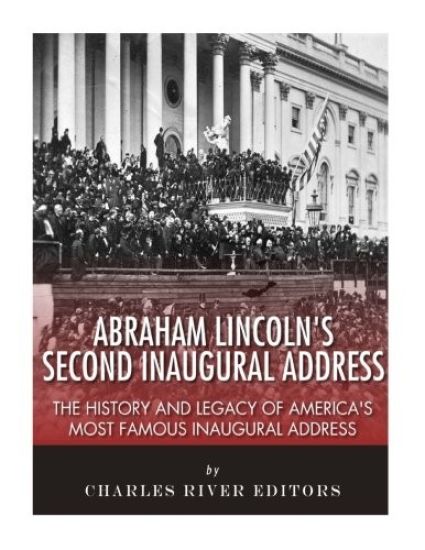
Abraham Lincoln's Second Inaugural Address: The History and Legacy of America's Most Famous Inaugural Address
*Includes pictures *Includes accounts of the speech written by people in the crowd *Explains some of the influences that Lincoln drew on for the speech *Includes online resources and a bibliography for further reading *Includes a table of contents "With malice toward none, with charity for all, with firmness in the right as God gives us to see the right, let us strive on to finish the work we are in, to bind up the nation's wounds, to care for him who shall have borne the battle and for his widow and his orphan, to do all which may achieve and cherish a just and lasting peace among ourselves and with all nations." - Abraham Lincoln When Abraham Lincoln decisively won reelection in 1864, he began working speedily towards finishing the war and figuring out its aftermath. With this clear mandate for governing, the Republicans in the House, with Lincoln's support, approved of the 13th Amendment to the Constitution, which banned slavery in all territories and states. In addition to the 13th Amendment, the future 14th and 15th Amendments to the Constitution were being discussed to protect minorities as well. To assist freed slaves, Congress also created the Freedmen's Bureau to offer food, clothing and shelter to former slaves in the South. Lincoln did his part as well, issuing a Proclamation for Amnesty and Reconstruction, which offered full pardons and amnesty to all Rebels, except those high level officials involved in governing the Confederacy. Lincoln wasn't given a chance to finish his work, but his thoughts and visions were eloquently saved for posterity in his second inaugural address, delivered a month before his death and considered one of America's greatest speeches. With the war nearing the end, Lincoln struck a conciliatory tone, reminding both sides that they prayed to the same God for victory and that neither side could divine God's will. "With malice toward none, with charity for all," Lincoln called for peace and reunion, his eye clearly on Reconstruction. By pointing to the two sides' similarities, Lincoln aimed to remind the divided nation that they were all Americans, but the speech also alluded to religious sentiments that were often not present in Lincoln's words. In fact, one of the methods in which Lincoln struck a conciliatory tone was by reminding the Union that they were no more an authority of God's will than the Confederates: "Both read the same Bible and pray to the same God, and each invokes His aid against the other. It may seem strange that any men should dare to ask a just God's assistance in wringing their bread from the sweat of other men's faces, but let us judge not, that we be not judged. The prayers of both could not be answered." Nobody will ever know if Lincoln could've managed the Reconstruction process in a better way than what actually unfolded, but in many respects, the second inaugural address was a fitting postscript of sorts to his presidency. Ironically, the crowd of over 50,000 spectators included John Wilkes Booth, who can actually be seen in the most familiar picture of the speech at the unfinished U. S. Capitol Building. Alongside Booth in the audience were several of his eventual co-conspirators: Samuel Arnold, George Atzerodt, David Herold, Michael O'Laughlen, Lewis Powell and John Surratt. All of the conspirators were either from or lived in the Washington, D. C. area or in Maryland, and all were opposed to President Lincoln and were fervent supporters of the Confederates. Abraham Lincoln's Second Inaugural Address: The History and Legacy of America's Most Famous Inaugural Address chronicles the history of the speech from its origins to its legacy. Along with pictures of important people, places, and events, you will learn about the Second Inaugural Address like never before, in no time at all.
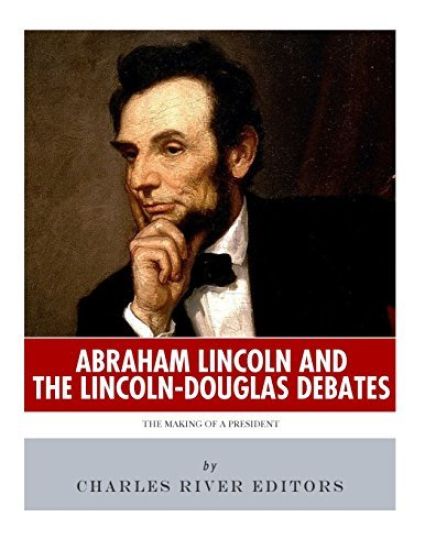
Abraham Lincoln and the Lincoln-Douglas Debates: The Making of a President

Abraham Lincoln and the Lincoln-Douglas Debates: The Making of a President

Charles River

Createspace Independent Publishing Platform
2018
nidottu
*Profiles the life and presidency of Abraham Lincoln with a special focus on his debates with Stephen Douglas in 1858. *Explains the central issues of the 1850s, including the Missouri Compromise, the Kansas-Nebraska Act, popular sovereignty and the Dred Scott Decision. *Includes pictures of Lincoln and other important people, places, and events in his life. *Includes a Bibliography for further reading. "This declared indifference, but, as I must think, covert real zeal for the spread of slavery, I cannot but hate. I hate it because of the monstrous injustice of slavery itself. I hate it because it deprives our republican example of its just influence in the world-enables the enemies of free institutions, with plausibility, to taunt us as hypocrites-causes the real friends of freedom to doubt our sincerity, and especially because it forces so many really good men amongst ourselves into an open war with the very fundamental principles of civil liberty-criticizing the Declaration of Independence, and insisting that there is no right principle of action but self-interest." - Abraham Lincoln Abraham Lincoln (1809-1865) is one of the most famous Americans in history and one of the country's most revered presidents. Schoolchildren can recite the life story of Lincoln, the "Westerner" who educated himself and became a self made man, rising from lawyer to leader of the new Republican Party before becoming the 16th President of the United States. Lincoln successfully navigated the Union through the Civil War but didn't live to witness his crowning achievement, becoming the first president assassinated when he was shot at Ford's Theater by John Wilkes Booth on April 14, 1865. In the generation after the Civil War, Lincoln became an American deity and one of the most written about men in history. With such a sterling reputation, even historians hesitate to write a critical word; in Team of Rivals Doris Kearns Goodwin casts Lincoln as an almost superhuman puppet master in control of his Cabinet's political machinations and the war's direction, juggling the balancing act flawlessly. As a result, Lincoln the man is far less known than Lincoln the myth. Lincoln's springboard to the presidency came in the form of the most famous debates in American history. Throughout the Fall of 1858, U. S. Senate candidates Abraham Lincoln and Stephen Douglas participated in seven three-hour debates throughout Illinois. This unprecedented method of campaigning drew national attention, one that is still often idealized even today among those who feel politics is too bitterly partisan. The main theme of the debates was the topic being discussed across the nation: slavery. When Congress created the territories of Kansas and Nebraska in 1854, it allowed the citizens of those territories to vote whether the new states would be free states or slave states. This idea of allowing the citizens to vote was known as "popular sovereignty", and it was championed by the "Little Giant", Stephen Douglas. Casting himself as a moderate, Douglas believed popular sovereignty would not divide the nation, and thinking further ahead he believed slavery could not thrive in the Western territories because the land there was inhospitable to slave labor anyway. Abraham Lincoln and the Lincoln-Douglas Debates chronicles the life of the 16th president and profiles the debates that made him a national celebrity and ultimately set him on the path to the presidency. This book also discusses lesser-known facts about Lincoln while tracking his monumental presidency, and his legacy. Along with pictures of Lincoln and other important people and events in his life, you will learn about Lincoln and his debates with the "Little Giant" like you never have before.