Kirjojen hintavertailu – 12 903 727 kirjaa ja 27 kauppaa

Kirjailija

Charles River

Kirjat ja teokset yhdessä paikassa: 4 673 kirjaa, julkaisuja vuosilta 2013–2022, suosituimpiin kuuluu William Powell and Myrna Loy: The Lives and Careers of One of Classical Hollywood's Most Iconic Duos. Vertaile teosten hintoja ja tarkista saatavuus suomalaisista kirjakaupoista.

4 673 kirjaa

Kirjojen julkaisuvuodet: 2013–2022.

The KGB and the Stasi: The History of the Eastern Bloc's Most Infamous Intelligence Agencies
*Includes pictures *Includes online resources and a bibliography for further reading " T]he Stasi often used a method which was really diabolic. It was called Zersetzung, and it's described in another guideline. The word is difficult to translate because it means originally "biodegradation". But actually, it's a quite accurate description. The goal was to destroy secretly the self-confidence of people, for example by damaging their reputation, by organizing failures in their work, and by destroying their personal relationships. Considering this, East Germany was a very modern dictatorship. The Stasi didn't try to arrest every dissident. It preferred to paralyze them, and it could do so because it had access to so much personal information and to so many institutions." - Hubertus Knabe, German historian The KGB is one of the most famous abbreviations of the 20th century, and it has become synonymous with the shadowy and often violent actions of the Soviet Union's secret police and internal security agencies. In fact, it is often used to refer to the Soviet state security agencies throughout its history, from the inception of the inception of the Cheka (Extraordinary Commission) in 1917 to the official elimination of the KGB in 1992. Whether it's associated with the Russian Civil War's excesses, Stalin's purges, and even Vladimir Putin, the KGB has long been viewed as the West's biggest bogeyman during the second half of the 20th century. Aside from the KGB, the 20th century's most notorious spy agency was the Stasi, which was instrumental in the history of East Germany. In an era of totalitarian countries dominated by repressive state agencies, the Stasi stood out for its size, and the sheer breadth and depth of its surveillance. Films such as Das Leben der Anderen ("The Lives of Others") encapsulated post-unification attitudes and conceptions of both life in East Germany and the activities of the Stasi. Despite its notoriety, the legacy of the Stasi is contested in modern Germany. Former West Germans, and Westerners more generally, closely align the East German state and the Stasi, framing a "Stasi State." Those in the former East Germany, however, resent the patronizing attitudes and conflation of the two institutions, preferring to focus on the social elements of the East German state. Uwe Spiekermann, of the German Historical Institute, succinctly sets out the impressions of many when considering East Germany and its culture of surveillance: "In retrospect, the Stasi has become a symbol for the GDR East Germany]." The East German State Security Service, or Staatssicherheitsdienst in German (abbreviated to Stasi) was formed in 1950. It purported to be the state's "shield and sword" and closely monitored much of the population for the next 40 years. Some of the figures are startling. By the end of the 1980s, Stasi files were kept on six million out of 18 million inhabitants. When the Stasi archives were opened in the 1990s, files were discovered that stretched for 178 kilometers. Over the course of East Germany's existence, up to two million people acted as spies, and 90,000 people worked at the Ministry, not to mention the numerous "unofficial" informers. East Germany also had a much-feared foreign intelligence arm of its intelligence services, the HV A (German: Hauptverwaltung A or central department), which proved expert at infiltrating West German society and running operations in numerous other countries. But why did the Stasi form, and how did it prove so effective? Answering those questions requires understanding the unique circumstances in which East Germany was formed, as well as politics in Germany at the end of World War II and the start of the Cold War. The KGB and the Stasi: The History of the Eastern Bloc's Most Infamous Intelligence Agencies examines two notorious agencies.
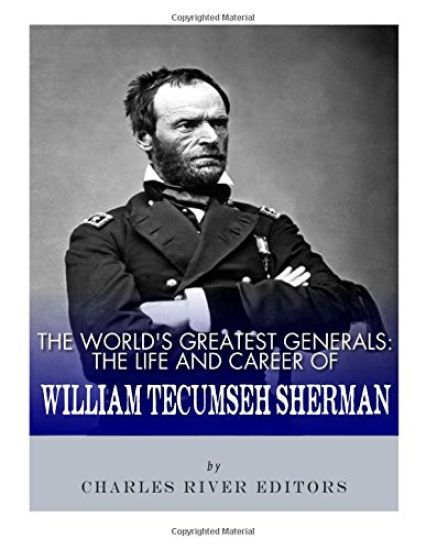
The World's Greatest Generals: The Life and Career of William Tecumseh Sherman

The World's Greatest Generals: The Life and Career of William Tecumseh Sherman

Charles River

Createspace Independent Publishing Platform
2018
nidottu
*Includes 25 pictures of Sherman and important people, places, and events in his life. *Includes footnotes and a bibliography William Tecumseh Sherman (February 8, 1820 - February 14, 1891) holds a unique position in American history. Synonymous with barbarity in the South, Sherman is lauded as a war hero in the North, and modern historians consider him the harbinger of total war. As a General in the Union Army during the American Civil War (1861-65), Sherman was recognized for his outstanding command of military strategy but criticized for the harshness of the "scorched earth" policies that he implemented in conducting total war against the Confederate States, especially in 1864 and 1865. Military historian B. H. Liddell Hart famously declared that Sherman was "the first modern general." Sherman spent a majority of the war out west, although it is often forgotten that he was a brigade commander at the First Battle of Bull Run, and that the Civil War actually finished with General Joseph E. Johnston surrendering to Sherman weeks after Appomattox. By 1865, Sherman was the second most popular general in the North behind Grant, and history has accorded him a strong Civil War legacy. Nevertheless, Sherman remains controversial across much of the United States today. He was unquestionably instrumental at battles like Shiloh, his victory in the Atlanta Campaign reassured Lincoln's reelection, and his March to the Sea revolutionized total warfare. At the same time, the South considered him akin to a terrorist, violating the norms of warfare by targeting civilians, and accuse him of needlessly burning Atlanta and Columbia. In many ways, Sherman is still the scourge of the South, nearly 150 years after he vowed to make Georgia howl. Although Sherman's Civil War record has come to define his legacy, the man himself has given way to the controversies, legends, and accusations surrounding his life and actions. The World's Greatest Generals: The Life and Career of William Tecumseh Sherman addresses the controversies and the battles, but it also humanizes a man who had to battle mental demons and a political and military hierarchy within the Union Army before becoming one of the men who defeated the Confederacy. Along with pictures of Sherman and other important people and events in his life, you will learn about the great general like you never have before, in no time at all.
The World's Greatest Generals: The Life and Career of JEB Stuart

The World's Greatest Generals: The Life and Career of JEB Stuart

Charles River

Createspace Independent Publishing Platform
2018
nidottu
*Includes pictures of Stuart and important people, *places, and events in his life. *Includes a Bibliography for further reading. "Calm, firm, acute, active, and enterprising, I know no one more competent than Stuart] to estimate the occurrences before him at their true value." - General Joseph E. Johnston, 1861. Despite the fact that the Civil War was fought nearly 150 years ago, it remains a polarizing topic for the country to this day. But among the most popular perceptions of the Civil War is the "Lost Cause", which romanticized the war's toughest and most famous fighters and continues to fuel the popularity of generals like Robert E. Lee. Alongside Lee, no one epitomized the chivalry and heroism celebrated by the Lost Cause more than JEB Stuart (1833-1864), the most famous cavalry officer of the Civil War. Stuart was equal parts great and grandiose, leading the cavalry for the Confederacy in Lee's Army of Northern Virginia until his death at the Battle of Yellow Tavern in May 1864. Stuart was a throwback to the past, colorfully dressing with capes, sashes, and an ostrich plumed hat, while sporting cologne and a heavy beard. But he was also brilliant in conducting reconnaissance, and he proved capable of leading both cavalry and infantry at battles like Chancellorsville. As the eyes and ears of Robert E. Lee's army, none were better, despite the fact that he was only in his late 20s and early 30s during the Civil War, far younger than most men of senior rank. Nevertheless, Stuart's tough fighting was and still is eclipsed by his reputation for audacious cavalry movements. He embarrassed the Army of the Potomac by riding around it twice, making him famous and embarrassing Union generals like George McClellan. However, Stuart's role at Gettysburg was far more controversial. Given great discretion in his cavalry operations before the battle, Stuart's cavalry was too far removed from the Army of Northern Virginia to warn Lee of the Army of the Potomac's movements. Lee's army inadvertently stumbled into the Union army at Gettysburg, walking blindly into what became the largest battle of the war. Stuart has been heavily criticized ever since, and it is said Lee took him to task when he arrived on the second day, leading Stuart to offer his resignation. Lee didn't accept it, but he would later note in his after battle report that the cavalry had not updated him as to the Army of the Potomac's movements. With his record and characteristics, it has proven almost impossible for Americans to hold a neutral view of Stuart, and it has been even harder to ignore him. The World's Greatest Generals: The Life and Career of JEB Stuart addresses the controversies and battles that made Stuart famous, but it also humanizes the man who was courageous and cocky, yet self-conscious enough to hide what he considered to be a weak chin. Along with pictures of Stuart and other important people, places and events in his life, you will learn about the Confederacy's most famous cavalier like you never have before, in no time at all.
The World's Greatest Civilizations: The History and Culture of the Vikings

The World's Greatest Civilizations: The History and Culture of the Vikings

Charles River

Createspace Independent Publishing Platform
2018
nidottu
*Includes pictures of Viking boats, ruins, and historic depictions of Vikings. *Analyzes the legends and mischaracterizations of the Vikings, separating fact from fiction. *Discusses the everyday life, settlements, history, religion, and culture of the Vikings. Over the centuries, the West has become fascinated by the Vikings, one of the most mysterious and interesting European civilizations. In addition to being perceived as a remarkably unique culture among its European counterparts, what's known and not known about the Vikings' accomplishments has added an intriguing aura to the historical narrative. Were they fierce and fearsome warriors? Were they the first Europeans to visit North America? It seems some of the legends are true, and some are just that, legend. The commonly used term, Viking, for the trading and raiding peoples of Scandinavia, may have originated from Viken (the large bay leading to Oslo), or it may have come from the Old Scandinavian words vikingr (sea warrior) or viking (expedition over the sea). The people from the north were known in western Europe at the time as Northmen or Danes, in England as Danes or pagans and in Ireland as Finngall for those of Norwegian origin and Dubgall for those from Denmark. In the east, in Russia and in the Byzantine Empire, the Scandinavians were called Vaeringar or Varyags (Varangians) or Rus', the latter perhaps derived from the name Roslagen, a province in Uppland in Sweden. The ubiquitous picture of the Vikings as horn-helmeted, brutish, hairy giants that mercilessly marauded among the settlements of Northern Europe is based on a smattering of fact combined with an abundance of prejudicial historical writing by those who were on the receiving end of Viking depredations. At the same time, much of the popular picture of the Vikings is a result of the romantic imagination of novelists and artists. For example, there is neither historical nor archaeological evidence that the typically red haired, freckled Norsemen entered battle wearing a metal helmet decorated with horns. This headgear was an invention of the Swedish painter and illustrator Johan August Malmstr m (1829 - 1901) and his work was so widely disseminated in popular books that the image stuck. Today the imaginary Viking helmet is an almost mandatory costume accessory in productions of Wagner's opera Der Ring des Nibelungen, which is not about the Vikings at all. It seems the horned helmet evolved from an imaginary reinterpretation of genuine Viking images of a winged helmet that may have been worn by priests in Viking religious ceremonies. However, the Vikings' reputation for ferocious seaborne attacks along the coasts of Northern Europe is no exaggeration. It is true that the Norsemen, who traded extensively throughout Europe, often increased the profits obtained from their nautical ventures through plunder, acquiring precious metals and slaves. Of course, the Vikings were not the only ones participating in this kind of income generation; between the 8th and the 11th centuries, European tribes, clans, kingdoms and monastic communities were quite adept at fighting with each other for the purpose of obtaining booty. The Vikings were simply more consistently successful than their contemporaries and thus became suitable symbols for the iniquity of the times. The World's Greatest Civilizations: The History and Culture of the Vikings comprehensively covers the culture and history of the Vikings, discussing everything from their religion to their way of life, in an attempt to separate fact from fiction. Along with pictures of Viking art and ruins, as well as historic art depicting the Vikings, you will learn about the Vikings like you never have before, in no time at all.
The World's Greatest Civilizations: The History and Culture of Ancient Sparta

The World's Greatest Civilizations: The History and Culture of Ancient Sparta

Charles River

Createspace Independent Publishing Platform
2018
nidottu
*Explains Sparta's military society and battle tactics. *Includes pictures of important people, places, and events in Spartan history and culture. *Includes a Bibliography for further reading. "The walls of Sparta were its young men, and its borders the points of their spears." - attributed to King Agesilaos There have been no shortage of great warrior societies in history, including the Romans, Mongols, Macedonians, and Vikings, the list goes on. Yet one humble city in particular, nestled in a valley near the Eurotas river in the Greek region of the Peloponnese and once ridiculed as little more than a cluster of villages inhabited by uncouth shepherds, produced the most famous warrior elite the world has ever known. The most unique city-state in Ancient Greece was Sparta, which continues to fascinate contemporaneous society. It is not entirely clear why Sparta placed such a great emphasis on having a militaristic society, but the result was that military fitness was a preoccupation from birth. If a Spartan baby did not appear physically fit at birth, it was left to die. Spartan children underwent military training around the age of 7 years old, and every male had to join the army around the age of 18. The Spartans, whose carefully constructed approach to warfare and - there is no other word for it - Spartan way of life, earned the grudging admiration of all of Greece and succeeded in establishing themselves in the years following the reforms of the semi-legendary ruler Lycurgus as the greatest military force in all of Hellas. Athens might have the mightiest fleet and the greatest cadre of philosophers and dramatists, Thessaly might have had the most vaunted cavalry, and the great city-states of Argos, Thebes and Corinth all had their own claims to fame, but on the battlefield the Spartan phalanx stood without peer. So feared were they in Greece that their very appearance on the battlefield could cause entire enemy armies to flee in terror, and in one of history's most famous battles, 300 hundred Spartan warriors headed a combined Greek force which held off the hundreds of thousands of Persian warriors of Xerxes's invading army for three days at Thermopylae, inflicting an estimated 20,000 casualties upon them before dying to the last man rather than retreating. Sparta will forever be known for its military prowess, but the Spartans had lives off the battlefield as well, and their way of life was also unique. For example, Spartan females were formally educated, which was a rarity among the city-states, and the Spartan way of life was entirely dependent on a class of indentured servants known as the helots. Yet the Laws of Lycurgus, which ordered all Spartans to disregard art (with the exception of song, which the Spartans prized, and some forms of music and poetry), to distrust philosophy, and to abhor excess in all things, were designed to create the perfect warrior society, and they did. As a result, the Spartans became notorious for "Laconic phrases" The World's Greatest Civilizations: The History and Culture of Ancient Sparta comprehensively covers the history and culture of the famous Greek city-state, looking at their religious, political, and military past, and examining all their accomplishments. Along with historic artwork depicting important people, places, and events, The History and Culture of Ancient Sparta will bring readers up to speed on Ancient Sparta today.
The Seleucid Empire: The History of the Empire Forged in the Ancient Near East After Alexander the Great's Death
*Includes pictures *Includes ancient accounts of the Seleucid Empire *Includes a bibliography for further reading In 323 BCE, Alexander the Great was on top of the world. Never a man to sit on his hands or rest upon his laurels, Alexander began planning his future campaigns, which may have included attempts to subdue the Arabian Peninsula or make another incursion into India. But fate had other plans for the young Macedonian king. One night, while feasting with his admiral Nearchus, he drank too much and took to bed with a fever. At first, it seemed like the fever was merely a consequence of his excess, and there was not much concern for his health, but when a week had elapsed and there was still no sign of his getting better, his friends and generals began to grow concerned. The fever grew, consuming him to the point that he could barely speak. After two weeks, on June 11, 323 B. C., Alexander the Great, King of Macedon, Hegemon of the League of Corinth, King of Kings, died. On his deathbed, some historians claim that when he was pressed to name a successor, Alexander muttered that his empire should go "to the strongest". Other sources claim that he passed his signet ring to his general Perdiccas, thereby naming him successor, but whatever his choices were or may have been, they were ignored. Alexander's generals, all of them with the loyalty of their own corps at their backs, would tear each other apart in a vicious internal struggle that lasted almost half a century before four factions emerged victorious: Macedonia, the Seleucid Empire in the east, the Kingdom of Pergamon in Asia Minor, and the Ptolemaic dynasty in Egypt. During the course of these wars, Alexander's only heir, the posthumously born Alexander IV, was murdered, extinguishing his bloodline for ever. Despite the infighting among them, one thing Alexander's generals did agree upon was their Hellenistic culture. Most famously, Ptolemy's line firmly established the Hellenistic culture of the Greeks while ruling over Egypt, and by marrying within their family line, the Ptolemaic pharaohs kept their Hellenistic heritage until the very end of Ptolemy's line, which died with Cleopatra in 30 BCE. Although the Seleucid Empire is less well known, Alexander's general Seleucus was no less successful in "Hellenizing" Persia and parts of Asia Minor. The Greek influence is still readily visible in the region thousands of years later. Anthropologists have found that some of the earliest Buddha statues constructed in India bear an uncanny resemblance to Ancient Greek depictions of Apollo, and local legend has it that the wild olive trees that grow in some regions of Afghanistan sprang from the olive seeds that Macedonian soldiers spat out on the march - not to mention the presence of Balkan features such as red hair and blue eyes among a significant amount of the locals there to this day. Legends of Alexander crop up amid the popular mythology of half the world, and while some among the Persian Empire called him "the accursed", it is now widely believed that the story of the prophet Dhul-Qarnayn ("The Two-Horned One") in the Qur'an is a reference to Alexander. For a time, the Seleucids commanded the largest empire in the world as it stretched from the high plains and deserts of what is now Afghanistan in the east to parts of the Levant and Asia Minor in the west. The empire's early kings were strong and shrewd and committed to the ideas of Hellenism as much as holding power and expanding the realm of their empire, but later rulers did not prove as capable. In time, the Seleucid royal house often descended into orgies of violence which were driven by ambitious men and women. Despite its troubles and its sheer size and scope, the Seleucid Empire lasted for several centuries, and it would not truly reach its end until the heyday of Rome. As a result, the Seleucid Empire managed to leave an indelible mark on the region that has lasted to this day.
The Second Battle of Fallujah: The History of the Biggest Battle of the Iraq War

The Second Battle of Fallujah: The History of the Biggest Battle of the Iraq War

Charles River

Createspace Independent Publishing Platform
2018
nidottu
*Includes pictures *Includes footnotes, online resources and a bibliography for further reading "I am scared to death that they the war hawks in Washington] are going to convince the president that they can do this overthrow of Saddam on the cheap, and we'll find ourselves in the middle of a swamp because we didn't plan to do it the right way." - Lawrence Eagleburger, former Secretary of State "Some of the heaviest urban combat U. S. Marines have been involved in since the Battle of Hue City in Vietnam in 1968." - The U. S. military's description of the battle The city of Fallujah is located in Iraq's western Anbar Province, approximately 65 kilometers west of Baghdad, the country's capital. Its history, along with the history of Iraq (whose modern borders are part of what was once known as Mesopotamia), goes back thousands of years, and the country's modern history played a strong role in shaping the fighting in and around Fallujah in 2004. Moreover, as the name of the battle implies, no description of the fighting for Fallujah is as straightforward as it may sound. In fact, there have been multiple battles for Fallujah over a span of many years, including Operation Vigilant Resolve in April 2004 (also referred to as the "First Battle of Fallujah"), Operation Al Fajr and Operation Phantom Fury (the Second Battle of Fallujah, which commenced in November of the same year), the February 2014 capture of the city by the then-Islamic State of Iraq and al-Sham (ISIS, which later changed its name to Islamic State), and the 2016 Iraqi-led offensive to clear ISIS from the city. The most famous of these was certainly the Second Battle, but no history about the fighting can focus solely on the events from November to December 2004, which covered the beginning and conclusion of the operations. In order to understand the offensive, it is important to understand the conditions that soldiers in combat faced, as well as the events and perceptions that helped create these conditions, including the attitudes of local residents in Fallujah, the events that contributed to the First Battle of Fallujah, the lead-up to the second battle, the ramifications for the rest of the country, and the creation of al-Qaeda in Iraq. Given the fact that fighting across Iraq is still ongoing over a decade later, it's safe to characterize the Second Battle of Fallujah had and continues to have a major influence over the evolution of the Iraq War. The Second Battle of Fallujah: The History of the Biggest Battle of the Iraq War looks at the battle widely considered to be the heaviest fighting of the conflict. Along with pictures of important people, places, and events, you will learn about the battle like never before.
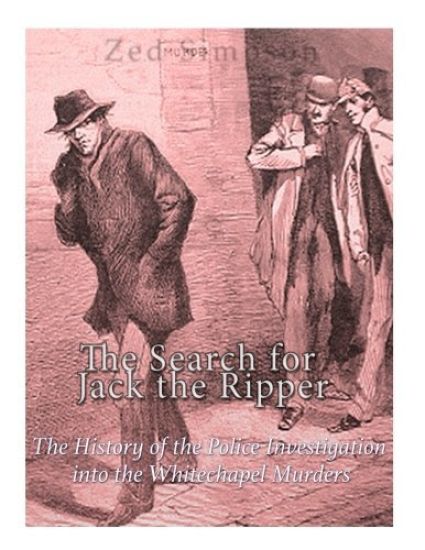
The Search for Jack the Ripper: The History of the Police Investigation into the Whitechapel Murders

The Search for Jack the Ripper: The History of the Police Investigation into the Whitechapel Murders

Zed Simpson; Charles River

Createspace Independent Publishing Platform
2018
nidottu
*Includes pictures *Includes contemporary accounts of the investigation written in newspapers and by investigators *Includes online resources and a bibliography for further reading *Includes a table of contents "I keep on hearing the police have caught me but they wont fix me just yet. I have laughed when they look so clever and talk about being on the right track... How can they catch me now. I love my work and want to start again. You will soon hear of me with my funny little games." - Excerpt from one of the letters believed to have been written by Jack the Ripper When one hears the term "Victorian," many images come to mind. For some, the term conjures up visions of lace and gloves and delicate fans. Others think of tight corsets and even tighter morals. Others, swayed perhaps by one too many British costume dramas, envision gentle elegance and long lost beauty. Naturally, few people think of multiple dead bodies cast about in the streets or dark bedrooms, most mutilated to a shocking degree, and yet, those tragic images played a significant role not only in late Victorian London but ever since. In 1888 and 1889, a killer stalked the dark backstreets of the city through the notoriously overcrowded and crime-ridden Whitechapel district, murdering young women and then cutting their bodies up like a butcher. There have been a countless number of serial killers throughout history, and certainly more prolific ones, but the timing, circumstances, and unsolved nature of the case continue to make Jack the Ripper the most famous serial killer in history. The murders came at a time when media coverage could be both more acute and more widespread, and it allowed the public a closer look into how police agencies operated at the time, exposing both their strengths and shortcomings. Of course, the lack of modern forensics hamstrung the investigators in the late 19th century, and while the police file for the case was extensive and active for several years, much of the evidence disappeared from the file without explanation, possibly as souvenirs. Despite the fact the police interviewed thousands and considered hundreds of suspects, they were never able to arrest anyone for the murders. The intense media coverage also likely played a role in both the actual murderer and would-be copycats and pranksters sending hundreds of letters to police claiming to be Jack the Ripper. It's also indisputable that the use of a precise modus operandi, the serial killer being given a nickname, and the taunting letters sent to police all influenced subsequent serial killers and the way they were covered. Whether it's the Zodiac Killer, the Son of Sam, or the Boston Strangler, the antecedent of all 20th century and 21st century killers remains Jack the Ripper. The Jack the Ripper case continues to fascinate historians and amateur sleuths so much that people have dubbed themselves Ripperologists, and since nobody knows for sure who the killer was, every aspect of the crimes is up for discussion, down to who the actual victims of the Ripper were and whether there was actually more than one Ripper. In addition to considering so many suspects, the police were only certain that 5 of the victims (the "canonical five") were killed by Jack the Ripper, but there were at least 11 documented murders over the course of several years, and today those are called the Whitechapel murders. Even in the 19th century, authorities were debating how many of the 11 were the work of the Ripper, and as the murders have been compared and contrasted for nearly 130 years, the debate continues. The Search for Jack the Ripper: The History of the Police Investigation into the Whitechapel Murders examines the attempts to identify and arrest Jack the Ripper. Along with pictures of important people, places, and events, you will learn about the investigation of the famous serial killer like never before.
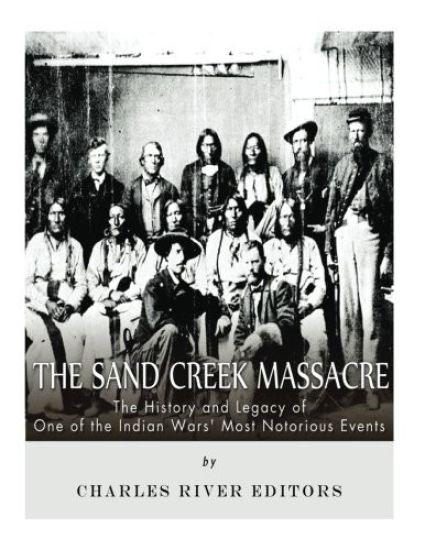
The Sand Creek Massacre: The History and Legacy of One of the Indian Wars' Most Notorious Events
*Includes pictures *Includes accounts of the massacre by survivors and soldiers *Summarizes the official investigations and their findings *Includes a bibliography for further reading *Includes a table of contents Sand Creek is a relatively small stream of water tributary to the Arkansas River in a dry, sparsely-populated cattle ranchland area of southeastern Colorado near the Kansas border, but at this otherwise unremarkable location on the Great Plains, one of the worst massacres ever perpetrated against Native Americans in 250 years of ongoing conflict took place. On the morning of November 29, 1864, Colonel John Chivington led 700 militiamen in a surprise attack against Cheyenne leader Black Kettle's camp at Sand Creek. Chivington was a fire and brimstone Methodist minister who had publicly advocated indiscriminately killing Native American children because "nits makes lice." Warning his men ahead of battle, Chivington stated, "Damn any man who sympathizes with Indians I have come to kill Indians and believe it is right and honorable to use any means under God's heaven to kill Indians " According to Cheyenne oral tradition and several surviving soldiers' accounts, as soon as Black Kettle saw Chivington's men coming, he raised an American flag on a pole and waved it back and forth calling out that his Wutapai band was not resisting. Ignoring his cries for mercy, the soldiers commenced firing, cutting down an estimated 70-200 Cheyenne, about two-thirds of whom were women and children. The Cheyenne claimed that soldiers shot babies in the head at point-blank range, raped Cheyenne women, and scalped dead warriors. The following morning, Army Lieutenant James Connor, who had refused to follow Chivington's orders, visited the scene of the massacre and reported, "In going over the battleground the next day I did not see a body of man, woman, or child but was scalped, and in many instances their bodies were mutilated in the most horrible manner - men, women, and children's privates cut out . . . I heard one man say he cut out a woman's private parts and had them for exhibition on a stick . . . I also heard of numerous instances in which men had cut out the private parts of females and stretched them over saddle-bows and wore them over their hats while riding in the ranks." Black Kettle managed to escape the slaughter, only to be killed during George Custer's unprovoked attack at Washita River in 1868, but Cheyenne leader White Antelope was killed and his body was mutilated. According to historian Stan Hoig in The Sand Creek Massacre, "The body of White Antelope, lying solitarily in the creek bed, was a prime target. Besides scalping him the soldiers cut off his nose, ears, and testicles - the last for a tobacco pouch." The results of the massacre were precisely what Colonel Chivington hoped to achieve. The Cheyenne, who were at this time allied with the Lakota and Arapaho, vowed to avenge the needless deaths of Black Kettle and his people. Early in 1865, a coalition of 1000 Cheyenne, Lakota Sioux, and Arapaho attacked several white ranches and a military post along the South Platte River Trail near Denver, capturing wagon-trains, confiscating livestock, and killing several hundred white settlers in the process. Staying one step ahead of the U. S. Army, they continued to raid the North Platte Trail that summer, completely wiping out an Army wagon-train and taking its horses and supplies. In response, the federal government dispatched General P. E. Connor and a force of 3,000 men with orders to ignore any overtures of peace or compliance from the marauders, and to "kill every male Indian over the age of 12." The Sand Creek Massacre analyzes one of the most controversial events of the 19th century. Along with pictures of important people, places, and events, you will learn about the Sand Creek Massacre like never before, in no time at all.
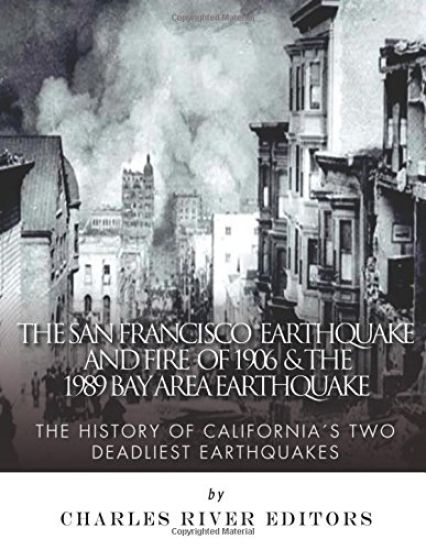
The San Francisco Earthquake and Fire of 1906 & the 1989 Bay Area Earthquake: The History of California's Two Deadliest Earthquakes
*Includes pictures *Includes accounts of the disasters made by survivors, firefighters, police officers, and more *Includes bibliographies for further reading *Includes a table of contents On April 18, 1906, most of the residents of the city of San Francisco were sound asleep when the ground started to shake around 5:15 a.m., but what started as fairly soft tremors turned into a violent shaking in all directions. The roar of the earthquake unquestionably woke up residents, at least those fortunate enough not to be immediately swallowed by the cracks opening up in the ground. The earthquake lasted about a minute, but it had enough destructive force to divert the course of entire rivers and level much of the 9th largest city in America at the time. Unfortunately for San Franciscans, the worst was yet to come. During the earthquake, the city's gas mains and water mains were ruptured, which had the effects of starting a number of fires and preventing the residents from being equipped to fight them. Without water to truly fight the blaze, the city's officials actually resorted to demolishing buildings in hopes of containing the fire, and witnesses reported seeing San Franciscans trapped in the burning buildings being shot by authorities instead of letting them burn alive. The fires lasted three days, and by the time they were done, 80% of the city was in ruins, about 60% of the residents were homeless, and an estimated 3,000-6,000 were dead. In fact, the fires were so devastating that contemporary San Franciscans called the disaster "The Fire." Although the resulting fires may have done the most damage, the widespread destruction made clear to city leaders that the new buildings would need better safety codes and protection against subsequent earthquakes. The city reinforced new buildings against earthquakes and fixed older surviving buildings to better deal with future earthquakes, and the city also created the Auxiliary Water Supply System to prevent a repeat of the 1906 disaster. On October 17, 1989, millions of Americans tuning in to watch the Oakland Athletics face the San Francisco Giants in the World Series watched the cameras suddenly start to shake violently for several seconds. The national broadcast had just caught an earthquake registering a 6.9 on the Richter scale striking the Bay Area, and by the time the earthquake and the resulting fires were over and dealt with, over 60 people were dead, making it San Francisco's deadliest earthquake since the 1906 earthquake and fire. The damage and devastation across the Bay Area was widespread, despite the precautions and changes that the region had made in the wake of the 1906 calamity. After that disaster, San Francisco began the process of reinforcing new buildings and seismic retrofitting of old ones to help structures brace for earthquakes, but even in the 1980s they were still more concerned about potential fires resulting from an earthquake. Furthermore, after the earthquake in 1906, San Francisco created an Auxiliary Water Supply System that could distribute water to any section of the city, and the city built it with stringent codes in the event of an earthquake. In fact, just a few years before 1989, San Francisco created a Portable Water Supply System and upgraded the fire departments. San Francisco's water supply systems worked perfectly, quickly allowing firefighters to put out a fire in the Marina District before it spread, but this time the biggest problem was "liquefaction," in which saturated soil literally melted away as it was unable to hold any more liquid. The shaking of the earthquake then created cracks in the liquefied soil, and attempts to protect buildings from the violent movements could not safeguard them from the land melting away from under it. The most noteworthy damage occurred to several sections of highways in the Bay Area that did not hold up during the earthquake.
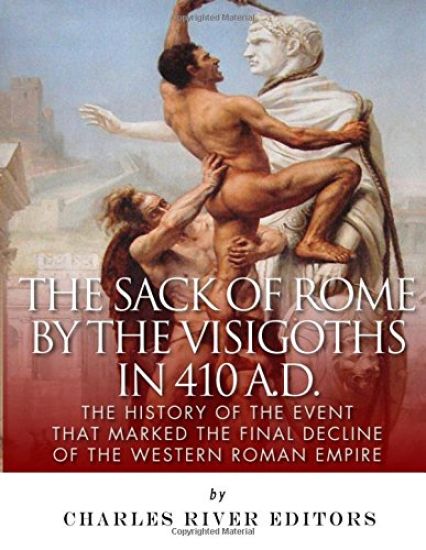
The Sack of Rome by the Visigoths in 410 A.D.: The History of the Event that Marked the Final Decline of the Western Roman Empire
*Includes pictures *Includes ancient accounts describing the sack *Includes a bibliography for further reading *Includes a table of contents "The City which had taken the whole world was itself taken." - St. Jerome For the people of the ancient Mediterranean and beyond, the city of Rome had been a symbol of power for centuries, and entering the early 5th century A. D., the Eternal City hadn't been taken by an enemy force since the Gauls had done it about 800 years, an unheard of period of tranquility in a world wracked with almost constant warfare. Thus, when the Visigoths, who the Romans considered uncultured and inferior, took the city of Rome and sacked it in 410, the world was stunned. It made theologians of the newly Christianized empire question God's plan on Earth, and it encouraged many leading Romans to look east to Constantinople for their future. Indeed, the Western Roman Empire would completely collapse in the late 5th century, less than 70 years after the Visigoths sacked Rome, and just how it went from being a superpower to a poorly led, weak, and vulnerable shadow of its former self has preoccupied historians for centuries. To this day, it remains difficult to trace just when the decline began, but it's fair to say that the sack of Rome was the result of a number of factors that had been coalescing for many years. Only Roman arrogance kept the empire from seeing the grave peril its capital was in, which helped bring about the events leading up to that fateful day, but either way, the sack of Rome had world-changing ramifications. The Sack of Rome by the Visigoths in 410 A. D. analyzes the history and legacy of the most famous sack of the Eternal City. Along with pictures depicting important people, places, and events, you will learn about the 410 Sack of Rome like never before, in no time at all.
The Red Baron: The Life and Legacy of Manfred von Richthofen

The Red Baron: The Life and Legacy of Manfred von Richthofen

Charles River

Createspace Independent Publishing Platform
2018
nidottu
*Includes pictures *Includes the Red Baron's own quotes about his life and career *Discusses the Red Baron's death and the controversy over who shot him *Includes a bibliography for further reading "Now I am within thirty yards of him. He must fall. The gun pours out its stream of lead. Then it jams. Then it reopens fire. That jam almost saved his life." - The Red Baron Few participants in World War I are more famous than Manfred Albrecht Freiherr von Richthofen, better known as the Red Baron. A German known for victories in a war that his country lost, a cavalry officer made famous as mounted combat disappeared, and an aristocratic hero in a century dominated by democracy; Richthofen's celebrity stands in stark contrast to the era. Furthermore, World War I is not remembered as a period in which the advance of technology empowered or emboldened individual human beings, and it certainly did not support the old romantic image of the lone, skilled warrior. The terrible grinding power of Europe's first great industrial war saw advances in gunnery and factory production that chewed up millions of young men and spit them out in fragments across the anonymous mud of no man's land. A soldier was more likely to be killed by an artillery shell flung from half a mile away than up close in combat, where his own skills might save his life, so there was little heroism and no glory to be found in the forms of violence provided by the modern war machine. However, for the handful of men fighting in the air, it was a different matter, because World War I brought about the emergence of full-blooded aerial combat for the first time. In fact, airplanes were so foreign to past examples of warfare that few military officers were sure of how to utilize them at the start of the war. As a result, amazing new machines capable of carrying men at great speed and height were used first for reconnaissance, and it was only later that they actually became fighter planes, with each side fighting for dominance of the air and the advantage this provided. This was the era of the dogfight, in which aerial combat was effectively invented, with engineers and pilots working quickly to adapt machines and tactics to a whole new sort of warfare. In the skies above Europe, a man could once more play the role of the lone warrior, surviving or dying by skill and the power of personality. Into this cloud-strewn battlefield came a young man from a young country, ready to prove not only his potential but that of the new form of combat at which he would excel. Indeed, there was no greater ace during the war than the Red Baron, who was credited with shooting down 80 Allied planes. However, the Red Baron's most remarkable accomplishment was one he never wanted. On April 21, 1918, while flying over the Somme, the Red Baron spotted an Allied plane and pursued it, and while in pursuit, the Red Baron was shot by a single bullet in the chest, mortally wounding him. Debate has raged ever since over whether an Allied pilot or infantry unit shot him, but either way, despite being mortally wounded and already near death, the Red Baron managed to land his plane in a field. He died almost immediately after the landing, and his plane quickly became a treasure trove for souvenirs among soldiers from the Allied Powers on the ground. By the time he died at the age of 25, Richthofen was a living legend, celebrated by his fellow countrymen and feared by his enemies. Ironically, he had managed to become a celebrity soldier in an era of anonymous death. The Red Baron chronicles the life and legacy of history's most famous fighter pilot. Along with pictures and a bibliography, you will learn about Manfred von Richthofen like never before, in no time at all.
The Rock of Chickamauga: The Life and Career of General George H. Thomas

The Rock of Chickamauga: The Life and Career of General George H. Thomas

Charles River

Createspace Independent Publishing Platform
2018
nidottu
*Includes pictures of Thomas and important people, places, and events in his life. *Includes maps of battles like Chickamauga and Franklin *Includes a bibliography for further reading. " Ulysses S. Grant and George H. Thomas deserve] monuments like those of Nelson and Wellington in London, well worthy to stand side by side with the one which now graces our capitol city of 'George Washington.'" - William Tecumseh Sherman Despite the fact that the Civil War began over 150 years ago, it remains one of the most widely discussed topics in America today, with Americans arguing over its causes, reenacting its famous battles, and debating which general was better than others. Americans continue to be fascinated by the Civil War icons who made the difference between victory and defeat in the war's great battles. One of the most unique and effective generals of the Civil War also happens to be one of the most overlooked. While there is a never ending stream of acclaim going to generals like Grant, Lee, and Sherman, General George H. Thomas has managed to fly under the radar, despite having an unusual background as a Southerner fighting for the Union and scoring almost inconceivable successes at Missionary Ridge, Franklin, and Nashville. Thomas also skillfully fought at Perryville, Stones River, and in Sherman's Atlanta Campaign. Despite all of those successes, however, Thomas is best remembered as "The Rock of Chickamauga". On September 19, 1863, a Union gaffe created a quarter-mile gap in the Union center, directly in the path of an eight-brigade (15,000 man) force led by Confederate General James Longstreet, which subsequently drove a third of the Union army from the field. While commanding general William Rosecrans retreated with those men, Thomas rallied the remaining parts of the army and formed an impromptu defensive stand on Horseshoe Ridge, holding off a series of well-executed (albeit costly) assaults until nightfall. Thomas's heroics prevented the destruction of the Union army and allowed it to successfully retreat to Chattanooga. Thomas had one of the most stellar records of any officer in the war, was instrumental in the Union's ultimate victory in the Western theater, and scored the kinds of decisive victories that eluded more celebrated generals like Lee. So why does Thomas fly under the radar? A stern military man, Thomas eschewed self-promotion and aggrandizement, and though his methodical generalship was almost always successful, it sometimes annoyed General Ulysses S. Grant. With Grant's star rising as his relationship with Thomas was cooling, Thomas was on the wrong end of history. And when he died in 1870, Thomas had burned his papers and had not written memoirs or an account of his participation in the war, missing his final opportunity to directly leave his mark instead of having others write it for him. The Rock of Chickamauga: The Life and Career of General George H. Thomas chronicles the life and career of one of the Union's most indispensable generals, humanizing the methodical military man who roomed with Sherman at West Point and was known as "Slow Trot Thomas" by his men, who came to respect and admire him. Along with pictures of important people, places, and events in his life, you will learn about George H. Thomas like you never have before, in no time at all.
The Post-War Division of Germany and the Construction of the Berlin Wall: The History of the Cold War Split Between East and West
*Includes pictures *Covers the history of Berlin and Germany from the end of World War II through the 1960s *Discusses some of the famous escape attempts and the way East Germany tried to prevent them *Includes footnotes and a bibliography for further reading *Includes a table of contents "From Stettin in the Baltic to Trieste in the Adriatic an 'Iron Curtain' has descended across the continent. Behind that line lie all the capitals of the ancient states of Central and Eastern Europe. Warsaw, Berlin, Prague, Vienna, Budapest, Belgrade, Bucharest and Sofia; all these famous cities and the populations around them lie in what I must call the Soviet sphere, and all are subject, in one form or another, not only to Soviet influence but to a very high and in some cases increasing measure of control from Moscow." - Winston Churchill, 1946 "Here in Berlin, one cannot help being aware that you are the hub around which turns the wheel of history. ... If ever there were a people who should be constantly sensitive to their destiny, the people of Berlin, East and West, should be they." - Martin Luther King, Jr. In the wake of World War II, the European continent was devastated, and the conflict left the Soviet Union and the United States as uncontested superpowers. This ushered in over 45 years of the Cold War, and a political alignment of Western democracies against the Communist Soviet bloc that produced conflicts pitting allies on each sides fighting, even as the American and Soviet militaries never engaged each other. Though it never got "hot," the Cold War was a tense era until the dissolution of the USSR, and nothing symbolized the split more than the Berlin Wall, which literally divided the city. Berlin had been a flashpoint even before World War II ended, and the city was occupied by the different Allies even as the close of the war turned them into adversaries. After the Soviets' blockade of West Berlin was prevented by the Berlin Airlift, the Eastern Bloc and the Western powers continued to control different sections of the city, and by the 1960s, East Germany was pushing for a solution to the problem of an enclave of freedom within its borders. West Berlin was a haven for highly-educated East Germans who wanted freedom and a better life in the West, and this "brain drain" was threatening the survival of the East German economy. In order to stop this, access to the West through West Berlin had to be cut off, so in August 1961, Soviet premier Nikita Khrushchev authorized East German leader Walter Ulbricht to begin construction of what would become known as the Berlin Wall. The wall, begun on Sunday August 13, would eventually surround the city, in spite of global condemnation, and the Berlin Wall itself would become the symbol for Communist repression in the Eastern Bloc. It also ended Khrushchev's attempts to conclude a peace treaty among the Four Powers (the Soviets, the Americans, the United Kingdom, and France) and the two German states. The wall would serve as a perfect photo-opportunity for two presidents (Kennedy and Reagan) to hammer the Soviet Communists and their repression, but the Berlin Wall would stand for nearly 30 years, isolating the East from the West. It is estimated about 200 people would die trying to cross the wall to defect to the West. The Post-War Division of Germany and the Construction of the Berlin Wall: The History of the Cold War Split Between East and West looks at the history that led to the construction of the Berlin Wall and the manner in which it was built. Along with pictures of important people, places, and events, you will learn about the construction of the Berlin Wall like never before, in no time at all.
The Potsdam Conference: The History of the Negotiations Between the Allies Near the End of World War II
*Includes pictures *Includes accounts of the conference by some of the participants *Includes online resources and a bibliography for further reading *Includes a table of contents "If we can put this tremendous machine of ours, which has made this victory possible, to work for peace, we can look forward to the greatest age in the history of mankind. That's what we propose to do." - President Harry S. Truman at a July 1945 flag-raising ceremony in Berlin Standing in history like a milestone marking the boundary between one era and the next, the Potsdam Conference brought together the leaders of the three major Allied powers - the United States, the Soviet Union, and the United Kingdom - for the last time at the end of World War II and at the threshold of the Cold War. A follow up to the Yalta Conference just five months earlier, Potsdam attempted to work out the contours of the postwar world. Though it came so shortly after Yalta, the Potsdam Conference also highlighted a turnover of leadership on the world stage. British Prime Minister Winston Churchill, who gave his nation hope in the darkest days of World War II, had suffered a stunning defeat at the hands of the Labor candidate Clement Attlee, who replaced him towards the end of the Conference. President Franklin Delano Roosevelt died prior to the meeting, leading to his replacement by the new president Harry S. Truman, a keen-minded pragmatist whose intense focus on America's advantage contrasted with Roosevelt's internationalism. Only General Secretary Josef Stalin, dictator of the Soviet Union, remained unchanged from the earlier summit. Destined to continue in power for another 8 years until his death (possibly at the hands of Lavrenty Beria), the Russian strongman found himself confronting a world in which the United States possessed the atomic bomb. Though the countries had often discussed Russia joining America and Britain's fight against the Japanese, it became clear at Potsdam that this was not going to happen. Instead, Stalin pleaded for help for his own country, which had been decimated by the fighting with Germany. Russia had lost more than 30,000 factories and so much farm land that the vast majority of the population was suffering from malnutrition. Stalin was also particularly concerned that the Allies might stage an invasion of Russia and overthrow his regime. While it may have seemed at the time that he was just being paranoid, it is now known that George Patton was already pushing Truman and the other world leaders to go ahead and finish the weakened Soviets off, meaning Stalin might actually have been wise to build up communist governments in Czechoslovakia, East Germany, Bulgaria and elsewhere. The British and Americans didn't see it that way, though. Instead, they assumed that Stalin was expanding the Soviet Union in preparation for invading Europe. The Europeans appealed to the Americans for help and with them would go on to create the North Atlantic Treaty Organization in 1949. This mutual mistrust among all parties involved marked the beginning of the Cold War. The Potsdam Conference: The History of the Negotiations Between the Allies Near the End of World War II looks at the final major conference of the war and its results. Along with pictures of important people, places, and events, you will learn about the Potsdam Conference like never before, in no time at all.
The Port Chicago Disaster: The History of America's Deadliest Homeland Incident during World War II
*Includes pictures *Includes accounts about the incident written by witnesses and survivors *Includes online references and a bibliography for further reading *Includes a table of contents "The fact that these men were wearing the uniform of the United States Navy made no difference." - Steve Sheinkin, The Port Chicago 50: Disaster, Mutiny, and the Fight for Civil Rights In World War II, hundreds of thousands of American soldiers were killed across the world, whether in Japanese jungles, North African deserts, or European beaches. Given that backdrop, and the sheer magnitude of the war, people understandably became desensitized to incidents and tragedies that cost hundreds of lives. This was undoubtedly the case with the notorious Port Chicago disaster, a munitions explosion in July 1944 that killed over 300 people and injured over 300 more, many of them Navy sailors. Since the explosion took place just a little over a month after D-Day, not to mention the fact that a majority of the casualties were African-American, little attention was paid to the tragedy. Among those who did, some believed the men had not been trained well enough, while others said that they were being pushed by their officers to race each other in work that should have been done slowly and carefully. The only thing everyone could agree on was that something went very wrong. If anything, the episode not only underscored the Navy's segregation policies but also demonstrated just how pervasive racism was at the time. The disaster was so deadly that 15% of all African-American Naval casualties in the war occurred on and around the dock in California that day, and while many appreciated the work the soldiers did, others denigrated their efforts. In fact, one shocking report contained the following slanderous remarks: "These enlisted personnel were unreliable, emotional, lacked capacity to understand or remember orders or instructions, were particularly susceptible to mass psychology and moods, lacked mechanical aptitude, were suspicious of strange officers, disliked receiving orders of any kind, particularly from white officers or petty officers, and were inclined to look for and make an issue of discrimination. Because of the level of intelligence and education of the enlisted personnel, it was impracticable to train them by any method other than by actual demonstration. Many of the men were incapable of reading and understanding the most simple directions T]he officers at Port Chicago have realized for a long time the necessity for great effort on their part because of the poor quality of the personnel with which they had to work. They worked loyally, conscientiously, intelligently, and effectively to make themselves competent officers and to solve the problem of loading ships safely with the men provided." In reality, it was not the mental incapacity of the sailors but the unsafe conditions they were exposed to that ultimately caused the disaster. In the wake of the accident, black sailors and civilians alike demanded change, to the extent that some around Port Chicago subsequently refused to load munitions on ships. While the "Port Chicago Mutiny" led to some arrests, the simmering tensions helped spur overall policy changes, and eventually the U. S. Navy began to desegregate its forces in early 1946. The Port Chicago Disaster: The History of America's Deadliest Homeland Incident during World War II chronicles the story of the disaster and its aftermath. Along with pictures of important people, places, and events, you will learn about the Port Chicago disaster like never before, in no time at all.
The Perfect Storm of 1991: The Story of the Nor'easter that Sank the Andrea Gail

The Perfect Storm of 1991: The Story of the Nor'easter that Sank the Andrea Gail

Charles River

Createspace Independent Publishing Platform
2018
nidottu
*Includes pictures *Includes accounts of the storm written by survivors *Includes a bibliography for further reading "The technical name for the new storm was a 'midlatitude cyclone.' The people in its path, however, would later call it the No Name Hurricane, since it had all the force of a hurricane, but was never officially designated as one. And because the brunt of the storm would strike the eastern seaboard around October 31, it would also acquire another name: the Halloween Gale." - Sebastian Junger, author of The Perfect Storm People in the Northeastern United States have been dealing with winter storms for centuries, band people in the South and on the East Coast have dealt with hurricanes and tropical storms for just as long, but it's rare for the weather systems that produce such storms to actually collide with each other and produce a more powerful storm. In fact, it's unusual enough that when it happened in late October 1991, one weatherman dubbed it the "Perfect Storm." Indeed, the Perfect Storm of 1991 was unique in many respects. By feeding off of Hurricane Grace and another storm to the south, the Nor'easter that was hitting the Northeast and Canada became an incredibly powerful storm that struck the North Atlantic before swinging back south and again developing into a tropical storm. In the process, it produced waves in excess of 100 feet tall near Nova Scotia and caused substantial flooding across the East Coast. It was also responsible for a handful of deaths throughout the region. The storm may have been one of those that residents in the area would remember and talk about in comparison to subsequent storms, but the Perfect Storm is well-known across the country thanks to Sebastian Junger's book, The Perfect Storm. In 2000, the movie The Perfect Storm dramatized Junger's book and the true story of the sinking of the Andrea Gail, a fishing ship based out of Gloucester, Massachusetts that got caught up in the storm and sank with all hands on board. Although there were other dramatic events that took place in relation to the storm, including the rescue of the crew of a downed helicopter in the midst of the storm, the tragedy of the Andrea Gail continues to provide the most human face to the infamous storm. The Perfect Storm of 1991: The Story of the Nor'easter that Sank the Andrea Gail chronicles the storm from its formation to the devastating effects it had across the Atlantic. Along with pictures and a bibliography, you will learn about the Perfect Storm like never before, in no time at all.
The Patriot Traitor: The Life and Legacy of Benedict Arnold

The Patriot Traitor: The Life and Legacy of Benedict Arnold

Charles River

Createspace Independent Publishing Platform
2018
nidottu
*Explains Arnold's achievements for the Americans, his treason, and how he has been remembered. *Includes pictures of Arnold and important people, places, and events in his life. "Neglected by Congress below, distressed with the small-pox; want of Generals and discipline in our Army, which may rather be called a great rabble, our credit and reputation lost, and great part of the country; and a powerful foreign enemy advancing upon us, are so many difficulties we cannot surmount them." - Benedict Arnold On October 7, 1777, Benedict Arnold rode out against orders and led an American assault against British forces led by General John Burgoyne in one of the climactic battles of the Revolution at Saratoga, the ultimate turning point of the war. Near the end of the most important American victory of the Revolution, Arnold's leg was shattered by a volley that also hit his horse, which fell on the leg as well. Arnold would later remark that he wish the shot had hit him in the chest. If it had, Benedict Arnold would be remembered as one of America's greatest war heroes, and probably second only to George Washington among the generals of the Revolution. In fact, when Arnold was injured at the height of his success in October 1777, he had been the most successful leader of American forces during the war. Arnold had been instrumental in the seizure of Fort Ticonderoga in 1775, he constructed the first makeshift American navy to defend Lake Champlain and delay British campaigning in 1776, and he was the principal leader at Saratoga in 1777. Even his unsuccessful campaign to Quebec in the winter of 1775 is remembered primarily for the amazing logistical feats undertaken by Arnold and his men to even reach the target. History has accorded Arnold his fair share of credit for the fighting he participated in from 1775-1777. The problem is his contemporaries did not. Arnold was better on the field than any other American general in those years, but his mercurial personality rubbed some the wrong way, and other self-promoting generals, from Ethan Allen to Horatio Gates, credited themselves with success at Arnold's expense. Meanwhile, the Second Continental Congress frequently if inadvertently slighted Arnold, failing to duly promote him in a timely fashion and failing to pay him four years of back pay even as he spent his own private fortune training, equipping, and feeding his army and navy. Historian William Sterne Randall estimates Congress shorted Arnold out of the equivalent of $275,000. Today, of course, all of that has been overshadowed by Arnold's treacherous plot to turn over West Point to the British in 1780. The infamous plot came about while Arnold convalesced as the military governor in Philadelphia, where he met and married the Tory-affiliated Peggy Shippen. Arnold grew more concerned about the patriot cause, and combined with the perceived insults, exposure to Loyalist leanings, and another Congressional rebuke for living extravagantly in Philadelphia, Arnold decided to secretly offer his services to the British. As every American knows, Arnold's plot was uncovered, and he barely escaped to the British side, where he was just as distrusted and nearly as despised. Though he would serve as a brigadier-general for the British through the end of the war, his personal fortune and reputation were permanently tarnished. The man who could have been one of his country's greatest heroes became its most despised traitor. The Patriot Traitor: The Life and Legacy of Benedict Arnold chronicles Arnold's life and military career, but it also humanizes the man and offers an objective look at Arnold's treachery and plot in an effort to separate fact from legend. Along with pictures of important people, places, and events in his life, you will learn about Arnold like you never have before, in no time at all.
The Olmec and Toltec: The History of Early Mesoamerica's Most Influential Cultures

The Olmec and Toltec: The History of Early Mesoamerica's Most Influential Cultures

Charles River

Createspace Independent Publishing Platform
2018
nidottu
*Includes pictures *Describes the history, culture, and architecture of the two groups *Includes a bibliography for further reading The Olmec people are widely recognized as the first major civilization of Mexico and are thus generally regarded as the mother civilization of Mesoamerica, making them the people from which all subsequent Mesoamerican cultures derived. In fact, the term Olmec is thought to have originated with the Aztec people, as Olmec in their Nahuatl language means "the rubber people", a reference to the inhabitants of the land from which they accessed rubber. By and large, the Olmec culture is perhaps best identifiable by their so-called colossal heads, mammoth basalt head-statues wearing helmet-like headdresses found throughout Olmec habitation sites. Around 2500 B. C., the Olmec settled primarily along Mexico's Gulf Coast in the tropical lowlands of south-central Mexico (in the modern-day States of Veracruz and Tabasco), and they flourished during North America's Prehistoric Indian Formative period from about 1700-400 B. C. Their direct cultural contributions were still evident as late as 300 A. D. Among Mesoamerican scholars, the Formative period is subdivided into the Preclassic (Olmec period), Classic (Maya period), and Postclassic (Toltec and Aztec periods). The Olmec's agricultural abilities sustained them and ensured their power and influence for over a millennium. They produced corn/maize, squash, and other plant foods in such quantities that they were afforded the manpower to build great monuments and ceremonial centers to further promote their cultural identity. From a cultural standpoint, their pyramids, open plazas, their ballgame, and possibly even centers of human sacrifice are thought to have established the societal model that subsequent societies like the Maya, Zapotec, Teotihuacano, Toltec, Mixtec, and Aztec would emulate. In the same vein, some scholars believe that they also affected the cultural development of the Native American groups of the United States and those of Central and South America as well. Proving to be one the most enduring models ever, the religious and cultural structure the Olmec established held reign for over 3,000 years, and it would likely have endured much longer without the arrival of the Spanish conquistadors. The Toltec are one of the most famous Mesoamerican groups in South America, but they are also the most controversial and mysterious. The Toltec have been identified as the group that established a strong state centered in Tula (in present-day Mexico), and the Aztec claimed the Toltec as their cultural predecessors, so much so that the word Toltec comes from the Aztec's word Toltecatl, translated as artisan. The Aztec also kept track of the Toltec's history, including keeping a list of important rulers and events, that suggest the peak of the Toltec occurred from about 900-1100 A. D. While scholars continue to debate whether the Toltec were an actual historical group, there is an added layer of mystery to the fact that the settlement at Tula has a lot in common with the famous Mayan settlement at Chich n Itz . The architecture and art at both sites are so similar that archaeologists and anthropologists have assumed they had the same cultural influences, even as historians struggle to determine the historical timelines, and thus whether Tula influenced Chich n Itz or vice versa. The Olmec and Toltec: The History of Early Mesoamerica's Most Influential Cultures comprehensively covers the history, culture, and lingering mysteries behind the Olmec and Toltec. Along with pictures depicting important people, places, and events, you will learn about the two groups like you never have before.
The Overland Campaign: The Battles of the Wilderness, Spotsylvania Court House, North Anna, and Cold Harbor
*Includes pictures of the battles' important generals. *Includes several maps of the battles. *Includes accounts of the fighting written by generals and soldiers. *Includes a Bibliography of each battle for further reading. "Grant and Lee were about as evenly matched in military talent as any two opposing generals have ever been. Grant's strength was unwavering adherence to his strategic objective. He made mistakes, but the overall pattern of his campaign reveals an innovative general employing thoughtful combinations of maneuver and force to bring a difficult adversary to bay on his home turf. Lee's strength was resilience and the fierce devotion that he inspired in his troops. He, too, made mistakes and often placed his smaller army in peril. But each time-Spotsylvania Court House and the North Anna River come to mind-he improvised solutions that turned bad situations his way." - Gordon C. Rhea The Overland Campaign that pitted Robert E. Lee against Ulysses S. Grant is one of the most famous campaigns of the Civil War, and perhaps its greatest chess match. While Grant sought to destroy Lee's Army of Northern Virginia along the way to Richmond, Lee aimed to defend his capital while staying alert for a golden opportunity to strike a decisive blow against Grant's Army of the Potomac. The result was an incredibly costly campaign that saw 4 major battles and near continuous fighting in May and June 1864. At the Battle of the Wilderness (May 5-7, 1864), Ulysses S. Grant and Robert E. Lee had fought to a standstill in their first encounter, failing to dislodge each other despite incurring nearly 30,000 casualties between the Union Army of the Potomac and the Confederate Army of Northern Virginia. Despite the fierce fighting, Grant continued to push his battered but resilient army south, hoping to beat Lee's army to the crossroads at Spotsylvania Court House, but Lee's army beat Grant's to Spotsylvania and began digging in, setting the scene for on and off fighting from May 8-21 that ultimately inflicted more casualties than the Battle of the Wilderness. In fact, with over 32,000 casualties among the two sides, it was the deadliest battle of the Overland Campaign. After Spotsylvania, Grant and Lee both raced to the next natural defensive line, the North Anna River, where Lee sprang a trap for Grant by establishing an inverted V as a defensive line, with the salient touching the North Anna River, which would allow the Army of Northern Virginia to use interior lines to fall upon the separate wings of the Union army if it tried to cross the river. As fate would have it, Grant would fall into Lee's trap, only for Lee to be debilitated by illness at the crucial moments, allowing Grant to realize the potential mistake and avoid a major pitched battle. By the time the two armies reached Cold Harbor near the end of May 1864, Grant incorrectly thought that Lee's army was on the verge of collapse. On June 3, 1864, sensing he could break Lee's army, Grant ordered a full out assault at dawn in the hopes of catching the rebels before they could fully entrench. Although the story of Union soldiers pinning their names on the back of their uniforms in anticipation of death at Cold Harbor is apocryphal, the frontal assault on June 3 inflicted thousands of Union casualties in about half an hour. In just minutes, 7,000 Union soldiers were killed or wounded as 30,000 Confederate soldiers successfully held the line against 50,000 Union troops, losing just 1,500 men in the process. The Overland Campaign stunned Americans in 1864, but Cold Harbor would be the last major battle of the Overland Campaign because Grant would reach his objective by stealing a march on Lee to cross the James River, beginning the actions that would lead to the siege of Petersburg. This book chronicles the campaign with analysis of the generalship, accounts by generals and soldiers, pictures, and more.