Kirjojen hintavertailu – 12 859 818 kirjaa ja 27 kauppaa

Kirjailija

Friedrich Nietzsche

Kirjat ja teokset yhdessä paikassa: 921 kirjaa, julkaisuja vuosilta 1885–2026, suosituimpiin kuuluu Näin puhui Zarathustra. Vertaile teosten hintoja ja tarkista saatavuus suomalaisista kirjakaupoista.

921 kirjaa

Kirjojen julkaisuvuodet: 1885–2026.

On the Genealogy of Morals

On the Genealogy of Morals

Friedrich Nietzsche

Oxford University Press
2008
nidottu

Halvin toimitettuna 18,90 €

`Reason, seriousness, mastery over the emotions, the whole murky affair which goes by the name of thought, all the privileges and showpieces of man: what a high price has been paid for them! How much blood and horror is at the bottom of all "good things!"' On the Genealogy of Morals (1887) is a book about the history of ethics and about interpretation. Nietzsche rewrites the former as a history of cruelty, exposing the central values of the Judaeo-Christian and liberal traditions - compassion, equality, justice - as the product of a brutal process of conditioning designed to domesticate the animal vitality of earlier cultures. The result is a book which raises profoundly disquieting issues about the violence of both ethics and interpretation. Nietzsche questions moral certainties by showing that religion and science have no claim to absolute truth, before turning on his own arguments in order to call their very presuppositions into question. The Genealogy is the most sustained of Nietzsche's later works and offers one of the fullest expressions of his characteristic concerns. This edition places his ideas within the cultural context of his own time and stresses the relevance of his work for a contemporary audience. ABOUT THE SERIES: For over 100 years Oxford World's Classics has made available the widest range of literature from around the globe. Each affordable volume reflects Oxford's commitment to scholarship, providing the most accurate text plus a wealth of other valuable features, including expert introductions by leading authorities, helpful notes to clarify the text, up-to-date bibliographies for further study, and much more.
Beyond Good and Evil

Beyond Good and Evil

Friedrich Nietzsche

Oxford University Press
2008
nidottu

Halvin toimitettuna 20,90 €

`What is done out of love always takes place beyond good and evil.' Always provocative, the Friedrich Nietzsche of Beyond Good and Evil (1886) is at once sceptical psychologist and philosopher-seer, passionately unmasking European society with his piercing insights and uncanny prescience. This masterpiece of his maturity considers quintessential Nietzschean topics such as the origins and nature of Judeo-Christian morality; the end of philosophical dogmatism and beginning of perspectivism; the questionable virtues of science and scholarship; liberal democracy, nationalism, and women's emancipation. Written in his most masterful style, full of irreverence and brio, Nietzsche dissects self-deluding human behaviour, bankrupt intellectual traditions, and the symptoms of social decadence, while at the same time advancing an extra-moral wisdom to be shared by those kindred soul who think 'beyond good and evil'. This new translation of Beyond Good and Evil provides readers with a true classic of modernity that sums up those forces and counterforces in nineteenth-century Western Civilisation that to an astonishing degree have also determined and continue to inform the course of our own century. ABOUT THE SERIES: For over 100 years Oxford World's Classics has made available the widest range of literature from around the globe. Each affordable volume reflects Oxford's commitment to scholarship, providing the most accurate text plus a wealth of other valuable features, including expert introductions by leading authorities, helpful notes to clarify the text, up-to-date bibliographies for further study, and much more.
Man Alone with Himself

Man Alone with Himself

Friedrich Nietzsche

Penguin Books Ltd
2008
nidottu

Halvin toimitettuna 14,50 €

Friedrich Nietzsche was one of the most revolutionary thinkers in Western philosophy. Here he sets out his subversive views in a series of aphorisms on subjects ranging from art to arrogance, boredom to passion, science to vanity, rejecting conventional notions of morality to celebrate the individual’s ‘will to power’. Throughout history, some books have changed the world. They have transformed the way we see ourselves – and each other. They have inspired debate, dissent, war and revolution. They have enlightened, outraged, provoked and comforted. They have enriched lives – and destroyed them. Now Penguin brings you the works of the great thinkers, pioneers, radicals and visionaries whose ideas shook civilization and helped make us who we are.
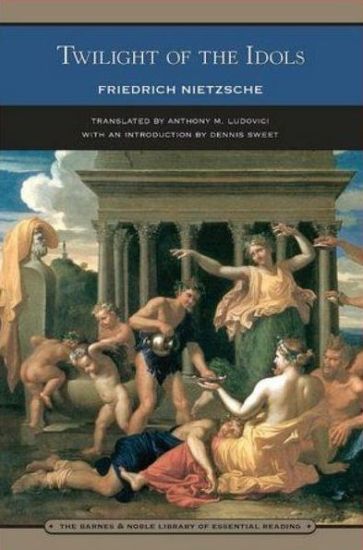
Twilight of the Idols

Twilight of the Idols

Friedrich Nietzsche

Union Square Co.
2008
pokkari
Never one to back away from controversy, Friedrich Nietzsche assails the Christian Church in Twilight of the Idols. In this classic work, he sets out to substitute the morality of the Catholic and the Protestant Churches with that of Dionysian morality. Twilight of the Idols furthermore lays the foundation for key arguments that Nietzsche more fully develops in later writings.
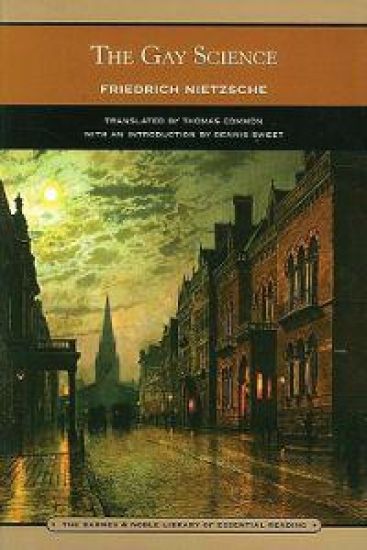
The Gay Science (Barnes & Noble Library of Essential Reading)
'God is dead', Friedrich Nietzsche unflinchingly declared in this famous work of philosophy. It is one of the boldest statements ever made, and garnered far-reaching, strong reactions. In addition to being the book containing the words that shook the world, "The Gay Science" includes Nietzsche's arguments on ethics and knowledge. It is no wonder "The Gay Science" is known in some circles by the title "The Joyful Wisdom".
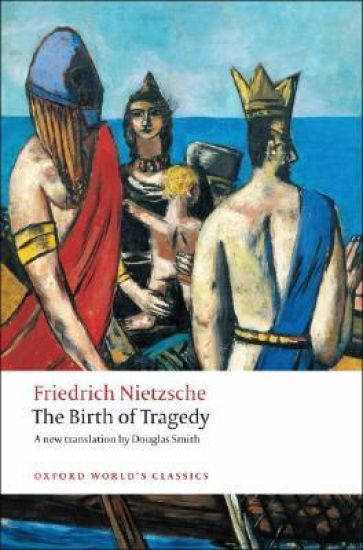
The Birth of Tragedy

The Birth of Tragedy

Friedrich Nietzsche

Oxford University Press
2008
nidottu

Halvin toimitettuna 17,90 €

'Yes, what is Dionysian? - This book provides an answer - "a man who knows" speaks in it, the initiate and disciple of his god.' The Birth of Tragedy (1872) is a book about the origins of Greek tragedy and its relevance to the German culture of its time. For Nietzsche, Greek tragedy is the expression of a culture which has achieved a delicate but powerful balance between Dionysian insight into the chaos and suffering which underlies all existence and the discipline and clarity of rational Apollonian form. In order to promote a return to these values, Nietzsche undertakes a critique of the complacent rationalism of late nineteenth-century German culture and makes an impassioned plea for the regenerative potential of the music of Wagner. In its wide-ranging discussion of the nature of art, science and religion, Nietzsche's argument raises important questions about the problematic nature of cultural origins which are still of concern today. ABOUT THE SERIES: For over 100 years Oxford World's Classics has made available the widest range of literature from around the globe. Each affordable volume reflects Oxford's commitment to scholarship, providing the most accurate text plus a wealth of other valuable features, including expert introductions by leading authorities, helpful notes to clarify the text, up-to-date bibliographies for further study, and much more.
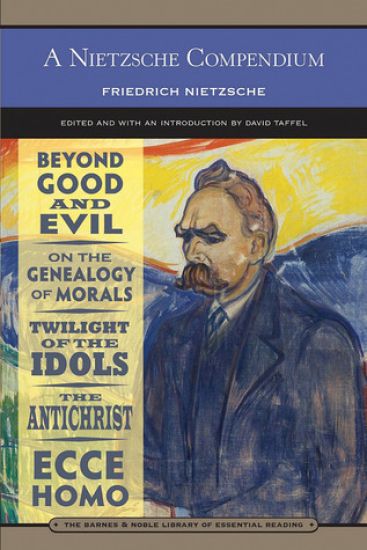
A Nietzsche Compendium (Barnes & Noble Library of Essential Reading)
This convenient new compendium contains the five most philosophically significant of Nietzsche's post - "Thus Spoke Zarathustra" writings. Nietzsche wrote of these works that he intended them as 'fish hooks' for catching readers who shared his sense that a cataclysmic shift in human psychology had suddenly occurred with the advent of nihilism; the uncanny and pervasive feeling that life is devoid of all meaning, purpose, and value. Taken together these books offer the reader a definitive account of Nietzsche's mature philosophy as he intended it to be presented and a sweeping attack upon everything the modern Western world holds to be good about itself.
Antikrist

Antikrist

Friedrich Nietzsche

Spartacus
2008
sidottu
I "Antikrist" retter Nietzsche kraftig kritikk mot kristendommen og enhver annen idealisme som anser sannheten for å være noe absolutt og uavhengig av det enkelte menneske. Kristendommen er et erkjennelsesmessig og moralsk nei til livet, skriver Nietzsche. I stedet vil han fremheve det eksperimenterende mennesket som er på parti med livet, og som i åpenhet mot tilværelsen setter sitt eget rett og galt ut fra sin egen personlige vilje. "Antikrist" ble skrevet høsten 1888 og var tenkt som første bind i "Omvurdering av alle verdier", der Nietzsche ville samle trådende i sin tenkning. Men i januar 1889 brøt Nietzsche sammen, og verket ble aldri ferdig. Første gang utgitt i 1888.
Om våre dannelsesinstitusjoners fremtid

Om våre dannelsesinstitusjoners fremtid

Friedrich Nietzsche

Spartacus
2008
sidottu
Vinteren 1872 holder den 26 år gamle Friedrich Nietzsche fem foredrag i det "Frivillige akademiske samfunn" i Basel, om de tyske dannelsesinstitusjonenes fremtid. Men den vitenskapelige utlegningen uteblir, i stedet tilbyr Nietzsche sitt publikum en fortelling som mest minner om en roman eller et drama, hvor han advarer om tidens dannelsesnød og besverger en kommende revolusjon av dannelsesvesenet. Det som begynner som en dannelseskritikk, først av gymnaset, så av universitetet, går snart over i en bredt anlagt kultur- og ideologikritikk. Samtidens lærere, journalister, forfattere og kunstnere får unngjelde for sitt forræderi mot den "sanne" dannelsen. Bak dette dannelsesfernisset lar den unge Nietzsche staten komme til syne - det samlede Tyskland, gjenfødt til storhet i 1871 og nå i jernkanslerens klør - som har lenket dannelsen og kulturen til sine politiske stormaktsdrømmer.
Epäjumalten hämärä eli miten vasaralla filosofoidaan

Epäjumalten hämärä eli miten vasaralla filosofoidaan

Friedrich Nietzsche

DELFIINI KIRJAT
2008
nidottu

Halvin toimitettuna 23,90 €

Epäjumalten hämärää on pidetty erittäin saksalaisvastaisena teoksena - eikä aivan syyttä. Nietzsche pyrki tietoisesti ärsyttämään ja Epäjumalten hämärä oli "suuri sodanjulistus". Hänen lopullisena tarkoituksenaan oli kuitenkin saksalaisten henkinen kasvattaminen. Nietzsche itse kehotti aloittamaan teostensa lukemisen juuri Epäjumalten hämärästä selittäen, että se sisälsi hänen filosofiansa pähkinänkuoressa. Nietzschen myöhäisfilosofiaa on mahdoton ymmärtää ilman tätä teosta. Epäjumalten hämärä koputtelee psykologin vasarallaan valtavaa määrää filosofisia kysymyksiä. Teoksen alkuperäiseksi nimeksi Nietzsche kaavaili Psykologin joutilaisuutta. Nietzschen ystävä ja sihteeri Peter Gast kirjoitti tällöin filosofille: "Voi, minä pyydän, jos vain epäpätevä ihminen saa pyytää: loistokkaampi, komeampi nimi!" Pyyntö toteutui; Nietzsche itse myönsi uuden nimen olevan ilkeys Wagneria kohtaan (parodia Nibelungin sormus -oopperan viimeisestä osasta Jumalten hämärä, Götterdämmerung). Alaotsikossa esiintyvä "vasara" ymmärretään usein väärin: esipuheessa ilmoitetaan sen olevan ääniraudan korvike, jolla koputellaan eri epäjumalia (tähänastisia korkeimpia arvoja) ja kuunnellaan, miten onttoja ne ovat.
Menneskeligt, alt for menneskeligt

Menneskeligt, alt for menneskeligt

Friedrich Nietzsche

Lindhardt og Ringhof
2007
nidottu
"Menneskeligt, alt for menneskeligt" er Nietzsches første skrift efter opgøret med Schopenhauers og Wagners forløsnings-metafysik og mistro til livet. Med "Menneskeligt, alt for menneskeligt" (1878) træder Nietzsche sit eget dionysiske spor med forkastelse af metafysikkens blændværker og al religions (kristendommen inklusive) dyrkelse af asketiske værdier og af hinsidesverdener og frelse. Den kritiske filosofi for 'frie ånder' begynder her – med 638 tankeskarpe aforismer. Oversat af Niels Henningsen.
Morgenrøde

Morgenrøde

Friedrich Nietzsche; Arne Melberg

Spartacus
2007
sidottu
I "Morgenrøde" ligger ansatsen til det som skulle bli et av Nietzsches brennpunkter, nemlig kritikken av moralen. Det er her hans idé om viljen til makt får sitt første uttrykk, og det er denne boken som markerer Nietzsches brudd med den tradisjonelle vestlige moraltenkningen. I "Morgenrøde" skimter vi både den unge og den modne Nietzsche, her er både vitenskapelig resonnement og kimen til en egen litterær form. For første gang på norsk foreligger en av Nietzsches mindre kjente, men mest spennende tekster. Utgitt første gang i 1881.
Tragediens fødsel

Tragediens fødsel

Friedrich Nietzsche

Pax
2007
nidottu
Nietzsches filosofi er et av de første forsøk på å fange inn typiske trekk ved vår kultur: oppløsning av alle faste verdisystemer, motsetningen mellom det intellektuelle og det fritt skapende menneske, følelsen av total frihet i en meningsløs verden. Boka viser hvordan den greske tragedien skapte en syntese av det plastiske og det ekstatiske i kunsten, og hvordan dens senere utvikling tørket ut denne kilden.
Po tu storonu dobra i zla

Po tu storonu dobra i zla

Friedrich Nietzsche

Azbooka
2006
nidottu
"Po tu storonu dobra i zla" (1886) - etapnaja rabota Fridrikha Nitsshe, kotoraja predvarjaet zakljuchitelnyj, nai bolee intensivnyj period ego tvorchestva, otmechennyj podvedeniem filosofskikh itogov predshestvujuschej chelovecheskoj istorii i predvideniem vazhnejshikh sotsialnykh i dukhovnykh kollizij KHKh veka. Ideja sverkhcheloveka, sformulirovannaja v knige "Tak govoril Zaratustra", razvivaetsja v novom sochinenii Nitsshe v forme ottochennykh analiticheskikh aforizmov, v kotorykh skontsentrirovana ostraja avtorskaja kritika sovremennosti - ee filosofii, nauki, iskusstva, politiki i, glavnoe, morali. Na stranitsakh etoj prorocheskoj raboty, ne sluchajno imejuschej podzagolovok "Preljudija k filosofii buduschego", nemetskij myslitel predskazal i grjaduschij raspad evropejskoj dukhovnosti, i "vosstanie mass" s posledujuschim votsareniem "grjaduschego khama", i nivelirovanie lichnosti pod flagom vseobschego ravenstva ljudej, i grandioznuju borbu za mirovoe gospodstvo, i totalitarizm kak sledstvie demokratizatsii Evropy. Neizbezhnost etikh sobytij i...
Chelovecheskoe, slishkom chelovecheskoe
"Chelovecheskoe, slishkom chelovecheskoe" - proizvedenie, vazhnoe s tochki zrenija razvitija tvorchestva Nitsshe. V nem on pereosmyslivaet znachenie svoikh idealov i otkazyvaetsja ot nikh, razocharovyvaetsja v trudakh svoikh kumirov. Nitsshe ischet svobodu i osvobozhdenie ot propisnykh istin i postepenno prikhodit k tem neordinarnym i ekstsentrichnym mysljam, po kotorym my ego znaem v proizvedenijakh "Tak govoril Zaratustra" i "Po tu storonu dobra i zla".