Kirjailija
Friedrich Nietzsche
Kirjat ja teokset yhdessä paikassa: 921 kirjaa, julkaisuja vuosilta 1885–2026, suosituimpiin kuuluu Näin puhui Zarathustra. Vertaile teosten hintoja ja tarkista saatavuus suomalaisista kirjakaupoista.
921 kirjaa
Kirjojen julkaisuvuodet: 1885–2026.
Fridrikh Nitsshe - nemetskij filosof, filolog-klassik, poet, avtor takikh izvestnykh trudov, kak "Rozhdenie tragedii iz dukha muzyki", "Genealogija morali", "Antikhrist" i dr. V nastojaschem izdanii vnimaniju chitatelej predlagaetsja filosofskaja poema F. Nitsshe "Tak govoril Zaratustra", a takzhe vazhnaja etapnaja rabota "Po tu storonu dobra i zla", kotoraja predvarjaet zakljuchitelnyj, naibolee intensivnyj period ego tvorchestva, otmechennyj podvedeniem filosofskikh itogov predshestvujuschej chelovecheskoj istorii i predvideniem vazhnejshikh sotsialnykh i dukhovnykh kollizij XX veka.
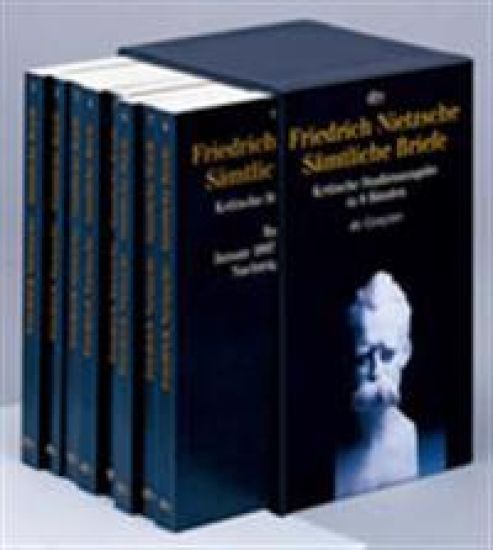
Polnoye Sobraniye Sochineniy: Tom 13. Chernoviki I Nabroski 1997-1689 Gg.
Friedrich Nietzsche
De Gruyter
2006
sidottu
"Po tu storonu dobra i zla" - vazhnaja etapnaja rabota, kotoraja predvarjaet zakljuchitelnyj, naibolee intensivnyj period tvorchestva Nitsshe, otmechennyj podvedeniem filosofskikh itogov predshestvujuschej chelovecheskoj istorii i predvideniem vazhnejshikh sotsialnykh i dukhovnykh kollizij XX veka.
The first English translation of Nietzsche
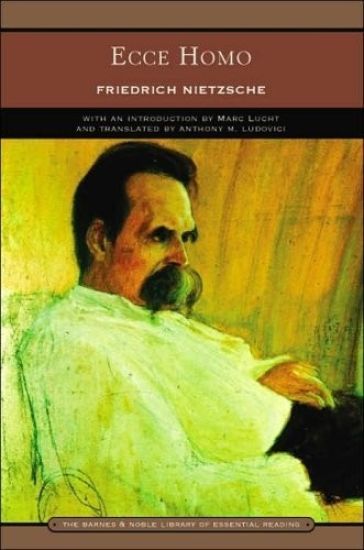
Ecce Homo is an autobiography like no other. Deliberately provocative, Nietzsche subverts the conventions of the genre and pushes his philosophical positions to combative extremes, constructing a genius-hero whose life is a chronicle of incessant self-overcoming. Written in 1888, a few weeks before his descent into madness, the book passes under review all of Nietzsche's previous works so that we, his "posthumous"readers, can finally understand him, on his own terms. He reaches final reckonings with his many enemies, including Richard Wagner, German nationalism, "modern men" in general, and above all Christianity, proclaiming himself the Antichrist. Ecce Homo is the summation of an extraordinary philosophical career, a last great testament to Nietzsche's will.
The Will To Power - An Attempted Transvaluation Of All Values - Vol II Books III and IV
Friedrich Nietzsche
Read Books
2006
pokkari
Thus Spoke Zarathustra (Barnes & Noble Classics Series)
Friedrich Nietzsche
Fine Communications,US
2005
pokkari
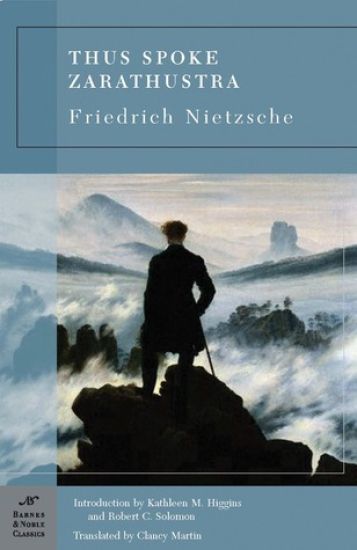
&&LDIV&&R&&LDIV&&R&&LI&&RThus Spoke Zarathustra&&L/I&&R, by &&LB&&RFriedrich Nietzsche&&L/B&&R, is part of the &&LI&&RBarnes & Noble Classics&&L/I&&R&&LI&&R &&L/I&&Rseries, which offers quality editions at affordable prices to the student and the general reader, including new scholarship, thoughtful design, and pages of carefully crafted extras. Here are some of the remarkable features of &&LI&&RBarnes & Noble Classics&&L/I&&R: &&LDIV&&RNew introductions commissioned from today's top writers and scholars Biographies of the authors Chronologies of contemporary historical, biographical, and cultural events Footnotes and endnotes Selective discussions of imitations, parodies, poems, books, plays, paintings, operas, statuary, and films inspired by the work Comments by other famous authors Study questions to challenge the reader's viewpoints and expectations Bibliographies for further reading Indices & Glossaries, when appropriateAll editions are beautifully designed and are printed to superior specifications; some include illustrations of historical interest. &&LI&&RBarnes & Noble Classics &&L/I&&Rpulls together a constellation of influences--biographical, historical, and literary--to enrich each reader's understanding of these enduring works.&&L/DIV&&R&&L/DIV&&R&&LP&&RConsidered by many to be the most important philosopher of modern times, &&LSTRONG&&RFriedrich Nietzsche&&L/B&&R influenced twentieth-century ideas and culture more than almost any other thinker. His best-known book, &&LI&&RThus Spoke Zarathustra&&L/I&&R--published in four parts in the last two decades of the nineteenth century--is also his masterpiece, and represents the fullest expression of his ideas up to that time.&&L/P&&R&&LP&&RA unique combination of biblical oratory and playfulness, &&LI&&RThus Spoke Zarathustra&&L/I&&R chronicles the wanderings and teachings of the prophet Zarathustra, who descends from his mountain retreat to awaken the world to its new salvation. Do not accept, he counsels, what almost two thousand years of history have taught you to call evil. The Greeks knew better: Goodness for them was nobility, pride, and victory, not the Christian virtues of humility, meekness, poverty, and altruism. The existence of the human race is justified only by the exceptional among us--the "superman," whose self-mastery and strong "will to power" frees him from the common prejudices and assumptions of the day.&&L/P&&R&&LP&&RThese and other concepts in Zarathustra were later perverted by Nazi propagandists, but Nietzsche, a despiser of mass movements both political and religious, did not ask his readers for faith and obedience, but rather for critical reflection, courage, and independence.&&L/P&&R&&LDIV&&R&&LP style="MARGIN: 0in 0in 0pt"&&R&&LSTRONG&&RKathleen M. Higgins&&L/B&&R and &&LSTRONG&&RRobert C. Solomon&&L/B&&R are both professors of philosophy at the University Texas at Austin. Together, they have written &&LI&&RWhat Nietzsche Really Said&&L/I&&R and &&LI&&RA Short History of Philosophy&&L/I&&R and co-edited &&LI&&RReading Nietzsche&&L/I&&R.&&L/P&&R&&L/DIV&&R&&L/DIV&&R

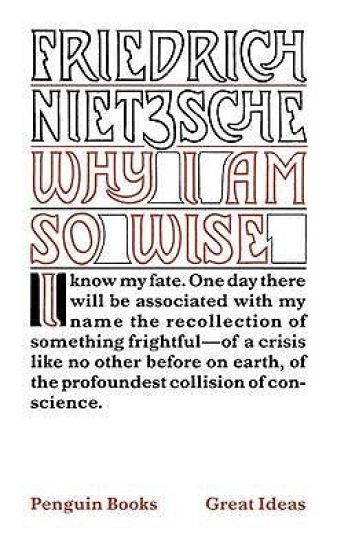
Throughout history, some books have changed the world. They have transformed the way we see ourselves--and each other. They have inspired debate, dissent, war and revolution. They have enlightened, outraged, provoked and comforted. They have enriched lives--and destroyed them. Now, Penguin brings you the works of the great thinkers, pioneers, radicals and visionaries whose ideas shook civilization, and helped make us who we are. Penguin's Great Ideas series features twelve groundbreaking works by some of history's most prodigious thinkers, and each volume is beautifully packaged with a unique type-drive design that highlights the bookmaker's art. Offering great literature in great packages at great prices, this series is ideal for those readers who want to explore and savor the Great Ideas that have shaped the world. One of the most iconoclastic thinkers of all time, Friedrich Nietzsche continues to challenge the boundaries of conventional religion and morality with his subversive theories of the 'superman', the individual will, the death of God and the triumph of an all-powerful human life force.
Prefaces To Unwritten Works
Friedrich Nietzsche; Michael W. Grenke; Matthew K. Davis; Lise Van Boxel
ST AUGUSTINE'S PRESS
2005
sidottu
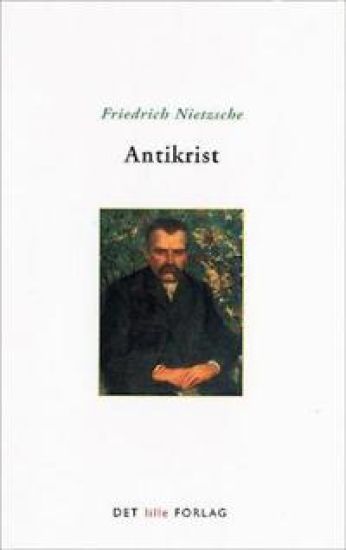
Friedrich Nietzsche satte det allersidste punktum i værket "Antikrist" den 30. september 1888. På grund af Nietzsches sammenbrudi 1889 og værkets kontroversielle indhold udkom bogen dog først i 1895, og da i en noget retoucheret udgave. Nietzsche bedriver dog ikke religionskritik i samme forstand som Feuerbach, Marx og Freud gjorde. For ham er kristendommen ikke så meget et problem, fordi den er usand, men snarere fordi den er usund! Kristendommen lider af og hviler på sygelige instinkter: en unatur, der ikke vil livet og lysten, men døden, frelsen og lidelsen. Derfor er Nietzsche i "Antikrist - forbandelse over kristendommen" optaget af at vise, hvordan kristendommen opstod, hvilke morbide kræfter, der bragte den til verde og orkestrerer dens ideologi, magtregimi o.a. Nietzsche foretager i værket en dissektionsøvelse og en kritisk analyse af den allerede døde Gud og hans vældige organisation. Oversat af Peter Thielst.
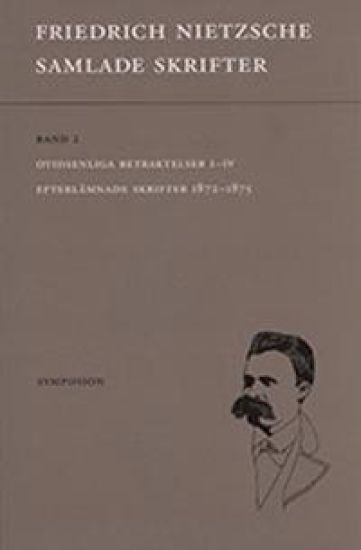
Samlade skrifter. Bd 2, Otidsenliga betraktelser I-IV ; Efterlämnade skrifter 1872-1875
Friedrich Nietzsche
Brutus Östlings bokf Symposion
2005
nidottu
Med sina fyra Otidsenliga betraktelser (1873-1876) fullföljer Friedrich Nietzsche det förräderi mot samtidens vetenskap och kultur han begick med förstlingsverket Tragedins födelse (1872). I dessa essäer mot strömmen formuleras en sträng, existentiell kritik av fabriksvetenskap och filiströs framgångsfilosofi. Tillsammans med flera efterlämnade texter från samma tid bildar de grundvalen för den kamp mot kulturen som småningom antar karaktären av ett attentat på två årtusendens onatur och människostympning. Essäerna uttrycker Nietzsches djupa misstro gentemot en kultur som inte vill se sanningen om sig själv i ögonen.
Throughout history, some books have changed the world. They have transformed the way we see ourselves - and each other. They have inspired debate, dissent, war and revolution. They have enlightened, outraged, provoked and comforted. They have enriched lives - and destroyed them. Now Penguin brings you the works of the great thinkers, pioneers, radicals and visionaries whose ideas shook civilization, and helped make us who we are.
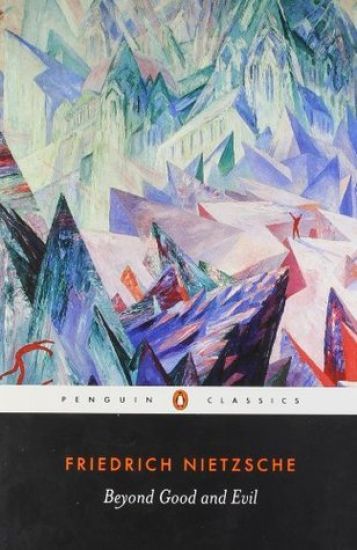
'One of the greatest books of a very great thinker' Michael TannerBeyond Good and Evil confirmed Nietzsche's position as the towering European philosopher of his age. The work dramatically rejects traditional Western thought with its notions of truth and God, good and evil. Nietzsche seeks to demonstrate that the Christian world is steeped in a false piety and infected with a 'slave morality'. With wit and energy, he turns from this critique to a philosophy that celebrates the present and demands that the individual impose their own 'will to power' upon the world. Translated by R. J. HOLLINGDALE With an Introduction by MICHAEL TANNER
Nietzsche: Writings from the Late Notebooks
Friedrich Nietzsche
Cambridge University Press
2003
pokkari
For much of his adult life, Nietzsche wrote notes on philosophical subjects in small notebooks that he carried around with him. After his breakdown and subsequent death, his sister supervised the publication of some of these notes under the title The Will to Power, and that collection, which is textually inaccurate and substantively misleading, has dominated the English-speaking discussion of Nietzsche’s later thought. The present volume offers, for the first time, accurate translations of a selection of writings from Nietzsche’s late notebooks, dating from his last productive years between 1885 and 1889. Many of them have never before been published in English. They are translated by Kate Sturge from reliable texts in the Colli-Montinari edition, and they are edited by Rüdiger Bittner, whose introduction places them in the context of Nietzsche’s philosophy as a whole.
Nietzsche: Writings from the Late Notebooks
Friedrich Nietzsche
Cambridge University Press
2003
sidottu
For much of his adult life, Nietzsche wrote notes on philosophical subjects in small notebooks that he carried around with him. After his breakdown and subsequent death, his sister supervised the publication of some of these notes under the title The Will to Power, and that collection, which is textually inaccurate and substantively misleading, has dominated the English-speaking discussion of Nietzsche's later thought. The present volume offers, for the first time, accurate translations of a selection of writings from Nietzsche's late notebooks, dating from his last productive years between 1885 and 1889. Many of them have never before been published in English. They are translated by Kate Sturge from reliable texts in the Colli-Montinari edition, and they are edited by Rüdiger Bittner, whose introduction places them in the context of Nietzsche's philosophy as a whole.
"Hinsides godt og ondt" er et af Nietzsches kendte værker, der markerer overgangen fra hans tidlige værker mod hans senere, mere radikale ideer. I værket afviser Nietzsche traditionelle begreber om moral og opstiller sin egen teori, der ser 'godt' og 'ondt' som menneskeskabte koncepter. Han argumenterer for, at disse konventionelle moralbegreber hæmmer den menneskelige udvikling, og at større individer er i stand til at overskride dem for at nå deres egen, unikke version af storhed. Nietzsche samler en række essays i bogen, der basalt set er en kritik af filosofi, religion, videnskab og kunst, og han foreslår, at menneskeheden skal transcenderes til "overmennesket". Denne ide om "overmennesket" bliver en central del af Nietzsches senere tænkning. Værket er smukt oversat af Niels Henningsen.
Beyond Good and Evil is one of the most scathing and powerful critiques of philosophy, religion, science, politics and ethics ever written. In it, Nietzsche presents a set of problems, criticisms and philosophical challenges that continue both to inspire and to trouble contemporary thought. In addition, he offers his most subtle, detailed and sophisticated account of the virtues, ideas, and practices which will characterize philosophy and philosophers of the future. With his relentlessly energetic style and tirelessly probing manner, Nietzsche embodies the type of thought he wants to foster, while defining its historical role and determining its agenda. This edition offers a new and readable translation, by Judith Norman, of one of the most influential texts in the history of philosophy, together with an introduction by Rolf-Peter Horstmann that sets it in its historical and philosophical context.