Kirjailija
G. K. Chesterton
Kirjat ja teokset yhdessä paikassa: 2 054 kirjaa, julkaisuja vuosilta 1900–2026, suosituimpiin kuuluu A Miscellany of Poems by G. K. Chesterton. Vertaile teosten hintoja ja tarkista saatavuus suomalaisista kirjakaupoista.
Nimi esiintyy myös muodoissa: G K Chesterton, G.K. Chesterton, G.K Chesterton, G. K Chesterton
2 054 kirjaa
Kirjojen julkaisuvuodet: 1900–2026.
A Miscellany of Men is a classic work of famous English writer, philosopher, literary and art critic, G. K. Chesterton. It is a collection of more than thirty humorous short stories and essays, published in 1912. He has covered topics from literature to philosophy and history to social criticism. He has given a picturesque of 20th century Europe. His social, historical, literary and religious illustrations are very important in the study of 20th century Europe. 'The Miser and His Friends' to 'The Red Reactionary' from 'The Separatist and Sacred Things' to 'The New Theologian' and 'The Romantic in the Rain' give us contemporary vision of the social living. He reveals truths through enlightening observations. The uniqueness of his writing is that, on one hand he criticizes the weary facts of capitalism and on the other hand, he condemns inhuman bureasicratic socialism.
Orthodoxy is a nonfiction book written by G. K. Chesterton. He was an English writer and critic of the mid-twentieth century. He was a productive author who wrote over 100 books and added to no less than 200 additional during his lifetime. His book, "Orthodoxy", contends that Christianity is an extraordinary religion since it provides us conviction about our purpose in life. Orthodoxy is a book that explains why Christianity has been around for such a long time and continues to be significant in the present society. It uses common sense and everyday perceptions to explain its thoughts regarding human nature and the advantages of living an ethical life. G. K. Chesterton criticizes present-day philosophers for deleting religion from their lives and urges individuals to question everything, including religion. Chesterton starts by evaluating fairy tales, however, he explains why they're valuable. Basically, God doesn't want us to understand the reason for our existence. Chesterton says that fairy tales are black and white. Fantasies either overstate trust or depression. He uses the example of martyrs and suicidal people as inverse samples of extreme optimism and pessimism respectively. Christianity finds harmony between these extremes since it gives us barely enough hope while keeping us humble.
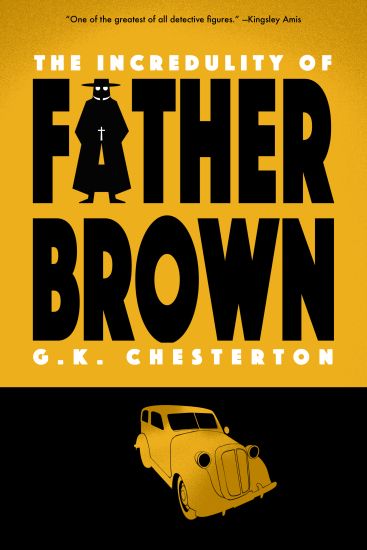
Between the silver ribbon of morning and the green glittering ribbon of sea, the boat touched Harwich and let loose a swarm of folk like flies, among whom the man we must follow was by no means conspicuous-nor wished to be. There was nothing notable about him, except a slight contrast between the holiday gaiety of his clothes and the official gravity of his face. His clothes included a slight, pale grey jacket, a white waistcoat, and a silver straw hat with a grey-blue ribbon. His lean face was dark by contrast, and ended in a curt black beard that looked Spanish and suggested an Elizabethan ruff. He was smoking a cigarette with the seriousness of an idler. There was nothing about him to indicate the fact that the grey jacket covered a loaded revolver, that the white waistcoat covered a police card, or that the straw hat covered one of the most powerful intellects in Europe. For this was Valentin himself, the head of the Paris police and the most famous investigator of the world and he was coming from Brussels to London to make the greatest arrest of the century. - Taken from "The Innocence of Father Brown" written by Gilbert Keith ChestertonABOUT THE AUTHORGILBERT KEITH CHESTERTON (29 MAY 1874 - 14 JUNE 1936) BETTER KNOWN AS G. K. CHESTERTON, WAS AN ENGLISH WRITER, LAY THEOLOGIAN, POET, PHILOSOPHER, DRAMATIST, JOURNALIST, ORATOR, LITERARY AND ART CRITIC, BIOGRAPHER, AND CHRISTIAN APOLOGIST. Father Brown is a fictional Roman Catholic priest and amateur detective who is featured in 53 short stories published between 1910 and 1936 written by English novelist G. K. Chesterton. Father Brown solves mysteries and crimes using his intuition and keen understanding of human nature. Chesterton loosely based him on the Rt Rev. Msgr. John O'Connor (1870-1952), a parish priest in Bradford, who was involved in Chesterton's conversion to Catholicism in 1922. The Innocence of Father Brown, published in 1911, includes: "The Blue Cross", The Story-Teller, September 1910 first published as "Valentin Follows a Curious Trail", The Saturday Evening Post, 23 July 1910"The Secret Garden", The Story-Teller, October 1910. (The Saturday Evening Post, Sep 3, 1910)"The Queer Feet", The Story-Teller, November 1910. (The Saturday Evening Post, Oct 1, 1910)"The Flying Stars", The Saturday Evening Post, 20 May 1911." The Invisible Man"

Father Brown is a fictional Roman Catholic priest and amateur detective who is featured in 53 short stories published between 1910 and 1936 written by English novelist G. K. Chesterton. 1] Father Brown solves mysteries and crimes using his intuition and keen understanding of human nature. Chesterton loosely based him on the Rt Rev. Msgr. John O'Connor (1870-1952), a parish priest in Bradford, who was involved in Chesterton's conversion to Catholicism in 1922. Chesterton portrays Father Brown as a short, stumpy Roman Catholic priest, with shapeless clothes, a large umbrella, and an uncanny insight into human evil. In "The Head of Caesar" he is "formerly priest of Cobhole in Essex, and now working in London". He makes his first appearance in the story "The Blue Cross" published in 1910 and continues to appear throughout forty-eight short stories in five volumes, with two more stories discovered and published posthumously, often assisted in his crime-solving by the reformed criminal M. Hercule Flambeau. Father Brown also appears in a third story - making a total of fifty-one - that did not appear in the five volumes published in Chesterton's lifetime, "The Donnington Affair", which has a curious history. In the October 1914 issue of an obscure magazine, The Premier, Sir Max Pemberton published the first part of the story, then invited a number of detective story writers, including Chesterton, to use their talents to solve the mystery of the murder described. Chesterton and Father Brown's solution followed in the November issue. The story was first reprinted in the Chesterton Review (Winter), 1981, pp. 1-35 in the book Thirteen Detectives. Unlike the better-known fictional detective Sherlock Holmes, Father Brown's methods tend to be intuitive rather than deductive. He explains his method in "The Secret of Father Brown" "You see, I had murdered them all myself.... I had planned out each of the crimes very carefully. I had thought out exactly how a thing like that could be done, and in what style or state of mind a man could really do it. And when I was quite sure that I felt exactly like the murderer myself, of course I knew who he was." Brown's abilities are also considerably shaped by his experience as a priest and confessor. In "The Blue Cross", when asked by Flambeau, who has been masquerading as a priest, how he knew of all sorts of criminal "horrors," Father Brown responds:
THE NAPOLEON OF NOTTING HILL IS A NOVEL WRITTEN BY G. K. CHESTERTON IN 1904, SET IN A NEARLY UNCHANGED LONDON IN 1984. ALTHOUGH THE NOVEL IS SET IN THE FUTURE, IT IS, IN EFFECT, SET IN AN ALTERNATIVE REALITY OF CHESTERTON'S OWN PERIOD, WITH NO ADVANCES IN TECHNOLOGY OR CHANGES IN THE CLASS SYSTEM OR ATTITUDES. IT POSTULATES AN IMPERSONAL GOVERNMENT, NOT DESCRIBED IN ANY DETAIL, BUT APPARENTLY CONTENT TO OPERATE THROUGH A FIGUREHEAD KING, RANDOMLY CHOSEN. About the AuthorGilbert Keith Chesterton (29 May 1874 - 14 June 1936) better known as G. K. Chesterton, was an English writer, lay theologian, poet, philosopher, dramatist, journalist, orator, literary and art critic, biographer, and Christian apologist.
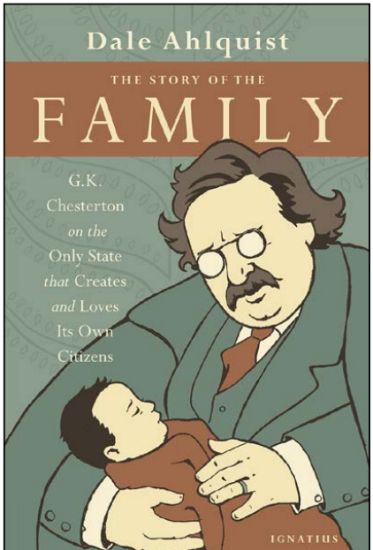
The Story of the Family: G.K. Chesterton on the Only State That Creates and Loves Its Own Citizens
G. K. Chesterton
IGNATIUS PRESS
2022
nidottu
"Pater Brown - filmisch einst wunderbar von Heinz R hmann dargestellt - ist ein englischer katholischer Pfarrer, der als Hobby Kriminalf lle l st - sehr zum Ungemach des Bischofs. Er l st die F lle, indem er sich besonders begabt in die T ter hineinversetzt und so die Motive und Handlungsstr nge err t. Freilich will Pater Brown die T ter nicht der Gerechtigkeit, sondern der Kirche zuf hren. Eine ehrlich gemeinte Beichte reicht v llig aus." Redaktion Gr ls-Verlag (Edition Werke der Weltliteratur)
This book has been considered important throughout the human history, and so that this work is never forgotten we have made efforts in its preservation by republishing this book in a modern format for present and future generations. This whole book has been reformatted, retyped and designed. These books are not made of scanned copies and hence the text is clear and readable.
Manalive (1912) is a book by G. K. Chesterton detailing a popular theme both in his own philosophy, and in Christianity, of the "holy fool", such as in Dostoevsky's The Idiot and Cervantes' Don Quixote. This is a book in two parts. The first, "The Enigma of Innocent Smith", concerns the arrival of a new tenant at Beacon House, a London boarding establishment. Like Mary Poppins, this man (who is tentatively identified by lodger Arthur Inglewood as an ex-schoolmate named Innocent Smith) is accompanied by a great wind, and he breathes new life into the household with his games and antics.