Kirjojen hintavertailu – 12 859 818 kirjaa ja 27 kauppaa
Kirjailija
Jean-Paul Sartre
Kirjat ja teokset yhdessä paikassa: 225 kirjaa, julkaisuja vuosilta 1952–2026, suosituimpiin kuuluu Réussir son Bac de français 2025 : Analyse de la pièce Les Mains sales de Jean-Paul Sartre. Vertaile teosten hintoja ja tarkista saatavuus suomalaisista kirjakaupoista.
Nimi esiintyy myös muodoissa: Jean Paul Sartre, Jean–paul Sartre
Fils de famille, Lucien Fleurier est à la recherche de lui-même : d’une enfance dorée et confortable aux révoltes de l’adolescence, de la bohème aux milieux d’extrême-droite, le jeune homme tente de connaître l’homme qui émerge en lui. Jean-Paul Sartre parodie le «roman d’apprentissage» dans le style dépouillé et magistralement maîtrisé qui efface l’écrivain au profit du seul dévoilement de l’homme dans le monde.
June 1940 was the summer of defeat for the French soldiers, deserted by their officers, utterly demoralized, awaiting the Armistice. Day by day, hour by hour, Iron in the Soul unfolds what men thought and felt and did as France fell. Men who shrugged, men who ran, men who fought and tragic men like Mathieu, who had dedicated his life to finding personal freedom, now overwhelmed by remorse and bitterness, who must learn to kill. Iron in the Soul, the third volume of Sartre's Roads to Freedom Trilogy, is a harrowing depiction of war and what it means to lose.
Although written fairly early in his career, in 1939, Sketch for a Theory of the Emotions is considered to be one of Jean-Paul Sartre's most important pieces of writing. It not only anticipates but argues many of the ideas to be found in his famous Being and Nothingness. By subjecting the emotion theories of his day to critical analysis, Sartre opened up the world of psychology to new and creative ways of interpreting feelings. Emotions are intentional and strategic ways of coping with difficult situations. We choose to utilize them, we control them, and not the other way around, as has been posited elsewhere. Emotions are not fixed; they have no essence and indeed are subject to rapid fluctuations and about-turns. For its witty approach alone, Sartre's Sketch for a Theory of the Emotions can be enjoyed at length. It is a dazzling journey to one of the more intriguing theories of our time.
Although written fairly early in his career, in 1939, Sketch for a Theory of the Emotions is considered to be one of Jean-Paul Sartre's most important pieces of writing. It not only anticipates but argues many of the ideas to be found in his famous Being and Nothingness. By subjecting the emotion theories of his day to critical analysis, Sartre opened up the world of psychology to new and creative ways of interpreting feelings. Emotions are intentional and strategic ways of coping with difficult situations. We choose to utilize them, we control them, and not the other way around, as has been posited elsewhere. Emotions are not fixed; they have no essence and indeed are subject to rapid fluctuations and about-turns. For its witty approach alone, Sartre's Sketch for a Theory of the Emotions can be enjoyed at length. It is a dazzling journey to one of the more intriguing theories of our time.
It is September 1938 and during a heatwave Europe tensely awaits the outcome of the Munich conference, where they will learn if there is to be a war. In Paris people are waiting too, among them Mathieu, Jacques and Philippe, each wrestling with their own love affairs, doubts and angsts – and none of them ready to fight. The second volume in Sartre’s wartime Roads to Freedom trilogy, The Reprieve cuts between locations and characters to build an impressionistic collage of the hopes, fears and self-deception of an entire continent as it blinkers itself against the imminent threat of war.
Jean-Paul Sartre was one of the most important philosophical and political thinkers of the twentieth century. His writings had a potency that was irresistible to the intellectual scene that swept post-war Europe, and have left a vital inheritance to contemporary thought. The central tenet of the Existentialist movement which he helped to found, whereby God is replaced by an ethical self, proved hugely attractive to a generation that had seen the horrors of Nazism, and provoked a revolution in post-war thought and literature. In What is Literature? Sartre the novelist and Sartre the philosopher combine to address the phenomenon of literature, exploring why we read, and why we write.
Jean-Paul Sartre was one of the most important philosophical and political thinkers of the twentieth century. His writings had a potency that was irresistible to the intellectual scene that swept post-war Europe, and have left a vital inheritance to contemporary thought. The central tenet of the Existentialist movement which he helped to found, whereby God is replaced by an ethical self, proved hugely attractive to a generation that had seen the horrors of Nazism, and provoked a revolution in post-war thought and literature. In What is Literature? Sartre the novelist and Sartre the philosopher combine to address the phenomenon of literature, exploring why we read, and why we write.
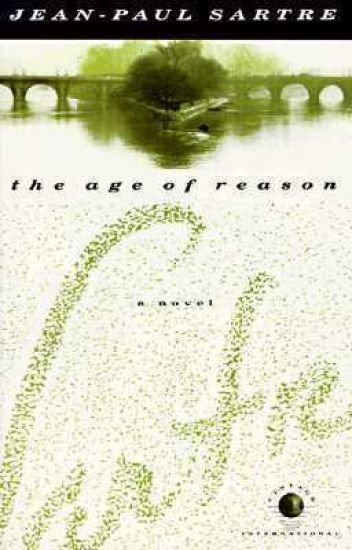
The first volume in his Roads to Freedom trilogy, Jean-Paul Sartre's The Age of Reason is a philosophical novel exploring existentialist notions of freedom, translated by Eric Sutton with an introduction by David Caute in Penguin Modern Classics. Set in the volatile Paris summer of 1938, The Age of Reason follows two days in the life of Mathieu Delarue, a philosophy teacher, and his circle in the cafés and bars of Montparnasse. Mathieu has so far managed to contain sex and personal freedom in conveniently separate compartments. But now he is in trouble, urgently trying to raise 4,000 francs to procure a safe abortion for his mistress, Marcelle. Beyond all this, filtering an uneasy light on his predicament, rises the distant threat of the coming of the Second World War. Jean-Paul Sartre (1905-1980) was an iconoclastic French philosopher, novelist, playwright and, widely regarded as the central figure in post-war European culture and political thinking. Sartre famously refused the Nobel Prize for literature in 1964 on the grounds that 'a writer should not allow himself to be turned into an institution'. His most well-known works, all of which are published by Penguin, include The Age of Reason, Nausea and Iron in the Soul. If you enjoyed The Age of Reason, you might like Sartre's Nausea, also available in Penguin Modern Classics.'For my money ... the greatest novel of the post-war period'Philip Kerr, author of the Berlin Noir trilogy
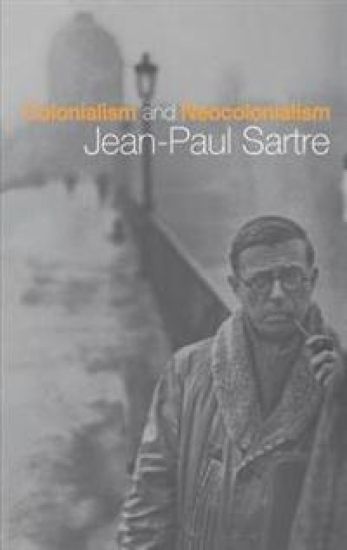
Colonialism and Neo-Colonialism is a classic critique of France's policies in Algeria in the 1950s and 1960s and inspired much subsequent writing on colonialism, post-colonialism, politics, and literature. It includes Sartre's celebrated preface to Fanon's classic Wretchedof the Earth. Colonialism and Neo-Colonialism had a profound impact on French intellectual life, inspiring many other influential French thinkers and critics of colonialism such as Jean-Francois Lyotard, Frantz Fanon, Pierre Bourdieu and Jacques Derrida.
These three plays, diverse in subject but thematically coherent, illuminate one of Sartre's major philosophical concerns: the struggle to live and act freely in a complex and constricting world. Lucifer and the Lord, Sartre's favourite among his plays, explores this theme in depth, dealing in the process with fundamental questions of faith and disillusionment; in Huis Clos - arguably Sartre's most important play - he contends that 'Hell is other people', and details the afterlife of three souls trapped together in locked room and the torments that they inflict on each other; while The Respectable Prostitute, set in the Deep South of America, is concerned with racism, subjugation and the demands of conscience.
After his father's early death Jean-Paul Sartre was brought up at his grandfather's home in a world even then eighty years out of date. In Words Sartre recalls growing up within the confines of French provincialism in the period before the First World War, an illusion-ridden childhood made bearable by his lively imagination and passion for reading and writing. A brilliant work of self-analysis, Words provides an essential background to the philosophy of one of the profoundest thinkers of the twentieth century.
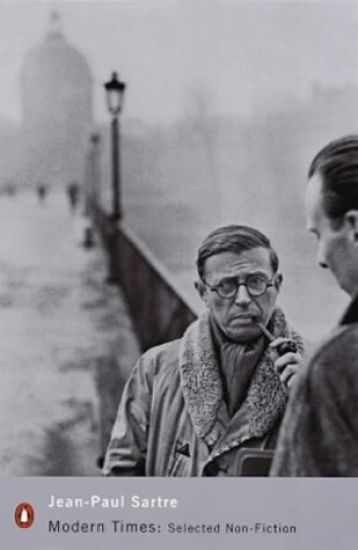
MODERN TIMES brings together an extraordinary collection of Sartrean gems, many of which have never been translated into English before. From writings on food and sex to a mini portrait of his great friend and rival, Albert Camus, the volume contains an amazing sweep of thematically organised writing. Amidst the grander set pieces on communism and the art of biography, are shorter and more revealing pieces on maternal love and masturbation.
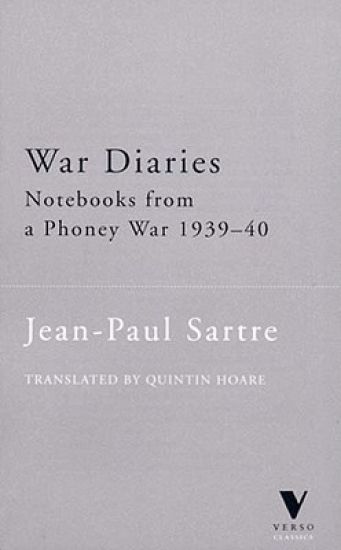
During the phoney war that preceded the invasion of France, between late 1939 and the summer of 1940, the young Jean-Paul Sartre was stationed in his native Alsace as part of a meteorological unit. He used his considerable periods of spare time, between mundane duties like watching weather balloons, to make a series of notes on philosophy, literature, politics and autobiography that anticipate the themes of his later masterpieces, and often surpass them in literary verve and directness. These War Diaries form a portrait of Sartre in his most intense and brilliant phase. With them the twentieth century's most remarkable and public philosopher has provided us with a fitting posthumous monument to his honesty and creativity.
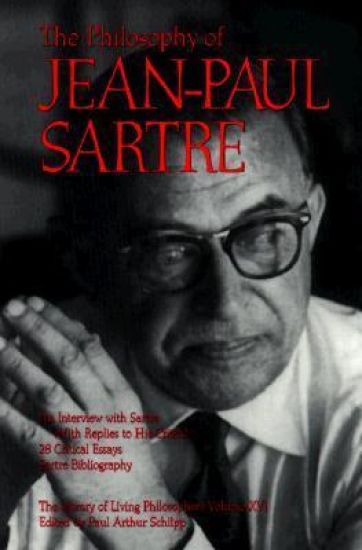
The format of this Library of Living Philosophers volume differs from that of its fifteen predecessors. Because of Sartre's failing eyesight, it was not possible for him either to read the critical essays or to respond in the usual way to his critics. Nor did he feel able to prepare an autobiography. Thus, in order to collect the material needed for the volume, it was necessary to conduct personal taped interviews with Sartre and then to have those interviews translated, edited, and arranged in an order that would approximate as closely as possible the customary format of the volumes in the Library of Living Philosophers series. Skillfully and conscientiously conducted, the interviews themselves resulted in a unique and valuable document. At the time they occurred, Sartre was in good health except for his near-blindness, and he answered questions in a lively and easy manner. Although he seemed most comfortable when talking autobiographically, he nevertheless responded to many of the philosophical questions raised by the contributors to this volume.
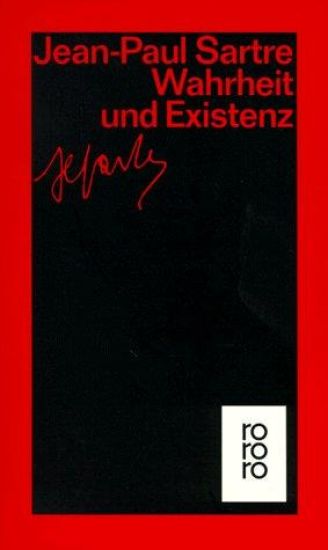
"Wahrheit und Existenz" ist ein philosophischer Text aus dem Nachlaß Sartres. Das Werk, 1948 entstanden, blieb Fragment und wurde 1996 zum erstenmal auf deutsch veröffentlicht. Sartre setzt sich mit Heideggers Wahrheitsphilosophie auseinander. Ihm geht es nicht wie Heidegger um die Wahrheit des Seins, sondern um ihre Bedeutung in menschlichen Beziehungen.
Set in France during the days immediately before World War II, this is the story of Mathieu, a French professor of philosophy obsessed with the idea of freedom. Translated from the French by Eric Sutton.
In den philosophischen Schriften der Jahre 1931 bis 1939 arbeitet Jean-Paul Sartre an der theoretischen Basis seines philosophischen Werks. Er entwickelt in seinem Essay "Die Transzendenz des Ego" eine an Husserl anknüpfende Bewußtseinsphilosophie. Die sprachliche Virtuosität macht die Lektüre der Essays dieser Zeit zu einem spannenden intellektuellen Vergnügen.
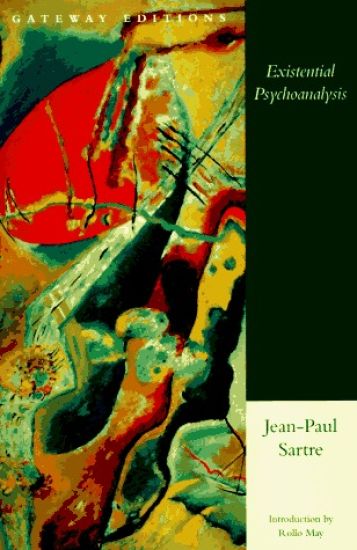
In Existential Psychoanalysis, Sartre criticizes modern psychology in general, and Freud's determinism in particular. His often brilliant analysis of these areas and his proposals for their correction indicate in what direction an existential psychoanalysis might be developed. Sartre does all this on the basis of his existential understanding of man, and his unshakeable conviction that the human being simply cannot be understood at all if we see in him only what our study of subhuman forms of life permits us to see, or if we reduce him to naturalistic or mechanical determinism, or in any other way take away from the man we try to study his ultimate freedom and individual responsibility. An incisive introduction by noted existential psychologist Rollo May guides readers through these challenging yet enlightening passages.
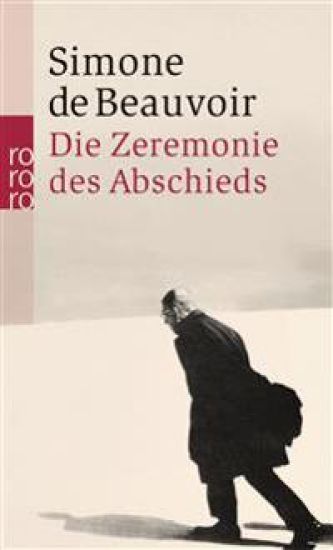
Dieses Buch erhält den ergreifenden Bericht der Autorin über die letzten zehn Lebensjahre Jean-Paul Sartres und die Gespräche, die sie im Sommer und Herbst 1974 in Rom und Paris mit ihm führte - über sein Leben und Werk, über Herkunft und Einflüsse, Liebe und Freundschaft, Freiheit und Glück, über den Tod.