Kirjojen hintavertailu – 12 859 818 kirjaa ja 27 kauppaa
Kirjailija
John White
Kirjat ja teokset yhdessä paikassa: 227 kirjaa, julkaisuja vuosilta 1977–2026, suosituimpiin kuuluu Parallel Lines. Vertaile teosten hintoja ja tarkista saatavuus suomalaisista kirjakaupoista.
Written prior to the introduction of the national curriculum, this volume argued for precisely that: a broad framework of a compulsory education at national level for all schools. The author considers the question of the content of his proposed compulsory curriculum in terms of principles derived from a fundamental ethical position and from an analysis of kinds of human activity that seeks to establish important educational priorities. The discussion covers arguments concerning intrinsically worthwhile activities, the need for a practical component of the curriculum and the priority that humanistic studies should have. It puts forward a case for a new concept of voluntary education, partly on the model of the Pioneer organizations of Eastern Europe, to supplement the compulsory curriculum.
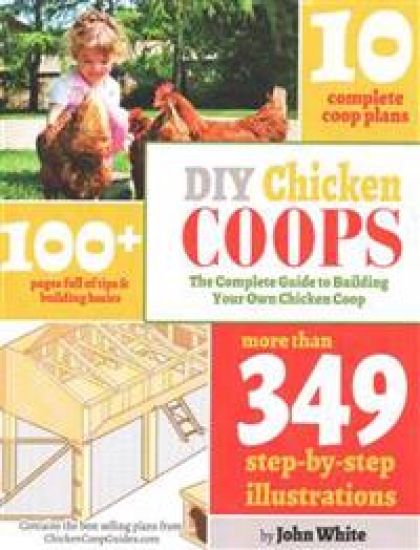
"The chicken coop plans I got from you were great They were easy to follow and the coop turned out to be the envy of all of my friends. I love my new hobby. Thanks so much for giving me every thing you promised." David Hess, USA This comprehensive book contains the top ten most popular chicken coop plans for the author's website www. ChickenCoopGuides.com. ChickenCoopGuides.com is one of the most popular sites on the Internet for coop design and information because of its practical, easy-to-follow advice. The author and builder, John White, has combined his ten most popular chicken coop designs into one book, and he's also added practical coop information and explanations about each feature. More than six thousand chicken farmers have purchased these plans for two reasons: 1. They're so simple to build that even a novice woodworker can build them in a single weekend, and an experienced pro can tell at a glance what to do next. Most designs require a wood shop full of tools and a lot of experience with construction. Not these designs 2. Cost matters to us all. These designs are not only easy to build; they're easy on your budget. You can use wood you have already, or find or purchase all the supplies you'll need without spending a fortune. Easy, affordable and professional. It doesn't get any better than that. In addition, you'll also learn: What you need to consider before selecting and building your coop and why placement of the coop is so important to your family as well as your chickens. Once you understand why you're building the coop a certain way you'll see why these designs are perfect for anyone who wants happy, healthy chickens. The basic essentials of chicken coops, like: roosts, ramps, ventilation, nesting boxes, chicken runs, what makes the best (and safest) chicken litter, hint-it's not straw. Why you need to slant the top of your nesting box, and why it needs to be off of the floor of the coop, but not higher than your roosting perches. When you understand why a feature is important you're more able to determine how changing, expanding or even eliminating that feature may affect your flock. And finally, find out what makes the best wire (it's not chicken wire) for wrapping your coops run in to make it the safest it can be.
This mini-book is a chapter from my forthcoming book Enlightenment 101: A Guide to God-Realization and Higher Human Culture. Its subtitle is "Practical Spirituality and Applied Wisdom for Everyday Life." The book looks at the experience of enlightenment for the individual and the race. This chapter begins: What I want to share with you today grows out of my own deeply felt experience and realization about the nature of reality and the Christian tradition in which I was raised. Satan is a central figure in the Judeo-Christian tradition. So to begin, I ask: What does Satan mean to you? Who or what is Satan?
The essence of higher consciousness is never casting anyone out of your heart. That's Christian agap , that's bodhisattva compassion, that's unconditional love. But love alone won't do it; there must also be discernment by the opened wisdom eye. Otherwise, it's "sloppy agape." The enlightened person discriminates between beingness and behavior, and judges the latter only. In our beingness, in the deepest center of our existence, we are all one, including those you describe as liberals, faggots, child molesters and other assorted scumbags, even traitors to our nation at the highest levels of government. We are all one because we are all expressions of God, the Supreme Identity. Of course, not everyone understands that his or her ultimate identity is God, and their behavior sadly reflects that self-ignorance. However, it is their actions and ideas which need to be corrected, not their personhood which needs to be eradicated. So your comments about homosexuals are not only intemperate, but also are uninformed and unchristian. Here's how I see the situation, scientifically, socially and spiritually.
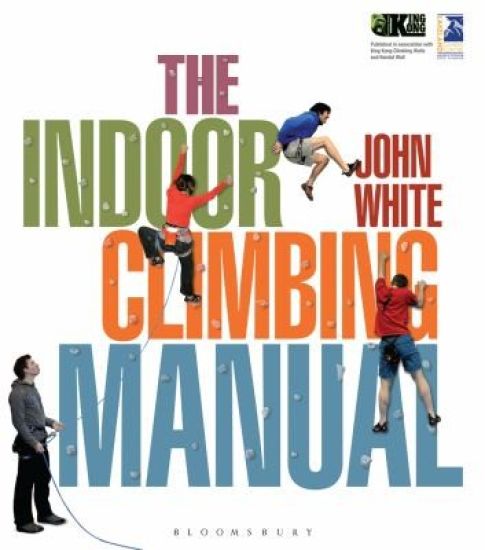
Climbing indoors has undergone a revolution. Indoor walls are no longer seen as simply a means to help climbers develop skills and get a bit fitter for ‘the real thing’. These days many climbers prefer them, opting for the security of bolt-protected, weatherproof climbs. And why not? Excellent climbing facilities have sprung up everywhere, from primary schools and universities to massive, purpose-built centres offering hundreds of climbs and dedicated training facilities. And some climbers are buying the holds from specialised companies and setting up walls at home. The Indoor Climbing Manual is an authoritative and comprehensive guide, steering the reader through the variety of styles, skills and techniques needed to master the climbing wall, and includes: - An introduction to the equipment required - Top rope climbing, lead climbing and bouldering techniques - Advanced techniques and training to improve your climbing - Guidelines on how to climb safely and prevent injury - Tips for the transition from indoor to outdoor climbing - An overview of competitive climbing
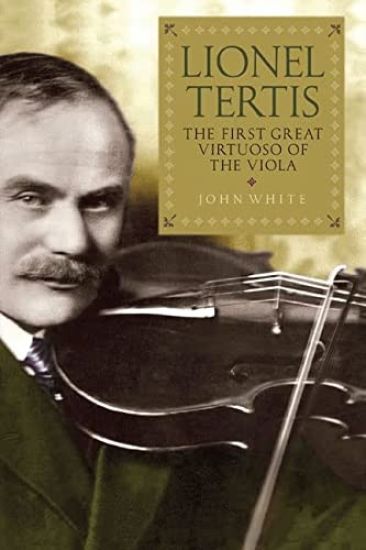
This new biography examines the life and work of Lionel Tertis, almost solely responsible for the rise of the viola in the twentieth century. Lionel Tertis [1876-1975] stands in the company of Ysaÿe, Kreisler, Casals, Thibaud and Rubinstein as one of the greatest instrumentalists - and arguably the greatest viola player - of all time. Such composers as Arnold Bax, Holst, and Vaughan Williams all wrote significant works for him; he was a member of a number of prominent string quartets; and he was later to design and promote his own 'Tertis model' viola. He is virtually synonymous with the increasing importance of the viola as a solo and recital instrument alongside the violin and the cello. This biography, the first full-length survey of his life, tells how he rose from humble beginnings to become 'the father of themodern viola'. It explores in detail his long and distinguished career, persuading composers to write works for the viola, arranging existing works for the instrument, editing and performing the music, teaching and coaching in Great Britain, and his performances in the United States. JOHN WHITE is a prominent viola teacher and performer; in 2000 he was awarded the International Viola Society's highest award for distinguished scholarship and contributions to the viola.
John White's study is the most substantial work on what the aims of education should be since Whitehead's Aims of Education of 1929. It draws on material not only from schools and colleges, but also from the broader educative or miseducative nature of the 'ethos' of society and some of its major institutions. Sifting the different views about aims which are now prevalent and circulating in the world of education, he integrates the more defensible of them into an articulated set of positive recommendations. The study takes a broadly philosophical and non-technical stand; it is written to help practitioners orient themselves in what is often bewildering territory, at a time when the question of what the aims of education ought to be has acquired a new urgency for politicians and educational administrators, as well as for those directly involved in educational institutions, head teachers and their staff.
John 3:16 - Perhaps the best-known and most quoted verse of Scripture in the world. It is also universally misunderstood. On the surface, this verse, like so many others in the Word of God, appears simple. However, after much study and contemplation, we can reveal its many deep and complex meanings. Within this 34-chapter volume, we attempt to thoroughly cover each and every facet of this most important of verses.
What is the highest state of consciousness? St. Paul called it "the peace that passeth understanding" and R. M. Bucke named it "cosmic consciousness." In Zen Buddhism, the term for it is satori or kensho, while in yoga it is samadhi or moksha, and in Taoism, "the absolute Tao." Thomas Merton used the phrase "transcendental unconscious" to describe it; Abraham Maslow coined the term "peak experience"; Sufis speak of fana. Gurdjieff labeled it "objective consciousness" while the Quakers call it "the Inner Light." Jung referred to individuation, and Buber spoke of the I-Thou relationship. In this anthology John White brings together a diverse collection of writings by contemporary thinkers such as Aldous Huxley, P. D. Ouspensky, Alan Watts, Kenneth Wapnick, Richard Maurice Bucke, Abraham Maslow, and many more, and asks the question; What is the Highest State of Consciousness?