Kirjojen hintavertailu – 12 903 724 kirjaa ja 27 kauppaa

Kirjailija

Office of Air Force History

Kirjat ja teokset yhdessä paikassa: 219 kirjaa, julkaisuja vuosilta 1983–2015, suosituimpiin kuuluu Pearl to V-J Day: World War II in the Pacific. Vertaile teosten hintoja ja tarkista saatavuus suomalaisista kirjakaupoista.

219 kirjaa

Kirjojen julkaisuvuodet: 1983–2015.

The Cold War And Beyond: Chronology of the United States Air Force 1947-1997

The Cold War And Beyond: Chronology of the United States Air Force 1947-1997

U. S. Air Force; Office of Air Force History

Createspace Independent Publishing Platform
2015
nidottu
This chronology commemorates the golden anniversary of the establishment of the United States Air Force (USAF) as an independent service. Dedicated to the men and women of the USAF past, present, and future, it recordssignificant events and achievements from 18 September 1947 through 9 April 1997. Since its establishment, the USAF has played asignificant role in the events that have shaped modem history. Initially, the reassuring drone of USAF transports announced the aerial lifeline that broke the Berlin blockade, the Cold War's first test of wills. In the tense decades that followed, the USAF deployed a strategic force of nuclear-capableintercontinental bombers and missiles that deterred open armed conflict between the United States and the Soviet Union. During the Cold War's deadly flash points, USAF jets roared through the skies of Korea and Southeast Asia, wresting air superiority from their communistopponents and bringing air power to the support of friendly ground forces. In the great global competition for the hearts and minds of the Third World, hundreds of USAF humanitarian missions relieved victims of war, famine, and natural disaster. The Air Force performed similar disasterrelief services on the home front. Over Grenada, Panama, and Libya, the USAF participated in key contingency actions that presaged post-Cold War operations.
History of the Air Corps Tactical School 1920 - 1940

History of the Air Corps Tactical School 1920 - 1940

U. S. Air Force; Office of Air Force History

Createspace Independent Publishing Platform
2015
nidottu
In the 1930s the Air Corps Tactical School at Maxwell Field, Alabama, was the birthplace and nurturing ground for American air doctrine. The work undertaken at the school became manifest in the skies over Europe, the Mediterranean, and the Pacific in the Second World War. Those who studied and taught there were the same individuals who prepared America for war, and then led its airmen into combat. This bandof men spawned and shaped the independent United States Air Force in the postwar era. Their influence is still felt today, for they developed theairpower doctrines and institutions that enabled the United States to prevail in the Cold War. Their strategic vision, evolved from the thoughts of Douhet, Mitchell, and Trenchard, is now embodied in the Air Force's notion of Global Reach-Global Power. The legacy of the Air Corps Tactical School continues on with the comprehensive programs of the Air University, the world's premier airpower training institution. From flight within the atmosphere to flight within space, American airmen fly their missions based on principles enunciated in the lecture halls of Maxwell AirForce Base.
The Home Front and War in the Twentieth Century: The American Experience in Comparative Perspective

The Home Front and War in the Twentieth Century: The American Experience in Comparative Perspective

U. S. Air Force; Office of Air Force History

Createspace Independent Publishing Platform
2015
nidottu
The essays and commentaries which form this volume originally were presented at the Tenth Military History Symposium which was held at the United States Air Force Academy on October 20-22, 1982. The Military History Symposiumis a biennial event sponsored jointly by the Department of History and the Association of Graduates, United States Air Force Academy. The purpose of this series is to provide a forum in which scholars may present the results of theirresearch in military affairs. We hope in this way to encourage interest in a vital subject among civilian and military scholars, members of the armed forces, and the cadets of the United States Air Force Academy. Any undertaking of the magnitude and scope of the Tenth Military History Symposium accumulates many debts. Primary thanks are owed to the superb group of scholars who gathered at the Academy to deliver papers, offer commentaries, and moderate the various sessions. Such value as this volume may possess is due entirely to their vigorous scholarship and willingness to share their erudition with the rest of us. Even historians in uniform belong to a wider community of scholars whose members exchange ideas and information as they pursue a common objective of understanding the past. Many friends of the Department of History offered suggestions and critical insights which contributed significantly to the success of the Tenth Military History Symposium
Search and Rescue in Southeast Asia

Search and Rescue in Southeast Asia

Office of Air Force History; U. S. Air Force

Createspace Independent Publishing Platform
2015
nidottu
Search and rescue has always been important to the United States Air Force, whose aircrews deserve nothing less than the fullest possible commitment to save them and return them home. The motto of Air Force search and rescue, "So Others May Live," is one of the most compelling of all military mottoes. It embodies this spirit of altruism and, as events have proven, also indicates the service's intention to furnish life-saving SAR for civilian as well as military purposes. Search and rescue flourished during World War II as lifeguard ships and submarines joined patrolling aircraft in saving lives and sustaining morale, especially in the Pacific Ocean Areas. Therotary-wing, turbojet, and avionics revolutions made modern SAR a reality. Foreshadowed by the Korean War, the helicopter became the principal form of air rescue vehicle in Vietnam. In three major conflicts, SAR forces gained a reputation for bravery, dedication, and self-sacrifice, as they ventured repeatedly into hostile territory to pluck fallen aircrews to safety. The USAF rightly continues to place a top priority on search and rescue, seeking better ways to perform this function through the use of advanced equipment and aircraft (such as the multipurposeMH-53J Pave Low helicopter) and improved training of personnel. This reprint of a classic work offers the reader an exciting and exacting history of the evolution of combat search and rescue in America's longest and most grueling war: the conflict in SoutheastAsia.
Seventy-Five Years of Inflight Refueling Highlights, 1923-1998

Seventy-Five Years of Inflight Refueling Highlights, 1923-1998

U. S. Air Force; Office of Air Force History

Createspace Independent Publishing Platform
2015
nidottu
The U. S. Air Force's development of aerial refueling cannot be attributed to any one person, but among all of those involved, General Curtis E. LeMay remains an outstanding figure. During his nine years as SAC commander, LeMay built the U. S. aerial refueling capability into what waspractically an air force unto itself, an "invisible" foundation for the nation's original nuclear deterrent. With only a bit of exaggeration, it can be said that the KC- 135 was his airplane. When LeMay retired as Air Force Chief of Staff on February 1, 1965, Boeing already had delivered its 732d and last KC-135 tanker. At the time, SAC had forty-nine tanker squadrons with 641 KC-135s, with almost 200 other KC- 135 variants performing a bewildering number of specialized military missions. During the quarter-century after General LeMay retired, land- and sea-based ballistic missile forces gradually upstaged manned bombers. LeMay had left "all those tankers" in the wake of his career, and some people had wondered openly what the Air Force would do with them. First, the tactical air forces and B- 52 bombers answered that question in Southeast Asia. After the experience of the airlift to Israel, the Military Airlift Command had its own answer. In no way could tankers be considered surplus to anything, much less a declining asset. On October I, 1990, as hundreds of SAC tankers were cruising over the Atlantic Ocean and the Mediterranean Sea, refueling fighters and transports on their way to Operation DESERT SHIELD, and other tankers were offioading fuel to support intensive combat training exercises overSaudi Arabia in anticipation of DESERT STORM, Curtis Emerson LeMay died at March AFB, California, just six weeks short of his eighty-fourthbirthday. Within two years, at midnight on May 31, 1992, the mighty Strategic Air Command passed silently into history. Three new organizations dividedits assets: the Strategic Command acquired the intercontinental missiles and some bombers, the Air Combat Command (formerly TAC) got what remained of the big bombers and some of the aerial tankers, and the Air Mobility Command (the old MAC) gained most of the tankers. The Old Order changeth; it was the end of an era.
Silver Wings, Golden Valor: The USAF Remembers Korea

Silver Wings, Golden Valor: The USAF Remembers Korea

U. S. Air Force; Office of Air Force History

Createspace Independent Publishing Platform
2015
nidottu
To some people, the Korean War was just a "police action," preferring that euphemism to what it really was - a brutal and bloody war involving hundreds of thousands of air, ground, and naval forces from many nations. It was also termed a "limited war," in that it took place in a small region of the world versus the worldwide conflict that had ended less than five years earlier. But this "police action," this "limited war," cost an estimated 2.4 million military casualties on both sides, while at least another 2 million civilians were also casualties. The United States military alone suffered 33,742 killed and another 103,234 wounded. The war in the air was as bloody and violent as that on the ground. The United Nations air forces lost 1,986 aircraft, with the USAF sustaining 1,466 of these. Air Force personnel casualties totaled 1,841, including 1,180 dead. These losses were far greater than can be accounted for in the glib terms "police action" and "limited war." As the years passed following the end of the war, Korea receded in memory. Another war - in Southeast Asia - became lodged in the public's mind, and the Korean War became "forgotten." But to those veterans and historians alike participating in the proceedings recorded in this volume, their reminiscences and perspectives provide the reader with compelling arguments why the Korean War deserves to be remembered.
Soldiers and Statesmen: The Proceedings of the 4th Military History Symposium United States Air Force Academy, 22-23 October 1970

Soldiers and Statesmen: The Proceedings of the 4th Military History Symposium United States Air Force Academy, 22-23 October 1970

U. S. Air Force; Office of Air Force History

Createspace Independent Publishing Platform
2015
nidottu
This symposium, the fourth in the series sponsored jointly by the Department of History and the Association of Graduates of the Air ForceAcademy, was of particular interest to those of us charged with responsibility for professional education in the military services. Especially at the National War College, most of whose graduates move on to high staff and command responsibilities, the value of so enlightened a discussion of the relationships between soldiers and statesmen cannot be overemphasized. Statecraft through the ages has called upon the soldier and the statesman to play vital roles in attaining the preeminent goal of national security. There has been a tendency, particularly in recent years, to separate and often dichotomize the two professions. In part this can be attributed to scholarly commentators who, for legitimate analytical purposes, often separate the two elements. This intellectual division is further compounded by the increasing degree of functional specialization required of the modernsoldier and diplomat. Today's national security policy-maker, as compared to his predecessors of only a generation ago, requires much greatertechnical knowledge and expertise. It is little wonder then that a type of myopic egocentrism develops as the soldier or diplomat wrestles with the complex problems of the "here and now." Inundated with data, beset by the conflicting advice of subordinates and demands of superiors, and inexorably constrained by compressed decision time, he has little opportunity to reflect on the wider implications of his decisions. Yet it is not an exaggeration to insist that in our age and in the foreseeable future the soldier and the diplomat must work together more closely than ever before. Nuclear weapons and Vietnam have demonstrated both the strength and the limitations that can be placed on the use of military force; the Cold War and containment have provided a similar demonstration for diplomacy. The development of a new modus vivendi poses challenges of the highest order as new power configurations emerge to displace the old and as increased demands for solution of domestic problems attain higher priority in the competition for limited national resources. The challenge, however, is not limited to the practitioners of statecraft. It is here that the scholar must lend his talents, not only to provide the elongated perspective of history, which helps free us from generational egocentrism, but also to collect, distill, and collate the wisdom of the giantsupon whose shoulders new pygmies will build. The scholars, both guest and resident, at the Fourth Military History Symposium of the United States Air Force Academy have more than mettheir challenge. For this reason, therefore, I commend to statesman and soldier, as well as to other interested scholars, this, the record of theirproceedings.
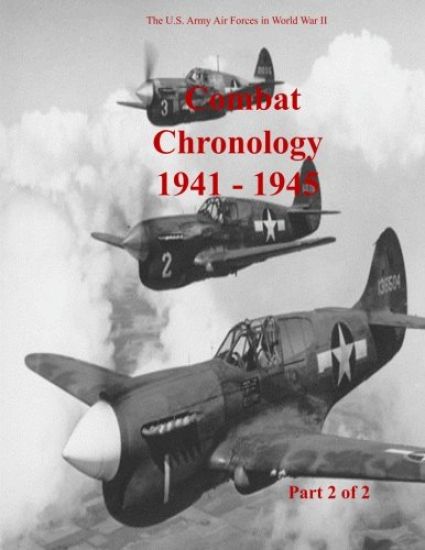
Combat Chronology 1941-1945 (Part 2 of 2)

Combat Chronology 1941-1945 (Part 2 of 2)

U. S. Air Force; Office of Air Force History

Createspace Independent Publishing Platform
2015
nidottu
Part 2 of 2The chronology is concerned primarily with operations of the US Army Air Forces and its combat units between December 7, 1941 and September 15, 1945. It is designed as a companion reference to the seven-volume history of The Army Air Forces in World War II, edited by Wesley Frank Craven and James Lea Cate. Theresearch was a cooperative endeavor carried out in the United States Air Force historical archives by the Research Branch of the Albert F. Simpson Historical Research Center. Such an effort has demanded certain changes in established historical methodology, as well as some arbitrary rules for presentation of the results. After International and US events, entries are arranged geographically. They begin withevents at Army Air Forces Headquarters in Washington then proceed eastward around the world, using the location of the headquarters of the numbered air forces as the basis for placement. For this reason, entries concerning the Ninth Air Force while operating in the Middle East follow Twelfth Air Force. When that headquarters moves to England in October 1943, the entries are shifted to follow Eighth Air Force. The entries end with those numbered air forces which remained in the Zone of the Interior, as well as units originally activated in the ZI, then designated for later movement overseas, such as Ninth and Tenth Air Forces. The ZI entries do not include Eighth and Twentieth Air Forces, which were established in the ZI with the original intent of placing them in those geographical locations with which they became historically identified. For these two units, original actions are shown either under AAF or in their intended geographic area of location. All times and dates used are those of the area under discussion. The entry "1/2 Jun" indicates that an event occurred during the night between the two given dates, while "1-2 Jun" indicates an action over a period of time. In dealing with people, again arbitrary decisions were implemented. For military men below the general officer or equivalent level, full grade and name were used. For general officers and those of equal grade in other US and foreign services, thecomplete rank (both that at the time first mentioned and the highest rank held prior tothe end of the war) and name will be found in the index. Only an abbreviated rank (e.g., Gen or Adm) and last name are used in the text. The exception is where two general officers had the same last name; in such cases, the first name is also included. Similarly for civilian leaders, only the last name is used; full name and title are givenin the index. Location of all towns, islands, etc., is also made in the index. In all cases, attempts were made to cite place names in use by the native population at the time of or immediately before the war. No names imposed by a conqueror are used. For example Pylos Bay, not Navarino Bay, is used. Further, as appropriate, native geographic termsare used: Shima for island in. Japanese island groups, See for lake in Germany. However, two exceptions were made. In cases in which the place became infamous because of the actions of the conquering power, that name is preferred-for example Auschwitz would be used rather than the Polish name of Oswiecim. Also, in larger international cities, such as Roma, Koln and Wien, the anglicized name is used. Where a village or hamlet was difficult to locate or where there were several such places with the same name in a general area, the coordinates are given in the index. In some cases, with no extant navigational aids of the attacking force, the best possibleguess was made based upon all available evidence. In other instances, such as the bridge at Hay-ti-attacked so often by Tenth Air Force-- a logical guess could not be made. In these cases, a question mark is placed in brackets after the index entry. Accent marks, such as umlauts, were omitted.
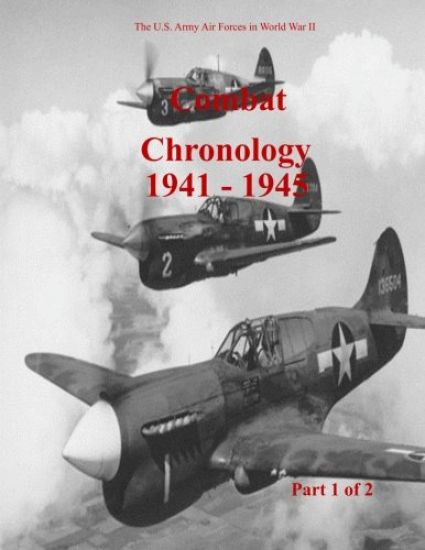
Combat Chronology 1941-1945 (Part 1 of 2)

Combat Chronology 1941-1945 (Part 1 of 2)

U. S. Air Force; Office of Air Force History

Createspace Independent Publishing Platform
2015
nidottu
Part 1 of 2The chronology is concerned primarily with operations of the US Army Air Forces and its combat units between December 7, 1941 and September 15, 1945. It is designed as a companion reference to the seven-volume history of The Army Air Forces in World War II, edited by Wesley Frank Craven and James Lea Cate. Theresearch was a cooperative endeavor carried out in the United States Air Force historical archives by the Research Branch of the Albert F. Simpson Historical Research Center. Such an effort has demanded certain changes in established historical methodology, as well as some arbitrary rules for presentation of the results. After International and US events, entries are arranged geographically. They begin withevents at Army Air Forces Headquarters in Washington then proceed eastward around the world, using the location of the headquarters of the numbered air forces as the basis for placement. For this reason, entries concerning the Ninth Air Force while operating in the Middle East follow Twelfth Air Force. When that headquarters moves to England in October 1943, the entries are shifted to follow Eighth Air Force. The entries end with those numbered air forces which remained in the Zone of the Interior, as well as units originally activated in the ZI, then designated for later movement overseas, such as Ninth and Tenth Air Forces. The ZI entries do not include Eighth and Twentieth Air Forces, which were established in the ZI with the original intent of placing them in those geographical locations with which they became historically identified. For these two units, original actions are shown either under AAF or in their intended geographic area of location. All times and dates used are those of the area under discussion. The entry "1/2 Jun" indicates that an event occurred during the night between the two given dates, while "1-2 Jun" indicates an action over a period of time. In dealing with people, again arbitrary decisions were implemented. For military men below the general officer or equivalent level, full grade and name were used. For general officers and those of equal grade in other US and foreign services, thecomplete rank (both that at the time first mentioned and the highest rank held prior tothe end of the war) and name will be found in the index. Only an abbreviated rank (e.g., Gen or Adm) and last name are used in the text. The exception is where two general officers had the same last name; in such cases, the first name is also included. Similarly for civilian leaders, only the last name is used; full name and title are givenin the index. Location of all towns, islands, etc., is also made in the index. In all cases, attempts were made to cite place names in use by the native population at the time of or immediately before the war. No names imposed by a conqueror are used. For example Pylos Bay, not Navarino Bay, is used. Further, as appropriate, native geographic termsare used: Shima for island in. Japanese island groups, See for lake in Germany. However, two exceptions were made. In cases in which the place became infamous because of the actions of the conquering power, that name is preferred-for example Auschwitz would be used rather than the Polish name of Oswiecim. Also, in larger international cities, such as Roma, Koln and Wien, the anglicized name is used. Where a village or hamlet was difficult to locate or where there were several such places with the same name in a general area, the coordinates are given in the index. In some cases, with no extant navigational aids of the attacking force, the best possibleguess was made based upon all available evidence. In other instances, such as the bridge at Hay-ti-attacked so often by Tenth Air Force-- a logical guess could not be made. In these cases, a question mark is placed in brackets after the index entry. Accent marks, such as umlauts, were omitted.
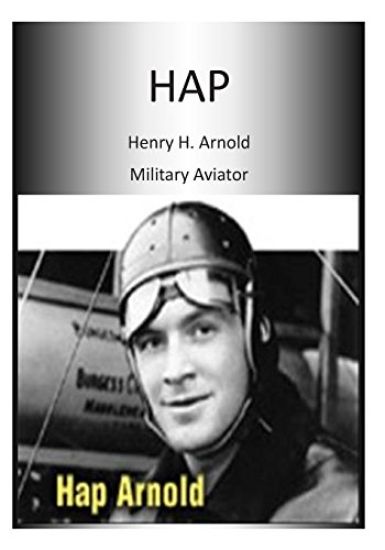
Hap: Henry H. Arnold Military Aviator

Hap: Henry H. Arnold Military Aviator

U. S. Air Force; Office of Air Force History

Createspace Independent Publishing Platform
2015
nidottu
Born in Pennsylvania on June 25, 1886, Henry Harley Arnold spent his youth in a home a few miles west of Philadelphia. His father, anauthoritarian, conservative, and austere physician, so dominated the household that his children were not allowed to speak at the dinner table. Young Arnold reacted to this rigid upbringing in two ways. First, although he learned to submit to authority when necessary, he also developed astreak of contrariness that, on occasion, led him to oppose the powers that be when he disagreed with them on important issues. Second, whenArnold achieved positions of high command and stress, he reverted to type and adopted his father's authoritarian ways, which blended well with the management philosophy of the in the first half of the twentieth century. Arnold did not lead by attempting to create consensus. While genetic circumstance gives some individuals a stem, unsmiling physiognomy, it played the opposite trick on Arnold, affixing an almostpermanent smile on his face. By the 1920s that smile would earn him the nickname of "Happy," soon shortened to "Hap."' On first meetings hisapparent insouciance could lead others to misjudge both his ability and his tenacity. However, during World War II, members of the U. S. Army Air Forces Air Staff soon learned that the general's countenance retained its smile, even as he verbally cut subordinates to ribbons. At West Point and later Arnold displayed a mischievous, impertinent bent in accord with hislooks. But Arnold had a ruthless impatience with failure, slackness, and incompetence coupled with a furious, sometimes uncontrolled, temper. Above all, he relentlessly drove himself and those around him to succeed at their tasks. His staff and subordinates felt his fire. As he matured he saved most of his charm for his superiors.
The High Road to Tokyo Bay: The AAF in the Asiatic-Pacific Theater

The High Road to Tokyo Bay: The AAF in the Asiatic-Pacific Theater

U. S. Air Force; Office of Air Force History

Createspace Independent Publishing Platform
2015
nidottu
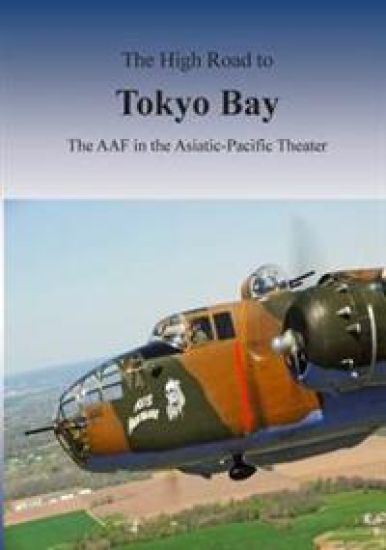
In early 1942, Japanese military forces dominated a significant portion of the earth's surface, stretching from the Indian Ocean to the Bering Sea and from Manchuria to the Coral Sea. Just three years later, Japan surrendered, having lost most of its vast domain. Coordinated action by Allied air, naval, and ground forces attained the victory. Air power, both land- and carrier-based, played a dominant role. Understanding the Army Air Forces' role in theAsiatic-Pacific theater requires examining the context of Allied strategy, American air and navaloperations, and ground campaigns. Without thesurface conquests by soldiers and sailors, AAF fliers would have lacked bases close enough to enemy targets for effective raids. Yet, without Allied air power, these surface victories would have been impossible. The High Road to Tokyo Bay concentrates on theArmy Air Forces' tactical operations in Asia and thePacific areas during World War II. A subsequentpamphlet will cover the strategic bombardment ofJapan.
Like a Thunderbolt: The Lafayette Escadrille and the Advent of American Pursuit in World War I

Like a Thunderbolt: The Lafayette Escadrille and the Advent of American Pursuit in World War I

U. S. Air Force; Office of Air Force History

Createspace Independent Publishing Platform
2015
nidottu
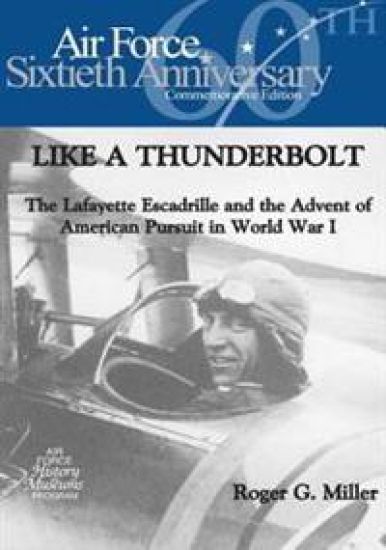
The advent of an American squadron, or "escadrille," within the French air force, the Service A ronautique, had been far from a simple process. French leaders initially held the belief, common at the time, that the war begun in 1914 would be a short one. The potential value of American volunteers fighting for France both for propaganda purposes and for helping bring the power of the New World into the war on the side of the Allies was thus irrelevant at first. By early 1915, however, the French began to accept American volunteers and assign them toescadrilles. In early 1916, the Service A ronautique united several of these men in an elite chasse unit, which quickly earned an enviable reputation for audacity, bravery, and lan. Success of this unit, the Lafayette Escadrille, had three consequences. First, its existence encouraged a large number of Americans, far more than needed in one escadrille, to volunteer for French aviation. These individuals, identified unofficially as members of a "Lafayette Flying Corps," served in numerous French air units. Second, the publicity surrounding the Lafayette Escadrille contributed favorable press for the Allied cause, strengthened ties between France and the U. S., and ultimately helped prepare the U. S. to participate on the Allied side of the conflict. Third, the existence of a large body of experienced American pilots provided combat veterans for the Air Service of the American Expeditionary Forces (AEF) in France when the U. S. ultimately entered the war. These veterans helped instill in the U. S. Air Service the attitudes and practices of the Service A ronautique, an infusion especially reflected in two U. S. pursuit squadrons, the 103rd Aero Squadron, made up of Lafayette Escadrille pilots, and the 94th AeroSquadron, the most famous American combat squadron of the war. Further, this body of veterans influenced all U. S. pursuit units as Lafayette personnel spread throughout the Air Service. This was not the whole story, though. In early 1918, two pursuit units, the 27th and 147th Aero Squadrons, joined with the 94th and 95th Aero Squadrons to form the 1st Pursuit Group, the U. S. Air Service's first and most famous combat groupand forerunner of the U. S. Air Force's present-day wings. These, however, were British-trained squadrons commanded by Royal Flying Corps (RFC) veterans, and they contributed a British ethos to the American pursuit force, an ethos characterized by emphasis on the offensive at all hazards. Finally, and perhaps most important, the U. S. Army officers who created and commanded the U. S. Air Service had their own shared identity and sense of professionalism, that of the regular U. S. Army and of the Military Academy at West Point. By late 1918, the Air Service in France had begun to develop its own leaders who, whether imbued with the attributes of the French, British, or American systems, or a combination thereof, brought their own standards and practices toAmerican pursuit. Perhaps no one epitomized this contribution more than the eventual U. S. ace-of aces, Edward V. "Eddie" Rickenbacker. The final result in the early 1920s was a distinctly American fighter force with a special sense of identity.
A Pattern for Joint Operations: World War II Close Air Support, North Africa.

A Pattern for Joint Operations: World War II Close Air Support, North Africa.

U. S. Air Force; Office of Air Force History

Createspace Independent Publishing Platform
2015
nidottu
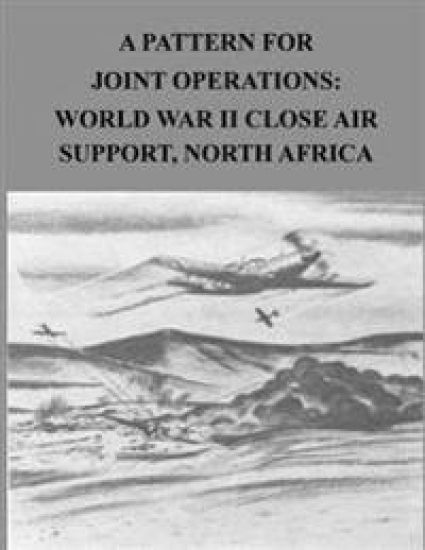
This study in the Historical Analysis Series examines a subject of importance not only to the Army but also to the Air Force: the origin and development of American close air support doctrine and practice in World War II. The idea for the study resulted from a review of the Memorandum of Understanding between theArmy and Air Force chiefs of staff, concluded on 22 May 1984, and of the initiatives that emerged from that historic document, particularly Initiative 24, which reaffirmed the Air Force's mission to provide close air support to the Army. The project has been a cooperative effort between the U. S. Army Center of Military History and the U. S. A. F. Office of Air Force History; an Air Forcehistorian was assigned to write the study under the supervision of the Center of Military History. The resulting work, ultimately the best judgment of the author based on historical evidence, is titled A Pattern for Joint Operations: World War IIClose Air Support, North Africa. The concentration is on the North African campaign because that was the first major large-unit test of American ground armies in World War II, and in that campaign the basic system of close air supportfor American ground and air forces in World War II was first worked out. Close air support doctrine both then and now is critical to the services. As this study demonstrates, the doctrine that had been conceived and practiced prior to the first American battles of World War II fell apart in the mud and fog of Tunisia. Both air and ground commanders in 1941 recognized the necessity of closecooperation between the staffs and forces in joint and combined forces. What they had to learn in 1942 was the degree to which close air support doctrine tested that cooperation and required alteration. The struggle of ground and air leaders to define and construct a command and control system, and ultimately to allocate and commit precious air resources to requisite ground missions, has as many lessons today as it did more than forty years ago.
Planning and Organizing the Postwar Air Force 1943-1947

Planning and Organizing the Postwar Air Force 1943-1947

U. S. Air Force; Office of Air Force History

Createspace Independent Publishing Platform
2015
nidottu
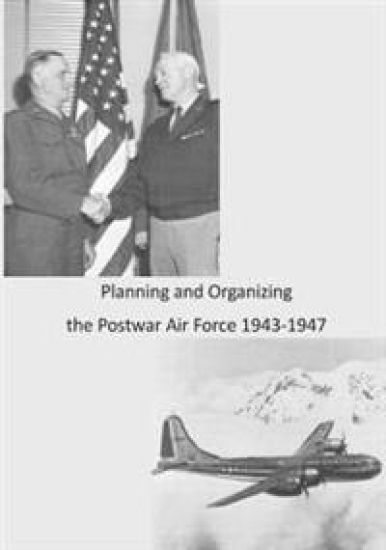
One of the longest and most bitter disputes in twentieth century military affairs has been over the organization of the armed forces, particularly the question of independence for the air forces. From the early period of powered flight apostlesof air power, such as the Italian General GuilioDouhet, argued that the proper employment of aviation in war required the massing of air armadas independent of ground or naval forces. As it developed in the United States in the 1920s and 1930s, the dispute was not simply self-serving or bureaucratic-for power or prestige, rank or budget. The argument over an independent air force cut to the very heart ofnational defense, for who controlled air policy, air doctrine, buying of aircraft, military training, and the structure of the air forces determined the type of military forces the nation would possess and how aviation would be used in war. Ultimately, organization would determine whether the United States would succeed in the air battle and, in the minds of the protagonists, whether the United States would win in In this excellent work of narrative and analysis, Herman Wolk of the Office of Air Force History untangles the complex history that led to the birth of the United States Air Force after World War II. After surveying the struggle for independence to 1941, and planning during World War II for a postwar air force, Mr. Wolk details the events that resulted in the formation of a separate Air Force in September 1947. Significantly, the new Air Force at its birth already possessed a long history and a rich heritage: some forty years as part of the Army, service in two world wars, and a fully developed understanding of its usefulness in war. The new Air Force possessed leaders who knew that how the service was constructed and how it was led and administered would affect how air power could be used, and whether it could contribute fully to the nation's security. Furthermore, the author puts this important story into the broader context of late World War II thinking aboutpostwar defense, and the fierce struggles between 1945 and 1947 over service roles and missions, budgets, and the shape of military policies and forces. There is also another story in these pages, less dramatic but equally important: the birth of a military service. Few times are more crucial for an institution than the era of its birth, when the basic structure of the organization is established and procedures worked out for the conduct of routine organizational activity. The precedents established often survive far into the future. They provide benchmarks against which change is considered or implemented, and from the beginning that first structure and set of procedures shape the life of the institution, from the making of high policy down to the most mundane details of administrative routin
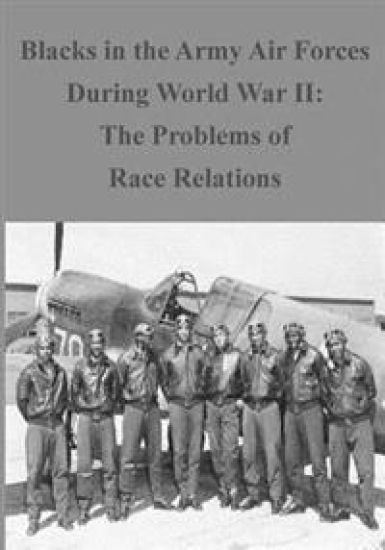
Blacks in the Army Air Forces During World War II: The Problems of Race Relation

Blacks in the Army Air Forces During World War II: The Problems of Race Relation

U. S. Air Force; Office of Air Force History

Createspace Independent Publishing Platform
2015
nidottu
This book is based upon a PH. D dissertation written by an Air Force officer who studied at the University of Denver. Currently an Associate Professor of History at the Air Force Academy, Major Osur's account relates how the leadership in the War Department and the U. S. Army Air Forces (USAAF) tried to deal with the problem of race andthe prejudices which were reflected in the bulk of American society. It tells a story of black racial protests and riots which such attitudes anddiscrimination provoked. The author describes many of the discriminatory actions taken against black airmen, whose goal was equality oftreatment and opportunities as American citizens. He also describes the role of black pilots as they fought in the Mediterranean theater of operations against the Axis powers. In his final chapters, he examines the continuing racial frictions within the Army Air Forces which led to black servicemen protests and riots in 1945 at several installations. Despite these problems, the author concludes that the Army Air Forces made substantial progress in race relations and in opening up additional career opportunities for black airmen in the post-1945 period.
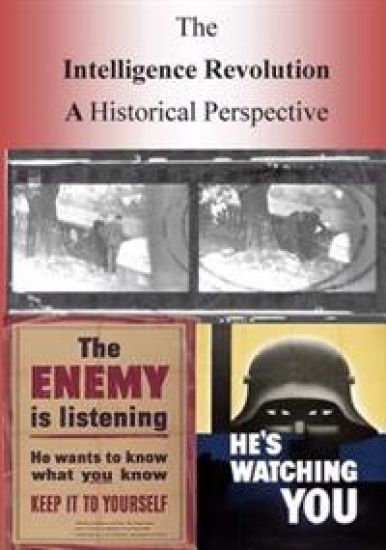
The Intelligence Revolution: A Historical Perspective

The Intelligence Revolution: A Historical Perspective

U. S. Air Force; Office of Air Force History

Createspace Independent Publishing Platform
2015
nidottu
It is commonplace within and outside the intelligence community to acknowledge the predominant role of technology in the collection, dissemination, and even analysis of information. With roots traceable to events in the late 1800s, this technological phenomenon loomed ever largerin the twentieth century. The increasing reliance on photographic, signals, and electronic intelligence has been viewed with varying degrees of celebration and concern by scholars and intelligence professionals. This volume contains the essays and commentaries originally presented at the Thirteenth Military Symposium held to address this topic at the United States Air Force Academy from October 12 to 14, 1988. The participantsin the conference attempted to provide a preliminary evaluation of the transformations that have occurred within the military intelligence community as a consequence of the Second World War. Not only did that conflict accelerate advances in technical means of collection, it also led to aninternational willingness to share intelligence on an unprecedented scale. The years 1939-1945 therefore witnessed a true "revolution" in intelligence collection and cooperation. That war also caused an interrelated growth in organizational size, efficiency, and sophistication that helped gain the craft of intelligence an acceptance in operational circles that it had not previously enjoyed. While this intelligence story is one of significant individual and corporate achievement, nearly all the participants in this conference reminded listeners of the inherent limitations of research into aspects of the subject that remain sensitive for today's national security. That is the salient lesson of these essays. Access to intelligence source material is limited and historians areoften frustrated with conditions that necessitate less than full disclosure on many subjects. Nevertheless, with the growing awareness by the public of both the high cost of technology and the central role of intelligence in the national decision-making process, the citizenry can legitimately argue its own "need-to-know." An assessment of the role and importance of intelligence-and the effectiveness of the attendant technologies--can clearly benefit from the objective perspective of the historian. The Symposium in Military History is a biennial event jointly sponsored by the Air Force Academy's Department of History and its Association of Graduates. It provides a public forum for academic scholars, militaryprofessionals, Academy cadets, and concerned citizens to exchange ideas on military affairs and military history.
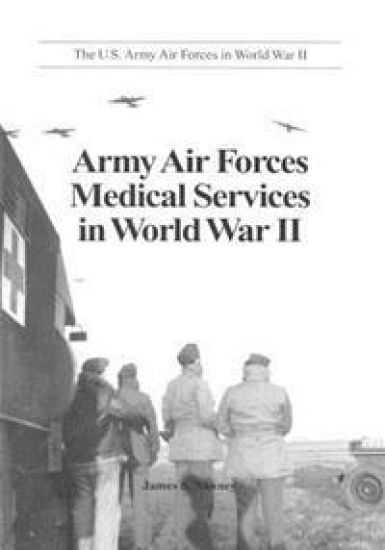
Army Air Forces Medical Services in World War II

Army Air Forces Medical Services in World War II

U. S. Air Force; Office of Air Force History

Createspace Independent Publishing Platform
2015
nidottu
This history summarizes the Army Air Forces (AAF) medical achievements that led to the creation of the Air Force Medical Servicein July 1949. When the United States entered World War II, our nation's small aviation force belonged to the U. S. Army and relied on the Army medical system for support. The rapid expansion of the AAF and the medical challenges of improved aircraft performance soon placed great strain on the ground-oriented Army medical system. By the end of the war, the AAF had successfully acquired its own medical system oriented to the special needs of air warfare. This accomplishment reflected the determined leadership of AAF medical leaders and the dedication of thousands of medical practitioners who volunteered for aviation medical responsibilities that were often undefined or unfamiliar to them. In the face of new challenges, many American medics responded with hard work and intelligence that contributed greatly to Allied air superiority.