Kirjojen hintavertailu – 12 859 819 kirjaa ja 27 kauppaa

Kirjailija

Plato

Kirjat ja teokset yhdessä paikassa: 1 115 kirjaa, julkaisuja vuosilta 1821–2026, suosituimpiin kuuluu Ion. Vertaile teosten hintoja ja tarkista saatavuus suomalaisista kirjakaupoista.

1 115 kirjaa

Kirjojen julkaisuvuodet: 1821–2026.

Ion

Ion

Plato

Texas Public Domain
2020
pokkari
Do you want to read ION? If so then keep reading... Socrates figures in all of these, and they are considered the most faithful representations of the historical Socrates; hence they are also called the Socratic dialogues. Most of them consist of Socrates discussing a subject, often an ethical one (friendship, piety) with a friend or with someone presumed to be an expert on it. Through a series of questions he will show that apparently they don't understand it at all. It is left to the reader to figure out if "he" really understands "it". This makes these dialogues "indirect" teachings. This period also includes several pieces surrounding the trial and execution of Socrates. What are you waiting for ION is one click away, select the "Buy Now" button in the top right corner NOW
Ion

Ion

Plato

Mary Publishing Company
2020
pokkari
Do you want to read ION? If so then keep reading... Socrates figures in all of these, and they are considered the most faithful representations of the historical Socrates; hence they are also called the Socratic dialogues. Most of them consist of Socrates discussing a subject, often an ethical one (friendship, piety) with a friend or with someone presumed to be an expert on it. Through a series of questions he will show that apparently they don't understand it at all. It is left to the reader to figure out if "he" really understands "it". This makes these dialogues "indirect" teachings. This period also includes several pieces surrounding the trial and execution of Socrates. What are you waiting for ION is one click away, select the "Buy Now" button in the top right corner NOW
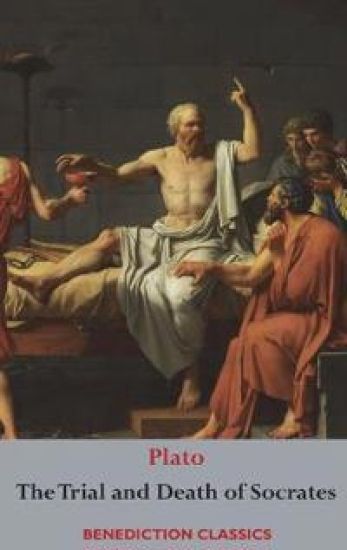
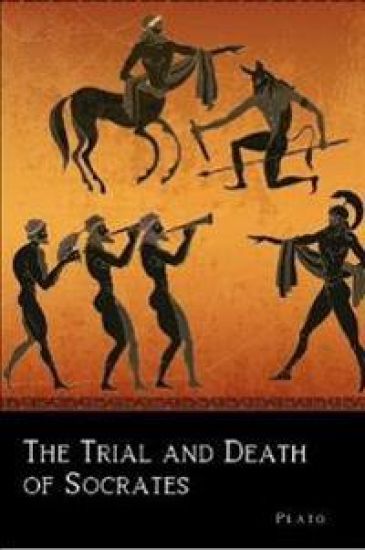
The Trial and Death of Socrates
The Trial and Death of Socrates remains a powerful document, partly because it is a true--perhaps in certain parts verbatim--account of the end of one of the greatest figures in history. In The Apology, Socrates defends himself before the Athenian court against charges of corrupting youth. Phaedo is the account, by a young man, of the actual last words and moments of Socrates. These are presented with scene-setting introductions to the historical situation.
The Trial and Death of Socrates Lib/E
The Trial and Death of Socrates remains a powerful document, partly because it is a true--perhaps in certain parts verbatim--account of the end of one of the greatest figures in history. In The Apology, Socrates defends himself before the Athenian court against charges of corrupting youth. Phaedo is the account, by a young man, of the actual last words and moments of Socrates. These are presented with scene-setting introductions to the historical situation.
Ion

Ion

Plato

Public Park Publishing
2020
sidottu
Do you want to read (Name of Book)? If so then keep reading... Socrates figures in all of these, and they are considered the most faithful representations of the historical Socrates; hence they are also called the Socratic dialogues. Most of them consist of Socrates discussing a subject, often an ethical one (friendship, piety) with a friend or with someone presumed to be an expert on it. Through a series of questions, he will show that apparently they don't understand it at all. It is left to the reader to figure out if "he" really understands "it". This makes these dialogues "indirect" teachings. This period also includes several pieces surrounding the trial and execution of Socrates. What are you waiting for (Book Name) is one click away, select the "Buy Now" button in the top right corner NOW
The Trial and Death of Socrates

The Trial and Death of Socrates

Plato

Benediction Books
2019
sidottu
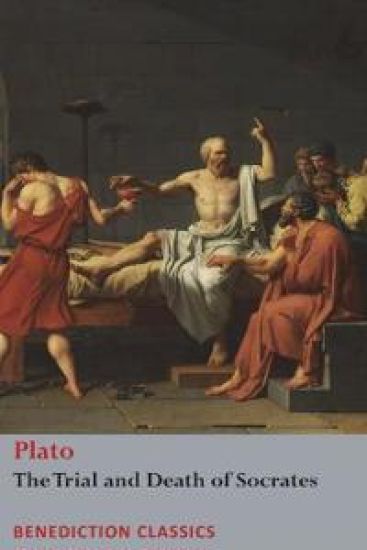
The Trial and Death of Socrates is the ideal compendium for a person wanting to learn more about the enigmatic and towering figure of Socrates--the philosopher who has most shaped the western world. This volume contains Euthyphro, The Apology of Socrates, Crito and Ph do. They follow the life, teaching and death of Socrates. These clear English translations make the timeless classics relevant.
The Trial and Death of Socrates

The Trial and Death of Socrates

Plato

Benediction Books
2019
pokkari
The Trial and Death of Socrates is the ideal compendium for a person wanting to learn more about the enigmatic and towering figure of Socrates--the philosopher who has most shaped the western world. This volume contains Euthyphro, The Apology of Socrates, Crito and Ph do. They follow the life, teaching and death of Socrates. These clear English translations make the timeless classics relevant.
Phaedo

Phaedo

Plato

Digireads.com
2019
pokkari
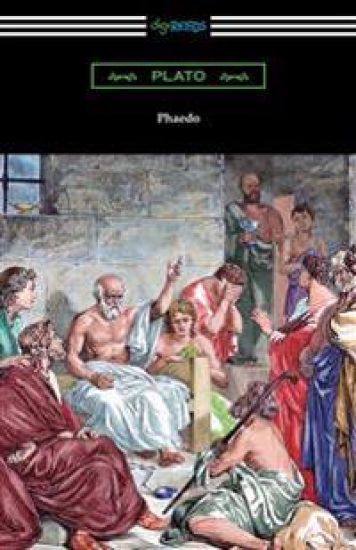
A classic work of ancient Greek literature from Plato, one of the most famous of all ancient Greek philosophers, the "Phaedo" is the moving story of the last moments of Socrates life as recounted by Phaedo, a student of Socrates and a first-hand witness to his final hours. "Phaedo" is the fourth and last dialogue by Plato of Socrates final days, following "Euthyphro", "Apology", and "Crito". In "Phaedo" we see the famous philosopher in his last hours before drinking poison hemlock, as he has been sentenced to do by an Athenian jury for his refusal to believe in the gods of the state and for corrupting the youth with his ideas. Socrates explains to the students there to witness his death that his suicide does not matter because his soul is immortal. In support of his belief, Socrates introduces many of the themes and dualities that have come to define Western culture and philosophy: life and death, soul and body, reason and emotion, science and belief. Here in this masterpiece of ancient Greek literature, two of history's greatest philosophers are brought together, one as the subject and the other as the author. Presented here is the classic translation with introduction by Benjamin Jowett in an edition printed on premium acid-free paper.
Timaeus and Critias

Timaeus and Critias

Plato

Digireads.com
2019
pokkari

Halvin toimitettuna 19,40 €

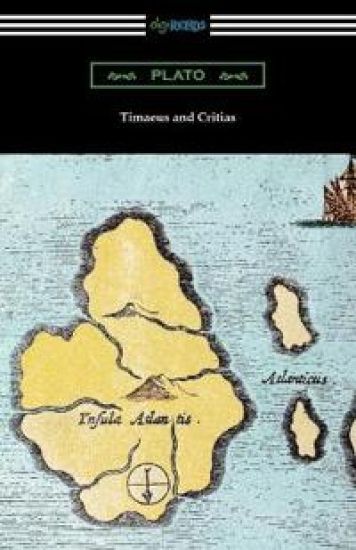
Two late dialogues of Plato designed to be part of a trilogy that the philosopher did not finish, "Timaeus" and "Critias" utilize a few select men to theorize on the natural world and to tell a story of the lost city of Atlantis. "Timaeus" is a treatise, written in Socratic dialogue form in 360 BC, that speculates on the nature of the physical world, the purpose of the universe, properties of the universe, the creation of the world, the soul, the elements, and the golden ratio. It is followed by the dialogue "Critias", which tells the tale of the powerful island kingdom of Atlantis. Though the people are the offspring of a god, their human nature begins to corrupt them. They attempt to conquer Athens but fail because of the Athenians' well-ordered society. Just as Zeus begins to decree their punishment, however, the incomplete work comes to an end. Though not extant, this pair of dialogues is clearly the writing of a brilliant mind posing and considering creative ideas. This edition is printed on premium acid-free paper and follows the translations with introductions of Benjamin Jowett.
Gorgias

Gorgias

Plato

Indoeuropeanpublishing.com
2019
sidottu
Plato (424/423 - 348/347 BC) was an Athenian philosopher during the Classical period in Ancient Greece, founder of the Platonist school of thought, and the Academy, the first institution of higher learning in the Western world. He is widely considered the pivotal figure in the history of Ancient Greek and Western philosophy, along with his teacher, Socrates, and his most famous student, Aristotle. Plato has also often been cited as one of the founders of Western religion and spirituality. The so-called Neoplatonism of philosophers like Plotinus and Porphyry influenced Saint Augustine and thus Christianity. Alfred North Whitehead once noted: "the safest general characterization of the European philosophical tradition is that it consists of a series of footnotes to Plato." Plato was the innovator of the written dialogue and dialectic forms in philosophy. Plato also appears to have been the founder of Western political philosophy. His most famous contribution bears his name, Platonism (also ambiguously called either Platonic realism or Platonic idealism), the doctrine of the Forms known by pure reason to provide a realist solution to the problem of universals. He is also the namesake of Platonic love and the Platonic solids. Gorgias is a Socratic dialogue written by Plato around 380 BC. The dialogue depicts a conversation between Socrates and a small group of sophists (and other guests) at a dinner gathering. Socrates debates with the sophist seeking the true definition of rhetoric, attempting to pinpoint the essence of rhetoric and unveil the flaws of the sophistic oratory popular in Athens at the time. The art of persuasion was widely considered necessary for political and legal advantage in classical Athens, and rhetoricians promoted themselves as teachers of this fundamental skill. Some, like Gorgias, were foreigners attracted to Athens because of its reputation for intellectual and cultural sophistication. In the Gorgias, Socrates argues that philosophy is an art, whereas rhetoric is a skill based on mere experience. To Socrates, most rhetoric is in practice merely flattery. To use rhetoric for good, rhetoric cannot exist alone. It must depend on philosophy to guide its morality, he argues. Socrates therefore believes that morality is not inherent in rhetoric and that without philosophy, rhetoric is simply used to persuade for personal gain. Socrates suggests that he is one of the few Athenians to practice true politics (521d). (wikipedia.org)

Gorgias

Gorgias

Plato

Indoeuropeanpublishing.com
2019
pokkari
Plato (424/423 - 348/347 BC) was an Athenian philosopher during the Classical period in Ancient Greece, founder of the Platonist school of thought, and the Academy, the first institution of higher learning in the Western world. He is widely considered the pivotal figure in the history of Ancient Greek and Western philosophy, along with his teacher, Socrates, and his most famous student, Aristotle. Plato has also often been cited as one of the founders of Western religion and spirituality. The so-called Neoplatonism of philosophers like Plotinus and Porphyry influenced Saint Augustine and thus Christianity. Alfred North Whitehead once noted: "the safest general characterization of the European philosophical tradition is that it consists of a series of footnotes to Plato." Plato was the innovator of the written dialogue and dialectic forms in philosophy. Plato also appears to have been the founder of Western political philosophy. His most famous contribution bears his name, Platonism (also ambiguously called either Platonic realism or Platonic idealism), the doctrine of the Forms known by pure reason to provide a realist solution to the problem of universals. He is also the namesake of Platonic love and the Platonic solids. Gorgias is a Socratic dialogue written by Plato around 380 BC. The dialogue depicts a conversation between Socrates and a small group of sophists (and other guests) at a dinner gathering. Socrates debates with the sophist seeking the true definition of rhetoric, attempting to pinpoint the essence of rhetoric and unveil the flaws of the sophistic oratory popular in Athens at the time. The art of persuasion was widely considered necessary for political and legal advantage in classical Athens, and rhetoricians promoted themselves as teachers of this fundamental skill. Some, like Gorgias, were foreigners attracted to Athens because of its reputation for intellectual and cultural sophistication. In the Gorgias, Socrates argues that philosophy is an art, whereas rhetoric is a skill based on mere experience. To Socrates, most rhetoric is in practice merely flattery. To use rhetoric for good, rhetoric cannot exist alone. It must depend on philosophy to guide its morality, he argues. Socrates therefore believes that morality is not inherent in rhetoric and that without philosophy, rhetoric is simply used to persuade for personal gain. Socrates suggests that he is one of the few Athenians to practice true politics (521d). (wikipedia.org)
Theaetetus (Classics of Ancient Greek Philosophy)
Plato's dialogue Theaetetus asks the question of what knowledge is, how human beings acquire it, and how knowledge relates to both perception and judgement. This dialogue is told as a frame story, whereby Euclid and a friend are read a dialogue from the time Theaetetus was a young man. In it Theaetetus, a teacher of geometry, is talking with Socrates. At first they discuss the students, but soon move on to the core subject of knowledge and what it is to know things. It is in this dialogue that Socrates famously compares himself to a midwife, which was his mother's profession. Whereas she showed expertise in bringing a newborn child into the world, Socrates' rather is skilled at bringing new knowledge forth from the minds of those on the cusp of birthing such thoughts. A classic Platonic dialogue, this edition of Theaetetus is the translation of renowned classical scholar Benjamin Jowett.
The Republic of Plato: The Ten Books – Complete and Unabridged (Classics of Greek Philosophy)
The Republic by Plato is a landmark achievement in Ancient Greek philosophy - this edition contains every book, complete in a superb translation by Benjamin Jowett, in hardcover. The Republic is part conversation between friends active in the Athens intellectual community, and part monologue from various participants in the discussion. The narrator and lead character is Socrates, Plato's mentor, who appears in most Platonic dialogues and acts as surrogate to Plato's ideas. Throughout the text the 'Socratic method', whereby Socrates feigns ignorance and questions an adversary to receive insight on a given subject, is amply demonstrated. The discussion begins with an attempt to find a definition for justice, wherein a disagreement between Thrasymachus - who believes justice is what is good for who is strongest at a given place and time - and Socrates, who believes that all members of society should, for the highest benefit of all, conform to just action.