Kirjojen hintavertailu – 12 859 819 kirjaa ja 27 kauppaa

Kirjailija

Plato

Kirjat ja teokset yhdessä paikassa: 1 115 kirjaa, julkaisuja vuosilta 1821–2026, suosituimpiin kuuluu Ion. Vertaile teosten hintoja ja tarkista saatavuus suomalaisista kirjakaupoista.

1 115 kirjaa

Kirjojen julkaisuvuodet: 1821–2026.

Phaedrus

Phaedrus

Plato

Digireads.com
2019
pokkari
Plato's "Phaedrus" is a dialogue between Phaedrus and the great Greek philosopher Socrates. Phaedrus has been spending the morning with Lysias, the celebrated rhetorician, and is going to refresh himself by taking a walk outside the wall, when he is met by Socrates, who professes that he will not leave him until he has delivered up the speech with which Lysias has regaled him, and which he is carrying about in his mind, or more probably in a book hidden under his cloak, and is intending to study as he walks. The imputation is not denied, and the two agree to direct their steps out of the public way along the stream of the Ilissus towards a plane-tree which is seen in the distance. There, lying down amidst pleasant sounds and scents, they will read the speech of Lysias. A classic exposition on the topic of love which serves to construct a discussion on the proper use of rhetoric, Plato's "Phaedrus" is one of the ancient philosopher's important Socratic dialogues. This edition is translated with an introduction by Benjamin Jowett and is printed on premium acid-free paper.
Meno

Meno

Plato

Digireads.com
2019
pokkari
Plato's "Meno" is a Socratic dialogue between the two main speakers, Socrates and Meno, and explores the definition of virtue and whether it is something that can be taught. Meno is an attractive and well-to-do young man visiting Athens and is a student of the sophist Gorgias, who has greatly influenced Meno's ideas on virtue and knowledge. The dialogue begins abruptly with a question posed by Meno, who asks Socrates whether virtue can be taught. Socrates replies that he does not as yet know what virtue is, and has never known anyone who did. A fascinating and thought-provoking dialogue ensues between Meno and Socrates exploring what exactly virtue is and whether the definition is the same for all people. Meno contends that virtue is dependent on one's station in life and there is one kind of virtue for men and one for women, one for children, and one for adults. Through detailed and exhaustive questions and answers, Socrates reveals his belief that virtue is the same for all people, whether old or young, man or woman. Socrates then begins to question one of Meno's slaves to prove his proposition that much knowledge is innate and merely needs to be revealed with the proper questioning, or the Socratic method, rather than taught. This timeless and engaging classic is a must read for all students of philosophy. This edition is printed on acid-free paper and is translated with an introduction by Benjamin Jowett.
Gorgias

Gorgias

Plato

Digireads.com
2019
pokkari

Halvin toimitettuna 17,80 €

One of the middle or transitional dialogues of the ancient Greek philosopher Plato, "Gorgias" depicts a dinner gathering attended by Socrates and a group of sophists. Gorgias, a foreigner, has been drawn to Athens by its cultural and intellectual sophistication. In this dialogue Plato contrasts Gorgias, the rhetorician, with Socrates, the philosopher, whose differing specialties are persuasion and refutation, respectively. As Plato delves into arguments both incredible and forthright, he begins to contrast two differing ways of life, as exemplified by the rhetorican and the philosopher. The rhetorican in making use of language to persuade his audience gives no guarantee of convincing others towards a moral choice. In order that rhetoric might be used for good it must be guided by a moral philosophy arrived at through the Socratic method. Ultimately, Plato through Socrates, rejects the use of rhetoric for purposes either immoral or in advancing one's one self-interest in favor of an authentic morality arrived at through philosophical inquiry. This challenging dialogue exemplifies Plato's brilliant examination of one of the more important matters of philosophy, human morality. This edition is printed on premium acid-free paper and follows the translation of Benjamin Jowett with an introduction by Friedrich Schleiermacher.
Parmenides

Parmenides

Plato

Lector House
2019
pokkari
This book is a result of an effort made by us towards making a contribution to the preservation and repair of original classic literature. In an attempt to preserve, improve and recreate the original content, we have worked towards: 1. Type-setting & Reformatting: The complete work has been re-designed via professional layout, formatting and type-setting tools to re-create the same edition with rich typography, graphics, high quality images, and table elements, giving our readers the feel of holding a 'fresh and newly' reprinted and/or revised edition, as opposed to other scanned & printed (Optical Character Recognition - OCR) reproductions. 2. Correction of imperfections: As the work was re-created from the scratch, therefore, it was vetted to rectify certain conventional norms with regard to typographical mistakes, hyphenations, punctuations, blurred images, missing content/pages, and/or other related subject matters, upon our consideration. Every attempt was made to rectify the imperfections related to omitted constructs in the original edition via other references. However, a few of such imperfections which could not be rectified due to intentional\unintentional omission of content in the original edition, were inherited and preserved from the original work to maintain the authenticity and construct, relevant to the work. We believe that this work holds historical, cultural and/or intellectual importance in the literary works community, therefore despite the oddities, we accounted the work for print as a part of our continuing effort towards preservation of literary work and our contribution towards the development of the society as a whole, driven by our beliefs. We are grateful to our readers for putting their faith in us and accepting our imperfections with regard to preservation of the historical content. HAPPY READING
The Republic

The Republic

Plato

Lector House
2019
pokkari
This book is a result of an effort made by us towards making a contribution to the preservation and repair of original classic literature. In an attempt to preserve, improve and recreate the original content, we have worked towards: 1. Type-setting & Reformatting: The complete work has been re-designed via professional layout, formatting and type-setting tools to re-create the same edition with rich typography, graphics, high quality images, and table elements, giving our readers the feel of holding a 'fresh and newly' reprinted and/or revised edition, as opposed to other scanned & printed (Optical Character Recognition - OCR) reproductions. 2. Correction of imperfections: As the work was re-created from the scratch, therefore, it was vetted to rectify certain conventional norms with regard to typographical mistakes, hyphenations, punctuations, blurred images, missing content/pages, and/or other related subject matters, upon our consideration. Every attempt was made to rectify the imperfections related to omitted constructs in the original edition via other references. However, a few of such imperfections which could not be rectified due to intentional\unintentional omission of content in the original edition, were inherited and preserved from the original work to maintain the authenticity and construct, relevant to the work. We believe that this work holds historical, cultural and/or intellectual importance in the literary works community, therefore despite the oddities, we accounted the work for print as a part of our continuing effort towards preservation of literary work and our contribution towards the development of the society as a whole, driven by our beliefs. We are grateful to our readers for putting their faith in us and accepting our imperfections with regard to preservation of the historical content. HAPPY READING
The Timaeus and The Critias

The Timaeus and The Critias

Plato

Iap - Information Age Pub. Inc.
2019
sidottu
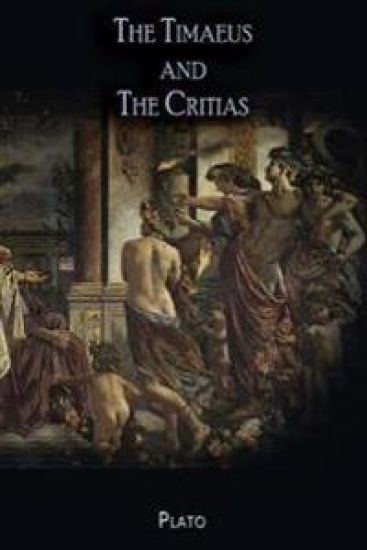
Among all the writings of Plato the Timaeus is the most obscure to the modern reader, and has nevertheless had the greatest influence over the ancient and mediaeval world. The Critias is a fragment and it was designed to be the second part of a trilogy. Timaeus had brought down the origin of the world to the creation of man, and the dawn of history was now to succeed the philosophy of nature. It tells us about Atlantis and Critias returns to this story, professing only to repeat what Solon was told by the priests. The war of which he was about to speak had occurred 9000 years ago. One of the combatants was the city of Athens, the other was the great island of Atlantis.
Plato: The Apology of Socrates and Xenophon: The Apology of Socrates
In 399 BC Socrates was prosecuted, convicted, sentenced to death and executed. These events were the culmination of a long philosophical career, a career in which, without writing a word, he established himself as the figure whom all philosophers of the next few generations wished to follow. The Apologies (or Defence Speeches) by Plato and Xenophon are rival accounts of how, at his trial, Socrates defended himself and his philosophy. This edition brings together both Apologies within a single volume. The Commentary answers literary, linguistic and philosophical questions in a way that is suitable for readers of all levels, helping teachers and students engage more closely with the Greek texts. The Introduction examines Socrates himself, the literature generated by his trial, Athenian legal procedures, his guilt or innocence of the crimes for which he was executed, and the rivalry between Xenophon and Plato.
L'État Ou La République

L'État Ou La République

Plato

Hachette Livre - BNF
2019
pokkari
L' tat ou La R publique / de Platon; traduction de Grou, revue et corrig e sur le texte grec d'Emm. BekkerDate de l' dition originale: 1851 La r publique (fran ais). 1851]Le pr sent ouvrage s'inscrit dans une politique de conservation patrimoniale des ouvrages de la litt rature Fran aise mise en place avec la BNF. HACHETTE LIVRE et la BNF proposent ainsi un catalogue de titres indisponibles, la BNF ayant num ris ces oeuvres et HACHETTE LIVRE les imprimant la demande. Certains de ces ouvrages refl tent des courants de pens e caract ristiques de leur poque, mais qui seraient aujourd'hui jug s condamnables. Ils n'en appartiennent pas moins l'histoire des id es en France et sont susceptibles de pr senter un int r t scientifique ou historique. Le sens de notre d marche ditoriale consiste ainsi permettre l'acc s ces oeuvres sans pour autant que nous en cautionnions en aucune fa on le contenu. Pour plus d'informations, rendez-vous sur www.hachettebnf.fr
Refining Golden: A 21st-Century Translation of Plato's Alcibiades
Many people know that Plato was perhaps the most important philosopher ever. Few remember that he was also what we would call a high school teacher at his school, the Academy. Many of his dialogues, particularly rich in warmth and human decency, appear to have been written for his teenage students. Plato obviously loved kids and wanted to help them find the worthwhile and joyous adult lives they dreamed of. There are two ancient dialogues named "Alcibiades" and attributed to Plato. The second one, the "Alcibiades II," was almost certainly not written by Plato. This one, the "Alcibiades I," was always regarded as genuine among ancient scholars and was generally used as the first text for introducing high schoolers to Plato. Alcibiades, the man for whom the dialogue was named, was a hated historical character in Athens-a traitor. In the middle of the Peloponnesian War he had defected to the Spartans and given them intelligence and strategic advice that ultimately resulted in Sparta's defeat of the Athenian democracy. In this dialogue, though, Plato imagines the promising kid Alcibiades had once been: just on the verge of manhood, unreasonably self-confident and ambitious, arrogant and annoying. But in this brief dialogue Socrates uses what we might call an intellectual refining process to reveal in the kid a core of gold that Athenian society had failed to recognize and value: a good heart that longed for genuine greatness, a willingness to recognize and regret his own ignorance and lack of preparation, and a hunger to be better than he was. This translation was written specifically for high school kids by Frank Kaput, fictional University of Chicago Ph. D., former fictional Assistant Professor of Classics at Yale, and currently (and presumably eternally) a fictional teacher at Dry Springs High School in Gradgrind, Ohio. The translation plays an important role in the plot of "The Falconer's Call: The Knights of the Round Table at Dry Springs High" by Steve Hays, a scholar of Classical Greek, now retired from Ohio University. Despite its fictive origins, this translation is a serious one. Its particular goal is to guide contemporary kids through the reasoning that the students in Plato's Academy would have discovered in the Greek original. To that end this translation strips out the distractions of culturally exotic details and elaborates lines of thought that would have been apparent to kids in Plato's Academy, but would not be to modern American kids. "The Falconer's Call" functions as a companion volume to this text, showing how some modern students were affected by contemplating Plato's ideas.

The Republic

The Republic

Plato

Simon Brown
2018
pokkari
The unabridged version of this definitive work is now available as an elegantly designed clothbound edition with a new introduction by Odysseus Makridis. Part of the Knickerbocker Classics series, an elastic closure and flexible binding make this timeless book a perfect travel companion. Published around 380 BCE, Plato's most famous work explores the idea of justness, among other things, through a Socratic dialogue. Considered to be one of the most influential writings in the development of Western philosophy and political theory, Republic is as relevant today as when it was originally published.
The Republic

The Republic

Plato

Simon Brown
2018
sidottu
The unabridged version of this definitive work is now available as an elegantly designed clothbound edition with a new introduction by Odysseus Makridis. Part of the Knickerbocker Classics series, an elastic closure and flexible binding make this timeless book a perfect travel companion. Published around 380 BCE, Plato's most famous work explores the idea of justness, among other things, through a Socratic dialogue. Considered to be one of the most influential writings in the development of Western philosophy and political theory, Republic is as relevant today as when it was originally published.