Kirjojen hintavertailu – 12 859 819 kirjaa ja 27 kauppaa

Kirjailija

Plato

Kirjat ja teokset yhdessä paikassa: 1 115 kirjaa, julkaisuja vuosilta 1821–2026, suosituimpiin kuuluu Ion. Vertaile teosten hintoja ja tarkista saatavuus suomalaisista kirjakaupoista.

1 115 kirjaa

Kirjojen julkaisuvuodet: 1821–2026.

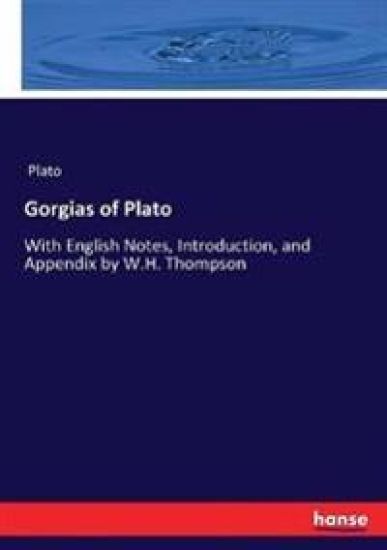
Gorgias of Plato

Gorgias of Plato

Plato

Hansebooks
2017
pokkari
Gorgias of Plato - With English Notes, Introduction, and Appendix by W. H. Thompson is an unchanged, high-quality reprint of the original edition of 1871. Hansebooks is editor of the literature on different topic areas such as research and science, travel and expeditions, cooking and nutrition, medicine, and other genres. As a publisher we focus on the preservation of historical literature. Many works of historical writers and scientists are available today as antiques only. Hansebooks newly publishes these books and contributes to the preservation of literature which has become rare and historical knowledge for the future.
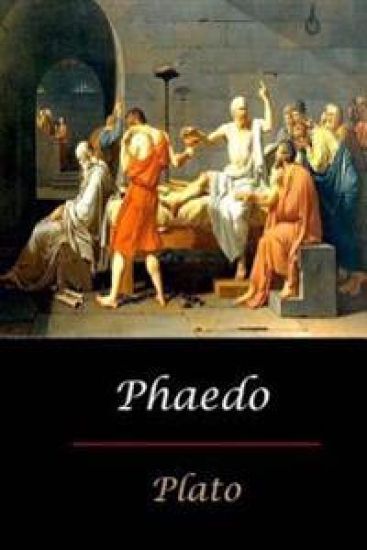
Phaedo

Phaedo

Plato

Createspace Independent Publishing Platform
2017
nidottu
Phaedrus - Plato - Translated with an introduction by Benjamin Jowett - The Phaedrus is closely connected with the Symposium, and may be regarded either as introducing or following it. The two Dialogues together contain the whole philosophy of Plato on the nature of love, which in the Republic and in the later writings of Plato is only introduced playfully or as a figure of speech. But in the Phaedrus and Symposium love and philosophy join hands, and one is an aspect of the other. The spiritual and emotional part is elevated into the ideal, to which in the Symposium mankind are described as looking forward, and which in the Phaedrus, as well as in the Phaedo, they are seeking to recover from a former state of existence. Whether the subject of the Dialogue is love or rhetoric, or the union of the two, or the relation of philosophy to love and to art in general, and to the human soul, will be hereafter considered. And perhaps we may arrive at some conclusion such as the following - that the dialogue is not strictly confined to a single subject, but passes from one to another with the natural freedom of conversation.
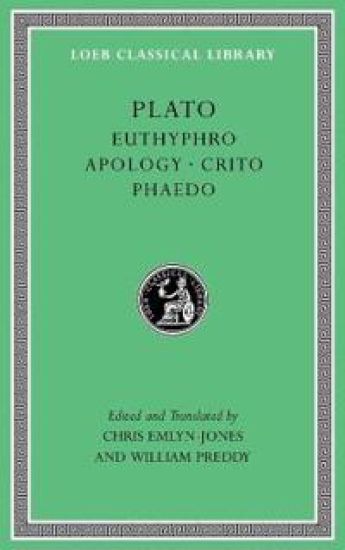
Euthyphro. Apology. Crito. Phaedo

Euthyphro. Apology. Crito. Phaedo

Plato

Harvard University Press
2017
sidottu

Halvin toimitettuna 37,20 €

The fundamental tetralogy on Socrates’ final days. Plato of Athens, who laid the foundations of the Western philosophical tradition and in range and depth ranks among its greatest practitioners, was born to a prosperous and politically active family circa 427 BC. In early life an admirer of Socrates, Plato later founded the first institution of higher learning in the West, the Academy, among whose many notable alumni was Aristotle. Traditionally ascribed to Plato are thirty-five dialogues developing Socrates’ dialectic method and composed with great stylistic virtuosity, together with the Apology and thirteen letters. The four works in this volume recount the circumstances of Socrates’ trial and execution in 399 BC. In Euthyphro, set in the weeks before the trial, Socrates and Euthyphro attempt to define holiness. In Apology, Socrates answers his accusers at trial and unapologetically defends his philosophical career. In Crito, a discussion of justice and injustice explains Socrates’ refusal of Crito’s offer to finance his escape from prison. And in Phaedo, Socrates discusses the concept of an afterlife and offers arguments for the immortality of the soul. This edition, which replaces the original Loeb edition by Harold North Fowler, offers text, translation, and annotation that are fully current with modern scholarship.
The Republic

The Republic

Plato

Prabhat Prakashan
2017
pokkari
The Republic is a Socratic dialogue, written by Plato around 380 BC, concerning justice, the order and character of the just city-state, and the just man. It is Plato's best-known work, and has proven to be one of the world's most influential works of philosophy and political theory, both intellectually and historically. In the dialogue, Socrates talks with various Athenians and foreigners about the meaning of justice and whether the just man is happier than the unjust man. They consider the natures of existing regimes and then propose a series of different, hypothetical cities in comparison, culminating in Kallipolis, a city-state ruled by a philosopher king. They also discuss the theory of forms, the immortality of the soul, and the role of the philosopher and of poetry in society. The dialogue's setting seems to be during the Peloponnesian War. In the first book, two definitions of justice are proposed but deemed inadequate. 14] Returning debts owed, and helping friends while harming enemies, are commonsense definitions of justice that, Socrates shows, are inadequate in exceptional situations, and thus lack the rigidity demanded of a definition. Yet he does not completely reject them, for each expresses a commonsense notion of justice that Socrates will incorporate into his discussion of the just regime in books II through V. At the end of Book I, Socrates agrees with Polemarchus that justice includes helping friends, but says the just man would never do harm to anybody. Thrasymachus believes that Socrates has done the men present an injustice by saying this and attacks his character and reputation in front of the group, partly because he suspects that Socrates himself does not even believe harming enemies is unjust. Thrasymachus gives his understanding of justice and injustice as "justice is what is advantageous to the stronger, while injustice is to one's own profit and advantage". 15] Socrates finds this definition unclear and begins to question Thrasymachus. Socrates then asks whether the ruler who makes a mistake by making a law that lessens their well-being, is still a ruler according to that definition. Thrasymachus agrees that no true ruler would make such an error. This agreement allows Socrates to undermine Thrasymachus' strict definition of justice by comparing rulers to people of various professions. Thrasymachus consents to Socrates' assertion that an artist is someone who does his job well, and is a knower of some art, which allows him to complete the job well. In so doing Socrates gets Thrasymachus to admit that rulers who enact a law that does not benefit them firstly, are in the precise sense not rulers. Thrasymachus gives up, and is silent from then on. Socrates has trapped Thrasymachus into admitting the strong man who makes a mistake is not the strong man in the precise sense, and that some type of knowledge is required to rule perfectly. However, it is far from a satisfactory definition of justice.

The Trial and Death of Socrates

The Trial and Death of Socrates

Plato; Frederick John Church

Hansebooks
2017
pokkari
The Trial and Death of Socrates - Being the Euthyphron, Apology, Crito, and Phaedo of Plato is an unchanged, high-quality reprint of the original edition of 1880. Hansebooks is editor of the literature on different topic areas such as research and science, travel and expeditions, cooking and nutrition, medicine, and other genres. As a publisher we focus on the preservation of historical literature. Many works of historical writers and scientists are available today as antiques only. Hansebooks newly publishes these books and contributes to the preservation of literature which has become rare and historical knowledge for the future.
Selections from Plato, the Philosophy of Socrates
Selections from Plato, the Philosophy of Socrates - The Apology, the Ph do is an unchanged, high-quality reprint of the original edition of 1897. Hansebooks is editor of the literature on different topic areas such as research and science, travel and expeditions, cooking and nutrition, medicine, and other genres. As a publisher we focus on the preservation of historical literature. Many works of historical writers and scientists are available today as antiques only. Hansebooks newly publishes these books and contributes to the preservation of literature which has become rare and historical knowledge for the future.
Plato: The Laws: Classic Literature

Plato: The Laws: Classic Literature

Plato

Createspace Independent Publishing Platform
2017
nidottu
The Laws, Plato's longest dialogue, has for centuries been recognized as the most comprehensive exposition of the practical consequences of his philosophy, a necessary corrective to the more visionary and utopian Republic. In this animated encounter between a foreign philosopher and a powerful statesman, not only do we see reflected, in Plato's own thought, eternal questions of the relation between political theory and practice, but we also witness the working out of a detailed plan for a new political order that embodies the results of Plato's mature reflection on the family, the status of women, property rights, criminal law, and the role of religion and the fine arts in a healthy republic. "Because it succeeds in being both literal and comprehensive, it is by far superior to any translation available. By reproducing dramatic detail often omitted, such as oaths, hesitations, repetitions, and forms of address, Pangle allows the reader to follow the dialogue's interplay between argument and dramatic context. . . . Pangle's translation captures the excitement and the drama of Plato's text."-Mary P. Nichols, Ancient Philosophy
Euthydemus

Euthydemus

Plato

Createspace Independent Publishing Platform
2017
nidottu
The Euthydemus, though apt to be regarded by us only as an elaborate jest, has also a very serious purpose. It may fairly claim to be the oldest treatise on logic; for that science originates in the misunderstandings which necessarily accompany the first efforts of speculation. Several of the fallacies which are satirized in it reappear in the Sophistici Elenchi of Aristotle and are retained at the end of our manuals of logic. But if the order of history were followed, they should be placed not at the end but at the beginning of them; for they belong to the age in which the human mind was first making the attempt to distinguish thought from sense, and to separate the universal from the particular or individual. How to put together words or ideas, how to escape ambiguities in the meaning of terms or in the structure of propositions, how to resist the fixed impression of an 'eternal being' or 'perpetual flux, ' how to distinguish between words and things-these were problems not easy of solution in the infancy of philosophy. They presented the same kind of difficulty to the half-educated man which spelling or arithmetic do to the mind of a child. It was long before the new world of ideas which had been sought after with such passionate yearning was set in order and made ready for use. To us the fallacies which arise in the pre-Socratic philosophy are trivial and obsolete because we are no longer liable to fall into the errors which are expressed by them. The intellectual world has become better assured to us, and we are less likely to be imposed upon by illusions of words