Kirjojen hintavertailu – 12 859 819 kirjaa ja 27 kauppaa

Kirjailija

Plato

Kirjat ja teokset yhdessä paikassa: 1 115 kirjaa, julkaisuja vuosilta 1821–2026, suosituimpiin kuuluu Ion. Vertaile teosten hintoja ja tarkista saatavuus suomalaisista kirjakaupoista.

1 115 kirjaa

Kirjojen julkaisuvuodet: 1821–2026.

Phaedo

Phaedo

Plato

Createspace Independent Publishing Platform
2017
nidottu
After an interval of some months or years, and at Phlius, a town of Peloponnesus, the tale of the last hours of Socrates is narrated to Echecrates and other Phliasians by Phaedo the 'beloved disciple.' The Dialogue necessarily takes the form of a narrative, because Socrates has to be described acting as well as speaking. The minutest particulars of the event are interesting to distant friends, and the narrator has an equal interest in them. During the voyage of the sacred ship to and from Delos, which has occupied thirty days, the execution of Socrates has been deferred. (Compare Xen. Mem.) The time has been passed by him in conversation with a select company of disciples. But now the holy season is over, and the disciples meet earlier than usual in order that they may converse with Socrates for the last time. Those who were present, and those who might have been expected to be present, are mentioned by name. There are Simmias and Cebes (Crito), two disciples of Philolaus whom Socrates 'by his enchantments has attracted from Thebes' (Mem.), Crito the aged friend, the attendant of the prison, who is as good as a friend-these take part in the conversation. There are present also, Hermogenes, from whom Xenophon derived his information about the trial of Socrates (Mem.), the 'madman' Apollodorus (Symp.), Euclid and Terpsion from Megara (compare Theaet.), Ctesippus, Antisthenes, Menexenus, and some other less-known members of the Socratic circle, all of whom are silent auditors. Aristippus, Cleombrotus, and Plato are noted as absent. Almost as soon as the friends of Socrates enter the prison Xanthippe and her children are sent home in the care of one of Crito's servants. Socrates himself has just been released from chains, and is led by this circumstance to make the natural remark that 'pleasure follows pain.' (Observe that Plato is preparing the way for his doctrine of the alternation of opposites.) 'Aesop would have represented them in a fable as a two-headed creature of the gods.' The mention of Aesop reminds Cebes of a question which had been asked by Evenus the poet (compare Apol.): 'Why Socrates, who was not a poet, while in prison had been putting Aesop into verse'-'Because several times in his life he had been warned in dreams that he should practise music; and as he was about to die and was not certain of what was meant, he wished to fulfil the admonition in the letter as well as in the spirit, by writing verses as well as by cultivating philosophy. Tell this to Evenus; and say that I would have him follow me in death.' 'He is not at all the sort of man to comply with your request, Socrates.' 'Why, is he not a philosopher' 'Yes.' 'Then he will be willing to die, although he will not take his own life, for that is held to be unlawful.'
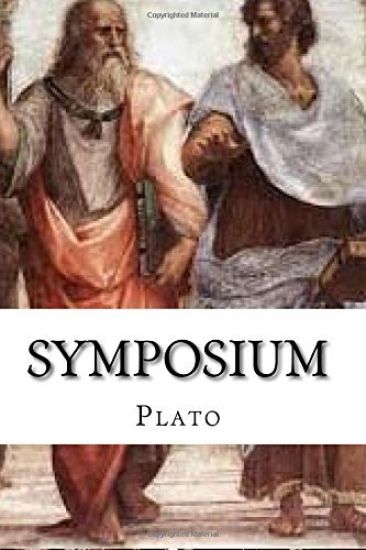
Symposium

Symposium

Plato

Createspace Independent Publishing Platform
2017
nidottu
Of all the works of Plato the Symposium is the most perfect in form, and may be truly thought to contain more than any commentator has ever dreamed of; or, as Goethe said of one of his own writings, more than the author himself knew. For in philosophy as in prophecy glimpses of the future may often be conveyed in words which could hardly have been understood or interpreted at the time when they were uttered (compare Symp.)-which were wiser than the writer of them meant, and could not have been expressed by him if he had been interrogated about them. Yet Plato was not a mystic, nor in any degree affected by the Eastern influences which afterwards overspread the Alexandrian world. He was not an enthusiast or a sentimentalist, but one who aspired only to see reasoned truth, and whose thoughts are clearly explained in his language. There is no foreign element either of Egypt or of Asia to be found in his writings. And more than any other Platonic work the Symposium is Greek both in style and subject, having a beauty 'as of a statue, ' while the companion Dialogue of the Phaedrus is marked by a sort of Gothic irregularity. More too than in any other of his Dialogues, Plato is emancipated from former philosophies. The genius of Greek art seems to triumph over the traditions of Pythagorean, Eleatic, or Megarian systems, and 'the old quarrel of poetry and philosophy' has at least a superficial reconcilement. (Rep.
Phaedo

Phaedo

Plato

Createspace Independent Publishing Platform
2017
nidottu
The scene is set in Phlius where Echecrates who, meeting Phaedo, asks for news about the last days of Socrates. Phaedo explains why a delay occurred between his trial and his death, and describes the scene in a prison at Athens on the final day, naming those present. He tells how he had visited Socrates early in the morning with the others. Socrates' wife Xanthippe was there, but was very distressed and Socrates asked that she be taken away. Socrates' relates how, bidden by a recurring dream to "make and cultivate music", he wrote a hymn and then began writing poetry based on Aesop's Fables.
Parmenides (with Introduction and Analysis)

Parmenides (with Introduction and Analysis)

Plato

Createspace Independent Publishing Platform
2017
nidottu
The awe with which Plato regarded the character of 'the great' Parmenides has extended to the dialogue which he calls by his name. None of the writings of Plato have been more copiously illustrated, both in ancient and modern times, and in none of them have the interpreters been more at variance with one another. Nor is this surprising. For the Parmenides is more fragmentary and isolated than any other dialogue, and the design of the writer is not expressly stated. The date is uncertain; the relation to the other writings of Plato is also uncertain; the connexion between the two parts is at first sight extremely obscure; and in the latter of the two we are left in doubt as to whether Plato is speaking his own sentiments by the lips of Parmenides, and overthrowing him out of his own mouth, or whether he is propounding consequences which would have been admitted by Zeno and Parmenides themselves. The contradictions which follow from the hypotheses of the one and many have been regarded by some as transcendental mysteries; by others as a mere illustration, taken at random, of a new method. They seem to have been inspired by a sort of dialectical frenzy, such as may be supposed to have prevailed in the Megarian School (compare Cratylus, etc.). The criticism on his own doctrine of Ideas has also been considered, not as a real criticism, but as an exuberance of the metaphysical imagination which enabled Plato to go beyond himself. To the latter part of the dialogue we may certainly apply the words in which he himself describes the earlier philosophers in the Sophist: 'They went on their way rather regardless of whether we understood them or not.'
The Republic

The Republic

Plato

Createspace Independent Publishing Platform
2017
nidottu
Classics for Your Collection: goo.gl/U80LCr --------- The Republic (Politeia; Latin: De Re Publica) is a Socratic dialogue, written by Plato around 380 BC, concerning the definition of justice, the order and character of the just city-state and the just man-for this reason, ancient readers used the name On Justice as an alternative title (not to be confused with the spurious dialogue also titled On Justice). The dramatic date of the dialogue has been much debated and though it might have taken place some time during the Peloponnesian War, "there would be jarring anachronisms if any of the candidate specific dates between 432 and 404 were assigned". Plato's best-known work, it has proven to be one of the world's most influential works of philosophy and political theory, both intellectually and historically. In it, Socrates along with various Athenians and foreigners discuss the meaning of justice and examine whether or not the just man is happier than the unjust man by considering a series of different cities coming into existence "in speech", culminating in a city called Kallipolis, which is ruled by philosopher-kings; and by examining the nature of existing regimes. The participants also discuss the theory of forms, the immortality of the soul, and the roles of the philosopher and of poetry in society. Scroll Up and Grab Your Copy
Symposium Plato

Symposium Plato

Plato

Createspace Independent Publishing Platform
2017
nidottu
The Symposium is a philosophical dialogue written by Plato sometime after 385 BC. It is a discussion on the nature of love, taking the form of a group of speeches, both satirical and serious, given by a group of men at a symposium or a wine drinking gathering at the house of the tragedian Agathon at Athens.