

Kirjailija
Plato
Kirjat ja teokset yhdessä paikassa: 1 115 kirjaa, julkaisuja vuosilta 1821–2026, suosituimpiin kuuluu Ion. Vertaile teosten hintoja ja tarkista saatavuus suomalaisista kirjakaupoista.
1 115 kirjaa
Kirjojen julkaisuvuodet: 1821–2026.
Selections From the Dialogues of Plato - With Introd. and Notes by John Purves, and a Pref. by B. Jowett is an unchanged, high-quality reprint of the original edition of 1883. Hansebooks is editor of the literature on different topic areas such as research and science, travel and expeditions, cooking and nutrition, medicine, and other genres. As a publisher we focus on the preservation of historical literature. Many works of historical writers and scientists are available today as antiques only. Hansebooks newly publishes these books and contributes to the preservation of literature which has become rare and historical knowledge for the future.
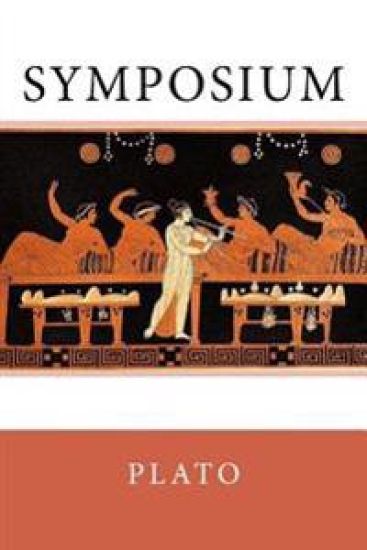

The Statesman, also known by its Latin title, Politicus, is a Socratic dialogue written by Plato. The text describes a conversation among Socrates, the mathematician Theodorus, another person named Socrates (referred to as "Young Socrates"), and an unnamed philosopher from Elea referred to as "the Stranger". It is ostensibly an attempt to arrive at a definition of "statesman," as opposed to "sophist" or "philosopher" and is presented as following the action of the Sophist.
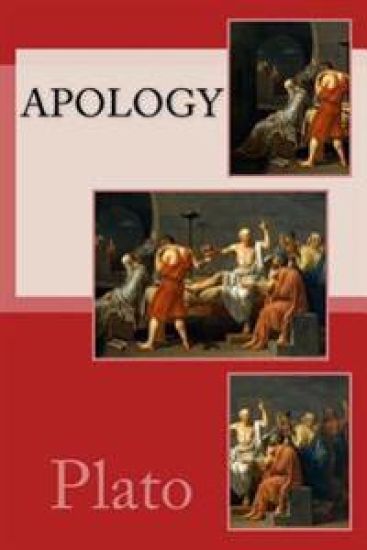
(The) Apology (of Socrates) is Plato's version of the speech given by Socrates as he defends himself against the charges of being a man "who corrupted the young, did not believe in the gods, and created new deities". "Apology" here has its earlier meaning (now usually expressed by the word "apologia") of speaking in defense of a cause or of one's beliefs or actions.
The Charmides is a dialogue of Plato, in which Socrates engages a handsome and popular boy in a conversation about the meaning of sophrosyne, a Greek word usually translated into English as "temperance", "self-control", or "restraint". As is typical with Platonic early dialogues, the two never arrive at a completely satisfactory definition, but the discussion nevertheless raises many important points.


It is thought that Plato, the Athenian philosopher, was born in 428 BCE, and died at the age of eighty or eighty-one. These calculations of the lifespan of Plato were produced by Eratosthenes, and are generally accepted by other historians as accurate, although it is still disputed. Plato's innate intellectual capabilities and incredible perspective on the world around him allowed him to become one of the world's greatest philosophers and contributors to western thought and understanding. He was born into an established family who were both wealthy and very politically involved. Certain family members of Plato's are reputed to have been involved in mischief involving the government. One of Plato's uncles, Charmides, was a member of "Thirty Tyrants", who overthrew the Athenian Democracy in 404 BCE, and Charmides uncle, Critias, was the actual leader of Thirty Tyrants. These relations with anarchy don't stretch far into the bloodline of Plato, however. Some of Plato's relatives, including Pyrilampes, were actually close with the leaders of the democratic faction in Athens. Plato's actual given name was Aristocles, after his grandfather. The origin the name Plato appeared to have been derived from being "broad". The name for broad is platos, and the Philosopher's name became a variation of the word. The exact root of where this nickname came about is not entirely known, but historians have deducted that it is possible that the name was given by Plato's wrestling teacher to describe his physique.
The Phaedrus is closely connected with the Symposium, and may be regarded either as introducing or following it. The two Dialogues together contain the whole philosophy of Plato on the nature of love, which in the Republic and in the later writings of Plato is only introduced playfully or as a figure of speech. But in the Phaedrus and Symposium love and philosophy join hands, and one is an aspect of the other. The spiritual and emotional part is elevated into the ideal, to which in the Symposium mankind are described as looking forward, and which in the Phaedrus, as well as in the Phaedo, they are seeking to recover from a former state of existence. Whether the subject of the Dialogue is love or rhetoric, or the union of the two, or the relation of philosophy to love and to art in general, and to the human soul, will be hereafter considered. And perhaps we may arrive at some conclusion such as the following-that the dialogue is not strictly confined to a single subject, but passes from one to another with the natural freedom of conversation.

The Phaedrus is closely connected with the Symposium, and may be regarded either as introducing or following it. The two Dialogues together contain the whole philosophy of Plato on the nature of love, which in the Republic and in the later writings of Plato is only introduced playfully or as a figure of speech. But in the Phaedrus and Symposium love and philosophy join hands, and one is an aspect of the other. The spiritual and emotional part is elevated into the ideal, to which in the Symposium mankind are described as looking forward, and which in the Phaedrus, as well as in the Phaedo, they are seeking to recover from a former state of existence. Whether the subject of the Dialogue is love or rhetoric, or the union of the two, or the relation of philosophy to love and to art in general, and to the human soul, will be hereafter considered. And perhaps we may arrive at some conclusion such as the following-that the dialogue is not strictly confined to a single subject, but passes from one to another with the natural freedom of conversation.