
Kirjailija
Rene Descartes
Kirjat ja teokset yhdessä paikassa: 410 kirjaa, julkaisuja vuosilta 1960–2026, suosituimpiin kuuluu Geometria A Renato Des Cartes. Vertaile teosten hintoja ja tarkista saatavuus suomalaisista kirjakaupoista.
Nimi esiintyy myös muodoissa: René Descartes, René Descartes
410 kirjaa
Kirjojen julkaisuvuodet: 1960–2026.
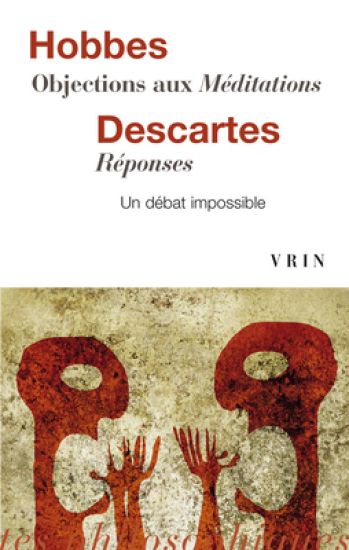
Objections Aux Meditations - Reponses
Rene Descartes; Thomas Hobbes
Librarie Philosophique J. Vrin
2019
nidottu
Entre novembre 1640 et avril 1641, Hobbes et Descartes debattent d'optique et de philosophie via Mersenne, leur ami commun. Le debat tourne court. Descartes refuse la discussion avec un materialiste; Hobbes est etranger a l'experience spirituelle des Meditations - refonder tout l'edifice du savoir en rendant manifeste l'existence de realites, l'esprit humain et Dieu, qui ne relevent pas de la nouvelle physique mecaniste. Les Objections de Hobbes aux Meditations et les Reponses de Descartes n'ont connu qu'une seule traduction en francais depuis 1647, celle de Clerselier. Jean Terrel en presente ici une nouvelle, a laquelle il joint le texte latin ainsi qu'un commentaire que rendent necessaire la concision des objections et l'exasperation qui croit au fil des reponses. Une lettre envoyee par Mersenne le 16 mai 1641 et les reponses de Descartes completent le dossier de ce debat impossible.

Abhandlung über die Methode, richtig zu denken und Wahrheit in den Wissenschaften zu suchen (Großdruck)
René Descartes
Henricus
2019
sidottu
Ren Descartes: Abhandlung ber die Methode, richtig zu denken und Wahrheit in den Wissenschaften zu suchen Lesefreundlicher Gro druck in 16-pt-Schrift Gro format, 210 x 297 mm Berliner Ausgabe, 2019 Durchgesehener Neusatz mit einer Biographie des Autors bearbeitet und eingerichtet von Theodor Borken Erstdruck (anonym) unter dem Titel Discours de la m thode pour bien conduire sa raison et chercher la v rit dans les sciences in: Essais, Leiden 1637. Text nach der bersetzung durch Julius Heinrich von Kirchmann von 1870. Textgrundlage ist die Ausgabe: Ren Descartes' philosophische Werke. bersetzt, erl utert und mit einer Lebensbeschreibung des Descartes versehen von J. H. von Kirchmann, Abteilung I-III, Berlin: L. Heimann, 1870 (Philosophische Bibliothek, Bd. 25/26). Rechtschreibung und Zeichensetzung wurden behutsam modernisiert. Umschlaggestaltung von Thomas Schultz-Overhage unter Verwendung des Bildes: Ren Descartes (Portr t von Frans Hals, 1648). Gesetzt aus der Minion Pro, 16 pt. Henricus Edition Deutsche Klassik UG (haftungsbeschr nkt)

Abhandlung über die Methode, richtig zu denken und Wahrheit in den Wissenschaften zu suchen (Großdruck)
René Descartes
Henricus
2019
pokkari
Ren Descartes: Abhandlung ber die Methode, richtig zu denken und Wahrheit in den Wissenschaften zu suchen Lesefreundlicher Gro druck in 16-pt-Schrift Gro format, 210 x 297 mm Berliner Ausgabe, 2019 Durchgesehener Neusatz mit einer Biographie des Autors bearbeitet und eingerichtet von Theodor Borken Erstdruck (anonym) unter dem Titel Discours de la m thode pour bien conduire sa raison et chercher la v rit dans les sciences in: Essais, Leiden 1637. Text nach der bersetzung durch Julius Heinrich von Kirchmann von 1870. Textgrundlage ist die Ausgabe: Ren Descartes' philosophische Werke. bersetzt, erl utert und mit einer Lebensbeschreibung des Descartes versehen von J. H. von Kirchmann, Abteilung I-III, Berlin: L. Heimann, 1870 (Philosophische Bibliothek, Bd. 25/26). Rechtschreibung und Zeichensetzung wurden behutsam modernisiert. Umschlaggestaltung von Thomas Schultz-Overhage unter Verwendung des Bildes: Ren Descartes (Portr t von Frans Hals, 1648). Gesetzt aus der Minion Pro, 16 pt. Henricus Edition Deutsche Klassik UG (haftungsbeschr nkt)
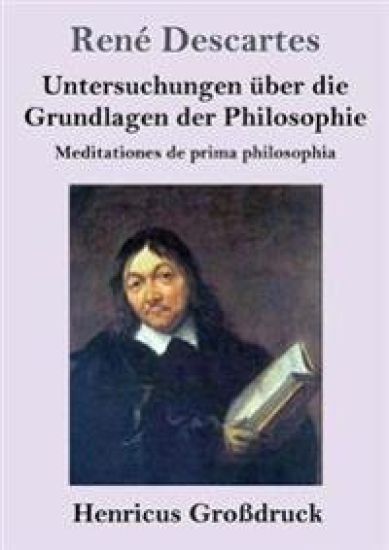
Ren Descartes: Untersuchungen ber die Grundlagen der Philosophie. Meditationes de prima philosophia Lesefreundlicher Gro druck in 16-pt-Schrift Gro format, 210 x 297 mm Berliner Ausgabe, 2019 Durchgesehener Neusatz mit einer Biographie des Autors bearbeitet und eingerichtet von Theodor Borken Entstanden 1628/29. Erstdruck unter dem Titel Meditationes de prima philosophia, in qua dei existentia et animae immortalis demonstratur, Paris 1641. Text nach der bersetzung durch Julius Heinrich von Kirchmann von 1870. Textgrundlage ist die Ausgabe: Ren Descartes' philosophische Werke. bersetzt, erl utert und mit einer Lebensbeschreibung des Descartes versehen von J. H. von Kirchmann, Abteilung I-III, Berlin: L. Heimann, 1870 (Philosophische Bibliothek, Bd. 25/26). Dieses Buch folgt in Rechtschreibung und Zeichensetzung obiger Textgrundlage. Umschlaggestaltung von Thomas Schultz-Overhage unter Verwendung des Bildes: Jan Baptist Weenix, Ren Descartes, 1647. Gesetzt aus der Minion Pro, 16 pt. Henricus Edition Deutsche Klassik UG (haftungsbeschr nkt)
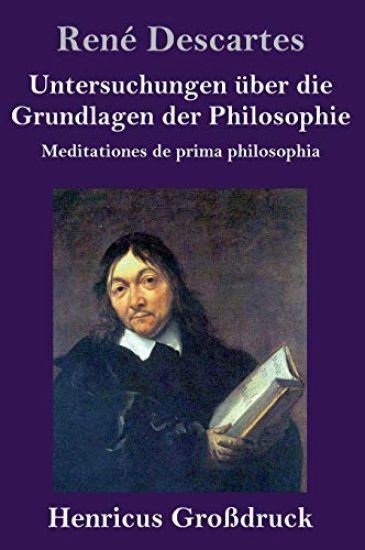
Ren Descartes: Untersuchungen ber die Grundlagen der Philosophie. Meditationes de prima philosophia Lesefreundlicher Gro druck in 16-pt-Schrift Gro format, 210 x 297 mm Berliner Ausgabe, 2019 Durchgesehener Neusatz mit einer Biographie des Autors bearbeitet und eingerichtet von Theodor Borken Entstanden 1628/29. Erstdruck unter dem Titel Meditationes de prima philosophia, in qua dei existentia et animae immortalis demonstratur, Paris 1641. Text nach der bersetzung durch Julius Heinrich von Kirchmann von 1870. Textgrundlage ist die Ausgabe: Ren Descartes' philosophische Werke. bersetzt, erl utert und mit einer Lebensbeschreibung des Descartes versehen von J. H. von Kirchmann, Abteilung I-III, Berlin: L. Heimann, 1870 (Philosophische Bibliothek, Bd. 25/26). Dieses Buch folgt in Rechtschreibung und Zeichensetzung obiger Textgrundlage. Umschlaggestaltung von Thomas Schultz-Overhage unter Verwendung des Bildes: Jan Baptist Weenix, Ren Descartes, 1647. Gesetzt aus der Minion Pro, 16 pt. Henricus Edition Deutsche Klassik UG (haftungsbeschr nkt)
Meditationes de Prima Philosophia / Meditationen über die Erste Philosophie
René Descartes
Reclam Philipp Jun.
2019
pokkari
Regulae ad directionem ingenii / Cogitationes privatae
René Descartes
Meiner Felix Verlag GmbH
2018
nidottu



Discours de la Méthode (French Edition)
Rene Descartes
Createspace Independent Publishing Platform
2018
nidottu
Le Discours de la m thode (sous-titr Pour bien conduire sa raison, et chercher la v rit dans les sciences) est un texte philosophique publi anonymement par Ren Descartes Leyde le 8 juin 1637. Dans les premi res ditions, ce discours servait d'introduction trois trait s scientifiques mettant en application cette m thode: La Dioptrique, Les M t ores et La G om trie. Pour Descartes, il s'agit d'en dire assez pour faire juger que les nouvelles opinions, qui se verraient dans la Dioptrique et dans les M t ores, n' taient point con ues la l g re . Toutefois, sa c l brit est devenue telle, qu'il est d sormais souvent publi seul, comme un essai ind pendant. Ce discours marque une rupture avec la tradition scolastique, jug e trop sp culative par Descartes, et se pr sente plut t comme un plaidoyer pour une nouvelle fondation des sciences, sur des bases plus solides, et en faveur du progr s des techniques. Il a t r dig directement en fran ais, langue vulgaire, Descartes voulant par l s'opposer la tradition scolastique (qui avait pour habitude d' crire en latin) et s'adresser un public plus large que les savants et les th ologiens. Il souhaitait tre compris des femmes et des enfants . Dans ce discours, Descartes expose son parcours intellectuel de fa on r trospective, depuis son regard critique port sur les enseignements qu'il avait re us l' cole, jusqu' sa fondation d'une philosophie nouvelle quelques ann es plus tard. Il y propose aussi une m thode (compos e de quatre r gles) pour viter l'erreur, et y d veloppe une philosophie du doute, visant reconstruire le savoir sur des fondements certains, en s'inspirant de la certitude exemplaire des math matiques - la c l bre phrase je pense donc je suis (cogito, ergo sum), qui permet Descartes de sortir du doute, lui servira ce titre de premier principe. Par ailleurs, il y r sume ses m ditations sur l' me et sur Dieu, dont il donnera une version beaucoup plus tendue dans les M ditations m taphysiques, quatre ans plus tard.

Rare edition with unique illustrations and elegant classic cream paper. The Discourse on Method is best known as the source of the famous quotation "cogito ergo sum," "I think, therefore I am." It is a method which gives a solid platform from which all modern natural sciences could evolve. With this work, the idea of skepticism was revived from the ancients such as Sextus Empiricus and modified to account for a truth that Descartes found to be incontrovertible. Descartes started his line of reasoning by doubting everything, so as to assess the world from a fresh perspective, clear of any preconceived notions. Includes unique illustrations.

Selections from the Principles of Philosophy: Principia philosophiae
Rene Descartes
Createspace Independent Publishing Platform
2018
nidottu
Selections from the Principles of Philosophy of Rene Descartes. Principles of Philosophy is a book by Ren Descartes. In essence it is a synthesis of the Discourse on Method and Meditations on First Philosophy. It was written in Latin, published in 1644 and dedicated to Elisabeth of Bohemia, with whom Descartes had a long-standing friendship. A French version (Les Principes de la Philosophie) followed in 1647. It set forth the principles of nature-the Laws of Physics-as Descartes viewed them. Most notably, it set forth the principle that in the absence of external forces, an object's motion will be uniform and in a straight line. The version of my principles which you have been at pains to make, is so elegant and finished as to lead me to expect that the work will be more generally read in French than in Latin, and better understood. The only apprehension I entertain is lest the title should deter some who have not been brought up to letters, or with whom philosophy is in bad repute, because the kind they were taught has proved unsatisfactory; and this makes me think that it will be useful to add a preface to it for the purpose of showing what the MATTER of the work is, what END I had in view in writing it, and what UTILITY may be derived from it. But although it might be my part to write a preface of this nature, seeing I ought to know those particulars better than any other person, I cannot nevertheless prevail upon myself to do anything more than merely to give a summary of the chief points that fall, as I think, to be discussed in it: and I leave it to your discretion to present to the public such part of them as you shall judge proper. I should have desired, in the first place, to explain in it what philosophy is, by commencing with the most common matters, as, for example, that the word PHILOSOPHY signifies the study of wisdom, and that by wisdom is to be understood not merely prudence in the management of affairs, but a perfect knowledge of all that man can know, as well for the conduct of his life as for the preservation of his health and the discovery of all the arts, and that knowledge to subserve these ends must necessarily be deduced from first causes; so that in order to study the acquisition of it (which is properly called philosophizing), we must commence with the investigation of those first causes which are called PRINCIPLES.
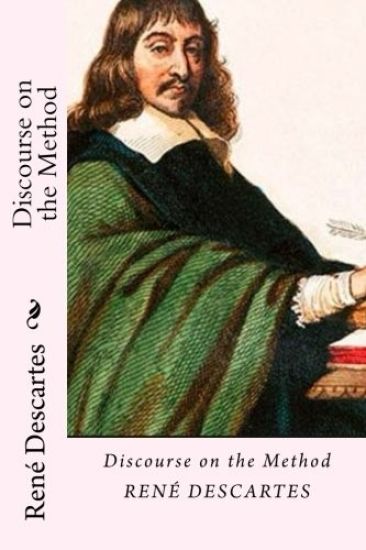
Descartes' Discourse marks a watershed in European thought; in it, the author sets out in brief his radical new philosophy, which begins with a proof of the existence of the self (the famous "cogito ergo sum"). Next he deduces from it the existence and nature of God, and ends by offering a radical new account of the physical world and of human and animal nature. Written in everyday language and meant to be read by common people of the day, it swept away all previous philosophical traditions.
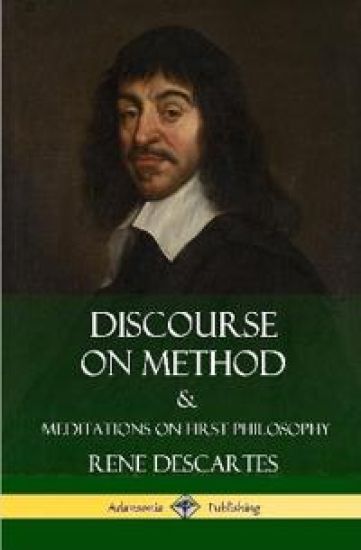
Discourse on Method and Meditations on First Philosophy (Hardcover)
Rene Descartes
Lulu.com
2018
sidottu
Several of Descarte's most ground-breaking essays and philosophic treatises are contained in this quality edition. Written by Ren Descartes in the 17th century and counted among the first great philosophic works of Enlightenment era, these papers contain the philosopher's thoughts on physical objects, presence and being. Descartes describes a series of vivid dreams which, for their realism, leave him in doubt as to whether he does indeed possess a body or whether it is merely an illusion. Descartes reflects upon the nature of dreams, and wonders whether their strangeness is not a consequence of God playing a trick with his mind. Discounting God as the culprit, Descartes instead places responsibility of the illusion of reality at the feet of a 'malignant demon'. The translations present in this edition were composed by the Scottish poet and scholar of philosophy John Vietch, whose academic career at The University of St. Andrews in Fife provided a firm grounding in the philosophic disciplines.